


Comparative Elemental Distribution in Sunflower, Wheat, and Maize Grown in Soil with a Distinct Geochemical Profile


Abstract
1. Introduction
2. Results and Discussion
2.1. Soil Geochemical Profile and Metal Concentrations
2.1.1. Elemental Concentrations in Contaminated Soils
2.1.2. Local Reference Soil
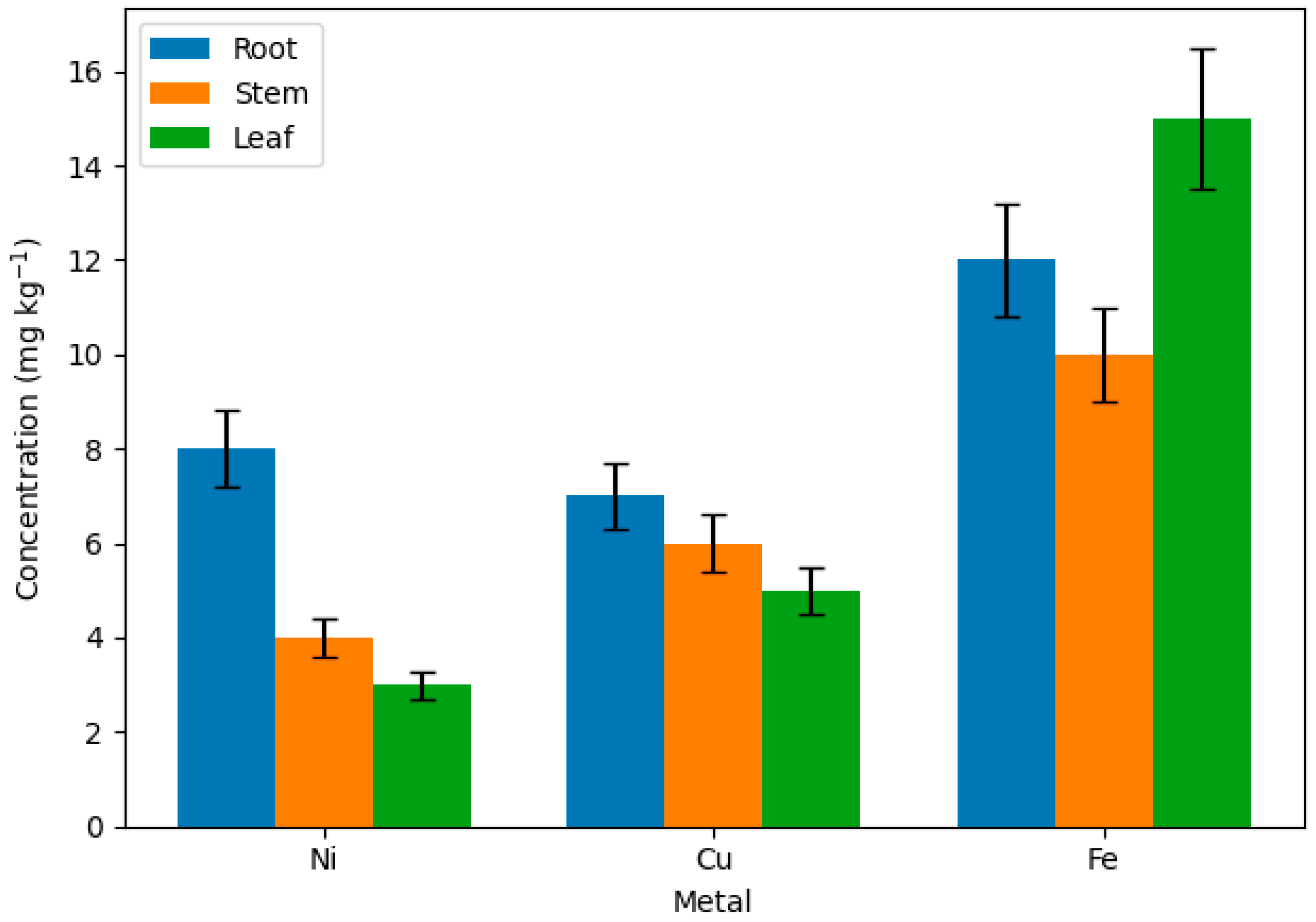
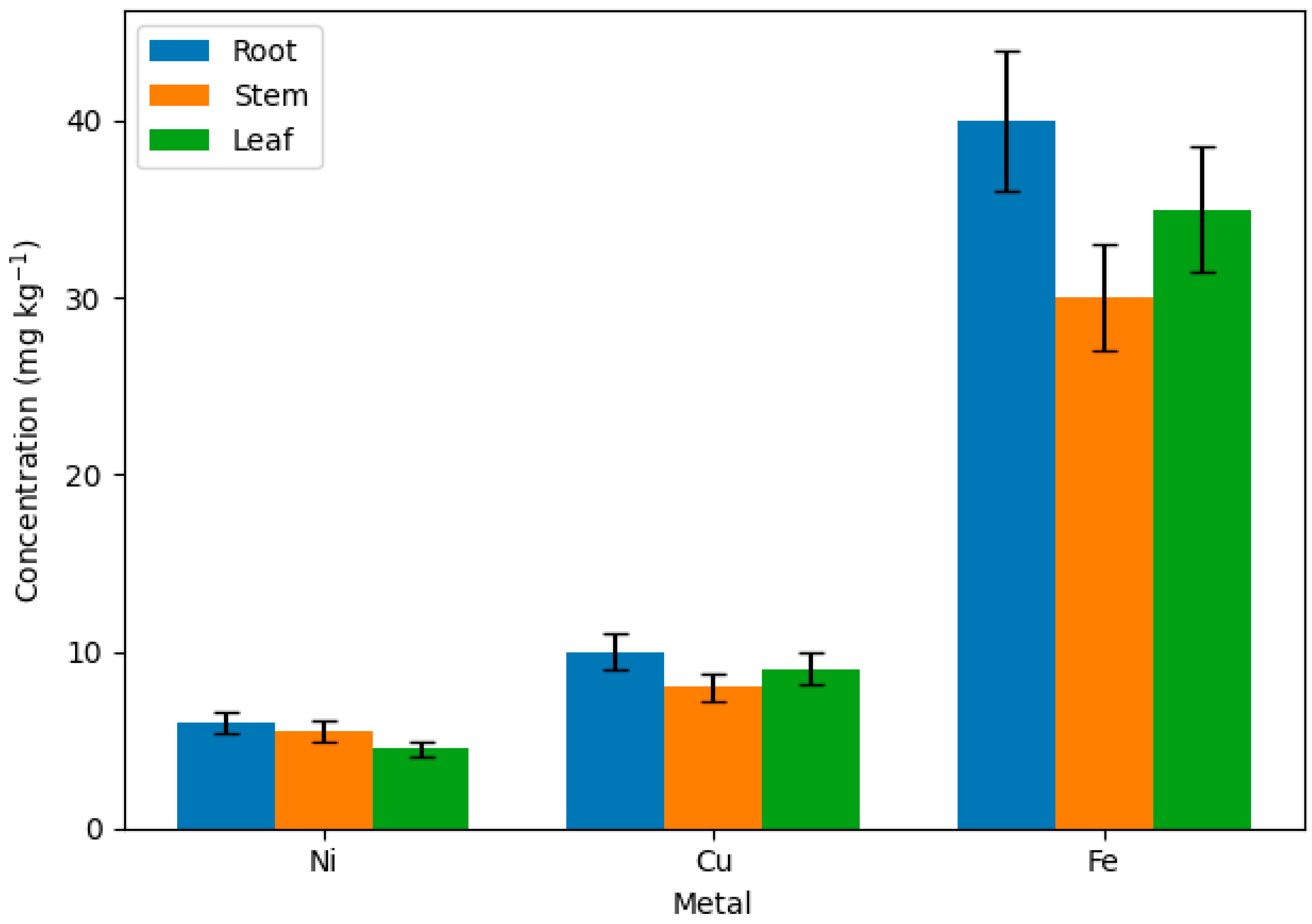
2.2. Comparative Elemental Distribution Across Species
2.2.1. Overview of Distribution Patterns
2.2.2. Species-Specific Distribution Strategies
- Sunflower (Helianthus annuus)
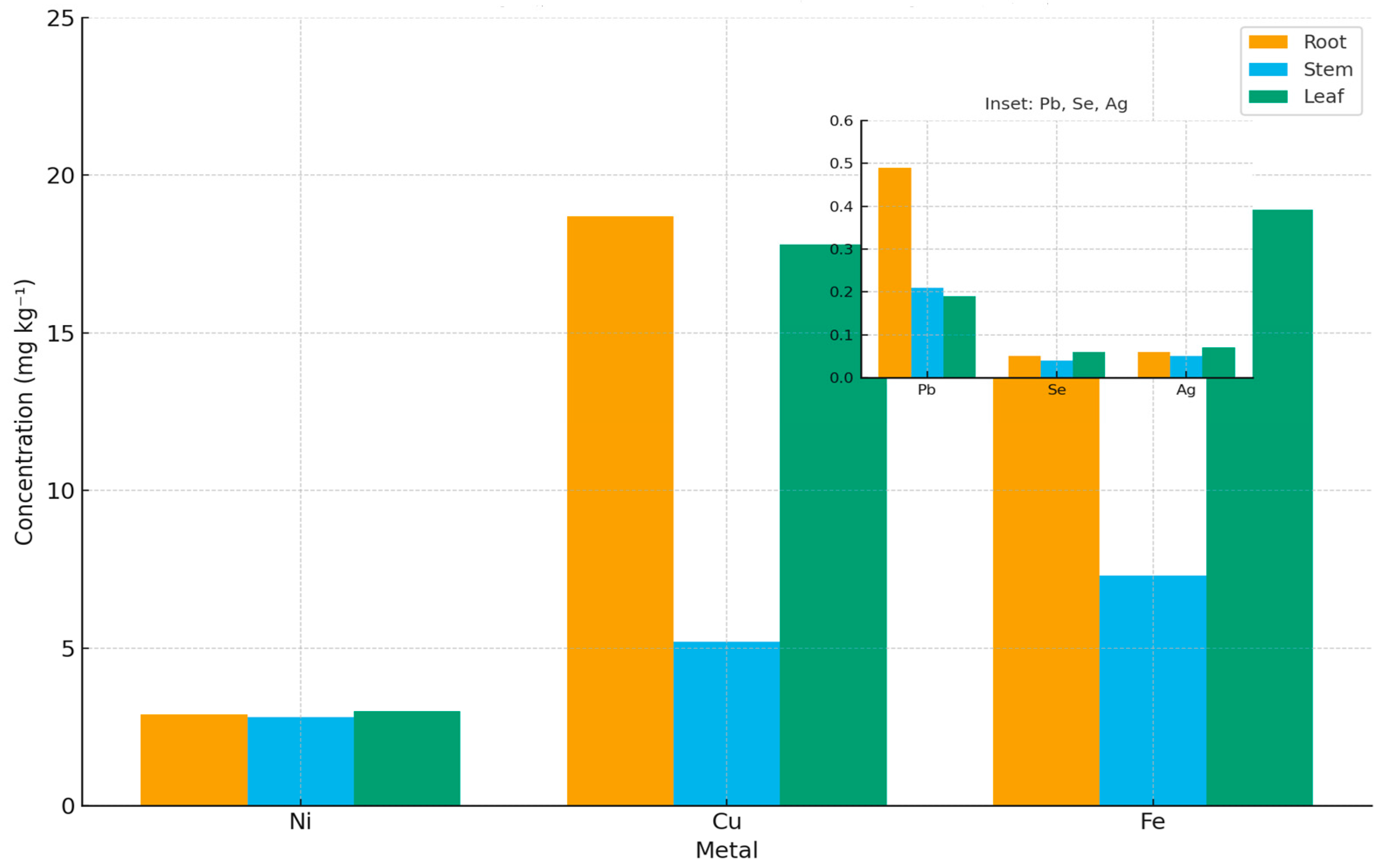
- Nickel: Exhibited balanced allocation between roots and shoots (TF ≈ 1.00) with low tissue concentrations (BCF = 0.048). The movement of nickel in non-hyperaccumulators is often passive or weakly regulated [23].
- Copper: A proportion was translocated to aerial tissues (TF = 0.62) with limited uptake from soil (BCF = 0.204). Copper is an essential micronutrient, and its distribution is typically regulated by specific transporters to meet metabolic demand in shoots [24].
- Iron: Accumulated the highest shoot concentration among the species (268 mg kg−1), despite low uptake efficiency from soil (BCF = 0.074). This reflects iron’s critical role in photosynthesis, requiring active translocation to leaves even under low-availability conditions [25].
- Wheat (Triticum aestivum)
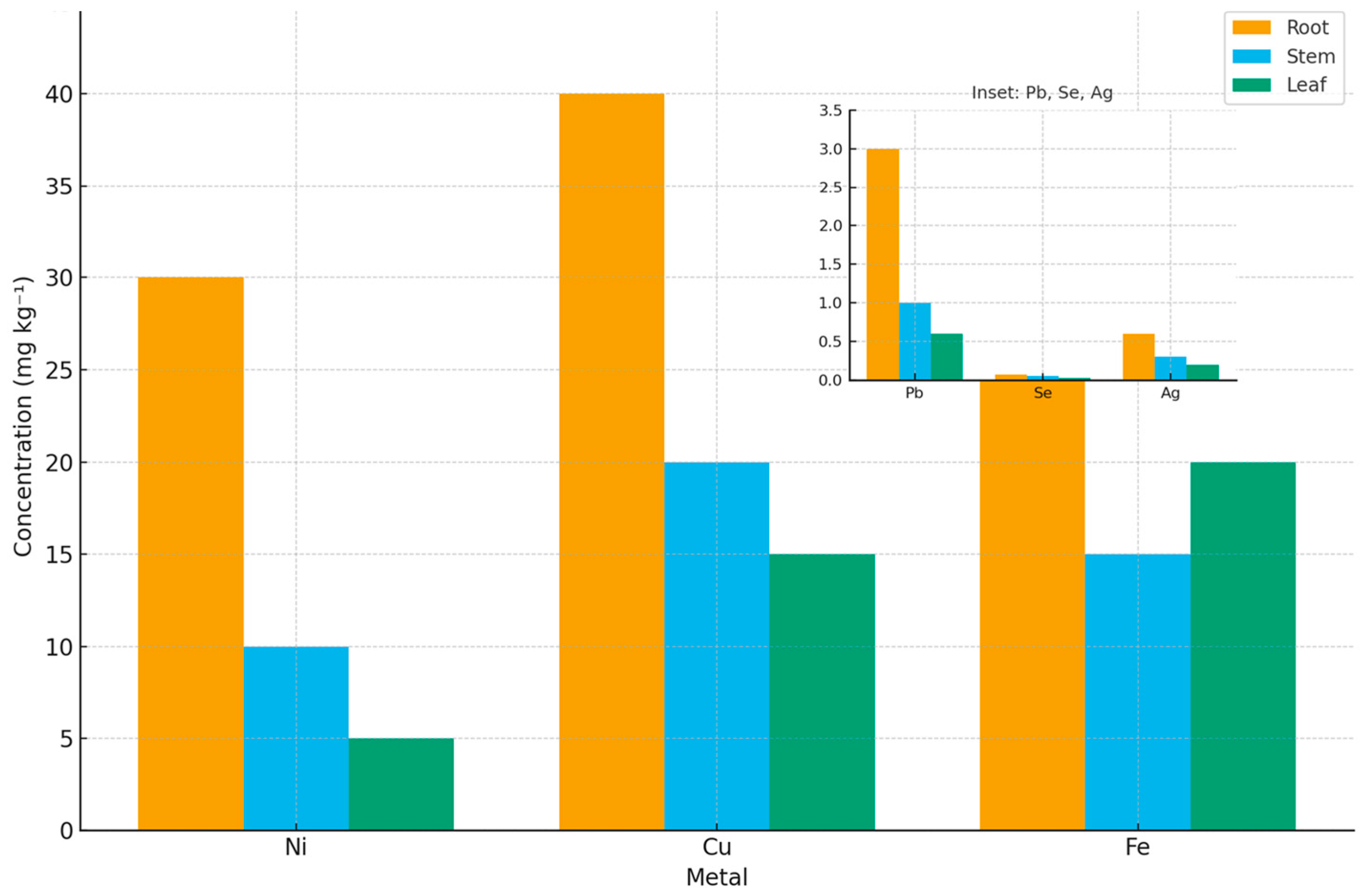
- Lead: Showed strong root retention (TF = 0.27), consistent with known mechanisms of lead immobilization in the root apoplast and symplast [28].
- Maize (Zea mays)
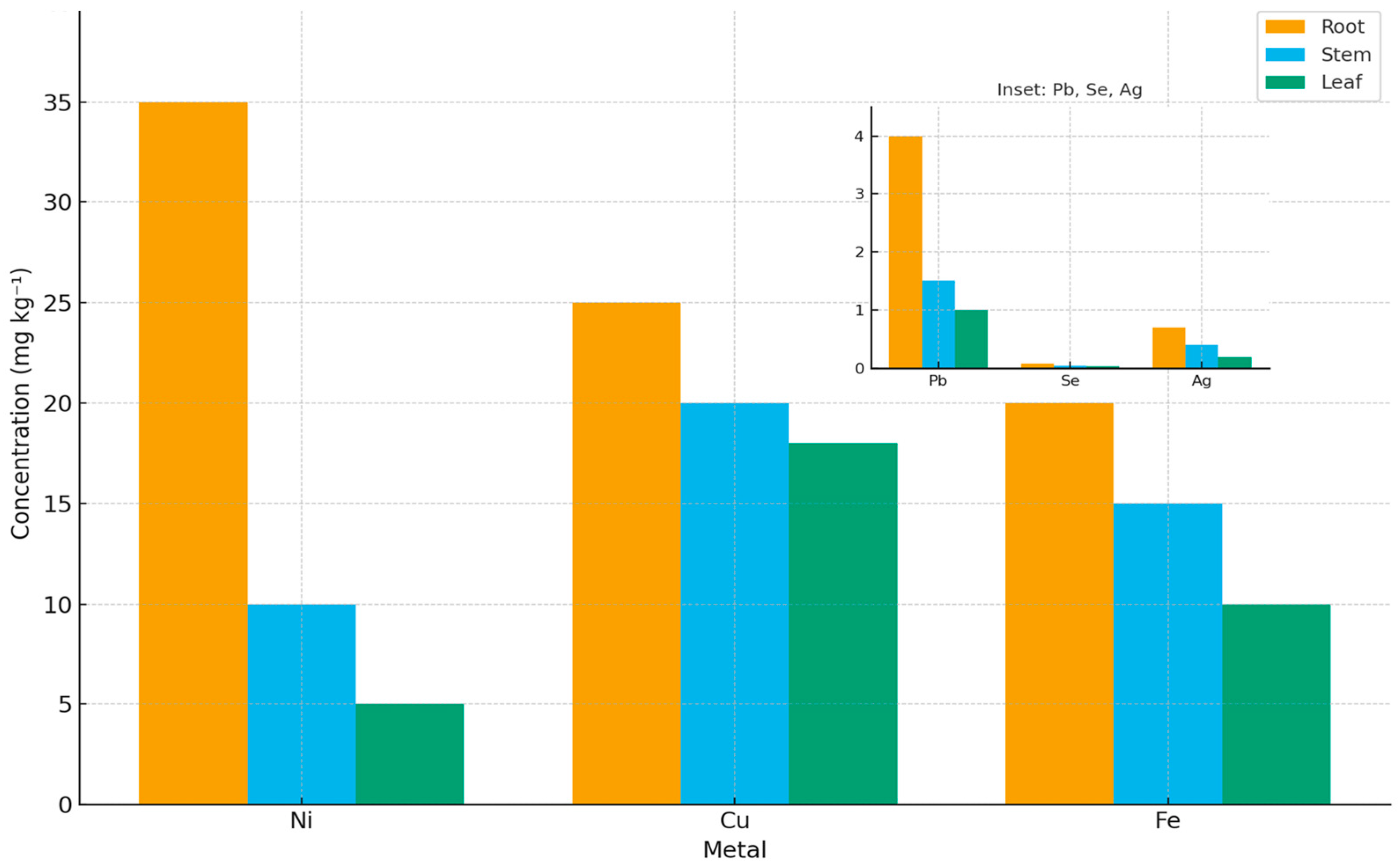
- Iron: Showed minimal accumulation in tissues (very low BCF). This could indicate stringent regulation of uptake or poor iron acquisition under the specific soil conditions of this study, which is a known challenge in some maize genotypes [25].
2.3. Elemental Distribution in Plants from the Reference Soil
2.4. Quantitative Analysis of Metal Uptake and Translocation
- Sunflower showed balanced root–shoot allocation for nickel (TF ≈ 1.00).
- Wheat exhibited low TF values across multiple elements, indicating a tendency for root retention.
- Maize showed a higher TF for copper relative to other elements in this species.
2.5. Comparative Synthesis of Species-Specific Patterns
2.6. Contextualizing Findings Within Existing Research
3. Materials and Methods
3.1. Study Area and Soil Sampling
3.2. Soil Analysis and Metal Quantification
- X-Ray Fluorescence (XRF) Spectroscopy: Initial screening was performed using a portable XRF analyzer (Olympus Delta Premium, Olympus Corporation, Tokyo, Japan). Initial screening was performed with a portable XRF analyzer (Olympus Delta Premium) using a 40 kV Rh tube. The instrument was calibrated with certified soil reference materials (NIST 2710a, 2711a). Each sample was analyzed in triplicate with 90 s readings per replicate.
- Inductively Coupled Plasma Mass Spectrometry (ICP-MS): For quantification, 0.5 g soil samples were digested with 10 mL aqua regia (3:1 HNO3/HCl) and 2 mL HF following a modification of USEPA Method 3050B [20,21]. This method provides a pseudo-total or bioaccessible metal fraction, meaning it may not fully dissolve refractory mineral phases. Digests were evaporated to near dryness, reconstituted in 2% HNO3, and analyzed using an ICP-MS (PerkinElmer NexION 300D, Waltham, MA, USA) in helium collision cell mode. Quality assurance included procedural blanks, duplicate samples (10%), and analysis of certified reference materials (NIST SRM 2711a; recovery 85–115%) [17]. The analysis targeted nickel (Ni), copper (Cu), iron (Fe), lead (Pb), selenium (Se), and silver (Ag).
3.3. Plant Material and Experimental Design
3.4. Plant Harvesting and Tissue Analysis
3.5. Data Analysis and Phytoremediation Indices
3.6. Statistical Analysis
3.7. Generative AI Statement
4. Conclusions
Author Contributions
Funding
Data Availability Statement
Acknowledgments
Conflicts of Interest
References
- Ali, H.; Khan, E.; Sajad, M.A. Phytoremediation of heavy metals—Concepts and applications. Chemosphere 2013, 91, 869–881. [Google Scholar] [CrossRef] [PubMed]
- Rai, P.K.; Lee, S.S.; Zhang, M.; Tsang, Y.F.; Kim, K.H. Heavy metals in food crops: Health risks, fate, mechanisms, and management. Environ. Int. 2019, 125, 365–385. [Google Scholar] [CrossRef] [PubMed]
- Sarwar, N.; Imran, M.; Shaheen, M.R.; Ishaque, W.; Kamran, M.A.; Matloob, A.; Rehim, A.; Hussain, S. Phytoremediation strategies for soils contaminated with heavy metals: Modifications and future perspectives. Chemosphere 2017, 171, 710–721. [Google Scholar] [CrossRef] [PubMed]
- He, Z.; Shentu, J.; Yang, X.; Baligar, V.C.; Zhang, T.; Stoffella, P.J. Heavy metal contamination of soils: Sources, indicators, and assessment. J. Environ. Indic. 2023, 9, 17–31. [Google Scholar]
- Gautam, S.; Singh, A.; Kumar, S.; Singh, S. Sustainable remediation of heavy metal contaminated soil by integration of agricultural crops and microbial agents. Environ. Pollut. 2022, 292, 118312. [Google Scholar]
- Ghazaryan, K.; Movsesyan, H.; Minkina, T.; Rajput, V.; Chernikova, N.; Mandzhieva, S. Influence of Soil Properties on the Bioaccumulation and Translocation of Nickel and Cadmium in Amaranthus cruentus L. and Amaranthus hybridus L. Grown in Ararat Plain, Armenia. Appl. Sci. 2023, 13, 10711. [Google Scholar]
- Kaur, H.; Greger, M. A review on the cost-effectiveness of phytoremediation as a sustainable remediation technology. Environ. Sci. Pollut. Res. 2022, 29, 24951–24964. [Google Scholar]
- Sharma, P.; Pandey, S.; Singh, S.P. The role of plant-associated microbes in phytoremediation efficiency: A review. Environ. Res. 2022, 214, 113832. [Google Scholar]
- Yan, A.; Wang, Y.; Tan, S.N.; Mohd Yusof, M.L.; Ghosh, S.; Chen, Z. Phytoremediation: A Promising Approach for Revegetation of Heavy Metal-Polluted Land. Front. Plant Sci. 2020, 11, 359. [Google Scholar] [CrossRef]
- Liu, Y.; Wang, X.; Zhang, L. Carbon sequestration potential of phytoremediation in heavy metal contaminated soils. Environ. Sci. Technol. 2023, 57, 1964–1975. [Google Scholar]
- Baxter, I.R.; Vitek, O.; Lahner, B.; Muthukumar, B.; Borghi, M.; Morrissey, J.; Guerinot, M.L.; Salt, D.E. The leaf ionome as a multivariable system to detect a plant’s physiological status. Proc. Natl. Acad. Sci. USA 2008, 105, 12081–12086. [Google Scholar] [CrossRef] [PubMed]
- Huang, X.Y.; Salt, D.E. Plant Ionomics: From Elemental Profiling to Environmental Adaptation. Mol. Plant 2016, 9, 787–797. [Google Scholar] [CrossRef]
- Aladesanmi, O.T.; Oroboade, J.G.; Osisiogu, C.P.; Osewole, A.O. Bioaccumulation Factor of Selected Heavy Metals in Zea mays. J. Health Pollut. 2019, 9, 191–207. [Google Scholar] [CrossRef] [PubMed]
- Jeyasundar, P.G.S.A.; Ali, A.; Azeem, M.; Li, Y.; Guo, D.; Sikdar, A.; Zhang, Z. Unravelling the molecular mechanisms of cadmium tolerance and accumulation in wheat: Insights from transcriptomics and proteomics. J. Hazard. Mater. 2023, 441, 129857. [Google Scholar]
- Kabata-Pendias, A. Trace Elements in Soils and Plants, 4th ed.; CRC Press: Boca Raton, FL, USA, 2011. [Google Scholar]
- Alloway, B.J. Heavy Metals in Soils: Trace Metals and Metalloids in Soils and Their Bioavailability, 3rd ed.; Springer: Dordrecht, The Netherlands, 2013. [Google Scholar]
- Rizwan, M.; Ali, S.; Rizvi, H.; Irshad, M.K.; Ur Rehman, M.Z.; Iqbal, M.; Hussain, A.; Shah, T.; Asghar, R.M.A.; Usman, M.; et al. Nickel in the Soil-Plant System: An Overview of Uptake, Homeostasis, and Toxicity Mecha-nisms. J. Hazard. Mater. 2024, 465, 133108. [Google Scholar]
- Briffa, J.; Sinagra, E.; Blundell, R. Heavy metal pollution in the environment and their toxicological effects on humans. Heliyon 2020, 6, e04691. [Google Scholar] [CrossRef]
- Fey, M.V. Soils of South Africa; Cambridge University Press: Cambridge, UK, 2010. [Google Scholar]
- Ure, A.M.; Davidson, C.M. (Eds.) Chemical Speciation in the Environment, 2nd ed.; Blackie Academic & Professional: London, UK, 2002. [Google Scholar]
- Rao, C.R.M.; Sahuquillo, A.; Lopez Sanchez, J.F. A Review of the Different Methods Applied in Environmental Geochemistry For Single and Sequential Extraction of Trace Elements in Soils and Related Materials. Water Air Soil Pollut. 2008, 189, 291–333. [Google Scholar] [CrossRef]
- Duan, Q.; Lee, J.; Liu, Y.; Chen, H.; Hu, H. Distribution of heavy metal pollution in surface soil samples in China: A meta-analysis. Bull. Environ. Contam. Toxicol. 2021, 107, 214–221. [Google Scholar]
- Clemens, S. Toxic metal accumulation, responses to exposure and mechanisms of tolerance in plants. Biochimie 2006, 88, 1707–1719. [Google Scholar] [CrossRef]
- Trilla, I. Copper in plants: Acquisition, transport and interactions. Funct. Plant Biol. 2009, 36, 409–430. [Google Scholar] [CrossRef]
- Briat, J.-F.; Dubos, C.; Gaymard, F. Iron nutrition, biomass production, and plant product quality. Trends Plant Sci. 2015, 20, 33–40. [Google Scholar] [CrossRef] [PubMed]
- Zhang, L.; Chen, H.; Wang, F.; Zhao, X.; Zhang, W.; Zhang, Y. The HMA4 transporter mediates root-to-shoot transloca-tion of copper and cobalt in sunflower (Helianthus annuus) under metal stress. Plant Physiol. Biochem. 2023, 197, 107654. [Google Scholar]
- Chen, J.; Liu, X.; Li, Y.; Fan, J.; Dong, J.; Lu, X.; Zhang, Z.; Wang, J.; Wang, Y.; Yang, X.; et al. The role of ZmHMA5 in copper redistribution and tolerance in maize (Zea mays L.). J. Exp. Bot. 2023, 74, 3129–3144. [Google Scholar]
- Sharma, P.; Dubey, R.S. Lead toxicity in plants. Braz. J. Plant Physiol. 2005, 17, 35–52. [Google Scholar] [CrossRef]
- Sharma, P.; Singh, S.P.; Tripathi, A. A global meta-analysis of cereal crops in phytostabilization: Efficiency and policy implications for safe cultivation. Sci. Total Environ. 2024, 909, 168610. [Google Scholar]
- Chen, J.; Liu, X.; Li, Y. The role of ZmHMA5 in copper redistribution and tolerance in maize (Zea mays L.). J. Exp. Bot. 2023, 74, 3129–3144. [Google Scholar]
- Ashraf, U.; Mahmood, M.H.R.; Hussain, S.; Abbas, F.; Anjum, S.A.; Tang, X. Lead (Pb) toxicity; physio-biochemical mechanisms, grain yield, quality, and Pb distribution proportions in scented rice. Front. Plant Sci. 2022, 13, 1006724. [Google Scholar] [CrossRef]
- Pilon-Smits, E.A.H.; Quinn, C.F.; Tapken, W.; Malagoli, M.; Schiavon, M. Physiological functions of beneficial elements. Curr. Opin. Plant Biol. 2009, 12, 267–274. [Google Scholar] [CrossRef]
- White, P.J.; Brown, P.H. Plant nutrition for sustainable development and global health. Ann. Bot. 2010, 105, 1073–1080. [Google Scholar] [CrossRef]
- Liu, Y.; Wang, X.; Zhang, L. Physiological and molecular mechanisms of metal tolerance in sunflower: The role of antioxidant systems and HMA transporters. Plant Physiol. Biochem. 2023, 194, 146–158. [Google Scholar]
- Guo, J.; Li, Y.; Wei, Z. Mechanisms of cadmium and lead tolerance and accumulation in wheat: The role of phytochelatin synthase and vacuolar sequestration. J. Hazard. Mater. 2022, 424, 127532. [Google Scholar]
- Zhou, H.; Zhao, W.; Yang, Y.; Tang, D.; Liu, Y.; Liu, J.; Peng, Y.; Li, Y.; Dong, J.; Chen, J. The HMA5 transporter contributes to copper detoxification in Arabidopsis by mediating vacuolar sequestration. Plant Cell Environ. 2022, 45, 3272–3288. [Google Scholar]
- Jones, J.B. Laboratory Guide for Conducting Soil Tests and Plant Analysis; CRC Press: Boca Raton, FL, USA, 2001. [Google Scholar]
- Yoon, J.; Cao, X.; Zhou, Q.; Ma, L.Q. Accumulation of Pb, Cu, and Zn in native plants growing on a contaminated Florida site. Sci. Total Environ. 2006, 368, 456–464. [Google Scholar] [CrossRef]
- Tukey, J.W. Comparing Individual Means in the Analysis of Variance. Biometrics 1949, 5, 99–114. [Google Scholar] [CrossRef]
- R Core Team. R: A Language and Environment for Statistical Computing; R Foundation for Statistical Computing: Vienna, Austria, 2023. [Google Scholar]



| Metal | Experimental Soil (mg kg−1) | Reference Soil (mg kg−1) | Typical Global Range (mg kg−1) |
|---|---|---|---|
| Fe | 3628 ± 210 | 85 ± 4.7 | 10,000–100,000 |
| Ni | 42.6 ± 3.8 | 25 ± 1.8 | 10–100 |
| Cu | 32.8 ± 2.9 | 18 ± 1.8 | 15–60 |
| Pb | 11.5 ± 1.2 | 18 ± 3.1 | 10–70 |
| Se | 0.10 ± 0.02 | 0.5 ± 0.08 | 0.1–2 |
| Ag | 1.0 ± 0.1 | 0.10 ± 0.02 | 0.01–0.5 |
| Metal | Soil (mg kg−1) | Species | Root (mg kg−1) | Shoot (mg kg−1) | BCF | TF |
|---|---|---|---|---|---|---|
| Ni | 42.6 ± 3.8 | Sunflower | 2.9 ± 0.2 a | 2.9 ± 0.3 a | 0.048 ± 0.005 a | 1.00 ± 0.08 c |
| Wheat | 30.0 ± 2.8 c | 7.5 ± 0.7 b | 0.230 ± 0.020 c | 0.25 ± 0.02 a | ||
| Maize | 17.4 ± 1.5 b | 7.5 ± 0.7 b | 0.087 ± 0.008 b | 0.21 ± 0.02 a | ||
| Cu | 32.8 ± 2.9 | Sunflower | 18.7 ± 1.8 b | 15.5 ± 1.5 c | 0.204 ± 0.020 c | 0.62 ± 0.06 b |
| Wheat | 40.0 ± 3.8 c | 17.5 ± 1.7 b | 0.097 ± 0.009 a | 0.44 ± 0.04 a | ||
| Maize | 20.8 ± 2.1 b | 19.0 ± 1.9 b | 0.104 ± 0.010 a | 0.76 ± 0.07 c | ||
| Fe | 3628 ± 210 | Sunflower | 19.1 ± 1.5 c | 15.1 ± 1.3 c | 0.074 ± 0.006 c | 0.69 ± 0.06 a |
| Wheat | 35.0 ± 3.0 b | 17.5 ± 1.5 b | 0.0034 ± 0.0003 b | 0.50 ± 0.05 a | ||
| Maize | 1.86 ± 0.2 a | 1.25 ± 0.1 a | 0.00051 ± 0.00005 a | 0.63 ± 0.06 a | ||
| Pb | 11.5 ± 1.2 | Sunflower | 0.49 ± 0.05 a | 0.20 ± 0.02 a | 0.008 ± 0.001 a | 0.41 ± 0.04 b |
| Wheat | 3.00 ± 0.3 c | 0.80 ± 0.08 b | 0.122 ± 0.011 c | 0.27 ± 0.03 a | ||
| Maize | 3.20 ± 0.4 c | 1.25 ± 0.1 b | 0.028 ± 0.003 b | 0.31 ± 0.03 a | ||
| Se | 0.10 ± 0.02 | Sunflower | 0.05 ± 0.01 a | 0.05 ± 0.01 a | 1.00 ± 0.12 a | 1.00 ± 0.09 c |
| Wheat | 0.07 ± 0.01 a | 0.04 ± 0.01 a | 1.00 ± 0.18 a | 0.57 ± 0.05 a | ||
| Maize | 0.08 ± 0.01 a | 0.04 ± 0.01 a | 1.00 ± 0.15 a | 0.50 ± 0.05 a | ||
| Ag | 1.0 ± 0.1 | Sunflower | 0.06 ± 0.01 a | 0.06 ± 0.01 a | 0.20 ± 0.03 a | 1.00 ± 0.09 c |
| Wheat | 0.60 ± 0.06 b | 0.25 ± 0.03 b | 0.70 ± 0.08 b | 0.42 ± 0.04 a | ||
| Maize | 0.20 ± 0.03 a | 0.09 ± 0.01 a | 0.20 ± 0.03 a | 0.43 ± 0.04 a |
| Metal | Soil (mg kg−1) | Maize (mg kg−1) | Sunflower (mg kg−1) | Wheat (mg kg−1) | p-Value (ANOVA) |
|---|---|---|---|---|---|
| Ni | 42.6 ± 3.8 | 17.4 ± 1.5 a | 9.7 ± 1.1 b | 46.0 ± 4.2 c | <0.001 |
| Cu | 32.8 ± 2.9 | 20.8 ± 2.1 a | 40.7 ± 3.5 b | 19.4 ± 1.8 a | <0.001 |
| Fe | 3628 ± 210 | 1.86 ± 0.2 a | 268 ± 19 b | 12.3 ± 1.5 c | <0.001 |
| Pb | 11.5 ± 1.2 | 3.2 ± 0.4 a | 0.9 ± 0.1 b | 30.5 ± 2.8 c | <0.001 |
| Se | 0.10 ± 0.02 | 0.10 ± 0.02 a | 0.10 ± 0.01 a | 0.10 ± 0.02 a | 0.995 (n.s.) |
| Ag | 1.0 ± 0.1 | 0.2 ± 0.03 a | 0.2 ± 0.04 a | 0.7 ± 0.08 b | <0.001 |
Disclaimer/Publisher’s Note: The statements, opinions and data contained in all publications are solely those of the individual author(s) and contributor(s) and not of MDPI and/or the editor(s). MDPI and/or the editor(s) disclaim responsibility for any injury to people or property resulting from any ideas, methods, instructions or products referred to in the content. |
© 2026 by the authors. Licensee MDPI, Basel, Switzerland. This article is an open access article distributed under the terms and conditions of the Creative Commons Attribution (CC BY) license.
Share and Cite
Machabe, F.; Klink, M. Comparative Elemental Distribution in Sunflower, Wheat, and Maize Grown in Soil with a Distinct Geochemical Profile. Environments 2026, 13, 33. https://doi.org/10.3390/environments13010033
Machabe F, Klink M. Comparative Elemental Distribution in Sunflower, Wheat, and Maize Grown in Soil with a Distinct Geochemical Profile. Environments. 2026; 13(1):33. https://doi.org/10.3390/environments13010033
Chicago/Turabian StyleMachabe, Faith, and Michael Klink. 2026. "Comparative Elemental Distribution in Sunflower, Wheat, and Maize Grown in Soil with a Distinct Geochemical Profile" Environments 13, no. 1: 33. https://doi.org/10.3390/environments13010033
APA StyleMachabe, F., & Klink, M. (2026). Comparative Elemental Distribution in Sunflower, Wheat, and Maize Grown in Soil with a Distinct Geochemical Profile. Environments, 13(1), 33. https://doi.org/10.3390/environments13010033