



Beyond Ease of Use: Dynamics of Technology Adoption and Cognitive Load in AI-Assisted Programming for Non-Technical Students




Abstract
1. Introduction
- RQ1: How does the integration of GenAI as a personalized tutor, compared to passive video instruction, alter the evolutionary trajectory of technical friction (Ease of Use) and intrinsic motivation (Value/Usefulness, Perceived Enjoyment) to shape behavioral intention among non-STEM students?
- RQ2: How do students navigate the “initial cognitive friction” introduced by GenAI, and to what extent does overcoming this technical barrier affect their final behavioral intention to adopt the technology?
- RQ3: In what ways does the increasing cognitive load of the programming tasks (from basic conditionals to complex arrays) contextualize the perceived enjoyment and the behavioral intention to continue using GenAI in populations lacking foundational technical skills?
2. Literature Review
2.1. Importance of Programming in Non-STEM Curricula
2.2. Generative Artificial Intelligence as a Cognitive Tool
2.2.1. GenAI Adoption Dynamics in Higher Education
2.2.2. GenAI and Cognitive Scaffolding in Programming Education
2.3. Technological Acceptance
2.3.1. The Technology Acceptance Model and Its Application in Educational Settings
2.3.2. Acceptance of GenAI Tools
3. Method
3.1. Participants
3.2. Curriculum
- LO1: Apply logical decision structures (if-else and switch statements) to model simple business rules in Java, ensuring the correct execution of the control flow.
- LO2: Implement and manipulate one-dimensional data structures (vectors) for the storage and bulk processing of information, applying traversal and search algorithms to resolve practical data management cases.
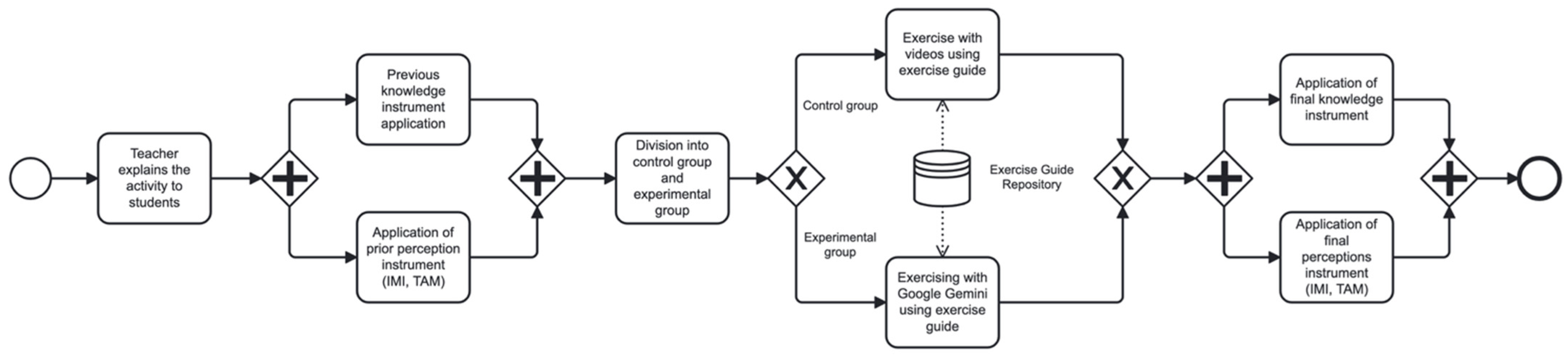
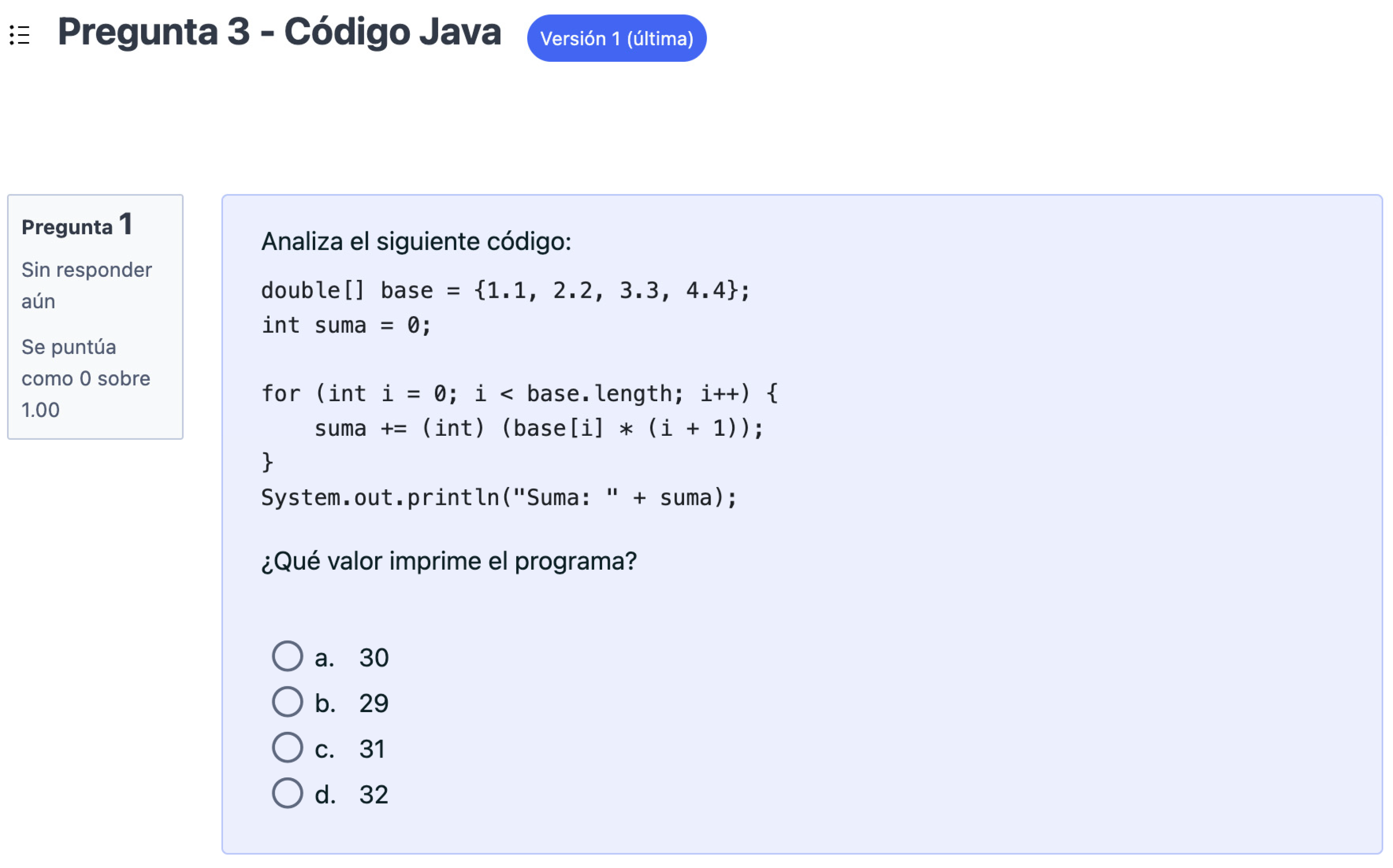
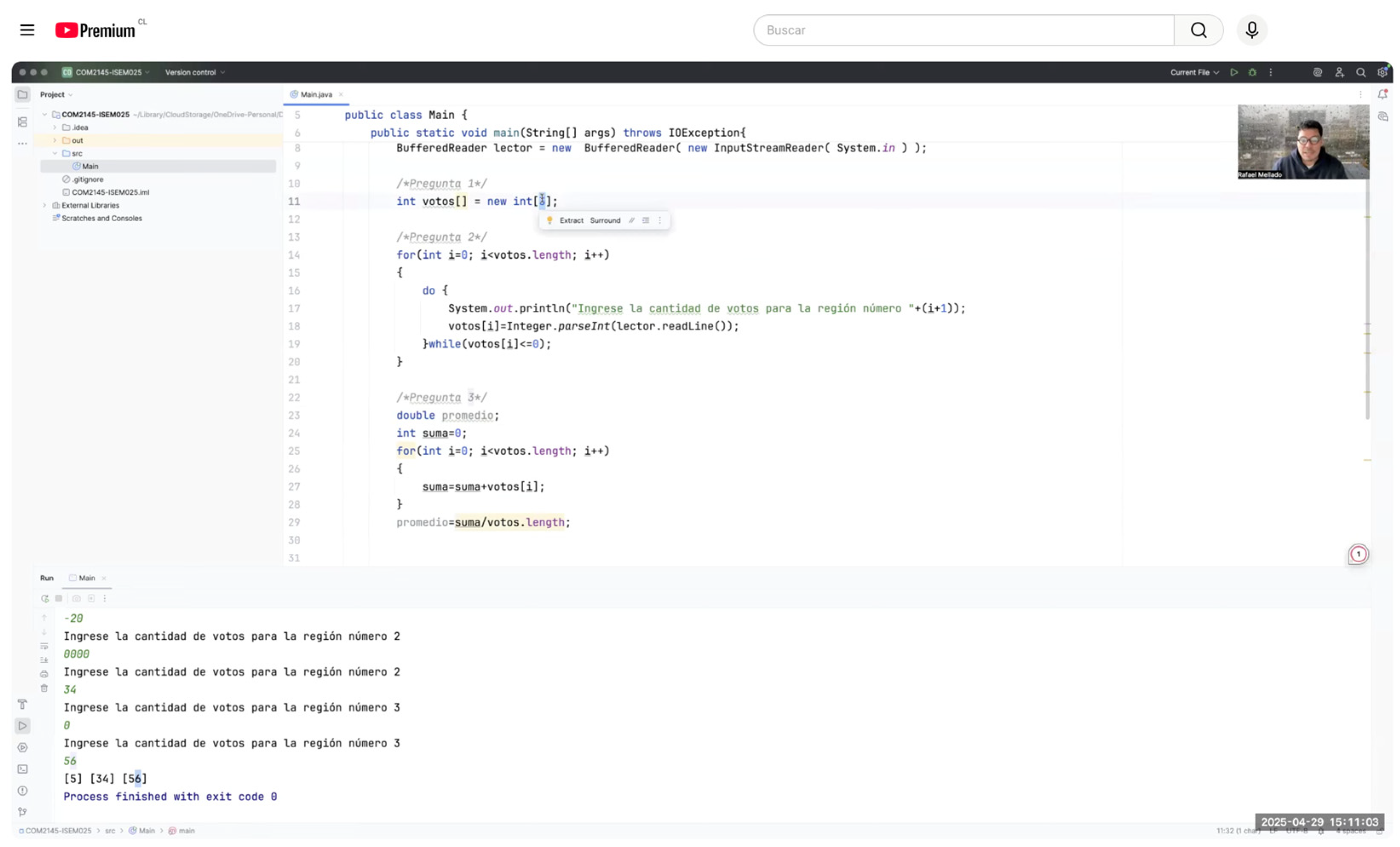
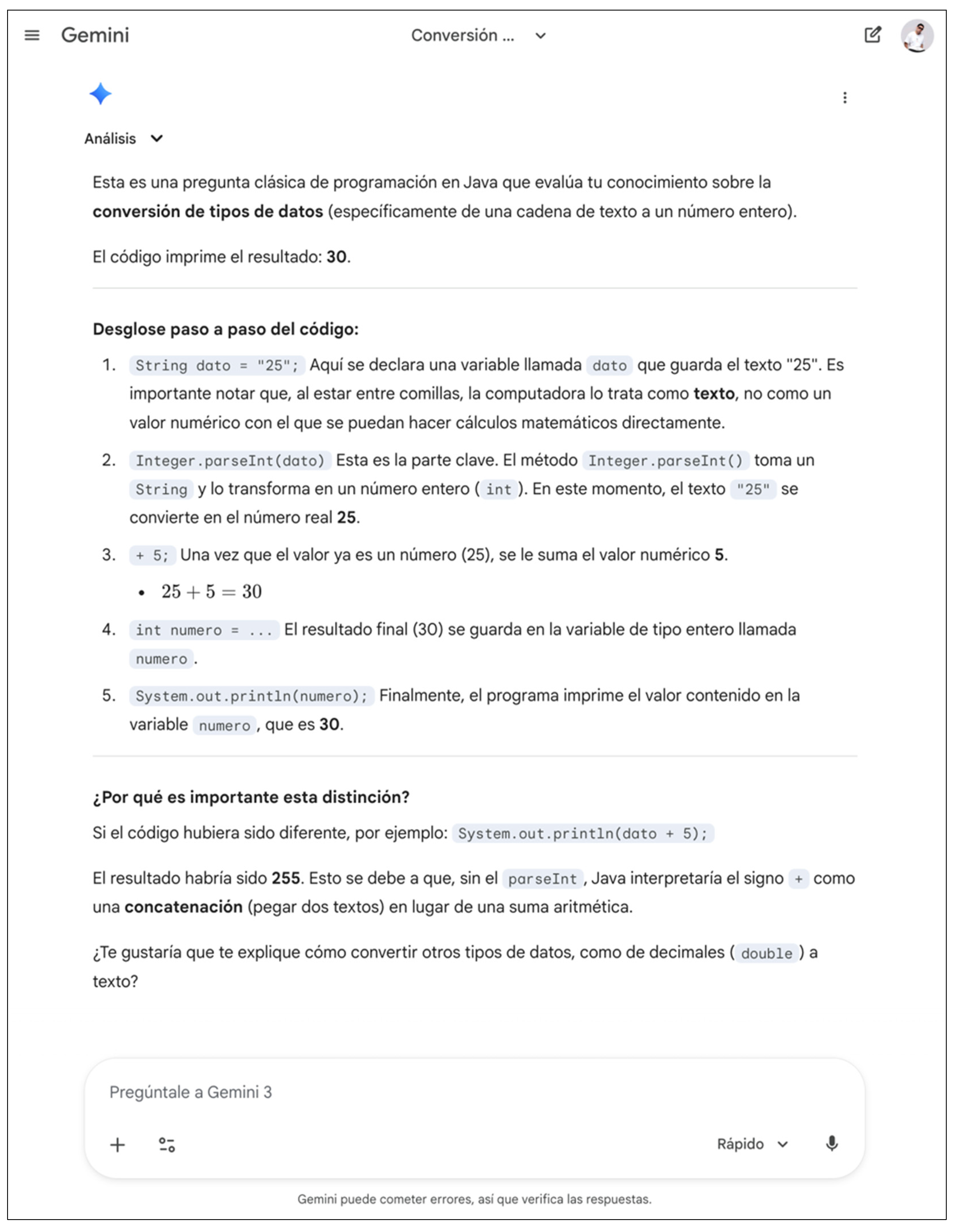
3.3. Process
3.4. Instrument
- Perceived Ease of Use evaluates the effort required to interact with the support tool and determines whether the interaction is clear and free of excessive mental load.
- Behavioral Intention measures the student’s behavioral predisposition to continue using the assigned technology in future learning activities or autonomous study.
- Value/Usefulness assesses the extent to which students internalize the pedagogical activity as structurally valuable and beneficial for their cognitive development.
- Perceived Enjoyment captures the hedonic component and the experiential satisfaction reported during task resolution.
3.5. Data Analysis
4. Results
4.1. Pre-Test and Post-Test Changes by Group
4.2. Individual Results
5. Discussion
5.1. Change in Technology Acceptance over the Intervention
5.2. Navigating Cognitive Friction and the Role of Intrinsic Motivation
5.3. Task Complexity and Cognitive Load Interactions with Adoption
5.4. Pedagogical Relevance for Digital Literacy in Non-Technology Students
5.5. Limitations
6. Conclusions
Author Contributions
Funding
Institutional Review Board Statement
Informed Consent Statement
Data Availability Statement
Conflicts of Interest
References
- Abdalla, R. A. M. (2024). Examining awareness, social influence, and perceived enjoyment in the TAM framework as determinants of ChatGPT. Personalization as a moderator. Journal of Open Innovation: Technology, Market, and Complexity, 10(3), 100327. [Google Scholar] [CrossRef] [Scilit]
- Ahmed, K. (2024, November 6–8). A catalog of generative AI tools for faculty advancement. 2024 21st International Conference on Information Technology Based Higher Education and Training (ITHET) (pp. 1–8), Paris, France. [Google Scholar] [CrossRef] [Scilit]
- Almeida, F., Junça Silva, A., Lopes, S. L., & Braz, I. (2025). Understanding recruiters’ acceptance of artificial intelligence: Insights from the technology acceptance model. Applied Sciences, 15(2), 746. [Google Scholar] [CrossRef] [Scilit]
- Andrade, E. L. M. (2023). Aplicación de la inteligencia artificial en la educación superior. Docere, 29, 21–25. [Google Scholar] [CrossRef] [Scilit]
- Andrade-Girón, D., Marín-Rodriguez, W., Sandivar-Rosas, J., Carreño-Cisneros, E., Susanibar-Ramirez, E., Zuñiga-Rojas, M., Angeles-Morales, J., & Villarreal-Torres, H. (2024). Generative artificial intelligence in higher education learning: A review based on academic databases. Iberoamerican Journal of Science Measurement and Communication, 4(1), 1–16. [Google Scholar] [CrossRef] [Scilit]
- Arpaci, I. (2021). Predicting adoption of visual programming languages: An extension of the technology acceptance model. In M. Al-Emran, & K. Shaalan (Eds.), Recent advances in technology acceptance models and theories (pp. 41–55). Springer International Publishing. [Google Scholar] [CrossRef] [Scilit]
- Arthur, F., Arkorful, V., Salifu, I., & Abam Nortey, S. (2023). Digital paradigm shift: Unraveling students’ intentions to embrace Tablet-based Learning through an extended UTAUT2 model. Cogent Social Sciences, 9(2), 2277340. [Google Scholar] [CrossRef] [Scilit]
- Avouris, N., Sgarbas, K., Caridakis, G., & Sintoris, C. (2025). Teaching introduction to programming in the times of AI: A case study of a course re-design. arXiv, arXiv:2508.06572. [Google Scholar] [CrossRef] [Scilit]
- Bali, S., Chen, T.-C., & Liu, M.-C. (2025). Behavioral intentions of low-achieving students to use mobile English learning: Integrating self-determination theory, theory of planned behavior, and technology acceptance model approaches. International Journal of Human–Computer Interaction, 41(9), 5522–5532. [Google Scholar] [CrossRef] [Scilit]
- Batista, J., Mesquita, A., & Carnaz, G. (2024). Generative AI and higher education: Trends, challenges, and future directions from a systematic literature review. Information, 15(11), 676. [Google Scholar] [CrossRef] [Scilit]
- Beale, R. (2025). Computer science education in the age of generative AI. arXiv, arXiv:2507.02183. [Google Scholar] [CrossRef] [Scilit]
- Bray, R. L. (2024). A tutorial on teaching data analytics with generative AI. arXiv, arXiv:2411.07244. [Google Scholar] [CrossRef] [Scilit]
- Chabani, Z., & Askri, S. (2001). Evolution of robust technology acceptance models: A systematic review [Chapter]. IGI Global Scientific Publishing. Available online: https://Services.Igi-Global.Com/Resolvedoi/Resolve.Aspx?Doi=10.4018/979-8-3373-2858-4.Ch004 (accessed on 6 May 2026). [CrossRef] [Scilit]
- Christ-Brendemühl, S. (2025). Leveraging generative AI in higher education: An analysis of opportunities and challenges addressed in university guidelines. European Journal of Education, 60(1), e12891. [Google Scholar] [CrossRef] [Scilit]
- Cubillos, C., Mellado, R., Cabrera-Paniagua, D., & Urra, E. (2025). Generative artificial intelligence in computer programming: Does it enhance learning, motivation, and the learning environment? IEEE Access, 13, 40438–40455. [Google Scholar] [CrossRef] [Scilit]
- Deng, J., Wu, F., & Qi, J. (2025). Research on influencing factors of users’ willingness to adopt gai for collaborative decision-making in generative artificial intelligence context. Applied Sciences, 15(19), 10322. [Google Scholar] [CrossRef] [Scilit]
- Denny, P., Leinonen, J., Prather, J., Luxton-Reilly, A., Amarouche, T., Becker, B. A., & Reeves, B. N. (2023). Promptly: Using prompt problems to teach learners how to effectively utilize AI code generators. arXiv, arXiv:2307.16364. [Google Scholar] [CrossRef] [Scilit]
- Denny, P., Prather, J., Becker, B. A., Finnie-Ansley, J., Hellas, A., Leinonen, J., Luxton-Reilly, A., Reeves, B. N., Santos, E. A., & Sarsa, S. (2024). Computing education in the era of generative AI. Communications of the ACM, 67(2), 56–67. [Google Scholar] [CrossRef] [Scilit]
- Deroncele-Acosta, A., Sayán-Rivera, R. M. E., Mendoza-López, A. D., & Norabuena-Figueroa, E. D. (2025). Generative artificial intelligence and transversal competencies in higher education: A systematic review. Applied System Innovation, 8(3), 83. [Google Scholar] [CrossRef] [Scilit]
- Dickey, E., Bejarano, A., & Garg, C. (2024). Innovating computer programming pedagogy: The AI-lab framework for generative AI adoption. SN Computer Science, 5(6), 720. [Google Scholar] [CrossRef] [Scilit]
- Díaz, E. C., & Silvain, G. L. (2020). El pensamiento computacional. Nuevos retos para la educación del siglo XXI. Virtualidad, Educación y Ciencia, 11(20), 115–137. [Google Scholar] [CrossRef] [Scilit]
- Duarte, R. J. J. (2023). Heroes, estudiantes y videojuegos en la escuela. Research, Society and Development, 12(8), e15112843062. [Google Scholar] [CrossRef] [Scilit]
- Duong, C. D., Vu, T. N., & Ngo, T. V. N. (2023). Applying a modified technology acceptance model to explain higher education students’ usage of ChatGPT: A serial multiple mediation model with knowledge sharing as a moderator. The International Journal of Management Education, 21(3), 100883. [Google Scholar] [CrossRef] [Scilit]
- Feng, T. H., Luxton-Reilly, A., Wünsche, B. C., & Denny, P. (2024). From automation to cognition: Redefining the roles of educators and generative AI in computing education. arXiv, arXiv:2412.11419. [Google Scholar] [CrossRef] [Scilit]
- Fincher, S. A., & Robins, A. V. (2019). The Cambridge handbook of computing education research. Cambridge University Press. Available online: https://books.google.com.au/books?id=vmAwEAAAQBAJ&redir_esc=y (accessed on 6 May 2026).
- Francis, N. J., Jones, S., & Smith, D. P. (2025). Generative AI in higher education: Balancing innovation and integrity. British Journal of Biomedical Science, 81, 14048. [Google Scholar] [CrossRef] [Scilit] [PubMed]
- Gao, B., Xie, H., Yu, S., Wang, Y., Zuo, W., & Zeng, W. (2024). Exploring user acceptance of al image generator: Unveiling influential factors in embracing an artistic AIGC software. In F. Zhao, & D. Miao (Eds.), AI-generated content (pp. 205–215). Springer Nature. [Google Scholar] [CrossRef] [Scilit]
- Garcia, M. B., Revano, T. F., Maaliw, R. R., Lagrazon, P. G. G., Valderama, A. M. C., Happonen, A., Qureshi, B., & Yilmaz, R. (2023, November 19–23). Exploring student preference between AI-powered ChatGPT and human-curated stack overflow in resolving programming problems and queries. 2023 IEEE 15th International Conference on Humanoid, Nanotechnology, Information Technology, Communication and Control, Environment, and Management (HNICEM) (pp. 1–6), Coron, Palawan, Philippines. [Google Scholar] [CrossRef] [Scilit]
- García, O. C. (2023). Inteligencia artificial en educación superior: Oportunidades y riesgos. RiiTE Revista interuniversitaria de investigación en Tecnología Educativa, 15, 16–27. [Google Scholar] [CrossRef] [Scilit]
- Gómez, J. L. J., & Suarez, E. J. C. (2023). Construcción del pensamiento computacional mediante la incorporación de la educación STEM en el currículo de secundaria del departamento del Quindío (Colombia). Región Científica, 2(1), 202326. [Google Scholar] [CrossRef] [Scilit]
- Granić, A. (2023). Technology acceptance and adoption in education. In Handbook of open, distance and digital education (pp. 183–197). Springer. [Google Scholar] [CrossRef] [Scilit] [PubMed]
- Granić, A., & Marangunić, N. (2019). Technology acceptance model in educational context: A systematic literature review. British Journal of Educational Technology, 50(5), 2572–2593. [Google Scholar] [CrossRef] [Scilit]
- Greiner, C., Peisl, T. C., Höpfl, F., & Beese, O. (2023). Acceptance of AI in semi-structured decision-making situations applying the four-sides model of communication—An empirical analysis focused on higher education. Education Sciences, 13(9), 865. [Google Scholar] [CrossRef] [Scilit]
- Guo, R., Li, G., Miao, H., Huang, X., & Wang, Z. (2025, April 18–20). Construction and application effectiveness of a project-based learning model based on generative artificial intelligence. 2025 7th International Conference on Computer Science and Technologies in Education (CSTE) (pp. 515–521), Wuhan, China. [Google Scholar] [CrossRef] [Scilit]
- Hashmi, N., & Bal, A. S. (2024). Generative AI in higher education and beyond. Business Horizons, 67(5), 607–614. [Google Scholar] [CrossRef] [Scilit]
- Hernandez, A. A., Albina, E. M., & Caballero, A. R. (2025, June 27–30). Generative artificial intelligence for programming education: Enhancing input to outcome-based teaching and learning approaches. 2025 Seventh International Symposium on Computer, Consumer and Control (IS3C) (pp. 1–5), Taichung, Taiwan. [Google Scholar] [CrossRef] [Scilit]
- Ibrahim, F., Münscher, J.-C., Daseking, M., & Telle, N.-T. (2025). The technology acceptance model and adopter type analysis in the context of artificial intelligence. Frontiers in Artificial Intelligence, 7, 1496518. [Google Scholar] [CrossRef] [Scilit] [PubMed]
- Izquierdo-Álvarez, V., Jimeno-Postigo, C., Izquierdo-Álvarez, V., & Jimeno-Postigo, C. (2001). Challenges and opportunities of integrating generative artificial intelligence in higher education: A systematic review [Chapter]. IGI Global Scientific Publishing. Available online: https://Services.Igi-Global.Com/Resolvedoi/Resolve.Aspx?Doi=10.4018/979-8-3373-0122-8.Ch017 (accessed on 6 May 2026). [CrossRef] [Scilit]
- Jacobson, N. S., & Truax, P. (1991). Clinical significance: A statistical approach to defining meaningful change in psychotherapy research. Journal of Consulting and Clinical Psychology, 59(1), 12–19. [Google Scholar] [CrossRef] [PubMed]
- Jensen, L. X., Buhl, A., Sharma, A., & Bearman, M. (2025). Generative AI and higher education: A review of claims from the first months of ChatGPT. Higher Education, 89(4), 1145–1161. [Google Scholar] [CrossRef] [Scilit]
- Jo, H. (2025). What influences employee engagement with generative AI in B2C? The moderating role of organizational practices. Journal of Organizational Change Management, 38(6), 1117–1143. [Google Scholar] [CrossRef] [Scilit]
- Kanont, K., Pingmuang, P., Simasathien, T., Wisnuwong, S., Wiwatsiripong, B., Poonpirome, K., Songkram, N., & Khlaisang, J. (2024). Generative-AI, a learning assistant? Factors influencing higher-ed students’ technology acceptance. Electronic Journal of E-Learning, 22(6), 18–33. [Google Scholar] [CrossRef] [Scilit]
- Kim, D. (2023). Redefining computer science education: Code-centric to natural language programming with AI-based no-code platforms. arXiv, arXiv:2308.13539. [Google Scholar] [CrossRef] [Scilit]
- Kirlidog, M., & Kaynak, A. (2011). Technology acceptance model and determinants of technology rejection. International Journal of Information Systems and Social Change (IJISSC), 2(4), 1–12. [Google Scholar] [CrossRef] [Scilit]
- Li, H.-J., Huang, Q.-R., Wen, L.-P., Chen, W., & Xu, Z.-Z. (2025). Generative artificial intelligence supported programming learning: Learning effectiveness and core competence. Sage Open, 15(3), 21582440251377986. [Google Scholar] [CrossRef] [Scilit]
- Li, K. C., Chong, G. H. L., Wong, B. T. M., & Wu, M. M. F. (2025). A TAM-based analysis of Hong Kong undergraduate students’ attitudes toward generative AI in higher education and employment. Education Sciences, 15(7), 798. [Google Scholar] [CrossRef] [Scilit]
- Liu, Y., Wang, Q., & Lei, J. (2025). Adopting generative AI in future classrooms: A study of preservice teachers’ intentions and influencing factors. Behavioral Sciences, 15(8), 1040. [Google Scholar] [CrossRef] [Scilit] [PubMed]
- Machado, R., David, R., & Souza, R. (2025). A inteligência artificial generativa no ecossistema acadêmico: Uma análise de aplicações, desafios e oportunidades para a pesquisa, o ensino e a divulgação científica. arXiv, arXiv:2507.03106. [Google Scholar] [CrossRef] [Scilit]
- Martini, S. (2024). Teaching programming in the age of generative AI. In Proceedings of the 2024 on innovation and technology in computer science education V. 1, ITiCSE 2024, Milan, Italy (pp. 1–2). ACM. [Google Scholar] [CrossRef] [Scilit]
- Mayer, R. E. (2013). Teaching and learning computer programming: Multiple research perspectives. Routledge. [Google Scholar]
- McDonald, N., Johri, A., Ali, A., & Hingle, A. (2024). Generative artificial intelligence in higher education: Evidence from an analysis of institutional policies and guidelines. arXiv, arXiv:2402.01659. [Google Scholar] [CrossRef] [Scilit]
- Mellado, R., & Cubillos, C. (2024). Gamification improves learning: Experience in a training activity of computer programming in 1126 higher education. Journal of Computer Assisted Learning, 40(4), 1959–1973. [Google Scholar] [CrossRef] [Scilit]
- Mellado, R., & Cubillos, C. (2025). Can generative artificial intelligence outperform self-instructional learning in computer programming?: Impact on motivation and knowledge acquisition. Applied Sciences, 15(11), 5867. [Google Scholar] [CrossRef] [Scilit]
- Musa, H. G., Fatmawati, I., Nuryakin, N., & Suyanto, M. (2024). Marketing research trends using technology acceptance model (TAM): A comprehensive review of researches (2002–2022). Cogent Business and Management, 11(1), 2329375. [Google Scholar] [CrossRef] [Scilit]
- Nevárez Montes, J., & Elizondo-Garcia, J. (2025). Faculty acceptance and use of generative artificial intelligence in their practice. Frontiers in Education, 10, 1427450. [Google Scholar] [CrossRef] [Scilit]
- Ng, S.-L., & Ho, C.-C. (2025). Generative AI in education: Mapping the research landscape through bibliometric analysis. Information, 16(8), 657. [Google Scholar] [CrossRef] [Scilit]
- Or, C. (2024). Thirty-Five Years of the Technology Acceptance model: Insights from meta-analytic structural equation modelling. The Open/Technology in Education, Society, and Scholarship Association Journal, 4(3), 1–26. [Google Scholar] [CrossRef] [Scilit]
- Peñalvo, F. J. G., Llorens-Largo, F., & Vidal, J. (2024). La nueva realidad de la educación ante los avances de la inteligencia artificial generativa. RIED-Revista Iberoamericana de Educación a Distancia, 27(1), 9–39. [Google Scholar] [CrossRef] [Scilit]
- Poornesh, M. (2024). Navigating the future of educational research: Leveraging generative AI for improved insights. The Clearing House: A Journal of Educational Strategies, Issues and Ideas, 97(6), 237–244. [Google Scholar] [CrossRef] [Scilit]
- Prather, J., Denny, P., Leinonen, J., Becker, B. A., Albluwi, I., Craig, M., Keuning, H., Kiesler, N., Kohn, T., Luxton-Reilly, A., MacNeil, S., Petersen, A., Pettit, R., Reeves, B. N., & Savelka, J. (2023). The robots are here: Navigating the generative AI revolution in computing education. In ITiCSE-WGR ’23: Proceedings of the 2023 working group reports on innovation and technology in computer science education (pp. 108–159). ACM. [Google Scholar] [CrossRef] [Scilit]
- Radhwan, M. G., & Radhwan, M. G. (2001). Opportunities, challenges, and strategies for integrating generative artificial intelligence in teaching and learning in higher education [Chapter]. IGI Global Scientific Publishing. Available online: https://Services.Igi-Global.Com/Resolvedoi/Resolve.Aspx?Doi=10.4018/979-8-3693-7332-3.Ch007 (accessed on 6 May 2026). [CrossRef] [Scilit]
- Rafi, M., Aitken, J. M., Fatah, T. D., & Mailangkay, A. (2024, August 7–8). Analyzing the impact of generative AI on IT employee performance. 2024 3rd International Conference on Creative Communication and Innovative Technology (ICCIT) (pp. 1–7), Tangerang, Indonesia. [Google Scholar] [CrossRef] [Scilit]
- Rahe, C., & Maalej, W. (2025). How do programming students use generative AI? Proceedings of the ACM on Software Engineering, 2(FSE), 978–1000. [Google Scholar] [CrossRef] [Scilit]
- Robinson, T. (2025). Generative artificial intelligence in higher education: Understanding faculty adoption through the technology acceptance model. I-Manager’s Journal of Educational Technology, 22(1), 18. [Google Scholar] [CrossRef] [Scilit]
- Rojas-López, A., & García-Peñalvo, F. J. (2020). Evaluación del pensamiento computacional para el aprendizaje de programación de computadoras en educación superior. Revista de Educación a Distancia (RED), 20(63). [Google Scholar] [CrossRef] [Scilit]
- Rubio-Manzano, C., Meza, J., Fernandez-Santibanez, R., & Vidal-Castro, C. (2025). Teaching programming in the age of generative AI: Insights from literature, pedagogical proposals, and student perspectives. arXiv, arXiv:2507.00108. [Google Scholar] [CrossRef] [Scilit]
- Schwarz, J. (2025). The use of generative AI in statistical data analysis and its impact on teaching statistics at universities of applied sciences. Teaching Statistics, 47(2), 118–128. [Google Scholar] [CrossRef] [Scilit]
- Sehmi, A., Sarfraz, I., & Hussain, M. (2025). Generative artificial intelligence’s integration for data analysis in conducting academic research: Understanding the perspective of research supervisors. Journal of Advanced Academics, 36(4), 788–815. [Google Scholar] [CrossRef] [Scilit]
- Shata, A., & Hartley, K. (2025). Artificial intelligence and communication technologies in academia: Faculty perceptions and the adoption of generative AI. International Journal of Educational Technology in Higher Education, 22(1), 14. [Google Scholar] [CrossRef] [Scilit]
- Silva, P., & Silva, P. (2001). Davis’ technology acceptance model (TAM) (1989) [Chapter]. IGI Global Scientific Publishing. Available online: https://Services.Igi-Global.Com/Resolvedoi/Resolve.Aspx?Doi=10.4018/978-1-4666-8156-9.Ch013 (accessed on 6 May 2026). [CrossRef] [Scilit]
- Sprenger, D. A., & Schwaninger, A. (2021). Technology acceptance of four digital learning technologies (classroom response system, classroom chat, e-lectures, and mobile virtual reality) after three months’ usage. International Journal of Educational Technology in Higher Education, 18(1), 8. [Google Scholar] [CrossRef] [Scilit]
- Strzelecki, A. (2024). Students’ acceptance of ChatGPT in higher education: An extended unified theory of acceptance and use of technology. Innovative Higher Education, 49(2), 223–245. [Google Scholar] [CrossRef] [Scilit]
- Sukirman, Supriyanto, E., Setiawan, A., Chamsudin, A., Yuliana, I., & Wantoro, J. (2024, June 6–7). Exploring student perceptions and acceptance of chatgpt in enhanced AI-assisted learning. 2024 International Conference on Smart Computing, IoT and Machine Learning (SIML) (pp. 291–296), Surakarta, Indonesia. [Google Scholar] [CrossRef] [Scilit]
- Taherdoost, H., Mohamed, N., & Madanchian, M. (2024). Navigating technology adoption/acceptance models. Procedia Computer Science, International Conference on Industry Sciences and Computer Science Innovation, 237, 833–840. [Google Scholar] [CrossRef] [Scilit]
- Tao, D., Li, W., Qin, M., & Cheng, M. (2022). Understanding students’ acceptance and usage behaviors of online learning in mandatory contexts: A three-wave longitudinal study during the COVID-19 pandemic. Sustainability, 14(13), 7830. [Google Scholar] [CrossRef] [Scilit]
- Tariq, M. U., & Tariq, M. U. (2001). Generative AI in curriculum development in higher education [Chapter]. IGI Global Scientific Publishing. Available online: https://Services.Igi-Global.Com/Resolvedoi/Resolve.Aspx?Doi=10.4018/979-8-3693-2418-9.Ch009 (accessed on 6 May 2026). [CrossRef] [Scilit]
- Terrón, P. D. (2024). Generative artificial intelligence: Educational reflections from an analysis of scientific production. Journal of Technology and Science Education, 14(3), 756–769. [Google Scholar] [CrossRef] [Scilit]
- Thongkoo, K., Daungcharone, K., & Thanyaphongphat, J. (2020, March 11–14). Students’ acceptance of digital learning tools in programming education course using technology acceptance model. 2020 Joint International Conference on Digital Arts, Media and Technology with ECTI Northern Section Conference on Electrical, Electronics, Computer and Telecommunications Engineering (ECTI DAMT and NCON) (pp. 377–380), Pattaya, Thailand. [Google Scholar] [CrossRef] [Scilit]
- Tosi, D. (2024). Studying the quality of source code generated by different AI generative engines: An empirical evaluation. Future Internet, 16(6), 188. [Google Scholar] [CrossRef] [Scilit]
- Ursavaş, Ö. F., Yalçın, Y., İslamoğlu, H., Bakır-Yalçın, E., & Cukurova, M. (2025). Rethinking the importance of social norms in generative AI adoption: Investigating the acceptance and use of generative AI among higher education students. International Journal of Educational Technology in Higher Education, 22(1), 38. [Google Scholar] [CrossRef] [Scilit]
- Vhatkar, A., Pawar, V., & Chavan, P. (2024, August 23–24). Generative AI in Education: A Bibliometric and Thematic Analysis. 2024 8th International Conference on Computing, Communication, Control and Automation (ICCUBEA) (pp. 1–6), Pune, India. [Google Scholar] [CrossRef] [Scilit]
- Vieira, A., & Mesquita, A. (2025). Generative artificial intelligence in higher education: Challenges, opportunities and pedagogical implications. Journal of Technologies Information and Communication, 5(1), 36578. [Google Scholar] [CrossRef] [Scilit]
- Wang, S. F., Liu, K. Y., Liu, Y., Zhao, F. Y., Sun, B., Tang, Y. H., & Cai, S. X. (2026). Evaluating designers’ acceptance of AI generated content using TAM and TRI frameworks. Scientific Reports, 16, 19594. [Google Scholar] [CrossRef] [Scilit] [PubMed]
- Yeni, S., & van der Meulen, A. (2022). Students’ behavioral intention to use gradual programming language hedy: A technology acceptance model. In ITiCSE ’22: Proceedings of the 27th ACM conference on on innovation and technology in computer science education (Vol. 1, pp. 331–336). ACM. [Google Scholar] [CrossRef] [Scilit]
- Zaineldeen, S., Hongbo, L., Koffi, A. L., & Hassan, B. M. A. (2020). Technology acceptance model’ concepts, contribution, limitation, and adoption in education. Universal Journal of Educational Research, 8(11), 5061–5071. [Google Scholar] [CrossRef] [Scilit]
- Zastudil, C., Rogalska, M., Kapp, C., Vaughn, J., & MacNeil, S. (2023). Generative AI in computing education: Perspectives of students and instructors. arXiv, arXiv:2308.04309. [Google Scholar] [CrossRef] [Scilit]
- Zheng, J., Song, H., Wang, Z., Han, C., Liu, C., Chai, K. K., & Chen, Y. (2025, May 14–16). Evaluating the impact of using GenAI in higher education for university students. 2025 5th International Conference on Artificial Intelligence and Education (ICAIE) (pp. 765–772), Suzhou, China. [Google Scholar] [CrossRef] [Scilit]

| Construct | Question/Statement |
|---|---|
| Perceived Enjoyment |
|
| Value/Usefulness |
|
| Perceived Ease of Use |
|
| Behavioral Intention |
|
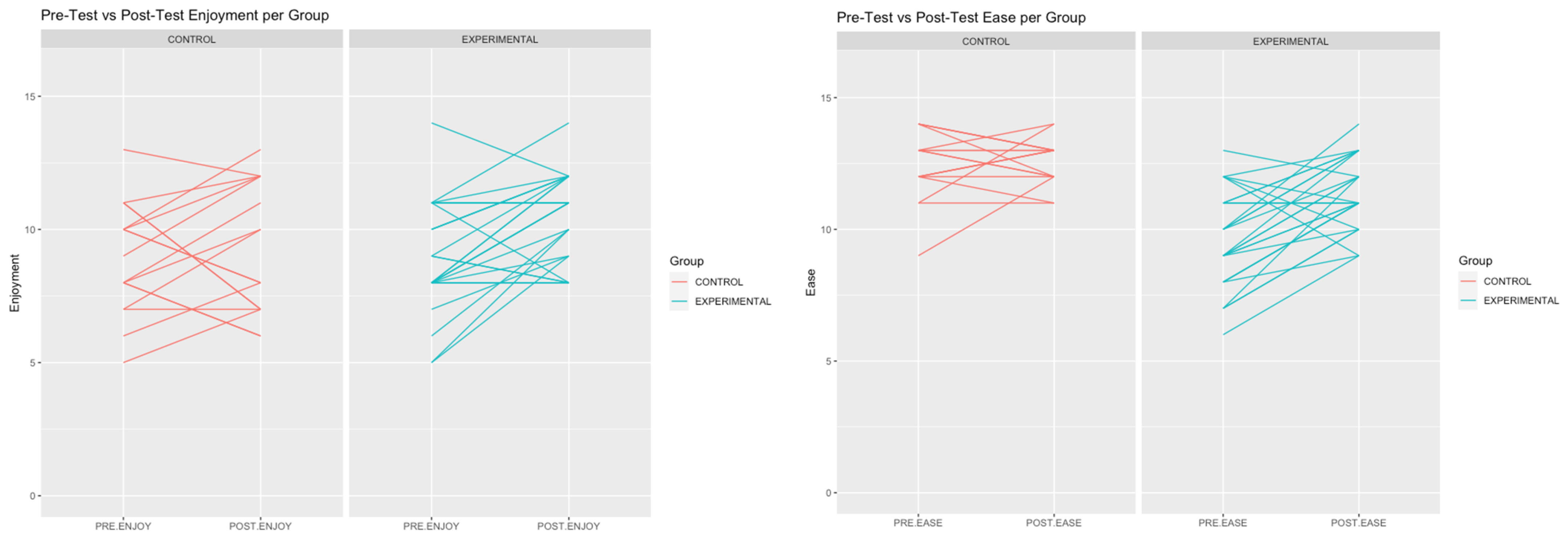
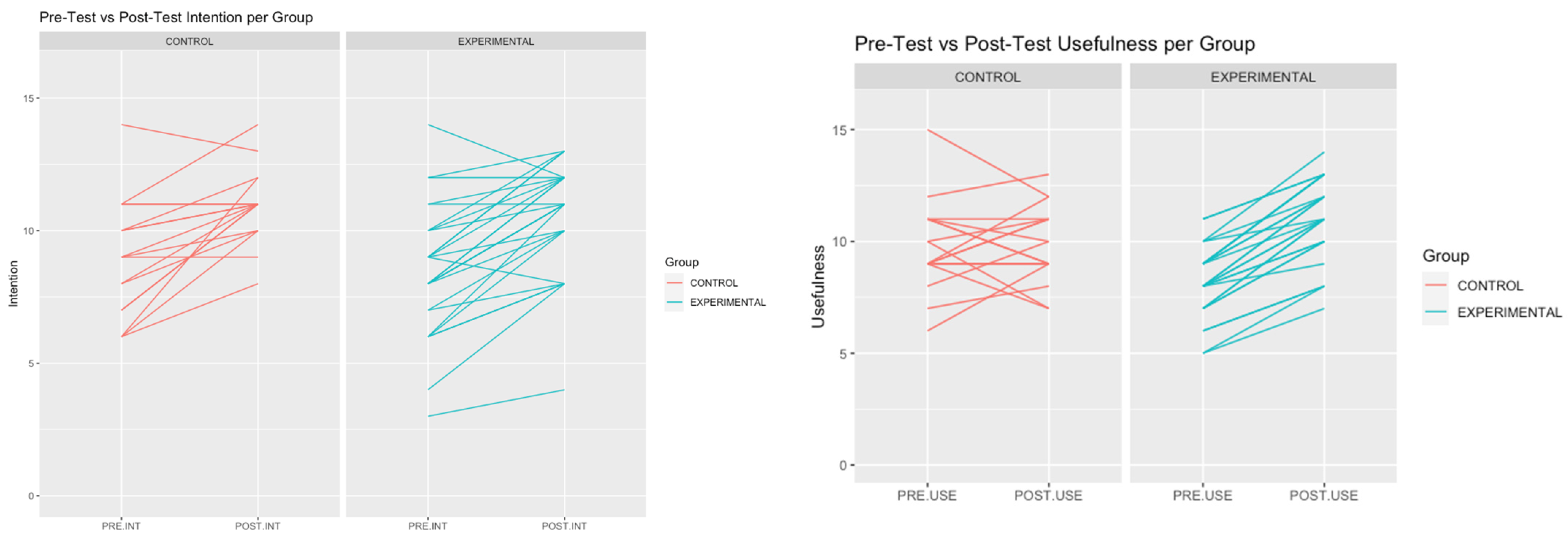
| Average by Group | Enjoyment | Value/Usefulness | Perceived Ease of Use | Behavioral Intention | ||||||||
|---|---|---|---|---|---|---|---|---|---|---|---|---|
| Pre-Test | Post-Test | Diff | Pre-Test | Post-Test | Diff | Pre-Test | Post-Test | Diff | Pre-Test | Post-Test | Diff | |
| Control | 8.9 | 9.2 | 0.3 | 9.8 | 9.9 | 0.1 | 12.5 | 12.6 | 0.1 | 8.9 | 10.9 | 2.0 |
| Experimental | 8.9 | 10.4 | 1.5 | 8.2 | 11.0 | 2.8 | 9.6 | 11.4 | 1.8 | 8.4 | 10.6 | 2.2 |
Disclaimer/Publisher’s Note: The statements, opinions and data contained in all publications are solely those of the individual author(s) and contributor(s) and not of MDPI and/or the editor(s). MDPI and/or the editor(s) disclaim responsibility for any injury to people or property resulting from any ideas, methods, instructions or products referred to in the content. |
© 2026 by the authors. Licensee MDPI, Basel, Switzerland. This article is an open access article distributed under the terms and conditions of the Creative Commons Attribution (CC BY) license.
Share and Cite
Mellado, R.; Cubillos, C.; Roncagliolo, S. Beyond Ease of Use: Dynamics of Technology Adoption and Cognitive Load in AI-Assisted Programming for Non-Technical Students. Behav. Sci. 2026, 16, 1405. https://doi.org/10.3390/bs16081405
Mellado R, Cubillos C, Roncagliolo S. Beyond Ease of Use: Dynamics of Technology Adoption and Cognitive Load in AI-Assisted Programming for Non-Technical Students. Behavioral Sciences. 2026; 16(8):1405. https://doi.org/10.3390/bs16081405
Chicago/Turabian StyleMellado, Rafael, Claudio Cubillos, and Silvana Roncagliolo. 2026. "Beyond Ease of Use: Dynamics of Technology Adoption and Cognitive Load in AI-Assisted Programming for Non-Technical Students" Behavioral Sciences 16, no. 8: 1405. https://doi.org/10.3390/bs16081405
APA StyleMellado, R., Cubillos, C., & Roncagliolo, S. (2026). Beyond Ease of Use: Dynamics of Technology Adoption and Cognitive Load in AI-Assisted Programming for Non-Technical Students. Behavioral Sciences, 16(8), 1405. https://doi.org/10.3390/bs16081405

