“No Fair!”: Children’s Perceptions of Fairness in Merit-Based Distributions

Abstract
1. Introduction
Current Investigation
2. Materials and Methods
2.1. Participants
2.2. Procedure
2.2.1. Practice Phase
2.2.2. Test Phase
Act Evaluation (Both Conditions)
Authority Contingency (Equality Condition Only)
Forced-Choice Categorization (Both Conditions)
2.3. Coding and Coder Agreement
2.4. Analytic Approach
3. Results
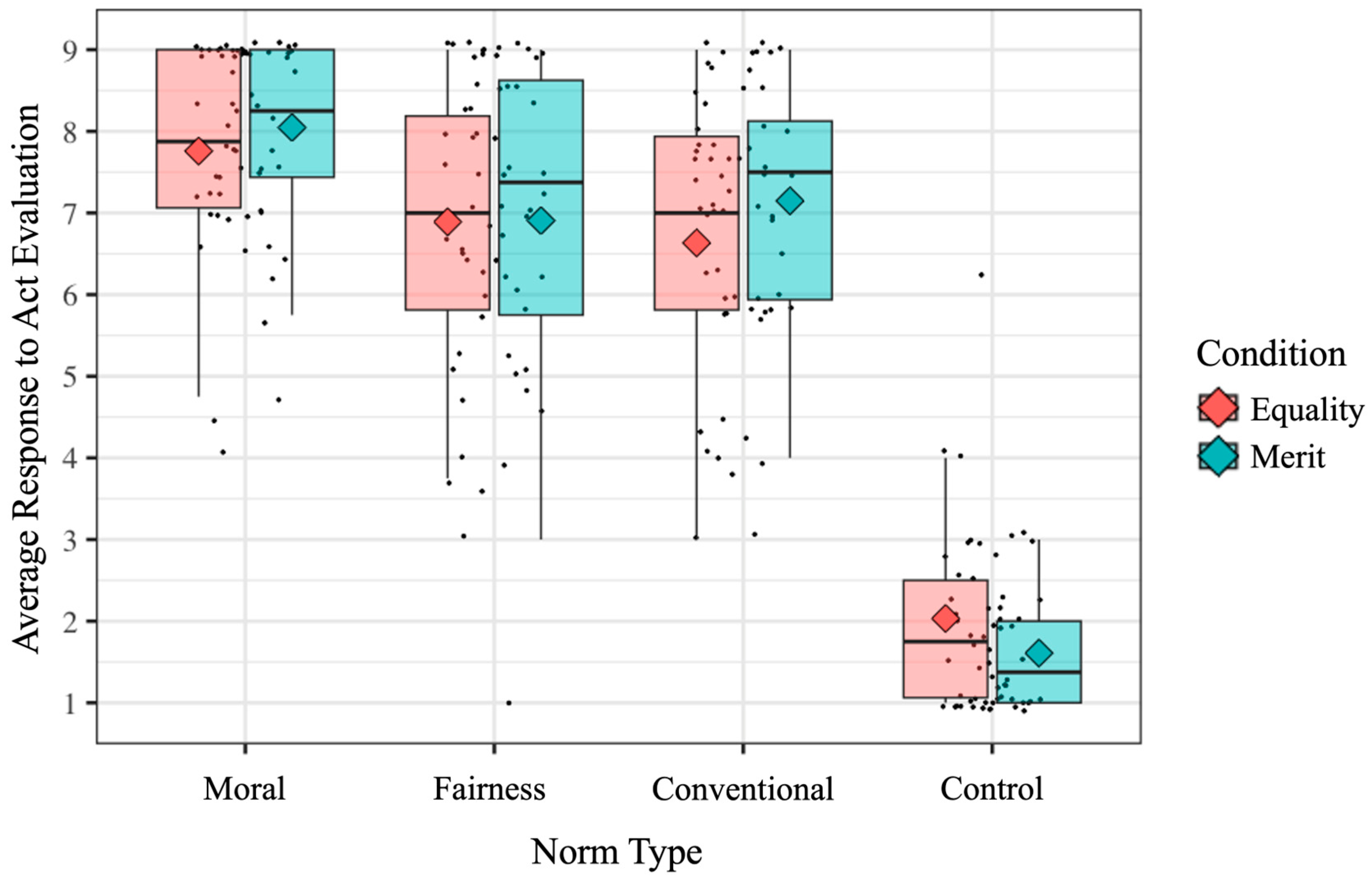
3.1. Act Evaluation
3.2. Authority Contingency (Equality Condition Only)
3.3. Forced-Choice Grouping
4. Discussion
4.1. Why Didn’t Effort “Moralize” Unfairness?
4.2. Limited Domain Differentiation in Authority Contingency and Categorization
4.3. The Ambiguous Status of Fairness Violations
4.4. Limitations and Future Directions
5. Conclusions
Author Contributions
Funding
Institutional Review Board Statement
Informed Consent Statement
Data Availability Statement
Acknowledgments
Conflicts of Interest
Appendix A. (Study Script)
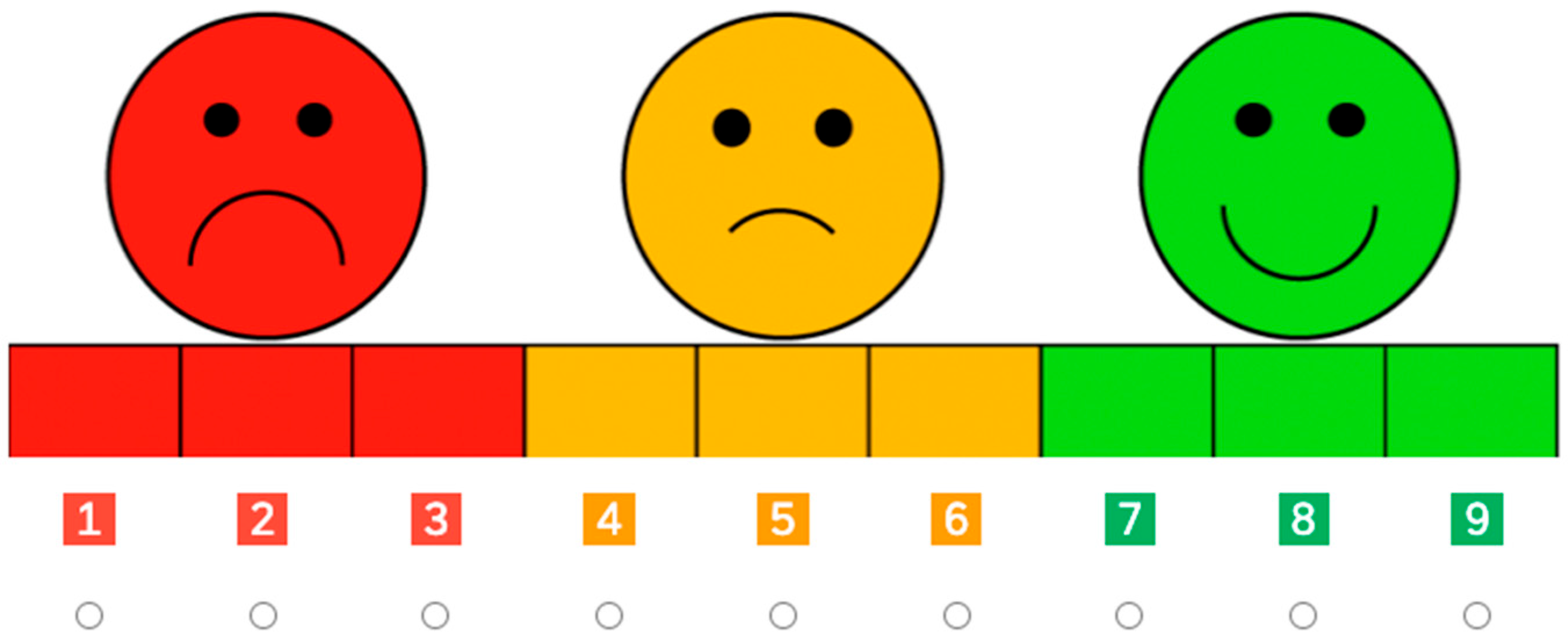
Appendix A.1. Scale Introduction
Appendix A.2. Forced Choice Grouping Introduction
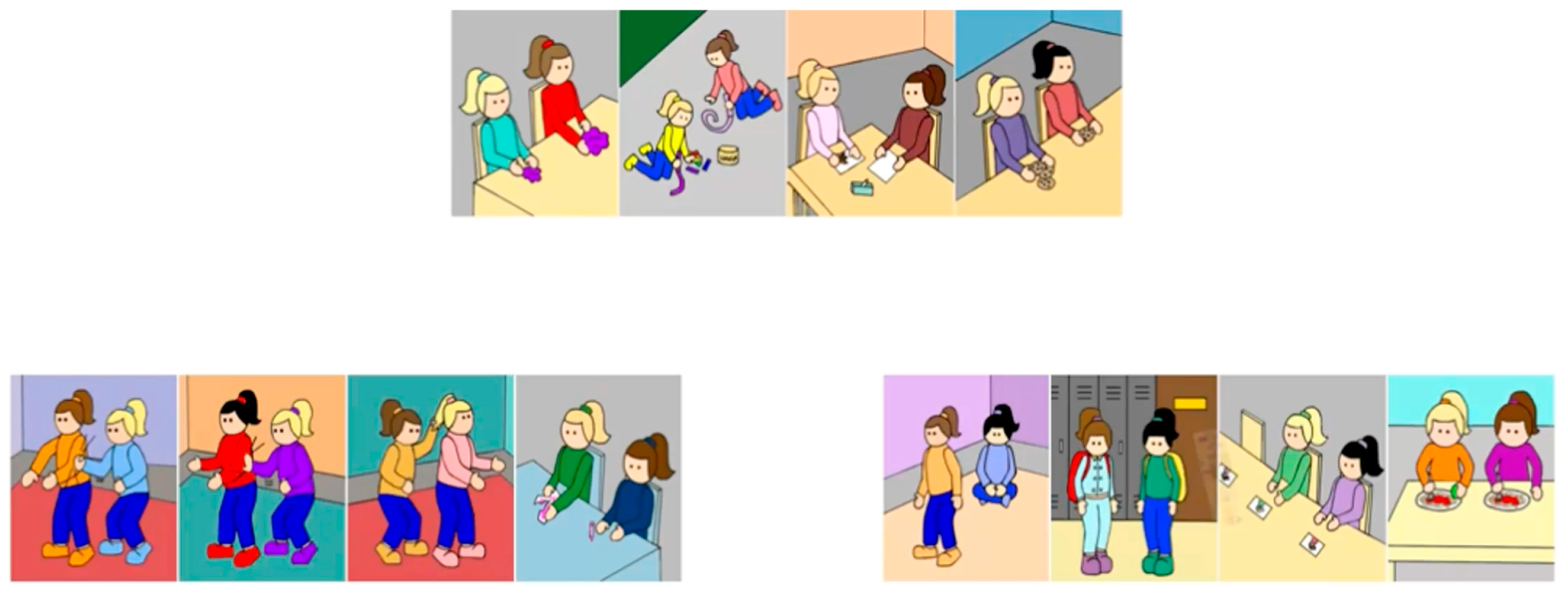
Appendix A.3. Vignettes
Appendix A.4. Act Evaluation
Appendix A.5. Authority Contingency (Fairness-Equality Only)
Appendix A.6. Forced Choice Grouping
Appendix B. Coding and Coder Agreement

| Justification Category | Definition | Fairness-Merit | Fairness-Equality |
|---|---|---|---|
| No Justification | Child did not respond, said “I don’t know,” or gave an unrelated answer, such as describing the pictures. | 71.88% | 60.00% |
| Normative | Child referred to how right/wrong or good/bad the actions were, e.g., “Because it’s bad stuff.” | 9.38% | 23.33% |
| Emotional | Child referred to actions being kind or mean, or to emotions, such as being hurt, e.g., “Other group really hurts other people’s feelings.” | 15.63% | 16.67% |
| Normative and Emotional | Child used both Normative and Emotional justifications. | 3.13% | 0.00% |
| Norm Type | Fairness-Merit | Fairness-Equality |
|---|---|---|
| Moral | 8.05 (1.96) | 7.76 (2.05) |
| Fairness | 6.91 (2.82) | 6.89 (2.46) |
| Conventional | 7.15 (2.46) | 6.63 (2.71) |
| Control | 1.61 (0.99) | 2.03 (1.98) |
References
- Acar, M., & Sivis, O. (2023). “But the poor needed it more”: Children’s judgments on procedural justice to allocate resources between two candidates equal in merit, different in need. Journal of Experimental Child Psychology, 232, 105679. [Google Scholar] [CrossRef]
- Angarita, R. G., & Viciana, H. (2022). Merit is not meritorious everywhere: Fairness in first and third party tasks among Kogi children. Journal of Cognition and Culture, 22(3–4), 246–263. [Google Scholar] [CrossRef]
- Ball, C. L., Smetana, J. G., & Sturge-Apple, M. L. (2017). Following my head and my heart: Integrating preschoolers’ empathy, theory of mind, and moral judgments. Child Development, 88(2), 597–611. [Google Scholar] [CrossRef]
- Bates, D., Mächler, M., Bolker, B. M., & Walker, S. C. (2015). Fitting linear mixed-effects models using lme4. Journal of Statistical Software, 67(1), 1–48. [Google Scholar] [CrossRef]
- Baumard, N., Mascaro, O., & Chevallier, C. (2012). Preschoolers are able to take merit into account when distributing goods. Developmental Psychology, 48(2), 492–498. [Google Scholar] [CrossRef]
- Blake, P. R., McAuliffe, K., Corbit, J., Callaghan, T. C., Barry, O., Bowie, A., Kleutsch, L., Kramer, K. L., Ross, E., Vongsachang, H., Wrangham, R., & Warneken, F. (2015). The ontogeny of fairness in seven societies. Nature, 528(7581), 258–261. [Google Scholar] [CrossRef]
- Conry-Murray, C., Dunfield, K. A., Recchia, H., Maranges, H. M., Dougherty, C., & DiGregory, E. (2025). Harm is key to judgments that stealing is immoral. Collabra: Psychology, 11(1), 127729. [Google Scholar] [CrossRef]
- Deutchman, P., Kraft-Todd, G., Young, L., & McAuliffe, K. (2025). People update their injunctive norm and moral beliefs after receiving descriptive norm information. Journal of Personality and Social Psychology, 128, 1–18. [Google Scholar] [CrossRef] [PubMed]
- Deutsch, M. (1975). Equity, equality, and need: What determines which value will be used as the basis of distributive justice? Journal of Social Issues, 31(3), 137–149. [Google Scholar] [CrossRef]
- Dietze, P., & Craig, M. A. (2021). Framing economic inequality and policy as group disadvantages (versus group advantages) spurs support for action. Nature Human Behaviour, 5(3), 349–360. [Google Scholar] [CrossRef] [PubMed]
- Dunham, Y., Durkin, A., & Tyler, T. R. (2018). The development of a preference for procedural justice for self and others. Scientific Reports, 8(1), 17740. [Google Scholar] [CrossRef]
- Engelmann, J. M., Zhang, Z., Zeidler, H., Dunham, Y., & Herrmann, E. (2021). The influence of friendship and merit on children’s resource allocation in three societies. Journal of Experimental Child Psychology, 208, 105149. [Google Scholar] [CrossRef]
- Fehr, E., Bernhard, H., & Rockenbach, B. (2008). Egalitarianism in young children. Nature, 454(7208), 1079–1083. [Google Scholar] [CrossRef]
- Gerdemann, S. C., McAuliffe, K., Blake, P. R., Haun, D. B. M., & Hepach, R. (2022). The ontogeny of children’s social emotions in response to (un)fairness. Royal Society Open Science, 9, 191456. [Google Scholar] [CrossRef]
- Hamann, K., Warneken, F., Greenberg, J. R., & Tomasello, M. (2011). Collaboration encourages equal sharing in children but not in chimpanzees. Nature, 476(7360), 328–331. [Google Scholar] [CrossRef] [PubMed]
- Hernandez, J. (2022, May 18). The U.S. men’s and women’s soccer teams will be paid equally under a new deal. NPR. Available online: https://www.npr.org/2022/05/18/1099697799/us-soccer-equal-pay-agreement-women (accessed on 14 April 2026).
- Hoffman, M. L. (2000). Empathy and moral development: Implications for caring and justice. Cambridge University Press. [Google Scholar]
- Holm, S. (1978). A simple sequentially rejective multiple test procedure. Scandinavian Journal of Statistics, 6(2), 65–70. [Google Scholar]
- Kanngiesser, P., & Warneken, F. (2012). Young children consider merit when sharing resources with others. PLoS ONE, 7(8), e43979. [Google Scholar] [CrossRef]
- Kassecker, A., Verschoor, S. A., & Schmidt, M. F. H. (2023). Human infants are aroused and concerned by moral transgressions. Proceedings of the National Academy of Sciences of the United States of America, 120(31), e2306344120. [Google Scholar] [CrossRef]
- Killen, M., & Smetana, J. G. (2015). Origins and development of morality. In M. E. Lamb (Ed.), Handbook of child psychology and developmental science (Vol. 3, pp. 701–749). Wiley-Blackwell. [Google Scholar] [CrossRef]
- Kinnard, L., Mistry, R. S., McGuire, L., & Elenbaas, L. (2025). “The ball is in his court. It’s up to him”: Parental communication about meritocracy. Developmental Psychology. Advance online publication. [Google Scholar] [CrossRef]
- Lenth, R., & Piaskowski, J. (2025). Emmeans: Estimated marginal means, aka least-squares means. R package version 2.0.1 (Version 2.0.1) [Computer software]. Available online: https://rvlenth.github.io/emmeans/ (accessed on 14 April 2026).
- Noh, J. Y. (2020). Children’s developing understanding of merit in a distributive justice context. Journal of Child and Family Studies, 29(5), 1484–1492. [Google Scholar] [CrossRef]
- Nucci, L. P., & Turiel, E. (1978). Social interactions and the development of social concepts in preschool children. Child Development, 49(2), 400–407. [Google Scholar] [CrossRef]
- Pesowski, M. L., Nancekivell, S. E., Tasimi, A., & Friedman, O. (2022). Ownership and value in childhood. Annual Review of Developmental Psychology, 4(1), 161–183. [Google Scholar] [CrossRef]
- R Core Team. (2025). R: A language and environment for statistical computing [Computer software]. R Foundation for Statistical Computing. Available online: https://www.R-project.org/ (accessed on 14 April 2026).
- Rakoczy, H., Kaufmann, M., & Lohse, K. (2016). Young children understand the normative force of standards of equal resource distribution. Journal of Experimental Child Psychology, 150, 396–403. [Google Scholar] [CrossRef]
- Rawls, J. (1971). A theory of justice. Harvard University Press. [Google Scholar]
- Rizzo, M. T., & Killen, M. (2020). Children’s evaluations of individually- and structurally-based inequalities: The role of status. Developmental Psychology, 56(12), 2223–2235. [Google Scholar] [CrossRef]
- Rochat, P., Dias, M. D. G., Liping, G., Broesch, T., Passos-Ferreira, C., Winning, A., & Berg, B. (2009). Fairness in distributive justice by 3- and 5-year-olds across seven cultures. Journal of Cross-Cultural Psychology, 40(3), 416–442. [Google Scholar] [CrossRef]
- Rutland, A., & Killen, M. (2017). Fair resource allocation among children and adolescents: The role of group and developmental processes. Child Development Perspectives, 11(1), 56–62. [Google Scholar] [CrossRef]
- Schäfer, M., Haun, D. B. M., & Tomasello, M. (2015). Fair is not fair everywhere. Psychological Science, 26(8), 1252–1260. [Google Scholar] [CrossRef]
- Schäfer, M., Haun, D. B. M., & Tomasello, M. (2023). Children’s consideration of collaboration and merit when making sharing decisions in private. Journal of Experimental Child Psychology, 228, 105609. [Google Scholar] [CrossRef]
- Schmidt, M. F. H., & Sommerville, J. A. (2011). Fairness expectations and altruistic sharing in 15-month-old human infants. PLoS ONE, 6(10), e23223. [Google Scholar] [CrossRef]
- Sloane, S., Baillargeon, R., & Premack, D. (2012). Do infants have a sense of fairness? Psychological Science, 23(2), 196–204. [Google Scholar] [CrossRef] [PubMed]
- Smetana, J. G. (1981). Preschool children’ s conceptions of moral and social rules. Child Development, 52(4), 1333–1336. [Google Scholar] [CrossRef]
- Smetana, J. G., Rote, W. M., Jambon, M., Tasopoulos-Chan, M., Villalobos, M., & Comer, J. (2012). Developmental changes and individual differences in young children’s moral judgments. Child Development, 83(2), 683–696. [Google Scholar] [CrossRef]
- Smith, C. E., Blake, P. R., & Harris, P. L. (2013). I should but I won’t: Why young children endorse norms of fair sharing but do not follow them. PLoS ONE, 8(3), e59510. [Google Scholar] [CrossRef]
- Sommerville, J. A., Schmidt, M. F. H., Yun, J. E., & Burns, M. (2013). The development of fairness expectations and prosocial behavior in the second year of life. Infancy, 18(1), 40–66. [Google Scholar] [CrossRef]
- Turiel, E. (2022). Moral Judgments and Actions. In M. Killen, & J. G. Smetana (Eds.), Handbook of Moral Development (3rd ed., pp. 3–18). Routledge. [Google Scholar] [CrossRef]
- Vaish, A., Carpenter, M., & Tomasello, M. (2009). Sympathy through affective perspective taking and Its relation to prosocial behavior in toddlers. Developmental Psychology, 45(2), 534–543. [Google Scholar] [CrossRef]
- Yucel, M., Drell, M. B., Jaswal, V. K., & Vaish, A. (2022). Young children do not perceive distributional fairness as a moral norm. Developmental Psychology, 58(6), 1103–1113. [Google Scholar] [CrossRef] [PubMed]
- Yucel, M., Hepach, R., & Vaish, A. (2020). Young children and adults show differential arousal to moral and conventional transgressions. Frontiers in Psychology, 11, 548. [Google Scholar] [CrossRef] [PubMed]
- Yucel, M., & Vaish, A. (2026). The role of harm salience on children’s and adults’ perceptions of unfairness. Social Cognition, 44(2), 170–192. [Google Scholar] [CrossRef]
- Yucel, M., & Westgate, E. C. (2021). From electric shocks to the electoral college: How boredom steers moral behavior. In A. Elpidorou (Ed.), The moral psychology of boredom (pp. 35–56). Rowman & Littlefield. [Google Scholar]
- Zoom Video Communications, Inc. (2020). Zoom meetings [Desktop application] [Computer software]. Zoom Video Communications, Inc. Available online: https://zoom.us/meetings (accessed on 14 April 2026).

Disclaimer/Publisher’s Note: The statements, opinions and data contained in all publications are solely those of the individual author(s) and contributor(s) and not of MDPI and/or the editor(s). MDPI and/or the editor(s) disclaim responsibility for any injury to people or property resulting from any ideas, methods, instructions or products referred to in the content. |
© 2026 by the authors. Licensee MDPI, Basel, Switzerland. This article is an open access article distributed under the terms and conditions of the Creative Commons Attribution (CC BY) license.
Share and Cite
Yucel, M.; Brence, M.; Vaish, A. “No Fair!”: Children’s Perceptions of Fairness in Merit-Based Distributions. Behav. Sci. 2026, 16, 617. https://doi.org/10.3390/bs16040617
Yucel M, Brence M, Vaish A. “No Fair!”: Children’s Perceptions of Fairness in Merit-Based Distributions. Behavioral Sciences. 2026; 16(4):617. https://doi.org/10.3390/bs16040617
Chicago/Turabian StyleYucel, Meltem, Madeline Brence, and Amrisha Vaish. 2026. "“No Fair!”: Children’s Perceptions of Fairness in Merit-Based Distributions" Behavioral Sciences 16, no. 4: 617. https://doi.org/10.3390/bs16040617
APA StyleYucel, M., Brence, M., & Vaish, A. (2026). “No Fair!”: Children’s Perceptions of Fairness in Merit-Based Distributions. Behavioral Sciences, 16(4), 617. https://doi.org/10.3390/bs16040617