Comparison of N-Terminal Pro-B-Type Natriuretic Peptide Between Cats with Cardiogenic Arterial Thromboembolism and Cats with Occult Cardiomyopathy Without Arterial Thromboembolism
by
 , and
, and
Michelle A. Oranges
†,
Lisa M. Freeman
,
Elizabeth A. Rozanski
,
Emily T. Karlin
and
John E. Rush
* Department of Clinical Sciences, Cummings School of Veterinary Medicine, Tufts University, 200 Westboro Road, North Grafton, MA 01536, USA
*
Author to whom correspondence should be addressed.
†
Current address: Tufts Veterinary Emergency Treatment & Specialties, 525 South Street, Walpole, MA 02081, USA.
Animals 2026, 16(2), 157; https://doi.org/10.3390/ani16020157
Submission received: 29 November 2025
/
Revised: 30 December 2025
/
Accepted: 31 December 2025
/
Published: 6 January 2026
(This article belongs to the Special Issue Clinical Examinations to Promote Diagnosis and Pathophysiological Understanding of Cardiac Disease in Small Animals)
Simple Summary
Arterial thromboembolism (ATE) or clot is a common and devastating complication of heart disease in cats. To help assess the relationship between the cardiac biomarker, N-terminal pro-B-type natriuretic peptide (NT-proBNP), and ATE, we retrospectively compared plasma NT-proBNP levels among cats with cardiomyopathy that developed ATE (ATE group), cats with cardiomyopathy that did not develop ATE within 1 year of testing (occult cardiomyopathy [OCM] group), and cats with cardiomyopathy and congestive heart failure (CHF) but no ATE (CHF group). Cats in the ATE group (n = 25) had significantly higher NT-proBNP levels than the OCM group but there was no significant difference in NT-proBNP concentrations between the ATE and CHF groups. A cutoff point for NT-proBNP that separated the ATE and OCM groups was determined to be 491 pmol/L. Cats with NT-proBNP > 491 pmol/L had a larger left atrium, thicker left ventricle, lower heart contractility, and were more likely to have signs suggesting a higher risk for ATE on ultrasound of the heart. These preliminary, hypothesis-generating findings suggest that NT-proBNP concentrations > 491 pmol/L may help detect cats with OCM at risk for ATE, but given the limitations of this retrospective study, prospective studies are needed to evaluate the potential utility of this measurement.
Abstract
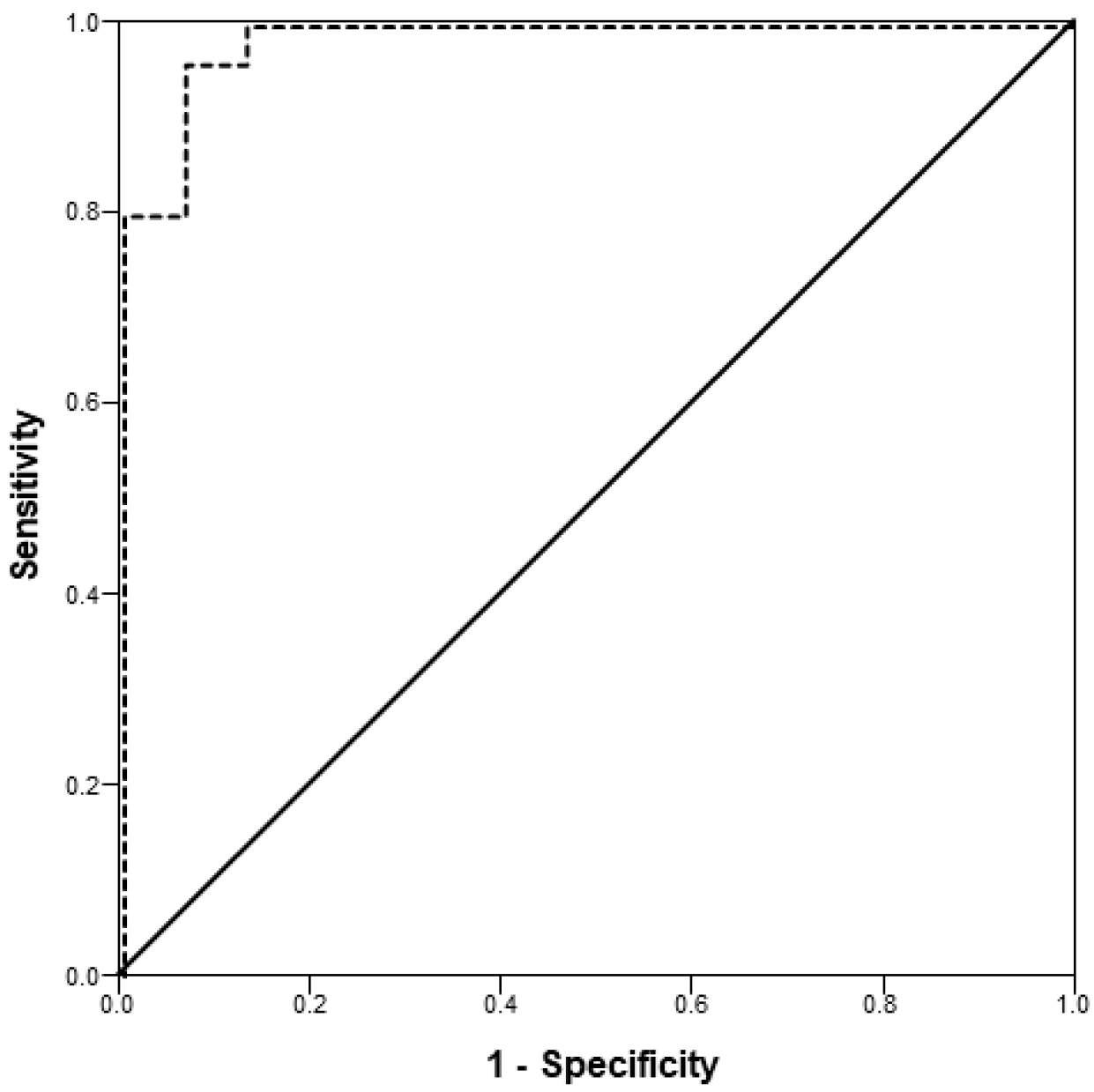
To help assess the relationship between N-terminal pro-B-type natriuretic peptide (NT-proBNP) and feline cardiogenic arterial thromboembolism (ATE), the objective of this retrospective study was to compare plasma NT-proBNP concentrations between cats with cardiomyopathy that developed ATE (ATE group) and cats with occult cardiomyopathy that did not develop ATE within 1 year of testing (occult cardiomyopathy [OCM] group). Cats with cardiomyopathy and congestive heart failure (CHF) but no ATE (CHF group) were included for comparison. Cats with cardiomyopathy that had NT-proBNP testing were classified into ATE, OCM, or CHF groups. Clinical, echocardiographic, treatment, and NT-proBNP data from medical records were reviewed and compared among groups. A receiver operating characteristic curve was generated to develop a cutoff point for NT-proBNP. Cats were then compared based on this cutoff point. The ATE group (n = 25) had significantly higher NT-proBNP concentrations than the OCM group (n = 31; p < 0.001); there was no significant difference in NT-proBNP concentrations between the ATE and CHF groups (p = 0.92). The estimated optimal NT-proBNP cutoff point to separate OCM and ATE groups was 491 pmol/L (sensitivity = 96.0%, specificity = 93.5%). Cats with NT-proBNP > 491 pmol/L had a larger left atrium, thicker left ventricle, lower fractional shortening, and higher prevalence of spontaneous echogenic contrast and left atrial thrombi on echocardiography. These preliminary, hypothesis-generating findings suggest that NT-proBNP concentrations > 491 pmol/L may help detect cats with OCM at risk for ATE, but given the limitations of this retrospective study, prospective studies are needed to evaluate the potential utility of this measurement.