

Article

Third-Generation Cephalosporin-Resistant Enterobacterales and Methicillin-Resistant Staphylococcus aureus (MRSA) in Pigs in Rwanda


by
Emmanuel Irimaso
1,2,
Valens Hagenimana
2,
Emmanuel Nzabamwita
2,
Michael Blümlinger
1,3,
Otto W. Fischer
4,
Lukas Schwarz
3,
Michael P. Szostak
1,
Olga Makarova
5,
Adriana Cabal Rosel
6,
Werner Ruppitsch
7,8,
Elke Müller
9,10,11,
Andrea T. Feßler
12,13,
Sascha D. Braun
9,10,11,
Stefan Schwarz
12,13,
Stefan Monecke
9,10,11,
Ralf Ehricht
9,10,11,14,
Suzana Tkalcic
15,
Christophe Ntakirutimana
4,
Joachim Spergser
1,
Doris Verhovsek
3 and
Igor Loncaric
1,*
add Show full author list remove Hide full author list
1
Institute of Microbiology, University of Veterinary Medicine, 1210 Vienna, Austria
2
The College of Veterinary Medicine and Animal Sciences (CVAS), University of Rwanda, Nyagatare P.O. Box 57, Rwanda
3
Clinical Center for Population Medicine in Fish, Pig and Poultry, Clinical Department for Farm Animals and Food System Science, University of Veterinary Medicine, 1210 Vienna, Austria
4
New Vision Veterinary Hospital (NVVH), RN 4 Kigali—Musanze Road, Musanze, Rwanda
5
Centre for Food Science and Veterinary Public Health, Clinical Department for Farm Animals and Food System Science, University of Veterinary Medicine, 1210 Vienna, Austria
6
Institute for Surveillance & Infectious Disease Epidemiology, Division Public Health, Austrian Agency for Health and Food Safety, 1200 Vienna, Austria
7
Institute of Hygiene and Medical Microbiology, Medical University Innsbruck, 6020 Innsbruck, Austria
8
Faculty of Food Technology, Food Safety and Ecology, University of Donja Gorica, 81000 Podgorica, Montenegro
9
Leibniz-Institute of Photonic Technology (Leibniz-IPHT), Member of the Leibniz Center for Photonics in Infection Research (LPI), 07745 Jena, Germany
10
InfectoGnostics Research Campus, 07743 Jena, Germany
11
Center for Translational Medicine (CETRAMED), Jena University Hospital, Friedrich Schiller University Jena, 07747 Jena, Germany
12
Institute of Microbiology and Epizootics, School of Veterinary Medicine, Freie Universität Berlin, Robert-von-Ostertag-Straße 7, 14163 Berlin, Germany
13
Veterinary Centre for Resistance Research (TZR), School of Veterinary Medicine, Freie Universität Berlin, Robert-von-Ostertag-Straße 8, 14163 Berlin, Germany
14
Institute of Physical Chemistry, Friedrich Schiller University Jena, 07743 Jena, Germany
15
College of Veterinary Medicine, Western University of Health Sciences, Pomona, CA 91766-1854, USA
*
Author to whom correspondence should be addressed.
Animals 2026, 16(1), 122; https://doi.org/10.3390/ani16010122
Submission received: 15 October 2025 / Revised: 25 December 2025 / Accepted: 29 December 2025 / Published: 31 December 2025

Simple Summary

This study explored the presence of antibiotic-resistant bacteria in pigs and their surroundings on farms in Rwanda. Antibiotic resistance occurs when bacteria change and become harder to kill with medicines, which is a serious problem for both human and animal health worldwide. We collected samples from pigs and their environment, such as nasal swabs, feces, manure, and dust, to check for two types of resistant bacteria: one called MRSA, which can cause tough infections in people and animals, and another group that resists important antibiotics often used to treat infections. Resistant bacteria were especially common in pig droppings and nasal samples. The study highlights the risk of sharing such bacteria where people and animals live closely together, as is common in Rwanda. These findings show the need to carefully watch for and control antibiotic resistance in animals and their environment, not just in people. This work supports efforts to protect health by promoting safer farming practices and responsible use of antibiotics in Rwanda.

Abstract

This pilot study investigated the presence of methicillin-resistant Staphylococcus aureus (MRSA) and third-generation cephalosporin-resistant (3GC-R) Enterobacterales in conventionally kept domestic pigs and their environment across four districts in Rwanda. A total of 114 swabs (nasal, rectal, manure, dust) from 29 farms were collected and processed to isolate resistant bacteria. Thirty-two 3GC-R Enterobacterales were detected. Escherichia coli predominantly harboring blaCTX-M group 1 β-lactamase genes, alongside Klebsiella pneumoniae isolates, all displaying extended-spectrum β-lactamase (ESBL) phenotypes. Four MRSA isolates, all belonging to clonal complex 398 and SCCmec type IV, the typical livestock MRSA, were recovered from nasal and environmental samples. Multidrug resistance was frequently observed. The co-occurrence of β-lactamase genes, non-β-lactam resistance genes, and virulence factors such as fimH and loci associated with extraintestinal pathogenic and enteropathogenic E. coli. The detection of both MRSA and 3GC-R Enterobacterales in the present study indicates pigs and their farm environments as reservoirs of WHO priority pathogens in Rwanda, highlighting a potential public health risk in the context of extensive human–animal–environment interaction. These findings emphasize the urgent need for integrated One Health surveillance and comprehensive AMR control strategies addressing both animal and environmental reservoirs to support Rwanda’s National Action Plan on Antimicrobial Resistance.

1. Introduction

Antimicrobial resistance (AMR) has been a critical One Health challenge for many years, as multidrug-resistant bacterial pathogens complicate disease management in both human and veterinary medicine [1]. This global problem is driven by factors such as poor sanitation, global travel and trade, genetic mutations, and horizontal gene transfer, but is primarily accelerated by the intensive and suboptimal use of antimicrobials in humans and livestock [2]. Consequently, the resulting dissemination of resistance across human, animl and environmental interfaces poses a substantial threat to public health.
In this regard, antimicrobial-resistant bacteria of most significant concern are identified by the World Health Organization (WHO). The WHO published the WHO Bacterial Priority Pathogens List (WHO BPPL) [3]. While well-documented data are available from Europe, America, and China [4,5,6,7], there is still a paucity of information about the presence of 3GC-R Enterobacterales and MRSA in pigs from Africa in general [8] and Rwanda in particular. This is of importance due to historical connections with Europe [9], wherefrom parent stock imports could introduce MRSA, particularly livestock-associated MRSA (LA-MRSA) belonging to clonal complex (CC) 398, which is predominant in Europe [10] as well as 3GC-R Enterobacterales, omnipresent among pigs in the EU [11]. In Rwanda, pig farming is experiencing rapid growth due to its role in ensuring food security and contributing to the country’s economic development. This growth is driven by increasing demand for pork in urban and rural areas and the potential for export to neighboring countries [12]. This rapid expansion poses a potential risk for AMR, as increased production often leads to higher antimicrobial usage to prevent and treat infections in dense animal populations, which can promote the emergence and spread of resistant bacteria [13].
In Rwanda, MRSA and cephalosporin-resistant Enterobacterales are acknowledged challenges within the Rwandan human healthcare sector [14,15,16,17,18,19,20,21]. However, currently, little is known about the occurrence of these pathogens in animals in Rwanda. Recently, our working group reported on the presence of 3GC-R Enterobacterales in ruminants [22] that share the same environment as pigs. The households in Rwanda usually raise different types of livestock. The highest number of pigheads is in South Province (406.934), followed by West Province (237.411), East Province (187.266), North Province (169.615), and Kigali (5663) (Figure 1) [23]. Pig farming in Rwanda is mainly characterized by small-scale production, where pigs are often housed near the owners’ homes and in close contact with other domestic animals, and in some regions of the country, 80% of households are estimated to keep pigs, with 1–2 grown pigs per household [12]. This close proximity between people and animals offers a valuable opportunity for antimicrobial resistance studies under the One Health approach. Therefore, the present study aims to investigate the presence of MRSA and 3GC-R Enterobacterales in conventionally kept domestic pigs and their environment in Rwanda.

2. Materials and Methods

2.1. Sample Collection and Isolation, and Identification of Third-Generation Cephalosporin-Resistant Enterobacterales and Methicillin-Resistant Staphylococcus aureus (MRSA) and Estimation of Confidence Intervals

A total of 114 swabs were collected during June 2023 (35 rectal, 27 nasal, and 52 environmental) from 29 farms across four districts of Rwanda (Musanze, North Province, n = 70; Nyagatare, East Province, n = 27; Bugesera, East Province, n = 9; Rwamagana, East Province, n = 8). Samples were collected from one pig (nasal, rectal) and one environmental sample (dust, manure) per farm. Farms were selected based on the owner’s willingness to participate in the study. Sample collection was performed under conditions suitable during sampling and with cooperation from farmers. The study was discussed, and the swabbing was approved by the Research Screening and Ethical Clearance Committee of the College of Agriculture, Animal Sciences and Veterinary Medicine, University of Rwanda (007/2023/DRI from 30 May 2023) in Nyagatare. Cultivation of bacteria was performed in a microbiological laboratory at the New Vision Veterinary Hospital (NVVH) in Musanze, Rwanda (https://nvvh.rw/). All samples were examined for the presence of 3GC-R Enterobacterales and MRSA. For the cultivation of 3GC-R Enterobacterales, swabs were first incubated overnight at 37 °C in buffered peptone water (Merck, Rahway, NJ, USA) with cefotaxime (1 mg/L) and subsequently cultured overnight at 37 °C on MacConkey agar (Oxoid; Basingstoke, UK) supplemented with cefotaxime (1 mg/L) (MacCTX). After incubation on MacCTX, one colony with a typical appearance characteristic for Enterobacterales [24] representing each distinct colonial morphology was subcultured on the same medium and then cryoconserved in a Thioglycollate medium (Beckton Dickinson (BD); Heidelberg, Germany) with 50% (w/v) glycerin: ratio 750:600 µL. For the isolation of MRSA, swabs were incubated overnight in tryptic soy broth (TSB) ((BD); Heidelberg, Germany) with 6.5% (w/v) NaCl and a 300 µL aliquot of each enriched TSB was cryoconserved at −25 °C, and together with presumptive 3GC-R Enterobacterales sent to the Institute of Microbiology, University of Veterinary Medicine, Vienna, Austria.
In Vienna, an aliquot of cryoconserved TSB was recultured in the same medium and then incubated on BBL™ CHROMagar™ MRSA II (BD; Heidelberg, Germany) for the isolation of MRSA. The S. aureus colonies that showed the typical colony pattern of MRSA on this medium were selected. The 3GC-R Enterobacterales were identified if the strain was resistant to Cefotaxime and Ceftazidime according to the CLSI standards [25]. Matrix-assisted laser desorption ionization time-of-flight mass spectrometry (MALDI-TOF MS) (Bruker Daltonik; Bremen, Germany) was used to identify all presumptive colonies to the species level. Only isolates confirmed as Enterobacterales and S. aureus were selected for further characterization.

2.2. Data Analysis

To determine the proportions of individuals and environment-tested 3GC-R Enterobacterales and MRSA positive per animal or environmental sample, 95% confidence intervals were estimated using the Clopper–Pearson exact method via the binom.test function in R [26].

2.3. Antimicrobial Susceptibility Testing

Antimicrobial susceptibility testing of Enterobacterales was performed by agar disk diffusion according to the CLSI standards [25]. E. coli ATCC® 25922 served as the quality control strain. Disks containing the following antimicrobial agents were used: cefotaxime (30 μg); ceftazidime (30 μg); cefoxitin (30 μg); meropenem (10 μg); gentamicin (10 μg); tobramycin (10 μg); amikacin (30 μg); ciprofloxacin (5 μg); trimethoprim–sulfamethoxazole (1.25/23.75 μg); tetracycline (30 μg); chloramphenicol (30 μg); and nitrofurantoin (300 μg) (BD; Heidelberg, Germany). MRSA was confirmed by cefoxitin resistance [25]. Antimicrobial susceptibility testing of MRSA was performed with the following antimicrobial agents: gentamicin (GEN, 10 μg), erythromycin (ERY, 15 μg), penicillin (PEN, 10 IU), ciprofloxacin (CIP, 5 μg), clindamycin (CLI, 2 μg), tetracycline (TET, 30 μg), trimethoprim–sulfamethoxazole (SXT, 1.25/23.75 μg), chloramphenicol (CHL, 30 μg), and linezolid (LZD, 30 μg) (BD; Heidelberg, Germany. The reference strain S. aureus ATCC® 25923 served as a quality control strain.

2.4. Molecular Characterization

Genomic DNA of Enterobacterales and MRSA was extracted after lysis enhancement by lysis enhancer and lysis buffer provided within INTER-ARRAY kits using the Qiagen DNeasy Blood & Tissue kit (Qiagen GmbH, Hilden, Germany) according to the manufacturer’s instructions. All samples were checked for DNA quantity and quality via a spectrophotometer (NanoDrop 2000 Spectrophotometer, Fisher Scientific (Austria) GmbH, Vienna, Austria) according to the manufacturer’s instructions. Resistance and virulence genes of Enterobacterales were analyzed by the INTER-ARRAY Genotyping Kit CarbaResist (INTER-ARRAY by fzmb GmbH; Bad Langensalza, Germany) [27] as well as by PCR (i.e., tet(A), tet(B)) as described elsewhere [28]. Detection and analysis of virulence-associated genes of E. coli isolates were performed using custom-made microarrays from INTER-ARRAY (INTER-ARRAY by fzmb GmbH, Bad Langensalza, Germany) according to the manufacturer’s instructions [29]. The phylogroup of the E. coli isolates was determined by the revised Clermont method [30]. Molecular characterization of MRSA was performed after DNA extraction using a DNA microarray-based technology (INTER-ARRAY Genotyping Kit S. aureus, Bad Langensalza, Germany), which is used for the detection of antimicrobial resistance and virulence-associated genes [31]. MRSA isolates were genotyped by spa typing. For spa typing, the polymorphic X-region of the protein A (spa) was amplified and sequenced according to the Ridom Spa Server protocol (https://spa.ridom.de/, accessed on 1 September 2025). spa types were determined using Ridom SeqSphere + Software v8.4 (Ridom, Münster, Germany).

3. Results

3.1. Presence of 3GC-R and MRSA

A total of 32 third-generation cephalosporin-resistant (3GC-R) Enterobacterales were detected, including 28 Escherichia coli isolates from 12 farms across all four districts. In addition, four Klebsiella (K.) pneumoniae isolates originated from two farms in Nyagatare district. Four methicillin-resistant Staphylococcus aureus (MRSA) isolates were recovered from two farms located in the Nyagatare and Bugesera districts. The prevalence of 3GC-R Enterobacterales was highest in rectal samples (60.0%; 95% CI: 42.1–76.1), followed by manure samples (18.5%; 95% CI: 6.3–38.1), nasal swabs (14.8%; 95% CI: 4.2–33.7), and dust samples (8.0%; 95% CI: 1.0–26.0). E. coli isolates were predominantly isolated from rectal swabs (n = 19), followed by manure swabs (n = 4), nasal swabs (n = 3), and dust swabs (n = 2). K. pneumoniae isolates were recovered from two rectal samples, one nasal swab, and one manure sample (Table 1). MRSA was detected in two manure samples, corresponding to 7.4% of manure samples (95% CI: 0.9–24.3), as well as in one nasal swab (3.7%; 95% CI: 0.1–19.0) and one dust sample (4.0%; 95% CI: 0.1–20.4).

3.2. Antimicrobial Susceptibility Testing and Characterization of Third-Generation Cephalosporin-Resistant (3GC-R) Enterobacterales

All Enterobacterales were susceptible to meropenem, amikacin, gentamicin, and nitrofurantoin, and displayed an ESBL phenotype, of which one isolate displayed an ESBL and an AmpC phenotype as well. The most commonly observed non-β-lactam resistance was against combined tetracycline and trimethoprim–sulfamethoxazole (n = 14 in E. coli and in all K. pneumoniae), followed by only tetracycline (n = 5) (Table 1). Eighteen out of 28 E. coli and all K. pneumoniae isolates were multidrug-resistant. Various resistance genes were detected. Among genes coding for β-lactamases, the blaCTX-M gene family was detected in all Enterobacterales, with blaCTX-M-1/15 being predominant (n = 26 in E. coli), followed by blaCTX-M9 (n = 2 in E. coli). The blaTEM genes were detected in 17 E. coli isolates, and blaOXA-1, blaCMY, and blaACT were only present in single isolates. All K. pneumoniae isolates carried blaCTX-M-1/15, blaTEM, and blaSHV (Table 1). Various non-β-lactam resistance genes were detected in E. coli (tet(A), tet(B), aac(6′)-Ib, aadA1, aadA2, aadA4, qnrS, sul1, sul2, dfrA5, dfrA12, dfrA13, dfrA14, dfrA17, and dfrA19). In all K. pneumoniae, the resistance genes tet(A), qnrB, qnrS, sul2, and dfrA14 were observed (Table 1). The most common E. coli virulence genes determined via microarray were fimH, which was detected in all isolates. In addition to the fimH gene, astA, papC, and iucD (n = 1), papC and iucD (n = 1), and eae, acfC, escV, and espL (n = 1) were found (Table 1).
The most common E. coli phylogenetic group was A (n = 17). Ten E. coli isolates belonged to phylogroup B1, with one isolate representing phylogroup E (Table 1).

3.3. Phenotypic and Genetic Profiling of MRSA Strains

All four MRSA isolates were resistant to gentamicin and tetracycline, which is well reflected by the observation that these isolates carried the resistance genes aacA-aphD and tet(M). All four MRSA isolates detected belonged to SCCmec type IV, spa t011, and clonal complex (CC) 398. Virulence-associated genes lukF, lukS, lukX, lukY, hlgA, hla, hlb, and hld were detected (Table 2 and Supplementary Table S1).

4. Discussion

An integrated One Health approach is necessary to estimate 3GC-R Enterobacterales and MRSA hazards, demanding simultaneous studies in humans, animals, and the environment. To our knowledge, this study is the first to demonstrate the combined presence of MRSA and 3GC-R Enterobacterales in pigs and their environment in Rwanda.
Very recently, Geuther et al. [17] investigated the presence of extended-spectrum beta-lactamase (ESBL)-producing Enterobacterales in various samples from humans, livestock, including pigs, environmental sources (soil, water, vegetables), and animal products in community households of Sovu, Southern Rwanda. Although Geuther et al. did not perform molecular characterization of ESBL-positive Enterobacterales, nor did they provide specific animal data, their findings remain important. A relatively high proportion of samples in that study were positive, highest for humans (37.9%) and livestock (15.6%). In our previous study on ruminants from Rwanda, we reported an overall prevalence of 12.8% (95% CI: 9.8–16.2), with prevalences of 16.3% in bovines (95% CI: 11.5–22.1), 11.8% in caprines (95% CI: 7.3–17.6), and 6.2% in ovines (95% CI: 2.0–13.8). These values are lower than those observed in pigs in the present study. In the present study, the majority of E. coli and all K. pneumoniae isolates carried genes for the CTX-M Group 1 (blaCTX-M1/15). β-lactamases of this group, especially blaCTX-M-15, were also the predominant enzymes detected in two previous Rwandan studies on 3GC-R Enterobacterales from humans, bovines, ovines, and caprines [18,22]. Globally, these enzymes are the primary mediators of third-generation cephalosporin resistance and are carried on highly mobile genetic elements [32]. The co-detection of antimicrobial resistance genes and various pathotype-specific virulence genes, albeit in three E. coli isolates, is an important observation. The fimH gene, encoding the Type 1 fimbrial adhesin, was present in all isolates; additionally, papC (P fimbriae) and iucD (aerobactin) were detected in two strains. These genes are classic markers of extraintestinal pathogenic E. coli (ExPEC) and their subgroup, Uropathogenic E. coli (UPEC) [33]. In addition, the presence of the Locus of Enterocyte Effacement (LEE) genes (eae, acfC, escV, and espL) in a single isolate is significant, indicating the presence of a strain that might be associated with Enteropathogenic E. coli (EPEC) or Enterohemorrhagic E. coli (EHEC) [34].
In contrast to 3GC-R Enterobacterales, MRSA was rarely detected. Typically, MRSA colonization in pigs is assessed via nasal swabs, while porcine 3GC-R Enterobacterales are investigated from rectal swabs [35]. In the present study, all sample types were examined concurrently. In some European countries, like Germany, Spain, and the Netherlands, nasal MRSA colonization of pigs is reported to be more than >50.0% [36]. The presence of MRSA isolates with indistinguishable characteristics on two farms in the present study may suggest an exchange of these isolates between these two farms. All MRSA belonged to CC398 and carried SCCmec type IV. To our knowledge, this is the first report of MRSA isolates from animals in Rwanda, specifically livestock-associated MRSA (LA-MRSA). The CC398-MRSA carrying SCCmec IV (CC398-MRSA-IV) is a relatively uncommon LA-MRSA among pigs [37] and is frequently detected in companion animals and horses [36,37,38,39]. In general, the detection of MRSA among animals expands the known scope of the Rwandan antimicrobial resistance (AMR) issue. Prior to the detection of MRSA in the framework of this study, MRSA was recovered from clinical specimens in humans in the Southern Province, Huye District, as well as among pediatric patients in Kigali [14,15]. MRSA that originated from the Huye District was molecularly characterized by SCCmec typing, detecting SCCmec type I and SCCmec type IV, respectively, with 26.6% MRSA isolates remaining non-typeable, mainly due to the limited discriminatory power of the method used [15]. No molecular characterization was conducted for isolates detected in Kigali [14]. During a study characterizing staphylococci from neonatal blood cultures in low- and middle-income countries, a single MRSA isolate from Rwanda underwent whole genome sequencing and was identified as sequence type ST22 within clonal complex CC22 [40].
Although this human data on MRSA and those on 3GC-R Enterobacterales in Rwanda were limited, initial findings from human medicine were sufficient for Rwanda to recognize the escalating threat of the AMR crisis across both human and animal health, mirroring concerns in other low- and middle-income countries. As a result, based on five objectives of the Global Action Plan of the World Health Organization (WHO), Rwanda developed the National Action Plan on Antimicrobial Resistance (NAPAMR) 2020–2024 that was extended for another five years (2025–2029) [41].
The present study showed that pigs and the pig farm environment in Rwanda may be a reservoir of bacteria that are listed as priority pathogens by WHO, either from the Critical group or High group. Pig farms are widely recognized as reservoirs for both MRSA and 3GC-R Enterobacterales [35]. This could be of critical importance for public health due to the small-scale, close-contact farming system prevalent in Rwanda, where pig housing is often near human residences and other domestic animals [12].
The present study, while providing novel insights into AMR in Rwandan pig farms, has limitations that need to be taken into consideration. Our pilot study has several limitations, from logistical and operational challe nges inherent to resource-limited settings, such as difficult weather and very restricted farm accessibility. The small geographical scope (four districts) and convenience-based sampling (dependent on farmer willingness) limit the representativeness of the findings for the entire Rwandan pig sector. We collected only one pig sample and one environmental sample (manure or dust) per farm, which may result in a potential sampling bias in the occurrence estimates. Furthermore, the cross-sectional design and single-sample-per-farm approach prevent a detailed elucidation of transmission dynamics. Finally, the exclusion of human specimens and other domestic animals, coupled with a DNA-array panel that did not cover all potential resistance genes, constrained our ability to better characterize the farm-level resistome and inter-species transmission.

5. Conclusions

The present study identified pigs and their environments as reservoirs for WHO priority pathogens in Rwanda, specifically detecting 3GC-R Enterobacterales dominated by blaCTX-M-positive E. coli and MRSA belonging to CC398. The presence of multidrug resistance and virulence factors in these isolates underscores a public health risk, highlighting the urgent need for integrated One Health surveillance in the region. The persistence of MRSA and 3GC-R Enterobacterales on pig farms necessitates a comprehensive understanding of all transmission routes. Investigations should include environmental vectors such as flies [42] and rodents [43,44], both of which are recognized carriers of these resistant pathogens. Consequently, effective hygiene protocols must extend beyond livestock management to address these important environmental reservoirs. Future AMR surveillance and control strategies must expand beyond direct animal sampling to prioritize understanding and mitigating transmission pathways involving the farm environment, as well as mobile vectors, to effectively support the goals of the Rwandan National Action Plan on Antimicrobial Resistance (NAPAMR).

Supplementary Materials

The following supporting information can be downloaded at: https://www.mdpi.com/article/10.3390/ani16010122/s1, Table S1: Full hybridization results for MRSA isolates examined in this study; Table S2: Complete sample list.

Author Contributions

Conceptualization, E.I., L.S., S.T., C.N., D.V. and I.L.; methodology, E.I., M.B., O.W.F., L.S., M.P.S., O.M., E.M., S.D.B., S.M., R.E., S.T., J.S. and I.L.; validation, E.I. and I.L.; formal analysis, E.I., V.H., E.N., M.B., O.M., A.C.R., W.R., E.M., C.N., D.V. and I.L.; investigation, E.I., V.H., E.N., E.M., A.T.F., S.S., C.N., D.V. and I.L.; resources, O.W.F. and J.S.; data curation, E.I., V.H., E.N., M.P.S., D.V. and I.L.; writing—original draft preparation, E.I., V.H., E.N., M.B. and I.L.; writing—review and editing, E.I., M.B., L.S., M.P.S., O.M., A.C.R., W.R., A.T.F., S.D.B., S.S., S.M., R.E., S.T., J.S. and I.L.; supervision, I.L.; project administration, E.I., O.W.F., S.T., D.V. and I.L.; funding acquisition, O.W.F. All authors have read and agreed to the published version of the manuscript.

Funding

This work was supported by “Veterinaer Projekt Ruanda—united vets friendship group”.

Institutional Review Board Statement

Not applicable.

Informed Consent Statement

Not applicable.

Data Availability Statement

The original contributions presented in this study are included in the article/Supplementary Materials. Further inquiries can be directed to the corresponding author(s).

Acknowledgments

We are grateful to all participating farmers and to the team of the NVVH in Musanze (Flora, Beatrice, Gaudiose, Jophride, Antoine, Jean Paul, Sylvie, Geraldine, Vital, Adelphine, Pierre, Aron, and Felicien). We would also like to express our thanks to Katrin Berghammer and Michael Steinbrecher for technical assistance. We acknowledge Open Access Funding by the University of Veterinary Medicine Vienna.

Conflicts of Interest

The authors declare no conflicts of interest.

Abbreviations

The following abbreviations are used in this manuscript:
AMRAntimicrobial resistance
WHOWorld Health Organization
WHO BPPWHO Bacterial Priority Pathogens List
3GC-RThird-generation cephalosporin-resistant
MRSAMethicillin-resistant Staphylococcus aureus
LA-MRSALivestock-associated MRSA
NVVHNew Vision Veterinary Hospital
MALDI-TOF MSMatrix-assisted laser desorption ionization time-of-flight mass spectrometry
CLSI Clinical & Laboratory Standards Institute
ExPECExtraintestinal pathogenic E. coli
UPECUropathogenic E. coli
LEELocus of Enterocyte Effacement
EPECEnteropathogenic E. coli
EHECEnterohemorrhagic E. col
SCCmecStaphylococcal Cassette Chromosome mec
STSequence type
CCClonal complex
NAPAMRNational Action Plan on Antimicrobial Resistance

References

  1. Cella, E.; Giovanetti, M.; Benedetti, F.; Scarpa, F.; Johnston, C.; Borsetti, A.; Ceccarelli, G.; Azarian, T.; Zella, D.; Ciccozzi, M. Joining Forces against Antibiotic Resistance: The One Health Solution. Pathogens 2023, 12, 1074. [Google Scholar] [CrossRef] [PubMed] [PubMed Central]
  2. Larsson, D.G.J.; Flach, C.F. Antibiotic resistance in the environment. Nat. Rev. Microbiol. 2022, 20, 257–269. [Google Scholar] [CrossRef] [PubMed] [PubMed Central]
  3. Sati, H.; Carrara, E.; Savoldi, A.; Hansen, P.; Garlasco, J.; Campagnaro, E.; Boccia, S.; Castillo-Polo, J.A.; Magrini, E.; Garcia-Vello, P.; et al. The WHO Bacterial Priority Pathogens List 2024: A prioritisation study to guide research, development, and public health strategies against antimicrobial resistance. Lancet Infect. Dis. 2025, 25, 1033–1043. [Google Scholar] [CrossRef] [PubMed] [PubMed Central]
  4. Lee, S.; An, J.U.; Guk, J.H.; Song, H.; Yi, S.; Kim, W.H.; Cho, S. Prevalence, Characteristics and Clonal Distribution of Extended-Spectrum β-Lactamase- and AmpC β-Lactamase-Producing Escherichia coli Following the Swine Production Stages, and Potential Risks to Humans. Front. Microbiol. 2021, 12, 710747. [Google Scholar] [CrossRef]
  5. Bergšpica, I.; Kaprou, G.; Alexa, E.A.; Prieto, M.; Alvarez-Ordóñez, A. Extended Spectrum β-Lactamase (ESBL) Producing Escherichia coli in Pigs and Pork Meat in the European Union. Antibiotics 2020, 9, 678. [Google Scholar] [CrossRef]
  6. Schmithausen, R.M.; Schulze-Geisthoevel, S.V.; Stemmer, F.; El-Jade, M.; Reif, M.; Hack, S.; Meilaender, A.; Montabauer, G.; Fimmers, R.; Parcina, M.; et al. Analysis of Transmission of MRSA and ESBL-E among Pigs and Farm Personnel. PLoS ONE 2015, 10, e0138173. [Google Scholar] [CrossRef] [PubMed]
  7. Li, X.; Xie, L.; Huang, H.; Li, Z.; Li, G.; Liu, P.; Xiao, D.; Zhang, X.; Xiong, W.; Zeng, Z. Prevalence of Livestock-Associated MRSA ST398 in a Swine Slaughterhouse in Guangzhou, China. Front. Microbiol. 2022, 13, 914764. [Google Scholar] [CrossRef]
  8. Lozano, C.; Gharsa, H.; Ben Slama, K.; Zarazaga, M.; Torres, C. Staphylococcus aureus in Animals and Food: Methicillin Resistance, Prevalence and Population Structure. A Review in the African Continent. Microorganisms 2016, 4, 12. [Google Scholar] [CrossRef]
  9. Marshall, K.; Hirwa, C. The Pig Genetic-Resource Value Chain in Rwanda; International Livestock Research Institute, ILRI: Nairobi, Kenya, 2024. [Google Scholar]
  10. Aires-de-Sousa, M. Methicillin-resistant Staphylococcus aureus among animals: Current overview. Clin. Microbiol. Infect. 2017, 23, 373–380. [Google Scholar] [CrossRef]
  11. EFSA Panel on Animal Health and Welfare (AHAW); Nielsen, S.S.; Bicout, D.J.; Calistri, P.; Canali, E.; Drewe, J.A.; Garin-Bastuji, B.; Gonzales Rojas, J.L.; Gortazar Schmidt, C.; Herskin, M.; et al. Assessment of animal diseases caused by bacteria resistant to antimicrobials: Swine. EFSA J. 2021, 19, e07113. [Google Scholar] [CrossRef] [PubMed]
  12. Shyaka, A.; Quinnell, R.J.; Rujeni, N.; Fèvre, E.M. Using a Value Chain Approach to Map the Pig Production System in Rwanda, Its Governance, and Sanitary Risks. Front. Vet. Sci. 2022, 8, 720553. [Google Scholar] [CrossRef]
  13. Van Boeckel, T.P.; Pires, J.; Silvester, R.; Zhao, C.; Song, J.; Criscuolo, N.G.; Gilbert, M.; Bonhoeffer, S.; Laxminarayan, R. Global trends in antimicrobial resistance in animals in low- and middle-income countries. Science 2019, 365, eaaw1944. [Google Scholar] [CrossRef] [PubMed]
  14. Munyemana, J.B.; Gatare, B.; Kabanyana, P.; Ivang, A.; Mbarushimana, D.; Itangishaka, I.; Niringiyumukiza, J.D.; Musoni, E. Antimicrobial Resistance Profile of Bacteria Causing Pediatric Infections at the University Teaching Hospital in Rwanda. Am. J. Trop. Med. Hyg. 2022, 107, 1308–1314. [Google Scholar] [CrossRef]
  15. Masaisa, F.; Kayigi, E.; Seni, J.; Bwanga, F.; Muvunyi, C.M. Antibiotic Resistance Patterns and Molecular Characterization of Methicillin-Resistant Staphylococcus aureus in Clinical Settings in Rwanda. Am. J. Trop. Med. Hyg. 2018, 99, 1239–1245. [Google Scholar] [CrossRef]
  16. Kayinamura, M.P.; Muhirwa, A.; Kamaliza, A.C.; Bigirimana, Y.; Rutare, S.; Hahirwa, I.; Nkubana, T.; Dusabe, A.; Munyemana, J.B. Prevalence of Extended-Spectrum Beta-Lactamase-Producing Enterobacteriaceae and Associated Clinical Implications at the University Teaching Hospital of Kigali in Rwanda. Am. J. Trop. Med. Hyg. 2024, 111, 565–568. [Google Scholar] [CrossRef]
  17. Geuther, N.; Mbarushimana, D.; Habarugira, F.; Buregeya, J.D.; Kollatzsch, M.; Pfüller, R.; Mugabowindekwe, M.; Ndoli, J.; Mockenhaupt, F.P. ESBL-producing Enterobacteriaceae in a rural Rwandan community: Carriage among community members, livestock, farm products and environment. Trop. Med. Int. Health 2023, 28, 855–863. [Google Scholar] [CrossRef]
  18. Eger, E.; Heiden, S.E.; Korolew, K.; Bayingana, C.; Ndoli, J.M.; Sendegeya, A.; Gahutu, J.B.; Kurz, M.S.E.; Mockenhaupt, F.P.; Müller, J.; et al. Circulation of Extended-Spectrum Beta-Lactamase-Producing Escherichia coli of Pandemic Sequence Types 131, 648, and 410 Among Hospitalized Patients, Caregivers, and the Community in Rwanda. Front. Microbiol. 2021, 12, 662575. [Google Scholar] [CrossRef] [PubMed]
  19. Muvunyi, V.; Mpirimbanyi, C.; Katabogama, J.B.; Cyuzuzo, T.; Nkubana, T.; Mugema, J.B.; Musoni, E.; Urimubabo, C.; Rickard, J. Community- and Hospital-Acquired Infections in Surgical patients at a Tertiary Referral Hospital in Rwanda. World J. Surg. 2020, 44, 3290–3298. [Google Scholar] [CrossRef]
  20. Sutherland, T.; Mpirimbanyi, C.; Nziyomaze, E.; Niyomugabo, J.P.; Niyonsenga, Z.; Muvunyi, C.M.; Mueller, A.; Bebell, L.M.; Nkubana, T.; Musoni, E.; et al. Widespread antimicrobial resistance among bacterial infections in a Rwandan referral hospital. PLoS ONE 2019, 14, e0221121. [Google Scholar] [CrossRef]
  21. Kurz, M.S.; Bayingana, C.; Ndoli, J.M.; Sendegeya, A.; Durst, A.; Pfüller, R.; Gahutu, J.B.; Mockenhaupt, F.P. Intense pre-admission carriage and further acquisition of ESBL-producing Enterobacteriaceae among patients and their caregivers in a tertiary hospital in Rwanda. Trop. Med. Int. Health 2017, 22, 210–220. [Google Scholar] [CrossRef] [PubMed]
  22. Irimaso, E.; Keinprecht, H.; Szostak, M.P.; Rosel, A.C.; Stessl, B.; Desvars-Larrive, A.; Ntakirutimana, C.; Fischer, O.W.; Wittek, T.; Müller, E.; et al. Survey in ruminants from Rwanda revealed high diversity and prevalence of extended-spectrum cephalosporin-resistant Enterobacterales. BMC Vet. Res. 2024, 20, 523. [Google Scholar] [CrossRef]
  23. National Institute of Statistics of Rwanda (NISR). Agricultural Household Survey 2024 Report; National Institute of Statistics of Rwanda (NISR): Kigali, Rwanda, 2025.
  24. Markey, B.; Leonard, F.; Archambault, M.; Cullinane, A.; Maguire, D. Clinical Veterinary Microbiology, 2nd ed.; Mosby: Edinburgh, Scotland, 2013. [Google Scholar]
  25. Clinical and Laboratory Standards Institute. Performance Standards for Antimicrobial Susceptibility Testing: Twenty-eight Informational Supplement M100-34; CLSI: Wayne, PA, USA, 2024. [Google Scholar]
  26. R Core Team. R: A Language and Environment for Statistical Computing; R Foundation for Statistical Computing: Vienna, Austria, 2025; Available online: https://www.R-project.org/ (accessed on 15 October 2025).
  27. Braun, S.D.; Jamil, B.; Syed, M.A.; Abbasi, S.A.; Weiß, D.; Slickers, P.; Monecke, S.; Engelmann, I.; Ehricht, R. Prevalence of carbapenemase-producing organisms at the Kidney Center of Rawalpindi (Pakistan) and evaluation of an advanced molecular microarray-based carbapenemase assay. Future Microbiol. 2018, 13, 1225–1246. [Google Scholar] [CrossRef] [PubMed]
  28. Dolejska, M.; Frolkova, P.; Florek, M.; Jamborova, I.; Purgertova, M.; Kutilova, I.; Cizek, A.; Guenther, S.; Literak, I. CTX-M-15-producing Escherichia coli clone B2-O25b-ST131 and Klebsiella spp. isolates in municipal wastewater treatment plant effluents. J. Antimicrob. Chemother. 2011, 66, 2784–2790. [Google Scholar] [CrossRef] [PubMed]
  29. Bernreiter-Hofer, T.; Schwarz, L.; Müller, E.; Cabal-Rosel, A.; Korus, M.; Misic, D.; Frankenfeld, K.; Abraham, K.; Grünzweil, O.; Weiss, A.; et al. The Pheno- and Genotypic Characterization of Porcine Escherichia coli Isolates. Microorganisms 2021, 9, 1676. [Google Scholar] [CrossRef] [PubMed]
  30. Clermont, O.; Christenson, J.K.; Denamur, E.; Gordon, D.M. The Clermont Escherichia coli phylo-typing method revisited: Improvement of specificity and detection of new phylo-groups. Environ. Microbiol. Rep. 2013, 5, 58–65. [Google Scholar] [CrossRef]
  31. Monecke, S.; Slickers, P.; Ehricht, R. Assignment of Staphylococcus aureus isolates to clonal complexes based on microarray analysis and pattern recognition. FEMS Immunol. Med. Microbiol. 2008, 53, 237–251. [Google Scholar] [CrossRef]
  32. Castanheira, M.; Simner, P.J.; Bradford, P.A. Extended-spectrum β-lactamases: An update on their characteristics, epidemiology and detection. JAC Antimicrob. Resist. 2021, 3, dlab092. [Google Scholar] [CrossRef]
  33. Terlizzi, M.E.; Gribaudo, G.; Maffei, M.E. Uropathogenic Escherichia coli (UPEC) infections: Virulence factors, bladder re-sponses, antibiotic, and non-antibiotic antimicrobial strategies. Front. Microbiol. 2017, 8, 1566. [Google Scholar] [CrossRef] [PubMed]
  34. Stevens, M.P.; Frankel, G.M. The Locus of Enterocyte Effacement and Associated Virulence Factors of Enterohemorrhagic Escherichia coli. Microbiol Spectr. 2014, 2, EHEC-0007-2013. [Google Scholar] [CrossRef]
  35. Fischer, J.; Hille, K.; Ruddat, I.; Mellmann, A.; Köck, R.; Kreienbrock, L. Simultaneous occurrence of MRSA and ESBL-producing Enterobacteriaceae on pig farms and in nasal and stool samples from farmers. Vet. Microbiol. 2017, 200, 107–113. [Google Scholar] [CrossRef]
  36. Abdullahi, I.N.; Lozano, C.; Simon, C.; Latorre-Fernandez, J.; Zarazaga, M.; Torres, C. Nasal staphylococci community of healthy pigs and pig-farmers in Aragon (Spain). Predominance and within-host resistome diversity in MRSA-CC398 and MSSA-CC9 lineages. One Health 2023, 16, 100505. [Google Scholar] [CrossRef]
  37. Fernandez, J.E.; Egli, A.; Overesch, G.; Perreten, V. Time-calibrated phylogenetic and chromosomal mobilome analyses of Staphylococcus aureus CC398 reveal geographical and host-related evolution. Nat. Commun. 2024, 15, 5526. [Google Scholar] [CrossRef]
  38. Van den Eede, A.; Martens, A.; Lipinska, U.; Struelens, M.; Deplano, A.; Denis, O.; Haesebrouck, F.; Gasthuys, F.; Hermans, K. High occurrence of methicillin-resistant Staphylococcus aureus ST398 in equine nasal samples. Vet. Microbiol. 2009, 133, 138–144. [Google Scholar] [CrossRef]
  39. Weese, J.S.; Rousseau, J.; Willey, B.M.; Archambault, M.; McGeer, A.; Low, D.E. Methicillin-resistant Staphylococcus aureus in horses at a veterinary teaching hospital: Frequency, characterization, and association with clinical disease. J. Vet. Intern. Med. 2006, 20, 182–186. [Google Scholar] [CrossRef]
  40. Sands, K.; Carvalho, M.J.; Spiller, O.B.; Portal, E.A.R.; Thomson, K.; Watkins, W.J.; Mathias, J.; Dyer, C.; Akpulu, C.; Andrews, R.; et al. Characterisation of Staphylococci species from neonatal blood cultures in low- and middle-income countries. BMC Infect. Dis. 2022, 22, 593. [Google Scholar] [CrossRef] [PubMed]
  41. NAPRM. 2025. Available online: https://rbc.gov.rw/fileadmin/user_upload/strategy/2nd_NATIONAL_ACTION_PLAN_ON_AMR__NAP_2025-2029_.pdf (accessed on 15 October 2025).
  42. Hamar, F.; Loncaric, I.; Bernreiter-Hofer, T.; Cabal Rosel, A.; Stöger, A.; Palle-Reisch, M.; Ruppitsch, W.; Kaesbohrer, A.; Buzanich-Ladinig, A.; Bluemlinger, M.; et al. MRSA in pig farming: The emerging role of flies in antimicrobial resistance: A cross-sectional study. Porc. Health Manag. 2025, 11, 46. [Google Scholar] [CrossRef] [PubMed]
  43. van de Giessen, A.W.; van Santen-Verheuvel, M.G.; Hengeveld, P.D.; Bosch, T.; Broens, E.M.; Reusken, C.B. Occurrence of methicillin-resistant Staphylococcus aureus in rats living on pig farms. Prev. Vet. Med. 2009, 91, 270–273. [Google Scholar] [CrossRef] [PubMed]
  44. Uea-Anuwong, T.; Biggel, M.; Cernela, N.; Hung, W.W.; Lugsomya, K.; Kiu, L.H.; Gröhn, Y.T.; Boss, S.; Stephan, R.; Nüesch-Inderbinen, M.; et al. Antimicrobial resistance and phylogenetic relatedness of extended-spectrum ß-lactamase (ESBL)-producing Escherichia coli in peridomestic rats (Rattus norvegicus and Rattus tanezumi) linked to city areas and animal farms in Hong Kong. Environ. Res. 2024, 251, 118623. [Google Scholar] [CrossRef]
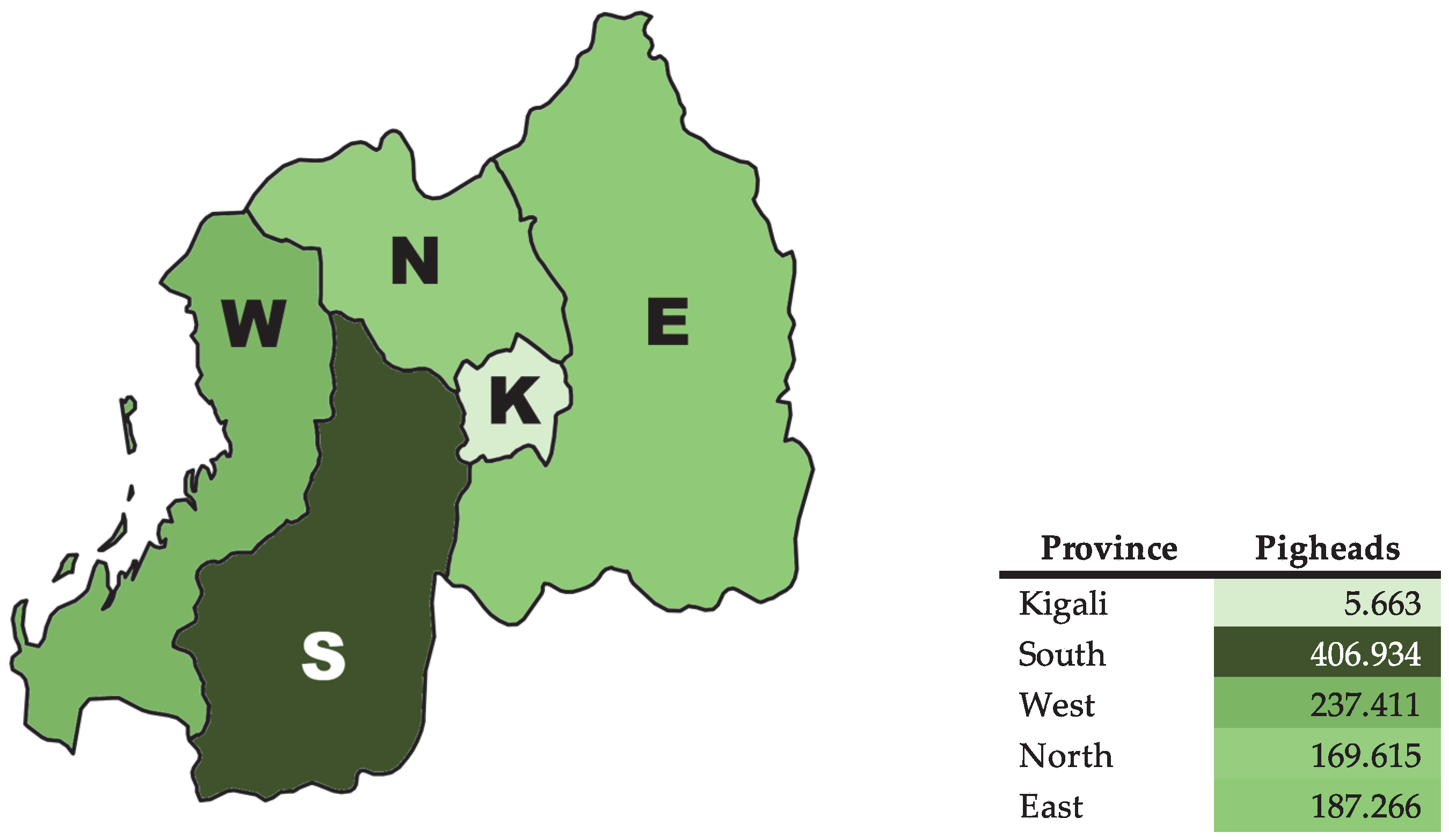
Figure 1. Pig density in Rwanda, W, West Province; N, North Province; E, East Province; K, Kigali; S, South Province.
Animals 16 00122 g001
Table 1. Phenotypic and genotypic characteristics of third-generation cephalosporin-resistant Enterobacterales.
Strain IDOrigin *FarmDistrictSpeciesPG **Non-ß-Lactam Resistance Phenotype ***Resistance GenotypeVAG ****
N176 P3MaNcMusanzeE. coliETET, SXTblaCTX-M1/15, blaTEM, tet(A), tet(B), qnrS, sul2, dfrA14fimH
N176 P3MDbDcMusanzeE. coliATET, SXTblaCTX-M1/15, blaTEM, tet(A), tet(B), qnrS, sul2, dfrA15fimH
N176 P3MbRcMusanzeE. coliB1 blaCTX-M1/15, blaTEM, tet(A), tet(B), qnrS, sul2, dfrA16fimH
N180 P7MDbDgMusanzeE. coliATOB, CHL, SXTblaCTX-M1/15, blaOXA-1, tet(A), tet(B), qnrS, sul2, dfrA17fimH, papC, iucD
N180 P7MaRgMusanzeE. coliB1 blaCTX-M1/15, qnrSfimH
N177 P4MaNdMusanzeE. coliB1TET, SXTblaCTX-M1/15, blaTEM, tet(A), qnrS, sul2, dfrA5, dfrA14, dfrA17fimH
N177 P4MbRdMusanzeE. coliATET, SXTblaCTX-M1/15, blaTEM, tet(B), aadA4, sul1, sul2, dfrA17fimH
N177 P4MDbMdMusanzeE. coliASXTblaCTX-M1/15, blaTEM, tet(B), qnrS, sul2, dfrA14fimH
N178 P5MbReMusanzeE. coliATETtet(A), tet(B), blaCTX-M9, qnrS, dfrA5fimH
N179 P6MaNfMusanzeE. coliASXTblaCTX-M9, blaCMY, aadA2, sul1, sul2, dfrA12, dfrA13fimH
N179 P6MbRfMusanzeE. coliATETblaCTX-M1/15, tet(A), qnrS, dfrA14fimH
N179 P6MDbRfMusanzeE. coliB1TETblaCTX-M1/15, blaACT, tet(A), qnrSfimH
N185 P12MaRlMusanzeE. coliATET, SXTblaCTX-M1/15, tet(A), qnrS, dfrA14fimH
N187 P14MaRnMusanzeE. coliATET, SXTblaCTX-M1/15, blaTEM, tet(A), qnrS, sul2, dfrA14fimH
N187 P14McMnMusanzeE. coliB1TET, SXTblaCTX-M1/15, blaTEM, tet(A), qnrS, sul2, dfrA14fimH
N188 P15MaRoMusanzeE. coliATET, SXTblaCTX-M1/15, blaTEM, tet(A), aadA1, aadA2, qnrS, sul2, dfrA12, dfrA14fimH
N180 P7 ManureMgMusanzeE. coliATET, SXTblaCTX-M1/15, blaTEM, tet(A), aadA1, aadA2, qnrS, sul2, dfrA12, dfrA14fimH
N198 P25NaRddNyagatareE. coliATET, SXTblaCTX-M1/15, blaTEM, tet(A), qnrS, sul2, dfrA14fimH
N199 P26NaReeNyagatareE. coliATETblaCTX-M1/15, tet(A), qnrS, dfrA14fimH
N193 P20BaRvBugeseraE. coliASXTblaCTX-M1/15, blaTEM, qnrS, sul2, dfrA14fimH
1DRhhRwamaganaE. coliB1TETblaCTX-M1/15, tet(A), tet(B), qnrSfimH
2DRhhRwamaganaE. coliATET, SXTblaCTX-M1/15, blaTEM, tet(A), aadA2, qnrS, sul1, sul2, dfrA12, dfrA14fimH
4DRhhRwamagana E. coliB1TET, SXTblaCTX-M1/15, blaTEM, tet(A), qnrS, sul2, dfrA14fimH
6DRhhRwamaganaE. coliB1TET, CHL, SXTblaCTX-M1/15, blaTEM, tet(A), qnrS, sul2, dfrA14fimH
7DRhhRwamaganaE. coliB1TET, CHL, SXTblaCTX-M1/15, blaTEM, blaACT, tet(A), qnrS, sul2, dfrA14fimH
9DRhhRwamaganaE. coliB1TET, SXTblaCTX-M1/15, tet(A), aadA4, qnrS, sul1, sul2, dfrA5, dfrA17, dfrA19fimH
10DRhhRwamaganaE. coliATET, SXTblaCTX-M1/15, blaTEM, tet(A), qrnS, sul2, dfrA14fimH, eae, acfC, esc, espL
N176 P3MDmanureMcMusanzeE. coliACIP, TET, CHL, SXTblaCTX-M1/15, blaTEM, tet(A), sul2, dfrA14fimH, papC, iucD, astA
N195 P22NaNaaNyagatareK. pneumoniaeNATET, SXTblaCTX-M1/15, blaSHV, blaTEM, tet(A), qrnB, qnrS, sul2, dfrA14NA
N195 P22NbRaaNyagatareK. pneumoniaeNATET, SXTblaCTX-M1/15, blaSHV, blaTEM, tet(A), qrnB, qnrS, sul2, dfrA14NA
N195 P22N ManureMaaNyagatareK. pneumoniaeNATET, SXTblaCTX-M1/15, blaSHV, blaTEM, tet(A), qrnB, qnrS, sul2, dfrA14NA
N196 P23NaRbbNyagatareK. pneumoniaeNATET, SXTblaCTX-M1/15, blaSHV, blaTEM, tet(A), qrnB, qnrS, sul2, dfrA14NA
* N = nasal, D = dust, R = rectal, M = manure. ** PG = E. coli phylogroup. *** TET, tetracycline; SXT, trimethoprim–sulfamethoxazole; CHL, chloramphenicol, CIP, ciprofloxacin; TOB, tobramycin. **** E. coli virulence-associated gene.
Table 2. Summary of the main phenotypic and genotypic characteristics of MRSA isolates investigated.
MRSA Isolates N194P21NasalN194P21DustN195P22ManureN195P22Dust
Farm zzaaaa
District BugeseraBugeseraNyagatareNyagatare
spa * t011
SCCmec ** IV
CC *** CC398
AMR profilePhenotype ****β-lactams, GEN, TET
Genes detectedblaZ, mecA, aacA-aphD, tet(M)
cap gene (cap 8) negative
cap gene (cap 5) positive
Hemolysins hla, hlb, hld, hlgA
Leukocidins (luk) components lukF, lukS, lukX, lukY
Biofilm-associated genes icaA, icaC, icaD
Adhesion factors clfA, clfB, cna, fnbA, fnbB
* spa = spa type, ** SCCmec = SCCmec type, *** CC = clonal complex, **** GEN = gentamicin, TET = tetracycline.
Disclaimer/Publisher’s Note: The statements, opinions and data contained in all publications are solely those of the individual author(s) and contributor(s) and not of MDPI and/or the editor(s). MDPI and/or the editor(s) disclaim responsibility for any injury to people or property resulting from any ideas, methods, instructions or products referred to in the content.


