Presentation (Chopped Versus Ground and Pelleted) of a Low-Quality Alfalfa Hay in Sheep: Effects on Intake, Feeding Behaviour, Rumen Fill and Digestion, and Passage

Departamento de Producción Animal y Ciencia de los Alimentos, Instituto Agroalimentario de Aragón (IA2), Universidad de Zaragoza-CITA, Miguel Servet 177, 50013 Zaragoza, Spain
*
Author to whom correspondence should be addressed.
†
Current address: Departament de Ciència Animal i dels Aliments, Universitat Autònoma de Barcelona, 08193 Bellaterra, Spain.
Animals 2025, 15(4), 541; https://doi.org/10.3390/ani15040541
Submission received: 20 December 2024
/
Revised: 3 February 2025
/
Accepted: 11 February 2025
/
Published: 13 February 2025
(This article belongs to the Special Issue Sustainable Management of Ruminants: Feed Utilization, Nitrogen Dynamics, Physiology, and Metabolism)
Simple Summary
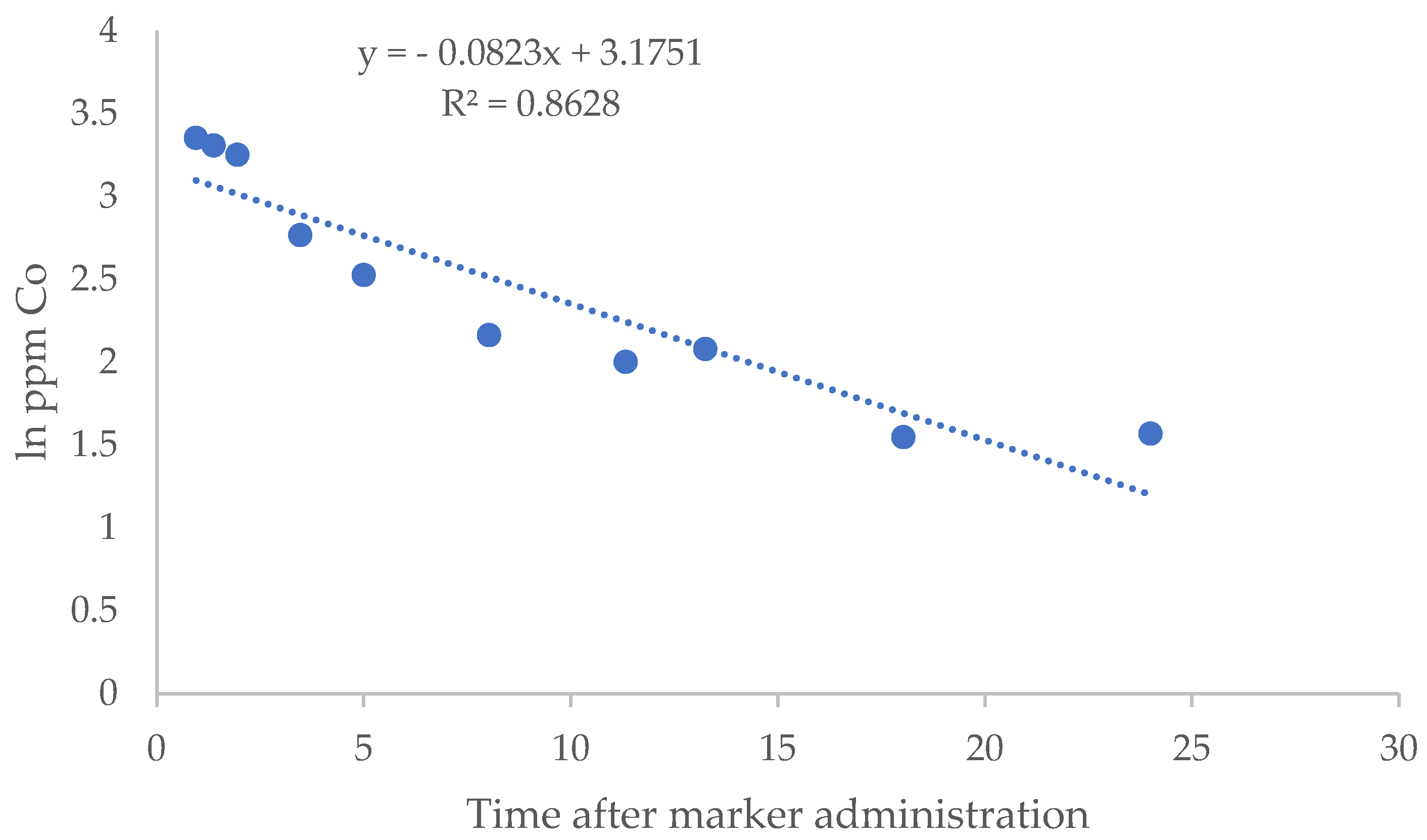
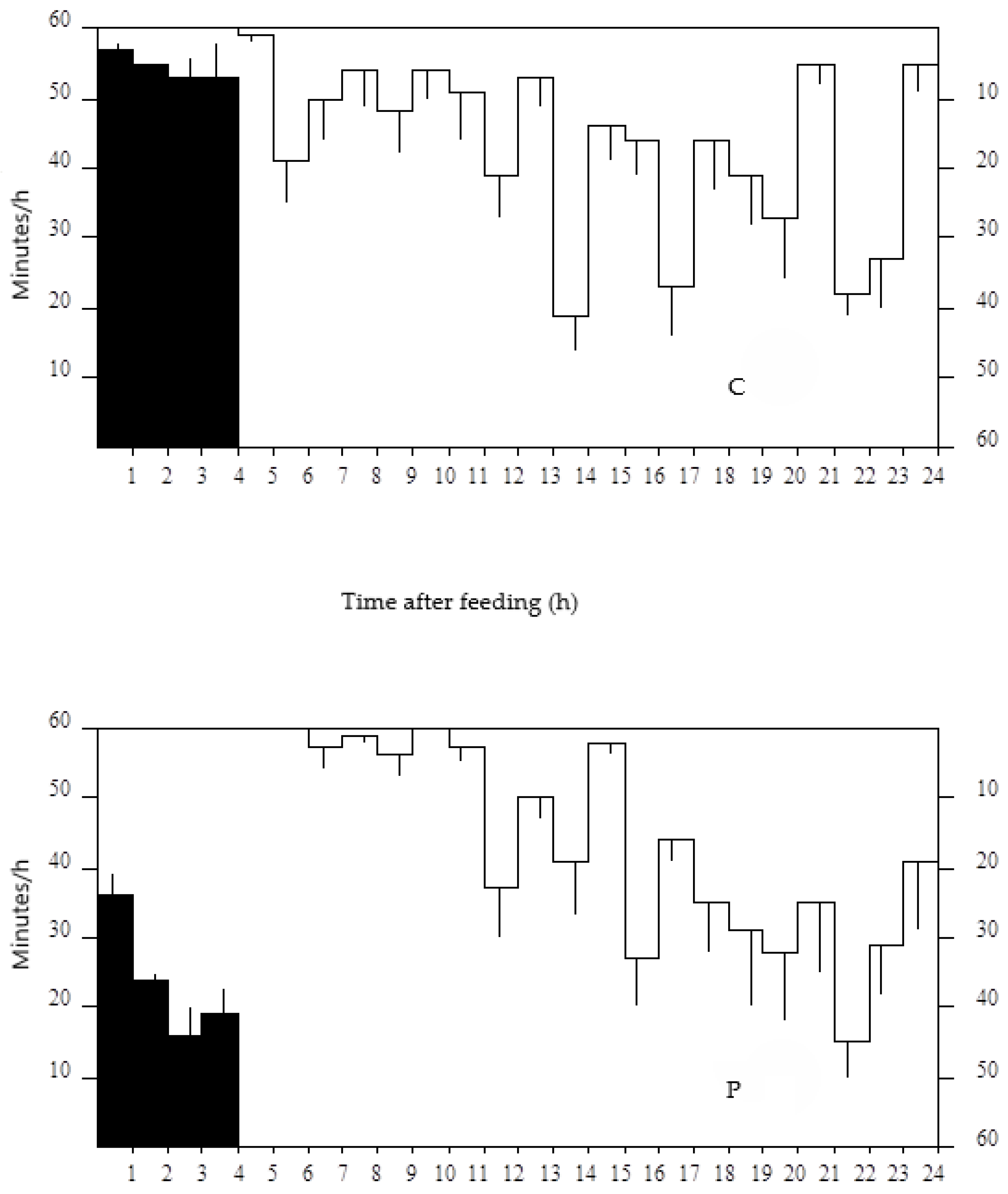
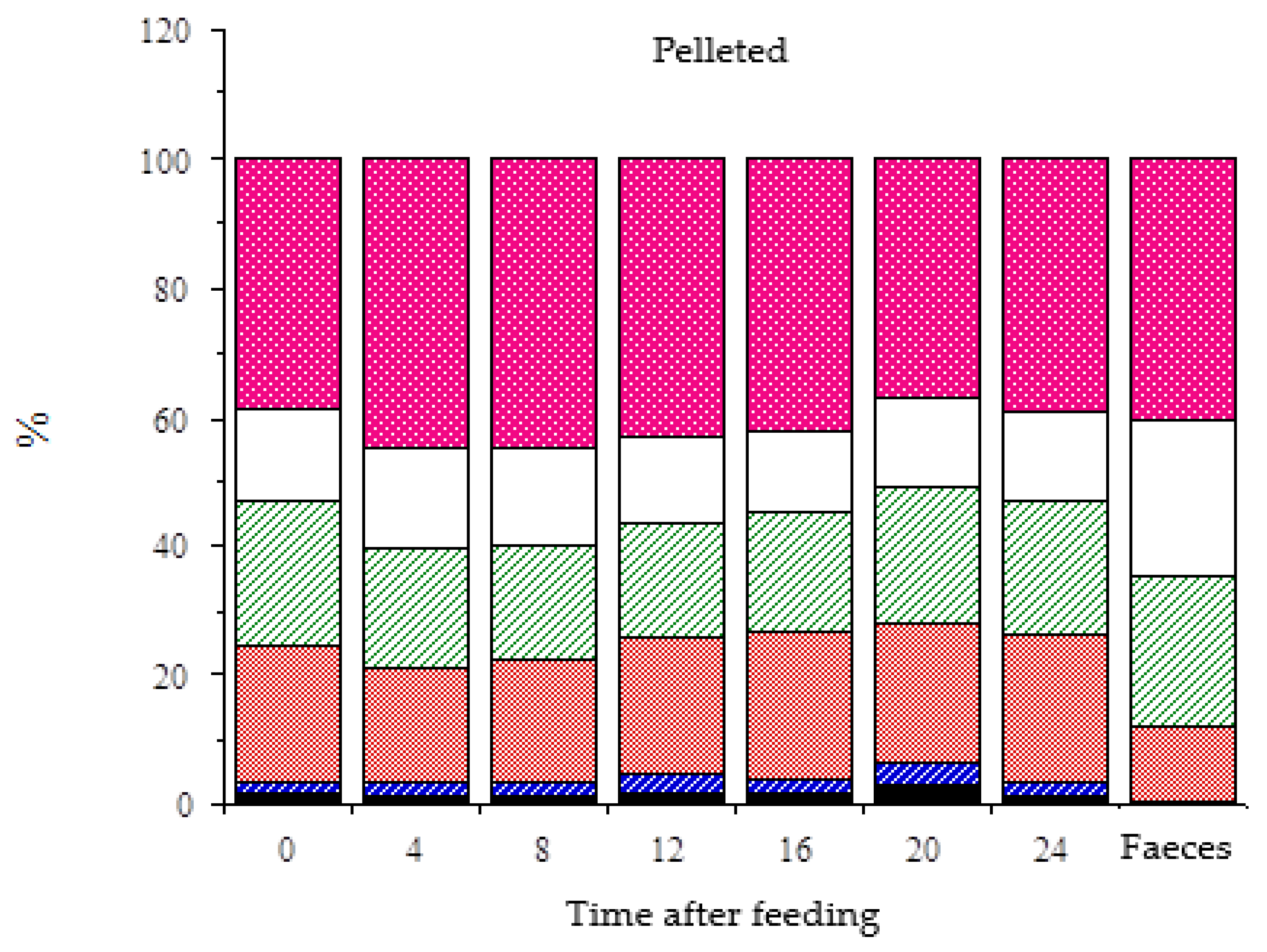
Intake is the most important factor affecting animal performance, and in ruminants fed low-quality forages, the limiting factor for intake is rumen fill. Many factors affect rumen fill, among them the amount and rate of intake and the amount and rate of flow of digesta out of the rumen. The balance between those two factors will determine actual intake. Usually, animals fed forages ground and pelleted eat more than their counter partners offered the forages in the long form, and the question here is: Why? In the present work, the daily evolution of rumen fill in wethers fed low-quality alfalfa hay offered either chopped or ground and pelleted was studied. As factors influencing rumen fill, we assessed feeding behaviour (time spent chewing during eating and rumination), rumen fill (estimated by dilution of substances inserted in the rumen, known as markers), digestion in the rumen (incubating the feeds in polyester bags introduced in this compartment), and passage of the material out of the viscera (estimated with the aid of markers). The results showed that animals fed the pelleted hay ate more than those offered the long hay. As there was no effect of the diet on rumen volume or rate of digestion, a faster emptying of the liquid phase of the rumen, likely containing high amounts of small particles, was probably the reason.
Abstract
A voluminous amount of knowledge has been collected about the effects of the rate and amount of intake and of the rate and amount of digesta flow out of the rumen on rumen fill and, hence, intake. However, the mechanisms by which small particles in the rumen are selected for passage have not been clearly identified. Grinding and pelleting have been alleged to either enhance or reduce entrapment; hence, the relationships between particle size and digestion and passage kinetics are not sufficiently clear, as it is not the effect of rumen digesta particle size on marker dilution kinetics. On these grounds, the aim of the present experiment was to examine the behaviour of small particles within the rumen and determine if their retention time by passage or digestion pathways alter under pelleting and control intake. In the present experiment, the effects of a low-quality alfalfa hay presentation (chopped vs. ground and pelleted) on intake, feeding behaviour, rumen fill and digestion, and passage were assessed in adult wethers. Pelleting increased intake without alteration of either the maximum amount of digesta present in the rumen or degradation rates. The faster dilution rate of the liquid phase with the pelleted hay, likely including significant amounts of particles <0.15 mm, should be the main factor for the higher intake with this diet.
Keywords:
forages; sheep; particle size; intake; feeding behaviour; rumen fill; digestion; passage