Peptide Mediated Adhesion to Beta-Lactam Ring of Equine Mesenchymal Stem Cells: A Pilot Study
by
 , , , , , and
Barbara Merlo
1,2,* ,
,
Vito Antonio Baldassarro
1,3 ,
,
Alessandra Flagelli
2,
Romina Marcoccia
2,
Valentina Giraldi
2,4,
Maria Letizia Focarete
2,4 ,
,
Daria Giacomini
2,4 and
Eleonora Iacono
1,2 1
Department of Veterinary Medical Sciences, University of Bologna, Via Tolara di Sopra, 50, 40064 Ozzano Emilia, BO, Italy
2
Interdepartmental Center for Industrial Research in Health Sciences and Technologies, University of Bologna, Via Tolara di Sopra, 41/E, 40064 Ozzano Emilia, BO, Italy
3
IRET Foundation, Via Tolara di Sopra, 41/E, 40064 Ozzano Emilia, BO, Italy
4
Department of Chemistry “Giacomo Ciamician” and INSTM UdR of Bologna, University of Bologna, Via Selmi 2, 40126 Bologna, BO, Italy
*
Author to whom correspondence should be addressed.
Animals 2022, 12(6), 734; https://doi.org/10.3390/ani12060734
Submission received: 11 January 2022
/
Revised: 3 March 2022
/
Accepted: 14 March 2022
/
Published: 15 March 2022
(This article belongs to the Collection Stem Cells in Domestic Animals: Applications in Health and Production)
Simple Summary
In recent years, stem cell therapy has emerged as a promising potential treatment for chronic wounds in both human and veterinary medicine. Particularly, mesenchymal stem cells (MSCs) may be an attractive therapeutic tool for regenerative medicine and tissue engineering because these cells play a critical role in wound repair and tissue regeneration due to their immunosuppressive properties and multipotency. The use of biomaterials with integrin agonists could promote cell adhesion increasing tissue repair processes. This pilot study focuses on the adhesion ability of equine adult (adipose tissue) and fetal adnexa (Wharton’s jelly) derived MSCs mediated by GM18, an α4β1 integrin agonist, alone and combined with a biodegradable polymeric scaffold. Results show that a 24 h exposition to soluble GM18 affects equine MSCs adhesion ability with a donor-related variability and might suggest that WJ-MSCs more easily adhere to poly L-lactic acid (PLLA) nanofibers combined with GM18. These preliminary results need to be confirmed by further studies on the interactions between the different types of equine MSCs and GM18 incorporated PLLA scaffolds before drawing definitive conclusions on which cells and scaffolds could be successfully used for the treatment of decubitus ulcers.
Abstract
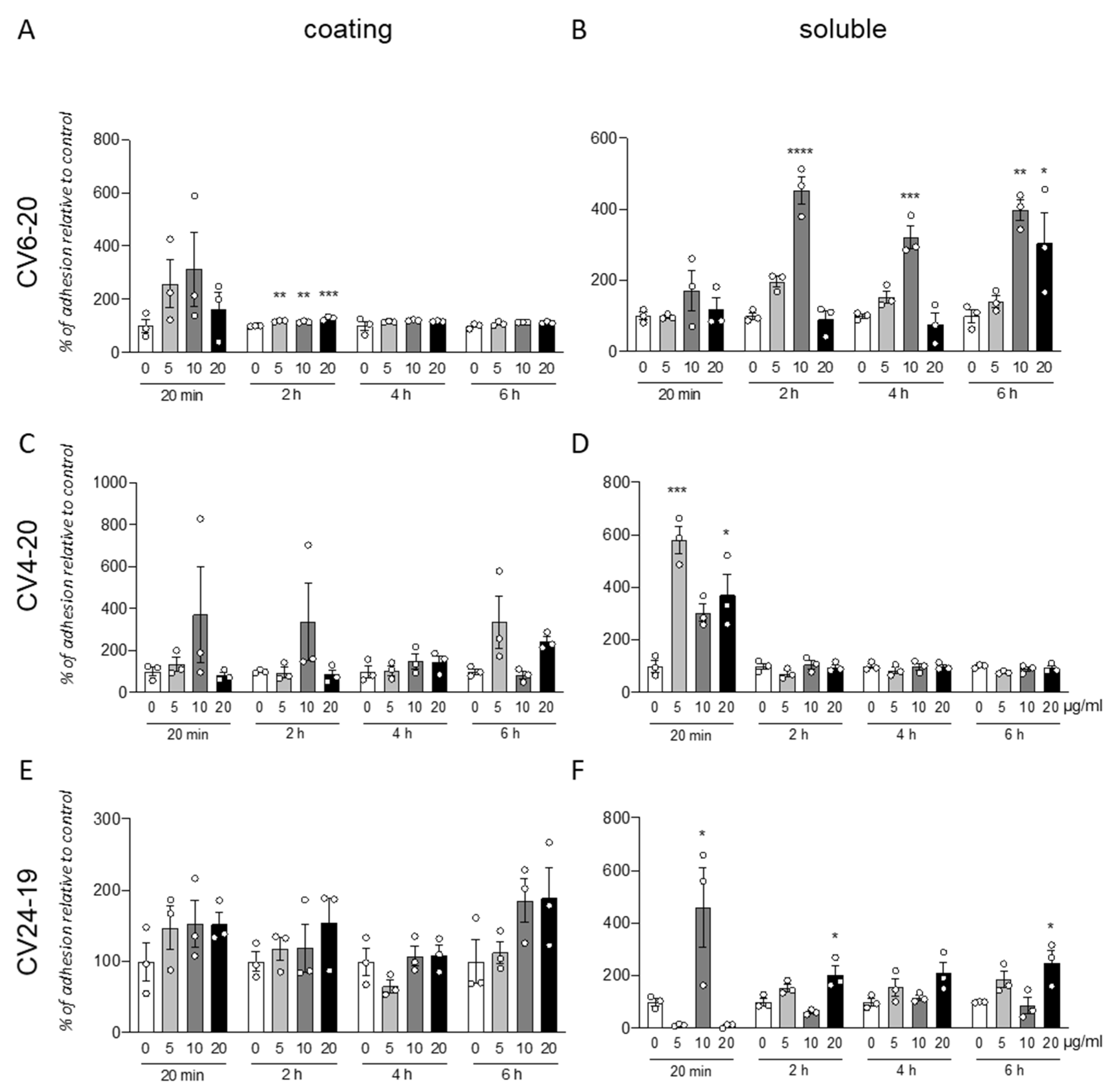
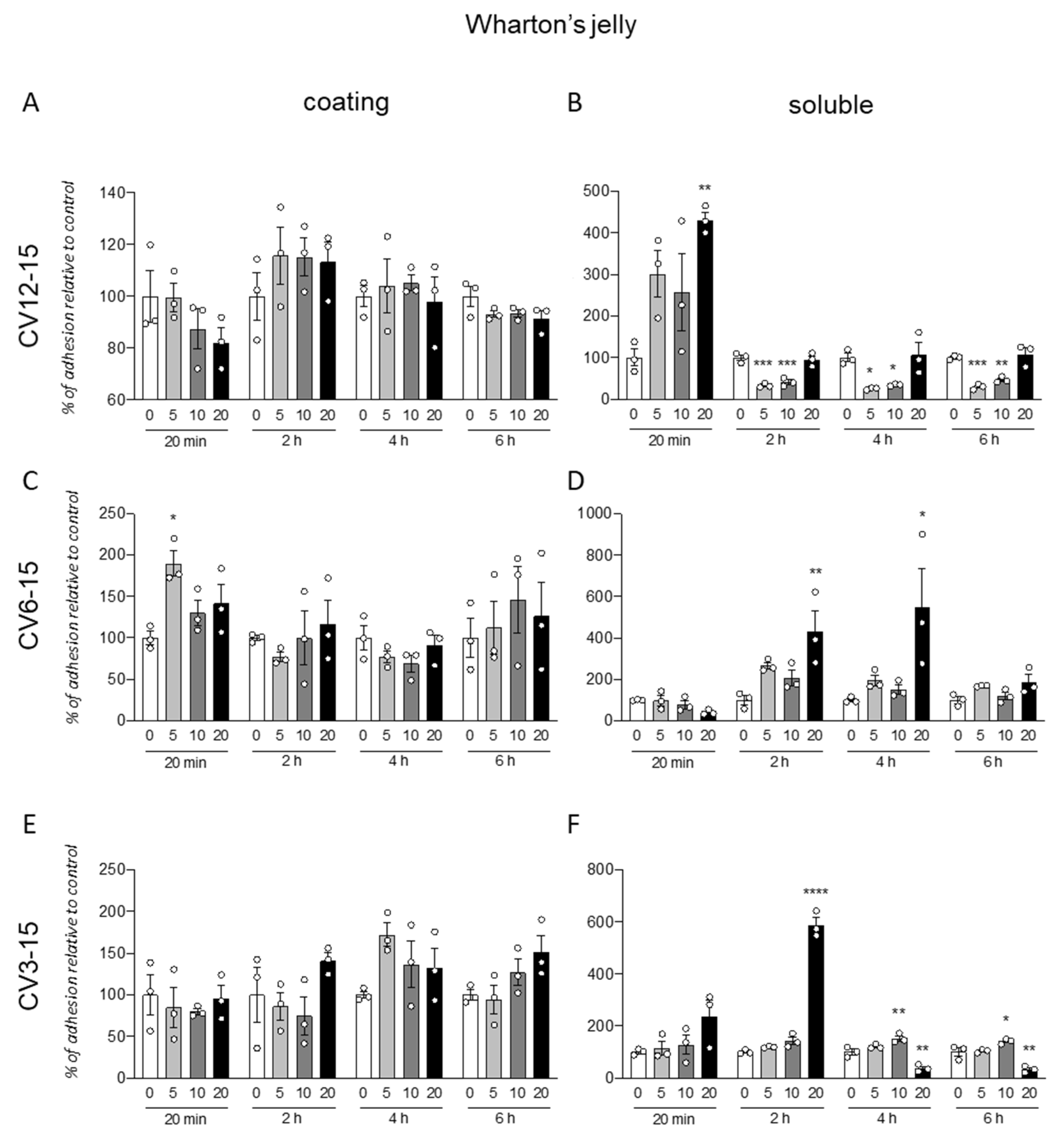
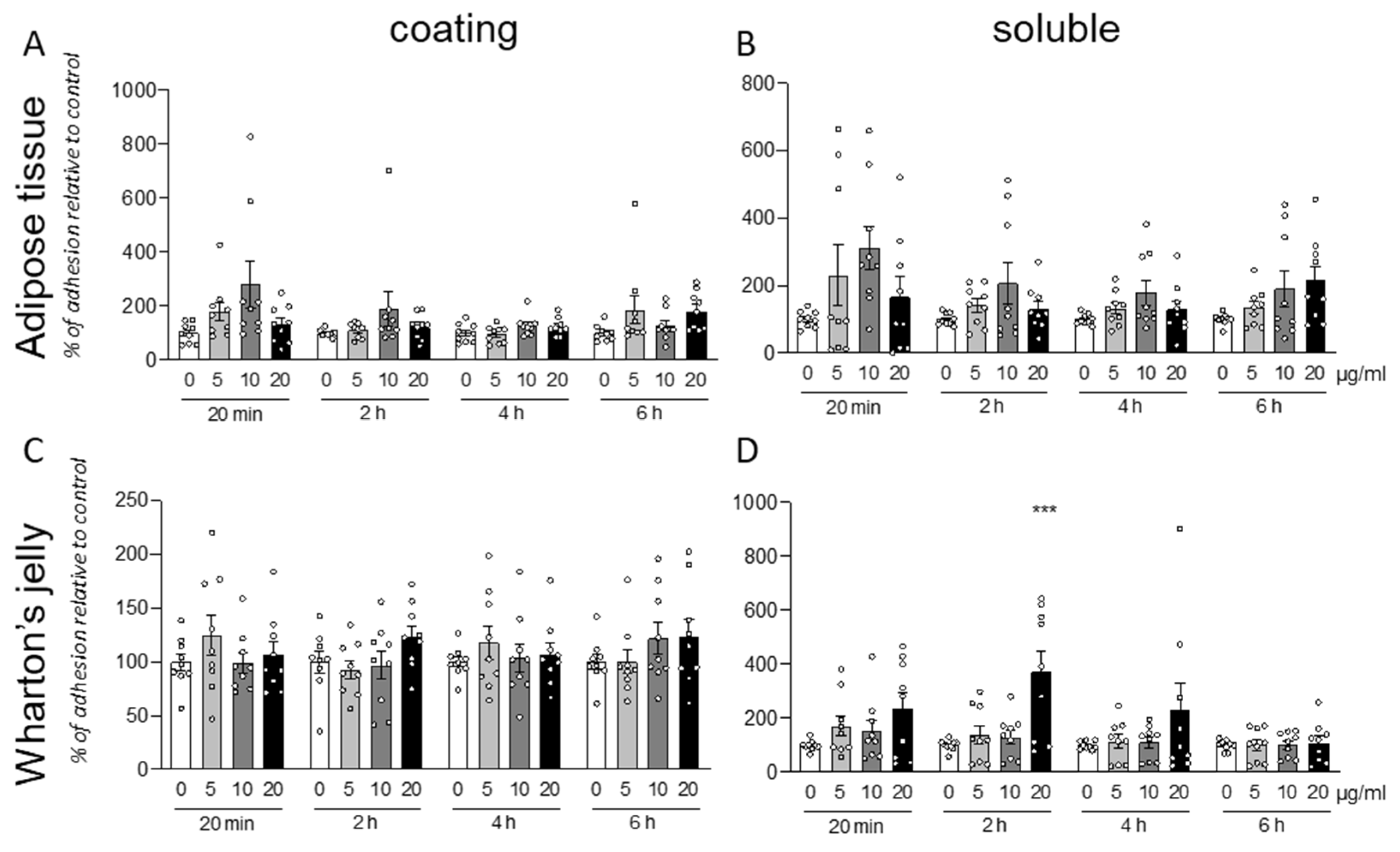
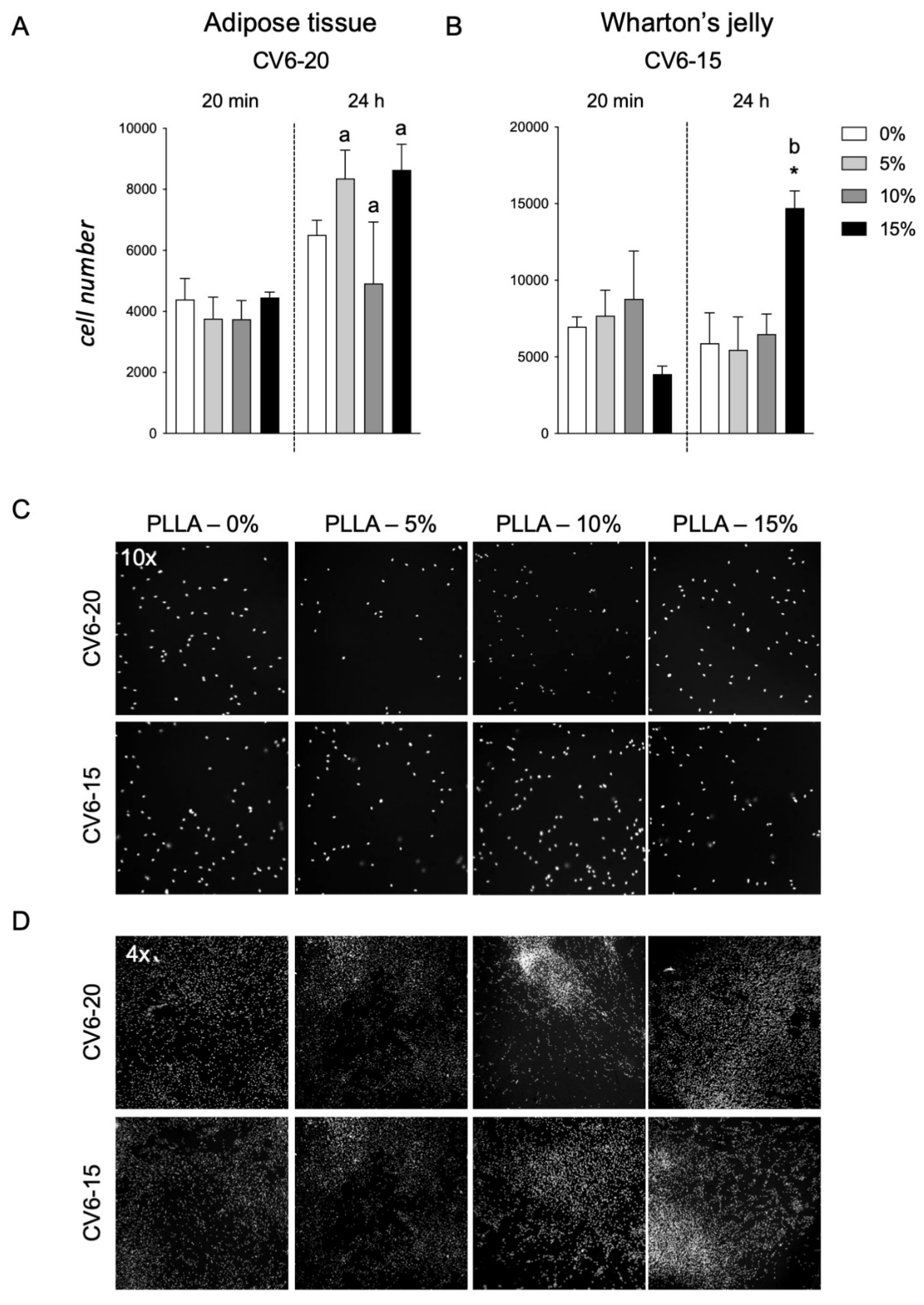
Regenerative medicine applied to skin lesions is a field in constant improvement. The use of biomaterials with integrin agonists could promote cell adhesion increasing tissue repair processes. The aim of this pilot study was to analyze the effect of an α4β1 integrin agonist on cell adhesion of equine adipose tissue (AT) and Wharton’s jelly (WJ) derived MSCs and to investigate their adhesion ability to GM18 incorporated poly L-lactic acid (PLLA) scaffolds. Adhesion assays were performed after culturing AT- and WJ-MSCs with GM18 coating or soluble GM18. Cell adhesion on GM18 containing PLLA scaffolds after 20 min co-incubation was assessed by HCS. Soluble GM18 affects the adhesion of equine AT- and WJ-MSCs, even if its effect is variable between donors. Adhesion to PLLA scaffolds containing GM18 is not significantly influenced by GM18 for AT-MSCs after 20 min or 24 h of culture and for WJ-MSCs after 20 min, but increased cell adhesion by 15% GM18 after 24 h. In conclusion, the α4β1 integrin agonist GM18 affects equine AT- and WJ-MSCs adhesion ability with a donor-related variability. These preliminary results represent a first step in the study of equine MSCs adhesion to PLLA scaffolds containing GM18, suggesting that WJ-MSCs might be more suitable than AT-MSCs. However, the results need to be confirmed by increasing the number of samples before drawing definite conclusions.