Lactic Acid Bacteria-Derived Postbiotics in Dairy Foods: Definitions, Functions and Regulatory Challenges



Abstract
1. Introduction
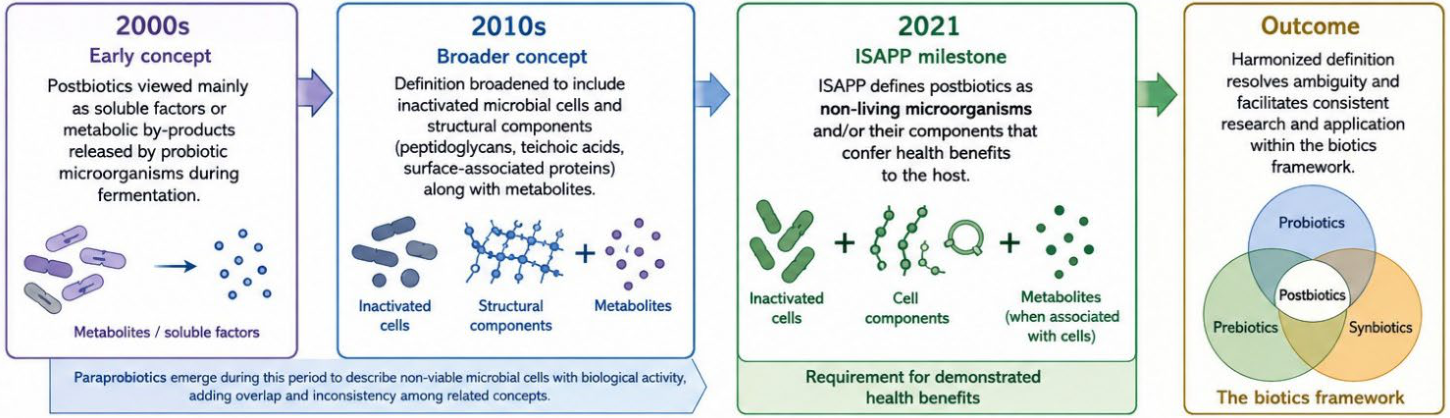
2. Definitions of Postbiotics

| Definition | Includes Inactivated Cells | Metabolites Explicitly Included in Definition | Relevance to Dairy Foods | Reference |
|---|---|---|---|---|
| Non-viable bacterial products or metabolic byproducts from probiotic microorganisms that have biologic activity in the host | Yes | Yes | Includes metabolites formed during dairy fermentation but lacks food-matrix specificity | Tsilingiri, Rescigno [16] |
| Soluble factors (products or metabolic byproducts) secreted by live bacteria or released after bacterial lysis | No (focus on soluble factors) | Yes | Excludes inactivated starter cultures; applicable to dairy whey, fermented milk, and cheese extracts | Aguilar-Toalá et al. [6] |
| Metabolic products of probiotic bacteria with health-promoting properties | No | Yes | Emphasizes metabolites but excludes non-viable LAB cells common in processed dairy foods | Zendeboodi et al. [18] |
| Functional bioactive compounds produced by food-grade microorganisms during fermentation | Not specified | Yes | Relevant to dairy fermentation but does not clearly distinguish postbiotics from general fermentation products | Collado et al. [22] |
| A preparation of inanimate microorganisms and/or their components that confers a health benefit on the host | Yes | Does not classify metabolites alone as postbiotics (but allows them when associated with cell structures) | Particularly relevant to fermented dairy products containing heat-treated LAB, non-viable starter cultures, and microbial cell components with demonstrated health benefits. | ISAPP [19] |
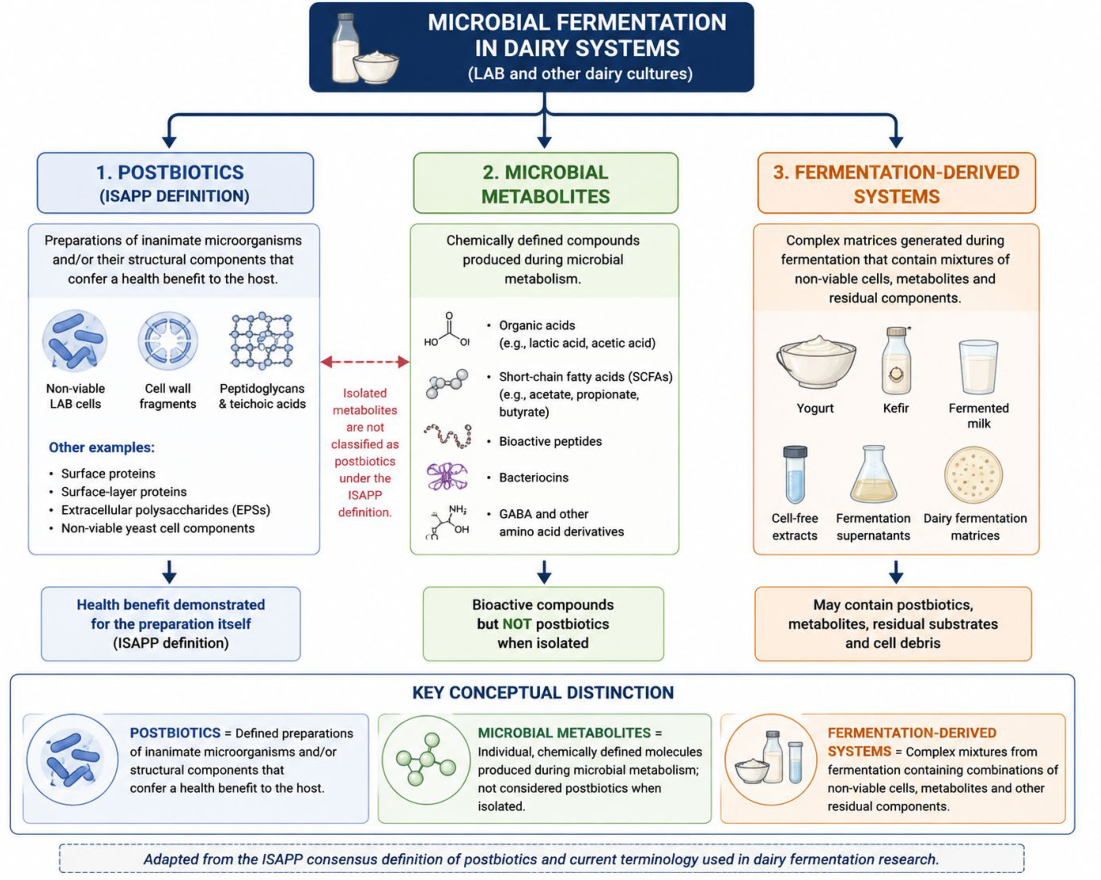
| Term | Definition/Main Components | Microbial Cells Present? | Typical Composition | Example | Key References |
|---|---|---|---|---|---|
| Postbiotics (ISAPP definition) | Preparation of inanimate microorganisms and/or their components that confers a health benefit on the host | Yes (non-viable) | Inactivated cells, cell wall fragments, intracellular components, metabolites associated with the preparation | Heat-killed Lacticaseibacillus rhamnosus or Lactiplantibacillus plantarum preparations | Salminen et al. [19], Vinderola et al. [26] |
| Microbial metabolites | Low-molecular-weight compounds produced during microbial metabolism | No | Organic acids, SCFAs, vitamins, peptides, GABA | Lactic acid, acetate, GABA, folate | Wegh et al. [23], Żółkiewicz et al. [24] |
| Fermentates | Complex fermentation-derived preparations containing microbial products and residual fermentation components | Variable | Metabolites, cell fragments, residual medium constituents, sometimes viable or non-viable microorganisms | Fermented dairy extracts, cell-free fermentation broths | Aguilar-Toalá et al. [6] |
| Paraprobiotics | Inactivated microbial cells that provide physiological benefits without viability | Yes (non-viable) | Whole heat-killed or otherwise inactivated microbial cells | Heat-treated LAB cultures | Taverniti and Guglielmetti [17] |
| Metabiotics | Structurally defined microbial-derived molecules responsible for biological activity | No | Purified metabolites, signaling molecules, peptides, cell components | Bacteriocins, bioactive peptides, peptidoglycan fragments | Shenderov [25] |
3. Postbiotic Preparations and Associated Metabolites in Dairy Systems
3.1. Organic Acids (Postbiotic-Associated Metabolites)
3.2. Bioactive Peptides (Postbiotic-Associated Metabolites)
3.3. Gamma-Aminobutyric Acid (GABA) (Postbiotic-Associated Metabolites)
3.4. Bacteriocins (Postbiotic-Associated Metabolites)
3.5. Exopolysaccharides (Components That May Occur Within Postbiotic Preparations)
3.6. Cell Wall Fragments (Postbiotics by ISAPP Definition)
3.7. Short-Chain Fatty Acids (Postbiotic-Associated Metabolites)
4. Functional Properties and Health Implications
4.1. Antimicrobial and Preservative Effects
4.2. Immunomodulatory and Anti-Inflammatory Activities
4.3. Gut Barrier Function and Microbiota Modulation
5. Production and Stability of Postbiotics in Dairy Matrices
5.1. Influence of Fermentation Conditions and Starter Culture Selection
5.2. Processing Factors
5.3. Stability and Bioavailability in Dairy Products
6. Safety Considerations
6.1. Toxicological Aspects of LAB-Derived Postbiotics
6.2. Antibiotic Resistance Gene Concerns Associated with LAB-Derived Postbiotics
6.3. Dosage and Long-Term Consumption Concerns of LAB-Derived Postbiotics
7. Regulatory and Commercial Challenges
8. Conclusions
Author Contributions
Funding
Institutional Review Board Statement
Informed Consent Statement
Data Availability Statement
Conflicts of Interest
References
- Kondrotiene, K.; Zavistanaviciute, P.; Aksomaitiene, J.; Novoslavskij, A.; Malakauskas, M. Lactococcus lactis in Dairy Fermentation—Health-Promoting and Probiotic Properties. Fermentation 2024, 10, 16. [Google Scholar] [CrossRef] [Scilit]
- Baker, M.T.; Lu, P.; Parrella, J.A.; Leggette, H.R. Consumer Acceptance toward Functional Foods: A Scoping Review. Int. J. Environ. Res. Public Health 2022, 19, 1217. [Google Scholar] [CrossRef] [Scilit] [PubMed]
- Gao, J.; Li, X.; Zhang, G.; Sadiq, F.A.; Simal-Gandara, J.; Xiao, J.; Sang, Y. Probiotics in the Dairy Industry-Advances and Opportunities. Compr. Rev. Food Sci. Food Saf. 2021, 20, 3937–3982. [Google Scholar] [CrossRef] [Scilit] [PubMed]
- Vinderola, G.; Benkowski, A.; Bernardeau, M.; Chenoll, E.; Collado, M.C.; Cronin, U.; Eckhardt, E.; Green, J.B.; Ipharraguerre, I.R.; Kemperman, R.; et al. Postbiotics: A Perspective on Their Quantification. Front. Nutr. 2025, 12, 1582733. [Google Scholar] [CrossRef] [Scilit] [PubMed]
- Zhong, Y.; Wang, T.; Luo, R.; Liu, J.; Jin, R.; Peng, X. Recent Advances and Potentiality of Postbiotics in the Food Industry: Composition, Inactivation Methods, Current Applications in Metabolic Syndrome, and Future Trends. Crit. Rev. Food Sci. Nutr. 2024, 64, 5768–5792. [Google Scholar] [CrossRef] [Scilit] [PubMed]
- Aguilar-Toalá, J.E.; Garcia-Varela, R.; Garcia, H.S.; Mata-Haro, V.; González-Córdova, A.F.; Vallejo-Cordoba, B.; Hernández-Mendoza, A. Postbiotics: An Evolving Term within the Functional Foods Field. Trends Food Sci. Technol. 2018, 75, 105–114. [Google Scholar] [CrossRef] [Scilit]
- Taşkoparan, Ş.; Altınay, C.; Özer, H.B. Recent Updates of Probiotic Dairy-Based Beverages. Food Funct. 2025, 16, 1656–1669. [Google Scholar] [CrossRef] [Scilit] [PubMed]
- Atasoy, Y.B.; Şengül, M. Quality Improvement of Yogurt Formulations Using Postbiotic Powders Obtained by Lacticaseibacillus casei ATCC 393. Food Meas. 2026, 20, 5823–5838. [Google Scholar] [CrossRef] [Scilit]
- Barros, C.P.; Guimarães, J.T.; Esmerino, E.A.; Duarte, M.C.K.; Silva, M.C.; Silva, R.; Ferreira, B.M.; Sant’Ana, A.S.; Freitas, M.Q.; Cruz, A.G. Paraprobiotics and Postbiotics: Concepts and Potential Applications in Dairy Products. Curr. Opin. Food Sci. 2020, 32, 1–8. [Google Scholar] [CrossRef] [Scilit]
- Nataraj, B.H.; Ali, S.A.; Behare, P.V.; Yadav, H. Postbiotics-Parabiotics: The New Horizons in Microbial Biotherapy and Functional Foods. Microb. Cell Fact. 2020, 19, 168. [Google Scholar] [CrossRef] [Scilit] [PubMed]
- Scott, E.; De Paepe, K.; Van de Wiele, T. Postbiotics and Their Health Modulatory Biomolecules. Biomolecules 2022, 12, 1640. [Google Scholar] [CrossRef] [Scilit] [PubMed]
- Amobonye, A.; Pillay, B.; Hlope, F.; Asong, S.T.; Pillai, S. Postbiotics: An Insightful Review of the Latest Category in Functional Biotics. World J. Microbiol. Biotechnol. 2025, 41, 293. [Google Scholar] [CrossRef] [Scilit] [PubMed]
- Karabacak Aydin, E.G.; Mohammed, S.; Con, A.H. Postbiotics in the Food Industry: Applications, Delivery Systems, and Future Perspectives. Arch. Microbiol. 2025, 208, 38. [Google Scholar] [CrossRef] [Scilit] [PubMed]
- Probiotics|Postbiotics in Dairy: A Comprehensive Review of Applications and Health Impacts|Springermedicine.Com. Available online: https://www.springermedicine.com/probiotics/postbiotics-in-dairy-a-comprehensive-review-of-applications-and-/52356598 (accessed on 25 May 2026).
- Tariq, A.; Tahran, M.N.; Ozturkoglu-Budak, S. Bioprotective and Functional Activities of Postbiotics from Lactic Acid Bacteria Derived From Artisanal Dairy Products. Food Sci. Nutr. 2025, 13, e70647. [Google Scholar] [CrossRef] [Scilit] [PubMed]
- Tsilingiri, K.; Rescigno, M. Postbiotics: What Else? Benef. Microbes 2013, 4, 101–107. [Google Scholar] [CrossRef] [Scilit] [PubMed]
- Taverniti, V.; Guglielmetti, S. The Immunomodulatory Properties of Probiotic Microorganisms beyond Their Viability (Ghost Probiotics: Proposal of Paraprobiotic Concept). Genes Nutr. 2011, 6, 261–274. [Google Scholar] [CrossRef] [Scilit] [PubMed]
- Zendeboodi, F.; Khorshidian, N.; Mortazavian, A.M.; da Cruz, A.G. Probiotic: Conceptualization from a New Approach. Curr. Opin. Food Sci. 2020, 32, 103–123. [Google Scholar] [CrossRef] [Scilit]
- Salminen, S.; Collado, M.C.; Endo, A.; Hill, C.; Lebeer, S.; Quigley, E.M.M.; Sanders, M.E.; Shamir, R.; Swann, J.R.; Szajewska, H.; et al. The International Scientific Association of Probiotics and Prebiotics (ISAPP) Consensus Statement on the Definition and Scope of Postbiotics. Nat. Rev. Gastroenterol. Hepatol. 2021, 18, 649–667, Erratum in Nat. Rev. Gastroenterol. Hepatol. 2021, 18, 671. https://doi.org/10.1038/s41575-021-00481-x. Erratum in Nat. Rev. Gastroenterol. Hepatol. 2022, 19, 551. https://doi.org/10.1038/s41575-022-00628-4. [Google Scholar] [CrossRef] [Scilit] [PubMed]
- Kavita; Om, H.; Chand, U.; Kushawaha, P.K. Postbiotics: An Alternative and Innovative Intervention for the Therapy of Inflammatory Bowel Disease. Microbiol. Res. 2024, 279, 127550. [Google Scholar] [CrossRef] [Scilit] [PubMed]
- Bueno, E.B.T.; Silva, K.d.O.; Mendes, M.E.F.; de Oliveira, L.B.; de Menezes, F.P.; Imperador, A.C.; Correia, L.F.; Winkelstroter, L.K. Postbiotics Derived from Lactic Acid Bacteria Fermentation: Therapeutic Potential in the Treatment of Muscular Complications in Inflammatory Bowel Disease. Fermentation 2025, 11, 362. [Google Scholar] [CrossRef] [Scilit]
- Collado, M.C.; Vinderola, G.; Salminen, S. Postbiotics: Facts and Open Questions. A Position Paper on the Need for a Consensus Definition. Benef. Microbes 2019, 10, 711–719. [Google Scholar] [CrossRef] [Scilit] [PubMed]
- Wegh, C.A.M.; Geerlings, S.Y.; Knol, J.; Roeselers, G.; Belzer, C. Postbiotics and Their Potential Applications in Early Life Nutrition and Beyond. Int. J. Mol. Sci. 2019, 20, 4673. [Google Scholar] [CrossRef] [Scilit] [PubMed]
- Żółkiewicz, J.; Marzec, A.; Ruszczyński, M.; Feleszko, W. Postbiotics-A Step Beyond Pre- and Probiotics. Nutrients 2020, 12, 2189. [Google Scholar] [CrossRef] [Scilit] [PubMed]
- Shenderov, B.A. Metabiotics: Novel Idea or Natural Development of Probiotic Conception. Microb. Ecol. Health Dis. 2013, 24, 20399. [Google Scholar] [CrossRef] [Scilit] [PubMed]
- Vinderola, G.; Sanders, M.E.; Salminen, S.; Szajewska, H. Postbiotics: The Concept and Their Use in Healthy Populations. Front. Nutr. 2022, 9, 1002213. [Google Scholar] [CrossRef] [Scilit] [PubMed]
- Gurunathan, S.; Thangaraj, P.; Kim, J.-H. Postbiotics: Functional Food Materials and Therapeutic Agents for Cancer, Diabetes, and Inflammatory Diseases. Foods 2024, 13, 89. [Google Scholar] [CrossRef] [Scilit] [PubMed]
- Ayivi, R.D.; Ibrahim, S.A. Lactic Acid Bacteria: An Essential Probiotic and Starter Culture for the Production of Yoghurt. Int. J. Food Sci. Tech. 2022, 57, 7008–7025. [Google Scholar] [CrossRef] [Scilit]
- Santos, C.; Raymundo, A.; Moreira, J.B.; Prista, C. Exploring the Potential of Lactic Acid Bacteria Fermentation as a Clean Label Alternative for Use in Yogurt Production. Appl. Sci. 2025, 15, 2686. [Google Scholar] [CrossRef] [Scilit]
- Kumar, S.; Chauhan, N.; Chauhan, T.; Tyagi, N.; Rizwan, M.; Samanta, A.K. Calf-Derived Lactic Acid Bacteria as Antimicrobial Agents against Enteric Pathogens: A Clustering Approach. Dairy Sci. Manag. 2025, 2, 13. [Google Scholar] [CrossRef] [Scilit]
- Jahedi, S.; Pashangeh, S. Bioactivities of Postbiotics in Food Applications: A Review. Iran. J. Microbiol. 2025, 17, 348–357. [Google Scholar] [CrossRef] [Scilit] [PubMed]
- Figueroa, R.H.H.; López-Malo, A.; Mani-López, E. Antimicrobial Activity and Applications of Fermentates from Lactic Acid Bacteria—A Review. Sustain. Food Technol. 2024, 2, 292–306. [Google Scholar] [CrossRef] [Scilit]
- Ahansaz, N.; Tarrah, A.; Pakroo, S.; Corich, V.; Giacomini, A. Lactic Acid Bacteria in Dairy Foods: Prime Sources of Antimicrobial Compounds. Fermentation 2023, 9, 964. [Google Scholar] [CrossRef] [Scilit]
- Meleti, E.; Koureas, M.; Manouras, A.; Giannouli, P.; Malissiova, E. Bioactive Peptides from Dairy Products: A Systematic Review of Advances, Mechanisms, Benefits, and Functional Potential. Dairy 2025, 6, 65. [Google Scholar] [CrossRef] [Scilit]
- Maniya, H.; Singh, B.P.; Kumar, V. Antioxidant, Antidiabetic, and Antimicrobial Activities of Bioactive Peptides Derived from Milk Fermented by Multi-Strain Probiotic Consortium. Mol. Nutr. Food Res. 2026, 70, e70322. [Google Scholar] [CrossRef] [Scilit] [PubMed]
- Li, H.; Cao, Y. Lactic Acid Bacterial Cell Factories for Gamma-Aminobutyric Acid. Amino Acids 2010, 39, 1107–1116. [Google Scholar] [CrossRef] [Scilit] [PubMed]
- Diana, M.; Quílez, J.; Rafecas, M. Gamma-Aminobutyric Acid as a Bioactive Compound in Foods: A Review. J. Funct. Foods 2014, 10, 407–420. [Google Scholar] [CrossRef] [Scilit]
- Inoue, K.; Shirai, T.; Ochiai, H.; Kasao, M.; Hayakawa, K.; Kimura, M.; Sansawa, H. Blood-Pressure-Lowering Effect of a Novel Fermented Milk Containing Gamma-Aminobutyric Acid (GABA) in Mild Hypertensives. Eur. J. Clin. Nutr. 2003, 57, 490–495. [Google Scholar] [CrossRef] [Scilit] [PubMed]
- Braga, J.D.; Thongngam, M.; Kumrungsee, T. Gamma-Aminobutyric Acid as a Potential Postbiotic Mediator in the Gut–Brain Axis. npj Sci. Food 2024, 8, 16. [Google Scholar] [CrossRef] [Scilit] [PubMed]
- Almutairi, S.; Sivadas, A.; Kwakowsky, A. The Effect of Oral GABA on the Nervous System: Potential for Therapeutic Intervention. Nutraceuticals 2024, 4, 241–259. [Google Scholar] [CrossRef] [Scilit]
- Ushidee-Radzi, M.A.; Shin Yee, C.; Raja-Razali, R.B.; Zahia-Azizan, N.A.; Di Renzo, T.; Reale, A.; Nazzaro, S.; Marena, P.; Ilham, Z.; Abd Rahman, N.‘A.; et al. Advances in GABA-Enriched Yogurt and Frozen Yogurt: Microbial Biosynthesis, Functional Properties, and Health Perspectives—A Comprehensive Review. Foods 2025, 14, 4254. [Google Scholar] [CrossRef] [Scilit] [PubMed]
- Jena, R.; Choudhury, P.K. Lactic Acid Bacteria in Fermented Dairy Foods: Gamma-Aminobutyric Acid (GABA) Production and Its Therapeutic Implications. Food Biosci. 2024, 62, 105276. [Google Scholar] [CrossRef] [Scilit]
- Pujato, S.A.; Mercanti, D.J.; Marcó, M.B.; Capra, M.L.; Quiberoni, A.; Guglielmotti, D.M. Bacteriocins from Lactic Acid Bacteria: Strategies for the Bioprotection of Dairy Foods. Front. Food Sci. Technol. 2024, 4, 1439891. [Google Scholar] [CrossRef] [Scilit]
- Prete, R.; Alam, M.K.; Perpetuini, G.; Perla, C.; Pittia, P.; Corsetti, A. Lactic Acid Bacteria Exopolysaccharides Producers: A Sustainable Tool for Functional Foods. Foods 2021, 10, 1653. [Google Scholar] [CrossRef] [Scilit] [PubMed]
- Pachekrepapol, U.; Lucey, J.A.; Gong, Y.; Naran, R.; Azadi, P. Characterization of the Chemical Structures and Physical Properties of Exopolysaccharides Produced by Various Streptococcus Thermophilus Strains. J. Dairy Sci. 2017, 100, 3424–3435, Erratum in J. Dairy Sci. 2018, 101, 5668. https://doi.org/10.3168/jds.2018-101-6-5668. [Google Scholar] [CrossRef] [Scilit] [PubMed]
- Wa, Y.; Chanyi, R.M.; Nguyen, H.T.H.; Gu, R.; Day, L.; Altermann, E. Extracellular Polysaccharide Extraction from Streptococcus Thermophilus in Fermented Milk. Microbiol. Spectr. 2022, 10, e02280-21. [Google Scholar] [CrossRef] [Scilit] [PubMed]
- Abarquero, D.; Renes, E.; Fresno, J.M.; Tornadijo, M.E. Study of Exopolysaccharides from Lactic Acid Bacteria and Their Industrial Applications: A Review. Int. J. Food Sci. Tech. 2022, 57, 16–26. [Google Scholar] [CrossRef] [Scilit]
- Nakata, H.; Imamura, Y.; Saha, S.; Lobo, R.E.; Kitahara, S.; Araki, S.; Tomokiyo, M.; Namai, F.; Hiramitsu, M.; Inoue, T.; et al. Partial Characterization and Immunomodulatory Effects of Exopolysaccharides from Streptococcus Thermophilus SBC8781 during Soy Milk and Cow Milk Fermentation. Foods 2023, 12, 2374. [Google Scholar] [CrossRef] [Scilit] [PubMed]
- Sørensen, H.M.; Rochfort, K.D.; Maye, S.; MacLeod, G.; Brabazon, D.; Loscher, C.; Freeland, B. Exopolysaccharides of Lactic Acid Bacteria: Production, Purification and Health Benefits towards Functional Food. Nutrients 2022, 14, 2938. [Google Scholar] [CrossRef] [Scilit] [PubMed]
- Ouarabi, L.; Ouarabi, L.; Hamma-Faradji, S.; Mohedano, M.L.; López, P.; Drider, D. Exopolysaccharides from Lactic Acid Bacteria: Structure, Biosynthesis, and Health Benefits. Microbes Infect. 2025, 27, 105581. [Google Scholar] [CrossRef] [Scilit] [PubMed]
- Hernández-Figueroa, R.H.; López-Malo, A.; Mani-López, E. Lactic Acid Bacteria-Derived Exopolysaccharides: Dual Roles as Functional Ingredients and Fermentation Agents in Food Applications. Fermentation 2025, 11, 538. [Google Scholar] [CrossRef] [Scilit]
- Markowiak-Kopeć, P.; Śliżewska, K. The Effect of Probiotics on the Production of Short-Chain Fatty Acids by Human Intestinal Microbiome. Nutrients 2020, 12, 1107. [Google Scholar] [CrossRef] [Scilit] [PubMed]
- Vinderola, G.; Sanders, M.E.; Salminen, S. The Concept of Postbiotics. Foods 2022, 11, 1077. [Google Scholar] [CrossRef] [Scilit] [PubMed]
- Meral Aktaş, H.; Erdoğan, A.; Çetïn, B. Bacteriocin Characterization of Autochtonous Lactococcus Lactis L54 and Its Application as Starter Culture for Beyaz Cheese. Food Biosci. 2023, 53, 102739. [Google Scholar] [CrossRef] [Scilit]
- Sharafi, H.; Moradi, M.; Amiri, S. Application of Cheese Whey Containing Postbiotics of Lactobacillus Acidophilus LA5 and Bifidobacterium Animalis BB12 as a Preserving Liquid in High-Moisture Mozzarella. Foods 2022, 11, 3387. [Google Scholar] [CrossRef] [Scilit] [PubMed]
- Shi, C.; Jia, L.; Xu, J.; Guo, N.; Cui, H.; Aziz, T.; Alamri, A.S.; Alsanie, W.F.; Alhomrani, M.; Li, C.; et al. Exploring the Anti-Listeria Monocytogenes Mechanisms of the Postbiotics Derived from Ligilactobacillus salivarius LSA-6 and Its Biopreservative Effects on Inner Mongolian Cheese. Food Biosci. 2025, 72, 107465. [Google Scholar] [CrossRef] [Scilit]
- Gajewska, J.; Zakrzewski, A.; Byczkowska-Rostkowska, Z.; Czaplicki, S. Comparative Evaluation of Postbiotic Preparation Methods for Antibacterial Activity in Fresh Cheese Applications. Foods 2025, 15, 6. [Google Scholar] [CrossRef] [Scilit] [PubMed]
- Zago, M.; Massimiliano, L.; Bonvini, B.; Penna, G.; Giraffa, G.; Rescigno, M. Functional Characterization and Immunomodulatory Properties of Lactobacillus Helveticus Strains Isolated from Italian Hard Cheeses. PLoS ONE 2021, 16, e0245903. [Google Scholar] [CrossRef] [Scilit] [PubMed]
- Pang, L.; Huang, Y.; Li, R.; Guo, L.; Man, C.; Yang, X.; Jiang, Y. Effects of Postbiotics Produced by Lactobacillus Plantarum JM015 Isolated from Traditional Fermented Dairy Products on Salmonella-Induced Intestinal Inflammation: A Preventive Strategy. Food Chem. 2025, 469, 142549. [Google Scholar] [CrossRef] [Scilit] [PubMed]
- Guo, J.; Zhao, Y.; Guo, W.; Sun, Y.; Zhang, W.; Zhao, Q.; Zhang, Y.; Jiang, Y. Effects of Lactobacillus Paracei JY062 Postbiotic on Intestinal Barrier, Immunity, and Gut Microbiota. Nutrients 2025, 17, 1272. [Google Scholar] [CrossRef] [Scilit] [PubMed]
- Sanschagrin, L.; Paniconi, T.; Sanchez Martinez, A.C.; Jubinville, E.; Goulet-Beaulieu, V.; Goetz, C.; Labrie, S.; Dufour, S.; Jean, J. Identification and Characterization of Microorganisms Isolated from Noncompliant or Atypical Dairy Products in Canada. J. Dairy Sci. 2024, 107, 7659–7677. [Google Scholar] [CrossRef] [Scilit] [PubMed]
- Fusco, V.; Chieffi, D.; Fanelli, F.; Logrieco, A.F.; Cho, G.; Kabisch, J.; Böhnlein, C.; Franz, C.M.A.P. Microbial Quality and Safety of Milk and Milk Products in the 21st Century. Compr. Rev. Food Sci. Food Saf. 2020, 19, 2013–2049. [Google Scholar] [CrossRef] [Scilit] [PubMed]
- Silva, L.F.; Sunakozawa, T.N.; Monteiro, D.A.; Casella, T.; Conti, A.C.; Todorov, S.D.; Barretto Penna, A.L. Potential of Cheese-Associated Lactic Acid Bacteria to Metabolize Citrate and Produce Organic Acids and Acetoin. Metabolites 2023, 13, 1134. [Google Scholar] [CrossRef] [Scilit] [PubMed]
- Hu, C.; Ren, L.; Zhou, Y.; Ye, B. Characterization of Antimicrobial Activity of Three Lactobacillus plantarum Strains Isolated from Chinese Traditional Dairy Food. Food Sci. Nutr. 2019, 7, 1997–2005. [Google Scholar] [CrossRef] [Scilit] [PubMed]
- Branson, S.R.; Broadbent, J.R.; Carpenter, C.E. Internal pH and Acid Anion Accumulation in Listeria Monocytogenes and Escherichia Coli Exposed to Lactic or Acetic Acids at Mildly Acidic pH. Front. Microbiol. 2022, 12, 803271. [Google Scholar] [CrossRef] [Scilit] [PubMed]
- Sorathiya, K.B.; Melo, A.; Hogg, M.C.; Pintado, M. Organic Acids in Food Preservation: Exploring Synergies, Molecular Insights, and Sustainable Applications. Sustainability 2025, 17, 3434. [Google Scholar] [CrossRef] [Scilit]
- Aiello, A.; Pizzolongo, F.; De Luca, L.; Blaiotta, G.; Aponte, M.; Addeo, F.; Romano, R. Production of Butyric Acid by Different Strains of Lactobacillus Plantarum (Lactiplantibacillus Plantarum). Int. Dairy J. 2023, 140, 105589. [Google Scholar] [CrossRef] [Scilit]
- Nuryana, I.; Andriani, A.; Lisdiyanti, P. Yopi Analysis of Organic Acids Produced by Lactic Acid Bacteria. IOP Conf. Ser. Earth Environ. Sci. 2019, 251, 012054. [Google Scholar] [CrossRef] [Scilit]
- Falqueto, A.; Rodrigues, R.D.S.; Souza, L.V.; Carvalho, A.F.D.; Caggia, C.; Nero, L.A.; Machado, S.G.; Randazzo, C.L. Bactericidal and Antibiofilm Activity of Lactic Acid Bacteria-Derived Cell Free Extracts against Dairy-Associated Spoilage and Pathogenic Bacteria. Front. Microbiol. 2026, 17, 1783760. [Google Scholar] [CrossRef] [Scilit] [PubMed]
- Zhang, S.; Dogan, B.; Guo, C.; Herlekar, D.; Stewart, K.; Scherl, E.J.; Simpson, K.W. Short Chain Fatty Acids Modulate the Growth and Virulence of Pathosymbiont Escherichia Coli and Host Response. Antibiotics 2020, 9, 462. [Google Scholar] [CrossRef] [Scilit] [PubMed]
- Li, R.; Duan, J.; Zhou, Y.; Wang, J. Structural Basis of the Mechanisms of Action and Immunity of Lactococcin A, a Class IId Bacteriocin. Appl. Environ. Microbiol. 2023, 89, e00066-23. [Google Scholar] [CrossRef] [Scilit] [PubMed]
- Zhu, L.; Zeng, J.; Wang, C.; Wang, J. Structural Basis of Pore Formation in the Mannose Phosphotransferase System by Pediocin PA-1. Appl. Environ. Microbiol. 2022, 88, e01992-21. [Google Scholar] [CrossRef] [Scilit] [PubMed]
- T Hart, P.; Oppedijk, S.F.; Breukink, E.; Martin, N.I. New Insights into Nisin’s Antibacterial Mechanism Revealed by Binding Studies with Synthetic Lipid II Analogues. Biochemistry 2016, 55, 232–237. [Google Scholar] [CrossRef] [Scilit] [PubMed]
- Bakhtiary, A.; Cochrane, S.A.; Mercier, P.; McKay, R.T.; Miskolzie, M.; Sit, C.S.; Vederas, J.C. Insights into the Mechanism of Action of the Two-Peptide Lantibiotic Lacticin 3147. J. Am. Chem. Soc. 2017, 139, 17803–17810. [Google Scholar] [CrossRef] [Scilit] [PubMed]
- Rahman, M.d.M.; Sazili, A.Q.; Ahmad, S.A.; Khalil, K.A.; Ismail-Fitry, M.R.; Sarker, M.d.S.K. Inhibitory Efficacy, Production Dynamics, and Characterization of Postbiotics of Lactic Acid Bacteria. BMC Microbiol. 2025, 25, 485. [Google Scholar] [CrossRef] [Scilit] [PubMed]
- Cadet, J.; Davies, K.J.A. Oxidative DNA Damage & Repair: An Introduction. Free. Radic. Biol. Med. 2017, 107, 2–12. [Google Scholar] [CrossRef] [Scilit] [PubMed]
- Shaaban, M.T.; Khalil, F.O.; Hamdy, E.; Ahmed, A.A.M. Antimicrobial and Antibiofilm Activities of Culture Filtrates from Lactiplantibacillus Plantarum Isolated from Traditional Dairy Products in Menoufia, Egypt. BMC Microbiol. 2025, 25, 745. [Google Scholar] [CrossRef] [Scilit] [PubMed]
- Hussain, N.; Tariq, M.; Saris, P.E.J.; Zaidi, A. Evaluation of the Probiotic and Postbiotic Potential of Lactic Acid Bacteria from Artisanal Dairy Products against Pathogens. J. Infect. Dev. Ctries. 2021, 15, 102–112. [Google Scholar] [CrossRef] [Scilit] [PubMed]
- Vera-Santander, V.E.; Mani-López, E.; López-Malo, A.; Jiménez-Munguía, M.T. Thermo-Ultrasonically Treated Whey-Based Postbiotics From Lactiplantibacillus Plantarum 299v or Bifidobacterium Lactis BPL1 as Natural Antimicrobials for Chicken Breast. J. Food Sci. 2026, 91, e71055. [Google Scholar] [CrossRef] [Scilit] [PubMed]
- Wu, J.; Li, Z.; Zhang, Z.; Zhang, J.; Hu, H.; Lan, H.; Hong, W.; Yang, Z. Characterization of a Postbiotic Exopolysaccharide Produced by Lacticaseibacillus Paracasei ET-22 with Antioxidant and Anti-Inflammatory Efficacy. Int. J. Biol. Macromol. 2025, 306, 141608. [Google Scholar] [CrossRef] [Scilit] [PubMed]
- Li, M.; Van Esch, B.C.A.M.; Wagenaar, G.T.M.; Garssen, J.; Folkerts, G.; Henricks, P.A.J. Pro- and Anti-Inflammatory Effects of Short Chain Fatty Acids on Immune and Endothelial Cells. Eur. J. Pharmacol. 2018, 831, 52–59. [Google Scholar] [CrossRef] [Scilit] [PubMed]
- Thananimit, S.; Pahumunto, N.; Teanpaisan, R. Characterization of Short Chain Fatty Acids Produced by Selected Potential Probiotic Lactobacillus Strains. Biomolecules 2022, 12, 1829. [Google Scholar] [CrossRef] [Scilit] [PubMed]
- Xin, Y.; Hu, C.; Li, Y.; Yang, Z.; Zhang, L.; Li, A.; Li, C.; Liu, L.; Du, P. Immunomodulatory Potential of Lactobacillus Helveticus KLDS 1.8701 Postbiotics: By Regulating the Th17/Treg Balance. Food Biosci. 2024, 61, 104842. [Google Scholar] [CrossRef] [Scilit]
- Li, R.; Sun, J.; Yao, X.; Xu, M.; Xiao, H.; Hong, W.; Han, Y. Preventive Effect of Peptidoglycan Extracted from Lactobacillus Casei ATCC 393 on Dextran Sulfate Sodium-Induced Inflammation in Mice Through Gut Microbiota Regulation. Processes 2025, 13, 3978. [Google Scholar] [CrossRef] [Scilit]
- Allela, O.Q.B.; Shareef, A.; Sameer, H.N.; Yaseen, A.; Athab, Z.H.; Adil, M. Overview of the Immunomodulatory Role of Bacterial Probiotic-Derived Peptidoglycan: From Molecular Insights to Therapeutic Application. Front. Microbiol. 2026, 17, 1761985. [Google Scholar] [CrossRef] [Scilit] [PubMed]
- Li, X.; Wang, G.; Zhang, M.; Zhai, Q.; Cui, S.; Zhao, L.; Song, X.; Xia, Y.; Xiong, Z.; Ai, L. Anti-Inflammatory Potential of Teichoic Acids from Lactiplantibacillus Plantarum AR113 and Their Effects on Host Immune Responses. Food Biosci. 2026, 77, 108354. [Google Scholar] [CrossRef] [Scilit]
- Pradhan, D.; Gulati, G.; Avadhani, R.; Rashmi, H.M.; Soumya, K.; Kumari, A.; Gupta, A.; Dwivedi, D.; Kaushik, J.K.; Grover, S. Postbiotic Lipoteichoic Acid of Probiotic Lactobacillus Origin Ameliorates Inflammation in HT-29 Cells and Colitis Mice. Int. J. Biol. Macromol. 2023, 236, 123962. [Google Scholar] [CrossRef] [Scilit] [PubMed]
- Kwon, M.; Lee, J.; Park, S.; Kwon, O.-H.; Seo, J.; Roh, S. Exopolysaccharide Isolated from Lactobacillus Plantarum L-14 Has Anti-Inflammatory Effects via the Toll-Like Receptor 4 Pathway in LPS-Induced RAW 264.7 Cells. Int. J. Mol. Sci. 2020, 21, 9283. [Google Scholar] [CrossRef] [Scilit] [PubMed]
- Zhou, X.; Hong, T.; Yu, Q.; Nie, S.; Gong, D.; Xiong, T.; Xie, M. Exopolysaccharides from Lactobacillus Plantarum NCU116 Induce C-Jun Dependent Fas/Fasl-Mediated Apoptosis via TLR2 in Mouse Intestinal Epithelial Cancer Cells. Sci. Rep. 2017, 7, 14247. [Google Scholar] [CrossRef] [Scilit] [PubMed]
- Lee, I.-C.; van Swam, I.I.; Boeren, S.; Vervoort, J.; Meijerink, M.; Taverne, N.; Starrenburg, M.; Bron, P.A.; Kleerebezem, M. Lipoproteins Contribute to the Anti-Inflammatory Capacity of Lactobacillus Plantarum WCFS1. Front. Microbiol. 2020, 11, 1822. [Google Scholar] [CrossRef] [Scilit] [PubMed]
- Vargas García, C.E.; Petrova, M.; Claes, I.J.J.; De Boeck, I.; Verhoeven, T.L.A.; Dilissen, E.; von Ossowski, I.; Palva, A.; Bullens, D.M.; Vanderleyden, J.; et al. Piliation of Lactobacillus Rhamnosus GG Promotes Adhesion, Phagocytosis, and Cytokine Modulation in Macrophages. Appl. Environ. Microbiol. 2015, 81, 2050–2062. [Google Scholar] [CrossRef] [Scilit] [PubMed]
- You, X.; Li, Z.; Ma, K.; Zhang, C.; Chen, X.; Wang, G.; Yang, L.; Dong, M.; Rui, X.; Zhang, Q.; et al. Structural Characterization and Immunomodulatory Activity of an Exopolysaccharide Produced by Lactobacillus Helveticus LZ-R-5. Carbohydr. Polym. 2020, 235, 115977. [Google Scholar] [CrossRef] [Scilit] [PubMed]
- Chen, J.; Zhang, L.; Jiao, Y.; Lu, X.; Zhang, N.; Li, X.; Zheng, S.; Li, B.; Liu, F.; Zuo, P. Lacticaseibacillus paracasei L21 and Its Postbiotics Ameliorate Ulcerative Colitis Through Gut Microbiota Modulation, Intestinal Barrier Restoration, and HIF1α/AhR-IL-22 Axis Activation: Combined In Vitro and In Vivo Evidence. Nutrients 2025, 17, 2537. [Google Scholar] [CrossRef] [Scilit] [PubMed]
- Zhang, J.; Tan, Z.; Tian, Z.; Zhao, M.; Qian, S.; Feng, H.; Chang, Y.; Hou, J.; Jiang, Z. Probiotics and Postbiotics Produced by Lacticaseibacillus rhamnosus 1.0320 Isolated from Traditional Fermented Dairy Products Alleviate DSS-Induced Colitis by Modulating the Gut Microbiota and Intestinal Metabolism. J. Agric. Food Chem. 2025, 73, 26014–26034. [Google Scholar] [CrossRef] [Scilit] [PubMed]
- Jung, S.H.; Hwang, S.; Seo, K.-H.; Park, Y.; Kim, M.J.; Kim, H. Bioconversion-Based Postbiotics Enhance Muscle Strength and Modulate Gut Microbiota in Healthy Individuals: A Randomized, Double-Blind, Placebo-Controlled Trial. Nutrients 2025, 17, 3937. [Google Scholar] [CrossRef] [Scilit] [PubMed]
- Xiao, L.; Zhang, C.; Zhang, X.; Zhao, X.; Chaeipeima Mahsa, G.; Ma, K.; Ji, F.; Azarpazhooh, E.; Ajami, M.; Rui, X.; et al. Effects of Lacticaseibacillus Paracasei SNB-Derived Postbiotic Components on Intestinal Barrier Dysfunction and Composition of Gut Microbiota. Food Res. Int. 2024, 175, 113773. [Google Scholar] [CrossRef] [Scilit] [PubMed]
- Bengoa, A.A.; Dardis, C.; Gagliarini, N.; Garrote, G.L.; Abraham, A.G. Exopolysaccharides from Lactobacillus Paracasei Isolated From Kefir as Potential Bioactive Compounds for Microbiota Modulation. Front. Microbiol. 2020, 11, 583254. [Google Scholar] [CrossRef] [Scilit] [PubMed]
- Feng, Y.; Wang, Y.; Wang, P.; Huang, Y.; Wang, F. Short-Chain Fatty Acids Manifest Stimulative and Protective Effects on Intestinal Barrier Function Through the Inhibition of NLRP3 Inflammasome and Autophagy. Cell. Physiol. Biochem. 2018, 49, 190–205. [Google Scholar] [CrossRef] [Scilit] [PubMed]
- Diao, H.; Jiao, A.R.; Yu, B.; Mao, X.B.; Chen, D.W. Gastric Infusion of Short-Chain Fatty Acids Can Improve Intestinal Barrier Function in Weaned Piglets. Genes Nutr. 2019, 14, 4. [Google Scholar] [CrossRef] [Scilit] [PubMed]
- Lee, C.; Kim, B.G.; Kim, J.H.; Chun, J.; Im, J.P.; Kim, J.S. Sodium Butyrate Inhibits the NF-Kappa B Signaling Pathway and Histone Deacetylation, and Attenuates Experimental Colitis in an IL-10 Independent Manner. Int. Immunopharmacol. 2017, 51, 47–56. [Google Scholar] [CrossRef] [Scilit] [PubMed]
- Sorbara, M.T.; Dubin, K.; Littmann, E.R.; Moody, T.U.; Fontana, E.; Seok, R.; Leiner, I.M.; Taur, Y.; Peled, J.U.; Van Den Brink, M.R.M.; et al. Inhibiting Antibiotic-Resistant Enterobacteriaceae by Microbiota-Mediated Intracellular Acidification. J. Exp. Med. 2019, 216, 84–98. [Google Scholar] [CrossRef] [Scilit] [PubMed]
- Wang, Z.; Du, J.; Ma, W.; Diao, X.; Liu, Q.; Liu, G. Bacteriocins Attenuate Listeria Monocytogenes–Induced Intestinal Barrier Dysfunction and Inflammatory Response. Appl. Microbiol. Biotechnol. 2024, 108, 384. [Google Scholar] [CrossRef] [Scilit] [PubMed]
- Heeney, D.D.; Zhai, Z.; Bendiks, Z.; Barouei, J.; Martinic, A.; Slupsky, C.; Marco, M.L. Lactobacillus plantarum Bacteriocin Is Associated with Intestinal and Systemic Improvements in Diet-Induced Obese Mice and Maintains Epithelial Barrier Integrity in Vitro. Gut Microbes 2019, 10, 382–397. [Google Scholar] [CrossRef] [Scilit] [PubMed]
- Kumar, A.; Toghyani, M.; Kheravii, S.K.; Pineda, L.; Han, Y.; Swick, R.A.; Wu, S.-B. Organic Acid Blends Improve Intestinal Integrity, Modulate Short-Chain Fatty Acids Profiles and Alter Microbiota of Broilers under Necrotic Enteritis Challenge. Anim. Nutr. 2022, 8, 82–90. [Google Scholar] [CrossRef] [Scilit] [PubMed]
- Zhou, X.; Zhang, K.; Qi, W.; Zhou, Y.; Hong, T.; Xiong, T.; Xie, M.; Nie, S. Exopolysaccharides from Lactobacillus Plantarum NCU116 Enhances Colonic Mucosal Homeostasis by Controlling Epithelial Cell Differentiation and c-Jun/Muc2 Signaling. J. Agric. Food Chem. 2019, 67, 9831–9839. [Google Scholar] [CrossRef] [Scilit] [PubMed]
- Oglio, F.; Cadavere, A.; De Aloe, M.; Lintura, A.; Michelini, M.; Luongo, C.; Coppola, S.; Agizza, A.; Caldaria, E.; Carucci, L. New Postbiotic Derived from Sequential Fermentation of Two Lacticaseibacillus Strains Exerts Beneficial Effects on Epithelial Gut Barrier and Innate Immunity in Human Enterocytes. Microorganisms 2026, 14, 931. [Google Scholar] [CrossRef] [Scilit] [PubMed]
- Tanihiro, R.; Yuki, M.; Sakano, K.; Sasai, M.; Sawada, D.; Ebihara, S.; Hirota, T. Effects of Heat-Treated Lactobacillus Helveticus CP790-Fermented Milk on Gastrointestinal Health in Healthy Adults: A Randomized Double-Blind Placebo-Controlled Trial. Nutrients 2024, 16, 2191. [Google Scholar] [CrossRef] [Scilit] [PubMed]
- Abbasiliasi, S.; Tan, J.S.; Tengku Ibrahim, T.A.; Bashokouh, F.; Ramakrishnan, N.R.; Mustafa, S.; Ariff, A.B. Fermentation Factors Influencing the Production of Bacteriocins by Lactic Acid Bacteria: A Review. RSC Adv. 2017, 7, 29395–29420. [Google Scholar] [CrossRef] [Scilit]
- Kumari, M.; Kumar, R.; Singh, D.; Bhatt, S.; Gupta, M. Physiological and Genomic Characterization of an Exopolysaccharide-Producing Weissella Cibaria CH2 from Cheese of the Western Himalayas. Food Biosci. 2020, 35, 100570. [Google Scholar] [CrossRef] [Scilit]
- Guo, X.; Bai, X.; Zheng, Z.; Qiu, Z.; Qiao, X.; Qiao, Y. Optimization of Culture Conditions for Bacteriocin Production by Pediococcus Acidilactici CCFM18 and Characterization of Its Biological Properties. Fermentation 2025, 11, 470. [Google Scholar] [CrossRef] [Scilit]
- Pintado, A.I.E.; Barbosa, C.C.R.; Pintado, M.E.; Malcata, F.X.; Gomes, A.M.P. Efficient Screening and Enhanced Exopolysaccharide Production by Functional Lactic Acid Bacteria (LAB) in Lactose Supplemented Media. Appl. Microbiol. Theory Technol. 2024, 5, 37–50. [Google Scholar] [CrossRef] [Scilit]
- Sørensen, H.M.; Rochfort, K.D.; Maye, S.; MacLeod, G.; Loscher, C.; Brabazon, D.; Freeland, B. Bioactive Ingredients from Dairy-Based Lactic Acid Bacterial Fermentations for Functional Food Production and Their Health Effects. Nutrients 2023, 15, 4754. [Google Scholar] [CrossRef] [Scilit] [PubMed]
- Hassan, H.; St-Gelais, D.; Gomaa, A.; Fliss, I. Impact of Nisin and Nisin-Producing Lactococcus Lactis Ssp. Lactis on Clostridium Tyrobutyricum and Bacterial Ecosystem of Cheese Matrices. Foods 2021, 10, 898. [Google Scholar] [CrossRef] [Scilit] [PubMed]
- Xu, Y.; Cui, Y.; Yue, F.; Liu, L.; Shan, Y.; Liu, B.; Zhou, Y.; Lü, X. Exopolysaccharides Produced by Lactic Acid Bacteria and Bifidobacteria: Structures, Physiochemical Functions and Applications in the Food Industry. Food Hydrocoll. 2019, 94, 475–499. [Google Scholar] [CrossRef] [Scilit]
- Yang, E.; Fan, L.; Yan, J.; Jiang, Y.; Doucette, C.; Fillmore, S.; Walker, B. Influence of Culture Media, pH and Temperature on Growth and Bacteriocin Production of Bacteriocinogenic Lactic Acid Bacteria. AMB Expr. 2018, 8, 10. [Google Scholar] [CrossRef] [Scilit] [PubMed]
- Papadimitriou, K.; Alegría, Á.; Bron, P.A.; De Angelis, M.; Gobbetti, M.; Kleerebezem, M.; Lemos, J.A.; Linares, D.M.; Ross, P.; Stanton, C.; et al. Stress Physiology of Lactic Acid Bacteria. Microbiol. Mol. Biol. Rev. 2016, 80, 837–890. [Google Scholar] [CrossRef] [Scilit] [PubMed]
- Ukwuru, M.U.; Ohaegbu, C.G. Influence of Physical Parameters on Growth and Bacteriocin Activity by Species of Lactic Acid Bacteria Isolated from Fermenting Foods. J. Biochem. Microb. Toxicol. 2018, 2, 104. [Google Scholar] [CrossRef] [Scilit]
- Seyedsayamdost, M.R. Toward a Global Picture of Bacterial Secondary Metabolism. J. Ind. Microbiol. Biotechnol. 2019, 46, 301–311. [Google Scholar] [CrossRef] [Scilit] [PubMed]
- Sun, Z.; Zhao, Z.; Fang, B.; Hung, W.; Gao, H.; Zhao, W.; Lan, H.; Liu, M.; Zhao, L.; Zhang, M. Effect of Thermal Inactivation on Antioxidant, Anti-Inflammatory Activities and Chemical Profile of Postbiotics. Foods 2023, 12, 3579. [Google Scholar] [CrossRef] [Scilit] [PubMed]
- Rabbani, A.; Ayyash, M.; D’Costa, C.D.C.; Chen, G.; Xu, Y.; Kamal-Eldin, A. Effect of Heat Pasteurization and Sterilization on Milk Safety, Composition, Sensory Properties, and Nutritional Quality. Foods 2025, 14, 1342. [Google Scholar] [CrossRef] [Scilit] [PubMed]
- Ajmal, M.; Nadeem, M.; Imran, M.; Junaid, M. Lipid Compositional Changes and Oxidation Status of Ultra-High Temperature Treated Milk. Lipids Health Dis. 2018, 17, 227. [Google Scholar] [CrossRef] [Scilit] [PubMed]
- Wu, X.; Wang, F.; Chen, M.; Qi, Y.; Song, L.; Zheng, N.; Wang, J.; Zhang, Y. A Comprehensive Study of the Whole Profiles of Short-Chain Fatty Acids in Milk. J. Dairy Sci. 2025, 108, 2206–2214. [Google Scholar] [CrossRef] [Scilit] [PubMed]
- Yang, Y.; Ye, G.; Qi, X.; Zhou, B.; Yu, L.; Song, G.; Du, R. Exploration of Exopolysaccharide from Leuconostoc Mesenteroides HDE-8: Unveiling Structure, Bioactivity, and Food Industry Applications. Polymers 2024, 16, 954. [Google Scholar] [CrossRef] [Scilit] [PubMed]
- Tian, J.; Fan, Y.; Li, X.; Cui, K.; Zhang, J. Optimising the Production of Exopolysaccharides from Pediococcus pentosaceus SSC-12 and Characterizing Its Properties. LWT 2025, 226, 117967. [Google Scholar] [CrossRef] [Scilit]
- Hassan, M.U.; Nayab, H.; Rehman, T.U.; Williamson, M.P.; Haq, K.U.; Shafi, N.; Shafique, F. Characterisation of Bacteriocins Produced by Lactobacillus Spp. Isolated from the Traditional Pakistani Yoghurt and Their Antimicrobial Activity against Common Foodborne Pathogens. BioMed Res. Int. 2020, 2020, 8281623. [Google Scholar] [CrossRef] [Scilit] [PubMed]
- Lou, X.; Shao, W.; Wu, Y.; Ma, H.; Chen, H.; Zheng, N.; Zhao, Y. Peptidomic Analysis of Potential Bioactive Peptides in Mare Milk Under Different Heat Treatment Conditions. Foods 2024, 13, 3592. [Google Scholar] [CrossRef] [Scilit] [PubMed]
- Holcapkova, P.; Hurajova, A.; Bazant, P.; Pummerova, M.; Sedlarik, V. Thermal Stability of Bacteriocin Nisin in Polylactide-Based Films. Polym. Degrad. Stab. 2018, 158, 31–39. [Google Scholar] [CrossRef] [Scilit]
- Mani-López, E.; Palou, E.; López-Malo, A. Probiotic Viability and Storage Stability of Yogurts and Fermented Milks Prepared with Several Mixtures of Lactic Acid Bacteria. J. Dairy Sci. 2014, 97, 2578–2590. [Google Scholar] [CrossRef] [Scilit] [PubMed]
- Sunds, A.V.; Rauh, V.M.; Sørensen, J.; Larsen, L.B. Maillard Reaction Progress in UHT Milk during Storage at Different Temperature Levels and Cycles. Int. Dairy J. 2018, 77, 56–64. [Google Scholar] [CrossRef] [Scilit]
- Liu, H.; Grosvenor, A.J.; Li, X.; Wang, X.; Ma, Y.; Clerens, S.; Dyer, J.M.; Day, L. Changes in Milk Protein Interactions and Associated Molecular Modification Resulting from Thermal Treatments and Storage. J. Food Sci. 2019, 84, 1737–1745. [Google Scholar] [CrossRef] [Scilit] [PubMed]
- Bottiroli, R.; Troise, A.D.; Aprea, E.; Fogliano, V.; Gasperi, F.; Vitaglione, P. Understanding the Effect of Storage Temperature on the Quality of Semi-Skimmed UHT Hydrolyzed-Lactose Milk: An Insight on Release of Free Amino Acids, Formation of Volatiles Organic Compounds and Browning. Food Res. Int. 2021, 141, 110120. [Google Scholar] [CrossRef] [Scilit] [PubMed]
- Grewal, M.K.; Chandrapala, J.; Donkor, O.; Apostolopoulos, V.; Stojanovska, L.; Vasiljevic, T. Fourier Transform Infrared Spectroscopy Analysis of Physicochemical Changes in UHT Milk during Accelerated Storage. Int. Dairy J. 2017, 66, 99–107. [Google Scholar] [CrossRef] [Scilit]
- Digvijay; Kelly, A.L.; Lamichhane, P. Ice Crystallization and Structural Changes in Cheese during Freezing and Frozen Storage: Implications for Functional Properties. Crit. Rev. Food Sci. Nutr. 2025, 65, 527–550. [Google Scholar] [CrossRef] [Scilit] [PubMed]
- Bihola, A.; Suvera, P.; Jana, A.H.; Pratiksha; Patwadi, P.; Chaudhary, M.B.; Adil, S. Microstructural Characterization of Dairy Products: Structure–Function Relationships, Processing Effects, and Industrial Significance. Discov. Food 2026, 6, 124. [Google Scholar] [CrossRef] [Scilit]
- Leghari, A.; Khand, F.M.; Laghari, S.; Lakho, S.A. Engineering Bioavailability: Polysaccharide-Protein-Lipid Delivery Platforms for Postbiotic Therapeutics in Gastrointestinal and Systemic Disorders. Int. J. Biol. Macromol. 2026, 351, 151123. [Google Scholar] [CrossRef] [Scilit] [PubMed]
- Weaver, C.M. Dairy Matrix: Is the Whole Greater than the Sum of the Parts? Nutr. Rev. 2021, 79, 4–15. [Google Scholar] [CrossRef] [Scilit] [PubMed]
- Auestad, N.; Layman, D.K. Dairy Bioactive Proteins and Peptides: A Narrative Review. Nutr. Rev. 2021, 79, 36–47. [Google Scholar] [CrossRef] [Scilit] [PubMed]
- Giblin, L.; Yalçın, A.S.; Biçim, G.; Krämer, A.C.; Chen, Z.; Callanan, M.J.; Arranz, E.; Davies, M.J. Whey Proteins: Targets of Oxidation, or Mediators of Redox Protection. Free. Radic. Res. 2019, 53, 1136–1152. [Google Scholar] [CrossRef] [Scilit] [PubMed]
- Lamothe, S.; Rémillard, N.; Tremblay, J.; Britten, M. Influence of Dairy Matrices on Nutrient Release in a Simulated Gastrointestinal Environment. Food Res. Int. 2017, 92, 138–146. [Google Scholar] [CrossRef] [Scilit] [PubMed]
- Turgeon, S.L.; Brisson, G. Symposium Review: The Dairy Matrix—Bioaccessibility and Bioavailability of Nutrients and Physiological Effects. J. Dairy Sci. 2020, 103, 6727–6736. [Google Scholar] [CrossRef] [Scilit] [PubMed]
- Capuano, E.; Janssen, A.E.M. Food Matrix and Macronutrient Digestion. Annu. Rev. Food Sci. Technol. 2021, 12, 193–212. [Google Scholar] [CrossRef] [Scilit] [PubMed]
- Zhao, X.; Liu, S.; Li, S.; Jiang, W.; Wang, J.; Xiao, J.; Chen, T.; Ma, J.; Khan, M.Z.; Wang, W.; et al. Unlocking the Power of Postbiotics: A Revolutionary Approach to Nutrition for Humans and Animals. Cell Metab. 2024, 36, 725–744. [Google Scholar] [CrossRef] [Scilit] [PubMed]
- Ranjbar, S.; Ghotaslou, R.; Ganbarov, K.; Köse, Ş.; Abbasi, A.; Kafil, H.S. Safety Assessment of Probiotics and Postbiotics: A Critical Review. Curr. Pharm. Biotechnol. 2026. [Google Scholar] [CrossRef] [Scilit] [PubMed]
- Eraghieh Farahani, H.; Pourhajibagher, M.; Asgharzadeh, S.; Bahador, A. Postbiotics: Novel Modulators of Gut Health, Metabolism, and Their Mechanisms of Action. Probiotics Antimicrob. Proteins 2026, 18, 5037–5053. [Google Scholar] [CrossRef] [Scilit] [PubMed]
- Homayouni Rad, A.; Aghebati Maleki, L.; Samadi Kafil, H.; Fathi Zavoshti, H.; Abbasi, A. Postbiotics as Novel Health-Promoting Ingredients in Functional Foods. Health Promot. Perspect. 2020, 10, 3–4. [Google Scholar] [CrossRef] [Scilit] [PubMed]
- Petrick, J.S.; Mariné-Casadó, R.; Day, R.; Martorell, P.; Venditti, C.C.; Chenoll, E. A 90-Day Oral Toxicity Study of Heat-Treated Bifidobacterium Longum CECT 7347 (ES1 HT) Postbiotic in Rats. Food Chem. Toxicol. 2026, 212, 116025. [Google Scholar] [CrossRef] [Scilit] [PubMed]
- Li, C.-M.; Huang, Y.-Y.; Lin, C.-H.; Lin, J.-H.; Kuo, Y.-W.; Hsia, K.-C.; Tsai, S.-Y.; Huang, Y.-F.; Chen, C.-W.; Ho, H.-H. Safety Assessment and the Potential of a Postbiotic Powder Formulated from a Three-Strain Fermentation of Lactobacillus Salivarius AP-32, Lactobacillus paracasei ET-66, and Lactobacillus plantarum LPL28. Fermentation 2025, 11, 615. [Google Scholar] [CrossRef] [Scilit]
- Zheng, M.; Zhang, R.; Tian, X.; Zhou, X.; Pan, X.; Wong, A. Assessing the Risk of Probiotic Dietary Supplements in the Context of Antibiotic Resistance. Front. Microbiol. 2017, 8, 908. [Google Scholar] [CrossRef] [Scilit] [PubMed]
- Zavišić, G.; Popović, M.; Stojkov, S.; Medić, D.; Gusman, V.; Jovanović Lješković, N.; Jovanović Galović, A. Antibiotic Resistance and Probiotics: Knowledge Gaps, Market Overview and Preliminary Screening. Antibiotics 2023, 12, 1281. [Google Scholar] [CrossRef] [Scilit] [PubMed]
- Mathur, S.; Singh, R. Antibiotic Resistance in Food Lactic Acid Bacteria—A Review. Int. J. Food Microbiol. 2005, 105, 281–295. [Google Scholar] [CrossRef] [Scilit] [PubMed]
- Kumavath, R.; Gupta, P.; Tatta, E.R.; Mohan, M.S.; Salim, S.A.; Busi, S. Unraveling the Role of Mobile Genetic Elements in Antibiotic Resistance Transmission and Defense Strategies in Bacteria. Front. Syst. Biol. 2025, 5, 1557413. [Google Scholar] [CrossRef] [Scilit] [PubMed]
- Campedelli, I.; Mathur, H.; Salvetti, E.; Clarke, S.; Rea, M.C.; Torriani, S.; Ross, R.P.; Hill, C.; O’Toole, P.W. Genus-Wide Assessment of Antibiotic Resistance in Lactobacillus Spp. Appl. Environ. Microbiol. 2019, 85, e01738-18. [Google Scholar] [CrossRef] [Scilit] [PubMed]
- EFSA Panel on Additives and Products or Substances Used in Animal Feed (FEEDAP); Rychen, G.; Aquilina, G.; Azimonti, G.; Bampidis, V.; Bastos, M.d.L.; Bories, G.; Chesson, A.; Cocconcelli, P.S.; Flachowsky, G.; et al. Guidance on the Characterisation of Microorganisms Used as Feed Additives or as Production Organisms. EFSA J. 2018, 16, e05206. [Google Scholar] [CrossRef] [Scilit] [PubMed]
- de Almada, C.N.; Almada, C.N.; Martinez, R.C.R.; Sant’Ana, A.S. Paraprobiotics: Evidences on Their Ability to Modify Biological Responses, Inactivation Methods and Perspectives on Their Application in Foods. Trends Food Sci. Technol. 2016, 58, 96–114. [Google Scholar] [CrossRef] [Scilit]
- Linares, D.M.; del Río, B.; Ladero, V.; Martínez, N.; Fernández, M.; Martín, M.C.; Álvarez, M.A. Factors Influencing Biogenic Amines Accumulation in Dairy Products. Front. Microbiol. 2012, 3, 180. [Google Scholar] [CrossRef] [Scilit] [PubMed]
- Özogul, F.; Hamed, I. The Importance of Lactic Acid Bacteria for the Prevention of Bacterial Growth and Their Biogenic Amines Formation: A Review. Crit. Rev. Food Sci. Nutr. 2018, 58, 1660–1670. [Google Scholar] [CrossRef] [Scilit] [PubMed]
- Guglielmetti, S.; Boyte, M.-E.; Smith, C.L.; Ouwehand, A.C.; Paraskevakos, G.; Younes, J.A. Commercial and Regulatory Frameworks for Postbiotics: An Industry-Oriented Scientific Perspective for Non-Viable Microbial Ingredients Conferring Beneficial Physiological Effects. Trends Food Sci. Technol. 2025, 163, 105130. [Google Scholar] [CrossRef] [Scilit]
- Cuevas-González, P.F.; Liceaga, A.M.; Aguilar-Toalá, J.E. Postbiotics and Paraprobiotics: From Concepts to Applications. Food Res. Int. 2020, 136, 109502. [Google Scholar] [CrossRef] [Scilit] [PubMed]
- Liang, B.; Xing, D. The Current and Future Perspectives of Postbiotics. Probiotics Antimicrob. Proteins 2023, 15, 1626–1643. [Google Scholar] [CrossRef] [Scilit] [PubMed]
- Meena, K.K.; Joshi, M.; Gupta, L.; Meena, S. Comprehensive Insights into Postbiotics: Bridging the Gap to Real-World Application. Food Nutr. 2025, 1, 100024. [Google Scholar] [CrossRef] [Scilit]


| LAB Strain | Postbiotic Production Method | Postbiotic Preparation | Main Bioactive Compounds Linked to Antimicrobial Activity | Target Microorganisms | Reported Effect | Level of Evidence | Reference |
|---|---|---|---|---|---|---|---|
| Lactiplantibacillus plantarum 299v | Thermal inactivation or thermo-ultrasonic treatment, followed by cooling | Thermally and thermo-ultrasonically inactivated whole-cell culture postbiotic preparation | Organic acids | Escherichia coli, Listeria monocytogenes, Salmonella enterica serovar Typhimurium, Salmonella enterica serovar Enteritidis, Shigella sonnei, Staphylococcus aureus | Variable in vitro antimicrobial activity against Gram-positive and Gram-negative pathogens, with the strongest inhibition zones observed for thermo-ultrasonically treated postbiotics against Listeria monocytogenes, Salmonella Typhimurium, Shigella sonnei, and Staphylococcus aureus, while complete loss of antimicrobial activity after neutralization indicated acid-mediated inhibitory effects | In vitro | Vera-Santander et al. [79] |
| Multiple LAB strains belonging to the genera Lactobacillus, Lactococcus, Lactiplantibacillus, Levilactobacillus, Loigolactobacillus, Enterococcus, and Streptococcus | Centrifugation to separate supernatant and cells pellets, sonication of cell pellets, re-centrifugation, membrane filtration | Mixture of cell-free extract and cell wall/surface components | Organic acids | Bacillus cereus, Escherichia coli, Mycobacterium tuberculosis, Salmonella enterocolitica, Staphylococcus aureus | Variable in vitro antimicrobial activity against Gram-negative and Gram-positive bacteria, depending on the LAB strain, along with strain-dependent reductions in Escherichia coli counts during storage of pasteurized milk, indicating highly variable antimicrobial performance determined by strain | In vitro, dairy matrix | Tariq et al. [15] |
| Ligilactobacillus salivarius LSA-6 | Thermal inactivation followed by freeze-drying | Thermally inactivated whole-cell culture postbiotic preparation | Organic acids | Listeria monocytogenes | Strong antibacterial activity against Listeria monocytogenes with dose-dependent bactericidal effects, induced membrane disruption, cytoplasmic leakage, and oxidative stress, highly effective under in vitro conditions, but showed reduced efficacy in cheese due to food matrix interactions | In vitro, dairy matrix | Shi et al. [56] |
| Multiple LAB strains belonging to the genera Lacticaseibacillus, Latilactobacillus, Lactiplantibacillus, Leuconostoc, Levilactobacillus, and Weissella | Thermal inactivation, pasteurization, high-pressure treatment, or sonication, followed by centrifugation to separate supernatant and cell pellets | Cell-free supernatant and treated bacterial cell pellet fractions | Carbonyl compounds, α-dicarbonyl compounds, alcohols, and sulfur-containing volatiles | Listeria monocytogenes, Staphylococcus aureus | Variable, strain-dependent antimicrobial activity observed in vitro and in cheese, with activity restricted to Staphylococcus aureus and strongest inhibition achieved by pascalization-derived postbiotics; while sonication-, pasteurization-, and sterilization-derived preparations showed no inhibitory effects, pellet fractions alone exhibited no antimicrobial activity, indicating that the observed bioactivity was associated with metabolites present in the cell-free supernatant rather than cellular debris | In vitro, dairy matrix | Gajewska et al. [57] |
Disclaimer/Publisher’s Note: The statements, opinions and data contained in all publications are solely those of the individual author(s) and contributor(s) and not of MDPI and/or the editor(s). MDPI and/or the editor(s) disclaim responsibility for any injury to people or property resulting from any ideas, methods, instructions or products referred to in the content. |
© 2026 by the authors. Licensee MDPI, Basel, Switzerland. This article is an open access article distributed under the terms and conditions of the Creative Commons Attribution (CC BY) license.
Share and Cite
Mockute, E.; Aksomaitiene, J.; Novoslavskij, A.; Kondrotiene, K. Lactic Acid Bacteria-Derived Postbiotics in Dairy Foods: Definitions, Functions and Regulatory Challenges. Microorganisms 2026, 14, 1520. https://doi.org/10.3390/microorganisms14071520
Mockute E, Aksomaitiene J, Novoslavskij A, Kondrotiene K. Lactic Acid Bacteria-Derived Postbiotics in Dairy Foods: Definitions, Functions and Regulatory Challenges. Microorganisms. 2026; 14(7):1520. https://doi.org/10.3390/microorganisms14071520
Chicago/Turabian StyleMockute, Evelina, Jurgita Aksomaitiene, Aleksandr Novoslavskij, and Kristina Kondrotiene. 2026. "Lactic Acid Bacteria-Derived Postbiotics in Dairy Foods: Definitions, Functions and Regulatory Challenges" Microorganisms 14, no. 7: 1520. https://doi.org/10.3390/microorganisms14071520
APA StyleMockute, E., Aksomaitiene, J., Novoslavskij, A., & Kondrotiene, K. (2026). Lactic Acid Bacteria-Derived Postbiotics in Dairy Foods: Definitions, Functions and Regulatory Challenges. Microorganisms, 14(7), 1520. https://doi.org/10.3390/microorganisms14071520