Bacterial Strains from Soybean Nodules in the Lower Volga Region Belong to a New Subspecies Bradyrhizobium japonicum subsp. saratovii subsp. nov.

 ,
,  , , ,
, , ,
Abstract
1. Introduction
2. Materials and Methods
2.1. Bacterial Strains and Culture Conditions
2.2. Microbiological Characterization
2.3. Complete Genome Sequencing and Assembly
2.4. Replicon Classification and Circularization Validation
2.5. Phylogenetic and Comparative Genomic Analyses
3. Results
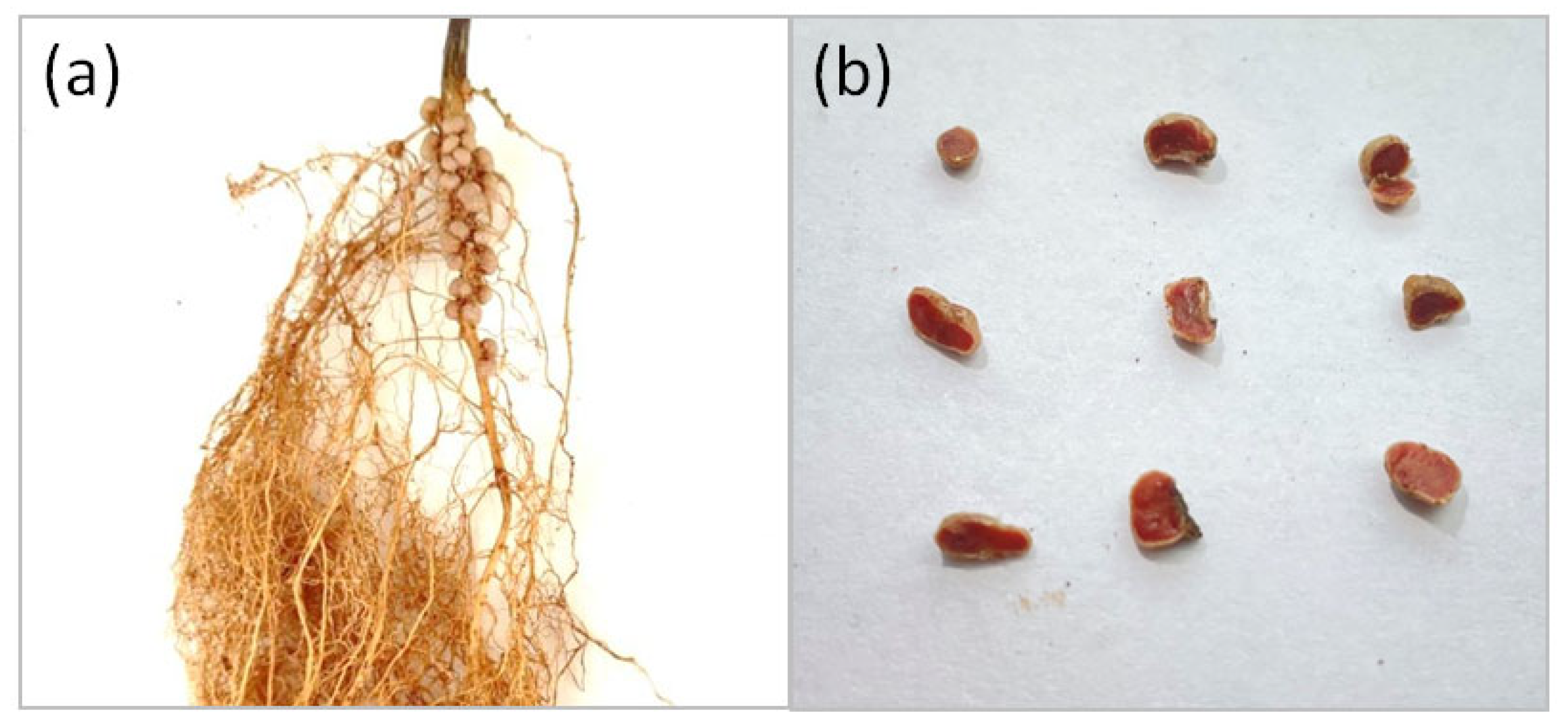
3.1. Evaluation of Inoculation Effectiveness
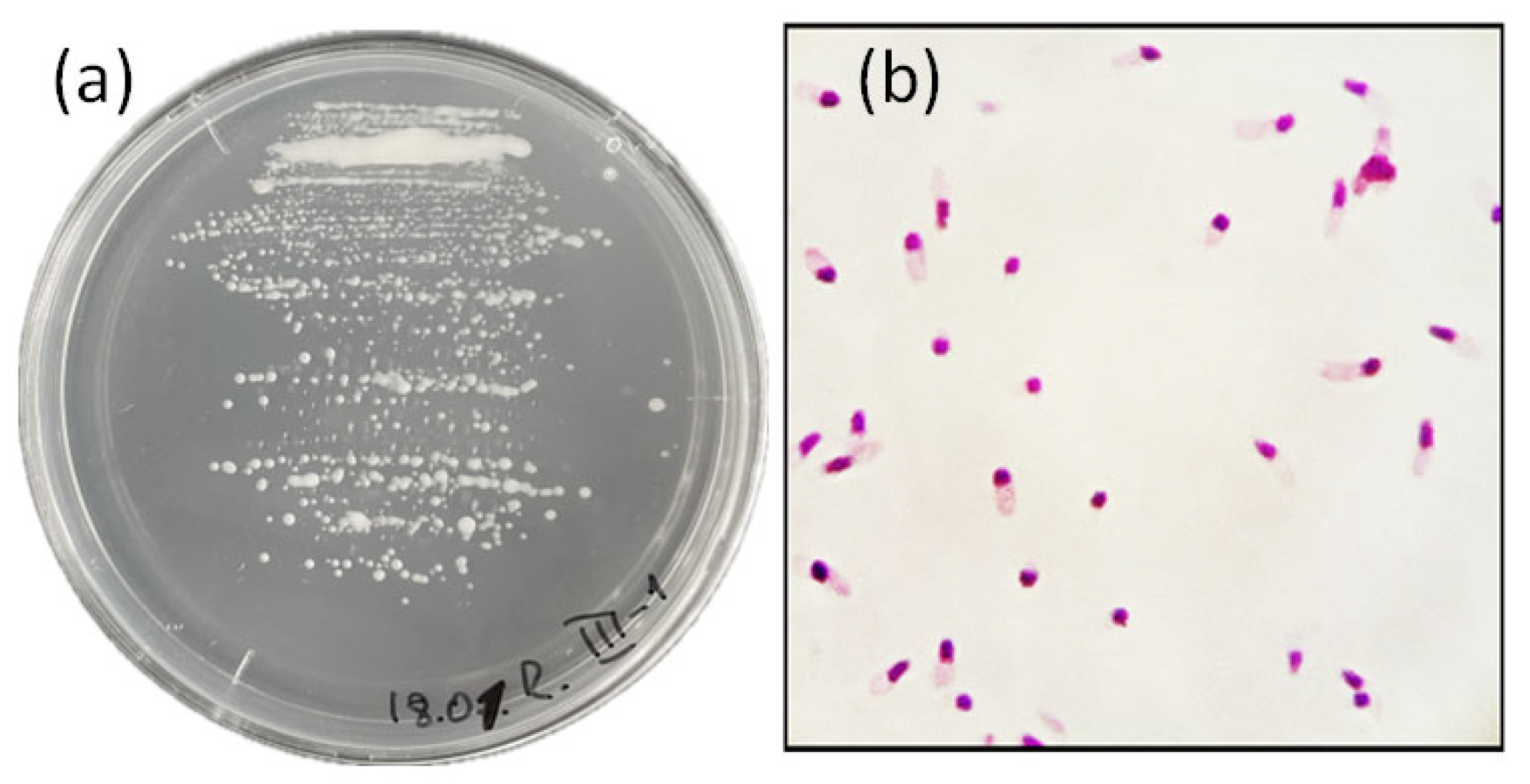
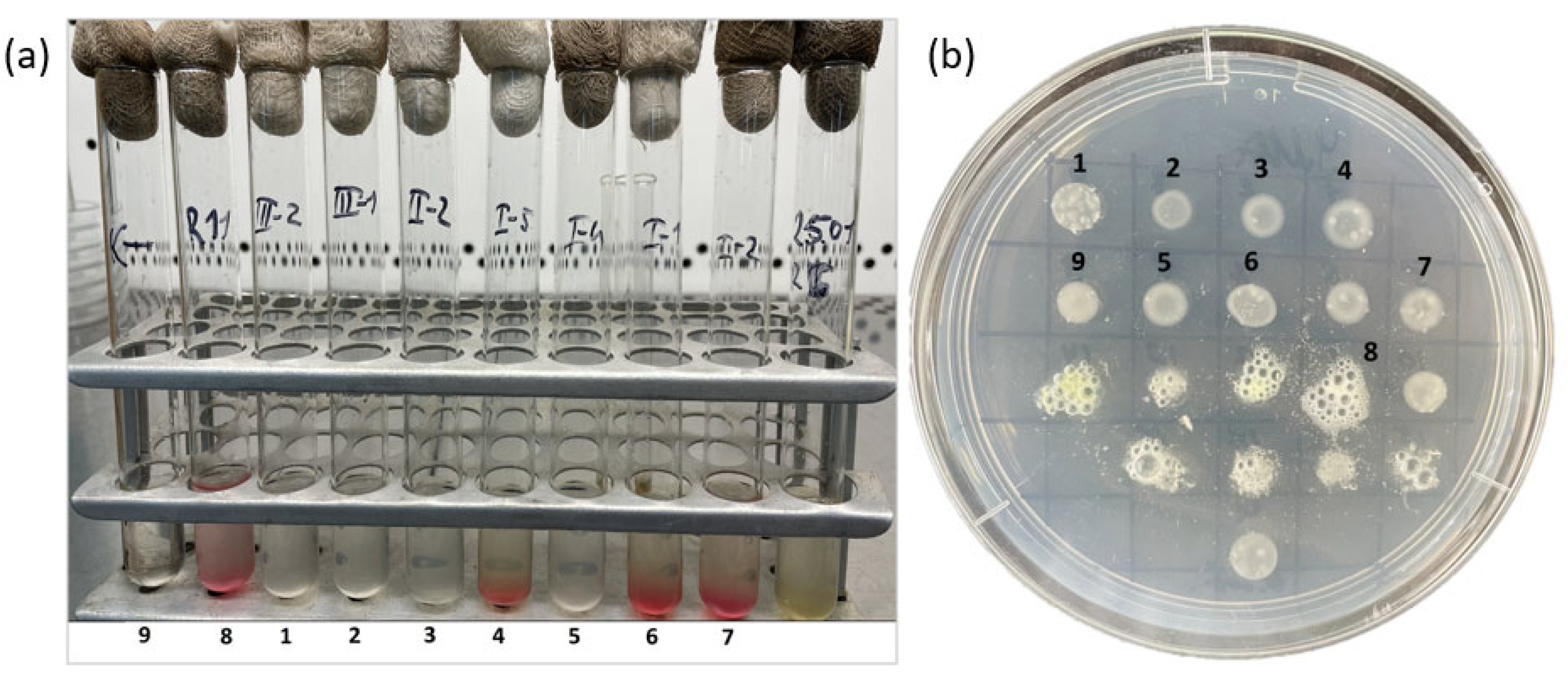
3.2. Phenotypic Characterization of the Strains
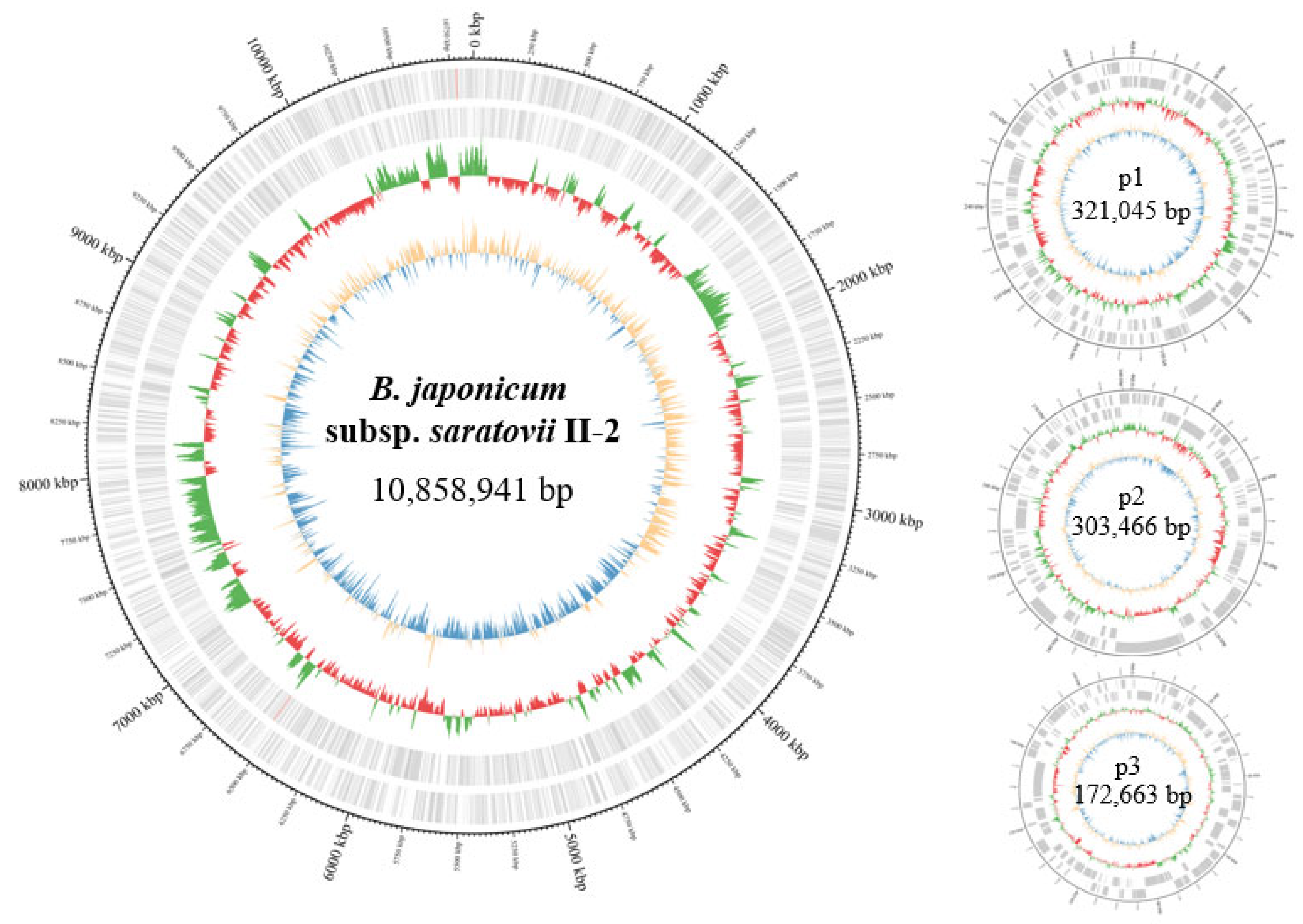
3.3. Genome Sequencing of the Isolated Strains, Replicon Classification, and Circularization Validation
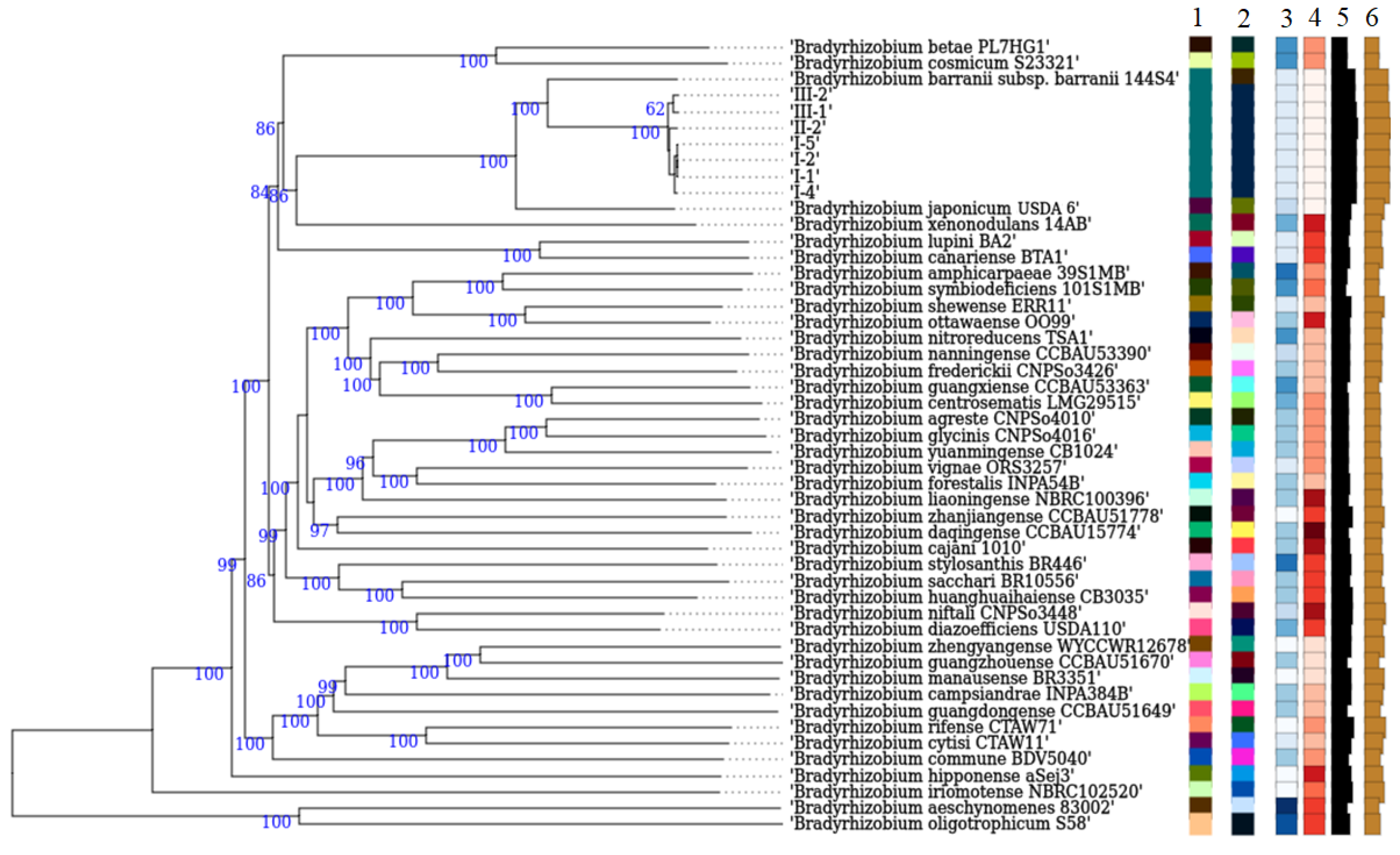
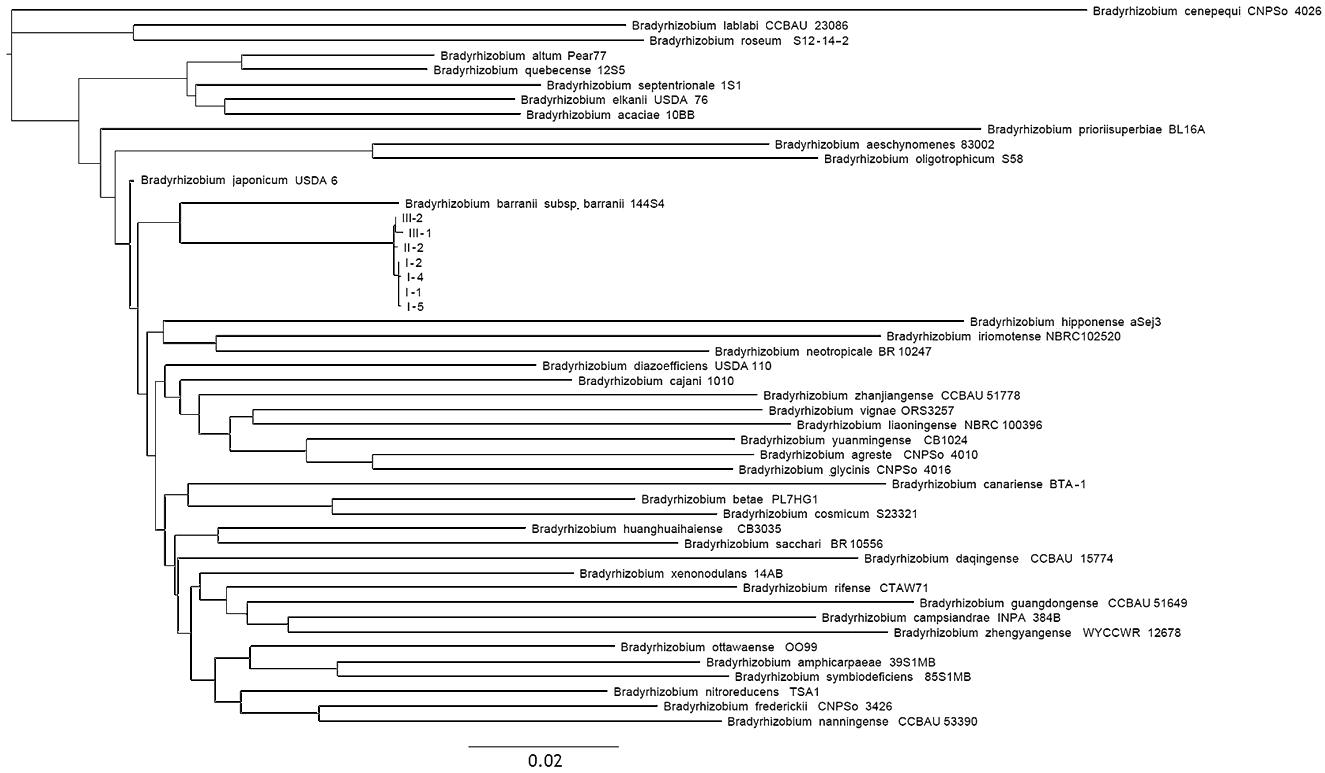
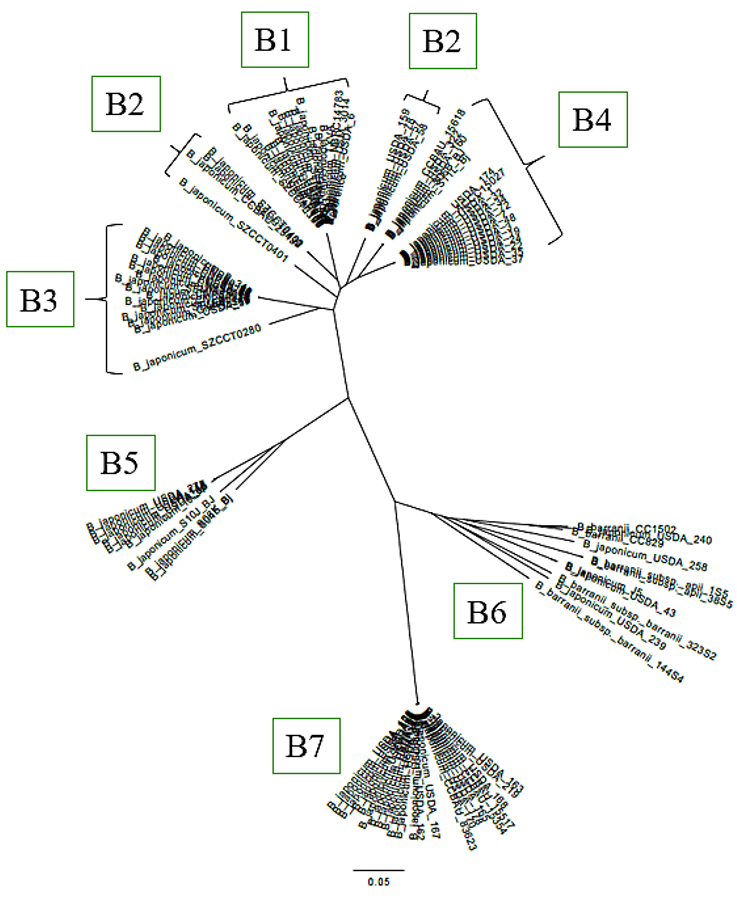
3.4. Phylogenetic Analysis Based on SNP Data
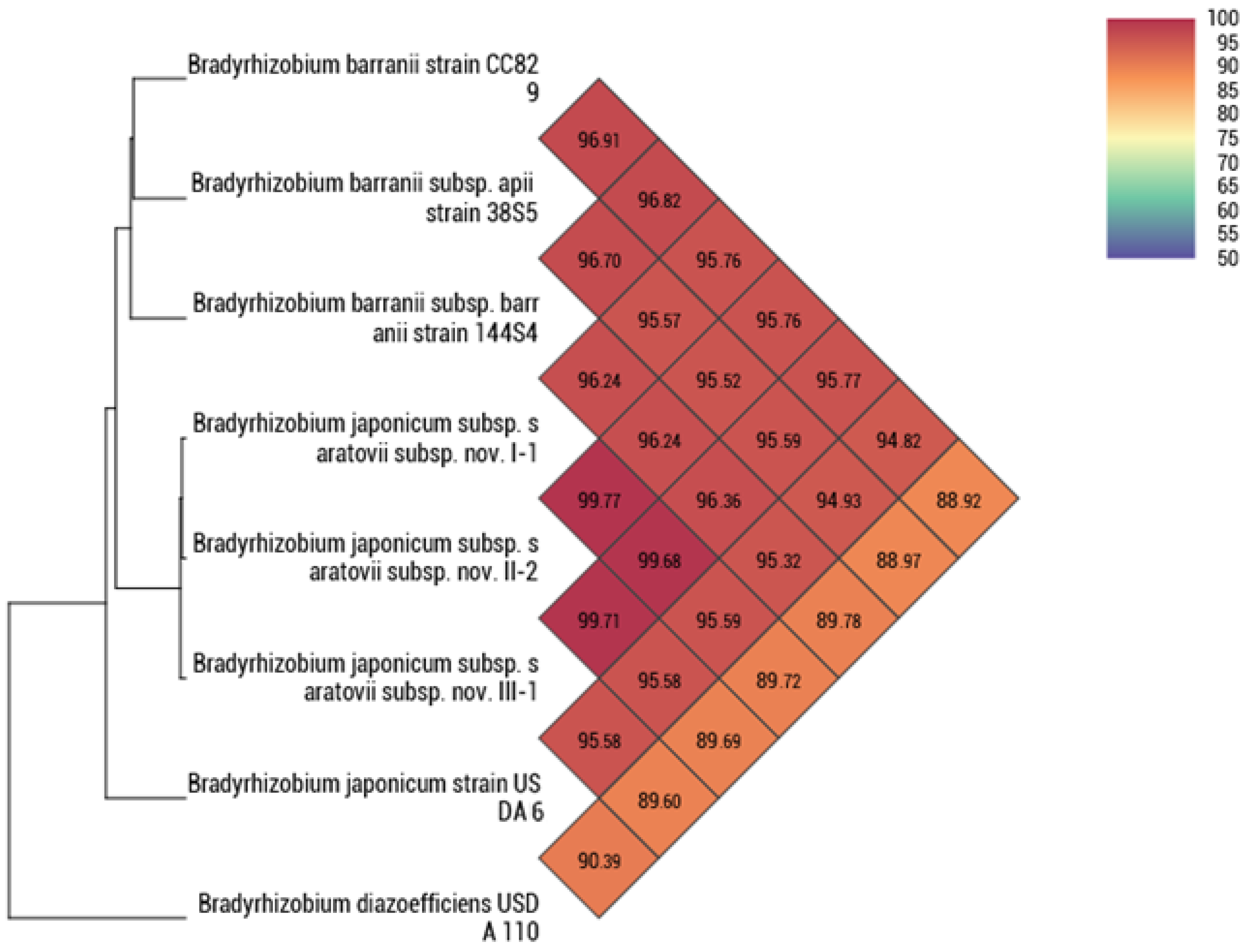
3.5. Average Nucleotide Identity (ANI) Analysis
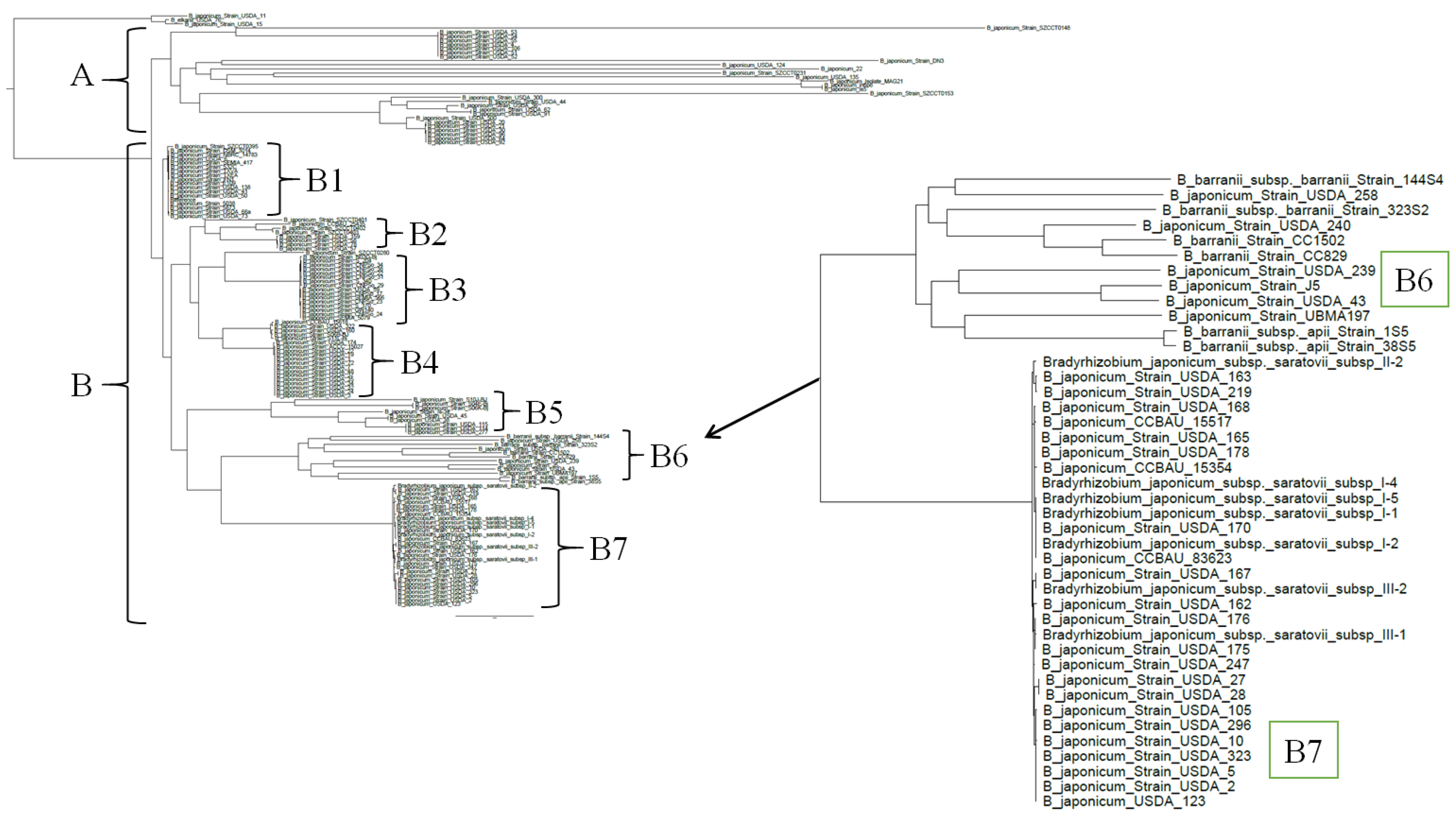
3.6. Phylogenetic Analysis of B. japonicum Strains
4. Discussion
4.1. Description of Bradyrhizobium japonicum subsp. japonicum subsp. nov.
4.2. Description of Bradyrhizobium japonicum subsp. barranii comb. nov.
4.3. Description of Bradyrhizobium japonicum subsp. apii comb. nov.
4.4. Description of Bradyrhizobium japonicum subsp. saratovii subsp. nov.
5. Conclusions
Supplementary Materials
Author Contributions
Funding
Institutional Review Board Statement
Informed Consent Statement
Data Availability Statement
Acknowledgments
Conflicts of Interest
Abbreviations
| ANI | Average Nucleotide Identity |
| dDDH | digital DNA-DNA hybridization |
| GBDP | Genome BLAST Distance Phylogeny |
| GGDC | Genome-to-Genome Distance Calculator |
| ONT | Oxford Nanopore Technology |
| SNP | Single Nucleotide Polymorphism |
| TYGS | The Type (Strain) Genome Server |
| YMA | Yeast Mannitol Agar |
References
- Kumar, R.; Kumawat, N.; Sahu, Y.K. Role of biofertilizers in agriculture. Pop. Kheti 2017, 5, 63–66. [Google Scholar]
- Serafin-Andrzejewska, M.; Jama-Rodzeńska, A.; Helios, W.; Kozak, M.; Lewandowska, S.; Zalewski, D.; Kotecki, A. Influence of nitrogen fertilization, seed inoculation and the synergistic effect of these treatments on soybean yields under conditions in south-western Poland. Sci. Rep. 2024, 14, 6672. [Google Scholar] [CrossRef] [Scilit]
- Sarhadi, W.A.; Sarhadi, W.A.; Yosofzai, W.; Osmani, M.H.; Masomi, M.; Tungate, K.; Kwon, S. Fertilizers and Inoculants Effects on Soybean Yield and Yield Components. In Proceedings of the 3rd International Congress of the Turkish Journal of Agriculture—Food Science and Technology, Malatya, Türkiye, 13–16 September 2023; pp. 90–95. [Google Scholar]
- Das, H.K. Azotobacters as biofertilizer. Adv. Appl. Microbiol. 2019, 108, 1–43. [Google Scholar] [CrossRef] [Scilit]
- Daniel, A.I.; Fadaka, A.O.; Gokul, A.; Bakare, O.O.; Aina, O.; Fisher, S.; Burt, A.F.; Mavumengwana, V.; Keyster, M.; Klein, A. Biofertilizer: The future of food security and food safety. Microorganisms 2022, 10, 1220. [Google Scholar] [CrossRef] [Scilit] [PubMed]
- Bashan, Y.; de-Bashan, L.E.; Prabhu, S.R.; Hernandez, J.P. Advances in plant growth-promoting bacterial inoculant technology: Formulations and practical perspectives (1998–2013). Plant Soil. 2014, 378, 1–33. [Google Scholar] [CrossRef] [Scilit]
- Mus, F.; Crook, M.B.; Garcia, K.; Garcia Costas, A.; Geddes, B.A.; Kouri, E.D.; Paramasivan, P.; Ryu, M.; Oldroyd, G.E.D.; Poole, P.S.; et al. Symbiotic nitrogen fixation and the challenges to its extension to nonlegumes. Appl. Environ. Microbiol. 2016, 82, 3698–3710. [Google Scholar] [CrossRef] [Scilit]
- Zhou, Y.; Liu, D.; Li, F.; Dong, Y.; Jin, Z.; Liao, Y.; Li, X.; Peng, S.; Delgado-Baquerizo, M.; Li, X. Superiority of native soil core microbiomes in supporting plant growth. Nat. Commun. 2024, 15, 6599. [Google Scholar] [CrossRef] [Scilit] [PubMed]
- Jacob, C.; Carrasco, B.; Schwember, A.R. Advances in breeding and biotechnology of legume crops. Plant Cell Tissue Organ. Cult. 2016, 127, 561–584. [Google Scholar] [CrossRef] [Scilit]
- FAOSTAT. Available online: http://www.fao.org/faostat/ (accessed on 8 August 2025).
- Helios, W.; Serafin-Andrzejewska, M.; Kozak, M.; Lewandowska, S. Impact of nitrogen fertilisation and inoculation on soybean nodulation, nitrogen status, and yield in a Central European climate. Agriculture 2025, 15, 1654. [Google Scholar] [CrossRef] [Scilit]
- Li, Q.Q.; Wang, E.T.; Chang, Y.L.; Zhang, Y.Z.; Zhang, Y.M.; Sui, X.H.; Chen, W.F.; Chen, W.X. Ensifer sojae sp. nov., isolated from root nodules of Glycine max grown in saline-alkaline soils. Int. J. Syst. Evol. Microbiol. 2011, 61, 1981–1988. [Google Scholar] [CrossRef] [Scilit]
- Bender, F.R.; Alves, L.C.; da Silva, J.F.M.; Ribeiro, R.A.; Pauli, G.; Nogueira, M.A.; Hungria, M. Microbiome of nodules and roots of soybean and common bean: Searching for differences associated with contrasting performances in symbiotic nitrogen fixation. Int. J. Mol. Sci. 2022, 23, 12035. [Google Scholar] [CrossRef] [Scilit]
- Temprano-Vera, F.; Rodríguez-Navarro, D.N.; Acosta-Jurado, S.; Perret, X.; Fossou, R.K.; Navarro-Gómez, P.; Zhen, T.; Yu, D.; An, Q.; Buendía-Clavería, A.M.; et al. Sinorhizobium fredii strains HH103 and NGR234 form nitrogen fixing nodules with diverse wild soybeans (Glycine soja) from Central China but are ineffective on Northern China accessions. Front. Microbiol. 2018, 9, 2843. [Google Scholar] [CrossRef] [Scilit] [PubMed]
- Wang, J.Y.; Wang, R.; Zhang, Y.M.; Liu, H.C.; Chen, W.F.; Wang, E.T.; Sui, X.H.; Chen, W.X. Bradyrhizobium daqingense sp. nov., isolated from soybean nodules. Int. J. Syst. Evol. Microbiol. 2013, 63, 616–624. [Google Scholar] [CrossRef] [Scilit] [PubMed]
- Szczerba, A.; Płażek, A.; Kopeć, P.; Wójcik-Jagła, M.; Dubert, F. Effect of different Bradyrhizobium japonicum inoculants on physiological and agronomic traits of soybean (Glycine max) associated with different expression of nodulation genes. BMC Plant Biol. 2024, 24, 1201. [Google Scholar] [CrossRef] [Scilit]
- Silva, L.R.; Pereira, M.J.; Azevedo, J.; Mulas, R.; Velazquez, E.; González-Andrés, F.; Valentão, P.; Andrade, P.B. Inoculation with Bradyrhizobium japonicum enhances the organic and fatty acids content of soybean (Glycine max (L.) Merrill) seeds. Food Chem. 2013, 141, 3636–3648. [Google Scholar] [CrossRef] [Scilit]
- Prusiński, J.; Baturo-Cieśniewska, A.; Borowska, M. Response of soybean (Glycine max (L.) Merrill) to mineral nitrogen fertilization and Bradyrhizobium japonicum seed inoculation. Agronomy 2020, 10, 1300. [Google Scholar] [CrossRef] [Scilit]
- Księżak, J.; Bojarszczuk, J. The Effect of mineral N fertilization and Bradyrhizobium japonicum seed inoculation on productivity of soybean (Glycine max (L.) Merrill). Agriculture 2022, 12, 110. [Google Scholar] [CrossRef] [Scilit]
- Zveushe, O.K.; de Dios, V.R.; Zhang, H.; Zeng, F.; Liu, S.; Shen, S.; Kang, Q.; Zhang, Y.; Huang, M.; Sarfaraz, A.; et al. Effects of co-inoculating Saccharomyces spp. with Bradyrhizobium japonicum on atmospheric nitrogen fixation in soybeans (Glycine max (L.)). Plants 2023, 12, 681. [Google Scholar] [CrossRef] [Scilit]
- Göker, M.; Christensen, H.; Fingerle, V.; Kostovski, M.; Margos, G.; Moore, E.R.B.; Oren, A.; Patrick, S.; Reischl, U.; Vázquez-Boland, J.A. List of Recommended Names for bacteria of medical importance: Report of the Ad Hoc Committee on Mitigating Changes in Prokaryotic Nomenclature. Int. J. Syst. Evol. Microbiol. 2025, 75, 6943. [Google Scholar] [CrossRef] [Scilit]
- Available online: https://lpsn.dsmz.de/genus/bradyrhizobium (accessed on 3 January 2026).
- Morel Revetria, M.A.; Sanjuan, J.; Berriel, V.; Velázquez, E. Bradyrhizobium monzae sp. nov. isolated from a root nodule of the introduced legume Crotalaria ochroleuca in Uruguay. Int. J. Syst. Evol. Microbiol. 2025, 75, 006973. [Google Scholar] [CrossRef] [Scilit]
- Palmer, M.; Steenkamp, E.T.; Blom, J.; Hedlund, B.P.; Venter, S.N. All ANIs are not created equal: Implications for prokaryotic species boundaries and integration of ANIs into polyphasic taxonomy. Int. J. Syst. Evol. Microbiol. 2020, 70, 2937–2948. [Google Scholar] [CrossRef] [Scilit]
- Alenezi, F.N.; Slama, H.B.; Bouket, A.C.; Cherif-Silini, H.; Silini, A.; Luptakova, L.; Nowakowska, J.A.; Oszako, T.; Belbahri, L. Bacillus velezensis: A treasure house of bioactive compounds of medicinal, biocontrol and environmental importance. Forests 2021, 12, 1714. [Google Scholar] [CrossRef] [Scilit]
- Qiu, X.; Ye, K.; Ma, Y.; Zhao, Q.; Wang, L.; Yang, J. Genome sequence-based species classification of Enterobacter cloacae complex: A study among clinical isolates. Microbiol. Spectr. 2024, 12, e0431223. [Google Scholar] [CrossRef] [Scilit] [PubMed]
- Klepa, M.S.; Ferraz Helene, L.C.; O’Hara, G.; Hungria, M. Bradyrhizobium agreste sp. nov., Bradyrhizobium glycinis sp. nov. and Bradyrhizobium diversitatis sp. nov., isolated from a biodiversity hotspot of the genus Glycine in Western Australia. Int. J. Syst. Evol. Microbiol. 2021, 71, 004742. [Google Scholar] [CrossRef] [Scilit] [PubMed]
- Bromfield, E.S.; Cloutier, S. Bradyrhizobium septentrionale sp. nov. (sv. septentrionale) and Bradyrhizobium quebecense sp. nov. (sv. septentrionale) associated with legumes native to Canada possess rearranged symbiosis genes and numerous insertion sequences. Int. J. Syst. Evol. Microbiol. 2021, 71, 004831. [Google Scholar] [CrossRef] [Scilit]
- Cabral Michel, D.; Martins da Costa, E.; Azarias Guimarães, A.; Soares de Carvalho, T.; Santos de Castro Caputo, P.; Willems, A.; de Souza Moreira, F.M. Bradyrhizobium campsiandrae sp. nov., a nitrogen-fixing bacterial strain isolated from a native leguminous tree from the Amazon adapted to flooded conditions. Arch. Microbiol. 2021, 203, 233–240. [Google Scholar] [CrossRef] [Scilit]
- Beringer, J.E.; Ruiz Sainz, J.E.; Johnston, A.W.B. Methods for the genetic manipulation of Rhizobium. In Microbial Methods for Environmental Biotechnology (Society for Applied Bacteriology Technical Series 19); Grainger, J.M., Lynch, J.M., Eds.; Academic Press: London, UK, 1984; pp. 79–94. [Google Scholar]
- Available online: https://collection.ibppm.ru/ (accessed on 20 January 2026).
- Wick, R.R. Filtlong [Software]. GitHub. Available online: https://github.com/rrwick/Filtlong (accessed on 1 January 2025).
- Chen, S.; Zhou, Y.; Chen, Y.; Gu, J. fastp: An ultra-fast all-in-one FASTQ preprocessor. Bioinformatics 2018, 34, i884–i890. [Google Scholar] [CrossRef] [Scilit]
- Chen, S. Ultrafast one-pass FASTQ data preprocessing, quality control, and deduplication using fastp. Imeta 2023, 2, e107. [Google Scholar] [CrossRef] [Scilit] [PubMed]
- Kolmogorov, M.; Yuan, J.; Lin, Y.; Pevzner, P. Assembly of long error-prone reads using repeat graphs. Nat. Biotechnol. 2019, 37, 540–546. [Google Scholar] [CrossRef] [Scilit]
- Wick, R.R.; Holt, K.E. Polypolish: Short-read polishing of long-read bacterial genome assemblies. PLoS Comput. Biol. 2022, 18, e1009802. [Google Scholar] [CrossRef] [Scilit]
- Batut, B.; Hiltemann, S.; Bagnacani, A.; Baker, D.; Bhardwaj, V.; Blank, C.; Bretaudeau, A.; Brillet-Guéguen, L.; Čech, M.; Chilton, J.; et al. Community-driven data analysis training for biology. Cell Syst. 2018, 6, 752–758. [Google Scholar] [CrossRef] [Scilit]
- Hiltemann, S.; Rasche, H.; Gladman, S.; Hotz, H.R.; Larivière, D.; Blankenberg, D.; Jagtap, P.D.; Wollmann, T.; Bretaudeau, A.; Goué, N.; et al. Galaxy Training: A powerful framework for teaching. PLoS Comput. Biol. 2023, 19, e1010752. [Google Scholar] [CrossRef] [Scilit] [PubMed]
- Seemann, T. Prokka: Rapid prokaryotic genome annotation. Bioinformatics 2014, 30, 2068–2069. [Google Scholar] [CrossRef] [Scilit]
- Li, H. Minimap2: Pairwise alignment for nucleotide sequences. Bioinformatics 2018, 34, 3094–3100. [Google Scholar] [CrossRef] [Scilit]
- Danecek, P.; Bonfield, J.K.; Liddle, J.; Marshall, J.; Ohan, V.; Pollard, M.O.; Whitwham, A.; Keane, T.; McCarthy, S.A.; Davies, R.M.; et al. Twelve years of SAMtools and BCFtools. GigaScience 2021, 10, giab008. [Google Scholar] [CrossRef] [Scilit] [PubMed]
- Li, H.; Handsaker, B.; Wysoker, A.; Fennell, T.; Ruan, J.; Homer, N.; Marth, G.; Abecasis, G.; Durbin, R. The Sequence Alignment/Map format and SAMtools. Bioinformatics 2009, 25, 2078–2079. [Google Scholar] [CrossRef] [Scilit]
- Wick, R.R.; Schultz, M.B.; Zobel, J.; Holt, K.E. Bandage: Interactive visualization of de novo genome assemblies. Bioinformatics 2015, 31, 3350–3352. [Google Scholar] [CrossRef] [Scilit]
- Yoon, S.H.; Ha, S.M.; Lim, J.M.; Kwon, S.J.; Chun, J. A large-scale evaluation of algorithms to calculate average nucleotide identity. Antonie Van Leeuwenhoek 2017, 110, 1281–1286. [Google Scholar] [CrossRef] [Scilit]
- Meier-Kolthoff, J.P.; Sardà Carbasse, J.; Peinado-Olarte, R.L.; Göker, M. TYGS and LPSN: A database tandem for fast and reliable genome-based classification and nomenclature of prokaryotes. Nucleic Acids Res. 2022, 50, D801–D807. [Google Scholar] [CrossRef] [Scilit] [PubMed]
- Rodriguez-R, L.M.; Konstantinidis, K.T. The enveomics collection: A toolbox for specialized analyses of microbial genomes and metagenomes. PeerJ Prepr. 2016, 4, e1900v1. [Google Scholar]
- Seemann, T. Snippy [Software]. GitHub. Available online: https://github.com/tseemann/snippy (accessed on 1 July 2025).
- Kumar, S.; Stecher, G.; Tamura, K. MEGA7: Molecular Evolutionary Genetics Analysis Version 7.0 for Bigger Datasets. Mol. Biol. Evol. 2016, 33, 1870–1874. [Google Scholar] [CrossRef] [Scilit]
- Gouy, M.; Guindon, S.; Gascuel, O. SeaView version 4: A multiplatform graphical user interface for sequence alignment and phylogenetic tree building. Mol. Biol. Evol. 2010, 27, 221–224. [Google Scholar] [CrossRef] [Scilit]
- Rambaut, A. FigTree [Software]. GitHub. Available online: https://github.com/rambaut/figtree (accessed on 1 July 2025).
- Croucher, N.J.; Page, A.J.; Connor, T.R.; Delaney, A.J.; Keane, J.A.; Bentley, S.D.; Parkhill, J.; Harris, S.R. Rapid phylogenetic analysis of large samples of recombinant bacterial whole genome sequences using Gubbins. Nucleic Acids Res. 2015, 43, e15. [Google Scholar] [CrossRef] [Scilit]
- Minh, B.Q.; Schmidt, H.A.; Chernomor, O.; Schrempf, D.; Woodhams, M.D.; von Haeseler, A.; Lanfear, R. IQ-TREE 2: New models and efficient methods for phylogenetic inference in the genomic era. Mol. Biol. Evol. 2020, 37, 1530–1534, Erratum in: Mol. Biol. Evol. 2020, 37, 2461. https://doi.org/10.1093/molbev/msaa131. [Google Scholar] [CrossRef] [Scilit] [PubMed]
- Guindon, S.; Dufayard, J.F.; Lefort, V.; Anisimova, M.; Hordijk, W.; Gascuel, O. New algorithms and methods to estimate maximum-likelihood phylogenies: Assessing the performance of PhyML 3.0. Syst. Biol. 2010, 59, 307–321. [Google Scholar] [CrossRef] [Scilit]
- Darling, A.C.; Mau, B.; Blattner, F.R.; Perna, N.T. Mauve: Multiple alignment of conserved genomic sequence with rearrangements. Genome Res. 2004, 14, 1394–1403. [Google Scholar] [CrossRef] [Scilit] [PubMed]
- Bromfield, E.S.; Cloutier, S.; Wasai-Hara, S.; Minamisawa, K. Strains of Bradyrhizobium barranii sp. nov. associated with legumes native to Canada are symbionts of soybeans and belong to different subspecies (subsp. barranii subsp. nov. and subsp. apii subsp. nov.) and symbiovars (sv. glycinearum and sv. septentrionale). Int. J. Syst. Evol. Microbiol. 2022, 72, 005549. [Google Scholar] [CrossRef] [Scilit]
- Jordan, D.C. Transfer of Rhizobium japonicum Buchanan 1980 to Bradyrhizobium gen. nov., a genus of slow-growing, root nodule bacteria from leguminous plants. Int. J. Syst. Bacteriol. 1982, 32, 136–139. [Google Scholar] [CrossRef] [Scilit]
- Garcia-Vallvé, S.; Romeu, A.; Palau, J. Horizontal gene transfer in bacterial and archaeal complete genomes. Genome Res. 2000, 10, 1719–1725. [Google Scholar] [CrossRef] [Scilit] [PubMed]
- Kim, M.; Oh, H.S.; Park, S.C.; Chun, J. Towards a taxonomic coherence between average nucleotide identity and 16S rRNA gene sequence similarity for species demarcation of prokaryotes. Int. J. Syst. Evol. Microbiol. 2014, 64, 346–351. [Google Scholar] [CrossRef] [Scilit]
- Man, C.X.; Wang, H.; Chen, W.F.; Sui, X.H.; Wang, E.T.; Chen, W.X. Diverse rhizobia associated with soybean grown in the subtropical and tropical regions of China. Plant Soil. 2008, 310, 77–87. [Google Scholar] [CrossRef] [Scilit]
- Tian, C.F.; Zhou, Y.J.; Zhang, Y.M.; Li, Q.Q.; Zhang, Y.Z.; Li, D.F.; Wang, S.; Wang, J.; Gilbert, L.B.; Li, Y.R.; et al. Comparative genomics of rhizobia nodulating soybean suggests extensive recruitment of lineage-specific genes in adaptations. Proc. Natl. Acad. Sci. USA 2012, 109, 8629–8634. [Google Scholar] [CrossRef] [Scilit]
- Menna, P.; Barcellos, F.G.; Hungria, M. Phylogeny and taxonomy of a diverse collection of Bradyrhizobium strains based on multilocus sequence analysis of the 16S rRNA gene, ITS region and glnII, recA, atpD and dnaK genes. Int. J. Syst. Evol. Microbiol. 2009, 59, 2934–2950. [Google Scholar] [CrossRef] [Scilit] [PubMed]
- Richter, M.; Rosselló-Móra, R. Shifting the genomic gold standard for the prokaryotic species definition. Proc. Natl. Acad. Sci. USA 2009, 106, 19126–19131. [Google Scholar] [CrossRef] [Scilit]
- Duran, D.; Rey, L.; Mayo, J.; Zuniga-Davila, D.; Imperial, J.; Ruiz-Argüeso, T.; Martínez-Romero, E.; Ormeño-Orrillo, E. Bradyrhizobium paxllaeri sp. nov. and Bradyrhizobium icense sp. nov., nitrogen-fixing rhizobial symbionts of Lima bean (Phaseolus lunatus L.) in Peru. Int. J. Syst. Evol. Microbiol. 2014, 64, 2072–2078. [Google Scholar] [CrossRef] [Scilit]
- de Lajudie, P.M.; Andrews, M.; Ardley, J.; Eardly, B.; Jumas-Bilak, E.; Kuzmanović, N.; Lassalle, F.; Lindström, K.; Mhamdi, R.; Martínez-Romero, E.; et al. Minimal standards for the description of new genera and species of rhizobia and agrobacteria. Int. J. Syst. Evol. Microbiol. 2019, 69, 1852–1863. [Google Scholar] [CrossRef] [Scilit] [PubMed]
- Leaché, A.D.; Oaks, J.R. The utility of single nucleotide polymorphism (SNP) data in phylogenetics. Annu. Rev. Ecol. Evol. Syst. 2017, 48, 69–84. [Google Scholar] [CrossRef] [Scilit]
- Klepa, M.S.; diCenzo, G.C.; Hungria, M. Comparative genomic analysis of Bradyrhizobium strains with natural variability in the efficiency of nitrogen fixation, competitiveness, and adaptation to stressful edaphoclimatic conditions. Microbiol. Spectr. 2024, 12, e0026024. [Google Scholar] [CrossRef] [Scilit]
- Bender, F.R.; Nagamatsu, S.T.; Delamuta, J.R.M.; Ribeiro, R.A.; Nogueira, M.A.; Hungria, M. Genetic variation in symbiotic islands of natural variant strains of soybean Bradyrhizobium japonicum and Bradyrhizobium diazoefficiens differing in competitiveness and in the efficiency of nitrogen fixation. Microb. Genom. 2022, 8, e000795. [Google Scholar] [CrossRef] [Scilit]
- Goris, J.; Konstantinidis, K.T.; Klappenbach, J.A.; Coenye, T.; Vandamme, P.; Tiedje, J.M. DNA–DNA hybridization values and their relationship to whole-genome sequence similarities. Int. J. Syst. Evol. Microbiol. 2007, 57, 81–91. [Google Scholar] [CrossRef] [Scilit]
- Chun, J.; Oren, A.; Ventosa, A.; Christensen, H.; Arahal, D.R.; da Costa, M.S.; Rooney, A.P.; Yi, H.; Xu, X.W.; De Meyer, S.; et al. Proposed minimal standards for the use of genome data for the taxonomy of prokaryotes. Int. J. Syst. Evol. Microbiol. 2018, 68, 461–466. [Google Scholar] [CrossRef] [Scilit]
- Hördt, A.; López, M.G.; Meier-Kolthoff, J.P.; Schleuning, M.; Weinhold, L.M.; Tindall, B.J.; Gronow, S.; Kyrpides, N.C.; Woyke, T.; Göker, M. Analysis of 1,000+ type-strain genomes substantially improves taxonomic classification of Alphaproteobacteria. Front. Microbiol. 2020, 11, 468. [Google Scholar] [CrossRef] [Scilit] [PubMed]
- Sutton, G.G.; Brinkac, L.M.; Clarke, T.H.; Fouts, D.E. Enterobacter hormaechei subsp. hoffmannii subsp. nov., Enterobacter hormaechei subsp. xiangfangensis comb. nov., Enterobacter roggenkampii sp. nov., and Enterobacter muelleri is a later heterotypic synonym of Enterobacter asburiae based on computational analysis of sequenced Enterobacter genomes. F1000Research 2018, 7, 521. [Google Scholar] [CrossRef] [Scilit] [PubMed]
- Lamrabet, M.; Missbah El Idrissi, M. Comparative genomic analysis of native Bradyrhizobium spp. nodulating Retama dasycarpa in Moroccan semi-arid ecosystems: Insights into symbiotic diversity and environmental adaptation. BMC Genom. 2025, 26, 984. [Google Scholar] [CrossRef] [Scilit]
- Pereira de Moraes Carvalho, C.; Oliveira, A.F., Jr.; Rouws, L.F.M.; dos Santos Dourado, F.; Reed Rodrigues Coelho, M.; Alves, B.J.R.; Zilli, J.É. Genetic diversity and nodulation potential of Bradyrhizobium strains in cowpea and soybean. Plants 2025, 14, 3857. [Google Scholar] [CrossRef] [Scilit] [PubMed]
- Anisimova, E.A.; Fakhrutdinov, N.A.; Mirgazov, D.A.; Dodonova, E.A.; Elizarova, I.A.; Gorbunova, M.E.; Khammadov, N.I.; Zainullin, L.I.; Osyanin, K.A. Differentiation of Bacillus anthracis strains based on SNP and VNTR genome polymorphism. Vavilov J. Genet. Sel. 2022, 26, 560–567. [Google Scholar] [CrossRef] [Scilit]
- Eroshenko, G.A.; Balykova, A.N.; Nikiforov, K.A.; Krasnov, Y.M.; Kukleva, L.M.; Naryshkina, E.A.; Kuznetsov, A.A.; Popov, N.V.; Kutyrev, V.V. Retrospective analysis of dissemination of the 2.MED1 phylogenetic branch of Yersinia pestis in the Caucasus. PLoS ONE 2023, 18, e0283670. [Google Scholar] [CrossRef] [Scilit]
- Meier-Kolthoff, J.P.; Auch, A.F.; Klenk, H.P.; Göker, M. Genome sequence-based species delimitation with confidence intervals and improved distance functions. BMC Bioinform. 2013, 14, 60. [Google Scholar] [CrossRef] [Scilit]





| Strain | Collection Acronym | NCBI Acronym | NCBI BioProject Accession |
|---|---|---|---|
| I-1 | IBPPM 730 | GmNp1m1 | PRJNA1253145 |
| I-2 | IBPPM 731 | GmNp1m2 | PRJNA1253146 |
| I-4 | IBPPM 732 | GmNp1m4 | PRJNA1253149 |
| I-5 | IBPPM 733 | GmNp1m5 | PRJNA1253150 |
| II-2 | IBPPM 734 | GmNp2m2 | PRJNA1258613 |
| III-1 | IBPPM 735 | GmNp3m1 | PRJNA1258614 |
| III-2 | IBPPM 736 | GmNp3m2 | PRJNA1258615 |
| Variant | Dry Shoot Weight, mg | Dry Root Weight, mg | Number of Tubers, pcs | Dry Weight of Nodules, mg |
|---|---|---|---|---|
| Control | 283.1 ab | 295.2 bc | 0 a | 0 a |
| III-2 | 195.8 a | 71.2 a | 10.40 bc | 4.3 ab |
| I-5 | 330.5 ab | 142.6 ab | 11.4 abc | 14.7 abc |
| II-2 | 561.6 c | 488 de | 25.0 c | 33.1 bc |
| I-6 | 350.0 ab | 211.9 abc | 15.0 abc | 16.6 abc |
| III-1 | 378.4 abc | 326.9 c | 24.8 c | 34.6 c |
| I-3 | 339.4 ab | 356.1 cd | 18.8 abc | 16.6 abc |
| I-1 | 397.6 c | 648.3 de | 17.0 abc | 27.7 abc |
| I-2 | 379.0 abc | 344.1 cd | 21.8 bc | 42.9 c |
| I-4 | 257.0 ab | 134.6 ab | 5.8 ab | 3.7 ab |
| II-1 | 390.7 c | 137.7 ab | 14.2 abc | 17.3 abc |
| Characteristic | Strain | ||||||||
|---|---|---|---|---|---|---|---|---|---|
| I-1 | I-2 | I-4 | I-5 | II-2 | III-1 | III-2 | B. barranii 144S4T [55] | B. japonicum USDA 6T [55,56] | |
| pH 4–9 | + | + | + | + | + | + | + | + | + |
| NaCl (0.5%) | + | + | + | + | + | + | + | + | + |
| NaCl (1%) | - | - | - | - | - | - | - | - | ± |
| Catalase | + | + | + | + | + | + | + | ND * | ND |
| Denitrification | + | + | - | + | - | - | - | ND | ND |
| Glucose | + | + | + | + | + | + | + | - | ± |
| Arabinose | + | + | + | + | + | + | + | ND | + |
| Galactose | + | + | + | + | + | + | + | - | - |
| Sucrose | + | + | + | + | + | + | + | - | - |
| Malic acid | - | - | - | - | - | - | - | - | + |
| Citric acid | - | - | - | - | - | - | - | - | - |
| Rhamnose | ± | ± | ± | ± | ± | ± | ± | - | - |
| Lactose | ± | ± | ± | ± | ± | ± | ± | - | - |
| Maltose | + | + | + | + | + | + | + | - | - |
| Sorbitol | + | + | + | + | + | + | + | + | ± |
| Parameter | I-1 | I-2 | I-4 | I-5 | II-2 | III-1 | III-2 |
|---|---|---|---|---|---|---|---|
| Total length (bp) | 11,200,040 | 11,349,543 | 11,517,988 | 11,396,053 | 11,656,115 | 11,458,154 | 10,981,944 |
| Putative plasmids | 3 | 3 | 4 | 3 | 3 | 3 | 3 |
| Number of contigs | 4 | 6 | 5 | 7 | 4 | 4 | 4 |
| Number of CDS | 11,094 | 11,334 | 11,337 | 11,367 | 11,447 | 11,371 | 10,807 |
| Number of tRNAs | 61 | 62 | 59 | 62 | 61 | 63 | 57 |
| Number of rRNAs | 6 | 6 | 6 | 6 | 6 | 6 | 6 |
| GC content total (%) | 63.21 | 63.22 | 63.14 | 63.21 | 63.13 | 63.13 | 63.29 |
| GC content chromosome (%) | 63.32 | 63.57 * | 63.35 | 63.58 * | 63.28 | 63.32 | 63.40 |
| GC content plasmids (%) | 60.4–61.8 | 60.4–61.8 | 60.3–61.6 | 60.4–61.9 | 60.9–61.2 | 60.1–61.6 | 60.9–61.2 |
| AF | |||||||
|---|---|---|---|---|---|---|---|
| Strain | I-1 | I-2 | I-4 | I-5 | II-2 | III-1 | III-2 |
| I-1 | - | 71.6 | 68.8 | 68.7 | 67.7 | 63.1 | 65.6 |
| I-2 | 99.97 | - | 66.6 | 89.8 | 66.1 | 62.4 | 64.5 |
| I-4 | 99.93 | 99.94 | - | 67.1 | 64.4 | 63.4 | 63.4 |
| I-5 | 99.96 | 99.98 | 99.93 | - | 65.1 | 62.4 | 64.7 |
| II-2 | 99.78 | 99.80 | 99.77 | 99.81 | - | 65.0 | 66.9 |
| III-1 | 99.72 | 99.73 | 99.77 | 99.74 | 99.74 | - | 64.8 |
| III-2 | 99.79 | 99.70 | 99.77 | 99.74 | 99.70 | 99.80 | - |
| OrthoANI |
| Reference Strain | I-1 | I-2 | I-4 | I-5 | II-2 | III-1 | III-2 |
|---|---|---|---|---|---|---|---|
| B. barranii ssp. barranii 144S4T | 96.31 | 96.38 | 96.32 | 96.31 | 96.30 | 96.36 | 96.31 |
| B. barranii ssp. apii 38S5T | 95.49 | 95.54 | 95.53 | 95.51 | 95.46 | 95.54 | 95.48 |
| B. japonicum USDA 6T | 95.42 | 95.40 | 95.36 | 95.45 | 95.41 | 95.43 | 95.40 |
| B. diazoefficiens USDA 110T | 89.58 | 89.51 | 89.49 | 89.56 | 89.64 | 89.47 | 89.46 |
| B. ottawaense OO99T | 89.02 | 89.02 | 89.04 | 89.08 | 89.15 | 89.04 | 89.08 |
| B. xenonodulans 14ABT | 89.15 | 89.08 | 89.04 | 89.14 | 89.03 | 89.05 | 89.08 |
| B. niftali CNPSo 3448T | 88.74 | 88.79 | 88.76 | 88.77 | 88.77 | 88.75 | 88.78 |
| B. betae PL7HG1T | 88.74 | 88.76 | 88.78 | 88.79 | 88.76 | 88.80 | 88.66 |
| B. liaoningense NBRC 100396T | 88.40 | 88.42 | 88.49 | 88.38 | 88.58 | 88.41 | 88.46 |
| B. elkanii USDA 76T | 80.71 | 81.16 | 80.78 | 80.86 | 81.33 | 80.79 | 81.09 |
| Current Name (Genome Accession Number) | ANI Value with B. japonicum USDA 6T, % | Proposed Name | dDDH (Identities/HSP Length) Estimate (GLM-Based) | Justification |
|---|---|---|---|---|
| B. japonicum USDA 135 (GCF_000472945.1) | 88 | B. liaoningense USDA 135 | 99.30% [98.9–99.5%] | ANI value with B. liaoningense NBRC 100396 (GCA_030160735.1) = 100% |
| B. japonicum USDA 124 (GCA_000374205.1) | 90 | B. huanghuaihaiense USDA 124 | 78.10% [75.2–80.8%] | ANI value with B. huanghuaihaiense CB3035 (GCA_025200885.1) = 98% |
| B. japonicum USDA 4 (GCA_024170865.1) | 90 | B. ottawaense USDA 4 | 92.80% [90.8–94.3%] | ANI value with B. ottawaense OO99 (GCA_002278135.3) = 99% |
| B. japonicum USDA 51 (GCA_025962335.1) | 90 | B. ottawaense USDA 51 | 92.80% [90.8–94.3%] | ANI value with B. ottawaense OO99 (GCA_002278135.3) = 99% |
| B. japonicum USDA 52 (GCA_025962315.1) | 90 | B. ottawaense USDA 52 | 92.80% [90.8–94.3%] | ANI value with B. ottawaense OO99 (GCA_002278135.3) = 99% |
| B. japonicum USDA 53 (GCA_025962325.1) | 90 | B. ottawaense USDA 53 | 92.80% [90.8–94.3%] | ANI value with B. ottawaense OO99 (GCA_002278135.3) = 99% |
| B. japonicum USDA 54 (GCA_025962375.1) | 90 | B. ottawaense USDA 54 | 92.80% [90.8–94.3%] | ANI value with B. ottawaense OO99 (GCA_002278135.3) = 99% |
| B. japonicum USDA 55 (GCA_025962395.1) | 90 | B. ottawaense USDA 55 | 92.80% [90.8–94.3%] | ANI value with B. ottawaense OO99 (GCA_002278135.3) = 99% |
| B. japonicum USDA 106 (GCA_025961105.1) | 90 | B. ottawaense USDA 106 | 92.80% [90.8–94.3%] | ANI value with B. ottawaense OO99 (GCA_002278135.3) = 99% |
| B. japonicum USDA 20 (GCA_024171125.1) | 90 | B. diazoefficiens USDA 20 | 100.00% [100–100%] | ANI value with B. diazoefficiens USDA 110 (GCA_001642675.1) = 100% |
| B. japonicum USDA 21 (GCA_024171105.1) | 90 | B. diazoefficiens USDA 21 | 99.90% [99.9–100%] | ANI value with B. diazoefficiens USDA 110 (GCA_001642675.1) = 100% |
| B. japonicum USDA 30 (GCA_024171185.1) | 90 | B. diazoefficiens USDA 30 | 99.80% [99.7–99.9%] | ANI value with B. diazoefficiens USDA 110 (GCA_001642675.1) = 100% |
| B. japonicum USDA 36 (GCA_025962255.1) | 90 | B. diazoefficiens USDA 36 | 89.40% [87.1–91.4%] | ANI value with B. diazoefficiens USDA 110 (GCA_001642675.1) = 99% |
| B. japonicum USDA 44 (GCA_025962295.1) | 90 | B. diazoefficiens USDA 44 | 89.40% [87.1–91.4%] | ANI value with B. diazoefficiens USDA 110 (GCA_001642675.1) = 99% |
| B. japonicum USDA 62 (GCA_025962455.1) | 90 | B. diazoefficiens USDA 62 | 89.00% [86.5–91%] | ANI value with B. diazoefficiens USDA 110 (GCA_001642675.1) = 99% |
| B. japonicum USDA 64 (GCA_025962445.1) | 90 | B. diazoefficiens USDA 64 | 99.80% [99.7–99.9%] | ANI value with B. diazoefficiens USDA 110 (GCA_001642675.1) = 100% |
| B. japonicum USDA 91 (GCA_025962555.1) | 90 | B. diazoefficiens USDA 91 | 88.90% [86.5–91%] | ANI value with B. diazoefficiens USDA 110 (GCA_001642675.1) = 99% |
| B. japonicum USDA 92 (GCA_025960915.1) | 90 | B. diazoefficiens USDA 92 | 99.80% [99.6–99.9%] | ANI value with B. diazoefficiens USDA 110 (GCA_001642675.1) = 100% |
| B. japonicum USDA 96 (GCA_025962515.1) | 90 | B. diazoefficiens USDA 96 | 99.80% [99.6–99.9%] | ANI value with B. diazoefficiens USDA 110 (GCA_001642675.1) = 100% |
| B. japonicum USDA 300 (GCA_017831985.1) | 91 | B. diazoefficiens USDA 300 | 91.10% [88.9–92.9%] | ANI value with B. diazoefficiens USDA 110 (GCA_001642675.1) = 99% |
| B. japonicum USDA 500 (GCA_017831945.1) | 90 | B. diazoefficiens USDA 500 | 97.30% [96.2–98.1%] | ANI value with B. diazoefficiens USDA 110 (GCA_001642675.1) = 100% |
| B. japonicum USDA 11 (GCA_024171285.1) | 84 | B. elkanii USDA 11 | 90.40% [88.2–92.3%] | ANI value with B. elkanii USDA 76 (GCA_023278185.1) = 99% |
| B. japonicum USDA 15 (GCA_024170535.1) | 84 | B. elkanii USDA 15 | 94.60% [92.9–95.9%] | ANI value with B. elkanii USDA 76 (GCA_023278185.1) = 99% |
| B. japonicum DN3 (GCA_041357655.1) | 88 | Bradyrhizobium sp. DN3 | - | Not found species with value ANI > 95% |
| B. japonicum 22 (GCA_024171145.1) | 87 | Bradyrhizobium sp. 22 | - | Not found species with value ANI > 95% |
| B. japonicum in8p8 (GCA_000426845.1) | 87 | Bradyrhizobium sp. in8p8 | - | Not found species with value ANI > 95% |
| B. japonicum is5 (GCA_000421305.1) | 87 | Bradyrhizobium sp. is5 | - | Not found species with value ANI > 95% |
| B. japonicum MAG21 (GCA_041987565.1) | 87 | Bradyrhizobium sp. MAG21 | - | Not found species with value ANI > 95% |
| B. japonicum SZCCT0148 (GCA_018129985.1) | 87 | Bradyrhizobium sp. SZCCT0148 | - | Not found species with value ANI > 95% |
| B. japonicum SZCCT0153 (GCA_018129995.1) | 89 | Bradyrhizobium sp. SZCCT0153 | - | Not found species with value ANI > 95% |
| B. japonicum SZCCT0231 (GCA_018130245.1) | 88 | Bradyrhizobium sp. SZCCT0231 | - | Not found species with value ANI > 95% |
Disclaimer/Publisher’s Note: The statements, opinions and data contained in all publications are solely those of the individual author(s) and contributor(s) and not of MDPI and/or the editor(s). MDPI and/or the editor(s) disclaim responsibility for any injury to people or property resulting from any ideas, methods, instructions or products referred to in the content. |
© 2026 by the authors. Licensee MDPI, Basel, Switzerland. This article is an open access article distributed under the terms and conditions of the Creative Commons Attribution (CC BY) license.
Share and Cite
Sidorin, A.S.; Burygin, G.L.; Fedorov, A.V.; Katyshev, A.D.; Krasnov, Y.M.; Tkachenko, O.V. Bacterial Strains from Soybean Nodules in the Lower Volga Region Belong to a New Subspecies Bradyrhizobium japonicum subsp. saratovii subsp. nov. Microorganisms 2026, 14, 684. https://doi.org/10.3390/microorganisms14030684
Sidorin AS, Burygin GL, Fedorov AV, Katyshev AD, Krasnov YM, Tkachenko OV. Bacterial Strains from Soybean Nodules in the Lower Volga Region Belong to a New Subspecies Bradyrhizobium japonicum subsp. saratovii subsp. nov. Microorganisms. 2026; 14(3):684. https://doi.org/10.3390/microorganisms14030684
Chicago/Turabian StyleSidorin, Aleksandr S., Gennady L. Burygin, Andrey V. Fedorov, Aleksandr D. Katyshev, Yaroslav M. Krasnov, and Oksana V. Tkachenko. 2026. "Bacterial Strains from Soybean Nodules in the Lower Volga Region Belong to a New Subspecies Bradyrhizobium japonicum subsp. saratovii subsp. nov." Microorganisms 14, no. 3: 684. https://doi.org/10.3390/microorganisms14030684
APA StyleSidorin, A. S., Burygin, G. L., Fedorov, A. V., Katyshev, A. D., Krasnov, Y. M., & Tkachenko, O. V. (2026). Bacterial Strains from Soybean Nodules in the Lower Volga Region Belong to a New Subspecies Bradyrhizobium japonicum subsp. saratovii subsp. nov. Microorganisms, 14(3), 684. https://doi.org/10.3390/microorganisms14030684