Nanodrugs for Subcutaneous Mycoses: Applications, Antifungal Performance, and Translational Perspectives

 , , and
Abstract
1. Introduction
2. Materials and Methods
3. Assessed Fungal Genera and Species

| Fungal Genus/Species | Nanosystems | In Vitro/In Vivo/Ex Vivo Studies | In Vitro Antifungal Activity Assays | Main Antifungal Results | Ref |
|---|---|---|---|---|---|
| Candida albicans, Mucor indicus, Aspergillus flavus, A. fumigatus, A. niger, Penicillium notatum | Nitrogen-doped carbon quantum dots (N/CQDs) and nitrogen-doped mesoporous carbon (N/MC) | In vitro In vivo-rat | MIC, IZD, MFC, percentage of inhibition | N/CQDs and N/MC inhibited Mucor by 98%. In vivo activity: wound in rats reduced by 95% after 12 days in N/CQDs and N/MC groups. | [26] |
| Aspergillus Flavus, Aspergillus fumigatus, Aspergillus niger, Penicillium notatum, Mucor circinelloides | Chitosan nanoparticles (CSNPs) | In vitro | MIC, IZD, MFC, % inhibition | CSNPs prepared at pH 4.4 achieved 100% inhibition for all tested fungal isolates; at pH 4.6 achieved 93% inhibition for M. cirecinelloides and 70–75% for other isolates. | [25] |
| Rhizopus arrhizus, Mucor circinelloides | Amphotericin B lipid nanocrystals (MAT2203) | In vitro In vivo-mice | MIC | MAT2203 was 5–10 times more effective compared to LAMB and showed similar performance to LAMB in murine invasive mucormycosis models. | [24] |
| Aspergillus flavus, Subramaniula thielavioides | Hybrid release system based on amphotericin B (AmB) intercalated in lamellar materials (montmorillonite–MMT and zinc-aluminum layered double hydroxide–ZnAl LDH) | In vitro | Drop diffusion assay, simulated wound fluid (SWF) | MMT-AmB and LDH ZnAl-AmB inhibited fungal strain growth, maintaining inhibition zones up to 7 days, and enabled stable sustained AmB release. | [50] |
| Rhizopus microsporus, Mucor racemosus, Syncephalastrum racemosum | Silver nanoparticles (AgNPs) using Pseudomonas indica | In vitro | MIC, IZD | MICs were 50, 50, and 100 µg/mL; inhibition zones were 38 mm, 24 mm, 19 mm for R. microsporus, S. racemosum, and M. racemosus, respectively; antioxidant activity without cytotoxicity. | [23] |
| Rhizopus delemar | Polymeric nanoparticles (PLGA-NPs) containing fluconazole + UOSC-13 | In vitro | MIC | UOSC-13-PLGA-NPs (15 μg/mL) with free fluconazole reduced the MIC50 of free fluconazole by an additional 10-fold. | [22] |
| Mucor racemosus, Rhizopus microsporus, Lichtheimia corymbifera, Syncephalastrum racemosum | Trimetallic copper-selenium-zinc oxide nanoparticles (Tri-CSZ NPs) mycosynthesized with Aspergillus niger | In vitro | MIC, MFC, IZD | Mucor racemosus (zone 56 mm; MIC 1.95 µg/mL), Syncephalastrum racemosum (52 mm; MIC 3.9 µg/mL), Rhizopus microsporus (43 mm; MIC 7.81 µg/mL), Lichtheimia corymbifera (25 mm; MIC 62.5 µg/mL). | [34] |
| Mucor racemosus, Rhizopus microspores, Lichtheimia corymbifera | Eco-friendly nanoemulsions of lemon peel oil (LPO), turmeric oil (TO), and black seed oil (BSO) loaded in nanochitosan (NCh) | In vitro | IZD | Chitosan-based nanoemulsions at 1–3% showed inhibition zones ranging from 17 to 23 mm for all strains. | [33] |
| Candida albicans, C. tropicalis, C. krusei, C. glabrata, Geotrichum candidum, Aspergillus niger, Mucor circinelloides | Lipid carrier nanoformulations with fluconazole (NLC-Flu-MTs) and without fluconazole (NLC-Fle-MTs) | In vitro | IZD, MIC | Inhibition zone and MIC values were similar for both formulations for all strains, indicating fluconazole synergy with the nanoformulation. | [32] |
| Rhizopus arrhizus | Polyethyleneimine-functionalized silver nanoparticles (PEI-f-Ag-NPs) | In vitro | MIC | MICs of PEI-f-AgNP-1 and PEI-f-AgNP-2 (1.65 and 6.50 μg/mL, respectively) were size- and zeta-potential-dependent; germination inhibition 97.33% and 94% in 24 h. | [31] |
| Rhizopus microsporous, Syncephalastrum racemosum | Silica nanoemulsion loaded with bis-sulfonyl compound + LIPDI | In vitro | IZD, MIC, CFU | SBDMP under red light achieved up to 47.5% fungal eradication and reduced MIC up to 8-fold compared to dark formulation. | [30] |
| Aspergillus flavus, A. fumigatus, A. niger, Penicillium notatum, Mucor sp. | Multifunctional ternary Zn–Co–Fe LDH | In vitro | MFC, MIC, disk diffusion | MIC for LDH against Mucor sp. and Penicillium notatum strains was 33.3 and 61 µg/mL, 125 µg/mL for A. niger and A. flavus (980 µg/mL); Penicillium and Mucor showed strong antifungal inhibition (85% and 68.3%). | [37] |
| Aspergillus flavus, A. fumigatus, A. niger, Candida albicans, Mucor rhizopus, Penicillium notatum | Sodium titanate nanotubes (NaTNTs) | In vitro In vivo-rat | CFM, MIC, disk diffusion | NaTNT showed up to 98% fungal inhibition in vitro and 95% reduction in wound area in vivo, confirming potent antifungal effect and accelerated healing. | [29] |
| Rhizopus arrhizus | Nanoliposomal amphotericin B (NLAmB) | In vitro | MIC | NLAmB showed the best antifungal results against Rhizopus arrhizus, MIC50 0.063 µg/mL, MIC90 0.25 µg/mL compared to LAMB. | [28] |
| Cryptococcus neoformans | PEGylated dectin-targeted immunoliposome (Dec2/Dec3-AmB-LLs) containing AmB | In vivo-rat | - | In vivo efficacy: Dec2/Dec3-AmB-LLs matched AmB-LLs at high pulmonary dose, exceeded AmB-LLs at intermediate dose (1.5 mg/kg) in lungs, and Dec2-AmB-LLs were superior systemically (fewer CFU in all organs and longer survival). | [39] |
| Aspergillus flavus, A. fumigatus, A. niger, C. albicans, M. indicus, Penicillium notatum | Quinary layered double hydroxide Zr Al Fe Co Ni and its quaternary (Al Fe Co Ni) and tertiary (Fe Co Ni) derivatives | In vitro | MIC, CFM, anti-biofilm, % inhibition | In vitro antifungal activity significant: ZrAlFeCoNi most active (MIC = 21 µg/mL; MFC = 16 µg/mL; inhibition zone = 33 mm; 97% inhibition), mainly against Mucor indicus. | [27] |
| Fusarium solani, Aspergillus flavus, A. fumigates, A. niger and Mucor spp. | Novel bioinspired lead oxide (PbO) and iron oxide (Fe2O3) nanoparticles mediated by Papaver somniferum L. | In vitro | IZD | PbO and Fe2O3 nanoparticles showed significant antifungal activity, mainly against F. solani, with inhibition zones up to 19 mm. | [21] |
| Mucor sp., Rhizopus sp., Candida albicans, Penicillium notatum, Aspergillus flavus, A. fumigatus, A. niger | Ni–Fe LDH nanocomposite loaded/intercalated with DSP | In vitro | MIC, CFM, IZD | In vitro antifungal activity significant for tested biomaterials; Ni-Fe LDH/(DSP) nanocomposite MIC = 30 µg/mL, 98% inhibition against Mucor sp. | [20] |
| Aspergillus niger, A. flavus, Penicillium commune, P. digitatum | Silver nanoparticles synthesized by Planococcus maritimus MBP-2 | In vitro | IZD | AgNPs showed potent in vitro antifungal activity, especially against Aspergillus spp., inhibition zones 4.66–14.33 mm. | [36] |
| Fusarium solani, Aspergillus fumigatus, A. flavus, A. niger and Mucor spp. | N- and S-doped nanocomposites (i.e., FeO/NiO/N-GO and FeO/NiO/S-GO) | In vitro | Disk diffusion | Inhibition zones for FeO/NiO, FeO/NiO/GO, FeO/NiO/N-GO, and FeO/NiO/S-GO composites were 7–9 mm; Amphotericin B reference 9–12 mm. | [19] |
| Sporothrix brasiliensis | Microemulsion containing clotrimazole and itraconazole | In vitro | IZD | ITC/CLT-ME inhibition zone averaged 43.67 ± 2.31 mm; no skin irritation in mice. | [49] |
| Sporothrix spp. | Keggin-type heteropolyacid silver salts | In vitro | MIC, broth kinetics | Ag-HPA salts strongly inhibited Sporothrix spp. growth (up to 93%), especially Ag3[PMo12O40] and Ag3[PW12O40]; MICs 8–128 μg/mL; combination with ITC and AMB showed synergistic effect. | [48] |
| Candida albicans, Sporothrix schenckii | Luliconazole nanogel based on solid lipid nanoparticles (SLNs) guided by QbD | In vitro | IZD | Inhibition zones (ZGI) for SLNG5 (24.67 ± 1.06 and 36.83 ± 0.98 mm) and BM (27.50 ± 0.94 and 33.84 ± 2.20 mm) against C. albicans and S. schenckii, respectively. | [42] |
| Sporothrix schenckii, S.brasiliensis | Chitosan-silver nanocomposites (AgNPs@Chi) | In vitro In vivo | MIC | Treatment with AgNPs inhibited ≥90% growth of S. brasiliensis and S. schenckii at 0.12 and 0.25 μg/mL; in vivo tissue regeneration and survival increased to 70% with AgNPs@Chi, vs. 50% with AgNPs. | [44] |
| Sporothrix schenckii, Candida albicans | Copper(I) iodide (CuI) nanomaterials (NMs) | In vitro | MIC, CFM, drop test/drip dilution | CuI@Ch most effective: S. schenckii MIC 12.5 µg/mL, MFC 25 µg/mL (5 h), total inhibition at 75–125 µg/mL; C. albicans more resistant, strong reduction after 5 h (≈50 CFU at 12.5 µg/mL; ≈5 CFU at 25 µg/mL); CuI@Ch inhibited with variable performance; isolated Cu NPs less effective. | [47] |
| Aspergillus aculeatus, A. flavus, A. fumigatus, A, niger, Cryptococcus neoformans, Phialophora verrucosa, Sporothrix schenckii. | Plant-mediated biosynthesized silver nanoparticles (AgNPs) | In vitro | IZD | Crown flower (Calotropis gigantea) extracts inhibited P. verrucosa (14.5 mm), S. schenckii (13.5 mm), A. aculeatus (11.5 mm), A. flavus (11 mm), C. neoformans (10.5 mm), A. niger (9 mm), A. fumigatus (9 mm); plant-mediated AgNPs showed zones 13, 9.5, 11, 7.5, 9, 9.5, 10.5 mm, respectively. | [5] |
| Candida albicans, C. auris, Sporothrix schenkii, S. brasiliensis | Clove oil-based nanoemulsion containing amphotericin B | In vitro | Disk diffusion, MIC, Checkerboard | NEMLB-05 nanoemulsion inhibition zones: 2.17 cm (C. auris), 1.83 cm (C. albicans); potent action against S. brasiliensis and S. schenckii; low IC50 (0.0117, 0.0165, 0.0090 mg/mL); up to 3.8× more effective than Amphotericin B; synergy with clove oil (FICI = 0.462). | [45] |
| Sporothrix shenckii | Cocleate containing detoxified LPS (AFCo3-AmB) | In vitro In vivo-mice Ex vivo | MIC, MFC, MABA, CFU of liver and spleen, intracellular activity | AFCo3-AmB and AmB MICs: 0.25 and 1 μg/mL; MFCs: 0.5 and 2 μg/mL; AFCo3-AmB significantly reduced fungal load in spleen and liver at 5 mg/kg for 5 days and eliminated intracellular S. schenckii at 0.12 μg/mL (AmB: 0.5 μg/mL). | [46] |
| Candida albicans, C. krusei, C. parapsilosis, Cryptococcus neoformans, Sporothrix schenckii, S. brasiliensis, S. globosa. | Nano- and microparticles loaded with nitric oxide | In vitro | Planktonic viability, biofilm | Nitric oxide-releasing NPs showed potent antifungal action, reducing C. albicans viability to 4.9–2.4% and eliminating 100% of biofilm cells; eradicated C. krusei, C. parapsilosis, C. neoformans; S. globosa fully eliminated, S. schenckii reduced/eliminated, S. brasiliensis susceptible at 10 mg/mL. | [38] |
| Sporothrix brasiliensis, Candida albicans | Topical lipid nanoparticles containing itraconazole | In vitro In vivo: Galleria mellonella | MIC, CFM | Itraconazole-loaded NLC maintained antifungal efficacy: S. brasiliensis MIC 0.25 μg/mL, MFC 32 μg/mL; C. albicans MIC 1 μg/mL, MFC > 128 μg/mL; free itraconazole MIC 0.12 μg/mL; in vivo 20–40 mg/kg NLC-ITC increased survival of infected larvae from 80% to 100%, ~100% survival for C. albicans; free drug ineffective. | [43] |
| Candida krusei, Tricophyton interdigitale, Fonsecaea pedrosoi | Ethanol extract of the plant Terminalia fagifolia and its aqueous fraction used for green synthesis of silver nanoparticles (AgNPs) | In vitro | MIC | AgNPs showed strong antifungal activity, MICs 0.10–6.75 μgAg/mL; most sensitive: C. krusei (0.10–0.21 µg/mL), followed by T. interdigitale (1.69 µg/mL) and F. pedrosoi (6.75 µg/mL). | [51] |
4. Antifungal Agents and Bioactive Compounds Incorporated into the Nanosystems
4.1. Encapsulation of Classical Antifungal Agents
4.2. Natural Compounds and Bioactive Metabolites
4.3. Metallic and Inorganic Nanomaterials with Intrinsic Activity
4.4. Photodynamic Strategies and Emerging Platforms
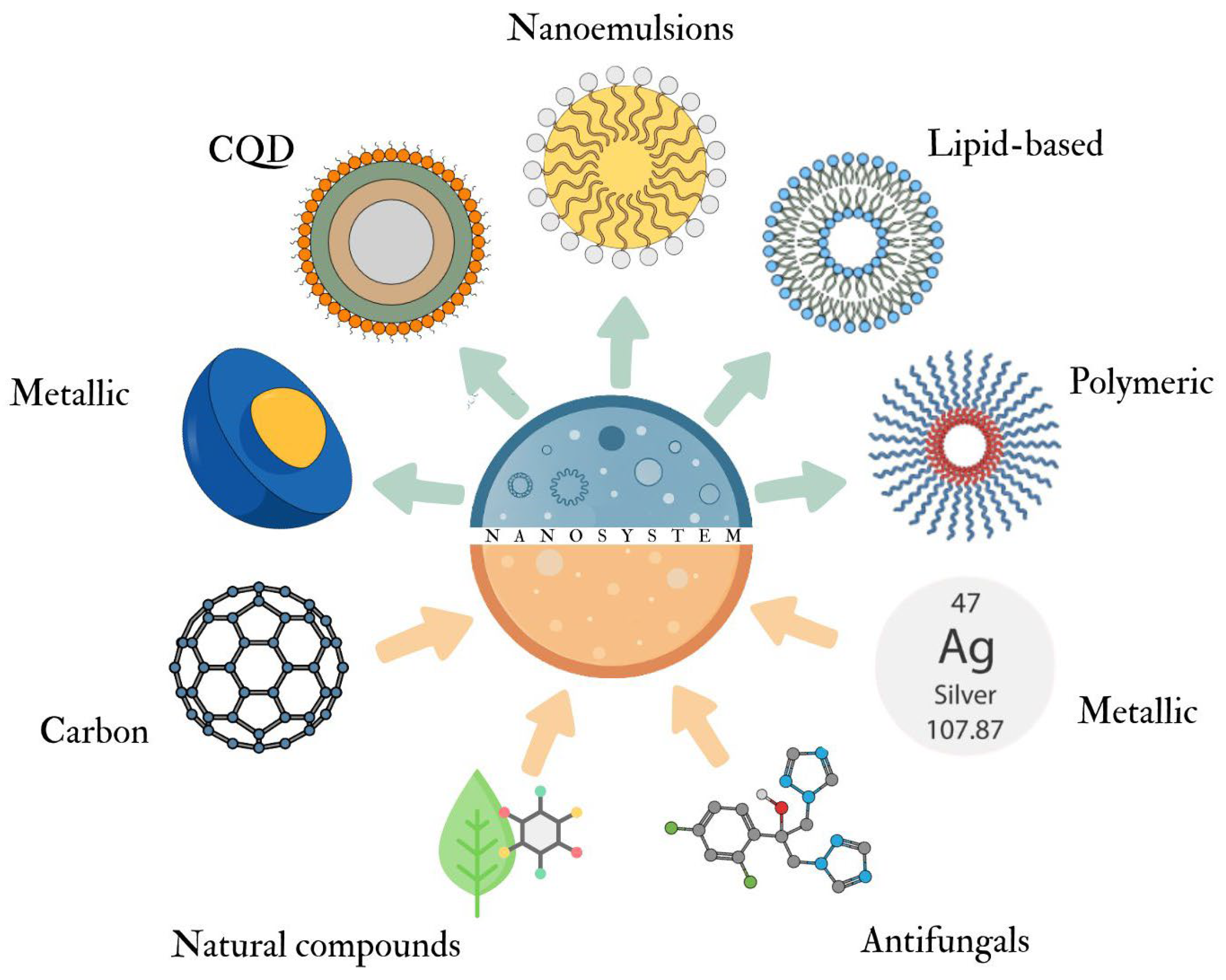
5. Types of Nanodrugs and Physicotechnical Characteristics
5.1. Metallic Nanoparticles and Inorganic Oxides
5.2. Lipid Systems and Colloidal Carriers
5.3. Polymeric and Hybrid Nanosystems
5.4. Nanoemulsions and Dispersed Colloidal Systems
5.5. Photosensitive Platforms and Emerging Nanosystems
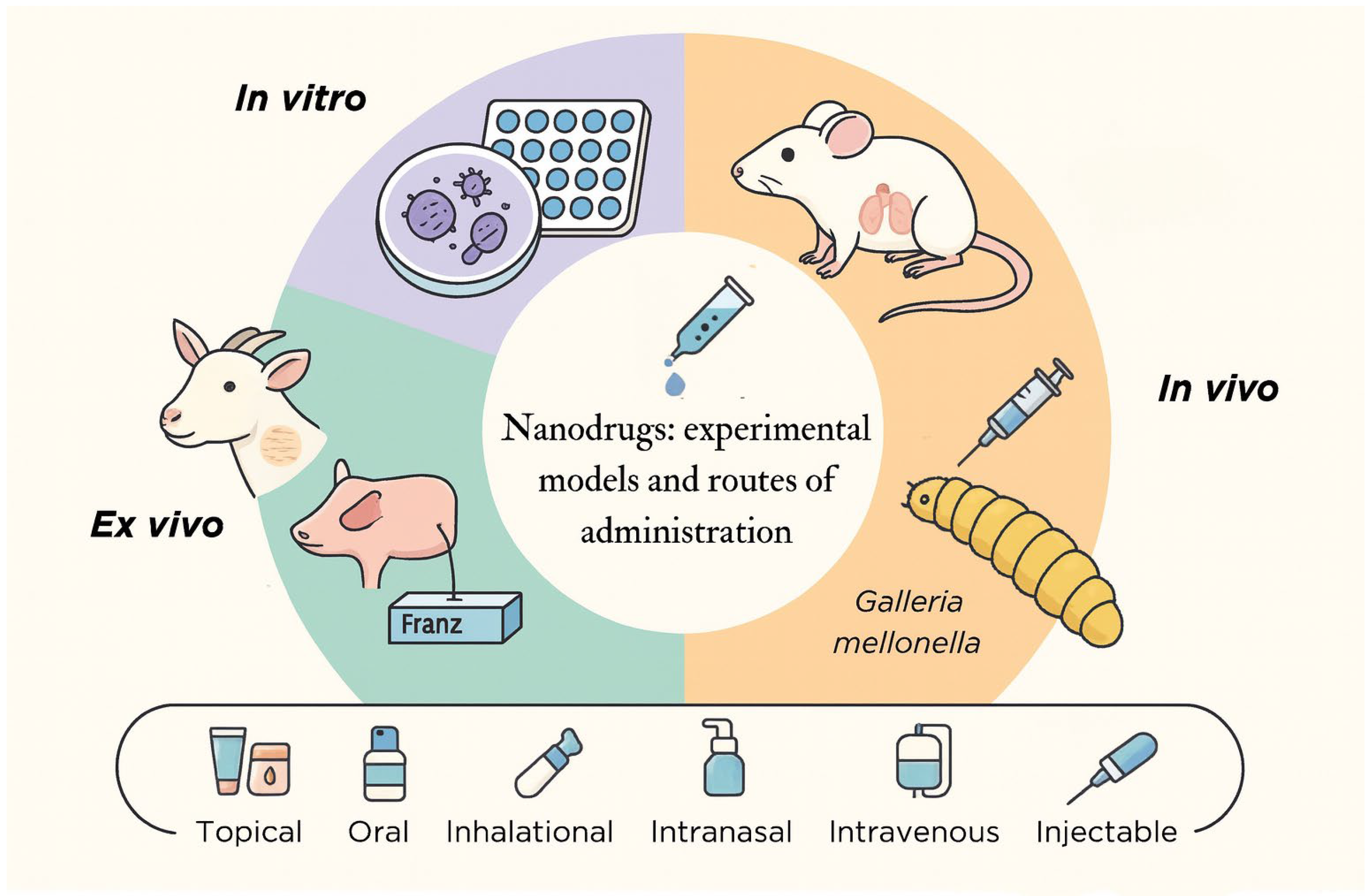
6. Experimental Models and Administration Routes Evaluated
6.1. In Vitro Assays: Initial Approach and Efficacy Screening
6.2. Ex Vivo Models: Skin Barriers and Permeation
6.3. In Vivo Models: Therapeutic Validation and Translational Relevance
6.4. Explored Administration Routes
7. Methods for Evaluating Antifungal Activity
7.1. Classical Antifungal Susceptibility Assays
7.2. Complementary Functional Assays and Mechanistic Analysis
7.3. Synergy Assays and Pharmacological Interaction Studies
7.4. Biofilm and Virulence Factor Assays
7.5. Cytotoxicity and Biocompatibility Assays
7.6. In Vivo Assays and Histopathological Analyses
8. Antifungal Performance and Comparative Quantitative Results
9. Conclusions
Supplementary Materials
Author Contributions
Funding
Institutional Review Board Statement
Informed Consent Statement
Data Availability Statement
Conflicts of Interest
References
- Yun, S.Y.; Suh, M.K.; Ha, G.Y. A clinical and etiological analysis of subcutaneous mycoses. Korean J. Med. Mycol. 2017, 22, 109–116. [Google Scholar] [CrossRef] [Scilit]
- Ramírez Soto, M.C.; Malaga, G. Subcutaneous Mycoses in Peru: A Systematic Review and Meta-Analysis for the Burden of Disease. Int. J. Dermatol. 2017, 56, 1037–1045. [Google Scholar] [CrossRef] [Scilit] [PubMed]
- Pang, K.R.; Wu, J.J.; Huang, D.B.; Tyring, S.K. Subcutaneous Fungal Infections. Dermatol. Ther. 2004, 17, 523–531. [Google Scholar] [CrossRef] [Scilit] [PubMed]
- Shemer, A.; Babaev, M. Fungal Infections (Onychomycosis, Tinea Pedis, Tinea Cruris, Tinea Capitis, Tinea Manuum, Tinea Corporis, Different Candida Infections, and Pityriasis Versicolor) and Mycological Laboratory Analyses. In Gender and Dermatology; Springer International Publishing: Cham, Switzerland, 2018; pp. 235–242. [Google Scholar]
- Yuvabharathikannan, D.; Mosa Christas, K.; Ranjani Devi, M.; Christas, K.M.; Devi, M.R. Efficacy of Calotropis gigantea L. Flower Extract and Biosynthesized Silver Nanoparticles against Fungal Pathogens. Res. J. Biotechnol. 2022, 17, 45–51. [Google Scholar] [CrossRef] [Scilit]
- Trapaga, M.R.; Poester, V.R.; Sanchotene, K.O.; Basso, R.P.; Bernardon, F.F.; Luvielmo, R.; Severo, C.B.; Almeida-Paes, R.; Oliveira, R.M.Z.; von Groll, A.; et al. Sporothrix brasiliensis-Specific Polymerase Chain Reaction for the Diagnosis of Cat and Human Sporotrichosis through Non-Invasive Samples. Med. Mycol. 2024, 62, myae075. [Google Scholar] [CrossRef] [Scilit]
- Queiroz-Telles, F.; Buccheri, R.; Benard, G. Sporotrichosis In Immunocompromised Hosts. J. Fungi 2019, 5, 8. [Google Scholar] [CrossRef] [Scilit]
- Khanna, J.N.; Natarajan, S.; Galinde, J. Rhinocerebral Mucormycosis—An Emerging Threat. J. Oral Maxillofac. Surg. Med. Pathol. 2015, 27, 550–557. [Google Scholar] [CrossRef] [Scilit]
- Vilela, R.; de Hoog, S.; Bensch, K.; Bagagli, E.; Mendoza, L. A Taxonomic Review of the Genus Paracoccidioides, with Focus on the Uncultivable Species. PLoS Negl. Trop. Dis. 2023, 17, e0011220. [Google Scholar] [CrossRef] [Scilit]
- Abd El-Baky, R.M.; Shady, E.R.; Yahia, R.; Ahmed, F.Y.; Ramadan, M.; Ahmed, H.R.; Al-Kadmy, I.M.S.; Ramadan, Y.N.; Hetta, H.F. COVID-19 Associated Mucormycosis among ICU Patients: Risk Factors, Control, and Challenges. AMB Express 2023, 13, 99. [Google Scholar] [CrossRef] [Scilit]
- Mendonça, A.; Santos, H.; Franco-Duarte, R.; Sampaio, P. Fungal Infections Diagnosis—Past, Present and Future. Res. Microbiol. 2022, 173, 103915. [Google Scholar] [CrossRef] [Scilit]
- Revie, N.M.; Iyer, K.R.; Robbins, N.; Cowen, L.E. Antifungal Drug Resistance: Evolution, Mechanisms and Impact. Curr. Opin. Microbiol. 2018, 45, 70–76. [Google Scholar] [CrossRef] [Scilit] [PubMed]
- Naveen, K.V.; Saravanakumar, K.; Sathiyaseelan, A.; MubarakAli, D.; Wang, M.-H. Human Fungal Infection, Immune Response, and Clinical Challenge—A Perspective During COVID-19 Pandemic. Appl. Biochem. Biotechnol. 2022, 194, 4244–4257. [Google Scholar] [CrossRef] [Scilit] [PubMed]
- Fisher, M.C.; Hawkins, N.J.; Sanglard, D.; Gurr, S.J. Worldwide Emergence of Resistance to Antifungal Drugs Challenges Human Health and Food Security. Science 2018, 360, 739–742. [Google Scholar] [CrossRef] [Scilit]
- Kneale, M.; Bartholomew, J.S.; Davies, E.; Denning, D.W. Global Access to Antifungal Therapy and Its Variable Cost. J. Antimicrob. Chemother. 2016, 71, 3599–3606. [Google Scholar] [CrossRef] [Scilit] [PubMed]
- Ahire, S.A.; Bachhav, A.A.; Pawar, T.B.; Jagdale, B.S.; Patil, A.V.; Koli, P.B. The Augmentation of Nanotechnology Era: A Concise Review on Fundamental Concepts of Nanotechnology and Applications in Material Science and Technology. Results Chem. 2022, 4, 100633. [Google Scholar] [CrossRef] [Scilit]
- Aderibigbe, B.A. Nanotherapeutics for the Delivery of Antifungal Drugs. Ther. Deliv. 2024, 15, 55–76. [Google Scholar] [CrossRef] [Scilit]
- Voltan, A.; Quindós, G.; Alarcón, K.; Fusco-Almeida, A.M.; Mendes-Giannini, M.J.; Chorilli, M. Fungal Diseases: Could Nanostructured Drug Delivery Systems Be a Novel Paradigm for Therapy? Int. J. Nanomed. 2016, 11, 3715–3730. [Google Scholar] [CrossRef] [Scilit]
- Zafar, S.; Khan, B.A.; Ahmad, I.; Ahmed, M.N.; Zafar, A.; Khan, R.; El-Tayeb, M.A.; Awad, A.M.; Shoeib, T.; Ibrahim, M.A.A. Elucidating the Potential of Bimetallic Mixed Metal Oxide (FeO/NiO) in Fusion with Pristine and N- and S-Doped Graphene Oxide for Biomedical Applications. Chem. Phys. Impact 2024, 9, 100748. [Google Scholar] [CrossRef] [Scilit]
- Mahmoud, A.; Abo El-Ela, F.I.; Mahmoud, R.; Shehata, A.Z.; El-Raheem, H.A.; Salama, E.; Allam, A.A.; Alfassam, H.E.; Zaher, A. Eco-Friendly Moxifloxacin Removal Using Date Seed Waste and Ni-Fe LDH: Adsorption Efficiency and Antimicrobial Potential. Ecotoxicol. Environ. Saf. 2025, 297, 118256. [Google Scholar] [CrossRef] [Scilit]
- Muhammad, W.; Khan, M.A.; Nazir, M.; Siddiquah, A.; Mushtaq, S.; Hashmi, S.S.; Abbasi, B.H. Papaver somniferum L. Mediated Novel Bioinspired Lead Oxide (PbO) and Iron Oxide (Fe2O3) Nanoparticles: In-Vitro Biological Applications, Biocompatibility and Their Potential towards HepG2 Cell Line. Mater. Sci. Eng. C 2019, 103, 109740. [Google Scholar] [CrossRef] [Scilit]
- Rawas-Qalaji, M.; Jagal, J.; Fayed, B.; Hamdy, R.; Soliman, S.S.M. Nano-Combination for Reviving the Activity of Fluconazole against Rhizopus delemar. Curr. Pharm. Biotechnol. 2023, 24, 1568–1575. [Google Scholar] [CrossRef] [Scilit] [PubMed]
- Salem, S.S.; Ali, O.M.; Reyad, A.M.; Abd-Elsalam, K.A.; Hashem, A.H.; Mohamed Reyad, A.M.; Abd-Elsalam, K.A.; Hashem, A.H.; Reyad, A.M.; Abd-Elsalam, K.A.; et al. Pseudomonas indica-Mediated Silver Nanoparticles: Antifungal and Antioxidant Biogenic Tool for Suppressing Mucormycosis Fungi. J. Fungi 2022, 8, 126. [Google Scholar] [CrossRef] [Scilit] [PubMed]
- Gu, Y.; Gebremariam, T.; Alkhazraji, S.; Youssef, E.; El-Gamal, S.; Matkovits, T.; Cobb, J.; Mannino, R.; Ibrahim, A.S. Efficacy of an Oral Lipid Nanocrystal (LNC) Formulation of Amphotericin B (MAT2203) in the Neutropenic Mouse Model of Pulmonary Mucormycosis. bioRxiv 2023. [Google Scholar] [CrossRef] [Scilit] [PubMed]
- Abo El-Ela, F.I.; Hassan, W.H.; Amer, A.M.; El-Dek, S.I. Antifungal Activity of Chitosan Polymeric Nanoparticles and Correlation with Their PH Against Mucor Circinelloides Causing Mucormycosis, Along with Penicillium notatum and Aspergillus Species. Curr. Microbiol. 2023, 81, 47. [Google Scholar] [CrossRef] [Scilit]
- Belal, A.; Almalki, A.H.; Farghali, A.A.; Khaled, R.; Atta, R.R.; Hassan, W.H.; Lee, S.; Kotp, A.A.; Essam, D. Nitrogen-Doped Carbon Quantum Dots as a Novel Treatment for Black Fungal Bone Infections (Mucormycosis): In Vitro and in Vivo Study. Artif. Cells Nanomed. Biotechnol. 2024, 52, 131–144. [Google Scholar] [CrossRef] [Scilit]
- Mahmoud, R.; Eldin, Z.E.; Khalifa, A.; Ahmed Anwar, A.A.; GadelHak, Y.; Othman, S.I.; Allam, A.A.; Essam, D.; Abo El-Ela, F.I.; Aleem Abdel Aziz, S.A.; et al. Antifungal and Antibacterial Investigation of Quinary Zr Al Fe Co Ni Layered Double Hydroxide and Its Al Fe Co Ni Quaternary and Fe Co Ni Tertiary Roots. RSC Adv. 2024, 14, 14815–14834. [Google Scholar] [CrossRef] [Scilit]
- Ahmadi, A.; Hashemi, S.J.; Rezayat Sorkhabadi, S.M.; Daie Ghazvini, R.; Jaafari, M.R.; Esmaeili, J.; Saiedmohammadi, F.; Afshari, F.; Alcázar-Fuoli, L.; Abdollahi, A. The In Vitro Effect of Nanoliposomal Amphotericin B Against Rhizopus Arrhizus Isolated From COVID-19-Associated Mucormycosis Patients. Iran. J. Pathol. 2025, 20, 84–89. [Google Scholar] [CrossRef] [Scilit]
- Almalki, A.H.; Hassan, W.H.; Belal, A.; Farghali, A.; Saleh, R.M.; Allah, A.E.; Abdelwahab, A.; Lee, S.; Hassan, A.H.E.; Ghoneim, M.M.; et al. Exploring the Antimicrobial Activity of Sodium Titanate Nanotube Biomaterials in Combating Bone Infections: An In Vitro and In Vivo Study. Antibiotics 2023, 12, 799. [Google Scholar] [CrossRef] [Scilit]
- Abdelraof, M.; Fikry, M.; Hashem, A.H.; El-Naggar, M.E.; Rashdan, H.R.M. Insight into Novel Anti-Mucormycosis Therapies: Investigation of New Anti-Mucormycosis Laser-Induced Photodynamic Therapy Based on a Sulphone Bis-Compound Loaded Silica Nanoemulsion. RSC Adv. 2023, 13, 20684–20697. [Google Scholar] [CrossRef] [Scilit]
- Tiwari, A.K.; Gupta, M.K.; Pandey, G.; Tilak, R.; Narayan, R.J.; Pandey, P.C. Size and Zeta Potential Clicked Germination Attenuation and Anti-Sporangiospores Activity of PEI-Functionalized Silver Nanoparticles against COVID-19 Associated Mucorales (Rhizopus arrhizus). Nanomaterials 2022, 12, 2235. [Google Scholar] [CrossRef] [Scilit]
- Radwan, I.T.; El-Sherbiny, I.M.; Metwally, N.H. Synergistic and Potential Antifungal Properties of Tailored, One Pot Multicomponent Monoterpenes Co-Delivered with Fluconazole Encapsulated Nanostructure Lipid Carrier. Sci. Rep. 2024, 14, 14382. [Google Scholar] [CrossRef] [Scilit]
- Hasanin, M.S.; Ayoob, F.A.; Hashem, A.H.; Emam, M. Synthesis of Chitosan Based Nanoemulsions and Their Characterization and Antifungal Activity toward Fungi Causing Mucormycosis. Sci. Rep. 2025, 15, 20326. [Google Scholar] [CrossRef] [Scilit] [PubMed]
- Hashem, A.H.; Al–Askar, A.A.; Haponiuk, J.; Abd-Elsalam, K.A.; Hasanin, M.S.; Al-Askar, A.A.; Haponiuk, J.; Abd-Elsalam, K.A.; Hasanin, M.S. Biosynthesis, Characterization, and Antifungal Activity of Novel Trimetallic Copper Oxide-Selenium-Zinc Oxide Nanoparticles against Some Mucorales Fungi. Microorganisms 2023, 11, 1380. [Google Scholar] [CrossRef] [Scilit] [PubMed]
- Baldin, C.; Ibrahim, A.S. Molecular Mechanisms of Mucormycosis—The Bitter and the Sweet. PLoS Pathog. 2017, 13, e1006408. [Google Scholar] [CrossRef] [Scilit] [PubMed]
- Pallath, N.; Francis, B.; Devanesan, S.; Asemi, N.; AlSalhi, M.S.; Natarajan, S. Synthesis of Silver Nanoparticles from Marine Bacteria and Evaluation of Antimicrobial, Antifungal and Cytotoxic Effects. J. King Saud Univ. Sci. 2024, 36, 103073. [Google Scholar] [CrossRef] [Scilit]
- Mahmoud, R.; Kotb, N.M.; GadelHak, Y.; El-Ela, F.I.A.; Shehata, A.Z.; Othman, S.I.; Allam, A.A.; Rudayni, H.A.; Zaher, A. Investigation of Ternary Zn–Co–Fe Layered Double Hydroxide as a Multifunctional 2D Layered Adsorbent for Moxifloxacin and Antifungal Disinfection. Sci. Rep. 2024, 14, 806. [Google Scholar] [CrossRef] [Scilit]
- Liu, S.C.; Zamith-Miranda, D.; Almeida-Paes, R.; da Silva, L.B.R.; Nacharaju, P.; Nosanchuk, J.D. Nitric Oxide-Loaded Nano- and Microparticle Platforms Serving as Potential New Antifungal Therapeutics. Fungal Biol. 2023, 127, 1224–1230. [Google Scholar] [CrossRef] [Scilit]
- Pham, T.; Shi, R.; Ambati, S.; Meagher, R.; Lin, X. All Hands on Dec: Treating Cryptococcosis with Dectin Decorated Liposomes Loaded with Antifungals. iScience 2024, 27, 110349. [Google Scholar] [CrossRef] [Scilit]
- Xavier, J.R.B.; Waller, S.B.; da Osório, L.G.; Vives, P.S.; Albano, A.P.N.; de Aguiar, E.S.V.; Ferreira, M.R.A.; da Conceição, F.R.; de Faria, R.O.; Meireles, M.C.A.; et al. Human Sporotrichosis Outbreak Caused by Sporothrix Brasiliensis in a Veterinary Hospital in Southern Brazil. J. Med. Mycol. 2021, 31, 101163. [Google Scholar] [CrossRef] [Scilit]
- Nakasu, C.C.T.; Waller, S.B.; Ripoll, M.K.; Ferreira, M.R.A.; Conceição, F.R.; dos Gomes, A.R.; da Osório, L.G.; de Faria, R.O.; Cleff, M.B. Feline Sporotrichosis: A Case Series of Itraconazole-Resistant Sporothrix Brasiliensis Infection. Braz. J. Microbiol. 2021, 52, 163–171. [Google Scholar] [CrossRef] [Scilit]
- Khurana, G.; Sharma, V.V.; Arora, D. QbD-Driven Development and Characterization of Solid Lipid Nanoparticles (SLNs)–Based Nanogel of Luliconazole for the Effective Management of Dermal Fungal Infection. J. Pharm. Innov. 2023, 18, 2249–2264. [Google Scholar] [CrossRef] [Scilit]
- Passos, J.S.; de Martino, L.C.; Dartora, V.F.C.; de Araujo, G.L.B.B.; Ishida, K.; Lopes, L.B.; de Martino, L.C.; Dartora, V.F.C.; de Araujo, G.L.B.; Ishida, K.; et al. Development, Skin Targeting and Antifungal Efficacy of Topical Lipid Nanoparticles Containing Itraconazole. Eur. J. Pharm. Sci. 2020, 149, 105296. [Google Scholar] [CrossRef] [Scilit] [PubMed]
- Artunduaga Bonilla, J.J.; Honorato, L.; Guimaräes, A.J.; Miranda, K.; Nimrichter, L.; Bonilla, J.J.A.; Honorato, L.; Guimaraes, A.J.; Miranda, K.; Nimrichter, L. Silver Chitosan Nanocomposites Are Effective to Combat Sporotrichosis. Front. Nanotechnol. 2022, 4, 857681. [Google Scholar] [CrossRef] [Scilit]
- de Almeida, M.L.; Dos Santos Matos, A.P.D.S.; da Silva Cardoso, V.D.S.; do Nascimento, T.; Santos-Oliveira, R.; Rocha, L.M.; Paiva Machado, F.P.; Kenechukwu, F.C.; Vermelho, A.B.; Ricci-Júnior, E.; et al. Clove Oil-Based Nanoemulsion Containing Amphotericin B as a Therapeutic Approach to Combat Fungal Infections. Pharmaceutics 2025, 17, 925. [Google Scholar] [CrossRef] [Scilit]
- Batista-Duharte, A.; Lastre, M.; Romeu, B.; Portuondo, D.L.L.; Téllez-Martínez, D.; Manente, F.A.A.; Pérez, O.; Carlos, I.Z.Z.; Peŕez, O.; Carlos, I.Z.Z. Antifungal and Immunomodulatory Activity of a Novel Cochleate for Amphotericin B Delivery against Sporothrix Schenckii. Int. Immunopharmacol. 2016, 40, 277–287. [Google Scholar] [CrossRef] [Scilit]
- Martínez-Montelongo, J.H.; Medina-Ramírez, I.E.; Romo-Lozano, Y.; González-Gutiérrez, A.; Macías-Díaz, J.E. Development of Nano-Antifungal Therapy for Systemic and Endemic Mycoses. J. Fungi 2021, 7, 158. [Google Scholar] [CrossRef] [Scilit]
- Mathias, L.; Almeida, J.; Passoni, L.; Gossani, C.; Taveira, G.; Gomes, V.; Motta, O. Antifungal Activity of Silver Salts of Keggin-Type Heteropolyacids against Sporothrix spp. J. Microbiol. Biotechnol. 2020, 30, 540–551. [Google Scholar] [CrossRef] [Scilit]
- Ferreira, P.G.; Noronha, L.; Teixeira, R.; Vieira, I.; Borba-Santos, L.P.; Viçosa, A.; de Moraes, M.; Calil-Elias, S.; de Freitas, Z.; da Silva, F.C.; et al. Investigation of a Microemulsion Containing Clotrimazole and Itraconazole for Transdermal Delivery for the Treatment of Sporotrichosis. J. Pharm. Sci. 2020, 109, 1026–1034. [Google Scholar] [CrossRef] [Scilit]
- Misol, A.; Sáez, E.; Colom, M.F.; Darder, M.; Aranda, P. Amphotericin B Intercalated in Layered Clays as Effective Antifungal Systems against Eumycetoma Causative Agents. Int. J. Pharm. 2025, 683, 126029. [Google Scholar] [CrossRef] [Scilit]
- de Araujo, A.R.; Ramos-Jesus, J.; de Oliveira, T.M.; de Carvalho, A.M.A.; Nunes, P.H.M.; Daboit, T.C.; Carvalho, A.P.; Barroso, M.F.; de Almeida, M.P.; Plácido, A.; et al. Identification of Eschweilenol C in Derivative of Terminalia fagifolia Mart. and Green Synthesis of Bioactive and Biocompatible Silver Nanoparticles. Ind. Crops Prod. 2019, 137, 52–65. [Google Scholar] [CrossRef] [Scilit]
- Hetta, H.F.; Melhem, T.; Aljohani, H.M.; Salama, A.; Ahmed, R.; Elfadil, H.; Alanazi, F.E.; Ramadan, Y.N.; Battah, B.; Rottura, M.; et al. Beyond Conventional Antifungals: Combating Resistance Through Novel Therapeutic Pathways. Pharmaceuticals 2025, 18, 364. [Google Scholar] [CrossRef] [Scilit]
- Hetta, H.F.; Ramadan, Y.N.; Al-Kadmy, I.M.S.; Ellah, N.H.A.; Shbibe, L.; Battah, B. Nanotechnology-Based Strategies to Combat Multidrug-Resistant Candida Auris Infections. Pathogens 2023, 12, 1033. [Google Scholar] [CrossRef] [Scilit]
- CLSI document M27-A3; Reference Method for Broth Dilution Antifungal Susceptibility Testing of Yeasts; Approved Standard—Third Edition. Clinical and Laboratory Standards Institute: Wayne, PA, USA, 2008.
- CLSI document M38-A2; Reference Method for Broth Dilution Antifungal Susceptibility Testing of Filamentous Fungi; Approved Standard—Second Edition. Clinical and Laboratory Standards Institute: Wayne, PA, USA, 2008.

Disclaimer/Publisher’s Note: The statements, opinions and data contained in all publications are solely those of the individual author(s) and contributor(s) and not of MDPI and/or the editor(s). MDPI and/or the editor(s) disclaim responsibility for any injury to people or property resulting from any ideas, methods, instructions or products referred to in the content. |
© 2026 by the authors. Licensee MDPI, Basel, Switzerland. This article is an open access article distributed under the terms and conditions of the Creative Commons Attribution (CC BY) license.
Share and Cite
Federizzi, M.; Adegas, E.C.; Fuentefria, A.M.; Waller, S.B. Nanodrugs for Subcutaneous Mycoses: Applications, Antifungal Performance, and Translational Perspectives. Microorganisms 2026, 14, 187. https://doi.org/10.3390/microorganisms14010187
Federizzi M, Adegas EC, Fuentefria AM, Waller SB. Nanodrugs for Subcutaneous Mycoses: Applications, Antifungal Performance, and Translational Perspectives. Microorganisms. 2026; 14(1):187. https://doi.org/10.3390/microorganisms14010187
Chicago/Turabian StyleFederizzi, Micaela, Eduarda Canosa Adegas, Alexandre Meneghello Fuentefria, and Stefanie Bressan Waller. 2026. "Nanodrugs for Subcutaneous Mycoses: Applications, Antifungal Performance, and Translational Perspectives" Microorganisms 14, no. 1: 187. https://doi.org/10.3390/microorganisms14010187
APA StyleFederizzi, M., Adegas, E. C., Fuentefria, A. M., & Waller, S. B. (2026). Nanodrugs for Subcutaneous Mycoses: Applications, Antifungal Performance, and Translational Perspectives. Microorganisms, 14(1), 187. https://doi.org/10.3390/microorganisms14010187