Article

Respiratory and Pleural Pathogens in Octogenarians Hospitalized with COVID-19: Impact of Secondary Bacterial Pneumonia on Day-5 SOFA and Mortality

1
Doctoral School, “Victor Babes” University of Medicine and Pharmacy Timisoara, 300041 Timisoara, Romania
2
Department of Infectious Disease, “Victor Babes” University of Medicine and Pharmacy Timisoara, 300041 Timisoara, Romania
3
Methodological and Infectious Diseases Research Center, Department of Infectious Diseases, “Victor Babes” University of Medicine and Pharmacy Timisoara, 300041 Timisoara, Romania
4
Discipline of Microbiology, Multidisciplinary Research Center of Antimicrobial Resistance, Faculty of Medicine, “Victor Babes” University of Medicine and Pharmacy Timisoara, 300041 Timisoara, Romania
5
Microbiology Laboratory, “Pius Brinzeu” County Clinical Emergency Hospital, 300723 Timisoara, Romania
6
Department IV Biochemistry and Pharmacology, Discipline of Biochemistry, Faculty of Medicine, “Victor Babes” University of Medicine and Pharmacy Timisoara, 300041 Timisoara, Romania
*
Author to whom correspondence should be addressed.
Microorganisms 2026, 14(1), 164; https://doi.org/10.3390/microorganisms14010164

Submission received: 27 November 2025 / Revised: 6 January 2026 / Accepted: 10 January 2026 / Published: 12 January 2026
(This article belongs to the Section Medical Microbiology)

Abstract

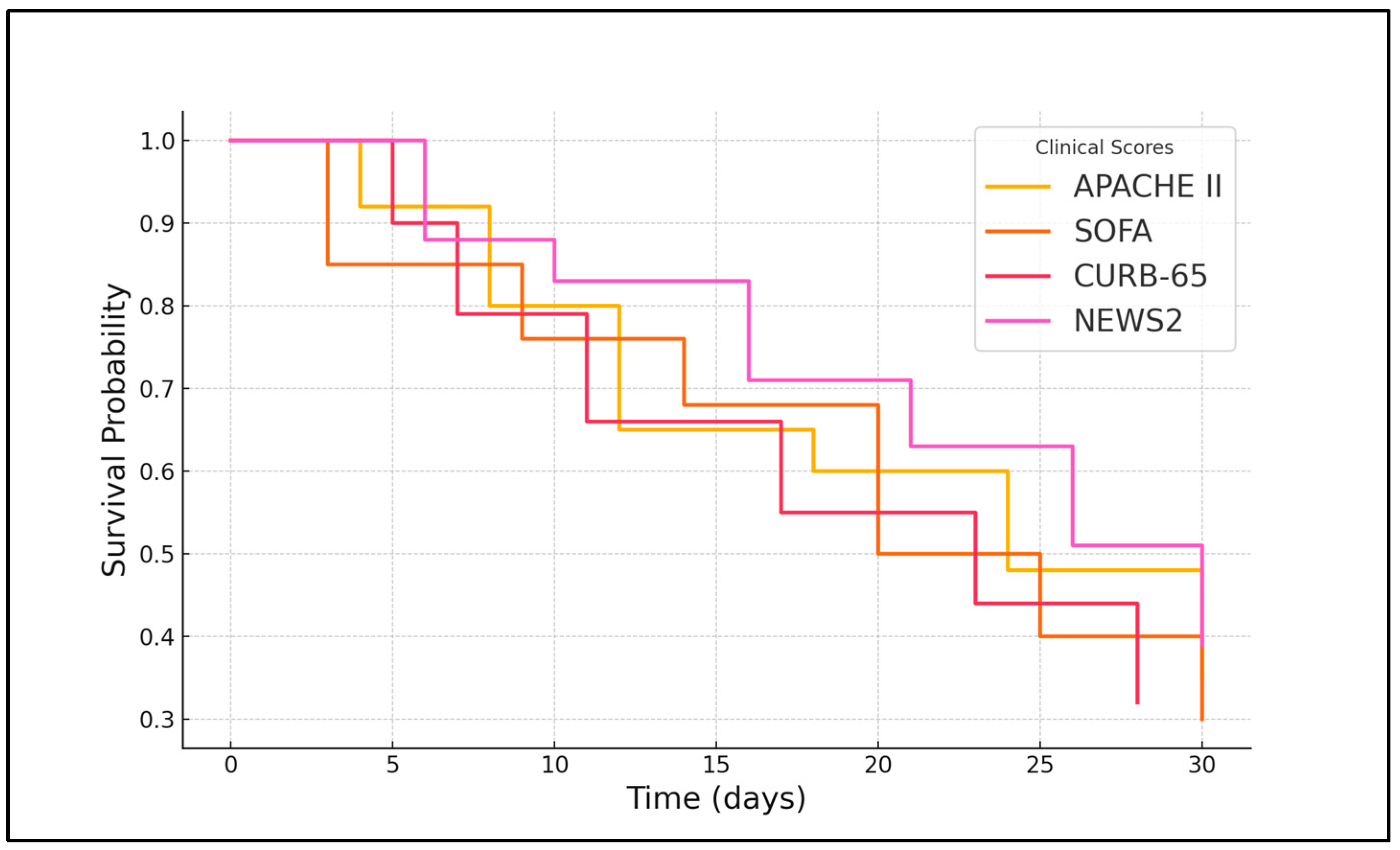
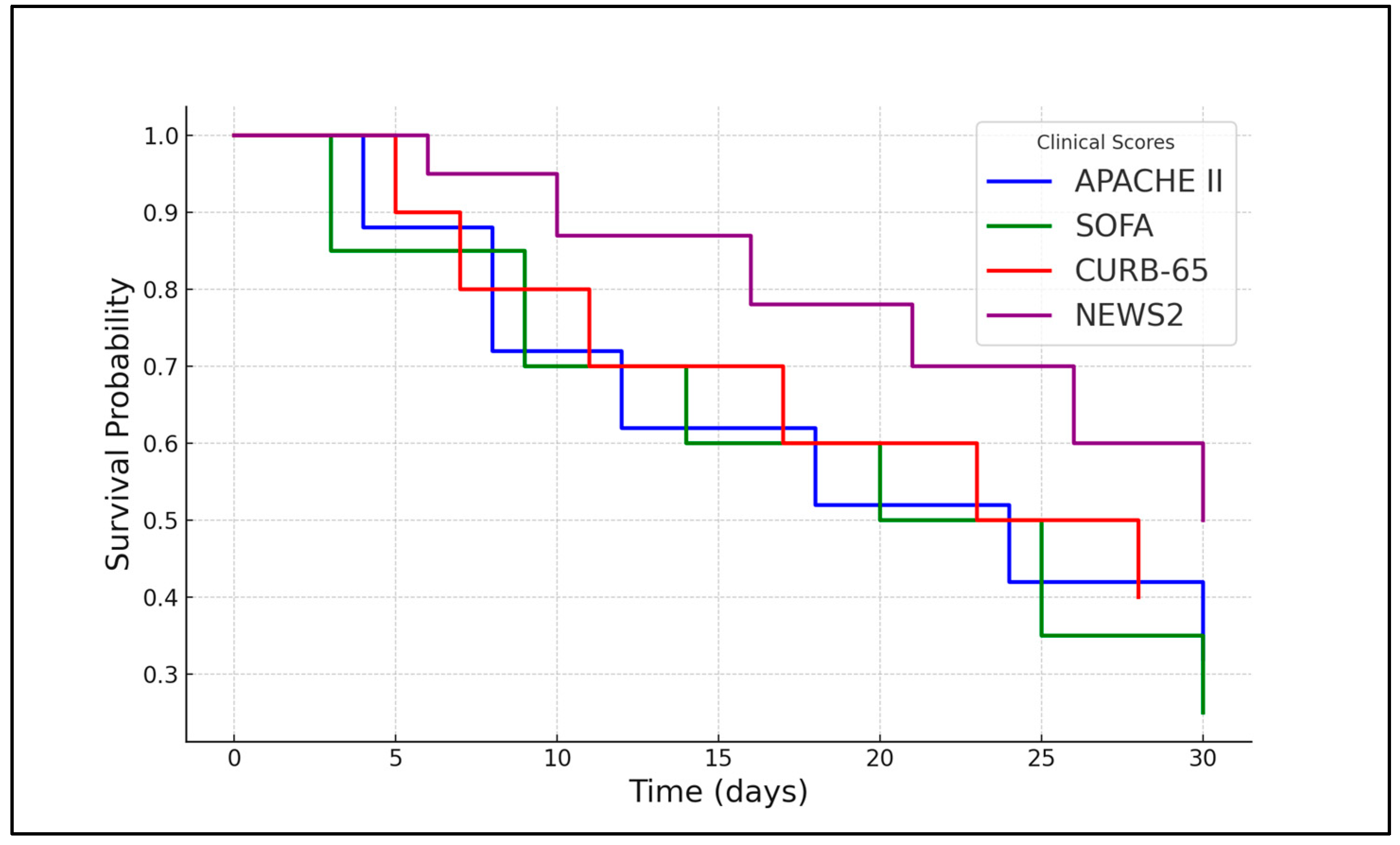
Background and Objectives: Secondary bacterial infection drives poor outcomes in older adults with COVID-19, but age-specific microbiology and its interaction with severity scores are not well defined. We characterized respiratory and pleural pathogens, resistance profiles, and their impact on day-5 SOFA/APACHE II in octogenarians versus younger adults. Methods: We performed a retrospective cohort study of adults with RT-PCR-confirmed coronavirus disease 2019 (COVID-19) at a tertiary infectious diseases center (≥80 years, n = 152; <65 years, n = 327). Respiratory and pleural samples were processed according to EUCAST standards. Identification employed matrix-assisted laser desorption/ionization time-of-flight mass spectrometry (MALDI-TOF MS). Pathogen distributions, susceptibilities, and rates of superimposed pneumonia, empyema, and bacteremia were compared by age, and associations between secondary pneumonia, day-5 SOFA/APACHE II, and 28-day mortality were analyzed. Results: Sputum was obtained in 67.1% of older and 65.7% of younger adults, with numerically higher culture positivity in older patients (73.5% vs. 65.1%). Pathogen spectra were similar, dominated by Streptococcus pneumoniae (24.0% vs. 24.3%), methicillin-susceptible Staphylococcus aureus (MSSA) (18.7% vs. 20.7%), methicillin-resistant Staphylococcus aureus (MRSA) (9.3% vs. 6.4%), and Klebsiella pneumoniae, including extended-spectrum β-lactamase (ESBL)-producing strains. Empyema was more frequent in octogenarians (7.9% vs. 3.1%), and pleural cultures were usually positive. Meropenem retained 100% activity against ESBL-producing K. pneumoniae and Pseudomonas in both strata. In ≥80-year-olds, superimposed pneumonia was associated with higher day-5 SOFA (6.6 vs. 5.5) and APACHE II (24.3 vs. 21.0) scores and markedly increased 28-day mortality (37.5% vs. 9.8%). Conclusions: In octogenarians with COVID-19, secondary bacterial pneumonia and empyema are frequent, microbiologically similar to younger adults, and strongly amplify organ dysfunction and mortality even with largely preserved carbapenem susceptibility.
Keywords: COVID-19; aged; 80 and over; pneumonia; bacterial; drug resistance; microbial; respiratory tract infections/microbiology COVID-19; aged; 80 and over; pneumonia; bacterial; drug resistance; microbial; respiratory tract infections/microbiology