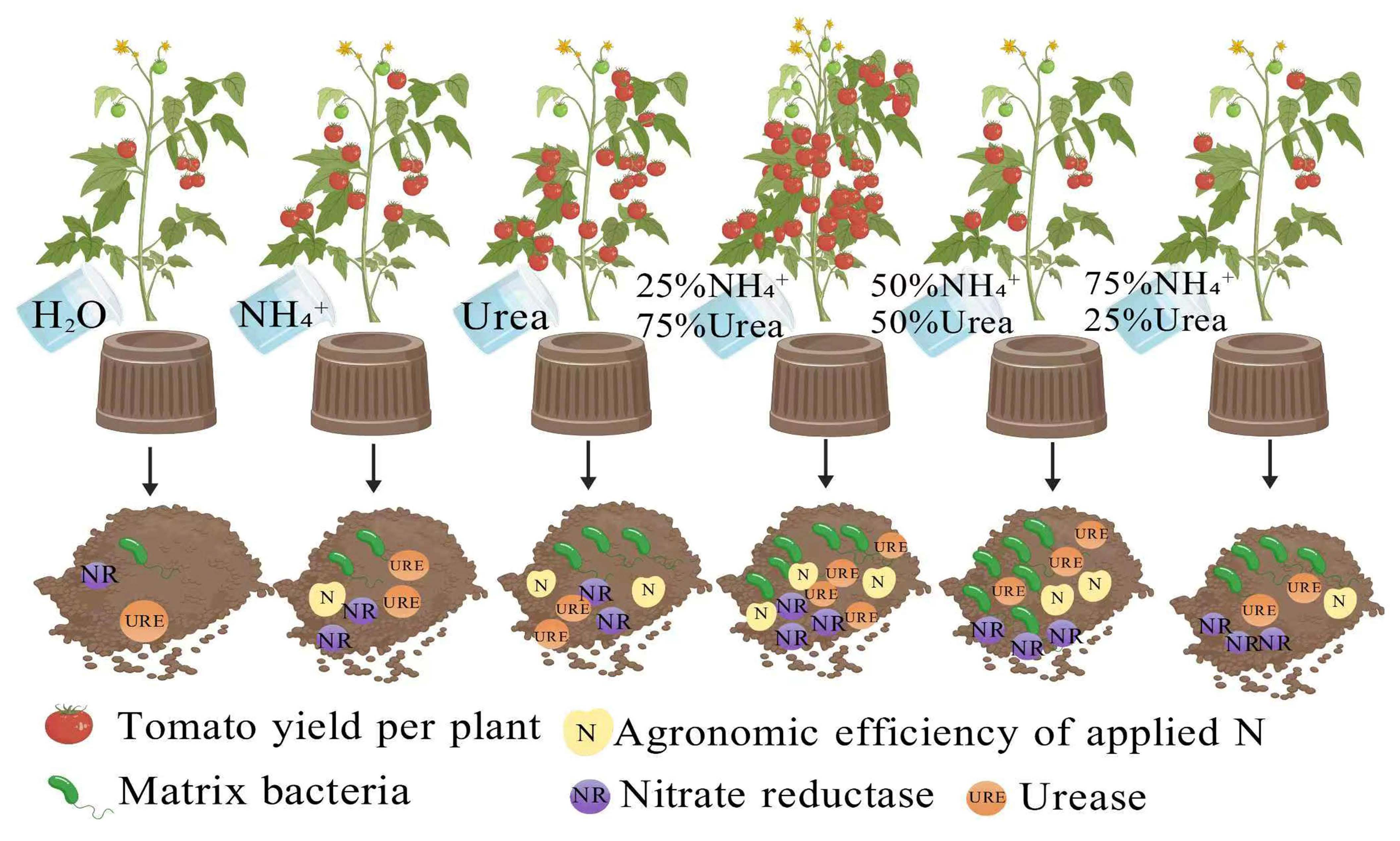
Effects of Combined Application of Different Nitrogen Forms on Substrate Nutrient Utilization, Root Microenvironment, and Tomato Yield



Abstract
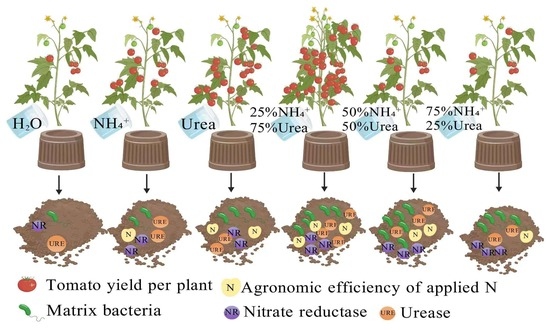
1. Introduction
2. Materials and Methods
2.1. Plant Materials and Growth Conditions
2.2. Experimental Design
2.3. Measured Indices and Methods
2.3.1. Tomato Yield Determination
2.3.2. Determination of Mineral Elements in Tomato Plants and Fruits
2.3.3. Determination of Substrate Chemical Properties
2.3.4. Calculation of Nitrogen Fertilizer Use Efficiency
2.3.5. Determination of Substrate Enzyme Activities
2.3.6. Analysis of Substrate Microbial Diversity
2.4. Statistical Analysis
3. Results
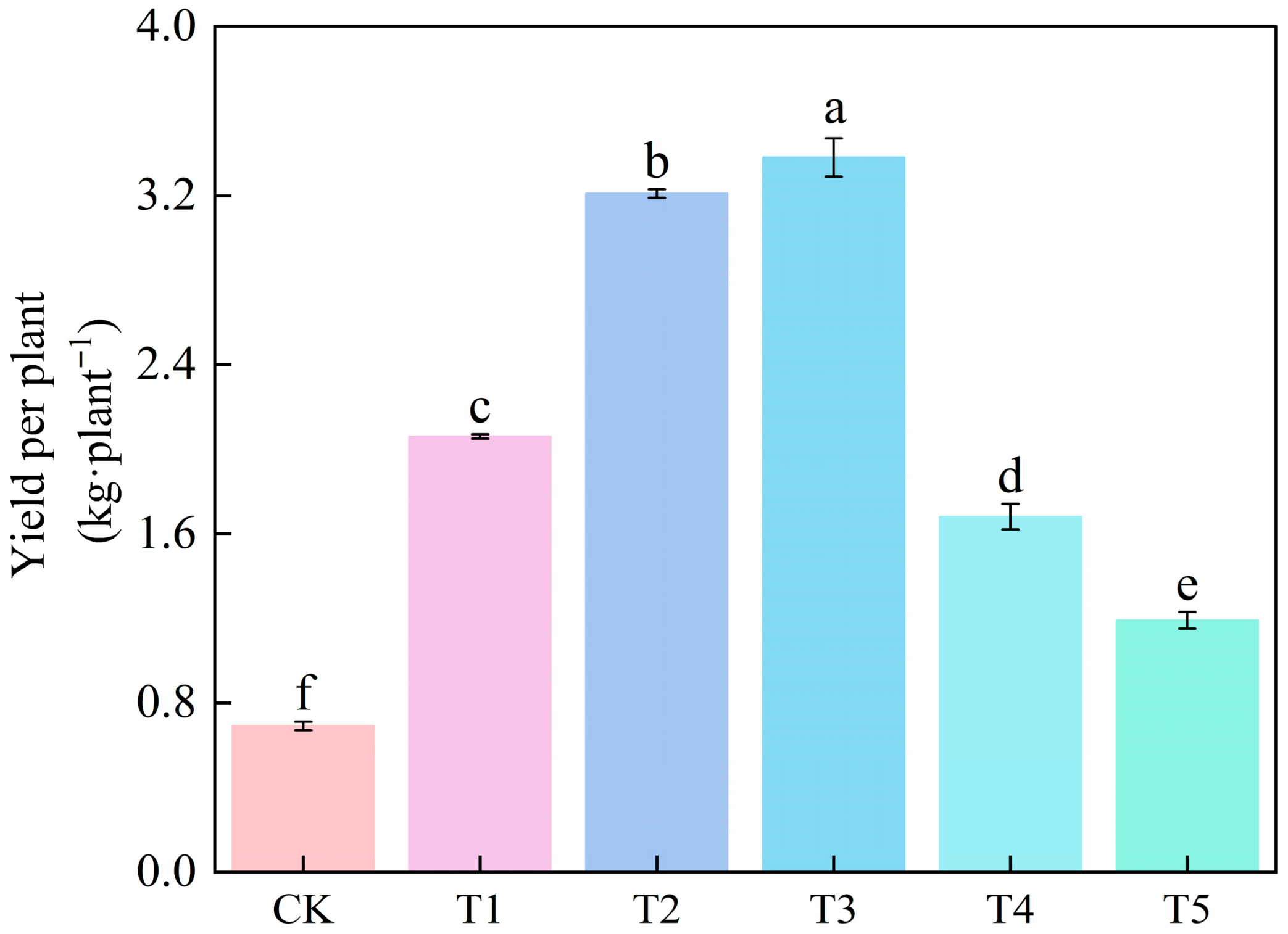
3.1. Effects of Different Nitrogen Forms on Tomato Yield per Plant
3.2. Effects of Different Nitrogen Forms on Tomato Fertilizer Use Efficiency
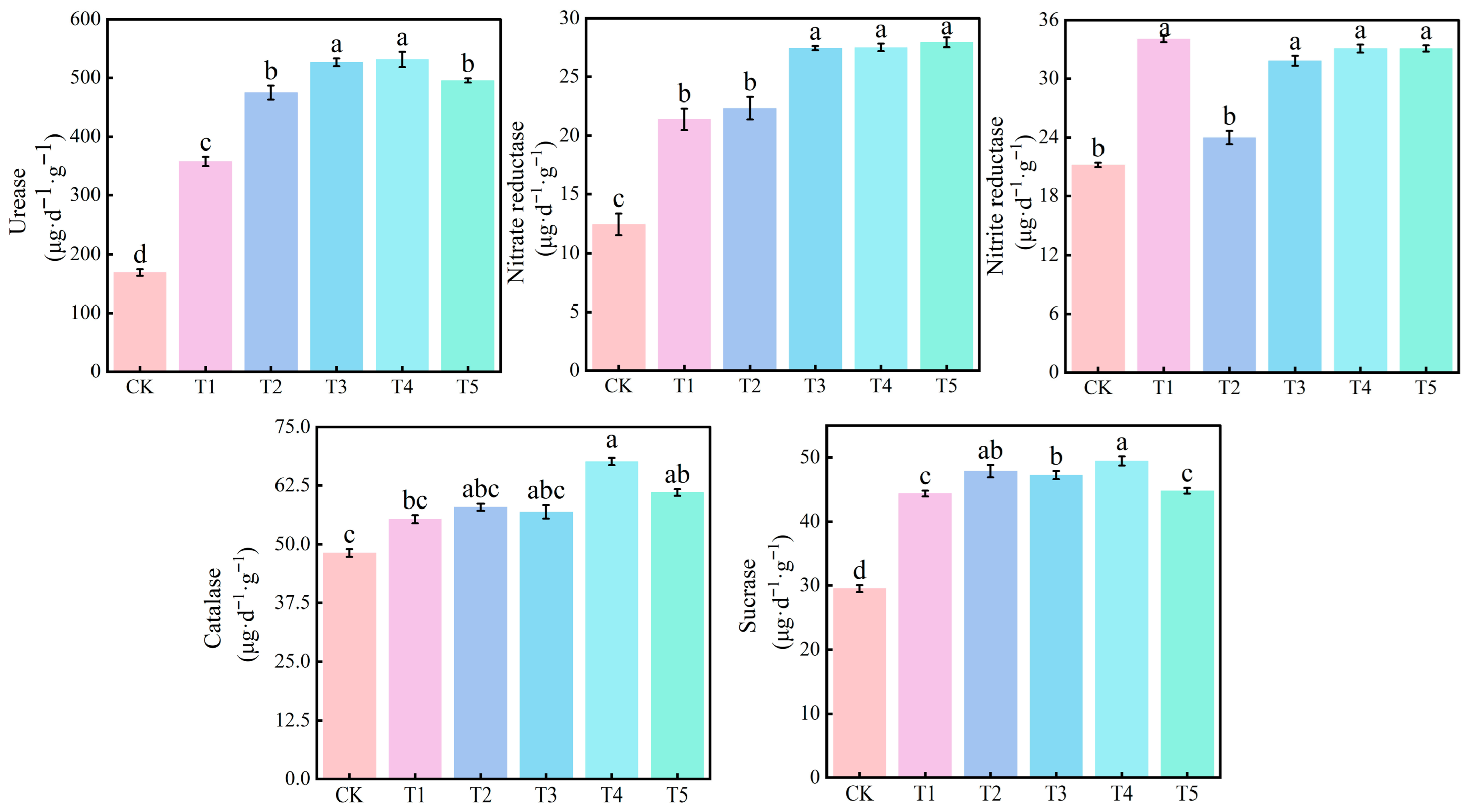
3.3. Effects of Different Nitrogen Forms on the Enzyme Activities in the Rhizosphere Substrate of Tomato
3.4. Effects of Combined Application of Different Nitrogen Forms on the Nutrient Content of the Rhizosphere Substrate of Tomato
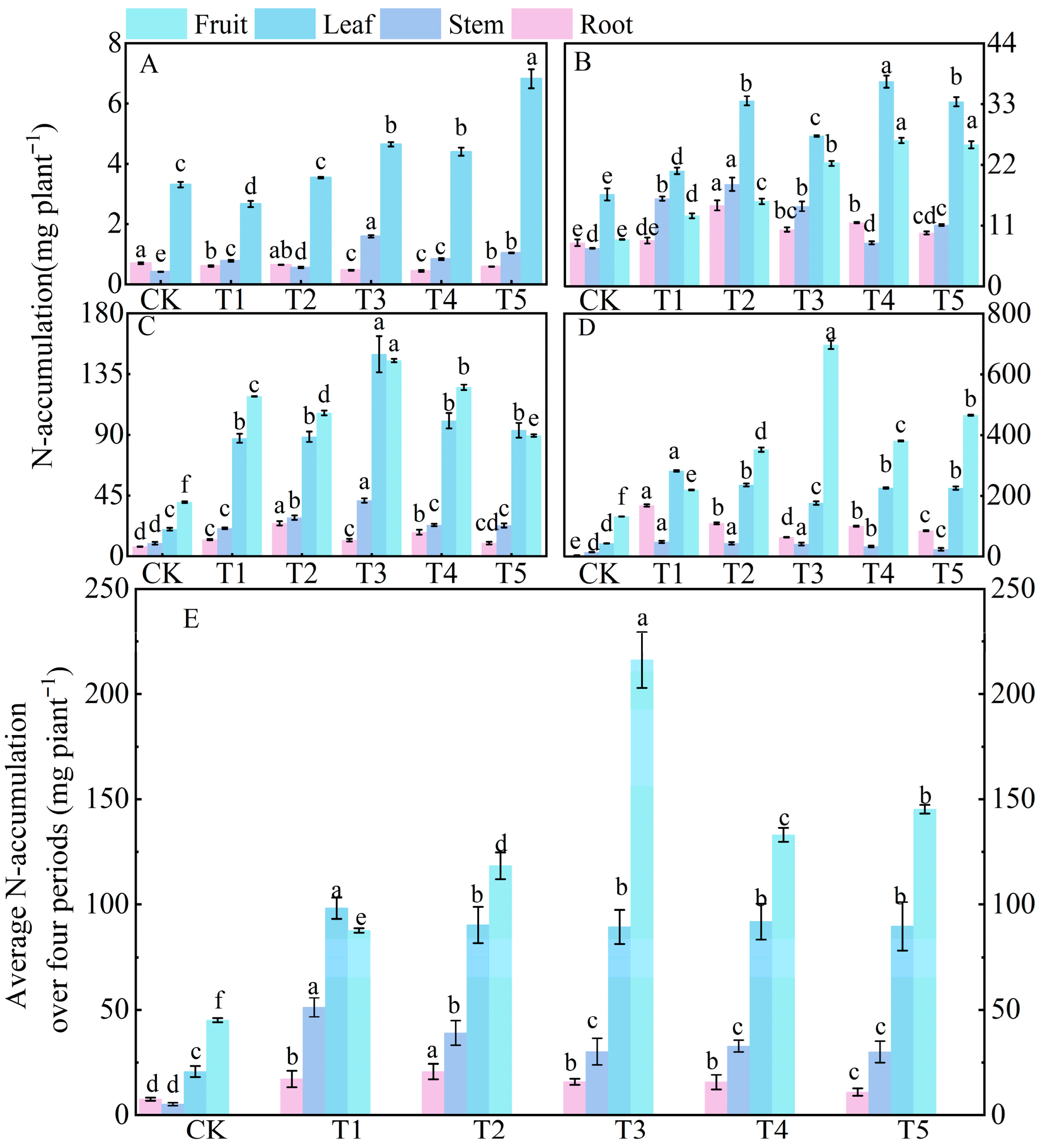
3.5. Effects of Different Nitrogen Forms on the Accumulation and Distribution of Nitrogen, Phosphorus, Potassium, Calcium, and Magnesium in Plants
3.5.1. Nitrogen Uptake and Allocation
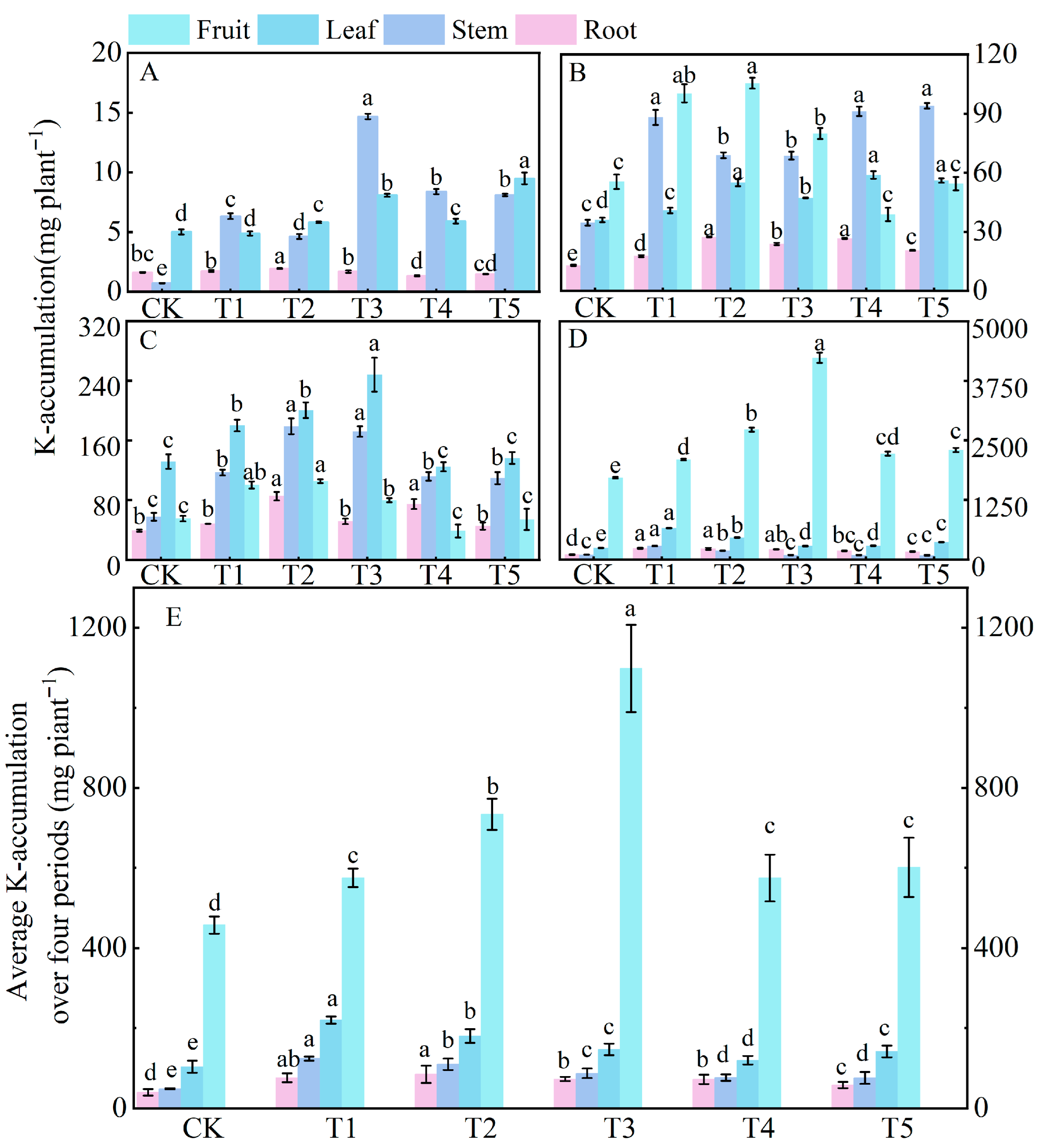
3.5.2. Potassium Uptake and Allocation
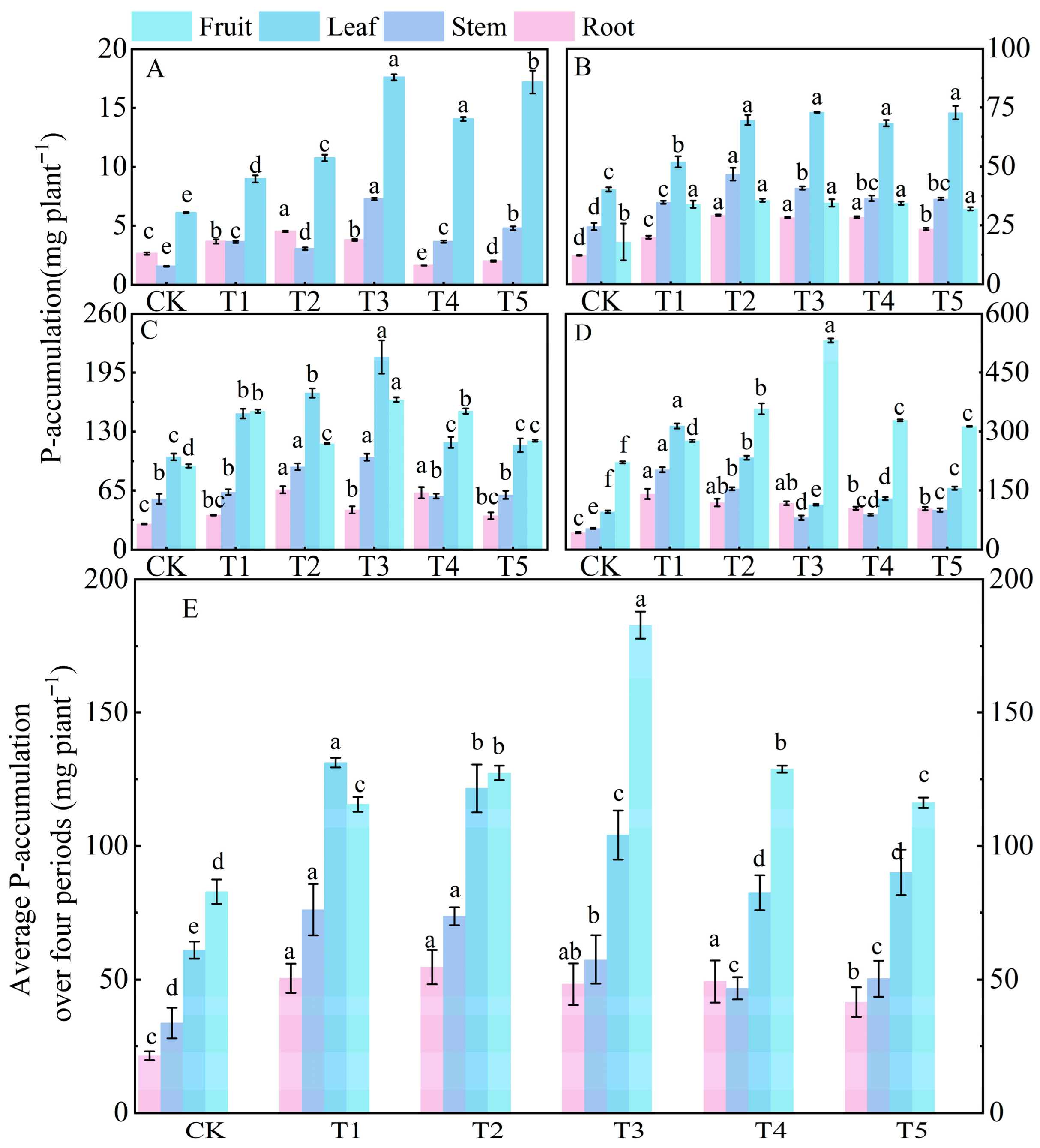
3.5.3. Phosphorus Uptake and Allocation
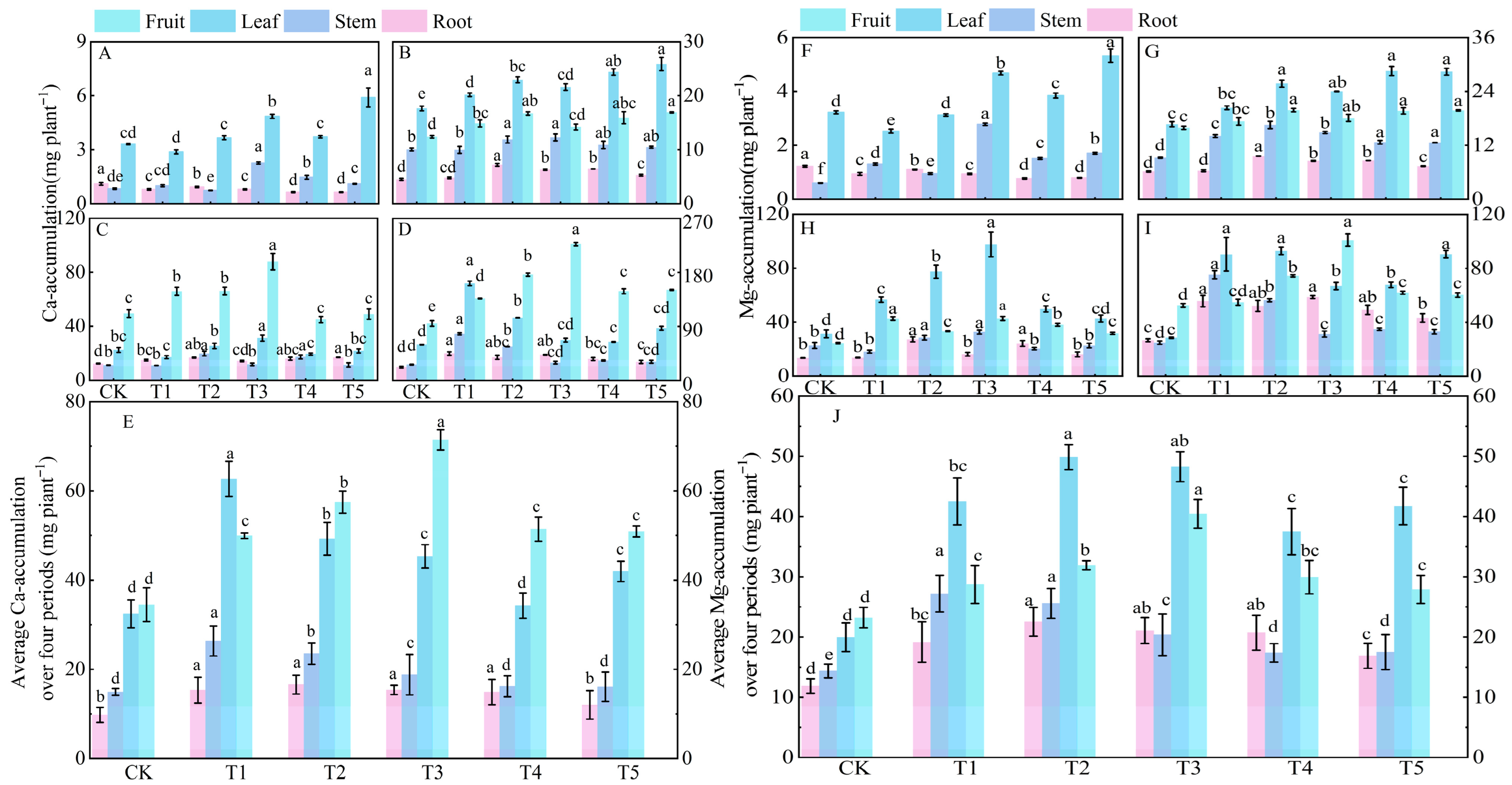
3.5.4. Calcium and Magnesium Uptake and Allocation
3.6. Effects of Different Nitrogen Forms on the Rhizosphere Microbial Community of Tomato
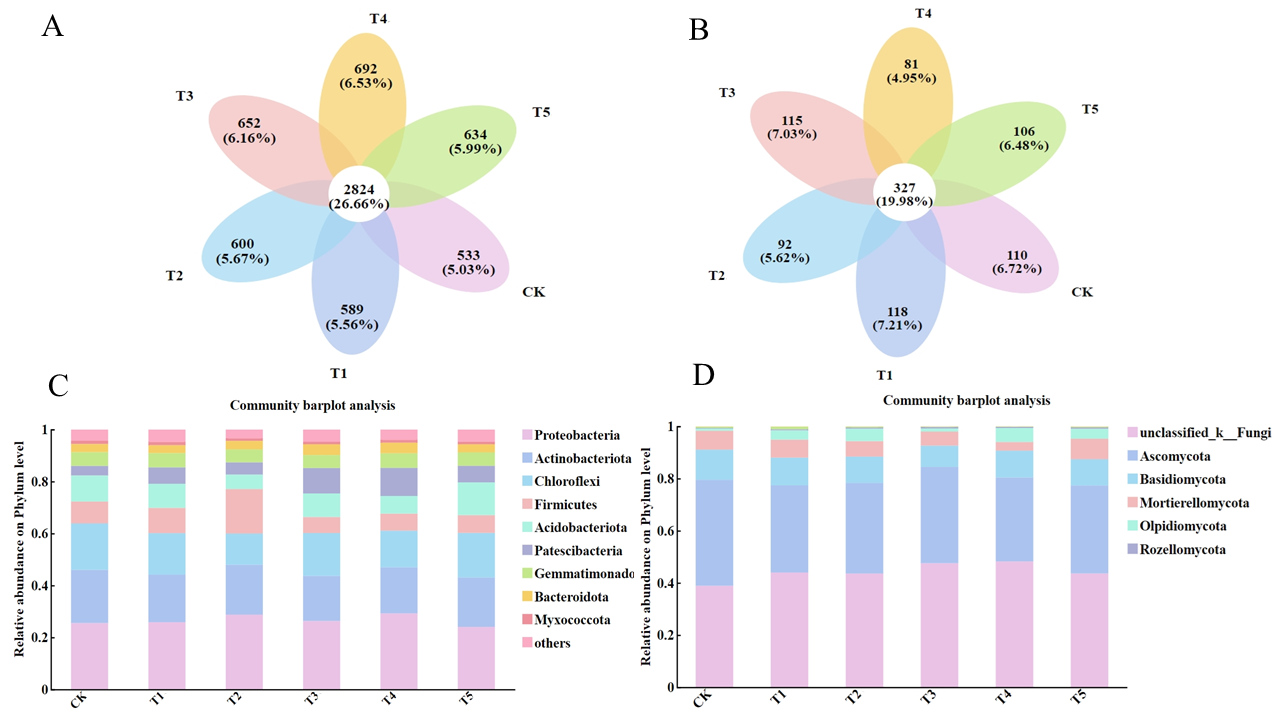
3.6.1. Analysis of Differences in Rhizosphere Microbial Communities Under Different Nitrogen Treatments
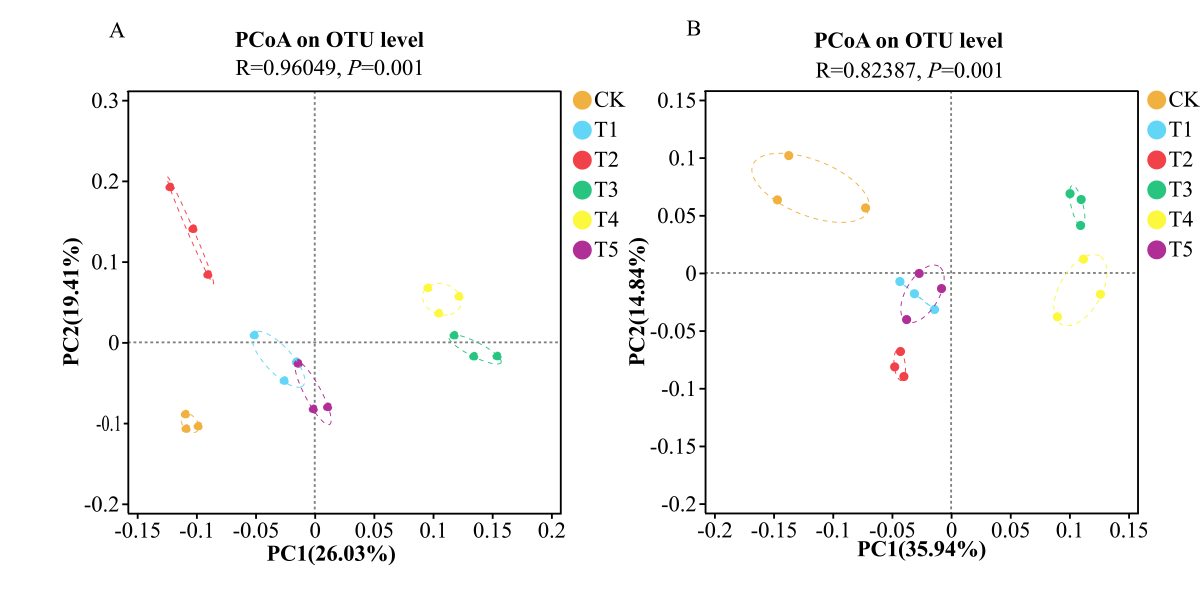
3.6.2. Beta Diversity of Rhizosphere Microbial Communities Under Different Nitrogen Treatments
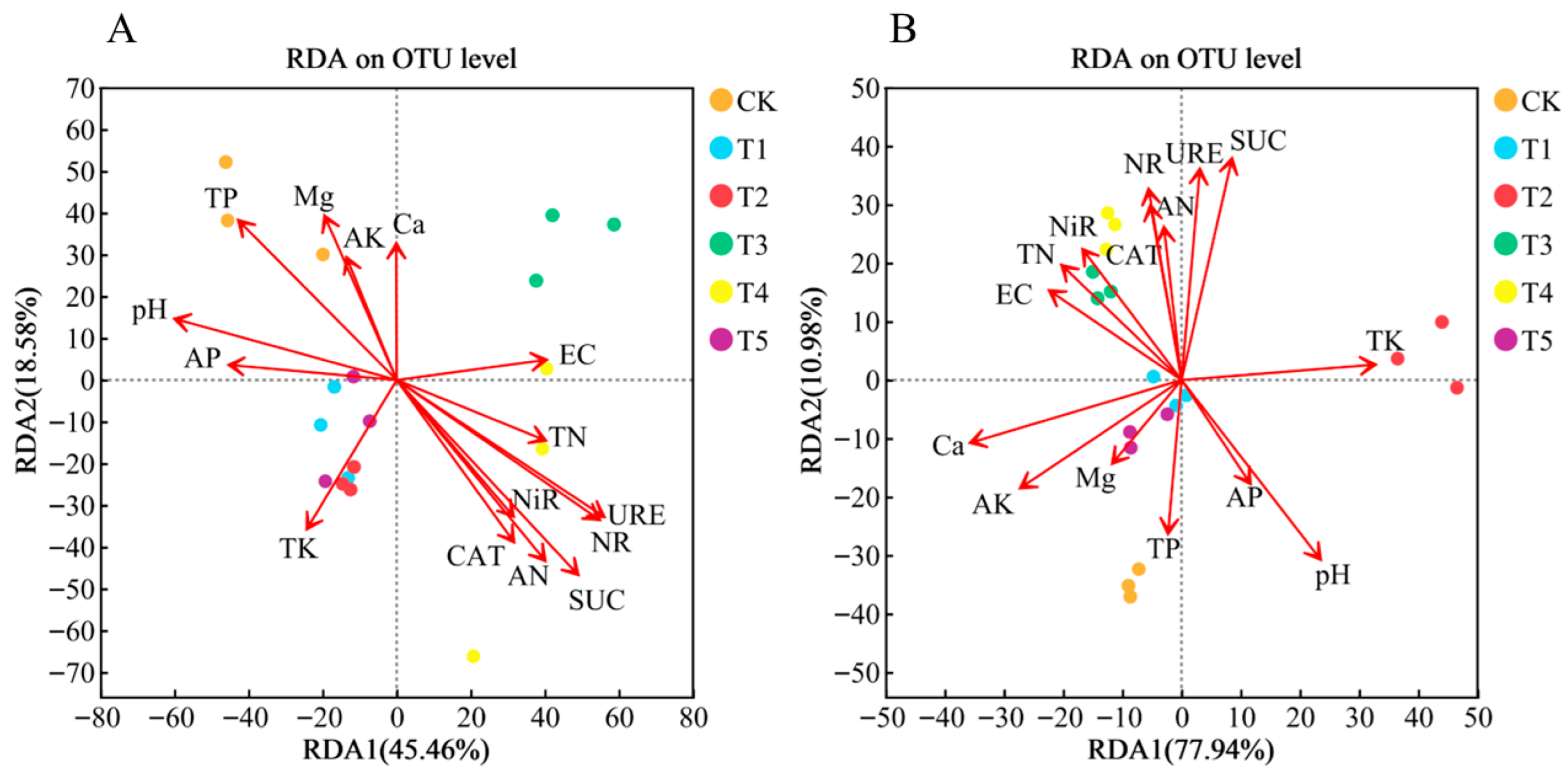
3.6.3. Correlation Analysis Between Substrate Microbial Communities and Substrate Environmental Factors Under Different Nitrogen Treatments
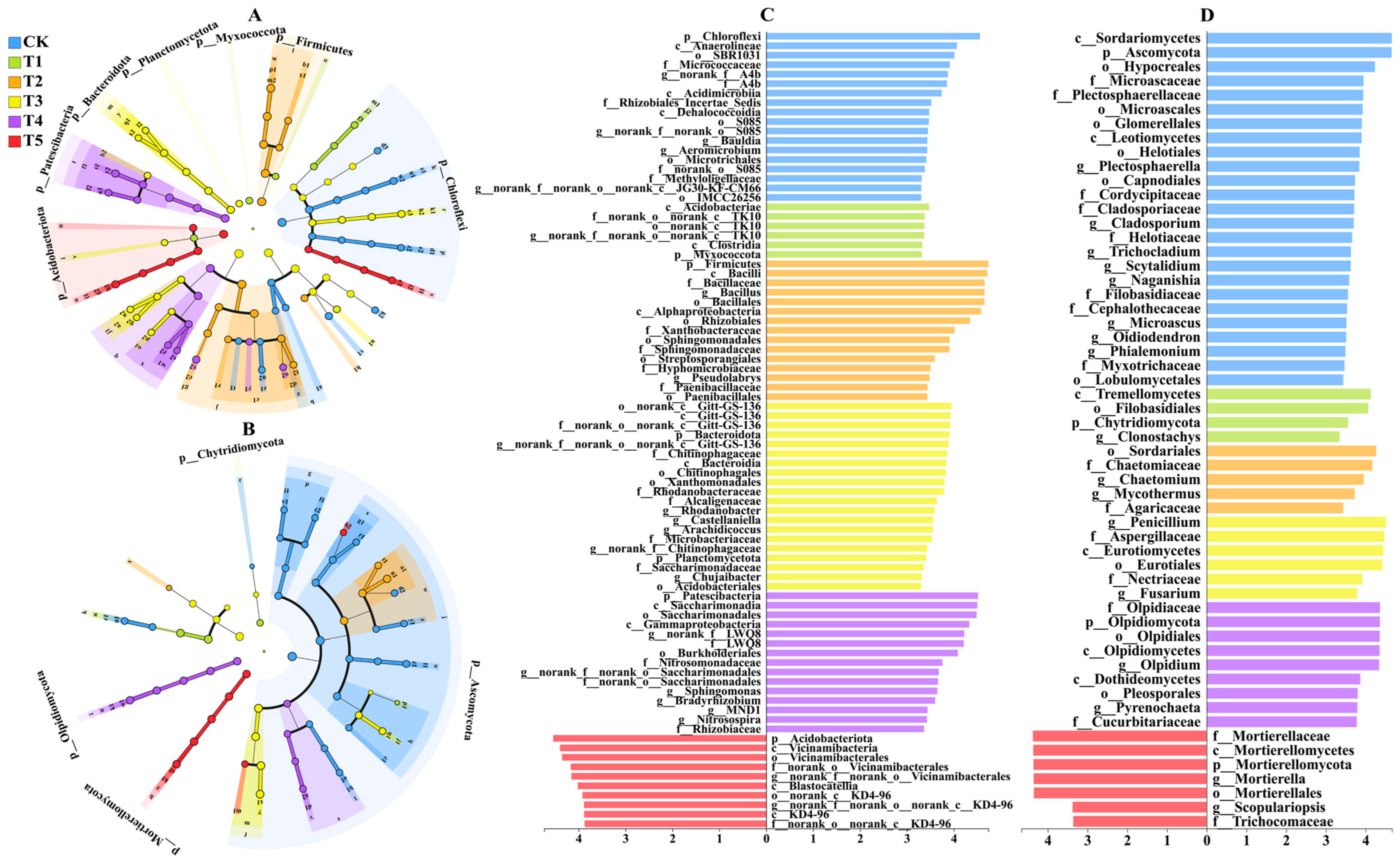
3.6.4. Lefse Analysis of Differences in Microbial Taxa Under Different Nitrogen Treatments
4. Discussion
5. Conclusions
Author Contributions
Funding
Institutional Review Board Statement
Informed Consent Statement
Data Availability Statement
Conflicts of Interest
Abbreviations
| AK | available potassium |
| AP | available phosphatase |
| AN | available nitrogen |
| URE | urease |
| NiR | nitrite reductase |
| SUC | sucrase |
| OTU | operational taxonomic unit |
| RDA | redundancy analysis |
| LEfSe | linear discriminant analysis effect size |
| TK | total potassium |
| TP | total phosphorus |
| TN | available nitrogen |
| NR | nitrate reductase |
| CAT | catalase |
| EC | electrical conductivity |
| PCoA | principal coordinate analysis |
| LDA | linear discriminant analysis |
References
- Toor, R.K.; Savage, G.P.; Heeb, A. Influence of different types of fertilisers on the major antioxidant components of tomatoes. J. Food Compos. Anal. 2006, 19, 20–27. [Google Scholar] [CrossRef] [Scilit]
- FAO (Food and Agriculture Organization of the United Nations). Tomato Production and Area Statistics. 2022. Available online: https://www.fao.org/faostat/en/#data/QCL (accessed on 10 October 2025).
- Hernández Meseguer, D. Caracterización de Variedades Tradicionales de Tomate (Solanum lycopersicum) Bajo Diferentes Insumos y Ambientes. 2024. Available online: https://riunet.upv.es/handle/10251/209964 (accessed on 10 October 2025).
- Qu, Z.; Qi, X.; Shi, R.; Zhao, Y.; Hu, Z.; Chen, Q.; Li, C. Reduced N fertilizer application with optimal blend of controlled-release urea and urea improves tomato yield and quality in greenhouse production system. J. Soil Sci. Plant Nutr. 2020, 20, 1741–1750. [Google Scholar] [CrossRef] [Scilit]
- Cui, H.; Luo, Y.; Li, C.; Chang, Y.; Jin, M.; Li, Y.; Wang, Z. Effects of nitrogen forms on nitrogen utilization, yield, and quality of two wheat varieties with different gluten characteristics. Eur. J. Agron. 2023, 149, 126919. [Google Scholar] [CrossRef] [Scilit]
- Keshavan, G.; Kavino, M.; Ponnuswami, V. Influence of different nitrogen sources and levels on yield and quality of banana (Musa spp.). Arch. Agron. Soil Sci. 2011, 57, 305–315. [Google Scholar] [CrossRef] [Scilit]
- Stamatiadis, S.; Doran, J.W.; Kettler, T. Field and laboratory evaluation of soil quality changes resulting from injection of liquid sewage sludge. Appl. Soil Ecol. 1999, 12, 263–272. [Google Scholar] [CrossRef] [Scilit]
- Su, R.; Wu, J.; Hu, J.; Ma, L.; Ahmed, S.; Zhang, Y.; Wei, W. Minimalizing non-point source pollution using a cooperative ion-selective electrode system for estimating nitrate nitrogen in soil. Front. Plant Sci. 2022, 12, 810214. [Google Scholar] [CrossRef] [Scilit]
- Chen, Z.; Wang, Q.; Zhao, J.; Chen, Y.; Wang, H.; Ma, J.; Bao, L. Restricted nitrous oxide emissions by ammonia oxidizers in two agricultural soils following excessive urea fertilization. J. Soils Sediments 2020, 20, 1502–1512. [Google Scholar] [CrossRef] [Scilit]
- Wang, Y.; Wang, Y.M.; Lu, Y.T.; Qiu, Q.L.; Fan, D.M.; Wang, X.C.; Zheng, X.Q. Influence of different nitrogen sources on carbon and nitrogen metabolism and gene expression in tea plants (Camellia sinensis L.). Plant Physiol. Biochem. 2021, 167, 561–566. [Google Scholar] [CrossRef] [Scilit]
- Chen, J.; Li, J.; Li, W.; Li, P.; Zhu, R.; Zhong, Y.; Li, T. The optimal ammonium-nitrate ratio for various crops: A Meta-analysis. Field Crops Res. 2024, 307, 109240. [Google Scholar] [CrossRef] [Scilit]
- Liu, G.; Du, Q.; Li, J. Interactive effects of nitrate-ammonium ratios and temperatures on growth, photosynthesis, and nitrogen metabolism of tomato seedlings. Sci. Hortic. 2017, 214, 41–50. [Google Scholar] [CrossRef] [Scilit]
- Zhang, C.; Zhang, X.Y.; Zou, H.T.; Kou, L.; Yang, Y.; Wen, X.F.; Sun, X.M. Contrasting effects of ammonium and nitrate additions on the biomass of soil microbial communities and enzyme activities in subtropical China. Biogeosciences 2017, 14, 4815–4827. [Google Scholar] [CrossRef] [Scilit]
- Zhang, J.; Wang, J.; Müller, C.; Cai, Z. Ecological and practical significances of crop species preferential N uptake matching with soil N dynamics. Soil Biol. Biochem. 2016, 103, 63–70. [Google Scholar] [CrossRef] [Scilit]
- Zhou, W.; Wang, Q.; Chen, S.; Chen, F.; Lv, H.; Li, J.; Liang, B. Nitrate leaching is the main driving factor of soil calcium and magnesium leaching loss in intensive plastic-shed vegetable production systems. Agric. Water Manag. 2024, 293, 108708. [Google Scholar] [CrossRef] [Scilit]
- Meng, F.; Zhang, R.; Zhang, Y.; Li, W.; Zhang, Y.; Zhang, M.; Yang, H. Improving maize carbon and nitrogen metabolic pathways and yield with nitrogen application rate and nitrogen forms. PeerJ 2024, 12, e16548. [Google Scholar] [CrossRef] [Scilit]
- Ju, Y.; Jia, Y.; Cheng, B.; Wang, D.; Gu, D.; Jing, W.; Li, G. NRT1.1B mediates rice plant growth and soil microbial diversity under different nitrogen conditions. AMB Express 2024, 14, 39. [Google Scholar] [CrossRef] [Scilit]
- Wei, Z.; Gu, Y.; Friman, V.P.; Kowalchuk, G.A.; Xu, Y.; Shen, Q.; Jousset, A. Initial soil microbiome composition and functioning predetermine future plant health. Sci. Adv. 2019, 5, eaaw0759. [Google Scholar] [CrossRef] [Scilit] [PubMed]
- Adetunji, A.T.; Lewu, F.B.; Mulidzi, R.; Ncube, B. The biological activities of β-glucosidase, phosphatase and urease as soil quality indicators: A review. J. Soil Sci. Plant Nutr. 2017, 17, 794–807. [Google Scholar] [CrossRef] [Scilit]
- Huang, X.; Chen, J.; Li, S.; Su, J. Selective logging effects on plant functional traits depend on soil enzyme activity and nutrient cycling in a Pinus yunnanensis forest. For. Ecol. Manag. 2023, 545, 121284. [Google Scholar] [CrossRef] [Scilit]
- Wang, W.L.; Du, J.B.; Xu, F.L.; Zhang, X.H. Effect of fertilization levels on soil microorganism amount and soil enzyme activities. Zhongguo Zhong Yao Za Zhi 2013, 38, 3851–3856. [Google Scholar]
- Cheng, S.; He, S.; Fang, H.; Xia, J.; Tian, J.; Yu, G. Contrasting effects of NH4+ and NO3− amendments on amount and chemical characteristics of different density organic matter fractions in a boreal forest soil. Geoderma 2017, 293, 1–9. [Google Scholar] [CrossRef] [Scilit]
- Sun, J.; Jin, L.; Li, R.; Meng, X.; Jin, N.; Wang, S.; Yu, J. Effects of different forms and proportions of nitrogen on the growth, photosynthetic characteristics, and carbon and nitrogen metabolism in tomato. Plants 2023, 12, 4175. [Google Scholar] [CrossRef] [Scilit]
- Jones, J.B., Jr. Tomato Plant Culture: In the Field, Greenhouse, and Home Garden, 2nd ed.; CRC Press: Boca Raton, FL, USA, 2007. [Google Scholar] [CrossRef] [Scilit]
- Watson, M.E.; Galliher, T.L. Comparison of Dumas and Kjeldahl methods with automatic analyzers on agricultural samples under routine rapid analysis conditions. Commun. Soil Sci. Plant Anal. 2001, 32, 2007–2019. [Google Scholar] [CrossRef] [Scilit]
- Konieczynski, P.; Wesolowski, M. Total phosphorus and its extractable form in plant drugs. Interrelation with selected micro-and macroelements. Food Chem. 2007, 103, 210–216. [Google Scholar] [CrossRef] [Scilit]
- Zhang, S.; Chen, T.; Chen, Y.; Li, S.; Wang, W.; Zhao, Y.; Zhu, C. A comparative analysis of bacterial and fungal communities in coastal and inland pecan plantations. Microorganisms 2024, 12, 1313. [Google Scholar] [CrossRef] [Scilit]
- Sparks, D.L. (Ed.) Methods of Soil Analysis. Part 3: Chemical Methods; Soil Science Society of America: Madison, WI, USA, 1996. [Google Scholar] [CrossRef] [Scilit]
- Mu, W.; Han, N.; Qu, Z.; Zheng, M.; Shan, Y.; Guo, X.; Mu, Y. ECWS: Soil salinity measurement method based on electrical conductivity and moisture content. Agronomy 2024, 14, 1345. [Google Scholar] [CrossRef] [Scilit]
- Cassman, K.G. Ecological intensification of cereal production systems: Yield potential, soil quality, and precision agriculture. Proc. Natl. Acad. Sci. USA 1999, 96, 5952–5959. [Google Scholar] [CrossRef] [Scilit]
- Cassman, K.G.; Dobermann, A. Nitrogen and the future of agriculture: 20 years on: This article belongs to Ambio’s 50th Anniversary Collection. Theme: Solutions-oriented research. Ambio 2022, 51, 17–24. [Google Scholar] [CrossRef] [Scilit]
- Pandey, A.; Devi, L.L.; Gupta, S.; Prasad, P.; Agrwal, K.; Asif, M.H.; Singh, A.P. Jasmonate signaling modulates root growth by suppressing iron accumulation during ammonium stress. Plant Physiol. 2024, 196, 2213–2231. [Google Scholar] [CrossRef] [Scilit]
- Wang, T.; Zhang, J.; Dhital, Y.; Ma, K.; Wen, Y.; Wang, Z. Increasing dissolved oxygen concentration of irrigation water is beneficial to nitrogen uptake of cotton under mulched drip irrigation. Field Crops Res. 2024, 316, 109494. [Google Scholar] [CrossRef] [Scilit]
- Zhou, H.; Zhang, M.; Liu, Z.; Zheng, W.; Zhu, Q.; Wan, Y. Maize yield and economic return with controlled-release urea. Nutr. Cycl. Agroecosyst. 2019, 115, 427–440. [Google Scholar] [CrossRef] [Scilit]
- Liu, Z.W.; Yang, X.Y.; Hu, F.J.; Xu, C.Y.; Zhang, J.; Lin, Y.Q. Adsorption properties of rare earth soils on Ammonium Nitrogen. IOP Conf. Ser. Earth Environ. Sci. 2018, 191, 012096. [Google Scholar] [CrossRef] [Scilit]
- Ma, Q.; Liu, W.; Zhai, G.; Zhu, N.; Gu, Y.; Liu, H.; Zhu, X. Effect of slow-release nitrogen fertilizer on the vertical distribution of root and soil nutrients in the middle and later stage of wheat. Plant Soil 2025, 514, 1285–1300. [Google Scholar] [CrossRef] [Scilit]
- Hinsinger, P.; Plassard, C.; Tang, C.; Jaillard, B. Origins of root-mediated pH changes in the rhizosphere and their responses to environmental constraints: A review. Plant Soil 2003, 248, 43–59. [Google Scholar] [CrossRef] [Scilit]
- Bar-Yosef, B.; Mattson, N.S.; Lieth, H.J. Effects of NH4:NO3:urea ratio on cut roses yield, leaf nutrients content and proton efflux by roots in closed hydroponic system. Sci. Hortic. 2009, 122, 610–619. [Google Scholar] [CrossRef] [Scilit]
- Cai, A.; Tang, S.; Waqas, M.A.; Wang, B.; Tian, D.; Zhang, Y.; Ren, T. Magnitude, direction, and drivers of rhizosphere effect on soil nitrogen and phosphorus in global agroecosystem. Int. Soil Water Conserv. Res. 2023, 11, 482–493. [Google Scholar] [CrossRef] [Scilit]
- Fatima, F.; Pathak, N.; Srivastava, D.; Verma, S.R. Molecular detection and exploration of diversity among fungal consortium involved in phosphate solubilization. Geomicrobiol. J. 2021, 38, 29–35. [Google Scholar] [CrossRef] [Scilit]
- Liu, D.; Tian, R.; Liu, X.; Li, H. Polarization induced covalent/hydrogen bonding adsorption of NH4+ and K+ in soils: Comparison study on permanently and variably charged soils. J. Soils Sediments 2024, 24, 722–731. [Google Scholar] [CrossRef] [Scilit]
- Al-Khalidi, R.J.; Al-Taweel, L.S. The Effect of Humic Acid and Urea on the Activity of the Urease Enzyme in Soil Planted with Daughter Potatoes. IOP Conf. Ser. Earth Environ. Sci. 2024, 1371, 082001. [Google Scholar] [CrossRef] [Scilit]
- Fisher, K.A.; Yarwood, S.A.; James, B.R. Soil urease activity and bacterial ureC gene copy numbers: Effect of pH. Geoderma 2017, 285, 1–8. [Google Scholar] [CrossRef] [Scilit]
- Tong, Y.S.; Zhang, C.P.; Dong, Q.M.; Yang, Z.Z.; Zhang, X.F.; Huo, L.A.; Yang, X.X. Effects of different forms of nitrogen addition on soil physical and chemical properties and microbial community structure of perennial alpine cultivated grassland. Huan Jing Ke Xue 2024, 45, 3595–3604. [Google Scholar] [CrossRef] [Scilit]
- Leng, X.; Wang, H.; Cao, L.; Chang, R.; Zhang, S.; Xu, C.; Liu, G. Overexpressing GLUTAMINE SYNTHETASE 1;2 maintains carbon and nitrogen balance under high-ammonium conditions and results in increased tolerance to ammonium toxicity in hybrid poplar. J. Exp. Bot. 2024, 75, 4052–4073. [Google Scholar] [CrossRef] [Scilit] [PubMed]
- Fang, L.; Wang, M.; Chen, X.; Zhao, J.; Wang, J.; Liu, J. Analysis of the AMT gene family in chili pepper and the effects of arbuscular mycorrhizal colonization on the expression patterns of CaAMT2 genes. BMC Genom. 2023, 24, 158. [Google Scholar] [CrossRef] [Scilit]
- Yin, H.; Xu, M.; Huang, Q.; Xie, L.; Yang, F.; Zhang, C.; Cao, H. Response of Soil Bacteria to Short-Term Nitrogen Addition in Nutrient-Poor Areas. Microorganisms 2025, 13, 56. [Google Scholar] [CrossRef] [Scilit]
- Fierer, N.; Lauber, C.L.; Ramirez, K.S.; Zaneveld, J.; Bradford, M.A.; Knight, R. Comparative metagenomic, phylogenetic and physiological analyses of soil microbial communities across nitrogen gradients. ISME J. 2012, 6, 1007–1017. [Google Scholar] [CrossRef] [Scilit] [PubMed]
- Hassine, M.; Aydi-Ben-Abdallah, R.; Jabnoun-Khireddine, H.; Daami-Remadi, M. Soil-borne and compost-borne Penicillium sp. and Gliocladium spp. as potential microbial biocontrol agents for the suppression of anthracnose-induced decay on tomato fruits. Egypt. J. Biol. Pest Control 2022, 32, 20. [Google Scholar] [CrossRef] [Scilit]






| Substrate | AN (mg kg−1) | AK (g kg−1) | AP (g kg−1) | TN (g kg−1) | TK (g kg−1) | TP (g kg−1) | EC (mS cm−1) | Bulk Density (g cm−3) | pH |
|---|---|---|---|---|---|---|---|---|---|
| substrate:peat:vermiculite = 2:1:1 | 429.77 | 0.36 | 0.90 | 1.96 | 0.90 | 0.64 | 1.56 | 0.54 | 6.49 |
| Treatments | Nitrogen Form and Ratio | Elements Concentration (mmol L−1) | |||||
|---|---|---|---|---|---|---|---|
| NH4+-N | CO(NH2)2 | P | K | Ca | Mg | ||
| CK | - | 0 | 0 | 1 | 6 | 5 | 2 |
| T1 | NH4+-N (AN) | 15 | 0 | 1 | 6 | 5 | 2 |
| T2 | Urea (UN) | 0 | 15 | 1 | 6 | 5 | 2 |
| T3 | 25%AN:75%UN | 3.75 | 11.25 | 1 | 6 | 5 | 2 |
| T4 | 50%AN:50%UN | 7.5 | 7.5 | 1 | 6 | 5 | 2 |
| T5 | 75%AN:25%UN | 11.25 | 3.75 | 1 | 6 | 5 | 2 |
| Treatments | Nitrogen Fertilizer Uptake Rate (%) | Partial Factor Productivity from Applied N (kg kg−1) | Agronomic Efficiency of Applied N (kg kg−1) |
|---|---|---|---|
| T1 | 15.44 ± 0.21 b | 288.64 ± 1.95 c | 192.15 ± 1.95 c |
| T2 | 14.47 ± 0.34 c | 450.49 ± 2.36 b | 354.00 ± 2.36 b |
| T3 | 18.07 ± 0.34 a | 473.49 ± 11.98 a | 377.00 ± 11.98 a |
| T4 | 13.10 ± 0.18 d | 235.34 ± 8.43 d | 138.85 ± 8.43 d |
| T5 | 15.74 ± 0.16 b | 166.90 ± 6.10 e | 70.41 ± 6.10 e |
| Treatments | TN (g kg−1) | TP (g kg−1) | TK (g kg−1) | Ca (g kg−1) | Mg (g kg−1) | AN (mg kg−1) | AP (mg kg−1) | AK (mg kg−1) | EC (mS cm−1) | pH |
|---|---|---|---|---|---|---|---|---|---|---|
| CK | 3.78 ± 0.03 d | 1.71 ± 0.09 a | 10.08 ± 0.20 b | 2.01 ± 0.06 a | 2.01 ± 0.07 a | 278.10 ± 13.45 d | 0.64 ± 0.02 ab | 3.08 ± 0.07 a | 1.07 ± 0.04 c | 6.44 ± 0.06 a |
| T1 | 5.63 ± 0.22 c | 1.55 ± 0.01 b | 11.39 ± 0.18 a | 1.90 ± 0.01 a | 1.92 ± 0.01 a | 702.77 ± 14.15 bc | 0.64 ± 0.01 a | 2.75 ± 0.08 b | 1.22 ± 0.04 b | 5.78 ± 0.12 b |
| T2 | 4.48 ± 0.20 d | 1.36 ± 0.03 c | 11.92 ± 0.19 a | 1.68 ± 0.01 b | 1.92 ± 0.004 a | 644.43 ± 27.29 c | 0.60 ± 0.01 b | 2.31 ± 0.09 c | 1.07 ± 0.05 c | 6.28 ± 0.02 a |
| T3 | 7.97 ± 0.39 b | 1.39 ± 0.03 c | 10.15 ± 0.24 b | 1.94 ± 0.02 a | 1.97 ± 0.001 a | 712.10 ± 24.36 b | 0.54 ± 0.01 c | 2.72 ± 0.09 b | 1.55 ± 0.03 a | 5.22 ± 0.10 cd |
| T4 | 7.54 ± 0.33 b | 1.25 ± 0.05 cd | 10.17 ± 0.22 b | 1.93 ± 0.01 a | 1.94 ± 0.01 a | 784.43 ± 17.19 a | 0.56 ± 0.02 c | 2.74 ± 0.13 b | 1.31 ± 0.03 b | 5.06 ± 0.03 d |
| T5 | 9.52 ± 0.17 a | 1.21 ± 0.03 d | 10.48 ± 0.27 b | 1.91 ± 0.05 a | 1.93 ± 0.001 a | 819.43 ± 18.78 a | 0.53 ± 0.01 c | 2.68 ± 0.11 b | 1.5 ± 0.03 a | 5.42 ± 0.07 c |
Disclaimer/Publisher’s Note: The statements, opinions and data contained in all publications are solely those of the individual author(s) and contributor(s) and not of MDPI and/or the editor(s). MDPI and/or the editor(s) disclaim responsibility for any injury to people or property resulting from any ideas, methods, instructions or products referred to in the content. |
© 2026 by the authors. Licensee MDPI, Basel, Switzerland. This article is an open access article distributed under the terms and conditions of the Creative Commons Attribution (CC BY) license.
Share and Cite
Jiang, S.; Sun, J.; Jin, N.; Wang, S.; Huang, S.; Li, Z.; Yu, J.; Lyu, J.; Jin, L. Effects of Combined Application of Different Nitrogen Forms on Substrate Nutrient Utilization, Root Microenvironment, and Tomato Yield. Microorganisms 2026, 14, 158. https://doi.org/10.3390/microorganisms14010158
Jiang S, Sun J, Jin N, Wang S, Huang S, Li Z, Yu J, Lyu J, Jin L. Effects of Combined Application of Different Nitrogen Forms on Substrate Nutrient Utilization, Root Microenvironment, and Tomato Yield. Microorganisms. 2026; 14(1):158. https://doi.org/10.3390/microorganisms14010158
Chicago/Turabian StyleJiang, Shuyan, Jianhong Sun, Ning Jin, Shuya Wang, Shuchao Huang, Zhaozhuang Li, Jihua Yu, Jian Lyu, and Li Jin. 2026. "Effects of Combined Application of Different Nitrogen Forms on Substrate Nutrient Utilization, Root Microenvironment, and Tomato Yield" Microorganisms 14, no. 1: 158. https://doi.org/10.3390/microorganisms14010158
APA StyleJiang, S., Sun, J., Jin, N., Wang, S., Huang, S., Li, Z., Yu, J., Lyu, J., & Jin, L. (2026). Effects of Combined Application of Different Nitrogen Forms on Substrate Nutrient Utilization, Root Microenvironment, and Tomato Yield. Microorganisms, 14(1), 158. https://doi.org/10.3390/microorganisms14010158