Review

The Oral–Gut Microbiome–Brain Axis in Cognition

by
Noorul Ain Adil
1,2,
Christabel Omo-Erigbe
1,2,
Hariom Yadav
1,2 and
Shalini Jain
1,2,*
1
USF Center for Microbiome Research, Microbiomes Institute, Tampa, FL 33612, USA
2
Department of Neurosurgery and Brain Repair, University of South Florida, Tampa, FL 33612, USA
*
Author to whom correspondence should be addressed.
Microorganisms 2025, 13(4), 814; https://doi.org/10.3390/microorganisms13040814

Submission received: 16 January 2025 / Revised: 27 March 2025 / Accepted: 28 March 2025 / Published: 3 April 2025
(This article belongs to the Special Issue Oral Microbes and Human Health)

Abstract

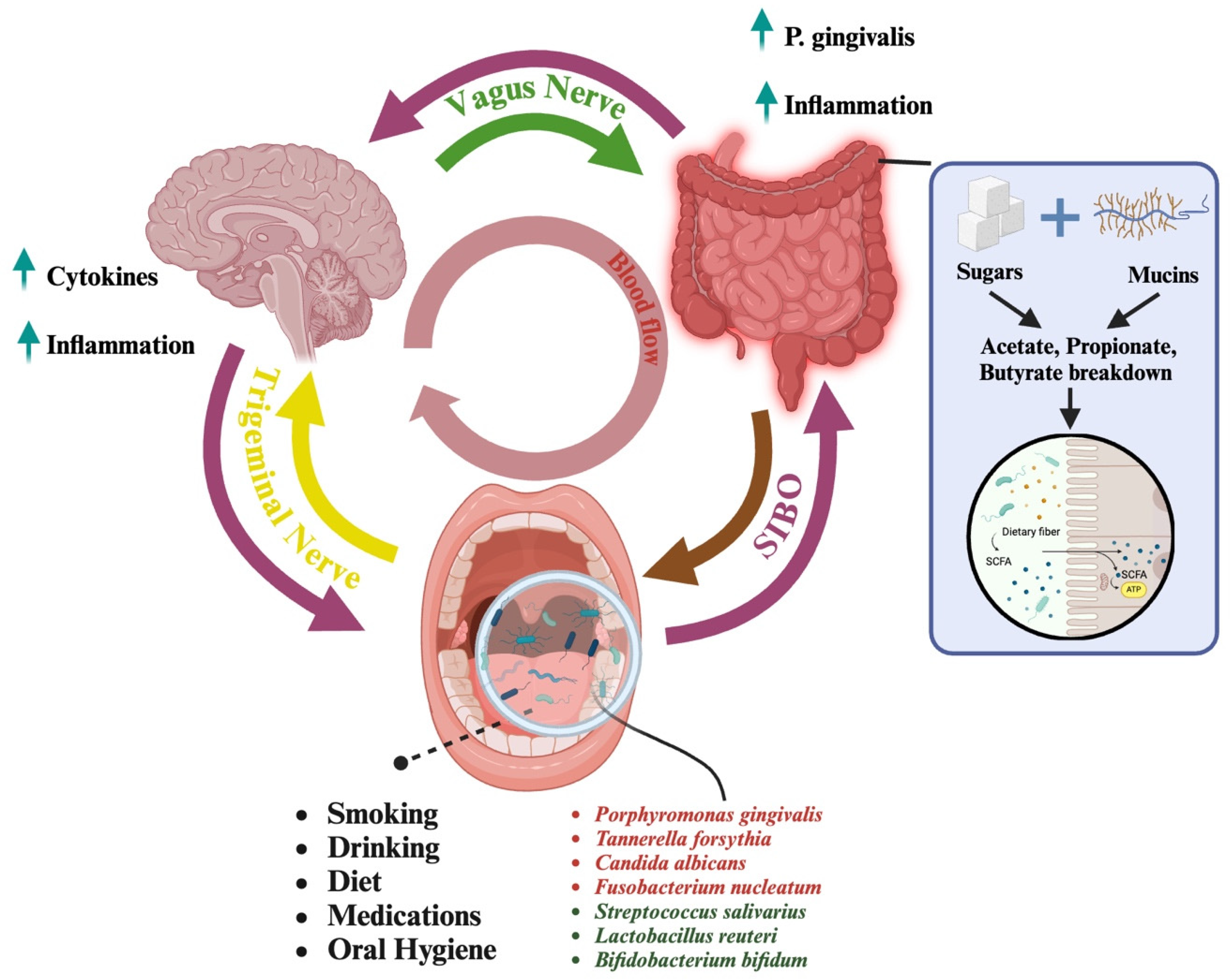
Alzheimer’s disease (AD) is a progressive neurodegenerative disorder characterized by cognitive decline and neuronal loss, affecting millions worldwide. Emerging evidence highlights the oral microbiome—a complex ecosystem of bacteria, fungi, viruses, and protozoa as a significant factor in cognitive health. Dysbiosis of the oral microbiome contributes to systemic inflammation, disrupts the blood–brain barrier, and promotes neuroinflammation, processes increasingly implicated in the pathogenesis of AD. This review examines the mechanisms linking oral microbiome dysbiosis to cognitive decline through the oral–brain and oral–gut–brain axis. These interconnected pathways enable bidirectional communication between the oral cavity, gut, and brain via neural, immune, and endocrine signaling. Oral pathogens, such as Porphyromonas gingivalis, along with virulence factors, including lipopolysaccharides (LPS) and gingipains, contribute to neuroinflammation, while metabolic byproducts, such as short-chain fatty acids (SCFAs) and peptidoglycans, further exacerbate systemic immune activation. Additionally, this review explores the influence of external factors, including diet, pH balance, medication use, smoking, alcohol consumption, and oral hygiene, on oral microbial diversity and stability, highlighting their role in shaping cognitive outcomes. The dynamic interplay between the oral and gut microbiomes reinforces the importance of microbial homeostasis in preserving systemic and neurological health. The interventions, including probiotics, prebiotics, and dietary modifications, offer promising strategies to support cognitive function and reduce the risk of neurodegenerative diseases, such as AD, by maintaining a diverse microbiome. Future longitudinal research is needed to identify the long-term impact of oral microbiome dysbiosis on cognition.
Keywords: oral microbiome; cognition; brain; inflammation; dysbiosis oral microbiome; cognition; brain; inflammation; dysbiosis