


Abstract
Pathogenic fungus Blumeria graminis forma specialis tritici (B.g. tritici) is the causal agent of the devastating wheat powdery mildew disease. Identifying the key regulators governing wheat susceptibility to the B.g. tritici pathogen is essential for developing wheat varieties with improved powdery mildew resistance. In this study, we demonstrated that the wheat chromatin remodeler TaSWI3D positively regulates wheat susceptibility to B.g. tritici. Overexpression of TaSWI3D gene attenuates wheat resistance against B.g. tritici, while silencing of TaSWI3D gene potentiates wheat powdery mildew resistance. TaSWI3D protein was found to be enriched at the promoter regions of the TaSARD1 gene encoding the salicylic acid (SA) biosynthesis activator, and silencing of TaSWI3D resulted in decreased nucleosome occupancy at the TaSARD1 promoter regions. Activated TaSARD1 transcription and increased SA accumulation were observed in the TaSWI3D-silenced wheat plants. Silencing of TaSARD1 and the SA biosynthesis gene TaICS1 resulted in attenuated SA biosynthesis and decreased powdery mildew resistance in the TaSWI3D-silenced wheat plants. These findings support that the chromatin remodeler TaSWI3D maintains epigenetic suppression of the SA biosynthesis activator gene TaSARD1 and negatively regulates SA biosynthesis, thereby positively contributing to wheat powdery mildew susceptibility.
1. Introduction
Cereal crop bread wheat (Triticum aestivum L.) provides nearly one fifth of the dietary calories consumed by humans. Global population growth drives the demand for wheat grains [1,2]. However, the fungal pathogen Blumeria graminis forma specialis tritici (B.g. tritici) causes wheat powdery mildew disease, leading to wheat yield losses of 5–50% [3,4,5]. In addition, B.g. tritici infection could affect wheat seed metabolism and development, causing reductions in the quality of grain and flour [3,4,5]. The infection of aerial pathogen B.g. tritici initiates with conidial germination on the epidermal surface of wheat [3,4,5]. After penetration into wheat epidermal cells, B.g. tritici develops the haustorium within host cells and finally forms the microcolony [3,4,5]. Breeding wheat varieties with improved resistance against B.g. tritici is one of the most effective and economic ways to control wheat powdery mildew disease [4,5]. To this end, it is vital to identify the key regulators that govern wheat susceptibility to the B.g. tritici pathogen.
By utilizing the energy of ATP hydrolysis, chromatin remodelers could alter chromatin configuration and regulate gene expression, DNA replication, and even genome stability [6,7,8]. In the crop plant rice and model plant Arabidopsis thaliana, several chromatin remodelers have been demonstrated to regulate the expression of defense-related genes and affect plant–microbe interactions. For instance, CHROMATIN REMODELING 11 (OsCHR11) controls nucleosome occupancy in defense-related genes and negatively regulates rice resistance to bacterial blight [9]. Arabidopsis switch/sucrose nonfermentable (SWI/SNF) chromatin-remodeling protein BAF60/SWP73A inhibits the intracellular immune receptor nucleotide-binding domain and leucine-rich repeat (NLRs) genes to attenuate plant defense [10]. Characterizing the function of chromatin remodelers in the regulation of compatible wheat–B.g. tritici interactions could facilitate the identification of key regulators of wheat powdery mildew susceptibility.
In this study, we characterized the wheat chromatin remodeler TaSWI3D as a positive regulator of compatible wheat–B.g. tritici interactions. Overexpression of TaSWI3D gene dampens wheat powdery mildew resistance, while silencing of TaSWI3D gene potentiates wheat powdery mildew resistance. TaSWI3D protein was found to be enriched at the promoter regions of the TaSARD1 gene encoding the salicylic acid (SA) biosynthesis activator, and silencing of TaSWI3D resulted in decreased nucleosome occupancy at the TaSARD1 promoter regions. Activated TaSARD1 transcription and increased SA accumulation were observed in the TaSWI3D-silenced wheat plants. Silencing of TaSARD1 and SA biosynthesis gene TaICS1 resulted in attenuated SA biosynthesis and decreased powdery mildew resistance in the TaSWI3D-silenced wheat plants. These findings support that the chromatin remodeler TaSWI3D maintains the epigenetic suppression of the SA biosynthesis activator gene TaSARD1 and negatively regulates SA biosynthesis, thereby positively contributing to compatible wheat–B.g. tritici interactions. This study revealed novel epigenetic regulators governing wheat SA biosynthesis and identified a new Susceptibility (S) gene for wheat resistance breeding against B.g. tritici pathogen.
2. Materials and Methods
2.1. Plant and Fungal Materials
B.g. tritici-susceptible wheat cultivar Yannong 999, employed in this study, was developed by Shandong Yantai Academy of Agricultural Sciences and was derived from a previous study [11]. The pedigree of cultivar Yannong 999 is Yanhangxuan 2/Lin 9511//Yan BLU14-15, and its released number is Shandong (2011), South region of Huang-Huai (2016), Shanxi (2018). Wheat seedlings were grown in growth chambers under a 16 h light 20 °C/8 h dark 18 °C cycle. The virulent B.g. tritici genotype isolate E09, derived from a previous study, remained on the wheat cultivar Yannong 999 seedlings [11].
2.2. Analysis of Gene Transcript Level and Transcription Rate
A reverse transcription–quantitative polymerase chain reaction (RT-qPCR) assay was conducted as previously described to analyze the gene transcript levels [11]. Expression of TaSWI3D was analyzed using primers 5′AAGCGCAAGGCGTCGGGGTC3′/5′GTTTCCTCG GCGGGCGTCT3′, whereas the primers for amplifying TaEF1, TaSARD1, TaICS1, TaPR1, and TaPR2 were derived from a previous study [11]. A nuclear run-on assay was performed to analyze the gene transcription rate. For the nuclear run-on assay, wheat cell nuclei were isolated and mixed with a reaction buffer (25 mM biotin-16-UTP and 0.75 mM of ATP, CTP, and GTP) for the transcription reaction. After RNA extraction, the nascent RNA was enriched using streptavidin magnetic beads and subjected to the RT-qPCR assay.
2.3. Barley Stripe Mosaic Virus-Induced Gene Silencing (BSMV-VIGS) Assay
For the BSMV-VIGS assay, fragments of the TaSWI3D gene were amplified using primers 5′AAGGAAGTTTAATAGTTAAGGAATCATTATGC3′/5′AACCACCACCACCGTAGGAAGTACTACATGTGCAAC3′ and cloned into the pCa-γbLIC vector to create the construct BSMV-TaSWI3D, as described by Yuan et al. [12]. The BSMV-TaSARD1 and BSMV-TaICS1 constructs were derived from previous studies [11]. The BSMV-VIGS assay was conducted as previously described [12].
2.4. Wheat Epidermal Cell Gene Overexpression Assay
For the single-cell transient gene overexpression assay, coding regions of TaSWI3D-4A, TaSWI3D-4B, and TaSWI3D-4D were amplified using primers 5′GGGGACAAGTTTGTACAAAAAAGCAGGCTTCATGGAGCCCAAGTCCCAGC3′/5′GGGGACCACTTTGTACAAGAAAGCTGGGTCTCAGCTGCTCGGCCGGGGCAT3′, 5′GGGGACAAGTTTGTACAAAAAAGCAGGCTTCATGGAGCCCAAGCCCCAGC3′/5′GGGGACCACTTTGTACAAGAAAGCTGGGTCTCAGCTGCTCGGCCGGGGCA3′, and 5′GGGGACAAGTTTGTACAAAAAAGCAGGCTTCATGGAGCCCAAGCCCCAGC3′/5′GGGGACCACTTTGTACAAGAAAGCTGGGTCTCAGCTGCTCGGCCGGGGCA3′, and PCR products were cloned into pIPKb001 to create the pIPKb001-TaSWI3D-4A (for OE-TaSWI3D-4A), pIPKb001-TaSWI3D-4B (for OE-TaSWI3D-4B), and pIPKb001-TaSWI3D-4B (for OE-TaSWI3D-4B) constructs. The single-cell transient gene overexpression assay was conducted as previously described [11].
2.5. Analysis of Wheat–B.g. tritici Interactions
B.g. tritici haustorium and microcolony formation were statistically analyzed to define wheat–B.g. tritici interactions, as previously described [11]. The B.g. tritici haustorium index (HI %) was calculated as a percentage of GUS-stained wheat epidermal cells containing B.g. tritici haustoria, whereas the B.g. tritici microcolony index (MI %) was defined as a percentage of germinated B.g. tritici conidia containing microcolony formations.
2.6. Analysis of SA Amount
The SA accumulation was analyzed by High-Performance Liquid Chromatography (HPLC), as previously described [11,13]. Ortho-anisic acid was employed as the internal standard, and the free SA amount was calculated in ng per mg fresh weight (FW), with reference to the ortho-anisic acid amount.
2.7. Chromatin Immunoprecipitation (ChIP) and Nucleosome Occupancy Micrococcal Nuclease (MNase) Assay
The ChIP assay analyzing the enrichment of the TaSWI3D-Myc protein at TaSARD1 gene promoter regions was conducted as previously described [11]. Briefly, the antibody α-Myc (Santa Cruz Biotechnology, sc-789) was employed for the immunoprecipitation. The nucleosome occupancy micrococcal nuclease (MNase) assay, analyzing the chromatin structure at TaSARD1 promoter regions, was conducted as previously described [13]. The primer sequences used for the qPCR analysis of the TaSARD1 promoter were derived from previous studies [11].
2.8. Phylogenetic Tree Reconstruction
The SWI3D proteins identified from Arabidopsis thaliana, Brassica rapa, Solanum lycopersicum, Brachypodium distachyon, Zea mays, Oryza sativa, and Triticum aestivum were aligned by Clustal W and used for the phylogenetic tree reconstruction via the Neighbor-Joining method with 2000 bootstraps.
2.9. Statistical Analysis
For the statistical analysis of the wheat gene transcript level, the transcription rate, the SA amount, protein enrichment, and nucleosome occupancy at the gene promoter region, as well as for the B.g. tritici HI % and MI %, at least three independent experiments were performed for each assay. Three technical replicates per assay were analyzed using Student’s t-test, and the value represents the mean ± standard error.
3. Results
3.1. Isolation of Wheat TaSWI3D Genes Based on Homology with Arabidopsis AtSWI3D
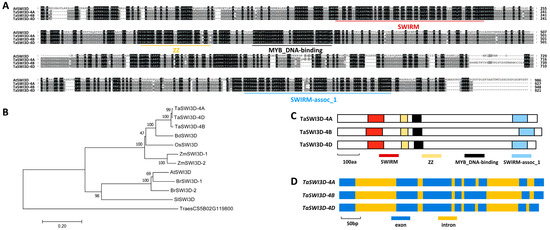
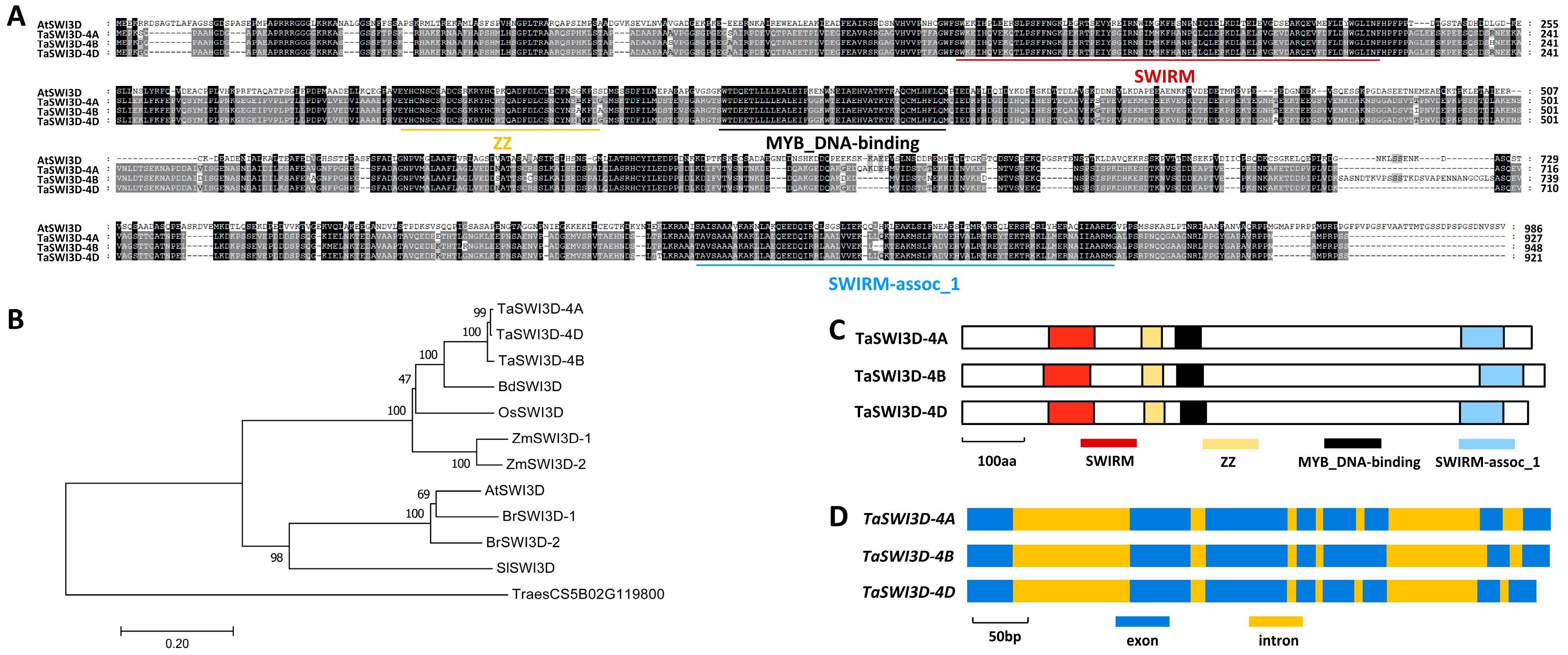
Herein, we aimed to explore the impact of the putative regulation of the SWI3D subunit of the wheat SWI/SNF chromatin-remodeling complex on compatible wheat–B.g. tritici interactions. To this end, we first employed the amino acid sequence of Arabidopsis AtSWI3D (At4g34430) as a query to search the reference genome of the hexaploid bread wheat (Triticum aestivum L., AABBDD). TaSWI3D-4A (TraesCS4A02G261600), TaSWI3D-4B (TraesCS4B02G053000), and TaSWI3D-4D (TraesCS4D02G053300), separately located on wheat chromosomes 4A, 4B, and 4D, were identified as wheat homologs of AtSWI3D. As shown in Figure 1A, these predicted TaSWI3D-4A, TaSWI3D-4B, and TaSWI3D-4D proteins shared more than 38% identity with Arabidopsis AtSWI3D. As shown in Figure 1B, phylogenetic analysis validated that wheat TaSWI3D-4A, TaSWI3D-4B, and TaSWI3D-4D proteins are close homologs of Arabidopsis AtSWI3D, mustard BrSWI3D, tomato SlSWI3D, Brachypodium BdSWI3D, maize ZmSWI3D, and rice OsSWI3D (Figure 1B). SWIRM, ZZ (Zinc finger, ZZ type), MYB_DNA-binding, and SWIRM-assoc_1 domains were identified from all TaSWI3D proteins. The coding regions of the TaSWI3D-4A and TaSWI3D-4D genomic sequences contained eight exons and seven introns, whereas the TaSWI3D-4B genomic sequences contained seven exons and six introns (Figure 1D).
Figure 1.
Homology-based identification of wheat TaSWI3D. (A) Protein sequence alignments of Arabidopsis AtSWI3D, wheat TaSWI3D-4A, TaSWI3D-4B, and TaSWI3D-4D. (B) Phylogenetic relationships of the SWI3D proteins to Arabidopsis (At), mustard (Br), tomato (Sl), Brachypodium (Bd), maize (Zm), rice (Os), and wheat (Ta). (C) Domain arrangement of wheat TaSWI3D-4A, TaSWI3D-4B, and TaSWI3D-4D proteins. (D) Genomic sequence structure of wheat TaSWI3D-4A, TaSWI3D-4B, and TaSWI3D-4D genes.
3.2. Functional Analysis of TaSWI3D Genes in the Regulation of Compatible Wheat–B.g. tritici Interactions
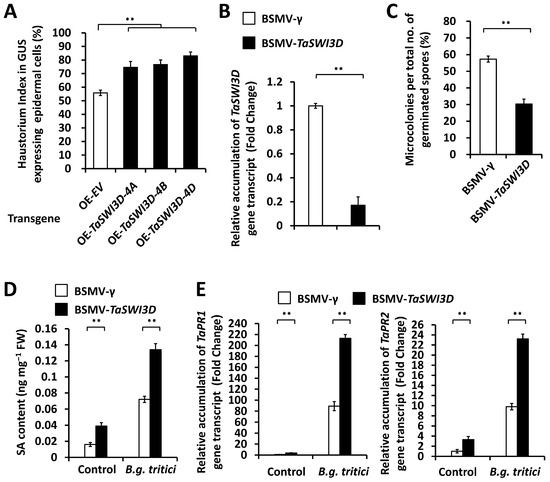
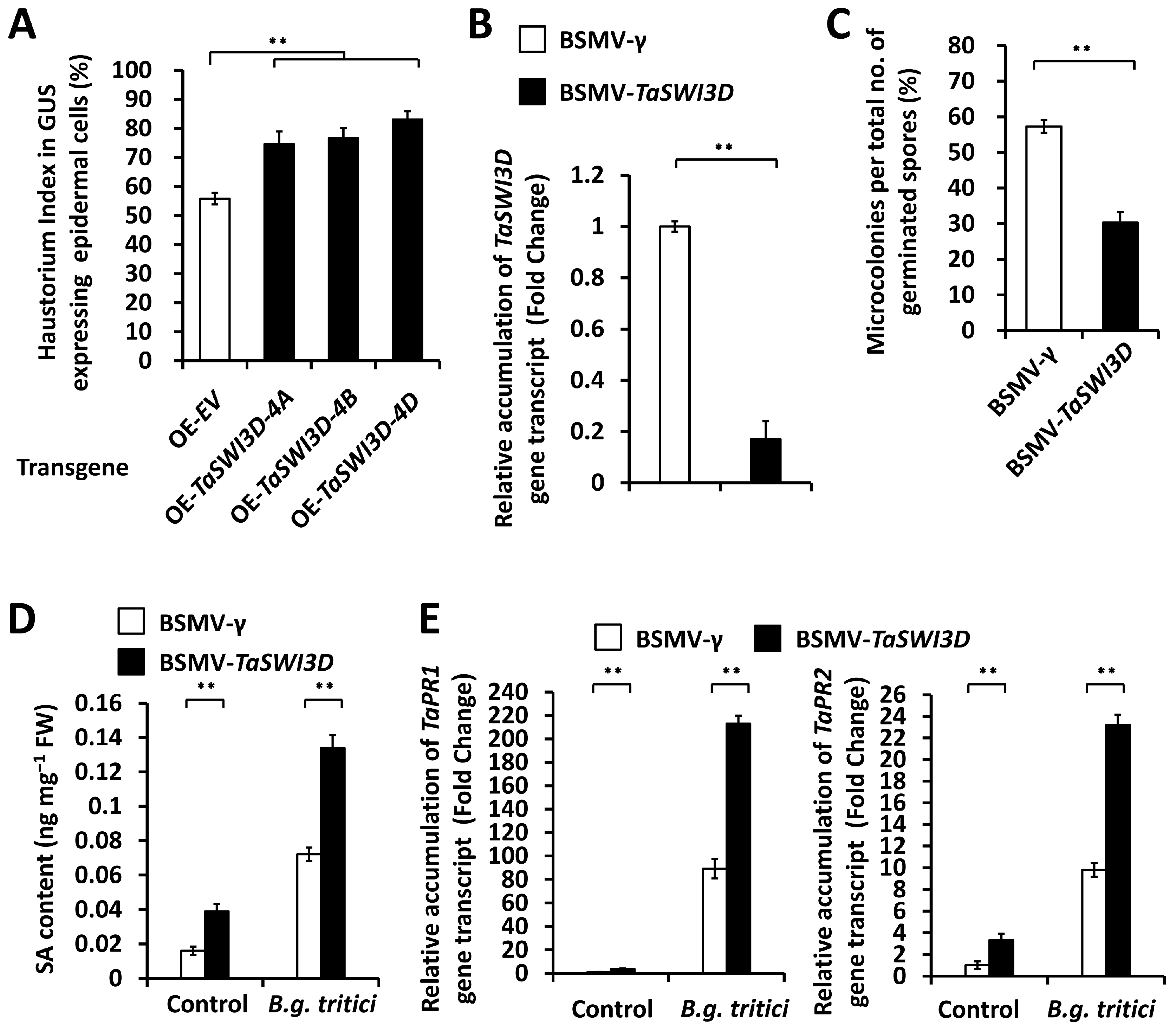
To determine the impact of the potential regulation of TaSWI3D genes on compatible wheat–B.g. tritici interactions, we first transiently overexpress these TaSWI3D-4A, TaSWI3D-4B, and TaSWI3D-4D genes in the wheat leaf epidermal cells. B.g. tritici conidia were inoculated on these bombarded wheat leaves, and the formation of B.g. tritici haustoria was statistically analyzed. The B.g. tritici haustorium index (HI %) in wheat cells overexpressing TaSWI3D-4A, TaSWI3D-4B, or TaSWI3D-4D genes was above 74.5%, while this was about 55.6% in wheat cells transfected with the empty vector (OE-EV) control (Figure 2A). Thereafter, we silenced all endogenous TaSWI3D genes in the wheat leaves by employing the BSMV-VIGS technique. As shown in Figure 2B, the expression levels of the TaSWI3D gene were significantly reduced in TaSWI3D-silenced wheat leaves (Figure 2B). After inoculation with B.g. tritici conidia, the powdery mildew microcolony formation was statistically analyzed. As shown in Figure 2C, TaSWI3D-silenced wheat leaves displayed 30.2% B.g. tritici microcolony index (MI %) values, compared with 57.3% B.g. tritici microcolony index values for the BSMV-γ control wheat leaves. These data implicate that the TaSWI3D genes positively contribute to wheat susceptibility to the B.g. tritici pathogen.
Figure 2.
Functional characterization of the TaSWI3D gene in the regulation of compatible wheat–B.g. tritici interactions. (A) Analysis of B.g. tritici haustorium index in wheat epidermal cells overexpressing TaSWI3D. (B) RT-qPCR analysis of TaSWI3D gene expression levels in the wheat leaves silencing TaSWI3D. (C) Analysis of B.g. tritici microcolony index on wheat leaves silencing TaSWI3D. (D) Measurement of SA accumulation in the wheat leaves silencing TaSWI3D. (E) RT-qPCR analysis of TaPR1 and TaPR2 gene expression levels in the wheat leaves silencing TaSWI3D. For (A–E), three technical replicates per treatment were statistically analyzed, and data are presented as the mean ± SE (Student’s t-test; ** p < 0.01); these assays were repeated in three independent biological replicates with similar results.
The accumulating evidence supports that phytohormone salicylic acid (SA) plays important roles in wheat powdery mildew resistance [11,13,14,15]. To analyze the potential impact of the regulation of TaSWI3D genes on SA accumulation, we performed High-Performance Liquid Chromatography (HPLC) to analyze the SA accumulation. As shown in Figure 2D, TaSWI3D-silenced wheat leaves displayed significantly increased SA accumulation levels compared with BSMV-γ control wheat leaves, suggesting that TaSWI3D negatively regulates SA accumulation in bread wheat. Consistent with this, the expression levels of SA signaling marker genes TaPR1 and TaPR2 were significantly increased in the TaSWI3D-silenced wheat leaves compared with the BSMV-γ control wheat leaves (Figure 2B). These results suggest that the chromatin remodeler TaSWI3D negatively regulates SA biosynthesis and positively regulates wheat powdery mildew susceptibility.
3.3. Regulation of SA Biosynthesis Activator Gene TaSARD1 by TaSWI3D
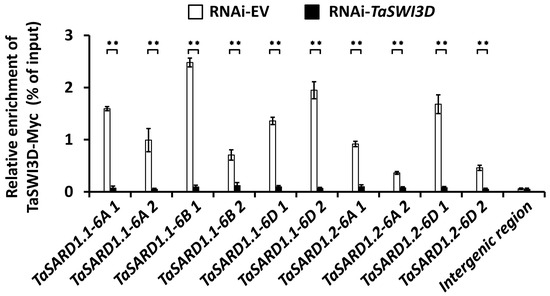
The SA biosynthesis activator gene TaSARD1 was demonstrated to play a key role in wheat powdery mildew resistance, and TaSARD1 gene transcription is tightly regulated at the chromatin level [11,13]. We aimed to determine whether the chromatin remodeler TaSWI3D could be enriched at the TaSARD1 promoter regions. To examine this hypothesis, we transfected the wheat protoplast with TaSWI3D-Myc constructs and performed a ChIP assay to characterize the distribution of TaSWI3D-Myc at the TaSARD1 promoter regions (Figure 3). TaSARD1 promoter regions, previously demonstrated to be regulated by epigenetic events like histone acetylation and chromatin assembly, were chosen for the ChIP analysis. As shown in Figure 3, these TaSARD1 promoter regions were found to be enriched in DNA samples immuno-precipitated with TaSWI3D-Myc proteins, indicating that the chromatin remodeler TaSWI3D was enriched at the promoter regions of the TaSARD1 genes.
Figure 3.
Analysis of TaSWI3D enrichment at TaSARD1 promoter regions. ChIP-qPCR analysis of TaSWI3D-Myc enrichment at TaSARD1 promoter regions in wheat cells. Three technical replicates per treatment were statistically analyzed, and data are presented as the mean ± SE (Student’s t-test; ** p < 0.01); these assays were repeated in three independent biological replicates with similar results.
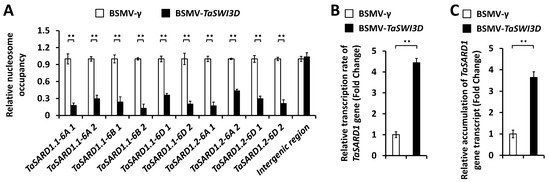
To examine whether TaSWI3D affects the chromatin structure at the TaSARD1 promoter regions, we analyzed the nucleosome occupancy at the promoter regions of the TaSARD1 by employing the nucleosome occupancy micrococcal nuclease (MNase) assay. As shown in Figure 4A, silencing of the TaSWI3D gene reduced nucleosome occupancy at the TaSARD1 promoter regions. Nuclear run-on and qRT-PCR assays demonstrated that the transcription rate and transcript accumulation of the TaSARD1 gene were significantly enhanced in the TaSWI3D-silenced wheat leaves compared with that of the BSMV-γ control wheat leaves (Figure 4B,C). These results suggest that the chromatin remodeler TaSWI3D negatively regulates TaSARD1 gene transcription, probably via maintaining a repressive chromatin state at the TaSARD1 gene.
Figure 4.
Characterization of nucleosomal occupancy and gene transcription at TaSARD1 loci in TaSWI3D-silenced wheat leaves. (A) MNase analysis of nucleosome occupancy at TaSARD1 promoter regions in the wheat leaves silencing TaSWI3D. The nucleosome occupancy levels in wheat leaves infected with the BSMV-γ empty vector (negative control) were set to 1.0. Transcription rates (B) and expression levels (C) of TaSARD1 gene in the wheat leaves silencing TaSWI3D were measured by nuclear run-on and qRT-PCR assays, respectively. For (A–C), three technical replicates per treatment were statistically analyzed, and data are presented as the mean ± SE (Student’s t-test; ** p < 0.01); these assays were repeated in three independent biological replicates with similar results.
3.4. Functional Analysis of TaSARD1 and TaICS1 Genes in TaSWI3D-Governed Wheat–B.g. tritici Interactions
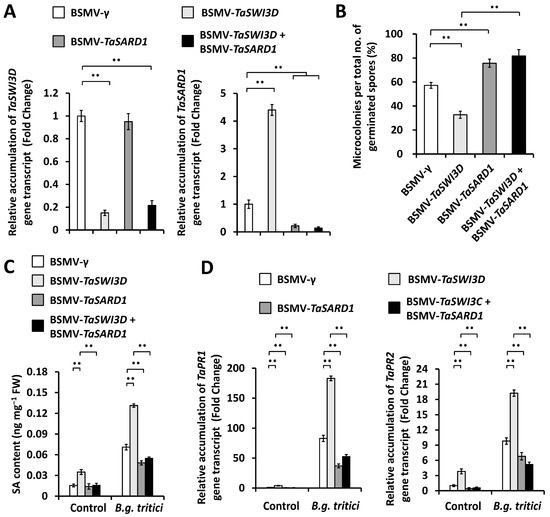
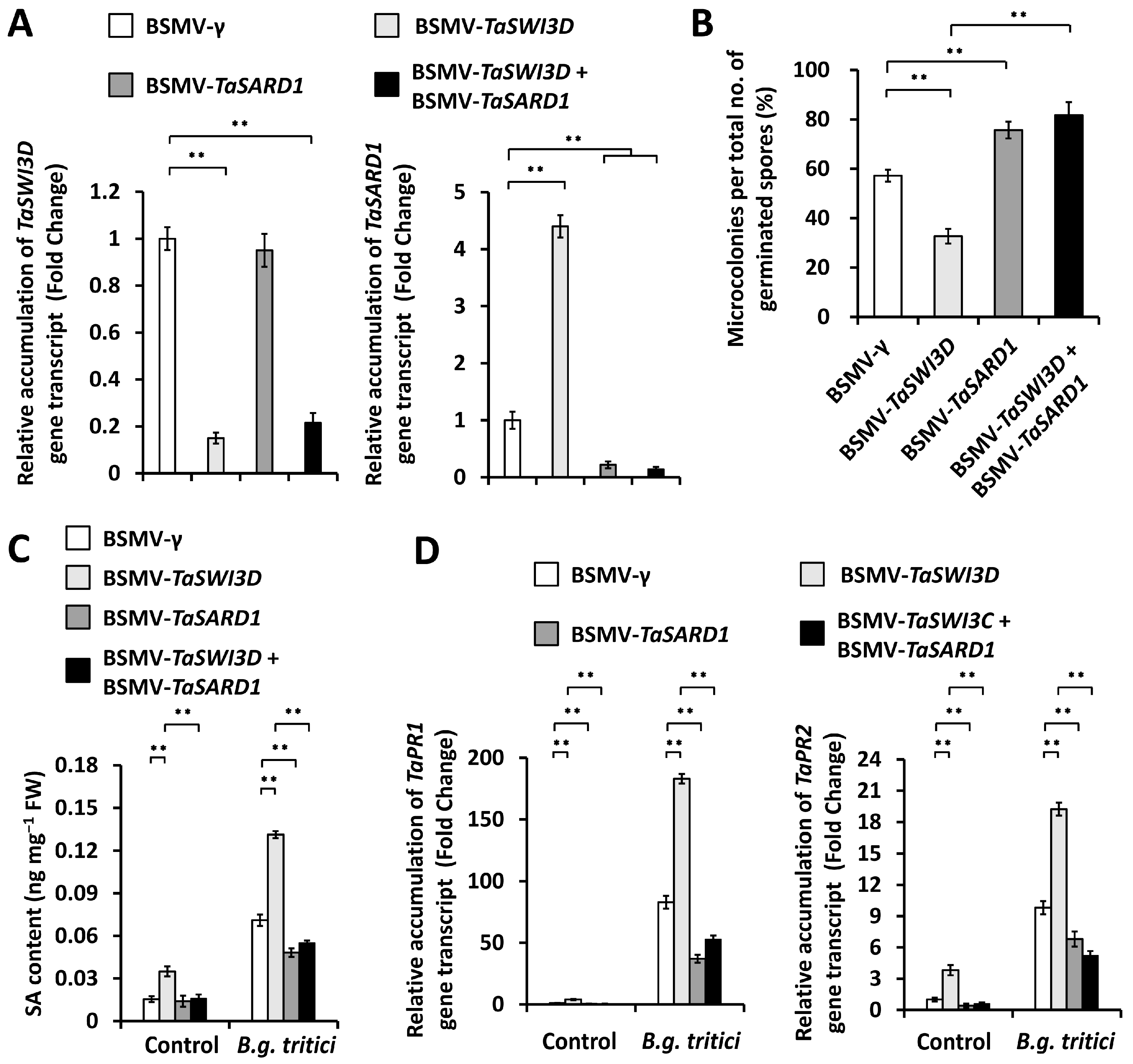
We aimed to determine whether the characterized TaSARD1 genes contribute to wheat powdery mildew resistance suppressed by the chromatin remodeler TaSWI3D. To examine this hypothesis, we conducted the BSMV-VIGS assay to simultaneously silence TaSWI3D and TaSARD1 genes in the wheat leaves and statistically analyzed the formation of the B.g. tritici microcolony. As shown in Figure 5A, TaSWI3D and TaSARD1-cosilenced wheat leaves displayed decreased expression levels of the TaSWI3D and TaSARD1 genes compared with the BSMV-γ control wheat leaves. Notably, TaSWI3D and TaSARD1-cosilenced wheat leaves showed 75.6% B.g. tritici microcolony index values, compared with 57.2% B.g. tritici microcolony index values for the BSMV-γ control wheat leaves (Figure 5B). Consistent with this, TaSWI3D and TaSARD1-cosilenced wheat leaves displayed remarkably decreased SA accumulation compared with the BSMV-γ control wheat leaves (Figure 5C). The RT-qPCR assay confirmed that the simultaneous silencing of TaSWI3D and TaSARD1 genes resulted in a significant reduction in the expression levels of TaPR1 and TaPR2 genes compared with the BSMV-γ control (Figure 5D). These data suggest that the chromatin remodeler TaSWI3D maintains epigenetic suppression of the TaSARD1 gene and negatively regulates SA biosynthesis, thus contributing to wheat susceptibility to B.g. tritici.
Figure 5.
Characterization of the genetic interplay of TaSWI3D and TaSARD1 in the regulation of compatible wheat–B.g. tritici interactions. (A) qRT-PCR analysis of TaSWI3D and TaSARD1 expression levels in the wheat leaves silencing TaSWI3D and TaSARD1 or co-silencing TaSWI3D and TaSARD1. (B) Analysis of B.g. tritici microcolony index on wheat leaves silencing TaSWI3D and TaSARD1 or co-silencing TaSWI3D and TaSARD1. (C) Measurement of SA accumulation in the wheat leaves silencing TaSWI3D and TaSARD1 or co-silencing TaSWI3D and TaSARD1. (D) RT-qPCR analysis of TaPR1 and TaPR2 gene expression levels in the wheat leaves silencing TaSWI3D and TaSARD1 or co-silencing TaSWI3D and TaSARD1. For (A–D), three technical replicates per treatment were statistically analyzed, and data are presented as the mean ± SE (Student’s t-test; ** p < 0.01); these assays were repeated in three independent biological replicates with similar results.
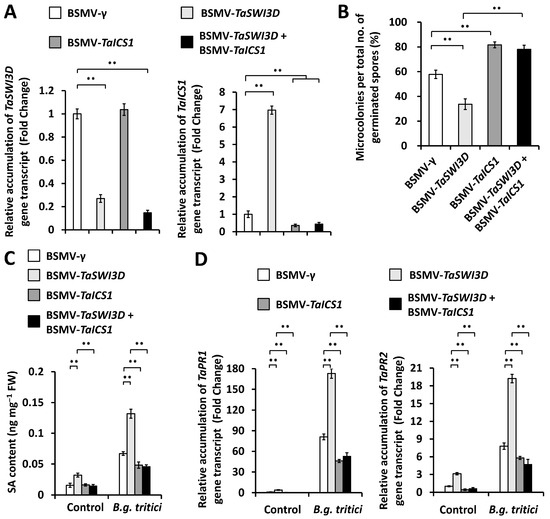
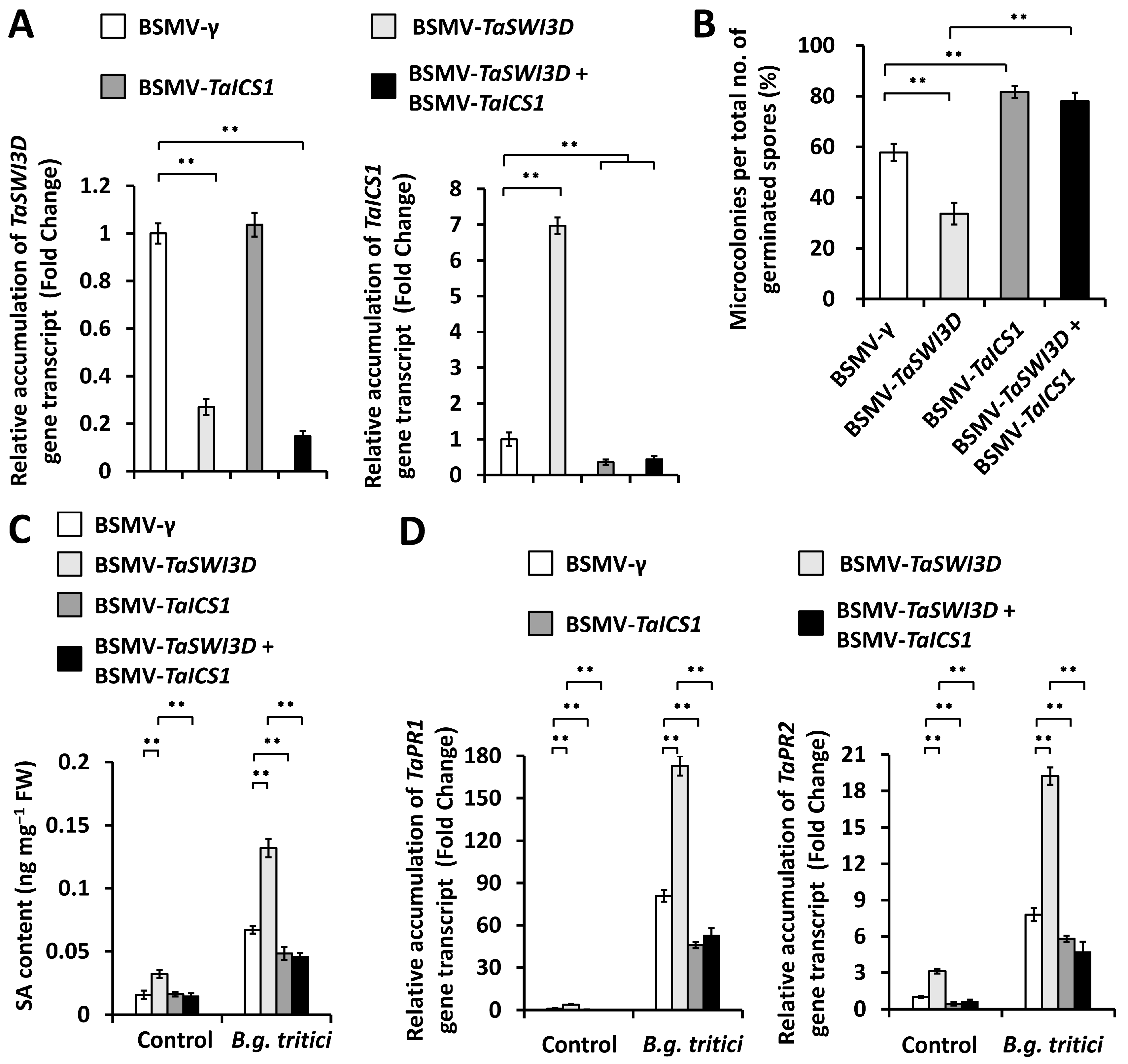
We ask whether the TaICS1 (isochorismate synthase 1), a core component of wheat SA biosynthetic machinery, contributes to wheat powdery mildew resistance suppressed by the chromatin remodeler TaSWI3D [14,15]. To examine this hypothesis, we conducted a BSMV-VIGS assay to simultaneously silence TaSWI3D and TaICS1 genes in the wheat leaves and statistically analyzed the formation of the B.g. tritici microcolony. As shown in Figure 6A, the simultaneous silencing of TaSWI3D and TaICS1 resulted in a significant increase in the B.g. tritici microcolony index compared with BSMV-γ controls (Figure 6B). Consistently, remarkably decreased SA accumulation was observed in the TaSWI3D and TaICS1-cosilenced wheat leaves (Figure 6C). The RT-qPCR assay confirmed that the simultaneous silencing of TaSWI3D and TaICS1 genes resulted in a significant reduction in the expression levels of TaPR1 and TaPR2 genes compared with the BSMV-γ control (Figure 6D). These results collectively confirm that the chromatin remodeler TaSWI3D negatively regulated powdery mildew resistance by suppressing the SA biosynthesis activated by the TaSARD1 gene, thereby facilitating wheat susceptibility to B.g. tritici.
Figure 6.
Characterization of the genetic interplay of TaSWI3D and TaICS1 in the regulation of compatible wheat–B.g. tritici interactions. (A) qRT-PCR analysis of TaSWI3D and TaICS1 expression levels in the wheat leaves silencing TaSWI3D and TaICS1 or co-silencing TaSWI3D and TaICS1. (B) Analysis of B.g. tritici microcolony index on wheat leaves silencing TaSWI3D and TaICS1 or co-silencing TaSWI3D and TaICS1. (C) Measurement of SA accumulation in the wheat leaves silencing TaSWI3D and TaICS1 or co-silencing TaSWI3D and TaICS1. (D) RT-qPCR analysis of TaPR1 and TaPR2 gene expression levels in the wheat leaves silencing TaSWI3D and TaICS1 or co-silencing TaSWI3D and TaICS1. For (A–D), three technical replicates per treatment were statistically analyzed, and data are presented as the mean ± SE (Student’s t-test; ** p < 0.01); these assays were repeated in three independent biological replicates with similar results.
4. Discussion
4.1. The Chromatin Remodeler TaSWI3D Suppresses SA Biosynthesis and Facilitates Compatible Wheat–B.g. tritici Interactions
Herein, TaSWI3D-4A, TaSWI3D-4B, and TaSWI3D-4B, separately located on wheat chromosomes 4A, 4B, and 4B, were identified as wheat homologs of the Arabidopsis chromatin remodeler AtSWI3D. Overexpression of TaSWI3D-4A, TaSWI3D-4B, and TaSWI3D-4B resulted in increased B.g. tritici haustorium index values, whereas silencing of TaSWI3D caused decreased B.g. tritici microcolony index values, indicating that the chromatin remodeler TaSWI3D positively regulates wheat susceptibility to B.g. tritici and facilitates B.g. tritici haustoria development and microcolony formation. Various epigenetic regulators have been identified to regulate compatible wheat–B.g. tritici interactions. For instance, histone deacetylase TaHDA6 positively contributes to wheat susceptibility to B.g. tritici, while wheat histone acetyltransferase TaHAG1 positively regulates wheat resistance to B.g. tritici [16,17]. Chromatin assembly factor-1 (CAF-1) finetunes wheat susceptibility to B.g. tritici by suppressing SA and wax biosynthesis [11].
Previous studies have revealed that plant hormone SA plays a key role in wheat powdery mildew resistance [11,13,14,15]. In this study, we demonstrated that the chromatin remodeler TaSWI3D was enriched at the promoter regions of TaSARD1, an activator of SA biosynthesis, and suppresses TaSARD1 gene transcription via maintaining a repressive chromatin state at the TaSARD1 gene. SA overaccumulation and defense-marker gene activation were observed in the TaSWI3D-silenced wheat plants. Consistent with this, silencing of TaSARD1 and SA biosynthesis gene TaICS1 could attenuate SA biosynthesis and dampen powdery mildew resistance potentiated by the knockdown of TaSWI3D expression. These results suggest that the chromatin remodeler TaSWI3D negatively regulates SA biosynthesis mediated by the TaSARD1-TaICS1 module, thus suppressing powdery mildew resistance and facilitating compatible wheat–B.g. tritici interactions. Wheat chromatin assembly factor CAF-1 was previously identified as a negative regulator of TaSARD1 transcription and SA biosynthesis [11]. Therefore, it is important to examine the potential interplay among TaSWI3D and CAF-1 in the regulation of TaSARD1 transcription and SA biosynthesis.
4.2. Potentials and Strategies for Exploiting Susceptibility Gene TaSWI3D in Wheat Breeding Against Powdery Mildew Disease
As summarized by previous studies, a plethora of susceptibility (S) genes have been identified to facilitate wheat compatibility with adapted pathogens [18,19,20]. These S genes could regulate various processes in wheat–pathogen interactions, including pathogen penetration, plant defense, and pathogen sustenance [18,19,20]. For instance, wheat S gene TaECR is involved in wax biosynthesis, which is essential for stimulating B.g. tritici conidial germination, whereas S genes TaSWP73, TaFAS1, TaFAS2, and TaMSI1 negatively regulate wheat defense response against B.g. tritici [11,13,21]. In contrast, wheat S genes TaAMT2;3a and TaSTP3/6/13, respectively, encode ammonium and sugar transporters to facilitate the nutrient uptake and sustenance of the wheat stripe rust pathogen [22,23,24,25,26]. Herein, TaSWI3D was identified as a novel S gene suppressing SA biosynthesis and contributing to compatible wheat–B.g. tritici interaction.
Manipulating S genes via genome editing and TILLING techniques could enhance wheat disease resistance [27,28,29,30,31]. For instance, editing of S genes TaWRKY19 and TaPsIPK1 using CRISPR-Cas9 systems improves wheat resistance against wheat stripe rust disease [32,33]. Similarly, editing of wheat S genes TaEDR1 and TaMLO using CRISPR-Cas9 and transcription activator-like effector nucleases (TALENs) enhances wheat resistance against B.g. tritici [34,35,36]. Knockout of the S gene TaSWI3D via genome editing and TILLING techniques represents a novel approach in wheat powdery mildew resistance breeding. To this end, the potential pleiotropic effects of the TaSWI3D gene on other agronomic traits of wheat, which would likely be impacted by knocking out this gene, should be carefully analyzed in future research.
5. Conclusions
Herein, we identified wheat TaSWI3D as an S gene that positively contributes to wheat susceptibility to B.g. tritici and revealed that the chromatin remodeler TaSWI3D maintains epigenetic suppression of the SA biosynthesis activator gene TaSARD1 and negatively regulates SA biosynthesis, thereby positively contributing to wheat powdery mildew susceptibility. This study revealed novel epigenetic regulators governing wheat SA biosynthesis and identified a new S gene for wheat resistance breeding against the B.g. tritici pathogen. In future research, characterizing the potential interplay of TaSWI3D with other SA biosynthesis regulators like TaSWP73 and CAF-1 could provide more insight into the regulatory mechanisms underlying wheat SA biosynthesis. In this study, we employed transient silencing or overexpressing techniques to characterize the function of TaSWI3D in the regulation of compatible wheat–B.g. tritici interactions. Generating stable taswi3d gene mutants using TILLING or CRISPR-Cas9 techniques not only helps to further reveal the functions of TaSWI3D in wheat development and environmental adaptation but could also provide a new direction for wheat powdery mildew resistance breeding.
Author Contributions
Conceptualization, Y.F., W.C., M.Z., X.W. and C.C.; methodology, Y.F., W.C., M.Z. and X.W.; validation, Y.F., W.C., M.Z. and X.W.; investigation, Y.F., W.C., M.Z. and X.W.; resources, C.C.; data curation, Y.F. and W.C.; writing—original draft preparation, Y.F., W.C., M.Z. and X.W.; writing—review and editing, C.C.; visualization, Y.F., W.C., M.Z., X.W. and C.C.; supervision, C.C.; project administration, C.C.; funding acquisition, C.C. All authors have read and agreed to the published version of the manuscript.
Funding
This research was funded by Shandong Provincial Natural Science Foundation, grant number ZR2022MC008 and ZR2017BC109; Qingdao Science and Technology Bureau Fund, grant number 17-1-1-50-jch; and the Qingdao University Fund, grant number DC1900005385.
Institutional Review Board Statement
Not applicable.
Informed Consent Statement
Not applicable.
Data Availability Statement
The original contributions presented in this study are included in the article. Further inquiries can be directed to the corresponding author.
Conflicts of Interest
The authors declare no conflicts of interest.
References
- Levy, A.A.; Feldman, M. Evolution and origin of bread wheat. Plant Cell 2022, 34, 2549–2567. [Google Scholar] [CrossRef] [Scilit] [PubMed]
- Lee, R. The outlook for population growth. Science 2011, 333, 569–573. [Google Scholar] [CrossRef] [Scilit] [PubMed]
- Savary, S.; Willocquet, L.; Pethybridge, S.J.; Esker, P.; McRoberts, N.; Nelson, A. The global burden of pathogens and pests on major food crops. Nat. Ecol. Evol. 2019, 3, 430–439. [Google Scholar] [CrossRef] [Scilit] [PubMed]
- Kusch, S.; Qian, J.; Loos, A.; Kümmel, F.; Spanu, P.D.; Panstruga, R. Long-term and rapid evolution in powdery mildew fungi. Mol. Ecol. 2023, 33, e16909. [Google Scholar] [CrossRef] [Scilit]
- Mapuranga, J.; Chang, J.; Yang, W. Combating powdery mildew: Advances in molecular interactions between Blumeria graminis f. sp. tritici and wheat. Front. Plant Sci. 2022, 13, 1102908. [Google Scholar] [CrossRef] [Scilit]
- Li, B.; Carey, M.; Workman, J.L. The role of chromatin during transcription. Cell 2007, 128, 707–719. [Google Scholar] [CrossRef] [Scilit]
- Vignali, M.; Hassan, A.H.; Neely, K.E.; Workman, J.L. ATP dependent chromatin-remodeling complexes. Mol. Cell. Biol. 2000, 20, 1899–1910. [Google Scholar] [CrossRef] [Scilit]
- Hargreaves, D.C.; Crabtree, G.R. ATP-dependent chromatin remodelling: Genetics, genomics and mechanisms. Cell Res. 2011, 21, 396–420. [Google Scholar] [CrossRef] [Scilit]
- Liu, H.; Li, J.; Wang, S.; Hua, J.; Zou, B. CHROMATIN REMODELING 11-dependent nucleosome occupancy affects disease resistance in rice. Plant Physiol. 2023, 193, 1635–1651. [Google Scholar] [CrossRef] [Scilit]
- Huang, C.Y.; Rangel, D.S.; Qin, X.; Bui, C.; Li, R.; Jia, Z.; Cui, X.; Jin, H. The chromatin-remodeling protein BAF60/SWP73A regulates the plant immune receptor NLRs. Cell Host Microbe 2021, 29, 425–434. [Google Scholar] [CrossRef] [Scilit]
- Liu, L.; Yang, Z.; Wang, X.; Chen, W.; Fu, Y.; Zhi, P.; Chang, C. Wheat chromatin assembly factor-1 negatively regulates the biosynthesis of cuticular wax and salicylic acid to fine-tune powdery mildew susceptibility. J. Agric. Food Chem. 2025, 73, 21786–21802. [Google Scholar] [CrossRef] [Scilit] [PubMed]
- Yuan, C.; Li, C.; Yan, L.; Jackson, A.O.; Liu, Z.; Han, C.; Yu, J.; Li, D. A high throughput barley stripe mosaic virus vector for virus induced gene silencing in monocots and dicots. PLoS ONE 2011, 6, e26468. [Google Scholar] [CrossRef] [Scilit] [PubMed]
- Fu, Y.; Yang, Z.; Liu, J.; Wang, X.; Li, H.; Zhi, P.; Chang, C. Wheat chromatin remodeling protein TaSWP73 contributes to compatible wheat-powdery mildew interaction. Int. J. Mol. Sci. 2025, 26, 2590. [Google Scholar] [CrossRef] [Scilit] [PubMed]
- Tian, H.; Xu, L.; Li, X.; Zhang, Y. Salicylic acid: The roles in plant immunity and crosstalk with other hormones. J. Integr. Plant Biol. 2025, 67, 773–785. [Google Scholar] [CrossRef] [Scilit]
- Zhang, Y.-Z.; Man, J.; Xu, D.; Wen, L.; Li, Y.; Deng, M.; Jiang, Q.-T.; Xu, Q.; Chen, G.-Y.; Wei, Y.-M. Investigating the mechanisms of isochorismate synthase: An approach to improve salicylic acid synthesis and increase resistance to Fusarium head blight in wheat. Crop J. 2024, 12, 1054–1063. [Google Scholar] [CrossRef] [Scilit]
- Liu, J.; Zhi, P.; Wang, X.; Fan, Q.; Chang, C. Wheat WD40-repeat protein TaHOS15 functions in a histone deacetylase complex to fine-tune defense responses to Blumeria graminis f. sp. tritici. J. Exp. Bot. 2019, 70, 255–268. [Google Scholar] [CrossRef] [Scilit]
- Song, N.; Lin, J.; Liu, X.; Liu, Z.; Liu, D.; Chu, W.; Li, J.; Chen, Y.; Chang, S.; Yang, Q.; et al. Histone acetyltransferase TaHAG1 interacts with TaPLATZ5 to activate TaPAD4 expression and positively contributes to powdery mildew resistance in wheat. New Phytol. 2022, 236, 590–607. [Google Scholar] [CrossRef] [Scilit]
- Zaidi, S.S.; Mukhtar, M.S.; Mansoor, S. Editing: Targeting susceptibility genes for plant disease resistance. Trends Biotechnol. 2018, 36, 898–906. [Google Scholar] [CrossRef] [Scilit]
- van Schie, C.C.; Takken, F.L. Susceptibility genes 101: How to be a good host. Annu. Rev. Phytopathol. 2014, 52, 551–581. [Google Scholar] [CrossRef] [Scilit]
- Koseoglou, E.; van der Wolf, J.M.; Visser, R.; Bai, Y. Susceptibility reversed: Modified plant susceptibility genes for resistance to bacteria. Trends Plant Sci. 2022, 27, 69–79. [Google Scholar] [CrossRef] [Scilit]
- Kong, L.; Zhi, P.; Liu, J.; Li, H.; Zhang, X.; Xu, J.; Zhou, J.; Wang, X.; Chang, C. Epigenetic activation of Enoyl-CoA Reductase by an acetyltransferase complex triggers wheat wax biosynthesis. Plant Physiol. 2020, 183, 1250–1267. [Google Scholar] [PubMed]
- Jiang, J.; Zhao, J.; Duan, W.; Tian, S.; Wang, X.; Zhuang, H.; Fu, J.; Kang, Z. TaAMT2;3a, a wheat AMT2-type ammonium transporter, facilitates the infection of stripe rust fungus on wheat. BMC Plant Biol. 2019, 19, 239. [Google Scholar] [CrossRef] [Scilit]
- Moore, J.W.; Herrera-Foessel, S.; Lan, C.; Schnippenkoetter, W.; Ayliffe, M.; Huerta-Espino, J.; Lillemo, M.; Viccars, L.; Milne, R.; Periyannan, S.; et al. A recently evolved hexose transporter variant confers resistance to multiple pathogens in wheat. Nat. Genet. 2015, 47, 1494–1498. [Google Scholar] [CrossRef] [Scilit] [PubMed]
- Huai, B.; Yang, Q.; Qian, Y.; Qian, W.; Kang, Z.; Liu, J. ABA-induced sugar transporter TaSTP6 promotes wheat susceptibility to stripe rust. Plant Physiol. 2019, 181, 1328–1343. [Google Scholar] [CrossRef] [Scilit] [PubMed]
- Huai, B.; Yang, Q.; Wei, X.; Pan, Q.; Kang, Z.; Liu, J. TaSTP13 contributes to wheat susceptibility to stripe rust possibly by increasing cytoplasmic hexose concentration. BMC Plant Biol. 2020, 20, 49. [Google Scholar] [CrossRef] [Scilit]
- Huai, B.; Yuan, P.; Ma, X.; Zhang, X.; Jiang, L.; Zheng, P.; Yao, M.; Chen, Z.; Chen, L.; Shen, Q.; et al. Sugar transporter TaSTP3 activation by TaWRKY19/61/82 enhances stripe rust susceptibility in wheat. New Phytol. 2022, 236, 266–282. [Google Scholar] [CrossRef] [Scilit]
- McCallum, C.M.; Comai, L.; Greene, E.A.; Henikoff, S. Targeting induced local lesions IN genomes (TILLING) for plant functional genomics. Plant Physiol. 2000, 123, 439–442. [Google Scholar] [CrossRef] [Scilit]
- Kurowska, M.; Daszkowska-Golec, A.; Gruszka, D.; Marzec, M.; Szurman, M.; Szarejko, I.; Maluszynski, M. TILLING: A shortcut in functional genomics. J. Appl. Genet. 2011, 52, 371–390. [Google Scholar] [CrossRef] [Scilit]
- Chen, L.; Hao, L.; Parry, M.A.; Phillips, A.L.; Hu, Y.G. Progress in TILLING as a tool for functional genomics and improvement of crops. J. Integr. Plant Biol. 2014, 56, 425–443. [Google Scholar] [CrossRef] [Scilit]
- Yin, K.; Qiu, J.L. Genome editing for plant disease resistance: Applications and perspectives. Philos. Trans. R. Soc. Lond. B Biol. Sci. 2019, 374, 20180322. [Google Scholar] [CrossRef] [Scilit]
- Schenke, D.; Cai, D. Applications of CRISPR/Cas to improve crop disease resistance: Beyond inactivation of susceptibility factors. iScience 2020, 23, 101478. [Google Scholar] [CrossRef] [Scilit]
- Wang, N.; Tang, C.; Fan, X.; He, M.; Gan, P.; Zhang, S.; Hu, Z.; Wang, X.; Yan, T.; Shu, W.; et al. Inactivation of a wheat protein kinase gene confers broad-spectrum resistance to rust fungi. Cell 2022, 185, 2961–2974.e19. [Google Scholar] [CrossRef] [Scilit]
- Wang, N.; Fan, X.; He, M.; Hu, Z.; Tang, C.; Zhang, S.; Lin, D.; Gan, P.; Wang, J.; Huang, X.; et al. Transcriptional repression of TaNOX10 by TaWRKY19 compromises ROS generation and enhances wheat susceptibility to stripe rust. Plant Cell 2022, 34, 1784–1803. [Google Scholar] [CrossRef] [Scilit]
- Wang, Y.; Cheng, X.; Shan, Q.; Zhang, Y.; Liu, J.; Gao, C.; Qiu, J.L. Simultaneous editing of three homoeoalleles in hexaploid bread wheat confers heritable resistance to powdery mildew. Nat. Biotechnol. 2014, 32, 947–951. [Google Scholar] [CrossRef] [Scilit]
- Li, S.; Lin, D.; Zhang, Y.; Deng, M.; Chen, Y.; Lv, B.; Li, B.; Lei, Y.; Wang, Y.; Zhao, L.; et al. Genome-edited powdery mildew resistance in wheat without growth penalties. Nature 2022, 602, 455–460. [Google Scholar] [CrossRef] [Scilit]
- Zhang, Y.; Bai, Y.; Wu, G.; Zou, S.; Chen, Y.; Gao, C.; Tang, D. Simultaneous modification of three homoeologs of TaEDR1 by genome editing enhances powdery mildew resistance in wheat. Plant J. 2017, 91, 714–724. [Google Scholar] [CrossRef] [Scilit]
Disclaimer/Publisher’s Note: The statements, opinions and data contained in all publications are solely those of the individual author(s) and contributor(s) and not of MDPI and/or the editor(s). MDPI and/or the editor(s) disclaim responsibility for any injury to people or property resulting from any ideas, methods, instructions or products referred to in the content. |
© 2025 by the authors. Licensee MDPI, Basel, Switzerland. This article is an open access article distributed under the terms and conditions of the Creative Commons Attribution (CC BY) license (https://creativecommons.org/licenses/by/4.0/).