An rpoB Sequence Type Network as a Framework for the Evolutionary Investigation of Clostridium perfringens

 , , , , and
Abstract
1. Introduction
2. Materials and Methods
2.1. Bacterial Isolation and Identification
2.2. Primers, PCR, and Sequencing
2.3. Multi-Locus Sequence Typing, rpoB Sequence Typing, Network Analysis, and Phylogenetic Analysis
2.4. Whole-Genome Sequencing and Comparative Genomics
2.5. Prophage and CRISPR Analysis
3. Results
3.1. Toxinotypes of Clostridium Perfringens Strains
3.2. Co-Infections Involving C. perfringens and Other Avian Pathogens
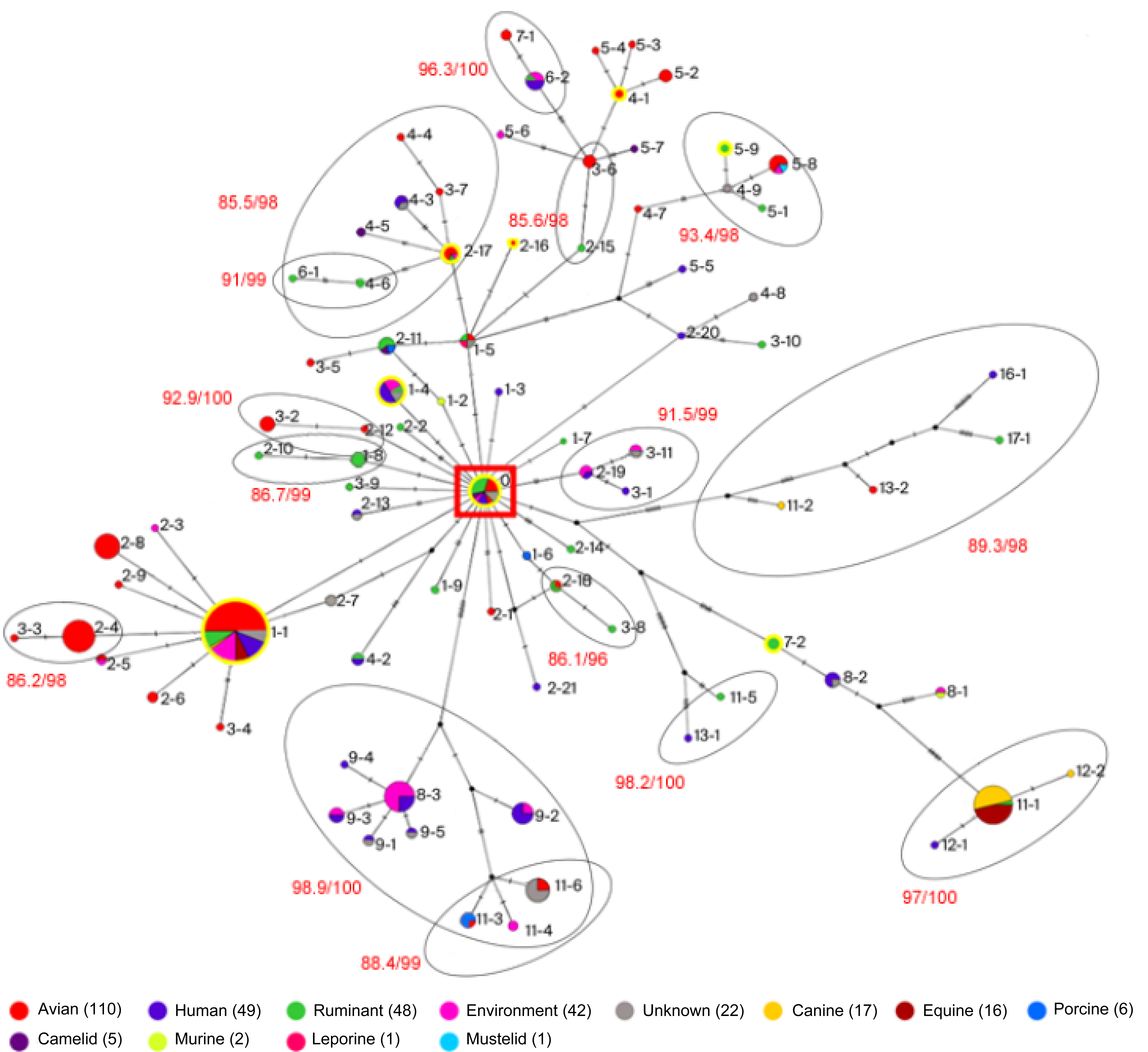
3.3. RSTing, MLST, and Evolutionary Trajectory of C. perfringens
3.4. General Genomic Information for Five Representative C. perfringens Strains from RST 0, RST 1-1, and RST 2-17
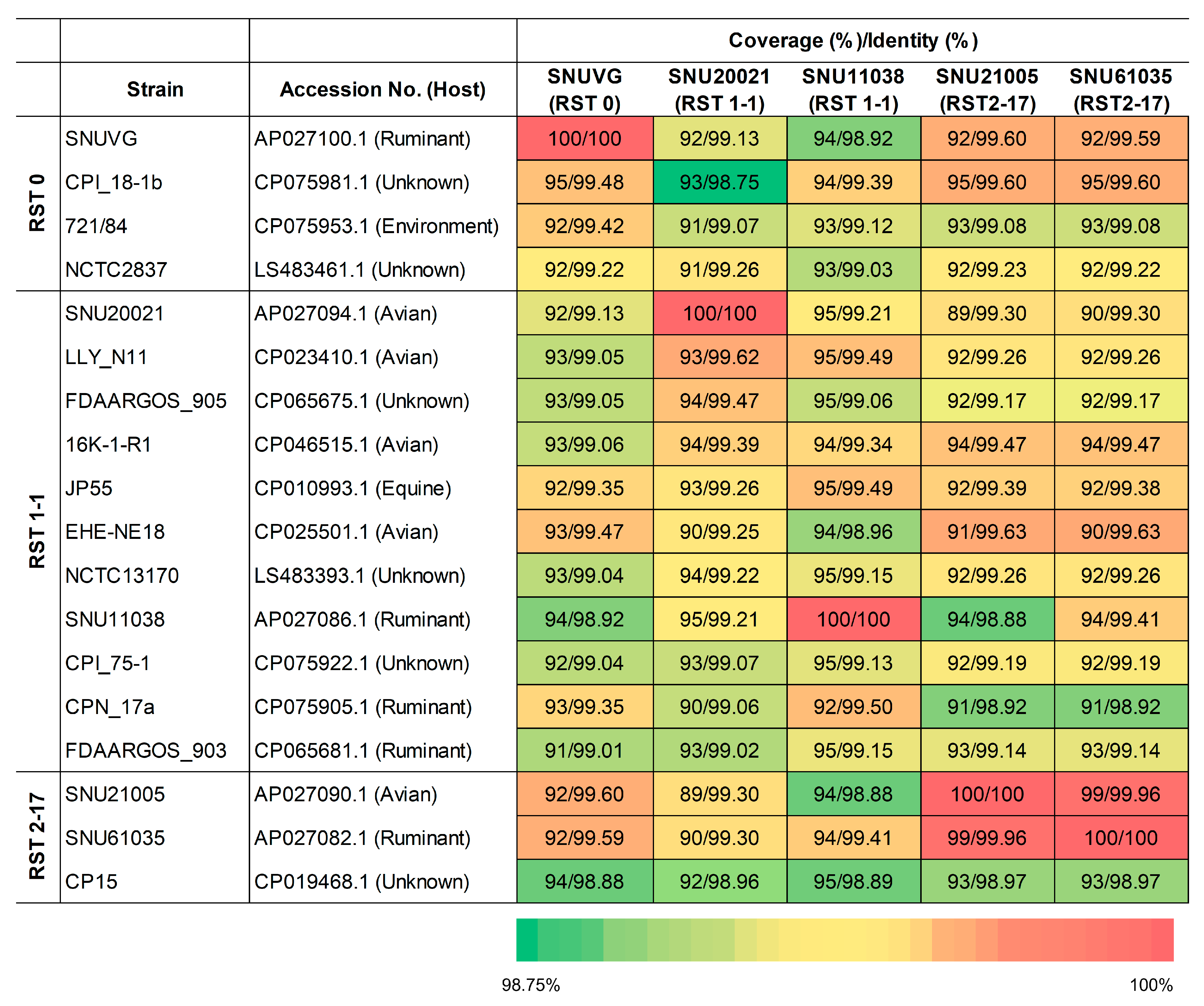
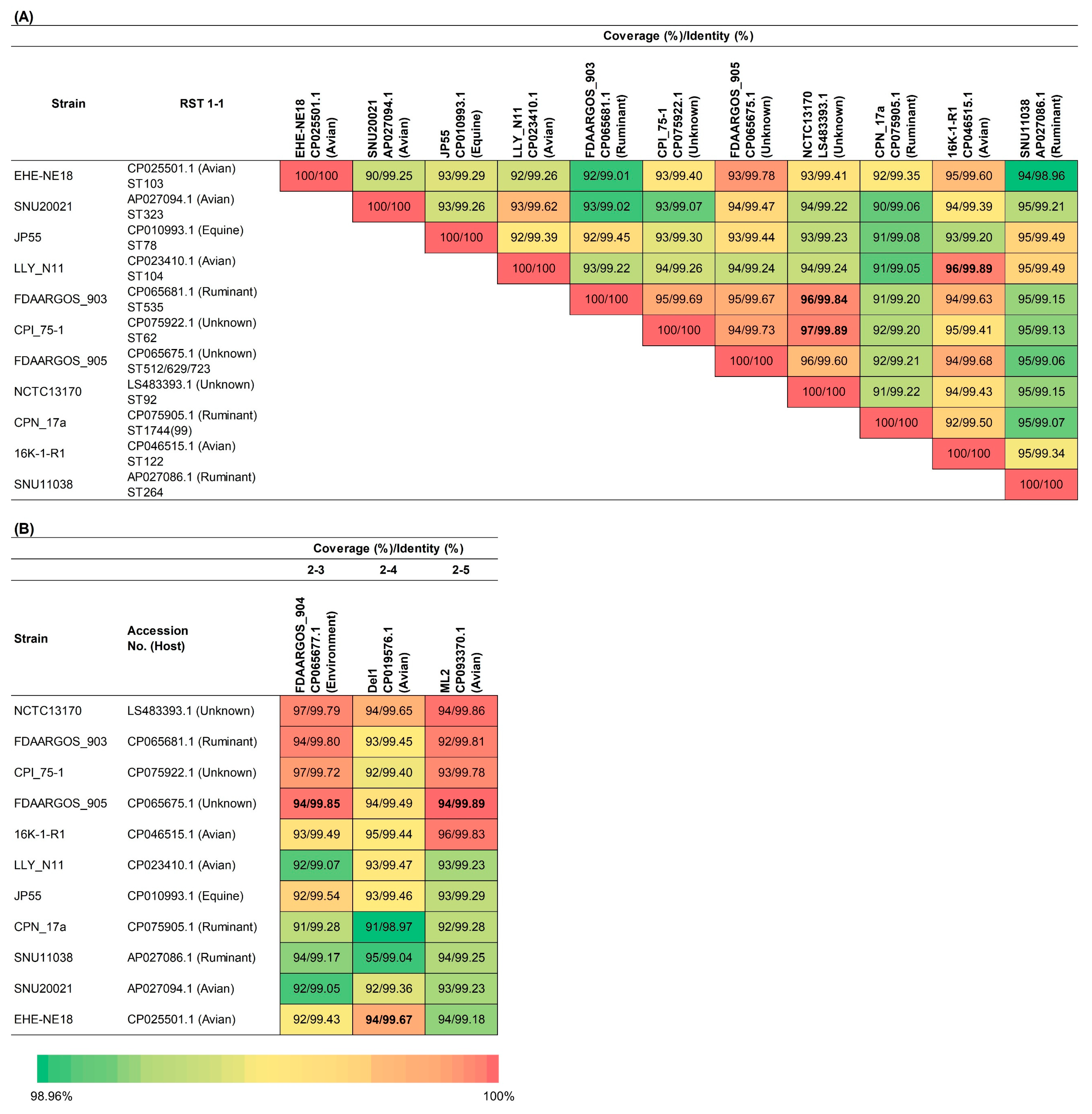
3.5. Assessment of Evolutionary Relationships Between RSTs Based on Genome Coverage and Nucleotide Identity
3.6. Evolutionary Relationships Between Different Genera and Species of Gram-Positive Bacteria with rpoB Genes of Different Lengths
3.7. Prophage Typing and CRISPR-Cas System Profile in C. perfringens
3.8. Comparison of Genetic Similarity Between Plasmids
4. Discussion
5. Conclusions
Supplementary Materials
Author Contributions
Funding
Institutional Review Board Statement
Informed Consent Statement
Data Availability Statement
Conflicts of Interest
Abbreviations
| AGP | Antimicrobial Growth Promoter |
| ALV | Avian Leukosis Virus |
| BoNT | Botulinum Neurotoxin |
| C. perfringens | Clostridium perfringens |
| CAV | Chicken Anemia Virus |
| CRISPR | Clustered Regularly Interspaced Short Palindromic Repeats |
| FAdV-4 | Fowl Adenovirus Serotype 4 |
| HGT | Horizontal Gene Transfer |
| IBDV | Infectious Bursal Disease Virus |
| NE | Necrotic Enteritis |
| PAM | Protospacer Adjacent motif |
| PCR | Polymerase Chain Reaction |
| RST | RpoB Sequence Type |
References
- Johansson, A.; Aspan, A.; Bagge, E.; Båverud, V.; Engström, B.E.; Johansson, K.-E. Genetic diversity of Clostridium perfringens type A isolates from animals, food poisoning outbreaks and sludge. BMC Microbiol. 2006, 6, 47. [Google Scholar] [CrossRef]
- Rood, J.I.; Adams, V.; Lacey, J.; Lyras, D.; McClane, B.A.; Melville, S.B.; Moore, R.J.; Popoff, M.R.; Sarker, M.R.; Songer, J.G.; et al. Expansion of the Clostridium perfringens toxin-based typing scheme. Anaerobe 2018, 53, 5–10. [Google Scholar] [CrossRef]
- Songer, J.G. Clostridia as agents of zoonotic disease. Vet. Microbiol. 2010, 140, 399–404. [Google Scholar] [CrossRef]
- McDonel, J.L. Clostridium perfringens toxins (type a, b, c, d, e). Pharmacol. Ther. 1980, 10, 617–655. [Google Scholar] [CrossRef] [PubMed]
- Manteca, C.; Daube, G.; Jauniaux, T.; Linden, A.; Pirson, V.; Detilleux, J.; Ginter, A.; Coppe, P.; Kaeckenbeeck, A.; Mainil, J. A role for the Clostridium perfringens β2 toxin in bovine enterotoxaemia? Vet. Microbiol. 2002, 86, 191–202. [Google Scholar] [CrossRef] [PubMed]
- Kiu, R.; Hall, L.J. An update on the human and animal enteric pathogen Clostridium perfringens. Emerg. Microbes Infect. 2018, 7, 1–15. [Google Scholar] [CrossRef]
- Keyburn, A.L.; Boyce, J.D.; Vaz, P.; Bannam, T.L.; Ford, M.E.; Parker, D.; Di Rubbo, A.; Rood, J.I.; Moore, R.J. NetB, a new toxin that is associated with avian necrotic enteritis caused by Clostridium perfringens. PLoS Pathog. 2008, 4, e26. [Google Scholar] [CrossRef] [PubMed]
- Moore, R.J. Necrotic enteritis and antibiotic-free production of broiler chickens: Challenges in testing and using alternative products. Anim. Nutr. 2024, 16, 288–298. [Google Scholar] [CrossRef]
- Ko, D.-S.; Seong, W.-J.; Kim, D.; Kim, E.-K.; Kim, N.-H.; Lee, C.-Y.; Kim, J.-H.; Kwon, H.-J. Molecular prophage typing of Staphylococcus aureus isolates from bovine mastitis. J. Vet. Sci. 2018, 19, 771–781. [Google Scholar] [CrossRef]
- Lacey, J.A.; Allnutt, T.R.; Vezina, B.; Van, T.T.H.; Stent, T.; Han, X.; Rood, J.I.; Wade, B.; Keyburn, A.L.; Seemann, T.; et al. Whole genome analysis reveals the diversity and evolutionary relationships between necrotic enteritis-causing strains of Clostridium perfringens. BMC Genom. 2018, 19, 379. [Google Scholar] [CrossRef]
- Zhu, X.; Huang, Y.; Shi, Y.; Gao, X.; Chen, D.; Liu, C.; Cao, S.; Xue, X.; Li, Y. Comparative genomic analysis of food-animal-derived and human-derived Clostridium perfringens isolates from markets in Shandong, China. Front. Microbiol. 2025, 16, 1543511. [Google Scholar] [CrossRef]
- Borukhov, S.; Nudler, E. RNA polymerase holoenzyme: Structure, function and biological implications. Curr. Opin. Microbiol. 2003, 6, 93–100. [Google Scholar] [CrossRef]
- Ha, E.-J.; Hong, S.-M.; Kim, S.-J.; Ahn, S.-M.; Kim, H.-W.; Choi, K.-S.; Kwon, H.-J. Tracing the Evolutionary Pathways of Serogroup O78 Avian Pathogenic Escherichia coli. Antibiotics 2023, 12, 1714. [Google Scholar] [CrossRef]
- Adékambi, T.; Drancourt, M.; Raoult, D. The rpoB gene as a tool for clinical microbiologists. Trends Microbiol. 2009, 17, 37–45. [Google Scholar] [CrossRef] [PubMed]
- Ogier, J.C.; Pagès, S.; Galan, M.; Barret, M.; Gaudriault, S. rpoB, a promising marker for analyzing the diversity of bacterial communities by amplicon sequencing. BMC Microbiol. 2019, 19, 171. [Google Scholar] [CrossRef]
- Ko, D.S.; Kim, D.; Kim, E.K.; Kim, J.H.; Kwon, H.J. Evolution of a major bovine mastitic genotype (rpoB sequence type 10-2) of Staphylococcus aureus in cows. J. Microbiol. 2019, 57, 587–596. [Google Scholar] [CrossRef] [PubMed]
- Gowthaman, V.; Singh, S.D.; Dhama, K.; Barathidasan, R.; Mathapati, B.S.; Srinivasan, P.; Saravanan, S.; Ramakrishnan, M.A. Molecular detection and characterization of infectious laryngotracheitis virus (Gallid herpesvirus-1) from clinical samples of commercial poultry flocks in India. Virusdisease 2014, 25, 345–349. [Google Scholar] [CrossRef]
- Häuptli, D.; Bruckner, L.; Ottiger, H.P. Use of reverse transcriptase polymerase chain reaction for detection of vaccine contamination by avian leukosis virus. J. Virol. Methods 1997, 66, 71–81. [Google Scholar] [CrossRef]
- Lin, Z.; Kato, A.; Otaki, Y.; Nakamura, T.; Sasmaz, E.; Ueda, S. Sequence comparisons of a highly virulent infectious bursal disease virus prevalent in Japan. Avian Dis. 1993, 37, 315–323. [Google Scholar] [CrossRef] [PubMed]
- van Santen, V.L.; Li, L.; Hoerr, F.J.; Lauerman, L.H. Genetic characterization of chicken anemia virus from commercial broiler chickens in Alabama. Avian Dis. 2001, 45, 373–388. [Google Scholar] [CrossRef]
- Raue, R.; Hess, M. Hexon based PCRs combined with restriction enzyme analysis for rapid detection and differentiation of fowl adenoviruses and egg drop syndrome virus. J. Virol. Methods 1998, 73, 211–217. [Google Scholar] [CrossRef] [PubMed]
- Fallavena, L.C.; Canal, C.W.; Salle, C.T.; Moraes, H.L.; Rocha, S.L.; Pereira, R.A.; da Silva, A.B. Presence of avipoxvirus DNA in avian dermal squamous cell carcinoma. Avian Pathol. 2002, 31, 241–246. [Google Scholar] [CrossRef] [PubMed]
- Yoo, H.S.; Lee, S.U.; Park, K.Y.; Park, Y.H. Molecular typing and epidemiological survey of prevalence of Clostridium perfringens types by multiplex PCR. J. Clin. Microbiol. 1997, 35, 228–232. [Google Scholar] [CrossRef] [PubMed]
- Garmory, H.S.; Chanter, N.; French, N.P.; Bueschel, D.; Songer, J.G.; Titball, R.W. Occurrence of Clostridium perfringens beta2-toxin amongst animals, determined using genotyping and subtyping PCR assays. Epidemiol. Infect. 2000, 124, 61–67. [Google Scholar] [CrossRef]
- Yonogi, S.; Matsuda, S.; Kawai, T.; Yoda, T.; Harada, T.; Kumeda, Y.; Gotoh, K.; Hiyoshi, H.; Nakamura, S.; Kodama, T.; et al. BEC, a novel enterotoxin of Clostridium perfringens found in human clinical isolates from acute gastroenteritis outbreaks. Infect. Immun. 2014, 82, 2390–2399. [Google Scholar] [CrossRef]
- Deguchi, A.; Miyamoto, K.; Kuwahara, T.; Miki, Y.; Kaneko, I.; Li, J.; McClane, B.A.; Akimoto, S. Genetic characterization of type A enterotoxigenic Clostridium perfringens strains. PLoS ONE 2009, 4, e5598. [Google Scholar] [CrossRef]
- Keyburn, A.L.; Yan, X.X.; Bannam, T.L.; Van Immerseel, F.; Rood, J.I.; Moore, R.J. Association between avian necrotic enteritis and Clostridium perfringens strains expressing NetB toxin. Vet. Res. 2010, 41, 21. [Google Scholar] [CrossRef]
- Kim, S.B.; Lim, H.J.; Lee, W.K.; Hwang, I.G.; Woo, G.J.; Ryu, S. PCR-based detection and molecular genotyping of enterotoxigenic Clostridium perfringens isolates from swine diarrhea in Korea. J. Microbiol. Biotechnol. 2006, 16, 291–294. [Google Scholar]
- Okonechnikov, K.; Golosova, O.; Fursov, M.; The UGENE Team. Unipro UGENE: A unified bioinformatics toolkit. Bioinformatics 2012, 28, 1166–1167. [Google Scholar] [CrossRef]
- Rozas, J.; Ferrer-Mata, A.; Sánchez-DelBarrio, J.C.; Guirao-Rico, S.; Librado, P.; Ramos-Onsins, S.E.; Sánchez-Gracia, A. DnaSP 6: DNA Sequence Polymorphism Analysis of Large Data Sets. Mol. Biol. Evol. 2017, 34, 3299–3302. [Google Scholar] [CrossRef]
- Seong, W.J.; Kim, J.H.; Kwon, H.J. Comparison of complete rpoB gene sequence typing and multi-locus sequence typing for phylogenetic analysis of Staphylococcus aureus. J. Gen. Appl. Microbiol. 2013, 59, 335–343. [Google Scholar] [CrossRef] [PubMed]
- Seong, W.J.; Kwon, H.J.; Kim, T.E.; Lee, D.Y.; Park, M.S.; Kim, J.H. Molecular serotyping of Salmonella enterica by complete rpoB gene sequencing. J. Microbiol. 2012, 50, 962–969. [Google Scholar] [CrossRef]
- Leigh, J.W.; Bryant, D. Popart: Full-feature software for haplotype network construction. Methods Ecol. Evol. 2015, 6, 1110–1116. [Google Scholar] [CrossRef]
- Letunic, I.; Bork, P. Interactive Tree of Life (iTOL) v6: Recent updates to the phylogenetic tree display and annotation tool. Nucleic Acids Res. 2024, 52, W78–W82. [Google Scholar] [CrossRef]
- Tanizawa, Y.; Fujisawa, T.; Nakamura, Y. DFAST: A flexible prokaryotic genome annotation pipeline for faster genome publication. Bioinformatics 2018, 34, 1037–1039. [Google Scholar] [CrossRef]
- Bertelli, C.; Laird, M.R.; Williams, K.P.; Lau, B.Y.; Hoad, G.; Winsor, G.L.; Brinkman, F.S.L. IslandViewer 4: Expanded prediction of genomic islands for larger-scale datasets. Nucleic Acids Res. 2017, 45, W30–W35. [Google Scholar] [CrossRef] [PubMed]
- Siguier, P.; Perochon, J.; Lestrade, L.; Mahillon, J.; Chandler, M. ISfinder: The reference centre for bacterial insertion sequences. Nucleic Acids Res. 2006, 34, D32–D36. [Google Scholar] [CrossRef]
- Bland, C.; Ramsey, T.L.; Sabree, F.; Lowe, M.; Brown, K.; Kyrpides, N.C.; Hugenholtz, P. CRISPR Recognition Tool (CRT): A tool for automatic detection of clustered regularly interspaced palindromic repeats. BMC Bioinform. 2007, 8, 209. [Google Scholar] [CrossRef]
- Russel, J.; Pinilla-Redondo, R.; Mayo-Muñoz, D.; Shah, S.A.; Sørensen, S.J. CRISPRCasTyper: Automated Identification, Annotation, and Classification of CRISPR-Cas Loci. Cris. J. 2020, 3, 462–469. [Google Scholar] [CrossRef] [PubMed]
- Matsuda, A.; Aung, M.S.; Urushibara, N.; Kawaguchiya, M.; Sumi, A.; Nakamura, M.; Horino, Y.; Ito, M.; Habadera, S.; Kobayashi, N. Prevalence and Genetic Diversity of Toxin Genes in Clinical Isolates of Clostridium perfringens: Coexistence of Alpha-Toxin Variant and Binary Enterotoxin Genes (bec/cpile). Toxins 2019, 11, 326. [Google Scholar] [CrossRef]
- Alam, S.I.; Bansod, S.; Kumar, R.B.; Sengupta, N.; Singh, L. Differential proteomic analysis of Clostridium perfringens ATCC13124; identification of dominant, surface and structure associated proteins. BMC Microbiol. 2009, 9, 162. [Google Scholar] [CrossRef] [PubMed]
- Makarova, K.S.; Haft, D.H.; Barrangou, R.; Brouns, S.J.; Charpentier, E.; Horvath, P.; Moineau, S.; Mojica, F.J.; Wolf, Y.I.; Yakunin, A.F.; et al. Evolution and classification of the CRISPR-Cas systems. Nat. Rev. Microbiol. 2011, 9, 467–477. [Google Scholar] [CrossRef] [PubMed]
- Garrett, S.C. Pruning and tending immune memories: Spacer dynamics in the CRISPR array. Front. Microbiol. 2021, 12, 664299. [Google Scholar] [CrossRef]
- Long, J.; Xu, Y.; Ou, L.; Yang, H.; Xi, Y.; Chen, S.; Duan, G. Diversity of CRISPR/Cas system in Clostridium perfringens. Mol. Genet. Genom. 2019, 294, 1263–1275. [Google Scholar] [CrossRef]
- Zechner, E.L.; Lang, S.; Schildbach, J.F. Assembly and mechanisms of bacterial type IV secretion machines. Philos. Trans. R. Soc. B 2012, 367, 1073–1087. [Google Scholar] [CrossRef]
- Samperio, S.; Guzmán-Herrador, D.L.; May-Cuz, R.; Martín, M.C.; Álvarez, M.A.; Llosa, M. Conjugative DNA Transfer from E. coli to Transformation-Resistant Lactobacilli. Front. Microbiol. 2021, 12, 606629. [Google Scholar] [CrossRef]
- Zhang, Y.; Marchisio, M.A. Type II anti-CRISPR proteins as a new tool for synthetic biology. RNA Biol. 2021, 18, 1085–1098. [Google Scholar] [CrossRef] [PubMed]
- Wei, B.; Cha, S.Y.; Zhang, J.F.; Shang, K.; Park, H.C.; Kang, J.; Lee, K.J.; Kang, M.; Jang, H.K. Antimicrobial Susceptibility and Association with Toxin Determinants in Clostridium perfringens Isolates from Chickens. Microorganisms 2020, 8, 1825. [Google Scholar] [CrossRef]
- Luo, R.; Yang, Q.; Huang, X.; Yan, Z.; Gao, X.; Wang, W.; Xie, K.; Wang, P.; Gun, S. Clostridium perfringens beta2 toxin induced in vitro oxidative damage and its toxic assessment in porcine small intestinal epithelial cell lines. Gene 2020, 759, 144999. [Google Scholar] [CrossRef]
- Crespo, R.; Fisher, D.J.; Shivaprasad, H.L.; Fernández-Miyakawa, M.E.; Uzal, F.A. Toxinotypes of Clostridium perfringens isolated from sick and healthy avian species. J. Vet. Diagn. Investig. 2007, 19, 329–333. [Google Scholar] [CrossRef] [PubMed]
- Vilei, E.M.; Schlatter, Y.; Perreten, V.; Straub, R.; Popoff, M.R.; Gibert, M.; Gröne, A.; Frey, J. Antibiotic-induced expression of a cryptic cpb2 gene in equine β2-toxigenic Clostridium perfringens. Mol. Microbiol. 2005, 57, 1570–1581. [Google Scholar] [CrossRef] [PubMed]
- Park, S.-H.; Choi, O.-K.; Jeong, J.-A.; Kim, W.-H.; Lee, Y.-E.; Park, K.-H.; Yoon, M.-H. Genetic diversity of Clostridium perfringens form food-poisoning outbreak in Gyeonggi-do, 2013–2014. Korean J. Microbiol. 2016, 52, 286–297. [Google Scholar] [CrossRef]
- Niu, Y.; Sun, Q.; Shi, Y.; Ding, Y.; Li, Z.; Sun, Y.; Li, M.; Liu, S. Immunosuppressive potential of fowl adenovirus serotype 4. Poult. Sci. 2019, 98, 3514–3522. [Google Scholar] [CrossRef]
- Ragland, W.L.; Novak, R.; El-Attrache, J.; Savić, V.; Ester, K. Chicken anemia virus and infectious bursal disease virus interfere with transcription of chicken IFN-alpha and IFN-gamma mRNA. J. Interferon Cytokine Res. 2002, 22, 437–441. [Google Scholar] [CrossRef]
- Rosenberger, J.K.; Cloud, S.S. Chicken anemia virus. Poult. Sci. 1998, 77, 1190–1192. [Google Scholar] [CrossRef]
- Pang, P.; Chen, F.Y.; Tang, J.; Ma, L.F.; Wang, J.C.; Zheng, S.J. Avian leukosis virus p27 inhibits tumor necrosis factor alpha expression in RAW264.7 macrophages after stimulation with lipopolysaccharide. Acta Virol. 2010, 54, 119–124. [Google Scholar] [CrossRef]
- Cruz-Morales, P.; Orellana, C.A.; Moutafis, G.; Moonen, G.; Rincon, G.; Nielsen, L.K.; Marcellin, E. Revisiting the Evolution and Taxonomy of Clostridia, a Phylogenomic Update. Genome Biol. Evol. 2019, 11, 2035–2044. [Google Scholar] [CrossRef] [PubMed]
- Walsh, J.E.; Abinun, M.; Peiris, J.M.; Appleton, A.L.; Cant, A.J. A second case of infant botulism type F caused by Clostridium baratii. Pediatr. Infect. Dis. J. 1995, 14, 912–913. [Google Scholar] [CrossRef]
- Castor, C.; Mazuet, M.; Saint-Leger, M.; Vygen, S.; Coutureau, J.; Durand, M.; Popoff, M.; Da Silva, N.J. Cluster of two cases of botulism due to Clostridium baratii type F in France, November 2014. Eurosurveillance 2015, 20, 21031. [Google Scholar] [CrossRef] [PubMed][Green Version]
- Silva-Andrade, C.; Martin, A.J.; Garrido, D. Comparative Genomics of Clostridium baratii Reveals Strain-Level Diversity in Toxin Abundance. Microorganisms 2022, 10, 213. [Google Scholar] [CrossRef] [PubMed]
- Teng, W.; Liao, B.; Chen, M.; Shu, W. Genomic legacies of ancient adaptation illuminate the GC-content evolution in bacterial genomes. bioRxiv 2022. [Google Scholar] [CrossRef]
- Nagano, N.; Isomine, S.; Kato, H.; Sasaki, Y.; Takahashi, M.; Sakaida, K.; Nagano, Y.; Arakawa, Y. Human Fulminant Gas Gangrene Caused by Clostridium chauvoei. J. Clin. Microbiol. 2008, 46, 1545–1547. [Google Scholar] [CrossRef]
- Popoff, M.R. Tetanus in animals. J. Vet. Diagn. Invest. 2020, 32, 184–191. [Google Scholar] [CrossRef]
- Liao, C.; Sharma, S.; Svensson, S.L.; Kibe, A.; Weinberg, Z.; Alkhnbashi, O.S.; Bischler, T.; Backofen, R.; Caliskan, N.; Sharma, C.M.; et al. Spacer prioritization in CRISPR–Cas9 immunity is enabled by the leader RNA. Nat. Microbiol. 2022, 7, 530–541. [Google Scholar] [CrossRef]
- Touchon, M.; Charpentier, S.; Clermont, O.; Rocha, E.P.C.; Denamur, E.; Branger, C. CRISPR Distribution Within the Escherichia coli Species Is Not Suggestive of Immunity-Associated Diversifying Selection. J. Bacteriol. 2011, 193, 2460–2467. [Google Scholar] [CrossRef] [PubMed]



| Host | Strain | Toxinotype | RST | ST | Year | Region a | Source b | Other Pathogens c |
|---|---|---|---|---|---|---|---|---|
| Chicken | SNU20021 | A | 1-1 | 323 | 2020 | JJ | Layer/CF | CAV, ILTV, PV, FadV, IBV |
| SNU20055 | A | 1-1 | 21 | 2020 | CN | Broiler/CF | FadV, IBDV, Coccidiosis, E. coli | |
| SNU21002 | A | 1-1 | UT1 | 2021 | KB | Broiler/CF | FadV, IBV, IBDV, E. coli | |
| SNU21004 | A | 4-1 | 179 | 2021 | CN | Layer/CF | CAV, FadV, IBV, IBDV | |
| SNU21005 | A | 2-17 | 277 | 2021 | CN | Broiler/CF | FadV, IBV | |
| SNU21006 | A | 1-1 | iUT2 | 2021 | JJ | Layer/CF | FadV, IBV | |
| SNU21008 | A | 2-16 | 587 | 2021 | KN | Layer/CF | CAV, IBV, E. coli | |
| SNU21011 | A | 1-1 | UT3 | 2021 | KB | Broiler/CF | IBV, ALV, ATV | |
| SNU21012 | A | 2-17 | UT4 | 2021 | CN | Breeder/CF | FadV, IBDV, E. coli | |
| Cattle | SNU124 | A | 7-2 | 601 | nk | KW | F | nd |
| SNU513 | E | 5-9 | iUT4 | nk | KW | F | nd | |
| SNU1045 | A | 0 | iUT1 | nk | KW | F | nd | |
| SNU7253-1 | E | 5-9 | iUT4 | nk | KW | F | nd | |
| SNU11038 | A | 1-1 | 294 | nk | KW | F | nd | |
| SNU11040 | A | 1-4 | iUT3 | nk | KW | F | nd | |
| SNU17037 | A | 1-1 | UT2 | nk | KW | F | nd | |
| SNU61035 | A | 2-17 | 277 | nk | KW | F | nd | |
| SNUBA1100001 | A | 1-1 | nd | nk | KW | F | nd | |
| SNUVG | A | 0 | 885 | nk | KW | VD | nd |
| SNUVG | SNU20021 | SNU11038 | SNU21005 | SNU61035 | |
|---|---|---|---|---|---|
| ST | 885 | 323 | 294 | 277 | 277 |
| Accession number | AP027100.1 | AP027094.1 | AP027086.1 | AP027090.1 | AP027082.1 |
| Origin | Holstein vaginal discharge | Chicken | Holstein feces | Chicken | Holstein feces |
| RST | 0 | 1-1 | 1-1 | 2-17 | 2-17 |
| mPPT | - | - | - | 15 | 15 |
| Toxinotype | A | A | A | A | A |
| Total length (bp) | 3,300,601 | 3,455,495 | 3,222,972 | 3,635,260 | 3,623,803 |
| GC content (%) | 28.5 | 28.3 | 28.4 | 28.4 | 28.4 |
| No. of CDSs | 2913 | 3120 | 2835 | 3362 | 3349 |
| No. of rRNAs | 30 | 30 | 30 | 29 | 31 |
| No. of tRNAs | 94 | 94 | 94 | 95 | 97 |
| CRISPRS (spacer) | I-B/Tneap (28) | I-B/Hmari (50) I-B/Hmari (39) | - | - | - |
| Coding ratio (%) | 83.4 | 83.5 | 83.1 | 83.3 | 83.4 |
| Plasmid 1 | pSNUVG * | pSNU20021a | pSNU11038a * | pSNU21005a | pSNU61035a |
| 48,130 bp | 94,966 bp | 77,679 bp | 69,347 bp | 63,436 bp | |
| (AP027101.1) | (AP027095.1) | (AP027087.1) | (AP027091.1) | (AP027083.1) | |
| plasmid 2 | pSNU20021b * | pSNU11038b | pSNU21005b | pSNU61035b | |
| 69,834 bp | 52,631 bp | 63,988 bp | 47,638 bp | ||
| (AP027096.1) | (AP027088.1) | (AP027092.1) | (AP027084.1) | ||
| Plasmid 3 | pSNU20021c | pSNU11038c | pSNU21005c | pSNU61035c | |
| 14,273 bp | 14,755 bp | 47,639 bp | 41,064 | ||
| (AP027097.1) | (AP027089.1) | (AP027093.1) | (AP027085.1) | ||
| Plasmid 4 | pSNU20021d | ||||
| 10,522 bp | |||||
| (AP027098.1) | |||||
| Plasmid 5 | pSNU20021e | ||||
| 3842 bp | |||||
| (AP027099.1) | |||||
| No. of genomic islands (GI) a | 3 | 5 | 2 | 9 | 9 |
| Plasmid (RST/Host) | Conjugative Transfer | Virulence | Transposable Element | Anti-CRISPR | ||
|---|---|---|---|---|---|---|
| oriT | T4CP | T4SS | cpb2 | Insertion Site Family | ||
| pSNUVG (RST 0/Cattle) | – | + | – | + | IS256 | AcrllA7 |
| pSNU11038a (RST 1-1/Cattle) | – | + | + | + | IS4/IS231 | |
| pSNU20021b (RST 1-1/Chicken) | + | + | – | + | IS4/IS231 | |
Disclaimer/Publisher’s Note: The statements, opinions and data contained in all publications are solely those of the individual author(s) and contributor(s) and not of MDPI and/or the editor(s). MDPI and/or the editor(s) disclaim responsibility for any injury to people or property resulting from any ideas, methods, instructions or products referred to in the content. |
© 2025 by the authors. Licensee MDPI, Basel, Switzerland. This article is an open access article distributed under the terms and conditions of the Creative Commons Attribution (CC BY) license (https://creativecommons.org/licenses/by/4.0/).
Share and Cite
Ahn, S.-M.; Son, S.; Son, Y.; Lim, S.-J.; Kim, D.; Choi, K.-S.; Kwon, H.-J. An rpoB Sequence Type Network as a Framework for the Evolutionary Investigation of Clostridium perfringens. Microorganisms 2025, 13, 2768. https://doi.org/10.3390/microorganisms13122768
Ahn S-M, Son S, Son Y, Lim S-J, Kim D, Choi K-S, Kwon H-J. An rpoB Sequence Type Network as a Framework for the Evolutionary Investigation of Clostridium perfringens. Microorganisms. 2025; 13(12):2768. https://doi.org/10.3390/microorganisms13122768
Chicago/Turabian StyleAhn, Sun-Min, Seungeun Son, Yongwoo Son, So-Jeong Lim, Danil Kim, Kang-Seuk Choi, and Hyuk-Joon Kwon. 2025. "An rpoB Sequence Type Network as a Framework for the Evolutionary Investigation of Clostridium perfringens" Microorganisms 13, no. 12: 2768. https://doi.org/10.3390/microorganisms13122768
APA StyleAhn, S.-M., Son, S., Son, Y., Lim, S.-J., Kim, D., Choi, K.-S., & Kwon, H.-J. (2025). An rpoB Sequence Type Network as a Framework for the Evolutionary Investigation of Clostridium perfringens. Microorganisms, 13(12), 2768. https://doi.org/10.3390/microorganisms13122768