Article

Recovery of Potential Starter Cultures and Probiotics from Fermented Sorghum (Ting) Slurries

by
Seth Molamu Rapoo
,
Phumudzo Budeli
and
Mathoto Lydia Thaoge
*
Department of Biotechnology and Food Technology, Tshwane University of Technology, Private Bag X680, Pretoria 0001, South Africa
*
Author to whom correspondence should be addressed.
Microorganisms 2023, 11(3), 715; https://doi.org/10.3390/microorganisms11030715

Submission received: 6 January 2023 / Revised: 20 February 2023 / Accepted: 1 March 2023 / Published: 9 March 2023
(This article belongs to the Special Issue Advances in Microbial Biosynthesis)

Abstract

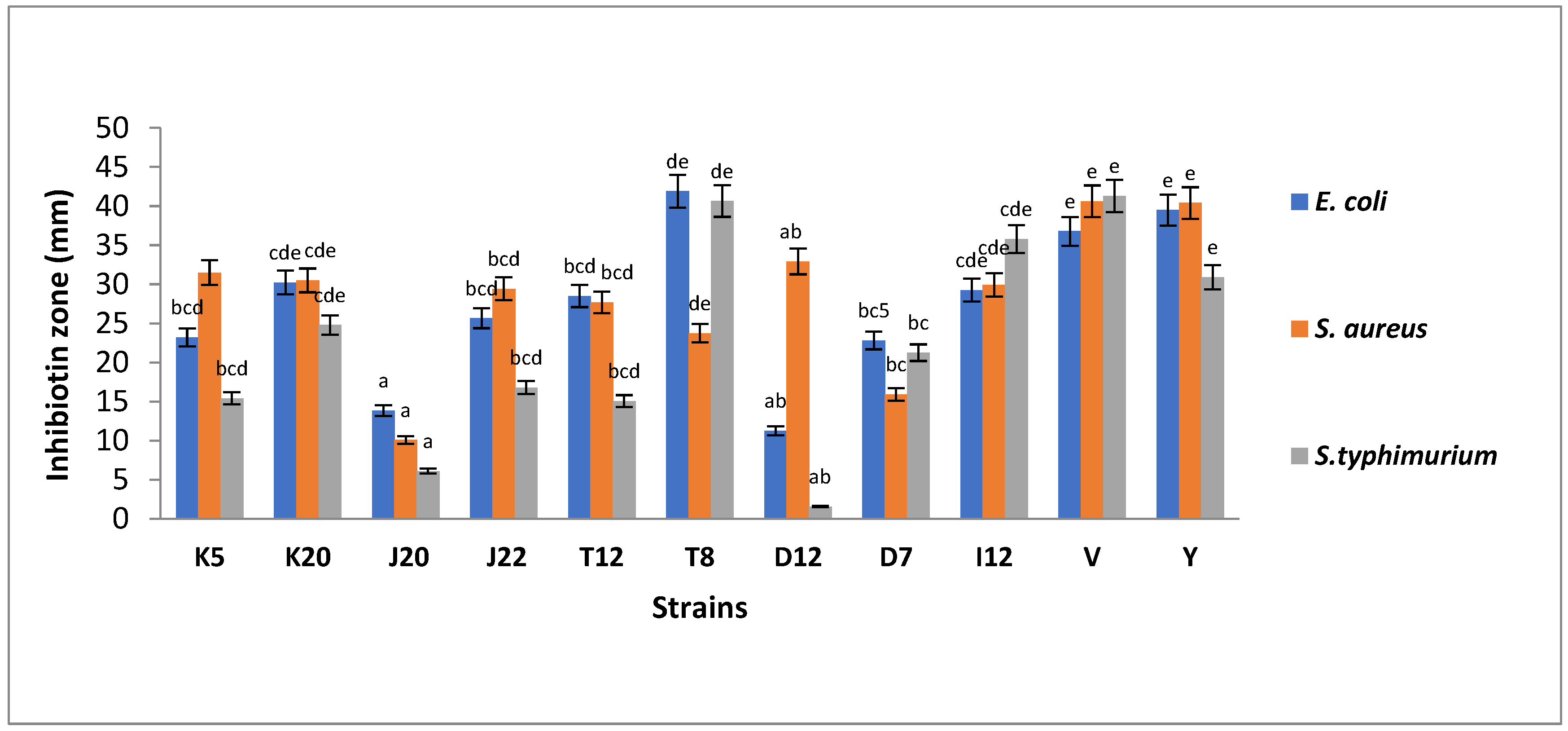
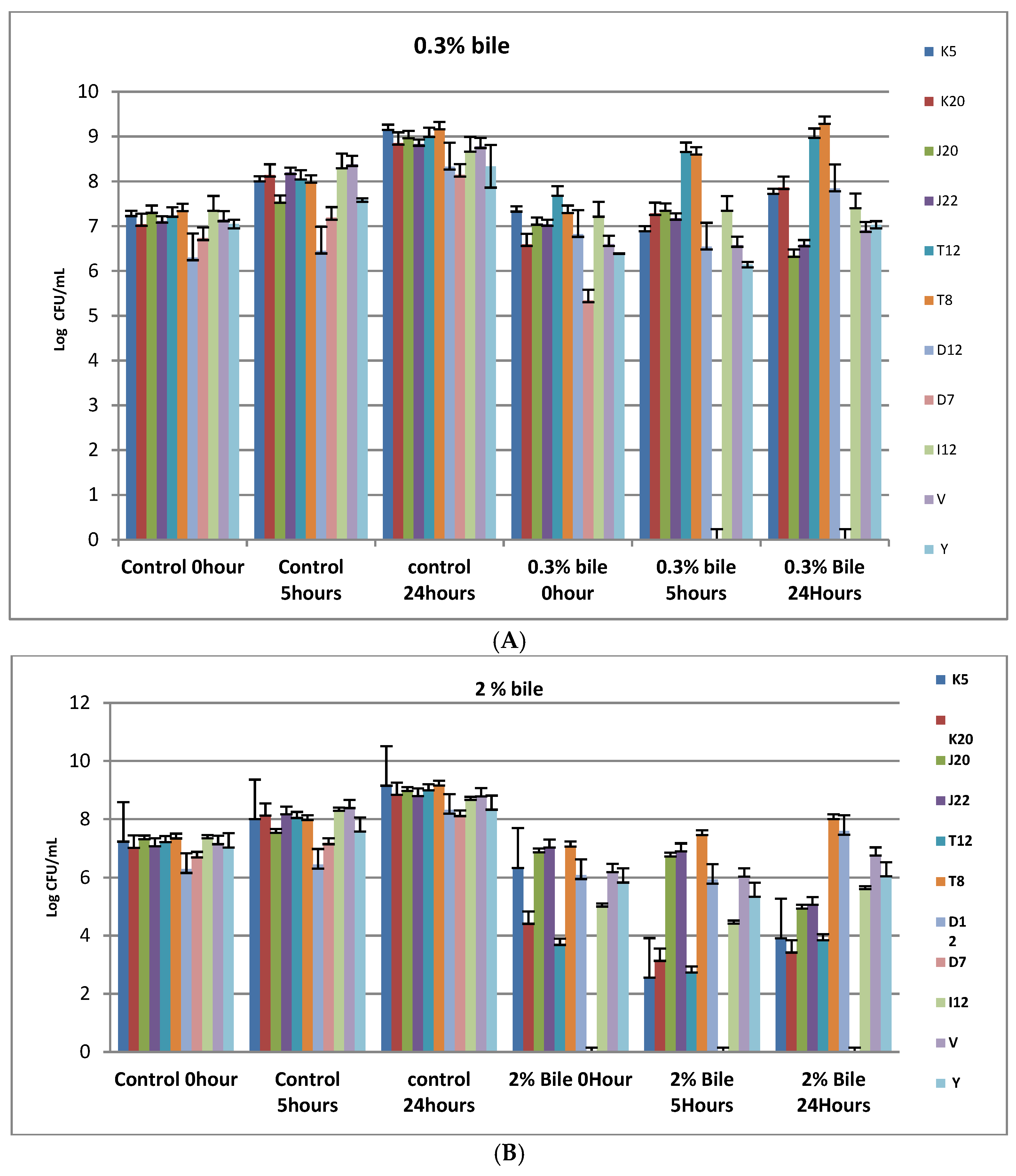
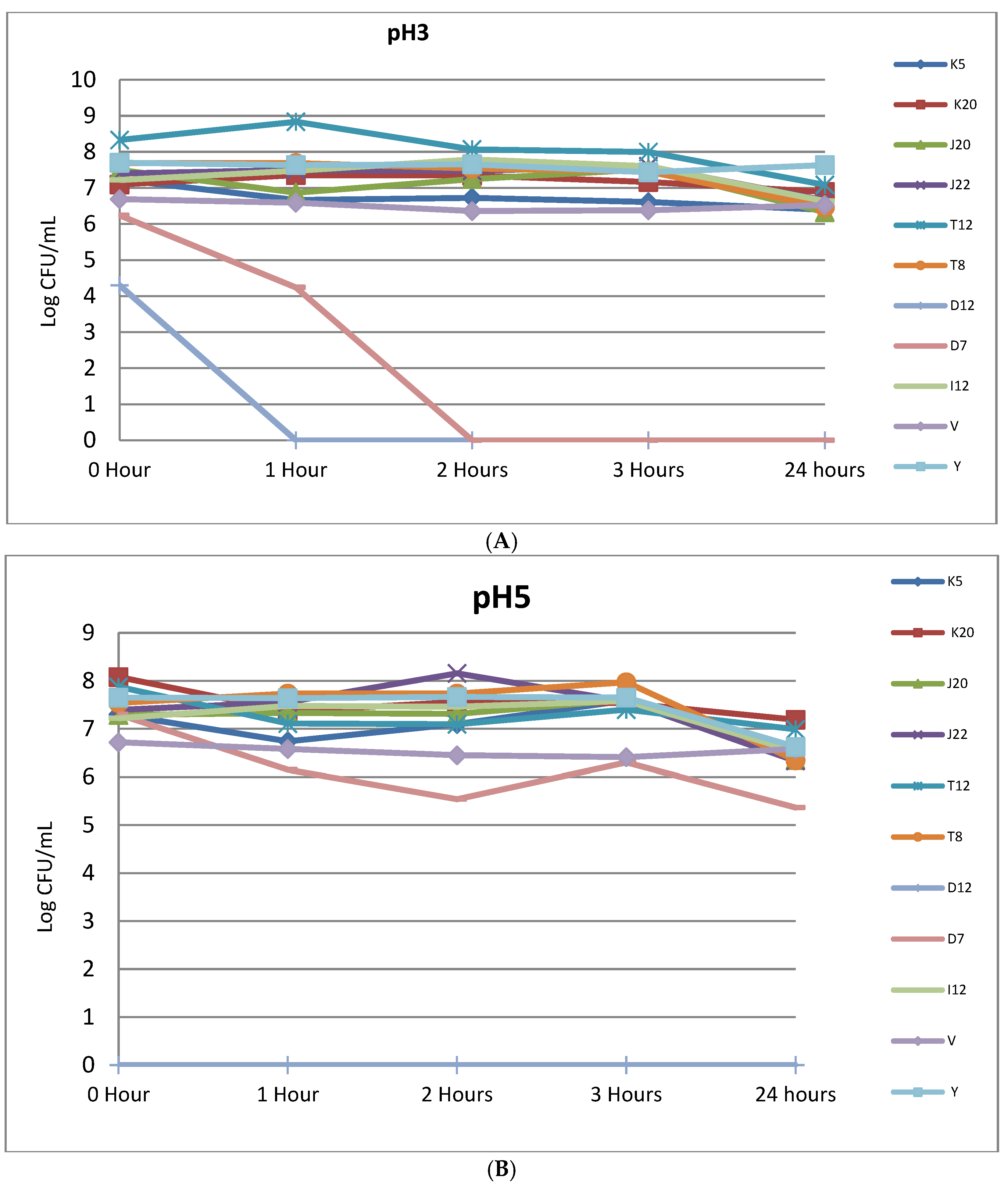
Fermented foods are thought to provide a source of probiotics that promote gut health. Consequently, isolation and characterization of fermented food strains and their applications in a controlled fermentation process or as probiotics present a new facet in this area of research. Therefore, the current study sought to identify dominant strains in sorghum-fermented foods (ting) and characterize their probiotic potential in vitro. Recovered isolates were identified as Lactobacillus helveticus, Lactobacillus amylolyticus, Lacticaseibacillus paracasei, Lacticaseibacillus paracasei subsp paracasei, Lactiplantibacillus plantarum, Levilactobacillus brevis, Loigolactobacillus coryniformis and Loigolactobacillus coryniformis subsp torquens based on the their 16S rRNA sequences. Increased biomass was noted in seven out of nine under a low pH of 3 and a high bile concentration of 2% in vitro. Bactericidal activities of isolated LABs presented varying degrees of resistance against selected pathogenic bacteria ranging between (1.57 to 41 mm), (10 to 41 mm), and (11.26 to 42 mm) for Salmonella typhimurium ATTC 14028, Staphylococcus aureus ATTC 6538 and Escherichia coli ATTC8739, respectively. Ampicillin, erythromycin, mupirocin, tetracycline and chloramphenicol were able to inhibit growth of all selected LABs. Thus, isolates recovered from ting partially satisfy the potential candidacy for probiotics by virtue of being more tolerant to acid and bile, antibacterial activity and antibiotic resistance.
Keywords: fermentation; sorghum; ting; starter cultures; lactic acid bacteria; probiotics; antibacterial activity fermentation; sorghum; ting; starter cultures; lactic acid bacteria; probiotics; antibacterial activity