Review

Host Immune Responses to Surface S-Layer Proteins (SLPs) of Clostridioides difficile

1
Department of Environmental Microbiology, School of Earth and Environmental Sciences, Babasaheb Bhimrao Ambedkar University, Lucknow 226025, UP, India
2
Department of Molecular and Cellular Biosciences, University of Cincinnati College of Medicine, Cincinnati, OH 45267, USA
3
Department of Environmental and Public Health Sciences, University of Cincinnati College of Medicine, Cincinnati, OH 45267, USA
4
Department of Molecular Medicine, Morsani College of Medicine, University of South Florida, Tampa, FL 33612, USA
*
Authors to whom correspondence should be addressed.
Microorganisms 2023, 11(2), 380; https://doi.org/10.3390/microorganisms11020380

Submission received: 1 January 2023 / Revised: 28 January 2023 / Accepted: 1 February 2023 / Published: 2 February 2023
(This article belongs to the Special Issue Gram Positive Toxins Producing Organisms)

Abstract

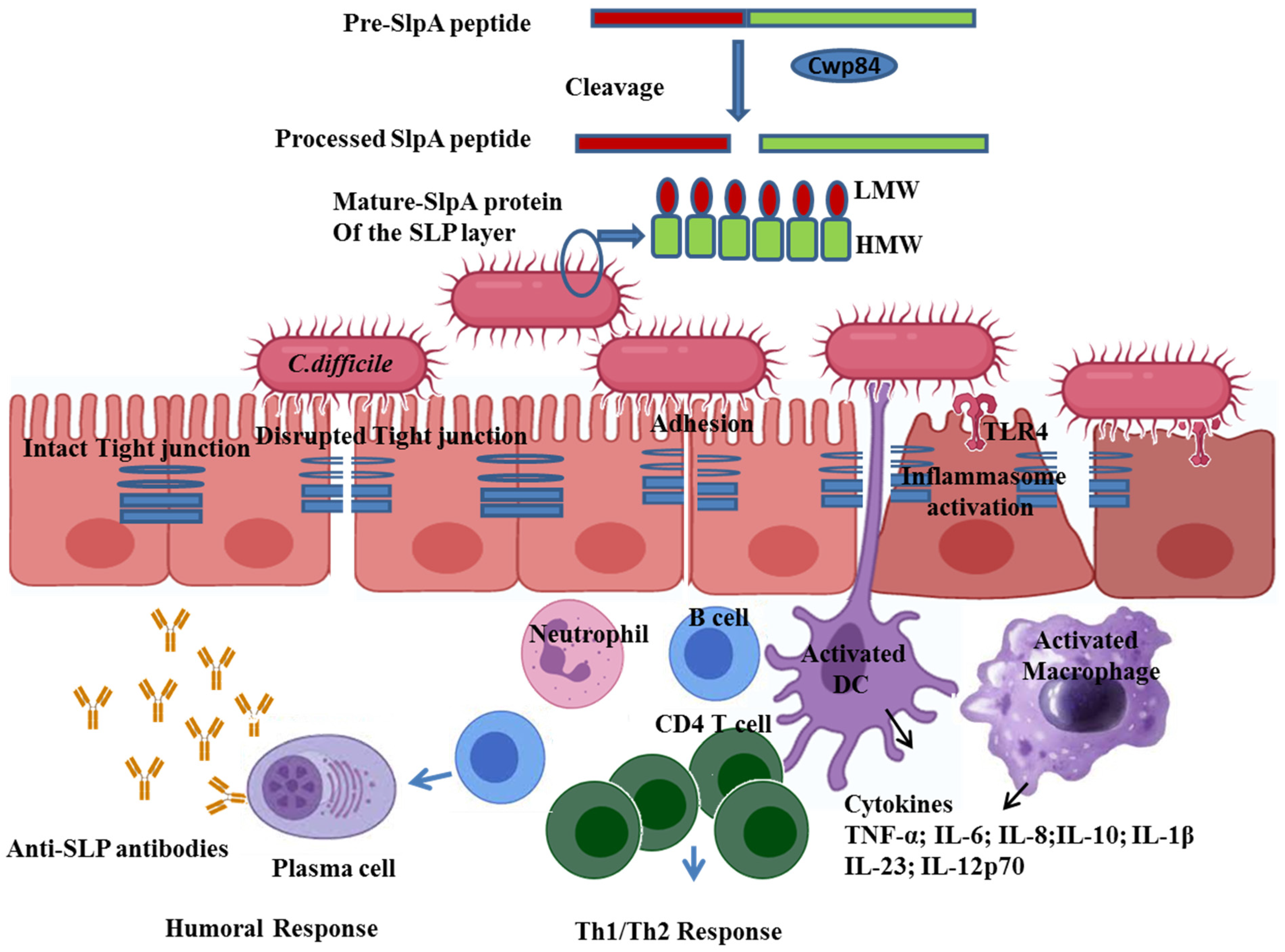
Clostridioides difficile, a nosocomial pathogen, is an emerging gut pathobiont causing antibiotic-associated diarrhea. C. difficile infection involves gut colonization and disruption of the gut epithelial barrier, leading to the induction of inflammatory/immune responses. The expression of two major exotoxins, TcdA and TcdB is the major cause of C. difficile pathogenicity. Attachment of bacterial abundant cell wall proteins or surface S-layer proteins (SLPs) such as SlpA with host epithelial cells is critical for virulence. In addition to being toxins, these surface components have been shown to be highly immunogenic. Recent studies indicate that C. difficile SLPs play important roles in the adhesion of the bacteria to the intestinal epithelial cells, disruption of tight junctions, and modulation of the immune response of the host cells. These proteins might serve as new targets for vaccines and new therapeutic agents. This review summarizes our current understanding of the immunological role of SLPs in inducing host immunity and their use in the development of vaccines and novel therapeutics to combat C. difficile infection.
Keywords: antibiotic-associated diarrhea; cell wall proteins; therapeutics; S-layer proteins; vaccine antibiotic-associated diarrhea; cell wall proteins; therapeutics; S-layer proteins; vaccine