Review

Endophytic Diaporthe as Promising Leads for the Development of Biopesticides and Biofertilizers for a Sustainable Agriculture


by
Sandra Hilário
1 and
Micael F. M. Gonçalves
2,*
1
Centre for Environmental and Marine Studies (CESAM), Department of Biology, University of Aveiro, Campus Universitário de Santiago, 3810-193 Aveiro, Portugal
2
Division of Microbiology, Department of Pathology, Faculty of Medicine, University of Porto, 4200-319 Porto, Portugal
*
Author to whom correspondence should be addressed.
Microorganisms 2022, 10(12), 2453; https://doi.org/10.3390/microorganisms10122453

Submission received: 17 November 2022 / Revised: 6 December 2022 / Accepted: 8 December 2022 / Published: 12 December 2022
(This article belongs to the Special Issue Microorganisms as Biocontrol Agents in Plant Pathology)

Abstract

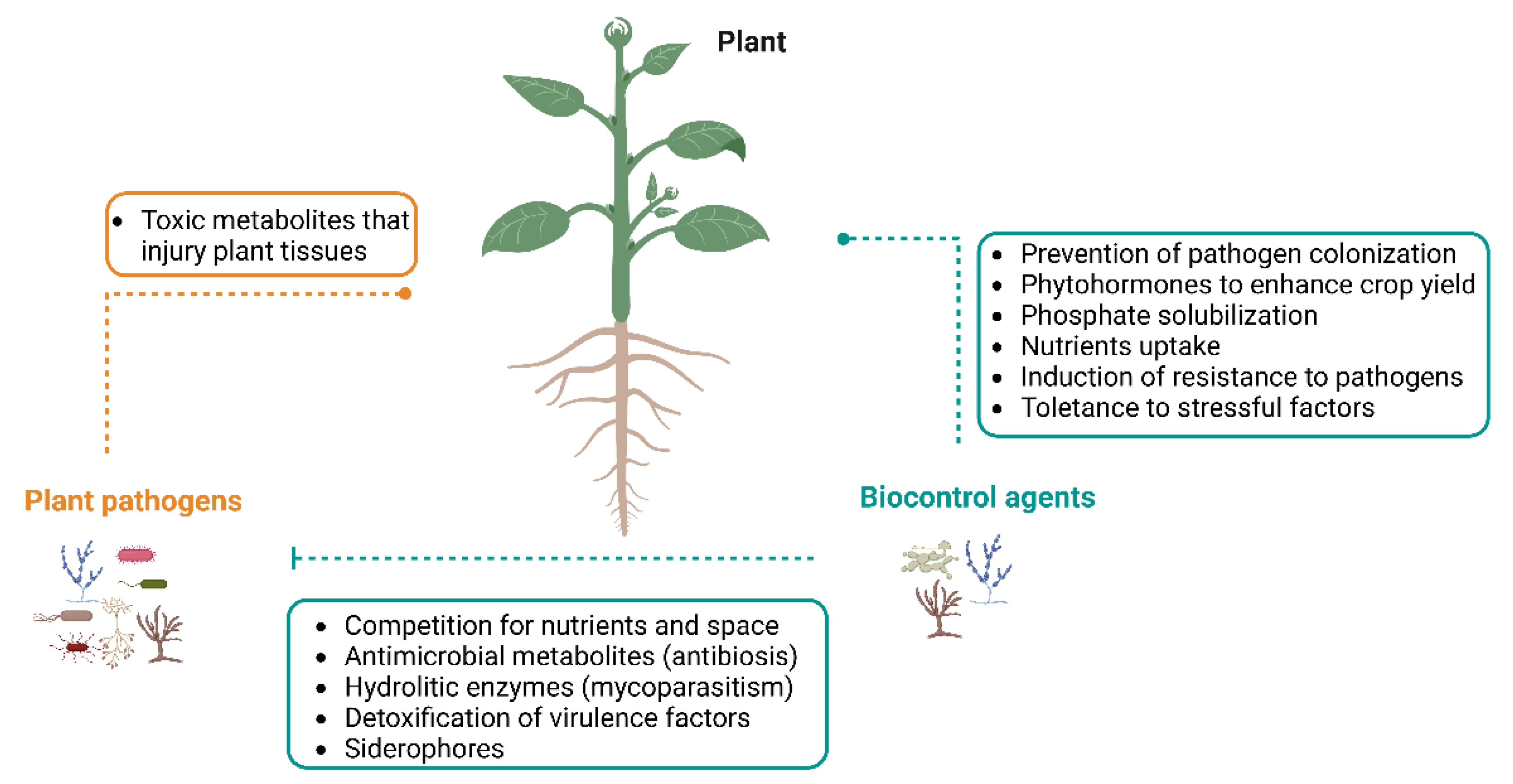
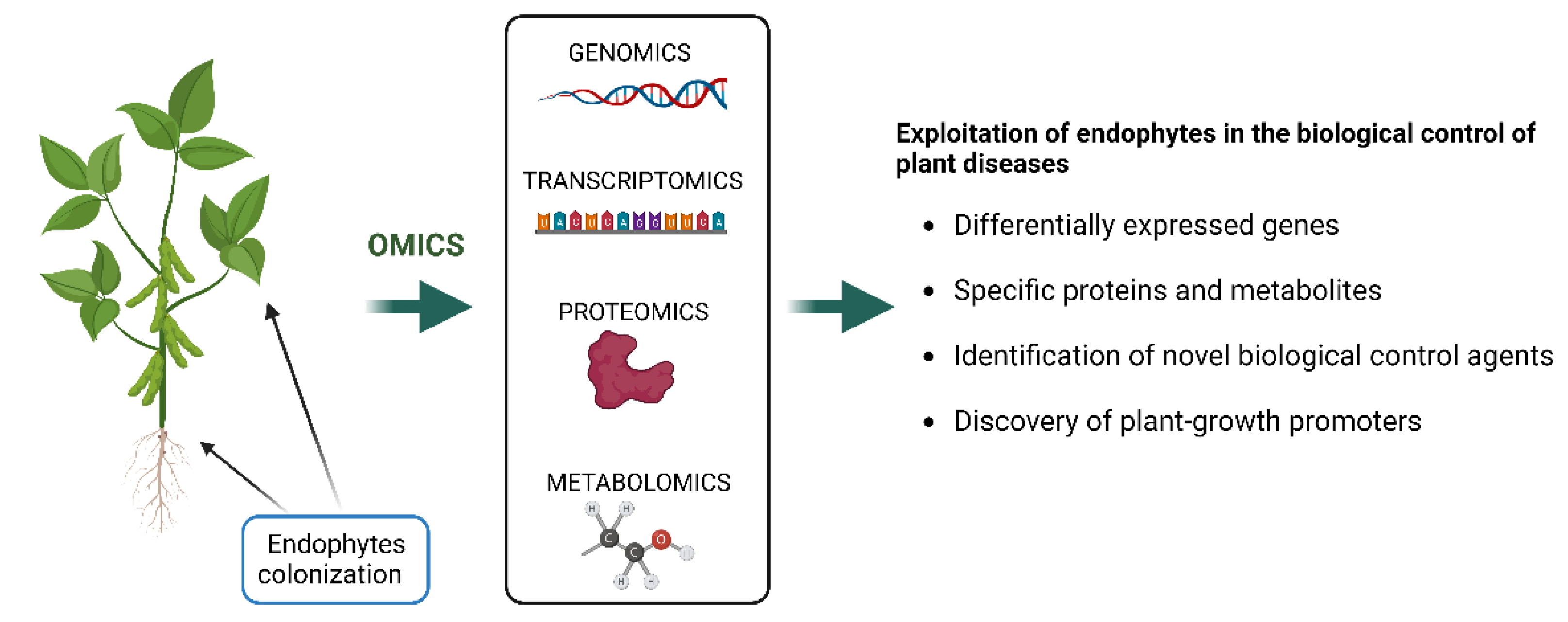
Plant pathogens are responsible for causing economic and production losses in several crops worldwide, thus reducing the quality and quantity of agricultural supplies. To reduce the usage of chemically synthesized pesticides, strategies and approaches using microorganisms are being used in plant disease management. Most of the studies concerning plant-growth promotion and biological agents to control plant diseases are mainly focused on bacteria. In addition, a great portion of registered and commercialized biopesticides are bacterial-based products. Despite fungal endophytes having been identified as promising candidates for their use in biological control, it is of the utmost importance to develop and improve the existing knowledge on this research field. The genus Diaporthe, encompasses plant pathogens, saprobes and endophytes that have been screened for secondary metabolite, mainly due to their production of polyketides and a variety of unique bioactive metabolites with agronomic importance. Some of these metabolites exhibit antifungal and antibacterial activity for controlling plant pathogens, and phytotoxic activity for the development of potential mycoherbicides. Moreover, species of Diaporthe are reported as promising agents in the development of biofertilizers. For this reason, in this review we summarize the potential of Diaporthe species to produce natural products with application in agriculture and describe the benefits of these fungi to promote their host plant’s growth.
Keywords: antibacterial; antifungal; biofertilizers; endophytes; mycoherbicides; plant promoters antibacterial; antifungal; biofertilizers; endophytes; mycoherbicides; plant promoters