Article

Diversity in the Common Fold: Structural Insights into Class D β-Lactamases from Gram-Negative Pathogens

by
Clyde A. Smith
1,2,* and
Anastasiya Stasyuk
1,3
1
Stanford Synchrotron Radiation Lightsource, SLAC National Accelerator Laboratory, Menlo Park, CA 94025, USA
2
Department of Chemistry, Stanford University, Stanford, CA 94303, USA
3
University of California Davis Medical Center, Sacramento, CA 95817, USA
*
Author to whom correspondence should be addressed.
Pathogens 2025, 14(8), 761; https://doi.org/10.3390/pathogens14080761

Submission received: 1 July 2025 / Revised: 25 July 2025 / Accepted: 27 July 2025 / Published: 1 August 2025

Abstract

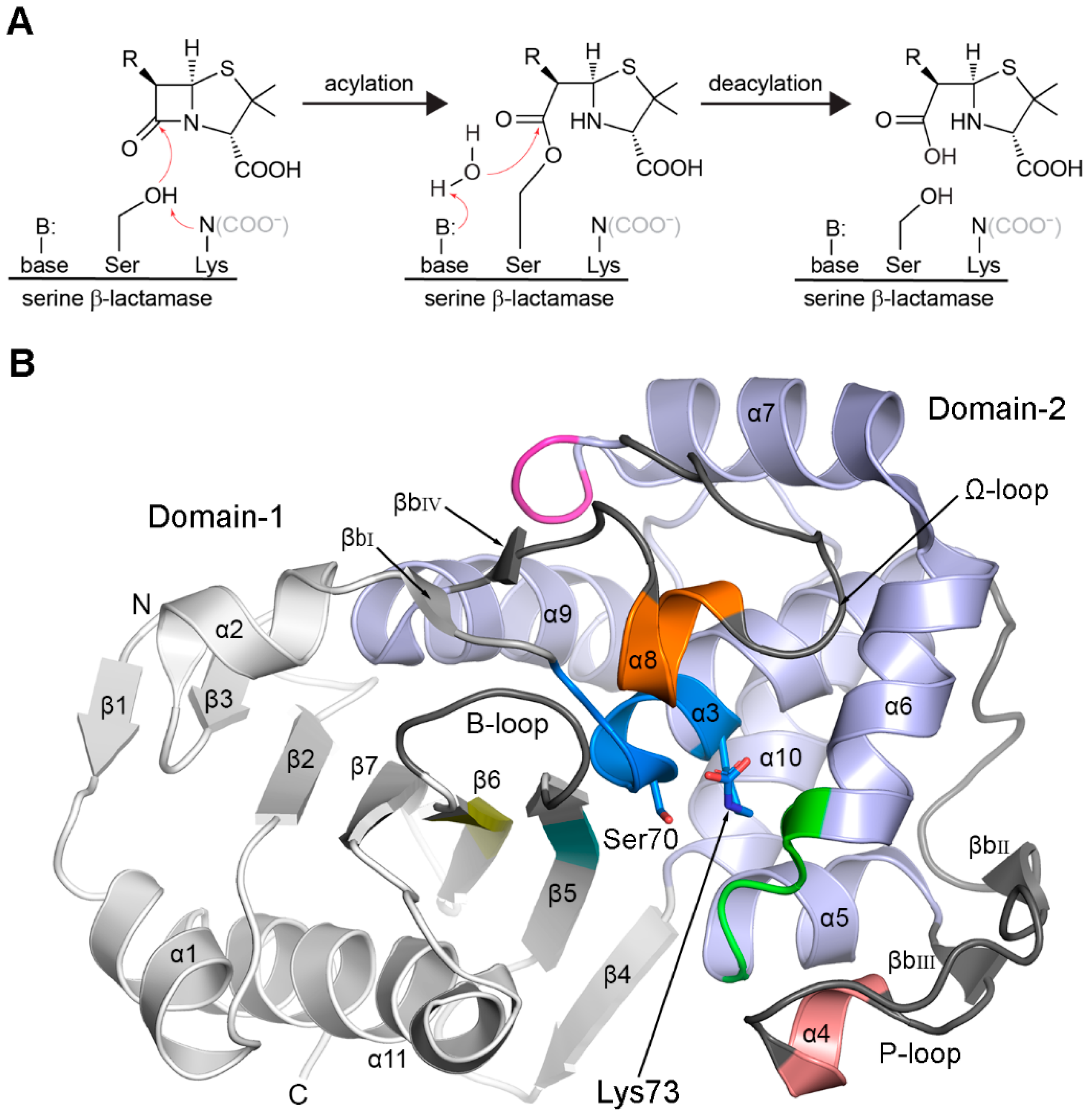
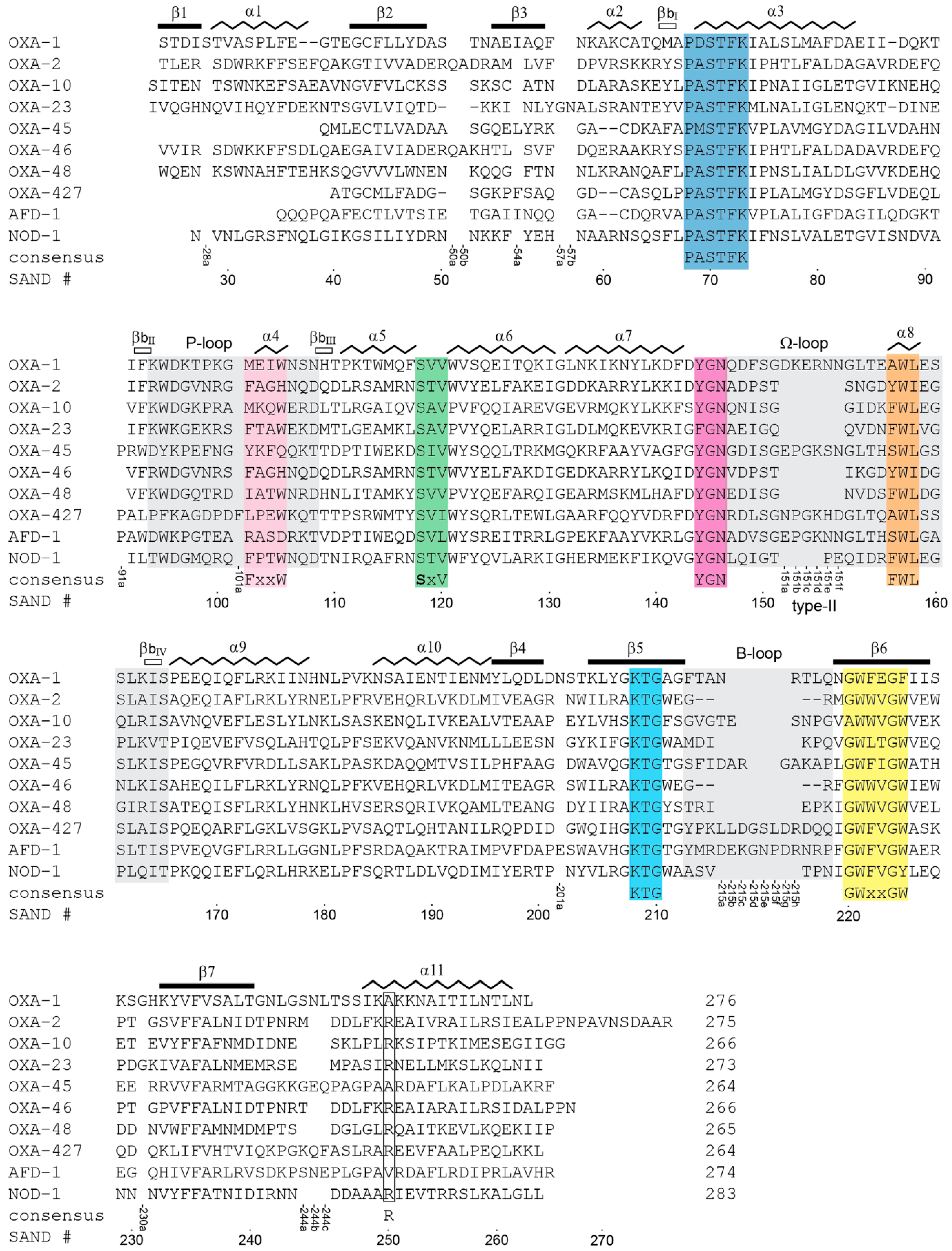
Class D β-lactamases (DBLs) represent a major threat to antibiotic efficacy by hydrolyzing β-lactam drugs, including last-resort carbapenems, thereby driving antimicrobial resistance in Gram-negative bacteria. The enzymes share a structurally conserved two-domain α/β architecture with seven active-site motifs and three flexible extended loops (the P-loop, Ω-loop, and newly designated B-loop) that surround the active site. While each of these loops is known to influence enzyme function, their coordinated roles have not been fully elucidated. To investigate the significance of their interplay, we compared the sequences and crystal structures of 40 DBLs from clinically relevant Gram-negative pathogens and performed molecular dynamics simulations on selected representatives. Combined structural and dynamical analyses revealed a strong correlation between B-loop architecture and carbapenemase activity in the pathogens Klebsiella and Acinetobacter, particularly regarding loop length and spatial organization. These findings emphasize the B-loop’s critical contribution, in concert with the P- and Ω-loops, in tuning active site versatility, substrate recognition, catalytic activity, and structural stability. A deeper understanding of how these motifs and loops govern DBL function may inform the development of novel antibiotics and inhibitors targeting this class of enzymes.
Keywords: gram-negative; antibiotic resistance; β-lactamase; carbapenemase; structural dynamics gram-negative; antibiotic resistance; β-lactamase; carbapenemase; structural dynamics