Integrated Life Cycle Environmental Impact and Mechanical Durability-Related Assessment of Sustainable Pozzolanic Mortars

 , , ,
, , ,  , , and
Abstract
1. Introduction
2. Materials and Methods
2.1. Materials
2.2. Mixture Proportions and Methods
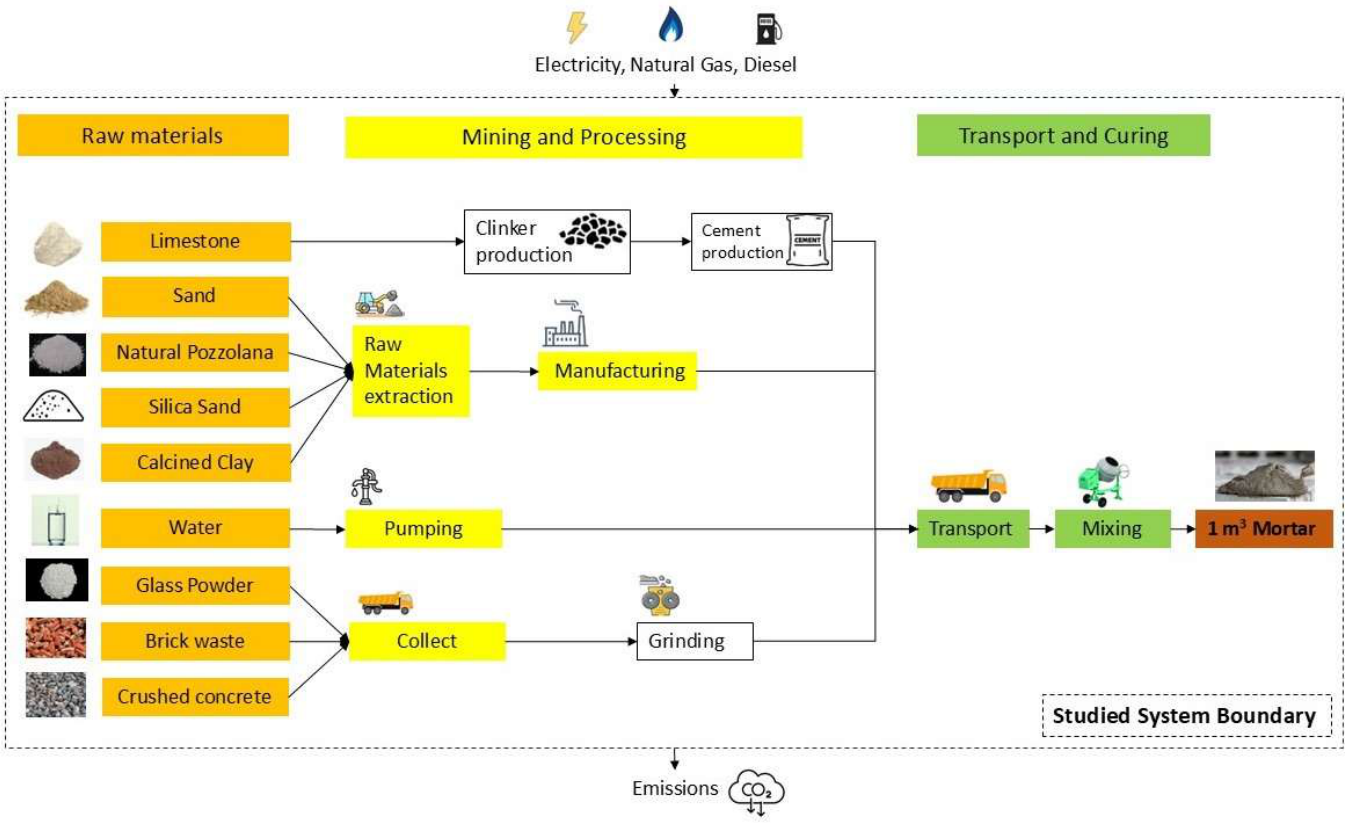
2.3. Life Cycle Assessment (LCA) Methodology
3. Results and Discussion
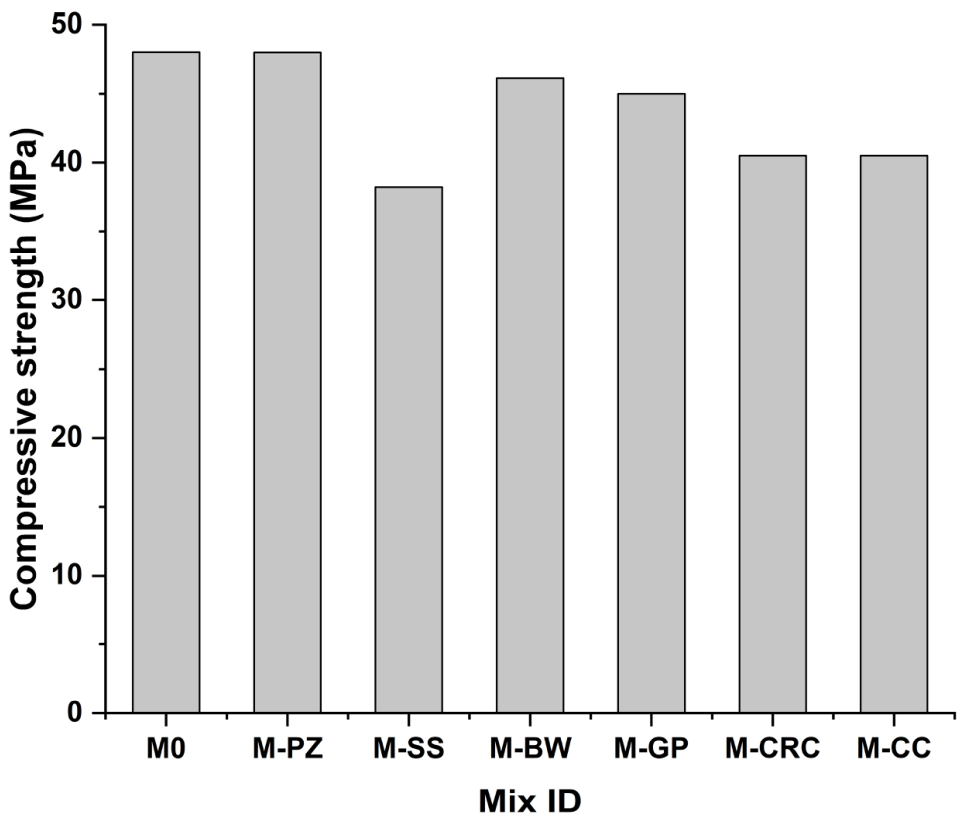
3.1. Compressive Strength Analysis
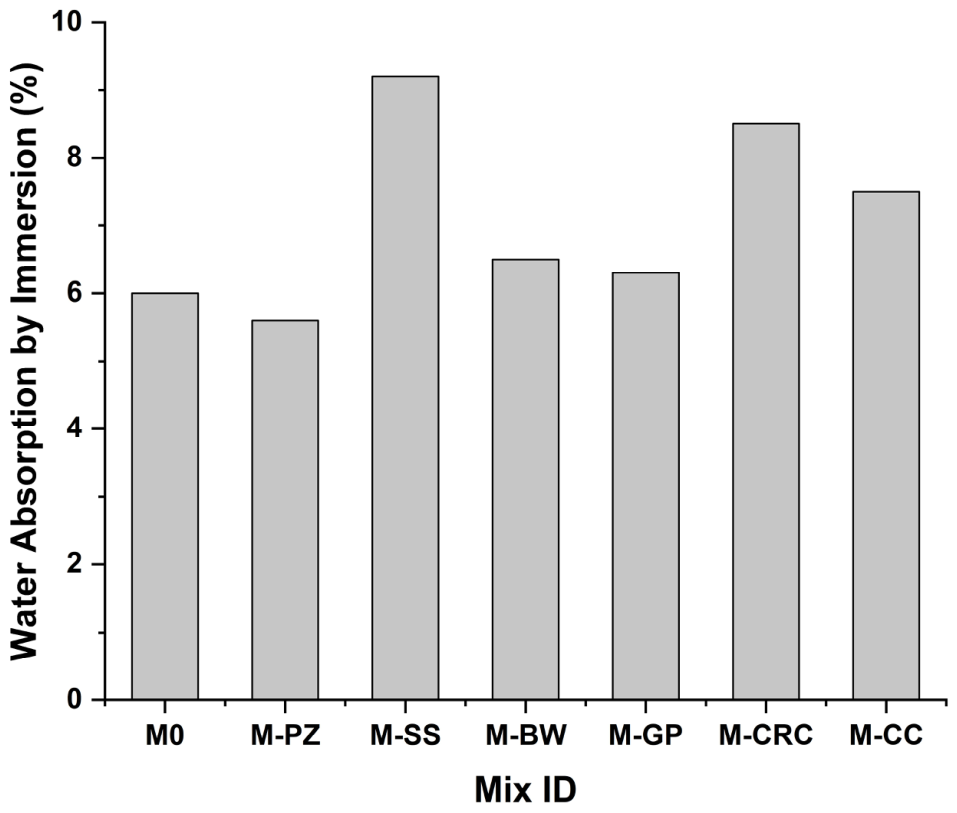
3.2. Water Absorption by Immersion
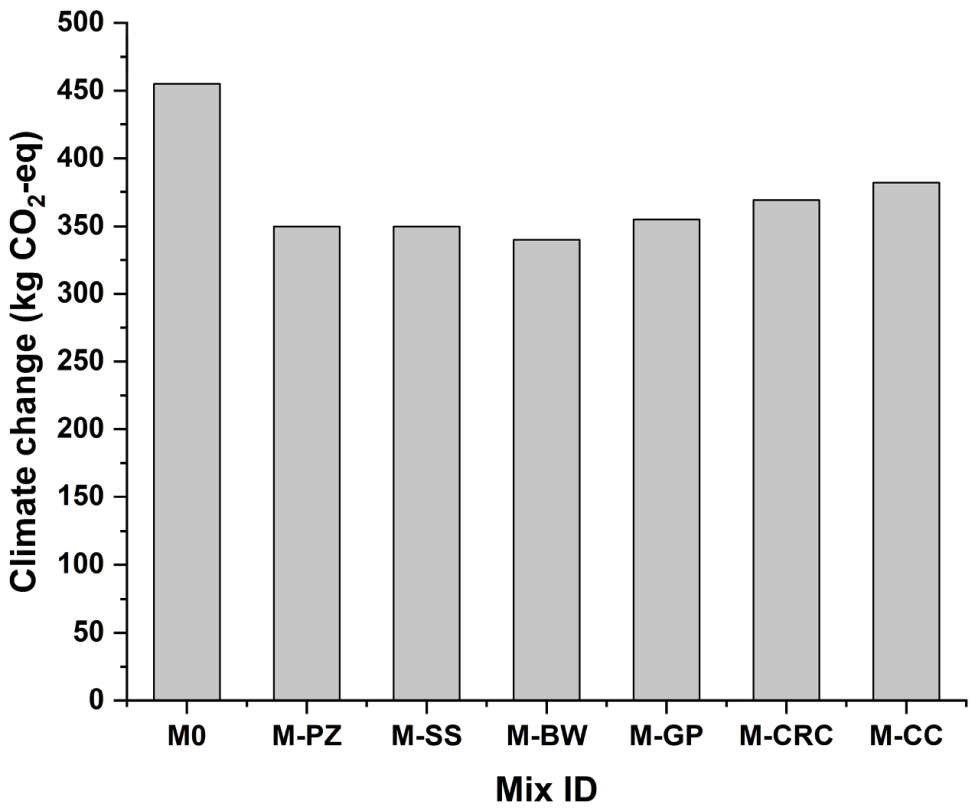
3.3. Impact of SCM Type on Climate Change
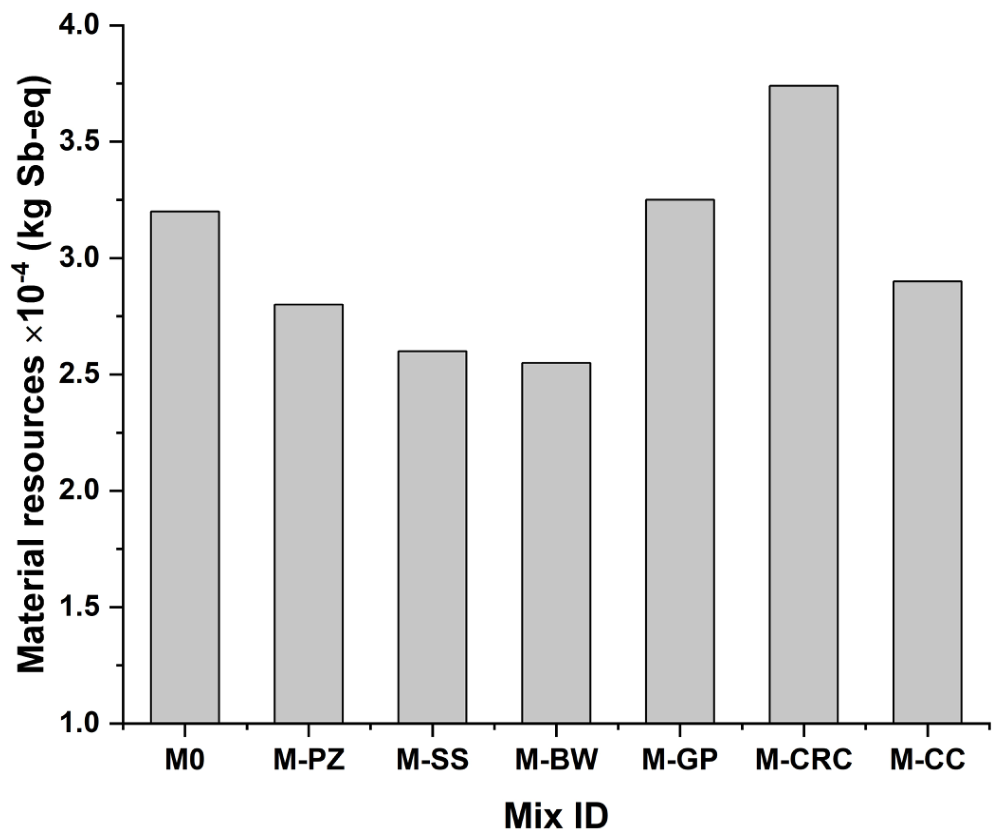
3.4. Impact of SCM Type on Materials Resources
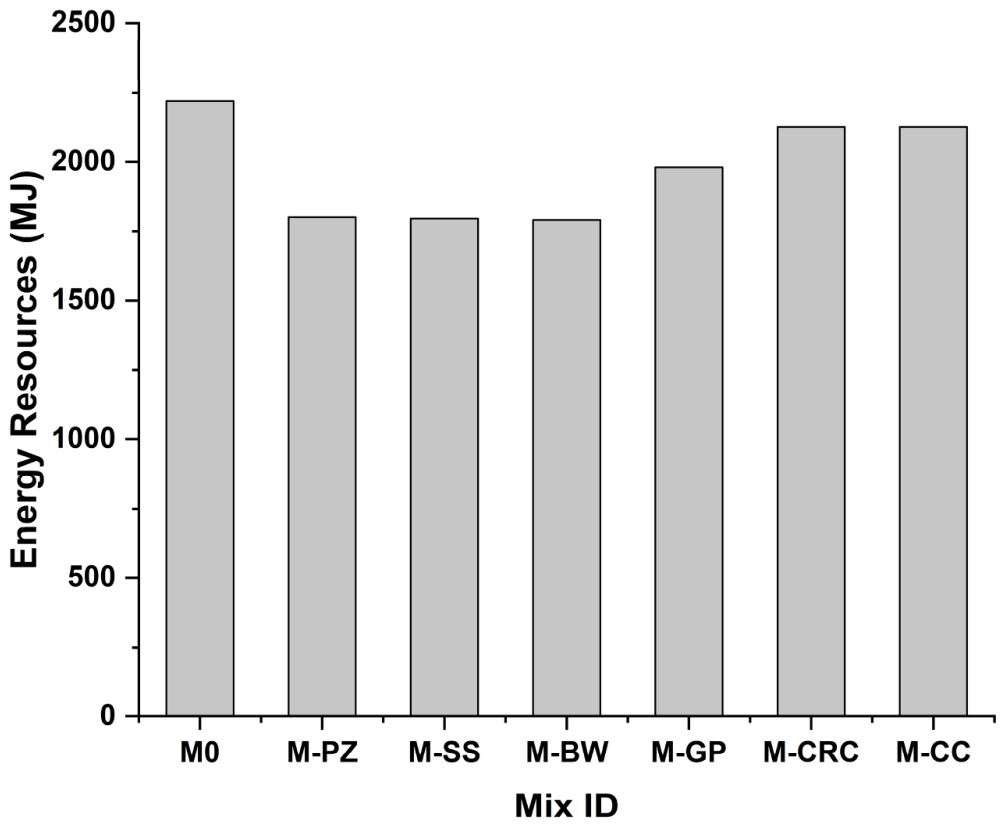
3.5. Impact of SCM Type on Energy Resources
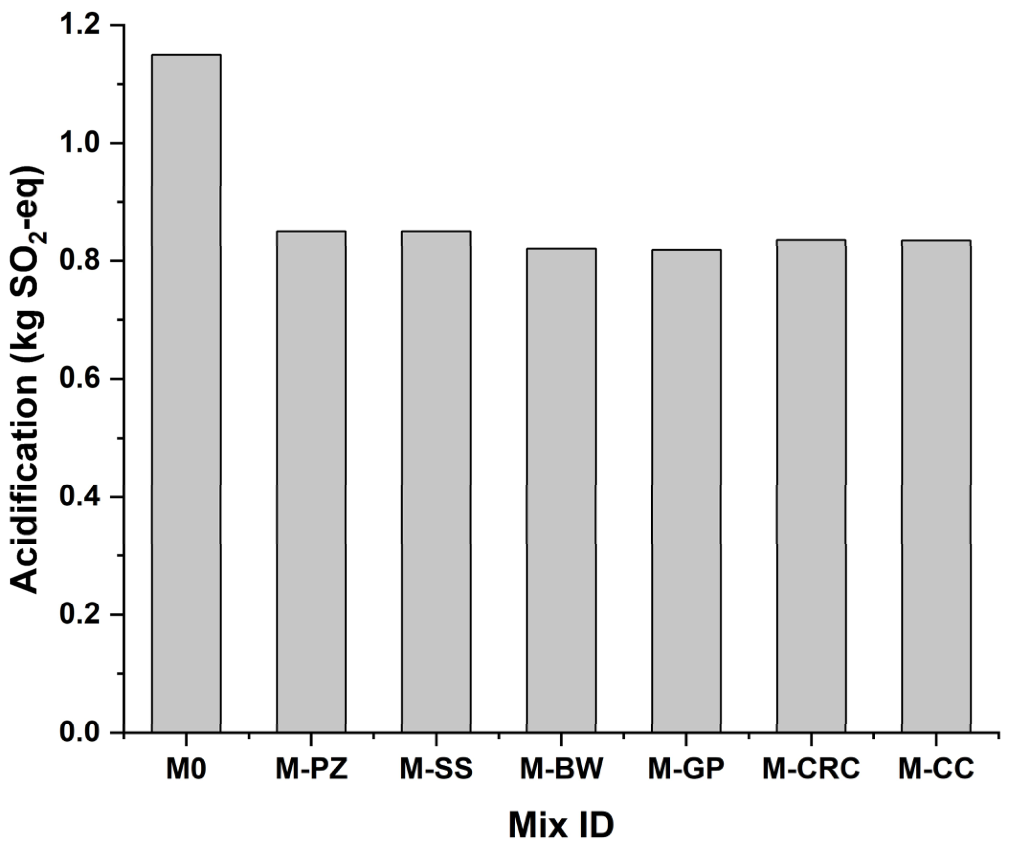
3.6. Impact of SCM Type on Acidification
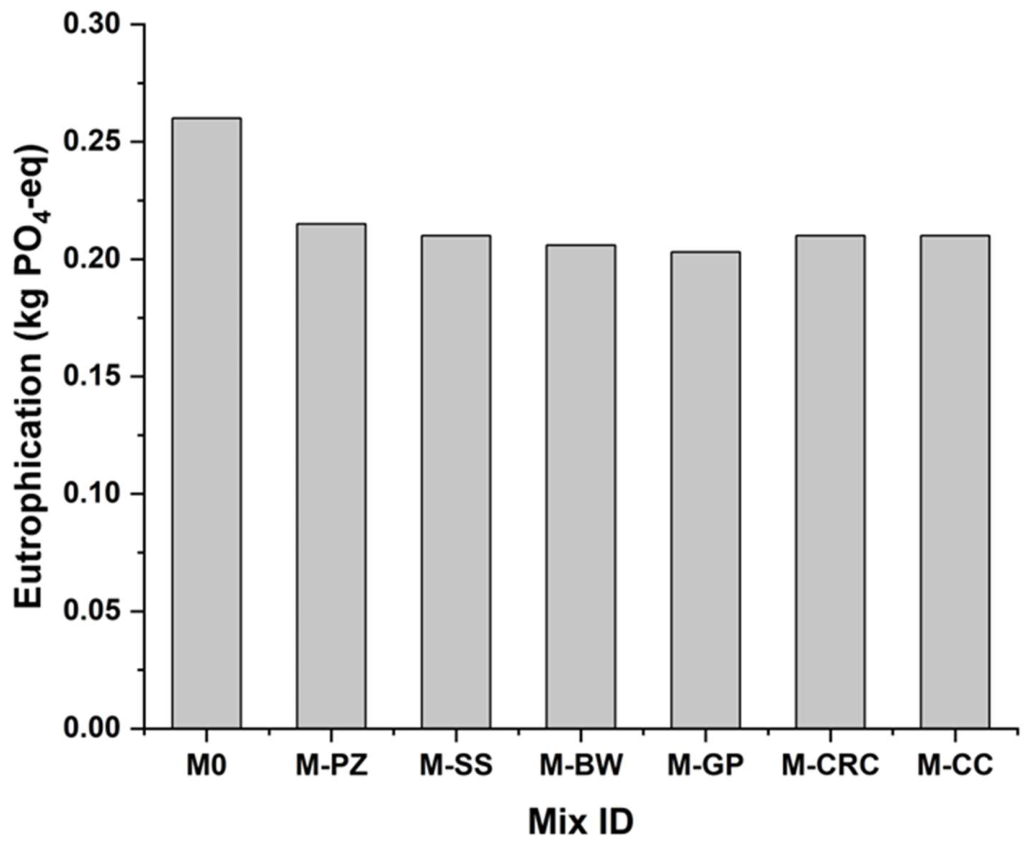
3.7. Impact of SCM Type on the Eutrophication
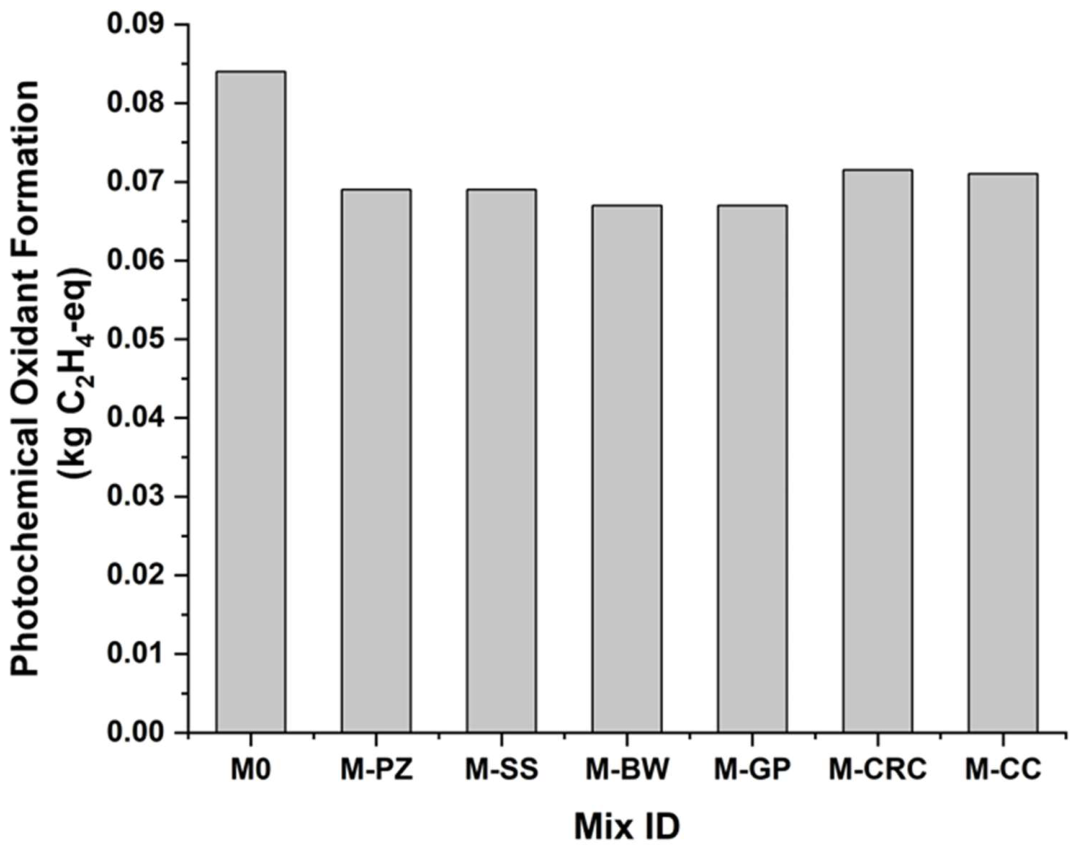
3.8. Impact of SCM Type on Photochemical Oxidant Formation
4. Practical Implications, Limitations, and Future Directions
5. Conclusions
- Natural pozzolan and brick waste achieved compressive strengths very close to the reference mortar, with reductions lower than 1% and 4%, respectively, indicating that their pozzolanic reactivity and SCM effect effectively compensated for clinker dilution.
- Glass powder showed a moderate strength reduction of approximately 6–7%, which remains acceptable for many structural and non-structural applications.
- Silica sand, recycled concrete powder, and calcined clay exhibited more pronounced strength reductions, ranging from approximately 15% to 20%, mainly due to clinker dilution, inherited porosity, and limited or delayed pozzolanic activity.
- The incorporation of natural pozzolan reduced water absorption by approximately 7% compared with the reference mortar, indicating enhanced pore refinement and matrix densification.
- Brick waste and glass powder resulted in slight increases in absorption, limited to approximately 5–8%, suggesting that their use does not significantly deteriorate the pore structure.
- Calcined clay, recycled concrete powder, and silica sand led to higher increases in water absorption, ranging from approximately 25% to over 50%, reflecting increased connected capillary porosity and potential durability concerns.
- All mortars incorporating 20% cement substitution exhibited significant reductions across the assessed LCA impact categories.
- Reductions of approximately 15–20% were consistently observed for climate change, acidification, eutrophication, photochemical oxidant formation, non-renewable energy consumption, and material resource depletion, relative to the reference mortar.
- Waste-derived materials, particularly brick waste, provided the most favorable environmental performance due to clinker reduction and material valorization, while materials requiring intensive processing showed slightly lower but still substantial environmental gains.
Author Contributions
Funding
Data Availability Statement
Acknowledgments
Conflicts of Interest
References
- Douadi, A.; Makhlouf, A.; Belebchouche, C.; Hebbache, K.; Boutlikht, M.; Moretti, L.; Faria, P.; Abderazek, H.; Czarnecki, S.; Chajec, A. Synergistic optimization of mortar performance and carbon footprint reduction using quarry wastes and natural pozzolana: A statistical and experimental study. Sustainability 2025, 17, 7346. [Google Scholar] [CrossRef]
- Khitas, N.E.H.; Hebbache, K.; Douadi, A.; Boutlikht, M.; Belebchouche, C.; Messai, A.; Mahar, N.E.-H.; Del Serrone, G.; Moretti, L.; Czarnecki, S. Modeling and optimizing the properties of mortars based on natural pozzolan, silica sand, and recycled brick waste mixture design: A technical and environmental study. Constr. Build. Mater. 2025, 459, 139706. [Google Scholar] [CrossRef]
- Kweku, D.W.; Bismark, O.; Maxwell, A.; Desmond, K.A.; Danso, K.B.; Oti-Mensah, E.A.; Quachie, A.T.; Adormaa, B.B. Greenhouse effect: Greenhouse gases and their impact on global warming. J. Sci. Res. Rep. 2018, 17, 1–9. [Google Scholar] [CrossRef]
- Thanatrakolsri, P.; Sirithian, D. Evaluation of greenhouse gas emissions and mitigation measures at Thammasat University’s Lampang campus in Thailand. Environ. Health Insights 2024, 18, 11786302241253589. [Google Scholar] [CrossRef] [PubMed]
- Assadi, N. Environmental Impacts of Cement Production with LCA: A Case Study on Ghori Cement Plant in Afghanistan. Master’s Thesis, Akita University, Akita, Japan, 2020. [Google Scholar]
- Wahedy, M.N.; Sharbatdar, M.K.; Rezaifar, O. Mechanical, environmental, and economic assessment of sustainable cement mortar using Afghan natural pozzolan as a partial replacement for cement. Constr. Build. Mater. 2023, 386, 131574. [Google Scholar] [CrossRef]
- Kaygusuz, K. Energy for sustainable development: A case of developing countries. Renew. Sustain. Energy Rev. 2012, 16, 1116–1126. [Google Scholar] [CrossRef]
- Lehne, J.; Preston, F. Making Concrete Change. Innovation in Low-Carbon Cement and Concrete; Chatham House: London, UK, 2018; pp. 1–66. [Google Scholar]
- Reeder, L. Guide to Green Building Rating Systems: Understanding LEED, Green Globes, Energy Star, the National Green Building Standard, and More; John Wiley & Sons: Hoboken, NJ, USA, 2010; Volume 12. [Google Scholar]
- Gautam, L.; Purbe, M.K.; Sharma, K.V.; Kumar, C.; Kalita, P.P. Environmental impact mitigation and durability enhancement of concrete through fly ash substitution: A comprehensive review. J. Build. Pathol. Rehabil. 2025, 10, 99. [Google Scholar] [CrossRef]
- Soldado, E.; Antunes, A.; Costa, H.; Do Carmo, R.; Júlio, E. Influence of pozzolan, slag and recycled aggregates on the mechanical and durability properties of low cement concrete. Materials 2021, 14, 4173. [Google Scholar] [CrossRef] [PubMed]
- Hasan, M.T.; Abdul-Hamead, A.A.; Othman, F.M. Sustainable Concrete Using Porcelain and Clay Brick Waste as Partial Sand Replacement: Evaluation of Mechanical and Durability Properties. Constr. Mater. 2025, 5, 78. [Google Scholar] [CrossRef]
- Testing, A.S.f.; Concrete, M.C.C.-o.; Aggregates, C. Standard Test Methods for Sampling and Testing Fly Ash or Natural Pozzolans for Use in Portland-Cement Concrete; ASTM International: West Conshohocken, PA, USA, 2019. [Google Scholar]
- Madani, H.; Norouzifar, M.N.; Rostami, J. The synergistic effect of pumice and silica fume on the durability and mechanical characteristics of eco-friendly concrete. Constr. Build. Mater. 2018, 174, 356–368. [Google Scholar] [CrossRef]
- Moolchandani, K. Advancements in pumice-based concrete: A comprehensive review. Next Mater. 2025, 8, 100646. [Google Scholar] [CrossRef]
- Tahwia, A.M.; Abdellatief, M.; Salah, A.; Youssf, O. Valorization of recycled concrete powder, clay brick powder, and volcanic pumice powder in sustainable geopolymer concrete. Sci. Rep. 2025, 15, 11049. [Google Scholar] [CrossRef] [PubMed]
- Subaşı, A.; Emiroğlu, M. Effect of metakaolin substitution on physical, mechanical and hydration process of White Portland cement. Constr. Build. Mater. 2015, 95, 257–268. [Google Scholar] [CrossRef]
- Lv, X.; Dong, Y.; Wang, R.; Lu, C.; Wang, X. Resistance improvement of cement mortar containing silica fume to external sulfate attacks at normal temperature. Constr. Build. Mater. 2020, 258, 119630. [Google Scholar] [CrossRef]
- Hsu, S.; Chi, M.; Huang, R. Effect of fineness and replacement ratio of ground fly ash on properties of blended cement mortar. Constr. Build. Mater. 2018, 176, 250–258. [Google Scholar] [CrossRef]
- Tang, Q.; Ma, Z.; Wu, H.; Wang, W. The utilization of eco-friendly recycled powder from concrete and brick waste in new concrete: A critical review. Cem. Concr. Compos. 2020, 114, 103807. [Google Scholar] [CrossRef]
- Thomas, B.S.; Kumar, S.; Arel, H.S. Sustainable concrete containing palm oil fuel ash as a supplementary cementitious material–A review. Renew. Sustain. Energy Rev. 2017, 80, 550–561. [Google Scholar] [CrossRef]
- Jagadesh, P.; Ramachandramurthy, A.; Murugesan, R. Processing of sugar cane bagasse ash and properties of processed sugar cane bagasse ash blended cements. Sādhanā 2022, 47, 187. [Google Scholar] [CrossRef]
- Fernando, S.; Gunasekara, C.; Law, D.W.; Nasvi, M.; Setunge, S.; Dissanayake, R. Life cycle assessment and cost analysis of fly ash–rice husk ash blended alkali-activated concrete. J. Environ. Manag. 2021, 295, 113140. [Google Scholar] [CrossRef]
- Vashistha, P.; Oinam, Y.; Kim, H.-K.; Pyo, S. Effect of thermo-mechanical activation of waste concrete powder (WCP) on the characteristics of cement mixtures. Constr. Build. Mater. 2023, 362, 129713. [Google Scholar] [CrossRef]
- Shen, P.; Zhang, Y.; Jiang, Y.; Zhan, B.; Lu, J.; Zhang, S.; Xuan, D.; Poon, C.S. Phase assemblance evolution during wet carbonation of recycled concrete fines. Cem. Concr. Res. 2022, 154, 106733. [Google Scholar] [CrossRef]
- Sui, Y.; Ou, C.; Liu, S.; Zhang, J.; Tian, Q. Study on properties of waste concrete powder by thermal treatment and application in mortar. Appl. Sci. 2020, 10, 998. [Google Scholar] [CrossRef]
- Jain, K.L.; Sancheti, G.; Gupta, L.K. Durability performance of waste granite and glass powder added concrete. Constr. Build. Mater. 2020, 252, 119075. [Google Scholar] [CrossRef]
- Idir, R.; Cyr, M.; Tagnit-Hamou, A. Pozzolanic properties of fine and coarse color-mixed glass cullet. Cem. Concr. Compos. 2011, 33, 19–29. [Google Scholar] [CrossRef]
- Matos, A.M.; Sousa-Coutinho, J. Durability of mortar using waste glass powder as cement replacement. Constr. Build. Mater. 2012, 36, 205–215. [Google Scholar] [CrossRef]
- Rakhimova, N.R. A review of calcined clays and ceramic wastes as sources for alkali-activated materials. Geosystem Eng. 2020, 23, 287–298. [Google Scholar] [CrossRef]
- Zunino, F.; Dhandapani, Y.; Ben Haha, M.; Skibsted, J.; Joseph, S.; Krishnan, S.; Parashar, A.; Juenger, M.C.; Hanein, T.; Bernal, S.A. Hydration and mixture design of calcined clay blended cements: Review by the RILEM TC 282-CCL. Mater. Struct. 2022, 55, 234. [Google Scholar] [CrossRef]
- Krishnan, S.; Bishnoi, S. Understanding the hydration of dolomite in cementitious systems with reactive aluminosilicates such as calcined clay. Cem. Concr. Res. 2018, 108, 116–128. [Google Scholar] [CrossRef]
- Shao, J.; Guo, S.; Wang, H. A review of the performance, sustainable applications, and research challenges of limestone-calcined clay-cement (LC3) systems. Coatings 2025, 15, 611. [Google Scholar] [CrossRef]
- Finkbeiner, M.; Inaba, A.; Tan, R.; Christiansen, K.; Klüppel, H.-J. The new international standards for life cycle assessment: ISO 14040 and ISO 14044. Int. J. Life Cycle Assess. 2006, 11, 80–85. [Google Scholar] [CrossRef]
- Belkadi, A.A.; Kessal, O.; Berkouche, A.; Noui, A.; Daguiani, S.E.; Dridi, M.; Benaniba, S.; Tayebi, T. Experimental investigation into the potential of recycled concrete and waste glass powders for improving the sustainability and performance of cement mortars properties. Sustain. Energy Technol. Assess. 2024, 64, 103710. [Google Scholar]
- Daguiani, S.E.; Kessal, O.; Mokhtari, A. Modelling of fresh properties and strength activity index with microstructure characterisation of ternary cement incorporating waste glass and granulated blast furnace slag. Fract. Struct. Integr. 2023, 17, 88–111. [Google Scholar] [CrossRef]
- Hebbache, K.; Boutlikht, M.; Douadi, A.; Belebchouche, C.; Benrebouh, I.; Hammouche, R.; Moretti, L.; Chajec, A.; Czarnecki, S. Integrated techno-environmental analysis of finely ground silica sand in sustainable mortar production. Buildings 2024, 14, 3295. [Google Scholar] [CrossRef]
- NF EN 197-1:2012; Ciment—Partie 1: Composition, Spécifications et Critères de Conformité des Ciments Courants. AFNOR: Saint Denis, France, 2012.
- EN 196-1:2016; Methods of Testing Cement—Part 1: Determination of Strength. CEN (European Committee for Standardization): Brussels, Belgium, 2016.
- EN 12390-3:2009; Testing Hardened Concrete—Part 3: Compressive Strength of Test Specimens. CEN (European Committee for Standardization): Brussels, Belgium, 2009.
- ASTM C1403-15; Standard Test Method for Rate of Water Absorption of Masonry Mortars. ASTM International: West Conshohocken, PA, USA, 2015.
- Finkbeiner, M. The international standards as the constitution of life cycle assessment: The ISO 14040 series and its offspring. In Background and Future Prospects in Life Cycle Assessment; Springer: Berlin/Heidelberg, Germany, 2014; pp. 85–106. [Google Scholar]
- Makhlouf, A.; Kardache, R.; Chaabia, R.; Drouiche, A.; Brahmi, B. Environmental Impact Assessment of the Algerian Cement Industry: A Case Study with Life Cycle Assessment Methodology. In Proceedings of the Conference of the Arabian Journal of Geosciences, Virtual, 2–5 November 2020; Springer: Cham, Switzerland, 2020; pp. 83–85. [Google Scholar]
- Bellara, S.; Maherzi, W.; Mezazigh, S.; Senouci, A. Mineral waste valorization in road subgrade construction: Algerian case study based on technical and environmental features. Case Stud. Constr. Mater. 2024, 20, e02764. [Google Scholar] [CrossRef]
- Camerini, R.; Poggi, G.; Ridi, F.; Baglioni, P. The kinetic of calcium silicate hydrate formation from silica and calcium hydroxide nanoparticles. J. Colloid Interface Sci. 2022, 605, 33–43. [Google Scholar] [CrossRef]
- Ulusu, H.; Aruntaş, H.Y.; Gültekin, A.B.; Dayı, M.; Çavuş, M.; Kaplan, G. Mechanical, durability and microstructural characteristics of Portland pozzolan cement (PPC) produced with high volume pumice: Green, cleaner and sustainable cement development. Constr. Build. Mater. 2023, 378, 131070. [Google Scholar] [CrossRef]
- Nanthini, M.; Ganesan, R.; Jaganathan, V. Studies on alkaline activator, manufacturing methods and mechanical properties of geopolymer Concrete-A. J. Environ. Nanotechnol. 2024, 13, 52–72. [Google Scholar] [CrossRef]
- Naceri, A.; Hamina, M.C. Use of waste brick as a partial replacement of cement in mortar. Waste Manag. 2009, 29, 2378–2384. [Google Scholar] [CrossRef]
- Shao, Y.; Lefort, T.; Moras, S.; Rodriguez, D. Studies on concrete containing ground waste glass. Cem. Concr. Res. 2000, 30, 91–100. [Google Scholar] [CrossRef]
- Mirzahosseini, M.; Riding, K.A. Influence of different particle sizes on reactivity of finely ground glass as supplementary cementitious material (SCM). Cem. Concr. Compos. 2015, 56, 95–105. [Google Scholar] [CrossRef]
- Environment, U.; Scrivener, K.L.; John, V.M.; Gartner, E.M. Eco-efficient cements: Potential economically viable solutions for a low-CO2 cement-based materials industry. Cem. Concr. Res. 2018, 114, 2–26. [Google Scholar]
- Hemalatha, M.; Santhanam, M. Characterizing supplementary cementing materials in blended mortars. Constr. Build. Mater. 2018, 191, 440–459. [Google Scholar] [CrossRef]
- Gupta, S.; Muthukrishnan, S.; Kua, H.W. Comparing influence of inert biochar and silica rich biochar on cement mortar–Hydration kinetics and durability under chloride and sulfate environment. Constr. Build. Mater. 2021, 268, 121142. [Google Scholar] [CrossRef]
- Du, H. Properties of ultra-lightweight cement composites with nano-silica. Constr. Build. Mater. 2019, 199, 696–704. [Google Scholar] [CrossRef]
- Ge, Z.; Sun, R.J.; Zheng, L. Mechanical properties of concrete with recycled clay-brick-powder. Adv. Mater. Res. 2011, 250, 360–364. [Google Scholar] [CrossRef]
- Van den Heede, P.; De Belie, N. Environmental impact and life cycle assessment (LCA) of traditional and ‘green’concretes: Literature review and theoretical calculations. Cem. Concr. Compos. 2012, 34, 431–442. [Google Scholar] [CrossRef]
- Marinković, S.; Radonjanin, V.; Malešev, M.; Ignjatović, I. Comparative environmental assessment of natural and recycled aggregate concrete. Waste Manag. 2010, 30, 2255–2264. [Google Scholar] [CrossRef]
- Habert, G. Environmental impact of Portland cement production. In Eco-Efficient Concrete; Elsevier: Amsterdam, The Netherlands, 2013; pp. 3–25. [Google Scholar]
- Miller, S.A.; Horvath, A.; Monteiro, P.J. Readily implementable techniques can cut annual CO2 emissions from the production of concrete by over 20%. Environ. Res. Lett. 2016, 11, 074029. [Google Scholar] [CrossRef]
- Guinée, J.B. Handbook on Life Cycle Assessment: Operational Guide to the ISO Standards; Springer Science & Business Media: Berlin/Heidelberg, Germany, 2002; Volume 7. [Google Scholar]
- Schneider, M.; Romer, M.; Tschudin, M.; Bolio, H. Sustainable cement production—Present and future. Cem. Concr. Res. 2011, 41, 642–650. [Google Scholar] [CrossRef]
- Farahzadi, L.; Tellnes, L.G.F.; Shafei, B.; Kioumarsi, M. Life-cycle environmental assessment of ultra-high-performance concrete with sustainable materials and fiber substitutions. Clean. Eng. Technol. 2024, 23, 100846. [Google Scholar] [CrossRef]
- Generowicz-Caba, N.; Kulczycka, J. LCA of cement with alternative additives: Pathways to sustainable production. Materials 2025, 18, 3057. [Google Scholar] [CrossRef] [PubMed]
- Hossain, M.U.; Cai, R.; Ng, S.T.; Xuan, D.; Ye, H. Sustainable natural pozzolana concrete–A comparative study on its environmental performance against concretes with other industrial by-products. Constr. Build. Mater. 2021, 270, 121429. [Google Scholar] [CrossRef]
- Huntzinger, D.N.; Eatmon, T.D. A life-cycle assessment of Portland cement manufacturing: Comparing the traditional process with alternative technologies. J. Clean. Prod. 2009, 17, 668–675. [Google Scholar] [CrossRef]
- Blengini, G.; Mathieux, F.; Mancini, L.; Nyberg, M.; Viegas, H. Recovery of critical and other raw materials from mining waste and landfills. In State of play on Existing Practices; European Commission: Brussels, Belgium, 2019; pp. 1–125. [Google Scholar]
- Damineli, B.L.; Kemeid, F.M.; Aguiar, P.S.; John, V.M. Measuring the eco-efficiency of cement use. Cem. Concr. Compos. 2010, 32, 555–562. [Google Scholar] [CrossRef]
- Habert, G.; Billard, C.; Rossi, P.; Chen, C.; Roussel, N. Cement production technology improvement compared to factor 4 objectives. Cem. Concr. Res. 2010, 40, 820–826. [Google Scholar] [CrossRef]
- Chen, C.; Habert, G.; Bouzidi, Y.; Jullien, A. Environmental impact of cement production: Detail of the different processes and cement plant variability evaluation. J. Clean. Prod. 2010, 18, 478–485. [Google Scholar] [CrossRef]
- Favier, A.; De Wolf, C.; Scrivener, K.; Habert, G. A Sustainable Future for the European Cement and Concrete Industry: Technology Assessment for Full Decarbonisation of the Industry by 2050; ETH Zurich: Zurich, Switzerland, 2018. [Google Scholar]
- Manan, A.; Pu, Z.; Sabri, M.M.; Alattyih, W.; Ahmad, J.; Alzlfawi, A. Environmental and human health impact of recycle concrete powder: An emergy-based LCA approach. Front. Environ. Sci. 2025, 12, 1505312. [Google Scholar] [CrossRef]
- Ahmed, A. Assessing the effects of supplementary cementitious materials on concrete properties: A review. Discov. Civ. Eng. 2024, 1, 145. [Google Scholar] [CrossRef]
- Blengini, G.A.; Garbarino, E. Resources and waste management in Turin (Italy): The role of recycled aggregates in the sustainable supply mix. J. Clean. Prod. 2010, 18, 1021–1030. [Google Scholar] [CrossRef]
- Borghi, G.; Pantini, S.; Rigamonti, L. Life cycle assessment of non-hazardous Construction and Demolition Waste (CDW) management in Lombardy Region (Italy). J. Clean. Prod. 2018, 184, 815–825. [Google Scholar] [CrossRef]
- Nguyen, T.K.L.; Ngo, H.H.; Guo, W.; Nguyen, T.L.H.; Chang, S.W.; Nguyen, D.D.; Varjani, S.; Lei, Z.; Deng, L. Environmental impacts and greenhouse gas emissions assessment for energy recovery and material recycle of the wastewater treatment plant. Sci. Total Environ. 2021, 784, 147135. [Google Scholar] [CrossRef]
- García-Gusano, D.; Herrera, I.; Garraín, D.; Lechón, Y.; Cabal, H. Life cycle assessment of the Spanish cement industry: Implementation of environmental-friendly solutions. Clean. Technol. Environ. Policy 2015, 17, 59–73. [Google Scholar] [CrossRef]






| Chemical Content (wt.%) | Cement | Natural Pozzolan | Silica Sand | Brick Waste | Glass Powder | Crushed Concrete | Calcined Clay |
|---|---|---|---|---|---|---|---|
| SiO2 | 21.69 | 44.1 | 96.05 | 51.2 | 70.9 | 21 | 48.12 |
| Al2O3 | 4.39 | 17.42 | 1.32 | 17.42 | 1.93 | 4.41 | 33.04 |
| Fe2O3 | 5 | 8.97 | 0.3 | 5.95 | 0.4 | 3.62 | 1.69 |
| CaO | 64.47 | 10.35 | 0.52 | 9.9 | 13.3 | 64.67 | 0.65 |
| MgO | 1.21 | 3.58 | 0.23 | 2.72 | 0.18 | 2.37 | 0.7 |
| SO3 | 2.01 | 0.02 | - | 0.15 | 0.06 | 2.7 | - |
| K2O | 0.14 | 1.47 | - | 1.57 | 0.33 | - | 0.12 |
| Na2O | 0.19 | 3.2 | - | - | 12.4 | - | 0.15 |
| P2O5 | - | 0.72 | - | - | - | - | |
| TiO2 | - | - | - | - | - | 2.92 | - |
| LOI | 0.87 | 8.07 | 0.68 | 10.49 | 0.5 | - | 14.37 |
| Specific gravity | 3.2 | 2.55 | 2.65 | 2.45 | 2.5 | 2.5 | 2.6 |
| Blaine specific surface (m2/kg) | 320 | 455 | 422 | 502 | 552 | 420 | 410 |
| Mixtures | Components (g) | SCMs (g, Equivalent Mass for 20% Cement Replacement by Volume) | |||||||
|---|---|---|---|---|---|---|---|---|---|
| Cement | Sand | Water | Natural Pozzolan | Silica Sand | Brick Waste | Glass Powder | Crushed Concrete | Calcined Clay | |
| Control Mortar (M0) | 450 | 1350 | 225 | 0 | 0 | 0 | 0 | 0 | 0 |
| M-PZ | 360 | 1350 | 225 | 71.71 | 0 | 0 | 0 | 0 | 0 |
| M-SS | 0 | 74.53 | 0 | 0 | 0 | 0 | |||
| M-BW | 0 | 0 | 68.90 | 0 | 0 | 0 | |||
| M-GP | 0 | 0 | 0 | 70.31 | 0 | 0 | |||
| M-CRC | 0 | 0 | 0 | 0 | 70.31 | 0 | |||
| M-CC | 0 | 0 | 0 | 0 | 0 | 73.12 | |||
Disclaimer/Publisher’s Note: The statements, opinions and data contained in all publications are solely those of the individual author(s) and contributor(s) and not of MDPI and/or the editor(s). MDPI and/or the editor(s) disclaim responsibility for any injury to people or property resulting from any ideas, methods, instructions or products referred to in the content. |
© 2026 by the authors. Licensee MDPI, Basel, Switzerland. This article is an open access article distributed under the terms and conditions of the Creative Commons Attribution (CC BY) license.
Share and Cite
Makhlouf, A.; Douadi, A.; Alsuhaibani, E.; Hebbache, K.; Boutlikht, M.; Belebchouche, C.; Moretti, L. Integrated Life Cycle Environmental Impact and Mechanical Durability-Related Assessment of Sustainable Pozzolanic Mortars. Buildings 2026, 16, 1834. https://doi.org/10.3390/buildings16091834
Makhlouf A, Douadi A, Alsuhaibani E, Hebbache K, Boutlikht M, Belebchouche C, Moretti L. Integrated Life Cycle Environmental Impact and Mechanical Durability-Related Assessment of Sustainable Pozzolanic Mortars. Buildings. 2026; 16(9):1834. https://doi.org/10.3390/buildings16091834
Chicago/Turabian StyleMakhlouf, Ali, Abdellah Douadi, Eyad Alsuhaibani, Kamel Hebbache, Mourad Boutlikht, Cherif Belebchouche, and Laura Moretti. 2026. "Integrated Life Cycle Environmental Impact and Mechanical Durability-Related Assessment of Sustainable Pozzolanic Mortars" Buildings 16, no. 9: 1834. https://doi.org/10.3390/buildings16091834
APA StyleMakhlouf, A., Douadi, A., Alsuhaibani, E., Hebbache, K., Boutlikht, M., Belebchouche, C., & Moretti, L. (2026). Integrated Life Cycle Environmental Impact and Mechanical Durability-Related Assessment of Sustainable Pozzolanic Mortars. Buildings, 16(9), 1834. https://doi.org/10.3390/buildings16091834