Article

Mechanism of Microwave-Activated Crumb Rubber on the Properties of Crumb Rubber-Modified Emulsified Asphalt Blends

School of Civil Engineering and Transportation, South China University of Technology, Guangzhou 510641, China
*
Authors to whom correspondence should be addressed.
Buildings 2026, 16(9), 1824; https://doi.org/10.3390/buildings16091824
Submission received: 3 April 2026 / Revised: 28 April 2026 / Accepted: 29 April 2026 / Published: 3 May 2026
(This article belongs to the Special Issue Mechanical Properties of Asphalt and Asphalt Mixtures: 2nd Edition)

Abstract

To address poor interfacial compatibility between rubber powder and emulsified asphalt in cold-mixed asphalt mixtures, this study employed microwave activation to desulfurize and activate waste rubber powder. The investigation combined experimental research, molecular dynamics simulations, and solid–liquid separation methods to systematically explore the mechanism by which rubber powder activation influences cold-mixed emulsified asphalt systems. Results revealed an effective activation temperature of approximately 190 °C for rubber powder. The activation process, driven by microwave heating, involves main-chain scission and crosslink bond cleavage. Furthermore, moderate desulfurization reduces the solubility difference between rubber powder and asphalt, increases interfacial binding energy, and enhances the diffusion coefficient. Based on these findings, an optimal microwave activation scheme was proposed (4 min at 1040 W followed by 2 min at 873 W), which offers low energy consumption and excellent modification effects. Activation treatment reduces the initial viscosity by 33.9% and accelerates demulsification. Lastly, the results of molecular dynamics simulations are highly consistent with those of macroscopic experiments, forming a complete research chain of “microscopic mechanism analysis—macroscopic performance verification” and providing a theoretical basis and technical support for high-performance cold-mixed rubber-powder-modified emulsified asphalt mixtures.

1. Introduction

Cold-mix asphalt mixtures can reduce energy consumption and carbon emissions compared to traditional hot-mix mixtures [1]. This makes them an important direction for the development of green road materials [2]. Meanwhile, the volume of waste tires continues to grow. Converting them into crumb rubber for use in road engineering is an effective means of resource recovery [3,4]. Incorporating crumb rubber into cold-mix systems not only increases its use and fully leverages its properties but also improves the in-service performance of the mixture, maximizing environmental benefits.
However, factors such as the unique demulsification behavior of emulsified asphalt, the presence of water, and the cold-mix construction process complicate adhesion at the crumb rubber–asphalt interface. This complexity often results in a lack of stable, effective bonding between crumb rubber and emulsified asphalt, which, in turn, limits the utilization rate of crumb rubber in cold-mix asphalt mixtures compared to hot-mix processes. When high levels of crumb rubber are used, pavement performance—especially crack resistance and durability—deteriorates sharply. Furthermore, the addition of recycled crumb rubber further slows the demulsification of emulsified asphalt. Collectively, these interactions have become bottlenecks constraining the technological development of cold-mix emulsified asphalt mixtures incorporating crumb rubber [5,6,7].
Desulfurization and activation of crumb rubber are effective approaches to overcoming the aforementioned bottlenecks [8,9]. The interaction between crumb rubber and asphalt involves both physical swelling and chemical dissolution [10] and can be enhanced by reducing particle size [11] or through desulfurization pretreatment [12,13]. The core of waste rubber desulfurization lies in breaking C-S and S-S crosslinks to restore molecular linearity while preserving the C-C backbone to maintain performance [14]. Existing methods for desulfurization and activation fall into three primary categories—chemical, biological, and physical—each with distinct advantages and limitations. Chemical methods use reagents to break crosslinks but incur high costs, harsh conditions, and the potential for toxic byproduct formation, leading to secondary pollution. Biological methods are more environmentally friendly but are hindered by extended desulfurization cycles and often fail to remove enough sulfur. Physical methods, including microwave, ultrasonic, and mechanical shearing, rely on external energy sources to disrupt crosslinks. Ultrasonic methods have low energy efficiency and complicated equipment control; mechanical shearing results in high energy consumption and equipment wear. Microwave activation uses high-frequency electromagnetic fields to generate heat through the friction of polar molecules. It stands out for its simple operation, uniform heating, selective bond cleavage, and efficient, simultaneous internal and external heating, made possible by strong penetration and the rubber’s poor thermal conductivity. The bond energies of C-C, C-S, and S-S bonds are 347, 259, and 213 kJ/mol, respectively. By adjusting microwave intensity and activation time, mainly S-S and C-S bonds are broken, largely preserving the main chain C-C bonds, thus achieving desulfurization and activation [8,15]. Microwave activation improves the dispersion and compatibility of crumb rubber in asphalt and enhances the high-temperature stability [16], storage stability, and workability [17,18] of modified asphalt. In emulsified asphalt systems, adding crumb rubber can also improve the low-temperature performance of the residual material [5].
However, previous studies have primarily focused on systems involving crumb rubber and hot-mix asphalt, with limited exploration of emulsified asphalt, and most have been confined to macroscopic performance evaluations. Research quantifying the contributions of individual components from the perspective of solid–liquid phase decoupling is scarce, whereas solid–liquid separation is a key method for independently characterizing components, quantifying their contributions, and elucidating the modification mechanism. At the microscopic level, molecular dynamics (MD) simulations have been widely applied in asphalt material research, such as studies based on a high-precision twelve-component asphalt molecular model [19] and investigations of crumb rubber–asphalt interactions using solubility parameters and radial distribution functions [20,21,22]; however, microscopic simulations of the multiphase coexistence system involving crumb rubber, emulsifier, and water in emulsified asphalt remain insufficient.
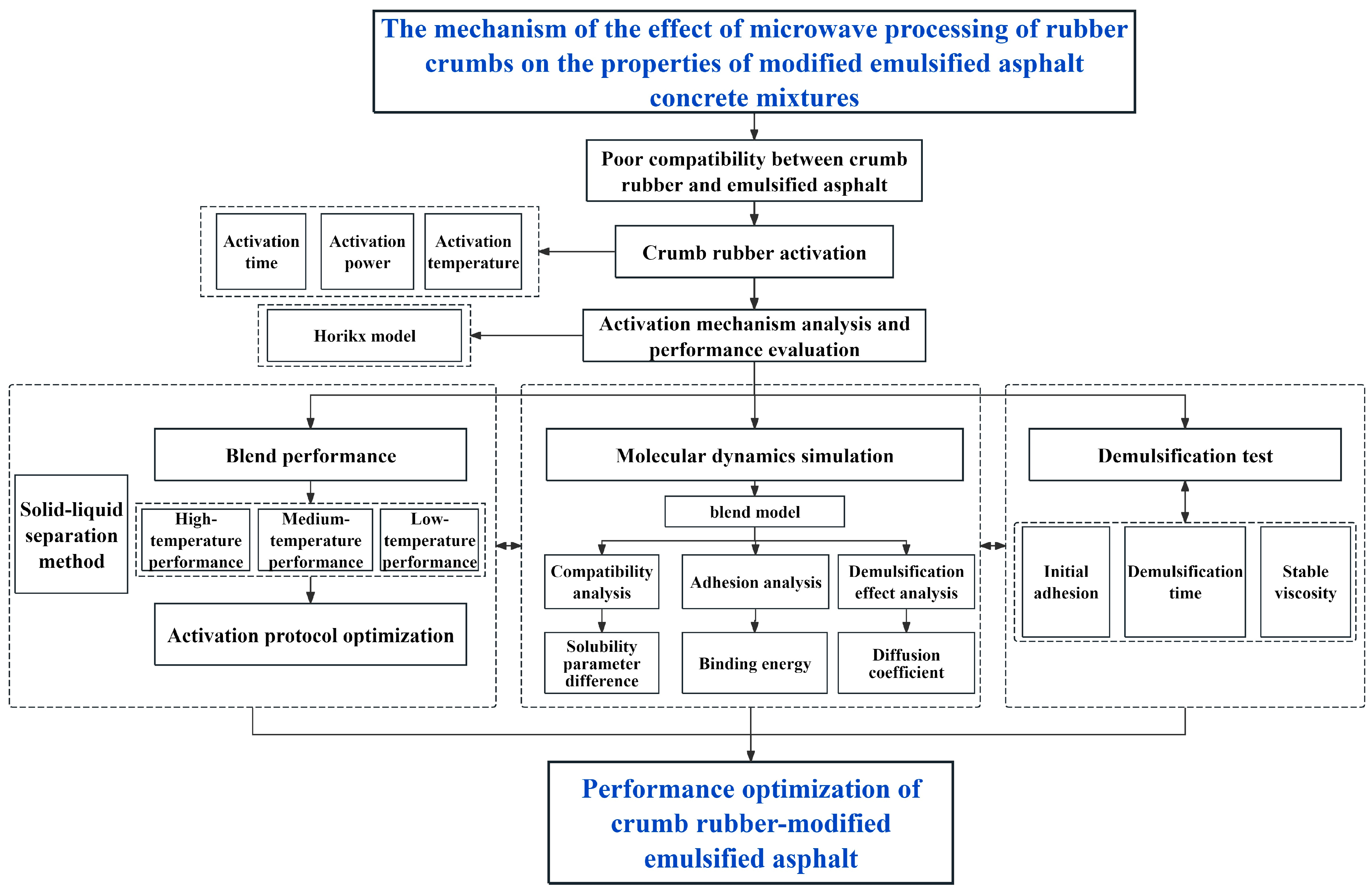
In summary, this study shows that microwave activation of waste crumb rubber improves its compatibility and adhesion with emulsified asphalt, enhancing demulsification. Macroscopic experiments, solid–liquid separation, and molecular dynamics simulations reveal that activated crumb rubber more effectively bonds with asphalt in cold-mix emulsified systems. These findings provide guidance for improving system performance. Figure 1 below shows the technical roadmap for this paper.

2. Microwave Activation of Crumb Rubber

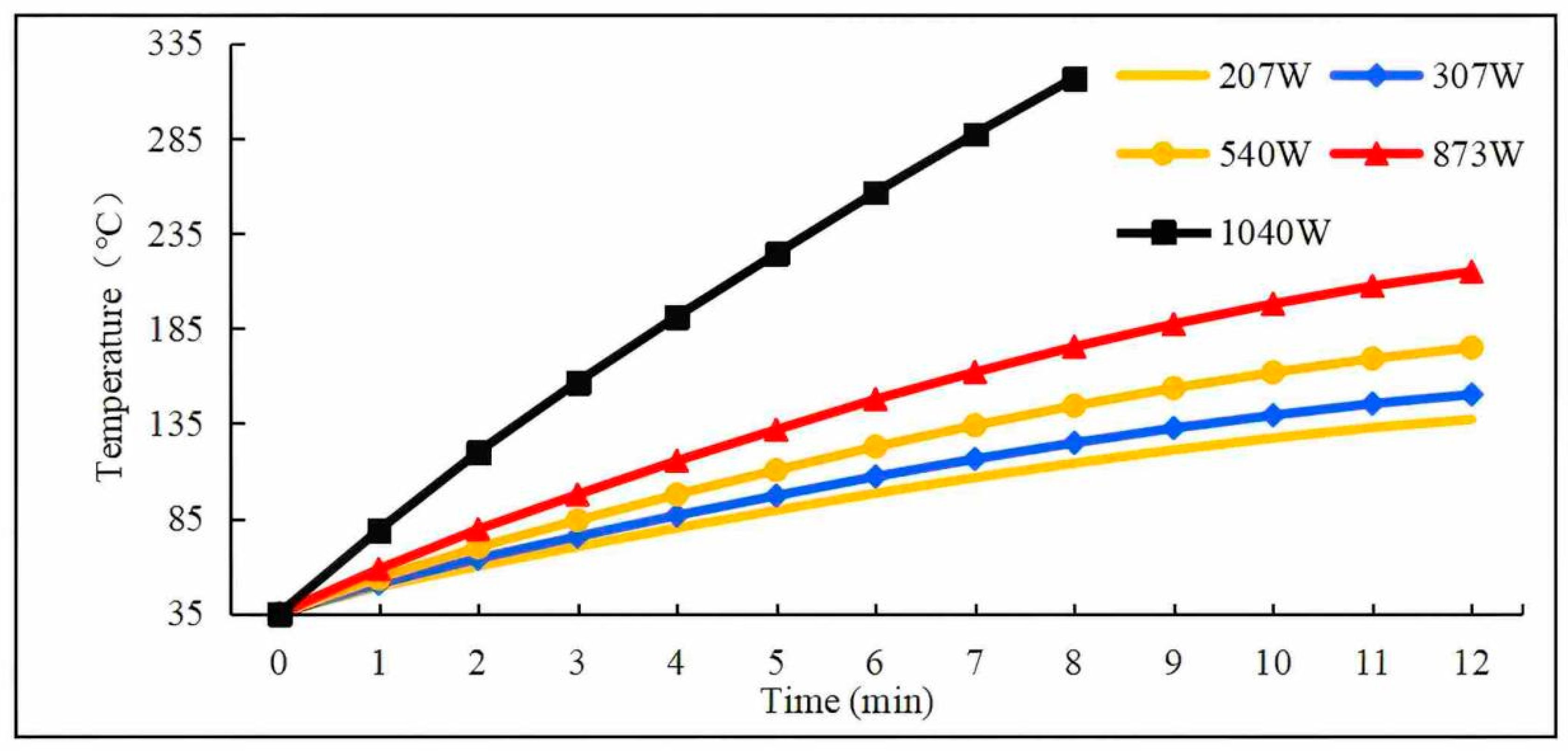
This study used a microwave oven (Foshan Shunde Midea Microwave Electric Appliance Manufacturing Co., Ltd., Foshan, China) at 2450 MHz. The oven runs in 30-s cycles. The average output power for the low, defrost, medium, medium-high, and high settings was 207 W, 307 W, 540 W, 873 W, and 1040 W, respectively. Variations in crumb rubber quality and mesh size did not affect the oven’s output power, providing a stable power supply for activation experiments.
Temperature is a key control parameter affecting the activation of crumb rubber. When 40 g of crumb rubber was subjected to microwave activation, its temperature varied with microwave duration and power, as shown in Figure 2. Experiments indicate that the particle size of crumb rubber does not appear to affect the rate of temperature rise. Observations reveal that as microwave energy is applied, pale white smoke, yellowish-brown smoke, open flames, and carbonization of crumb rubber occur sequentially (as shown in Figure 3). These phenomena visually reflect the rapid rise in internal temperature of the crumb rubber and the complex chemical transformations it triggers. To quantitatively evaluate the desulfurization and activation effects of crumb rubber, this study adopted the Horikx theoretical model [23], which is based on sol content and desulfurization degree; this requires simultaneous determination of sol content and crosslink density. Sol content was determined through Soxhlet extraction: the crumb rubber was sequentially extracted with acetone (Guangzhou Tongyuan Chemical Technology Co., Ltd., Guangzhou, China) and toluene (Guangzhou Tongyuan Chemical Technology Co., Ltd., Guangzhou, China) for 72 h. Acetone is used to remove small-molecule additives and oil content, while toluene dissolves the dissociated crumb rubber molecular chains, which constitute the sol content. Crosslink density is determined using the equilibrium swelling method. The formula for calculating sol content is shown below:
Solfraction = 1 m 1 m 2
m2 is the mass before toluene extraction and m1 is the mass after toluene extraction and drying.
The degree of desulfurization [24] can be calculated based on the reduction in crosslink density using the following formula:
D e v u l c a n i z a t i o n   r a t i o = ( 1 ν 1 ν 0 ) × 100 %
In this context, v1 and v2 represent the crosslink densities before and after activation, respectively.
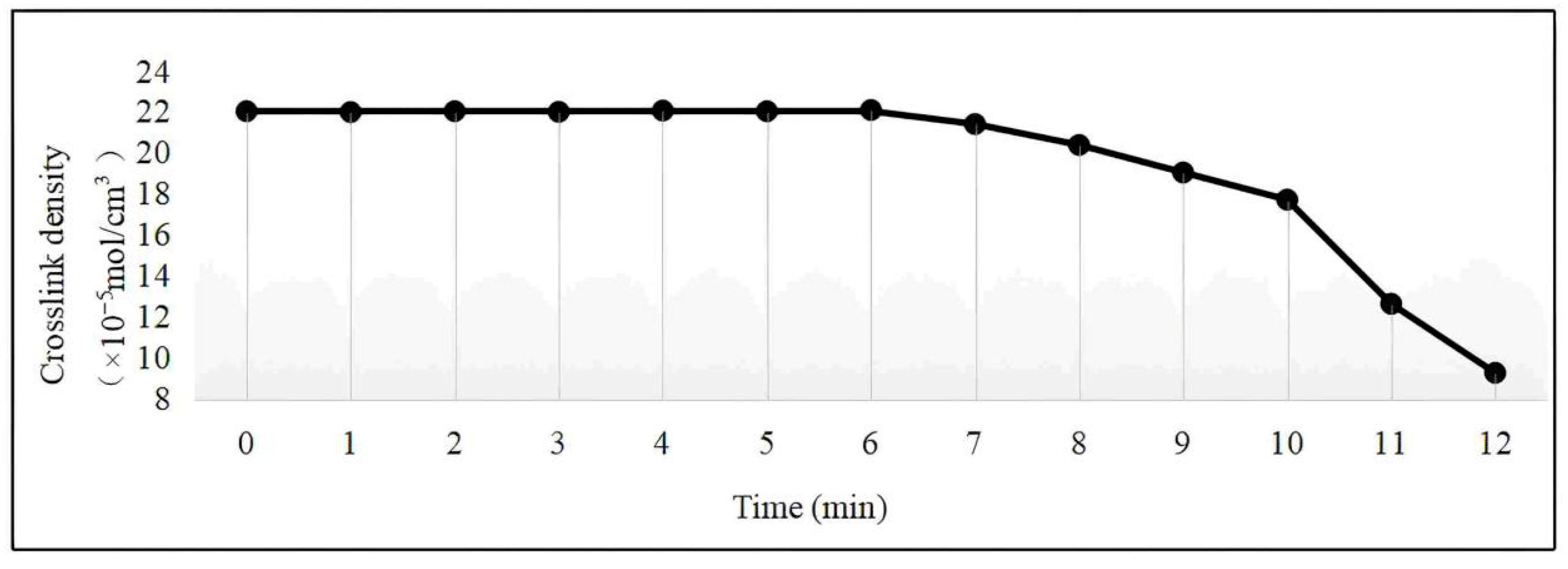
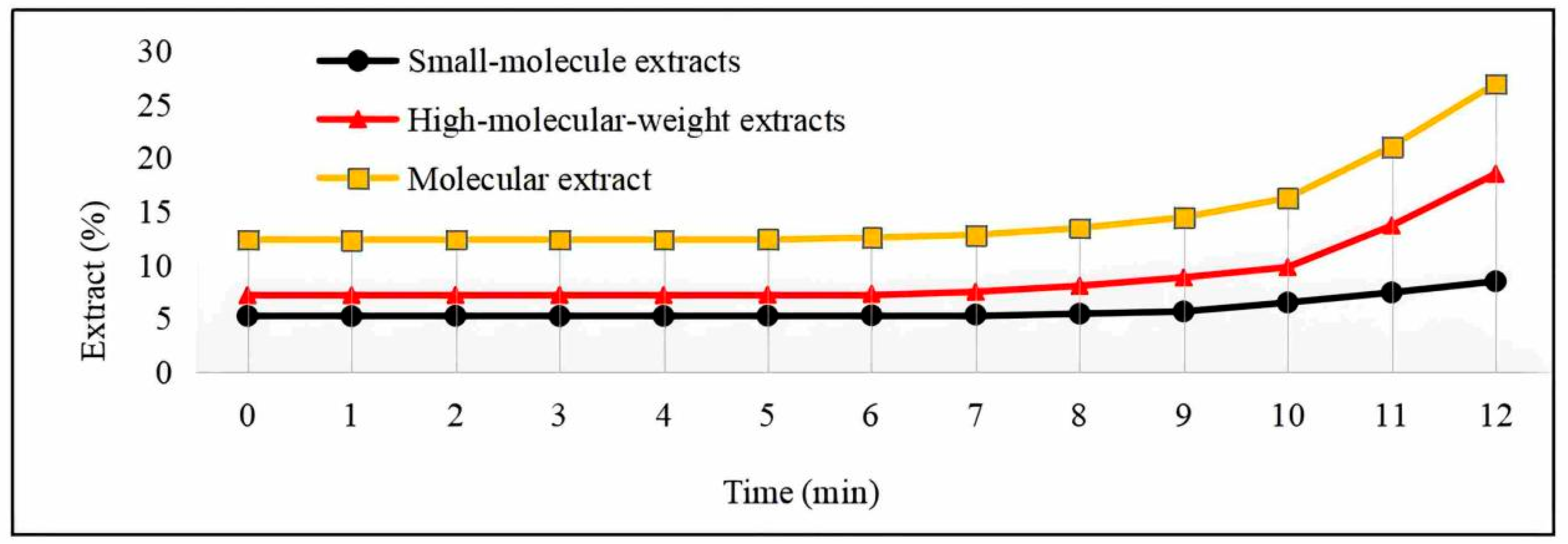
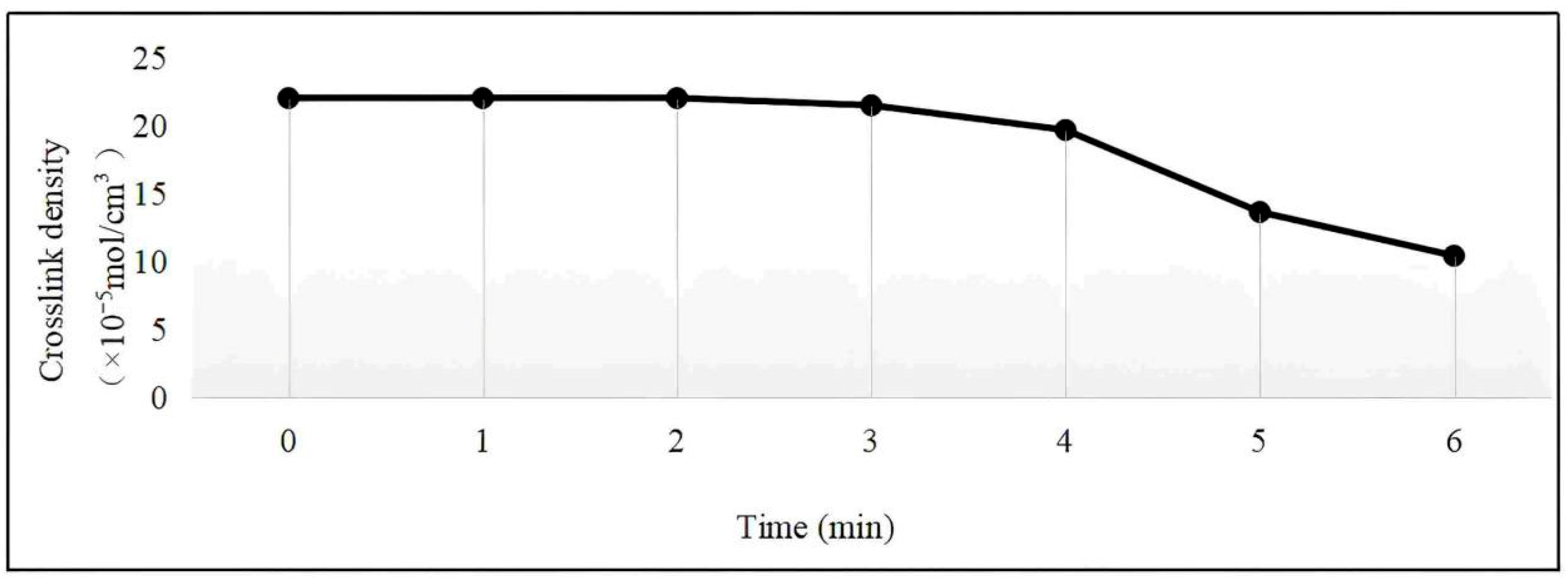
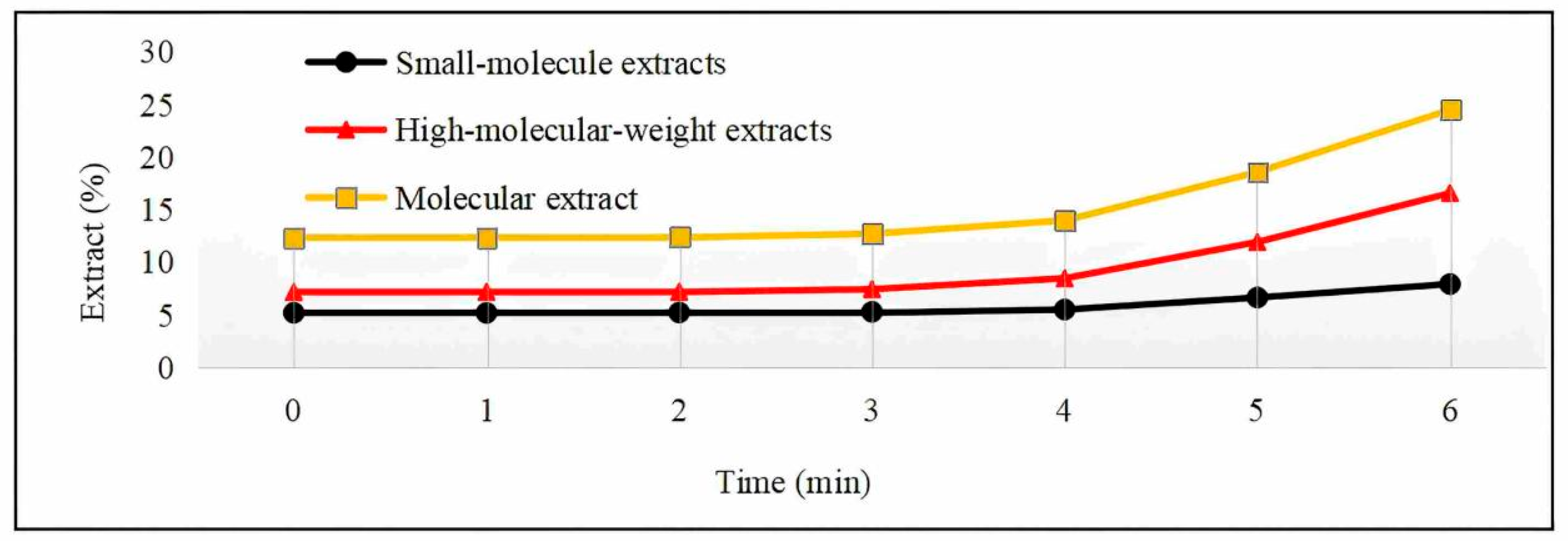
Figure 4, Figure 5, Figure 6 and Figure 7 show the sol content and crosslink density test results. At 207 W and 307 W, sol content and crosslink density do not change. When the power is increased to 540 W, sol content rises slightly after 10 min. At 873 W and 1040 W, sol content increases and crosslink density decreases after 9 and 5 min, with activation temperatures at 191.3 °C and 197.9 °C. These results indicate a temperature threshold for effective microwave activation of the crumb rubber near 190 °C. Below this temperature, microwave energy cannot break the crosslinked network. Above it, sol content increases and crosslink density decreases.
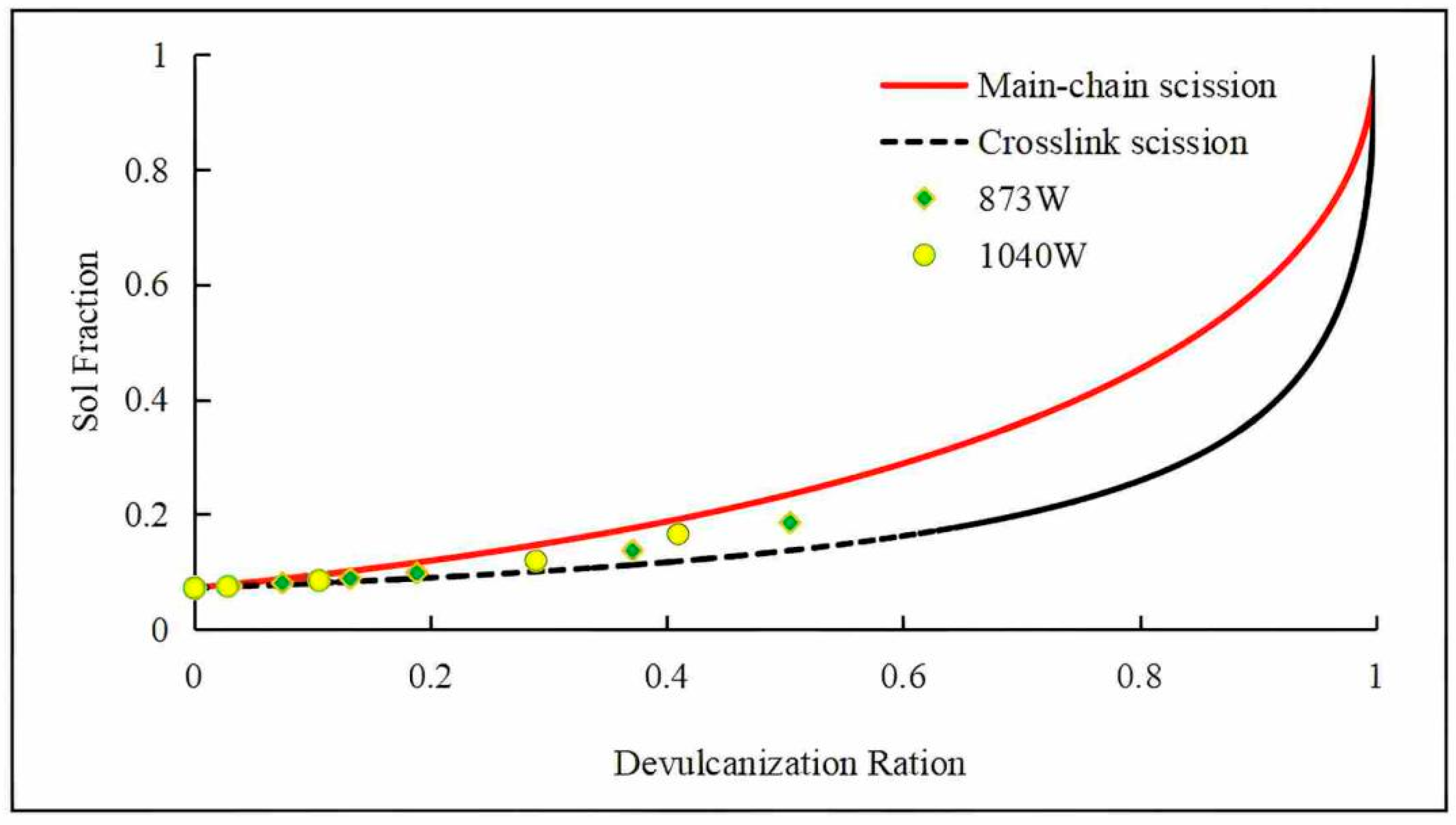
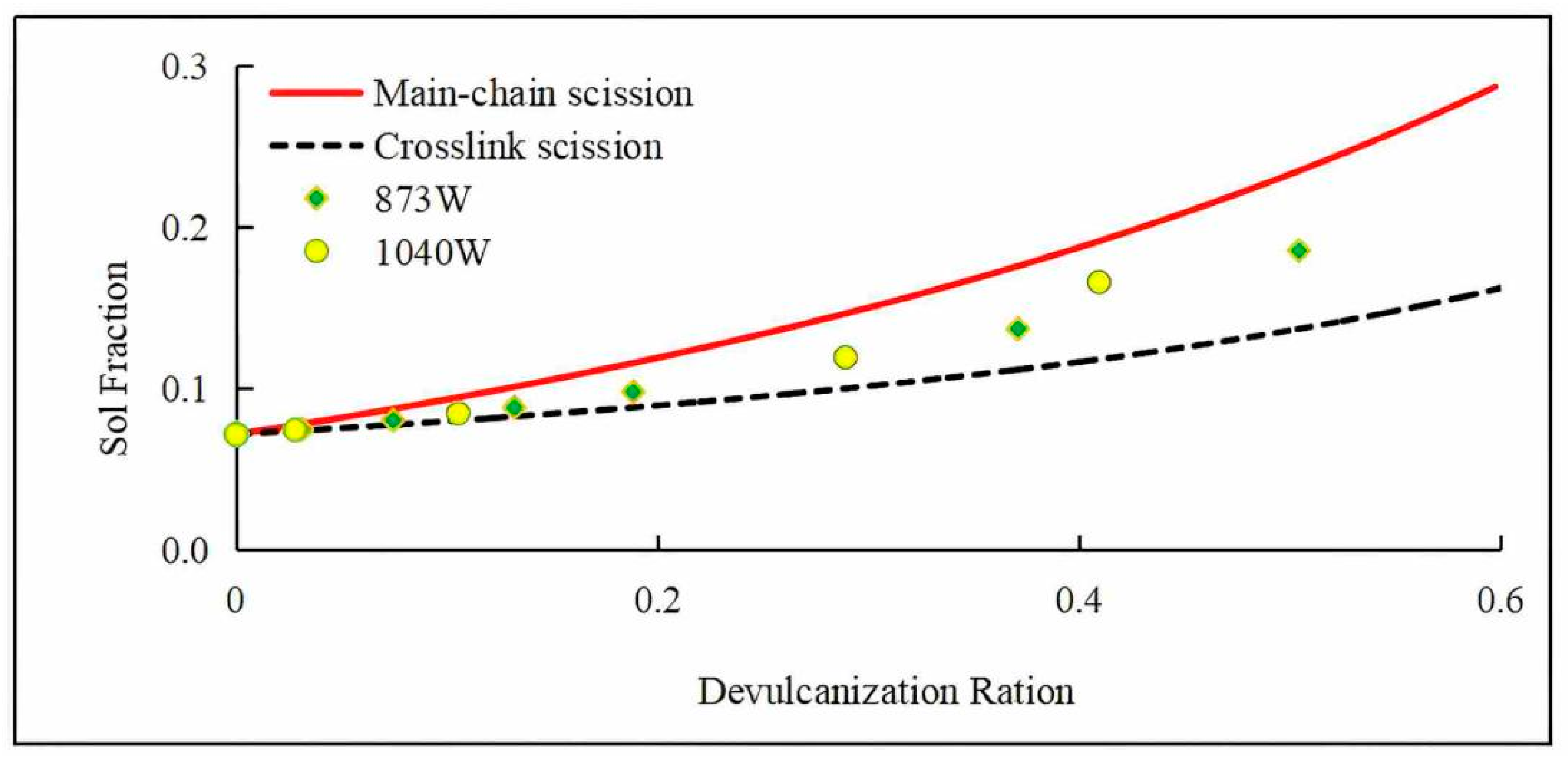
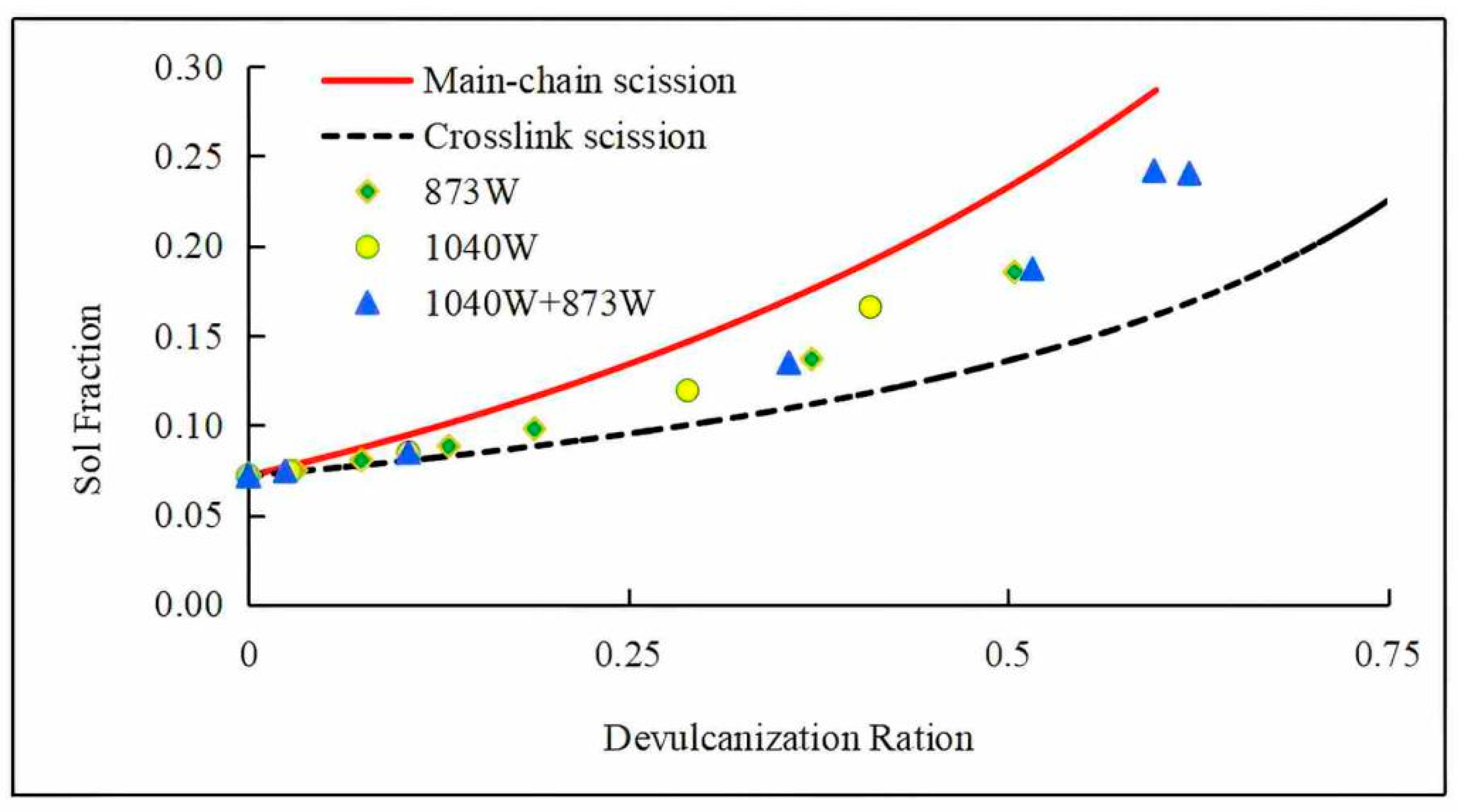
In the Horikx model, sol content is on the x-axis and desulfurization degree is on the y-axis. The solid and dashed lines represent two ideal limiting cases, “main chain scission only” and “crosslink breakage only,” respectively. The fitting results (Figure 8 and Figure 9) show that all experimental data points fall between the two limiting curves. This indicates that both main chain scission and crosslink breakage coexist during microwave activation. When the temperature reached 1040 W after 6 m, the data pointed to a shift toward theoretical cut-end cleavage. This indicates a decrease in the selectivity of crosslink cleavage and an increase in main chain cleavage. This suggests that in practical applications, microwave power and activation time must be precisely controlled. The goal is to achieve efficient desulfurization while minimizing main chain cleavage.
The effects resulting from the interaction between microwaves and matter can be classified into thermal and non-thermal effects. The thermal effect of microwaves is known as dielectric heating, in which electromagnetic energy is converted into thermal energy, leading to an increase in temperature. Non-thermal effects refer to specific physical or chemical changes that cannot be explained by a rise in temperature alone. There is ongoing debate within the academic community regarding the existence of non-thermal effects [25,26].
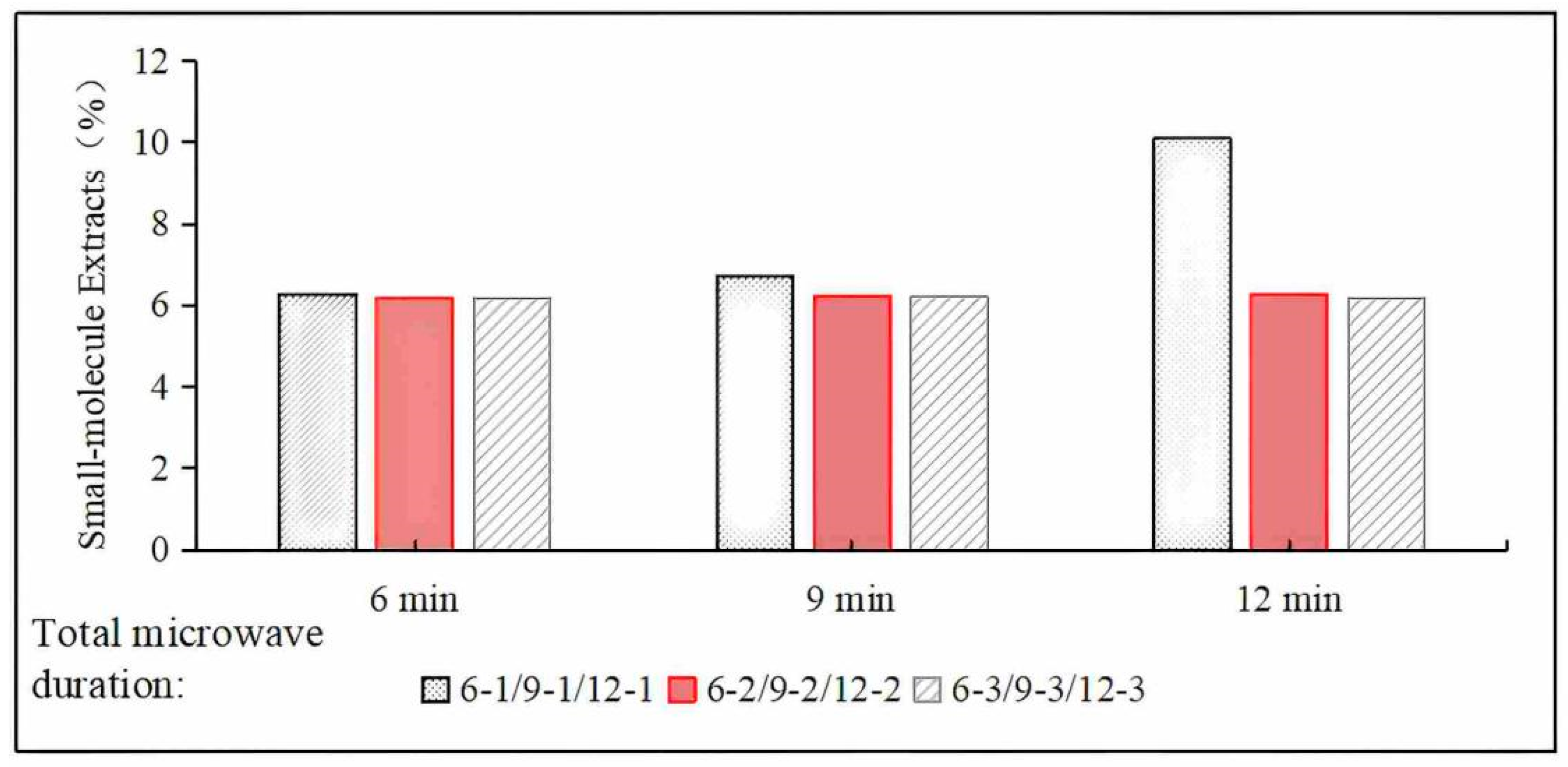
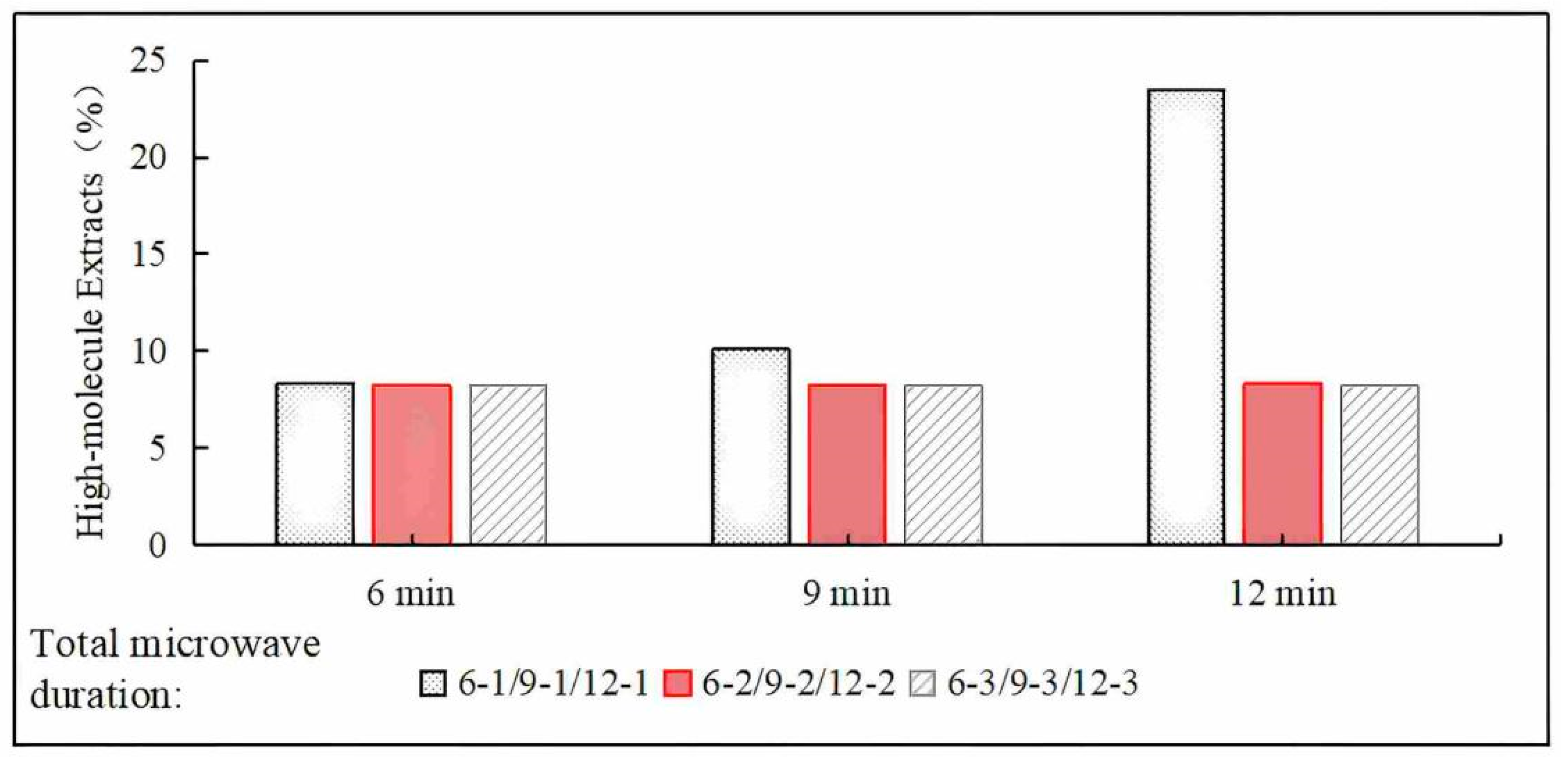
To determine whether non-thermal effects occur during the desulfurization of crumb rubber, this study designed experiments comparing different temperature control and irradiation methods. Specifically, a microwave power of 873 W was selected. For the 6 min total microwave treatment, experiments 6-1, 6-2, and 6-3 were conducted with one, two, and three 6 min sessions, respectively. In addition, experimental groups with total durations of 9 min and 12 min were established. The results of sol content measurements for all activated crumb rubber samples are shown in Figure 10 and Figure 11, thus revealing the presence or absence of non-thermal effects through chemical structural changes.
The experimental results indicate that the maximum temperature achieved during intermittent microwave irradiation did not exceed 125.4 °C, which is far below the effective desulfurization temperature threshold of 190 °C, and showed virtually no activation effect; in contrast, continuous irradiation raised the temperature to 214.8 °C, resulting in significant activation. The activation effect depends solely on the duration during which the crumb rubber reaches the effective desulfurization temperature. The thermal effect of microwaves is the dominant factor in breaking the crosslinked molecular network of the crumb rubber; non-thermal effects were not confirmed under the experimental conditions of this study, and their influence is considered negligible.

3. Molecular Dynamics Simulation

In this study, a simulation model of the interface between crumb rubber and emulsified asphalt was constructed using Materials Studio 8.0 software. The asphalt model used is the twelve-component molecular model by Li et al. [19]. This model contains four main components: asphaltenes, saturated fractions, aromatic fractions, and gum. Each component contains 2–5 molecules. The relative proportions of each component are shown in Table 1.
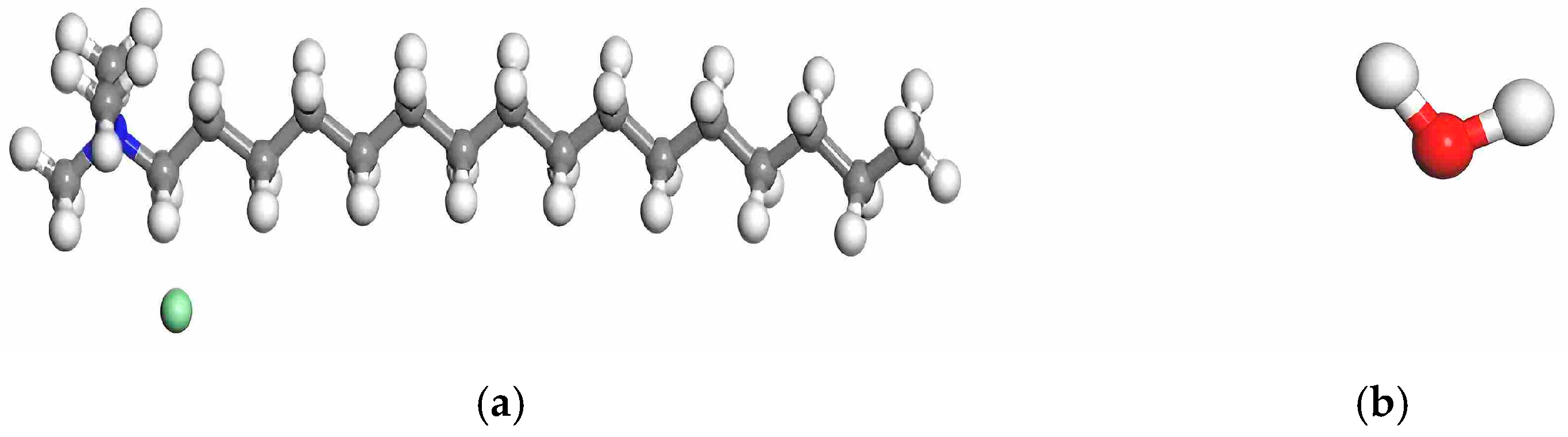
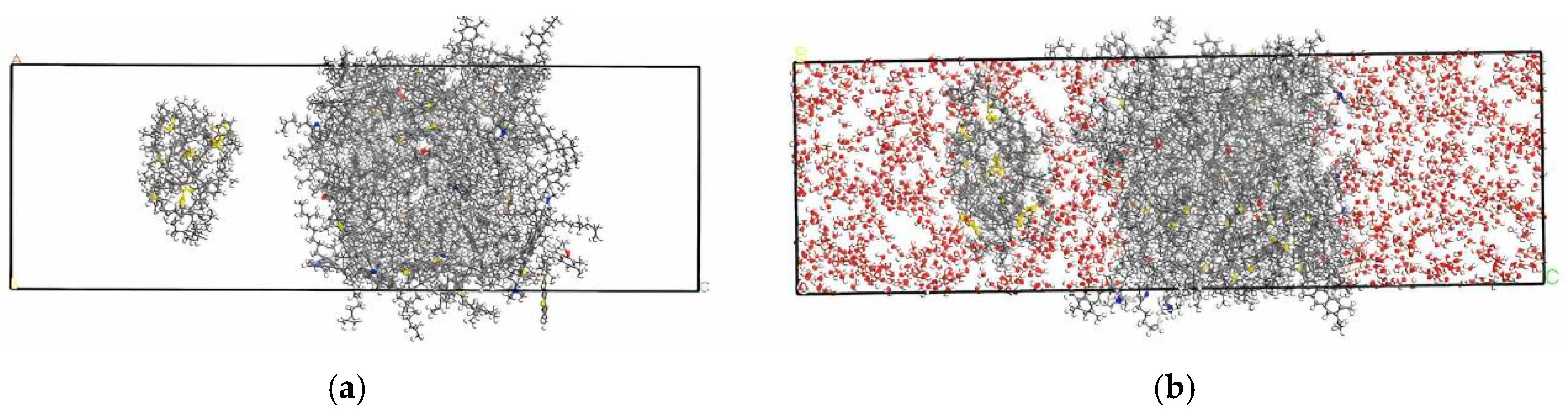
After constructing the 12-component asphalt molecular model, the COMPASS II force field was assigned to each atom and equilibrium calculations were performed. The results are shown in Table 2. The density of the equilibrated model stabilized at 1.005 g/cm3, which is close to the actual density of the base asphalt and falls within the range reported in relevant studies. This indicates that the constructed model is highly representative and can be used for subsequent simulation calculations. The emulsified asphalt model was constructed with an asphalt-to-water ratio of approximately 6:4 using cetyltrimethylammonium chloride (CTAC) as the cationic emulsifier (as shown in Figure 12). Figure 13a illustrates the interaction model between dry emulsified asphalt and crumb rubber. Water molecules were filled into the empty spaces of the simulation box, as shown in Figure 13b, to simulate the interaction between the crumb rubber and the emulsified asphalt in a state where the emulsion has not yet broken.
The crumb rubber model includes three polymers: styrene–butadiene rubber (SBR), natural rubber (NR), and butadiene rubber (BR). SBR is a copolymer composed of four types of monomer units: styrene, 1,4-butadiene, cis-1,4-butadiene, and trans-1,4-butadiene. NR consists of cis-1,4-isoprene monomer units, while BR is made up of cis-1,4-butadiene monomers. After identifying the head and tail atoms of each monomer model, the random copolymer construction method was used to set the monomer connection probability and number of connections.
The monomer ratios within SBR are approximately 25:10:10:55 for styrene:1,4-butadiene:cis-1,4-butadiene:trans-1,4-butadiene, while the overall polymer ratio in the crumb rubber model is about 5:4:1 for SBR:NR:BR.
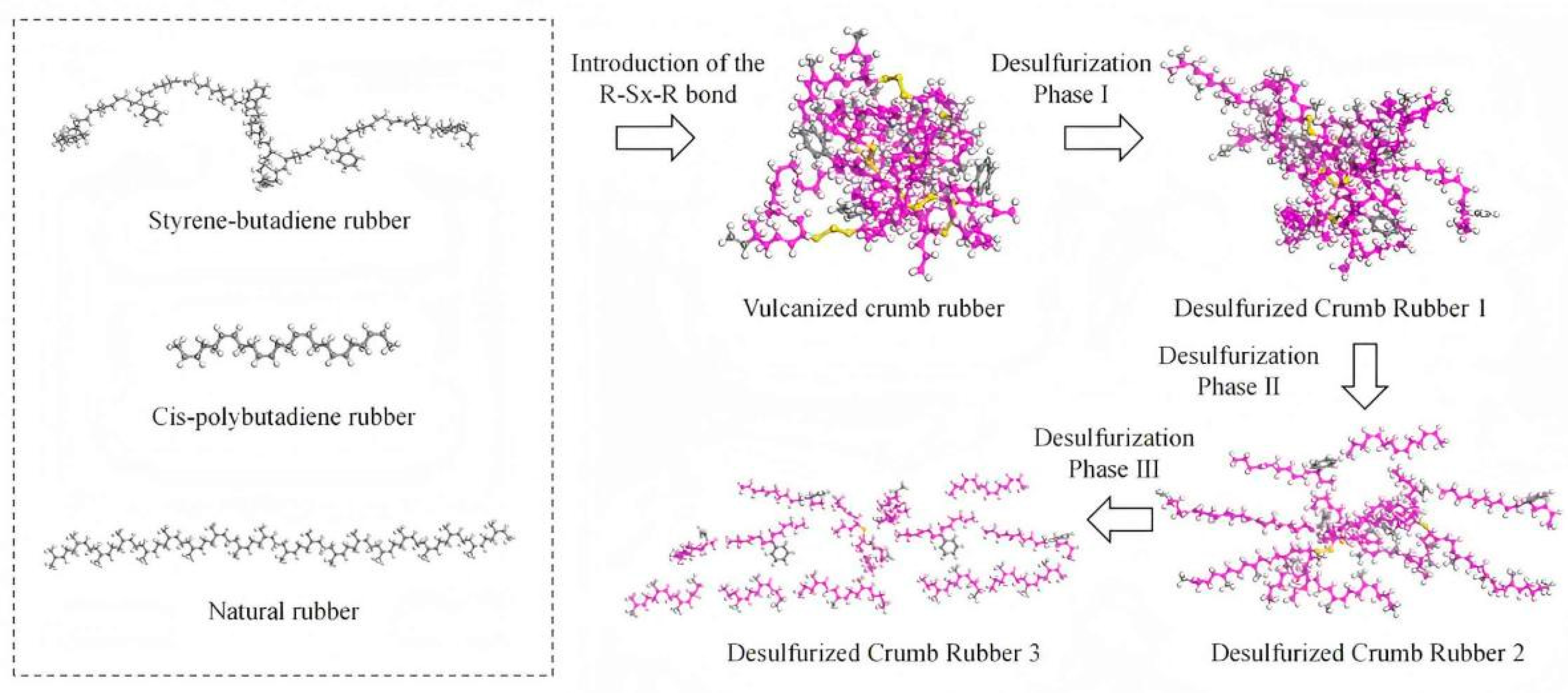
During the manufacturing of rubber tires, vulcanizing agents are added. These agents enhance the rubber’s resistance to deformation and improve its durability. This process causes crosslinking between different types of rubber molecules and within the same molecules. As a result, sulfur bridges (R-Sx-R bonds) are introduced into the rubber molecules. This simulates vulcanization processes involving single, double, and multiple sulfur bonds. The proportion of sulfur in actual rubber molecules is relatively low (about 1–3%). Real rubber tires contain not only rubber molecules such as SBR and NR but also substances like carbon black. Therefore, the sulfur proportion in the constructed crumb rubber model is slightly higher than in reality. Additionally, to study the effect of the desulfurization degree of crumb rubber on emulsified asphalt performance, the sulfur mass fraction in the crumb rubber model is set to about 10%. In the vulcanized crumb rubber model, the ratio of polysulfide, disulfide, and monosulfide bonds is about 5:3:2.
During microwave activation of crumb rubber, vulcanized crosslinks with lower bond energies break, and the crumb rubber molecular backbone undergoes a certain degree of fragmentation. As the degree of desulfurization increases, models of crumb rubber at different desulfurization stages are constructed (as shown in Figure 14): first, the low-energy polysulfide bonds and individual carbon-carbon double bonds in the rubber backbone are broken to obtain Desulfurized Crumb Rubber 1, which simulates preliminarily activated crumb rubber (e.g., crumb rubber activated at 1040 W for 4 min); subsequently, all disulfide bonds and a portion of the carbon–carbon double bonds in the rubber main chains are broken to obtain Desulfurized Crumb Rubber 2, simulating activated crumb rubber (e.g., crumb rubber activated at 1040 W for 5 min); finally, a small portion of the monosulfide bonds is retained while the majority of the carbon–carbon double bonds in the rubber main chains are broken to obtain Desulfurized Crumb Rubber 3, simulating over-activated crumb rubber (e.g., crumb rubber activated for 6 min at 1040 W). As the degree of desulfurization increases, the density and bulk modulus of the crumb rubber decrease, while the cohesive energy density continues to increase. The density of the vulcanized crumb rubber is 0.932 g/cm3, while the densities of Desulfurized Crumb Rubber 1, 2, and 3 are 0.897, 0.880, and 0.854 g/cm3, respectively.
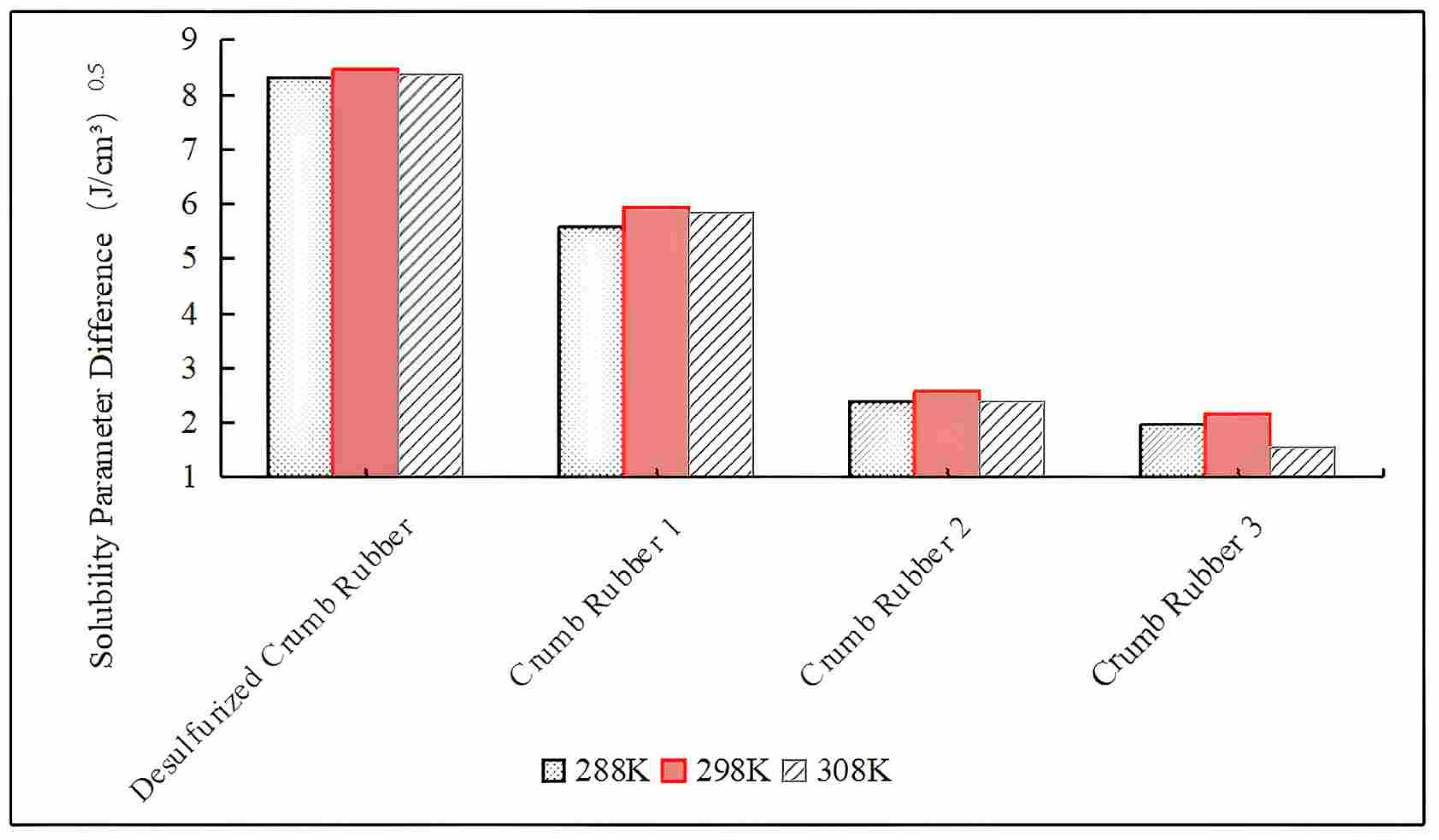
The difference in solubility can show how well crumb rubber and emulsified asphalt mix; a smaller difference means better mixing. The crumb rubber–emulsified asphalt model was run for 300 ps on the NPT cluster to determine how crumb rubber and asphalt interact. The simulation(as shown in Figure 15) shows that at the same temperature, vulcanized crumb rubber mixes the worst with asphalt, but this improves as the crumb rubber becomes more desulfurized. The difference in solubility between desulfurized crumb rubber 2 and 3 is less than 3 (J/cm3)0.5; under these conditions, the crumb rubber and asphalt mix well. Crumb rubber 2, made with a deeper desulfurization process, mixes well with asphalt, but further desulfurization does not help much. So, when desulfurizing crumb rubber with methods like microwaves, it is important not to use too much power or time. Doing so only wastes energy and reduces the rubber’s elasticity.
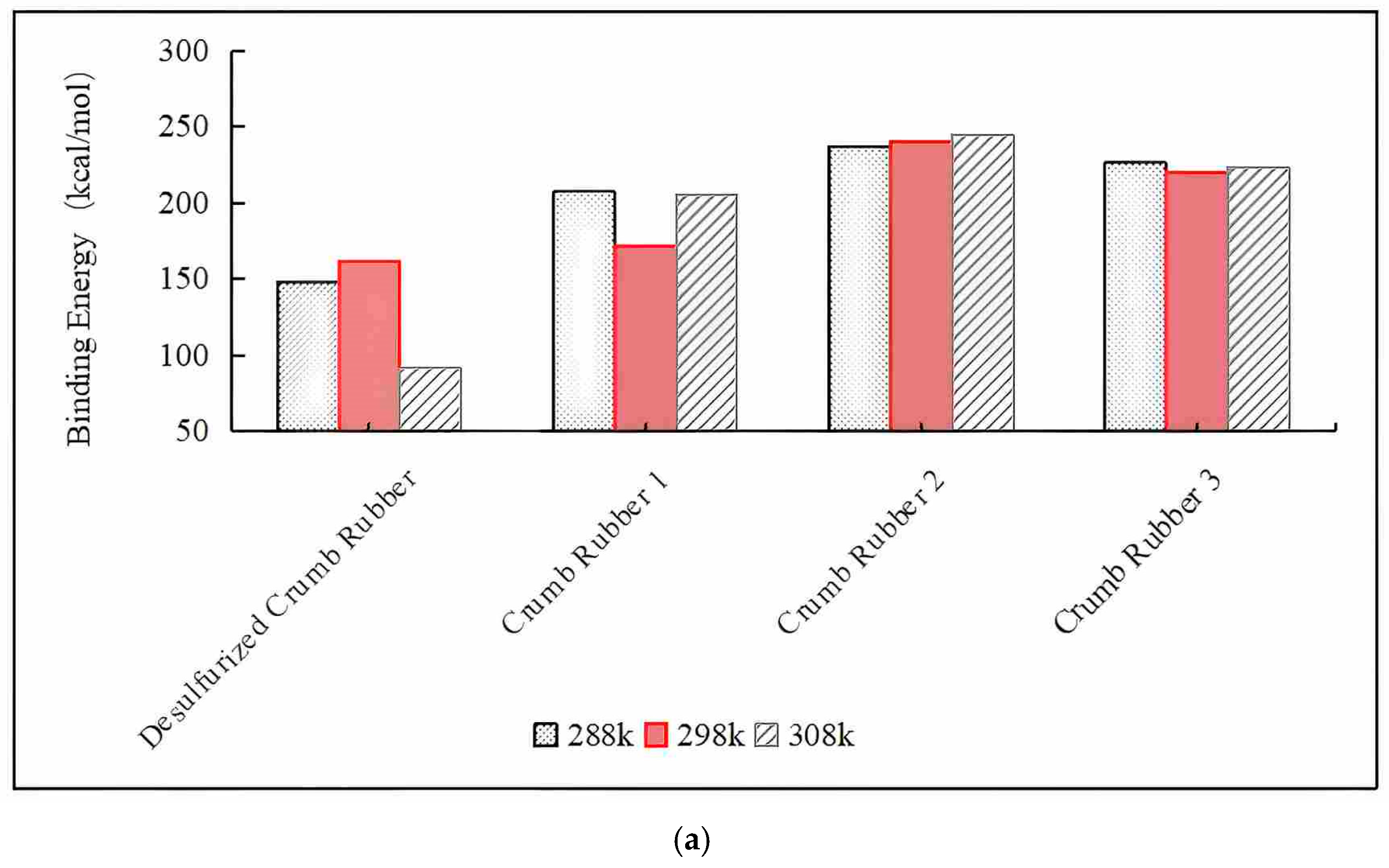
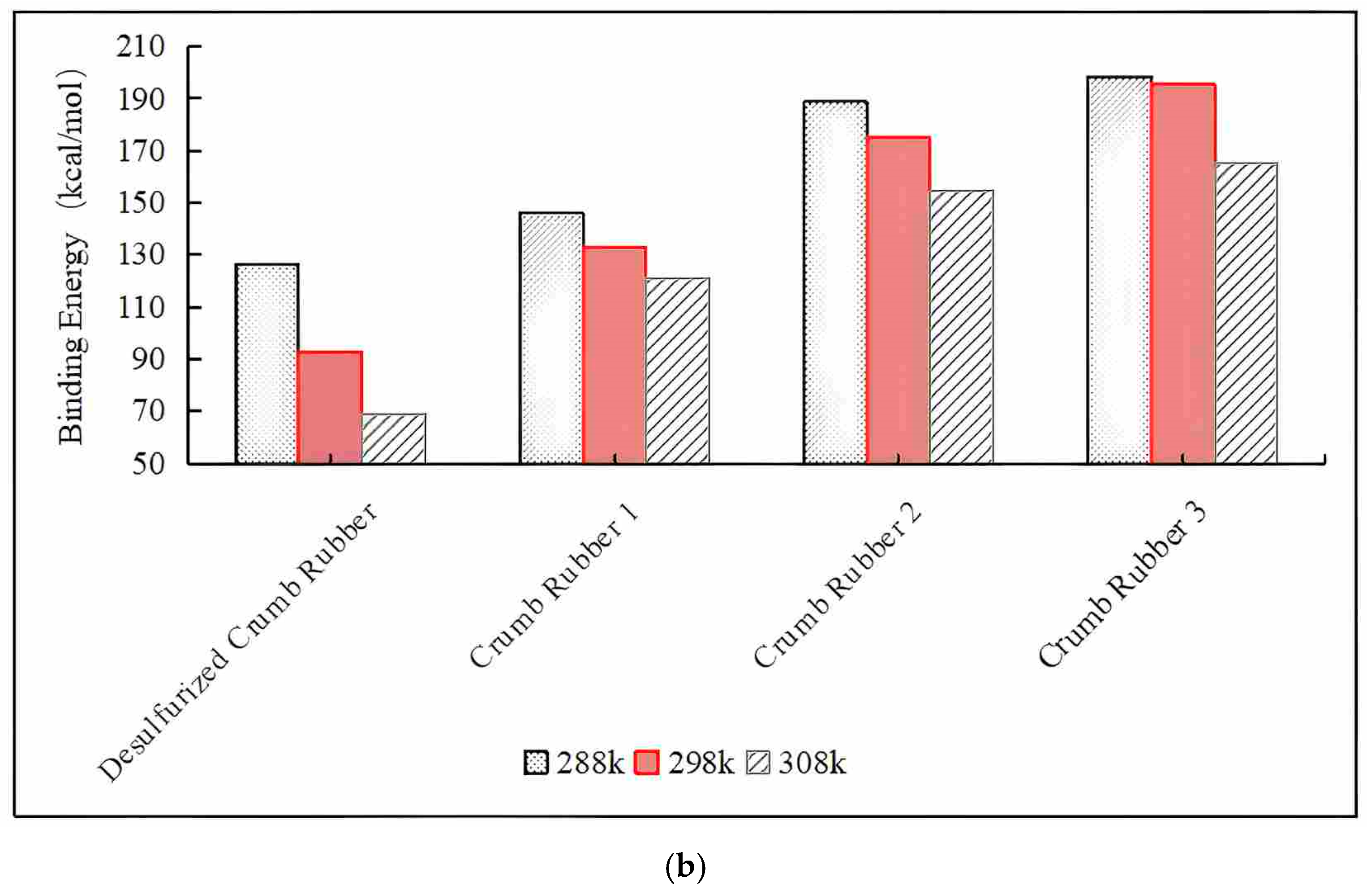
Binding energy calculations (as shown in Figure 16) reveal that at equivalent temperatures and for the same crumb rubber type, the presence of moisture reduces the interfacial bonding strength between crumb rubber and asphalt. In the crumb rubber–emulsified asphalt evaporation residue system, the binding energy initially increases with progressive desulfurization—reaching a maximum for Crumb Rubber 2—before subsequently decreasing. Initially, vulcanized crumb rubber retains its densely crosslinked structure, resulting in poor miscibility and weak interfacial bonding with asphalt. Following moderate desulfurization, as exemplified by Crumb Rubbers 1 and 2, a greater number of sulfur crosslinks are cleaved, liberating longer side chains from the polymer network. These extended chains increase the available contact area and enhance mechanical interlocking with the asphalt matrix, thereby elevating the binding energy. Excessive desulfurization, as observed for Crumb Rubber 3, leads to extensive main chain scission; although a greater proportion of lower-molecular-weight polymer chains are generated, their bonding affinity with asphalt diminishes, resulting in reduced binding energy.
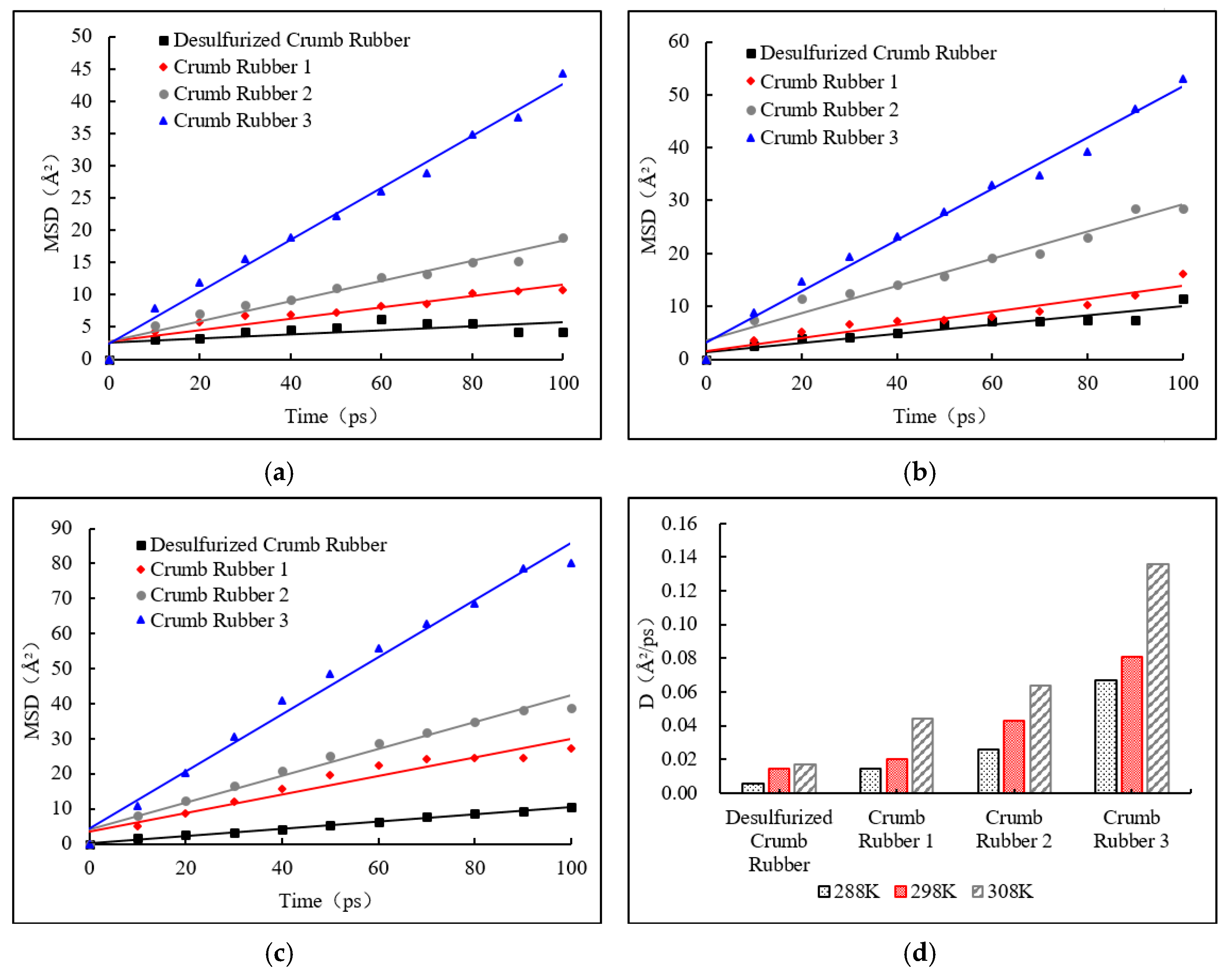
The kinetic diffusion rate of crumb rubber serves as a key parameter governing its molecular interaction with emulsified asphalt, thereby influencing emulsion stability. Molecular dynamics simulations estimate the diffusion coefficient (D) from the linear relationship between mean-squared displacement (MSD) and time, as expressed in Equation (3); a higher D value indicates faster kinetic diffusion. To illustrate, a 100 ps kinetic simulation of an equilibrated crumb rubber–emulsified asphalt system under the NVT ensemble was performed, generating curves that depict the time-dependent MSD and diffusion coefficients of crumb rubber molecules at varying temperatures.
D = 1 6 lim t M S D ( t ) t = 1 6 lim t r ( t ) r ( 0 ) 2 t
r(t) represents the position vector of the particle at time (t).
Temperature serves as the energy source driving molecular thermal motion within a system. In identical crumb rubber–emulsified asphalt systems, elevated temperatures enable molecules to more readily overcome van der Waals interactions, thereby promoting molecular migration and increasing the diffusion coefficient. However, vulcanized crumb rubber exhibits excellent thermal stability due to its densely crosslinked three-dimensional network, resulting in minimal increases in the diffusion coefficient with rising temperature. In contrast, Desulfurized Crumb Rubber 3, which exhibits the highest degree of desulfurization, demonstrates pronounced temperature sensitivity. When subjected to thermal influence, numerous low-molecular-weight polymer chains undergo vigorous motion, resulting in enhanced fluidity.
The simulation results of the diffusion coefficient are shown in Figure 17. The growth slopes of the mean-squared displacement (MSD) curves differ significantly across various crumb rubber types. Specifically, the diffusion capacity of crumb rubber increases progressively with the degree of desulfurization: vulcanized crumb rubber < Desulfurized Crumb Rubber 1 < Desulfurized Crumb Rubber 2 < Desulfurized Crumb Rubber 3. This trend is attributable to the microstructural changes induced by desulfurization. Following this process, the internal crosslinked network of crumb rubber disintegrates, liberating long molecular chains with enhanced degrees of freedom. Consequently, the mobility and migration capability of these polymer chains are augmented, facilitating their penetration into the asphalt molecular structure. As a result, the miscibility between crumb rubber and asphalt improves. On a macroscopic level, this enhanced interaction may lead to accelerated demulsification rates of emulsified asphalt when modified with crumb rubber exhibiting higher desulfurization levels.

4. Performance Testing

4.1. Blend Preparation and Experimental Conditions

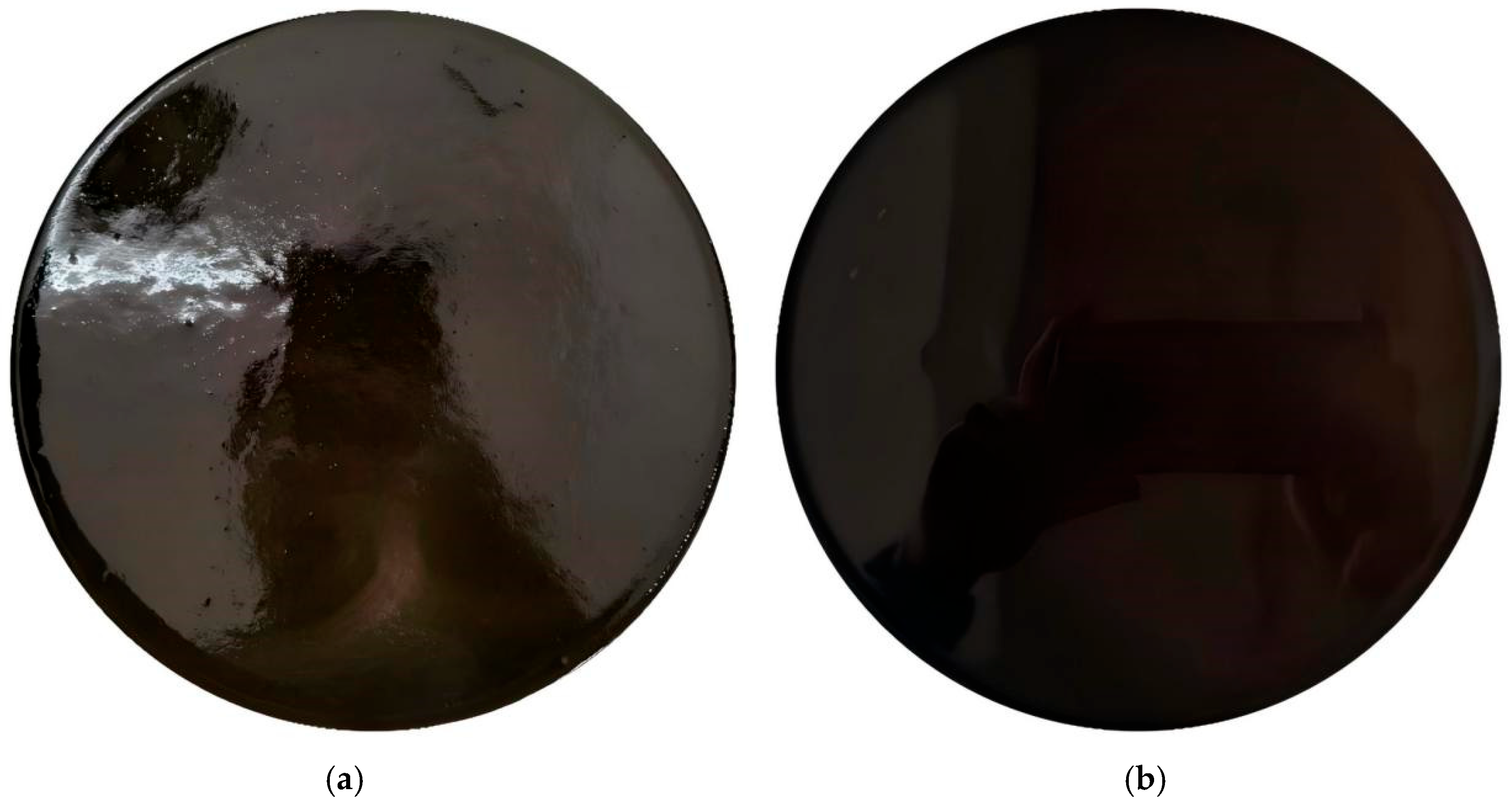
The preparation process for the crumb rubber–emulsified asphalt blend is as follows. Add a measured amount of crumb rubber (non-activated or microwave-activated) to a beaker containing 200 g of emulsified asphalt. Stir for 2 min using a low-speed stirrer at 200 rpm to ensure preliminary dispersion of the crumb rubber, resulting in a uniform crumb rubber–emulsified asphalt blend. The prepared sample is sealed and allowed to stand for 30 min at 25 °C under standard conditions to ensure sufficient interaction between the crumb rubber and the emulsified asphalt. The resulting mixture is poured into a 200-mesh sieve, and the filtered liquid phase is collected from the sieve residue [30], as shown in Figure 18. Both the sieve and the container have a diameter of 20 cm. The crumb rubber used in the test included non-activated crumb rubber and crumb rubber activated by microwave power of 873 W and 1040 W. The crumb rubber was sieved to 40 and 80 mesh, and the crumb rubber content was set at 10% and 20%.
To minimize the impact of high temperatures on the properties of the mixture during the evaporation process [31,32], low-temperature evaporation was employed to obtain the evaporation residue. The crumb rubber–emulsified asphalt mixture was evenly distributed on a stainless steel tray and placed in a constant-temperature forced-air oven, where it was continuously maintained at 60 ± 1 °C for 24 h.
The test conditions for each property are as follows:
(1) High-temperature performance testing: A dynamic shear rheometer (DSR) was used to conduct rutting factor (G*/sinδ) tests, starting at 58 °C and increasing in 6 °C increments until the rutting factor fell below the failure threshold of 1.0 kPa specified in AASHTO T 315. This critical temperature was defined as the failure temperature (T). The Multi-Stress Creep Recovery (MSCR) test was conducted at a stress level of 0.1 kPa to determine the creep recovery rate R at 60 °C. Because crumb rubber particles may affect the test results, a DSR parallel plate spacing of 2 mm and a sample diameter of 25 mm were selected.
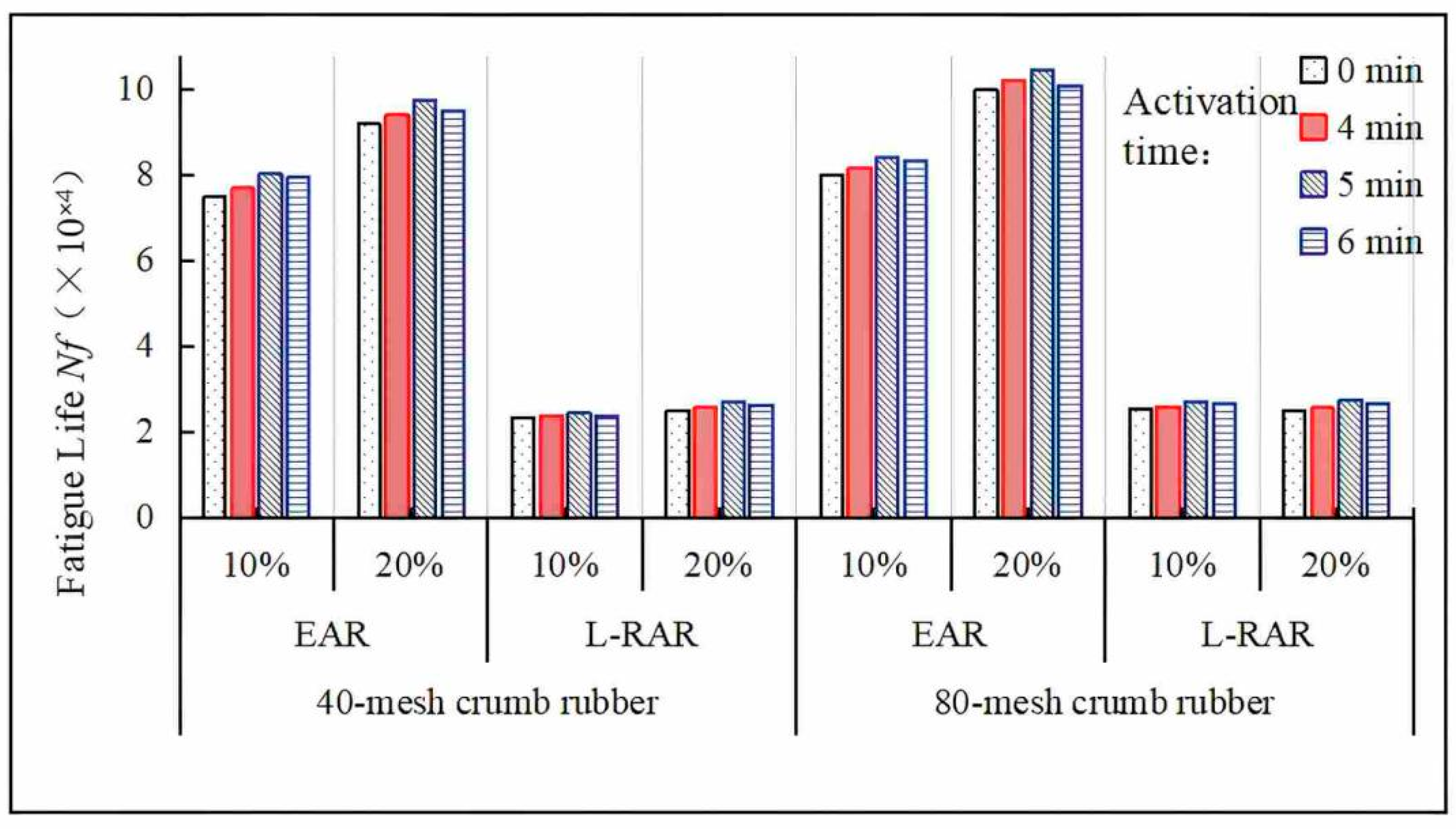
(2) Intermediate-temperature fatigue performance testing: A linear amplitude sweep (LAS) test was conducted using an 8 mm diameter oscillating plate with a DSR parallel plate spacing of 2 mm. The test temperature was 25 °C, and the fatigue life (Nf) of each specimen was determined at a strain level of 2.5%.
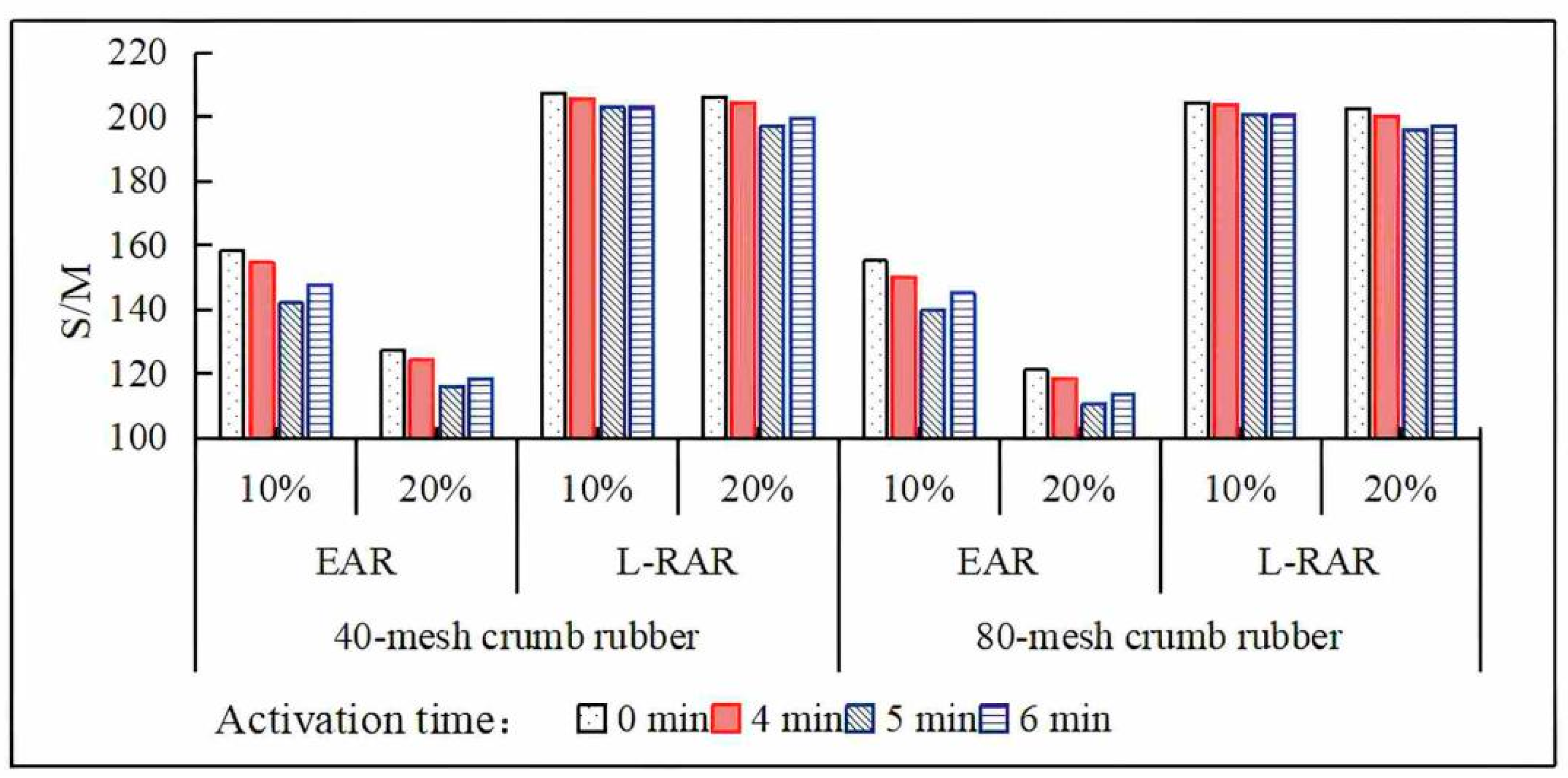
(3) Low-temperature crack resistance testing: The bending beam rheometer (BBR) test was used at −6 °C. This test measures the asphalt’s flexural creep stiffness (S) and creep rate (m-value). Previous research [33,34] shows that the S/m ratio gives clearer insight into asphalt performance at low temperatures than S or m alone. A smaller S/m ratio means the asphalt is more resistant to cracks. This study uses the S/m ratio to assess low-temperature performance.
Sample naming convention: Use the format “blend percentage-mesh size of crumb rubber,” such as 10%-40, which denotes the evaporated residue of a 10% blend containing 40-mesh crumb rubber; for the liquid phase obtained after solid–liquid separation, prefix the name with the letter “L,” such as L-10%-40.

4.2. Test Results

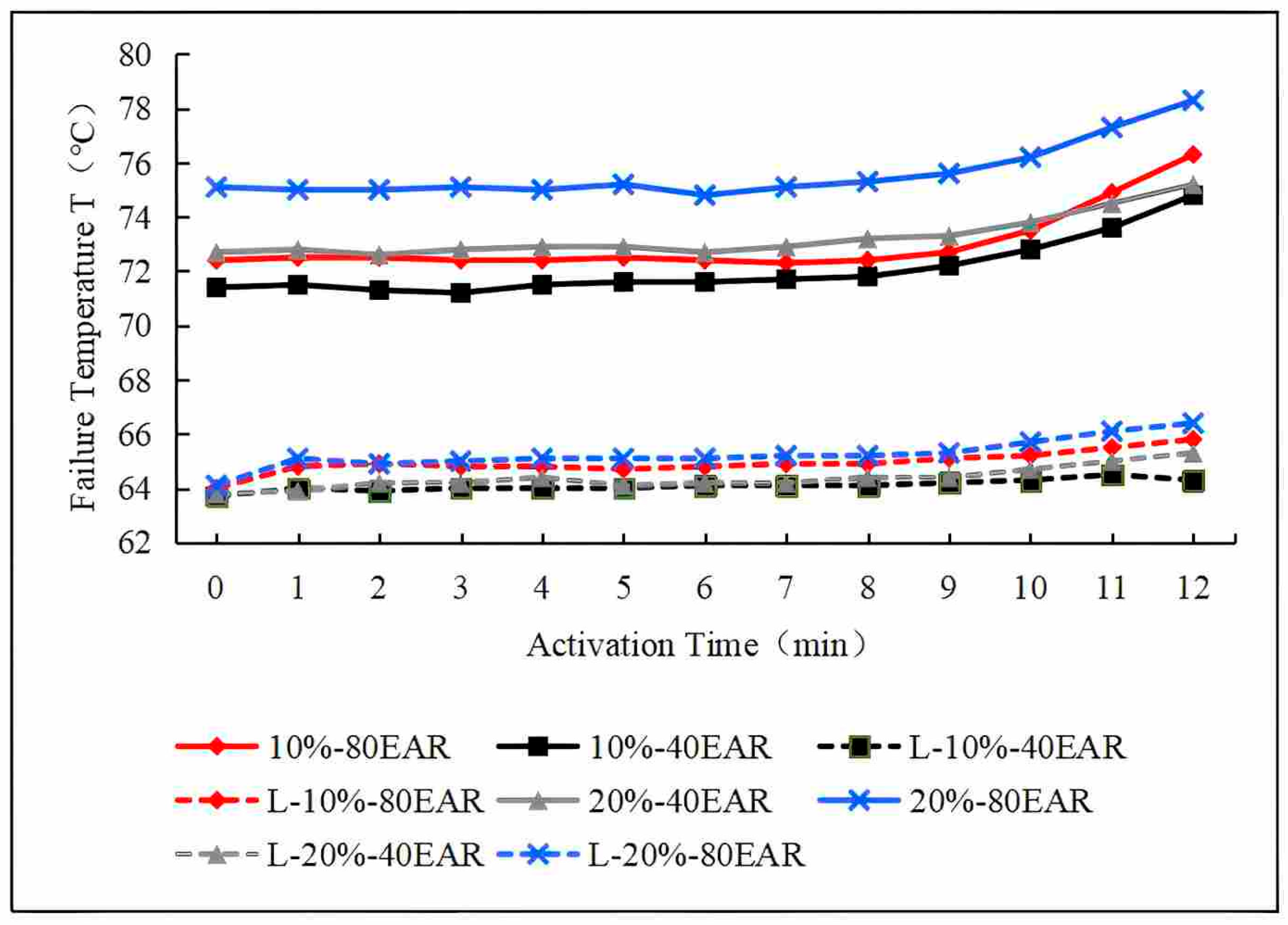
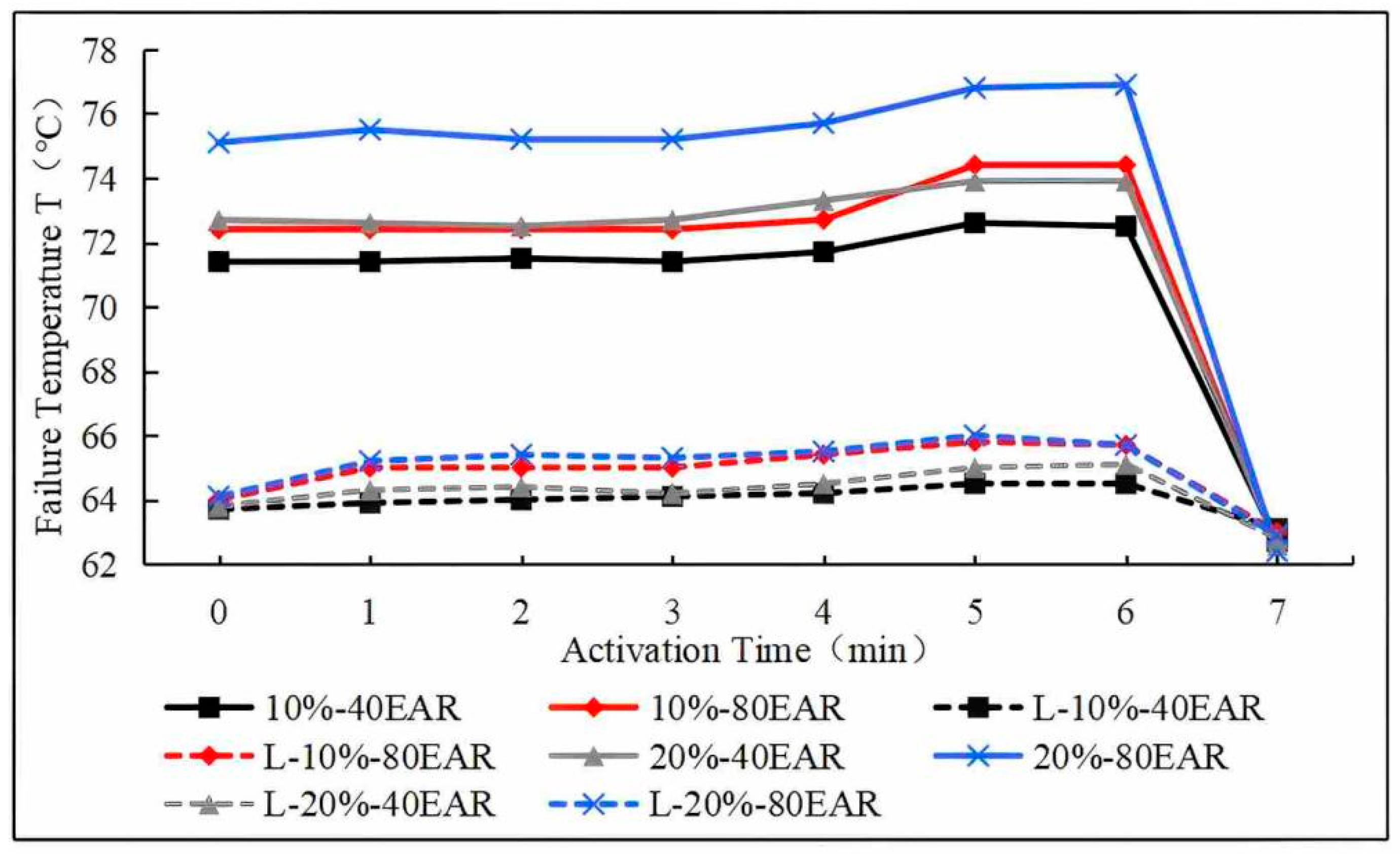
Figure 19 and Figure 20 show that proper microwave activation improves the blend’s high-temperature performance. Activating 80-mesh crumb rubber for 12 min at 873 W increased the failure temperature T by 3.9 °C, showing the greatest improvement. At 1040 W, the failure temperature for 5 and 6 min of activation remained similar. After 7 min, the failure temperature was lower than that of the non-activated sample. The failure temperature significantly increased only when the carbon black temperature reached the effective activation threshold. Experiments confirmed that the 1040 W microwave activation process includes three stages: preheating (0–3 min), effective activation (4–6 min), and overheating and carbonization (7 min or longer). The particle structure of carbonized crumb rubber was destroyed, losing its value as an asphalt modifier. All subsequent studies used 1040 W of microwave power and activation times of 0 and 6 min to ensure research validity.
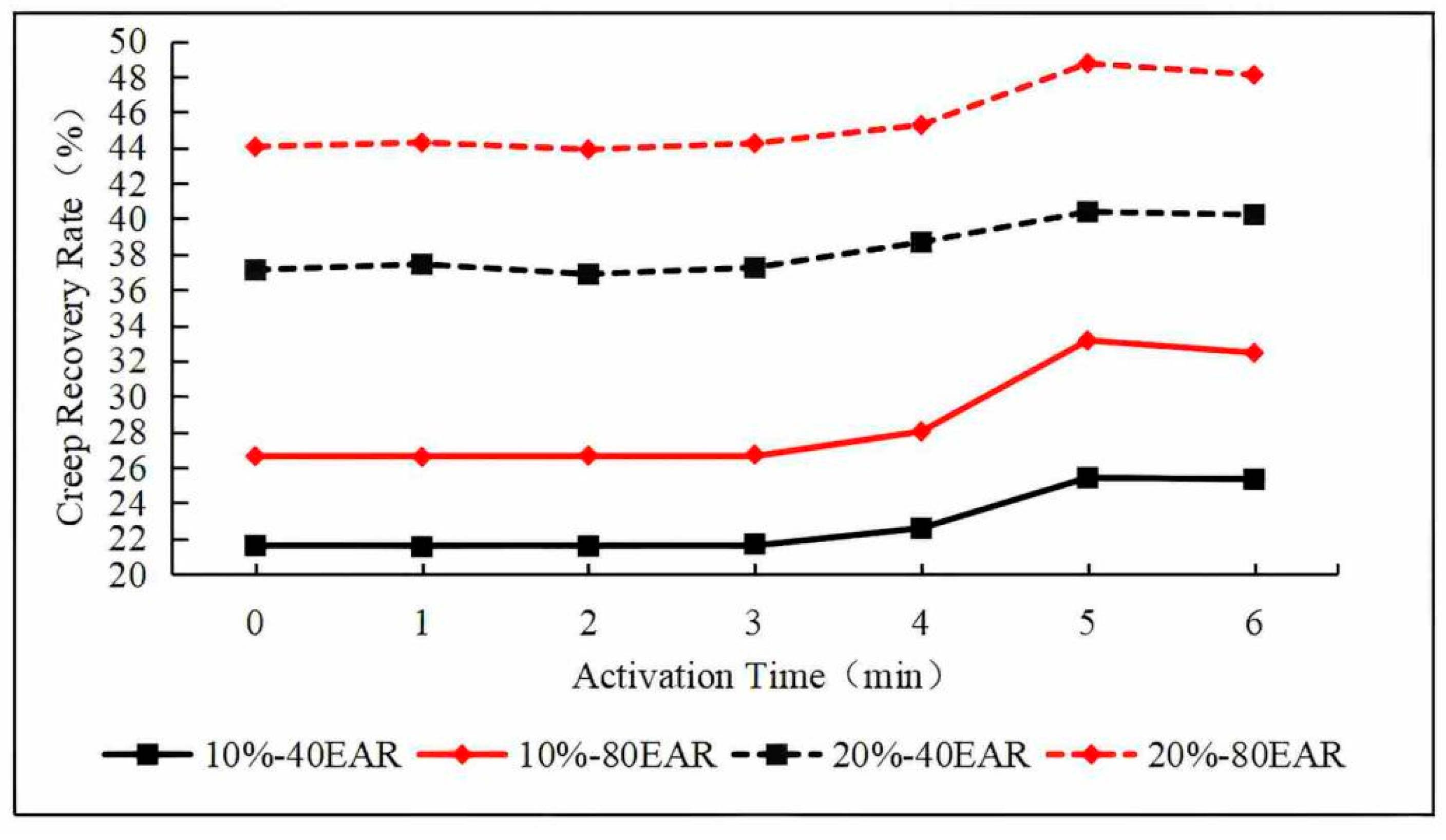
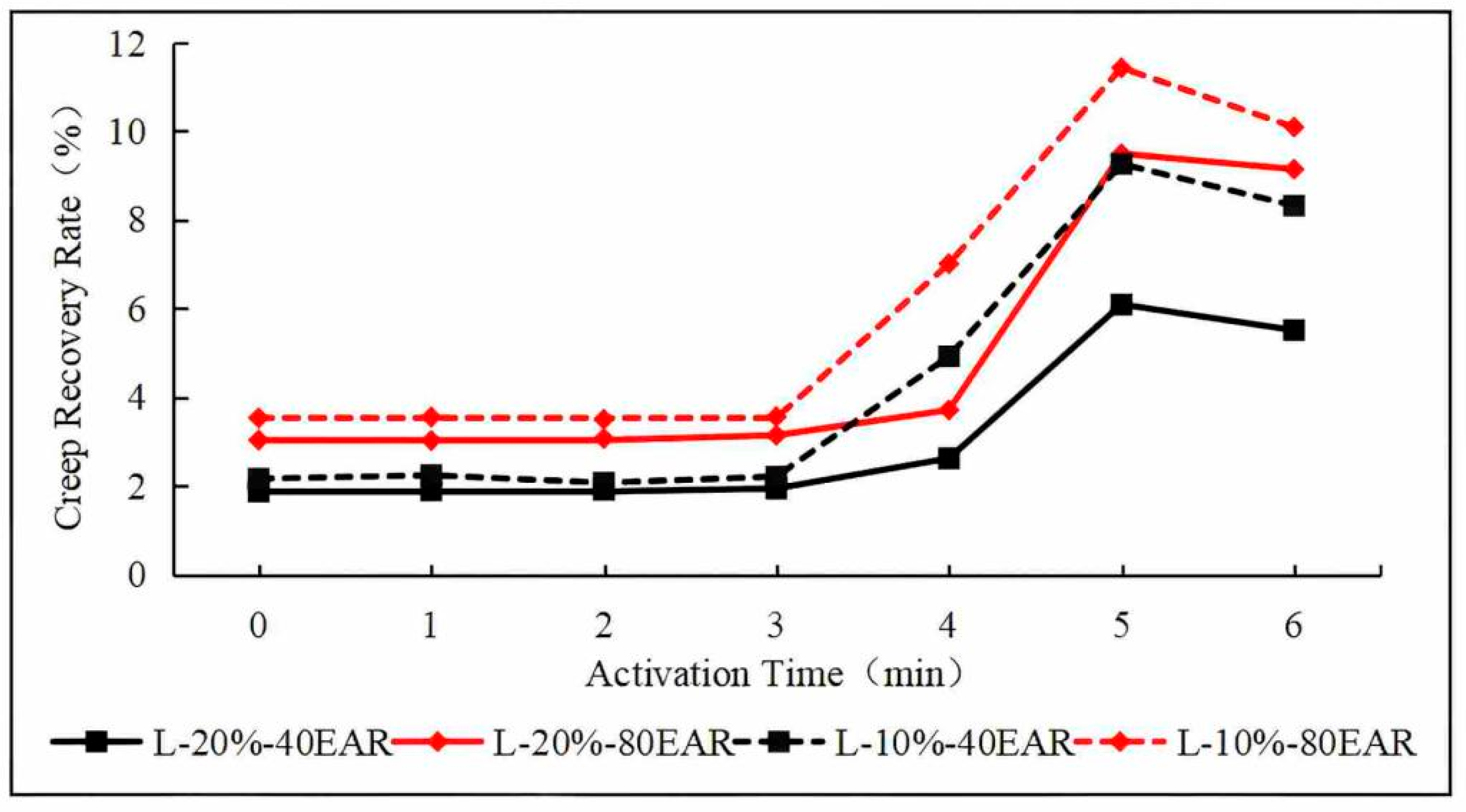
The results of the MSCR, LAS, and BBR tests are shown in Figure 21, Figure 22, Figure 23 and Figure 24. Analysis indicates that microwave activation of crumb rubber enhances high-temperature deformation resistance, medium-temperature fatigue resistance, and low-temperature crack resistance in crumb rubber–emulsified asphalt blends. Comparing performance before and after solid–liquid separation clarifies differences in activation effectiveness. At low dosage levels, the high-temperature improvement is comparable in both the solid and liquid phases; at high dosage levels, the improvement in the liquid phase is more pronounced, reaching 1.9 times the overall improvement. Medium-temperature fatigue improvement remains consistent before and after separation. Improvement in low-temperature crack resistance primarily stems from insoluble particles in the solid phase. For example, the 5–10%-40 mixture showed a 10.25% reduction compared to the 0–10%-40 mixture, while the L-5–10%-40 mixture showed only a 2.22% reduction in S/m compared to the 0–10%-40 S/m mixture.
The performance improvement exhibits distinct phased characteristics as a function of activation time. The 0–3 min period constitutes the preheating phase; as the effective desulfurization temperature threshold has not been reached, the crosslinked network remains stable, and no modification effect is observed. The 4–6 min period represents the effective activation phase, during which microwave radiation selectively disrupts the crosslinked network, leading to improved performance. Specifically, the best results are achieved at 5 min of activation (R increases by 4.58%, Nf increases by 6.04%, S/m decreases by 9.43%), while performance began to decline after 6 min of activation. This is consistent with the results of the Horikx model, confirming that excessive activation leads to increased main chain breakage, which in turn reduces the modification effect.
Increasing crumb rubber content from 10% to 20% strengthens the modification effect, and 80-mesh crumb rubber, with its finer particle size, achieves better results than 40-mesh crumb rubber.

4.3. Optimized Microwave Activation Protocol

Based on the above research, the microwave activation protocol was optimized. Using the high-intensity thermal effect of 1040 W, the crumb rubber temperature was rapidly raised to approximately 190 °C—the effective desulfurization threshold—within 4 min, thereby initiating the desulfurization activation reaction. Subsequently, the power was set to 873 W. With a relatively mild thermal field, the crumb rubber temperature was maintained within the optimal desulfurization range, achieving deep decrosslinking while avoiding excessive temperatures that could increase the proportion of main chain scission. The results showed that the proportion of main chain scission increased 3 min after switching to 873 W, and this increase was particularly pronounced after 4 min (as shown in Figure 25). Therefore, the optimized protocol consisted of 4 min of activation at 1040 W, followed by 2 min at 873 W.
The performance comparison results are shown in Table 3 and Table 4. The optimized scheme outperforms Schemes 1 and 2 across high-, medium-, and low-temperature conditions while reducing energy consumption by 43.7% compared to the long-duration, low-power scheme (873 W for 12 min of activation), thereby achieving a balance between performance and energy consumption. Under the optimized scheme, the crumb rubber temperature was approximately 222.5 °C, the crosslink density decreased to 10.65 × 10⁻⁵ mol/cm3, the sol content increased by 18.70%, and the degree of desulfurization reached 51.59%.

5. Effect of Microwave Activation of Crumb Rubber on Demulsification Behavior

Effect of Microwave Activation on the Demulsification Behavior of Crumb Rubber

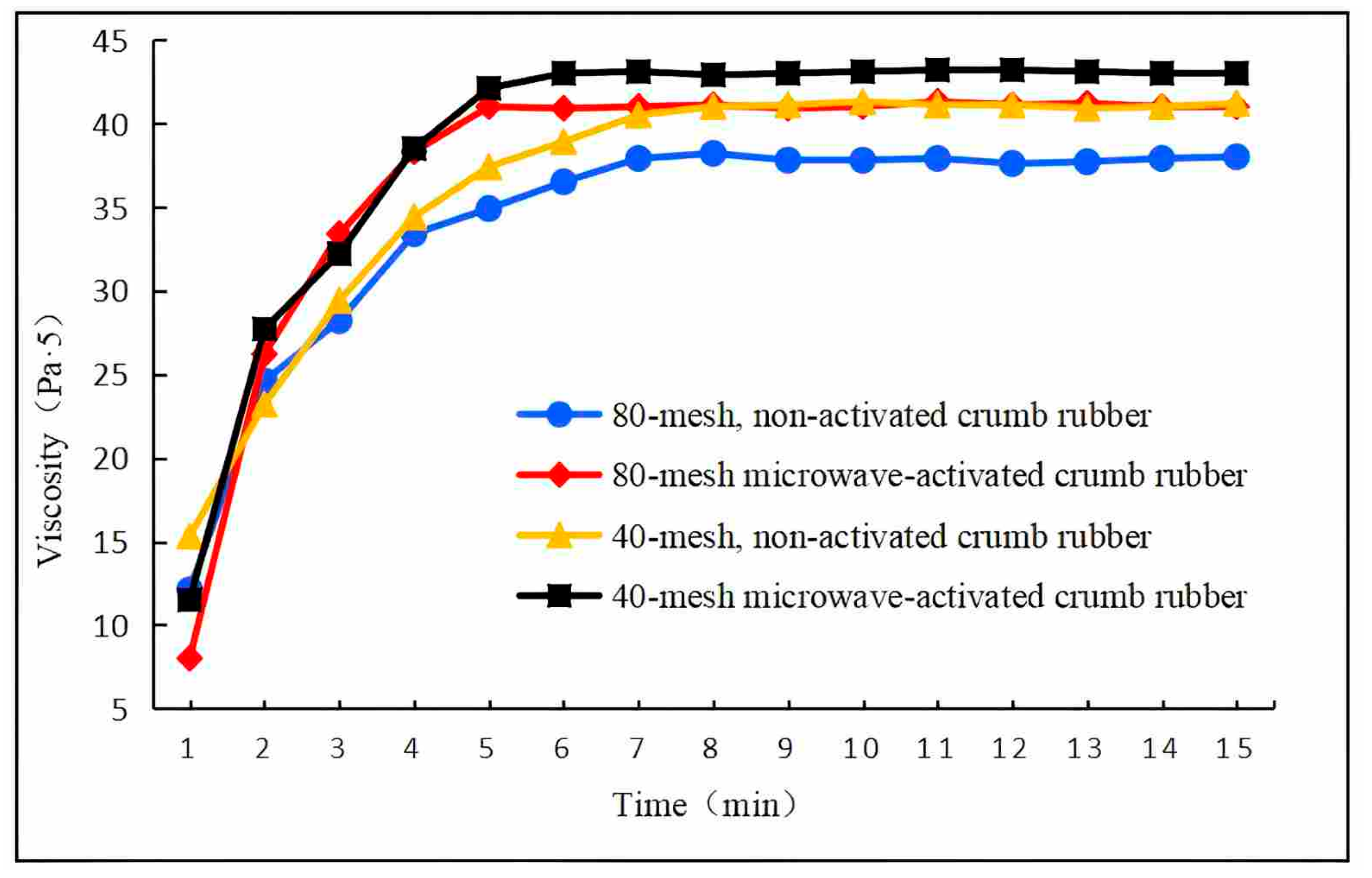
This study uses a Brookfield viscometer to monitor changes in the viscosity of a crumb rubber–emulsified asphalt blend and to analyze the effect of microwave-activated crumb rubber on demulsification. The prepared crumb rubber–emulsified asphalt mixture was placed in the sample cylinder of a Brookfield viscometer. Viscosity measurements were conducted at 25 ± 1 °C using a No. 29 rotor at a speed of 20 r/min. The results (as shown in Figure 26) indicate that the activation state of the crumb rubber influences the demulsification process, as evidenced by changes in initial viscosity, demulsification rate, and final stable viscosity. Regarding initial viscosity, the activated crumb rubber system had consistently lower viscosity than the non-activated system. The initial viscosity of the activated 80-mesh crumb rubber was 8.0 Pa·s, which was lower than the 12.1 Pa·s of the non-activated system, representing a reduction of approximately 33.9%. This is attributed to the microwave activation treatment breaking the crosslinks between crumb rubber molecules, improving its compatibility with emulsified asphalt, enabling more uniform dispersion, and reducing mixing resistance. In terms of the demulsification rate, the viscosity of the activated crumb rubber system increases more rapidly, and the time required for complete demulsification is shorter; the viscosity of the activated crumb rubber stabilizes within 5–6 min, whereas the corresponding non-activated system requires more than 7 min. The activation treatment also increased the final stable viscosity. The final viscosities of the 80-mesh and 40-mesh activated crumb rubber systems were approximately 41.0 Pa·s and 43.1 Pa·s, respectively, both higher than those of the non-activated systems.

6. Discussion

The results of the molecular dynamics simulations matched the performance tests. Molecular simulations showed that desulfurization and activation improve crumb rubber’s compatibility and binding energy with emulsified asphalt. Performance tests confirmed that these treatments enhance modification. MD simulations showed that Desulfurized Crumb Rubber 2 had the highest binding energy, whereas crumb rubber 3, with excessive desulfurization, had a lower binding energy due to main chain scission. Performance tests validated these findings: samples activated for 5 min at 1040 W performed optimally, but performance declined after 6 min and dropped sharply at 7 min due to carbonization. Both simulation and experimental results highlight the need to control desulfurization to effectively break crosslinks and preserve the main chain structure; excessive desulfurization leads to main chain scission and carbonization, weakening or eliminating the modification effect.
Molecular dynamics simulations show that desulfurization treatment significantly reduces the solubility parameter difference between crumb rubber and emulsified asphalt; specifically, the solubility parameter difference for Desulfurized Crumb Rubber 2 has fallen below 3 (J/cm3)0.5, indicating good compatibility. At the same time, the deeper the desulfurization, the greater the diffusion coefficient of the crumb rubber in the system and the stronger its molecular mobility. Demulsification tests validated the above simulation predictions. On the one hand, the improved compatibility resulting from the reduced solubility parameter difference led to more uniform dispersion of the crumb rubber, directly reducing the mixing resistance of the system, as evidenced by a decrease in the initial viscosity of the activated crumb rubber; on the other hand, the increased diffusion coefficient promotes rapid penetration of the crumb rubber and interaction with the asphalt, accelerating the flocculation and coalescence of microdroplets, thereby shortening the demulsification stability time from over 7 min for the non-activated sample to 5–6 min and accelerating the demulsification process.
Through experiments and MD simulations, this study confirms that microwave activation of crumb rubber can improve its compatibility and adhesion with emulsified asphalt, thereby enhancing the performance of crumb rubber–emulsified asphalt blends and mitigating the slowed demulsification caused by crumb rubber.

7. Conclusions

This study employed microwave activation technology to desulfurize and activate waste crumb rubber. By integrating experimental research, molecular dynamics simulations, and solid–liquid separation methods, we systematically investigated the mechanisms by which the activation of crumb rubber affects cold-mix emulsified asphalt systems. The main conclusions are as follows:
(1) Microwave activation of crumb rubber exhibits an effective temperature threshold of approximately 190 °C. The thermal effect of microwaves is the dominant factor in the breakdown of the molecular crosslinking network of crumb rubber; the non-thermal effect could not be confirmed under the experimental conditions of this study, and its influence is considered negligible.
(2) Moderate desulfurization reduces the solubility parameter difference between crumb rubber and asphalt, increases interfacial binding energy, and enhances the diffusion coefficient; however, excessive desulfurization treatment causes the binding energy to decrease instead.
(3) The performance-enhancing effect of activated crumb rubber on crumb rubber–emulsified asphalt blends was verified through solid–liquid separation methods and performance tests. An optimal microwave activation protocol was proposed: 4 min at 1040 W, followed by 2 min at 873 W, which reduces energy consumption while achieving the best modification results.
(4) Activation of crumb rubber accelerates the demulsification process of emulsified asphalt. Molecular dynamics simulations indicate that the greater the degree of desulfurization, the higher the diffusion coefficient of the crumb rubber in the emulsified asphalt; this aligns with observations from demulsification tests showing that the demulsification rate increases in activated crumb rubber systems.
This study elucidates the microscopic mechanisms and macroscopic effects of microwave activation of crumb rubber in improving the properties of crumb rubber–emulsified asphalt blends, providing a theoretical basis and technical support for the development of high-performance cold-mix crumb-rubber-modified asphalt mixtures. Future research may further explore the long-term impact of crumb rubber activation on the in-service performance of mixtures, as well as engineering application techniques for the activation process.


Author Contributions

Conceptualization, J.Y. and H.Y.; Methodology, J.Y. and H.Y.; Software, Z.F. and J.L.; Validation, Z.F.; Investigation, J.L.; Data curation, J.L.; Writing—original draft, Z.F. and X.L.; Writing—review & editing, X.L.; Supervision, J.Y. and H.Y. All authors have read and agreed to the published version of the manuscript.

Funding

Foshan City Science and Technology Innovation Team Special Funding: 2120001010776; Shenzhen Science and Technology Innovation Bureau 2025 Key Industry R&D Plan: Research and Application Demonstration of Cold-Mix Noise-Reducing Asphalt Pavement Technology: ZDCYKCX 20250901092303004.

Data Availability Statement

The original contributions presented in the study are included in the article, further inquiries can be directed to the corresponding authors.
Conflicts of Interest

The authors declare no conflict of interest.
References

  1. Qiao, Y.; Wen, X.; Liu, S.; Lv, S.; He, L. Stochastic analysis for comparing life cycle carbon emissions of hot and cold mix asphalt pavement systems. Resour. Conserv. Recycl. 2025, 212, 107881. [Google Scholar] [CrossRef]
  2. Jain, S.; Singh, B. Cold mix asphalt: An overview. J. Clean. Prod. 2020, 124378. [Google Scholar] [CrossRef]
  3. Shu, X.; Huang, B. Recycling of waste tire rubber in asphalt and portland cement concrete: An overview. Constr. Build. Mater. 2014, 67, 217–224. [Google Scholar] [CrossRef]
  4. Tushar, Q.; Santos, J.; Zhang, G.; Bhuiyan, M.A.; Giustozzi, F. Recycling waste vehicle tyres into crumb rubber and the transition to renewable energy sources: A comprehensive life cycle assessment. J. Environ. Manag. 2022, 323, 116289. [Google Scholar] [CrossRef] [PubMed]
  5. Ge, D.; Zhou, X.; Chen, S.; Jin, D.; You, Z. Laboratory Evaluation of the Residue of Rubber-Modified Emulsified Asphalt. Sustainability 2020, 12, 8383. [Google Scholar] [CrossRef]
  6. Presti, D.L. Recycled tyre rubber modified bitumens for road asphalt mixtures: A literature review. Constr. Build. Mater. 2013, 49, 863–881. [Google Scholar] [CrossRef]
  7. Xu, L.; Li, X.; Zong, Q.; Xiao, F. Chemical, morphological and rheological investigations of SBR/SBS modified asphalt emulsions with waterborne acrylate and polyurethane. Constr. Build. Mater. 2021, 272, 121972. [Google Scholar] [CrossRef]
  8. Aoudia, K.; Azem, S.; Hocine, A.N.; Gratton, M.; Pettarin, V.; Seghar, S. Recycling of waste tire rubber: Microwave devulcanization and incorporation in a thermoset resin. Waste Manag. 2017, 60, 471–481. [Google Scholar] [CrossRef]
  9. Li, F.; Zhang, X.; Wang, L.; Zhai, R. The preparation process, service performances and interaction mechanisms of crumb rubber modified asphalt (CRMA) by wet process: A comprehensive review. Constr. Build. Mater. 2022, 354, 129168. [Google Scholar] [CrossRef]
  10. Xing, B.; Feng, Y.; Sun, S.; Qian, C.; Fang, C.; Lv, X.; Song, A.; Lyu, Y. Investigations on the rheological and swelling-degradation behavior of crumb rubber within the bituminous matrix. Constr. Build. Mater. 2023, 367, 130262. [Google Scholar] [CrossRef]
  11. Ren, S.; Liu, X.; Lin, P.; Wang, H.; Fan, W.; Erkens, S. The continuous swelling-degradation behaviors and chemo-rheological properties of waste crumb rubber modified bitumen considering the effect of rubber size. Constr. Build. Mater. 2021, 307, 124966. [Google Scholar] [CrossRef]
  12. Zhang, L.; Wang, H.; Zhang, C.; Wang, S. Laboratory testing and field application of devulcanized rubber/SBS composite modified asphalt. Case Stud. Constr. Mater. 2023, 19, e02285. [Google Scholar] [CrossRef]
  13. Xie, J.; Yang, Y.; Lv, S.; Zhang, Y.; Zhu, X.; Zheng, C. Investigation on Rheological Properties and Storage Stability of Modified Asphalt Based on the Grafting Activation of Crumb Rubber. Polymers 2019, 11, 1563. [Google Scholar] [CrossRef]
  14. Markl, E.; Lackner, M. Devulcanization Technologies for Recycling of Tire-Derived Rubber: A Review. Materials 2020, 13, 1246. [Google Scholar] [CrossRef]
  15. Zhang, T.; Asaro, L.; Gratton, M.; Hocine, N.A. An overview on waste rubber recycling by microwave devulcanization. J. Environ. Manag. 2024, 353, 120122. [Google Scholar] [CrossRef] [PubMed]
  16. Zhou, T.; Zhou, J.; Li, Q.; Li, B. Aging Properties and Mechanism of Microwave-Activated Crumb Rubber Modified Asphalt. Front. Mater. 2020, 7, 603938. [Google Scholar] [CrossRef]
  17. Yao, Z.; Yang, R.; Shi, J.; Zhang, C.; Zhang, Y. Separation mechanism of asphalt rubber and improvement with microwave irradiation. Constr. Build. Mater. 2022, 342, 127862. [Google Scholar] [CrossRef]
  18. Wu, W.; Jiang, W.; Xiao, I.; Yuan, D.; Wang, T.; Xing, C. Analysis of thermal susceptibility and rheological properties of asphalt binder modified with microwave activated crumb rubber. J. Clean. Prod. 2022, 377, 134488. [Google Scholar] [CrossRef]
  19. Li, D.D.; Greenfield, M.L. Chemical compositions of improved model asphalt systems for molecular simulations. Fuel 2014, 115, 347–356. [Google Scholar] [CrossRef]
  20. Guo, F.; Zhang, J.; Pei, J.; Zhou, B.; Falchetto, A.C.; Hu, Z. Investigating the interaction behavior between asphalt binder and rubber in rubber asphalt by molecular dynamics simulation. Constr. Build. Mater. 2020, 252, 118956. [Google Scholar] [CrossRef]
  21. Wang, H.; Zhu, J.; Chen, T.; Tang, Y.; Zhang, D.; Wang, X.; Xie, J.; Wu, S.; Xu, H.; Zhao, P.; et al. Diffusion Mechanism of Waste Crumb Rubber Composite Modified Asphalt Based on Molecular Dynamics Simulation. J. Clean. Prod. 2024, 482, 144155. [Google Scholar] [CrossRef]
  22. Gao, M.; Chen, Y.; Fan, C.; Li, M. Molecular Dynamics Study on the Compatibility of Asphalt and Rubber. ACS Omega 2022, 7, 36157–36164. [Google Scholar] [CrossRef] [PubMed]
  23. Horikx, M.M. Chain Scissions in a Polymer Network. J. Polym. Sci. 1956, 19, 445–454. [Google Scholar] [CrossRef]
  24. Gibala, D.; Thomas, D.; Hamed, G.R. Cure and mechanical behavior of rubber compounds containing ground vulcanizates: Part III. Tensile and tear strength. Rubber Chem. Technol. 1999, 72, 357–360. [Google Scholar] [CrossRef]
  25. Hosseini, M.; Stiasni, N.; Barbieri, V.; Kappe, C.O. Microwave-assisted asymmetric organicatalysis. A probe for nonthermal microwave effects and the concept of simultaneous cooling. J. Org. Chem. 2007, 72, 1417–1424. [Google Scholar] [CrossRef]
  26. Herrero, M.A.; Kremsner, J.M.; Kappe, C.O. Nonthermal Microwave Effects Revisited: On the Importance of Internal Temperature Monitoring and Agitation in Microwave Chemistry. J. Org. Chem. 2008, 73, 36–47. [Google Scholar] [CrossRef]
  27. Wang, J.; Yu, X.; Si, J.; Zhao, S.; Wei, W.; Ding, G. Comparative analysis of cold-mixed epoxy asphalt models for molecular dynamics simulation: Structural, curing and mechanical properties. Mater. Struct. 2024, 57, 61. [Google Scholar] [CrossRef]
  28. Liu, K.; Yang, Q.; Qiu, X.; Xu, W.; Xiao, S.; Gu, Y.; Ye, Y. An investigation toward adhesion characteristics of emulsified asphalt residue-aggregate interface through MD simulation. Constr. Build. Mater. 2024, 438, 137251. [Google Scholar] [CrossRef]
  29. Wang, P.; Dong, Z.; Tan, Y.; Tan, Y.-Q.; Liu, Z.-Y. Investigating the Interactions of the Saturate, Aromatic, Resin, and Asphaltene Four Fractions in Asphalt Binders by Molecular Simulations. Energy Fuels 2015, 29, 112–121. [Google Scholar] [CrossRef]
  30. Wang, D.; Li, D.; Yan, J.; Leng, Z.; Wu, Y.; Yu, J.; Yu, H. Rheological and chemical characteristic of warm asphalt rubber binders and their liquid phases. Constr. Build. Mater. 2018, 193, 547–556. [Google Scholar] [CrossRef]
  31. Hanz, J.A.; Arega, A.Z.; Bahia, U.H. Rheological behavior of emulsion residues produced by evaporative recovery method. Transp. Res. Rec. 2010, 2179, 102–108. [Google Scholar] [CrossRef]
  32. Malladi, H.; Asnake, M.; Lacroix, A.; Castorena, C. Low-temperature vacuum drying procedure for rapid asphalt emulsion residue recovery. Transp. Res. Rec. 2018, 2672, 256–265. [Google Scholar] [CrossRef]
  33. Sheikhmotevali, A.H.; Ameri, M. Application of bitumen rheological parameters to predict thermal cracking behavior of polymer modified asphalt mixture. Constr. Build. Mater. 2014, 66, 259–267. [Google Scholar] [CrossRef]
  34. Pu, C.; Lei, B.; Yang, Z.; Yin, P. Evaluation of Constitutive Models for Low-Temperature Performance of High-Modulus Modified Asphalt: A BBR Test-Based Study. Materials 2025, 18, 3963. [Google Scholar] [CrossRef] [PubMed]
Figure 1. Technology roadmap.
Buildings 16 01824 g001
Figure 2. Crumb rubber temperature as a function of microwave exposure time.
Buildings 16 01824 g002
Figure 3. Crumb rubber. (a) Non-activated crumb rubber. (b) Carbonized crumb rubber.
Buildings 16 01824 g003
Figure 4. Molecular extracts under 873 W microwave irradiation.
Buildings 16 01824 g004
Figure 5. Molecular extracts under 1040 W microwave irradiation.
Buildings 16 01824 g005
Figure 6. Changes in crosslink density of crumb rubber under 873 W microwave irradiation.
Buildings 16 01824 g006
Figure 7. Changes in crosslink density of crumb rubber under 1040 W microwave irradiation.
Buildings 16 01824 g007
Figure 8. Horikx model results.
Buildings 16 01824 g008
Figure 9. Enlarged view of Horikx model results.
Buildings 16 01824 g009
Figure 10. Small-molecule extracts under pulsed microwave irradiation.
Buildings 16 01824 g010
Figure 11. High-molecule extracts under pulsed microwave irradiation.
Buildings 16 01824 g011
Figure 12. Emulsifier molecular model and water molecular model. (a) Emulsifier molecule. (b) Water molecule.
Buildings 16 01824 g012
Figure 13. Interaction model between crumb rubber and emulsified asphalt. (a) Crumb rubber–modified emulsified asphalt evaporation residue model. (b) Crumb rubber–modified emulsified asphalt model.
Buildings 16 01824 g013
Figure 14. Vulcanization and desulfurization processes of the crumb rubber model.
Buildings 16 01824 g014
Figure 15. Solubility parameter difference between crumb rubber and emulsified asphalt.
Buildings 16 01824 g015
Figure 16. Binding energy of the crumb rubber–emulsified asphalt system. (a) Crumb rubber–emulsified asphalt evaporation residue. (b) Crumb rubber–emulsified asphalt.
Buildings 16 01824 g016aBuildings 16 01824 g016b
Figure 17. Diffusion behavior of crumb rubber–emulsified asphalt systems. (a) 288 K, (b) 298 K, (c) 308 K, (d) diffusion coefficient.
Buildings 16 01824 g017
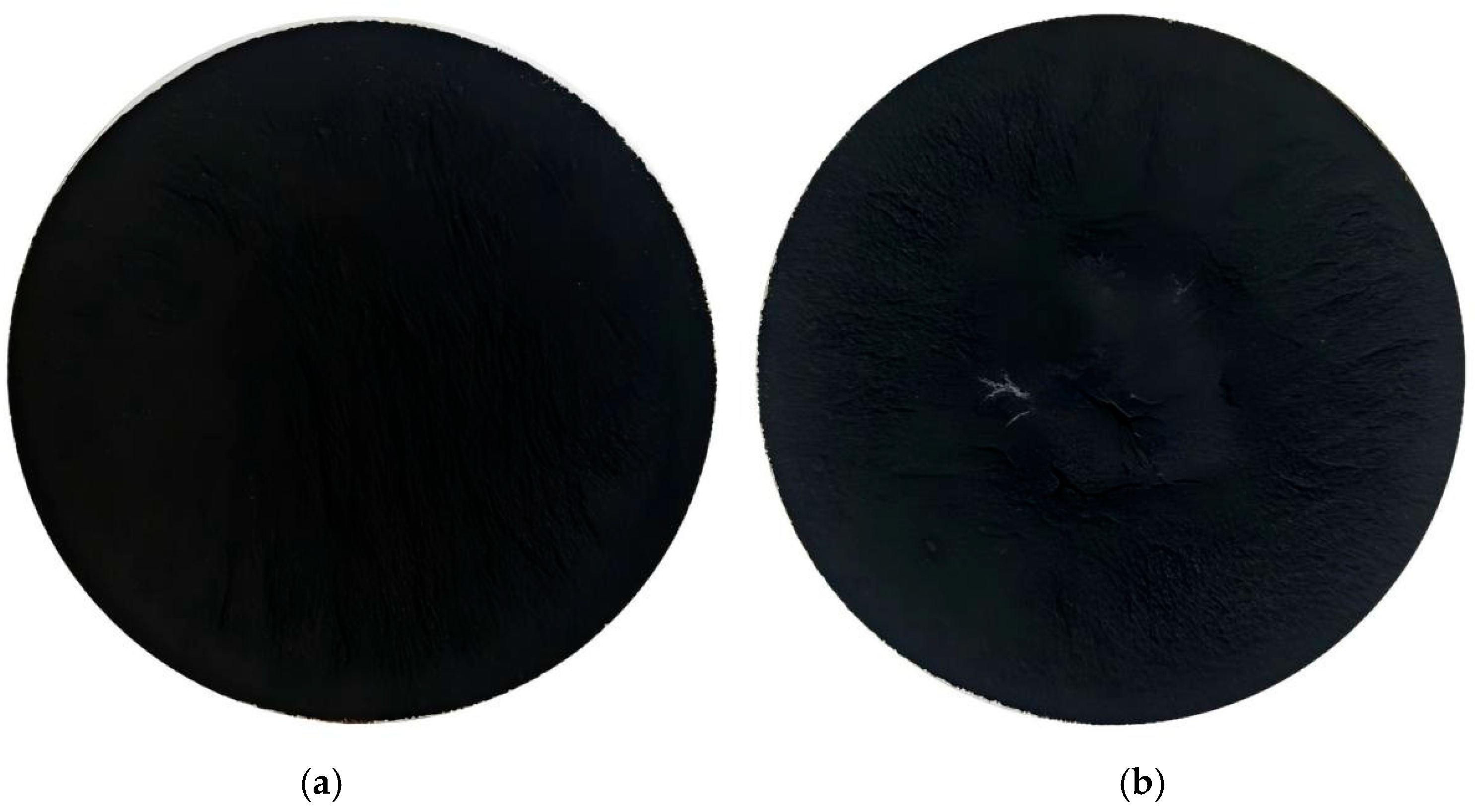
Figure 18. Separated crumb rubber–modified emulsified asphalt. (a) Sieve residue, (b) the liquid phase collected from the sieve.
Buildings 16 01824 g018
Figure 19. Failure temperature of the rutting factor for crumb rubber–modified emulsified asphalt blends under 873 W microwave activation.
Buildings 16 01824 g019
Figure 20. Failure temperature of the rutting factor for crumb rubber–modified emulsified asphalt blends under 1040 W microwave activation.
Buildings 16 01824 g020
Figure 21. Effect of microwave activation on the solid-phase creep recovery rate (R0.1) value.
Buildings 16 01824 g021
Figure 22. Effect of microwave activation on the liquid-phase creep recovery rate (R0.1) value.
Buildings 16 01824 g022
Figure 23. Fatigue life (Nf) at 2.5% strain level.
Buildings 16 01824 g023
Figure 24. S/m ratio values for crumb rubber–modified emulsified asphalt blend at −6 °C.
Buildings 16 01824 g024
Figure 25. Comparison chart of Horikx model results.
Buildings 16 01824 g025
Figure 26. Viscosity change chart.
Buildings 16 01824 g026
Table 1. Molecular information for the twelve-component asphalt model.
ComponentsMolecular NameAbbreviationChemical FormulaQuantityMass Fraction (%)
AsphaltPhenolAS-1C42H54O35.3
PyrroleAS-2C66H81N25.5
ThiopheneAS-3C51H62S36.5
Saturation pointSqualeneSA-1C30H6245.2
HopaneSA-2C35H6245.9
Aromatic fractionPHPNAR-1C35H441115.7
DOCHNAR-2C30H461316.2
GelatinQuinolinohopaneRE-1C40H59N46.8
ThioisorenierataneRE-2C40H60S47.0
BenzobisbenzothiopheneRE-3C18H10S21513.4
PyridinohopaneRE-4C36H57N46.2
TrimethylbenzeneoxaneRE-5C29H50O56.4
Table 2. Basic parameters of the asphalt model.
ProjectAsphalt Model Calculation ResultsReferences [27,28,29]
Density (g/cm3)1.0050.95~1.04
Solubility parameter ((J/cm3)0.5)19.56613.3~22.5
Table 3. Comparison table of sol content, crosslink density, and energy consumption.
Proposal NumberMicrowave SolutionsSol Content (%)Crosslinking Density
(×10−5 mol/cm3)
Energy Consumption
(×10−2 kwh)
Option 1Activate 1040 for 5 min11.9213.608.67
Option 2Activate 873 for 12 min18.529.2617.46
Option 31040 W for 4 min, then 873 W for 2 min18.710.659.84
Table 4. Performance comparison table.
SampleMSCRLASBBR
Recovery (%)Jnr
(kPa−1)
N f S/m
1040 W25.410.46473,021141.9
L-1040 W6.091.09116,641202.8
984 W29.730.40576,945119.7
L-984 W9.560.68317,077192.7
Disclaimer/Publisher’s Note: The statements, opinions and data contained in all publications are solely those of the individual author(s) and contributor(s) and not of MDPI and/or the editor(s). MDPI and/or the editor(s) disclaim responsibility for any injury to people or property resulting from any ideas, methods, instructions or products referred to in the content.