Article

Shear Capacity Prediction of FRP-Strengthened Reinforced Concrete Beams Based on Interpretable Ensemble Deep Learning Model


1
School of Civil Engineering & Architecture, East China Jiaotong University, Nanchang 330013, China
2
JiangXi Transport Investment Consulting Group Co., Ltd., Nanchang 330013, China
3
Department of Engineering Geology, Institute of Applied Geosciences, Technical University of Berlin, Ernst-Reuter-Platz 1, BH 3-1, 10587 Berlin, Germany
*
Author to whom correspondence should be addressed.
Buildings 2026, 16(9), 1815; https://doi.org/10.3390/buildings16091815
Submission received: 25 March 2026 / Revised: 17 April 2026 / Accepted: 24 April 2026 / Published: 2 May 2026

Abstract

There are many factors that affect the shear capacity of FRP (fiber-reinforced polymer)-strengthened reinforced concrete (RC) beams, and traditional capacity models based on empirical or semi-empirical formulas often suffer from insufficient accuracy. To enhance the predictive accuracy and generalization ability of the shear capacity of FRP-strengthened RC beams, this study proposes an interpretable machine learning model based on the Jaya-CNN-LSTM model. A comprehensive database consisting of 315 test data on shear capacity of FRP-strengthened RC beams, encompassing various FRP reinforcement modes, has been established. Key feature parameters for predicting the shear capacity of FRP-strengthened RC beams are selected through Pearson correlation coefficient analysis. Based on the Jaya algorithm, the hyperparameters of the ensemble CNN-LSTM prediction model are adaptively optimized. A comparative analysis is conducted between the proposed method, other machine learning models, and existing empirical formulas to evaluate the proposed model’s efficacy. The results demonstrate that the proposed model outperforms other machine learning models and empirical formulas in terms of prediction accuracy and stability. Furthermore, the machine learning-based predictions align more closely with experimental values than those derived from empirical formulas. Additionally, the SHAP method is utilized to quantify the critical parameters’ impact on predicting the shear capacity of FRP-strengthened RC beams. The results reveal that there is an explicit mapping relationship between key features such as shear-span ratio, concrete strength, and yield strength of stirrups and the shear capacity of FRP-strengthened RC beams, providing technical support for practical applications.

1. Introduction

RC beams inevitably undergo performance degradation due to environmental corrosion, temperature changes, fatigue loading, and other factors, ultimately jeopardizing structural safety [1,2,3]. In practical engineering applications, RC beams are often prone to brittle shear failure [4,5]. Unlike flexural failure, which is typically ductile and accompanied by significant deformation and warning signs, shear failure usually occurs suddenly with limited prior deformation, posing a serious threat to structural safety. Hence, enhancing the shear capacity of RC beams through appropriate strengthening measures is essential to ensure the structural safety and long-term serviceability of engineering structures.
Externally bonded reinforcement technology using fiber-reinforced polymer (FRP) wraps is widely employed to strengthen RC beams with insufficient shear capacity, owing to FRP’s high strength, corrosion resistance, and light weight [6,7,8]. Common methods for FRP-strengthened RC beams include side bonding, U-shaped bonding, and full wrapping bonding. The main failure mode of RC beams reinforced using side bonding and U-shaped bonding is debonding at the FRP-concrete interface, which prevents the full utilization of the FRP’s tensile strength [9,10]. Generally, U-shaped bonding offers superior reinforcement performance compared to side bonding, as it provides better anchorage for the FRP at the beam’s bottom. Among these methods, full wrapping allows for the most effective utilization of FRP material properties. To quantify the enhancement effect of externally bonded FRP reinforcement technology on the shear capacity of RC beams, many scholars have analogized the shear contribution of FRP reinforcement to that of steel bars in concrete structures. Based on experimental studies, numerical simulations, and theoretical analyses, they have proposed various load-carrying capacity calculation formulas [11,12,13]. Guo et al. [14] proposed a closed-frame FRP reinforcement method combining U-shaped bonding and longitudinal side bonding, and established a corresponding shear capacity calculation model. Mei et al. [15] studied the shear behavior of RC beams reinforced with full wrapping FRP bonding and established a calculation formula for the shear capacity after FRP reinforcement. However, the shear capacity of FRP-strengthened RC beams is influenced by many factors such as beam section dimensions, concrete, steel bars, FRP material properties, etc. The quantitative impact of these variables on the effectiveness of shear strengthening remains insufficiently understood [16,17]. Additionally, the mechanical performance of FRP-strengthened RC beams is subject to the construction standards and reinforcement methods employed. The existing theoretical models often rely on simplified mechanical assumptions, resulting in unstable prediction accuracy and limited generalizability [18,19]. Therefore, further research is imperative to develop more robust and accurate shear capacity for FRP-strengthened RC beams.
In recent years, with the rapid advancement of computer technology and machine learning, the application of artificial intelligence has garnered increasing attention in civil engineering [20,21,22,23,24,25]. In particular, machine learning algorithms have been extensively employed to predict the shear strengthening performance of FRP-strengthened RC beams [26,27,28,29,30]. Naderpour et al. [31] employed an artificial neural network (ANN) model to estimate the shear strength of FRP-strengthened RC beams and examined the impact of each individual input parameter on shear strength. Wang et al. [32] applied six different machine learning models to investigate the key factors affecting shear strength and to predict the shear contribution of FRP reinforcement, comparing the results with those obtained from empirical formulas. Tang et al. [33] utilized various machine learning models to predict the failure modes and the contribution of shear capacity of RC beams reinforced with FRP, subsequently applying the SHAP method to quantify the influence of different input features. Consequently, the integration of machine learning algorithms in predicting the shear capacity of RC beams strengthened with externally bonded FRP has become a mainstream method. However, several challenges persist in this field. For instance, the predictive accuracy of existing machine learning models depends on the setting of hyperparameters [34]. In high-dimensional parameter spaces, the efficiency of parameter adjustment through trial and error is low, leading to significant computational costs [35]. Although some progress has been made in developing interpretable machine learning models, research on the local interpretability of such models remains limited. Hence, enhancing the generalization capacity of machine learning models to predict the shear capacity of FRP-strengthened RC beams holds practical significance for engineering applications.
To improve the generalization capability and accuracy in predicting the shear capacity of FRP-strengthened RC beams, this study proposed a deep learning-based prediction model that leverages the Jaya algorithm to optimize the hyperparameters of an ensemble convolutional neural network (CNN)–long short-term memory (LSTM) network. The CNN component is employed to extract local feature interactions among input variables, while the LSTM component is used to capture implicit dependencies between features, thereby enhancing the nonlinear representation capability of the model. Furthermore, the Jaya algorithm is introduced to adaptively optimize the hyperparameters of the CNN-LSTM model, reducing the dependence on manual tuning and improving model robustness. First, a comprehensive dataset encompassing the shear capacity of FRP-strengthened RC beams with various types of externally bonded FRP reinforcement is compiled. Then, the Pearson correlation coefficient is extensively utilized to identify crucial features as input parameters for predicting the shear capacity of FRP-strengthened RC beams. Subsequently, the prediction accuracy and generalization performance of the proposed method for the shear capacity of FRP-strengthened RC beams are evaluated through comparative analyses with multiple existing empirical theoretical formulas and machine learning models. Finally, the SHAP method is employed to interpret the input parameter of the Jaya-CNN-LSTM model, conduct a quantitative analysis of the influence of different design parameters, and elucidate the role of each critical parameter in the shear capacity of FRP-strengthened RC beams.

2. Methodology

2.1. Existing Empirical Methods

The existing calculation model of shear capacity for FRP-strengthened RC beams is usually defined as:
V u = V c + V s + V f
where V u represents shear capacity, V c ,   V s ,   and   V f denote the shear contributions of concrete, stirrups, and FRP reinforcement, respectively. Among them, V c   and   V s are the existing concrete beam calculation models, and can be expressed as:
V c + V s = a c v f t b h 0 + f s y ρ s v h 0
where a c v denotes the shear coefficient of the inclined cross-section; b and h0 are the width and effective height of the section; f t represents the tensile strength of the concrete; f s y is the yield stress of the stirrups, and ρ s v is the stirrup ratio.
The shear contribution of FRP-strengthened RC beam is influenced by various factors, leading to the existence of distinct calculation models for Vf. The theoretical calculation formulas for the shear contribution of six typical FRP-strengthened RC beam are as follows:
(1)
The calculation formula for V f recommended by ACI 440.2R [36] is given as:
V f = A f v f f e sin α + cos α d f v S f
A f v = 2 n t f w f
f f e = ε f e E f
ε f e = 0.004 0.75 ε f e full   wrapping
ε f e = K v ε f u 0.004 K v = k 1 k 2 L e 11900 ε f u 0.75 U - wrapping   or   side   bonding
K v = k 1 k 2 L e 11900 ε f u 0.75
L e = 23300 n t f E f 0.58
k 1 = f c 27 2 / 3
k 2 = d f v L e d f v   U - wrapping d f v 2 L e d f v side   bonding
where A f v is the total cross-sectional area of the FRP strips, f f e is the effective stress of the FRP, α is the angle between the direction of the FRP fibers and the longitudinal axis of the beam, d f v is the bonding length of the FRP, S f is the center-to-center spacing of the FRP strips, n is the layers of the FRP, t f represents the thickness of a single FRP strip, w f is the width of the FRP strip, E f is the elastic modulus of the FRP fibers, ε f e is the effective strain of the FRP, K v is the correction coefficient for the effective strain of the FRP, ε f u is the ultimate strain of the FRP, L ε is the effective anchorage length of the FRP, f c is the compressive strength of the concrete, and K 1 represents the correction coefficient related to the compressive strength of concrete, and K 2 denotes the correction coefficient related to the bonding length of FRP.
(2)
European standards of International Federation for Structural Concrete (fib) [37] for V f calculation is as follows:
V f = 0.9 ε f e E f ρ f b w d sin θ + cos θ sin α
ρ f = 2 t f w f b w S f
ε f e = min 0.65 f c 2 / 3 E f ρ f 0.56 × 10 3 , 0.17 f c 2 / 3 E f ρ f 0.3 ε f u
where ρ f denotes the reinforcement ratio of the FRP, b w and d are the web width and effective depth of the RC beam, respectively.
(3)
The calculation formula for V f in the design specifications of the Canadian Standard Association CSA-S806 [38] is as follows:
V f = A f v f f e d f sin α + cos α S f
A f v = 2 n t f w f
f f e = ε f e E f
ε f e = 0.006 full   wrapping ε f e = K v ε f e 0.004 U - wrapping ,   two - side   bonding
K v = k 1 k 2 L e 11900 ε f u 0.75
L e = 23300 n t f E f 0.58
k 2 = d f L e d f
where d f denotes the effective beam height associated with shear contribution to FRP.
(4)
The recommended calculation formula for V f in China Association for Engineering Construction Standardization-CECS146-2003 [39] is as follows:
V f = ϕ f A f E f ε f e d f s f
ε f e = 2 0.2 + 0.12 λ ε f u 3 ,   If   λ > 3 ,   then   λ = 3 ;   if   λ < 1.5 ,   then   λ = 1.5
ϕ f = 1.0 for   full   wrapping 0.85 for   U - wrapping 0.7 for   side   bonding
where ϕ f is the strengthening form factor of FRP, and λ is the shear-span ratio.
(5)
Tan [40] fitted the experimental results of U-shaped stirrups reinforcement, and proposed a shear capacity formula as:
V f = R d b h ρ f E f ε f u
R d = 883 λ + 8.16 λ ε f u 0.3 ε f u
λ E = ρ f E f f t
η = w f w f + s f ( for U - jackets )
where R d represents the strain reduction factor of FRP, h denotes the beam height, λ E is the reinforcement quantity coefficient of FRP, and η is the coefficient of spacing ratio of FRP strips.
(6)
Lu et al. [41] presented a shear capacity formula as:
V f = K f τ ω f h f e 2 sin β + cos β s f
K f = φ sin β sin β + 0.3 h f e f t E f t f
φ = 1.0 for   side   plates 1.3 for   U - jackets
τ = 1.2 β w f t
β w = 2.25 w f s f 1.25 + w f s f 1 / 2
where K f represents the shear contribution coefficient of FRP, τ denotes the shear stress coefficient of FRP, h f e is the effective height of FRP, β represents the angle-related coefficient of FRP, φ is the reinforcement form coefficient, and β w represents the width-thickness ratio coefficient of FRP strips.

2.2. Existing Machine Learning Models

2.2.1. ANN Model

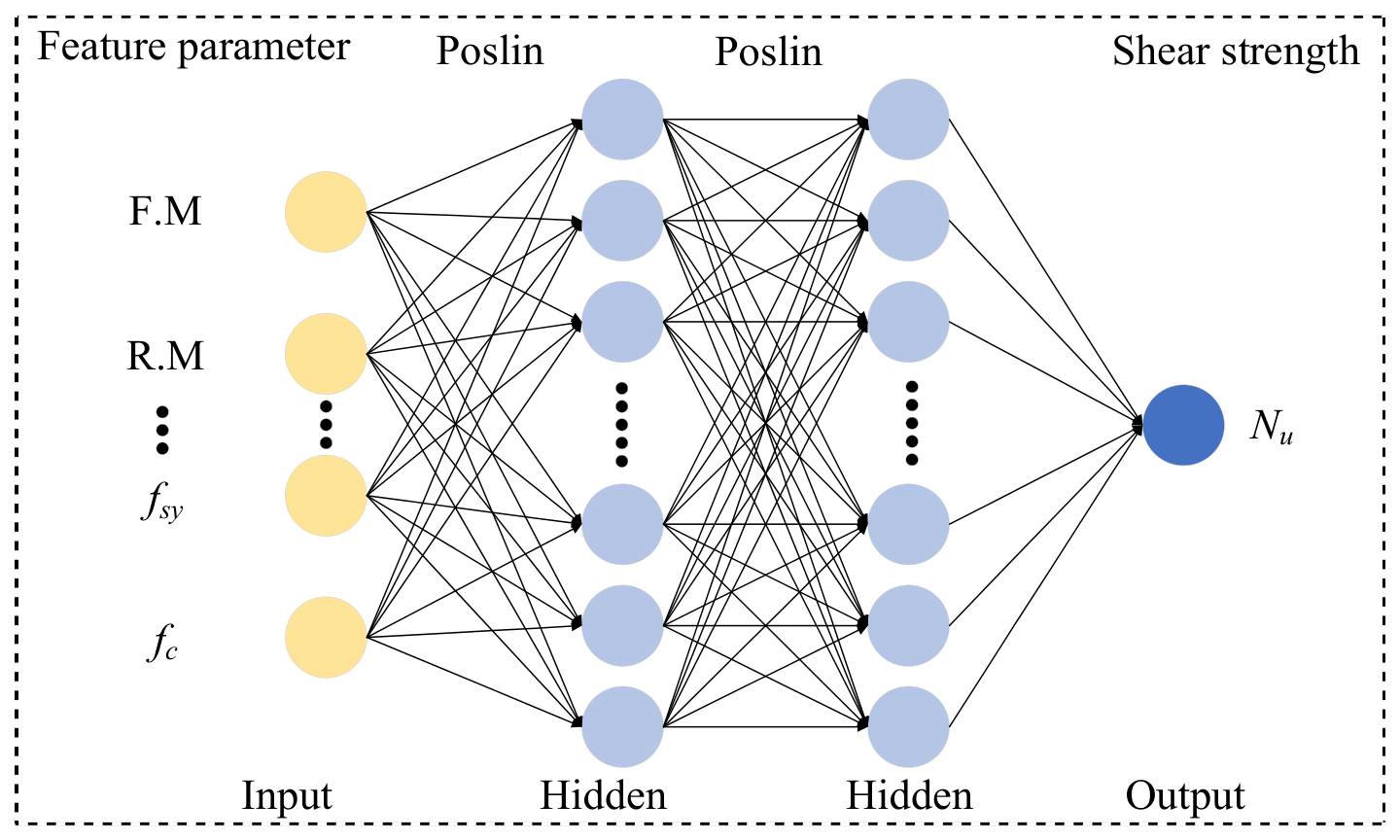
The basic unit of ANN [42] is a neuron, which contains weights and initial parameters. During the iterative training process, the values of weights and parameters will be continuously adjusted to achieve the convergence of the loss function, thus obtaining a well-trained model. Figure 1 illustrates the structure of the ANN, which consists of an input layer, several hidden layers, and an output layer. The number of hidden layers and the number of neurons in each hidden layer are key hyperparameters of the model. In this study, the activation functions for the hidden layer and the output layer are poslin function and purelin function, respectively. Specifically, the model incorporates 3 hidden layers with 17, 9, and 5 neurons in each layer. The model performance is evaluated based on mean squared error optimization. The learning rate is set to 0.01, the maximum iterations is 10,000, and an early stopping mechanism is introduced with a penalty value of 50.

2.2.2. RF Model

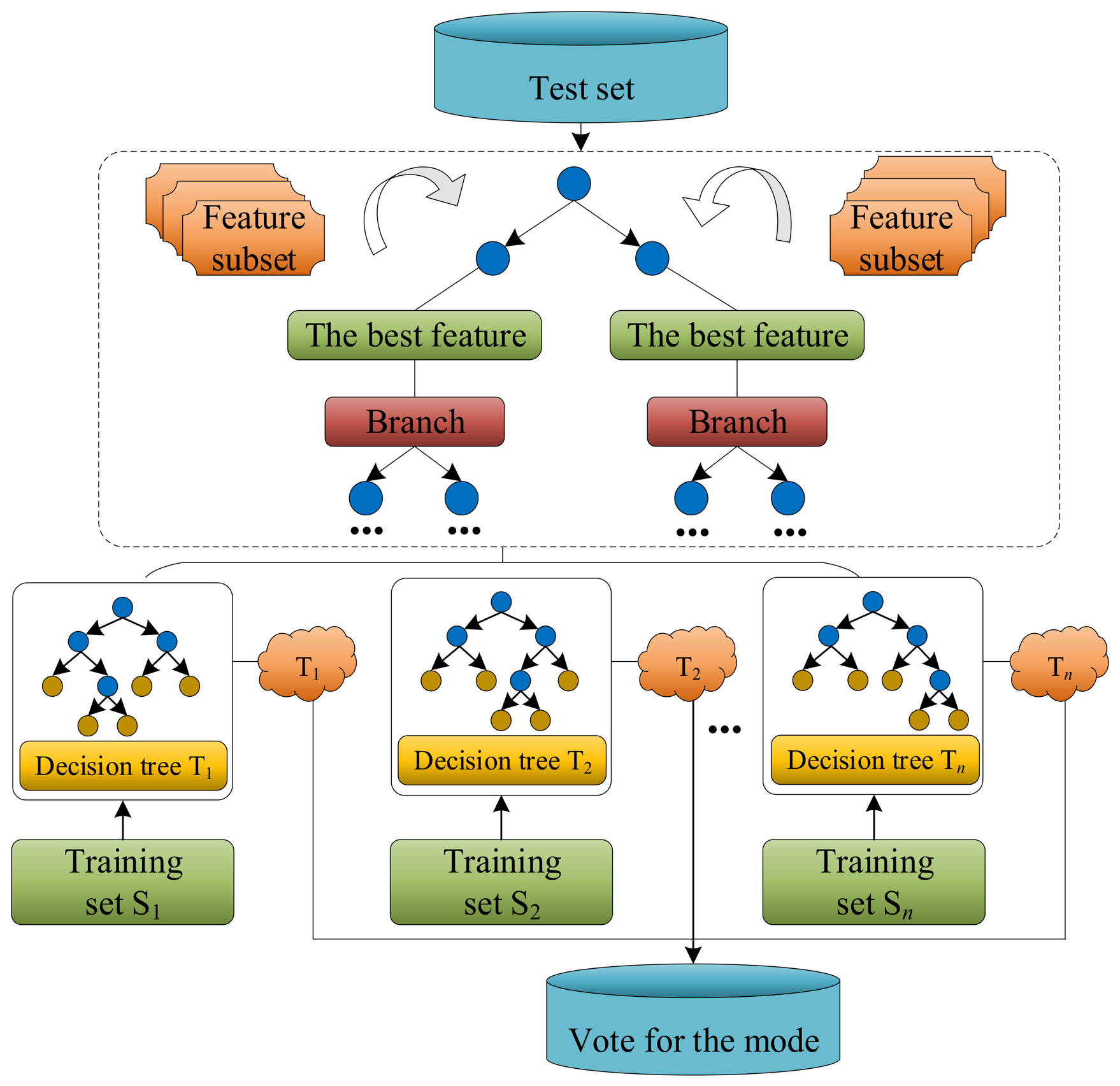
Random Forest (RF) [43] model is an ensemble learning approach based on decision trees, in which the core structure is a classifier composed of multiple decision trees, as illustrated in Figure 2. The algorithm first bootstraps multiple sample subsets, and then uses the Bagging technique to train multiple diverse decision trees in parallel, with each tree using only a subset of samples and features. During the prediction phase, the final output is obtained through collective voting or mean aggregation. This unique mechanism enables the RF model to have both strong resistance to overfitting and high robustness, which can effectively handle high-dimensional data. The hyperparameter configuration of the RF model for predicting the shear capacity of FRP-strengthened RC beams is as follows: 500 decision trees; a maximum tree depth is limited to 7; the maximum number of features equal to the square root of the total number of features; a minimum sample number for internal node split set at 5; and a minimum sample number for leaf node set at 3.

2.2.3. LSSVM Model

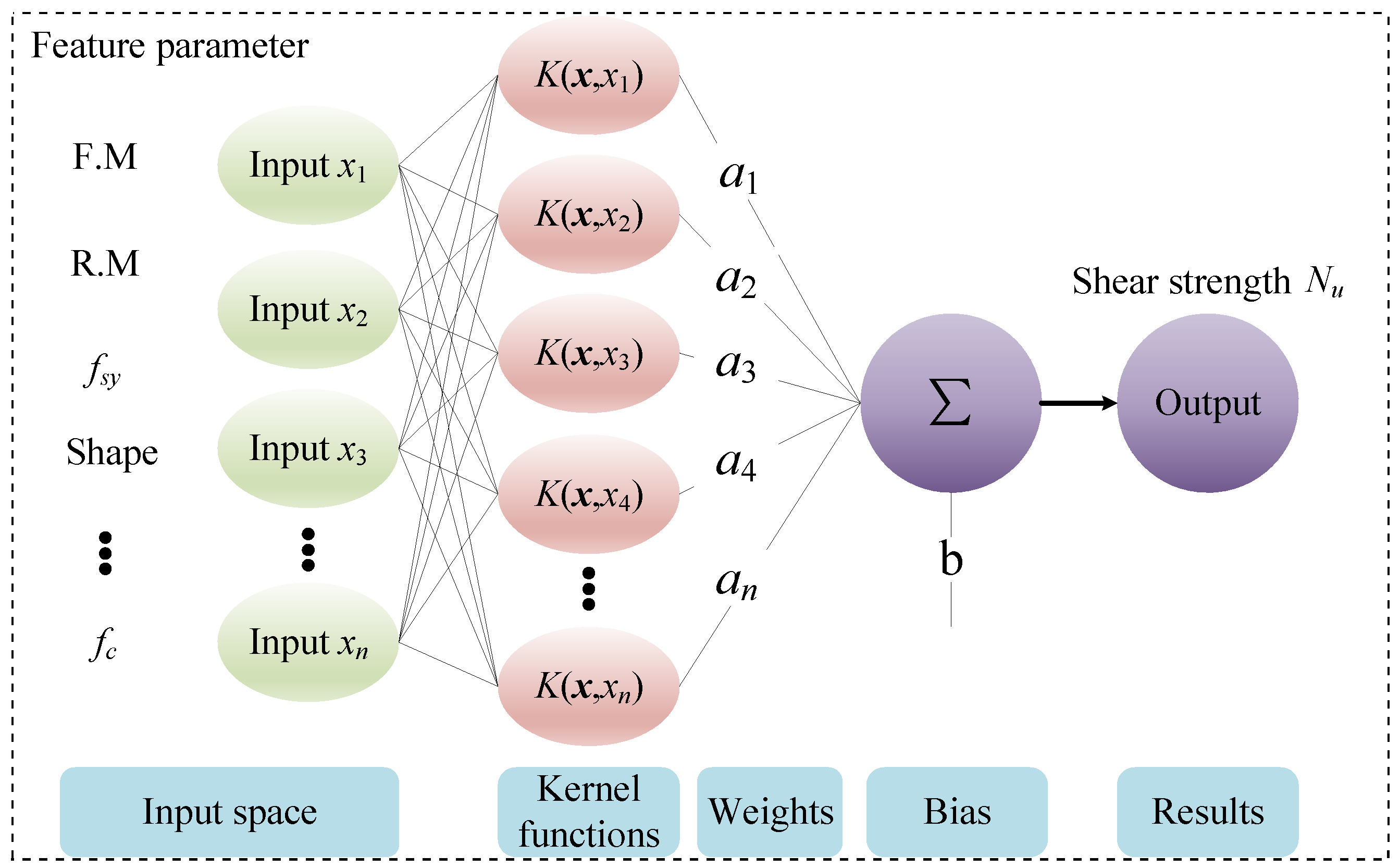
A least square support vector machine (LSSVM) is a variant of the support vector machine that uses equality constraints instead of inequality constraints [44]. It models the hysteretic behavior by approximating the autoregressive function and employs a nonlinear function to map the input into a high-dimensional space, as shown in Figure 3. The LSSVM model selects the radial basis function as the kernel function, with a function order of 3, and automatically calculates the kernel coefficient. In addition, the penalty parameter is set to 180, the maximum iteration is 3000, and the tolerance coefficient is set to 0.6.

2.2.4. CNN Model

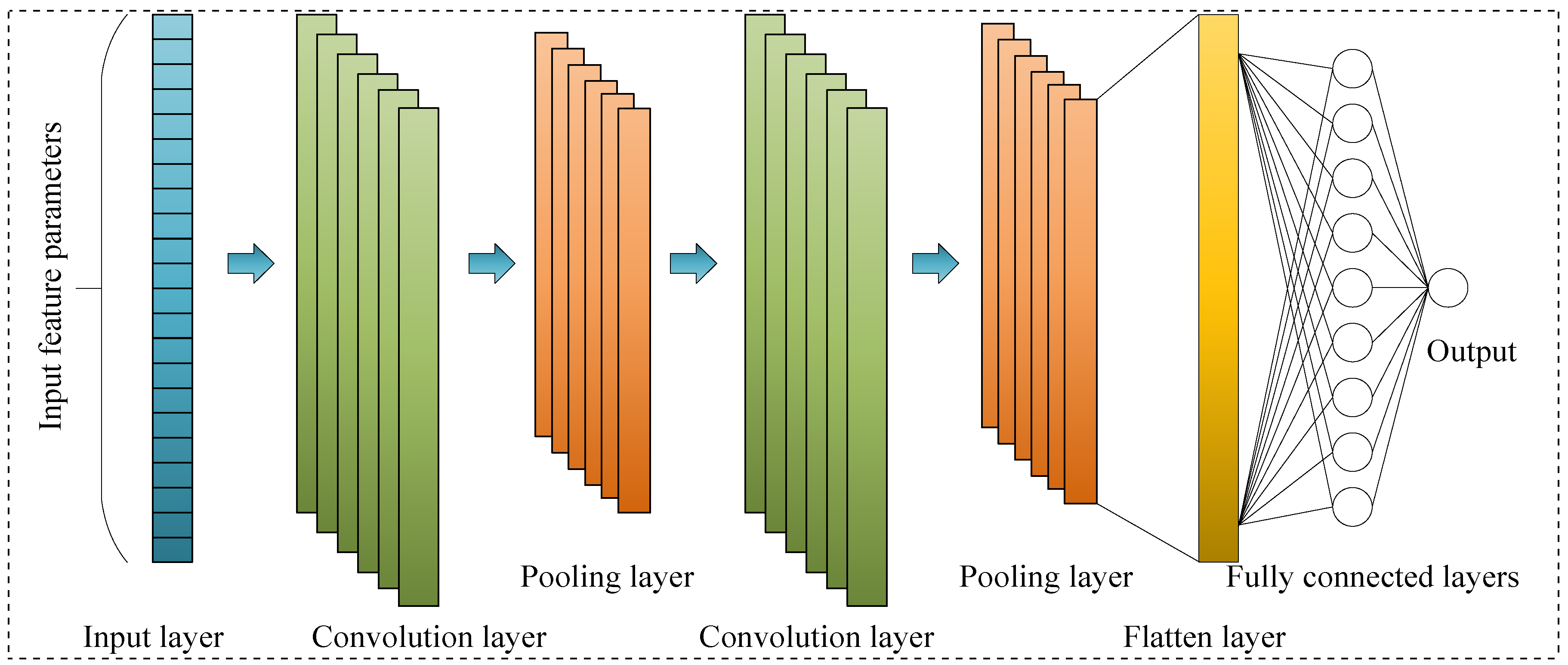
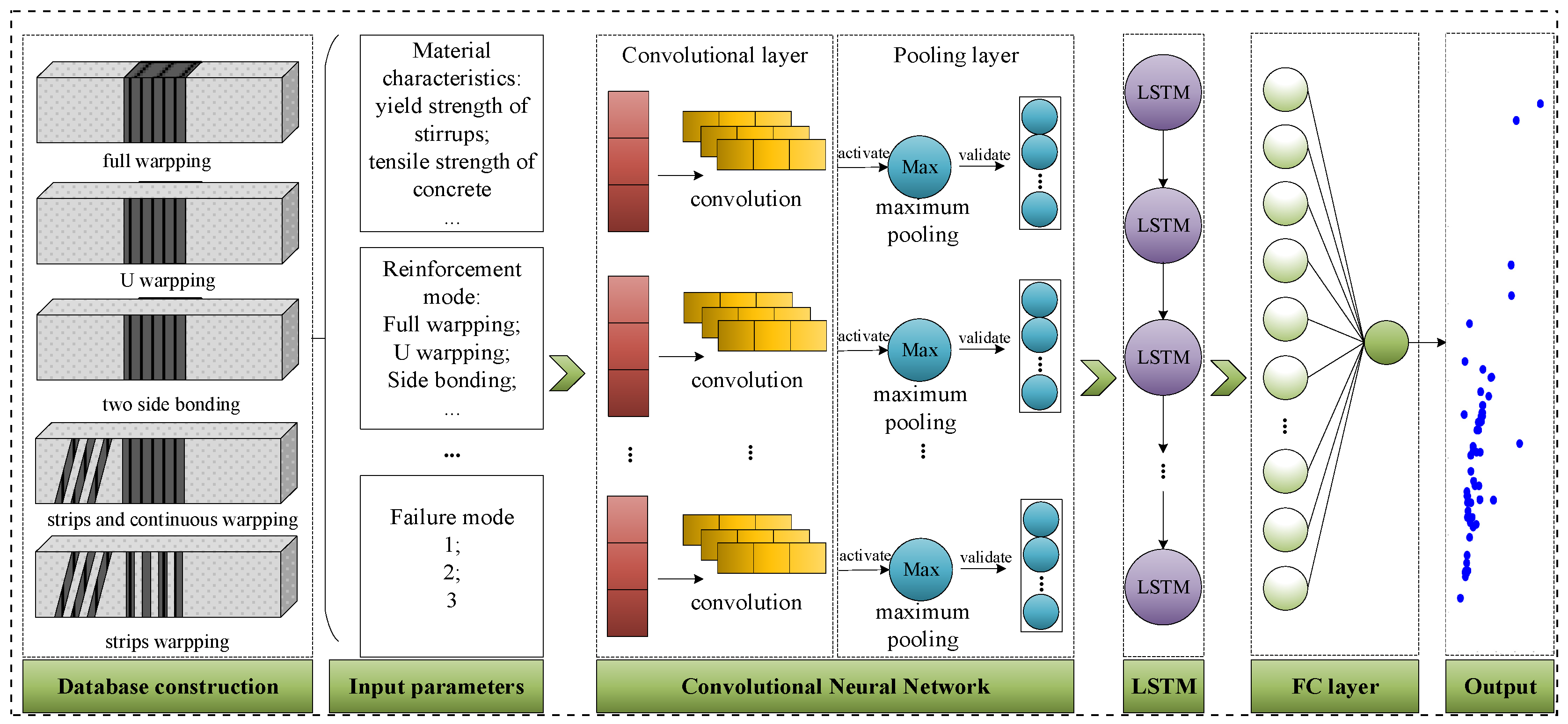
Convolutional Neural Network (CNN) [45] is extensively utilized for analyzing time series data owing to their robust feature extraction capabilities. A typical CNN architecture, as illustrated in Figure 4, consists of an input layer, convolutional layers, pooling layers, fully connected layers, and an output layer. The convolutional layer, which forms the core of the CNN, processes data through sliding windows and extracts features using convolutional kernels. The pooling layer is designed to downsample the convolutional layer’s output via max pooling or average pooling, thereby reducing feature dimensions and enhancing model robustness. In this study, the CNN is trained for 300 epochs, with an initial learning rate of 0.01, a learning rate decay factor of 0.9, a learning rate decay period of 30, and the number of mini-batch training epochs of 30. The fully connected layer connects each neuron with neurons before and after, and computes the weights and biases of the features to obtain the output of the feature information. The output data can be represented as:
H i , CNN = max ReLU ( W CNN x i , CNN ) + b CNN
where ReLU represents the activation function, x i , CNN denotes the current input information for CNN, W CNN and b CNN are the weight matrix and bias matrix.

2.2.5. CNN-LSTM Model

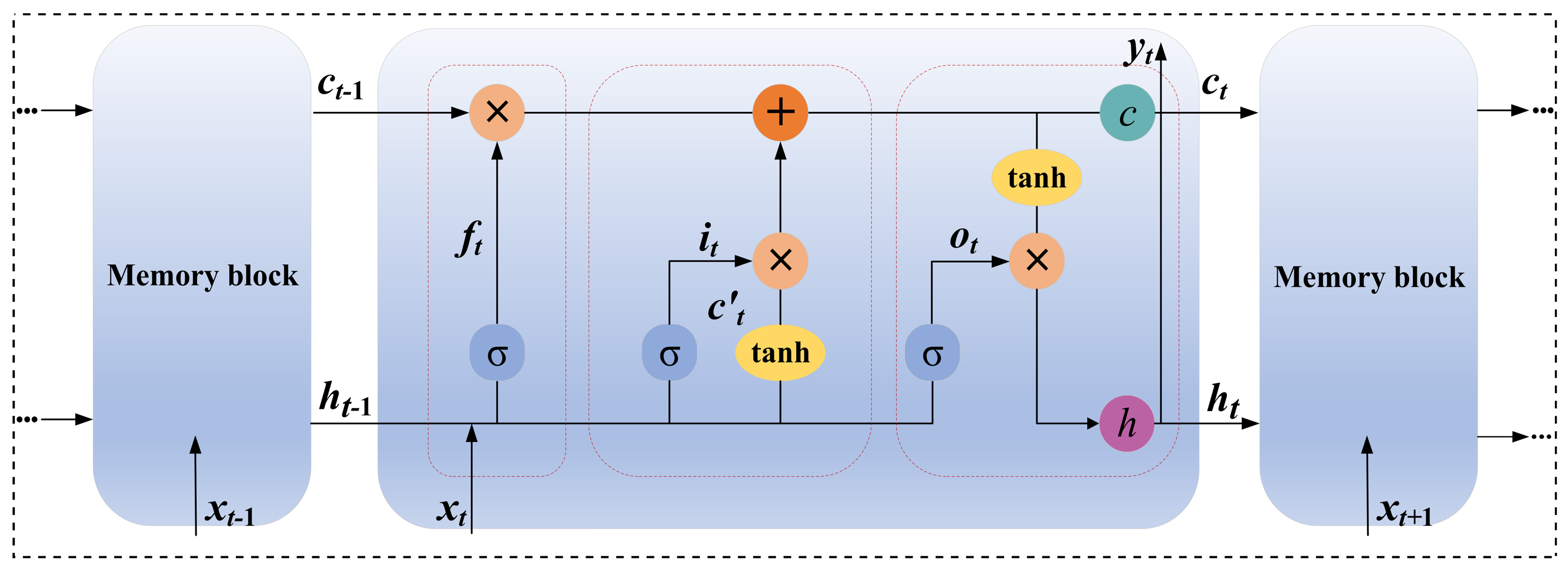
CNN possess strong spatial feature extraction capabilities, whereas LSTMs excel at capturing temporal dependencies. By constructing an ensemble CNN-LSTM prediction model, spatial features can be extracted from multiple dimensions of the data, while temporal variations can be effectively captured along the longitudinal dimension. Figure 5 shows the structure of an LSTM unit, which incorporates input gates, forget gates, output gates, and cell state mechanisms, enhancing its ability to effectively manage long-term dependencies within sequences [46]. The forget gate determines how much past information should be retained, the input gate controls how the current input affects the cell state, and the output gate determines which information will be the current output. Subsequent to the output H CNN from the CNN layer, the time series H CNN serves as the input to the LSTM layer, and the output ht at time t can be represented as:
h t = LSTM ( H CNN , t 1 , H CNN , t )
Figure 6 illustrates the framework of the CNN-LSTM model [47] utilized in this study to predict the shear capacity of FRP-reinforced RC beams. Initially, the CNN extracts spatial features from the input parameters, followed by the LSTM, which captures the temporal dependencies within the sequence. Subsequently, a fully connected network within the CNN-LSTM architecture integrates the features extracted from the previous layers and maps them into a unified representation space to capture complex nonlinear relationships. The hyperparameters of the CNN-LSTM model are as follows: convolutional kernel size 1, 64, and 32 neurons in the first and second LSTM layers, 300 training epochs, an initial learning rate of 0.01, a learning rate decay factor of 0.9, a learning rate decay period of 30, and 30 mini-batch training epochs.

2.3. The Proposed Method

The ensemble CNN-LSTM model necessitates expert fine-tuning of hyperparameters to achieve accurate predictions, which is often inefficient. To improve the CNN-LSTM model’s generalization ability and prediction accuracy, this study proposes to use the Jaya algorithm to adaptively optimize its hyperparameters. The Jaya algorithm is a metaheuristic algorithm proposed by Rao [48], which requires fewer parameters compared to other metaheuristic algorithms, is easy to implement and understand, and is characterized by its approach of seeking improvement while avoiding deterioration. During the optimization process, the Jaya algorithm demonstrates straightforward and non-trapping methods for solving optimization problems. The initialization of individuals is a prerequisite for employing the Jaya algorithm, with initial values randomly selected within specified boundaries, as expressed in the following:
X i = X min + rand ( X max X min )
where X i represents the initial individual, X max and X min are the lower and upper bounds of the search space, and rand denotes a random value between [0, 1].
The updated formula for the individual values in the parameter iterative optimization process is as follows:
X j , k , i = X j , k , i + r 1 , j , i ( X j , b e s t , i X j , k , i ) r 2 , j , i ( X j , w o r s t , i X j , k , i )
where X j , k , i represents the value of the kth variable of the jth individual in the ith iteration, r 1 , j , i and r 2 , j , i are two random numbers in the range [0, 1], X j , b e s t , i and X j , w o r s t , i represent the best and worst solution values of the jth variable in the ith iteration. Here, r 1 , j , i ( X j , b e s t , i X j , k , i ) indicates the trend of the current population’s solution approaching the optimal solution, and r 2 , j , i ( X j , w o r s t , i X j , k , i ) indicates the trend of the current population’s solution moving away from the worst solution.
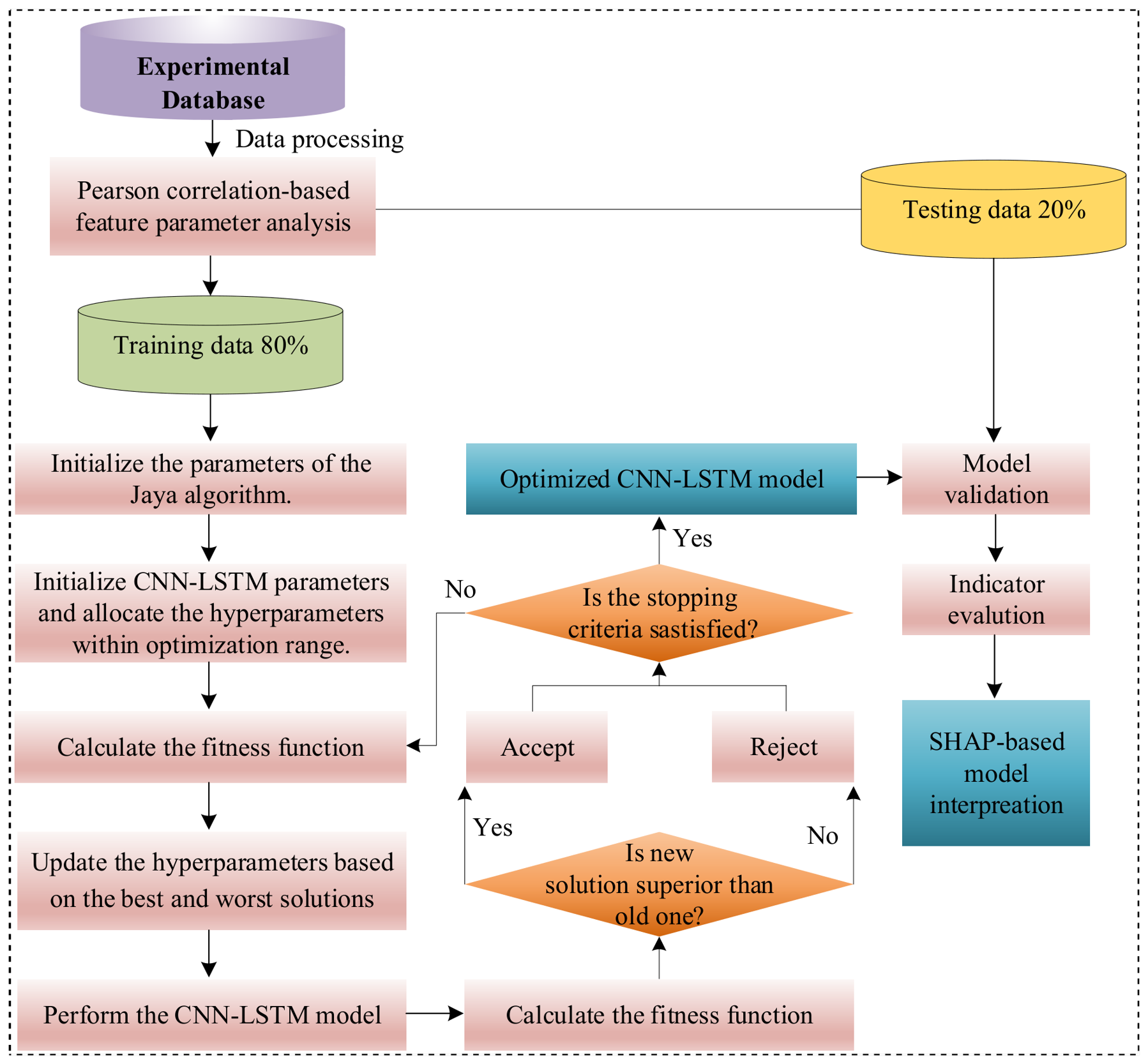
Figure 7 illustrates the proposed framework for predicting the shear capacity of FRP-strengthened RC beams based on the optimization theory of the Jaya algorithm, mainly including the following steps:
(1)
An experimental database for the shear capacity of FRP-strengthened RC beams is established, encompassing key parameters such as different FRP strengthening schemes, cross-sectional dimensions, and failure modes. The Pearson correlation coefficient method is employed to select key parameters for the shear capacity model. Subsequently, the dataset is randomly divided into a training set (80%) and a test set (20%)
(2)
The CNN-LSTM model is constructed with two convolutional layers, two LSTM layers, and two fully connected layers. The parameters to be updated include the number of convolution kernels in the first convolutional layer 16–128, the number of convolution kernels in the second convolutional layer 8–64, the number of neurons in the first LSTM layer 16–128, the number of neurons in the second LSTM layer 8–64, the number of neurons in the first fully connected layer 8–64, the number of neurons in the second fully connected layer 4–32, and the learning rate [0.0001–0.01]. The initial values of the Jaya algorithm are set according to the aforementioned theory, and the popsize and maxgen are set as 5 and 100. With the seven parameters to be optimized defined as the seven dimensions of the population. Upper and lower boundaries are specified for each hyperparameter.
(3)
The root mean square error (RMSE) generated by the CNN-LSTM model on the training set is employed as the fitness function. The fitness value is calculated to determine the optimal and worst solutions based on the minimization criteria. The fitness function can be represented as:
fitness = i = 1 n ( V test , i V pre , i ) n
where V test , i and V pre , i are the experimental and predicted shear capacity, and n represents the total number of the training set.
(4)
The current individual is updated according to the Jaya algorithm’s updating Formula (37). Utilizing the best and worst solutions derived in step (3), the individual is steered away from the worst solution towards the optimal solution. The position of each individual in the 7-dimensional space represents the optimal hyperparameter combination for the CNN-LSTM model to be solved.
(5)
The Jaya optimization process is iterated until the maximum number of iterations is reached. The optimal solution obtained at this stage represents the best hyperparameter combination for the CNN-LSTM model. Finally, the optimal CNN-LSTM prediction model is established using this hyperparameter combination after the training process concludes, to predict the shear capacity of FRP-strengthened RC beams.
(6)
The predicted shear capacity of FRP-strengthened RC beams is compared with the experimental data, and the prediction accuracy is evaluated using several performance indicators.
(7)
An interpretability analysis of the proposed model’s input parameters is conducted using the SHAP method to elucidate the influence of individual parameters on the predicted shear capacity of FRP-strengthened RC beams.

2.4. Evaluation Indicators

To accurately evaluate the predictive performance of the proposed method for shear capacity prediction, four evaluation indicators are employed, namely RMSE, average value (Avg), coefficient of variation (Cov), and integral absolute error (IAE). Among them, RMSE quantifies the prediction errors produced by the model, assigning higher weights to larger deviations; Cov is an indicator of the relative dispersion degree of prediction values; Avg represents the overall predictive average performance compared with the experimental data; and IAE is used to determine the overall accuracy of the model. Together, these indicators collectively provide insights into the errors, dispersion, and accuracy of the predictive results, thereby facilitating a comprehensive evaluation of the different models. The mathematical expressions for the evaluation indicators are detailed below:
RMSE = 1 n i = 1 n V pre , i V test , i 2 Avg = i = 1 n V pre , i / V test , i n Cov = 1 n i = 1 n V pre , i / V test , i Avg 2 Avg IAE = i = 1 n V pre , i V test , i i = 1 n V test , i
where n denotes the total number of the test set, i represents the ith test sample; V pre , i and V test , i represent the predicted and experimental results of the shear capacity of the ith FRP-strengthened RC specimen, respectively.

3. Database for the Shear Capacity of FRP-Reinforced Concrete Beams

3.1. Database Construction

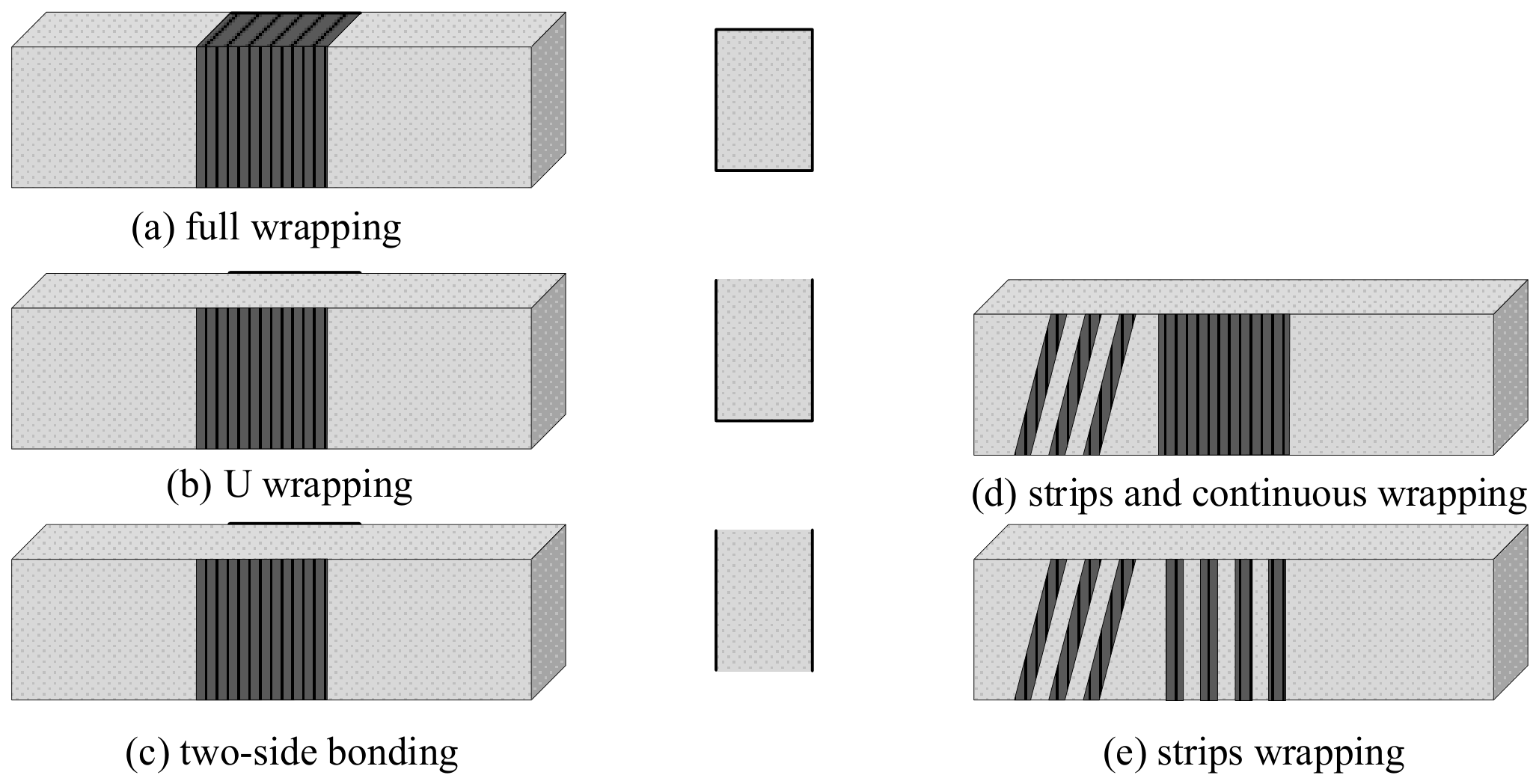
There exist various reinforcement modes for strengthening the shear capacity of FRP-strengthened RC beams, including full wrapping, U-wrapping, and two-side bonding. According to the method of FRP paste, the reinforcement is divided into intermittent pasting and continuous pasting. With different reinforcement pasting forms, there will be significant differences in the shear capacity. Therefore, to accurately establish a predictive model for the shear capacity of FRP-strengthened RC beams, it is necessary first to establish a complete experimental database. Database of FRP reinforced RC beams were collected [27,28,29,30,31,32,49,50,51,52,53,54,55,56,57,58,59], outliers were identified and removed based on data consistency and physical plausibility, and a database comprising 315 experimental results of the shear capacity of FRP-strengthened RC beams was established in this study. The data includes several typical FRP-strengthened specimens, which are representative, as shown in Figure 8. Prior studies have highlighted numerous factors influencing the shear capacity of FRP-strengthened RC beams, encompassing not only beam cross-sectional dimensions, reinforcement strength, and reinforcement ratio, but also critical factors such as FRP material characteristics and reinforcement modes. Consequently, the database includes 23 statistically relevant feature parameters that affect the shear capacity of FRP-strengthened RC beams.

3.2. Statistics Analysis of Database Feature Parameters

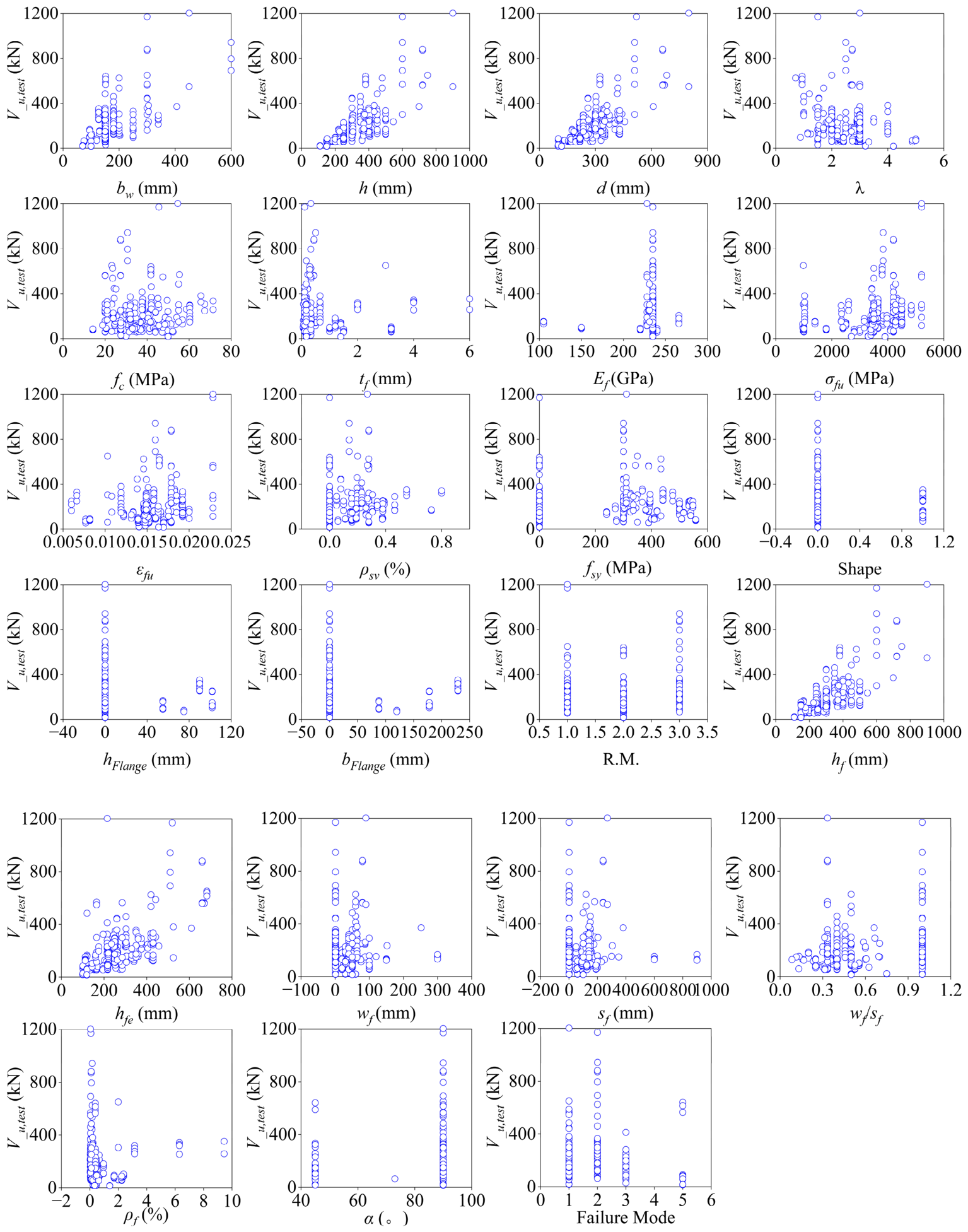
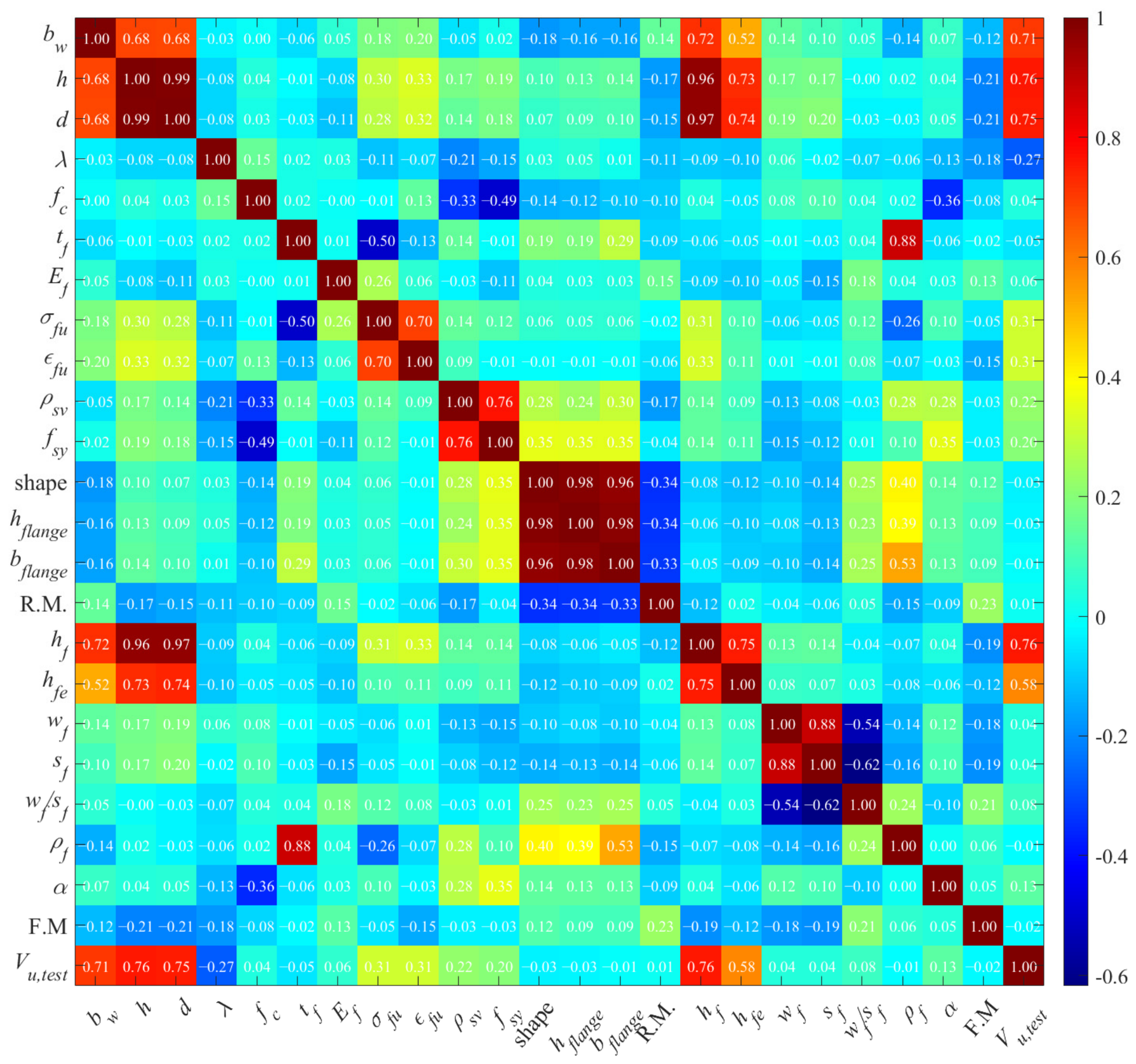
The Pearson correlation coefficient algorithm is utilized to select input features for machine learning models, aiming to identify crucial influencing factors, eliminate redundant features, and improve both the physical interpretability and generalization ability of the proposed model. Figure 9 illustrates the results of the Pearson correlation coefficient matrix analysis of the database statistical parameters, where a correlation coefficient approaching 1 indicates a strong positive correlation between the two variables under consideration. The analysis demonstrates significant correlations among several feature parameters; for instance, strong positive correlations exist between hf, bw, h, and d, as well as between sf and wf. The presence of highly correlated variables may introduce multicollinearity, which can adversely affect the stability and generalization performance of machine learning models. Therefore, redundant features with strong linear relationships were removed to reduce model complexity and improve prediction robustness. Consequently, seven critical input parameters are retained: the shear-span ratio λ, reinforcement ratio of stirrups ρsv, compressive strength of concrete fc, steel tensile strength fsy, cross-sectional shape, FRP external bonding reinforcement mode (R.M), and failure mode (F.M). Figure 10 presents the relationships between input parameters in the dataset and the shear capacity of FRP-strengthened RC beams. It can be observed that the feature parameter exhibits a wide distribution range and significant dispersion, indicating that the samples cover diverse structural configurations and material properties. This diversity is beneficial for training a robust data-driven model and enhances its generalization capability. Moreover, the absence of strong clustering or bias in the feature parameter distribution further supports the reliability of the constructed dataset.

4. Evaluation and Comparison

4.1. Performance Verification

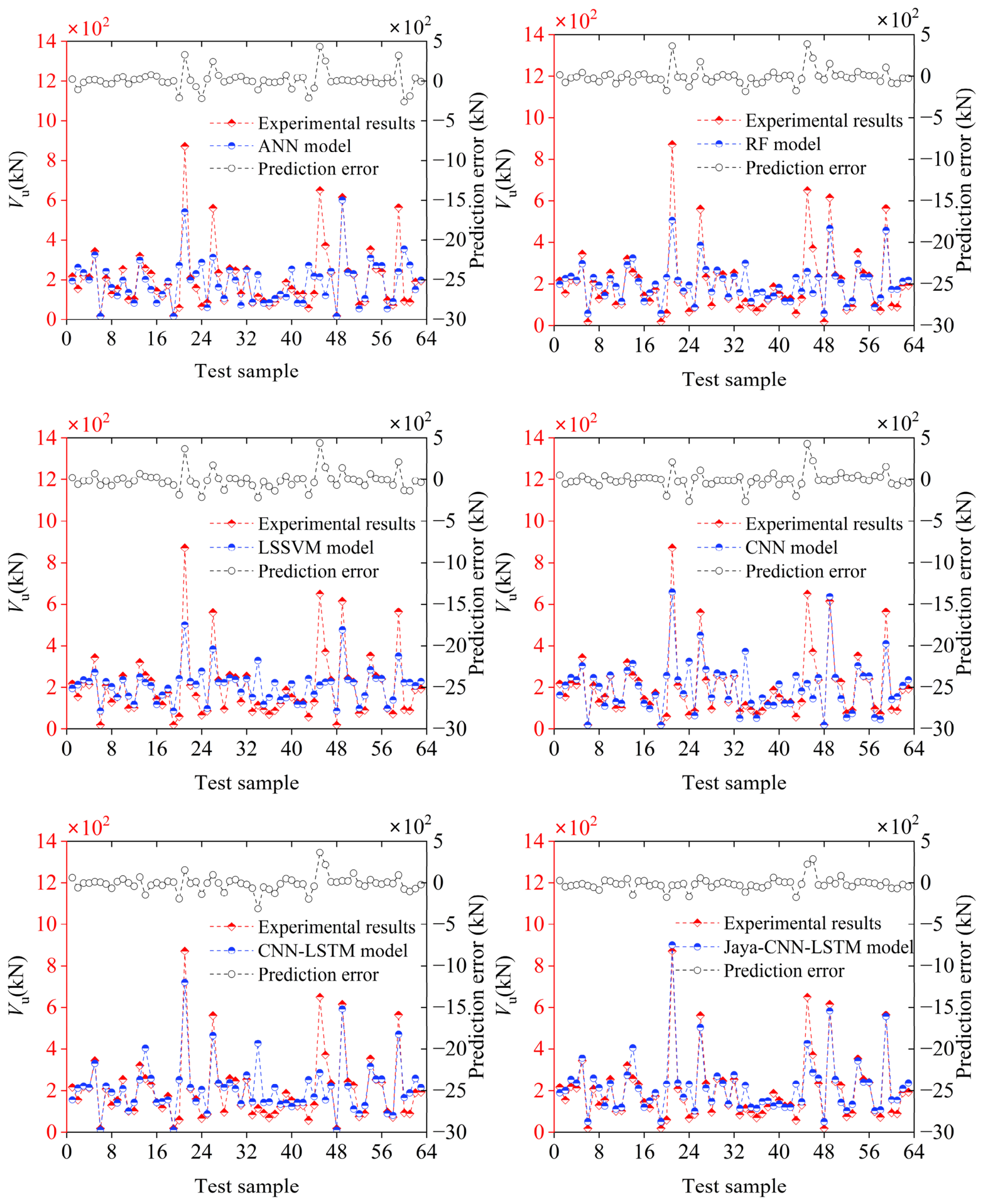
To verify the prediction performance of the machine learning models, Figure 11 compares the predicted shear capacity of FRP-strengthened RC beams by the machine learning models with the experimental results. The results indicate that machine learning-based models generally exhibit satisfactory performance in predicting the shear capacity of FRP-strengthened RC beams, with most predicted values showing good agreement with the experimental results. However, the single prediction models, including ANN, RF, LSSVM, and CNN, perform poorly in capturing the peak shear capacity of the test samples and tend to significantly underestimate the maximum shear resistance. The comparison between the CNN-LSTM and Jaya-CNN-LSTM models further confirms that hyperparameter optimization plays a critical role in enhancing model performance. Although the CNN–LSTM model achieves a certain degree of improvement, its overall prediction accuracy does not demonstrate a substantial enhancement compared with the single models. It can be clearly observed that the proposed model provides the most accurate predictions for the shear capacity of FRP-strengthened RC beams. The results demonstrate that, by incorporating the Jaya optimization algorithm, the proposed approach is capable of adaptively adjusting hyperparameters according to the inherent characteristics of the training set, thereby effectively improving the prediction accuracy of the shear capacity of FRP-strengthened RC beams.
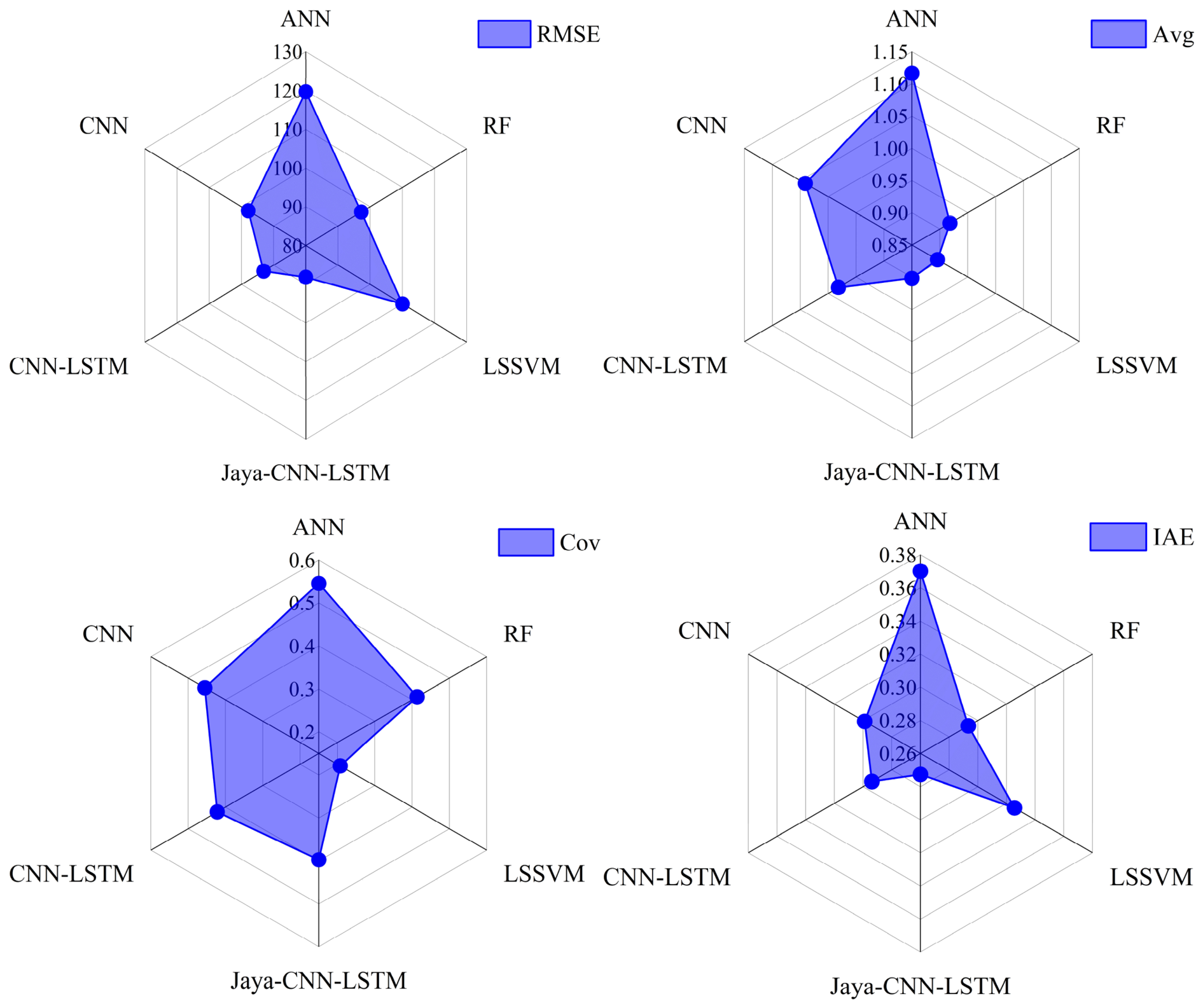
To comprehensively evaluate the accuracy of the machine learning methods in predicting the shear capacity of FRP-strengthened RC beams, the prediction results are evaluated using RMSE, Avg, Cov, and IAE indicators. A radar chart is utilized to compare the evaluation indicators of five existing models with the proposed Jaya-CNN-LSTM model, as depicted in Figure 12. Among them, smaller values of these evaluation indicators indicate better predictive performance of the prediction model. The results are generally consistent with the previous analysis. Specifically, the RMSE, Avg, Cov, and IAE of the proposed Jaya-CNN-LSTM model are 88.11 kN, 0.90, 0.44, and 0.27, respectively. Overall, the proposed Jaya-CNN-LSTM model achieves superior performance in most evaluation metrics, indicating its strong predictive accuracy. Although slight variations exist in certain indicators, the proposed model demonstrates a better balance between accuracy and stability compared to other machine learning models. Moreover, the proposed Jaya-CNN-LSTM model optimized the hyperparameters of the CNN-LSTM model through the Jaya algorithm, leading to a significant improvement in the prediction performance of the Jaya-CNN-LSTM model compared to the CNN-LSTM model. The proposed Jaya-CNN-LSTM model can adaptively adjust the hyperparameters based on different training samples, thereby strengthening the generalizability of the prediction model. In addition, the prediction performance of the CNN-LSTM model is roughly the same as that of the CNN model. This indicates that blindly stacking deep learning networks does not necessarily lead to significant improvements in predictive ability. This highlights the critical importance of hyperparameter optimization in machine learning models for improving prediction accuracy.

4.2. Comparison Analysis with the Existing Empirical Models

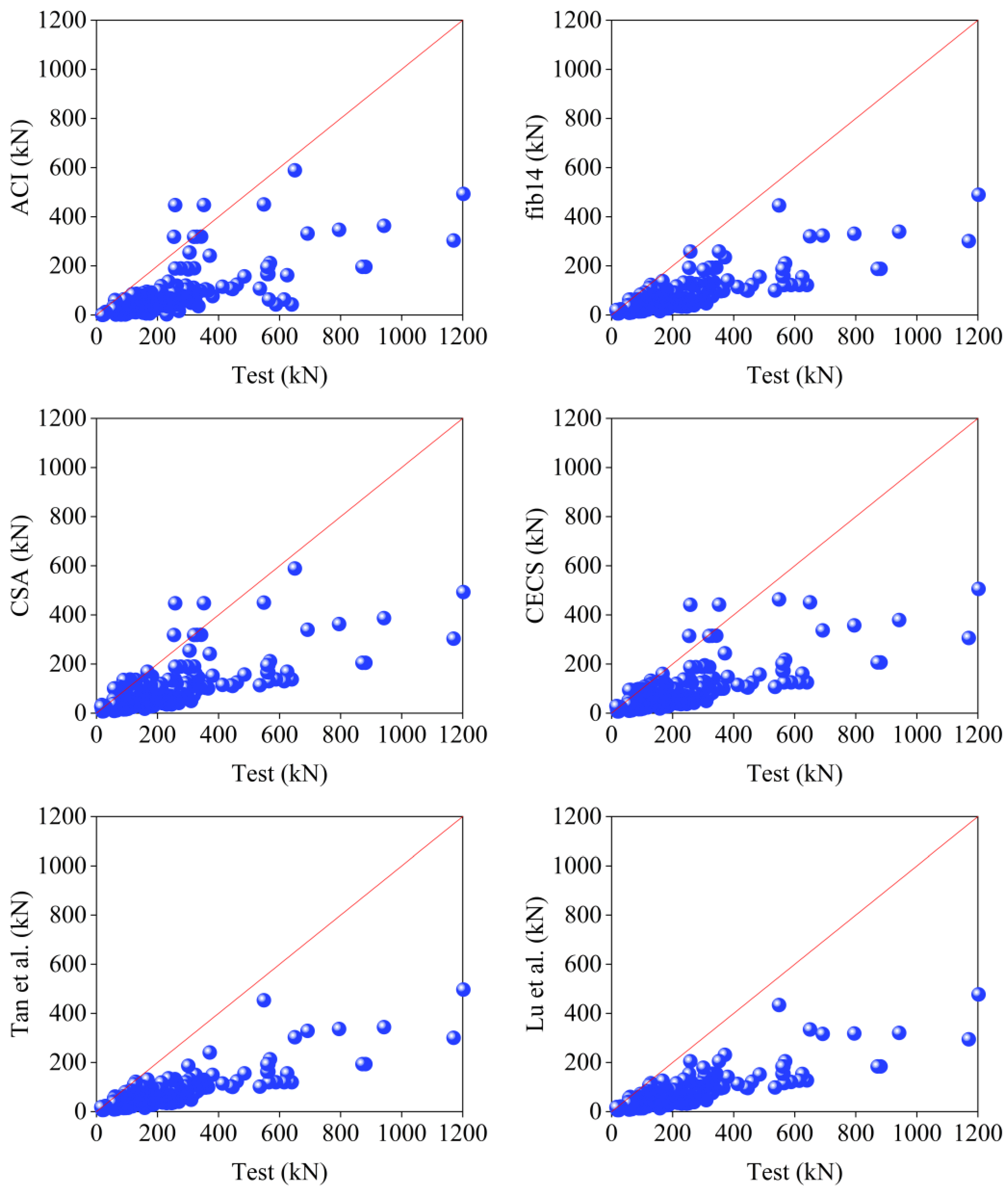
Figure 13 presents the predicted shear capacity of FRP-strengthened RC beams in the database using six typical existing theoretical models. The red line represents the ideal model line without prediction errors. The results indicate that most empirical theoretical models tend to underestimate the shear capacity, reflecting their conservative nature and limited adaptability to complex conditions. In contrast, the data-driven approach provides predictions that are closer to experimental values, highlighting its advantage in capturing nonlinear interactions among variables. Such discrepancies may arise because different theoretical models employ distinct mathematical formulations and consider different key parameters, resulting in varying prediction outcomes. Moreover, the development of these empirical theoretical models is often limited by the size and scope of their experimental datasets. Evaluating these models with an extensive database incorporating a broader range of parameters can lead to notable fluctuations in their predicted results. Therefore, despite the explicit physical interpretations of existing theoretical models, many still grapple with challenges related to prediction accuracy and generalization capabilities.

5. SHAP-Based Interpretability Analysis

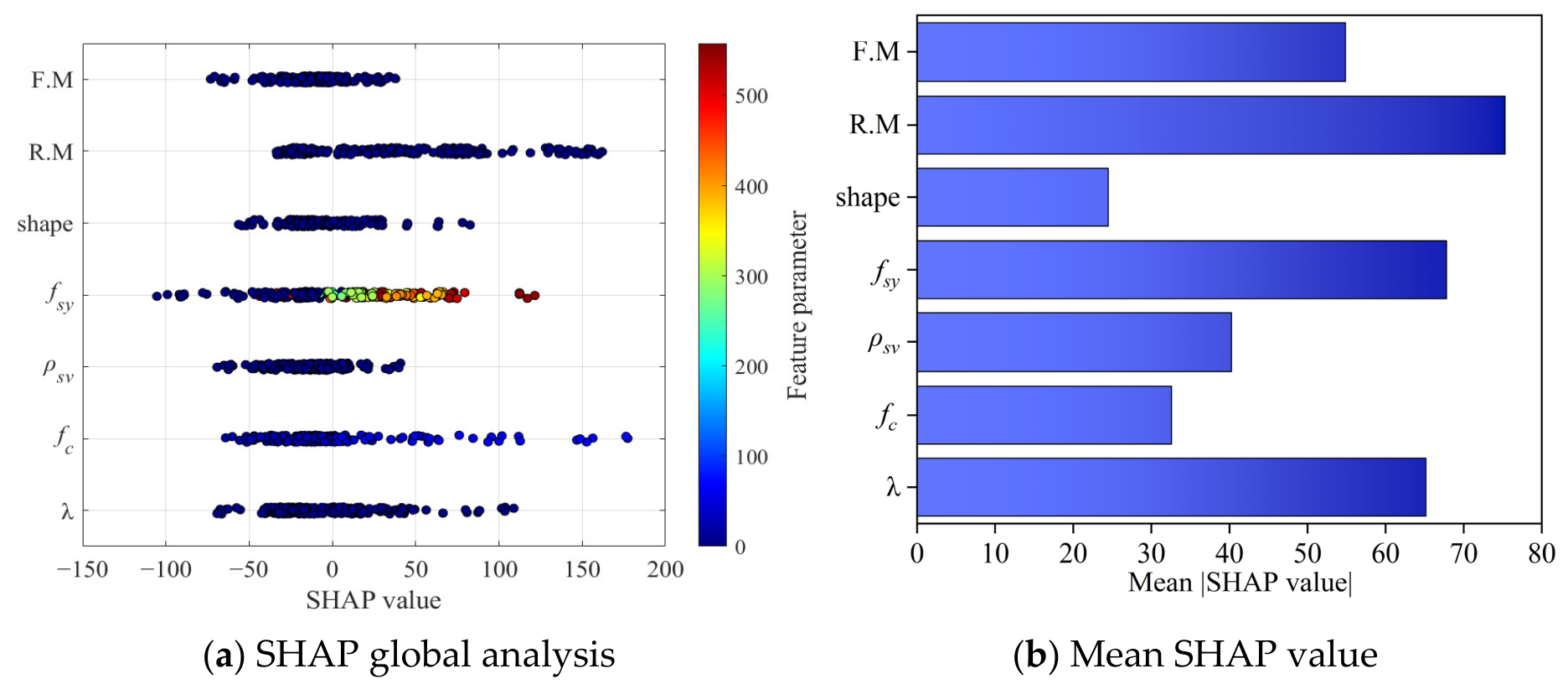
The SHAP explanation method demonstrates the global interpretation of how input feature parameters impact the shear capacity of FRP-strengthened RC beams, revealing the contribution of the seven selected input feature parameters to the shear capacity. This approach clarifies the key input feature parameters that play a crucial role in model prediction and quantifies their impact on shear capacity. Figure 14a presents the distribution of SHAP values for the input feature parameters in relation to the proposed model predictions. Each data point corresponds to the SHAP value of an individual feature for a single sample. The sign of the SHAP value reflects the direction of the feature parameter’s contribution (positive or negative) to the predicted results, whereas the color scale represents the magnitude of the absolute SHAP value, with red indicating higher contributions and blue indicating lower contributions. Figure 14b presents the mean SHAP values of each input feature parameter for shear capacity prediction. The results demonstrate that the average SHAP value of FRP R.M. is the highest, reaching approximately 75, indicating that the reinforcement mode is the most critical feature parameter for the shear capacity of FRP-strengthened RC beams. Additionally, the feature parameters fsy, λ, and F.M, with mean absolute SHAP values of these three feature parameters accounting for over 80% of the parameter R.M, highlighting their importance. It is noteworthy that the mean absolute SHAP value of the cross-sectional shape is the lowest, indicating its relatively minor impact on the shear capacity of FRP-strengthened RC beams. Overall, these results imply that the influence of cross-sectional shape is minimal, whereas the material properties have a significant impact, and the reinforcement mode has the greatest influence on the shear capacity of FRP-strengthened RC beams.
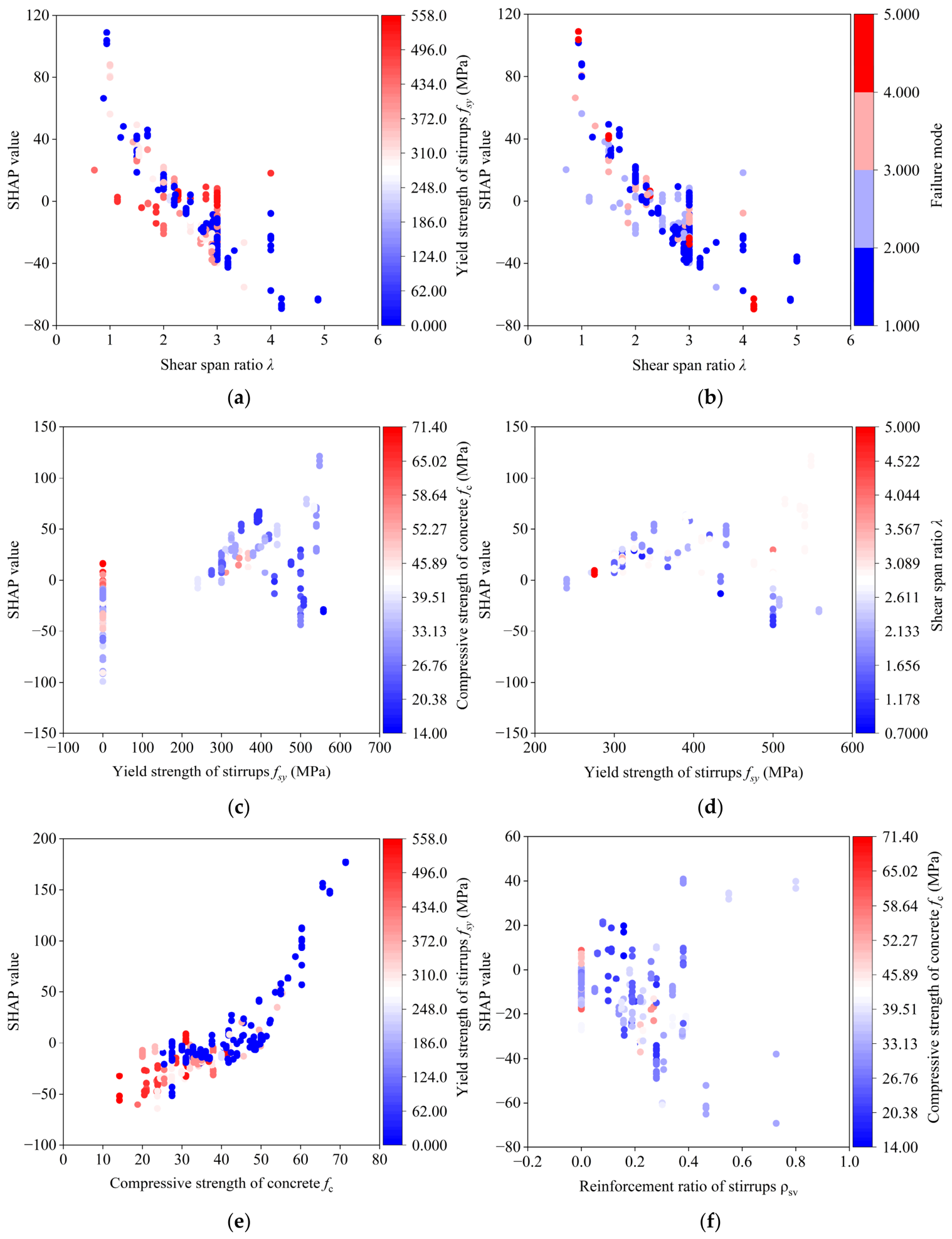
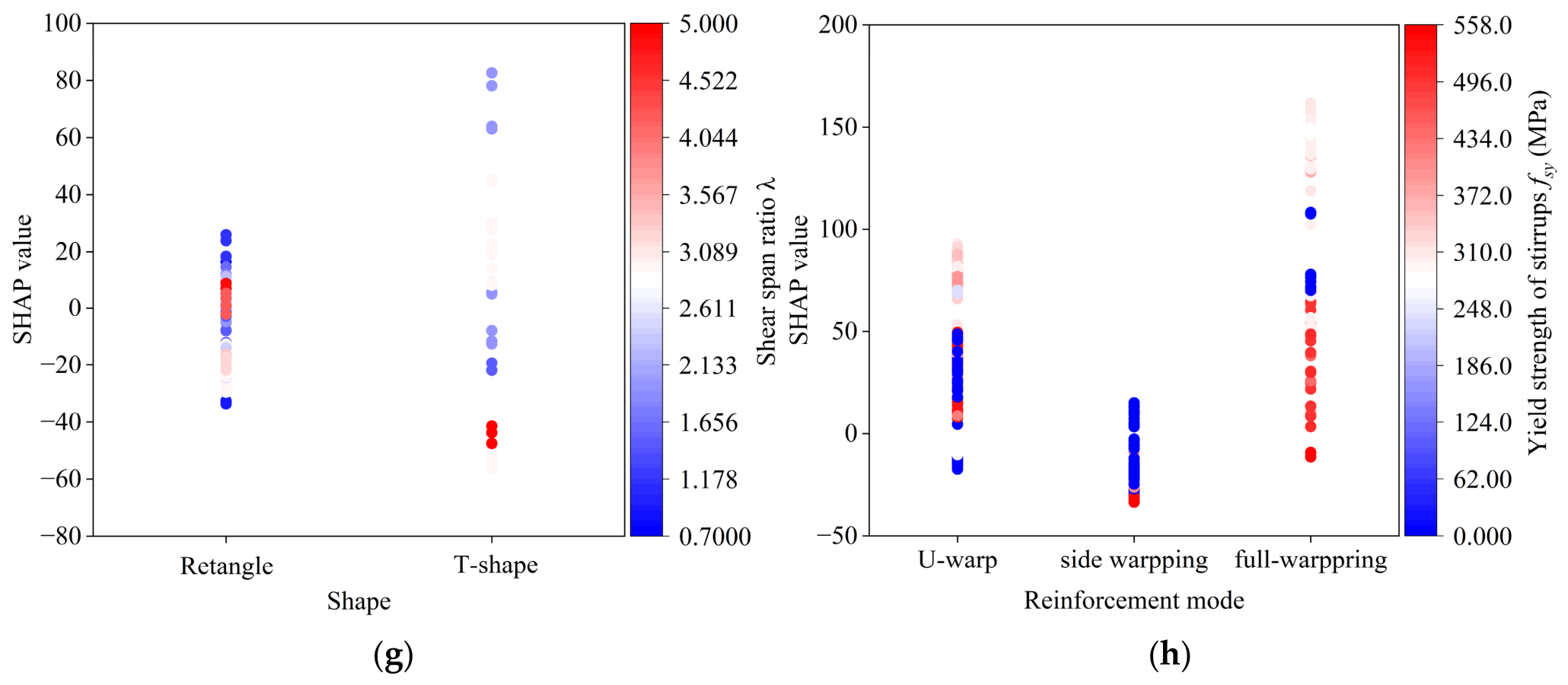
SHAP analysis can further reveal the dependency relationships between input feature parameters and the predicted results, indicating that SHAP values vary with changes in the input variables. Figure 15 presents the feature dependency analysis results of seven input feature parameters, aiming to elucidate their influence trends on the prediction of the shear capacity of FRP-strengthened RC beams. As shown in Figure 15, the shear span ratio λ exhibits the strongest influence on shear capacity, with increasing λ leading to higher SHAP values and a more pronounced negative contribution, indicating increased susceptibility to shear-dominated failure. When λ ranges from 2 to 3, the beams predominantly exhibit F.M 1 and 2, as illustrated in Figure 15b. Figure 15c,d demonstrate that fsy has a notable influence on the shear capacity. For beams without stirrups, increasing the concrete compressive strength fc can lead to a certain enhancement in shear capacity; however, the improvement remains limited. As shown in Figure 15e, when the concrete compressive strength fc > 40 MPa, it exerts a significant effect on the shear capacity, whereas for fc < 40 MPa, the influence becomes relatively minor. Under this condition, increasing the stirrup’s fsy does not effectively improve the shear capacity. The contribution of ρsv to the shear capacity exhibits considerable dispersion, indicating that it is not a critical factor governing the shear capacity of FRP-strengthened RC beams, as shown in Figure 15f. Compared with rectangular cross-section beams, T-beams exhibit higher sensitivity in terms of shear capacity when strengthened with FRP (in Figure 15g). Among the different FRP strengthening schemes, full wrapping provides the highest contribution to shear capacity, followed by U-wrapping, while two-side bonding offers the lowest contribution, as shown in Figure 15h. These results demonstrate that SHAP analysis is capable of providing interpretable insights into the influence of different feature parameters on the shear capacity of FRP-strengthened RC beams, thereby offering theoretical support for the design of FRP strengthening systems.

6. Conclusions

This study has proposed a deep learning-based approach that integrates interpretable machine learning with the Jaya-CNN-LSTM model to enhance the prediction accuracy and generalization capability of the shear capacity of FRP-strengthened RC beams. The main conclusions are summarized as follows:
(1)
Seven critical feature parameters have been selected to predict the shear capacity of FRP-strengthened RC beams based on Pearson correlation coefficient analysis. This selection process involved the exclusion of highly correlated feature parameters, leading to a significant reduction in redundancy within the input feature parameters for the prediction machine learning model.
(2)
The accuracy and variability of six empirical theoretical models reported in the literature and design codes have been evaluated. Although these models are theoretically grounded, they exhibit limitations in both accuracy and practicality. The prediction results mostly tend to be conservative, easily underestimating the shear capacity of FRP-strengthened RC beams. The proposed Jaya-CNN-LSTM model demonstrates superior predictive performance compared to the empirical theoretical models, which can contribute to more reliable assessments of shear capacity. This improvement may help reduce excessive conservatism in traditional design approaches while maintaining structural safety, thereby enhancing the efficiency of engineering design.
(3)
The proposed Jaya-CNN-LSTM model can adaptively adjust the model’s hyperparameters based on training data, demonstrating high accuracy and strong generalization ability in predicting the shear capacity of FRP-strengthened RC beams. Compared with the other machine learning models, the Jaya-CNN-LSTM model exhibits superior predictive performance.
(4)
The SHAP method provides both global and local interpretability for the predicted shear capacity based on input feature parameters. SHAP values quantify the relative importance of these parameters, clearly revealing their contributions to the model’s predictions for FRP-strengthened RC beams. Among the input features, key parameters such as shear-span ratio, concrete compressive strength, and reinforcement mode exhibit a particularly significant influence on shear capacity.
Although the proposed Jaya-CNN-LSTM model outperforms the benchmark models, the relatively limited dataset size, constrained by data availability in the studied scenario, remains a potential limitation. While the results suggest that the model can capture meaningful patterns, its generalization capability requires further validation on larger and more diverse datasets. Future work will therefore focus on expanding the dataset and adopting more comprehensive validation strategies to enhance the robustness and generalizability of the proposed approach.

Author Contributions

Conceptualization, M.C.; methodology, M.C.; software, Q.L.; validation, Y.L.; formal analysis, Q.L.; investigation, Q.L. and Y.L.; data curation, Q.L.; writing—original draft preparation, Q.L.; writing—review and editing, Y.L.; supervision, M.C.; project administration, M.C.; funding acquisition, M.C. All authors have read and agreed to the published version of the manuscript.

Funding

This research was funded by the National Natural Science Foundation of China project (Project No.: 52278180).

Data Availability Statement

The data presented in this study are available on request from the corresponding author. The data are not publicly available due to their large size.

Conflicts of Interest

Author Qi Li was employed by the company JiangXi Transport Investment Consulting Group Co., Ltd. The remaining authors declare that the research was conducted in the absence of any commercial or financial relationships that could be construed as a potential conflict of interest.

References

  1. Huang, Y.S.; Lee, M.M.; Kan, Y.C.; Wang, W.C.; Wang, Y.C.; Pan, W.B. Reinforced concrete beams retrofitted with UHPC or CFRP. Case Stud. Constr. Mater. 2022, 17, e01507. [Google Scholar]
  2. Qian, R.S.; Li, Q.; Fu, C.Q.; Zhang, Y.S.; Wang, Y.X.; Jin, X.Y. Atmospheric chloride-induced corrosion of steel-reinforced concrete beam exposed to real marine environment for 7 years. Ocean Eng. 2023, 286, 115675. [Google Scholar] [CrossRef] [Scilit]
  3. Zhong, J.H.; Song, C.M.; Xu, J.W.; Cheng, Y.H.; Liu, F. Experimental and numerical simulation study on failure mode transformation law of reinforced concrete beam under impact load. Int. J. Impact Eng. 2023, 179, 104645. [Google Scholar] [CrossRef] [Scilit]
  4. Li, Q.; Chen, M.C.; Li, Y.; Zhang, M.Y. Shear capacity calculation methods for reinforced concrete structures. Adv. Civ. Eng. 2025, 3, 1–19. [Google Scholar] [CrossRef] [Scilit]
  5. Yu, F.; Guo, S.Q.; Wang, S.L.; Fang, Y. Experimental study on high pre-cracked RC beams shear-strengthened with CFRP strips. Compos. Struct. 2019, 225, 111163. [Google Scholar] [CrossRef] [Scilit]
  6. Askar, M.K.; Hassan, A.F.; Al-Kamaki, Y.S.S. Flexural and shear strengthening of reinforced concrete beams using FRP composites: A state-of-the-art review. Case Stud. Constr. Mater. 2022, 17, e01189. [Google Scholar] [CrossRef] [Scilit]
  7. Kirthiga, R.; Elavenil, S. A review on using inorganic binders in fiber-reinforced polymers under different conditions to strengthen reinforced concrete beams. Constr. Build. Mater. 2022, 352, 129054. [Google Scholar] [CrossRef] [Scilit]
  8. Zhang, Z.G.; Liu, D.W.; Abdalla, J.A.; Hawileh, R.A.; Qin, F.J.; Xu, X.Q. Flexural behavior of reinforced concrete beams externally strengthened with ECC and FRP grid reinforcement. Constr. Build. Mater. 2024, 446, 137964. [Google Scholar] [CrossRef] [Scilit]
  9. Chen, J.F.; Teng, J.G. Shear capacity of fiber-reinforced polymer-strengthened reinforced concrete beams: Fiber-reinforced polymer rupture. J. Struct. Eng. 2003, 129, 615–625. [Google Scholar] [CrossRef] [Scilit]
  10. Chen, J.F.; Teng, J.G. Shear capacity of FRP-strengthened RC beams: FRP debonding. Constr. Build. Mater. 2003, 17, 27–41. [Google Scholar] [CrossRef] [Scilit]
  11. Nie, X.F.; Zhang, S.S.; Teng, J.G. Strength of RC beams with fiber-reinforced polymer (FRP)-strengthened web openings. Compos. Struct. 2021, 258, 113380. [Google Scholar] [CrossRef] [Scilit]
  12. Sun, Y.; Fu, W.W.; Chen, X.; Zhang, Z.Q.; Yu, W.G.; Li, S.J. Theoretical and experimental investigations into the flexural behavior of existing reinforced concrete beams strengthened with CFRP bars. J. Build. Eng. 2023, 77, 107528. [Google Scholar] [CrossRef] [Scilit]
  13. Ye, Z.H.; Zhou, Y.W.; Zhao, D.B. Numerical simulations and simplified design approaches for large-rupture-strain FRP-strengthened reinforced concrete beams under impact loading. J. Compos. Constr. 2023, 27, 04023037. [Google Scholar] [CrossRef] [Scilit]
  14. Guo, S.S.; He, H.F.; Liu, C.; Cheng, S.S.; Liu, H.Y. Theoretical and experimental study on the shear capacity of concrete beams reinforced with carbon fiber trusses. Compos. Struct. 2021, 258, 113382. [Google Scholar] [CrossRef] [Scilit]
  15. Mei, S.J.; Bai, Y.L.; Dai, J.G. Shear strengthening of reinforced concrete beams completely wrapped with large-rupture-strain FRP. Eng. Struct. 2024, 314, 118361. [Google Scholar] [CrossRef] [Scilit]
  16. Sengun, K.; Arslan, G. Parameters affecting the behavior of RC beams strengthened in shear and flexure with various FRP systems. Structures 2022, 40, 202–212. [Google Scholar] [CrossRef] [Scilit]
  17. Sengun, K.; Arslan, G. Investigation of parameters affecting the behavior of RC beams strengthened with FRP. Front. Struct. Civ. Eng. 2022, 16, 729–743. [Google Scholar] [CrossRef] [Scilit]
  18. Hammad, M.; Bahrami, A.; Khokhar, S.A.; Khushnood, R.A. A state-of-the-art review on structural strengthening techniques using FRPs: Effectiveness, shortcomings, and future research directions. Materials 2024, 17, 1408. [Google Scholar] [CrossRef] [Scilit] [PubMed]
  19. Jahami, A.; Issa, C.A. An updated review on the effect of CFRP on the flexural performance of reinforced concrete beams. J. Concr. Struct. Mater. 2024, 18, 14. [Google Scholar] [CrossRef] [Scilit]
  20. Bhatt, P.P.; Sharma, N.; Kodur, V.K.R.; Naser, M.Z. Machine learning approach for predicting the fire resistance of FRP-strengthened concrete beams. Struct. Concr. 2024, 26, 4143–4165. [Google Scholar] [CrossRef] [Scilit]
  21. Hu, T.Y.; Zhang, H.; Zhou, J.T. Machine learning-based model for recognizing failure modes of FRP-strengthened RC beams in flexure. Case Stud. Constr. Mater. 2023, 18, e02076. [Google Scholar] [CrossRef] [Scilit]
  22. Wang, Z.X.; Chen, X.D.; Zhang, J.H.; Huang, H. Machine learning-based prediction and interpretability analysis of flexural capacity for CFRP-strengthened RC beams. Case Stud. Constr. Mater. 2025, 23, e05203. [Google Scholar] [CrossRef] [Scilit]
  23. Xiang, Z.L.; He, X.H.; Zou, Y.F.; Jing, H.Q. An importance sampling method for structural reliability analysis based on interpretable deep generative network. Eng. Comput. 2024, 40, 367–380. [Google Scholar] [CrossRef] [Scilit]
  24. Shen, Y.J.; Chen, H.X.; He, L.P.; Wang, Q.L.; Xiang, Z.L. Prediction of compressive strength of concrete after freeze-thaw cycles and high temperature exposure using computer vision and transfer learning. Constr. Build. Mater. 2026, 520, 145985. [Google Scholar] [CrossRef] [Scilit]
  25. Ombres, L.; Aiello, M.A.; Cascardi, A.; Verre, S. Modeling of steel-reinforced grout composite system-to-concrete bond capacity using artificial neural networks. J. Compos. Constr. 2024, 28, 04024034. [Google Scholar] [CrossRef] [Scilit]
  26. Zhang, S.Y.; Chen, S.Z.; Jiang, X.; Han, W.S. Data-driven prediction of FRP-strengthened reinforced concrete beam capacity based on interpretable ensemble learning algorithms. Structures 2022, 43, 860–877. [Google Scholar] [CrossRef] [Scilit]
  27. Abuodeh, O.R.; Abdalla, J.A.; Hawileh, R.A. Prediction of shear strength and behavior of RC beams strengthened with externally bonded FRP sheets using machine learning techniques. Compos. Struct. 2020, 234, 111698. [Google Scholar] [CrossRef] [Scilit]
  28. Allahyarsharahi, N.; Kiani, A.; Hoseini, S.O. Machine learning-based models for FRP shear contribution of wrapped reinforced concrete beams. Multiscale Multidiscip. Model. Exp. Des. 2025, 8, 51. [Google Scholar] [CrossRef] [Scilit]
  29. Zhao, J.T.; Zhu, M.M.; Xu, L.D.; Chen, M.; Shi, M.F. Prediction of shear capacity of fiber-reinforced polymer-reinforced concrete beams based on machine learning. Buildings 2025, 15, 1908. [Google Scholar] [CrossRef] [Scilit]
  30. Ahmed, A.; Uddin, M.N.; Akbar, M.; Salih, R.; Khan, M.A.; Bisheh, H.; Rabczuk, T. Prediction of shear behavior of glass FRP bar-reinforced ultra-high-performance concrete I-shaped beams using machine learning. Int. J. Mech. Mater. Des. 2024, 20, 269–290. [Google Scholar] [CrossRef] [Scilit]
  31. Naderpour, H.; Haji, M.; Mirrashid, M. Shear capacity estimation of FRP-reinforced concrete beams using computational intelligence. Structures 2020, 28, 321–328. [Google Scholar] [CrossRef] [Scilit]
  32. Wang, C.X.; Zou, X.X.; Sneed, L.H.; Zhang, F.; Zheng, K.Q.; Xu, H.; Li, G.F. Shear strength prediction of FRP-strengthened concrete beams using interpretable machine learning. Constr. Build. Mater. 2023, 407, 133553. [Google Scholar] [CrossRef] [Scilit]
  33. Tang, Y.X.; Wang, W.W.; Huang, Q.D.; Cheng, Y.; Zhou, C. Shear performance prediction of RC beams shear-strengthened with FRP sheets: A machine learning-driven design-oriented method. Eng. Struct. 2025, 334, 120240. [Google Scholar] [CrossRef] [Scilit]
  34. Alam, M.S.; Sultana, N.; Hossain, S.M.Z. Bayesian optimization-based support vector regression for estimating the shear capacity of FRP-reinforced concrete members. Appl. Soft Comput. 2021, 105, 107281. [Google Scholar] [CrossRef] [Scilit]
  35. Mai, G.H.; Pan, Z.Z.; Zhen, H.; Deng, X.H.; Zheng, C.M.; Qiu, Z.Y.; Xiong, Z.; Li, L.J. Shear performance and capacity of FRP-reinforced concrete beams: A comprehensive review and design evaluation. Adv. Struct. Eng. 2024, 27, 2569–2591. [Google Scholar] [CrossRef] [Scilit]
  36. ACI Committee 440. Guide for the Design and Construction of Externally Bonded FRP Systems for Strengthening Concrete Structures (ACI 440.2R-02); American Concrete Institute: Farmington Hills, MI, USA, 2022. [Google Scholar]
  37. Triantafillou, T.; Matthys, S.; Audenaert, K.; Balázs, G.; Blaschko, M.; Blontrock, H.; Czaderski, C.; David, E.; Tomasso, A.D.; Duckett, W.; et al. Externally bonded FRP reinforcement for RC structures. Bull. Fib 2001, 14. [Google Scholar]
  38. CSA S806; Canadian Standards Association. Design and Construction of Building Structures with Fibre-Reinforced Polymers. CSA: Toronto, ON, Canada, 2002.
  39. CECS 146:2003; Technical Specification for Strengthening Concrete Structures with Carbon Fiber Reinforced Polymer Laminate. China Association for Engineering Construction Standardization: Beijing, China, 2023.
  40. Tan, Z. Experimental Study on Stress Performance of GFRP Cloth-Reinforced Concrete Beams. Ph.D. Thesis, Tsinghua University, Beijing, China, 2002. [Google Scholar]
  41. Lu, X. Research on FRP-Concrete Interface Behavior. Ph.D. Thesis, Tsinghua University, Beijing, China, 2004. [Google Scholar]
  42. Nehdi, M.; El Chabib, H.; Said, A. Evaluation of shear capacity of FRP-reinforced concrete beams using artificial neural networks. Smart Struct. Syst. 2006, 2, 81–100. [Google Scholar] [CrossRef] [Scilit]
  43. Hassan, B.R.; Hamid, F.L.; Karim, H.; Hussein, A.B.; Abdulrahman, P.H.; Mohammed, L.M.; Hatim, L.A.; Mahmood, S.S. Predicting shear strength of fiber-reinforced concrete beams reinforced with longitudinal FRP bars using machine learning techniques. Aust. J. Struct. Eng. 2025, 26, 206–221. [Google Scholar] [CrossRef] [Scilit]
  44. Hou, R.; Hou, Q. Prediction of the shear capacity of ultra-high-performance concrete beams using neural networks and genetic algorithms. Sci. Rep. 2023, 13, 2145. [Google Scholar] [CrossRef] [Scilit]
  45. Zhang, G.N.; Ali, Z.H.; Aldlemy, M.S.; Salih, S.Q.; Hameed, M.M.; Al-Khafaji, Z.S.; Yaseen, Z.M. Shear strength capacity modeling of reinforced concrete deep beams using an integrative bio-inspired algorithm and artificial intelligence model. Eng. Comput. 2022, 38, 15–28. [Google Scholar] [CrossRef] [Scilit]
  46. Yu, Z.C.; Li, B. Full response prediction of reinforced concrete beams using a hybrid feature-oriented transformer–LSTM model. Eng. Struct. 2025, 332, 120040. [Google Scholar] [CrossRef] [Scilit]
  47. Hu, Y.T.; Zhang, Q. A hybrid CNN–LSTM machine learning model for evaluating rock mechanical parameters. Geoenergy Sci. Eng. 2023, 225, 211720. [Google Scholar] [CrossRef] [Scilit]
  48. Rao, R.V.; Rai, D.P.; Ramkumar, J.; Balic, J. A new multi-objective Jaya algorithm for optimization of modern machining processes. Adv. Prod. Eng. Manag. 2016, 11, 271–286. [Google Scholar] [CrossRef] [Scilit]
  49. Beber, A.; Campos Filho, A. CFRP composites on the shear strengthening of reinforced concrete beams. Rev. IBRACON Estrut. 2005, 1, 127–143. [Google Scholar]
  50. Cao, S.Y.; Chen, J.F.; Teng, J.G.; Hao, Z.; Chen, J. Debonding in RC beams shear strengthened with complete FRP wraps. J. Compos. Constr. 2005, 9, 417–428. [Google Scholar] [CrossRef] [Scilit]
  51. Kim, G.; Sim, J.; Oh, H. Shear strength of strengthened RC beams with FRPs in shear. Constr. Build. Mater. 2008, 22, 1261–1270. [Google Scholar] [CrossRef] [Scilit]
  52. Teng, J.G.; Chen, G.M.; Chen, J.F.; Rosenboom, O.A.; Lam, L. Behavior of RC beams shear strengthened with bonded or unbonded FRP wraps. J. Compos. Constr. 2009, 13, 394–404. [Google Scholar] [CrossRef] [Scilit]
  53. Grande, E.; Imbimbo, M.; Rasulo, A. Effect of transverse steel on the response of RC beams strengthened in shear by FRP: Experimental study. J. Compos. Constr. 2009, 13, 405. [Google Scholar] [CrossRef] [Scilit]
  54. Mofidi, A.; Chaallal, O. Shear strengthening of RC beams with externally bonded FRP composites: Effect of strip-width-to-strip-spacing ratio. J. Compos. Constr. 2011, 15, 732–742. [Google Scholar] [CrossRef] [Scilit]
  55. Ebead, U.; Saeed, H. Hybrid shear strengthening system for reinforced concrete beams: An experimental study. Eng. Struct. 2013, 49, 421–433. [Google Scholar] [CrossRef] [Scilit]
  56. Bukhari, I.A.; Vollum, R.; Ahmad, S.; Sagaseta, J. Shear strengthening of short span reinforced concrete beams with CFRP sheets. Arab. J. Sci. Eng. 2013, 38, 523–536. [Google Scholar] [CrossRef] [Scilit]
  57. Baggio, D.; Soudki, K.; Noel, M. Strengthening of shear critical RC beams with various FRP systems. Constr. Build. Mater. 2014, 66, 634–644. [Google Scholar] [CrossRef] [Scilit]
  58. Peng, W. Coupling Effect of Shear Failure Mode and Steel Stirrup Ratio on Shear Behavior of RC Beams Externally Bonded with CFRP Strips. Master’s Thesis, Shenzhen University, Shenzhen, China, 2016. [Google Scholar]
  59. Al-Lebban, Y.F.; Mackie, K.R. Polyurethane-FRP external strengthening of RC beams with no steel stirrups. J. Compos. Constr. 2019, 23, 04018074. [Google Scholar] [CrossRef] [Scilit]
Figure 1. The network structure of ANN model.
Buildings 16 01815 g001
Figure 2. The principle of RF model.
Buildings 16 01815 g002
Figure 3. The architecture of LSSVM model.
Buildings 16 01815 g003
Figure 4. The network structure of CNN model.
Buildings 16 01815 g004
Figure 5. The network structure of LSTM.
Buildings 16 01815 g005
Figure 6. The framework of CNN-LSTM model for shear capacity prediction.
Buildings 16 01815 g006
Figure 7. The flowchart of the proposed interpretable Jaya-CNN-LSTM model.
Buildings 16 01815 g007
Figure 8. The common RFP reinforcement modes for RC beams.
Buildings 16 01815 g008
Figure 9. Pearson correlation coefficient matrix of the feature parameters.
Buildings 16 01815 g009
Figure 10. Variation in the shear capacity with the input parameters after FRP strengthened.
Buildings 16 01815 g010
Figure 11. Comparison of shear capacity prediction results for different machine learning models.
Buildings 16 01815 g011
Figure 12. Comparison of evaluation indicators for machine learning models.
Buildings 16 01815 g012
Figure 13. The shear capacity prediction results using different empirical theoretical formulas.
Buildings 16 01815 g013
Figure 14. SHAP interpretable analysis for the input feature parameters.
Buildings 16 01815 g014
Figure 15. Effect of input variables on output variables.
Buildings 16 01815 g015aBuildings 16 01815 g015b
Disclaimer/Publisher’s Note: The statements, opinions and data contained in all publications are solely those of the individual author(s) and contributor(s) and not of MDPI and/or the editor(s). MDPI and/or the editor(s) disclaim responsibility for any injury to people or property resulting from any ideas, methods, instructions or products referred to in the content.