The Influence of Mobility Parameters on the Rheological Behaviour and Mechanical Properties of Low-Carbon Mortar Mixtures



Abstract
1. Introduction
2. Literature Review
2.1. Proportioning Sustainable Mixtures
2.2. Mobility Parameters
2.3. Sustainability Evaluation of Cement-Based Mixtures
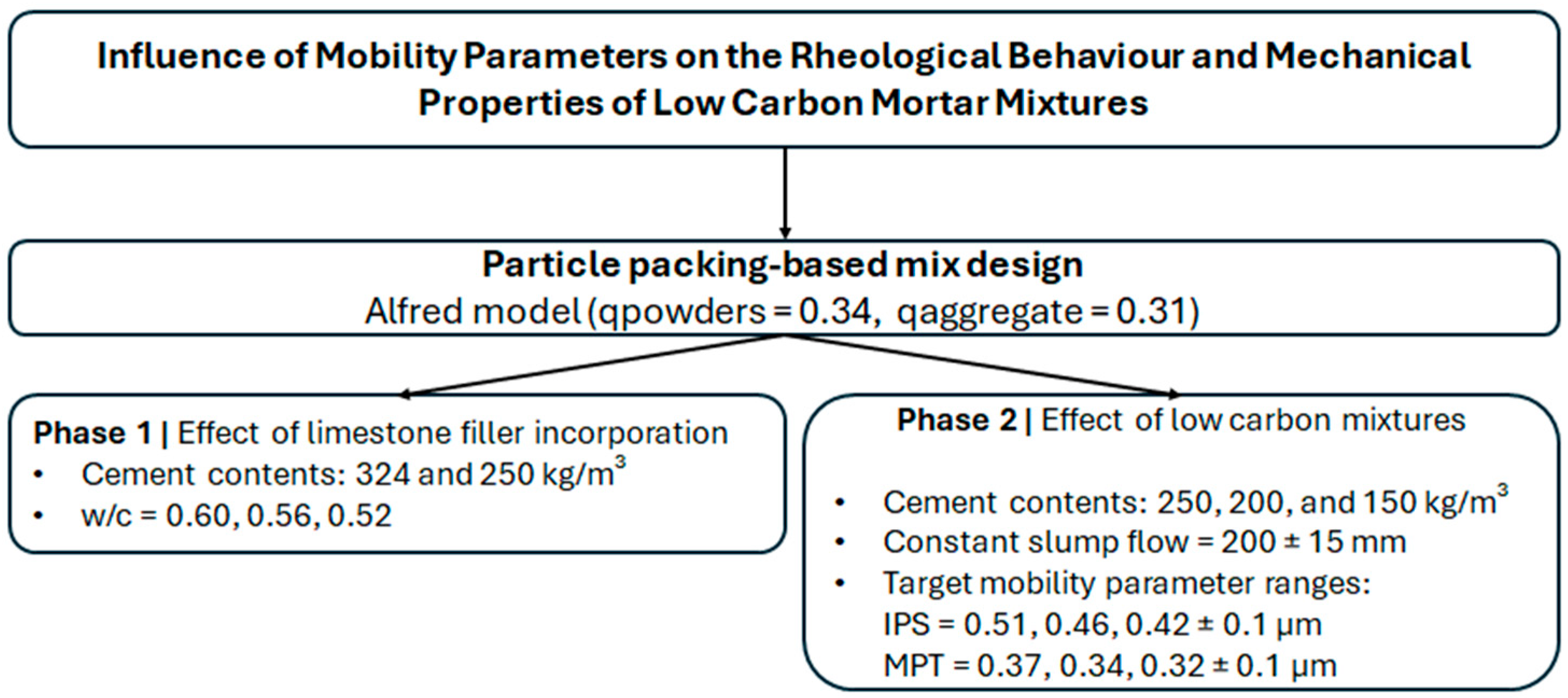
3. Scope of the Work
4. Materials and Methods
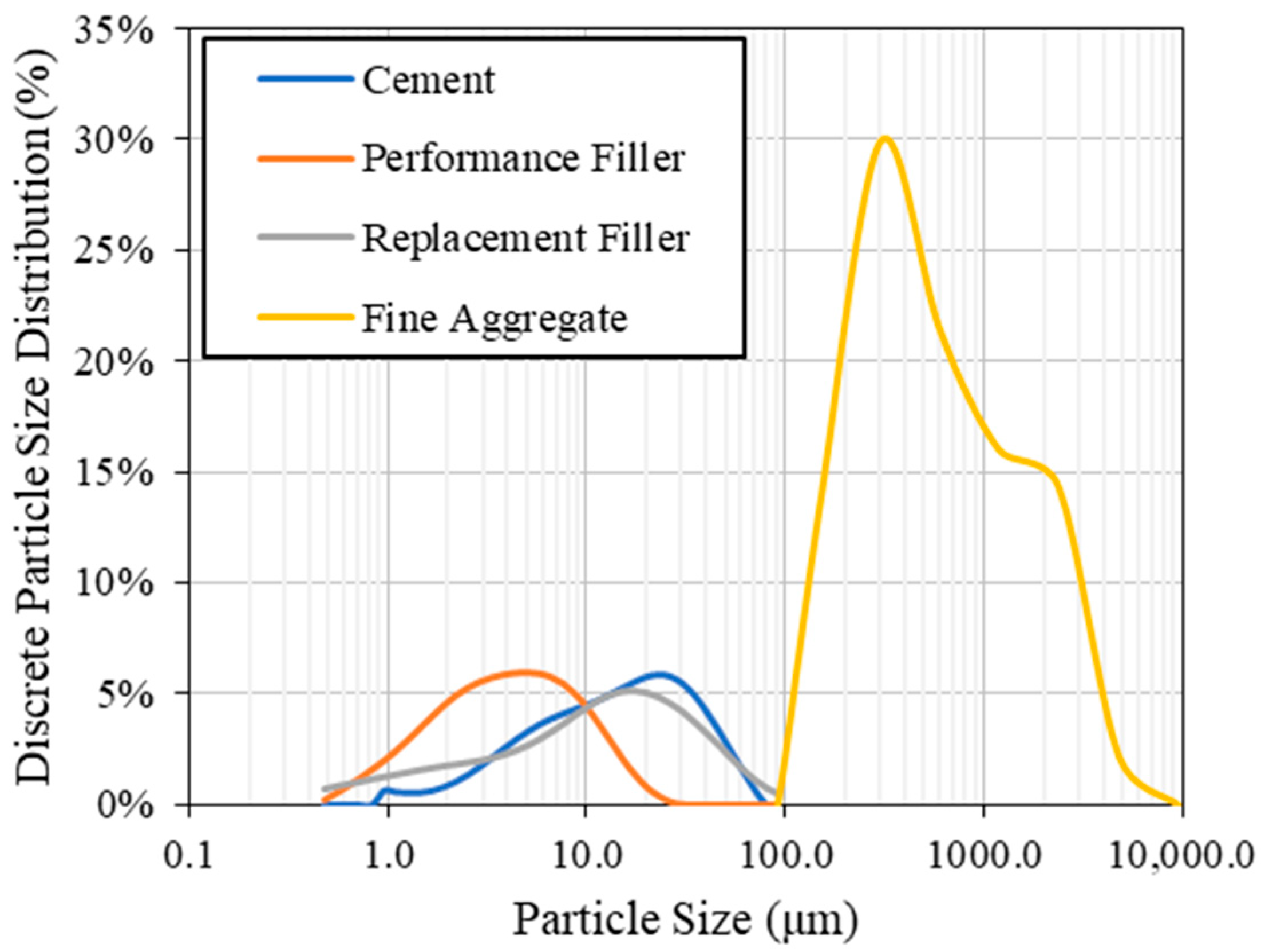
4.1. Characterization of Materials
4.2. Mix Design Procedure
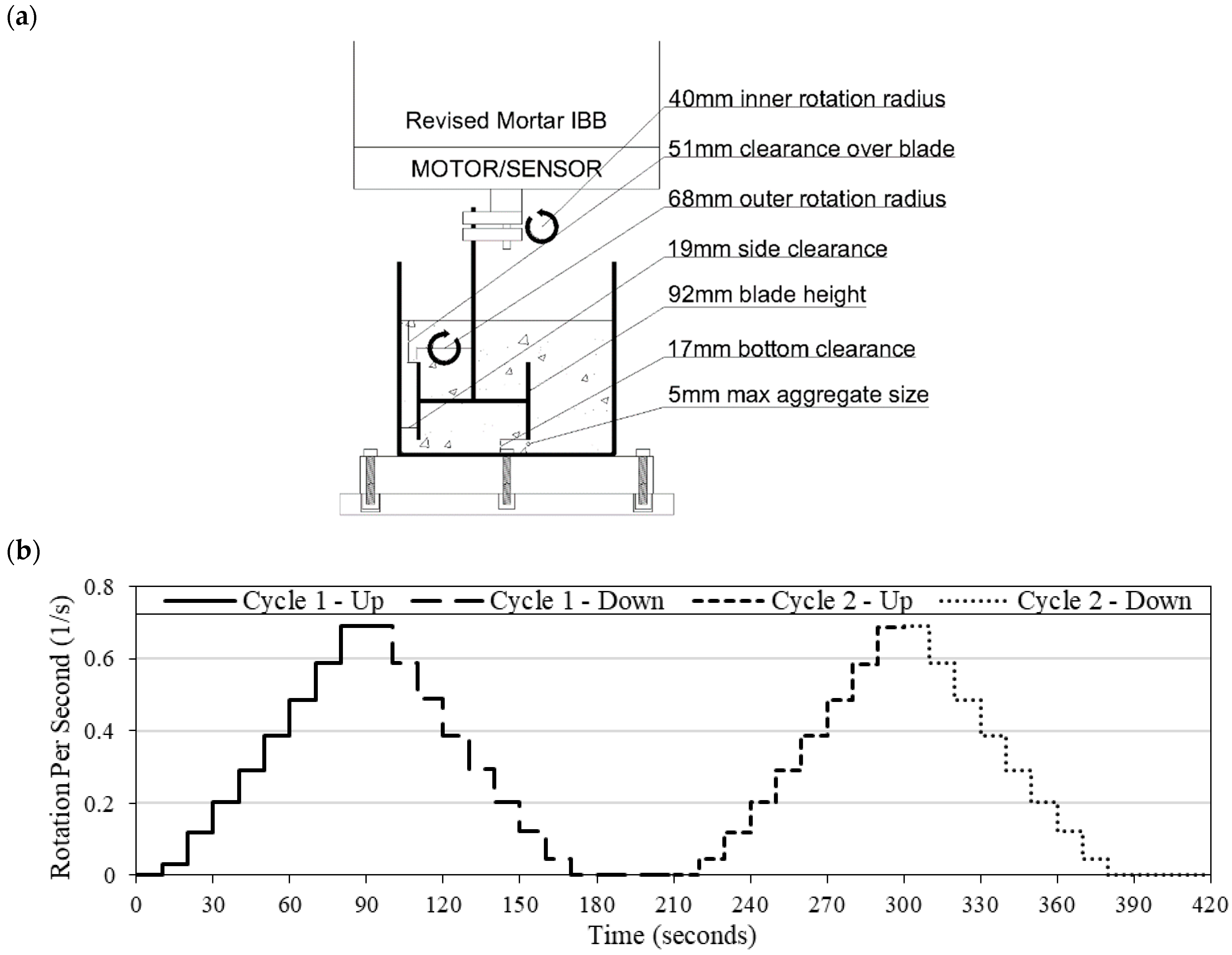
4.3. Fabrication and Testing Methods
4.4. Fresh State Assessment
4.5. Hardened State Evaluation
5. Results
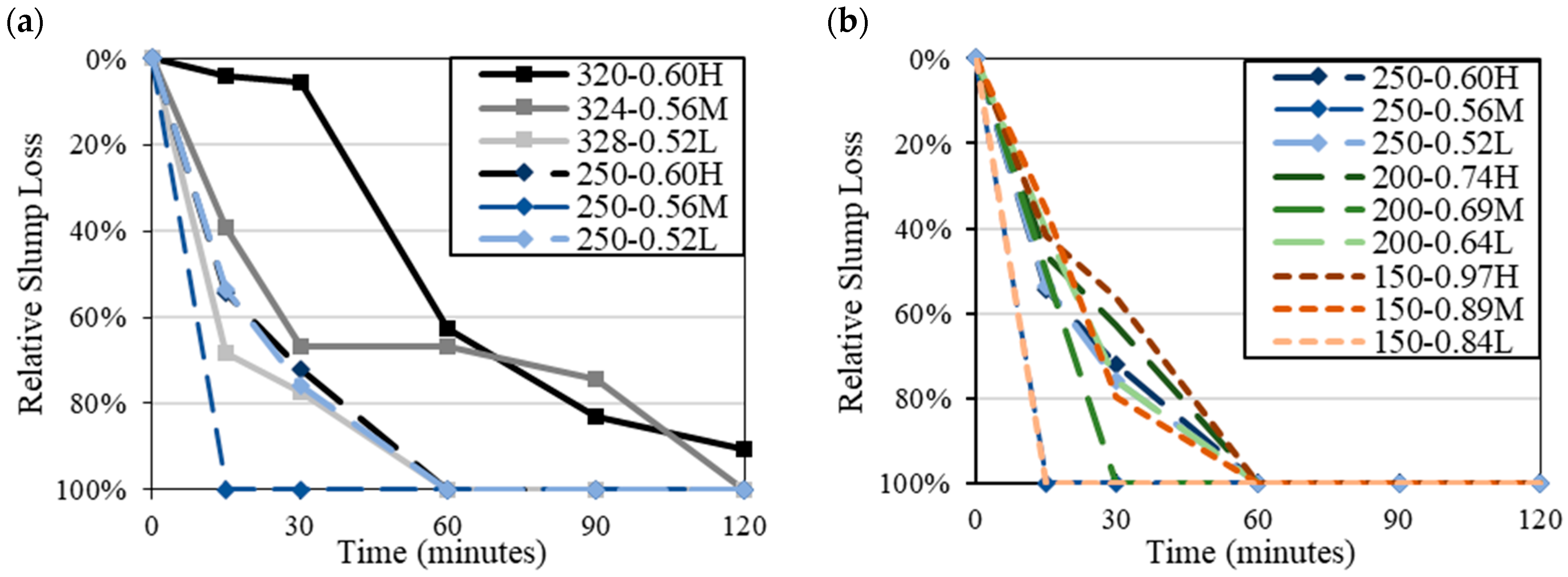
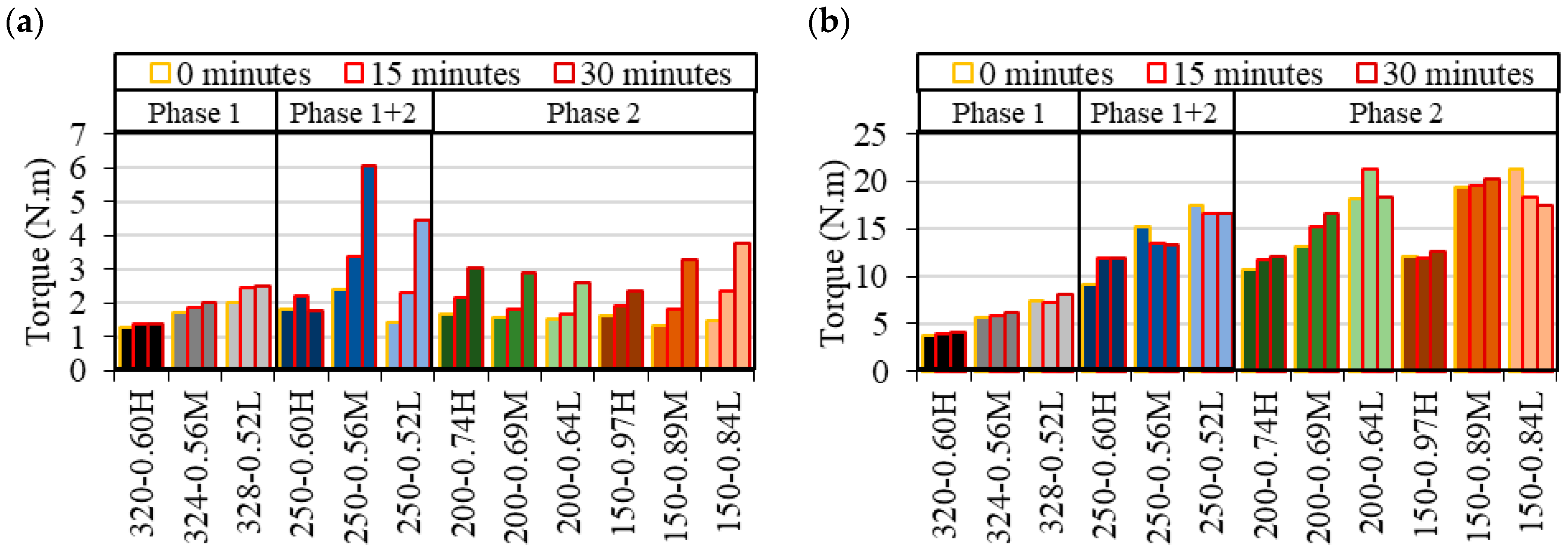
5.1. Slump, Slump Loss, pH and Fresh Density
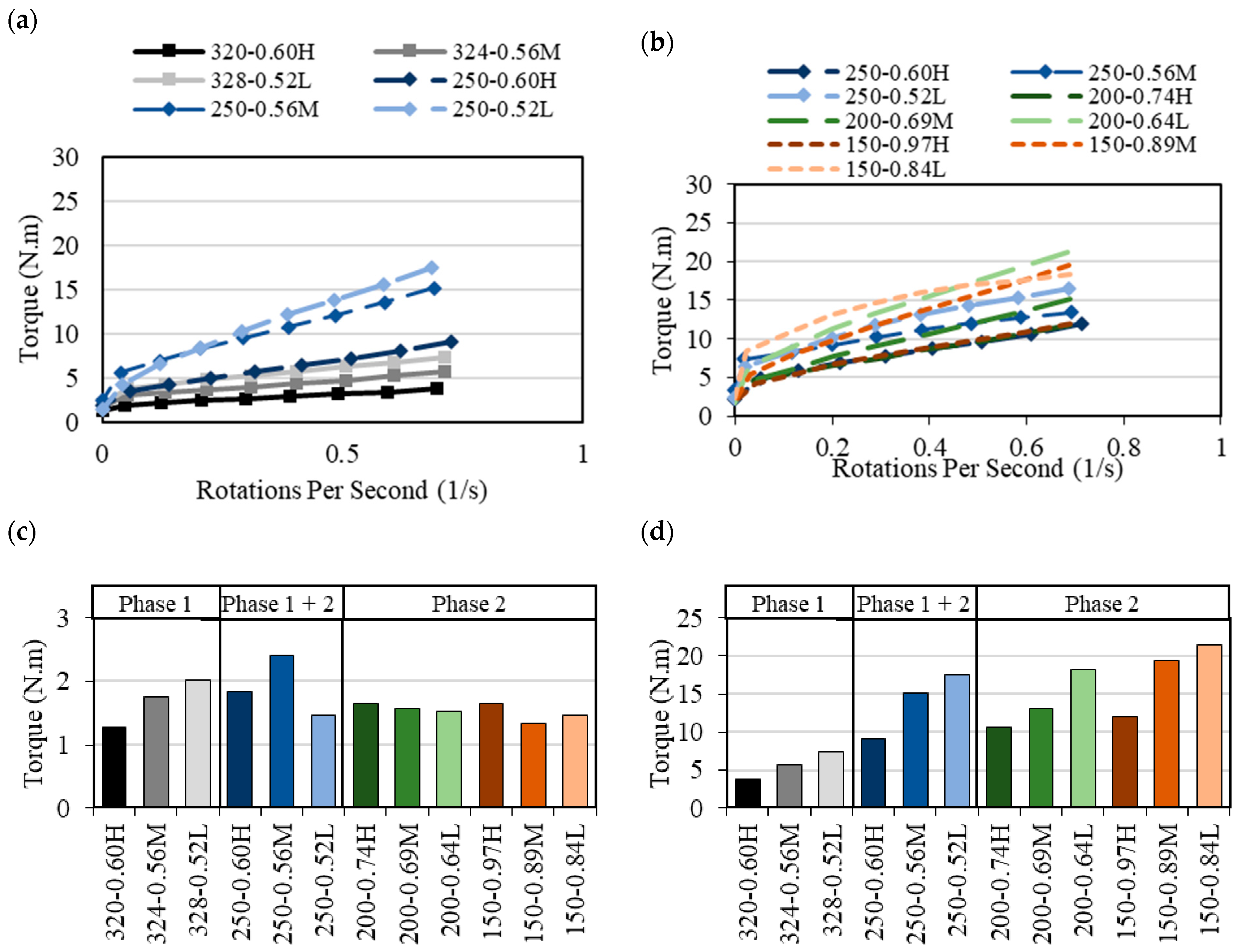
5.2. Rheological Behaviour
5.3. Compressive Strength
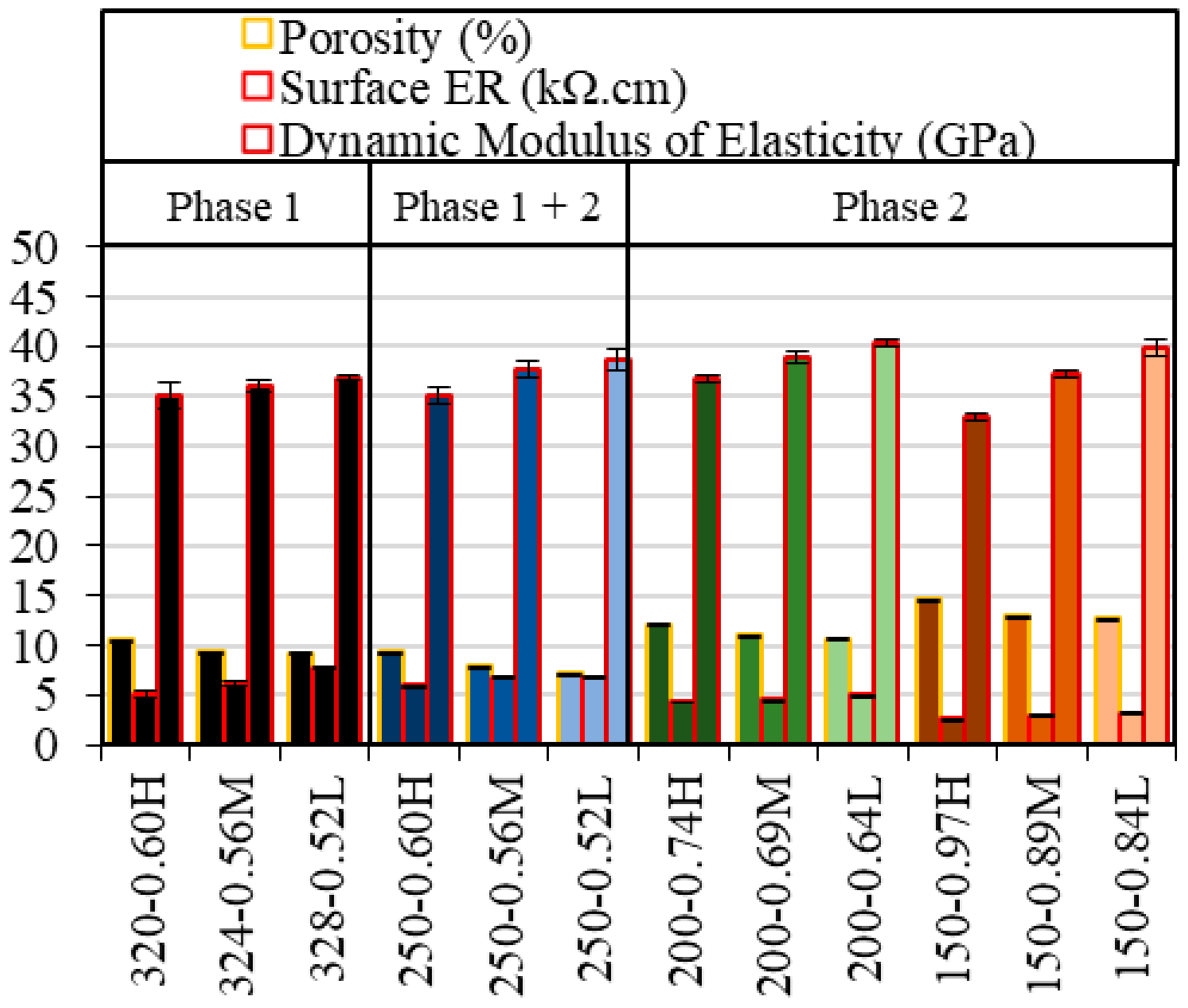
5.4. Capillary Porosity, Surface Electrical Resistivity, and Modulus of Elasticity
6. Discussion
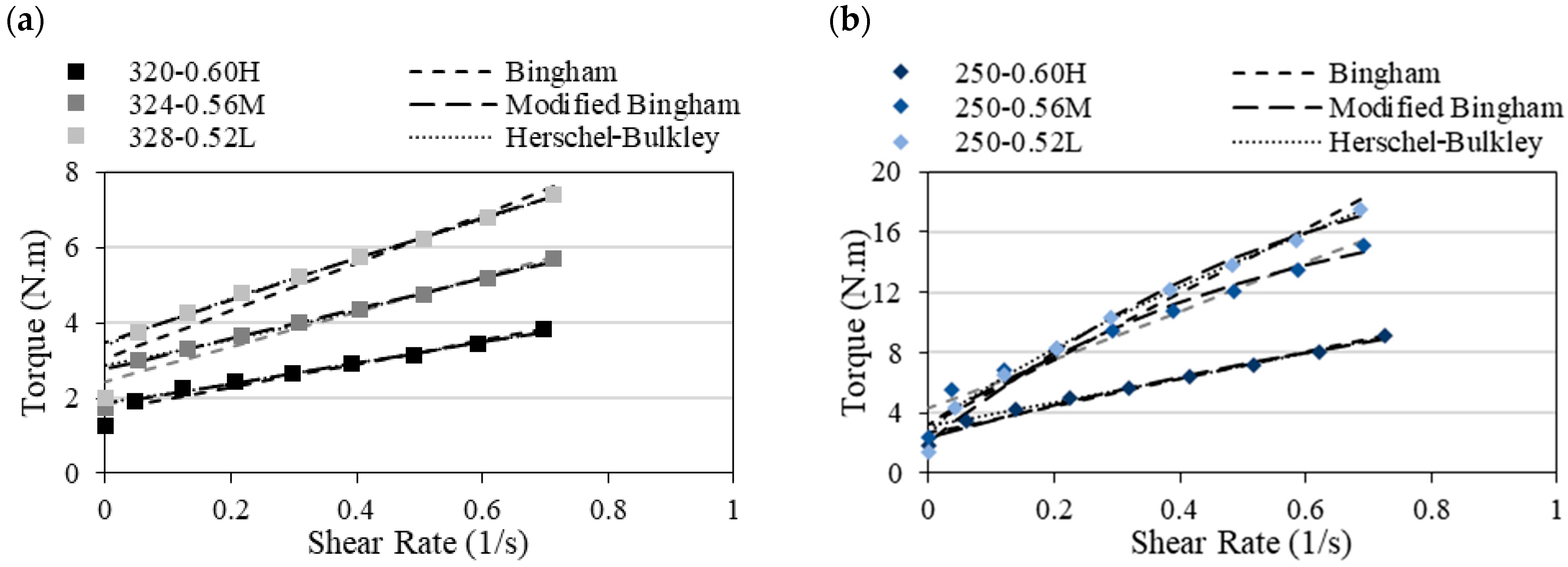
6.1. Rheological Models for Describing Mixture Behaviour
6.2. Analyzing the Impact of Mobility Parameters on the Rheological Behaviour of Mortars
6.3. Analyzing the Compressive Strength Through Mobility Parameters
6.4. Global Warming Potential
7. Conclusions
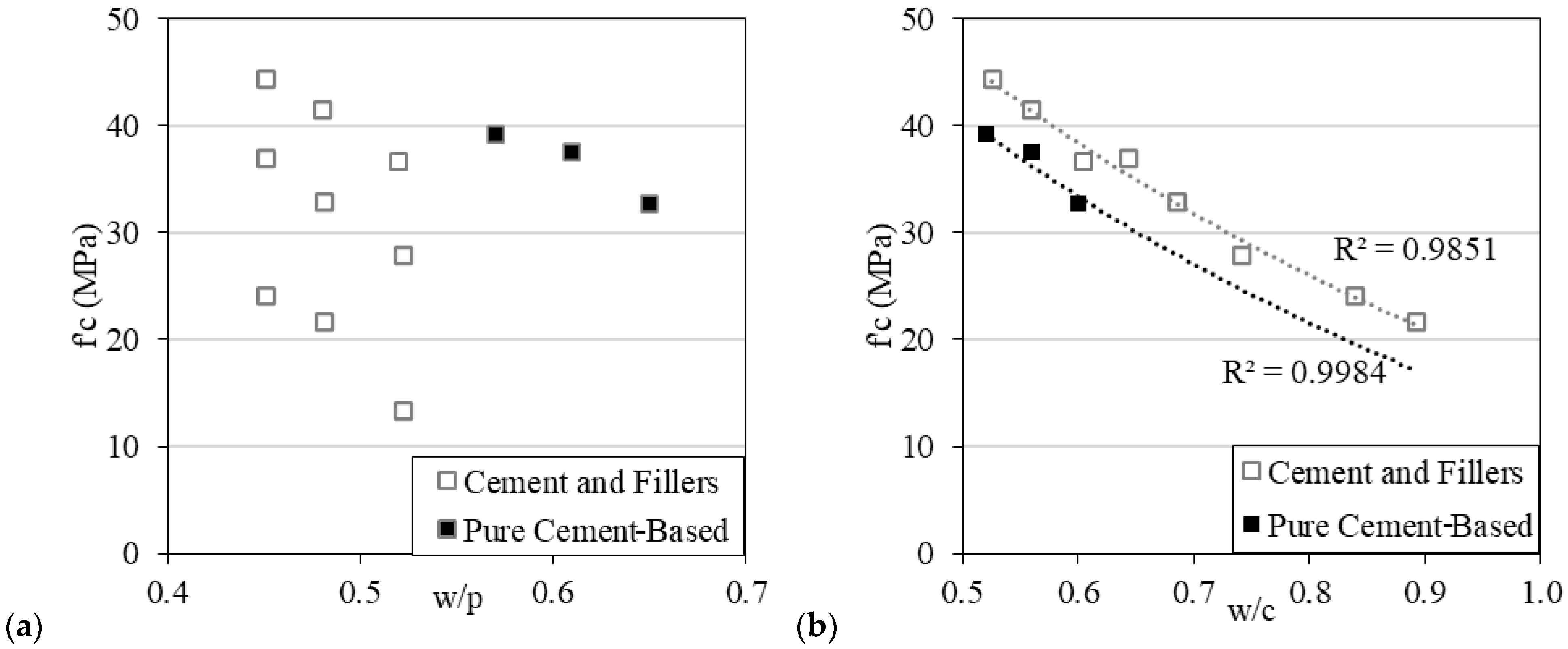
- Replacing cement content with limestone filler enhanced the mortar hardened state properties with similar w/c.
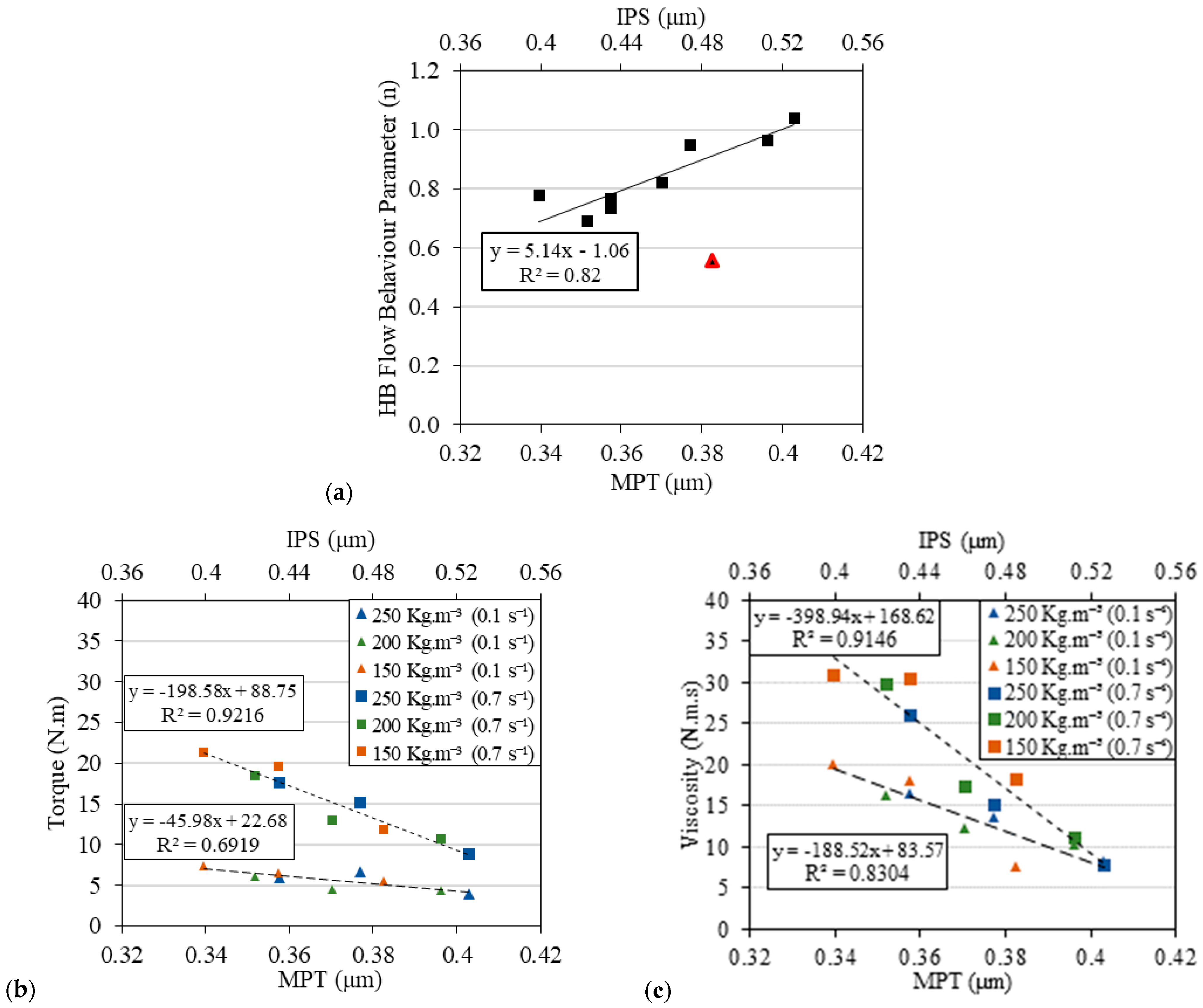
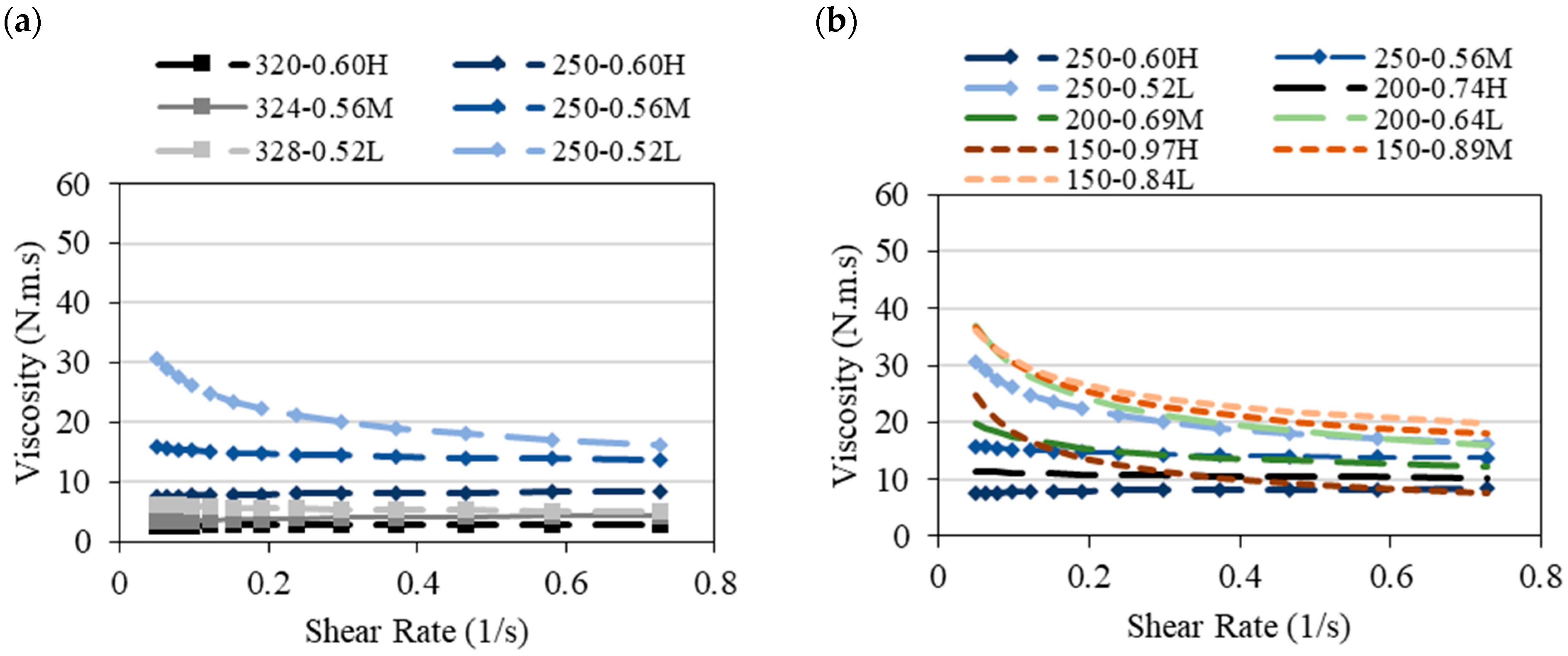
- Five rheological parameters (i.e., flow behaviour parameter, torque at low and high shear rates, and viscosity at low and high shear rates) showed strong correlations with IPS and MPT, confirming that reduced mobility parameters increased the resistance to flow of the investigated highly packed mortars.
- Based on the results obtained, Table 7 is proposed to guide the selection of MP parameters to achieve targeted fresh state outcomes.
- IPS and MPT can be used as practical indicators of the low shear rate viscosity of highly packed mortar systems with similar initial consistency, regardless of cement content.
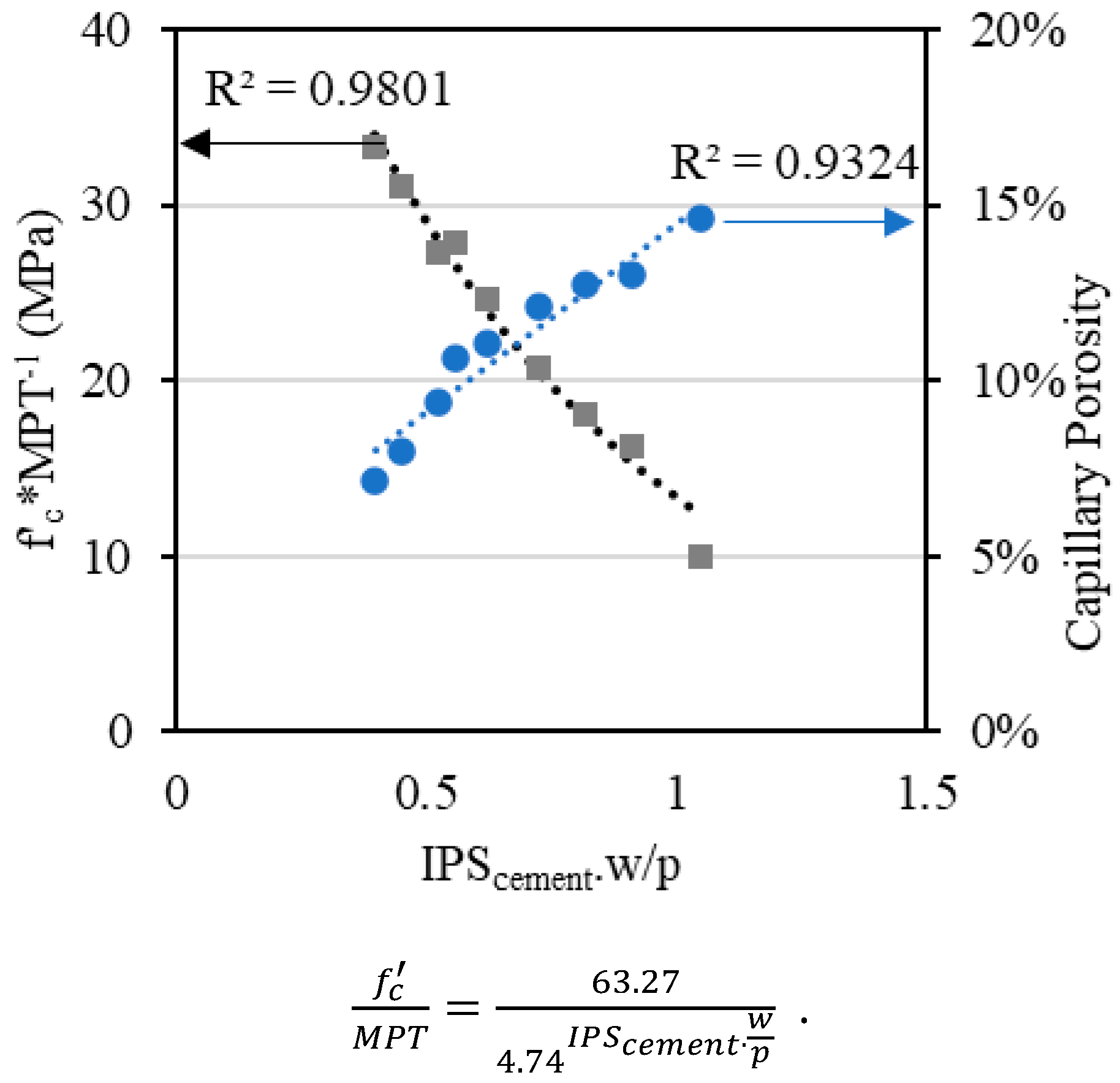
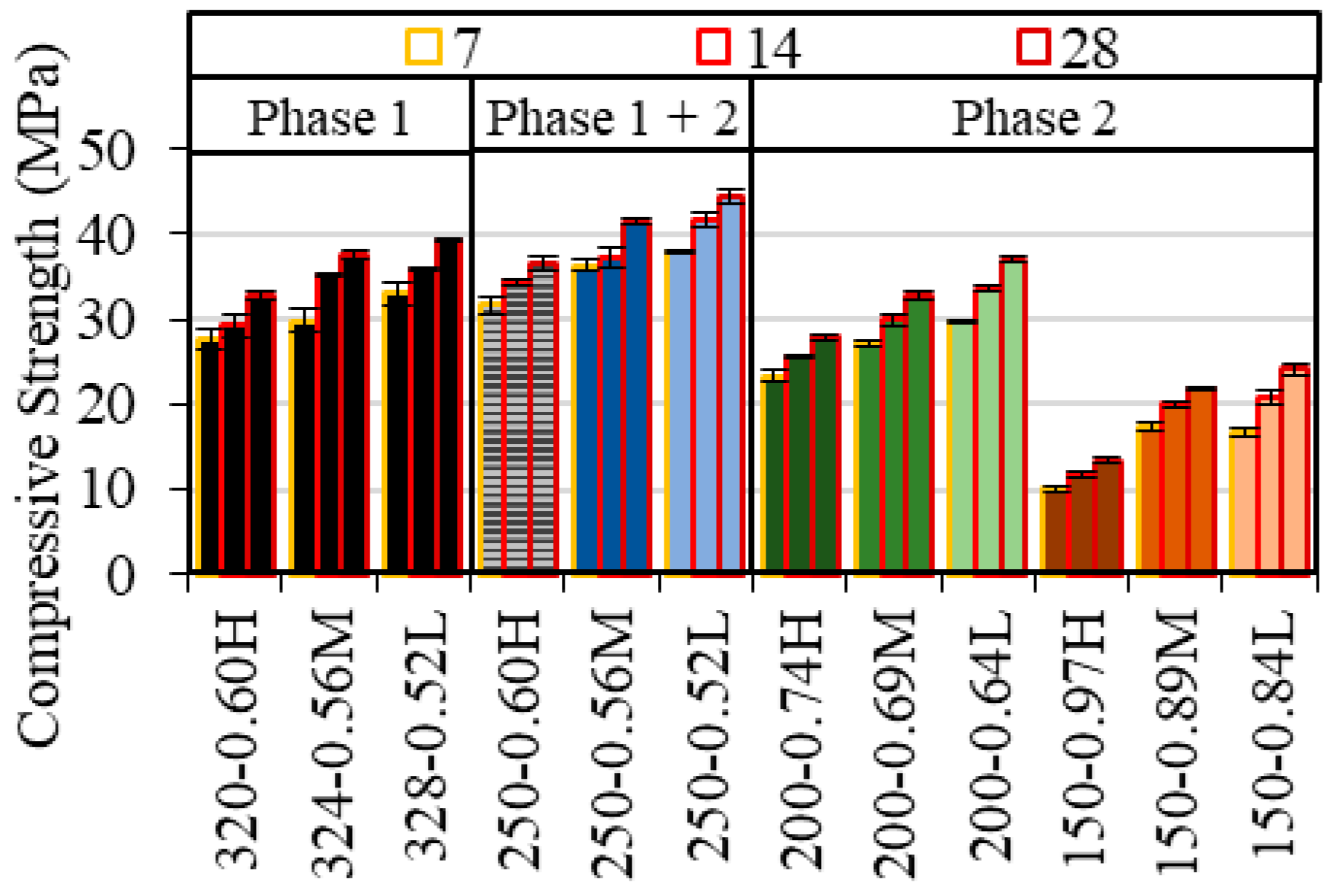
- The compressive strength trends of mixtures with high limestone filler contents were better interpreted by the combined use of IPS cement, w/p, and MPT than by w/p alone, linking spacing-based concepts to the hardened state behaviour of the investigated mortars.
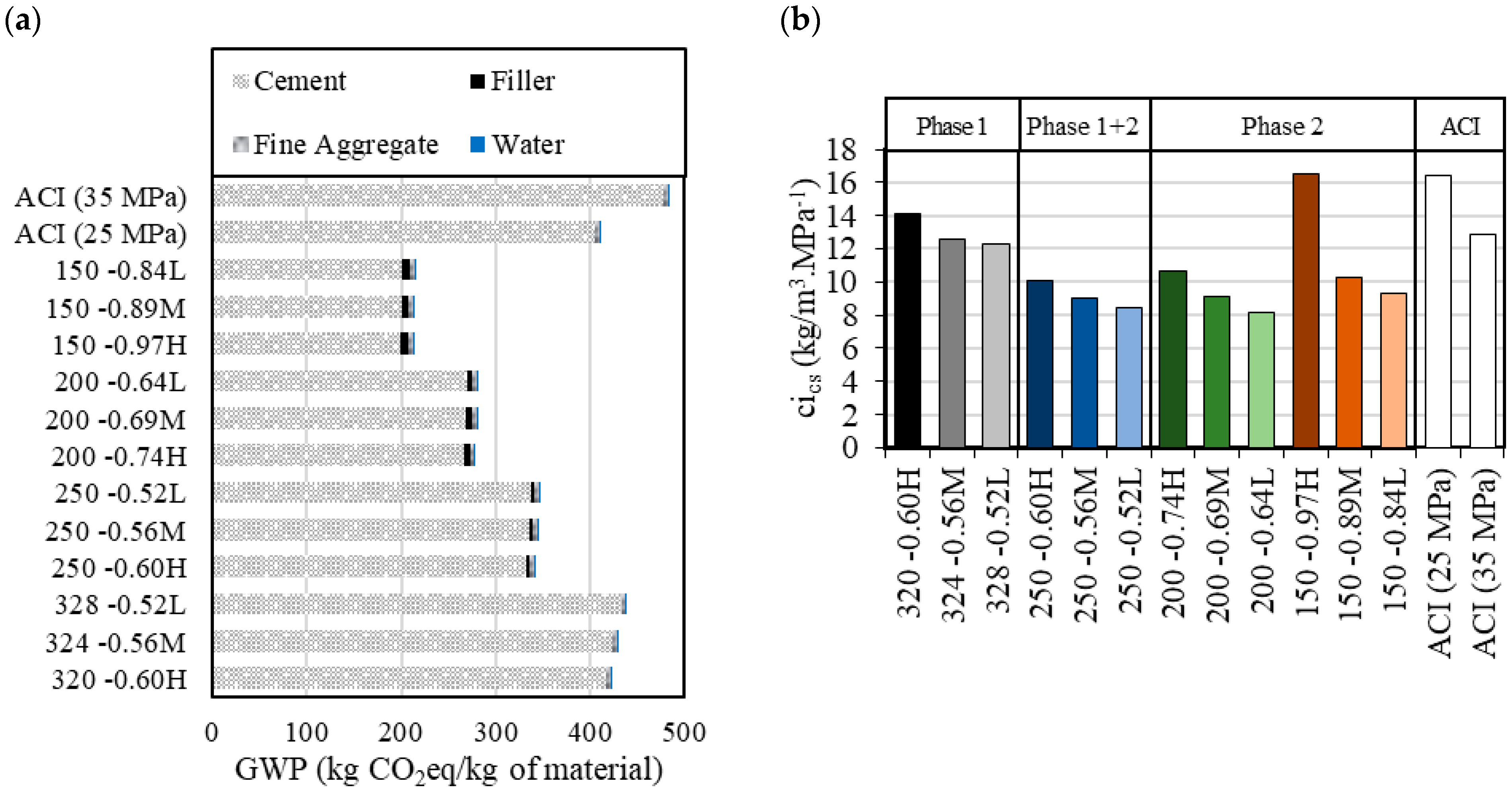
- The investigated mixtures achieved a 36% reduction in cics and up to a 50% reduction in GWP, confirming the potential of the proposed MP-based framework as a practical tool for low-carbon concrete production. The scale-up to full concrete mixtures is the subject of ongoing research.
Author Contributions
Funding
Data Availability Statement
Conflicts of Interest
Abbreviations
| Symbol/Acronym | Represents | Unit |
| τ | Shear stress | N·m |
| τ0 | Yield stress (torque at zero shear rate) | N·m |
| η | Viscosity | N·m·s |
| Shear rate | s−1 | |
| μ | Dynamic Poisson’s ratio | mm/mm |
| f′c | Compressive strength | MPa |
| IPS | Interparticle separation distance (fine fraction, PSD < 150 μm) | μm |
| IPScement | Interparticle separation distance of cement particles only | μm |
| MPT | Maximum paste thickness (coarse fraction, PSD > 150 μm) | μm |
| Pd | Packing density of the particle system | — |
| Pof | Dry predicted porosity of the fine fraction (Westman and Hugill) | % |
| Pof,c | Dry predicted porosity of the coarse fraction (Westman and Hugill) | % |
| q | Distribution factor in Alfred’s (modified Andreasen) model | — |
| SSA | Specific surface area (measured by BET) | m2/g |
| V | Total volume of the system | m3 |
| Vs | Volume of fine solid particles suspended in water (lubricant) | m3 |
| Vs,c | Volume of coarse solid particles, with paste acting as lubricant | m3 |
| VSA | Volumetric surface area of the fine fraction (SSA × specific gravity) | m2/cm3 |
| VSAc | Volumetric surface area of the coarse fraction | m2/cm3 |
| w/c | Water-to-cement ratio | — |
| w/p | Water-to-powder ratio | — |
| CPFT | Cumulative percent finer than particle size D | % |
| cics | CO2 intensity index (GWP per unit compressive strength) | kg·m−3·MPa−1 |
| GWP | Global warming potential | kg CO2eq/m3 |
| LF | Limestone filler | — |
| MP | Mobility parameter | — |
| MR | Mid-range water reducer (admixture) | — |
| PC | Portland cement | — |
| PLF | Performance limestone filler (PSD < PC) | — |
| PPM | Particle packing model | — |
| PSD | Particle size distribution | — |
| RLF | Replacement limestone filler (PSD ≈ PC) | — |
| SCM | Supplementary cementitious material | — |
| SCC | Self-consolidating concrete | — |
| SP | Superplasticizer (admixture) | — |
References
- Intergovernmental Panel on Climate Change. Climate Change 2014 Synthesis Report; IPCC: Geneva, Szwitzerland, 2014. [Google Scholar] [CrossRef]
- Damineli, B.L.; Kemeid, F.M.; Aguiar, P.S.; John, V.M. Measuring the eco-efficiency of cement use. Cem. Concr. Compos. 2010, 32, 555–562. [Google Scholar] [CrossRef]
- Limbachiya, M.; Bostanci, S.C.; Kew, H. Suitability of BS EN 197-1 CEM II and CEM V cement for production of low carbon concrete. Comput. Chem. Eng. 2014, 71, 397–405. [Google Scholar] [CrossRef]
- Scrivener, K.; Martirena, F.; Bishnoi, S.; Maity, S. Calcined clay limestone cements (LC3). Cem. Concr. Res. 2018, 114, 49–56. [Google Scholar] [CrossRef]
- Provis, J.L. Alkali Activated Materials; Springer: Berlin/Heidelberg, Germany, 2014. [Google Scholar] [CrossRef]
- Yang, K.H.; Jung, Y.B.; Cho, M.S.; Tae, S.H. Effect of supplementary cementitious materials on reduction of CO2 emissions from concrete. J. Clean. Prod. 2015, 103, 774–783. [Google Scholar] [CrossRef]
- Ghafari, E.; Ghahari, S.; Feys, D.; Khayat, K.; Baig, A.; Ferron, R. Admixture compatibility with natural supplementary cementitious materials. Cem. Concr. Compos. 2020, 112, 103683. [Google Scholar] [CrossRef]
- Miller, S.A.; John, V.M.; Pacca, S.A.; Horvath, A. Carbon dioxide reduction potential in the global cement industry by 2050. Cem. Concr. Res. 2018, 114, 115–124. [Google Scholar] [CrossRef]
- John, V.M.; Damineli, B.L.; Quattrone, M.; Pileggi, R.G. Fillers in cementitious materials—Experience, recent advances and future potential. Cem. Concr. Res. 2018, 114, 65–78. [Google Scholar] [CrossRef]
- Yousuf, S.; Sanchez, L.F.M.; Shammeh, S.A. The use of particle packing models (PPMs) to design structural low cement concrete as an alternative for construction industry. J. Build. Eng. 2019, 25, 100815. [Google Scholar] [CrossRef]
- de Grazia, M.T.; Sanchez, L.F.M.; Romano, R.C.O.; Pileggi, R.G. Investigation of the use of continuous particle packing models (PPMs) on the fresh and hardened properties of low-cement concrete (LCC) systems. Constr. Build. Mater. 2019, 195, 524–536. [Google Scholar] [CrossRef]
- Bondar, D.; Nanukuttan, S.; Provis, J.L.; Soutsos, M. Efficient mix design of alkali activated slag concretes based on packing fraction of ingredients and paste thickness. J. Clean. Prod. 2019, 218, 438–449. [Google Scholar] [CrossRef]
- Gray, D.L. Decrease in Fly Ash Spurring Innovation Within Construction Materials Industry. Nat. Gas. Electr. 2019, 35, 23–29. [Google Scholar] [CrossRef]
- Sun, L.; Chen, X.; Li, C.; Wu, Z.; Yang, Z.; Liang, T. Mix proportion design and reaction mechanism of alkali-activated slag mortar with marine materials. Constr. Build. Mater. 2025, 492, 142897. [Google Scholar] [CrossRef]
- Hao, X.K.; Zhang, H.Y.; Deng, T.; Zhou, Y.; Shi, T.; Corr, D.J. Experimental and theoretical investigation of low-shrinkage alkali-activated materials permanent formwork reinforced concrete prisms under axial load. Constr. Build. Mater. 2025, 500, 144156. [Google Scholar] [CrossRef]
- Hooton, R.D.; Bickley, J.A. Prescriptive versus performance approaches for durability design—The end of innocence? Mater. Corros. 2012, 63, 1097–1101. [Google Scholar] [CrossRef]
- Berodier, E.; Scrivener, K. Understanding the filler effect on the nucleation and growth of C-S-H. J. Am. Ceram. Soc. 2014, 97, 3764–3773. [Google Scholar] [CrossRef]
- Müllera, H.S.; Breinera, R.; Moffatta, J.S.; Haista, M. Design and properties of sustainable concrete. Procedia Eng. 2014, 95, 290–304. [Google Scholar] [CrossRef]
- Proske, T.; Hainer, S.; Rezvani, M.; Graubner, C.A. Eco-friendly concretes with reduced water and cement contents—Mix design principles and laboratory tests. Cem. Concr. Res. 2013, 51, 38–46. [Google Scholar] [CrossRef]
- Juhart, J.; David, G.A.; Saade, M.R.M.; Baldermann, C.; Passer, A.; Mittermayr, F. Functional and environmental performance optimization of Portland cement-based materials by combined mineral fillers. Cem. Concr. Res. 2019, 122, 157–178. [Google Scholar] [CrossRef]
- Funk, J.E.; Dinger, D.R. Predictive Process Control of Crowded Particulate Suspensions; Springer Science & Business Media: Durham, NC, USA, 1994. [Google Scholar] [CrossRef]
- de Oliveira, I.R.; Studart, A.R.; Pileggi, R.G.; Pandolfelli, V.C. Dispersao e Empacotamento de Particulas; Editora Fazendo Arte: São Paulo, Brazil, 2000. [Google Scholar]
- Menezes, M.; Pileggi, R.G.; Rebmann, M.; Massucato, C. Using a Physical Model Based on Particle Mobility for Mix Design of Commercial Concretes in Order to Increasing Eco-Efficiency. In RILEM Bookseries; Springer International Publishing: Cham, Switzerland, 2020; pp. 235–241. [Google Scholar] [CrossRef]
- Scrivener, K.L.; John, V.M.; Gartner, E.M. Eco-efficient cements: Potential economically viable solutions for a low-CO2 cement-based materials industry. Cem. Concr. Res. 2018, 114, 2–26. [Google Scholar] [CrossRef]
- Hooton, R.; Nokken, M.; Thomas, M. Portland-limestone cement: State-of-the-art report and gap analysis for CSA A 3000. Cem. Assoc. Can. 2007, 1–59. Available online: https://www.researchgate.net/publication/242297652_Portland-Limestone_Cement_State-of-the-Art_Report_and_Gap_Analysis_For_CSA_A_3000 (accessed on 23 April 2026).
- Schneider, M. The cement industry on the way to a low-carbon future. Cem. Concr. Res. 2019, 124, 105792. [Google Scholar] [CrossRef]
- Nehdi, M.; Rahman, M.A. Estimating rheological properties of cement pastes using various rheological models for different test geometry, gap and surface friction. Cem. Concr. Res. 2004, 34, 1993–2007. [Google Scholar] [CrossRef]
- Felekoglu, B. Utilisation of high volumes of limestone quarry wastes in concrete industry (self-compacting concrete case). Resour. Conserv. Recycl. 2007, 51, 770–791. [Google Scholar] [CrossRef]
- Vogt, C. Ultrafine Particles in Concrete—Influence of Ultrafine Particles on Concrete Properties and Application to Concrete Mix Design. Ph.D. Thesis, Royal Institute of Technology, Stockholm, Sweden, 2010. Available online: https://www.diva-portal.org/smash/get/diva2:304967/FULLTEXT01.pdf (accessed on 23 April 2026).
- Vance, K.; Aguayo, M.; Oey, T.; Sant, G.; Neithalath, N. Cement & Concrete Composites Hydration and strength development in ternary portland cement blends containing limestone and fly ash or metakaolin. Cem. Concr. Compos. 2013, 39, 93–103. [Google Scholar] [CrossRef]
- Bentz, D.P. Replacement of “coarse” cement particles by inert fillers in low w/c ratio concretes: II. Experimental validation. Cem. Concr. Res. 2005, 35, 185–188. [Google Scholar] [CrossRef]
- Bergmann, A.C.; De Grazia, M.T.; Ph, D.; Dantas, S.R.A.; Asirvatham, D.; Lozano, G.A.R.; Sanchez, L.F.M.; Perez, Y.A.; Ph, D.; Sherwood, E.G. Influence of Interparticle Separation Distance on the Fresh and Hardened Behavior of Ecoefficient Cement Pastes. J. Mater. 2023, 35, 04023252. [Google Scholar] [CrossRef]
- Cyr, M.; Lawrence, P.; Ringot, E. Efficiency of mineral admixtures in mortars: Quantification of the physical and chemical effects of fine admixtures in relation with compressive strength. Cem. Concr. Res. 2006, 36, 264–277. [Google Scholar] [CrossRef]
- Vance, K.; Kumar, A.; Sant, G.; Neithalath, N. The rheological properties of ternary binders containing Portland cement, limestone, and metakaolin or fly ash. Cem. Concr. Res. 2013, 52, 196–207. [Google Scholar] [CrossRef]
- Moon, G.D.; Oh, S.; Jung, S.H.; Choi, Y.C. Effects of the fineness of limestone powder and cement on the hydration and strength development of PLC concrete. Constr. Build. Mater. 2017, 135, 129–136. [Google Scholar] [CrossRef]
- Zhang, D.; Huang, X.; Zhao, Y. Investigation of the shape, size, angularity and surface texture properties of coarse aggregates. Constr. Build. Mater. 2012, 34, 330–336. [Google Scholar] [CrossRef]
- Proske, T.; Hainer, S.; Rezvani, M.; Graubner, C.A. Eco-friendly concretes with reduced water and cement content—Mix design principles and application in practice. Constr. Build. Mater. 2014, 67, 413–421. [Google Scholar] [CrossRef]
- Brouwers, H.J.H. Particle-size distribution and packing fraction of geometric random packings. Phys. Rev. E—Stat. Nonlinear. Soft Matter Phys. 2006, 74, 031309. [Google Scholar] [CrossRef] [PubMed]
- Yu, R.; Spiesz, P.; Brouwers, H.J.H. Mix design and properties assessment of Ultra-High Performance Fibre Reinforced Concrete (UHPFRC). Cem. Concr. Res. 2014, 56, 29–39. [Google Scholar] [CrossRef]
- De Grazia, M.T.; Sanchez, L.F.M.; Yahia, A. Towards the design of eco-efficient concrete mixtures: An overview. J. Clean. Prod. 2023, 389, 135752. [Google Scholar] [CrossRef]
- Westman, A.E.R.; Hugill, H.R. The Packing of Particles. J. Am. Ceram. Soc. 1930, 13, 767–779. [Google Scholar] [CrossRef]
- Palm, S.; Proske, T.; Rezvani, M.; Hainer, S.; Müller, C.; Graubner, C.A. Cements with a high limestone content—Mechanical properties, durability and ecological characteristics of the concrete. Constr. Build. Mater. 2016, 119, 308–318. [Google Scholar] [CrossRef]
- Dhandapani, Y.; Santhanam, M.; Kaladharan, G.; Ramanathan, S. Towards ternary binders involving limestone additions—A review. Cem. Concr. Res. 2021, 143, 106396. [Google Scholar] [CrossRef]
- Bonadia, P.; Studart, A.R.; Pileggi, R.G.; Pandolfelli, V.C. Maximum paste thickness (MPT) principle applied to high alumina refractory castables. Ceramica 1999, 45, 24–28. [Google Scholar] [CrossRef]
- Silva, A.P.; Segadães, A.M.; Devezas, T.C. MPT influence on the rheological behaviour of self-flow refractory castables. Mater. Sci. Forum. 2008, 587–588, 133–137. [Google Scholar] [CrossRef]
- Wong, H.H.C.; Kwan, A.K.H. Rheology of Cement Paste: Role of Excess Water to Solid Surface Area Ratio. J. Mater. Civ. Eng. 2008, 20, 189–197. [Google Scholar] [CrossRef]
- Ng, P.L.; Kwan, A.K.H.; Li, L.G. Packing and film thickness theories for the mix design of high-performance concrete. J. Zhejiang Univ. Sci. A 2016, 17, 759–781. [Google Scholar] [CrossRef]
- Silva, A.P.; Segadães, A.M.; Devezas, T.C. Particle Distribution Design in a Self-Flow Alumina Refractory Castable without Cement. Adv. Sci. Technol. 2006, 45, 2260–2265. [Google Scholar] [CrossRef]
- Li, L.G.; Kwan, A.K.H. Concrete mix design based on water film thickness and paste film thickness. Cem. Concr. Compos. 2013, 39, 33–42. [Google Scholar] [CrossRef]
- Damineli, B.L.; Pileggi, R.G.; John, V.M. Lower binder intensity eco-efficient concretes. In Eco-Efficient Concrete; Woodhead Publishing: Cambridge, UK, 2013; pp. 26–44. [Google Scholar] [CrossRef]
- Ortega, F.S.; Pileggi, R.G.; Pandolfelli, V.C. Analisys of the relation between inter-particle spacing (IPS) and suspension’s viscosity. Cerâmica 1999, 45, 155–159. [Google Scholar] [CrossRef]
- Rebmann, M.S.; Pileggi, R.G. Influence of Aggregate Particle Size Distribution on Mixing Behavior and Rheological Properties of Low-Binder Concrete; Springer International Publishing: Berlin/Heidelberg, Germany, 2020. [Google Scholar] [CrossRef]
- Westman, A.E.R. The Packing of Particles: Empirical Equations for Intermediate Diameter Ratios. J. Am. Ceram. Soc. 1936, 19, 127–129. [Google Scholar] [CrossRef]
- Dinger, D.R.; Funk, J.E. Particle-Packing Phenomena and Their Application in Materials Processing. Mater. Res. Soc. Bull. 1997, 22, 19–23. [Google Scholar] [CrossRef]
- Innocentini, M.D.M.; Pileggi, R.G.; Ramal, F.T.; Pandolfelli, V.C. Permeability and drying behavior of PSD-designed refractory castables. Am. Ceram. Soc. Bull. 2003, 82, 9401–9406. [Google Scholar]
- Bergmann, A.; Eid, M.N.; De Grazia, M.T.; Dantas, S.R.A.; Sanchez, L.F.M. Eco-Efficient Fiber-Reinforced Concrete: From Mix Design to Fresh and Hardened State Behavior. Materials 2025, 18, 1245. [Google Scholar] [CrossRef]
- Kurad, R.; Silvestre, J.D.; de Brito, J.; Ahmed, H. Effect of incorporation of high volume of recycled concrete aggregates and fly ash on the strength and global warming potential of concrete. J. Clean. Prod. 2017, 166, 485–502. [Google Scholar] [CrossRef]
- Nguyen, W.; Martinez, D.M.; Jen, G.; Duncan, J.F.; Ostertag, C.P. Interaction between global warming potential, durability, and structural properties of fiber-reinforced concrete with high waste materials inclusion. Resour. Conserv. Recycl. 2021, 169, 105453. [Google Scholar] [CrossRef]
- Ali, Z.S.; Hosseinpoor, M.; Yahia, A. New aggregate grading models for low-binder self-consolidating and semi-self-consolidating concrete (Eco-SCC and Eco-semi-SCC). Constr. Build. Mater. 2020, 265, 120314. [Google Scholar] [CrossRef]
- de Brito, J.; Kurda, R. The past and future of sustainable concrete: A critical review and new strategies on cement-based materials. J. Clean. Prod. 2020, 281, 123558. [Google Scholar] [CrossRef]
- Nkinamubanzi, P.C.; Mantellato, S.; Flatt, R.J. Superplasticizers in Practice; Elsevier Ltd.: Amsterdam, The Netherlands, 2016. [Google Scholar] [CrossRef]
- Esmaeilkhanian, B.; Khayat, K.H.; Wallevik, O.H. Mix design approach for low-powder self-consolidating concrete: Eco-SCC-content optimization and performance. Mater. Struct. 2017, 50, 18. [Google Scholar] [CrossRef]
- ASTM C33/C33M−18; Specification for Concrete Aggregates. ASTM International: West Conshohocken, PA, USA, 2018. [CrossRef]
- Yahia, A.; Mantellato, S.; Flatt, R.J. Concrete Rheology: A Basis for Understanding Chemical Admixtures; Elsevier Ltd.: Amsterdam, The Netherlands, 2016. [Google Scholar] [CrossRef]
- Fruhstorfer, J.; Hubálková, J.; Aneziris, C.G. Particle packings minimizing density gradients of coarse-grained compacts. J. Eur. Ceram. Soc. 2019, 39, 3264–3276. [Google Scholar] [CrossRef]
- ASTM1810; Standard Guide for Comparing Performance of Concrete-Making Materials. ASTM International: West Conshohocken, PA, USA, 2019; pp. 1–5. [CrossRef]
- Beaupré, D.; Chapdelaine, F.; Domone, P.; Koehler, E.; Shen, L.; Sonebi, M.; Struble, L.; Tepke, D.; Wallevik, J.E.; Wallevik, O. Comparison of concrete rheometers: International tests at MBT (Cleveland OH, USA) in May 2003; Spring: Berlin/Heidelberg, Germany, 2004; pp. 7974–7984. [Google Scholar]
- Chidiac, S.E.; Habibbeigi, F.; Chan, D. Slump and slump flow for characterizing yield stress of fresh concrete. ACI Mater. J. 2006, 103, 413–418. [Google Scholar] [CrossRef]
- Beaupre, D. Rheology of High Performance Shotcrete. Ph.D. Thesis, University of British Columbia, Vancouver, BC, Canada, 1985. Volume 31. pp. 6303–6309. [Google Scholar]
- Hu, J.; Wang, K. Effect of coarse aggregate characteristics on concrete rheology. Constr. Build. Mater. 2011, 25, 1196–1204. [Google Scholar] [CrossRef]
- Ferraris, C.F.; Martys, N.S. Relating fresh concrete viscosity measurements from different rheometers. J. Res. Natl. Inst. Stand. Technol. 2003, 108, 229–234. [Google Scholar] [CrossRef] [PubMed]
- Khayat, K.H.; Meng, W.; Vallurupalli, K.; Teng, L. Rheological properties of ultra-high-performance concrete—An overview. Cem. Concr. Res. 2019, 124, 105828. [Google Scholar] [CrossRef]
- Roussel, N. Understanding the Rheology of Concrete; Elsevier: Amsterdam, The Netherlands, 2012. [Google Scholar] [CrossRef]
- ASTM Standard C39/C39M-20; Standard Test Method for Compressive Strength of Cylindrical Concrete Specimens. ASTM International: West Conshohocken, PA, USA, 2020; pp. 1–8. [CrossRef]
- AASHTO T 358; Surface Resistivity Indication of Concrete’s Ability to Resist Chloride Ion Penetration. AASHTO (American Association of State Highway and Transportation Officials): Washington, DC, USA, 2017.
- ASTM C597; Standard Test Method for Pulse Velocity Through Concrete. ASTM International: West Conshohocken, PA, USA, 2016; p. 4. [CrossRef]
- Romano, R.C.D.O.; Torres, D.D.R.; Pileggi, R.G. Impact of aggregate grading and air-entrainment on the properties of fresh and hardened mortars. Constr. Build. Mater. 2015, 82, 219–226. [Google Scholar] [CrossRef]
- Yahia, A. Shear-thickening behavior of high-performance cement grouts—Influencing mix-design parameters. Cem. Concr. Res. 2011, 41, 230–235. [Google Scholar] [CrossRef]
- de Grazia, M.T.; Sanchez, L.F.M.; Romano, R.C.O.; Pileggi, R.G. Evaluation of the Fresh and Hardened State Properties of Low-Cement Content Systems. Mag. Concr. Res. 2018, 72, 232–245. [Google Scholar] [CrossRef]
- Yahia, A.; Khayat, K.H. Analytical models for estimating yield stress of high-performance pseudoplastic grout. Cem. Concr. Res. 2001, 31, 731–738. [Google Scholar] [CrossRef]
- Wallevik, O.H.; Feys, D.; Wallevik, J.E.; Khayat, K.H. Avoiding inaccurate interpretations of rheological measurements for cement-based materials. Cem. Concr. Res. 2015, 78, 100–109. [Google Scholar] [CrossRef]
- Felekoǧlu, B.; Tosun, K.; Baradan, B.; Altun, A.; Uyulgan, B. The effect of fly ash and limestone fillers on the viscosity and compressive strength of self-compacting repair mortars. Cem. Concr. Res. 2006, 36, 1719–1726. [Google Scholar] [CrossRef]
- Adjoudj, M.; Ezziane, K.; Kadri, E.H.; Ngo, T.T.; Kaci, A. Evaluation of rheological parameters of mortar containing various amounts of mineral addition with polycarboxylate superplasticizer. Constr. Build. Mater. 2014, 70, 549–559. [Google Scholar] [CrossRef]
- Varhen, C.; Dilonardo, I.; de Oliveira Romano, R.C.; Pileggi, R.G.; de Figueiredo, A.D. Effect of the substitution of cement by limestone filler on the rheological behaviour and shrinkage of microconcretes. Constr. Build. Mater. 2016, 125, 375–386. [Google Scholar] [CrossRef]
- Aïtcin, P.C.; Flatt, R.J. Science and Technology of Concrete Admixtures; Woodhead Publishing: Cambridge, UK, 2015. [Google Scholar] [CrossRef]
- Yammine, J.; Chaouche, M.; Guerinet, M.; Moranville, M.; Roussel, N. From ordinary rhelogy concrete to self compacting concrete: A transition between frictional and hydrodynamic interactions. Cem. Concr. Res. 2008, 38, 890–896. [Google Scholar] [CrossRef]
- Mantellato, S.; Flatt, R.J. Shifting factor—A new paradigm for studying the rheology of cementitious suspensions. J. Am. Ceram. Soc. 2020, 103, 3562–3574. [Google Scholar] [CrossRef]
- Damineli, B.L.; John, V.M.; Lagerblad, B.; Pileggi, R.G. Viscosity prediction of cement-filler suspensions using interference model: A route for binder efficiency enhancement. Cem. Concr. Res. 2016, 84, 8–19. [Google Scholar] [CrossRef]
- Bentz, D.P.; Aitcin, P.-C. The Hidden Meaning of Water- Cement Ratio Distance between cement particles is fundamental. Concr. Int. 2008, 30, 51–54. [Google Scholar]
- Bentz, D.P.; Ardani, A.; Barrett, T.; Jones, S.Z.; Lootens, D.; Peltz, M.A.; Sato, T.; Stutzman, P.E.; Tanesi, J.; Weiss, W.J. Multi-scale investigation of the performance of limestone in concrete. Constr. Build. Mater. 2015, 75, 1–10. [Google Scholar] [CrossRef]
- Lawrence, P.; Cyr, M.; Ringot, E. Mineral admixtures in mortars effect of type, amount and fineness of fine constituents on compressive strength. Cem. Concr. Res. 2005, 35, 1092–1105. [Google Scholar] [CrossRef]
- De Larrard, F.; Belloc, A. The influence of aggregate on the compressive strength of normal and high-strength concrete. ACI Mater. J. 1997, 94, 417–426. [Google Scholar] [CrossRef] [PubMed]
- Chu, S.H. Effect of paste volume on fresh and hardened properties of concrete. Constr. Build. Mater. 2019, 218, 284–294. [Google Scholar] [CrossRef]
- Bonavetti, V.; Donza, H.; Menéndez, G.; Cabrera, O.; Irassar, E.F. Limestone filler cement in low w/c concrete: A rational use of energy. Cem. Concr. Res. 2003, 33, 865–871. [Google Scholar] [CrossRef]







| Ingredient | Cement | Limestone Filler | Fine Aggregate | Coarse Aggregate | Water | Admixtures |
|---|---|---|---|---|---|---|
| GWP (kg CO2eq/kg of material, gi) | 0.9 | 0.032 | 0.0029 | 0.0062 | 0.00034 | 0.72 |
| Reference | [57] | [62] | [59,62] | [62] | [59,62] | [62] |
| Material | Specific Gravity (g/cm3) | SSA (m2/g) | VSA (m2/cm3) |
|---|---|---|---|
| Cement | 3.17 | 1.00 | 3.17 |
| Replacement filler | 2.66 | 0.90 | 2.39 |
| Performance filler | 2.6 | 3.70 | 9.62 |
| Fine aggregate | 2.74 | 0.92 | 2.52 |
| Mix Name | Cement kg/m3 | Filler—P kg/m3 | Filler—R kg/m3 | Sand kg/m3 | Water kg/m3 | w/c | MR % | SP % | IPS μm | MPT μm | |
|---|---|---|---|---|---|---|---|---|---|---|---|
| Phase 1 | 320-0.60H | 463 | - | - | 1501 | 278 | 0.60 | - | - | 0.92 | 0.54 |
| 324-0.56M | 471 | - | - | 1529 | 264 | 0.56 | 0.08 | 0.08 | 0.85 | 0.48 | |
| 328-0.52L | 481 | - | - | 1559 | 250 | 0.52 | 0.20 | 0.15 | 0.79 | 0.45 | |
| Phase 1 and 2 | 250-0.60H | 370 | 60 | 46 | 1615 | 224 | 0.60 | 0.20 | 0.50 | 0.54 | 0.40 |
| 250-0.56M | 373 | 61 | 51 | 1647 | 209 | 0.56 | 0.40 | 0.60 | 0.49 | 0.38 | |
| 250-0.52L | 375 | 62 | 55 | 1673 | 197 | 0.52 | 0.90 | 1.00 | 0.45 | 0.36 | |
| Phase 2 | 200-0.74H | 297 | 60 | 109 | 1623 | 220 | 0.74 | 0.30 | 0.50 | 0.51 | 0.40 |
| 200-0.69M | 299 | 61 | 115 | 1656 | 205 | 0.69 | 0.80 | 0.40 | 0.46 | 0.37 | |
| 200-0.64L | 300 | 62 | 119 | 1681 | 193 | 0.64 | 1.00 | 1.00 | 0.42 | 0.35 | |
| 150-0.97H | 222 | 60 | 172 | 1639 | 214 | 0.97 | 0.30 | 0.50 | 0.49 | 0.38 | |
| 150-0.89M | 223 | 61 | 178 | 1671 | 199 | 0.89 | 0.60 | 0.70 | 0.44 | 0.36 | |
| 150-0.84L | 224 | 62 | 182 | 1695 | 188 | 0.84 | 1.00 | 1.00 | 0.40 | 0.34 |
| Mix Name | pH | Fresh Density (kg/m3) | Batch Temp (°C) | MR (%) | SP (%) | Mortar Slump Flow (mm) | |
|---|---|---|---|---|---|---|---|
| Phase 1 | 320-0.60H | 12.5 | 2262 | 22.1 | - | - | 208 |
| 324-0.56M | 12.5 | 2263 | 21.7 | 0.08 | 0.08 | 185 | |
| 328-0.52L | 13.0 | 2260 | 23.2 | 0.20 | 0.15 | 195 | |
| Phase 1and 2 | 250-0.60H | 12.5 | 2292 | 20.5 | 0.20 | 0.50 | 195 |
| 250-0.56M | 12.5 | 2317 | 20.8 | 0.40 | 0.60 | 187 | |
| 250-0.52L | 12.5 | 2320 | 21.2 | 0.90 | 1.00 | 197 | |
| Phase 2 | 200-0.74H | 12.5 | 2286 | 20.9 | 0.30 | 0.50 | 190 |
| 200-0.69M | 12.5 | 2319 | 20.7 | 0.80 | 0.40 | 197 | |
| 200-0.64L | 12.5 | 2330 | 22.5 | 1.00 | 1.00 | 190 | |
| 150-0.97H | 12.5 | 2258 | 23.7 | 0.30 | 0.50 | 192 | |
| 150-0.89M | 12.0 | 2283 | 20.8 | 0.60 | 0.70 | 198 | |
| 150-0.84L | 12.0 | 2317 | 21.7 | 1.00 | 1.00 | 185 |
| Name | Equation | Equation Reference |
|---|---|---|
| Bingham | (10) | |
| Modified Bingham | (11) | |
| Herschel–Bulkley | (12) |
| Mix Name | τ0 | kB | MMSE | τ0 | μp | c | MMSE | τ0 | n | kHB | MMSE | |
|---|---|---|---|---|---|---|---|---|---|---|---|---|
| N·m | N·m·s | N·m | N·m·s | N·m | N·m·s | |||||||
| Phase 1 | 320-0.60H | 1.7 | 3.1 | 0.49 | 1.9 | 2.7 | 0.0 | 0.12 | 1.9 | 2.7 | 1.0 | 0.12 |
| 324-0.56M | 2.4 | 4.7 | 0.85 | 2.8 | 4.0 | 0.0 | 0.11 | 2.9 | 4.1 | 1.1 | 0.09 | |
| 328-0.52L | 3.0 | 6.4 | 1.26 | 3.5 | 5.8 | 0.5 | 0.11 | 3.4 | 5.4 | 0.9 | 0.09 | |
| Phase 1 and 2 | 250-0.60H | 2.7 | 8.9 | 1.04 | 2.4 | 11.5 | 3.5 | 0.70 | 3.2 | 8.2 | 1.0 | 0.25 |
| 250-0.56M | 4.3 | 16.2 | 2.31 | 3.3 | 25.2 | 12.6 | 1.82 | 5.0 | 14.2 | 0.9 | 0.31 | |
| 250-0.52L | 3.2 | 21.7 | 2.37 | 2.1 | 33.2 | 16.6 | 1.36 | 2.6 | 19.7 | 0.8 | 0.30 | |
| Phase 2 | 200-0.74H | 2.7 | 11.7 | 1.35 | 2.1 | 16.9 | 7.2 | 1.08 | 3.1 | 10.6 | 1.0 | 0.32 |
| 200-0.69M | 2.7 | 15.3 | 1.50 | 2.0 | 21.9 | 9.3 | 1.02 | 2.4 | 14.1 | 0.8 | 0.44 | |
| 200-0.64L | 3.3 | 22.9 | 2.56 | 2.1 | 36.0 | 18.9 | 1.20 | 1.8 | 21.2 | 0.7 | 0.22 | |
| 150-0.97H | 3.6 | 13.1 | 2.57 | 2.3 | 25.0 | 17.0 | 1.65 | 2.2 | 11.8 | 0.6 | 0.53 | |
| 150-0.89M | 3.4 | 24.7 | 2.78 | 2.0 | 38.5 | 20.0 | 1.49 | 2.3 | 22.5 | 0.7 | 0.24 | |
| 150-0.84L | 3.9 | 26.5 | 3.18 | 2.9 | 38.5 | 18.0 | 1.64 | 3.4 | 23.8 | 0.8 | 0.52 |
| IPS Range | MPT Range | Initial Torque (0.1 s−1) | Initial Viscosity (0.1 s−1) | Final Torque (0.7 s−1) | Final Viscosity (0.7 s−1) | Flow Behaviour Factor (n) |
|---|---|---|---|---|---|---|
| N·m | N·m·s | N·m | N·m·s | |||
| 0.49–0.54 | 0.38–0.40 | 4.6 | 12.4 | 10.4 | 8.8 | 0.91 |
| 0.44–0.49 | 0.36–0.38 | 5.9 | 24.0 | 15.9 | 14.7 | 0.85 |
| 0.40–0.45 | 0.34–0.36 | 6.5 | 28.9 | 19.1 | 17.6 | 0.67 |
Disclaimer/Publisher’s Note: The statements, opinions and data contained in all publications are solely those of the individual author(s) and contributor(s) and not of MDPI and/or the editor(s). MDPI and/or the editor(s) disclaim responsibility for any injury to people or property resulting from any ideas, methods, instructions or products referred to in the content. |
© 2026 by the authors. Licensee MDPI, Basel, Switzerland. This article is an open access article distributed under the terms and conditions of the Creative Commons Attribution (CC BY) license.
Share and Cite
Asirvatham, D.; T. de Grazia, M.; F. M. Sanchez, L. The Influence of Mobility Parameters on the Rheological Behaviour and Mechanical Properties of Low-Carbon Mortar Mixtures. Buildings 2026, 16, 1784. https://doi.org/10.3390/buildings16091784
Asirvatham D, T. de Grazia M, F. M. Sanchez L. The Influence of Mobility Parameters on the Rheological Behaviour and Mechanical Properties of Low-Carbon Mortar Mixtures. Buildings. 2026; 16(9):1784. https://doi.org/10.3390/buildings16091784
Chicago/Turabian StyleAsirvatham, Derick, Mayra T. de Grazia, and Leandro F. M. Sanchez. 2026. "The Influence of Mobility Parameters on the Rheological Behaviour and Mechanical Properties of Low-Carbon Mortar Mixtures" Buildings 16, no. 9: 1784. https://doi.org/10.3390/buildings16091784
APA StyleAsirvatham, D., T. de Grazia, M., & F. M. Sanchez, L. (2026). The Influence of Mobility Parameters on the Rheological Behaviour and Mechanical Properties of Low-Carbon Mortar Mixtures. Buildings, 16(9), 1784. https://doi.org/10.3390/buildings16091784