Article

Cognitive Factors and Self-Reported Waste Minimisation Practices Among Construction Professionals

by
Olabode Emmanuel Ogunmakinde
1,*,
Temitope Omotayo
2,
Eeydzah Aminudin
3 and
Bankole Osita Awuzie
4
1
School of Engineering and Technology, Central Queensland University, Brisbane, QLD 4000, Australia
2
School of Built Environment, Engineering and Computing, Leeds Beckett University, Leeds LS2 8AG, UK
3
Faculty of Civil Engineering, Universiti Teknologi MARA, Shah Alam 40450, Selangor Darul Ehsan, Malaysia
4
Department of Construction Management and Quantity Surveying, Faculty of Engineering and the Built Environment, University of Johannesburg, Doorfontein Campus, Johannesburg 2028, South Africa
*
Author to whom correspondence should be addressed.
Buildings 2026, 16(9), 1775; https://doi.org/10.3390/buildings16091775
Submission received: 24 February 2026 / Revised: 23 April 2026 / Accepted: 26 April 2026 / Published: 29 April 2026

Abstract

Construction waste minimisation remains a persistent challenge in developing country contexts, where technical and regulatory deficiencies are often compounded by limited behavioural evidence on how professionals understand and respond to waste generation. This study examines the awareness, attitudes, perceptions, and self-reported waste minimisation practices of construction professionals in Lagos, Nigeria, to clarify how these cognitive factors relate to waste minimisation. Using a quantitative cross-sectional survey design, data were collected from 243 construction professionals through a structured questionnaire and analysed using exploratory factor analysis, such as the relative importance index, the Kruskal–Wallis H test, and Spearman’s rank correlation. The findings indicate a high level of awareness of waste reduction strategies, with organised waste sorting for material reuse ranked the highest (RII = 0.868). However, 54.3% of respondents still perceived waste as an inevitable by-product of construction projects, revealing an important cognitive–behavioural gap. Spearman’s rank correlation showed no statistically significant association between awareness and attitudes (r = 0.113, p = 0.079) and no significant association between awareness and perceptions (r = 0.049, p = 0.452). A statistically significant but weak positive association was found between attitudes and perceptions (r = 0.204, p ≤ 0.001), which is consistent with the Theory of Planned Behaviour (TPB) theoretical expectations but does not constitute a direct test of the full TPB model. The study contributes context-specific behavioural evidence showing that awareness alone may be insufficient to support waste minimisation unless accompanied by more favourable perceptions of feasibility and value. These findings have implications for behaviourally informed policy, professional training, and circular construction strategies in Nigeria and similar contexts.

1. Introduction

The construction industry is a major consumer of natural resources and a significant generator of solid waste. These characteristics have important implications for environmental quality, resource efficiency, and the overall sustainability performance of construction projects and the built environment. In rapidly urbanising regions, construction and demolition waste (C&DW) contributes substantially to landfill pressure and environmental degradation, often exceeding the capacity of existing waste management and recycling systems [1,2]. The ineffective control of material use and waste has also been shown to undermine the environmental sustainability performance of construction projects, particularly in developing country contexts [3]. Construction material waste, therefore, represents both an environmental burden and an avoidable loss of embodied resources and economic value.
Improving waste management practices can reduce pollution, conserve land resources, and limit emissions associated with material extraction, processing, and disposal [4,5]. Within this broad agenda, construction waste minimisation is frequently described as a practical pathway for promoting resource use in the built environment, while also contributing to improved cost control, material efficiency, and project performance [6]. However, achieving these benefits typically requires more than the deployment of technical tools or regulatory measures alone. Construction waste outcomes have been noted as being strongly influenced by managerial choices, organisational routines, and professional behaviour [7,8,9]. Understanding the human and organisational drivers of waste is therefore essential for improving waste minimisation performance.
The circular economy (CE) framework further reinforces the importance of waste minimisation by promoting waste prevention, reuse, recycling, and value retention across the building life cycle. In construction, CE-aligned strategies include improved design coordination, careful material specification, effective site planning, and organised waste segregation to enable recovery and reuse [10]. Despite these opportunities, CE implementation in the construction industry remains constrained by practical, institutional, and market barriers [11,12,13]. These constraints are often more pronounced in developing country contexts, where waste is often normalised as an unavoidable by-product of building activities and where infrastructure for recovery and recycling is limited [14,15]. Consequently, behavioural and institutional factors can determine whether CE principles translate into tangible waste minimisation on projects.
Nigeria provides a relevant context for investigating waste minimisation in projects due to rapid urban growth and expanding construction activity [16]. Lagos, in particular, is a major centre of construction activity and professional practice, driven by sustained population growth and infrastructure expansion [17]. Prior work indicates that Lagos accounts for a substantial share of national construction activity and therefore hosts a significant proportion of Nigeria’s construction professionals [18]. Evidence also indicates that construction waste management and recycling remain underdeveloped in the country, with persistent reliance on suboptimal disposal practices [19,20]. These conditions increase the urgency of understanding how professional decision-making and everyday project routines influence waste outcomes in building delivery.
Waste minimisation performance is strongly shaped by early project decisions and by how well the design intent is translated into procurement and site operations. Research has repeatedly highlighted the influence of design stage factors on waste generation and the need for deliberate waste prevention measures during planning and design [21,22]. In addition, attitudinal differences among project actors may affect the priority given to waste prevention, particularly where professionals underestimate the impact of design and coordination decisions on material waste [23]. Digitalisation and building information modelling (BIM) provide further opportunities to support waste minimisation through improved forecasting, quantification, and coordination, including at early design stages [24,25]. However, adoption and implementation challenges remain in developing contexts, including Nigeria, which may limit the effectiveness of BIM-enabled waste management in practice [26,27]. Together, these studies indicate that technical and process innovations are necessary but not sufficient; professionals’ orientations and day-to-day decisions remain central to whether waste is prevented or merely managed after it occurs.
A key implication of this perspective is that awareness of the adverse impacts of ineffective waste management is a necessary, but insufficient, condition for engendering behavioural change. Evidence shows that awareness does not consistently translate into sustained waste reduction practices [28]. Construction professionals may recognise the consequences of waste yet continue established routines due to time pressures, cost concerns, and operational constraints. Attitudes and perceptions, therefore, mediate the awareness–behaviour relationship. Ajzen’s Theory of Planned Behaviour (TPB) supports the view that behavioural intentions and actions are shaped by attitudes and perceived behavioural control rather than knowledge alone [29]. The present study does not treat awareness as a core TPB construct in the strict theoretical sense. Rather, the study adopts TPB as a broad interpretive framework and uses awareness and perception as antecedent cognitive factors that may shape professionals’ orientations toward waste minimisation. Within this exploratory framing, “attitudes” refer to respondents’ evaluative positions toward waste minimisation practices, while “perceptions” refer to their views regarding the feasibility, usefulness, and practical value of such practices in the construction context. Accordingly, the study is best understood as an exploratory behavioural survey informed by TPB, rather than as a direct test of the full TPB model.
Despite increasing attention to sustainable construction and the adoption of CE principles, empirical evidence detailing the nexus between construction professionals’ awareness, attitudes, and perceptions and their waste minimisation behaviour remains limited in developing country contexts such as Nigeria. While studies on CE adoption in Nigerian construction SMEs have identified key determinants and barriers, behavioural evidence specifically focused on waste minimisation practices remains insufficiently developed [30]. This gap constrains the design of targeted, behaviourally informed interventions to strengthen waste minimisation on construction projects.
Addressing this gap is important because the literature indicates that technically oriented CE strategies alone are insufficient to achieve desirable waste reduction outcomes, particularly in developing country contexts [1,31]. Behavioural research further suggests that construction professionals’ actions are shaped by interrelated cognitive factors, including awareness of waste impacts, attitudes toward waste minimisation, and perceptions of the feasibility and value of waste reduction practices [14,32,33]. Accordingly, this study makes three main contributions to the literature. First, it extends the existing work on circular economy adoption and construction waste management in Nigeria by focusing specifically on the cognitive dimensions of waste minimisation among construction professionals rather than on technical or organisational barriers alone. Second, it provides empirical evidence of a cognitive–behavioural gap, showing that a high awareness of waste impacts can coexist with the perception that waste is an inevitable by-product of construction activity. Third, by examining awareness, attitudes, perceptions, and self-reported waste minimisation practices together within a single behavioural survey, the study offers a context-specific foundation for designing more targeted policies and professional interventions for waste minimisation in rapidly urbanising developing country settings.
Against this background, this study addresses four research questions. RQ1: What is the level of awareness among construction professionals regarding the impacts of construction waste on project cost, environmental sustainability, and project efficiency? RQ2: What attitudes toward waste minimisation are reported by construction professionals? RQ3: What perceptions of waste minimisation are held by construction professionals? RQ4: How are awareness, attitudes, and perceptions associated among construction professionals? The corresponding objectives and the sections of the manuscript in which they are addressed are summarised in Table 1, while the detailed methodological procedures are presented in Section 2.

2. Methods

Using a quantitative method, this study investigates Nigerian construction professionals’ attitudes and perceptions of material wastage. Construction professionals in Lagos, Nigeria, provided the quantitative data used in this study. Lagos was chosen for the study because of its status as one of Africa’s most rapidly developing economies and Nigeria’s former capital. Lagos is also the technology, innovation, and commercial hub of Nigeria, with rapid urbanisation and development, as well as significant infrastructure, including local and international airports, seaports, foreign embassies and consulates, and the headquarters of multinational and international organisations and businesses [17].
Owing to the rate of construction activities in Lagos, more than 60% of Nigeria’s construction professionals work there [34], accounting for 60% of the nation’s construction activity [35] cited by Ogunmakinde [19]. Therefore, studying Lagos offers a wide range of perceptions, experiences, and thoughts that can help make this research’s findings more meaningful and relevant. Participants in this study included engineers, quantity surveyors, architects, foremen, project managers, contractors, and subcontractors who were directly involved in construction processes.
The questionnaire items were derived from an extensive review of the literature on environmental psychology and waste minimisation behaviours, specifically adapted from validated instruments by Osmani [23] and Ogunmakinde [19] to align with theoretical definitions of awareness, attitudes, and perceptions. The instrument operationalised four domains: (i) awareness of waste impacts, (ii) attitudes toward waste minimisation, (iii) perceptions of feasibility/usefulness, and (iv) self-reported adoption of waste minimisation practices.
In this study, self-reported adoption refers to the extent to which respondents indicated that they engage in practical waste minimisation behaviours in their professional activities. These behaviours were assessed using a survey questionnaire with a frequency-based five-point Likert-type scale ranging from 1 = never to 5 = always. The behavioural items focused on routine waste minimisation actions, such as engaging team members to avoid material waste, advising clients where waste reduction is possible, and supporting operational practices intended to reduce waste generation. Higher scores indicate greater reported adoption of waste minimisation practices.
Participants responded using three specialised five-point Likert-type scales: (1) frequency-based for behavioural adoption (1 = never to 5 = always); (2) agreement-based for attitudes and perceptions (1 = strongly disagree to 5 = strongly agree); and (3) awareness-based (1 = not aware to 5 = highly aware). Using distinct response formats helped align each construct with its measurement intent (behavioural frequency vs. evaluative agreement vs. awareness level). The questionnaire was divided into two sections. The first section captured demographic information and organisational details from participants. The second section explored participants’ or their organisations’ approaches or strategies to construction waste management.
Prior to the main survey, the questionnaire was pilot-tested with five senior construction professionals to assess the clarity, relevance, and contextual suitability of the items for the Nigerian construction industry. Feedback from the pilot exercise was used to refine wording, improve item clarity, and ensure that the instrument was appropriate for both face-to-face and online administration. The pilot responses were not included in the final analysis.
Quantitative data was gathered through face-to-face and online surveys. A random selection of 337 building construction firms was made from a database of over 2684 registered firms. Given a confidence level of 95% and a margin of error of 5%, a sample size of 337 was determined. To maximise participation among time-constrained professionals, questionnaires were administered using a mixed-mode approach. To reach the target sample size, 700 questionnaires were distributed electronically (email), while an additional 30 were handed out in person. This approach was necessary due to the busy schedules of the construction professionals, which can lead to lower response rates. By distributing a larger number of questionnaires (730), it was anticipated that potential non-responses and incomplete responses would be accounted for, thereby ensuring the validity and reliability of the data.
A total of 730 questionnaires were distributed, but only 464 were returned. Of these, 221 were incomplete and subsequently discarded, leaving 243 completed and valid questionnaires for analysis. This represents a 33.3% response rate, which is considered low but not uncommon, particularly in construction management surveys, which is due to demanding schedules limiting participation in surveys and has been reported in previous studies [36,37,38]. Because incomplete questionnaires were excluded, the final dataset comprised fully usable responses for the planned analyses.
The principal consequence of possible non-response bias in this study is reduced confidence in the extent to which the reported prevalence levels of awareness, attitudes, and perceptions can be generalised to the wider population of construction professionals in Lagos. The observed associations among constructs should therefore be interpreted as sample-based evidence rather than population estimates. Because no comparable demographic or behavioural data were available for non-respondents, a direct statistical assessment of non-response bias was not feasible. Accordingly, the findings are interpreted with appropriate caution, particularly regarding the representativeness of self-reported behavioural orientations across the wider professional population.
The collected data were analysed using descriptive statistics to summarise and describe the key characteristics of the dataset. The data were coded and analysed using IBM SPSS Statistics (version 26). The analytical procedure comprised three stages. First, the measurement properties of the instrument were examined through expert review, pilot testing, exploratory factor analysis, and internal consistency assessment using Cronbach’s alpha. Second, descriptive ranking using the relative importance index was used to summarise the relative salience of awareness, attitude, and perception items. Third, inferential analyses were undertaken using the Kruskal–Wallis H test to examine differences across company characteristics and Spearman’s rank correlation to assess associations among awareness, attitudes, and perceptions. This combination was considered appropriate for an exploratory cross-sectional survey based on ordinal Likert-type responses and was intended to identify group differences and associations rather than estimate causal effects.
To strengthen the validity of the survey instrument, both content validity and construct validity were considered in addition to internal consistency reliability. Content validity was established through a review of the relevant literature on construction waste minimisation, environmental behaviour, and circular economy practices, from which the questionnaire items were adapted and aligned with the study constructs of awareness, attitudes, and perceptions. The draft survey instrument was further examined by experts in sustainable construction and environmental behaviour, who assessed the clarity, relevance, and appropriateness of the items for the Nigerian construction context.
Construct validity was supported through exploratory factor analysis (EFA), which was used to examine whether the questionnaire items loaded appropriately onto their intended behavioural constructs. The factor structure confirmed that the items clustered around the three conceptual dimensions of awareness, attitudes, and perceptions, thereby providing evidence that these constructs were empirically distinguishable within the instrument. The internal consistency of these constructs was confirmed by a Cronbach’s alpha score of 0.865, indicating high reliability. According to Hair et al. [39], this score indicates good psychometric properties.
Because the study was designed as an exploratory cross-sectional survey rather than as a full latent-variable model test, non-parametric correlation analysis was used to examine the associations among awareness, attitudes, and perceptions. This analytical approach was considered appropriate for identifying the direction and relative strength of relationships among the measured constructs without implying causal effects. Nevertheless, future research could extend this work through structural equation modelling to test latent constructs and path relationships more rigorously, including the broader behavioural pathways suggested by the TPB.

3. Results

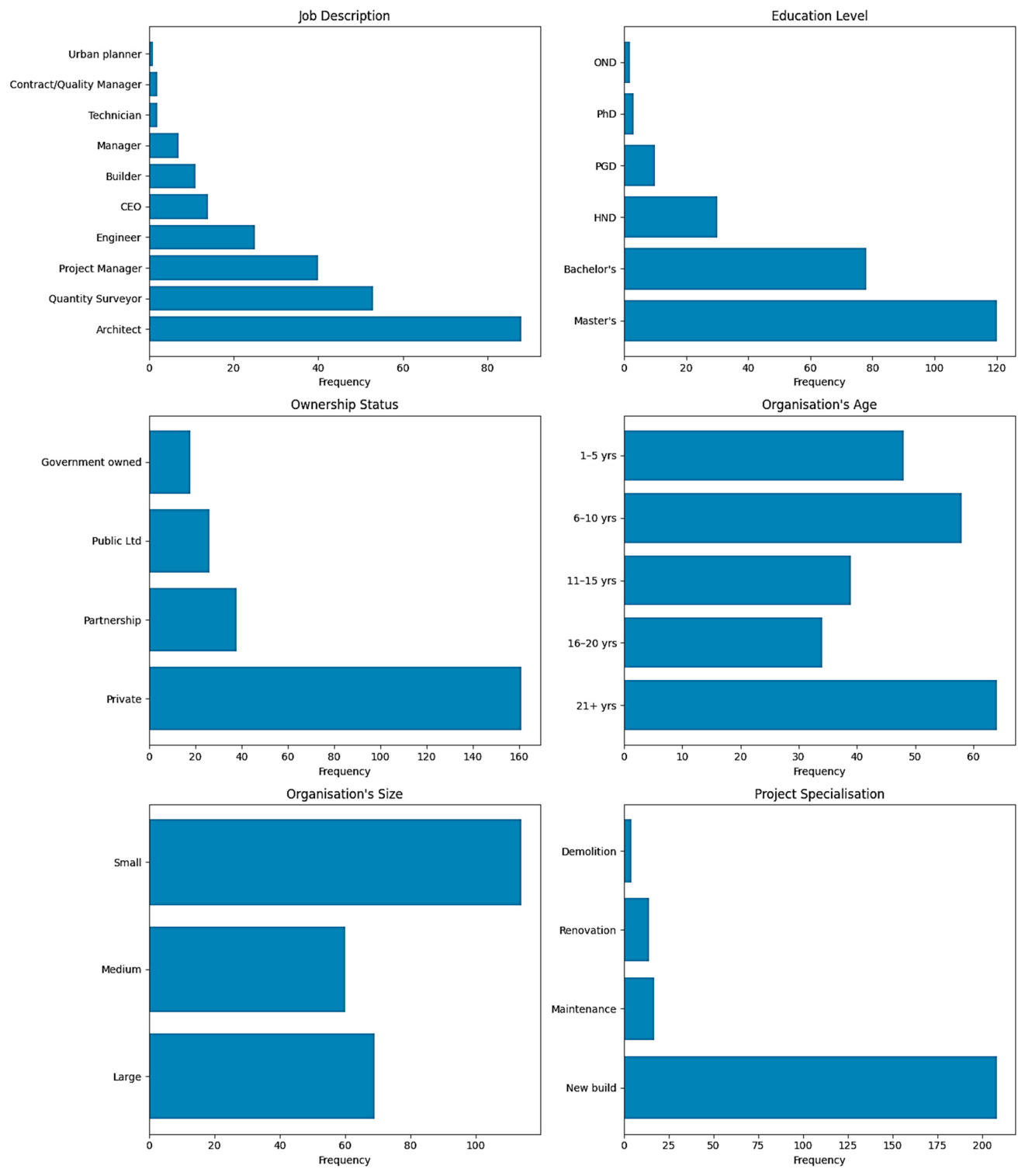
Figure 1 shows respondent demographics (job title and education level) and company characteristics (ownership, age, size, and specialisation). The high level of education and experience among respondents contributes to the potential reliability and credibility of the data collected for this study.

3.1. Construction Professionals’ Awareness of Material Waste on Projects (Objective 1)

The respondents’ awareness of the consequences of material waste is presented in Table 2. Using a five-point Likert scale from “strongly disagree” to “strongly agree,” respondents rated their agreement with statements describing various levels of awareness. As shown in Table 2, respondents exhibit a high level of awareness of the negative consequences of construction material waste. Specifically, 28.4% of respondents strongly agreed that ‘construction waste is harmful to human health and the environment,’ while only 2.5% disagreed. Surprisingly, 19.8% of respondents strongly agreed that ‘material waste is avoidable,’ 28.4% disagreed, highlighting a potential gap in perceived waste management practices. Additionally, 47.7% of respondents agreed, while 37.9% strongly agreed with the statement ‘construction waste recycling rate is low,’ supporting the notion of a low construction waste recycling rate in Nigeria.
The respondents’ awareness that ‘organised construction waste sorting will increase the reuse of materials’ had the highest RII value of 0.868, ranking first, while their awareness of ‘material waste is avoidable’ (RII = 0.657) ranked last.

3.2. Construction Professionals’ Attitudes to Material Waste Minimisation (Objective 2)

The attitudes of respondents towards minimising material waste were gauged based on their response to a series of statements. Their responses were graded on a five-point Likert scale, from “strongly disagree” to “strongly agree.” The data presented in Table 2 shows that respondents exhibited positive attitudes towards waste reduction strategies. According to the results, 25.1% of respondents strongly agreed that changing existing operational procedures was difficult, a higher proportion (38.3%) disagreed, suggesting an overall willingness to adapt. Likewise, 40.3% of respondents expressed disagreement regarding the significance of waste costs on the project, while 11.9% agreed. About 60.1% of respondents demonstrated a positive attitude towards minimising material waste by actively engaging with their construction team. In line with the positive attitude observed, over half of the respondents (61.3%) also communicated the potential for waste minimisation to their clients.
The RII analysis was used to rank respondents’ attitudes towards reducing material waste. The statement “I believe the cost of construction waste has little effect on the project” received the lowest rating (RII = 0.407), while the statement “I see construction waste minimisation as important as other functions of construction management” received the highest rating (RII = 0.864). These findings should be interpreted as descriptive evidence of respondents’ attitudes toward waste minimisation rather than as proof of predictive influence on behaviour.

3.3. Construction Professionals’ Perceptions of Material Waste (Objective 3)

Construction professionals’ perceptions of material waste were explored further through a series of statements presented in Table 2. The data show that 36.6% of respondents expressed concordance with the statement “value of recycled or reused construction materials is minimal,” while 30% disagreed. An interesting insight from Table 2 is the disparity in perceptions regarding waste as an inherent aspect of construction. Over half (54.3%) of respondents agreed with the statement that “waste is an inevitable by-product of construction projects,” but a small proportion (7.8%) disagreed. This finding suggests a potential need for educational interventions to address misconceptions about waste minimisation practices. Conversely, a strong majority (51.0%) of those polled endorsed the view that “waste generation is often the result of poor planning and management,” with a small minority (3.7%) disagreeing. This alignment with the best practices suggests that many respondents recognise the importance of proper planning for waste reduction. Based on the RII results, respondents ranked the statement “through waste management, construction site employees can contribute significantly to protecting the environment” as the most important (RII = 0.845). This demonstrates a clear comprehension of how effective waste management practices on construction sites can positively impact the environment. On the other hand, the statement that “the benefits of recycling construction waste are not worth the time required to sort waste materials for recycling” received the lowest RII score (0.488). This suggests that while the importance of waste management is recognised, some aspects, like recycling, may require further education or improved infrastructure for implementation.

3.3.1. Hypothesis Testing—Company Characteristics and Construction Professionals’ Attitudes, Perceptions, and Awareness

To assess the variations in awareness, perceptions, and attitudes of construction professionals towards waste minimisation, the Kruskal–Wallis H test (K–W test) was conducted. This was done to determine whether there were statistically significant differences in professionals’ perceptions, awareness, attitudes, and organisational characteristics (i.e., the company for which they work). The subsequent sections outline the results from testing the null hypotheses.

3.3.2. Company Size and Construction Professionals’ Awareness

Null Hypothesis H1: 
There is no statistically significant difference in the professionals’ awareness of material waste based on the company’s size.
As revealed by the K–W test, there is no statistically significant difference in the awareness of material waste among the construction professionals across varying company sizes, χ2 (2) = 1.848, p = 0.397. The mean rank for small, medium, and large-scale companies was 128.48, 119.40, and 116.16, respectively. This suggests that the awareness of material waste is comparable across company sizes within the sampled population.

3.3.3. Company Ownership Status and Construction Professionals’ Awareness

Null Hypothesis H2: 
There is no significant difference in the professionals’ awareness of material waste based on the company’s ownership status.
The K–W test found no significant effect of company ownership structure on the construction professionals’ awareness of material waste (χ2 (3) = 6.282, p = 0.099). The mean rank scores for government-owned, partnership, public-limited, and privately owned companies were 100.04, 134.64, 106.05, and 127.90, respectively. While there appears to be some variation in the mean ranks, the p-value exceeding 0.05 suggests this difference is not statistically significant. However, awareness of material waste is similar across these different ownership types.

3.3.4. The Company’s Main Construction Activity and Construction Professionals’ Awareness

Null Hypothesis H3: 
There is no significant difference in the professionals’ awareness of material waste based on the company’s main construction activity.
Employing the K–W test, no significant difference was detected in the construction professionals’ awareness of material waste across various company activities (χ2 (3) = 5.942, p = 0.114). The mean ranks for new build, renovation, maintenance/repair, and construction/deconstruction activities were 119.72, 130.75, 154.09, and 73.63, respectively. This suggests that awareness of material waste is similar among professionals regardless of their company’s primary construction focus.

3.3.5. Company Size and Construction Professionals’ Attitude

Null Hypothesis H4: 
There is no statistically significant difference in the professionals’ attitudes to material waste based on the company’s size.
Consistent with the findings on awareness, a K–W test established no significant difference in attitudes towards material waste minimisation practices based on company size (χ2 (2) = 2.247, p = 0.325). The mean rank for small, medium, and large-sized companies was 129.06, 116.72, and 114.93, respectively. This suggests that company size does not appear to be a major factor influencing professionals’ attitudes towards waste minimisation.

3.3.6. Company Ownership Status and Construction Professionals’ Attitude

Null Hypothesis H5: 
There is no significant difference in the professionals’ attitudes to material waste based on the company’s ownership status.
Statistical analysis using the K–W test indicated no significant difference in attitudes towards material waste minimisation practices among the construction professionals with varying ownership structures (χ2 (3) = 6.101, p = 0.107). The mean rank scores for government-owned, partnership, public-limited, and privately owned were 147.61, 111.62, 100.58, and 125.05, respectively. Therefore, the construction professionals’ attitudes towards waste minimisation are comparable across these different ownership types.

3.3.7. The Company’s Main Construction Activity and Construction Professionals’ Attitude

Null Hypothesis H6: 
There is no significant difference in the professionals’ attitudes to material waste based on the company’s main construction activity.
A K–W test substantiated no significant variation in the professionals’ attitudes towards material waste minimisation practices based on their company’s primary construction activity (χ2 (3) = 1.591, p = 0.661). The mean rank for new build, renovation, maintenance/repair, and demolition/deconstruction activities was 124.23, 107.39, 111.76, and 100.50, respectively. This finding suggests that regardless of the type of construction project professionals are typically involved in, their attitudes towards waste minimisation appear to be similar.

3.3.8. Company Size and Construction Professionals’ Perception

Null Hypothesis H7: 
There is no statistically significant difference in the professionals’ perception of material waste based on the company’s size.
Analysis with the K–W test did not detect a significant difference in varying company size and the construction professionals’ perceptions of material waste (χ2 (2) = 4.801, p = 0.091). The mean ranks for small, medium, and large-sized companies were 132.18, 109.90, and 115.70, respectively. This suggests that perceptions of material waste are comparable across various company sizes.

3.3.9. Company Ownership Status and Construction Professionals’ Perceptions

Null Hypothesis H8: 
There is no significant difference in the professionals’ perceptions of material waste based on the company’s ownership status.
The K–W test confirmed no significant difference in perceptions of material waste among the construction professionals from companies with varying ownership structures (χ2 (3) = 2.082, p = 0.556). The mean rank scores for government-owned, partnership, public-limited, and privately owned companies were 114.85, 102.78, 120.75, and 125.60, respectively. This suggests that the perceptions of material waste are comparable across these different ownership types.

3.3.10. Company’s Main Construction Activity and Construction Professionals’ Perceptions

Null Hypothesis H9: 
There is no significant difference in the professionals’ perceptions of material waste based on the company’s main construction activity.
A K–W test supported no significant differences in the perceptions of material waste based on a company’s primary construction activity (χ2 (3) = 3.651, p = 0.302). The mean rank for new build, renovation, maintenance/repair, and demolition/deconstruction activities was 121.65, 107.61, 146.29, and 87.38, respectively. This suggests that regardless of the project type, the construction professionals’ perceptions of material waste are similar within the sampled population.

3.4. Associations Among Awareness, Attitudes, and Perceptions (Objective 4)

The analysis of relationships among the study constructs followed a three-step procedure. First, the questionnaire structure and internal consistency were established through expert review, pilot testing, exploratory factor analysis, and Cronbach’s alpha reliability assessment. Second, construct-level responses were summarised descriptively to identify the relative prominence of the awareness, attitude, and perception items. Third, Spearman’s rank correlation was used to examine the direction and strength of associations among awareness, attitudes, and perceptions. Because the study was designed as an exploratory behavioural survey and did not operationalise the full TPB structure, the results are interpreted as associations rather than as a structural equation model or causal pathway test.
H10: 
Perceptions are positively associated with awareness of material waste.
Spearman’s rank correlation analysis was conducted to examine the association between the construction professionals’ perceptions of waste minimisation and their awareness of material waste (Table 3). The analysis substantiated a weak positive correlation (r = 0.049), suggesting that higher awareness was accompanied by only a slight tendency toward more favourable perceptions. However, this association was not statistically significant (p = 0.452), indicating that awareness and perception were not meaningfully associated in this sample.
H11: 
Attitudes are positively associated with awareness of material waste.
Spearman’s rank correlation was also used to assess the association between construction professionals’ attitudes toward waste minimisation and their awareness of material waste (Table 3). The analysis demonstrated a weak positive correlation (r = 0.113), indicating a slight tendency for respondents with higher awareness to report more positive attitudes. However, the association was not statistically significant (p = 0.079), suggesting that awareness was not a statistically significant correlation of attitudes in this sample.
H12: 
Perceptions are positively associated with attitudes toward waste minimisation.
A further Spearman’s rank correlation analysis was conducted to examine the association between the construction professionals’ perceptions of waste minimisation and their attitudes toward waste minimisation (Table 3). The results established a statistically significant positive correlation (r = 0.204, p ≤ 0.001). Although statistically significant, this coefficient indicates a small association rather than a strong substantive relationship. This suggests that respondents with more favourable attitudes toward waste minimisation also tended to report somewhat more positive perceptions of waste minimisation practices.
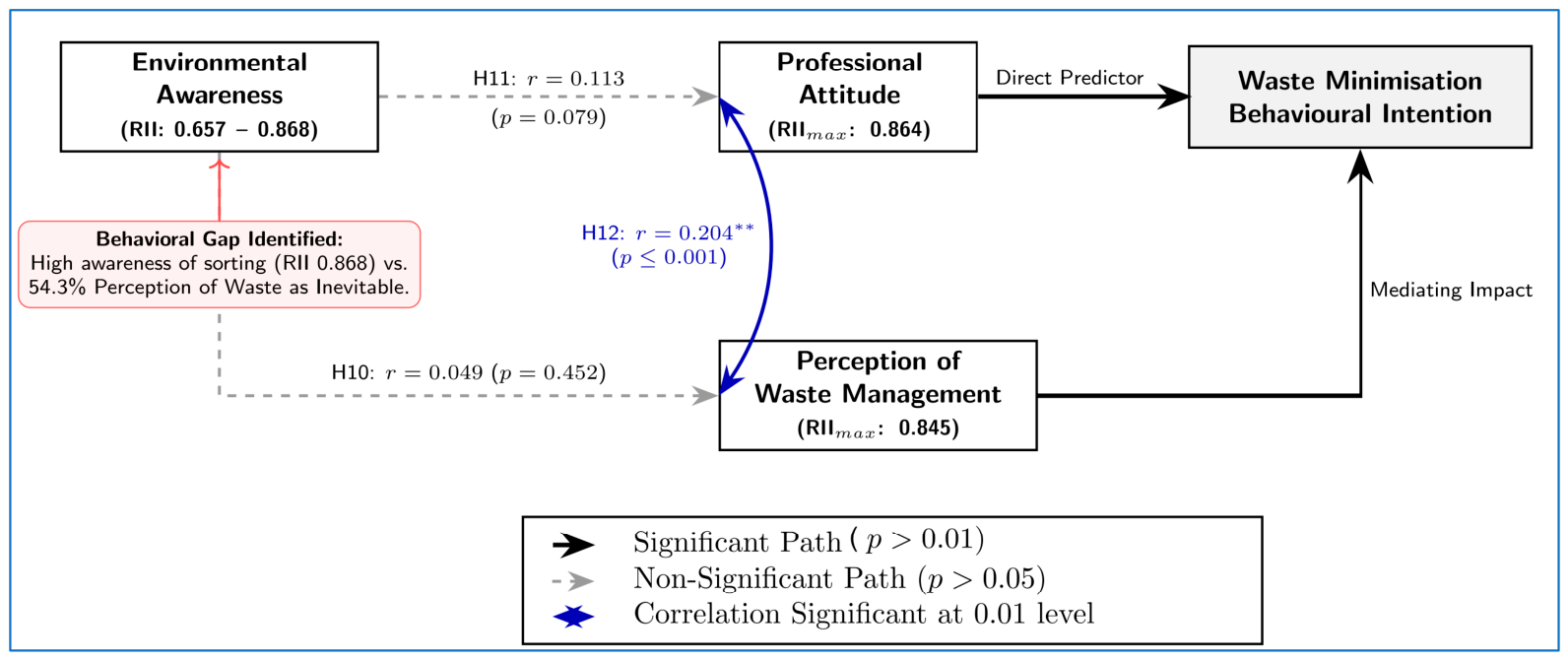
Figure 2 summarises the conceptual association framework used to interpret the observed relationships among awareness, attitudes, and perceptions. Awareness alone does not significantly correlate with the professional attitudes (p = 0.079); instead, a significant positive association exists between positive attitudes and favourable perceptions of waste minimisation (r = 0.204, p ≤ 0.001), showing that while awareness of waste reduction was high, awareness alone was not significantly associated with attitudes, whereas attitudes and perceptions showed a statistically significant but weak positive association. This pattern is aligned with TPB theoretical expectations regarding the importance of evaluative orientations, although the present study does not test the full TPB model.
Taken together, the correlation results indicate that the three constructs are not equally related. Awareness showed no statistically significant association with either attitudes or perceptions, whereas attitudes and perceptions exhibited a statistically significant but small positive association. These findings suggest that awareness alone may be insufficient to shape more favourable orientations toward waste minimisation and that the relationship between professionals’ attitudes and perceptions is more relevant, although still modest in magnitude.

4. Discussion

4.1. Awareness of Material Waste Effects (Objective 1)

The data indicates a disparity in the construction professionals’ awareness of material waste management practices (see Table 4). While participants demonstrated a strong understanding of the benefits of organised waste sorting for the reuse of materials, they also recognised that construction waste recycling remains underdeveloped in Nigeria. This finding is consistent with earlier studies that point to limited recycling infrastructure, weak material recovery systems, and continued dependence on suboptimal disposal practices within the Nigerian construction sector. Professional awareness was unrelated to company characteristics such as ownership status, primary construction activity, and size. This suggests that these factors may not be the most effective targets for interventions aimed at increasing the awareness of construction professionals.
It is important to acknowledge that awareness alone may not guarantee behavioural changes. While it is a crucial first step, additional efforts may be necessary to translate this awareness into waste minimisation practices within construction projects. Studies across various regions and industries highlight the link between limited awareness and inefficient waste management practices [40,41]. This knowledge gap can significantly hinder waste minimisation efforts, potentially leading to increased waste generation as documented by Luangcharoenrat et al. [42] and Rondinel-Oviedo [43].
Despite the need for improved construction waste recycling rates, the results indicate that construction professionals are willing to adopt waste reduction strategies. This implies that professionals can leverage their high level of awareness and integrate it throughout various project phases. This could involve implementing dynamic design processes that minimise waste generation, promoting interactive communication to ensure clear material specifications, and fostering knowledge sharing (knowledge brokering) across disciplines. Also, a critical step is the integration of multidisciplinary approaches throughout the project lifecycle. For example, by fostering collaboration between architects, engineers, and waste management specialists, construction projects can benefit from a holistic perspective that prioritises waste minimisation from the outset. Similarly, equipping construction professionals and companies with the necessary competencies and knowledge is critical to implementing sustainable practices. Training programmes offered by the industry, professional bodies, and organisations play a crucial role in this regard [44]. By participating in seminars, workshops, and training initiatives, professionals can gain a more profound understanding of the environmental impacts associated with construction waste. This enhanced awareness can then be translated into practical strategies for waste minimisation throughout the building process. In addition, policymakers and stakeholders should prioritise the development and widespread adoption of effective waste management practices. In conclusion, the data shows that construction professionals are highly aware of the negative impacts of waste. However, the extent to which this awareness translates to positive attitudes and behaviours towards waste minimisation remains unclear.

4.2. Attitudinal Perspectives on Material Waste Minimisation (Objective 2)

The data shown in Table 5 demonstrates the positive attitudes toward material waste among construction professionals. They appear to value construction waste reduction as equally critical as other activities in managing projects, and they work in collaboration within teams to avoid waste generation. Furthermore, company characteristics such as size, ownership structure, and primary construction activity did not appear to significantly influence these positive attitudes. These findings suggest a potential industry-wide recognition of the importance of waste minimisation, regardless of specific company profiles. The data highlighted an overall positive stance towards material waste minimisation.
Chang et al. [45] reported positive environmental attitudes among large Chinese construction firms, although not necessarily translating into strong prioritisation. Further investigation is needed to explore the factors that hinder the translation of positive attitudes towards waste minimisation into consistent waste reduction behaviours within construction projects. Osmani et al. [23], however, identified a potential disconnect in other contexts, highlighting the negative attitudes towards waste reduction among architects who may underestimate the design phase’s influence on material use. In contrast to Osmani et al. [23], this study suggests that Nigerian construction professionals are receptive to adopting practices that reduce material waste. This highlights the potential for industry-specific cultural and practical factors to influence attitudes towards sustainable practices. In addition, the study’s findings indicate that professionals should experiment with new waste minimisation methods or techniques. As highlighted by previous studies [46,47,48], maintaining positive attitudes towards waste reduction throughout a project’s lifecycle is crucial for successful implementation. All stakeholders, including operators, must embrace shared responsibility and proactively seek solutions to minimise waste generation.

4.3. Implications of Construction Professionals’ Perceptions of Material Waste (Objective 3)

The data, as shown in Table 6, identifies a spectrum of perceptions regarding waste reduction among construction professionals. While some professionals identified environmental benefits and proper planning and management as motivators for waste minimisation, others expressed a sense of inevitability concerning waste and questioned the time investment required for waste sorting relative to the perceived benefits of recycling. These findings highlight the coexistence of favourable and adverse perceptions of waste reduction within the industry. Furthermore, the analysis did not identify any significant correlations between the company’s characteristics (primary construction activity, ownership status, and size) and waste reduction perceptions.
Positive perceptions of waste minimisation can help with efforts to redirect waste from landfills and reduce pollution. Negative perceptions, on the other hand, may indicate a lack of concern for waste minimisation. Previous research suggests a variation in construction professionals’ attitudes towards green building practices such as construction waste management [20,49,50]. Furthermore, Zuo et al. [51], Siregar and Kustiani [52], and Kabirifar et al. [53] highlight that positive environmental attitudes are prevalent within the industry but differ and are not always consistently translated into action. Construction professionals’ perceptions of waste reduction might stem from, or be reinforced by, their broader environmental concerns, including positive attitudes toward waste [54]. This suggests a potential link between environmental consciousness and waste minimisation decision-making within the industry.
Professionals can benefit from initiatives that challenge preconceived notions about waste and promote philosophies like “zero waste” and “waste as a resource.” Furthermore, integrating technological advancements, such as waste management applications/software, can provide valuable tools for waste minimisation. In lieu of this, construction firms can foster a culture of environmental responsibility by making positive contributions to waste minimisation and pollution reduction through the hiring of environmentally conscious employees. The data indicates that while construction professionals recognise the environmental benefits of waste management, a significant number perceive practical obstacles to implementation. Specifically, the low RII score for the benefits of recycling (0.488) suggests that the time required for sorting may outweigh the perceived gains. This perception is likely reinforced by external factors not explicitly measured in the survey, such as Nigeria’s underdeveloped recycling infrastructure and a persistent reliance on suboptimal disposal practices. Without accessible recycling facilities or robust government enforcement in Lagos, even professionals with positive attitudes may find the operational burden of waste minimisation prohibitive.
An important tension emerging from the findings is that respondents reported relatively high awareness of the environmental and operational consequences of construction waste, yet many still perceived waste as an inevitable by-product of project delivery and expressed reservations about the value of recycled or reused materials. This apparent contradiction suggests that awareness alone may be insufficient to shift perceptions where broader structural and market conditions remain unfavourable. In the Lagos context, such perceptions may be reinforced by weak recycling infrastructure, limited reuse standards, procurement norms that favour new materials, uncertainty about the quality of recycled products, and the practical time and coordination demands associated with sorting and recovery. Accordingly, the persistence of the “waste inevitability” perception should be understood not simply as an individual attitudinal issue but also as a reflection of the institutional and operational environment within which construction professionals work.
A notable practical implication of the findings is the potential role of digital tools; specifically, artificial intelligence (AI)-enabled monitoring can help in bridging the gap between awareness and actual waste minimisation practice. From a smart-construction perspective, digital twin-enabled workflows can further bridge the gap between awareness and actual practice by linking BIM-based quantities with real-time material deliveries, on-site usage, and waste generation, while AI algorithms continuously monitor these data streams to identify deviations, predict waste-prone activities, and flag emerging risks. For example, AI-driven anomaly detection and computer-vision-supported site observation (e.g., tracking material handling, storage conditions, and disposal events) can detect anomalies, such as abnormal offcut rates or unplanned disposal, and generate timely alerts and recommendations for corrective action, including material reallocation, procurement adjustments, and improved sequencing or storage practices. By converting the awareness of waste impacts into credible, near-real-time evidence, AI feedback can strengthen professionals’ perceptions of feasibility and usefulness and reinforce positive attitudes towards prevention, thereby increasing the likelihood that waste minimisation intentions translate into consistent on-site behaviour. In the Nigerian context, however, the effectiveness of such tools depends on enabling conditions such as digital capability, implementation cost, data quality, organisational readiness, and supporting waste management infrastructure.

4.4. Interconnection Between Awareness, Perceptions and Attitude (Objective 4)

The statistical analysis confirmed a statistically significant but weak positive association between construction professionals’ perceptions of waste minimisation and their attitudes toward it (r = 0.204, p ≤ 0.001). This pattern is consistent with the TPB assumptions that evaluative orientations matter for behavioural intention; however, it should not be interpreted as a direct confirmation of the theory, since the study did not model the full TPB structure or test causal pathways. This is consistent with Ajzen’s TPB, which suggests that an individual’s behaviour and decisions are determined by a relationship between their perception and attitude [29]. Regarding waste minimisation, this implies that professionals who perceive waste reduction strategies favourably are more likely to develop positive attitudes towards implementing them. These positive attitudes can then translate into pro-environmental behaviours and effective waste minimisation decisions on construction projects.
In line with this finding, there is a link between the construction professionals’ perception of waste as an inevitable byproduct and their negative attitude towards minimising it. Although perceptions influence attitudes, it is plausible to infer that a limited perception of the value of recycled or reused construction materials may contribute to lower motivation for their use. This finding is consistent with Ajzen’s TPB, which highlights the influence of perception on attitude formation [29]. The findings also echo Spear’s [55] observation that behavioural decisions are often influenced by attitudes. Furthermore, they corroborate the results of Yin et al. [28], which indicate that awareness alone may not guarantee corresponding actions. This study offers a nuanced perspective by indicating a positive correlation between perception and attitudes towards waste minimisation, potentially enhancing the overall understanding of the factors influencing pro-environmental behaviours compared to Herremans and Allwright’s [56] findings, which suggest a more direct link between attitudes and awareness and environmental management actions and performance. These variations highlight the importance of ongoing research to account for potential evolving knowledge, technological advancements, and industry-specific contexts that can influence construction professionals’ waste minimisation behaviours.
Although the relationship between attitudes and perceptions reached statistical significance, the coefficient was small in magnitude (r = 0.204), indicating only a weak association. Accordingly, the results should be interpreted with caution and should not be taken as evidence of strong behavioural influence, prediction, or causality. Rather, the findings only suggest that more favourable attitudes and more positive perceptions tend to coexist within the sample to a limited extent. In practical terms, this modest association indicates that improving one cognitive dimension alone may be insufficient to produce meaningful changes in waste minimisation practices unless broader institutional, operational, and market conditions are also addressed.
The statistically significant relationship identified between attitudes and perceptions should be interpreted cautiously. Although the results indicate a positive association between these constructs, the coefficient is small in magnitude and does not establish causal influence or confirm behavioural change. Given the cross-sectional and self-reported nature of the data, the findings are better understood as evidence of how favourable attitudes and perceptions may coexist, rather than proof that one directly drives the other in practice. Nevertheless, the results suggest that interventions aimed at improving waste minimisation may benefit from addressing how professionals perceive the feasibility, usefulness, and value of waste reduction practices. In this respect, practical directions such as improved professional training, stronger institutional support, clearer reuse standards, and better recycling infrastructure may be relevant areas for policy and industry attention, although these should be regarded as plausible implications rather than direct outcomes tested by the present study.

5. Conclusions

This research examined the cognitive factors, awareness, attitudes, and perceptions associated with construction waste minimisation among professionals in Lagos, Nigeria. The empirical evidence indicates that while there is a high level of general awareness regarding the environmental and operational impacts of material waste, this awareness does not show a statistically significant correlation with professional attitudes in this cohort (p = 0.079). Consequently, the data suggests that providing information alone may be an insufficient driver for behavioural change in the absence of broader structural or psychological interventions. A key finding of this study is the statistically significant positive correlation between professionals’ attitudes toward waste reduction and their perceptions of existing waste management practices (r = 0.204, p ≤0.001). Although the relationship between attitudes and perceptions reached statistical significance, the coefficient was small in magnitude (r = 0.204), indicating only a weak association. Accordingly, the results should be interpreted with caution and should not be taken as evidence of strong behavioural influence, prediction, or causality. Rather, the findings only suggest that more favourable attitudes and more positive perceptions tend to coexist within the sample to a limited extent. In practical terms, this modest association indicates that improving one cognitive dimension alone may be insufficient to produce meaningful changes in waste minimisation practices unless broader institutional, operational, and market conditions are also addressed. The correlational results reinforce this conclusion. Awareness was not significantly associated with either attitudes or perceptions in the present sample, whereas attitudes and perceptions showed a statistically significant but weak positive association. This pattern indicates that waste minimisation is influenced not only by what professionals know but also by how feasible, worthwhile, and operationally realistic they perceive waste reduction measures to be. Even so, the small magnitude of the association means that the result should be interpreted cautiously and not as evidence of a strong explanatory or predictive behavioural pathway. The inferential results should therefore be understood as exploratory evidence of group differences and associations within the sample rather than as a confirmatory causal model.
From a policy perspective, the findings imply that interventions centred only on raising awareness are unlikely to be sufficient. More effective strategies may require a targeted continuation of professional development, clearer guidance on waste reduction practices, stronger institutional support for sorting and reuse, improved recycling infrastructure, and regulatory or market incentives that reduce the practical burden of waste minimisation on project teams. In this respect, the study contributes behavioural evidence that can inform circular construction policy and professional practice in Nigeria and in other developing country contexts that are facing similar waste management constraints.
Several limitations should be acknowledged. The study relied on self-reported data and did not directly observe waste minimisation behaviour on construction sites. The cross-sectional design also limits the causal interpretation, and the modest response rate means that some degree of non-response bias cannot be ruled out. In addition, although the TPB informed the study conceptually, the research did not test the full TPB model. Future research should therefore consider longitudinal, mixed-method, and model-based approaches, including structural equation modelling, to examine how awareness, attitudes, perceptions, organisational conditions, and actual waste minimisation practices interact over time.


Author Contributions

Conceptualisation, O.E.O.; methodology, O.E.O., T.O., E.A. and B.O.A.; formal analysis, O.E.O., T.O., E.A. and B.O.A.; investigation, O.E.O.; resources, O.E.O., T.O. and B.O.A.; data curation, O.E.O.; writing—original draft, O.E.O. and B.O.A.; writing—review and editing, O.E.O., T.O., E.A. and B.O.A.; visualisation, O.E.O. and T.O.; supervision, T.O., E.A. and B.O.A.; project administration, O.E.O. All authors have read and agreed to the published version of the manuscript.

Funding

This research received no external funding.

Institutional Review Board Statement

The study was conducted in accordance with the Declaration of Helsinki and approved by the Ethics Committee of the Human Research Ethics Committee of The University of Newcastle, Australia (protocol code H-2016-0295 and 12 September 2016).

Informed Consent Statement

Informed consent was obtained from all participants involved in the study. At the beginning of the questionnaire, a clear statement clarifying the purpose of the questionnaire was given, and participation in the survey was voluntary. In addition, no personal or identifiable information was collected, and all responses were treated anonymously.

Data Availability Statement

The raw data supporting the conclusions of this article will be made available by the authors on request.

Conflicts of Interest

The authors declare no conflicts of interest.

Abbreviation

BIMBuilding Information Modelling
C&DWConstruction and Demolition Waste
CECircular Economy
CPDContinuing Professional Development
K–W TestKruskal–Wallis H Test
NCINigerian Construction Industry
RIIRelative Importance Index
SMEsSmall and Medium-sized Enterprises
TPBTheory of Planned Behaviour

References

  1. Mostaghimi, K.; Behnamian, J. Waste Minimization towards Waste Management and Cleaner Production Strategies: A Literature Review. Environ. Dev. Sustain. 2022, 25, 12119–12166. [Google Scholar] [CrossRef]
  2. Abdullahi, A.L.; Otasowie, K.; Lee, A.; Awuzie, B.O.; Aigbavboa, C.; Oke, A. Conceptualising an Ethno-Mimetic Model for Effective Buildings’ End-Of-Life Waste Management: A Nigerian Exemplar. Bus. Strategy Dev. 2023, 6, 322–332. [Google Scholar] [CrossRef]
  3. Awuzie, B.O.; Monyane, T.G.; Koker, C.D.; Aigbavboa, C.O. Evaluation of Factors Influencing Environmental Sustainability Performance of Construction Projects in South Africa. Sustain. Clim. Chang. 2021, 14, 122–132. [Google Scholar] [CrossRef]
  4. Minelgaitė, A.; Liobikienė, G. Waste Problem in European Union and Its Influence on Waste Management Behaviours. Sci. Total Environ. 2019, 667, 86–93. [Google Scholar] [CrossRef] [PubMed]
  5. Victar, H.C.; Waidyasekara, A.S. Optimising Construction Waste Management in Sri Lanka through Circular Economy Strategies: A Focus on Construction and Renovation and Use and Operate Stages. Eng. Constr. Archit. Manag. 2024, 32, 4275–4309. [Google Scholar] [CrossRef]
  6. Laovisutthichai, V.; Lu, W.; Bao, Z. Design for Construction Waste Minimization: Guidelines and Practice. Archit. Eng. Des. Manag. 2020, 18, 279–298. [Google Scholar] [CrossRef]
  7. Lingard, H.; Graham, P.; Smithers, G. Employee Perceptions of the Solid Waste Management System Operating in a Large Australian Contracting Organization: Implications for Company Policy Implementation. Constr. Manag. Econ. 2000, 18, 383–393. [Google Scholar] [CrossRef]
  8. Bakshan, A.; Srour, I.; Chehab, G.; El-Fadel, M.; Karaziwan, J. Behavioral Determinants towards Enhancing Construction Waste Management: A Bayesian Network Analysis. Resour. Conserv. Recycl. 2017, 117, 274–284. [Google Scholar] [CrossRef]
  9. Gilli, M.; Nicolli, F.; Farinelli, P. Behavioural Attitudes towards Waste Prevention and Recycling. Ecol. Econ. 2018, 154, 294–305. [Google Scholar] [CrossRef]
  10. Victar, H.C.; Waidyasekara, K.G.A.S. Circular Economy Strategies for Waste Management in Sri Lanka: A Focus on Demolitions and Repurpose and Material Recovery and Production Stages. Waste Manag. Res. 2023, 42, 953–976. [Google Scholar] [CrossRef]
  11. Charef, R.; Morel, J.-C.; Rakhshan, K. Barriers to Implementing the Circular Economy in the Construction Industry: A Critical Review. Sustainability 2021, 13, 12989. [Google Scholar] [CrossRef]
  12. Wuni, I.Y. Mapping the Barriers to Circular Economy Adoption in the Construction Industry: A Systematic Review, Pareto Analysis, and Mitigation Strategy Map. Build. Environ. 2022, 223, 109453. [Google Scholar] [CrossRef]
  13. AlJaber, A.; Martinez-Vazquez, P.; Baniotopoulos, C. Barriers and Enablers to the Adoption of Circular Economy Concept in the Building Sector: A Systematic Literature Review. Buildings 2023, 13, 2778. [Google Scholar] [CrossRef]
  14. Teo, M.M.M.; Loosemore, M. A Theory of Waste Behaviour in the Construction Industry. Constr. Manag. Econ. 2001, 19, 741–751. [Google Scholar] [CrossRef]
  15. Tafesse, S.; Girma, Y.E.; Dessalegn, E. Analysis of the Socio-Economic and Environmental Impacts of Construction Waste and Management Practices. Heliyon 2022, 8, e09169. [Google Scholar] [CrossRef] [PubMed]
  16. Adhikari, S.; Clemens, M.; Dempster, H.; Ekeator, N.L. A Global Skill Partnership in Construction Between Nigeria and Germany. Available online: https://www.cgdev.org/publication/global-skill-partnership-construction-between-nigeria-and-germany (accessed on 17 September 2025).
  17. World Bank. Lagos Diagnostic Study and Pathway for Transformation—A Rapid Multi-Sector Analytical Review of the Mega-City. Available online: https://documents.worldbank.org/en/publication/documents-reports/documentdetail/099062123034023646 (accessed on 22 October 2017).
  18. Odediran, S.J.; Ojo, G.K.; Oladunmoye, F.R.; Bayo-Adegoke, E.A. Exporting Construction Services to West Africa: A Study of Nigerian Firms’ Resources and Capabilities. Front. Built Environ. 2025, 11, 1695401. [Google Scholar] [CrossRef]
  19. Ogunmakinde, O.E. Developing a Circular-Economy-Based Construction Waste Minimisation Framework for Nigeria. Ph.D. Thesis, University of Newcastle, Callaghan, Australia, 2019. [Google Scholar]
  20. Ogunmakinde, O.; Sher, W.; Maund, K. An Assessment of Material Waste Disposal Methods in the Nigerian Construction Industry. Recycling 2019, 4, 13. [Google Scholar] [CrossRef]
  21. Ajayi, S.O.; Oyedele, L.O. Critical Design Factors for Minimising Waste in Construction Projects: A Structural Equation Modelling Approach. Resour. Conserv. Recycl. 2018, 137, 302–313. [Google Scholar] [CrossRef]
  22. Olanrewaju, S.D.; Ogunmakinde, O.E. Waste Minimisation Strategies at the Design Phase: Architects’ Response. Waste Manag. 2020, 118, 323–330. [Google Scholar] [CrossRef]
  23. Osmani, M.; Glass, J.; Price, A. Architect and Contractor Attitudes to Waste Minimisation. Proc. Inst. Civ. Eng.—Waste Resour. Manag. 2006, 159, 65–72. [Google Scholar] [CrossRef]
  24. Liu, Z.; Osmani, M.; Demian, P.; Baldwin, A. A BIM-Aided Construction Waste Minimisation Framework. Autom. Constr. 2015, 59, 1–23. [Google Scholar] [CrossRef]
  25. Quiñones, R.; Llatas, C.; Montes, M.V.; Cortés, I. Quantification of Construction Waste in Early Design Stages Using Bim-Based Tool. Recycling 2022, 7, 63. [Google Scholar] [CrossRef]
  26. Eze, E.C.; Aghimien, D.O.; Aigbavboa, C.O.; Sofolahan, O. Building Information Modelling Adoption for Construction Waste Reduction in the Construction Industry of a Developing Country. Eng. Constr. Archit. Manag. 2022, 31, 2205–2223. [Google Scholar] [CrossRef]
  27. Eze, E.C.; Sofolahan, O.; Uzoma, C.N.; Ameyaw, E.E.; Omoboye, O. Impediments to Building Information Modelling-Enabled Construction Waste Management in Nigeria. Built Environ. Proj. Asset Manag. 2024, 15, 500–517. [Google Scholar] [CrossRef]
  28. Yin, B.C.L.; Laing, R.; Leon, M.; Mabon, L. An Evaluation of Sustainable Construction Perceptions and Practices in Singapore. Sustain. Cities Soc. 2018, 39, 613–620. [Google Scholar] [CrossRef]
  29. Ajzen, I. The Theory of Planned Behavior. Organ. Behav. Hum. Decis. Process. 1991, 50, 179–211. [Google Scholar] [CrossRef]
  30. Zuofa, T.; Ochieng, E.G.; Ode-Ichakpa, I. An Evaluation of Determinants Influencing the Adoption of Circular Economy Principles in Nigerian Construction SMEs. Build. Res. Inf. 2022, 51, 69–84. [Google Scholar] [CrossRef]
  31. Bello, A.O.; Isa, R.B.; Oke, A.E.; Arogundade, S.; Lewis, J.M.O. Circular Economy Implementation in the Construction Industry: An Examination of the Barriers in a Developing Country. Int. J. Build. Pathol. Adapt. 2024, 44, 143–162. [Google Scholar] [CrossRef]
  32. Liu, J.; Gong, E.; Wang, D.; Lai, X.; Zhu, J. Attitudes and Behaviour towards Construction Waste Minimisation: A Comparative Analysis between China and the USA. Environ. Sci. Pollut. Res. 2018, 26, 13681–13690. [Google Scholar] [CrossRef]
  33. Guo, N.; Hao, J.L.; Zheng, C.; Yu, S.; Wu, W. Applying Social Cognitive Theory to the Determinants of Employees’ Pro-Environmental Behaviour towards Renovation Waste Minimization: In Pursuit of a Circular Economy. Waste Biomass Valorization 2022, 13, 3739–3752. [Google Scholar] [CrossRef]
  34. Abolore, A.A. Comparative Study of Environmental Sustainability in Building Construction in Nigeria and Malaysia. J. Emerg. Trends Econ. Manag. Sci. 2012, 3, 951–961. [Google Scholar]
  35. Ajanlekoko, J. Sustainable Housing Development in Nigeria: The Financial and Infrastructural Implication. In Proceedings of the International Conference on Spatial Information for Sustainable Development, Nairobi, Kenya, 5 October 2001; Available online: https://www.fig.net/resources/proceedings/2001/nairobi/ajanlekoko-CMWS1-1.pdf (accessed on 24 October 2017).
  36. Sewalk, S.; Nietfeld, K. Barriers Preventing Women from Enrolling in Construction Management Programs. Int. J. Constr. Educ. Res. 2013, 9, 239–255. [Google Scholar] [CrossRef]
  37. Goh, C.S.; Abdul-Rahman, H. The Identification and Management of Major Risks in the Malaysian Construction Industry. J. Constr. Dev. Ctries. 2013, 18, 19–32. [Google Scholar]
  38. Emuze, F.; Julian Smallwood, J. Collaborative Working in South African Construction: Contractors’ Perspectives. J. Eng. Des. Technol. 2014, 12, 294–306. [Google Scholar] [CrossRef]
  39. Hair, J.F.; Black, W.C.; Babin, B.J.; Anderson, R.E.; Tatham, R.L. Multivariate Data Analysis; Prentice Hall: Saddle River, NJ, USA, 2009. [Google Scholar]
  40. Debnath, B.; Bari, A.B.M.M.; Ali, S.M.; Ahmed, T.; Ali, I.; Kabir, G. Modelling the Barriers to Sustainable Waste Management in the Plastic-Manufacturing Industry: An Emerging Economy Perspective. Sustain. Anal. Model. 2023, 3, 100017. [Google Scholar] [CrossRef]
  41. Salvia, G.; Zimmermann, N.; Willan, C.; Hale, J.; Gitau, H.; Muindi, K.; Gichana, E.; Davies, M. The Wicked Problem of Waste Management: An Attention-Based Analysis of Stakeholder Behaviours. J. Clean. Prod. 2021, 326, 129200. [Google Scholar] [CrossRef]
  42. Luangcharoenrat, C.; Intrachooto, S.; Peansupap, V.; Sutthinarakorn, W. Factors Influencing Construction Waste Generation in Building Construction: Thailand’s Perspective. Sustainability 2019, 11, 3638. [Google Scholar] [CrossRef]
  43. Rondinel-Oviedo, D.R. Construction and Demolition Waste Management in Developing Countries: A Diagnosis from 265 Construction Sites in the Lima Metropolitan Area. Int. J. Constr. Manag. 2021, 23, 371–382. [Google Scholar] [CrossRef]
  44. Shooshtarian, S.; Caldera, S.; Ryley, T.; Maqsood, T.; Zaman, A.; Wong, P.S.P. The Role of Education in the Circular Built Environment: Analysis of Australian Educational Programs Impact on Construction and Demolition Waste Management. In Proceedings of the ASA 2022 Proceedings: Architectural Science and User Experience: How can Design Enhance the Quality of Life, Perth, Australia, 1–2 December 2022; Available online: http://hdl.handle.net/10072/425891 (accessed on 16 December 2025).
  45. Chang, R.-D.; Zuo, J.; Zhao, Z.-Y.; Soebarto, V.; Lu, Y.; Zillante, G.; Gan, X.-L. Sustainability Attitude and Performance of Construction Enterprises: A China Study. J. Clean. Prod. 2018, 172, 1440–1451. [Google Scholar] [CrossRef]
  46. Ababio, B.K.; Lu, W. Barriers and Enablers of Circular Economy in Construction: A Multi-System Perspective towards the Development of a Practical Framework. Constr. Manag. Econ. 2022, 41, 3–21. [Google Scholar] [CrossRef]
  47. Maqbool, R.; Saiba, M.R.; Altuwaim, A.; Rashid, Y.; Ashfaq, S. The Influence of Industrial Attitudes and Behaviours in Adopting Sustainable Construction Practices. Sustain. Dev. 2022, 31, 893–907. [Google Scholar] [CrossRef]
  48. Maqsoom, A.; Umer, M.; Alaloul, W.S.; Salman, A.; Ullah, F.; Ashraf, H.; Musarat, M.A. Adopting Green Behaviors in the Construction Sector: The Role of Behavioral Intention, Motivation, and Environmental Consciousness. Buildings 2023, 13, 1036. [Google Scholar] [CrossRef]
  49. Sichali, M.; Banda, L.J. Awareness, Attitudes and Perception of Green Building Practices and Principles in the Zambian Construction Industry: A Qualitative Descriptive Cross Sectional Study. New Approaches Eng. Res. 2021, 7, 49–58. [Google Scholar] [CrossRef]
  50. Abdelaal, F.; Guo, B. Knowledge, Attitude, and Practice of Green Building Design and Assessment: New Zealand Case. Build. Environ. 2021, 201, 107960. [Google Scholar] [CrossRef]
  51. Zuo, J.; Rameezdeen, R.; Hagger, M.; Zhou, Z.; Ding, Z. Dust Pollution Control on Construction Sites: Awareness and Self-Responsibility of Managers. J. Clean. Prod. 2017, 166, 312–320. [Google Scholar] [CrossRef]
  52. Siregar, A.M.; Kustiani, I. Contractors’ Perception on Construction Waste Management Case Study in the City of Bandar Lampung. IOP Conf. Ser. Earth Environ. Sci. 2019, 245, 012035. [Google Scholar] [CrossRef]
  53. Kabirifar, K.; Mojtahedi, M.; Wang, C.C. A Systematic Review of Construction and Demolition Waste Management in Australia: Current Practices and Challenges. Recycling 2021, 6, 34. [Google Scholar] [CrossRef]
  54. Florez, L.; Castro, D.; Irizarry, J. Measuring Sustainability Perceptions of Construction Materials. Constr. Innov. 2013, 13, 217–234. [Google Scholar] [CrossRef]
  55. Spears, R. Social Influence and Group Identity. Annu. Rev. Psychol. 2021, 72, 367–390. [Google Scholar] [CrossRef]
  56. Herremans, I.; Allwright, D.E. Environmental Management Systems at North American Universities. Int. J. Sustain. High. Educ. 2000, 1, 168–181. [Google Scholar] [CrossRef]
Figure 1. Respondents’ demographics and company characteristics.
Buildings 16 01775 g001
Figure 2. A conceptual association framework among awareness, attitudes, and perceptions. ** correlation is significant at the 0.01 level (2-tailed).
Buildings 16 01775 g002
Table 1. The research objectives and section mapping.
Research QuestionsObjectivesLocation
RQ1. What is the level of awareness among construction professionals regarding the impact of construction waste?To measure the level of awareness of construction professionals regarding the impacts of construction waste on project cost, environmental sustainability, and project efficiency.Section 3.1 and Section 4.1
RQ2. What attitudes toward waste minimisation are reported by construction professionals?To assess construction professionals’ attitudes toward waste minimisation.Section 3.2 and Section 4.2
RQ3. What perceptions of waste minimisation are held by construction professionals?To assess construction professionals’ perceptions of waste minimisation.Section 3.3 and Section 4.3
RQ4. How are awareness, attitudes, and perceptions associated?To examine the associations among awareness, attitudes, and perceptions of waste minimisation among construction professionals.Section 3.4 and Section 4.4
Table 2. The relative importance index of construction professionals’ awareness, attitudes, and perceptions.
CodeAwarenessNASAMAVAHAWRIIRank
AW1An organised construction waste sorting method will increase the reuse of materials54312110910510.8681
AW2Construction waste is harmful to human health and the environment61740111699490.7813
AW3The construction waste recycling rate is low71214116929970.8272
AW4Material waste is avoidable19692680487950.6575
AW5Reusable containers/bags reduce materials packaging waste21338139469280.7794
AttitudesSDDNASAWRIIRank
AT1I actively engage with my construction team to avoid material waste1826146629890.8142
AT2I advise clients where there is potential for waste reduction0928149579830.8093
AT3I believe the cost of construction waste has little effect on the project8798202964890.4075
AT4I find it hard to change existing operational procedures1693656186810.5604
AT5I see construction waste minimisation as important as other functions of construction management241212110410500.8641
PerceptionSDDNASAWRIIRank
P1The benefits of recycling construction waste are not worth the time required to sort waste materials for recycling4496623475930.4885
P2The value of recycled or reused construction materials is minimal2073528997230.5954
P3Through waste management, construction site employees can contribute significantly to protecting the environment1951478110270.8451
P4Waste generation is often the result of poor planning and management142921124549010.7453
P5Waste is an inevitable by-product of construction projects71928132579420.7752
NA = Not aware; SA = Slightly aware; MA = Moderately aware; VA = Very aware; HA = Highly aware; SD = Strongly disagree; D = disagree; N = neutral; A = agree; SA = strongly agree.
Table 3. Spearman’s correlation matrix.
Correlations
AwarenessAttitudePerception
Spearman’s rhoAwarenessCorrelation coefficient1.000
Sig. (2-tailed).
N243
AttitudeCorrelation coefficient0.1131.000
Sig. (2-tailed)0.079.
N243243
PerceptionCorrelation coefficient0.0490.204 **1.000
Sig. (2-tailed)0.4520.001.
N243243243
Correlation Matrix
AwarenessAttitudePerception
Spearman’s rhoAwareness-
Attitude0.113-
Perception0.0490.204 **-
** correlation is significant at the 0.01 level (2-tailed).
Table 4. The analysis of the impact of material wastage.
CodeStatementRIIInterpretation
AW1An organised construction waste sorting method will increase the reuse of materials0.868Very high importance
AW4Waste of material is avoidable0.657Moderate importance
HypothesisVariables Testedχ2 (df)p-Value
H1Awareness vs. company size1.848 (2)0.397
H2Awareness vs. company ownership status6.282 (3)0.099
H3Awareness vs. the company’s main construction activity5.942 (3)0.114
Table 5. The analysis of attitudes toward waste minimisation.
CodeStatementRIIInterpretation
AT5I see construction waste minimisation as important as other functions of construction management0.864Very high importance
AT4I find it hard to change existing work practices0.560Moderate importance
HypothesisVariables Testedχ2 (df)p-Value
H4Attitude vs. company size2.247 (2)0.325
H5Attitude vs. company ownership status6.101 (3)0.107
H6Attitude vs. the company’s main construction activity1.591 (3)0.661
Table 6. The analysis of perceptions on material waste minimisation.
StatementDescriptionRIIInterpretation
P3Through waste management, construction site employees can contribute significantly to protecting the environment0.845Very high importance
P1The benefits of recycling construction waste are not worth the time required to sort waste materials for recycling0.488Low importance
HypothesisVariables Testedχ2 (df)p-Value
H7Perceptions vs. company size4.801 (2)0.091
H8Perceptions vs. company ownership status2.082 (3)0.556
H9Perceptions vs. the company’s main construction activity3.651 (3)0.302
Disclaimer/Publisher’s Note: The statements, opinions and data contained in all publications are solely those of the individual author(s) and contributor(s) and not of MDPI and/or the editor(s). MDPI and/or the editor(s) disclaim responsibility for any injury to people or property resulting from any ideas, methods, instructions or products referred to in the content.