Article

Effects of Acoustic and Visual Environmental Factors on Perceived Street Vitality in Historic Districts: A Case Study of Shangxiahang, Fuzhou


1
FAFU-DAL Joint College, Fujian Agriculture and Forestry University, Fuzhou 350108, China
2
College of Landscape Architecture and Art, Fujian Agriculture and Forestry University, Fuzhou 350002, China
*
Author to whom correspondence should be addressed.
Buildings 2026, 16(9), 1712; https://doi.org/10.3390/buildings16091712
Submission received: 24 March 2026 / Revised: 18 April 2026 / Accepted: 24 April 2026 / Published: 26 April 2026
(This article belongs to the Section Architectural Design, Urban Science, and Real Estate)

Abstract

In historic districts, the audiovisual environment plays an important role in shaping both cultural expression and spatial experience. However, the influence of acoustic and visual environmental factors on perceived street vitality remains insufficiently understood. Taking the Shangxiahang Historic District in Fuzhou as a case study, this paper employs on-site sound pressure level measurements, panoramic visual data collection, questionnaire surveys, principal component analysis, correlation analysis, and multiple regression analysis to systematically examine the effects of acoustic and visual environmental factors on perceived street vitality. The results indicate that traditional cultural sounds and natural sounds have a significant positive impact on perceived street vitality, while construction noise and tour guide’s horn sound exhibit negative effects. Regarding the visual environment, street and alley spaces, traditional architecture, greenery, and the sky are all important factors in promoting perceived street vitality. Further regression analysis reveals that the perception rate of street and alley spaces has the strongest influence, followed by the perception rate of traditional architecture, the perceived frequency of folk activity sounds, preference for greenery, and the perception rate of the sky. These findings demonstrate that perceived street vitality in historic districts does not depend on a single environmental factor but rather arises from synergistic interaction between culturally meaningful acoustic cues and legible spatial forms. These results offer practical implications for multisensory design and vitality-oriented regeneration in historic districts.

1. Introduction

Historic districts embody a city’s historical memory and cultural heritage and constitute important spaces for urban development. Against the backdrop of organic urban renewal, the protection and development of historic districts have become a significant area of research [1]. Revitalization is also a key component of urban renewal and long-term sustainable development. In the context of the contemporary integration of culture and tourism, it also encompasses multiple dimensions—including cultural heritage, economic vitality, and public life—to form a multifaceted development trajectory [2]. Historic districts serve as vital repositories of living cultural heritage [3], safeguarding their authenticity is directly linked to the enduring continuity of the urban fabric and the shaping of a city’s unique cultural identity [4,5]. Simultaneously, as key settings for cultural and tourism consumption, adaptive regeneration can create a mutually reinforcing cycle between conservation and utilisation; the level of a district’s vitality directly reflects the utility of its public spaces and the quality of its living environment [2]. In practice, however, most regeneration projects tend to fall into the trap of prioritising external form over internal experience. The renovation process often focuses excessively on physical alterations—such as the refurbishment of building façades and the reorganisation of street layouts—while neglecting the subjective perceptual needs of residents and visitors [6]. This ultimately results in spaces that, whilst physically restored, lack vitality. Such issues are frequently observed in certain historic districts, where the range of perceptual experiences tends to be limited, failing to adequately cater to the needs of both visitors and residents [4]. A key reason is that vitality is often interpreted through objective indicators such as footfall, while the perceptual and interactive dimensions of street experience remain underexplored. Consequently, this paper adopts a ‘human experience’ perspective to identify the key factors influencing perceptual experiences, thereby providing a foundation for the sustainable enhancement of vitality. Previous research has established that the conservation of historic districts must simultaneously consider context [7], social characteristics [8], and cultural and tourism experiences [9]. Through incremental, authentic-oriented micro-renewal, the dynamic continuity of culture can be achieved [10]. These findings underpin this study’s focus on exploring perceived experiences.
Perceived street vitality serves as a measure of the prosperity of historic districts; academic definitions of this concept typically encompass factors such as pedestrian density, dwell time, activities distribution, and interpersonal interactions. However, objective vitality data and users’ subjective experiences do not always align; the same level of footfall may evoke different perceptions of vitality depending on comfort, attractiveness, and the extent to which the environment invites people to linger. This study focuses on perceived street vitality, a subjective evaluation derived from users’ sensory experiences and a comprehensive perception resulting from the combined effects of the spatial environment, activity scenarios, and interpersonal interactions. Existing research tends to favour objective data whilst neglecting subjective perceptions; this research direction can fill the gap in current studies and align with the current demand to enhance the quality of experience [11]. Existing research predominantly approaches the subject from physical dimensions such as street type [12] and spatial layout [13], discussing factors influencing vitality [14,15] and evaluation models [16]. Xu Han et al. [17] based on a survey of Quanzhou’s West Street, they have preliminarily established a link between soundscape perception and vitality, providing direct reference for this paper’s focus on the subjective perception dimension.
Sound is a key element influencing the perception of the street environment and provides an important perspective for analysing the mechanisms of vitality [18]. Early research focused on controlling noise primarily through sound pressure levels but failed to account for dynamic cultural sound sources in historic districts, such as traditional street hawking and the sounds of handicraft production [19]. In contrast, the definition of soundscape transcends the single metric of sound pressure level, taking into account the composition of sound sources, pleasantness, eventfulness, and cultural appropriateness, and is closely linked to the perception of vitality [19,20]. Natural sounds and sounds from traditional activities can enhance pleasantness and thereby increase the willingness to linger, whilst high-frequency commercial noise has the opposite effect [21]. Sound eventfulness can stimulate exploratory and interactive behaviour [18]. The influence of soundscapes in historic districts is more complex. Liu Jiang et al. [22] found that traditional human sounds in Sanfang Qixiang positively enhanced landscape evaluations, whilst excessive commercial noise had a negative impact; Guo Xuan et al. [23] pointed out that overly loud sounds from visitor activities can mask traditional sound sources, undermining the character of the soundscape; and there are significant differences in soundscape perception across different spaces [9,24], whilst different artificial sounds also influence the perception of soundscapes in historic districts [25]. Existing research has confirmed that soundscapes directly or indirectly influence perceived vitality by affecting comfort, willingness to linger, and interactive behaviour, thereby providing theoretical support for this study [19,20].
The visual characteristics of historic districts are a key driver of their vitality [6]. The visual environment encompasses multiple dimensions, including spatial form (openness and sense of enclosure), the mix of uses along the streetscape, green space coverage, sky factor and historical features; these influence people’s perceptions of a space’s safety, recognisability and appeal, ultimately affecting the vitality of the district [26]. An appropriate sense of enclosure can enhance people’s sense of belonging to the district, whilst diverse building facades and business types can increase the district’s appeal to the public. Areas with a high green view ratio often alleviate visual fatigue and provide pedestrians with spaces to linger and rest [27]. In the case of historic districts, visual elements such as historic buildings and traditional street patterns not only reinforce cultural distinctiveness but also evoke emotional resonance among people, encouraging behaviours such as lingering and interaction, thereby revitalising the dynamic vitality of the district [4,5]. The Green View Index (GVI) and the Sky View Factor (SVF) are two key indicators used to quantify the visual environment of urban street and alley spaces, and are of significant importance in the study of visual landscapes and the perceived street vitality. The Sky View Factor [28] is a key indicator of the openness of urban spaces; it is the proportion of the visible sky relative to the entire hemispheric field of view when observed from a specific point on the ground, accurately reflecting the impact of building layout on lighting and ventilation. The Green View Index refers to the proportion of green vegetation within a person’s field of view, including trees, grasslands and vertical greening [29], and is used to assess greening in urban three-dimensional spaces. Such assessments rely on human visual perception to quantify the visible ranges of green vegetation and the sky, thereby mapping the pathways through which the urban environment influences residents’ perceived vitality and well-being [30,31]. This enables adjustments to urban spatial design to enhance the liveability of the urban environment, optimise its aesthetic appeal, and improve its psychological restorative benefits [32].
Although substantial progress has been made in the study of soundscapes and visual landscapes respectively, with both fields highlighting their significant influence on environmental experience and behaviour [28,33], most research tends to follow a single sensory pathway (either visual or auditory alone), lacking studies that examine the interplay between acoustic and visual environmental elements at specific spatial locations. In particular, there is a lack of a comprehensive assessment of the relative importance of these elements in contributing to the perceived street vitality, as well as their interactions [11,34]. Although research on multisensory interactions is increasing, studies in settings such as historic districts, which possess distinct cultural imagery, complex sound source compositions, and diverse user types, remain insufficient.
In light of these shortcomings, this study takes the Shangxiahang Historic District in Fuzhou as a representative case study. Employing a combined approach of field acoustic measurements, visualisation of visual elements, and public questionnaires, it systematically analyses the soundscape and visual landscape characteristics of the district’s spatial environment and explores their relationship with perceived street vitality. This study aims to address the following three core questions: (1) What is the relationship between acoustic environmental elements and perceived street vitality in the streets of the historic district? (2) What is the relationship between visual environmental elements and the perceived street vitality? (3) When considering soundscapes and visual landscapes together, which key auditory and visual elements provide a stronger explanation for perceived vitality?

2. Materials and Methods

2.1. Research Area

The subject of this study is the Shangxiahang Historic District in Fuzhou (hereinafter, Shangxiahang). Fuzhou itself is an ancient cultural city with a profound heritage spanning over a thousand years, and Shangxiahang was officially included in the National List of Protected Historic Districts in 2023. It is not only a vital hub for Fuzhou’s development through the ‘Maritime Silk Road’, but also a central testament to the gradual growth of the local modern commercial sector, fully embodying Fuzhou’s unique traditional commercial culture and precious maritime trade heritage. Geographically, Shangxiahang is situated in Fuzhou’s Taijiang District. Once the heart of the Fujian merchant community, it still preserves the layout of commercial streets and the architectural style from the Ming and Qing dynasties through to the Republican era. This historic district is centred around Longping Road, Shanghang Road, and Xiahang Road, forming a mixed-use historic quarter focused on cultural experiences and distinctive commercial activities [35]. Within the district, old brick-and-timber residences and traditional Fujian-style houses are interspersed, creating a harmonious blend of architectural elements, including Western-style buildings, arcades, and guild halls, resulting in a unique fusion of Chinese and Western styles. The layout of the internal alleys is artfully staggered, fully showcasing the distinctive charm of Fujian-style streets. With pedestrian traffic as the primary mode of movement, it preserves the human-scale dimensions and commercial atmosphere of traditional streets.
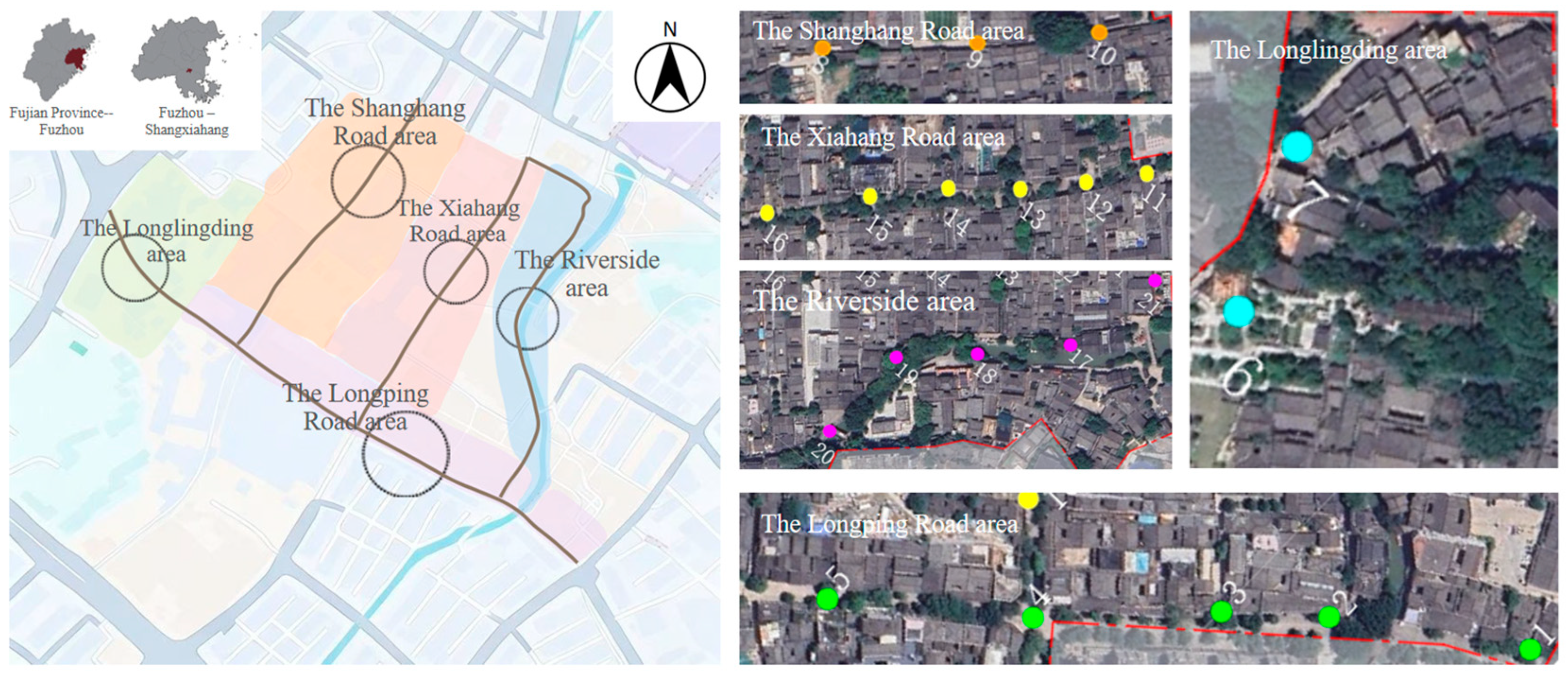
As a representative historic district of Fuzhou, Shangxiahang attracts large numbers of visitors and is rich in distinctive soundscapes and visual elements. With its well-preserved traditional architecture and street layout, it stands as a quintessential example of historic districts in the Fuzhou region and holds significant research value. Based on preliminary on-site surveys of the area, Shangxiahang has been divided into five zones: the Longping Road zone, the Shanghang Road zone, the Xiahang Road zone, the riverside zone, and the Longlingding zone. Twenty-one monitoring points have been established, distributed relatively evenly across these zones (as shown in Figure 1). The Longping Road area, serving as the central axis of Shangxiahang, is its principal commercial street. It possesses the strongest commercial character, experiences the highest daily footfall, and serves as the primary hub for shops and public performances. The Shanghang Road area predominantly features historic buildings from the late Qing and early Republican periods, blending Chinese and Western elements, such as the Caifeng Villa and the former site of the Fuzhou Chamber of Commerce. Footfall here is comparatively lower than in the Longping area, and the atmosphere is quieter. The Xiahang Road area retains the most traditional architectural styles, such as the Luo Family Silk Store (now the Fuzhou Intangible Cultural Heritage Exhibition Hall). A large number of beautiful historic buildings blending Chinese and Western styles are concentrated here; following restoration and renovation, the area has become commercially developed and attracts significant foot traffic. The Riverside area centres on the Sanjie River, with numerous historic buildings lining both banks, such as the Yongde Guild Hall and the Zhang Zhenjun Ancestral Hall. It exudes a strong sense of history whilst retaining a lively, local atmosphere, with many street vendors. The Longlingding area is situated on higher ground and is relatively isolated. The buildings here are predominantly clusters of distinctive hotels and guesthouses, creating a rich historical ambience. However, as many are currently undergoing restoration, foot traffic is currently low.
The definition of sound source types is crucial for the evaluation of soundscape perception, whilst the classification of sound sources has a significant impact on the perceived quality of the soundscape [35]. Based on previous studies [36], the 13 sound sources identified during the field survey were categorised into four classes, as shown in Table 1.

2.2. Data Measurement

A Class I sound level meter (AWA6228) (Hangzhou Aihua Electronic Instruments Co., Ltd., Hangzhou, China) was used on the morning of 7 September 2025 (9:00–12:00), the afternoon (14:30–17:30), and the evening (19:00–22:00). To ensure standardization of the measurement process, on-site measurements at each monitoring station are conducted in accordance with a standardized procedure, and every effort is made to minimize interference with data collection from factors such as temporary obstructions, personnel standing too close to the equipment, and nearby reflective surfaces. Sound pressure level was measured on one clear day using 20-s measurements, with 10 sets taken at each location during each time slot. This study established a total of 21 monitoring points covering five functional zones: Longping Road, Shanghang Road, Xiahang Road, the Riverside area, and Longlingding. Repeated measurements were taken during three typical time periods: morning, afternoon, and evening. This combination of monitoring points and time-segmented sampling effectively captures the acoustic characteristics of different functional zones within the historic district as activity levels fluctuate throughout the day, thereby enhancing the spatial and diurnal representativeness of the data. Concurrently, a tripod was used to secure the camera (Insta360 ONE RS) (Arashi Vision Inc., Guangzhou, China) to capture panoramic photographs at each location, which were used to calculate the Green View Index and the Sky View Factor. To enhance the comparability of image data from different locations, all panoramic photographs were captured using a standardized method under similar weather conditions; images exhibiting significant blurring, severe obstruction, or transient interference were reviewed and, where necessary, re-shot to ensure the validity of subsequent metric calculations.

2.3. Questionnaire Design

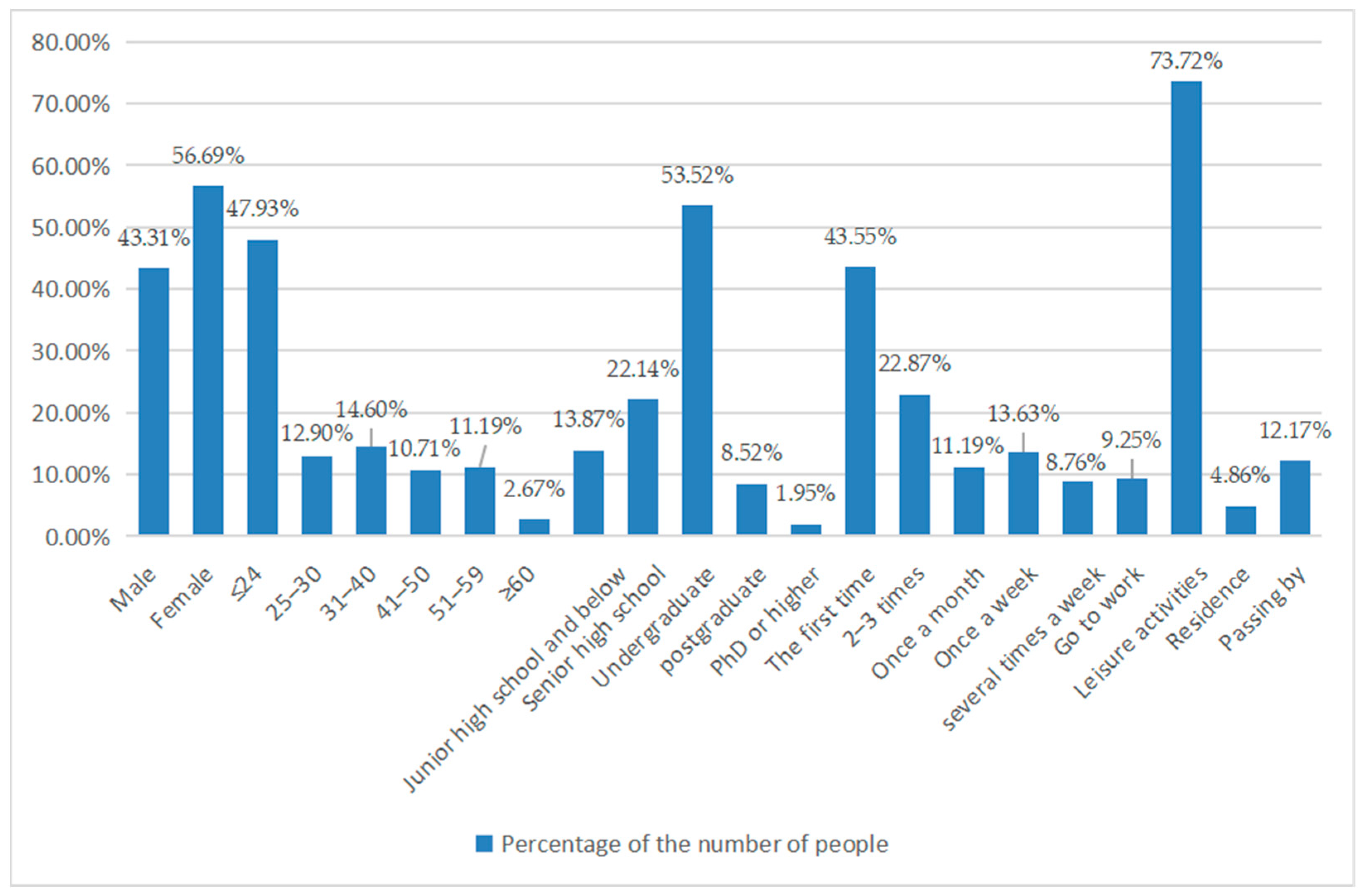
The questionnaire survey was conducted in parallel with the on-site environmental measurements and distributed near the 21 sampling points. The respondents mainly included tourists and residents active in the district. The questionnaires were distributed and collected on site to ensure that responses were based on immediate in situ experience. A total of 411 questionnaires were distributed, of which 402 were valid, yielding an effective response rate of 97.8%. The basic demographic information of the respondents is shown in Figure 2.
Before completing the questionnaire, respondents were given a brief and standardized oral instruction by the investigators. They were informed that the survey aimed to capture their subjective perceptions of the historic district environment and were asked to complete the questionnaire independently based on their immediate on-site experience. The instruction explained the basic response procedure and clarified that the items mainly concerned the soundscape, visual environment, and perceived street vitality. As the questionnaire was based on concise perceptual scales and had been pilot-tested for readability and comprehension, no formal training was provided to respondents; instead, a unified verbal explanation was used to improve response consistency.

2.3.1. Respondent’s Personal Details

The questionnaire comprises four sections: respondent demographics, soundscape perception, visual environmental perception, and perceived street vitality. The demographic section includes gender, age, educational background, purpose of visit, and frequency of visits (Figure 2).

2.3.2. Acoustic Environment Perception

The perception of the acoustic environment comprises two components: soundscape elements and soundscape perception. Each sound source is evaluated across two dimensions: Perceived Occurrences of Individual Sounds (POS) (1—very rare, 5—very frequent) and Preference of Individual Sounds (PFS) (1—very dislike, 5—very like). Furthermore, drawing on previous research, a five-point semantic differential scale was developed using the Semantic Differential Method (SD), which has been widely applied in the field of soundscapes [25,37,38]. Following previous research [39] and field surveys, six pairs of adjectives, monotonous–diverse, liked–disliked, interesting–uninteresting, comfortable–uncomfortable, focused–distracted, and man-made–natural, were selected for the soundscape perception evaluation.

2.3.3. Visual Environmental Perception

Visual environment perception comprises two components: visual elements and the perception of the visual environment. The visual elements section evaluates the five visual landscape elements selected following the survey (sky, water bodies, greenery, street and alley spaces, and traditional architecture) based on two aspects: the Perception Rate of Visual Landscape (PRV) (1—very low, 5—very high) and the Preference of Visual Landscape (PFV) (1—very dislike, 5—very like). For the visual landscape perception component, the semantic differential method was employed to select nine pairs of adjectives (open–obstructed, orderly–chaotic, layered–flat, traditional–modern, authentic–artificial, familiar–unfamiliar, continuous–disjointed, man-made–natural, and rich–monotonous) for the evaluation of visual landscape perception.

2.3.4. Perceived Street Vitality Scale

In the section on the subjective perception scale for street vitality, previous scholars have employed the Semantic Differential Method (SDM) to assess street vitality, utilising pairs of adjectives such as ‘lively–quiet’, ‘shaded–sun-drenched’ and ‘vibrant–dull’ [40,41]. Drawing on relevant research on indicators for evaluating perceived street vitality [42,43] and the distinctive characteristics of Shangxiahang, this study approaches the issue from dimensions such as street space, historical context, and road traffic. By broadly categorising the pairs of adjectives covered by the SD method used by previous researchers, seven indicators of perceived street vitality were identified [17]. Thereby, constructing an evaluation index system for the perceived street vitality in this historic district. This system is used to describe the characteristics of perceived street vitality, including footfall, historicity, walkability, aesthetic appeal, accessibility, functionality, and comfort, and employs a five-point Likert scale (1—very dissatisfied, 5—very satisfied) for evaluation. Furthermore, this scale has undergone a pilot survey among a small group of research subjects, confirming that its readability and ease of completion meet reasonable standards.

2.4. Data Analysis

The questionnaire data were entered into SPSS 27 (27.0.1.0) for statistical analysis. Reliability and validity tests were first conducted to assess the internal consistency and structural suitability of the scales. All sections of the questionnaire passed the reliability test. The Street Perceived Vitality Scale and the principal component analysis scales for soundscape and visual landscape perception had Cronbach’s alpha coefficients greater than 0.7, indicating acceptable reliability. Principal component analysis was then performed on the semantic differential items for soundscape perception and visual landscape perception to extract the main perceptual dimensions. Dimension reduction was also applied to the perceived street vitality indicators to derive the Street Vitality Index (SVI).
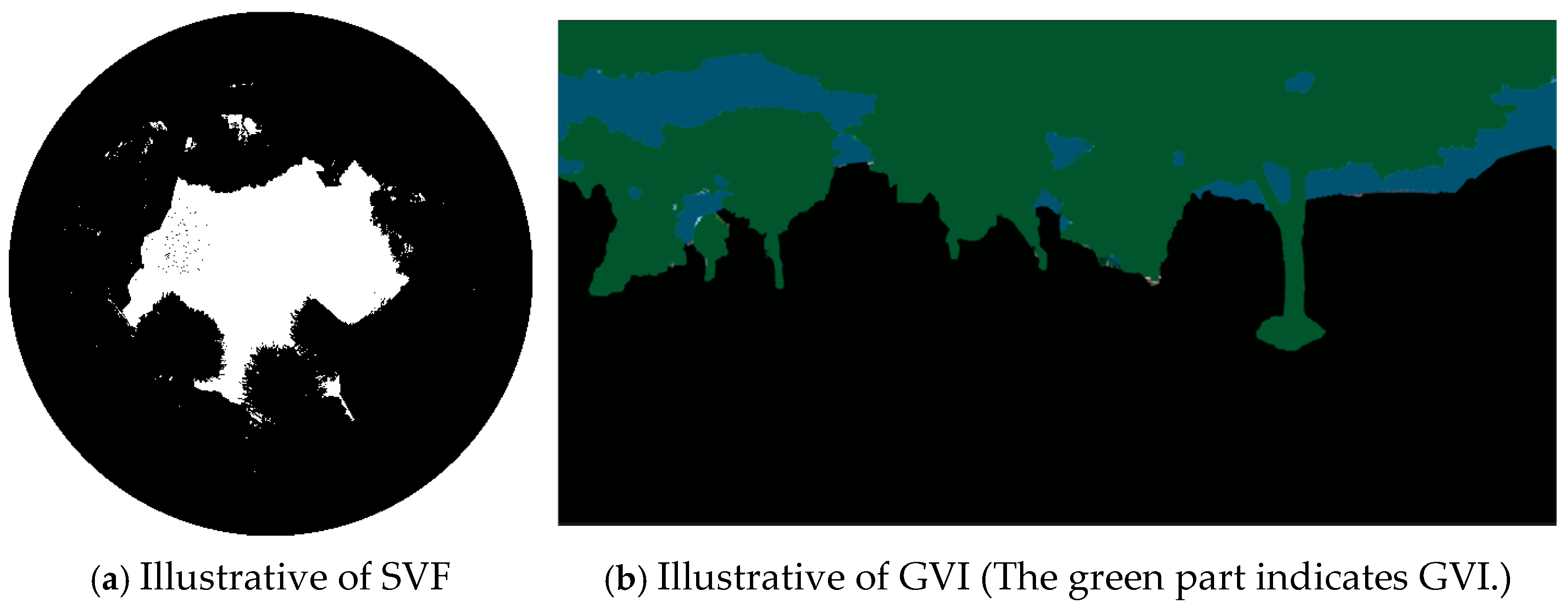
Objective environmental data included sound pressure level measurements and panoramic image data. The sound pressure level data were used to describe the temporal and spatial characteristics of the acoustic environment across the five zones. For image-based analysis, fisheye images were first exported from the panoramic photographs for Sky View Factor (SVF) calculation and analyzed in RayMan Pro (3.1) to characterize the degree of spatial openness. The panoramic photographs were also unwrapped into flat images for manual extraction of the Green View Index (GVI) in Photoshop (22.0.0.35). Visible vegetation elements, including trees, shrubs, lawns, vertical greenery, and potted plants, were included, whereas green signage, vehicles, shade structures, glass reflections, and other non-vegetation green objects were excluded. GVI was calculated as the ratio of the pixel area of vegetated regions to the total image pixel area. To ensure classification consistency, unified interpretation rules were established before formal extraction, and a random subset of images was checked for consistency. In cases of discrepancy, the coding criteria were reviewed and unified before the full dataset was finalized.
Based on the questionnaire-derived variables, including the perceived occurrence and preference of sound sources, the perception rate and preference of visual elements, and the extracted perceptual dimensions, correlation analysis was conducted to examine their relationships with SVI. A multiple stepwise linear regression model was then developed to identify the key audiovisual factors influencing perceived street vitality. The SVF and GVI values were mainly used to describe regional visual-environment characteristics and to support the interpretation of spatial differences in the Results and Discussion sections, rather than being directly entered into the comprehensive regression model. Illustrative results of SVF and GVI are shown in Figure 3.

3. Results

3.1. Visual and Auditory Environmental Characteristics

3.1.1. Acoustic Environment Characteristics

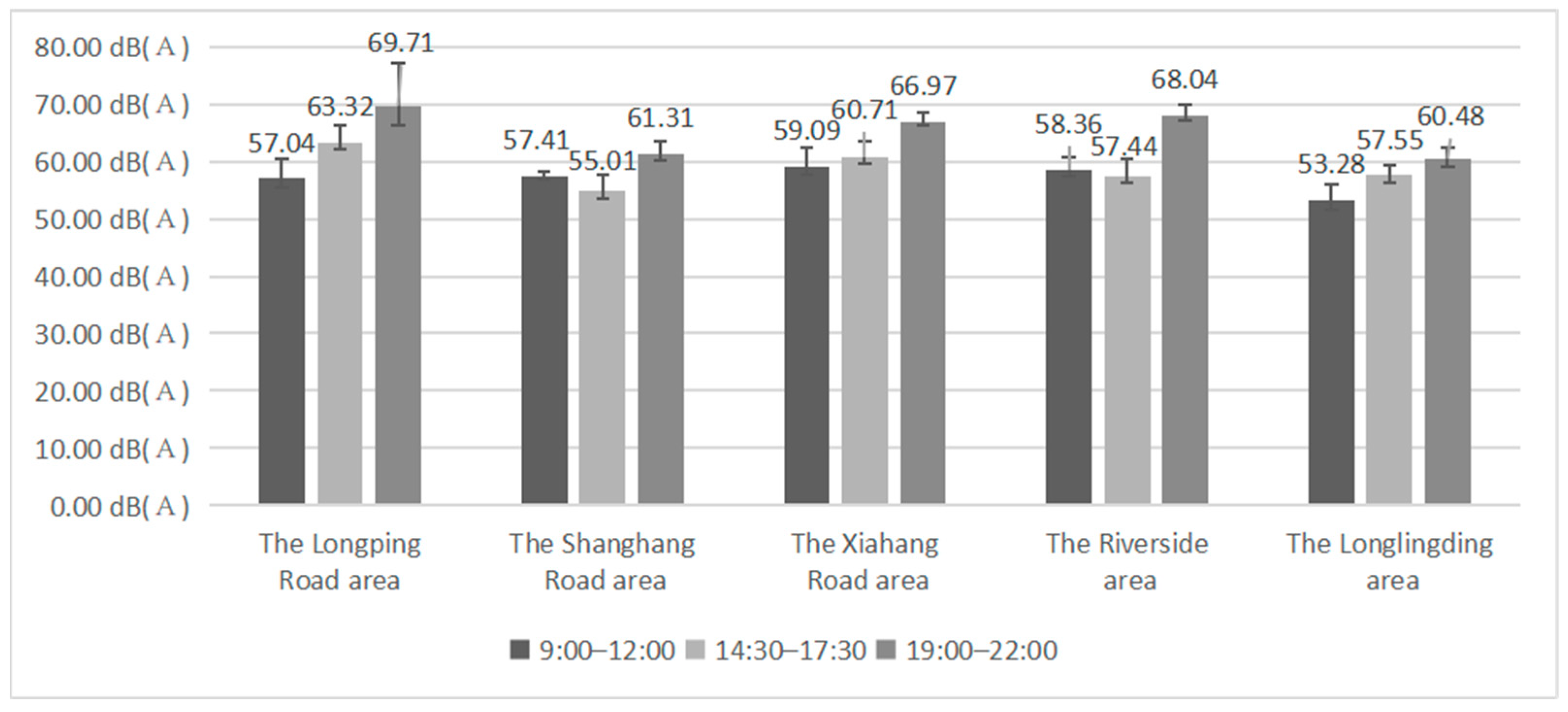
The sound pressure levels in the five areas of Shangxiahang are shown in Figure 4. From a temporal perspective, the average sound pressure levels in each area exhibit a pattern across different time periods: they are relatively low during the day (9:00–17:30), whilst in the evening, particularly after 19:00, they are generally higher than at other times. The standard deviations between time periods are relatively small, indicating that sound pressure levels fluctuate little overall. In terms of spatial distribution, the Longping Road area has higher average sound pressure levels than the other areas during the afternoon and evening periods. The Shanghang Road area has lower overall sound pressure levels than the other four areas. It is worth noting that whilst the sound pressure levels in the Riverside area are not high during the daytime, particularly in the afternoon, when they are only slightly higher than those in the Shanghang Road area, they are second only to those in the Longping Road area during the evening. In terms of standard deviation, the Longping Road area had a significantly higher overall standard deviation than the other areas, reflecting greater fluctuations in sound pressure levels after 19:00.

3.1.2. Sound Source Perception

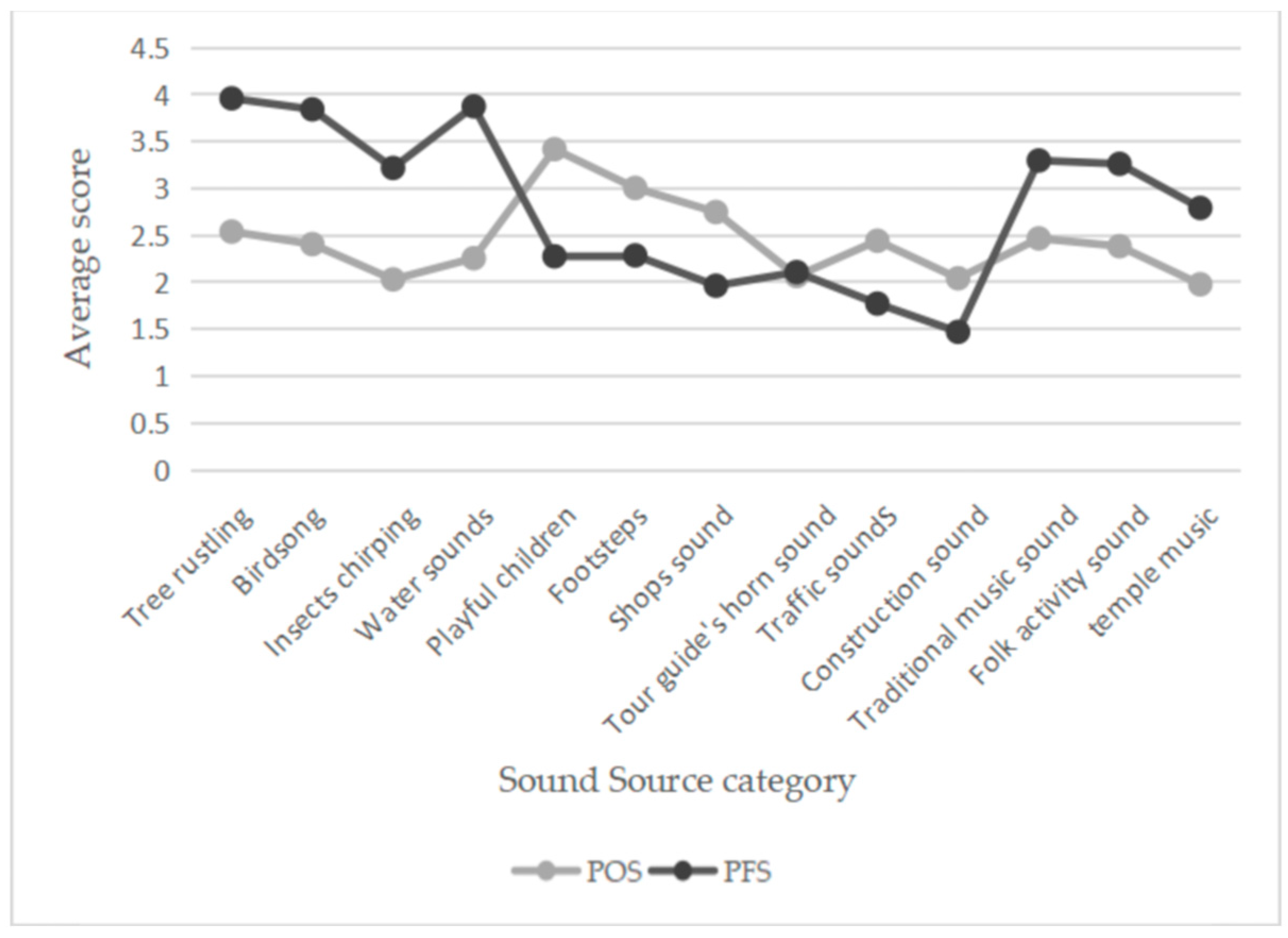
The composition of sound sources can directly reflect the distinctive characteristics of different spaces [24], A line graph showing the mean sound source perception and preference of individual sounds is presented in Figure 5, detailed figures can be found in Appendix B.1. In terms of sound source perception, the highest scores were recorded for the sounds of playful children, footsteps and shop sounds, all exceeding 2.5 points; the lowest scores were for the insects chirping, tour guide’s horn sound and temple music. The highest scores for sound source preference were achieved by Natural Sounds such as the tree rustling, birdsong, and the water sound, all scoring above 3.5 points; it is worth noting that, in addition to natural sounds, traditional cultural sounds such as traditional music, folk activity sounds, and temple music also scored highly, all exceeding 3 points. Construction noise received the lowest score.

3.1.3. The Perception Rate and the Presence of Visual Landscape

The scores for the frequency of perception and preference of visual elements across the five areas are shown in Table 2. Regarding the visual environmental perception, traditional architecture and street and alley spaces were most frequently perceived. It is worth noting that there were marked differences in the perception rate of water bodies and traditional architecture across the various areas. Specifically, the perception rate in the Riverside and Longlingding areas was significantly higher than in other areas. Meanwhile, the proportions of the sky, greenery, and street and alley spaces were similar across all areas. In terms of preference for visual landscape, greenery and traditional architecture received higher preference scores, both exceeding 4 points. Conversely, street and alley spaces received a lower overall preference score. It is worth noting that in the Longping Road area, people’s preference for greenery was significantly higher than for other elements. Preference for traditional architecture was highest in the riverside and Longlingding areas, consistent with the patterns observed in perception frequency.

3.1.4. Features of Sky View Factor and Green View Index

The mean sky view factor and green view index for the five areas are shown in Table 3, detailed values for each monitoring point are provided in Appendix B.2. In terms of sky view factor, the Riverside area recorded the highest value, which directly reflects that this area feels more open, receives ample natural light, and effectively enhances the perceived vibrancy of the street. In contrast, the sky view factor for the Shanghang Road and Longlingding areas is relatively low, which may be attributed to narrow streets or higher building density.
Regarding the green view index, the differences across the study areas are quite pronounced. The green view index in the Xiahang Road and Riverside areas are relatively high, indicating that the overall greening conditions in these areas are favourable, which helps to create a pleasant environment for people to linger in, thereby enhancing the perceived vibrancy of the streets. In contrast, the green view index in the Shanghang Road and Longlingding areas is relatively low.

3.2. Auditory and Visual Perception Characteristics

3.2.1. Principal Components of Soundscape and Visual Landscape Perception

The results of the principal component analysis of perceptions of soundscapes and visual landscapes are presented in Table 4. The five factors explained 84.14% of the total variance, exceeding 50% and indicating a good level of explanatory power [44,45]. Furthermore, they have all passed reliability and validity tests; the KMO coefficient was 0.87, which is above 0.7 and indicates high reliability [45], thus demonstrating their evaluative value.
Factor 1 explains 20.63% of the variance and is associated with ‘open–obstructed’, ‘orderly–chaotic’, ‘layered–flat’, and ‘continuous–disjointed’, reflecting spatial sense at the visual level. Factor 2 explains 18.88% of the variance and comprises “traditional–modern”, “authentic–artificial”, and “familiar–unfamiliar”, primarily reflecting historicity of the area. Factor 3 explains 17.71% of the variance and consists of “liked–disliked”, “interesting–uninteresting”, and “comfortable–uncomfortable”, summarised as soundscape pleasantness. Factor 4 explains 13.86% of the variance and comprises “focused–distracted”, “monotonous–diverse”, and “man-made–natural”, summarised as soundscape eventfulness. Factor 5 explains 13.05% of the variance and consists of “man-made–natural” and “rich–monotonous”, reflecting the area’s visual eventfulness.

3.2.2. The Relationship Between Sound Source Perception and Soundscape Perception

The results of the correlation analysis between perceived occurrences of individual sounds, preferences for individual sounds, and soundscape perception dimensions are presented in Table 5. Preferences for tour guide’s horn sound, temple music, and construction noise significantly influence soundscape pleasantness, indicating that people’s likes and dislikes regarding these sound sources affect overall soundscape pleasantness; among these, tour guide’s horn sound (r = 0.23, p < 0.01) had the greatest influence. It is worth noting that while a positive correlation exists between preferences for tour guide’s horn sound and the pleasantness of the soundscape, this does not imply that tour guide’s horn sound inherently have a universally positive effect. A more likely explanation is that, within the specific context of a historic district, moderate and intermittent use of tour guide’s horn sound is recognized by some respondents as a cue indicating organized guided tours and spatial activity, thereby enhancing their positive evaluation of the overall sound environment. It is worth noting that temple music (r = −0.17, p < 0.01) showed a significant negative correlation; that is, the higher the preference for temple music, the lower the rating of soundscape pleasantness. This result may be related to the solemnity, slow tempo, and ritualistic nature of temple music. Although it carries strong cultural significance, it does not fully align with the evaluation dimensions of “soundscape pleasantness” in this study, specifically comfort, enjoyment, and liking—and therefore, cultural identification with temple music does not necessarily translate into higher ratings of everyday pleasantness. The perceived occurrences of insect chirping (r = 0.11, p < 0.01), water sounds (r = 0.12, p < 0.05), and playful children (r = 0.16, p < 0.01) significantly influenced soundscape eventfulness, indicating that the higher the perceived occurrences of these sound sources, the higher people’s ratings of soundscape eventfulness. The preference for natural sounds, traditional music and tour guide’s horn sound had a significant positive impact on soundscape eventfulness, with natural sounds having the greatest influence. This suggests that, within historic districts, tour guide’s horn sound may serve as contextual cues indicating guided tours, crowd gatherings, and ongoing activities, thereby enhancing the perception of events in the acoustic environment. However, this positive relationship is clearly context dependent and does not imply that excessive tour guide’s horn sound should be encouraged. Conversely, the preference for construction noise, playful children, and shop sounds showed a significant negative correlation with soundscape eventfulness, with human activity sounds such as playful children and shop sounds having a particularly negative impact.

3.2.3. The Relationship Between the Perception of Visual Elements and the Perception of Visual Landscapes

The correlations among the perception rate of visual elements, preference of visual elements, and the dimensions of visual landscape perception are shown in Table 6. The preferences for the sky, water bodies, greenery, and traditional architecture significantly (p < 0.05, p < 0.01), influence the perception of visual space. Among these, the sky and water bodies have the greatest influence, with correlation coefficients of 0.18 and 0.16, respectively. The perception rate and preference of the sky significantly influence the perception of visual historicity, with the perception rate of the sky having the greatest impact, with a correlation coefficient of 0.21. The perception rate of water bodies (r = 0.13, p < 0.05) and greenery (r = 0.13, p < 0.05) significantly influences visual eventfulness; At the same time, the preference for the sky (r = 0.13, p < 0.05), water bodies (r = 0.15, p < 0.01) and greenery (r = 0.17, p < 0.01) also had a significant impact on visual eventfulness. It is worth noting that the preference for the sky and water bodies had a more significant impact than their perception rate.

3.3. Construction of Perceived Street Vitality Indicators and Descriptive Findings

3.3.1. Characteristics of Perceived Street Vitality

The mean scores for the subjective evaluation of the perceived street vitality were calculated (Table 7). The perceived street vitality of Shangxiahang Street was highest for walkability (4.00), followed by aesthetic appeal, historicity, comfort, accessibility, and footfall, with functionality (3.55) scoring lowest. Notably, walkability, aesthetic appeal, and historicity all scored above 3.8, indicating that the overall historical character of the Shangxiahang area is well preserved and that subsequent restoration and beautification efforts have been relatively thorough. The lower functionality score may be attributed to the nature of the historic district, which results in a relatively limited range of functions. Overall, indicators of perceived street vitality scored above 3, suggesting that visitors are generally satisfied with the streets’ perceived vitality in Shangxiahang.

3.3.2. Development of Street Vitality Index

To provide a clearer picture of respondents’ perceptions of perceived street vitality in the Shangxiahang area, principal component analysis was used to reduce the dimensionality of the seven indicators for this area (Table 8). Two Factors (F) were extracted from the seven indicators, accounting for 73.88% of the total variance (exceeding 50% and indicating good explanatory power). The first factor, F1, accounts for 45.57% of the variance and is primarily associated with historicity (x2), aesthetic appeal (x4), walkability (x5), functionality (x6) and comfort (x7). The second factor, F2, accounts for 28.30% of the variance and is primarily associated with footfall (x1) and accessibility (x3).
Based on the principal component analysis model and results, the formula for the subjective Street Vitality Index (SVI) score is as follows:
F1 = −0.20x1 + 0.19x2 − 0.15x3 + 0. 30x4 + 0.32x5 + 0.31x6 + 0.26x7
F2 = 0.6x1 + 0.06x2 + 0.56x3 − 0.09x4 − 0.15x5 − 0.12x6 − 0.04x7
FSVI = (F1 × 45.57 + F2 × 28.30)/73.88
In the formula, x1 represents footfall, x2 represents historicity, x3 represents accessibility, x4 represents aesthetic appeal, x5 represents walkability, x6 represents functionality, and x7 represents comfort.

3.4. The Relationship Between Auditory and Visual Elements and Perceived Street Vitality

The correlation between audiovisual elements and the street vitality index (hereinafter, the index) is shown in Table 9. In terms of perceived occurrences of sound sources, footsteps, traditional music, and folk activity sounds had the greatest impact (p < 0.01). Among these, footsteps (r = 0.19) had the greatest influence, followed by folk activity sounds (r = 0.17), tour guide’s horn sound (−0.13), and construction noise (−0.13), which exerted a significant (p < 0.05) negative influence. The preference for multiple sound sources had a positive impact on the index, with natural sounds having the most significant effect, followed by traditional music and folk activity sounds.
Regarding the perception rate of visual elements, the sky, water bodies, greenery, street and alley spaces, and traditional architecture all had a significant positive impact on the index (p < 0.01). It is worth noting that the preference for natural landscape elements (sky, water bodies, and greenery) had a greater influence on the index than their perceived frequency. Conversely, for cultural landscape elements (street and alley spaces and traditional architecture), perception rate had a greater impact on the index than preference.
In terms of the audiovisual perception dimension, soundscape pleasantness, soundscape eventfulness, sense of space, historicity, and visual eventfulness all had a significant (p < 0.01) positive impact on the index. Among these, soundscape eventfulness and sense of space were the two dimensions with the greatest influence on the index, with correlation coefficients of 0.38 and 0.27, respectively. Overall, the soundscape perception dimension had a greater influence than the visual perception dimension.

3.5. A Comprehensive Analysis of the Impact of Acoustic and Visual Environmental Factors on Perceived Street Vitality

3.5.1. Building Multivariate Regression Models and Variable Selection

To identify the key audiovisual factors influencing the Street Vitality Index (SVI) in the district, SVI was used as the dependent variable, while multiple categories of auditory and visual variables were included as candidate explanatory variables. The independent variables comprised the perceived occurrences and preferences of 13 typical sound sources; the perception rates and preferences of 5 typical visual elements; and 5 overall soundscape and visual perception factors (soundscape pleasantness, soundscape eventfulness, spatial sense, historicity, and visual eventfulness). A multiple stepwise linear regression model was constructed using these variables. Variables were entered into the model when the significance level was below 0.05 and removed when it exceeded 0.10. In the regression results, β represents the standardized regression coefficient, t and its corresponding p-value are used to assess the significance of each explanatory variable, VIF and tolerance are used to diagnose multicollinearity, R2 indicates the explanatory power of the model, and a Durbin–Watson (D-W) value close to 2 suggests no serious autocorrelation [46]. As shown in Table 10, the multicollinearity test indicates that the tolerance values for each variable range from 0.69 to 0.99 (all above the critical threshold of 0.2), and the Variance Inflation Factor (VIF) ranges from 1.01 to 1.44 (all below the commonly used threshold of 5), suggesting that the model does not suffer from severe multicollinearity issues.
The normality of the residuals was assessed using a P–P plot of the standardized residuals, and the data points generally followed the diagonal, supporting the assumption of residual normality. Homoscedasticity was examined using a scatter plot of standardized residuals against standardized predicted values, and no obvious systematic pattern was observed, indicating that the variance of the residuals was approximately constant. The maximum absolute standardized residual was 3.77, suggesting the presence of a small number of potentially atypical cases. To examine the robustness of the model, a sensitivity analysis was conducted by excluding cases with absolute standardized residuals greater than 3 (see Appendix A.1). A comparison of the results from the sensitivity analysis with those from the benchmark regression reveals that the direction of influence and the significance levels of the key explanatory variables remain largely consistent; there are only minor fluctuations in the magnitude of the regression coefficients and the order of influence for some variables, whilst there are slight differences in the scope and items of the indicators for a few variables.
To further validate the model’s robustness, a grouped regression analysis was conducted based on visit frequency (see Appendix A.2). The results show that at least one visual-environment variable entered the regression equation across all subsamples, and the directions of the coefficients of the main visual predictors were broadly consistent with those in the full-sample model, indicating that the influence of visual factors was relatively stable.

3.5.2. Results of the Comprehensive Impact Regression Analysis and Identification of Key Influencing Factors

The results of the multiple stepwise regression analysis in Table 11 identify the factors significantly associated with the study indicators. The regression results show that the model’s coefficient of determination (R2) is 0.35, the F-statistic is 35.86, and the significance level is p < 0.001. This indicates that the model as a whole is significant, meaning that at least one independent variable has a significant effect on the dependent variable. The regression model fits the data well and can be used for subsequent predictive analysis.
The regression results show that the perception rate of street and alley spaces (β = 0.27, p < 0.001), the perception rate of traditional architecture (β = 0.26, p < 0.001), the perceived occurrences of folk activity sounds (β = 0.15, p < 0.001), preference for greenery (β = 0.14, p < 0.01) and the perception rate of the sky (β = 0.12, p < 0.05) were all significantly correlated with the index.

4. Discussion

4.1. The Impact of Soundscape Perception on the Perceived Street Vitality in Historic Districts

To investigate the impact of soundscape perception on the perceived street vitality in historic districts, we analysed the correlations between soundscape elements and dimensions of soundscape perception and perceived street vitality (Figure 4, Table 5 and Table 9). Regarding soundscape elements, traditional cultural sounds (such as traditional music and folk activity sounds) and natural sound sources (such as tree rustling and birdsong) have a significant positive impact on perceived street vitality (Table 9). The positive effect of culturally distinctive local sound sources on perceived street vitality may stem from their embodiment of the cultural value of historic districts. Research has shown that districts embodying cultural value tend to be more vibrant than those primarily characterised by commercial or residential value [47]. It is worth noting that perceived occurrences and a preference for traditional cultural sounds are highly correlated with perceived street vitality (p < 0.01). This suggests that enhancing a district’s cultural atmosphere and interactivity increases perceived street vitality. This conclusion is consistent with existing research highlighting the important role of traditional cultural sounds in shaping a district’s unique atmosphere [48].
Natural sound sources occur frequently in districts and with their suitable occurrences and high levels of preference, are positively correlated with perceived street vitality. This conclusion is consistent with previous research [17], namely that natural sounds such as tree rustling and birdsong, due to their soothing qualities, can increase the eventfulness of the soundscape and effectively enhance perceived street vitality [49]. It is worth noting that noise sources (such as construction noise and tour guide’s horn sound) have a significant negative impact on perceived street vitality. However, the role of tour guide’s horn sound is more complex across different levels of perception. Table 5 shows that preferences for tour guide’s horn sound are positively correlated with the pleasantness and eventfulness of the soundscape, while Table 9 indicates that the perceived frequency of these sounds is negatively correlated with the street vitality index. This indicates that tour guide’s horn sound possess a distinct dual nature in historic districts: when they occur moderately and intermittently, they may be interpreted as contextual cues signaling organized guided tours and active public events; however, when they are too frequent or abrupt, they are more likely to be perceived as noise disturbances, thereby diminishing people’s willingness to linger and interact. This is related to factors such as the higher occurrences of these sound sources and the fact that construction noise is particularly jarring in historic districts. That is, it may influence respondents’ preferences and reduce soundscape eventfulness, thereby diminishing the perceived street vitality. This multifaceted evaluation of sound aligns with Qin Youguo’s theoretical framework, which posits that the assessment of environmental sound is not merely a matter of decibel levels or spectral composition, nor is it solely a question of noise disturbance or environmental quietness; it should also encompass aesthetic and humanistic evaluations [50].
At the same time, both dimensions of soundscape perception have a significant positive impact on perceived street vitality (Table 9), with soundscape eventfulness (0.38) having a greater effect than soundscape pleasantness (0.21). This suggests that enhancing the overall perception of soundscapes can increase perceived street vitality. That is, optimisation should be carried out across the two key dimensions of ‘pleasantness’ and ‘eventfulness’. Given that existing research indicates that both man-made [51] and natural [52] elements can enhance pleasantness, the perceived street vitality can be increased in subsequent district optimisation by adding or enhancing these man-made and natural elements. Referring to Figure 5, this can be achieved by managing negatively correlated sound sources (such as construction noise and shop sounds) and enhancing positively correlated sound sources (such as increasing natural sounds like tree rustling and water sounds, as well as traditional music). In summary, the impact of soundscape perception on the perceived street vitality in historic districts can be enhanced through comprehensive management of the acoustic environment, optimisation of specific sound sources, and overall perception optimisation. Furthermore, not all sounds with cultural significance enhance the pleasantness of the soundscape in the same way. Take temple music, for example: although it possesses strong cultural distinctiveness and symbolic meaning, its solemn and ritualistic auditory characteristics do not necessarily correspond to a comfortable, relaxing, or enjoyable experience. These findings suggest that, in studies of historic districts, a distinction should be made between the cultural significance of sounds and their contribution to everyday pleasurable experiences.

4.2. The Impact of Visual Perception on the Perceived Street Vitality in Historic Districts

To investigate the relationship between visual landscape perception and perceived street vitality in historic districts, we analysed correlations among the green view index and sky view factor, visual elements, visual perception dimensions, and perceived street vitality (Table 3, Table 6 and Table 9). The green view index and the sky view factor reflect the characteristics of the district’s visual environment, with marked differences observed across different areas (Table 3). A relatively high green view index, combined with a perception of open space, tends to enhance street comfort and overall vitality levels. Conversely, a low green view index or excessively narrow street and alley spaces are likely to significantly constrain the overall experience of perceived street vitality. Relevant research also indicates that moderately increasing the amount of greenery within a district helps improve the district’s spatial quality and enriches its visual layers, thereby enhancing its overall vitality [53]. From a specific dimensional perspective, the perception rate of traditional architecture and street and alley spaces has the greatest impact on perceived street vitality (Table 9). All three visual perception dimensions, spatial sense, historicity, and visual eventfulness, are positively correlated with the perceived street vitality. In comparison, the spatial sense makes the greatest contribution, indicating that visual openness and a sense of order are key factors in forming the impression of perceived street vitality [54,55,56]. As unique spatial vessels within historic districts, traditional architecture and street and alley spaces not only shape residents’ and visitors’ spatial perceptions on a visual level, but also play an irreplaceable, central role in the overall experience of vitality. The formation of spatial sense is influenced by the combined effect of multiple elements. To optimise and enhance this spatial sense, one can further strengthen the sense of spatial extension and layering by appropriately controlling the density of greenery and ensuring sufficient visual permeability. As a visual manifestation of a district’s cultural heritage, historicity not only strengthens people’s sense of identity and belonging to the area, but also, at a deeper level, drives the enhancement of the city’s overall vitality [57]. The results of the factor analysis (Table 6) indicate that both the perception rate and the preference for sky elements are closely linked to historicity. This suggests that, within traditional districts, sky elements also play a vital role in conveying the authenticity of the historical environment. In other words, appropriately controlling building heights within the district and preserving the traditional skyline will help to sustain the rich historical atmosphere of Shangxiahang. Visual eventfulness is also closely linked to the perceived frequency and preference of various visual elements. To optimise this dimension, whilst maintaining the overall harmony and unity of the district’s character, one can employ a variety of measures, such as increasing greenery, creating water features, adjusting ground paving, and installing distinctive landscape features, to enrich the visual layers of the district and further enhance the visual experience. It is worth noting that whilst the perception rate of natural elements such as the sky and water bodies has a relatively minor direct impact on the perceived street vitality, they play a significant role in enhancing visual perception (Table 6). By positively influencing the three dimensions of spatial sense, historicity, and eventfulness, they indirectly enhance the street’s perceived vitality.

4.3. The Impact of Regional Differences on Perceived Street Vitality

The analysis reveals that distinct differences in the characteristics of soundscapes and visual elements across areas have varying impacts on perceived street vitality. Regarding the soundscape, the Longping Road area recorded the highest sound pressure levels during the evening rush hour (57.0–69.7 dB(A), Figure 4), with construction noise and tour guide’s horn sound being perceived with higher occurrences (Figure 5). The perceived occurrences of negative sound sources during the evening rush hour in the Longping Road area led to a significant decline in the perceived street vitality. Constant noise can induce negative emotions such as irritation and anxiety, as well as exacerbate cognitive fatigue, significantly reducing pedestrians’ willingness to stop and interact with others, thereby directly suppressing perceived street vitality [58]. In contrast, in the riverside and Longlingding areas, the perceived occurrences of folk activity sounds and traditional music was higher (Figure 5). Particularly in these two areas, these positive sound sources ranked among the top contributors to perceived street vitality in the regression analysis. Sounds with cultural significance, such as traditional music, are typically regarded as ‘acoustic landmarks’. They evoke collective memories and emotional resonance, strengthen a sense of place, and compensate for the lack of cultural experiences in commercial districts. This attracts people to linger and observe, encouraging active participation and interaction, thereby enhancing the psychological appeal of the space and serving as a core auditory element that drives the district’s vitality [25,59]. The perceived occurrences of natural sounds (such as tree rustling and birdsong) were also significantly higher in the riverside and Longlingding areas than in other areas (Figure 5), further enhancing perceived street vitality (Table 9). This indicates that core commercial districts are more susceptible to the impact of peak human activity, whilst in areas with a higher concentration of cultural value, positive sound sources play the greatest role in district. Furthermore, areas with a high density of cultural value are better able to convey their cultural essence. The combined effect of cultural and natural sounds not only aligns with the public’s psychological expectations of liveable and visitor-friendly public spaces but also fosters a stable sense of place attachment by strengthening the emotional connection between people and the space. This achieves a higher quality of vitality maintenance, thereby continuously stimulating street vitality, confirming that cultural empowerment is the key pathway to the long-term enhancement of vitality in historic districts [60,61].
In terms of visual elements, the perception rate of traditional buildings and water bodies in the riverside and Longlingding areas is significantly higher than in other areas (Table 6). These areas also boast greater vegetation coverage and a more open spatial layout, resulting in significantly higher levels of visual comfort and a stronger sense of historical identity than Shanghang Road and certain alleyways (Table 3 and Table 6). High-quality visual landscape elements, such as traditional architecture, water bodies, and greenery, can alleviate visual fatigue and enhance the aesthetic experience of the space, thereby increasing pedestrians’ willingness to linger and engage in activities. Visual comfort and spatial perception also influence psychological well-being; a pleasant visual experience encourages behaviours such as exploration, lingering, and social interaction, thereby creating a virtuous cycle of vitality [62,63]. Shanghang Road and certain alleyways exhibit a green view index and relatively narrow spaces, which limit visual comfort and spatial perception (Table 3). Differences in the visibility of sky elements also indirectly affect spatial sense and historicity, thereby influencing the perceived street vitality (Table 6). Higher sky visibility expands people’s visual boundaries, creating a sense of openness and expansiveness. Conversely, it exacerbates the feeling of confinement imposed by the space. Particularly within historic districts, appropriate sky visibility better complements the character of traditional architecture, reinforces the historical atmosphere of the space, and further enhances the spatial experience for people [26]. Overall, these results indicate that, across different areas, spatial layout, the distribution of natural elements, and architectural and cultural density are key factors in shaping variations in street vitality. The perceived vitality of a street results from the combined effects of the space’s physical attributes and people’s psychological perceptions; the rationality of the spatial layout and the appropriateness of the combination of natural and cultural elements directly determine the space’s liveability and attractiveness. The regeneration planning of historic districts must simultaneously take into account environmental optimisation across both the soundscape and visual dimensions, formulating differentiated strategies based on the characteristics of different areas to provide a scientific basis for the regional implementation of subsequent street vitality enhancement strategies [64,65].

4.4. Strategies for Enhancing the Perceived Street Vitality in Historic Districts Based on the Combined Impact of Audio-Visual Elements

Based on the regression analysis, a ranking of the influence of various auditory and visual elements on the perceived street vitality has been established. Specifically, these are, in order: the perception rate of street and alley spaces, the perception rate of traditional architecture, the perceived occurrence of folk activity sounds, the preference for greenery, and the perception rate of the sky (Table 11). Overall, the research findings indicate that visual elements play a dominant role in the formation of perceived vitality. This finding is consistent with existing research conclusions, namely that traditional architectural elements possess unique value in enhancing the attractiveness of districts and creating a rich historical atmosphere [11,48,66]. Therefore, when seeking to enhance the perceived street vitality, priority should be given to optimising street and alley spaces and preserving the character of traditional architecture. For example, restoring the façades of buildings along historic streets [67,68], preserving traditional layouts [69], and installing warm, low-intensity lighting on building façades [70], to highlight historical textures at evening, can further enhance the sense of visual space and historicity, thereby enriching visitors’ cultural experiences [71]. The preference for greenery and the perception of the sky also significantly influence street vitality. The judicious addition of greenery not only satisfies the public’s aesthetic needs but has also been shown to improve thermal comfort and psychological well-being, thereby attracting greater footfall and stimulating the overall vitality of the district [72,73]. Sky elements, meanwhile, effectively alleviate the oppressive feeling of the city by increasing openness and improving lighting and ventilation conditions, enhancing the overall aesthetic quality of the environment and, in turn, indirectly boosting the perceived street vitality [57,74,75]. At the practical implementation level, efforts can focus on densely populated areas such as street intersections and rest areas, prioritising vertical greening and the placement of native potted plants to create natural landscapes that harmonise with the district’s character. Regarding sky visibility, measures such as clearing unauthorised structures and reducing the obstruction caused by market stalls can expand the visible sky area, thereby alleviating the sense of enclosure caused by dense building clusters in historic districts [55,76]. With regard to sound source management, the sound of folk activity sounds as positive sound sources that bridge the everyday life of the local community with cultural memory and should be given priority protection and appropriately amplified. The perceived occurrences of sounds from folk activities can be increased through methods such as scene creation and immersive experiences, for example, by regularly organising distinctive events such as folk markets and intangible cultural heritage performances [77], or by setting aside fixed time slots within historic courtyards for traditional music performances. Visitors can also be encouraged to participate in interactive vocal activities, such as evening watch drumming and street hawking, thereby reinforcing the sense of authenticity in the human soundscape and deepening everyone’s identification with the district’s culture. At the same time, differentiated and precise control measures must be implemented for various sources of negative sound. For instance, tour guide voices could be replaced with silent audio guides, or dedicated areas or time slots for guided tours could be established; construction noise, meanwhile, should be strictly controlled by limiting working hours and ensuring compliance with soundproofing regulations, particularly avoiding major construction disturbances during peak tourist seasons [63]. By precisely managing negative sound sources and reinforcing positive ones, the effectiveness of the district’s soundscape management can be significantly enhanced.

4.5. Limitations and Future Directions

This study, grounded in the dual dimensions of soundscapes and visual landscapes, identifies key factors influencing the perceived street vitality in historic districts, thereby providing a preliminary, feasible basis for refining theoretical models and implementing practical design work. However, as this study has relied solely on Shangxiahang as a single case study, the sample selection is subject to certain geographical and contextual limitations. Future research could incorporate multiple case studies for comparative analysis, thereby further testing the generalisability of the findings and their applicability beyond the study. In terms of the temporal dimension, this study primarily focuses on the perceived characteristics of the district in the present, failing to cover longer time periods. Future studies should incorporate multi-season monitoring and repeated observations under different weather conditions to further examine the temporal representativeness and stability of the findings. Future research could track changes in the soundscape and visual environment over time, thereby revealing the dynamic patterns of evolution in these audiovisual environments and the underlying mechanisms that influence perceived street vitality. Furthermore, data collection in this study relied primarily on questionnaire surveys, resulting in a relatively limited data source. Future research could incorporate cross-validation using multi-source physiological and behavioural data, such as eye-tracking and heart rate, to more accurately reconstruct individuals’ perceptual processes in real-world contexts, thereby enhancing the objectivity and precision of the research conclusions. In subsequent research, it would be worthwhile to further explore the organic interaction between visual and auditory landscapes, as well as the specific impact of the quality of various elements on district, utilising digital technologies to simulate and evaluate audiovisual environments. Such a research approach would not only enrich methodological perspectives on sensory experience research in the digital age but also provide more practical tools for the refined design of historic districts. In summary, this study provides a theoretical and practical foundation for efforts to enhance the vitality of historic districts, whilst also laying a solid preliminary foundation for the development of diverse, dynamic, and multi-source research directions in the future.

5. Conclusions

The functional zones within Shangxiahang are distinctly characterised, with a notable diversity of sound sources and visual elements. Research into its acoustic and visual environment can serve as a reference for studies of similar historic districts. The main conclusions are as follows:
(1) There are significant spatial and temporal variations in sound pressure levels. As the core commercial area, Longping Road has an average daily sound pressure level of 57.0–69.7 dB(A), with daytime peaks exceeding the Class 2 standard of <<GB 3096-2008>> [78] by 9 dB(A). The remaining areas also exceed the standard values and require focused management; furthermore, during the evening rush hour, levels increase by 6–17 dB(A) due to commuting, revealing the strong disruptive effect of human activity on the acoustic environment.
(2) Distinctive sound source characteristics. human activity sounds (with a mean perceived occurrences of 3.32) dominates this district, whilst natural sounds have the second-highest mean perceived frequency, revealing the value of natural sounds within the historical and cultural context.
(3) Distinct spatial differentiation in the perception rate and preference of visual elements. The perception rate of water bodies in the Riverside area and at the summit of Longling area (3.21 and 3.33, respectively) and of traditional architecture (4.12 and 4.26, respectively) was significantly higher than in other areas, reflecting the high spatial concentration of water bodies and traditional architecture. Preference for greenery and traditional architecture (4.15 and 4.01, respectively) was significantly higher than that for street and alley spaces (3.64), demonstrating that greenery, which embodies natural ecological attributes, and traditional architecture, which embodies historical and cultural value, are the core elements of charm that attract attention and garner high recognition within the historic district.
(4) The soundscape perception dimension encompasses two indicators: soundscape pleasantness and soundscape eventfulness, whilst the visual perception dimension comprises three indicators: spatial sense, historicity, and visual eventfulness. This indicates that each indicator provides a fully representative assessment of the acoustic and visual environments of Shangxiahang and suggests that no single factor can independently dominate the overall evaluation of the district’s acoustic or visual environments.
(5) The perceived occurrences and preference of natural sounds and traditional cultural sounds, as well as the perceived occurrences of traditional architecture and street and alley spaces within the visual landscape, show a significant positive correlation (p < 0.01) with the street vitality index and exert a substantial influence (high index). Conversely, the perceived occurrences of tour guide’s horn sound and construction noise exhibit a significant negative correlation. At the perceptual dimension level, soundscape pleasantness and soundscape eventfulness, as well as spatial sense, historicity, and visual eventfulness, all have a significant positive impact on the perceived street vitality. The above results reveal that audiovisual elements embodying historical and cultural characteristics and natural attributes are key positive factors in enhancing the perceived street vitality in historic districts.
(6) A multivariate regression model was constructed with the street vitality index as the dependent variable. The findings revealed that the influence of audiovisual elements on perceived street vitality, ranked in descending order, was as follows: perception rate of street and alley spaces, perception rate of traditional architecture, perceived occurrences of folk activity sounds, preference for greenery, and perception rate of the sky. Future efforts could focus on enhancing these elements to boost street perceived vitality.
(7) The integrated analytical framework of soundscapes, visual landscapes, and perceived street vitality developed in this study can provide a methodological reference for other historic districts with similar cultural and spatial characteristics, such as Minnan settlements and Jiangnan ancient towns. Moreover, in different historical contexts, the overall analytical logic of this framework can still be applied, while specific sound source categories, visual elements, and perceptual indicators may be adapted according to local historical themes, environmental features, and activity patterns.
In summary, soundscapes and visual landscapes exert varying degrees of influence on perceived street vitality in historic districts, and different types of sound sources and visual elements play distinct roles in shaping such vitality. The findings not only provide empirical support for vitality-oriented regeneration in Shangxiahang but also offer a transferable analytical perspective for the study and optimisation of other historic districts. Further research could be conducted by expanding the sample size and geographical scope.

Author Contributions

Investigation, X.L., J.W., Y.C. and J.C.; validation, J.C. and Q.Z.; formal analysis, J.C.; data curation, J.C.; writing—original draft preparation, J.C., X.L., J.W. and Y.C.; writing—review and editing, Q.Z. and J.Y.; supervision, J.Y.; project administration, J.Y.; funding acquisition, J.Y. All authors have read and agreed to the published version of the manuscript.

Funding

This research was funded by the Fujian Province Innovation Strategy Research Program Project (2025R0021).

Institutional Review Board Statement

The study was conducted in accordance with the Declaration of Helsinki. Ethical review and approval were waived for this study because it involved only anonymous questionnaire surveys and did not include any intervention, personal sensitive information, or potential harm to participants. According to the relevant provisions of the Ethics Committee of Fujian Agriculture and Forestry University, studies of this type are exempt from formal ethical approval.

Informed Consent Statement

Informed consent was obtained from all participants involved in the study. Before completing the questionnaire, all respondents were informed of the purpose of the research, the handling of data, and their right to withdraw at any time. Completion and return of the questionnaire implied voluntary consent. A blank version of the consent form used in this study is available from the corresponding author upon request.

Data Availability Statement

The data presented in this study are available on request from the corresponding author. The data are not publicly available due to policy of the institute.

Acknowledgments

The authors have reviewed and edited the output and take full responsibility for the content of this publication.

Conflicts of Interest

The authors declare no conflicts of interest.

Appendix A

Appendix A.1. Sensitivity Analysis in Regression Analysis

Table A1. A regression model for sensitivity analysis.
Dependent VariableR2Independent VariablesStandardised Regression CoefficienttMulticollinearity TestF
Tolerance ValuesVIF
SVI0.39Constant−14.70 ***42.94 ***
Street and alley spaces (PRV)0.32 6.20 ***0.711.41
Traditional architecture (PFV)0.18 3.70 ***0.771.29
Sky (PRV)0.16 3.59 ***0.901.11
Folk activity sounds (POS)0.16 3.60 ***0.981.02
Traditional architecture (PRV)0.18 2.24 ***0.611.65
Note: *** indicates p < 0.001.

Appendix A.2. Robustness Tests in Regression Analysis

Table A2. A regression model for first-time visitors.
Dependent VariableR2Independent VariablesStandardised Regression CoefficienttMulticollinearity TestF
Tolerance ValuesVIF
SVI0.41Constant−10.48 ***22.15 ***
Street and alley spaces (PRV)0.212.44 **0.482.09
Traditional architecture (PRV)0.303.65 ***0.551.80
Folk activity sounds (POS)0.263.64 ***0.71.41
Greenery (PRV)0.222.88 ***0.671.50
Temple music (POS)−0.16−2.13 **0.711.40
Note: ** indicates p < 0.01, and *** indicates p < 0.001.
Table A3. A regression model with a visit frequency of 2–3 times.
Dependent VariableR2Independent VariablesStandardised Regression CoefficienttMulticollinearity TestF
Tolerance ValuesVIF
SVI0.42Constant−5.99 ***12.07 ***
Sky (PRV)0.354.15 ***0.971.03
Street and alley spaces (PRV)0.212.37 ***0.881.13
Footsteps (POS)0.323.61 ***0.881.14
Traffic sounds (POS)−0.32−3.41 ***0.821.22
Water sounds (POS)0.262.91 ***0.901.11
Note: *** indicates p < 0.001.
Table A4. A regression model with a monthly visit frequency.
Dependent VariableR2Independent VariablesStandardised Regression CoefficienttMulticollinearity TestF
Tolerance ValuesVIF
SVI0.57Constant5.52 ***9.94 ***
Insects chirping (POS)0.403.33 **0.961.04
Folk activity sounds (POS)0.373.07 ***0.991.01
Soundscape pleasantness−0.35−2.95 ***1.001.01
Greenery (PFV)0.322.59 **0.961.04
Note: ** indicates p < 0.01, and *** indicates p < 0.001.
Table A5. A regression model with a visit frequency of once a week.
Dependent VariableR2Independent VariablesStandardised Regression CoefficienttMulticollinearity TestF
Tolerance ValuesVIF
SVI0.97Constant−13.03 ***73.93 ***
Insects chirping (POS)0.515.07 ***0.263.81
Traditional architecture (PRV)0.487.19 ***0.601.66
Tree rustling (POS)0.455.41 ***0.382.64
Temple music (POS)−0.26−3.72 ***0.551.81
Construction noise (POS)0.162.25 *0.521.93
Note: * indicates p < 0.05, and *** indicates p < 0.001.
Table A6. A regression model with a visit frequency of several times a week.
Dependent VariableR2Independent VariablesStandardised Regression CoefficienttMulticollinearity TestF
Tolerance ValuesVIF
SVI0.83Constant−2.63 ***16.08 ***
Construction noise (PFS)1.075.44 **0.273.67
Construction noise (POS)−0.91−7.08 ***0.631.60
Traffic sounds (POS)−0.49−3.10 ***0.412.43
Street and alley Spaces (PFV)−0.90−3.31 ***0.147.14
Street and alley Spaces (PRV)0.642.18 *0.128.43
Note: * indicates p < 0.05, ** indicates p < 0.01, and *** indicates p < 0.001.

Appendix B

Appendix B.1. Mean Values for Each Sound Source

Table A7. Overall mean for each sound source.
Sound SourceMean POSMean PFS
Tree rustling2.543.96
Birdsong2.413.84
Insects chirping2.033.22
Water sounds2.263.88
Playful children3.422.28
Footsteps3.012.29
shop sounds2.751.96
Tour guide’s horn sound2.072.11
Traffic sounds 2.441.77
Construction noise2.041.47
Traditional music2.473.30
Folk activity sounds2.393.26
Temple music1.982.79

Appendix B.2. Sky View Factor and Green View Index at Each Monitoring Point

Table A8. Summary Table of SVF/GVI Data for All Monitoring Points.
AreaMonitoring PointSky View FactorFish-Eye ImageGreen View IndexUnfolded Diagram
The Longping Road area10.24Buildings 16 01712 i0010.14Buildings 16 01712 i002
20.12Buildings 16 01712 i0030.27Buildings 16 01712 i004
30.14Buildings 16 01712 i0050.17Buildings 16 01712 i006
40.20Buildings 16 01712 i0070.11Buildings 16 01712 i008
50.10Buildings 16 01712 i0090.12Buildings 16 01712 i010
The Longlingding area60.11Buildings 16 01712 i0110.06Buildings 16 01712 i012
70.13Buildings 16 01712 i0130.18Buildings 16 01712 i014
The Shanghang Road area80.09Buildings 16 01712 i0150.06Buildings 16 01712 i016
90.14Buildings 16 01712 i0170.10Buildings 16 01712 i018
100.19Buildings 16 01712 i0190.09Buildings 16 01712 i020
The Xiahang Road area110.29Buildings 16 01712 i0210.12Buildings 16 01712 i022
120.02Buildings 16 01712 i0230.22Buildings 16 01712 i024
130.03Buildings 16 01712 i0250.31Buildings 16 01712 i026
140.11Buildings 16 01712 i0270.33Buildings 16 01712 i028
150.13Buildings 16 01712 i0290.22Buildings 16 01712 i030
160.11Buildings 16 01712 i0310.28Buildings 16 01712 i032
The Riverside area170.13Buildings 16 01712 i0330.15Buildings 16 01712 i034
180.33Buildings 16 01712 i0350.14Buildings 16 01712 i036
190.12Buildings 16 01712 i0370.31Buildings 16 01712 i038
200.32Buildings 16 01712 i0390.13Buildings 16 01712 i040
210.16Buildings 16 01712 i0410.27Buildings 16 01712 i042
Note: In the Fish-Eye Image, the white areas represent the sky and serve as the calculation area for SVF; in the Unfolded Diagram, the green areas represent vegetation cover and serve as the calculation area for GVI.

References

  1. Jin, W.; Fukuda, H. Research on Heritage Conservation and Development of Chinese Ancient Towns and Historic Districts Based on Knowledge Graph Analysis. Buildings 2025, 15, 2459. [Google Scholar] [CrossRef]
  2. Liu, J.; Li, Y.; Xu, Y.; Zhuang, C.C.; Hu, Y.; Yu, Y. Impacts of Built Environment on Urban Vitality in Cultural Districts: A Case Study of Haikou and Suzhou. Land 2024, 13, 840. [Google Scholar] [CrossRef]
  3. Xiao, M.Y.; Guo, J.; Zhao, Q. Exploration on the Spatial and Temporal Differentiation of Soundscape in Urban Historic Conservation Areas of Jianghan Road, Wuhan. Huazhong Archit. 2023, 41, 35–40. [Google Scholar] [CrossRef]
  4. Xie, Q.; Hu, L.; Wu, J.; Shan, Q.; Li, W.; Shen, K. Investigating the Influencing Factors of the Perception Experience of Historical Commercial Streets: A Case Study of Guangzhou’s Beijing Road Pedestrian Street. Buildings 2024, 14, 138. [Google Scholar] [CrossRef]
  5. Ma, Y.; Wang, S.; Wang, Z.; Chen, G. Contemporary Demands of Scenes in Urban Historic Conservation Areas: A Case Study of Subjective Evaluations from Foshan, China. Buildings 2024, 14, 2837. [Google Scholar] [CrossRef]
  6. Tian, Y.; Sun, D.; Lyu, M.; Wang, S. Enhancing Pedestrian Satisfaction: A Quantitative Study of Visual Perception Elements. Buildings 2025, 15, 4389. [Google Scholar] [CrossRef]
  7. Yan, G.T.; Zhu, X.B. Research on the Protection and Planning of Context of Historical Blocks—Analysis of the Cultural Heritage of Pingjiang Historical Block of Suzhou. Chin. Landsc. Archit. 2014, 30, 82–84. [Google Scholar]
  8. Wang, Y.; Cui, J.; Ni, Y.Z. A Study on Resident Satisfaction with the Quality of Public Space in Historical Cultural Districts Based on Structural Equation Modeling: Taking Suzhou Pingjiang Historic District as an Example. Mod. Urban Res. 2023, 4, 89–96. [Google Scholar]
  9. Wu, L.; Zhang, Q.; Yan, Y.; Lan, T.; Hu, Y.; Zhang, Y.; He, T.; Ye, J. A Study on Spatiotemporal Dynamics and Spatial Dependence of Sound Source Perception in Fuzhou Historical and Cultural Districts. Buildings 2024, 14, 1753. [Google Scholar] [CrossRef]
  10. Ye, L.; Wang, L.; Wang, C. Micro-Regeneration of a Historic and Cultural District On the Design of the Three-Camp Land Parcel in Laomendong, Nanjing. Archit. J. 2017, 4, 82–86. [Google Scholar]
  11. Wang, Z.; Zhang, W.; Huang, Y. Nonlinear Perceptual Thresholds and Trade-Offs of Visual Environment in Historic Districts: Evidence from Street View Images in Shanghai. Sustainability 2025, 17, 11075. [Google Scholar] [CrossRef]
  12. Huang, D.; Dai, D.H. Effect of Living Street’s Elements on Vitality—Taking Typical Streets in Shenzhen as an Example. Chin. Landsc. Archit. 2019, 35, 89–94. [Google Scholar] [CrossRef]
  13. Yang, J.; Li, X.; Du, J.; Cheng, C. Exploring the Relationship between Urban Street Spatial Patterns and Street Vitality: A Case Study of Guiyang, China. Int. J. Environ. Res. Public Health 2023, 20, 1646. [Google Scholar] [CrossRef]
  14. Seong, E.Y.; Kim, H.M.; Kang, J.; Choi, C.G. Developing pedestrian cities: The contribution of land readjustment projects to street vitality in Seoul, South Korea. Land Use Policy 2023, 131, 106735. [Google Scholar] [CrossRef]
  15. Rastegar, N.; Ahmadi, M.; Malek, M.M. Factors Affecting the Vitality of Streets in Downtown Johor Bahru City. Indian J. Sci. Res. 2014, 7, 361–374. [Google Scholar]
  16. Guo, X.; Chen, H.; Yang, X. An Evaluation of Street Dynamic Vitality and Its Influential Factors Based on Multi-Source Big Data. ISPRS Int. J. Geo-Inf. 2021, 10, 143. [Google Scholar] [CrossRef]
  17. Xu, H.; Ou, D.Y.; Kang, S.X. Research on the Impact of Soundscape Perception on the Vitality of Streets in Historic Blocks. Build. Sci. 2024, 40, 197–204. [Google Scholar] [CrossRef]
  18. Lin, J.; Zhang, M.; Wang, Y.; Hong, X.-C.; Liu, J. Factors Influencing Natural and Cultural Soundscape Interactions on Perceptual Experiences in Forested–Historical Interface Areas. Buildings 2025, 15, 4103. [Google Scholar] [CrossRef]
  19. Hu, Y.; Meng, Q.; Li, M.; Kang, J. Enhancing authenticity in historic districts via soundscape design. Herit. Sci. 2024, 12, 396. [Google Scholar] [CrossRef]
  20. Chan, I.C.C.; Chen, Z.; Guo, J. Exploring the influence of soundscape on visitors’ emotional experience and stickiness to attractions. Asia Pac. J. Tour. Res. 2024, 29, 399–413. [Google Scholar] [CrossRef]
  21. Liu, J.; Yang, L.; Xiong, Y.; Yang, Y. Effects of soundscape perception on visiting experience in a renovated historical block. Build. Environ. 2019, 165, 106375. [Google Scholar] [CrossRef]
  22. Liu, J.; Yang, L.; Zhang, X.W. Research on the Relationship between Soundscape Perception and Landscape Evaluation in Historical Block: A Case Study in the Three Lanes and Seven Alleys in Fuzhou. Chin. Landsc. Archit. 2019, 35, 35–39. [Google Scholar]
  23. Guo, X.; Yang, L.; Wei, Y.M.; Zhu, T.Y.; Liu, J.; Ren, W. Research on the factors affecting place-making of historical blocks based on soundscape perception. Tech. Acoust. 2022, 41, 108–115. [Google Scholar] [CrossRef]
  24. Ye, J.; Li, S.; Chen, Y.; Ma, Y.; Chen, L.; He, T.; Zheng, Y. A Study of the Effects of Historical Block Context on Soundscape Perception. Buildings 2024, 14, 621. [Google Scholar] [CrossRef]
  25. Ye, J.; Chen, L.; Zheng, Y. Effect of an Artificial Sound-Based Index on the Perception of Historical Block Environments. Buildings 2023, 13, 2372. [Google Scholar] [CrossRef]
  26. Wu, Y.F.; Liu, Q.Q.; Hang, T.; Yang, Y.H.; Wang, Y.J.; Cao, L. Integrating restorative perception into urban street planning: A framework using street view images, deep learning, and space syntax. Cities 2024, 147, 104791. [Google Scholar] [CrossRef]
  27. Jin, T.; Lu, J.; Shao, Y. Exploring the Impact of Visual and Aural Elements in Urban Parks on Human Behavior and Emotional Responses. Land 2024, 13, 1468. [Google Scholar] [CrossRef]
  28. Eliasson, I. Urban geometry, surface temperature and air temperature. Energy Build. 1990, 15, 141–145. [Google Scholar] [CrossRef]
  29. Aoki, Y. Relationship between field of view and perceived amount of greenery. J. Jpn. Inst. Landsc. Archit. 1987, 51, 1–10. [Google Scholar] [CrossRef]
  30. Küçükyağcı, P.Ö. Examining the change of green view index (GVI) at street eye-level with GSV and YSV. GRID-Arch. Plan. Des. J. 2025, 8, 263–282. [Google Scholar] [CrossRef]
  31. Zhang, W.; Zeng, H. Spatial differentiation characteristics and influencing factors of the green view index in urban areas based on street view images: A case study of Futian District, Shenzhen, China. Urban For. Urban Green. 2024, 93, 128219. [Google Scholar] [CrossRef]
  32. Chiang, Y.C.; Liu, H.H.; Li, D.; Ho, L.C. Quantification through deep learning of sky view factor and greenery on urban streets during hot and cool seasons. Landsc. Urban Plan. 2023, 232, 104679. [Google Scholar] [CrossRef]
  33. Lai, P.; Ou, D.; Zheng, H. Exploring acoustic-visual perception and satisfaction in urban parks: Based on behavioral analysis. Ecol. Indic. 2024, 162, 112022. [Google Scholar] [CrossRef]
  34. Xie, H.; He, Y.; Wu, X. Interplay between auditory and visual environments in historic districts: A big data approach based on social media. Environ. Plan. B Urban Anal. City Sci. 2021, 49, 1245–1265. [Google Scholar] [CrossRef]
  35. Huang, L.; Liu, S.; Kang, Z. The Protection of Urban Spatial Structures in Historic Cities: A Multi-Actor Perspective of the Cultural Space Construction in Fuzhou, China. Sustainability 2024, 16, 385. [Google Scholar] [CrossRef]
  36. Brown, A.L.; Kang, J.; Gjestland, T. Towards standardization in soundscape preference assessment. Appl. Acoust. 2011, 72, 387–392. [Google Scholar] [CrossRef]
  37. Kawai, K.; Kojima, T.; Hirate, K.; Yasuoka, M. Personal evaluation structure of environmental sounds: Experiments of subjective evaluation using subjects’ own terms. J. Sound Vib. 2004, 277, 523–533. [Google Scholar] [CrossRef]
  38. Jeon, J.Y.; Jo, H.I. Effects of audio-visual interactions on soundscape and landscape perception and their influence on satisfaction with the urban environment. Build. Environ. 2020, 169, 106544. [Google Scholar] [CrossRef]
  39. Liu, Y.F.; Shi, X.F. Investigation and evaluation of acoustical environment in Pingyao ancient city. Tech. Acoust. 2020, 39, 728–735. [Google Scholar]
  40. Ogawa, Y.; Oki, T.; Zhao, C.; Sekimoto, Y.; Shimizu, C. Evaluating the subjective perceptions of streetscapes using street-view images. Landsc. Urban Plan. 2024, 247, 105073. [Google Scholar] [CrossRef]
  41. Guo, A.P.; Wang, J.B. SD Method Based Street Space Vitality Evaluation. Planners 2011, 27, 102–106. [Google Scholar]
  42. Si, R.; Lin, Y.Y.; Xiao, Z.P.; Ye, Y. Spatio-temporal Analysis of Built Environment and Street Vitality Relationship Based on Street-level Imagery: A Case Study of Futian District, Shenzhen. Geogr. Sci. 2021, 41, 1536–1545. [Google Scholar] [CrossRef]
  43. Chen, J.T.; Deng, M.L.; Liang, B.Z.; Li, Y. A Study on Spatial Vitality and Characters of Built Streets: Jianshe New Village, Guangzhou. Planners 2021, 37, 13–21. [Google Scholar]
  44. Williams, B.; Brown, T.; Onsman, A. Exploratory factor analysis: A five-step guide for novices. Australas. J. Paramed. 2010, 8, 1–13. [Google Scholar] [CrossRef]
  45. Nunes, A.F.; Monteiro, P.L.; Nunes, A.S. Factor structure of the convergence insufficiency symptom survey questionnaire. PLoS ONE 2020, 15, e0229511. [Google Scholar] [CrossRef]
  46. Fan, J.; Zhao, Y.; Wang, D.; Zhou, X.; Li, Y.; Zhang, W.; Xu, F.; Wei, S. A Stepwise Multifactor Regression Analysis of the Interactive Effects of Multiple Climate Factors on the Response of Vegetation Recovery to Drought. Atmosphere 2024, 15, 1094. [Google Scholar] [CrossRef]
  47. Zhang, Y.; Han, Y. Vitality evaluation of historical and cultural districts based on the values dimension: Districts in Beijing City, China. Herit. Sci. 2022, 10, 137. [Google Scholar] [CrossRef]
  48. Zhang, D.; Chen, H.; Zhang, X.; Tan, L. Evaluation of Landscapes and Soundscapes in Traditional Villages in the Hakka Region of Guangdong Province Based on Audio-Visual Interactions. Buildings 2025, 15, 259. [Google Scholar] [CrossRef]
  49. Yang, X.; Fan, Y.; Xia, D.; Zou, Y.; Deng, Y. Elderly Residents’ Uses of and Preferences for Community Outdoor Spaces during Heat Periods. Sustainability 2023, 15, 11264. [Google Scholar] [CrossRef]
  50. Qin, Y.G. The scope of soundscape studies. Archit. J. 2005, 1, 45–46. [Google Scholar]
  51. La Malva, F.; Lo Verso, V.R.M.; Astolfi, A. Livingscape: A multi-sensory approach to improve the quality of urban spaces. Energy Procedia 2015, 78, 37–42. [Google Scholar] [CrossRef]
  52. Meng, Q.; Kang, J.; Jin, H. Field study on the influence of spatial and environmental characteristics on the evaluation of subjective loudness and acoustic comfort in underground shopping streets. Appl. Acoust. 2013, 74, 1001–1009. [Google Scholar] [CrossRef]
  53. Hao, X.H.; Long, Y. Street Greenery: A New Indicator for Evaluating Walkability. Shanghai Urban Plan. Rev. 2017, 1, 32–36+49. [Google Scholar]
  54. Jin, R.; Li, X. Decoding vibrant neighborhoods: Disparities between formal neighborhoods and urban villages in eye-level perceptions and physical environment. Sustain. Cities Soc. 2024, 101, 105122. [Google Scholar] [CrossRef]
  55. Chen, L.; Jiang, X.; Tan, L.; Chen, C.; Yang, S.; You, W. Analysis of Spatial Vitality Characteristics and Influencing Factors of Old Neighborhoods: A Case Study of Ya’an Xicheng Neighborhood. Buildings 2024, 14, 3348. [Google Scholar] [CrossRef]
  56. Ma, Z. Deep exploration of street view features for identifying urban vitality: A case study of Qingdao city. Int. J. Appl. Earth Obs. Geoinf. 2023, 123, 103476. [Google Scholar] [CrossRef]
  57. Bian, G.; Zhao, Y.; Yan, J. Exploring Characteristics and Patterns of In Situ Space Morphology: Perspective of the Historical and Cultural Canal Settlement. Land 2024, 13, 1119. [Google Scholar] [CrossRef]
  58. Jeon, J.Y.; Jo, H.I.; Lee, K. Psycho-physiological restoration with audio-visual interactions through virtual reality simulations of soundscape and landscape experiences in urban, waterfront, and green environments. Sustain. Cities Soc. 2023, 99, 104929. [Google Scholar] [CrossRef]
  59. Xie, J.; Kang, J.; Ou, Z.; Li, P. Correlation between soundscape and sense of culture in historic public Space. INTER-NOISE NOISE-CON Congr. Conf. Proc. 2024, 270, 6445–6453. [Google Scholar] [CrossRef]
  60. Zhao, W.; Rui, Q.; Zhu, X.; Xu, H. Effect of Soundscape on Place Attachment for Historical Blocks: A Case Study of Harbin, China. Buildings 2023, 13, 607. [Google Scholar] [CrossRef]
  61. Yang, L.; Liu, J.; Albert, C.; Guo, X. Exploring the effects of soundscape perception on place attachment: A comparative study of residents and tourists. Appl. Acoust. 2024, 222, 110048. [Google Scholar] [CrossRef]
  62. Zhou, Z.; Ye, X.; Chen, J. Effect of the visual landscape and soundscape factors on attention restoration in the public space of old residential areas by VR. Int. J. Acoust. Vib. 2023, 28, 300–309. [Google Scholar] [CrossRef]
  63. Gan, Y.; Zheng, Y.; Zhang, L. Audio-Visual Analysis of Visitors’ Landscape Preference for City Parks: A Case Study from Zhangzhou, China. Forests 2022, 13, 1376. [Google Scholar] [CrossRef]
  64. Hasegawa, Y.; Lau, S.-K.; Chau, C.K. Potential mutual efforts of landscape factors to improve residential soundscapes in compact urban cities. Landsc. Urban Plan. 2022, 227, 104534. [Google Scholar] [CrossRef]
  65. Zheng, Y.; Ye, R.; Hong, X.; Tao, Y.; Li, Z. What Factors Revitalize the Street Vitality of Old Cities? A Case Study in Nanjing, China. ISPRS Int. J. Geo-Inf. 2024, 13, 282. [Google Scholar] [CrossRef]
  66. Li, Z.; Lin, S.P.; Zheng, Y.J. Analysis of influencing factors of street vitality in Haikou City based on energy efficiency measurement. Nat. Sci. J. Hainan Univ. 2023, 41, 436–444. [Google Scholar] [CrossRef]
  67. Rescic, S.; Fratini, F.; Sacchi, B. The Manciano sandstone in contemporary architecture: Conservation aspects in Florence. Geoheritage 2024, 16, 114. [Google Scholar] [CrossRef]
  68. Ibrahim, A.; Alsukkar, M.; Dong, Y.; Hu, P. Investigations for the daylighting performance of trapezoid profile shadings using multi-objective optimization. J. Build. Eng. 2025, 99, 111645. [Google Scholar] [CrossRef]
  69. Yuan, K.; Abe, H.; Otsuka, N.; Yasufuku, K.; Takahashi, A. A Comprehensive Evaluation of Walkability in Historical Cities: The Case of Xi’an and Kyoto. Sustainability 2023, 15, 5525. [Google Scholar] [CrossRef]
  70. Han, C.; Zhang, Z. Nonlinear effects of built environment perception and objective features on street vitality in historic districts. Front. Archit. Res. 2025. Epub ahead of printing. [Google Scholar] [CrossRef]
  71. Lei, Y.; Zhou, H.; Xue, L.; Yuan, L.; Liu, Y.; Wang, M.; Wang, C. Evaluating and Comparing Human Perceptions of Streets in Two Megacities by Integrating Street-View Images, Deep Learning, and Space Syntax. Buildings 2024, 14, 1847. [Google Scholar] [CrossRef]
  72. Teeuwen, R.; Milias, V.; Bozzon, A.; Psyllidis, A. How well do NDVI and OpenStreetMap data capture people’s visual perceptions of urban greenspace? Landsc. Urban Plan. 2024, 245, 105009. [Google Scholar] [CrossRef]
  73. Lian, H.; Han, Z.; Ma, Z.; Yang, Y.; Hou, Y. The influence of built environment and thermal comfort on the vitality of waterfront commercial street in winter: A case study of Pingjiang Street, Suzhou. Energy Build. 2026, 353, 116950. [Google Scholar] [CrossRef]
  74. Huang, J.; Liang, J.; Yang, M.; Li, Y. Visual Preference Analysis and Planning Responses Based on Street View Images: A Case Study of Gulangyu Island, China. Land 2023, 12, 129. [Google Scholar] [CrossRef]
  75. Luo, L.; Jiang, B. From oppressiveness to stress: A development of Stress Reduction Theory in the context of contemporary high-density city. J. Environ. Psychol. 2022, 84, 101883. [Google Scholar] [CrossRef]
  76. Xu, Y.; Tong, H.; Liu, J.; Su, Y.; Li, M. An Assessment of the Urban Streetscape Using Multiscale Data and Semantic Segmentation in Jinan Old City, China. Buildings 2024, 14, 2687. [Google Scholar] [CrossRef]
  77. Wang, S.; Guo, Q.; Yuan, J.; Li, H.; Fu, B. Research on the Conservation Methods of Qu Street’s Living Heritage from the Perspective of Life Continuity. Buildings 2023, 13, 1562. [Google Scholar] [CrossRef]
  78. GB3096-2008; Chinese Research Academy of Environmental Sciences. [Environmental Quality Standard for Noise]. China Environmental Science Press: Beijing, China, 2008.
Figure 1. Distribution Map of sound monitoring points in Shangxiahang. (The red dashed lines indicate the boundaries of the blocks, whilst the coloured dots and numbers denote survey points in different areas.).
Buildings 16 01712 g001
Figure 2. Sample Information Chart for the Questionnaire Database, N = 411.
Buildings 16 01712 g002
Figure 3. Example diagram of sky index and green coverage.
Buildings 16 01712 g003
Figure 4. Bar charts showing sound pressure levels across five areas of Shangxiahang during three time periods.
Buildings 16 01712 g004
Figure 5. The average of perceived occurrences and preference of each sound source.
Buildings 16 01712 g005
Table 1. Composition of the main sound sources.
Sound Source CategoryComposition of the Sound Source
Natural SoundsTree rustling, Birdsong, Insects chirping, Water sounds
Human Activity SoundsPlayful children, Footsteps, Shop sounds, Tour guide’s horn sound
Urban Environmental SoundsTraffic sounds, Construction noise
Traditional Cultural SoundsTraditional music, Folk activity sounds, Temple music
Table 2. Statistics on Perception Rates and Preference of Visual Landscapes in Each Area.
The Longping Road AreaThe Shanghang Road AreaThe Xiahang Road AreaThe Riverside AreaThe Longlingding AreaOverall Average Score
PRVSky3.423.503.573.413.593.50
Water bodies2.922.962.723.213.333.03
Greenery3.853.503.793.803.723.73
Street and alley spaces3.853.543.693.923.723.74
Traditional architecture3.903.573.854.124.263.94
PFVSky3.783.673.783.924.183.86
Water bodies3.683.603.473.834.253.75
Greenery4.063.783.894.114.264.15
Street and alley spaces3.853.563.473.723.643.64
Traditional architecture3.963.743.874.004.564.01
Table 3. Regional average of SVF and GVI.
AreaSky View FactorGreen View Index
The Longping Road area0.160.16
The Shanghang Road area0.140.08
The Xiahang Road area0.120.25
The Riverside area0.210.20
The Longlingding area0.120.12
Table 4. Results of Principal Component Analysis of Soundscapes and Visual Landscape Perception.
DimensionIndicatorsFactor
12345
20.63%18.88%17.71%13.86%13.05%
Spatial SenseOpen–Obstructed0.82
Orderly–Chaotic0.85
Layered–Flat0.85
Continuous–Disjointed0.64
HistoricityTraditional–Modern 0.92
Authentic–Artificial 0.93
Familiar–Unfamiliar 0.89
Soundscape PleasantnessLiked–Disliked 0.83
Interesting–Uninteresting 0.85
comfortable–uncomfortable 0.86
Soundscape EventfulnessFocused–Distracted 0.71
Monotonous–Diverse 0.88
Man-made–Natural (soundscape) 0.77
Visual EventfulnessMan-made–Natural (visual) 0.92
Rich–Monotonous 0.93
Table 5. Spearman’s correlation analysis of sound source perception factors and soundscape perception dimensions.
POSPFS
Soundscape Pleasantness/Tour guide’s horn sound (0.23 **)
Construction noise (0.12 *)
Temple music (−0.17 **)
Soundscape EventfulnessInsects chirping (0.11 *)
Water sounds (0.12 *)
Playful children (0.16 **)
Tree rustling (0.35 **)
Birdsong (0.28 **)
Insects chirping (0.23 **)
Water sounds (0.27 **)
Playful children (−0.21 **)
shop sounds (−0.13 **)
Tour guide’s horn sound (0.18 **)
Construction noise (−0.01 *)
Traditional music (0.11 *)
Note: * indicates p < 0.05 and ** indicates p < 0.01.
Table 6. Spearman correlation analysis of the dimensions of visual element perception and visual landscape perception.
PRVPFV
Spatial sense/Sky (0.18 **)
Water bodies (0.16 **)
Greenery (0.11 *)
Traditional architecture (0.11 *)
HistoricitySky (0.21 **)Sky (0.16 **)
Visual eventfulnessWater bodies (0.13 *)
Greenery (0.13 *)
Sky (0.13 *)
Water bodies (0.15 **)
Greenery (0.17 **)
Note: * indicates p < 0.05 and ** indicates p < 0.01.
Table 7. Street vitality indicator Score.
IndicatorAverage Score
Footfall3.64
Historicity3.88
Accessibility3.71
Aesthetic appeal3.93
Walkability4.00
Functionality3.55
Comfort3.79
Table 8. Scores for the components of the principal component analysis.
IndicatorFactor
12
45.57%28.30%
Footfall (x1) 0.92
Historicity (x2)0.67
Accessibility (x3) 0.90
Aesthetic appeal (x4)0.82
Walkability (x5)0.80
Functionality (x6)0.82
Comfort (x7)0.79
Table 9. Spearman’s correlation analysis of audiovisual elements and the street vitality index.
SVI
POSWater sounds (0.11 *), Footsteps (0.19 **), Tour guide’s horn sound (−0.13 *), Construction noise (−0.13 *), Traditional music (0.15 **), Folk activity sounds (0.17 **)
PFSTree rustling (0.38 **), Birdsong (0.32 **), Insects chirping (0.29 **), Water sounds (0.35 **), Tour guide’s horn sound (0.18 **), Traditional music (0.22 **), Folk activity sounds (0.23 **)
PRVSky (0.30 **), Water bodies (0.21 **), Greenery (0.37 **), Street and alley spaces (0.46 **), Traditional architecture (0.45 **)
PFVSky (0.42 **), Water bodies (0.45 **), Greenery (0.45 **), Street and alley spaces (0.34 **), Traditional architecture (0.44 **)
Soundscape Perception DimensionSoundscape pleasantness (0.21 **), Soundscape eventfulness (0.38 **)
Visual Perception DimensionSpatial sense (0.27 **), Historicity (0.19 **), Visual eventfulness (0.16 **)
Note: * indicates p < 0.05 and ** indicates p < 0.01.
Table 10. Summary of Model Diagnostic Metrics.
Reference ValueResultReference Range
Tolerance range0.69–0.99>0.2
VIF range1.01–1.44<5
D-W1.86around 2
Table 11. Results of the comprehensive impact regression model.
Dependent VariableR2Independent VariablesStandardised Regression CoefficienttMulticollinearity TestF
Tolerance ValuesVIF
SVI0.35Constant−13.54 ***35.86 ***
Street and alley spaces (PRV)0.274.99 ***0.691.44
Traditional architecture (PRV)0.264.79 ***0.701.42
Folk activity sounds (POS)0.153.41 ***0.991.01
Greenery (PFV)0.142.65 **0.771.30
Sky (PRV)0.122.33 *0.831.21
Note: * indicates p < 0.05, ** indicates p < 0.01, and *** indicates p < 0.001.
Disclaimer/Publisher’s Note: The statements, opinions and data contained in all publications are solely those of the individual author(s) and contributor(s) and not of MDPI and/or the editor(s). MDPI and/or the editor(s) disclaim responsibility for any injury to people or property resulting from any ideas, methods, instructions or products referred to in the content.