Systematic Review

Future Research Directions for Megaprojects on Sustainable and Smart Cities in the Construction 5.0 Era

by
Didem Ugurlu Akdemir
1,* and
Begum Sertyesilisik
2
1
Project and Construction Management PhD Program, Graduate School, Istanbul Technical University, Istanbul 34467, Türkiye
2
Department of Interior Architecture, Istanbul University, Istanbul 34452, Türkiye
*
Author to whom correspondence should be addressed.
Buildings 2026, 16(9), 1691; https://doi.org/10.3390/buildings16091691
Submission received: 27 February 2026 / Revised: 5 April 2026 / Accepted: 14 April 2026 / Published: 25 April 2026

Abstract

Construction projects contributing to smart city (SC) development largely consist of megaprojects due to their complex and multidisciplinary nature and their high costs. Effective project management (PM) is essential for the implementation of these projects in the Construction 5.0 era. This study aims to systematically analyze the research trends and identify FRDs in construction PM for megaprojects, which are essential for the development of SCs in the Construction 5.0 era. With this aim, a systematic literature review based on the PRISMA 2020 checklist was performed through a bibliometric analysis using VOSviewer version 1.6 Studies are gathered under five main clusters (i.e., the PM cluster, the smart construction and data security cluster, the SC and technology cluster, the spatial data integration cluster, and the lifecycle cluster). It has been determined that two main nodes (i.e., SC and digital twin) are located at the center of all these clusters. As a result of the analysis, two future research directions are determined (i.e., the relationship between megaprojects and SCs and the relationship between construction project management and SCs). As the identified clusters, nodes, and future research directions are interrelated and comply with the PMBOK 7th edition performance domains, focusing on them to support construction PM performance complies with efforts to facilitate the successful implementation of megaprojects integrated with SCs. The findings demonstrate the lack of a PM model within the SC ecosystem that synchronizes all phases of megaproject construction with SCs. Thus, this study can contribute to the development of smart, sustainable, and resilient cities.

1. Introduction

The urban population is estimated to reach 66% of the global population by 2050 [1]. Smart buildings and smart cities (SCs) have been introduced to improve efficiency and sustainability while addressing challenges posed by urbanization [2]. An SC is the application of information and communication technologies (ICT) to urban systems, aimed at enhancing citizen well-being and achieving an efficient, equitable, resilient, and sustainable city [3]. SC projects can be classified as megaprojects [4], as they are large-scale projects, exceeding USD 1 billion, with a long-term duration and complexity [5]. Megaprojects face various challenges throughout their lifecycle (e.g., numerous requirements and stakeholder expectations, inherently complex and uncertain environments, various sources of risk) [6]. SC projects managed with traditional construction PM methods also face similar challenges [7]. For this reason, for megaprojects, there is a need to revolutionize their construction PM approaches and implement ICT to provide real-time access to large amounts of data, intensive collaboration, and coordination [8].
Effective PM is essential for the development of SCs, including the construction of large-scale infrastructure projects and smart buildings integrated into SCs. Recent technological advances led to the emergence of Construction 4.0 [9]. It introduced tools (e.g., Internet of Things (IoT), building information modeling (BIM), digital fabrication) by primarily focusing on digitization and automation [10]. BIM is crucial for increasing the efficiency and effectiveness of projects, starting from their initial stages to their operation and maintenance stages [11]. Furthermore, IoT and geographic information systems (GIS) can be integrated into BIM to enhance all phases of a construction project in an SC [12]. Construction 4.0, however, was considered to be lacking in its ability to offer a holistic approach to long-term environmental and social impacts [13]. Therefore, although the adoption of Construction 4.0 continues, Construction 5.0 has simultaneously emerged [14]. This transition represents a shift from fully automated and machine-driven productivity toward a collaborative and sustainability-driven approach through the integration of digital technologies such as collaborative robots (cobots), IoT, artificial intelligence (AI), digital twin (DT), and blockchain into human collaboration [15]. The use of these technologies enables the integration of real-time data, optimized resource allocation, and predictive maintenance [16]. Moreover, the utilization of Construction 5.0 enhances efficiency in resource utilization and helps to eliminate construction waste and support the transition to green and low-carbon usage [17]. Besides this, human–robot collaboration enables the volatile and risky construction site environment to become more reliable and safer [13].
The integration of smart technologies into construction PM can enable successful SC implementation [7]. IT and innovation-driven projects rapidly transformed the sixth edition of the PMBOK, paving the way for its seventh edition [18]. The PMBOK 7th edition [19] can help to achieve successful outcomes in complex environments [20]. Dani [21] stated that Industry 5.0 is not only about the integration of new technologies but also about human-centeredness, sustainability, and resilience and that it should be considered as a system where technological capabilities and human values mutually reinforce each other. Stanimirović et al. [18] stated that the PMBOK 8th edition builds upon previous editions, combining principle-based and process-oriented approaches but broadening its focus to include new technologies such as AI.
The Construction 5.0 approach faces a number of challenges. Pal et al. [14] identified key challenges (e.g., insufficient maturity in technology, significant digital skill gaps, a lack of compatibility, privacy and ethical concerns) in Construction 5.0 implementations. Mchirgui et al. [22] touched upon some challenges in managing DT, such as standardization and cost-effectiveness. Akhavan et al. [15] also identified primary challenges in the implementation of Construction 5.0, namely installation costs, insufficient workforce quality, difficulties in human–machine communication, and environmental concerns. Similarly, according to Yitmen et al. [16], high initial costs, a shortage of skilled labor, the necessity of data security regulations, scalability, and ethical dilemmas are among the main challenges encountered while implementing Construction 5.0.
In the Construction 5.0 era, PM approaches must be integrated into megaprojects for SCs in such a way that the PM performance of these megaprojects can be improved, resulting in enhanced sustainability performance through increased quality and improved time and budget performance. Therefore, this paper presents a systematic literature review to examine research trends and future research directions (FRDs) in construction PM in the construction of megaprojects, which are essential for the development of SCs in the Construction 5.0 era. While existing studies (e.g., [23,24]) generally focus on the construction of the technological infrastructure of SCs, this study focuses on their physical construction. Moreover, this study is expected to contribute to transforming cities into smart, sustainable, and resilient ones. Therefore, it can be used as a framework for academics, urban planners, policymakers, and construction professionals. Accordingly, this study is designed to answer the following research questions (RQs).
RQ1: What are the main research themes of the literature on construction PM in the construction of megaprojects for the development of SCs in the Construction 5.0 era and how have these main research themes evolved?
RQ2: What are the interactions between the main research themes of the literature on construction PM in the construction of megaprojects for the development of SCs in the Construction 5.0 era?
RQ3: What are the research strands, trends, and gaps in the literature on construction PM in the construction of megaprojects for the development of SCs in the Construction 5.0 era?

2. Materials and Methods

2.1. Planning the Review

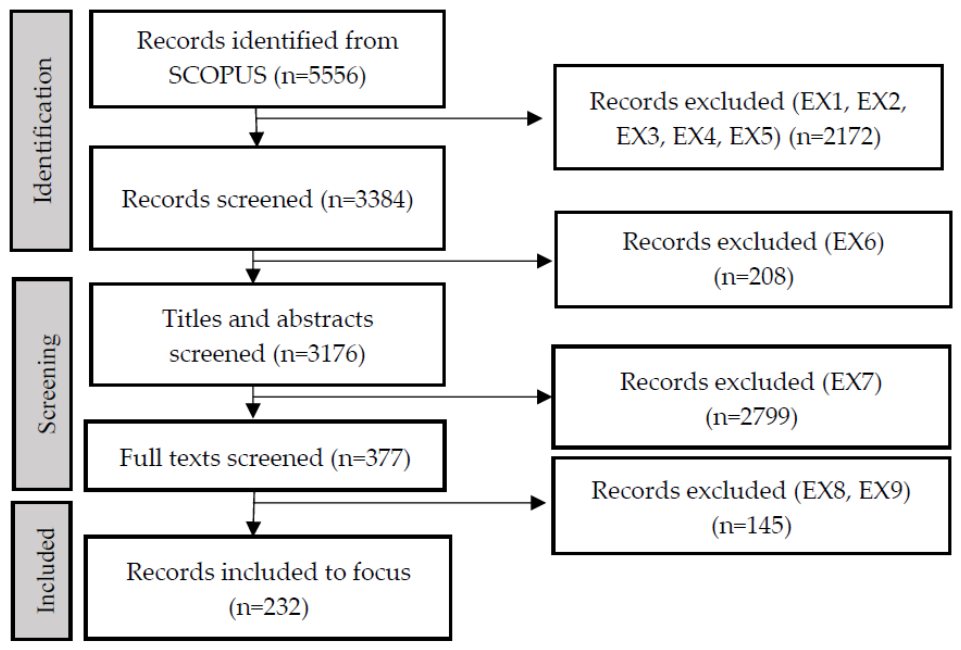
This study aimed to systematically analyze the research trends and identify FRDs in construction PM for megaprojects, which are essential for the development of SCs in the Construction 5.0 era. Thus, it can contribute to the physical construction of smart, sustainable, and resilient cities. A structured systematic literature review was adopted in this study. This is a method that defines a series of steps to methodically organize a review [25]. This study followed the Preferred Reporting Items for Systematic Reviews and Meta-Analyses (PRISMA) 2020 checklist [26] (which can be found in the Table S1 in the Supplementary Materials) to provide a transparent process. Figure 1 illustrates the research flow.

2.2. Database and Keyword Selection

An electronic database search was performed via the Scopus database, as it is among the largest engineering databases [27,28] and as it provides a broad index of peer-reviewed journal papers [29]. Based on the RQs, the keywords were determined as ‘SC’, ‘megaproject’, ‘construction 5.0’, ‘smart construction’, and ‘construction project management’. The Boolean research string was applied within the titles, abstracts, and keywords (TITLE-ABS-KEY) in the Scopus database. Table 1 demonstrates the binary combinations applied in the Boolean search. As a result of this research, 5556 papers were acquired without any restrictions.

2.3. Inclusion and Exclusion Criteria

The acquired papers were screened based on the defined inclusion (IN1, IN2, IN3, IN4, IN5, IN6, IN7, IN8, IN9) and exclusion criteria (EX1, EX2, EX3, EX4, EX5, EX6, EX7, EX8, EX9) to ensure the reliability and temporal relevance of the literature (Table 2). Given the subject matter of the study, the time period chosen for the research was 2015–2026. In order to maintain the most up-to-date articles (IN1) and papers published before 2016 were removed (EX1). Moreover, only English-language papers were included to ensure consistency and standard for analysis (IN2). In addition, the document type was considered when defining the dataset. Articles, conference papers, and reviews were included (IN3), while other types (EX3) were excluded. For data quality and reliability reasons, only published studies were included (IN4). EX5 was a filtration step based on Scopus filters for pre-elimination. Irrelevant subjects (e.g., mathematics) were also excluded. As a result (EX1, EX2, EX3, EX4, EX5), 2172 papers were obtained. Additionally, duplicate papers were eliminated from the study (EX6). Out of 3384 papers (Table 1) obtained, 208 (Table 1) were rejected because they were duplicated (EX6). The remaining 3176 papers were subjected to the title and abstract screening. Then, 2799 papers (Table 1) were eliminated as they were unrelated to the topic (EX7). The full texts of 377 papers were carefully examined. Papers primarily focusing on construction PM and architecture, engineering, and the construction industry were included (IN7). Papers irrelevant to these areas and papers not relevant to the RQs were eliminated (EX7). Furthermore, papers for which full-text access was unavailable (EX8) were excluded. Additionally, retracted studies (EX9) were excluded, as they were studies that did not meet the defined relevance criteria. Following this screening process, 232 papers were incorporated for in-depth evaluation (Table 1).

2.4. Method and Software

The collected papers were transferred to the VOSviewer software [30] version 1.6. This is a program that analyzes keywords to determine their co-occurrence and reveals important areas of study, trends, and academic knowledge on a particular topic [31].
As this research topic is new and still being developed, the minimum number of keyword occurrences was set at 2 in VOSviewer [30] to offer a more comprehensive and detailed map of the conceptual landscape and a more restrictive filtering process. Following this stage, concurrency analysis was adopted via VOSviewer [30] to identify research trends and FRDs. A link map was generated by identifying the most frequently occurring words in TITLE-ABS-KEY. On the map, keywords are represented by nodes and the relationships between them are indicated by lines. Node sizes represent keyword frequencies, whereas the relative thickness of the lines indicates the degree of correlation between the keywords [32]. The physical distance between the nodes signifies the degree of their relationship with each other [31]. Figure 2 illustrates the nodes and the relationships between them. As a result of this analysis, the research areas and FRDs were determined. Table S2 (in the Supplementary Materials) provides a list of the 232 papers included and their relations with the nodes and clusters. Table 3 demonstrates the cited and included papers and their relations with nodes and clusters.

3. Results

3.1. Co-Occurrence Analysis

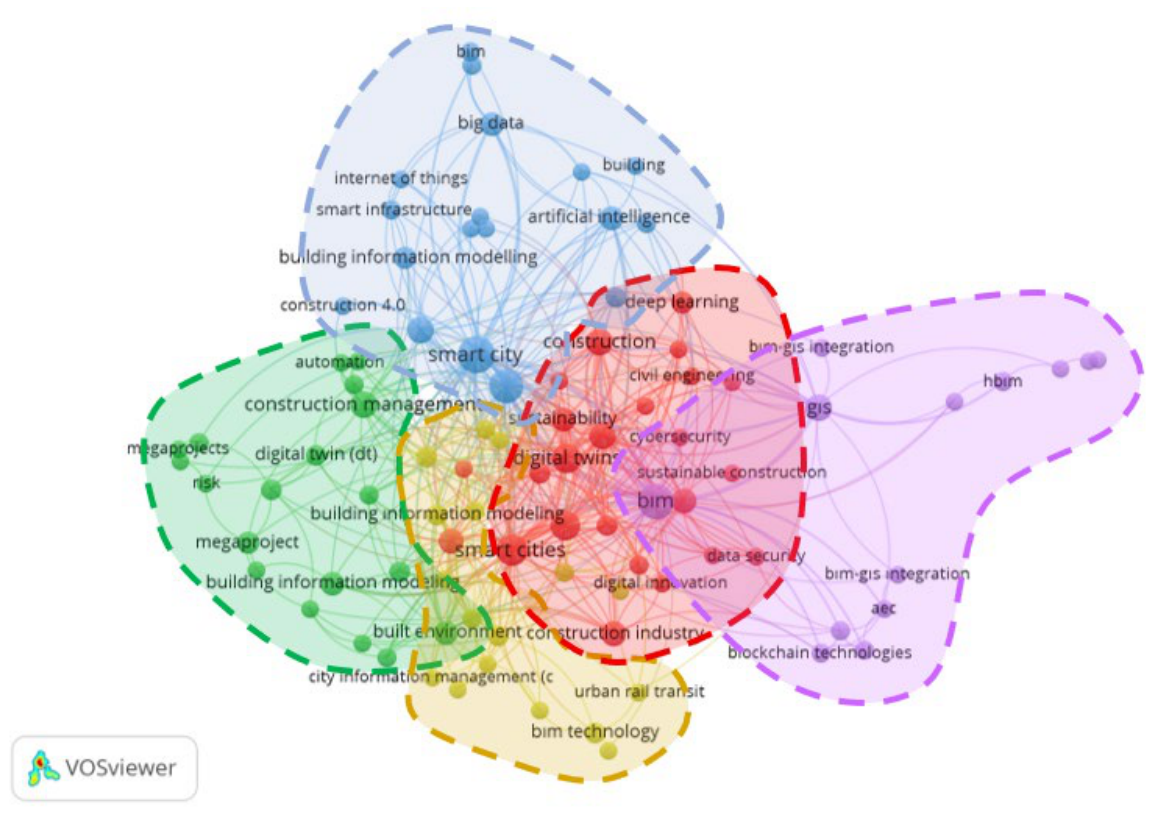
Based on the co-occurrence analysis via VOSviewer [30], five main thematic clusters were identified: the PM cluster (the green cluster), the smart construction and data security cluster (the red cluster), the SC and technology cluster (the blue cluster), the spatial data integration cluster (the purple cluster), and the lifecycle cluster (the yellow cluster). Each cluster, indicated with different colors in Figure 2, refers to a specific research area, highlighting the multifaceted nature of these topics.
Figure 2. Comprehensive network of keywords (based on analysis in VOSviewer [30]).
Buildings 16 01691 g002
The PM cluster (the green cluster) in Figure 2 focuses on innovation in the PM field. This innovation includes technologies such as BIM, AI, DT, and automation (Figure 2). For instance, BIM utilization in construction projects can contribute to more efficient PM processes, reduced construction costs and time, and increased energy efficiency [33]. Furthermore, BIM and GIS integration can contribute to various aspects of the construction process, including the overall management of materials and machinery, the real-time monitoring and estimation of construction progress, the coordination of personnel and resources, reductions in interdepartmental conflict, and reductions in material waste [34]. Moreover, Salem and Dragomir [35] mentioned that DT, through the integration of AI and computer-aided engineering, are being used at construction sites to improve performance, reduce costs and risks, and enhance supply chains. Xie and Pan [36] stated that DT can enable the automated planning and scheduling of works, the monitoring and assessment of construction performance, the minimization of construction and demolition waste, reductions in production time and operational risks, and the assessment of site safety. Several studies (e.g., [33,34,35,36]) directly demonstrate the relationship between the green cluster and the blue cluster. Furthermore, the relationships between technologies and different PM approaches are also included in this cluster. For instance, the contribution of BIM and lean integration to enhancing the performance of construction projects has been investigated [37]. The use of BIM in megaprojects has also been examined (e.g., [38]). Guo et al. [38] mentioned that the integration of BIM with digital technologies is used in the management of megaprojects. These studies (e.g., [37,38]), while located in the green cluster, intersect with the blue cluster. In addition, this cluster explores smart contracts (Figure 2). For instance, blockchain technology and smart contracts have been studied for their contribution to creating a digital and automated contract system [39]. This is located at the intersection of the green and red clusters.
The smart and sustainable city and data security cluster (the red cluster) in Figure 2 explores smart construction and data security. Blockchain technology allows data to be shared across multiple nodes [40]. It is expected to strengthen corporate security and contribute to areas such as reliability, coordination, and management [41]. Blockchain applications in construction project management (e.g., [41]) are the areas where the red and green clusters intersect. The integration of BIM and blockchain can provide live and trustworthy information sharing and ensure data ownership, traceability, liability, and accountability [42]. Studies (e.g., [42]) on the integrated use of blockchain and BIM exemplify the intersection of the red and blue clusters. Liu et al. [41] investigated the application of blockchain in the fields of supply chain management, construction PM, contract management, and DT. Moreover, introducing blockchain into BIM-based projects can offer a solution to accountability issues in PM by resolving responsibilities such as tracking and assigning tasks [43]. Furthermore, the integration of BIM, city information models, and blockchain can create a smart contract-based accountable system to enhance construction waste management [40]. The sustainability aspect of the cluster has also been examined. For example, Liu et al.’s [44] study is at the intersection of the yellow and red clusters. The integration of BIM with blockchain technologies can support sustainable development through improvements in construction PM, maintenance management, and construction performance evaluation activities [44].
The smart construction technology (the blue cluster) is structured around the SC, DT, and BIM nodes. Although BIM provides static data about the built environment, the need for visualization and real-time environmental data analysis has led to BIM and IoT integration and, consequently, the emergence of DT [45]. They are described as digital replicas of physical assets [46] and contribute to the development of SCs, design decision-making, product manufacturing, real-time monitoring, and facility management processes [47]. For SCs, other technologies (e.g., IoT, cloud computing, big data, AI) can be integrated into DT to improve city planning, optimize the service quality offered to citizens, and accelerate the construction of SCs [48]. Hananto et al. [49] explained the importance of IoT for DT and emphasized IoT’s role in establishing a connection between the DT and the physical world. Data collected via IoT are used to update DT and are analyzed by AI [50]. Thus, this integration is applicable throughout the lifecycle of a construction project, as well as applicable to smart sustainable cities to enhance operational performance, to resource management to contribute to sustainability, and to improving the quality of life of citizens [51].
The spatial data integration cluster (the purple cluster) focuses on urban data and spatial models, covering topics such as BIM, GIS, and their integration (Figure 2). GIS can be used at different stages of the construction lifecycle [23]. Through BIM and GIS integration, GIS enables the visualization and interpretation of BIM data within the geospatial dimension [52]. It helps to improve efficiency by enhancing collaboration among stakeholders, building a common understanding through modeling, and making complex technical data understandable through visualization [24]. GIS and BIM applications can improve construction management by enabling the real-time monitoring, evaluation, and prediction of construction progress, resource allocation, personnel organization, and waste elimination, as well as reductions in repetitive tasks and interdisciplinary conflicts [34].
The map in Figure 2 shows the relationship between GIS and SCs. Vacca et al. [53] stated that the integration of BIM with GIS helps in designing smarter and more sustainable cities. The use of BIM and GIS to integrate spatial information at different scales with daily operational data obtained through IoT terminals (e.g., cameras, temperature sensors) forms the basis of DT [54]. The map (Figure 2) also shows the relationship between GIS-integrated BIM and GIS-integrated blockchain. For example, Lawal et al. [55] examined the integration of blockchain into BIM- and GIS-based city models, highlighting how this integration makes data traceable and immutable.
The lifecycle cluster (the yellow cluster) encompasses the topics of lifecycles, sustainability, green buildings, resilience, BIM, and city information models (Figure 2). For example, Rotilio et al. [56] proposed DT as an adaptable system for the built environment that supports the management of both post-disaster and reconstruction phases, highlighting the resilience principles of SCs. Ali et al. [57] discussed the contribution of DT to urban climate adaptation and their impacts on mitigating and increasing resilience to urban heat island effects. These studies (i.e., [56,57]) reveal the relationship between the resilience node and the SC node, located in the blue cluster. Sustainability is also an important issue for this cluster (Figure 2). According to Alnaser et al. [50], a sustainable building environment represents a holistic approach that integrates environmentally responsible and resource-optimized practices throughout its lifecycle. Liu et al. [44] examined the relationship between BIM, sustainable buildings, and blockchain. Alnaser et al.’s [50] study investigated the identification of digital technologies and the contributions of AI to energy usage optimization and to increasing resilience in urban and industrial contexts. Zahedi et al. [58] studied the impact of DT in enhancing sustainability throughout the lifecycle of the built environment. Furthermore, Waher et al. [59] stated that the token type can be used for financing sustainable smart buildings and can contribute to making access to revenue, cyber-physical systems, and DT.
Interrelations of the identified five main clusters (Figure 2): Although the studies are grouped under five main clusters, the cluster boundaries have a permeable structure (Figure 2). The fact that some nodes with different weights are located in more than one cluster indicates that these concepts are studied in the literature not only within their own fields but also through an interdisciplinary approach, and they directly or indirectly overlap and intersect, forming bridges between clusters.
The blue cluster includes studies related to SCs and smart construction and serves as a framework for other studies in the literature. The blue and green clusters are in interaction (Figure 2). Studies (e.g., [33,34,35,36]) at the intersection of the blue and green clusters can demonstrate how smart construction technologies (e.g., BIM, DT, IoT, AI) can be integrated into construction projects through added value. Li et al. [37] investigated the impact of BIM and lean integration on the performance of construction projects.
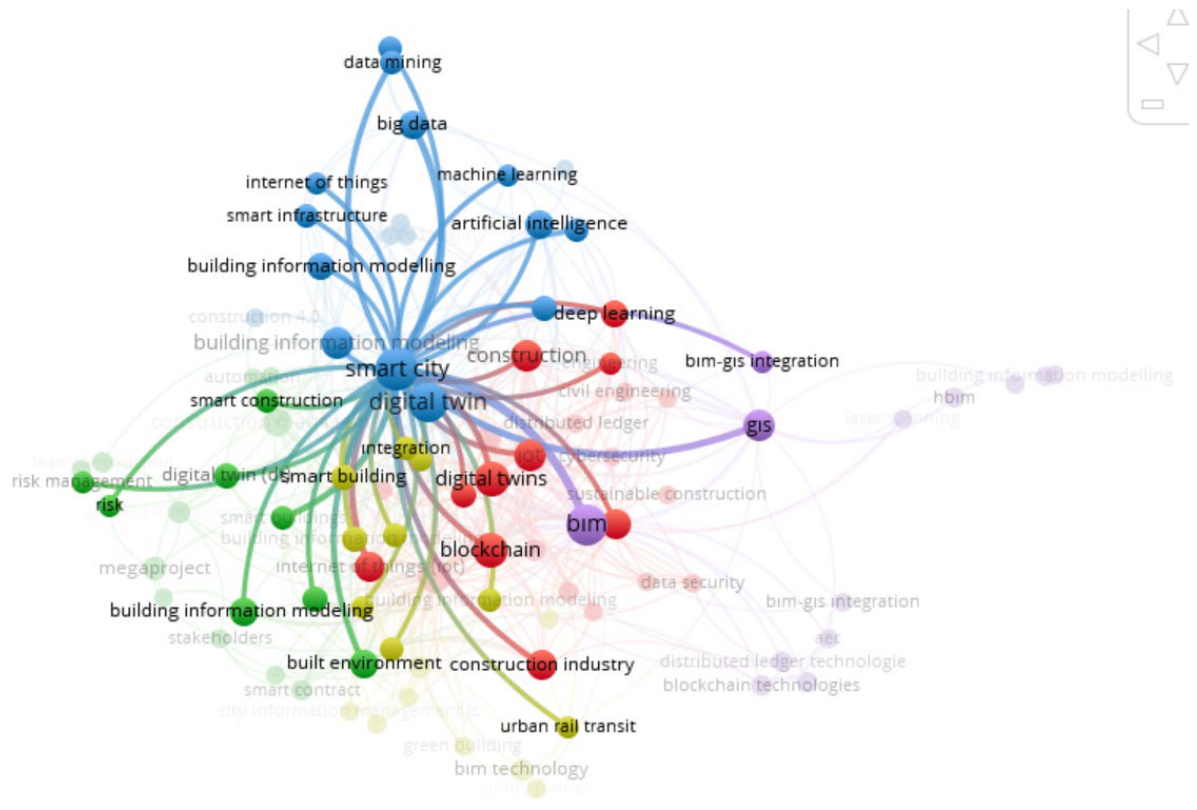
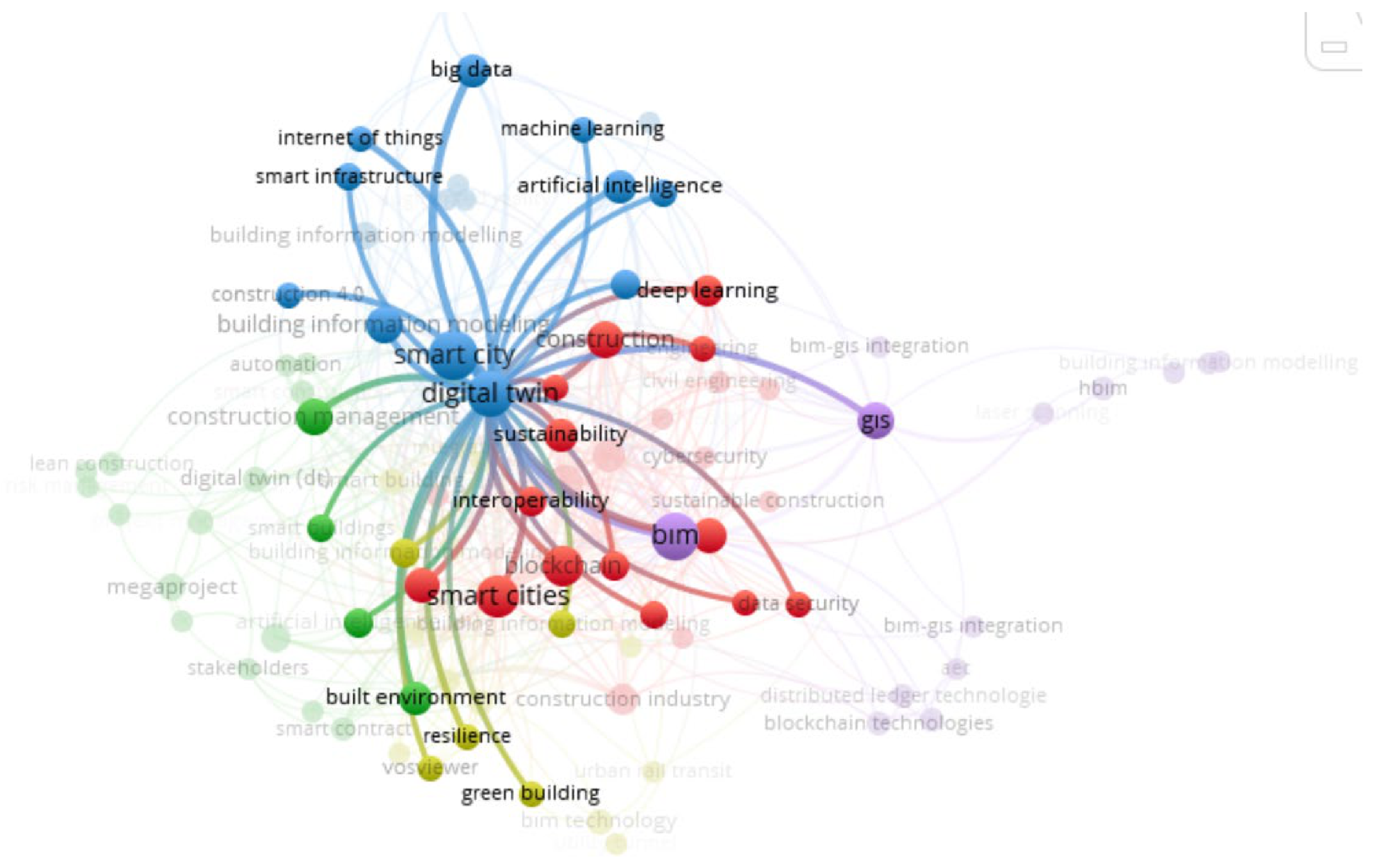
The contribution of BIM and DT to the sustainability performance of a building throughout its lifecycle reveals the relationship between the blue and yellow clusters (e.g., [44,50,58,59]). Furthermore, studies (e.g., [41,42,43,44]) on the use of BIM and blockchain technology to support the management of construction projects reveal the relationships between the blue, green, and red clusters. Furthermore, the integration of BIM and blockchain technologies into smart contracts (e.g., [39,40]) is another example of collaboration between the red, blue, and green clusters. Furthermore, the relationship between the blue and purple clusters is based on BIM-GIS integration, which combines detailed building-scale data with city-scale geographic data (e.g., [23,24,34,52,53]). The integration of BIM and GIS with IoT is another example of this relationship [54]. The fact that nodes with different sizes appear in multiple clusters confirms that they serve as an interdisciplinary bridge and that they are centralized within different contexts. The most prominent nodes located at the center point in the map obtained through VOSviewer [30] were examined and revealed as the SC node and the DT node (Figure 3 and Figure 4). The maps in Figure 3 and Figure 4 reveal the relationships of these nodes with other nodes.
The SC node is central to the literature, revealing that it serves as a crucial link between other nodes (Figure 3). The SC is a citizen-centric concept that aims to improve the quality of life of citizens [44]. While researching trends and FRDs in construction PM for megaprojects integrated into SCs, the emergence of the SC concept as a central node reveals that related concepts such as BIM, AI, IoT, machine learning (ML), and deep learning (DL) are not in isolation in the literature and that they are parts of a holistic ecosystem and work together (Figure 3). For example, Shahzad et al. [47] noted that data collected through IoT can be integrated into AI and can contribute to city management. DT participate in the design and management of SCs, contribute to the regulation of their policies and the operation of the city, and promote the formation of a socially oriented system [48]. Moreover, the relationship between SCs and Construction 4.0 is based on increasing operational efficiency in the construction phase and on optimizing the operation and maintenance processes of buildings in the occupation phase [60].
The SC node communicates with other clusters. For instance, Liu et al. [44] explored the potential impacts of blockchain and BIM integration into the SC environment in terms of transforming buildings into more sustainable ones within the context of SCs. Similarly, Zahedi et al. [58] discussed the utilization of BIM and GIS for smart city planning and development.
The DT node is centrally located and directly connected to other concepts (Figure 4). The DT node is related nodes such as AI, DL, ML, IoT, smart infrastructure, construction management, built environment, and green buildings (Figure 4). For example, Deren et al. [48] investigated the integration of IoT, cloud computing, big data, and AI into DT and concluded that this integration optimizes city planning and the management of SCs. Xie and Pan [36] cited the use of DT for the automated planning and scheduling of works, the monitoring and evaluation of construction performance, the minimization of construction and demolition waste, reductions in production time and operational risks, and assessing site safety as examples of the relationships between the DT and construction project management nodes. Furthermore, the relationship between DT and sustainability was addressed by Zahedi et al. [58], who linked the concept of sustainability to the lifecycle of the built environment.

3.2. Research Trends

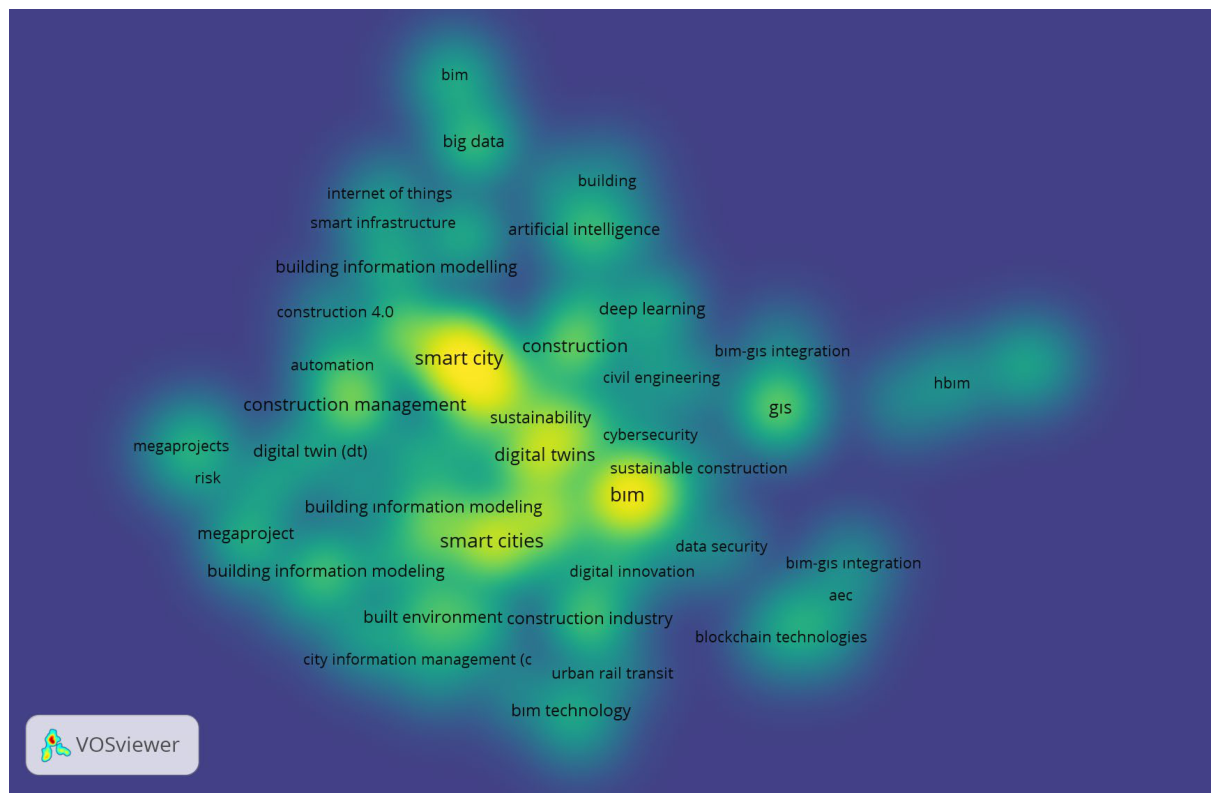
Figure 5 presents the overlay visualization of the research area density resulting from the bibliometric analysis performed via VOSviewer [30]. It highlights the central themes and frequently used keywords in research. The densest clusters are within the yellow area in Figure 5. These are terms such as ‘SC’, ‘DT’, and ‘BIM’, indicating areas of intense academic interest. These research areas are followed by keywords such as ‘sustainability’, ‘sustainable construction’, and ‘construction management’, located in the green area (Figure 5).
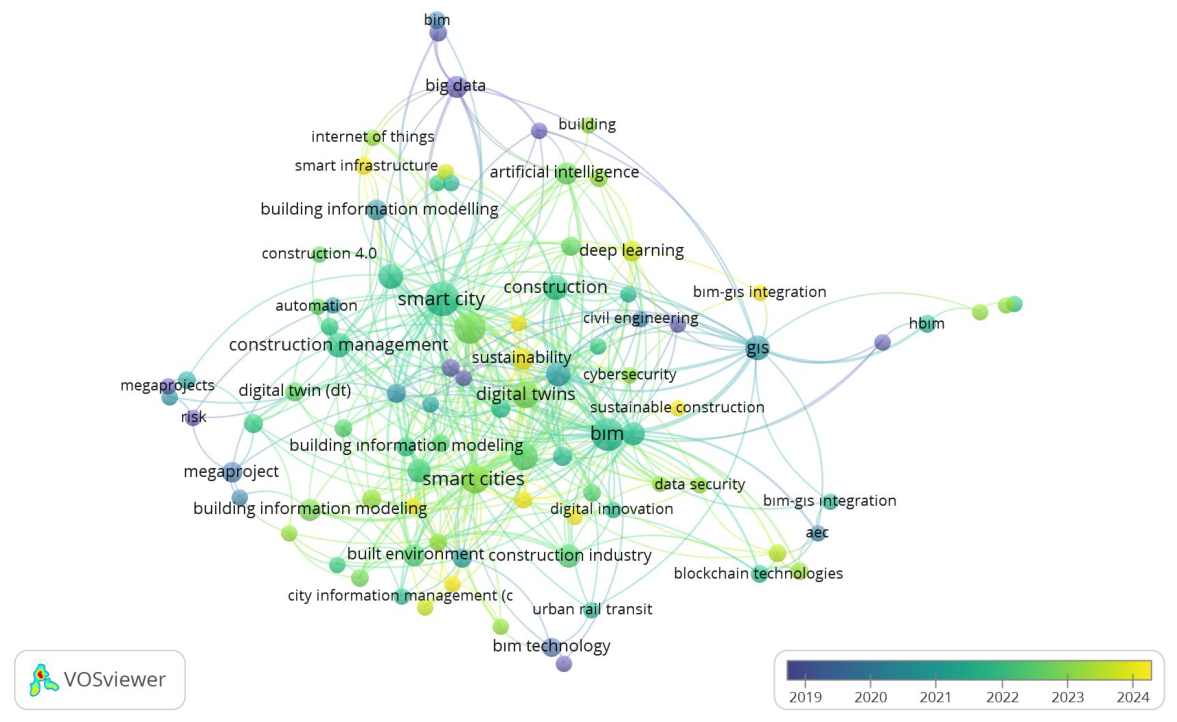
The time-based distribution is shown in Figure 6, where the color codes indicate the years when these studies became prominent in the literature (i.e., the 2015–2019 period in blue; the 2020–2023 period in green; and the post-2023 period in yellow). Based on Figure 6, the time-based evolution of these relationships can be explained as follows:
  • Between 2015 and 2019, the literature primarily focused on megaprojects, project management, and their relationships with BIM. For example, in 2016, Brockmann et al. [61] examined innovations in product or construction technology and technical, managerial, or contractual organization in the development of megaprojects. Another study [62] from 2018 examined the contribution of BIM, as a component of the SC concept, to design, construction, and related processes.
  • The green toned nodes in Figure 6 belong to the period between 2020 and 2023. Studies (e.g., [34]) conducted in the early stages of this period continued to focus on SCs, BIM, and construction management. Subsequently, the implementation of blockchain technology in the construction industry was also studied by [39,40,41,42]. From 2023 onwards, DT became central to the literature, and its integration into AI and IoT technology has begun to be studied by [49,51].

4. Discussion

Sustainable and SCs, emerging as a solution to urban challenges, have received increased attention in the literature. The SC topic is central to the literature, and different disciplines are integrated into it (Figure 2). The research themes are categorized into five main clusters (Figure 2): the PM cluster (the green cluster), the smart construction and data security cluster (the red cluster), the SC and technology cluster (the blue cluster), the spatial data integration cluster (the purple cluster), and the lifecycle cluster (the yellow cluster). Besides this, the SC node and the DT node exhibit the highest degrees of centralization within the network (Figure 3 and Figure 4). Being connected to other clusters, they form an interdisciplinary framework.
As the SC keyword, which is among the keywords focused upon within the scope of this research (Table 1), is related to all other clusters (Figure 2), this keyword is central to the literature. Indeed, the SC keyword emerges as the main node in this study, as shown in Figure 3. The SC keyword is also associated with the DT main node (Figure 3 and Figure 4). Furthermore, the megaproject keyword emerged as a node belonging to the green cluster (Figure 2). As demonstrated in Figure 3 and Figure 4, the megaproject keyword is not explicitly associated with the SC main node. For this reason, investigating their relationship can be a promising avenue for FRDs (FRD 1 and Table 4). Furthermore, the relationships between the keywords (e.g., smart construction, Construction 5.0, and construction PM) have been investigated in the literature (e.g., [63,64,65]) (Table 1). These keywords, which collectively define the thematic identity of the green cluster (Figure 2) can comply with the transformation in the construction industry and the transition to the PMBOK 7th edition [19] framework. Moreover, smart construction, Construction 5.0, and construction PM keywords also contribute to the yellow cluster through the smart building, sustainable building, lifecycle, green building, and resilience nodes (Figure 2). This complies with the ‘value delivery system’ principle of the PMBOK 7th edition [19], defining the structure not through its output but through its value creation throughout its lifecycle. The smart construction node is related to the SC main node. The connection between the SC node and the smart construction node is related to the technology transfer between them. Furthermore, the keyword of construction PM is not yet represented as a node on the map (Figure 2). Similarly, no relationship was found between the PM node and the SC main node, as well as between the construction management node and the SC main node (Figure 3). In the map presented in Figure 4, while the construction management node is associated with the DT main node, the relationship between construction PM and SCs is not sufficiently explored in the literature. This finding can contribute to the FRDs (FRD 2 and Table 4).
This study reveals the five main clusters (Table 1) that are developed around the two main nodes (i.e., SC and DT). The dominance of these two nodes (SC and DT) highlights that the literature and the clusters have been evolved around these nodes. Furthermore, as observed from Figure 3 and Figure 4, technologies other than DT have been incorporated into the main literature through these two nodes. Technologies in the blue and red clusters (such as AI [35], IoT [49], blockchain [41], and big data and cloud computing [48]) are used through the DT main node, and they reveal that the management of construction projects integrated into SCs is carried out through a DT-based ecosystem. Research (e.g., [35,48,49]) focuses mainly on the integration of other technologies (such as AI and IoT) with DT in the construction industry, rather than focusing on the use of these technologies separately. Moreover, the representation of the DT node in the light green color on the map in Figure 6 also shows that this is a trend that emerged after 2023. Furthermore, the SC and DT nodes, which are at the center of the network map (Figure 3 and Figure 4), indicate that the literature (e.g., [66]) addresses data in construction management through a continuously updated and living model. Table 1 demonstrates that some nodes are repeated in different clusters and that there is permeability between clusters. This can demonstrate the multifunctional use of technologies and their integration with each other. For instance, PM [41] and construction waste management [40] are examples of areas where the integration of blockchain and BIM can be implemented.
A direct link can be established among the identified clusters (Figure 2) and central nodes (Figure 3 and Figure 4) and the principles defined in the PMBOK’s [19] performance domains. For example, Rajavel et al. [67] provided stakeholders with a reliable tool for monitoring and managing projects. Similarly, the integration of BIM and GIS [34] and the use of DT [36] were highlighted to contribute to monitoring. Some studies (e.g., [67]) also comply with the stakeholder domain in the PMBOK 7th edition [19]. Moreover, Xie and Pan [36] noted that DT can contribute to planning. This study [36] aligns with the planning domain in the PMBOK 7th edition [19] by demonstrating the application of automated planning and scheduling. As these studies [34,36] are in the green cluster, this cluster complies with the PMBOK 7th edition [19]’s stakeholder and planning domain. Additionally, as studies (e.g., [42,43]) exploring the integration of BIM and blockchain, as part of the red cluster, highlighted that his integration provides transparency, accountability, and traceability. These studies (i.e., [42,43]) comply with the PMBOK 7th edition [19]’s stakeholder performance domain.
The project work domain in the PMBOK 7th edition [19] deals with establishing processes and executing work. Some studies [33,34,35,36] concentrate on the use of BIM and the integration of AI, GIS, and IoT into BIM and DT. Moreover, BIM and lean construction integration [37] can also align with this domain through reducing workflow waste and increasing collaboration. Furthermore, as BIM and blockchain integration can support quality management by enabling secure and efficient access to, processing, and sharing of quality information [41], BIM–blockchain integration can also enhance this domain.
The yellow cluster can contribute to the ‘development approach and lifecycle’ domain of the PMBOK 7th edition [19], as the yellow cluster focuses on the lifecycle. For instance, the use of DT in different fields, such as disaster management [56], urban adaptation [57], and the sustainable construction industry [58], is studied in the literature.
The literature reviewed focuses particularly on project management methodologies within the green cluster. However, the lack of direct alignment of specific nodes with existing project management frameworks points to significant research gaps in the field and identifies new areas of study. These are designated as FRDs. Based on the findings (Figure 2, Figure 3, Figure 4, Figure 5 and Figure 6), a list of FRDs is proposed as follows.
The relationship between megaprojects and SCs (FRD 1): The megaproject node, according to Figure 6, represents a concept that was explored in the literature before and during 2019. For example, Ford et al. [68] investigated the most frequent failure areas of highway megaproject construction. Moreover, Guo et al. [38] discussed the use of integration of BIM and digital technologies for managing megaprojects. This is shown in the first map in Table 4. However, examining Figure 2 reveals that the megaproject node is located far from the central nodes and remains isolated (see the first map in Table 4). This positioning indicates that the megaproject node is not directly related to the SC node in the literature. Although projects that develop SCs can be classified as megaprojects due to their time and budget requirements [4], the relationship between megaprojects and SCs has not been sufficiently clarified in the literature. The contribution of megaprojects to the physical construction of SCs and the characteristics of such projects have not been adequately investigated in the literature.
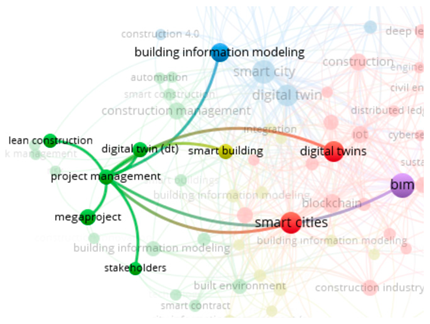
The relationship between construction PM and SCs (FRD 2): The analysis revealed that the construction PM node is not represented as a separate node in the literature map. To further analyze this gap, the PM and construction management nodes were further analyzed. The literature examines the relationships of PM and construction management with topics such as megaprojects (e.g., [68]) and smart construction technologies (e.g., [33,34,35,36,38]) (the second and third maps in Table 4). In addition, Li et al. [37] examined the relationship between BIM and lean construction. According to map 2 in Table 4, the use of DT is another topic studied (e.g., [45,47]) in the literature. The use of DT in city planning and services [48] and their use for purposes such as planning and work scheduling, monitoring and evaluating construction performance, minimizing construction and demolition waste, reducing production time and operational risks, and determining site safety [36] have been investigated in the literature. However, these studies focus either on the management of SCs or on the performance of individual projects, rather than on the systemic integration of these projects within the broader SC infrastructure. Future studies should develop research that takes a holistic and systematic approach to this issue.

5. Conclusions

This study examined research trends and FRDs in construction PM in the construction of megaprojects, which are essential for the development of SCs in the Construction 5.0 era. Existing studies (e.g., [23,24]) concentrate on technological construction. However, this study focuses on the physical construction of SCs. Consequently, the research topics, trends, and FRDs identified can be summarized as follows.
The five main clusters: The existing literature has been classified under five main clusters (Figure 2 and Figure 7), but some nodes are repeated in different clusters and have different weights. This highlights that the cluster boundaries are not clearly distinct and are rather permeable, suggesting collaboration between disciplines. Even if each cluster focuses on a specific topic, it intersects and interacts with other clusters. Strong connections have been identified between all clusters (Figure 2). The defined clusters are as follows: the PM cluster (the green cluster), the smart construction and data security cluster (the red cluster), the SC and technology cluster (the blue cluster), the spatial data integration cluster (the purple cluster), and the lifecycle cluster (the yellow cluster).
The SC node and the DT node: Figure 3 and Figure 4, respectively, illustrate the SC node and the DT node, which are central to the literature. The SC node establishes strong connections with interdisciplinary fields such as IoT and AI [47], DT [48], blockchain [44], and Construction 4.0 [60]. The IoT node establishes direct and strong connections with other nodes, such as AI, DL, ML, IoT, smart infrastructure, construction management, the built environment, and green buildings (Figure 4).
The time-based distribution of the publications: Looking at the time-based distribution of the publications, in the pre-2019 period, the literature (e.g., [61,62]) mostly studied megaprojects, project management, and their relationships with BIM. Between the years 2020 and 2023, research (e.g., [34]) focused mainly on SCs, BIM, and construction management and researches (e.g., [39,40,41,42]) on blockchain. In the post-2023 period, in the literature (e.g., [49,51]), DT has come to the fore.
The FRDs identified: The two main FRDs, as topics that have not been adequately/thoroughly researched in the literature, have been identified (Table 4) (i.e., megaproject and SC relationship; construction project management and SC relationship) by determining areas that require future research. Various fields in the literature (e.g., [38,68]) have studied megaprojects. Megaprojects, however, have not been associated with the SC node. The relationship between megaprojects and SCs defines FRD 1. PM and construction management topics have been extensively addressed in the literature. However, the relationships between PM and SCs and construction management and SCs remain very limited in the literature.
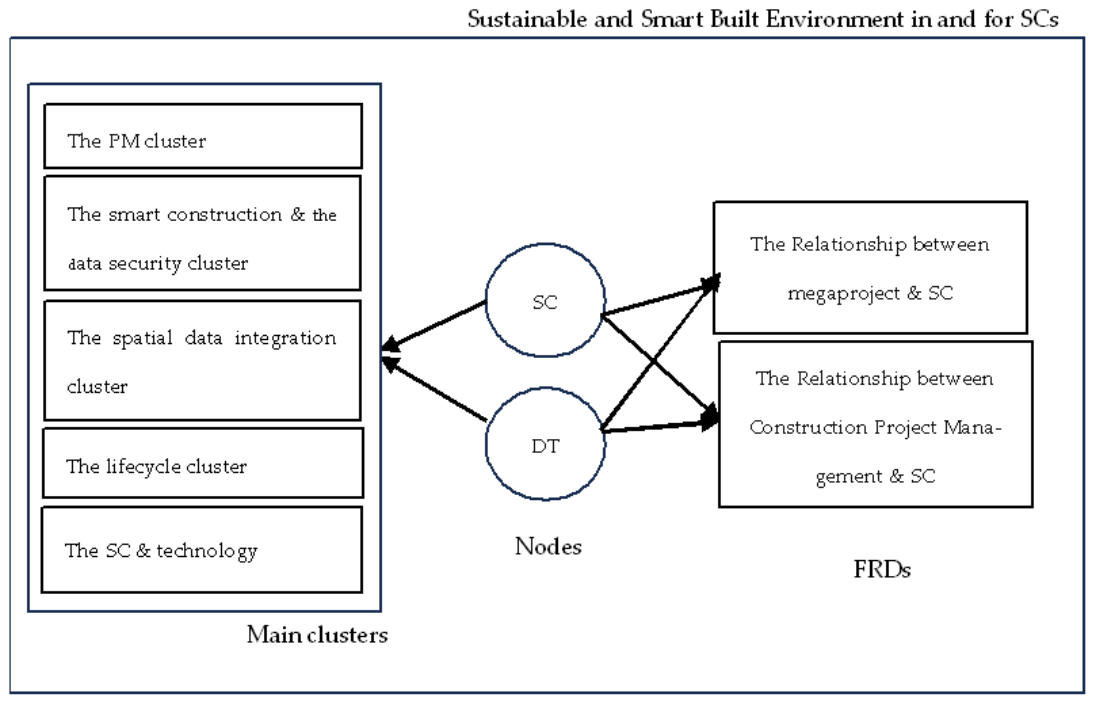
The literature is gathered around two nodes (Figure 3 and Figure 4) and five main clusters (Figure 2). This study provides the two main FRDs as recommendations for future research (Table 4). The SC and DT nodes have connections to the five main clusters and the two FRDs as these nodes are located at the center of the literature (Figure 7). The keywords used in the Boolean search string emerged in the main nodes in the search results and identified FRDs (i.e., the megaproject and SC relation and the construction PM and SC relation).
These findings, summarized in Figure 7, highlight the interactions of the main clusters, nodes, and FRDs regarding sustainable and smart built environments. These main clusters and central nodes are associated with the PMBOK 7th edition’s [19] performance domains. As the two FRDs, the main clusters, and the nodes are interrelated (Figure 7), further research, policies, and strategies focusing on and considering them can be aligned with efforts toward performance improvement in construction PM with respect to many areas (e.g., cost estimation, planning, monitoring, reduced time and budget deviations) in compliance with the PMBOK 7th edition’s [19] performance domains to facilitate the successful implementation of megaprojects integrated with SCs.
The results of the study are expected to contribute to the design and development of smart, sustainable, and resilient cities, from the perspective of the identified FRDs, and to the implementation of the megaprojects necessary for these cities. This study can provide tangible benefits for stakeholders at many different levels within the construction industry. It can be used as a framework for academics, urban planners, policymakers, and construction professionals. Ultimately, this study can contribute to the creation of more sustainable, smart, and resilient cities and to the improvement in the quality of life and well-being of citizens.

Supplementary Materials

The following supporting information can be downloaded at https://www.mdpi.com/article/10.3390/buildings16091691/s1. The PRISMA 2020 checklist [26] (Table S1) and List of all included papers within the scope of the PRISMA research procedure (Table S2).

Author Contributions

Conceptualization, D.U.A. and B.S.; methodology, D.U.A. and B.S.; software, D.U.A. and B.S.; validation, D.U.A. and B.S.; formal analysis, D.U.A. and B.S.; investigation, D.U.A. and B.S.; resources, D.U.A. and B.S.; data curation, D.U.A. and B.S.; writing—original draft preparation, D.U.A. and B.S.; writing—review and editing, D.U.A. and B.S.; visualization, D.U.A. and B.S.; supervision, B.S. All authors have read and agreed to the published version of the manuscript.

Funding

This research received no external funding.

Data Availability Statement

No new data were created or analyzed in this study. Data sharing is not applicable to this article.

Acknowledgments

This paper is part of Didem Ugurlu Akdemir’s PhD dissertation, which is supervised by Begum Sertyesilisik.

Conflicts of Interest

The authors declare no conflicts of interest.

References

  1. Siva Rama Krishna, U.; Vasudeva Pavan Kumar, N.; Tadi, C.; Badiger, M.H. Internet of Things and Digital Twins for Future Smart Cities: Scientometric Analysis. Intell. Build. Int. 2025, 17, 51–63. [Google Scholar] [CrossRef]
  2. Elnour, M.; Ahmad, A.M.; Abdelkarim, S.; Fadli, F.; Naji, K. Empowering Smart Cities with Digital Twins of Buildings: Applications and Implementation Considerations of Data-Driven Energy Modelling in Building Management. Build. Serv. Eng. Res. Technol. 2024, 45, 475–498. [Google Scholar] [CrossRef]
  3. Chen, Z.; Cheng, J. Economic Impact of Smart City Investment: Evidence from the Smart Columbus Projects. J. Plan. Educ. Res. 2024, 44, 1881–1897. [Google Scholar] [CrossRef]
  4. Kadi, S.; Norman, A.; Gritt, E. The Smart City as Mega Project: An Investigation of Original Vision and Iterative Changes—Drawing on the COVID Effect. In Proceedings of the UK Academy for Information Systems Conference Proceedings 2021, Online, 23–24 March 2021. [Google Scholar]
  5. Mišić, S.; Radujković, M. Critical Drivers of Megaprojects Success and Failure. Procedia Eng. 2015, 122, 71–80. [Google Scholar] [CrossRef]
  6. Ashkanani, S.; Franzoi, R. An Overview on Megaproject Management Systems. Manag. Matters 2022, 19, 129–148. [Google Scholar] [CrossRef]
  7. Oluwatosin, E.A. Exploring the Future of Smart Cities and Its Implications for Construction Project Management. Int. J. Res. Publ. Rev. 2024, 5, 1879–1887. [Google Scholar] [CrossRef]
  8. Zhou, H.; Wang, H.; Zeng, W. Smart Construction Site in Mega Construction Projects: A Case Study on Island Tunneling Project of Hong Kong-Zhuhai-Macao Bridge. Front. Eng. Manag. 2018, 5, 78–87. [Google Scholar] [CrossRef]
  9. Chen, Y.; Huang, D.; Liu, Z.; Osmani, M.; Demian, P. Construction 4.0, Industry 4.0, and Building Information Modeling (BIM) for Sustainable Building Development within the Smart City. Sustainability 2022, 14, 10028. [Google Scholar] [CrossRef]
  10. Sawhney, A.; Riley, M.; Irizarry, J. Construction 4. 0: An Innovation Platform for the Built Environment, 1st ed.; CRC Press LLC: Milton, ON, Canada, 2020; ISBN 978-0-367-02730-8. [Google Scholar]
  11. Kaushalya, K.W.A.H.H.; Thayaparan, M.; Weerasinghe, L.N.K.; Attfield, A. Rogers’ Diffusion of Innovation Theory to Enhance BIM Implementation in the Construction Industry of Sri Lanka. Intell. Build. Int. 2024, 16, 182–198. [Google Scholar] [CrossRef]
  12. Ugurlu, D.; Sertyesilisik, B. Usage of BIM in Smart Cities. Int. J. Digit. Innov. Built Environ. 2019, 8, 17–27. [Google Scholar] [CrossRef]
  13. Chen, X.; Ghaffarianhoseini, A.; Ghaffarianhoseini, A. Exploring Construction 5.0 Paradigms in the AEC Sector of New Zealand: Conceptual Foundations and Implications for Practice. In Proceedings of the Sixth International Conference on Civil and Building Engineering Informatics, Hong Kong, China, 28 August 2025; pp. 909–922. [Google Scholar]
  14. Pal, U.K.; Zhang, C.; Haupt, T.C.; Li, H.; Su, L. The Evolution of Construction 5.0: Challenges and Opportunities for the Construction Industry. Buildings 2024, 14, 4010. [Google Scholar] [CrossRef]
  15. Akhavan, M.; Alivirdi, M.; Jamalpour, A.; Kheradranjbar, M.; Mafi, A.; Jamalpour, R.; Ravanshadnia, M. Impact of Industry 5.0 on the Construction Industry (Construction 5.0): Systematic Literature Review and Bibliometric Analysis. Buildings 2025, 15, 1491. [Google Scholar] [CrossRef]
  16. Yitmen, I.; Almusaed, A.; Alizadehsalehi, S. Facilitating Construction 5.0 for Smart, Sustainable and Resilient Buildings: Opportunities and Challenges for Implementation. Smart Sustain. Built Environ. 2026, 15, 729–764. [Google Scholar] [CrossRef]
  17. Liu, Q.; Jing, K.T.; Ohueri, C.C.; Mohd Shafiei, M.W.; Wang, J.; Yin, H.; Li, X. Transforming the Construction Industry towards Circular Supply Chain Management 5.0: Identifying Critical Barrier Factors through Bibliometric and ISM-MICMAC. J. Clean. Prod. 2025, 520, 146118. [Google Scholar] [CrossRef]
  18. Stanimirović, P.; Petrović, D.; Borozan, T. Project Management in The Industry 4.0 and 5.0: A Comparative Analysis of Recent Pmbok Editions. Zenodo 2025. [Google Scholar] [CrossRef]
  19. Project Management Institute (Ed.) The Standard for Project Management and a Guide to the Project Management Body of Knowledge (PMBOK Guide), 7th ed.; Project Management Institute, Inc.: Newtown Square, PA, USA, 2021; ISBN 978-1-62825-667-3. [Google Scholar]
  20. Aydın, M. Comparative Analysis of PMBOK Guide 7th Edition and ISO 21500:2021 in the Context of Global Project Management Standards. J. Archit. Sci. Appl. 2025, 10, 1062–1080. [Google Scholar] [CrossRef]
  21. Dani, I.; Ke, Y.; AlKilani, S.A. The Future of Project Management in Industry 5.0: A Narrative Literature Review. Proj. Manag. J. 2026, 57, 222–239. [Google Scholar] [CrossRef]
  22. Mchirgui, N.; Quadar, N.; Kraiem, H.; Lakhssassi, A. The Applications and Challenges of Digital Twin Technology in Smart Grids: A Comprehensive Review. Appl. Sci. 2024, 14, 10933. [Google Scholar] [CrossRef]
  23. Dinh, P.T.; Huynh, N.T.; Phan, A.T.T. Integrating BIM and GIS Data to Support the Building Management. In Proceedings of the Third International Conference on Sustainable Civil Engineering and Architecture; Reddy, J.N., Wang, C.M., Luong, V.H., Le, A.T., Eds.; Lecture Notes in Civil Engineering; Springer Nature: Singapore, 2024; Volume 442, pp. 1681–1690. ISBN 978-981-99-7433-7. [Google Scholar]
  24. Ma, H.; Wang, T.; Liu, P.; Wu, W.; Wang, M.; Ding, L.; Chen, Y. Research and Application of BIM + GIS Basic Platform in the Construction of Smart City. In Proceedings of the 2024 International Conference on Smart City and Information System, Kuala Lumpur, Malaysia, 17–19 May 2024; pp. 160–165. [Google Scholar]
  25. Carrera-Rivera, A.; Ochoa, W.; Larrinaga, F.; Lasa, G. How-to Conduct a Systematic Literature Review: A Quick Guide for Computer Science Research. MethodsX 2022, 9, 101895. [Google Scholar] [CrossRef]
  26. Page, M.J.; McKenzie, J.E.; Bossuyt, P.M.; Boutron, I.; Hoffmann, T.C.; Mulrow, C.D.; Shamseer, L.; Tetzlaff, J.M.; Akl, E.A.; Brennan, S.E.; et al. The PRISMA 2020 Statement: An Updated Guideline for Reporting Systematic Reviews. BMJ 2021, 372, 71. [Google Scholar] [CrossRef]
  27. Chandran, M.C.S.; Chandran, R.; Das, D.; Vinodkumar, K. Examining the Role of Smart Cities and Sustainability Research in Achieving SDGs through Bibliometric Lens. Discov. Sustain. 2025, 6, 679. [Google Scholar] [CrossRef]
  28. Lasemi, M.A.; Arabkoohsar, A.; Hajizadeh, A.; Mohammadi-ivatloo, B. A Comprehensive Review on Optimization Challenges of Smart Energy Hubs under Uncertainty Factors. Renew. Sustain. Energy Rev. 2022, 160, 112320. [Google Scholar] [CrossRef]
  29. Rachmawati, T.S.N.; Sari, M.; Widjaja, D.D.; Vries, W.T.D. Navigating Green Building Policies and Incentives: A PRISMA Systematic Review of Trends, Mechanisms, Barriers, and Strategies. Architecture 2026, 6, 33. [Google Scholar] [CrossRef]
  30. Van Eck, N.J.; Waltman, L. Software Survey: VOSviewer, a Computer Program for Bibliometric Mapping. Scientometrics 2010, 84, 523–538. [Google Scholar] [CrossRef] [PubMed]
  31. Liu, Q.; Ali, N.L.; Lee, H.Y. Applying VOSviewer in a Bibliometric Review on English Language Teacher Education Research: An Analysis of Narratives, Networks and Numbers. Cogent Educ. 2025, 12, 2449728. [Google Scholar] [CrossRef]
  32. Sedighi, M. Application of Word Co-Occurrence Analysis Method in Mapping of the Scientific Fields (Case Study: The Field of Informetrics). Libr. Rev. 2016, 65, 52–64. [Google Scholar] [CrossRef]
  33. Yogi, M.R.A.; Berawi, M.A.; Sari, M. A Qualitative Review on the Implementation of Dynamic Digital Twin Construction Monitoring for Indonesia’s Nusantara New Capital City Development. AIP Conf. Proc. 2024, 3215, 020007. [Google Scholar] [CrossRef]
  34. Han, Z.H.; Wang, Z.K.; Gao, C.; Wang, M.X.; Li, S.T. Application of GIS and BIM Integration Technology in Construction Management. IOP Conf. Ser. Earth Environ. Sci. 2020, 526, 012161. [Google Scholar] [CrossRef]
  35. Salem, T.; Dragomir, M. Options for and Challenges of Employing Digital Twins in Construction Management. Appl. Sci. 2022, 12, 2928. [Google Scholar] [CrossRef]
  36. Xie, M.; Pan, W. Opportunities and Challenges of Digital Twin Applications in Modular Integrated Construction. In Proceedings of the 37th International Symposium on Automation and Robotics in Construction (ISARC 2020), Kitakyushu, Japan, 27–29 October 2020. [Google Scholar]
  37. Li, M.; Ma, Z.; Tang, X. Owner-Dominated Building Information Modeling and Lean Construction in a Megaproject. Front. Eng. Manag. 2021, 8, 60–71. [Google Scholar] [CrossRef]
  38. Guo, Z.; Wang, Q.; Cao, X.; Wang, Z. Navigating BIM Technological Innovations for Megaprojects: Insights from the TOCE Framework. J. Constr. Eng. Manag. 2026, 152, 04025235. [Google Scholar] [CrossRef]
  39. Gupta, P.; Jha, K.N. A Decentralized and Automated Contracting System Using a Blockchain-Enabled Network of Stakeholders in Construction Megaprojects. J. Manag. Eng. 2023, 39, 04023021. [Google Scholar] [CrossRef]
  40. Liu, Z.; Wu, T.; Wang, F.; Osmani, M.; Demian, P. Blockchain Enhanced Construction Waste Information Management: A Conceptual Framework. Sustainability 2022, 14, 12145. [Google Scholar] [CrossRef]
  41. Liu, H.; Han, S.; Zhu, Z. Blockchain Technology toward Smart Construction: Review and Future Directions. J. Constr. Eng. Manag. 2023, 149, 03123002. [Google Scholar] [CrossRef]
  42. Plevris, V.; Lagaros, N.D.; Zeytinci, A. Blockchain in Civil Engineering, Architecture and Construction Industry: State of the Art, Evolution, Challenges and Opportunities. Front. Built Environ. 2022, 8, 840303. [Google Scholar] [CrossRef]
  43. Bai, H.; Li, Z.; Chen, K.; Li, X. Blockchain-Based Responsibility Management Framework for Smart City Building Information Modeling Projects Using Non-Fungible Tokens. Buildings 2024, 14, 3647. [Google Scholar] [CrossRef]
  44. Liu, Z.; Chi, Z.; Osmani, M.; Demian, P. Blockchain and Building Information Management (BIM) for Sustainable Building Development within the Context of Smart Cities. Sustainability 2021, 13, 2090. [Google Scholar] [CrossRef]
  45. Deng, M.; Menassa, C.C.; Kamat, V.R. From BIM to Digital Twins: A Systematic Review of the Evolution of Intelligent Building Representations in the AEC-FM Industry. J. Inf. Technol. Constr. 2021, 26, 58–83. [Google Scholar] [CrossRef]
  46. Wan, L.; Nochta, T.; Schooling, J.M. Developing a City-Level Digital Twin –Propositions and a Case Study. In Proceedings of the International Conference on Smart Infrastructure and Construction 2019 (ICSIC); ICE Publishing: Cambridge, UK, 2019; pp. 187–194. [Google Scholar]
  47. Shahzad, M.; Shafiq, M.T.; Douglas, D.; Kassem, M. Digital Twins in Built Environments: An Investigation of the Characteristics, Applications, and Challenges. Buildings 2022, 12, 120. [Google Scholar] [CrossRef]
  48. Deren, L.; Wenbo, Y.; Zhenfeng, S. Smart City Based on Digital Twins. Comput. Urban. Sci. 2021, 1, 4. [Google Scholar] [CrossRef]
  49. Hananto, A.L.; Tirta, A.; Herawan, S.G.; Idris, M.; Soudagar, M.E.M.; Djamari, D.W.; Veza, I. Digital Twin and 3D Digital Twin: Concepts, Applications, and Challenges in Industry 4.0 for Digital Twin. Computers 2024, 13, 100. [Google Scholar] [CrossRef]
  50. Alnaser, A.A.; Maxi, M.; Elmousalami, H. AI-Powered Digital Twins and Internet of Things for Smart Cities and Sustainable Building Environment. Appl. Sci. 2024, 14, 12056. [Google Scholar] [CrossRef]
  51. Saleh, F.; Elhendawi, A.; Darwish, A.S.; Farrell, P. A Framework for Leveraging the Incorporation of AI, BIM, and IoT to Achieve Smart Sustainable Cities. J. Intell. Syst. Internet Things 2024, 11, 75–84. [Google Scholar] [CrossRef]
  52. Šamanović, S.; Bjelotomić Oršulić, O.; Cetl, V.; Markovinović, D.; Östman, A. Challenges and Opportunities for BIM-GIS Integration—BIRGIT Case Study. Teh. Glas. J. 2024, 18, 75–83. [Google Scholar] [CrossRef]
  53. Vacca, G.; Quaquero, E.; Pili, D.; Brandolini, M. Integrating BIM and GIS Data to Support the Management of Large Building Stocks. Int. Arch. Photogramm. Remote Sens. Spat. Inf. Sci. 2018, XLII–4, 647–653. [Google Scholar] [CrossRef]
  54. Shi, J.; Pan, Z.; Jiang, L.; Zhai, X. An Ontology-Based Methodology to Establish City Information Model of Digital Twin City by Merging BIM, GIS and IoT. Adv. Eng. Inform. 2023, 57, 102114. [Google Scholar] [CrossRef]
  55. Lawal, O.; Nawari, N.O. Blockchain and City Information Modeling (CIM): A New Approach of Transparency and Efficiency. J. Inf. Technol. Constr. 2023, 28, 711–734. [Google Scholar] [CrossRef]
  56. Rotilio, M.; Villa, V.; Corneli, A. Digital Twin for a Resilient Management of the Built Environment. In Proceedings of the 2023 IEEE International Workshop on Metrology for Living Environment (MetroLivEnv); IEEE: Milano, Italy, 2023; pp. 113–117. [Google Scholar]
  57. Ali, E.; Mansour, A.; Abdelkader, E.M.; Elshaboury, N.; Zayed, T. Digital Twin for Climate Resilience: Transforming Smart Cities for a Sustainable Future. Int. Arch. Photogramm. Remote Sens. Spat. Inf. Sci. 2025, XLVIII-G-2025, 139–145. [Google Scholar] [CrossRef]
  58. Zahedi, F.; Alavi, H.; Majrouhi Sardroud, J.; Dang, H. Digital Twins in the Sustainable Construction Industry. Buildings 2024, 14, 3613. [Google Scholar] [CrossRef]
  59. Waher, P.; Araoz, K.; R., P.P.; Mostrom, D. Tokenization of Sustainable Real Estate in Smart Cities: Monetization as Basis for Construction, Authorization and Carbon Neutralization in CPS. In Proceedings of the IECON 2022—48th Annual Conference of the IEEE Industrial Electronics Society, Brussels, Belgium, 17–20 October 2022; pp. 1–6. [Google Scholar]
  60. Du Plessis, C.; Sherratt, F. Construction 4.0 and Built Assets in-Use: Creating an e-Topia or Dystopia? Proc. Inst. Civ. Eng.-Manag. Procure. Law. 2020, 173, 182–189. [Google Scholar] [CrossRef]
  61. Brockmann, C.; Brezinski, H.; Erbe, A. Innovation in Construction Megaprojects. J. Constr. Eng. Manag. 2016, 142, 04016059. [Google Scholar] [CrossRef]
  62. Abdelhameed, W. BIM from Conceptual Model to Construction. In Proceedings of the 2018 International Conference on Innovation and Intelligence for Informatics, Computing, and Technologies (3ICT), Sakhier, Bahrain, 18–20 November 2018; pp. 1–4. [Google Scholar]
  63. Han, Z.; Wang, Y. Research on a Technical Framework in Smart Construction Based on Big Data. In Iccrem 2018: Innovative Technology and Intelligent Construction; American Society of Civil Engineers: Reston, VA, USA, 2018; pp. 26–31. [Google Scholar] [CrossRef]
  64. Zelentsov, L.; Mailyan, L. Creation of Intelligent Management Systems in Construction. MATEC Web Conf. 2017, 106, 08051. [Google Scholar] [CrossRef]
  65. Liang, H.; Li, J.; Song, W. Information-Based Smart Construction Management of High Rise Building Under the Complex Surrounding Environment in City Core Area. Int. J. High-Rise Build. 2021, 10, 203–210. [Google Scholar] [CrossRef]
  66. Zhang, H.; Zhou, Y.; Zhu, H.; Sumarac, D.; Cao, M. Digital Twin-Driven Intelligent Construction: Features and Trends. Struct. Durab. Health Monit. 2021, 15, 183–206. [Google Scholar] [CrossRef]
  67. Rajavel, A.; Karkuzhali, S.; Sharma, S.; Singh, S.K.; P, S.; Ida, S.J. Construction Progress Monitoring In Smart Cities Using Deep Alexnet. In Proceedings of the 2023 International Conference on Research Methodologies in Knowledge Management, Artificial Intelligence and Telecommunication Engineering (RMKMATE), Chennai, India, 1–2 November 2023; pp. 1–6.s. [Google Scholar]
  68. Ford, G.; Gosling, J.; Naim, M. On Quality and Complexity: Non-Conformance Failures, Management Perspectives and Learning Outcomes on a Highways Megaproject. Int. J. Qual. Reliab. Manag. 2023, 40, 2539–2558. [Google Scholar] [CrossRef]
Figure 1. Flowchart of the research procedure.
Buildings 16 01691 g001
Figure 3. Relationships between SC node and other nodes (based on analysis in VOSviewer [30]).
Buildings 16 01691 g003
Figure 4. Relationships between DT node and other nodes (based on analysis in VOSviewer [30]).
Buildings 16 01691 g004
Figure 5. Research trend density (based on analysis in VOSviewer [30]).
Buildings 16 01691 g005
Figure 6. Time-based distribution of research trends in the most studied topics (based on analysis in VOSviewer [30]).
Buildings 16 01691 g006
Figure 7. The relationships between the main clusters, nodes, and FRDs identified.
Buildings 16 01691 g007
Table 1. Document search queries.
Research QueryDocuments with No Limitations
TITLE-ABS-KEY (“smart city” AND “smart construction”)5275
TITLE-ABS-KEY (“smart city” AND “construction 5.0”)2
TITLE-ABS-KEY (“smart city” AND “construction project management”)12
TITLE-ABS-KEY (“megaproject” AND “construction project management”)247
TITLE-ABS-KEY (“megaproject” AND “smart construction”)10
TITLE-ABS-KEY (“megaproject” AND “construction 5.0”)0
TITLE-ABS-KEY (“smart city” AND “megaproject”)10
Total5556
Table 2. Selection Criteria.
CriterionInclusionExclusion
Publication YearBetween 2015 and 2026 (IN1)Before 2015 (EX1)
LanguageEnglish (IN2)Non-English (EX2)
Document TypePaper, conference paper, review (IN3)Book, book chapter, conference review, editorial (EX3)
Publication StagePublished papers (IN4)Papers in press (EX4)
Subject Area Relevant subject areas (IN5)Irrelevant subject areas based on SCOPUS filters (EX5)
DuplicationOne copy (IN6)Duplicated studies (EX6)
Relevance to RQsStudies relevant to the RQs (IN7)Studies not relevant to the RQs (EX7)
Full-Text AvailabilityAvailable (IN8)Not available (EX8)
Scientific IntegrityValid and active publications (IN9)Retracted studies (EX9)
Table 3. List of the cited and included papers.
Ref.YearRelated Cluster(s)Related Node(s)
[23]2024Purple clusterBIM, GIS
[24]2024Purple clusterBIM, GIS, SC
[33]2024Green cluster, yellow clusterSC, DT, sustainable building
[34]2020Green cluster, purple clusterGIS, BIM, IoT, construction management
[35]2022Green clusterDT, construction management
[36]2020Green clusterDT, smart construction
[37]2021Green clusterBIM, lean construction, megaproject
[38]2025Green clusterBIM, megaproject, construction innovation
[39]2023Green cluster, red clusterBlockchain, smart contracts, stakeholders
[40]2022Green cluster, red cluster, yellow clusterBIM, CIM, smart contracts, blockchain
[41]2023Green cluster, red clusterBIM, blockchain, smart contracts, project management, construction management
[42]2022Green cluster, red cluster, yellow clusterBIM, blockchain, smart building, SC, smart contracts, project management
[43]2024Red clusterBIM, blockchain, SC
[44]2021Red cluster, yellow clusterBIM, blockchain, SC, sustainable building
[45]2020Blue cluster, yellow clusterBIM, DT, IoT, smart building, smart city
[46]2019Blue clusterDT, SC, AI
[47]2022Blue cluster, green clusterBIM, DT, construction management, facility management, SC
[48]2021Blue clusterDT, SC, big data, AI
[49]2024Blue clusterDT, IoT, industry 4.0
[50]2024Blue cluster, yellow clusterSC, DT, AI, IoT, sustainable building
[51]2024Blue cluster, yellow clusterAI, BIM, IoT, SC
[52]2024Purple clusterBIM, GIS
[53]2018Purple clusterBIM, GIS
[54]2023Purple cluster, blue clusterSC, BIM, CIM, DT, IoT
[55]2023Purple cluster, blue cluster, red clusterBlockchain, CIM, BIM, DT, IoT
[56]2023Yellow cluster DT, SC, BIM, resilience, sustainability
[57]2025Yellow cluster DT, resilience
[58]2024Yellow cluster DT, BIM, sustainability
[59]2022Yellow cluster, red clusterSmart building, interoperable, industry 4.0, SC, sustainability
[60]2020Yellow cluster, blue clusterSC, construction 4.0, sustainability
[61]2016Blue cluster, green clusterInnovation, megaproject
[62]2018Green clusterBIM, SC, project management
[63]2018Blue cluster, green clusterBig data, smart construction, SC
[64]2017Green clusterConstruction management, technology
[65]2021Green cluster, blue clusterBIM, construction management, IoT
[66]2021Green cluster, blue clusterDT, SC, IoT, industry 4.0
[67]2021Green clusterBIM, smart construction, construction management
[68]2023Green clusterMegaproject, project management
Table 4. The FRDs identified (based on analysis in VOSviewer [30]).
FRDNodes
1. The relationship between megaprojects and SCs (FRD 1)Buildings 16 01691 i001
2. The relationship between construction project management and SCs (FRD 2)Buildings 16 01691 i002Buildings 16 01691 i003
Disclaimer/Publisher’s Note: The statements, opinions and data contained in all publications are solely those of the individual author(s) and contributor(s) and not of MDPI and/or the editor(s). MDPI and/or the editor(s) disclaim responsibility for any injury to people or property resulting from any ideas, methods, instructions or products referred to in the content.