User Behavior and Preferences in Metro-Led Urban Underground Public Spaces: The Role of Environmental Factors


Abstract
1. Introduction
1.1. Research Background
1.2. Literature Review
1.2.1. Environmental Behavior Studies in Underground Space
1.2.2. UUPS Environmental Elements Influencing User Behavior
- (1)
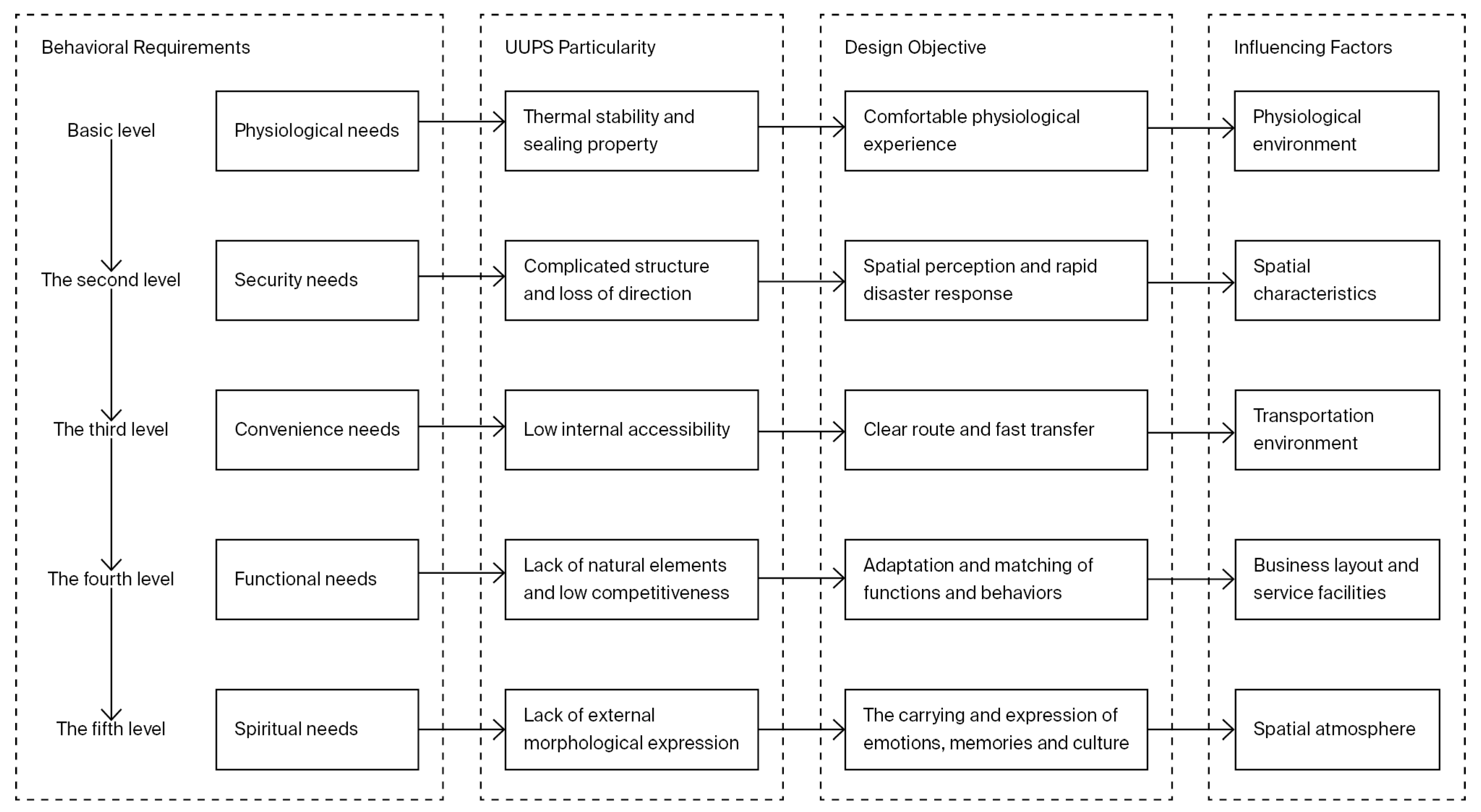
- The physical environment is the foundation affecting the hierarchy of user needs. While previous studies have explored the impact of physical factors such as temperature, humidity, air quality, lighting, and noise on users’ perceptual comfort [38], only “illumination” has been found to be related to the spatial distribution of user behavior [39]. The light environment in underground spaces is made up of artificial and natural light sources. Adam et al. found that increasing lighting brightness in underground pedestrian systems helps create a comfortable indoor environment and promotes social interaction [40]. However, subsequent studies pointed out that entirely static artificial lighting has negative effects on underground spaces: as the proportion of natural light decreases, users’ task performance, mood state, and cognitive evaluation significantly decline [41]. Therefore, while increasing the brightness of artificial light sources, actively introducing natural light is crucial for underground spaces.
- (2)
- Spatial structure is significantly related to users’ safety needs, including integration (measuring space accessibility), visibility (measuring the degree of visual integration of a space), and connectivity value (measuring the degree of aggregation or dispersion between a space and other spaces). Due to their grand spatial scale, complex spatial structure, and multi-level underground layout, UUPSs are more prone to causing problems like wayfinding difficulties and psychological panic [42]. Thus, enhancing visual permeability and spatial accessibility is paramount. Clear visual corridors allow users to perceive spatial boundaries and the overall layout, facilitating orientation and monitoring [43]. In order to calculate these values, previous studies often use space syntax, which describes the topological structural relationships between various elements in a spatial system and is therefore widely used in spatial structure analysis in architecture, urban studies, and underground space fields [44].
- (3)
- The transportation environment mainly refers to the ease with which users can reach transfer stations from their location. Firstly, distance to the transfer station inhibits pedestrian flow, as people typically gather around transfer stations, serving as primary trip origins and destinations [45]. Secondly, the number of turns from a node to the transfer station also affects behavioral activities: excessive turns within an underground space can weaken the sense of direction, cause wayfinding difficulties, and consequently reduce passenger flow [46]. Additionally, vertical facilities (e.g., stairs, elevators) effectively promote user behavioral activities by connecting underground and above-ground spaces [47].
- (4)
- Business layout directly shapes UUPS users’ consumption path choices, dwell time, and cross-scenario interaction behaviors. It is usually evaluated using the quantity and density of related catering, retail, entertainment, offices, etc. Research by Zacharias & Wang [48] indicates that a higher shop density increases people’s willingness to walk in underground spaces, and changes in site function also affect the redistribution of pedestrian flow.
- (5)
- Service facilities provide essential support for people’s travel: the more adequate the service facilities, the safer people feel, thereby improving travel quality. Among these, rest seats are the most frequently mentioned element for improving the usability of underground spaces. With the development of communication technology, smartphones and other wearable devices have become indispensable parts of people’s lives, and scholars have emphasized the importance of wireless and wired network signals and charging facilities for stay behaviors in underground space users [49].
- (6)
- Human-centered spatial design profoundly affects the psychological perception and behavioral experience of underground space users. Research has shown that “sidewalk width” and “activity area” are positively correlated with the vitality of underground spaces. Wider sidewalks increase people’s willingness to walk in underground spaces [48], and larger open spaces can accommodate more people for a range of activities [50]. Secondly, a lack of connection to the outside world and insufficient external stimulation in UUPSs can easily harm health, and hence the introduction of natural elements has received much attention [51]. Li and Wu’s research found that cognitive performance in scenes surrounded by green plants was significantly better than in red, blue, or ordinary indoor environments; compared to blue interiors, cognitive performance in green wall scenes improved by up to 6.71%. Furthermore, underground spaces containing cultural and spiritual identity can better meet users’ physical and mental needs, promote relaxation, and produce positive therapeutic effects [42].
1.3. Research Gaps and Our Study
2. Methodology
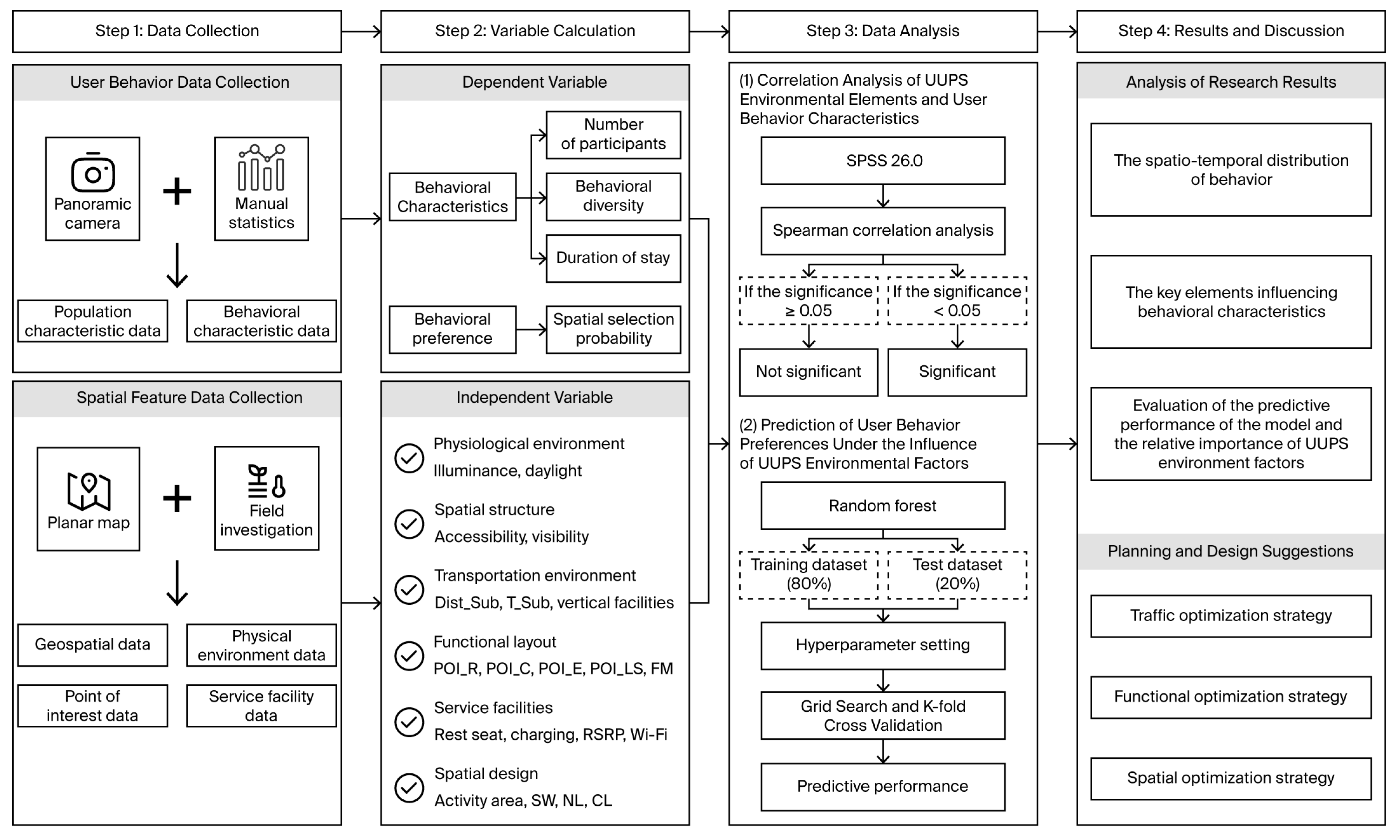
2.1. Research Framework
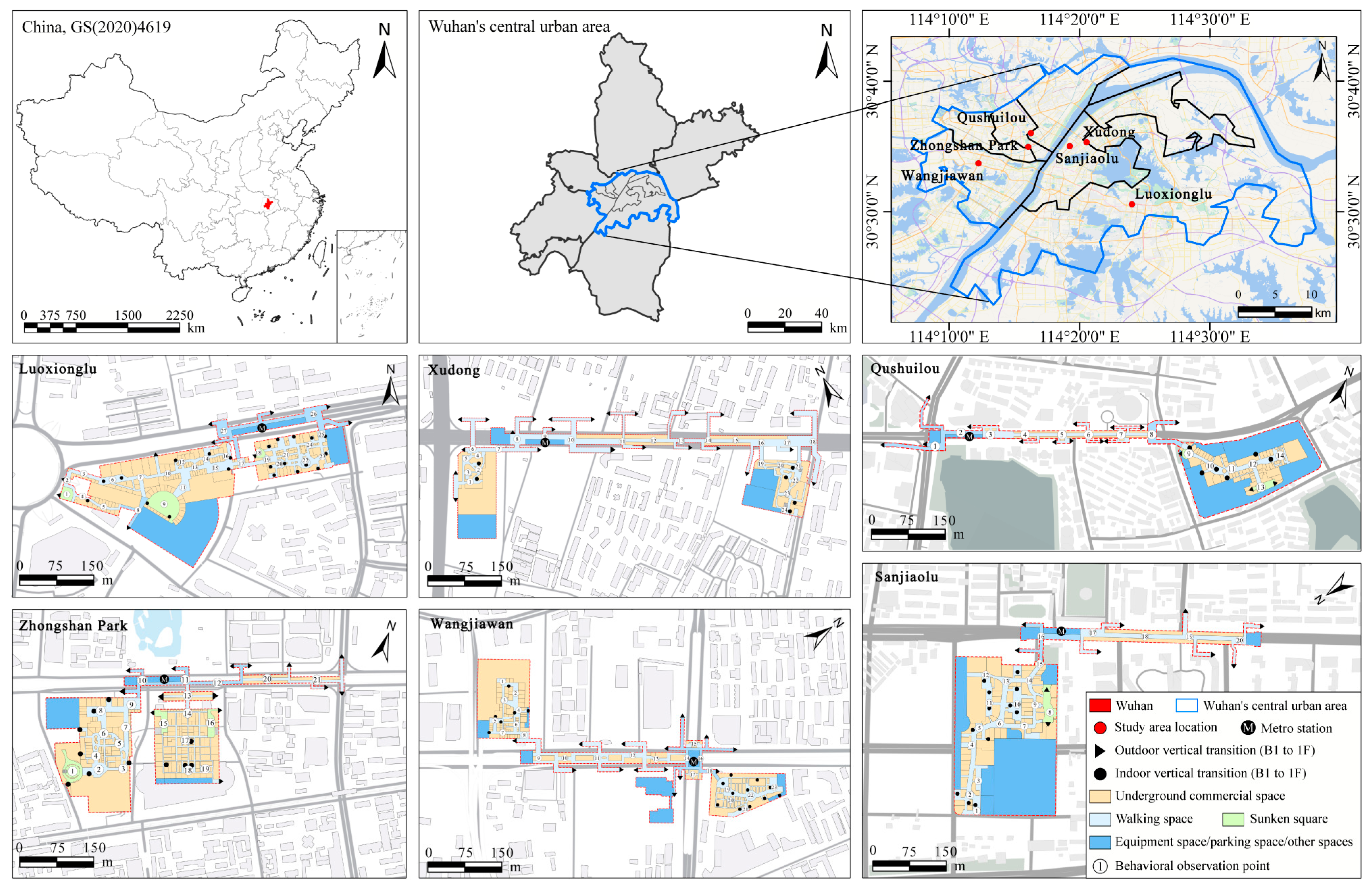
2.2. Research Area Selection
2.3. User Behavior Selection and Measurement
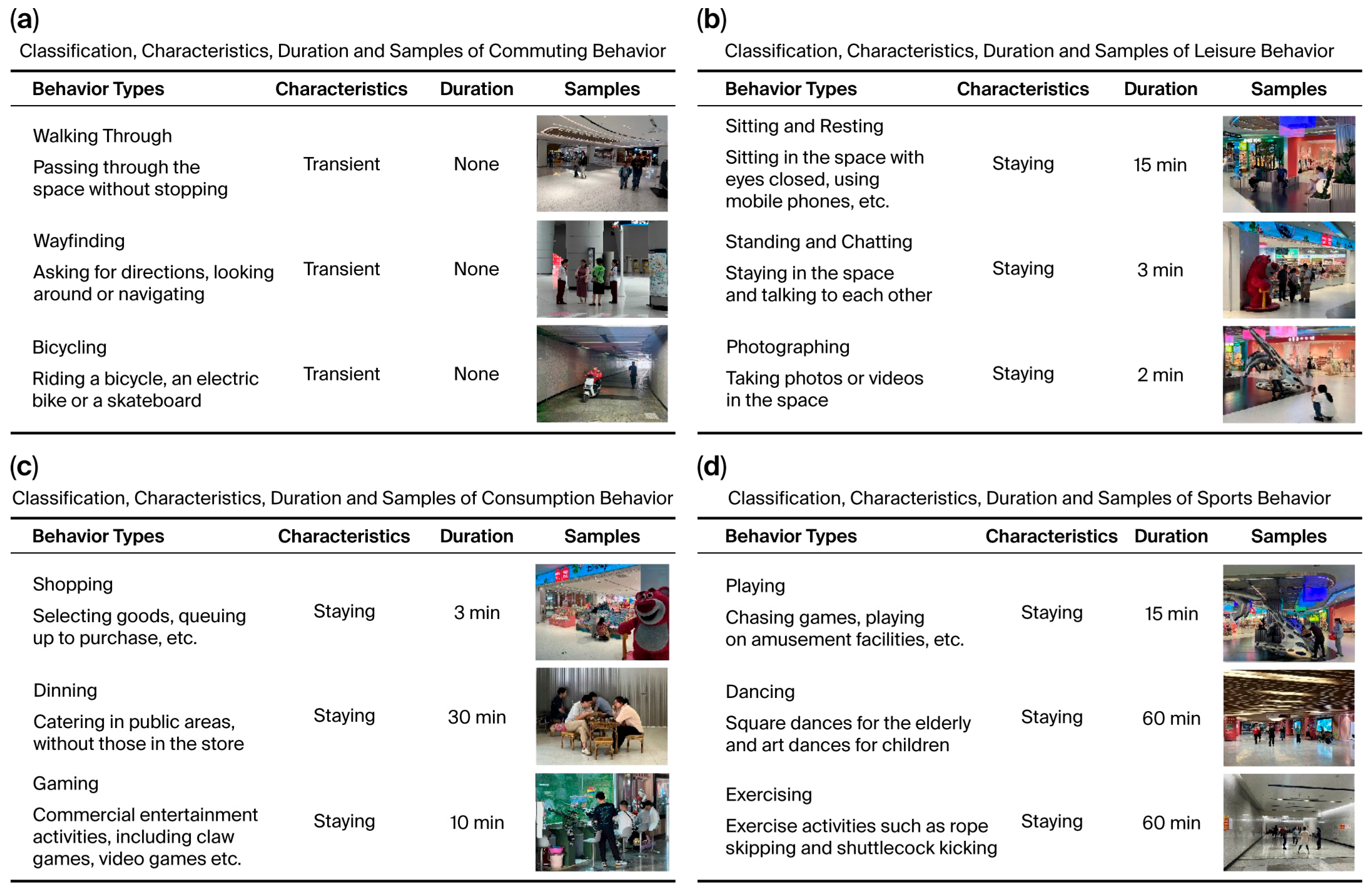
2.3.1. Behavior Selection
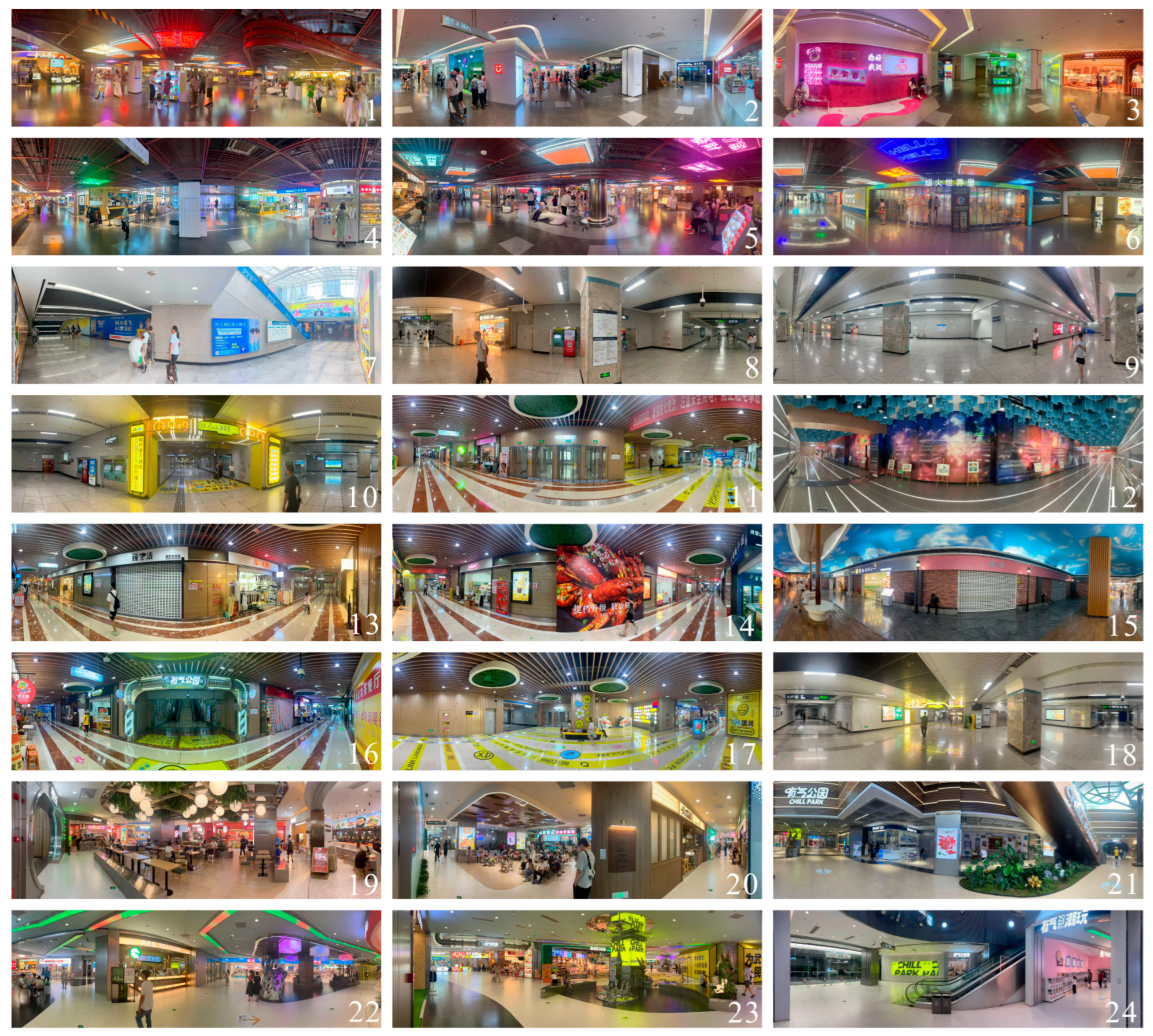
2.3.2. Data Collection and Processing
2.4. Variables
2.4.1. Independent Variables
2.4.2. Dependent Variables
2.5. Data Analysis Method
3. Results
3.1. User Behavior Characteristics
3.1.1. Temporal Distribution Characteristics
3.1.2. Spatial Distribution Characteristics
3.2. The Spatial Characteristics of UUPSs
3.3. Correlation Between UUPS Environmental Elements and User Behavior Characteristics
3.3.1. Correlation Between Number of Participants and UUPS Environmental Elements
3.3.2. Correlation Between Behavioral Diversity and UUPS Environmental Elements
3.3.3. Correlation Between Duration of Stay and UUPS Environmental Elements
3.4. Prediction Results of User Behavior Preferences Under the Influence of UUPS Environmental Elements
3.4.1. Model Training and Evaluation
3.4.2. Evaluating the Importance of UUPS Environmental Characteristics for Different Behavioral Preferences
4. Discussion
4.1. Key Elements Influencing User Behavior Characteristics in UUPSs: A Multi-Dimensional Perspective
4.2. Predictive Analysis of UUPS Environmental Attributes on Different Behavioral Preferences
4.3. Planning and Design Suggestions
4.3.1. Flow Optimization Strategies
4.3.2. Functional Optimization Strategies
4.3.3. Spatial Optimization Strategies
4.4. Research Limitations and Future Directions
5. Conclusions
Author Contributions
Funding
Institutional Review Board Statement
Informed Consent Statement
Data Availability Statement
Conflicts of Interest
Abbreviations
| UUPS | Urban Underground Public Spaces |
| UB | User Behavior |
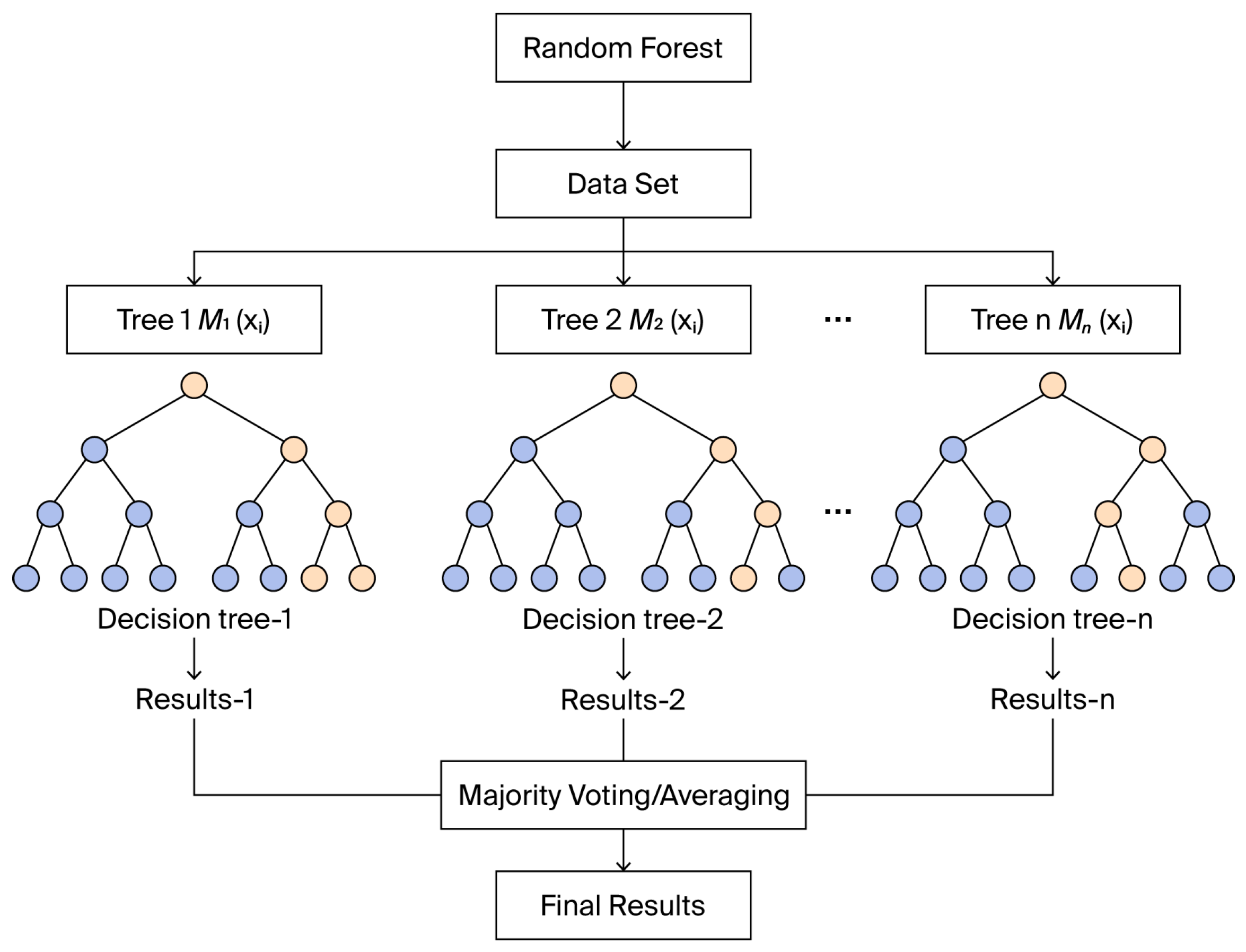
| RF | Random Forest |
| TOD | Transit-Oriented Development |
Appendix A

| Node | Illuminance (Lux) | Proportion of Daylight (Rp) | Image-Based Method | |
|---|---|---|---|---|
| Daytime | Nighttime | |||
| Xudong-7 | 568 | 351 | 38.28% | 12.43% |
| Xudong-21 | 469 | 411 | 12.42% | 5.28% |
| Luoxionglu-1 | 1006 | 205 | 79.65% | 67.66% |
| Luoxionglu-11 | 324 | 314 | 3.24% | 4.37% |
| Luoxionglu-23 | 962 | 401 | 58.27% | 66.51% |
| Zhongshan Park-1 | 489 | 480 | 1.84% | 3.28% |
| Zhongshan Park-2 | 182 | 218 | 0.00% | 0.00% |
| Zhongshan Park-13 | 284 | 303 | 0.00% | 0.00% |
| Wangjiawan-3 | 424 | 266 | 37.17% | 23.79% |
| Wangjiawan-19 | 387 | 291 | 24.88% | 14.42% |
| Wangjiawan-22 | 446 | 355 | 20.44% | 18.63% |
| Wangjiawan-23 | 894 | 153 | 82.91% | 53.81% |
| sanjiaolu-8 | 355 | 346 | 2.67% | 6.42% |
| Qushuilou-9 | 799 | 172 | 78.42% | 32.11% |
| Qushuilou-12 | 321 | 333 | 0.00% | 0.00% |
References
- Jia, X.; Wang, J.; Yan, B. Evaluation of existing underground public space supply based on the Node-Place-Experience model. Tunn. Undergr. Space Technol. 2024, 144, 105517. [Google Scholar] [CrossRef]
- Cui, J. Building three-dimensional pedestrian networks in cities. Undergr. Space 2021, 6, 217–224. [Google Scholar] [CrossRef]
- Besner, J. Cities Think Underground—Underground Space (also) for People. Procedia Eng. 2017, 209, 49–55. [Google Scholar] [CrossRef]
- Zeng, R.; Shen, Z.; Luo, J. Post-occupancy evaluation of user satisfaction: Case studies of 10 urban underground complexes in China. Tunn. Undergr. Space Technol. 2024, 143, 105500. [Google Scholar] [CrossRef]
- Cui, J.; Allan, A.; Lin, D. SWOT analysis and development strategies for underground pedestrian systems. Tunn. Undergr. Space Technol. 2019, 87, 127–133. [Google Scholar] [CrossRef]
- Yu, H.; Chen, Z.; Hu, W.; Zhang, J.; Xu, C.; Hu, B. Urban underground space value assessment and regeneration strategies in symbiosis with the urban block: A case study of large residential areas in Beijing. Tunn. Undergr. Space Technol. 2025, 163, 106728. [Google Scholar] [CrossRef]
- Debrock, S.; Van Acker, M.; Admiraal, H. Design recommendations for sustainable urban underground spaces. Tunn. Undergr. Space Technol. 2023, 140, 105332. [Google Scholar] [CrossRef]
- Kumar, V.; Das, B.K.; Vivek, A.K. Mass rapid transit systems and sustainable urban development: A review of impacts and implications. City Environ. Interact. 2026, 29, 100318. [Google Scholar] [CrossRef]
- Wang, B.S.; Liu, Y.; Tong, Z.; An, R.; Xu, J. Spatiotemporal Dynamic Characteristics of Land Use Intensity in Rapidly Urbanizing Areas from Urban Underground Space Perspectives. Sustainability 2023, 15, 13008. [Google Scholar] [CrossRef]
- Zhu, L.; Liu, Z.; Chen, Q. Review and Prospect of Urban Underground Space Planning Practices in China. In Proceedings of the Conference of the Associated Research Centers for the Urban Underground Space; Springer: Singapore, 2024. [Google Scholar] [CrossRef]
- Wu, J.; Yue, W.; Wang, E. Characteristics and trends of research on development and utilization of urban underground space in China from 2001 to 2023:based on knowledge graph analysis of CiteSpace and VOSviewer. J. Saf. Sci. Technol. 2025, 21, 83–89. [Google Scholar]
- Li, X.; Xu, H.; Li, C.; Sun, L.; Wang, R. Study on the demand and driving factors of urban underground space use. Tunn. Undergr. Space Technol. 2016, 55, 52–58. [Google Scholar] [CrossRef]
- Zhao, J.; Peng, F.-L.; Wang, T.-Q.; Zhang, X.-Y.; Jiang, B.-N. Advances in master planning of urban underground space (UUS) in China. Tunn. Undergr. Space Technol. 2016, 55, 290–307. [Google Scholar] [CrossRef]
- Li, Z.; Lu, Y.; Zhuang, Y.; Yang, L. Influencing factors of spatial vitality in underground space around railway stations: A case study in Shanghai. Tunn. Undergr. Space Technol. 2024, 147, 105730. [Google Scholar] [CrossRef]
- Sun, L.; Leng, J. Research on influencing factors of travel in underground space based on multi-source data: Spatial optimization design for low-carbon travel. Energy Build. 2021, 253, 111524. [Google Scholar] [CrossRef]
- Ma, C.; Peng, F.-L.; Qiao, Y.-K.; Li, H. Influential factors of spatial performance in metro-led urban underground public space: A case study in Shanghai. Undergr. Space 2023, 8, 229–251. [Google Scholar] [CrossRef]
- Wang, Y. Study on people’s use preference of underground commercial space in subway station. J. Undergr. Space Eng. 2018, 14, 18–26. [Google Scholar]
- Gu, Z.C.; Osaragi, T.; Lu, W. Simulating pedestrians’ spatio-temporal distribution in underground spaces. Sustain. Cities Soc. 2019, 48, 101552. [Google Scholar] [CrossRef]
- Niu, T.; Qing, L.; Han, L.; Long, Y.; Hou, J.; Li, L.; Tang, W.; Teng, Q. Small public space vitality analysis and evaluation based on human trajectory modeling using video data. Build. Environ. 2022, 225, 109563. [Google Scholar] [CrossRef]
- Chen, X.; Kang, J. The sound level threshold in underground dining spaces in terms of acoustic comfort. J. Appl. Acoust. 2016, 35, 157–164. [Google Scholar]
- Cai, X.Y.; Zhao, H.; Lei, X.; Fang, Z.; Liu, Y. Green Lighting Design of Underground Space from the Perspective of Health. In 2024 the 8th International Conference on Energy and Environmental Science, ICEES 2024; Liu, Y., Ed.; Springer: Cham, Switzerland, 2024; pp. 645–657. [Google Scholar] [CrossRef]
- Sui, X.M.; Chen, S.; Han, B.; Yu, S. Evaluation of the Thermal Environment of Xi’an Subway Stations in Summer and Determination of the Indoor Air Design Temperature for Air-Conditioning. Sustainability 2023, 15, 6111. [Google Scholar] [CrossRef]
- Dong, X.; Wu, Y.; Chen, X.; Li, H.; Cao, B.; Zhang, X.; Yan, X.; Li, Z.; Long, Y.; Li, X. Effect of thermal, acoustic, and lighting environment in underground space on human comfort and work efficiency: A review. Sci. Total Environ. 2021, 786, 147537. [Google Scholar] [CrossRef]
- Kim, J.; de Dear, R. Nonlinear relationships between individual IEQ factors and overall workspace satisfaction. Build. Environ. 2012, 49, 33–40. [Google Scholar] [CrossRef]
- Burnett, J.; Pang, A. Design and performance of pedestrian subway lighting systems. Tunn. Undergr. Space Technol. 2004, 19, 619–628. [Google Scholar] [CrossRef]
- Wang, X.; Shen, L.; Shi, S. Evaluation of underground space perception: A user-perspective investigation. Tunn. Undergr. Space Technol. 2023, 131, 104822. [Google Scholar] [CrossRef]
- Tang, S.N.; Wang, J.; Liu, W.; Tian, Y.; Ma, Z.; He, G.; Yang, H. A study of the cognitive process of pedestrian avoidance behavior based on synchronous EEG and eye movement detection. Heliyon 2023, 9, e13788. [Google Scholar] [CrossRef]
- Wang, D.; Liang, S.; Chen, B.; Wu, C. Investigation on the impacts of natural lighting on occupants’ wayfinding behavior during emergency evacuation in underground space. Energy Build. 2022, 255, 111613. [Google Scholar] [CrossRef]
- Wei, S.X.; Xu, D.; Wu, J.; Shen, Q.; Nie, T. An Experiment in Wayfinding in a Subway Station Based on Eye Tracker Analytical Techniques for Universal and Age-Friendly Design. Buildings 2025, 15, 1583. [Google Scholar] [CrossRef]
- Chan, H.Y.; Ip, L.-C.; Mansoor, U.; Chen, A. Pedestrian route choice with respect to new lift-only entrances to underground space: Case study of a metro station area in hilly terrain in Hong Kong. Tunn. Undergr. Space Technol. 2022, 129, 104678. [Google Scholar] [CrossRef]
- Swamidurai, S. Evaluation of people’s willingness to use underground space using structural equation modeling—Case of Phoenix market city mall in Chennai city, India. Tunn. Undergr. Space Technol. 2019, 91, 103012. [Google Scholar] [CrossRef]
- Lee, E.H.; Christopoulos, G.I.; Lu, M.; Heo, M.Q.; Soh, C.-K. Social aspects of working in underground spaces. Tunn. Undergr. Space Technol. 2016, 55, 135–145. [Google Scholar] [CrossRef]
- Peng, C.; Ma, C.X.; Dong, Y.H. Unravelling the Formation Mechanism of Sustainable Underground Pedestrian Systems: Two Case Studies in Shanghai. Sustainability 2023, 15, 11819. [Google Scholar] [CrossRef]
- Yan, B. Research on the Restoration of Underground Commercial Space from the Perspective of Female Shopping. Chin. J. Undergr. Space Eng. 2022, 18, 543–553. [Google Scholar]
- Peng, J.; Ren, C.; Lan, L.; Cui, X.; Zhang, L.; Wu, M. Effects of pedestrians’ visual search effectiveness and behavioral characteristics on the wayfinding performance at underground rail interchange stations: A field test study. Tunn. Undergr. Space Technol. 2025, 162, 106617. [Google Scholar] [CrossRef]
- Yang, H.; Peng, J.; Lu, Y.; Wang, J.; Yan, X. Nonlinear impact of built environment on people with disabilities’ metro use behavior. Appl. Geogr. 2024, 169, 103323. [Google Scholar] [CrossRef]
- Maslow, A.H. A Theory of Human Motivation. Psychol. Rev. 1943, 50, 370–396. [Google Scholar] [CrossRef]
- Cao, S.; Leng, J.; Qi, D.; Kumar, P.; Chen, T. Sustainable underground spaces: Design, environmental control and energy conservation. Energy Build. 2022, 257, 111779. [Google Scholar] [CrossRef]
- Xu, Y.; Chen, X. Uncovering the relationship among spatial vitality, perception, and environment of urban underground space in the metro zone. Undergr. Space 2023, 12, 167–182. [Google Scholar] [CrossRef]
- Roberts, A.C.; Christopoulos, G.I.; Car, J.; Soh, C.-K.; Lu, M. Psycho-biological factors associated with underground spaces: What can the new era of cognitive neuroscience offer to their study? Tunn. Undergr. Space Technol. 2016, 55, 118–134. [Google Scholar] [CrossRef]
- Su, H.; Wei, W.; Liu, X.; Wang, Q.; Yang, B. A pilot study exploring the impact of daylight gradient on occupant in underground space. Dev. Built Environ. 2025, 22, 100658. [Google Scholar] [CrossRef]
- Li, J.; Wu, W.; Jin, Y.; Zhao, R.; Bian, W. Research on environmental comfort and cognitive performance based on EEG + VR + LEC evaluation method in underground space. Build. Environ. 2021, 198, 107886. [Google Scholar] [CrossRef]
- Zhou, B.; Gui, Y.; Xie, X.; Li, W.; Li, Q. A multi-category intelligent method for the evaluation of visual comfort in underground space. Tunn. Undergr. Space Technol. 2022, 124, 104488. [Google Scholar] [CrossRef]
- Xu, Y.; Chen, X. Quantitative analysis of spatial vitality and spatial characteristics of urban underground space (UUS) in metro area. Tunn. Undergr. Space Technol. 2021, 111, 103875. [Google Scholar] [CrossRef]
- Xu, Y.; Chen, X. The spatial vitality and spatial environments of urban underground space (UUS) in metro area based on the spatiotemporal analysis. Tunn. Undergr. Space Technol. 2022, 123, 104401. [Google Scholar] [CrossRef]
- Cui, J.; Allan, A.; Taylor, M.A.; Lin, D. An Examination of Pedestrian Trip Behaviour in Underground Pedestrian Systems. Int. Plan. Stud. 2015, 20, 209–227. [Google Scholar] [CrossRef]
- Ota, A.; Mizuno, R.; Garrido, G.U.; Kaneda, T. Analysis of the Correlation Between Underground Spatial Configurations and Pedestrian Flows Using Space Syntax Measures: A Case Study of the Sakae District Underground Mall Complex. In Downtown Dynamics; Kaneda, T., Ed.; Springer: Tokyo, Japan, 2020; pp. 65–83. [Google Scholar] [CrossRef]
- Zacharias, J.; Wang, B. Willingness to walk in underground space—Evidence from Singapore. IOP Conf. Ser. Earth Environ. Sci. 2021, 703, 012002. [Google Scholar] [CrossRef]
- Venugopal, V.; Roberts, A.C.; Kwok, K.-W.; Christopoulos, G.I.; Soh, C.-K. Employee experiences in underground workplaces: A qualitative investigation. Ergonomics 2020, 63, 1337–1349. [Google Scholar] [CrossRef]
- Hong, X.; Li, S.; Sun, W.; Ji, X. Assessment and spatial variation analysis of the collaborative development potential between underground public spaces and urban rail transit in China’s urban central areas. Tunn. Undergr. Space Technol. 2025, 158, 106415. [Google Scholar] [CrossRef]
- Chan, I.Y.S.; Dong, Z.; Chen, H. Impacts of connections to the outside on underground space occupants’ psychophysiological health: A virtual reality-based experimental approach. Tunn. Undergr. Space Technol. 2024, 147, 105675. [Google Scholar] [CrossRef]
- Wuhan Metro Daily Average Passenger Volume Data Comes from the Official Website of Wuhan Municipal People’s Government. [EB/OL]. Available online: https://www.wuhan.gov.cn/sy/whyw/202407/t20240729_2434302.shtml (accessed on 16 April 2026).
- Liu, L.; Zhang, M.; Xu, T. A conceptual framework and implementation tool for land use planning for corridor transit oriented development. Cities 2020, 107, 102939. [Google Scholar] [CrossRef]
- Yang, Y.N.; Zeng, J.; Yin, J.; Wu, P.; Xu, G.; Jing, C.; Zhou, J.; Wen, X.; Reinders, J.; Amatyakul, W.; et al. Metro Stations as Catalysts for Land Use Patterns: Evidence from Wuhan Line 11. Sustainability 2024, 16, 6320. [Google Scholar] [CrossRef]
- Gehl, J. Life Between Buildings: Using Public Space; VAN Nosrand Reinhold: New York, NY, USA, 1987. [Google Scholar]
- Zhang, J.; Zhou, W.; Lian, H.; Hu, R. Research on Optimization Strategy of Commercial Street Spatial Vitality Based on Pedestrian Trajecto-ries. Buildings 2024, 14, 1240. [Google Scholar] [CrossRef]
- Mu, B.; Liu, C.; Mu, T.; Xu, X.; Tian, G.; Zhang, Y.; Kim, G. Spatiotemporal fluctuations in urban park spatial vitality determined by on-site observation and behavior mapping: A case study of three parks in Zhengzhou City, China. Urban For. Urban Green. 2021, 64, 127246. [Google Scholar] [CrossRef]
- Liu, M.; Yang, C.; Fan, Z.; Yuan, C. Prediction approach on pedestrian outdoor activity preference under factors of public open space integrated microclimate. Build. Environ. 2023, 244, 110761. [Google Scholar] [CrossRef]
- Wang, X.; Tang, P.; He, Y.; Woolley, H.; Hu, X.; Yang, L.; Luo, J. The correlation between children’s outdoor activities and community space characteristics: A case study utilizing SOPARC and KDE methods in Chengdu, China. Cities 2024, 150, 105002. [Google Scholar] [CrossRef]
- Zeng, R.; Zhao, Z.; Zhang, J.; Shen, Z.; Luo, J. Indoor environmental quality and user satisfaction: Post-occupancy evaluation of urban underground complex. Build. Environ. 2025, 270, 112492. [Google Scholar] [CrossRef]
- Zhang, Y.; Xie, Z.; Zhao, X.; Pu, J.; Wang, Y.; Xiong, B. UPUCS: Spatial evaluation of user-perceived comfort in underground commercial space. Tunn. Undergr. Space Technol. 2025, 155, 106169. [Google Scholar] [CrossRef]
- Borruso, G. Network Density Estimation: A GIS Approach for Analysing Point Patterns in a Network Space. Trans. Gis 2010, 12, 377–402. [Google Scholar] [CrossRef]
- Breiman, L. Random Forests. Machine Learning. J. Clin. Microbiol. 2001, 45, 5–32. [Google Scholar]
- Sexton, J.; Laake, P. Standard errors for bagged and random forest estimators. Comput. Stat. Data Anal. 2009, 53, 801–811. [Google Scholar] [CrossRef]
- Chen, M.; Bai, J.; Zhu, S.; Yang, B.; Dai, F. The influence of neighborhood-level urban morphology on PM2.5 variation based on random forest regression. Atmos. Pollut. Res. 2021, 12, 101147. [Google Scholar] [CrossRef]
- Chen, E.; Ye, Z. Identifying the nonlinear relationship between free-floating bike sharing usage and built environment. J. Clean. Prod. 2021, 280, 124281. [Google Scholar] [CrossRef]
- Huang, X.; Lu, G.; Yin, J.; Tan, W. Non-linear associations between the built environment and the physical activity of children. Transp. Res. Part D Transp. Environ. 2021, 98, 102968. [Google Scholar] [CrossRef]
- Yang, L.; Ao, Y.; Ke, J.; Lu, Y.; Liang, Y. To walk or not to walk? Examining non-linear effects of streetscape greenery on walking propensity of older adults. J. Transp. Geogr. 2021, 94, 103099. [Google Scholar] [CrossRef]
- Shang, Q.; Meng, F. Factors Affecting the Vitality of Underground Commercial Space. Chin. J. Undergr. Space Eng. 2024, 20, 1073–1085. [Google Scholar]
- Dong, Y.H.; Peng, F.L.; Guo, T.F. Quantitative assessment method on urban vitality of metro-led underground space based on multi-source data: A case study of Shanghai Inner Ring area. Tunn. Undergr. Space Technol. 2021, 116, 104108. [Google Scholar] [CrossRef]
- Zhao, X.X.; Chen, Y.; Wu, Y.; Guo, D.; Chen, Z. Enhancing Urban Landscapes through Underground Space Utilization: Public Perceptions. Sustainability 2024, 16, 4501. [Google Scholar] [CrossRef]
- Liu, W.; Du, M.; Hong, B. Effects of underground green walls on human cognitive performance and physiological responses: A virtual reality simulation study. Landsc. Archit. Sustain. 2025, 1, 100005. [Google Scholar] [CrossRef]
- Yao, T.N.; Ding, S.; Zhang, Y.; Chen, X.; Xu, Y.; Hu, K.; Xu, X.; Sun, L.; Liang, Z.; Huang, Y.; et al. Research on Range of Appropriate Spatial Scale of Underground Commercial Street Based on Psychological Perception Evaluation. Appl. Sci. 2010, 14, 5435. [Google Scholar] [CrossRef]
- Sun, L.; Fang, T.; Sun, Y.; Wang, B.; Shao, Z. Research on the correlation between component elements and psychological perception of the spatial form of underground commercial street corners based on virtual reality technology. Front. Psychol. 2022, 13, 950593. [Google Scholar] [CrossRef] [PubMed]
- Indraganti, M.; Rao, K.D. Effect of age, gender, economic group and tenure on thermal comfort: A field study in residential buildings in hot and dry climate with seasonal variations. Energy Build. 2010, 42, 273–281. [Google Scholar] [CrossRef]
- Cheberiachko, I.M.; Stolbchenko, O.V.; Yurchenko, A.A.; Luts, I.O. Defining the level of human comfort in the office environment by thermal factor. Nauk. Visnyk Natsionalnoho Hirnychoho Universytetu 2022, 1, 69–75. [Google Scholar] [CrossRef]
- Hamzah, B.; Mulyadi, R.; Amin, S.; Kusno, A. Adaptive thermal comfort of naturally ventilated classrooms of elementary schools in the tropics. IOP Conf. Ser. Earth Environ. Sci. 2020, 402, 012021. [Google Scholar] [CrossRef]
- Tang, S.N.; Xiang, D.; Yang, H.; Liu, W.; He, G.; Ma, Z.; Wang, J.; Meng, Y.; Shen, S. Research on pathfinding cognition in complex underground public space utilizing eye movement and EEG synchronous detection. Dev. Built Environ. 2023, 16, 100251. [Google Scholar] [CrossRef]
- Tang, Y.; Ji, Y. Study on the commercial connection space and wayfinding signage system in the Metro of Xi′an. J. Xi’an Univ. Archit. Technol. Nat. Sci. Ed. 2013, 45, 726–731. [Google Scholar] [CrossRef]
- Martland, R.; Mondelli, V.; Gaughran, F.; Stubbs, B. Can high-intensity interval training improve physical and mental health outcomes? A meta-review of 33 systematic reviews across the lifespan. J. Sports Sci. 2020, 38, 430–469. [Google Scholar] [CrossRef]
- Hong, X.C.; Li, S.; Chen, T.; Ji, X.; Song, X. Spatial performance evaluation and optimization of integrated aboveground and underground spaces in urban commercial complexes. J. Asian Archit. Build. Eng. 2025, 24, 623–649. [Google Scholar] [CrossRef]
- Zacharias, J. Planning Underground Urban Space—Where, When and How? In Proceedings of the 11th ACUUS Conference: “Underground Space: Expanding the Frontiers”, Athens, Greece, 10–13 September 2007. [Google Scholar]




| Research Direction | Behavior Type | Main Research Contents | Behavioral Measurement Indicators | Data Collection Method | Reference |
|---|---|---|---|---|---|
| The driving force of spatial environmental elements on behavior | |||||
| Influence on transient behavior | Pedestrian avoidance | Personal factors mainly affect the avoidance patterns of pedestrians, while environmental factors mainly affect the frequency of pedestrians’ avoidance behaviors. | Avoidance mode, avoidance frequency | Electroencephalogram and eye movement detection | [27] |
| Evacuation | Natural lighting, spatial familiarity, and crowd effects have a more significant impact on overall human decision-making, while habits and brightness have a smaller influence. | Evacuation efficiency | Virtual reality | [28] | |
| Pathfinding | The signage system, vertical facilities, color, lighting, and structure affect the wayfinding efficiency of users, among which the signage system has the greatest impact. | Display ratio | Electroencephalogram and eye movement detection | [29] | |
| Path selection | Route attributes, especially the travel time and the existence of only elevator exits, have a significant impact on the intention to use underground routes. | Route selection ratio | Questionnaire survey | [30] | |
| Influence on staying behavior | Consumption | Appropriate planning in terms of comfort, safety, and form enhances people’s willingness to consume in underground commercial spaces. | Consuming willingness | Questionnaire survey | [31] |
| Social | A spacious and high-ceiling space deprives users of opportunities for social activities, but it is conducive to the basic elements of casual conversation, such as gazing and taking turns to talk. | Pedestrian flow | Field investigation | [32] | |
| Population segmentation and behavioral differences | |||||
| Gender difference | Walking | There is no significant difference in the time distribution pattern between men and women in UUPSs, but there are more female users. | Pedestrian flow | Count of the cordon | [33] |
| Consumption | The business format configuration and sense of security of UCSs have a certain restorative effect on women’s shopping experience, but the effects of environmental atmosphere and guiding signs are relatively poor. | Restorative evaluation | Questionnaire survey | [34] | |
| Age difference | Pathfinding | The elderly group showed the lowest orientation performance, and elderly women represent the most vulnerable group. | Effective visual recognition rate and effective fixation duration rate | On-site eye-tracking test | [35] |
| Identity difference | Commuting | People with disabilities take the subway more frequently and for shorter distances than non-disabled people. | The number of subway passengers with disabilities | Statistics of transportation card data | [36] |
| Dimension | Indicator | Abb | Calculation Method | Unit | Instrument/ Software |
|---|---|---|---|---|---|
| Physical environment | Illuminance | Ill | Vertical measurement at the sampling point with a handheld illuminance meter and the average value within the time period calculation. | lx | UT383 Illuminance meter, UNI-TREND TECHNOLOGY Co., Ltd., Dongguan, China. |
| Daylight | DL | Calculation of the proportion of natural light in panoramic images. | % | Photoshop | |
| Spatial structure | Accessibility | Acc | The local integration degree calculation using the spatial syntactic line segment model (r = 600 m). | — | Depthmap X 0.6 |
| Visibility | Vis | The calculation of the degree of visual integration in a visibility graph model with a grid size of 1 m × 1 m (r = 3 m). | — | ||
| Transportation environment | Distance to the subway station | Dist_Sub | The walking distance from the subway station. | m | Map recording |
| Turns to the subway station | T_Sub | The number of turns from the subway station. | — | ||
| Vertical facilities | VF | The reverse distance weighting method is used for evaluation: , where d refers to the straight-line distance from the center of the node to the vertical facility. | — | ||
| Function layout | Retail POI | POI_R | The number of various types of POIs within a 50 m walking range of the node was obtained from the online map. Field investigations were conducted to verify the distribution and location information of the points of interest. | — | Gaode Maps 16.13.1 |
| Catering POI | POI_C | — | |||
| Entertainment POI | POI_E | — | |||
| Life service POI | POI_LS | — | |||
| Functional mixity | FM | Entropy of POIs at the node: , where represents the entropy of the random variable x. Pi is the probability that x takes xi. The larger the entropy value, the higher the degree of function mixing. | — | ||
| Service facilities | Rest seat | RS | The number of elements near the node location with field investigation. | — | Map recording |
| Charging facilities | CF | — | |||
| Communication signal | CS | Determined by holding a mobile phone, standing at the sampling point for 1 min, measuring RSRP (Reference Signal Receiving Power) data, and taking the mean. | dBm | ||
| Wireless network | Wi-Fi | Determined by holding a mobile phone and standing at the sampling point to measure the average Wi-Fi download rate. | KB/s | ||
| Spatial design | Activity area | AA | The area available for activities at the nodes in the filed investigation. | m2 | ArcGIS |
| Sidewalk width | SW | The width of the sidewalk at the nodes in the filed investigation. | m | Infrared distance meter | |
| Natural landscape | NL | A Likert scale with a score of 0 to 5 was used for evaluation, with the higher scores indicating a more comprehensive consideration of landscape factors. | — | Map recording | |
| Cultural landscape | CL | — |
| Dimension | Indicator | Calculation Method | Explanation |
|---|---|---|---|
| Behavioral characteristics | Number of Participants | The number of people observed at the nodes during the test period | |
| Behavioral Diversity | k represents the types of activities carried out by the user in the space, and is the ratio of the quantity of a certain type of activity to the total number of activities occurring in the space. | ||
| Estimated Dwell Time Index | The total length of stay including each person engaged in fixed or continuous activities: | dur represents the total dwell time, is the number of occurrences of the behavior type k in the space, and is the duration of the behavior type k. | |
| Behavioral preference | Spatial Selection Probability | P represents the probability of pedestrians appearing in the subspace, represents the number of users of a specific behavior type in the subspace, and represents the total number of users conducting the same behavior in the test field at the same time. |
| Dimension | Indicator | Number of Participants | Behavioral Diversity | Duration of Stay | |||
|---|---|---|---|---|---|---|---|
| Correlation Coefficient | p-Value | Correlation Coefficient | p-Value | Correlation Coefficient | p-Value | ||
| Physical environment | Ill | −0.005 | 0.954 | 0.334 ** | 0.000 | 0.185 * | 0.036 |
| DL | 0.039 | 0.665 | 0.010 | 0.911 | 0.061 | 0.489 | |
| Spatial structure | Acc | 0.388 ** | 0.000 | 0.282 ** | 0.001 | 0.272 ** | 0.002 |
| Vis | 0.178 * | 0.044 | 0.414 ** | 0 | 0.254 ** | 0.004 | |
| Transport environment | Dist_Sub | −0.283 ** | 0.001 | 0.109 | 0.217 | 0.271 ** | 0.002 |
| T_Sub | −0.102 | 0.249 | 0.135 | 0.126 | 0.263 ** | 0.003 | |
| VF | 0.202 * | 0.022 | −0.087 | 0.325 | 0.027 | 0.762 | |
| Function layout | POI_R | 0.035 | 0.692 | 0.227 ** | 0.010 | 0.153 | 0.083 |
| POI_C | 0.130 | 0.141 | 0.398 ** | 0 | 0.633 ** | 0 | |
| POI_E | 0.145 | 0.100 | 0.429 ** | 0 | 0.104 | 0.121 | |
| POI_LS | −0.166 | 0.059 | 0.003 | 0.971 | −0.070 | 0.430 | |
| FM | 0.095 | 0.285 | 0.448 ** | 0 | 0.413 ** | 0 | |
| Service facilities | RS | 0.169 | 0.055 | 0.437 ** | 0 | 0.638 ** | 0 |
| CF | 0.262 ** | 0.003 | 0.157 | 0.075 | 0.246 ** | 0.005 | |
| CS | 0.286 ** | 0.001 | 0.614 ** | 0 | 0.487 ** | 0 | |
| Wi-Fi | −0.032 | 0.723 | 0.588 ** | 0 | 0.381 ** | 0.000 | |
| Spatial design | AA | 0.273 ** | 0.002 | −0.157 | 0.076 | −0.122 | 0.169 |
| SW | 0.255 ** | 0.004 | 0.174 | 0.079 | 0.129 | 0.146 | |
| NL | 0.268 ** | 0.002 | 0.103 | 0.247 | 0.108 | 0.223 | |
| CL | 0.157 | 0.078 | 0.070 | 0.432 | −0.026 | 0.768 | |
| Model | Sample Size | Parameters | Performance | ||||
|---|---|---|---|---|---|---|---|
| n_Estimators | Max_Depth | Min_Smaples_Split | MAE | RMSE | R2 | ||
| Commuting | 24,629 | 650 | 4 | 3 | 0.035 | 0.050 | 0.561 |
| Leisure | 13,932 | 500 | 5 | 2 | 0.017 | 0.024 | 0.710 |
| Consumption | 8010 | 600 | 5 | 2 | 0.021 | 0.031 | 0.658 |
| Sports | 1157 | 750 | 3 | 5 | 0.041 | 0.055 | 0.434 |
| Variable | Commuting | Leisure | Consumption | Sports | ||||
|---|---|---|---|---|---|---|---|---|
| Relative Importance (%) | Rank | Relative Importance (%) | Rank | Relative Importance (%) | Rank | Relative Importance (%) | Rank | |
| Physical environment | ||||||||
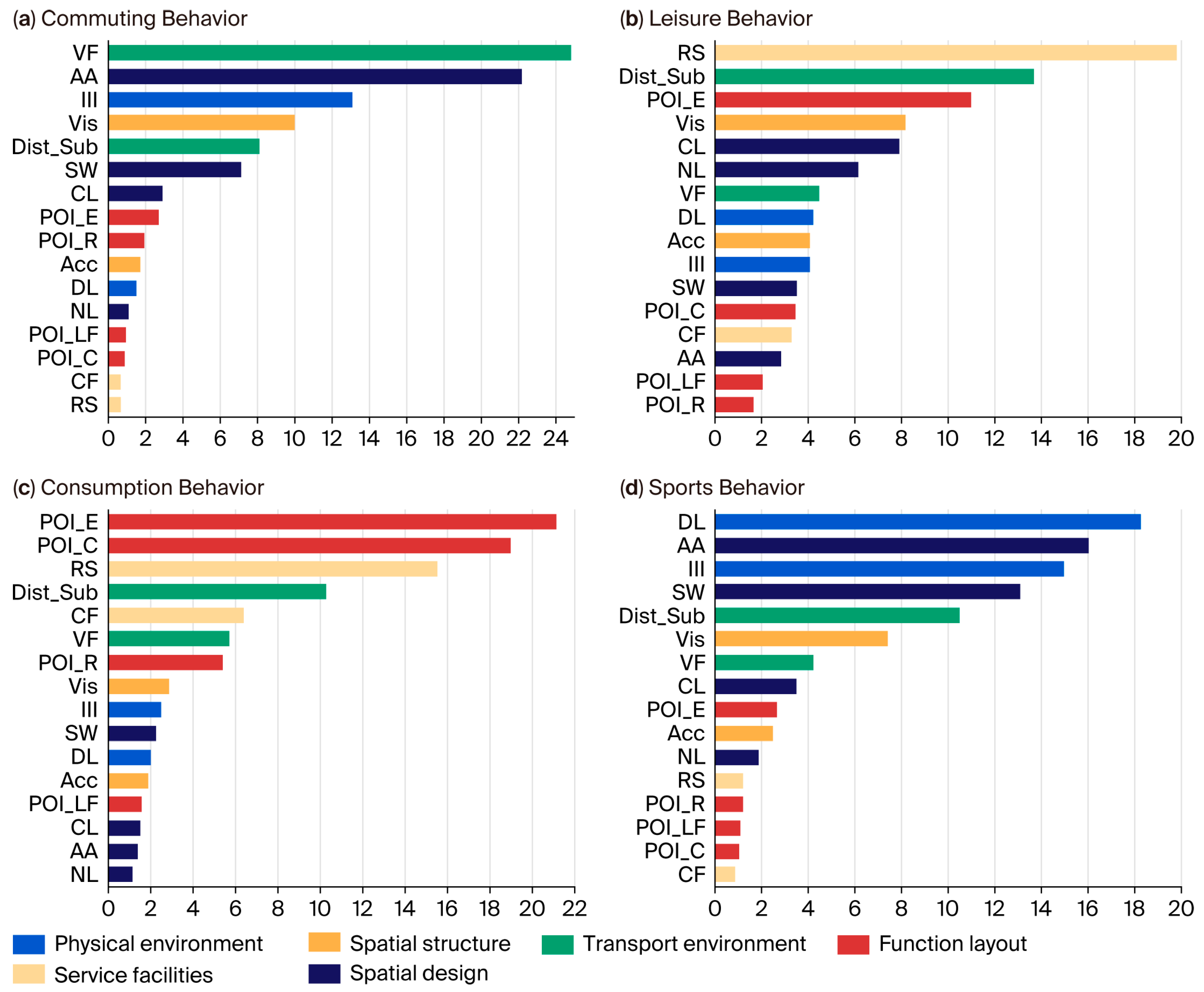
| Ill | 13.08 | 3 | 4.05 | 10 | 2.45 | 9 | 14.92 | 3 |
| DL | 1.49 | 11 | 4.19 | 8 | 1.99 | 11 | 18.25 | 1 |
| Spatial structure | ||||||||
| Acc | 1.68 | 10 | 4.06 | 9 | 1.85 | 12 | 2.47 | 10 |
| Vis | 10.00 | 4 | 8.15 | 4 | 2.82 | 8 | 7.38 | 6 |
| Transport environment | ||||||||
| Dist_Sub | 8.11 | 5 | 13.64 | 2 | 10.21 | 4 | 11.47 | 5 |
| VF | 24.80 | 1 | 4.46 | 7 | 5.70 | 6 | 4.20 | 7 |
| Function layout | ||||||||
| POI_R | 1.88 | 9 | 1.62 | 16 | 5.38 | 7 | 1.18 | 13 |
| POI_C | 0.86 | 14 | 3.43 | 12 | 18.95 | 2 | 0.60 | 15 |
| POI_E | 2.69 | 8 | 10.96 | 3 | 21.10 | 1 | 2.65 | 9 |
| POI_LF | 0.89 | 13 | 2.04 | 15 | 1.53 | 13 | 1.07 | 14 |
| Service facilities | ||||||||
| RS | 0.63 | 15 | 19.80 | 1 | 15.47 | 3 | 1.19 | 12 |
| CF | 0.62 | 16 | 3.26 | 13 | 6.36 | 5 | 0.24 | 16 |
| Spatial design | ||||||||
| AA | 22.18 | 2 | 2.83 | 14 | 1.35 | 15 | 16.01 | 2 |
| SW | 7.14 | 6 | 3.49 | 11 | 2.24 | 10 | 13.06 | 4 |
| NL | 1.08 | 12 | 6.12 | 6 | 1.12 | 16 | 1.83 | 11 |
| CL | 2.87 | 7 | 7.90 | 5 | 1.48 | 14 | 3.48 | 8 |
Disclaimer/Publisher’s Note: The statements, opinions and data contained in all publications are solely those of the individual author(s) and contributor(s) and not of MDPI and/or the editor(s). MDPI and/or the editor(s) disclaim responsibility for any injury to people or property resulting from any ideas, methods, instructions or products referred to in the content. |
© 2026 by the authors. Licensee MDPI, Basel, Switzerland. This article is an open access article distributed under the terms and conditions of the Creative Commons Attribution (CC BY) license.
Share and Cite
Zhou, Z.; Chen, Y.; Lv, X.; Lin, R. User Behavior and Preferences in Metro-Led Urban Underground Public Spaces: The Role of Environmental Factors. Buildings 2026, 16, 1689. https://doi.org/10.3390/buildings16091689
Zhou Z, Chen Y, Lv X, Lin R. User Behavior and Preferences in Metro-Led Urban Underground Public Spaces: The Role of Environmental Factors. Buildings. 2026; 16(9):1689. https://doi.org/10.3390/buildings16091689
Chicago/Turabian StyleZhou, Zhiwei, Yishan Chen, Xinbei Lv, and Runze Lin. 2026. "User Behavior and Preferences in Metro-Led Urban Underground Public Spaces: The Role of Environmental Factors" Buildings 16, no. 9: 1689. https://doi.org/10.3390/buildings16091689
APA StyleZhou, Z., Chen, Y., Lv, X., & Lin, R. (2026). User Behavior and Preferences in Metro-Led Urban Underground Public Spaces: The Role of Environmental Factors. Buildings, 16(9), 1689. https://doi.org/10.3390/buildings16091689