1. Introduction
The integration of AI tools into design has become a major topic in architectural discussions and a strategic challenge in architectural design education. This argument is not a matter to be decided by instructors alone; it should be decided by all stakeholders, including instructors, students, business owners, and, consequently, clients. Argumental discussions were held on how and when to adopt digital design tools in architectural education syllabi, as well as the importance of expanding design toolkits to increase newly acquired skills and promote iterative and explorative processes to increase the conceptual pool of ideas, examining its effect on creativity and the fluidity of the pedagogical process in design education and its substantial cognitive and pedagogical implications [
1,
2,
3,
4]; however, these discussions are diminished with the new invasion of the AI tools used in design and, consequently, in its education process.
The emergence of digital technology and its widespread use in design has made it imperative to employ visualization techniques to present both the design approach (information gathering, analysis, and concept generation) and the design solution itself, with all its drawings, whether 2D or 3D. Academically, since the nineties of the past century, design students have found themselves amid this technological leap, as it has shown its importance in performing the logical operations and mathematical calculations required to complete architectural drawings with higher accuracy and speed. At first, this technology executed the scientific–pragmatic part of the design production process, leaving room for the more difficult creative artistic part of the design process, which was very convenient for both students and instructors. However, digital technology rapidly became more pervasive and began to dominate the students’ tools and methodologies of thinking, deeply transforming the protocols, the design conceptualization procedures, and presentation techniques, bringing designs to life through groundbreaking, high-quality 3D renderings and models with breathtaking detail. Roberto Ruggiero agrees that different ICT technologies, along with families of interconnected tools for parametric and computational design, have revolutionized the handling of design ideas and their production [
5]. Complex graphics crept into designs as advances in software algorithms made dreams come true, not only fulfilling the designers’ fantasies but also generating forms and shapes that were not in their imaginative agenda, and as a consequence, the dilemma of ownership and authenticity of these ideas began. This dilemma has affected design pedagogy in its core dimensions: teaching strategies, learning outcomes (LOs), and assessment methods. Doyle & Senske define a learning outcome as a precise statement that outlines the knowledge and skills students will acquire as a result of participating in the learning activity of a specific course [
6]. It also includes the methods of assessing this knowledge and these skills.
The rise of AI technologies and their availability to students without any restrictions or supervision from instructors directly attacks the learning process, as it prevents the validation of the LOs in design courses. The common LOs of any design studio course involve producing a creative design solution to a design problem through a design process specified by the course instructors, following a given project brief. Students usually follow a design process outlined in the course syllabus, with a timeline determined by the syllabus. In this syllabus, instructors outline the submission milestones students must follow to assess their progress on the project. The students’ submissions usually include sketches, analytic illustrations, plans, technical drawings, and 2D and 3D renderings. These elements are well presented, both visually and verbally, by the students for instructors’ assessment. If the students use AI at any stage of the design process, this leaves the evaluation process unjust and inefficient, as AI interference changes the whole equation of the project, leaving instructors unsure of the limits and boundaries of what was created by AI and by the students.
Accordingly, several questions arise regarding the relationship between AI and design education, specifically in the design studio. How can AI be a tool that executes the ideas and thoughts of students without manipulating them, instead of a decision-making tool? How can students benefit from AI when trying several options to execute their ideas with high-quality renderings and in less time? And subsequently, how can the assessment process be made procedural to evaluate students’ thisnking processes and approaches in finding justified solutions to the design problems, without being influenced by the esthetics of the renderings produced by the AI, to secure a fair evaluation process between different students? The answers to these questions redefine the limits of the interference of AI in the learning process, dealing with it as an ally and preserving the full attainment of the course LOs without compromising the students’ critical and analytical skills or their awareness and mastery of the latest technological advancements. AI interference in the design pedagogy should be converted into intentional, systematic, and methodological AI integration in the design course curriculum.
2. Literature Review
Incorporating technology and different software in the design educational process has become unavoidable, as it is a keystone in the basic knowledge and skills learning outcomes of any student, to the point where literacy in these software skills has become unacceptable. Proficiency in these skills has become an essential component of a designer’s curriculum vitae, as they now serve as the fundamental language for conveying designs. However, mastering these skills has a hidden role in compensating for the decrease in creativity in design abilities in some cases. Therefore, enhancing the integration between design courses and digital courses has become an actual requirement [
7]. Battal still believes that many students and instructors preferred hybrid workflows, where sketches enhanced the early ideation stages, and CAD developed and presented the design solutions [
8]. Design software is the major player in any project that helps the designer to simply, rapidly, and effectively convey their ideas to the client or the instructor in educational cases. The designer can then manipulate the output forms to generate unexpected designs that might even inspire them with more ideas and proposals. This was a turning point in design education, when technology changed from being a follower, implementing human commands, to a muse for inspiration. Design software changed its role from being a 2D drafting tool to being a gateway for 3D visualization. Then it developed again to produce the output in collaboration with the designer, suggesting solutions for design problems. It began to take part in different design thinking processes, and then smoothly and at a steady pace, technology changed from being a presentation tool to becoming a partner in the design process itself, if not the real designer. It should be noted that technology is shaping the design culture, whether in the practical market or in educational institutions. Mao-Lin Chiu organizes the hierarchy of technology interference in design, stating that design shifted from being computer-aided, computer-supported, computer-generated, to computer-augmented in the last three decades [
9].
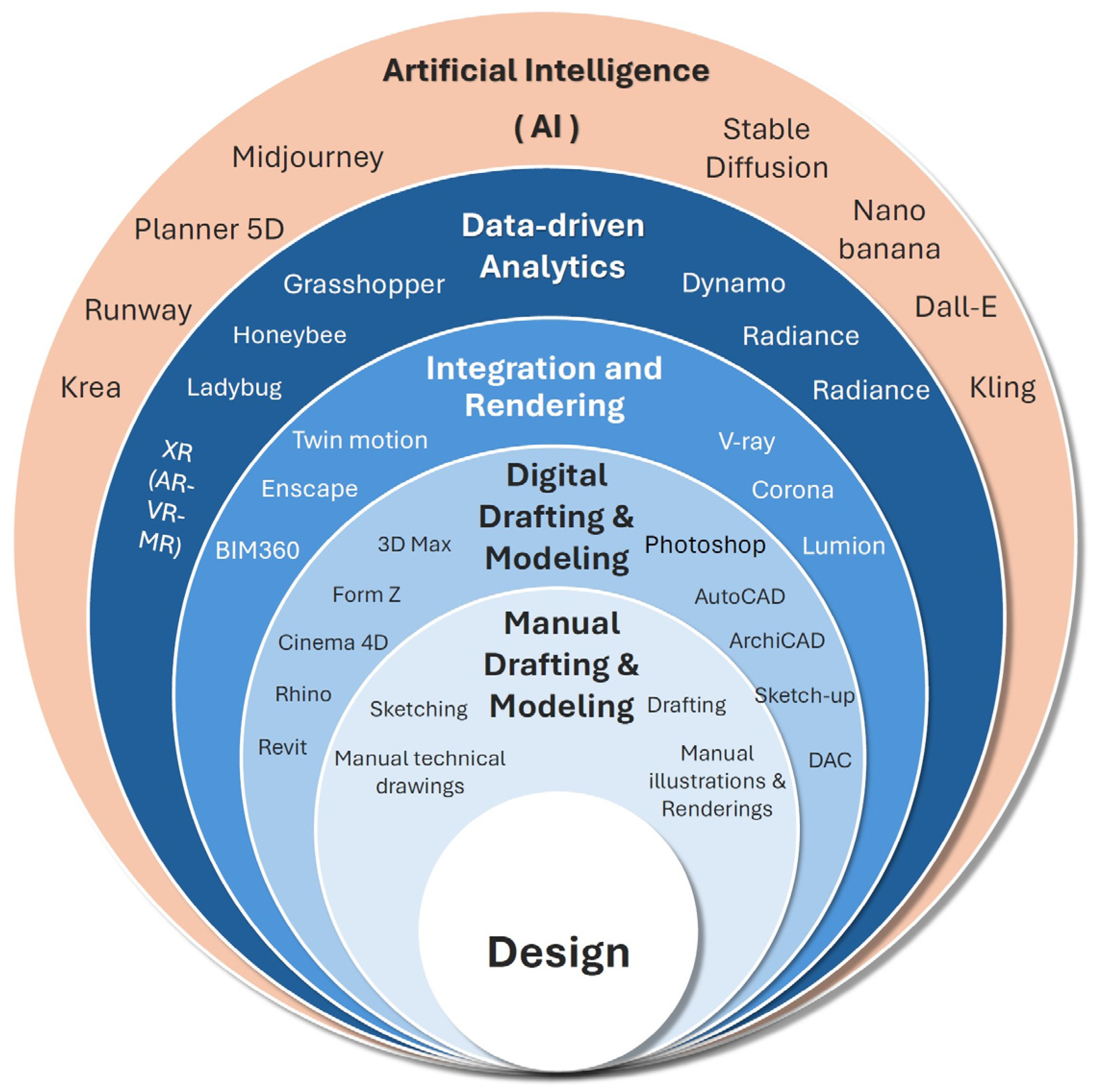
Figure 1 gathers many examples of the available software, showing the gradual evolution of tools and technologies’ interference in design education, and how traditional design practices gradually expanded toward more sophisticated benefits from AI tools and software. It shows how progressively the interference of technology in design, design analytics, and design decisions is increasing, shifting static drawings and presentations to the level of experience and simulations, and reaching performance-based design that makes the design decisions become data-informed rather than purely intuitive. Libraries of already-made blocks, meshes, pictures of materials and textures that facilitated obtaining realistic 3D visualization became available for everybody, though they had a negative effect on designers as it halted their creation of unique pieces that genuinely reflected or interpreted their conceptual intentions. Despite the wide variety of choices the digital libraries offer, it cultivated the culture of “choosing between the available options” in designers’ minds, without trying to innovate or produce original designs. This was noticeably clear in interior design students, who believed that their main mission was to look for innovative furniture blocks from the software libraries available online instead of designing their own pieces of furniture that would match or interpret their concepts. Many instructors confronted this problem in their design studios, but it was not consistently recognized for its deeper educational implications. Satisfied with how the students employed the furniture blocks in their surrounding interior context, they overlooked their impact on students’ critical thinking and creativity skills. Similarly, the availability of other software that provides technical drawings for projects led students to cease trying to learn or even understand how to produce these drawings. An apparent example is the architectural section produced by the Revit software, which reduced students’ ability to comprehend the technical aspects underlying the architectural section’s projection and presentation. That is why John Marx suggested the presence of a parallel course to the design studio, offered either adjunctly or independently, to teach digital design as computers are facilitators of design ideas but are not creators of content by themselves [
10].
Nowadays, AI software availability and its prevalence among design students in the educational process have shifted the problem to a higher level of complexity. AI has made computers the real creators of content, offering full solutions to design problems. Students’ roles have diminished to only entering the correct, precise relative keywords or prompts to the AI software they are using. Text-to-image methodology has dominated the design process by students to the extent that even their contributions or enhancements are sometimes generated with AI. These alterations are most of the time the result of the instructors’ advice or feedback on the previously AI-generated solutions to the design problem of the project’s brief. Eventually, the end-product of the project presented by the student might be the result of combining different drawings, blocks, or 3D views generated partially or collectively by AI. This renders a fair evaluation process an impossible mission.
Integrating AI in design education caused major controversy. Researchers expressed diverse opinions about the influence of AI on the educational process, courses’ delivery, students’ creativity, the authenticity of students’ outputs, and the validity of the assessments and their evaluation process. Kahraman et al. state that AI will not have a big influence on design pedagogy, but it will be a helpful tool for interior designers, emphasizing the importance of understanding the images created by the AI before applying them [
11]. Zailuddin et al. found an advantage in AI technologies, which is releasing educators and students from performing monotonous work, allowing them to explore complex and innovative facets of design [
12]. Edirne and Ozturk viewed artificial intelligence as a valuable assistant in students’ personal creative design journeys. Their students reported that AI provided them with a deeper understanding of their projects, accelerated their decision-making, and encouraged them to discover more innovative solutions for their designs [
13]. Almaz et al. believe that AI applications can transform architectural design education as they can easily generate initial project forms and allow students to develop innovative designs because AI-powered design tools can understand esthetics, architecture schools, and project requirements [
14]. Hafiz is optimistic that AI can improve architecture education by fostering multidisciplinary interactions, but alerts that educators must address ethical worries [
15]. Tellios et al. agree with Hafiz that AI offers the potential to revolutionize the design discipline by enhancing efficiency, creativity, and sustainability, underscoring research’s role in propelling architectural thinking and practice through the use of AI [
16]. Caglayan underscores the necessity for architectural educators to strategically integrate AI, not as a substitute for human creativity and critical thought, but as a tool that enhances learning, encourages ethical considerations, and equips students for the ever-evolving demands of the architectural profession [
17]. Gupta and Khan believe that adopting AI in design education is becoming essential as it will provide opportunities to equip the next generations of designers with advanced, technology-driven design skills [
18].
These researchers and others call for the urgent integration of AI in design education and express an optimistic outlook regarding the potential and the expected outcome of artificial intelligence enhancing design disciplines. This integration is anticipated to redefine the established parameters of design practice, formulating groundbreaking designs.
Conversely, some academics expressed concerns regarding the ethical implications of employing artificial intelligence within design fields, including in the educational context. Marín et al. warn that the integration of AI into educational settings advances quickly and call for establishing guidelines to guarantee its ethical, transparent, and fair implementation [
19]. Vieriu & Petrea believe that AI’s quick information processing and perceptive responses challenge conventional learning techniques and raise concerns about what was produced by the AI and what was produced by the students [
20]. Moussaoui & Krois call for collaborative efforts among educational institutions and regulators to create a system that employs AI’s advantages while safeguarding architecture’s creative and ethical standards [
21]. Revina et al. state that while AI offers considerable opportunities to enhance objective-based learning, particularly in creating personalized and adaptive learning experiences, current challenges, such as standardization and the lack of theoretical frameworks, need to be addressed to realize its full, ethical potential [
22]. Garzón et al. conclude after exploring several studies that ethical issues and the risk of becoming excessively reliant on AI will lead to digital illiteracy and fear a drop in students’ motivation. That is why they call for more thoughtful and equitable AI design implementation in pedagogy to avert the widening educational gaps and the threat of academic integrity [
23]. Asfour states that there is a crucial need to investigate and comprehend how AI could affect our educational systems and the architectural design process followed in design education. He also believes that the AI integration guidelines in the design curricula should be included in the accreditation process for any academic [
24].
Therefore, despite the potential benefits of integrating AI into interior design education, the literature highlighted major concerns. First, there is a fear that the role of the interior design student is changing to one that involves collaging AI-generated products rather than creating and innovating their own design solutions. Second, there is suspicion about the fulfillment of the learning outcomes intended by the design courses if AI is the main source through which ideas are generated. Finally, concerns have also been expressed about academic integrity and how fairness in assessing students of interior design will be maintained when integrating AI into the academic syllabi of the project courses. This paper suggests a framework that addresses these three major concerns as it deals with the educational process in interior design studios from the perspective of enhancing students’ analytical and critical thinking abilities and consequently building the teaching and assessment strategies of the design course according to these skills, instead of the end-product presented by the students.
3. Aim, Scope, and Methodology
This paper investigates the effect of integrating AI into the design pedagogical agenda, specifically in interior design studios. AI has brought design education to a new frontier in advancing LO attainment, including enhancing students’ knowledge and skills, teaching strategies, and assessment strategies. AI poses new academic challenges for both instructors and students, as academic integrity is endangered by the difficulty of measuring the authenticity of students’ outputs and of following assessment criteria that evaluate the end-product of students’ work, leaving it to instructors’ judgment and grades.
The paper suggests that AI interference in design projects requires a change in the evaluation process in project-based design studios, from an end-product-based process to a procedural analysis-based one. This demands a paradigm shift in the teaching and assessment strategies in interior design studio courses. Therefore, the paper suggests a framework that ensures academic integrity is maintained amid AI interference and halts the creativity leak in AI-era students through valid teaching strategies that incorporate, activate, validate, and acknowledge AI interference.
The research adopts a qualitative case study approach to explore the impact of using AI on students’ cognitive skills, the attainment of the course learning outcomes (LOs), and the assessment process for an interior design studio project. The paper does not aim to evaluate the success of generating design solutions with the help of AI, but rather to understand its interactions and impact on the pedagogical agenda of design.
This study took place in a senior design studio at the College of Designs at Imam Abdulrahman bin Faisal University (IAU), Saudi Arabia, in the first term of the academic year of 2024–2025. The Interior Design Studios courses in the interior design department at the College of Designs adopt project-based learning strategies with an ascending hierarchy of size, complexity, and the number and types of users. In the conducted case study, the design studio course project was a “Wellness Resort” for a specific medical problem selected by the students in a location in KSA of their choice, and it was divided into two phases over a total of 15 weeks. In the first phase (7 weeks), the students worked in groups of three, while in the second phase, each student worked individually on the interior design of a selected zone in the project, following the scope, concepts, theme, and designs already developed in the first phase. In groups of three, students chose a medical condition and worked on gathering and analyzing information according to the project’s brief and location. They worked on the main concept and identity of the project, arranging zones functionally on the given plans, connecting and integrating between zones and existing masses, and creating a unique user experience through the circulation between different zones in the project. In groups, they were also supposed to design the interiors of the main resort’s entrance to reflect the concept in the interior design. This was the stage where instructors allowed the students to use AI to explore its capabilities for generating various design solutions for the interiors of the main entrance and common area, following the predetermined concept and design brief. AI was permitted as a new experimental activity as it was imperative to integrate AI in the design project, knowing its availability to the students and that they would likely use it. It was crucial to supervise its interference in the project and its limits. Driven by the students’ high enthusiasm for the expected outcomes and the instructors’ eagerness to examine the AI’s results and its impact on the students’ skills, this part of the project only was selected to ensure that AI does not compromise the delivery of the course or its LOs.
The instructors intended to gain insights into the use of AI as an inspirational tool to generate distinctive designs for the interior space of the main entrance lobby in the term project. Software such as ‘Midjourney V6’ and ‘DALL-E3’, generative software applications that produce digital images from text-based prompts and are developed using a high-level programming language [
25], were used to generate the interiors as photos only, without converting them into 3D editable files. The students were supposed to use AI at this one stage in the middle for the design process of their projects. After gathering and analyzing the information, formalizing the concept and its development, and zoning the architectural spaces functionally, full plans for the projects were produced using CAD. Students, working in groups, were instructed to use AI to design the interior of the resort’s entrance lobby and enhance it by refining their prompts to achieve a satisfying result. Subsequently, students were asked to develop the generated design ideas using 3D modeling programs they were familiar with, mainly Autodesk 3ds Max 2023. This required elevating the 2D plans to 3D models and reproducing the AI-generated interior designs, enhancing and adapting them based on the feedback given to the students. Later, each member of the group worked individually on the interior design of a whole zone from the resort, following the main concept, mood, and scheme established in the entrance lobby and the whole project.
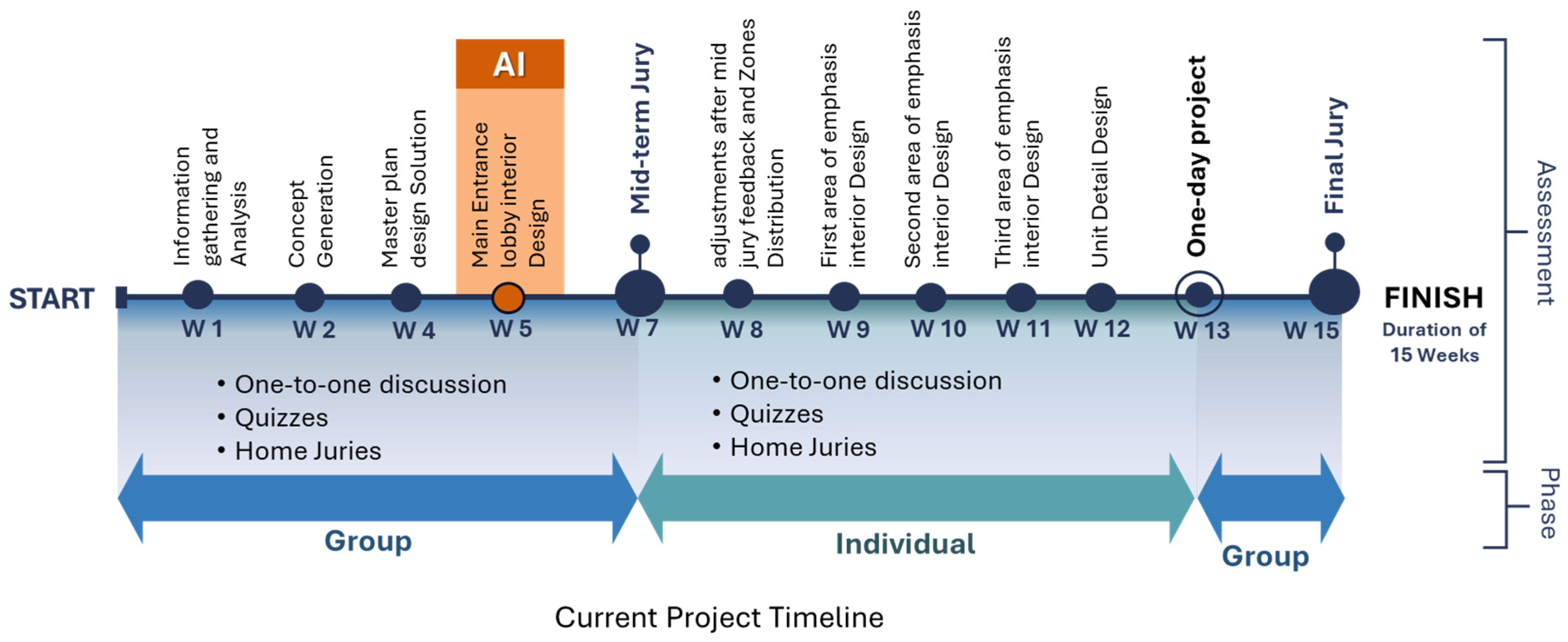
Figure 2 shows the teaching strategy for the term project in the design studio course and its duration timeline.
Given the relatively small sample size of students involved in this study, direct semi-structured interviews were used as a methodology to delve deeply into students’ minds and investigate the exact impact of using AI on their projects and skills. Students were categorized into the following three groups based on their academic grades and the instructors’ prior acquaintance with them: excellent, average, and weak. Accordingly, a qualitative approach, based on observation and semi-structured interviews, was implemented to analyze the impact of using AI at various stages in designing the wellness resort. The methodology of this paper is designed to be carried out in five consecutive phases: (1) performing a literature review and presenting the theoretical background, discussing various opinions and remarks about using AI in design pedagogy; (2) applying the case study on the design project and observing its impact on the process of the design with AI interference; (3) conducting semi-structured interviews with students involved in the case study on three stages, namely prior, during, and after the project design; (4) discussing and analyzing interview responses through SWOT analysis; and (5) interpreting the findings and suggesting a framework for the future regarding dealing with AI in interior design studios. SWOT analysis is chosen as an effective and structured method for the researchers (instructors) to articulate their perspectives and experiences across the conducted interviews and discussions, ensuring consistency, while identifying interdependencies between different responses to evaluate the strengths (S), weaknesses (W), opportunities (O), and threats (T) of integrating AI in the design project. It also provides some insights for deriving conclusions that will be used in adaptive planning and decision-making [
26,
27]. This holistic critical vision ensures that planning any framework for integrating AI into projects’ design and assessments is both informed by current different perspectives’ realities and directed toward future objectives, advancing their advantages and avoiding their disadvantages.
4. Results and Discussion
The results are reviewed and analyzed based on students’ perceptions collected through private semi-structured interviews during the one-to-one feedback sessions with the instructors to discuss their projects. Instructors’ reflections and observations on students’ workflows, deliverables, and opinions before, during, and after using AI are integrated into the analysis. The questions were asked to understand the students’ impressions of using AI before designing the designated area, during the designing process, and their remarks after finishing their designs. Questions such as the students’ degree of acquaintance with AI software; whether they used it in the preliminary stages of the project, such as during information gathering, analysis, or the ideation stages; their expectations of the AI; and whether they will allow it to control their design decisions were asked in the interviews in the first stage before they designed the entrance lobby. During the design process, other questions were asked, such as their impressions about what was first generated by the AI, the effort and time spent to refine the prompts used to reach a satisfactory outcome, whether the AI-generated photos were inspirational or helped them to visualize what the interiors should look like and the extent of utilizing the generated designs in their own designs. At the end of the design project, the students were asked other questions to evaluate the whole experiment, such as the limits of interference of AI in their projects, how they balanced the designs generated by the AI and their own ideas, if AI has affected the flow of their ideas or caused or helped in overcoming any creativity blocks, their evaluation of the degree of contextual homogeneity of the AI-generated designs with the environment and site, and their impressions about the validity of the user experience in them. Other questions about their expectations for the originality, creativity, and uniqueness of the images generated by AI in the future, and whether it would improve the overall quality of the project from both design and visualization perspectives, were also asked.
In a discussion with the students before starting the design project to determine their attitudes towards using AI, enthusiasm was the major feature that dominated the whole conversation. No student could accept the idea of putting AI aside. Their argument was simply, “…if we do not use it, others will, and their products and outcomes will be better than ours!” This shows their complete trust in the superiority of the AI’s outcomes over theirs. When asked about their thoughts on which stage of design AI should be used, the students’ responses varied according to the students’ academic levels. Excellent students preferred to use it after they reached their own designs, then comparing both products and enhancing their own designs with the best ideas or parts from the AI’s solution. Average and weak students preferred to save time by grasping the AI solution, evaluating, and then modifying it according to their visions. For these students, having a solid base to start from seemed easier and more time-saving than starting from scratch, and it would put them in a secure position at an early stage. Creative students were eager to give themselves the chance to design their visualization of the interiors without the AI’s interference. Still, they could not help but explore and exploit the AI’s opinions to develop their ideas. Most students believed that the AI’s solutions will be mature enough, provided that the given prompts are accurate and representative of the design problem and brief. For students, all technological tools have helped enhance and improve the quality of their work, save time, and maintain a high level of accuracy. If these are the advantages of using technology, “why should not AI be the same?” For instructors, the major difference between all the previous technological advances used in design and AI is that all the former were completely dependent on humans’ visions and requests. Still, AI is a partner that collaborates and influences all the students’ ideas and visions, and might go as far as being the real designs’ creator. This situation highlights the issue of academic grading integrity and calls for changes in assessment methodologies.
Students were enthusiastic to explore their AI abilities acquired through the college’s extracurricular activities and their self-learning to investigate how AI will handle the interior design of the resort project they are working on. They already had the necessary information about the project, such as the project brief, information about the context, environmental analysis, architectural program, architectural concept, zoning, and space orientation. Some of them confirmed using AI in the analysis process and in formulating their concepts. They used this information to generate the interiors of the main entrance lobby via AI. The first phase of results showed that the vibe was almost the same for all students. Gradually, some variations began to appear in the designs that enabled instructors to differentiate between them. Most students did not try to explore other finishing materials as they were overwhelmed by seeing fast, complex interior designs generated with no effort. Only one group, which was composed entirely of excellent students, developed more mature perspectives after many trials and more precise prompts. Later, after the instructors’ feedback, they noticed that the finishing materials they used were inappropriate or did not show up. Some students began to question the impact of the environment and context on the generated interior design. They were instructed to provide a greater variety of justified finishing materials and to adjust them to achieve different esthetic effects.
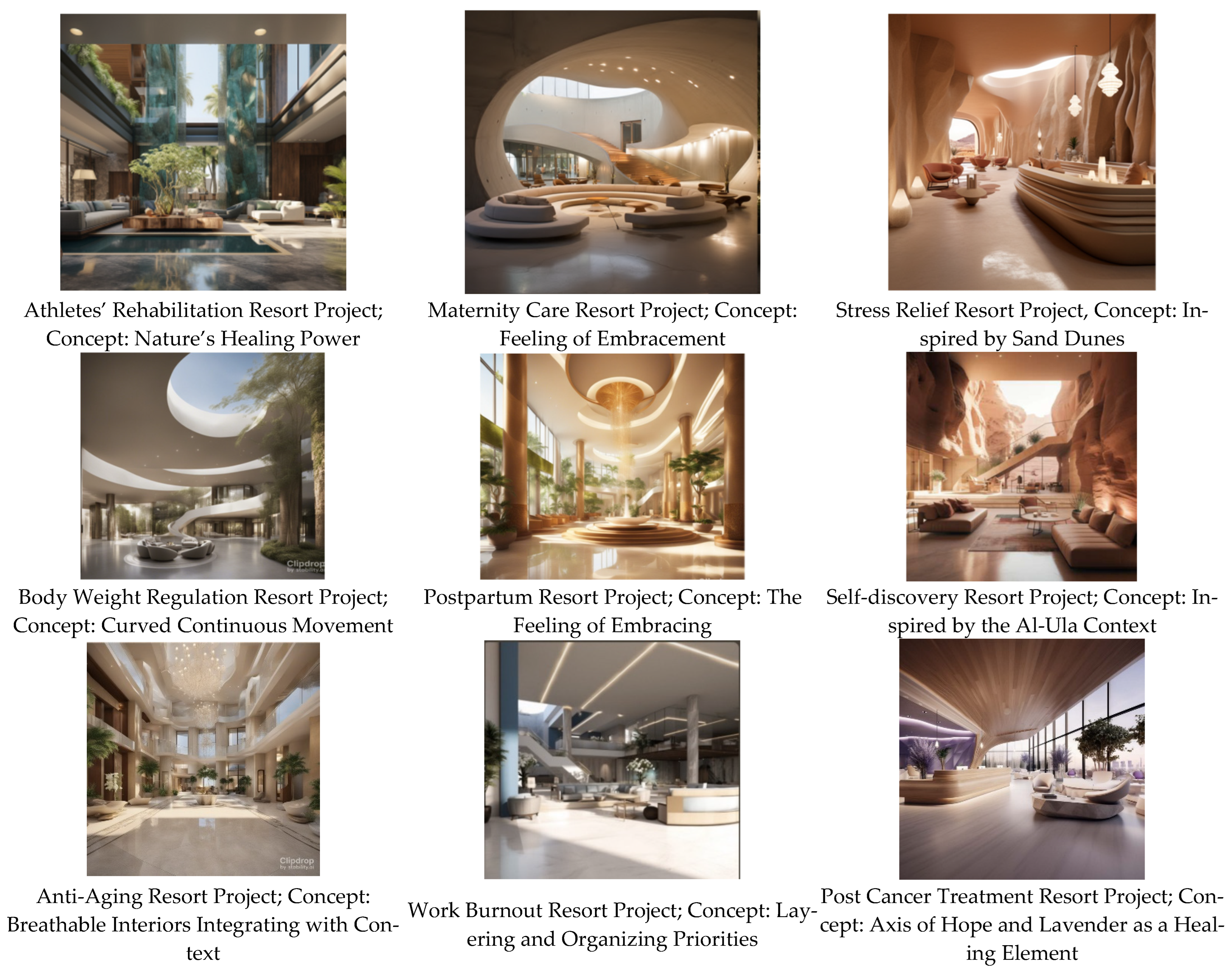
Figure 3 shows a variety of the AI-generated perspectives for different wellness resort projects. It is clear that there is no unique identity for each resort, and that the finishing materials are not distinctive in the designs, despite the different medical conditions treated at the wellness resorts and the different concepts assigned to each.
After a variety of solutions were offered by AI in response to the prompts given to the used software, students’ questions shifted from “How will I solve the design problem?” to “Which solution will I choose?” The challenge moved from enhancing design capabilities to enhancing the capability of providing precise prompts for the AI software. The more accurately the student described what the project’s brief, design requirements, boundaries, limitations, and problems were, the more reliable the AI product was and the more ready it was for use or to edit for final submission.
In the second round of using AI to generate the same entrance lobby space for the resort, after deep refinement of the used prompts, differences emerged among projects, with a slight appearance of each project’s specific concept. Excellent and average students elaborated on their prompts to enhance the generated designs. They introduced words from their concepts and contexts, then began writing their assumption about furniture arrangements and adjusted the heights of the spaces. Afterward, they began changing the materials and color schemes to achieve their anticipated designs. Several groups reached results that could serve as a basis for their work. Weak students developed, but at a slow pace, and did not achieve satisfactory results. However, many students believed that the AI-generated designs were not executable in real life.
Upon reaching this level, students were asked to enhance their interior designs independently, without AI assistance. Although there were very adequate designs that held esthetic and functional qualities, against all predictions, students did not build on the AI-generated interiors and did not feel attached to them. Different problems were observed by the instructors or reported by the students themselves when asked about the problems they were facing in this stage of the design, analyzing the generated interiors. Students could not explain the sequence of users’ experiences in the designs and felt stuck. The connections between spaces were not fully understood in the generated photos. The AI’s work was exaggerated, missing human proportions, emotional sense, connection, and awareness. In addition, cultural sensitivity to the project’s context was not fulfilled when using AI as expected. Students found problems in explaining how they implemented the concepts in their AI-generated designs. The gap between “concept generation” and “concept implementation” widened, as the AI-generated designs did not reflect the students’ intentions when generating their concepts, and they could not find or understand the connection between the two.
Another core problem was the creativity blockage that dominated the thinking of some average and all weak groups, captivated by what the AI generated, and not seeing that they could perform any further development in their work. They even felt the burden of having to elevate their plans into 3D models, rebuild, and redesign the whole scene according to the generated ideas, while making the needed alterations according to the feedback they received, as they were not allowed to use AI tools to convert plans to 3D. It was easier for them to start from scratch, and they did not even bother to use the AI-generated designs to inspire their ideas. Other groups that had some or all average and excellent students began developing their work at a slow pace (different levels). Working in groups helped, as they encouraged each other, preventing total surrender to the AI’s ideas. These students were inspired by the AI-generated designs but edited them based on their critical thinking and instructors’ feedback to better align with their projects. They even used other AI tools to explain their ideas, concepts, and animate their interior spaces.
Instructors are not sure about the students’ limits in using AI tools, whether in presenting their work, inspiring their work, and providing ideas, or in generating interiors, making a fair evaluation process impossible. When asked about their use of AI in other parts of the projects, some students answered that they used AI tools to generate well-presented mood boards, material boards, and color schemes. Others used it to format the concept statement and to sketch the concept development. Another group of students, most of them excellent, used it to animate their interiors, creating a livable user experience inside their projects. Some students developed their work through more elaborate collaboration with MidJourney V6 (an AI tool) after the phase indicated by the instructors. It was well known to both instructors and students that entering the refined plans and a basic 3D mass for the project, along with some accurate prompts and explanations (often generated by AI), could result in the generation of all architectural drawings needed for the project. Applications such as Nano Banana and others, along with the students becoming more familiar with the AI apps, made generating these drawings the easiest stage of designing for the project.
Controlling the students afterward was impossible. Gaps in the work of weak students were filled with high-quality presentations. Still, differences in the academic levels of students were distinguished, but it was the final end-product that led to the grades, whether produced by students themselves or with the help of AI. There were no clear boundaries on when and how students use AI in other aspects of the project. They used AI to improve the clarity of the language in concept statements. This led to more concerns with linguistics than with the concepts’ application in the project. Some statements or prompts and inspirational sketches were input into AI to generate similar sketches for concept development. The students even used some keywords from instructors’ feedback as prompts to generate ideas with AI (without indicating their level of understanding). All ideas were achievable by using AI, provided they knew how to use the AI tools instead of designing and expressing their ideas themselves. The students’ verbal explanations of their end-products were not the same level as the design quality, revealing another large gap between their understandings and justifications and the visual quality of the end-products of their designs.
At this point, it was clear that a paradigm shift in assessments and grading systems is needed. In this new assessment system, it should be clearly acknowledged that AI is a co-design partner in the projects. Accordingly, grading is dependent on the critical justification of all the design decisions rather than the presented end-product. This should be explained by the students in face-to-face sessions for transparency and greater understanding of their logic in making their design decisions, and less admiration of the visual presentation when grading the end-product.
When the students were asked to perform a one-day manual project as already planned in the syllabus, the first question that came to their minds was “Are we allowed to search using laptops or use AI in generating concepts, ideas, and getting inspirations?” They felt their minds were frozen and needed the AI to melt the ice. Helen Thomson, in an article in
The Guardian, suggested that offloading our cognitive work to AI is diminishing our brain power and referred to studies in Switzerland and Pennsylvania that underscore the deficiency in critical thinking skills and the decline in problem-solving abilities without the help of AI [
28].
Students’ expanding reliance on technological tools in their designs has already lowered their design capabilities. It triggered their searching abilities to find the unique, the most appropriate, and the best esthetic qualities, but not the critical analytic abilities to investigate the design problem, tackle the core challenges, then develop different approaches and proposals and synthesize them by drawing inferences and making connections to generate broader themes to reach an overall design solution.
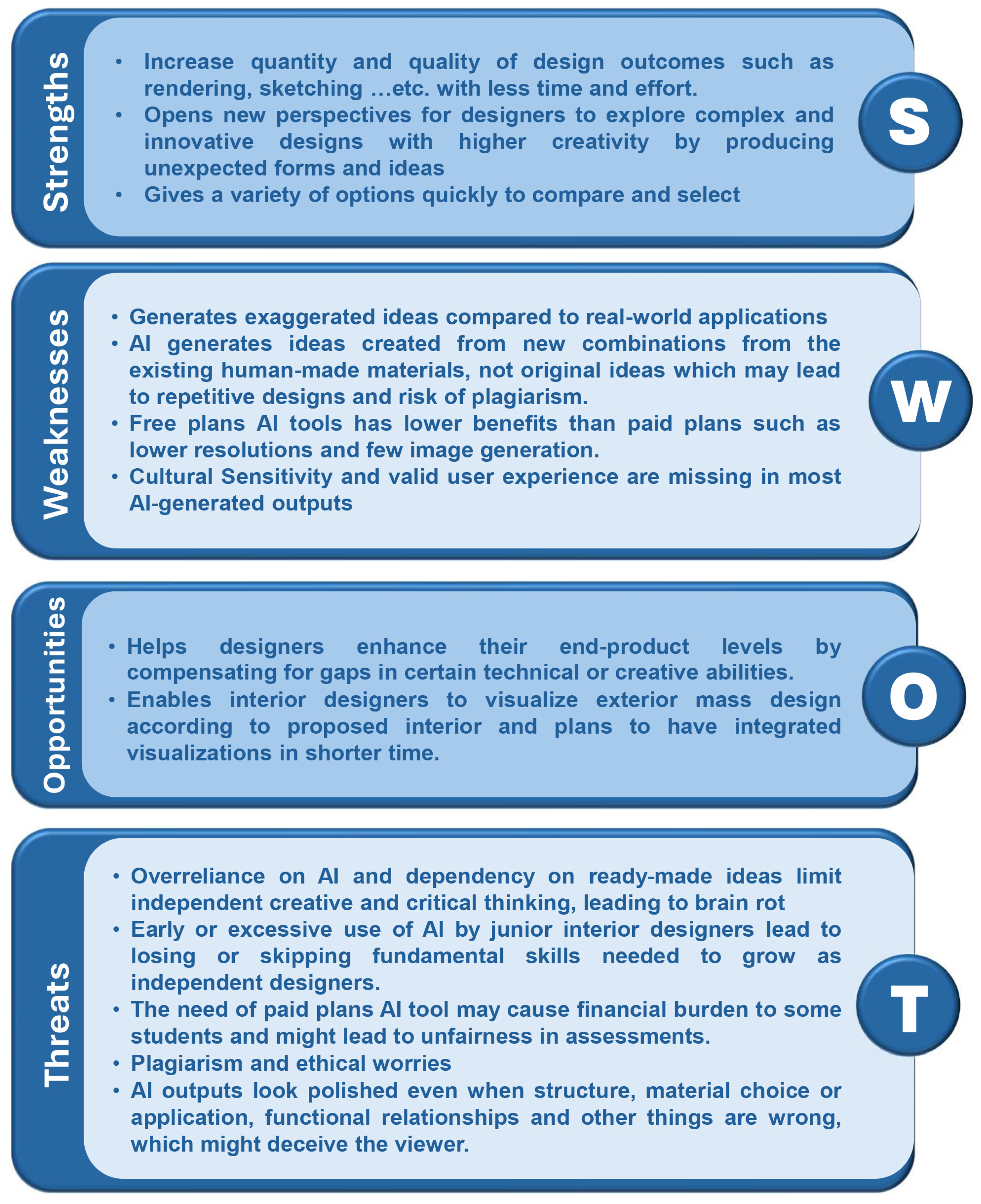
Figure 4 shows a basic SWOT analysis of the whole case study, students’ comments, and instructors’ observations.
Suggested Framework for Teaching and Assessment Strategies
Students are making use of AI to solve many design problems in their projects and to produce the best presentations, as it is a fast, reliable, and comfortable tool. Still, they need to understand what is presented to be able to explain it, and this seems like an easy job compared to obtaining the solution itself. Authenticity and ownership of the presented ideas are at risk. This situation calls for a re-evaluation of the knowledge students need to acquire, the end-product that they should deliver, and the criteria for assessing their end-product.
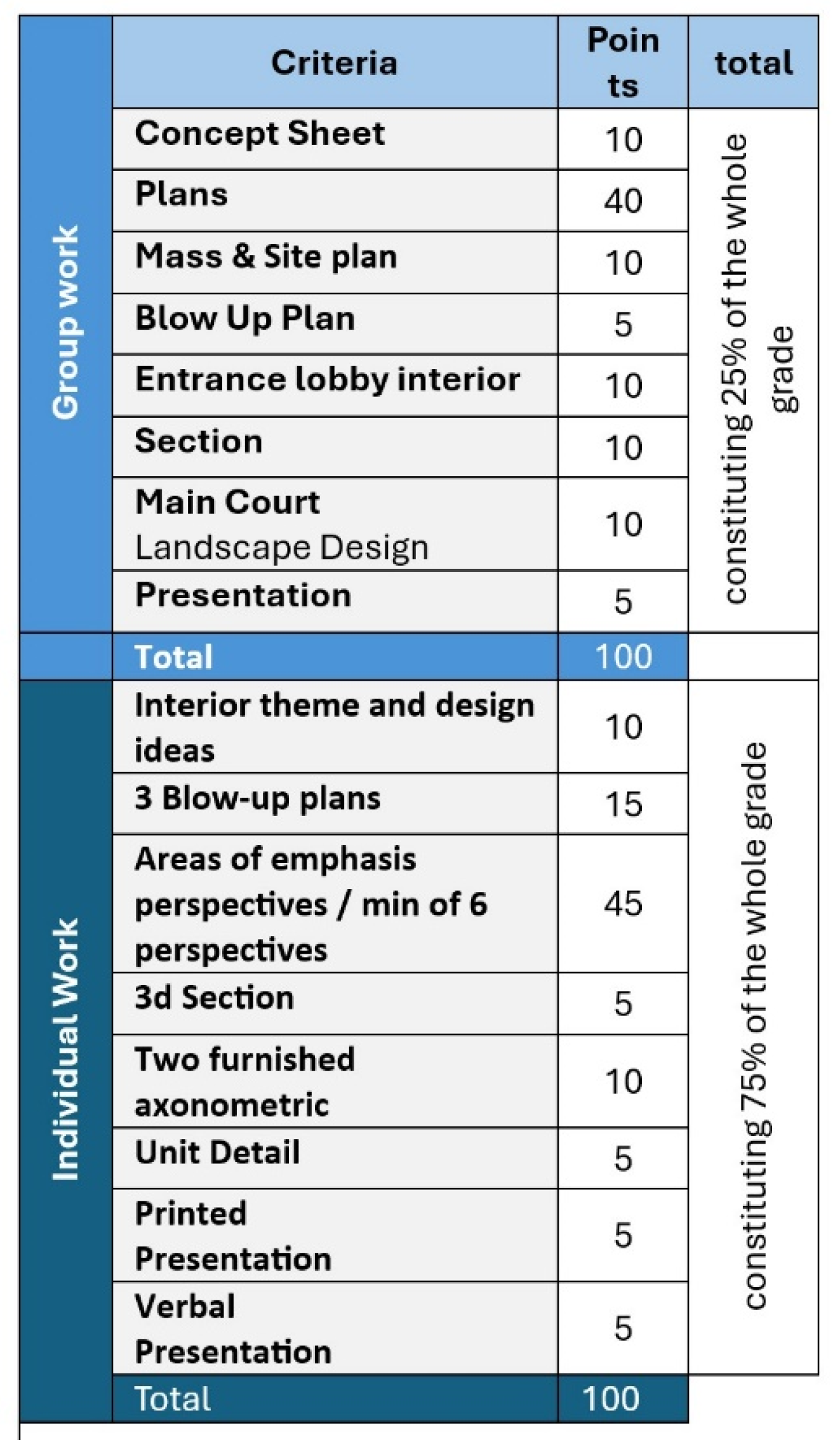
Accordingly, a framework that proposes adaptable teaching strategies and multiple evaluation rubrics is needed for interior design studios that integrate AI into their projects. This framework is not a templated model ready to be integrated into any design studio, but rather a general practice to be followed for more effective design education. Rubrics should shift from generalities to specifics, as not all required outputs can be guaranteed to be produced by students alone without the help of AI. The extent of AI’s help cannot be accurately indicated or measured. To be more precise, deep understanding, analysis, criticism, implementation, and synthesis of information to create a complete, inclusive, and coherent design solution should be the major learning outcomes assessed. Assessments based on the production of architectural technical drawings, such as plans, interior facades, sections, or interior perspectives, should be replaced with critical thinking diagrams, problem-solving sketches, proofs of functionality, flow of ideas, user experience, psychology of choices of colors, and justifications for materials’ selections and their convenience and effectiveness. In the explained case study, the conventional method divided the rubric for the final jury into two sections, group work and individual work, according to the project’s phases. Group work accounted for 25% of the grade, and individual work accounted for the remaining 75%, as the group work was previously assessed at various stages. The elements of assessment were concept, plans, mass and site plan, longitudinal section, and perspectives of the entrance lobby as a common interior space. As for the individual work, keeping the main themes of the project in the interior design of the different spaces of emphasis and presenting these themes using perspectives, 3D sections, axonometries, and designing a unit detail were the main focus when grading the project. This shows that attention is placed on the quality of the presented images rather than on the analytical points of view. The verbal presentation, where most of the analysis is explained, constituted 5% of the whole grade, focused on generalities such as the overall ideas, voice quality, and the use of scientific terminology.
Figure 5 shows the grade distribution for the final jury in the conventional class.
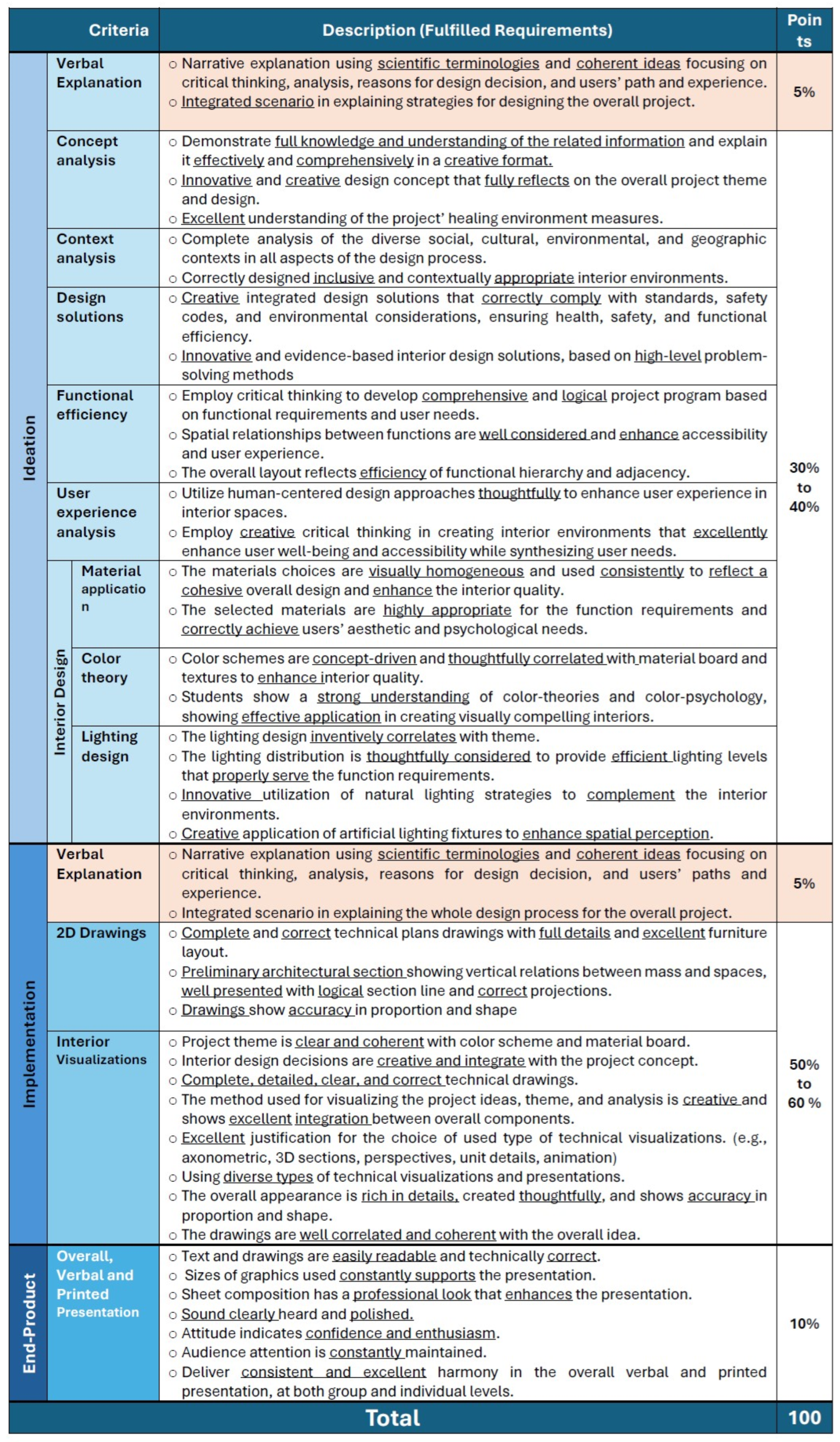
If AI is integrated into the design project, a radical alteration in the rubric’s focus should be targeted. Attention should be drawn towards analysis and strategies more than the end-product presentation. Grades should be distributed between ideation, implementation, and end-product with percentage ranges of 30–40%, 50–60%, and 10% consecutively, allowing verbal explanation to constitute 5% of each category. Eye contact and discussion should help in evaluating the logic behind students’ approaches and decisions.
Figure 6 shows a proposal for the rubric after integrating AI into the teaching methods of designing the project.
In addition to the modification of assessment strategies to cope with integrating AI into the design project, teaching strategies should also be developed to enhance the students’ skills and critical analysis capabilities. The framework proposes incorporating assignments for critical analysis into the assessment process, whether for similar case studies or peers’ work, as a teaching strategy that will train students to reflect critically, with justification on the creative work they encounter without being under the influence of admiration, thereby promoting their critical thinking abilities. Şener and Mede state that reflection, as a pedagogical approach in education, enhances self-awareness, problem-solving, and ownership of learning, leading to improved learner autonomy [
29].
Activating and stimulating students’ imagination and creativity should be the focus of tutors who will turn into mentors, accompanying students at all stages of the project, rather than circulating students among instructors. Hands-on experience should be integrated into teaching strategies to stimulate their problem-solving skills and inquiry- based learning (IBL) instead of enforcing the design solution in their minds; Ramaila Sam affirms that IBL has positive impacts on students’ critical thinking skills, motivation, and academic performance [
30]. Pairing experiential work and hands-on experience with critical analysis of theoretical information and knowledge to promote active participation and interaction rather than passive accepting and learning will create a designer that can make decisions and manipulate AI tools to create the required solutions. Mentoring students will allow instructors to share in the development of their projects and to understand their thinking processes in solving design problems. This implies reducing the instructor–student ratio to 1:5 or 1:6 to give instructors a better chance to delve into students’ minds and their detailed thinking and problem-solving methodologies.
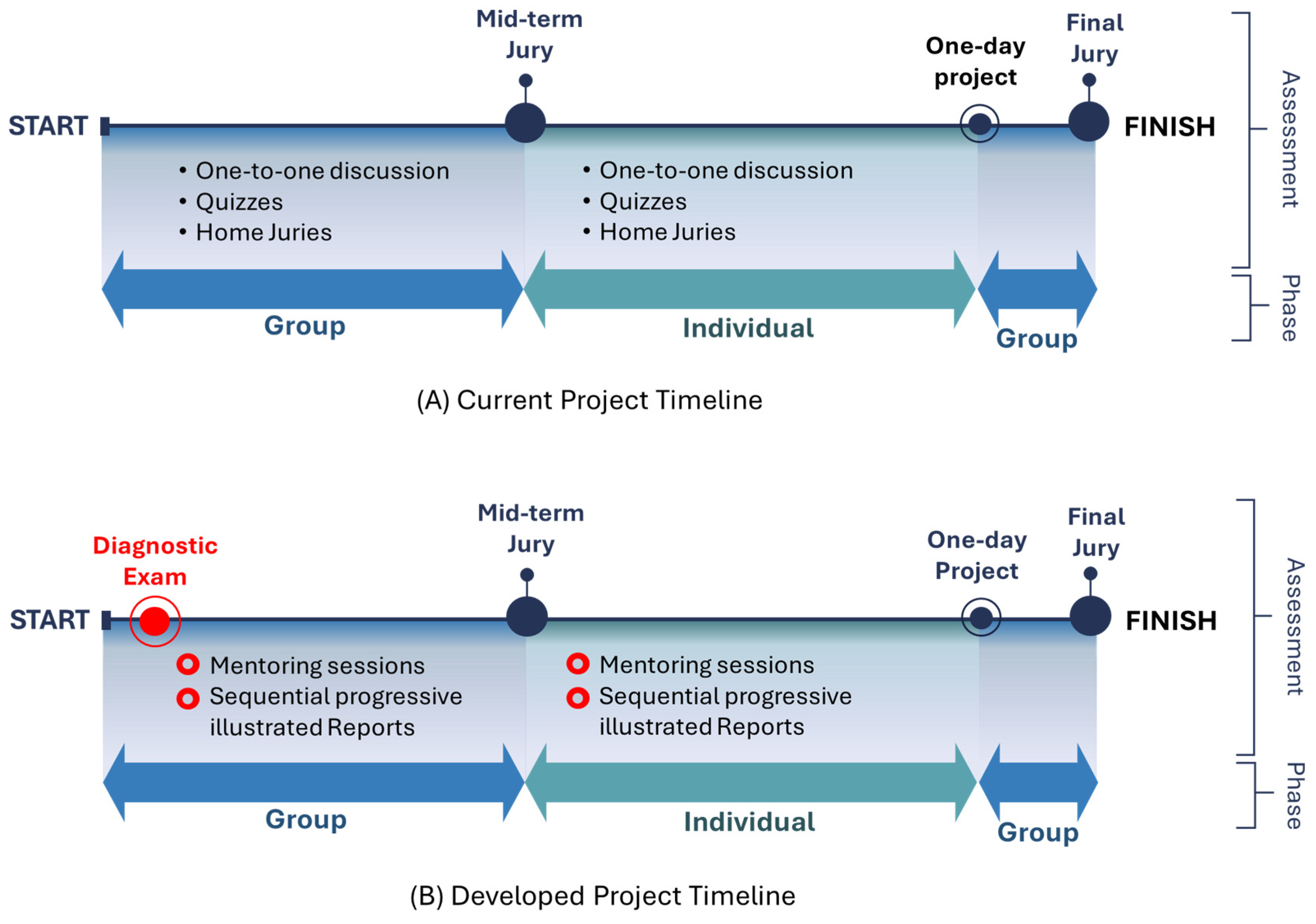
A diagnostic one-day exam is to be held at the beginning of each term to indicate students’ weak/missing skills and provide feedback accordingly. At the end of the term, another one-day exam must be conducted to measure the course learning outcomes. Both exams, the diagnostic at the beginning of the term and the one at the end, are expected to be performed manually to avoid any interference from AI and to examine the real capabilities of students and measure their skills.
Figure 7 shows the expected change in the course timeline.
Figure 7A illustrates the current project timeline in the conventional teaching process. It consists of multiple assessments with varying grade weights. The two main assessments are the juries: the midterm jury and the final jury. The first assesses the groupwork phase at the mid-point of the project, while the latter assesses the final submission and end-product in both phases (group and Individual), focusing more on the individual phase. Moreover, there are multiple home juries and quizzes, along with regular one-to-one discussion sessions, to assess the project’s progress. Before the end, there is a one-day project assessment to measure each student’s skills individually.
Figure 7B illustrates the developed project timeline after integrating AI into design strategies. Similar to the conventional timeline (A), it consists of multiple assessments and has the same two main assessments: the midterm jury and the final jury. However, a diagnostic exam is added at the beginning of the project to measure each student’s missing skills, with feedback provided afterward, and accordingly, the teaching strategies are tailored to address the learning gap. Also, the home juries and quizzes are replaced with “sequential progressive illustrated reports” to ensure the authenticity of students’ work at every stage, along with one-to-one mentoring sessions to guide the logic and critical thinking processes and to assess the project’s development at each stage. Furthermore, the one-day project at the end of the term is maintained to assess the skills gained and compare the results to indicate development.
AI will impact projects’ timelines, as integrating AI into learning will speed up the project timeline, allowing new teaching strategies to address this new side of interior design learning. Eventually, AI will reduce the years required for study and speed up graduation. It is also assumed that the number of students in design fields will gradually decrease as AI increasingly intervenes in the design process. A pre-admission exam for acceptance in design colleges should be held to select only those who are passionate about the field and are creative enough to bring a new perspective to design.
This framework needs to be assessed in a small project after obtaining the necessary administrative approvals and providing the required resources, such as paid versions of AI apps and a sufficient number of instructors based on the number of students. This study will be used as a pilot study, and its results will be re-analyzed using SWOT analysis before implementing the proposed framework.
5. Conclusions
Using AI in interior design education has become inevitable, offering unexpected opportunities but also posing unprecedented threats. Until there is reliable software to prove the design is AI-generated, a framework is needed to ensure the delivery of the intended learning outcomes of design studio courses. Embrace it or hate it; AI is a reality that must be legally and officially integrated into interior design education, provided that a framework for organizing the teaching and assessment strategies is established. Any suggested framework must be responsive and adaptable to continuous technological advancements.
Text-to-image design generation is the new trend in design in the AI era. Design education must cope with this by increasing the amount of analysis and criticism in the end-product of the projects presented by the students to be sure they understand the reasons and causes behind any decision-making process in the project, and that they are not only dealing with the esthetic picture generated by AI. This highlights one of the major concerns about using AI in design: imitating existing designs rather than producing original, authentic ones puts students at risk of plagiarism.
AI should be used to add objects to designs; enhance, facilitate, and speed material selection; provide multiple options based on certain criteria such as their cost and availability in the market; and analyze their advantages and disadvantages. It can also help with light adjustment, offer a variety of options, and help measure environmental aspects such as heat levels or solar impact. All of these elements are crucial in interior design, and finding AI software that helps adjust them, select the best options, and control them is a great achievement that must be grasped.
The values of fairness and equal opportunity for all, upon which the evaluation process depends, are endangered by the use of AI in design education. A third partner is involved in the design who is not controlled by either the student or the instructor, and who might even be unknown to the instructor. So, instead of having computers act as a mediator between the instructor and the student, the student must become the moderator between the instructor’s comments and the AI outputs. The student’s role has changed to focus on enhancing AI-generated designs to meet the instructor’s comments and reach the expected level for a high grade. The validation of the authenticity of the design outcomes produced by students will prove impossible. Thus, it is crucial to prioritize understanding the sound reasoning, assumptions, and criticisms behind the process when assessing and evaluating students’ work. Accordingly, rethinking assessment methods and rubrics is necessary for AI to play a proper role as a tool for generating designs from students’ ideas and thoughts, rather than a replacement for their thinking process or a destroyer of their creative abilities. Every design decision needs to be discussed and justified within a coherent scenario that binds the whole project together. Keeping records and documenting all steps, analyses, and interactions with AI tools or the design problem itself has become an essential requirement at any stage of assessment.
Assessments should focus on different stages of design, not on the end-product. This means reducing the final grades assigned to the final visual presentation and increasing the grades assigned to the analysis, design decisions, justifications, and verbal presentation in sequentially progressive illustrated reports to keep the instructors informed and to follow up on the progress in students’ thinking and analysis.
Incorporating two manual assignments, a “one day project” at the beginning of the term and at the end, has become of essential importance to determine the students’ skills problems, examine their achievement of the learning outcomes, and give integrity to their marks. These exams could tackle a different design problem than the term project, giving instructors the chance to examine students’ skills in interpreting knowledge into a creative solution. This will help assess the student’s thinking, analysis, and decision-making skills to provide a customized learning experience tailored to each student’s capabilities. This will also foster their desire to train and retain their manual abilities.
Mentoring, as a relationship between instructors and students, should replace students’ rotation among instructors to focus more on each student’s abilities and provide more hands-on experience. This requires a lower ratio of instructors to students. Each instructor should be responsible for only 5–6 students to ensure more focus.
Depending on AI and its unmonitored use will destroy self-discovery and observation among students, putting complex models in front of them that might seem incomparable to what they have in mind or what they can produce, which might decrease their self-confidence and their will to innovate. It also affects students’ creative skills, as it can lead to cognitive overload or brain rot from overreliance on AI outputs. Instead of one-size-fits-all AI outputs, the outcome should depend more on students’ inquiry, discovery, imagination, and creativity, fostering ownership, collaboration, and the practical application of knowledge by adopting reflection and inquiry-based learning as pedagogical approaches, with teachers acting as facilitators rather than knowledge providers.
Integrating AI into design curricula is a necessity that cannot be avoided to prepare students to keep up with the technological acceleration in the competitive market. However, without planned, systematic integration that requires a paradigm shift in teaching and assessment strategies, design education will act as a mediator, perpetuating the copying of ideas and shifting critical analysis and creativity in design.





 ,
,