Article

Experimental Study on the Freeze–Thaw Durability of Sustainable Steel–Polypropylene Hybrid Fiber-Reinforced Horqin Desert Sand Concrete

1
College of Water Conservancy, Shenyang Agricultural University, Shenyang 110866, China
2
Department of Architecture and Civil Engineering, City University of Hong Kong, Hong Kong 999077, China
*
Author to whom correspondence should be addressed.
Buildings 2026, 16(8), 1574; https://doi.org/10.3390/buildings16081574
Submission received: 6 March 2026 / Revised: 9 April 2026 / Accepted: 14 April 2026 / Published: 16 April 2026
(This article belongs to the Section Building Structures)

Abstract

Desertsand concrete (DSC) is a sustainable alternative to natural river sand; however, its application in cold regions is restricted by inadequate crack resistance and freeze–thaw durability. This study investigates the freeze–thaw performance of steel–polypropylene hybrid fiber-reinforced desert sand concrete (SPHF-DSC), with emphasis on durability enhancement and service life prediction. A three-factor, three-level orthogonal experimental design was employed to evaluate the effects of desert sand replacement ratio (DSR), steel fiber (SF) content, and polypropylene fiber (PPF) content on mass loss, relative dynamic elastic modulus, and compressive strength under 25–100 freeze–thaw cycles. The results demonstrate that hybrid fiber reinforcement significantly improves freeze–thaw resistance due to the synergistic interaction between SF and PPF. After 100 cycles, the mass loss of all specimens remained within a narrow range of 0.65% to 0.73%, and the relative dynamic elastic modulus retention stayed above 90%. The optimal mixture (DSR = 30%, SF = 2%, PPF = 0.05%) exhibited superior frost resistance with the lowest deterioration indices among all groups. A freeze–thaw damage model based on damage mechanics was established and validated ( R 2 > 0.96), enabling prediction of a service life exceeding 38 years under typical cold-region climatic conditions. These findings provide a durability-oriented design reference for the engineering application of DSC in cold-region infrastructure. Furthermore, the utilization of local desert sand reduces transportation energy consumption and promotes the sustainable development of energy infrastructure.

1. Introduction

The rapid expansion of infrastructure construction in China has substantially increased the demand for concrete, resulting in excessive consumption of natural river sand, a key constituent of conventional concrete. Overexploitation of river sand has had severe environmental consequences, including riverbed degradation, habitat destruction, and the intensification of land desertification. Recent studies have demonstrated that treated desert sand can serve as an alternative fine aggregate, alleviating these environmental pressures while maintaining acceptable mechanical performance and microstructural integrity [1]. From a sustainability perspective, this approach significantly lowers the energy intensity and carbon footprint associated with the long-distance transport of construction materials [2].
Desert sand concrete (DSC) has therefore attracted growing attention owing to the abundance and regional availability of desert sand resources. However, the extremely fine particle size and poor gradation of desert sand often lead to reduced workability and deteriorated mechanical performance when used at high replacement ratios [3,4]. To overcome these limitations, various mix optimization strategies have been proposed, including particle gradation adjustment and the incorporation of supplementary cementitious materials [5,6]. Ensuring the long-term durability of these materials is particularly vital for energy-related infrastructures, such as wind turbine foundations in desert regions, which must withstand harsh climatic conditions [7].
Fiber reinforcement has been widely recognized as an effective approach to improve the performance of DSC. Steel fibers (SFs) enhance tensile capacity, crack resistance, and post-cracking ductility, whereas polypropylene fibers (PPFs) are particularly effective in mitigating plastic shrinkage and early-age cracking [8,9,10,11,12]. The combined use of SF and PPF has been reported to produce synergistic improvements in strength, toughness, and shrinkage control [13,14]. Moreover, fiber incorporation has been shown to influence the drying shrinkage behavior and durability-related properties of DSC, providing a practical pathway for performance-oriented mix design [15,16].
In cold and high-altitude regions, freeze–thaw (F-T) deterioration represents a critical factor governing the long-term durability of concrete. Repeated freezing and thawing of pore water induces internal frost-heave stresses, leading to microcrack initiation and progressive degradation of the cementitious matrix [17,18]. Investigations into the mechanical behavior and freeze–thaw durability of fiber-reinforced DSC have provided valuable insights into material optimization under cold-region conditions [19,20].
Despite these advances, systematic studies focusing on the freeze–thaw resistance of steel–polypropylene hybrid fiber-reinforced desert sand concrete (HF-DSC) remain limited. In particular, the coupled effects of desert sand replacement ratio and hybrid fiber content on mechanical property evolution, freeze–thaw damage progression, and durability-oriented mix optimization have not been fully clarified [21,22]. While orthogonal experimental designs have been employed to assess multi-factor influences on mortar and concrete performance [23], and microstructural analyses have been used to elucidate carbonation damage mechanisms and stress–strain behavior [24], an integrated evaluation framework addressing freeze–thaw degradation and service life prediction of HF-DSC is still lacking [25,26].
In this study, the mechanical performance and freeze–thaw durability of HF-DSC were systematically investigated before and after cyclic F-T exposure. The effects of desert sand replacement ratio, steel fiber content, and polypropylene fiber content were quantitatively evaluated using range analysis, analysis of variance (ANOVA), and a comprehensive scoring method to determine optimal mix proportions. Furthermore, two freeze–thaw damage evolution models were developed, compared, and validated, and the service life of the optimized mixture was predicted under the cold climatic conditions of Shenyang, China. The results provide both theoretical insight and practical guidance for the durability-oriented design of hybrid fiber-reinforced desert sand concrete for cold-region infrastructure applications.

2. Materials and Experimental Design

2.1. Raw Materials and Mix Proportion Design

Ordinary Portland cement (P.O 42.5), produced in Liaoning Province, China, was used as the primary binder. Its physical and mechanical properties complied with the requirements of GB 175–2023 [27]. Class I fly ash, conforming to GB/T 1596–2017 [28], was incorporated as a supplementary cementitious material. Continuously graded river gravel with a particle size range of 5–25 mm and a crushing index of 8.6% was used as the coarse aggregate.
The fine aggregates consisted of natural medium sand and desert sand. The natural medium sand was a well-graded river sand with a fineness modulus of 2.46. The desert sand was collected from the surface of Jinshatan in Kangping County, Shenyang (a southern part of the Horqin Sandy Land). As summarized in Table 1, the physical properties of the fine aggregates show significant differences; specifically, the desert sand is characterized by an ultra-fine particle size, with a fineness modulus of 0.198 and an apparent density of 2680 kg/m3. Chemical analysis of the sand from this region indicates a high silica (SiO2) As summarized in Table 1, the physical properties of the fine aggregates show significant differences; specifically, the desert sand is characterized by an ultra-fine particle size, with a fineness modulus of 0.198 and an apparent density of 2680 kg/m3. Chemical analysis of the sand from this region indicates a high silica (SiO2) content of 84.71%, providing a stable mineralogical basis for its application in cementitious composites [29]. The direct comparison highlights that the fineness modulus of desert sand is much lower than that of river sand (2.46), which allows it to effectively fill the micro-voids within the concrete matrix, thereby optimizing the internal pore structure and potentially enhancing the freeze–thaw resistance of the hybrid fiber-reinforced concrete.
Two types of fibers were employed as reinforcement. The steel fibers (SFs) were multi-anchored fibers with a length of 35 mm, an equivalent diameter of 0.75 mm, an aspect ratio of approximately 46.7, and a tensile strength of no less than 1150 MPa. The polypropylene fibers (PPFs) were bundled monofilament fibers with a length of 12 mm, an equivalent diameter of 0.03 mm, an aspect ratio of 400, and a tensile strength of 276 MPa.
A naphthalene-based high-range water-reducing admixture, providing a water-reduction efficiency of 15–20%, was used to ensure adequate workability. The target concrete strength grade was C45. According to the Chinese Industry Standard JGJ 55-2011 [30] (Specification for Mix Proportion Design of Ordinary Concrete), the mix design strength was calculated according to Equation (1):
f cu , 0 f cu , k + 1.645 σ
where f cu , 0 is the mix design strength (MPa); f cu , k is the characteristic compressive strength (MPa); and σ is the standard deviation of compressive strength (6.0 MPa). Based on the calculation, the required mix design strength was determined to be 53.2 MPa.
The water–binder ratio ( W / B ) was calculated in accordance with the same technical specification using Equation (2):
W B = α a f c e f c u , 0 + α a α b f c e
where f c e is the measured cement strength (MPa); f c u , 0 is the required concrete strength (MPa); and α a and α b are regression coefficients stipulated in the JGJ 55-2011 [30] standard dependent on the coarse aggregate type. The specific coefficients are summarized in Table 2.
Using pebble aggregate, the calculated W/B was 0.44. After trial mixing and adjustment to improve workability, the final W/B was fixed at 0.38.

2.2. Design and Parameters of Orthogonal Experiments

To promote resource utilization and environmental sustainability, desert sand was used to partially replace natural medium sand, while steel and polypropylene fibers were incorporated to enhance crack resistance and durability. Considering that regions rich in desert sand are often subjected to cold climatic conditions, evaluating the freeze–thaw durability of steel–polypropylene hybrid fiber-reinforced desert sand concrete is of clear engineering significance.
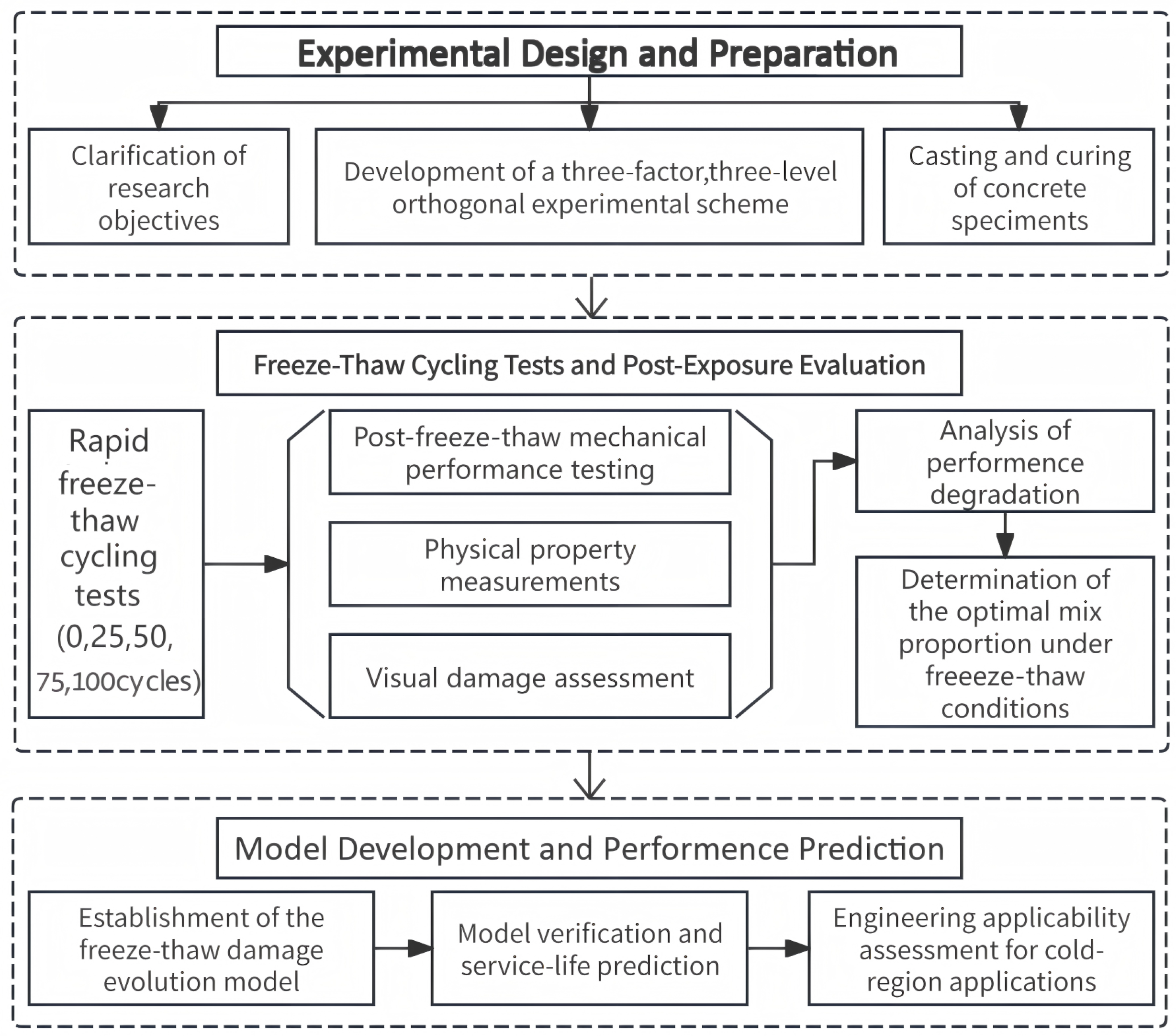
The overall experimental workflow is illustrated in Figure 1.
Three primary factors were selected for the orthogonal experiment: desert sand replacement ratio (DSR), steel fiber (SF) volume content, and polypropylene fiber (PPF) volume content. The levels of the orthogonal factors were determined based on a comprehensive analysis of the existing literature and the specific requirements for concrete performance. It is widely recognized in the field of desert sand concrete research that a replacement ratio of approximately 30% often serves as a critical threshold. Within this range, the micro-filling effect of desert sand can enhance the density of the cement matrix, whereas exceeding this ratio typically leads to a significant increase in water demand and a subsequent decline in mechanical strength. Therefore, the DSR levels in this study were set at 10%, 20%, and 30% to optimize the material properties within this most effective performance window. Each factor was assigned three levels, as listed in Table 3, and the corresponding orthogonal test matrix is presented in Table 4. The specific dosages of materials for each group are detailed in Table 5.

2.3. Specimen Preparation and Test Methods

Concrete mixtures were prepared in accordance with GB/T 50080–2016 [31] using an HJW-60 forced single-shaft mixer (Cangzhou Luyi Highway Engineering Instrument Co., Ltd., Cangzhou, China). Cement, medium sand, desert sand, and coarse aggregates were dry-mixed for 30 s. Approximately 80% of the mixing water was then added and mixed for another 30 s. Pre-dispersed SF and PPF were subsequently introduced and mixed for 60 s. Finally, the remaining 20% of the mixing water containing the dissolved superplasticizer was added, followed by an additional 120 s of mixing.
To ensure the statistical validity of the experimental findings, a total of 297 specimens were prepared based on the orthogonal test matrix (Table 4). For each of the nine mixture proportions, 30 cube specimens ( 100 × 100 × 100 mm3) were fabricated for mechanical property evaluations, and 3 prism specimens ( 100 × 100 × 400 mm3) were produced for freeze–thaw testing. Fresh mixtures were cast into molds and compacted using a frequency-modulated vibration table. After demolding at 48 h, all specimens were cured in a saturated Ca(OH)2 solution at 20 ± 2 °C for 28 days. The freeze–thaw resistance was evaluated using the rapid freeze–thaw method in accordance with GB/T 50082-2009 [32]. Prior to testing, specimens were immersed in water at 20 ± 2 °C for 4 days to reach a saturated state. Each freeze–thaw cycle was completed within 2–4 h, with the specimen core temperature controlled between − 17 ± 2 °C and 8 ± 2 °C at the end of freezing and thawing, respectively. The samples were subjected to 0, 25, 50, 75, and 100 freeze–thaw cycles. At each interval, specimen mass and fundamental transverse frequency were recorded to calculate the mass loss and relative dynamic modulus of elasticity. Testing was terminated once the relative dynamic modulus decreased below 60% or the mass loss exceeded 5%.
(1)
Compressive strength
Compressive strength was measured according to GB/T 50081–2019 [33]. The compressive strength f c e was calculated using Equation (3):
f c e = F A
where F is the ultimate load at failure (N) and A is the loaded area (mm2).
(2)
Splitting tensile strength
Splitting tensile strength was determined following GB/T 50081-2002 [34], and the splitting tensile strength f t s was calculated using Equation (4):
f t s = 2 F π A
where F is the ultimate load at failure (N), and A is the loaded area (mm2).
(3)
Mass loss rate
The mass loss rate after n freeze–thaw cycles was calculated according to Equation (5):
W n = G 0 G n G 0 × 100 %
where G 0 is the initial mass of the specimen, and G n is the mass after n freeze–thaw cycles.
(4)
Dynamic elastic modulus
The dynamic modulus of elasticity was measured using a dynamic modulus tester (DT-16, Tianjin Meisi Technology Co., Ltd., Tianjin, China) and calculated using Equation (6):
E d = 13.244 × 10 4 × W L 3 f 2 / a 4
where E d is the dynamic elastic modulus (MPa); a is the side length of the square cross-section (mm); L is the specimen length (mm); W is the mass (kg, accurate to 0.01 kg); and f is the fundamental transverse frequency (Hz).
(5)
Freeze-thaw damage index
The freeze–thaw damage degree D was defined based on the variation in the dynamic elastic modulus of elasticity, as expressed in Equation (7):
D = E 0 E N E 0 × 100 %
where E N and E 0 are the dynamic modulus of elasticity after N freeze–thaw cycles and before freezing, respectively.
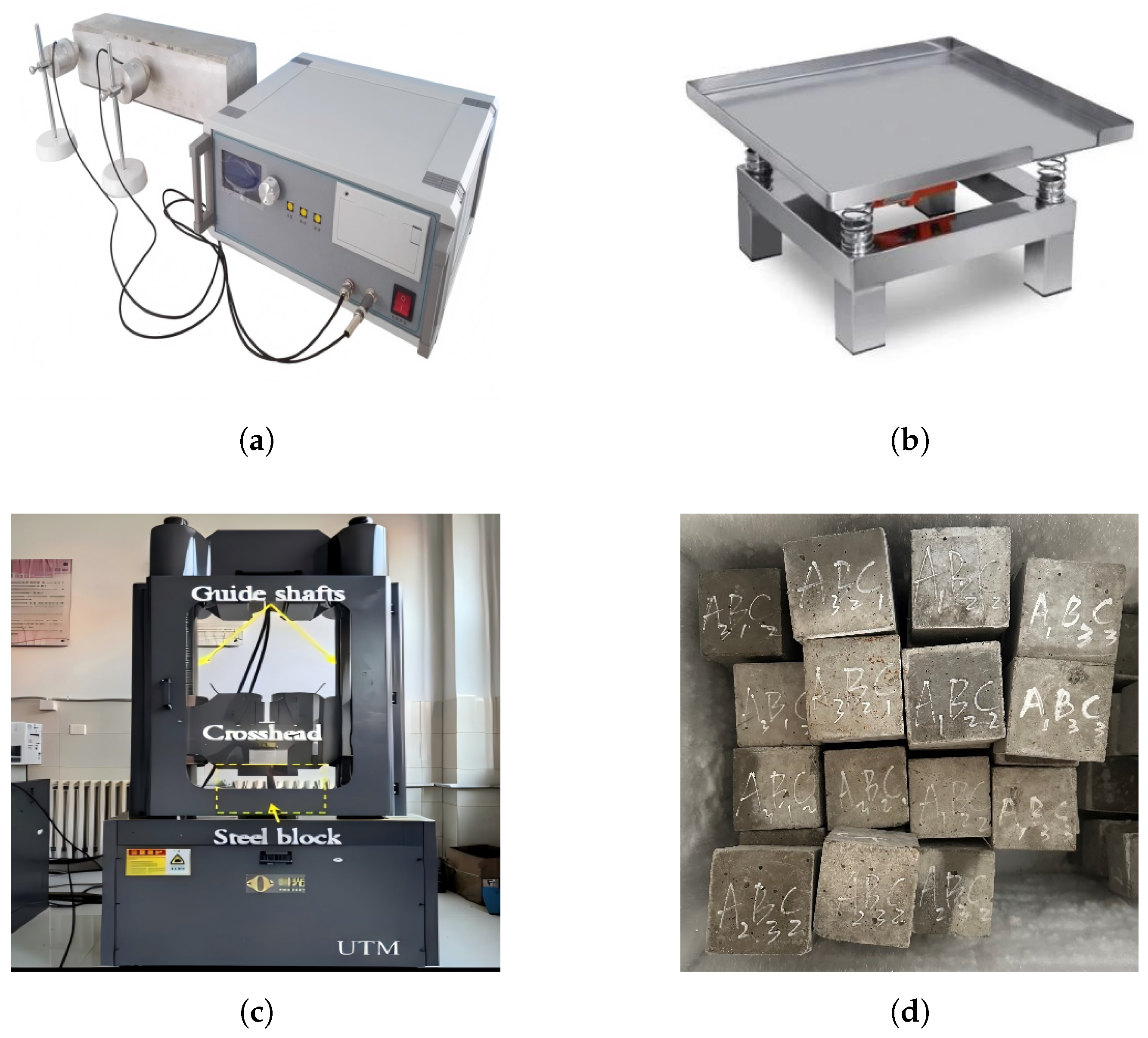
The primary testing instruments used in this study are shown in Figure 2.

3. Macroscopic Damage Morphology

3.1. Failure Modes and Surface Deterioration

The macroscopic damage characteristics observed before and after freeze–thaw (F–T) cycling provide direct evidence of the effectiveness of steel–polypropylene hybrid fiber reinforcement in desert sand concrete.
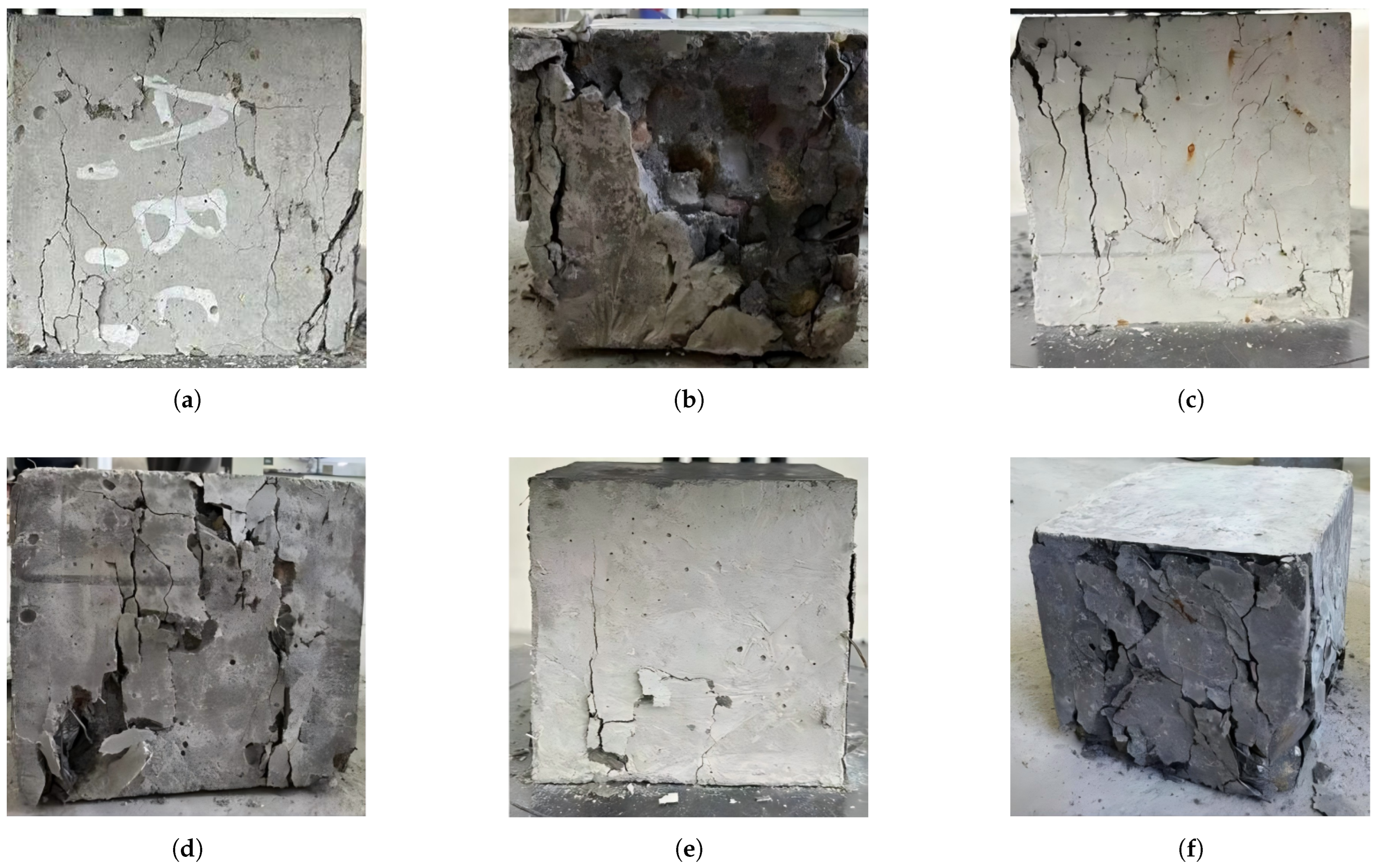
Before F–T exposure, plain specimens without fiber reinforcement exhibited typical brittle failure behavior under compression, characterized by extensive exposure of coarse aggregates, enlarged interfacial voids, and pronounced surface spalling (Figure 3a). In contrast, specimens reinforced with hybrid fibers maintained better structural integrity, showing delayed crack initiation, restrained crack propagation, and enhanced failure ductility. This behavior indicates an effective crack-bridging and stress redistribution mechanism provided by the combined action of steel and polypropylene fibers.
After 100 F–T cycles, specimens with relatively high fiber contents (A3B2C3) retained an intact surface condition, exhibiting only slight minor peeling and localized microcracking (Figure 3f). Conversely, specimens with low fiber contents (A1B1C1) exhibited severe surface deterioration, including significant mortar loss and coarse aggregate exposure (Figure 3b). These observations demonstrate that hybrid fiber reinforcement effectively mitigates frost-induced surface damage and substantially enhances the freeze–thaw durability of desert sand concrete.
During splitting tensile tests, cracks initiated at the loading points and propagated toward the specimen center. After F–T cycling, specimens containing higher fiber contents exhibited slower crack development and prolonged failure processes, reflecting enhanced tensile ductility. Post-test observations revealed steel fiber pull-out and polypropylene fiber rupture, indicating that fiber bridging, pull-out resistance, and localized deformation jointly contributed to energy dissipation and improved crack resistance in hybrid fiber-reinforced desert sand concrete.

3.2. Fresh and Mechanical Properties Before Freeze–Thaw Cycles and Influencing Factors

The workability (represented by slump) and mechanical properties of the investigated mixtures before environmental exposure are critical for ensuring structural performance. During splitting tensile tests, cracks initiated at the loading points and propagated toward the specimen center. After F–T cycling, specimens containing higher fiber contents exhibited slower crack development and prolonged failure processes, reflecting enhanced tensile ductility. Post-test observations revealed steel fiber pull-out and polypropylene fiber rupture, indicating that fiber bridging, pull-out resistance, and localized deformation jointly contributed to energy dissipation and improved crack resistance in hybrid fiber-reinforced desert sand concrete.
Range analysis was conducted to evaluate the effects of desert sand replacement ratio (DSR), steel fiber (SF) content, and polypropylene fiber (PPF) content on slump, compressive strength, and splitting tensile strength prior to freeze–thaw cycling, and to quantify the relative influence of each factor.

3.2.1. Slump

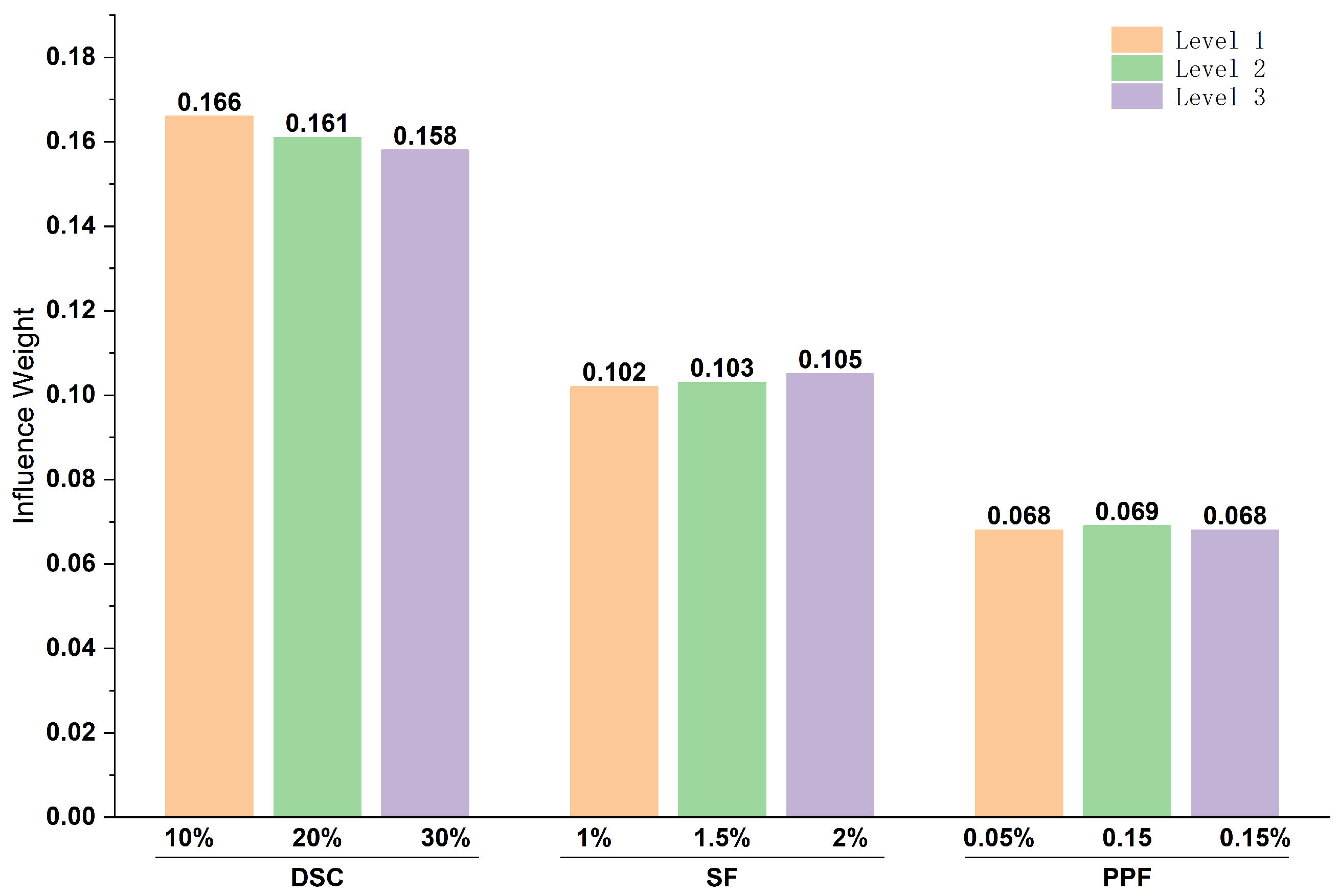
For slump, the influence order was determined to be SF > DSR > PPF. As illustrated in Figure 4, steel fiber content exerted the most pronounced negative effect on workability. Increasing SF from 1% to 2% resulted in a slump reduction of approximately 35 mm (≈28%). This reduction can be attributed to the large specific surface area and irregular geometry of steel fibers, which increases internal friction and consumes free water, thereby reducing mixture flowability.

3.2.2. Compressive Strength

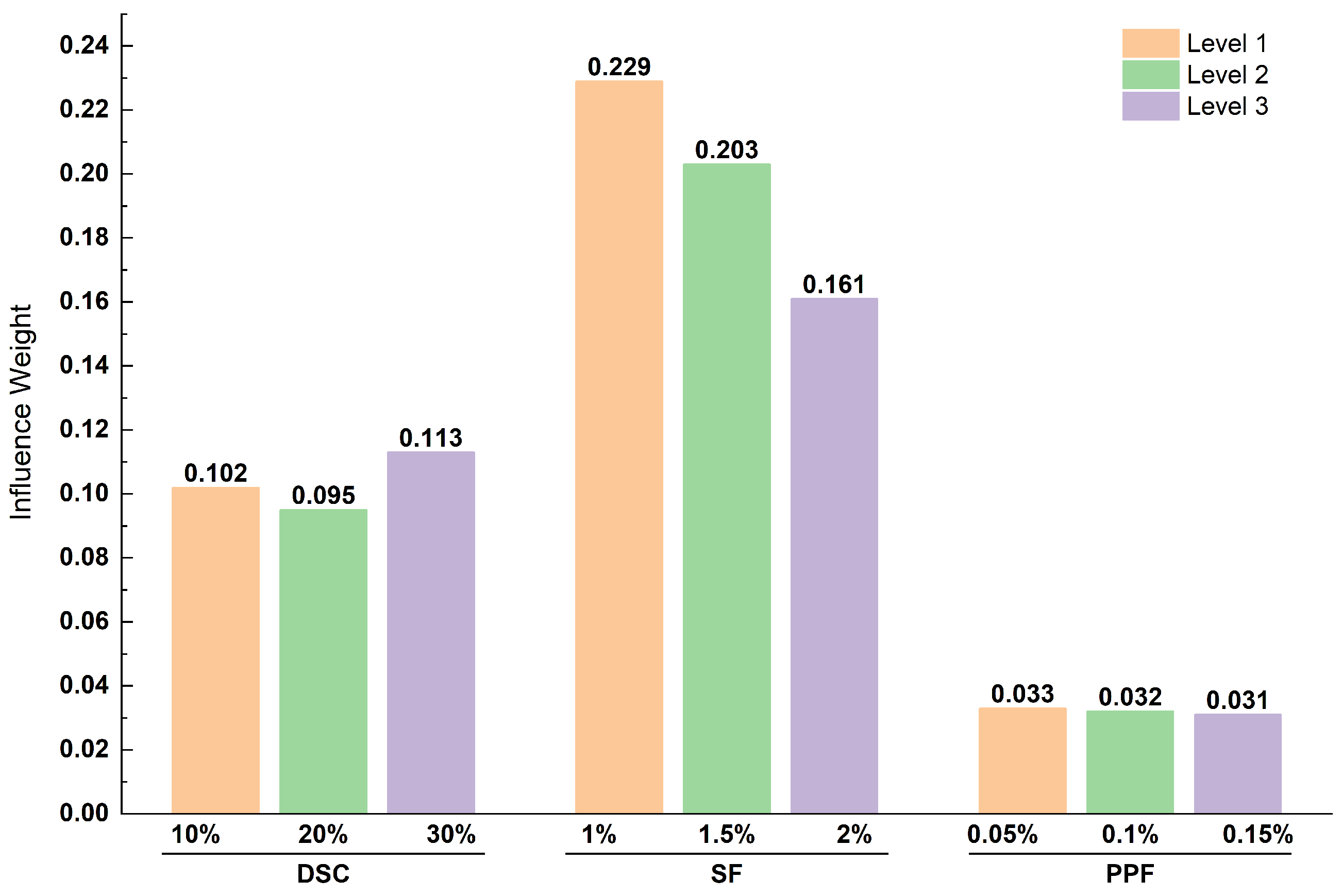
For 28-day compressive strength, the influence order was DSR > SF > PPF. As shown in Figure 5, compressive strength initially increased and subsequently decreased with increasing desert sand replacement ratio, reaching a maximum at a DSR of 20%. Moderate incorporation of ultra-fine desert sand effectively filled inter-particle voids, improving matrix compactness and load transfer efficiency. However, excessive replacement increased water demand and reduced effective workability, ultimately leading to a strength reduction.

3.2.3. Splitting Tensile Strength

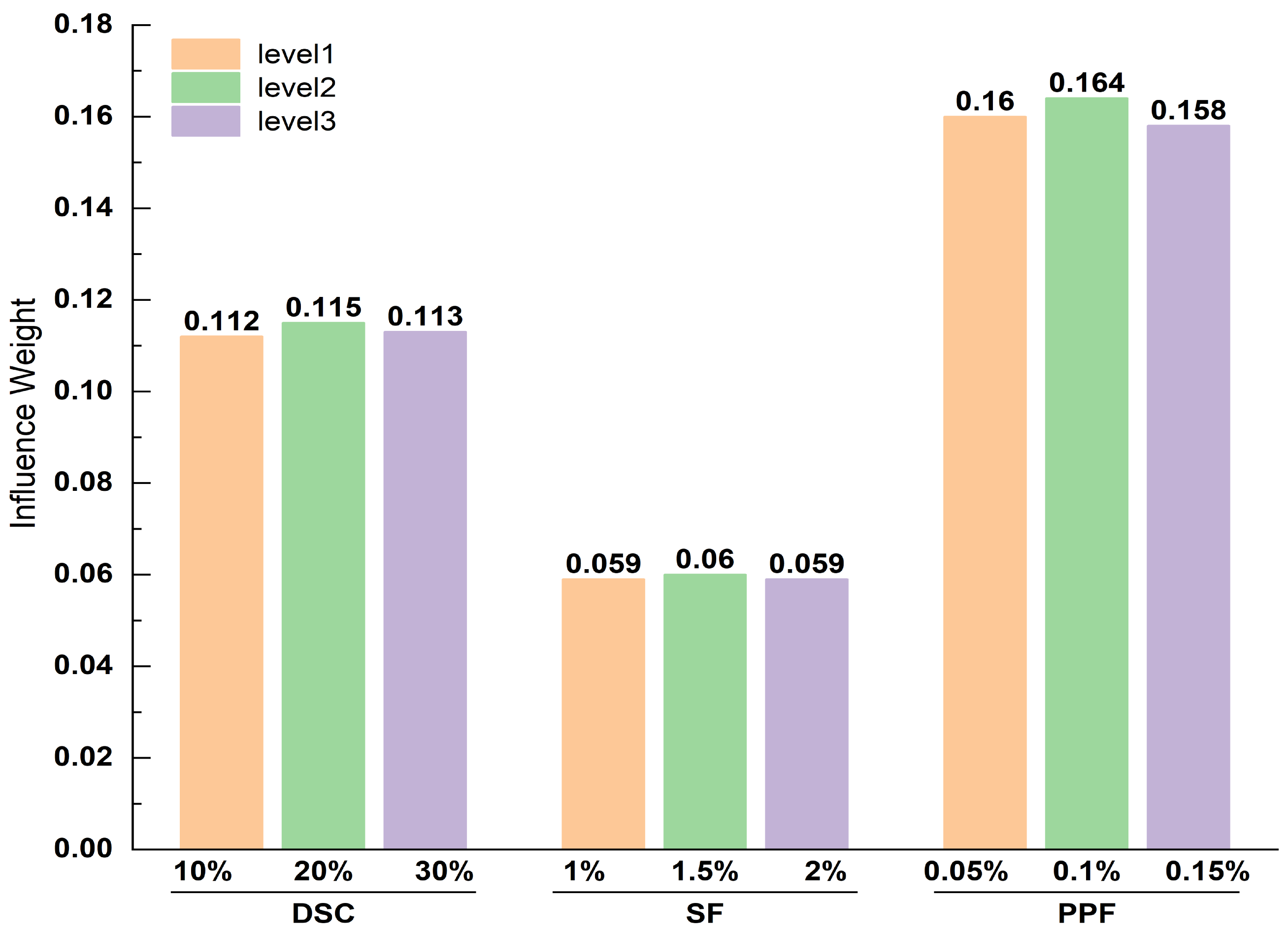
For splitting tensile strength, the influence order shifted to PPF > DSR > SF. As shown in Figure 6, increasing PPF from 0.05% to 0.10% enhanced splitting tensile strength by 4.3%. This improvement is primarily attributed to the formation of a three-dimensional micro-reinforcement network by polypropylene fibers, which restrains microcrack initiation and propagation and promotes tensile stress redistribution within the cementitious matrix.
To further quantify the statistical significance of these factors and evaluate the reliability of the experimental data, analysis of variance (ANOVA) was performed on the orthogonal test results for all mechanical indices, as summarized in Table 6. The statistical evaluation demonstrates that the experimental results possess low dispersion and high reproducibility. The results indicate that DSR has a statistically significant influence on compressive strength ( p < 0.05 ), while PPF is the most influential factor regarding splitting tensile strength among the variables, although its significance level varies under different confidence intervals. Based on a comprehensive statistical evaluation integrating all performance indicators, the optimal mix proportion prior to freeze–thaw cycling was identified as DSR = 20%, SF = 1%, and PPF = 0.15% (group A3B1C2).

3.2.4. Evolution of Mechanical Performance After Freeze–Thaw Cycling

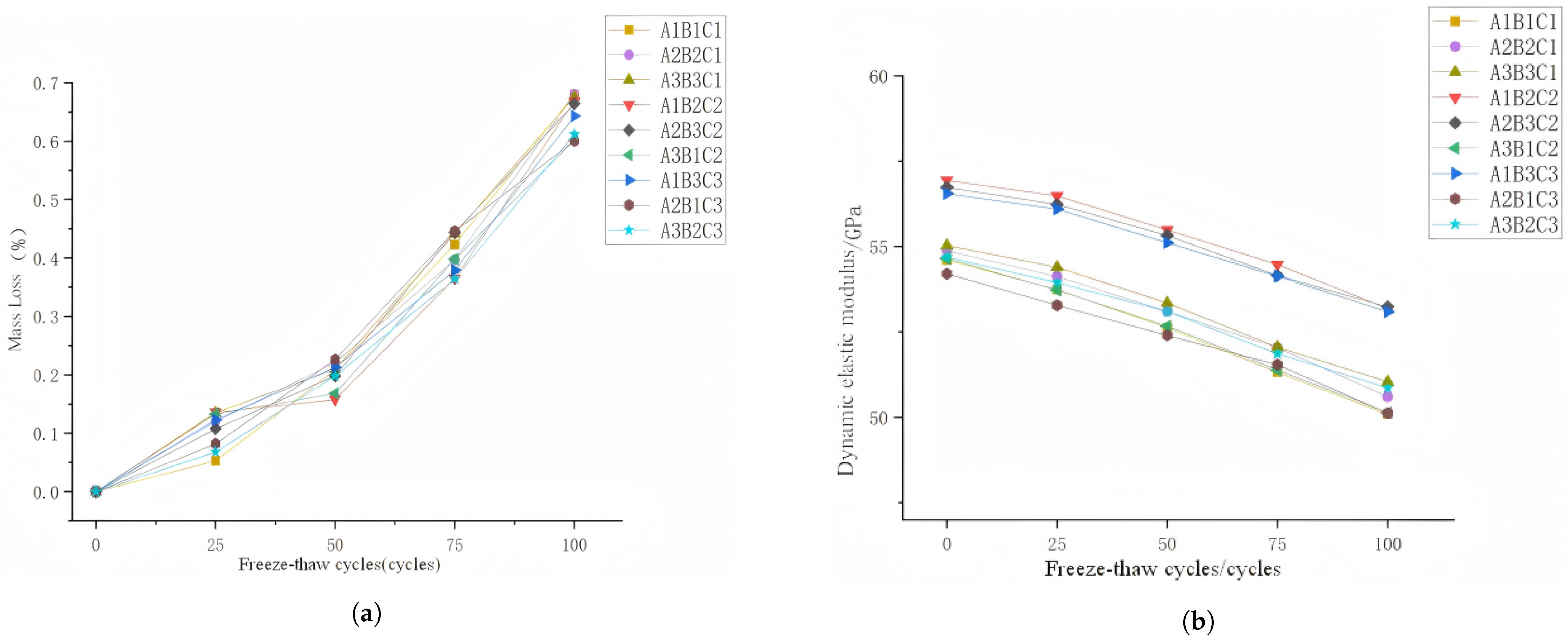
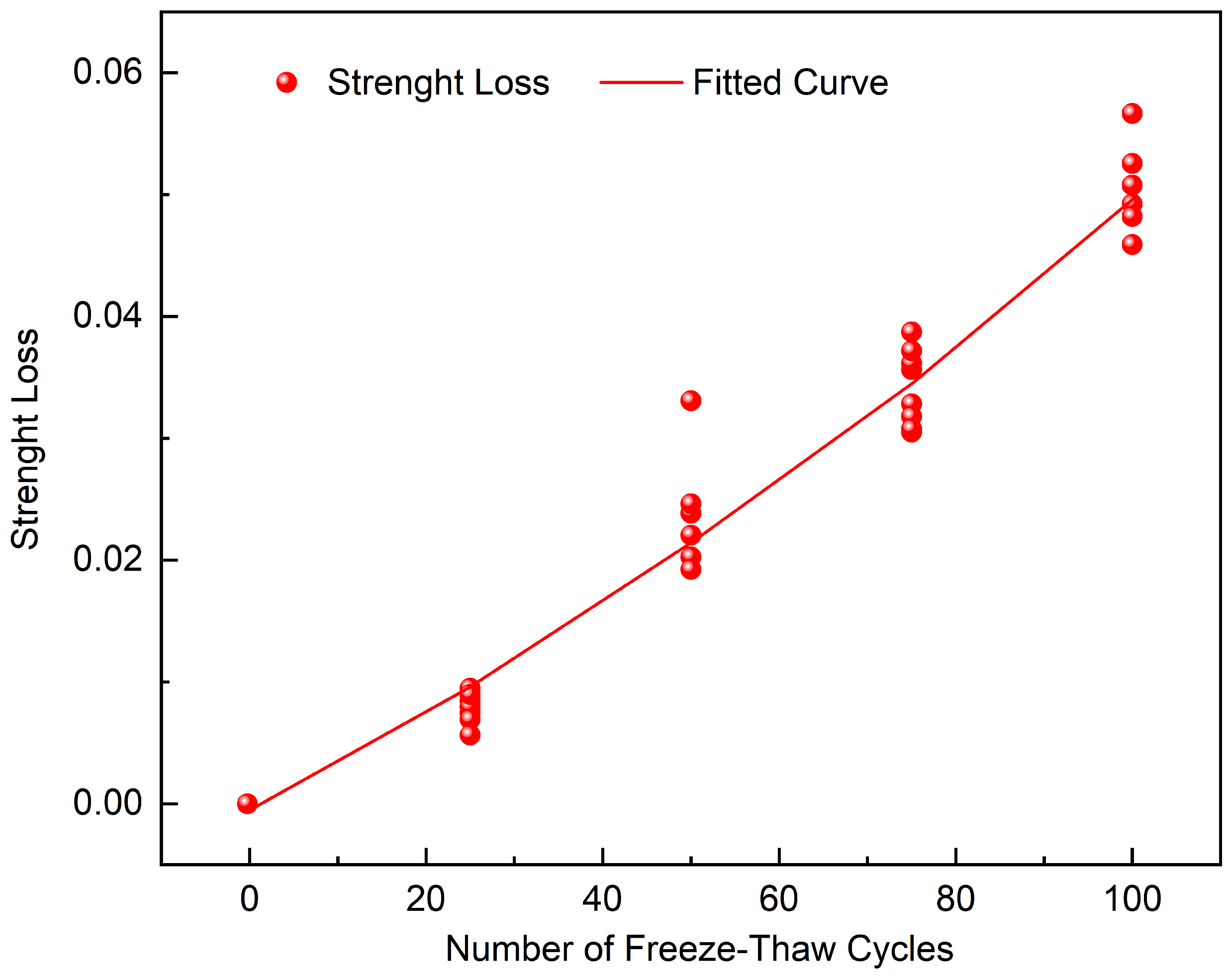
With increasing freeze–thaw (F–T) cycles, all mechanical properties exhibited progressive deterioration. After 100 cycles, compressive strength loss ranged from 4.59% to 5.67%, splitting tensile strength loss ranged from 2.34% to 3.47%, and mass loss remained between 0.65% and 0.73%. The freeze–thaw damage degree (D) varied from 6.11% to 8.25%. All deterioration indices satisfied the requirements of current standards (mass loss ≤ 5% and relative dynamic modulus of elasticity ≥ 60%), indicating that hybrid fiber-reinforced desert sand concrete possesses excellent freeze–thaw durability (Figure 7).
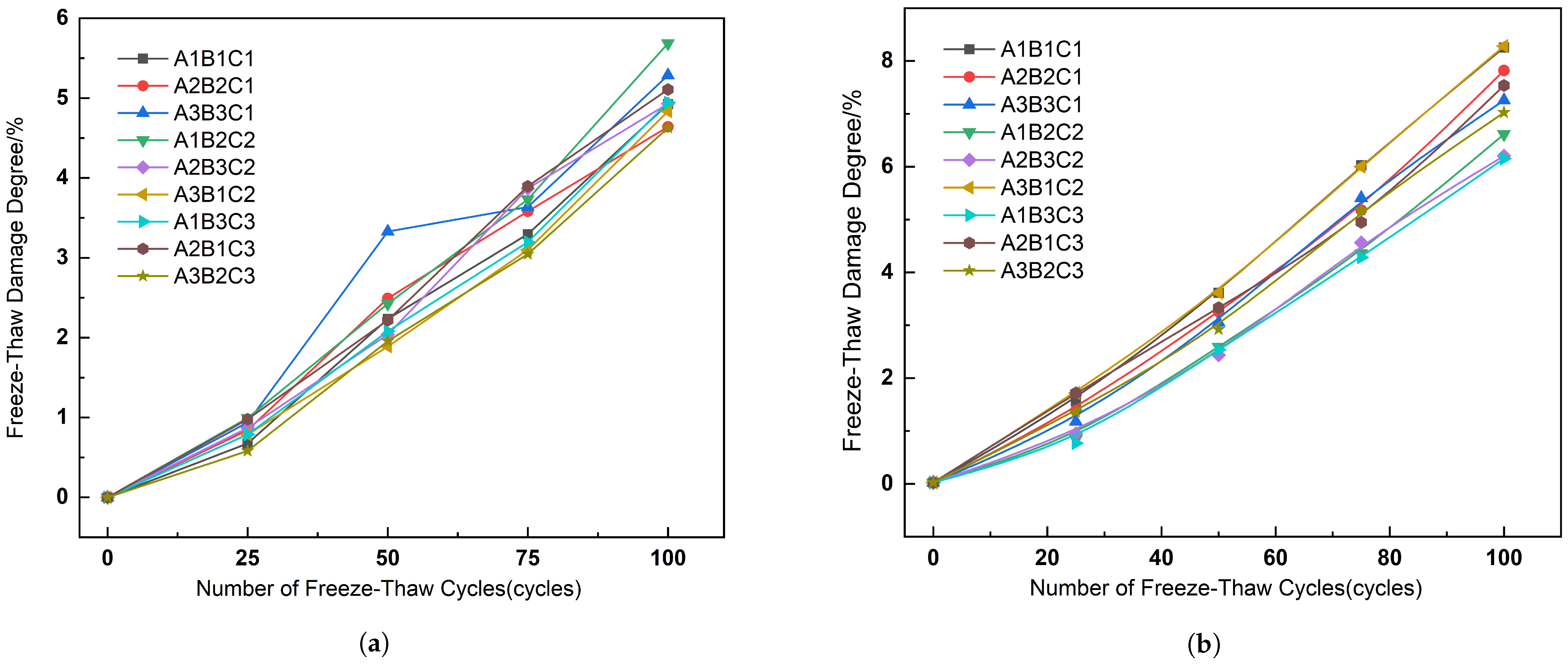
Figure 8 illustrates the evolution of compressive strength loss and freeze–thaw damage degree with increasing cycle numbers. Both parameters exhibited nonlinear growth, with deterioration accelerating as freeze–thaw cycles progressed. The degradation process can be divided into three distinct stages:
  • Initial stage (0–25 cycles): Low internal saturation and limited ice expansion stress resulted in slow performance degradation.
  • Intermediate stage (25–75 cycles): Continuous water ingress and microcrack propagation increased internal saturation and frost-heave stress, accelerating deterioration.
  • Final stage (75–100 cycles): The formation of interconnected microcracks facilitated water migration, further intensifying frost-heave stress and leading to rapid deterioration.
This nonlinear acceleration behavior represents a typical freeze–thaw damage evolution pattern in concrete.
Comparison of the influencing factors before and after freeze–thaw exposure reveals a clear shift in governing mechanisms. While mix optimization prior to freeze–thaw cycling is primarily controlled by fresh-state workability and mechanical strength, post-cycling performance is dominated by resistance to frost–thaw-induced damage.
To further contextualize the durability of HF-DSC relative to conventional matrices, it is essential to benchmark these results against the established literature. Previous research [35] demonstrated that for high-performance concrete (HPC), the incorporation of 0.1% polypropylene fiber is critical to alleviate internal hydraulic pressure and mitigate freeze–thaw deterioration. Similarly, experimental investigations on High-Performance Fiber-Reinforced Concrete (HPFRC) [36] revealed that non-fibrous reference specimens underwent significantly higher degradation in dynamic modulus compared to their reinforced counterparts after 75 cycles.
In comparison, despite the inherent microstructural challenges of utilizing desert sand, the HF-DSC in this study maintained a remarkably low compressive strength loss (<6%) and mass loss (<0.8%) after 100 cycles, achieving a mechanical integrity comparable to conventional high-performance systems. Based on a comprehensive evaluation incorporating compressive strength, splitting tensile strength, and dynamic modulus of elasticity after 100 freeze–thaw cycles, the optimal mixture after freeze–thaw exposure was identified as DSR = 30%, SF = 2%, and PPF = 0.05% (group A1B3C3). The discrepancy between the optimal mixtures before and after freeze–thaw cycling indicates that freeze–thaw exposure fundamentally alters the relative contributions and synergistic mechanisms of desert sand and fiber components. Therefore, durability-oriented mix design for desert sand concrete in cold regions should be based on post-freeze–thaw performance rather than solely on pre-cycling mechanical properties.
In summary, the transition of the optimal mixture from A3B1C2 (pre-cycling) to A1B3C3 (post-cycling) highlights a fundamental shift in the damage resistance mechanism. While initial strength depends on matrix homogeneity, freeze–thaw durability is governed by a multi-scale crack-arresting system. Specifically, the 30% DSR optimizes the particle packing density to minimize the volume of freezable water. Simultaneously, the 2% SF provides the maximum bridging force against macrocrack expansion, and the 0.05% PPF ensures a uniform micro-network that inhibits microcrack initiation without the adverse effects of fiber clumping. This synergistic “dense-filling and skeleton-bridging” effect is the underlying reason why A1B3C3 exhibits superior performance under aggressive frost action.

3.2.5. Microscopic Mechanism Analysis

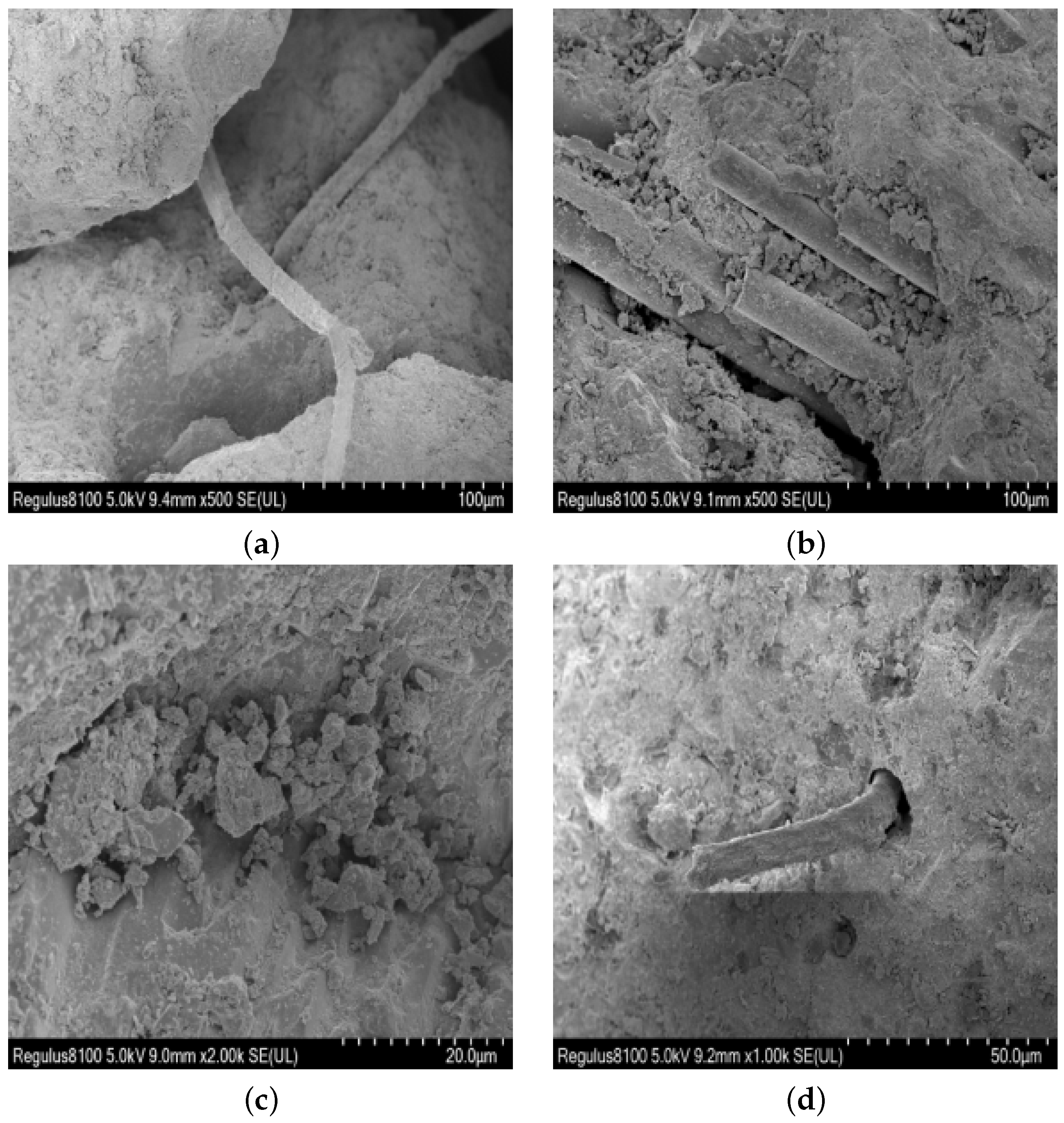
To fundamentally elucidate the freeze–thaw resistance mechanism of the studied material, SEM analysis was performed on the optimized mixture after 100 cycles (Figure 9).
As shown in Figure 9a,b, distinct fiber pull-out and skeleton bridging behaviors are observed at the microcrack sites. The hybrid fibers effectively restrain the evolution of microcracks into macrocracks induced by frost-heave stress. The energy dissipation through fiber pull-out and the physical support provided by the fiber skeleton significantly enhance the structural integrity of the matrix.
Furthermore, Figure 9c,d demonstrate the micro-filling effect of desert sand and the robust interfacial bonding. The ultra-fine desert sand particles occupy the micro-voids, enhancing the density of the interfacial transition zone (ITZ). This compact microstructure, combined with strong fiber–matrix bonding, reduces water permeability paths and alleviates internal frost-heave stress. The synergistic effect of “fiber reinforcement” and “ultra-fine particle filling” constitutes the microscopic basis for the superior freeze–thaw durability of the investigated concrete.

4. Freeze–Thaw Damage Modeling and Service Life Prediction

4.1. Constitutive Characterization of Phenomenological Damage Evolution

To theoretically interpret the freeze–thaw (F–T) deterioration and evaluate the long-term service performance of steel–polypropylene hybrid fiber-reinforced desert sand concrete (SPHF-DSC), a phenomenological damage evolution model was formulated within the framework of continuum damage mechanics. The damage kinetics are captured by a second-order Taylor expansion, expressed as the following quadratic polynomial model:
D N = a N 2 + b N + c
where D N represents the freeze–thaw damage degree after N cycles, and N is the number of cycles. In this constitutive descriptor, the parameters encapsulate the multi-stage degradation physics: parameter c accounts for the initial stochastic damage (pre-existing micro-defects) inherent in the composite; b signifies the fundamental damage growth rate during the steady-state nucleation period; and a characterizes the damage acceleration coefficient, governing the structural disintegration as microcracks coalesce.
For comparison, a conventional exponential damage model was also considered:
D N = a e b N
where a and b are fitting coefficients associated with the material properties.
Both models were calibrated using the experimental matrix. Although Table 7 and Table 8 present the statistically regressed coefficients derived from the global average to highlight the deterministic trend, individual fitting for all nine orthogonal groups was executed, consistently yielding R 2 > 0.95 . This confirms the model’s robust applicability across diverse mix proportions. The quadratic polynomial model exhibited superior performance, with R 2 values exceeding 0.96, indicating excellent agreement. In contrast, the exponential model showed lower accuracy ( R 2 = 0.916 ), particularly in capturing the accelerated damage stage.
As illustrated in Figure 10, the quadratic polynomial model provides an accurate representation. The results confirm that the deterioration follows a nonlinear and progressively accelerating pattern, reflecting the mechanical essence of frost-induced microcrack evolution.
These results demonstrate that the quadratic polynomial model is capable of reproducing both the initial slow-deterioration stage and the subsequent accelerated damage stage. Therefore, this model was selected for subsequent service life prediction of SPHF-DSC under freeze–thaw exposure.

4.2. Service Life Prediction and Model Validation

To assess the long-term service performance of SPHF-DSC in cold-region infrastructure, the quadratic polynomial freeze–thaw damage evolution model with superior fitting accuracy was employed to predict service life under cyclic freezing and thawing conditions.
In accordance with commonly adopted durability evaluation criteria, three failure thresholds were considered: (1) mass loss rate exceeding 5%, (2) compressive strength loss rate exceeding 25%, and (3) freeze–thaw damage degree exceeding 40%.
By substituting these critical thresholds into the quadratic polynomial model, the corresponding numbers of freeze–thaw cycles to failure were calculated to be 316, 318, and 322, respectively (Table 9). The close agreement among these values, with a maximum deviation of six cycles, indicates that the proposed model provides stable and consistent predictions across different deterioration indicators.
To translate the accelerated laboratory freeze–thaw test results into practical engineering service life values, regional climatic conditions were incorporated into the analysis. A widely adopted rapid freeze–thaw conversion coefficient K (average value = 12) was introduced to account for the severity difference between laboratory rapid freeze–thaw cycling and natural environmental exposure.
Using Shenyang, a representative cold-region site in China, as an example, the annual number of natural freeze–thaw cycles (M) was taken to be 100 cycles per year. The service life was then estimated using:
t s l = K N M
where t s l is the predicted service life (years); N is the number of freeze–thaw cycles to failure obtained from laboratory testing; K is the rapid freeze–thaw conversion coefficient; and M is the annual number of natural freeze–thaw cycles.
Based on the predicted results shown in Table 9, the optimized SPHF-DSC mixture exhibits an average service life of approximately 38 years, satisfying the durability requirements for concrete infrastructure in cold regions. These results further confirm that the optimized mix proportion (DSC = 30%, SF = 2%, PPF = 0.05%) provides effective long-term resistance against freeze–thaw deterioration.
It should be noted that actual service environments are subject to more complex coupled actions, including deicing salt ingress, wet–dry cycling, and sustained mechanical loading. Future studies should therefore incorporate field exposure tests or multi-factor coupling simulations to further refine the proposed model and enhance its applicability to real engineering conditions.

5. Conclusions

This study systematically investigated the effects of desert sand replacement ratio (DSR), steel fiber (SF) content, and polypropylene fiber (PPF) content on the workability, mechanical performance, and freeze–thaw (F–T) durability of sustainable hybrid fiber-reinforced desert sand concrete (HF-DSC). By employing a three-factor orthogonal experimental design, this research promotes the high-value utilization of desert sand as a carbon-reduction strategy for construction materials. Based on the experimental results, a durability-oriented optimization framework was developed, and a freeze–thaw damage evolution model was established. The main conclusions are summarized as follows:
  • The Synergistic effect between desert sand and hybrid fibers enhances the multi-dimensional sustainability of the material. For fresh concrete, workability was primarily governed by the combined influence of SF content and DSR. In the hardened state, the DSR exerted a dominant effect on compressive strength, with an optimal replacement level of 20%, whereas PPF played a pivotal role in augmenting splitting tensile strength. These findings underscore that the rational incorporation of desert sand and hybrid fibers can sustain high mechanical performance while mitigating the reliance on scarce river sand, thereby significantly reducing the ecological footprint of the cementitious matrix.
  • Durability-optimized mix design is essential for the longevity of sustainable infrastructure. Prior to F–T exposure, performance was dominated by strength development; however, under cyclic freezing, resistance against frost-induced damage became the governing factor. A comprehensive evaluation determined a durability-optimized mix (DSR = 30%, SF = 2%, and PPF = 0.05%). These findings underscore that for desert sand concrete to be a viable and sustainable alternative in cold-region energy infrastructures, mix proportions must be optimized for long-term durability rather than initial strength alone.
  • Phenomenological damage evolution modeling provides a theoretical reference for the life-cycle assessment of cold-region projects. The developed quadratic polynomial model, conceptualized as a second-order constitutive descriptor, accurately captured the nonlinear F–T degradation of HF-DSC ( R 2 > 0.96 ). Under the specific climatic conditions of Shenyang, China, the optimized HF-DSC mixture exhibited a predicted service life of approximately 38 years within the scope of frost-induced deterioration. While this preliminary predictive framework offers a valuable tool for evaluating the degradation trends of desert sand concrete, future integration of multi-factor coupling (e.g., loading and chemical attack) will further enhance its engineering applicability for infrastructure in cold and arid regions.
  • Long-term durability under coupled factors should be considered in future research. While this study confirms the excellent frost resistance of HF-DSC, chemical-induced degradation—including carbonation, chloride penetration, and sulfate attack—is equally critical for evaluating the service life of sustainable construction materials. Given that the incorporation of ultra-fine desert sand and hybrid fibers significantly alters the micro-pore structure, its resistance to chemical corrosion warrants further investigation. Future work will focus on the performance evolution of HF-DSC under complex chemical environments to provide a more comprehensive reliability assessment for infrastructure in diverse harsh climates.

Author Contributions

Conceptualization, B.N. and Z.F.; validation, Y.H., Z.F. and X.Z.; formal analysis, Y.H.; data curation, Z.F.; writing—original draft preparation, B.N. and Y.H.; writing—review and editing, B.N., Y.H. and X.L.; visualization, B.N. and Y.H.; supervision, X.L.; funding acquisition, B.N. and X.L. All authors have read and agreed to the published version of the manuscript.

Funding

This study was funded by the Liaoning Province Natural Science Fund Project (2022-MS-262) and the Liaoning Hydraulic Engineering Society Project (H2025354).

Data Availability Statement

The data presented in this study are only available on request from the corresponding author due to privacy constraints.

Conflicts of Interest

The authors declare no conflicts of interest.

Abbreviations

The following abbreviations are used in this manuscript:
ANOVAAnalysis of variance
DSCDesert sand concrete
DSRDesert sand replacement ratio
F-TFreeze–thaw
HF-DSCHybrid fiber-reinforced desert sand concrete
MSMedium sand
PPFPolypropylene fiber
SFSteel fiber
SPHF-DSCSteel–polypropylene hybrid fiber-reinforced desert sand concrete
W/BWater–binder ratio

References

  1. Hassan, M.H.; Farid, A.; Azizi, A.Z.; Elnassar, Z.; Hassan, A. The use of treated desert sand in sustainable concrete: A mechanical and microstructure study. J. Build. Eng. 2023, 72, 107843. [Google Scholar] [CrossRef]
  2. Aman, A.M.N.; Selvarajoo, A.; Lau, T.L.; Chen, W.-H. Biochar as Cement Replacement to Enhance Concrete Composite Properties: A Review. Energies 2022, 15, 7662. [Google Scholar] [CrossRef]
  3. Shen, Y.; Hao, J.; Bai, Z.; Zhou, Z.; Li, Y.; Liao, T.; Zhang, K. Research progress of concrete prepared by desert sand. Bull. Chin. Ceram. Soc. 2021, 40, 3879–3890. (In Chinese) [Google Scholar] [CrossRef]
  4. Zhang, R.; Li, Z.; Ji, F.; Li, Y.; Li, G.; Zhou, Y.; Zhang, H. Performance study and life prediction of desert sand concrete under chloride salt erosion and freeze–thaw cycle. J. Build. Eng. 2025, 111, 113135. [Google Scholar] [CrossRef]
  5. Kaufmann, J. Evaluation of the combination of desert sand and calcium sulfoaluminate cement for the production of concrete. Constr. Build. Mater. 2020, 243, 118281. [Google Scholar] [CrossRef]
  6. Munir, M.J.; Kazmi, S.M.S.; Wu, Y.-F. High-strength compression-cast desert sand concrete: Stress–strain behavior, durability, microstructure, and cement savings. J. Build. Eng. 2025, 111, 113284. [Google Scholar] [CrossRef]
  7. Mathern, A.; von der Haar, C.; Marx, S. Concrete Support Structures for Offshore Wind Turbines: Current Status, Challenges, and Future Trends. Energies 2021, 14, 1995. [Google Scholar] [CrossRef]
  8. Yu, Z. Application of steel fiber concrete construction technology in road and bridge construction. Eng. Technol. Res. 2024, 9, 47–49. (In Chinese) [Google Scholar] [CrossRef]
  9. Ramesh, B.; Eswari, S. Mechanical behaviour of basalt fibre reinforced concrete: An experimental study. Mater. Today Proc. 2021, 43, 2317–2322. [Google Scholar] [CrossRef]
  10. Balendran, R.V.; Zhou, F.P.; Nadeem, A.; Leung, A.Y.T. Influence of steel fibres on strength and ductility of normal and lightweight high strength concrete. Build. Environ. 2002, 37, 1361–1367. [Google Scholar] [CrossRef]
  11. Niu, L.; Zhang, S.; Wei, Y. Effect of steel fiber content on mechanical properties of concrete. China Concr. Cem. Prod. 2019, 51–54. (In Chinese) [Google Scholar] [CrossRef]
  12. Li, H.; Jiang, S.; He, W. Effect of polypropylene fiber and glass fiber on frost resistance of desert sand concrete. KSCE J. Civ. Eng. 2024, 28, 342–353. [Google Scholar] [CrossRef]
  13. Tariq, K.; Ahmad, J.; Husnain, S.; Ijaz, M.S. Influence on compressive and tensile strength properties of fiber-reinforced concrete using polypropylene, jute, and coir fiber. J. Mech. Behav. Mater. 2023, 32, 20220263. [Google Scholar] [CrossRef]
  14. Cao, M.; Zhang, C.; Lv, H. Mechanical response and shrinkage performance of cementitious composites with a new fiber hybridization. Constr. Build. Mater. 2014, 57, 45–52. [Google Scholar] [CrossRef]
  15. Zhang, M.; Liu, H.; Sun, S.; Chen, X.; Doh, S.I. Dynamic mechanical behaviors of desert sand concrete after different temperatures. Appl. Sci. 2019, 9, 4151. [Google Scholar] [CrossRef]
  16. Kocab, D.; Vymazal, T.; Kucharczyková, B.; Daněk, P.; Halamová, R.; Hanuš, P. Influence of coarse aggregate grain size on frost resistance of concrete. Key Eng. Mater. 2018, 776, 37–40. [Google Scholar] [CrossRef]
  17. Zhao, H.; Jiang, S.; He, W. Mechanical properties and durability of steel fiber reinforced concrete: A review. J. Build. Eng. 2023, 82, 108025. [Google Scholar] [CrossRef]
  18. Wang, X.; Liu, M.; Liu, X.; Jia, S.; Xu, Z. Mechanical properties and carbon emissions of desert sand and machine-made sand concrete. China Civ. Eng. J. 2022, 55, 23–30. (In Chinese) [Google Scholar] [CrossRef]
  19. Bo, N.; Xin, J.; Yu, W. Research status of mechanical properties and microstructure of fiber-reinforced desert sand concrete. Materials 2025, 18, 2531. [Google Scholar] [CrossRef]
  20. Wang, R.G.; Xie, M.; Zhang, J. Mechanical properties and damage model of modified recycled concrete under freeze-thaw cycles. J. Build. Eng. 2023, 78, 107680. [Google Scholar] [CrossRef]
  21. Gong, L.; Bu, Y.; Xu, T.; Zhao, X.; Yu, X.; Liang, Y. Research on freeze resistance and life prediction of desert sand–crushed stone fine aggregate concrete. Case Stud. Constr. Mater. 2024, 21, e03896. [Google Scholar] [CrossRef]
  22. Li, Y.; Xia, W.; Liu, X.; Zhang, H.; He, P.; Wang, H.; Meng, X.; Cao, Y. Durability deterioration mechanism of aeolian sand concrete under carbonization and freeze–thaw conditions. Case Stud. Constr. Mater. 2025, 22, e04489. [Google Scholar] [CrossRef]
  23. Liu, Y.; Li, Y.; Jiang, G. Orthogonal experiment on performance of mortar made with dune sand. Constr. Build. Mater. 2020, 264, 120254. [Google Scholar] [CrossRef]
  24. Li, Y.; Li, Z.; Zhang, H.; Li, Y.; Ji, F.; Zhou, Y. Micro-mechanism and stress–strain curve analysis of desert sand concrete under carbonation. Constr. Build. Mater. 2025, 492, 142936. [Google Scholar] [CrossRef]
  25. Pan, K.; Ma, C.; Yu, R.C.; Wu, Z. Multi-index evaluation of steel fiber crack resistance enhancement in desert sand concrete under freeze–thaw cycles. Constr. Build. Mater. 2025, 499, 144059. [Google Scholar] [CrossRef]
  26. Luo, X.; Xing, G.; Tao, J.; Hu, W.; Wei, C.; Chang, Z.; Qiao, L. Macro- and microscopic experimental study on frost resistance and damage mechanism of dune sand concrete under freeze–thaw cycling. Constr. Build. Mater. 2025, 489, 142335. [Google Scholar] [CrossRef]
  27. GB 175–2023; Common Portland Cement. Standards Press of China: Beijing, China, 2023.
  28. GB/T 1596–2017; Fly ash used for cement and concrete. Standards Press of China: Beijing, China, 2017.
  29. Liu, B.; Jin, H.L.; Sun, Z. Chemical characteristics of sediments and climate change in the Horqin Sandy Land during the Middle and Late Holocene. Acta Sedimentol. Sin. 2012, 30, 536–546. (In Chinese) [Google Scholar] [CrossRef]
  30. JGJ 55-2011; Specification for Mix Proportion Design of Ordinary Concrete. China Architecture & Building Press: Beijing, China, 2011.
  31. GB/T 50080–2016; Standard for Test Method of Performance on Ordinary Fresh Concrete. China Architecture & Building Press: Beijing, China, 2016.
  32. GB/T 50082-2009; Standard for Test Methods of Long-Term Performance and Durability of Ordinary Concrete. China Architecture & Building Press: Beijing, China, 2009.
  33. GB/T 50081–2019; Standard for Test Methods of Concrete Physical and Mechanical Properties. China Architecture & Building Press: Beijing, China, 2019.
  34. GB/T 50081-2002; Standard for Test Method of Mechanical Properties on Ordinary Concrete. China Architecture & Building Press: Beijing, China, 2002.
  35. Ma, H.; Yu, H.; Li, C.; Tan, Y.; Cao, W.; Da, B. Freeze–thaw damage to high-performance concrete with synthetic fibre and fly ash due to ethylene glycol deicer. Constr. Build. Mater. 2018, 187, 197–204. [Google Scholar] [CrossRef]
  36. Feo, L.; Ascione, F.; Penna, R.; Lau, D.; Lamberti, M. An experimental investigation on freezing and thawing durability of high performance fiber reinforced concrete (HPFRC). Compos. Struct. 2020, 234, 111673. [Google Scholar] [CrossRef]
Figure 1. Study flowchart of hybrid steel–polypropylene fiber-reinforced desert sand concrete experiments.
Buildings 16 01574 g001
Figure 2. Primary testing instruments: (a) dynamic elastic modulus tester (DT-16, Tianjin Meisi Technology Co., Ltd., Tianjin, China); (b) frequency modulation vibration table (ZT-1x1, Tianjin Jianyi Experiment Instrument Co., Ltd., Tianjin, China); (c) universal testing machine (YAW-300, Wuxi Next Experiment Instrument Co., Ltd., Wuxi, China); (d) concrete test blocks.
Buildings 16 01574 g002
Figure 3. Macroscopic damage in concrete specimens under compression: (a) A1B1C1: before freeze–thaw cycles; (b) A1B1C1: after freeze–thaw cycles; (c) A1B2C2: before freeze–thaw cycles; (d) A1B2C2: after freeze–thaw cycles; (e) A3B2C3: before freeze–thaw cycles; (f) A3B2C3: after freeze–thaw cycles.
Buildings 16 01574 g003
Figure 4. Influence weights of different factor levels on slump of hybrid steel–polypropylene fiber-reinforced desert sand concrete.
Buildings 16 01574 g004
Figure 5. Influence weights of different factor levels on compressive strength of hybrid steel–polypropylene fiber-reinforced desert sand concrete.
Buildings 16 01574 g005
Figure 6. Influence weights of different factor levels on splitting tensile strength of hybrid steel–polypropylene fiber-reinforced desert sand concrete.
Buildings 16 01574 g006
Figure 7. Evolution of physical and mechanical indicators with freeze–thaw cycles: (a) mass loss rate; (b) dynamic elastic modulus.
Buildings 16 01574 g007
Figure 8. Variation in compressive strength loss ratio and damage degree with freeze–thaw cycles. (a) compressive strength loss ratio; (b) freeze–thaw damage degree.
Buildings 16 01574 g008
Figure 9. Microscopic morphology of the optimized concrete after 100 freeze–thaw cycles: (a) fiber pull-out effect; (b) fiber skeleton support; (c) micro-filling effect of desert sand; (d) interfacial bonding state.
Buildings 16 01574 g009
Figure 10. Quadratic polynomial fitting of freeze–thaw damage degree for SPHF-DSC.
Buildings 16 01574 g010
Table 1. Physical properties of natural fine aggregates.
Test ItemFineness Modulus (%)Apparent Density (kg/m3)Bulk Density (kg/m3)Clay Content (%)Void Ratio (%)
Medium sand2.46263015700.0440.5
Desert sand0.198268014500.8937.8
Table 2. Regression coefficients for different coarse aggregate types.
Type a a a b
Crushed stone0.530.20
Pebble0.490.13
Table 3. Factors and levels of the orthogonal experiment.
LevelDesert Sand Replacement Ratio (DSR)Steel Fiber (SF) ContentPolypropylene Fiber (PPF) Content
110%1%0.05%
220%1.5%0.1%
330%2%0.15%
Table 4. Orthogonal experimental design.
GroupDSRSFPPF
A1B1C11 (10%)1 (1%)1 (0.05%)
A2B2C11 (10%)2 (1.5%)2 (0.1%)
A3B3C11 (10%)3 (2%)3 (0.15%)
A1B2C22 (20%)2 (1.5%)1 (0.05%)
A2B3C22 (20%)3 (2%)2 (0.1%)
A3B1C22 (20%)1 (1%)3 (0.15%)
A1B3C33 (30%)3 (2%)1 (0.05%)
A2B1C33 (30%)1 (1%)2 (0.1%)
A3B2C33 (30%)2 (1.5%)3 (0.15%)
Table 5. Mix proportions of the tested concrete (kg).
GroupWaterCementFly AshMedium SandCrushed StoneDSC (DSR)SFPPF
A1B1C18.1816.773.4718.7028.272.52 (10%)1.17 (1.5%)0.01365
A2B2C18.1816.773.4718.7028.272.52 (10%)0.78 (1.0%)0.02730
A3B3C18.1816.773.4718.7028.272.52 (10%)1.56 (2.0%)0.04068
A1B2C28.1816.773.4716.6028.275.22 (20%)1.17 (1.5%)0.02730
A2B3C28.1816.773.4716.6028.275.22 (20%)0.78 (1.0%)0.04068
A3B1C28.1816.773.4716.6028.275.22 (20%)1.56 (2.0%)0.01365
A1B3C38.1816.773.4714.5028.277.56 (30%)1.17 (1.5%)0.04068
A2B1C38.1816.773.4714.5028.277.56 (30%)0.78 (1.0%)0.01365
A3B2C38.1816.773.4714.5028.277.56 (30%)1.56 (2.0%)0.02730
Table 6. Analysis of variance for orthogonal test results.
Performance IndicatorSource of VarianceSum of SquaresDegrees of FreedomMean SquareF-Valuep-ValueSignificance
SlumpDSR1532.6672766.33327.732<0.001**
SF5616.66722808.333101.628<0.001**
PPF172.667286.3333.1240.066-
Compressive StrengthDSR72.304236.1522.1390.044*
SF35.52217.761.0510.368-
PPF8.66524.3330.2560.776-
Splitting Tensile StrengthDSR0.11520.0580.2890.752-
SF0.0320.0150.0750.928-
PPF0.21520.1070.5380.592-
Note: DSR—desert sand replacement ratio; SF—steel fiber volume fraction; PPF—polypropylene fiber volume fraction; *—significant; **—highly significant; -—not significant.
Table 7. Fitting and correlation coefficients of the quadratic polynomial model.
Fitting Coefficient aFitting Coefficient bFitting Coefficient cCorrelation Coefficient ( R 2 )
2.306 × 10 6 ± 7.48 × 10 7 5.0013 × 10 4 ± 7.800 × 10 5 4.330 × 10 4 ± 0.002 0.961
Table 8. Fitting and correlation coefficients of the exponential model.
Fitting Coefficient aFitting Coefficient bCorrelation Coefficient ( R 2 )
0.009 ± 0.001 0.021 ± 0.001 0.916
Table 9. Service life prediction of SPHF-DSC based on different evaluation indices.
Evaluation IndexPrediction ModelNumber of Cycles to FailureService Life (Years)
Mass loss rateQuadratic polynomial31637.9
Strength loss rateQuadratic polynomial31838.2
Freeze–thaw damage degreeQuadratic polynomial32248.6
Disclaimer/Publisher’s Note: The statements, opinions and data contained in all publications are solely those of the individual author(s) and contributor(s) and not of MDPI and/or the editor(s). MDPI and/or the editor(s) disclaim responsibility for any injury to people or property resulting from any ideas, methods, instructions or products referred to in the content.