Research on Optimization of Forced Ventilation Parameters for Blasting Construction in Large-Section Tunnels Based on CFD


Abstract
1. Introduction
2. Materials and Methods
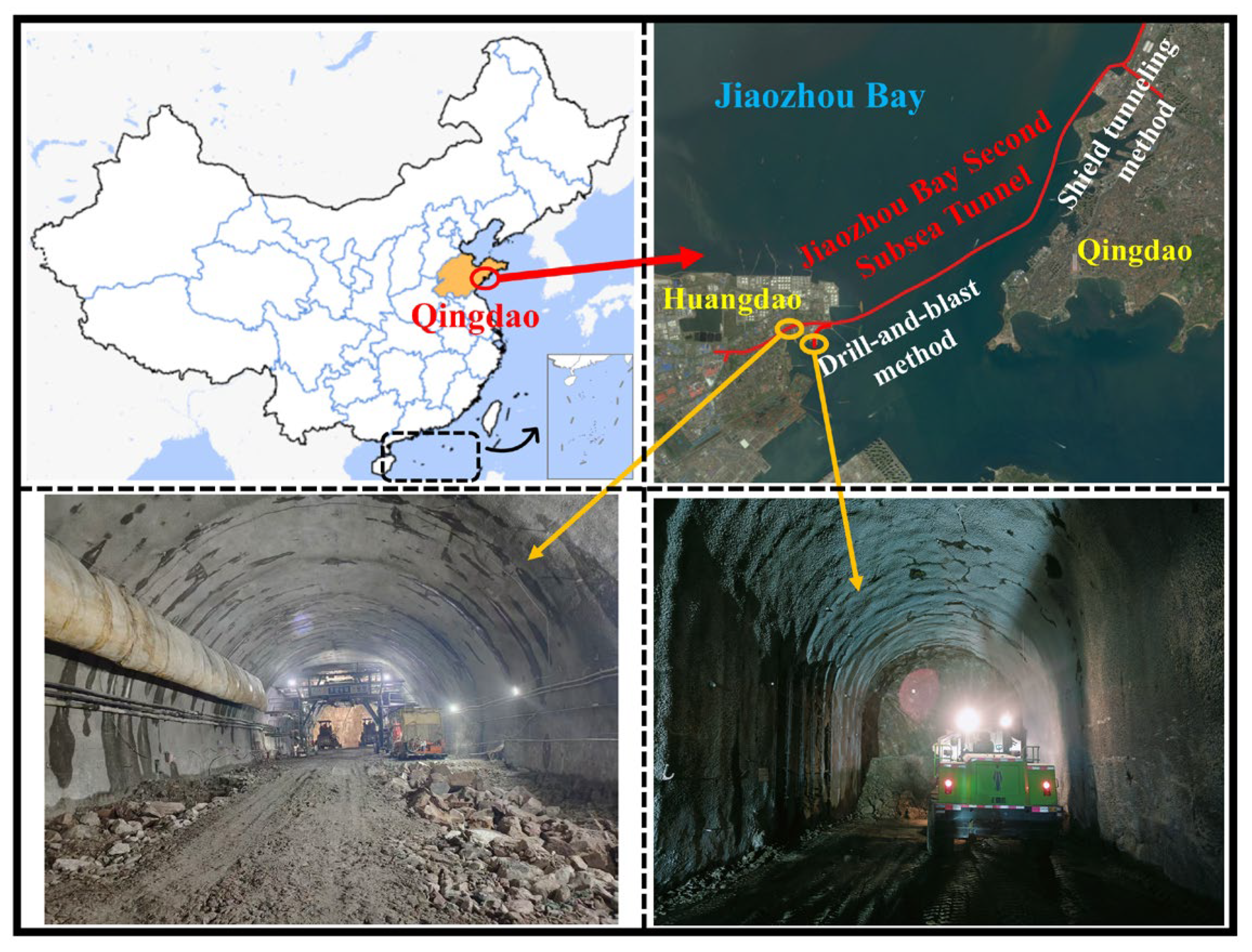
2.1. Project Overview
2.2. Selection of the Mathematical Model for Airflow and Dust Dispersion
- (1)
- The heat exchange between on-site vehicles, equipment and the flow field is neglected.
- (2)
- The secondary dust generation during vehicle transportation after blasting is not considered.
- (3)
- The influence of small-scale equipment such as water pipes, wires and ventilation ducts on air flow and dust is ignored.
- (4)
- The influence of pressure variation between the tunnel interior and the external shaft atmosphere is disregarded, meaning that natural ventilation is excluded from consideration.
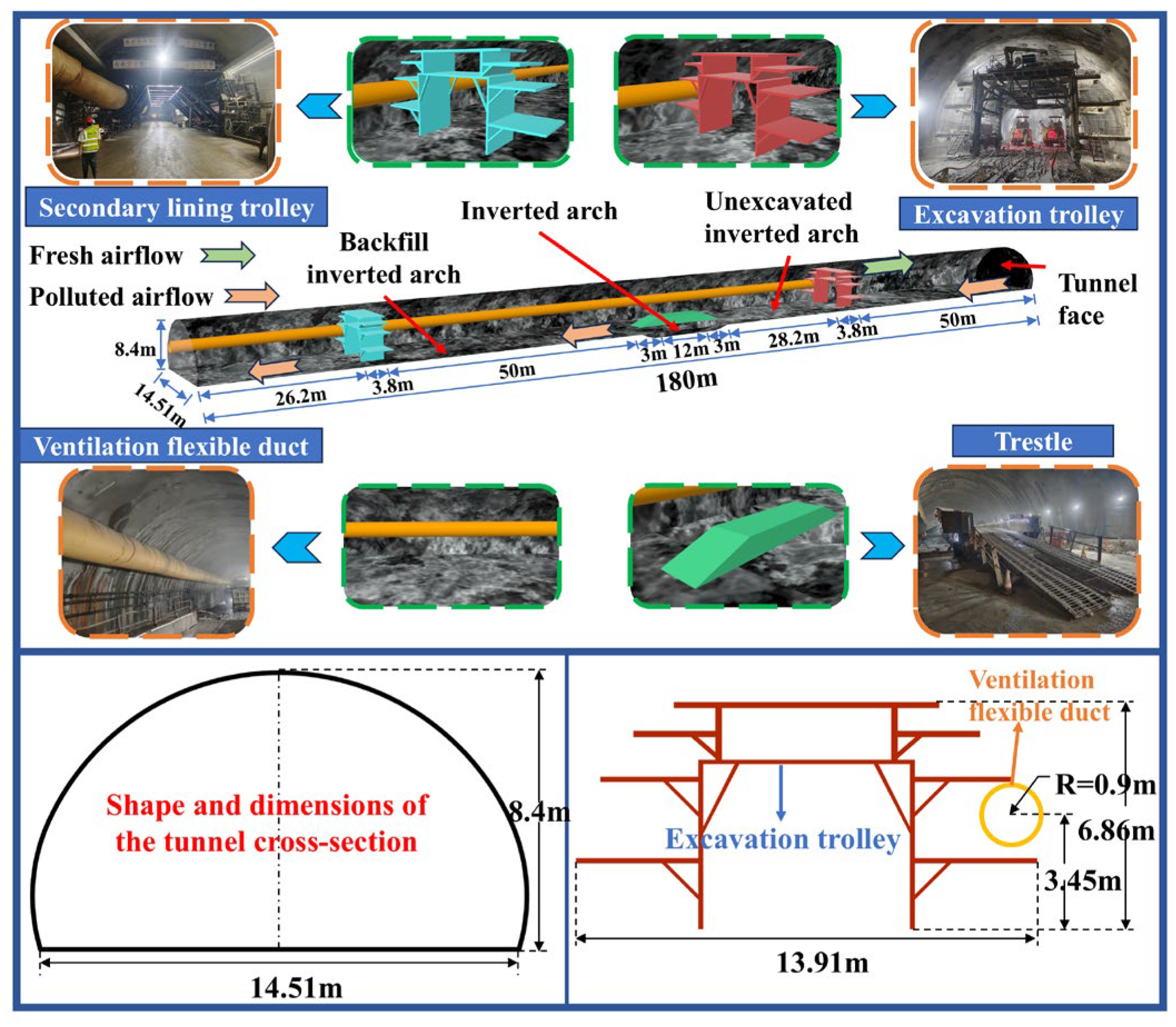
2.3. Construction of the Physical Model of Large-Section Tunnel
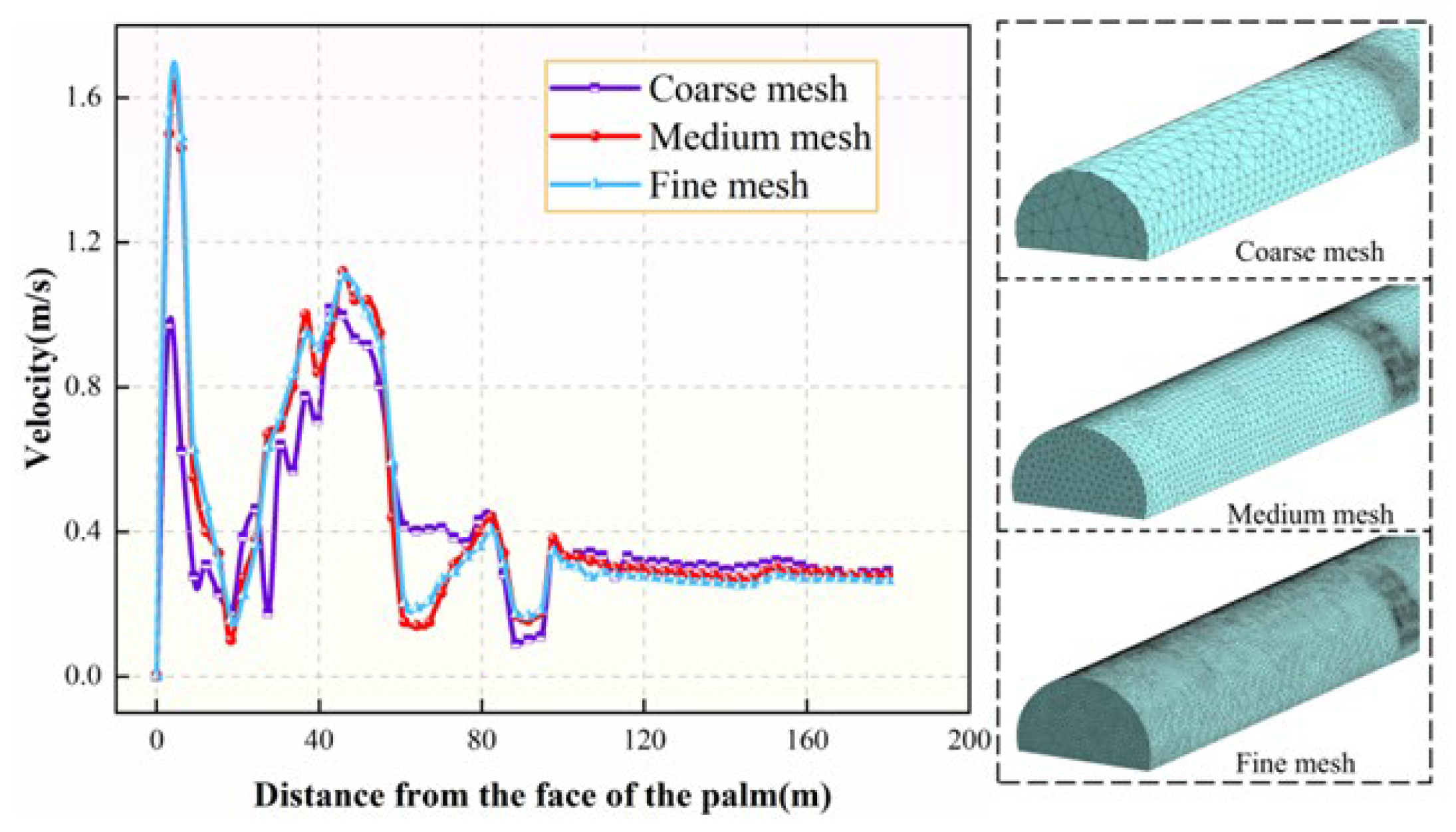
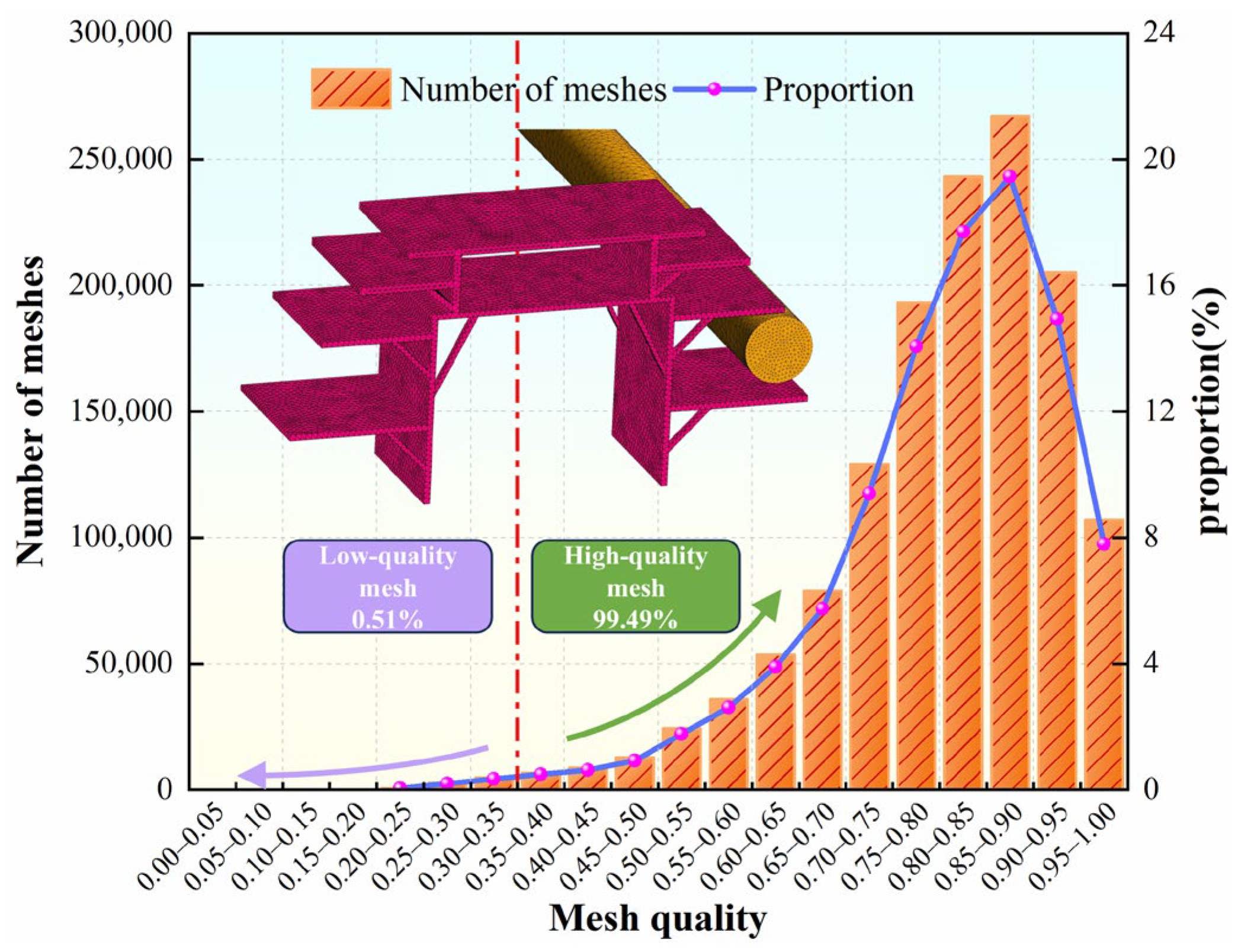
2.4. Mesh Division and Mesh Independence Test
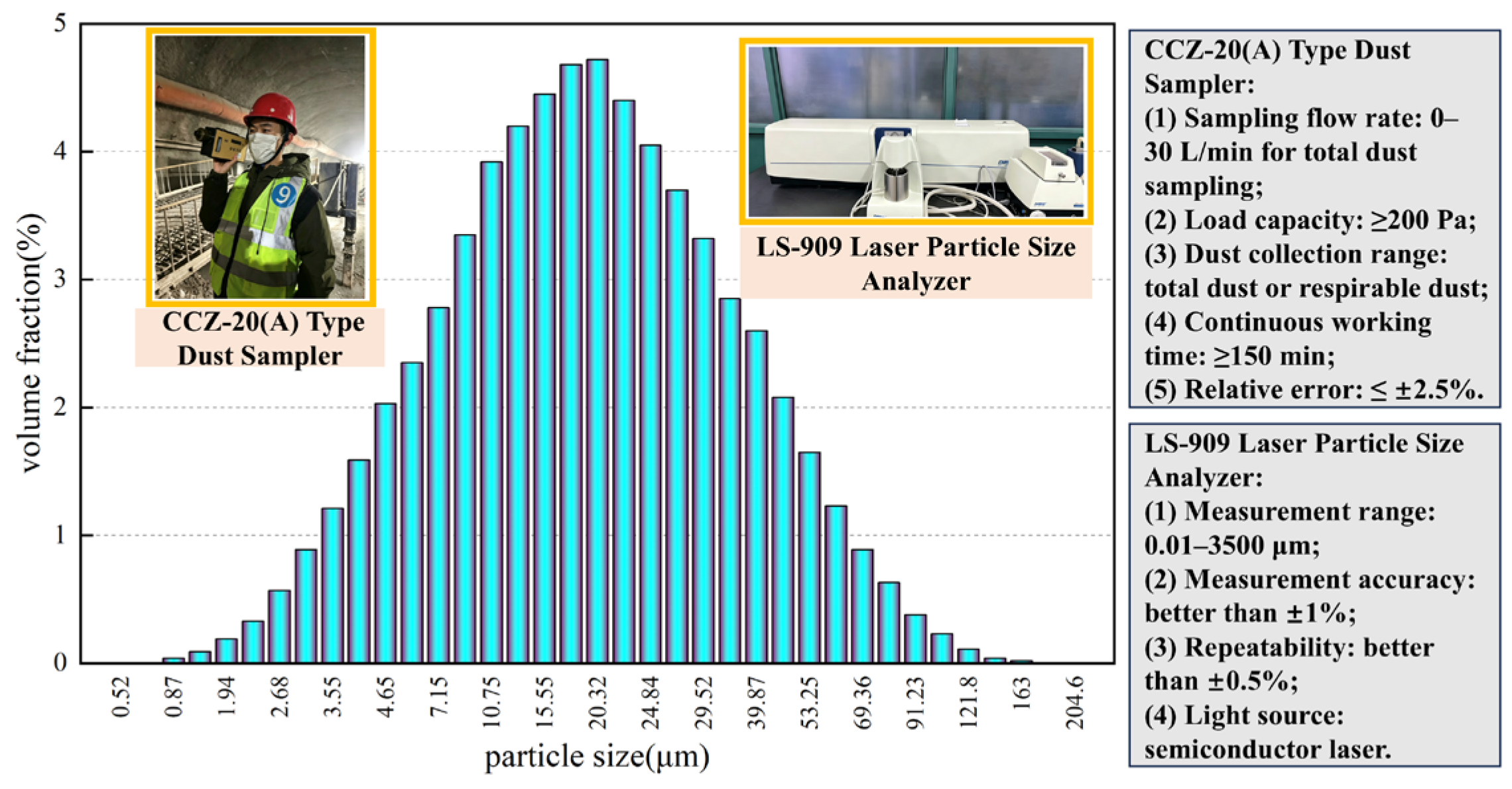
2.5. Dust Particle Size Characterization Experiments and Boundary Condition Configuration
3. Simulation Results and Analysis Under the Original Ventilation Conditions
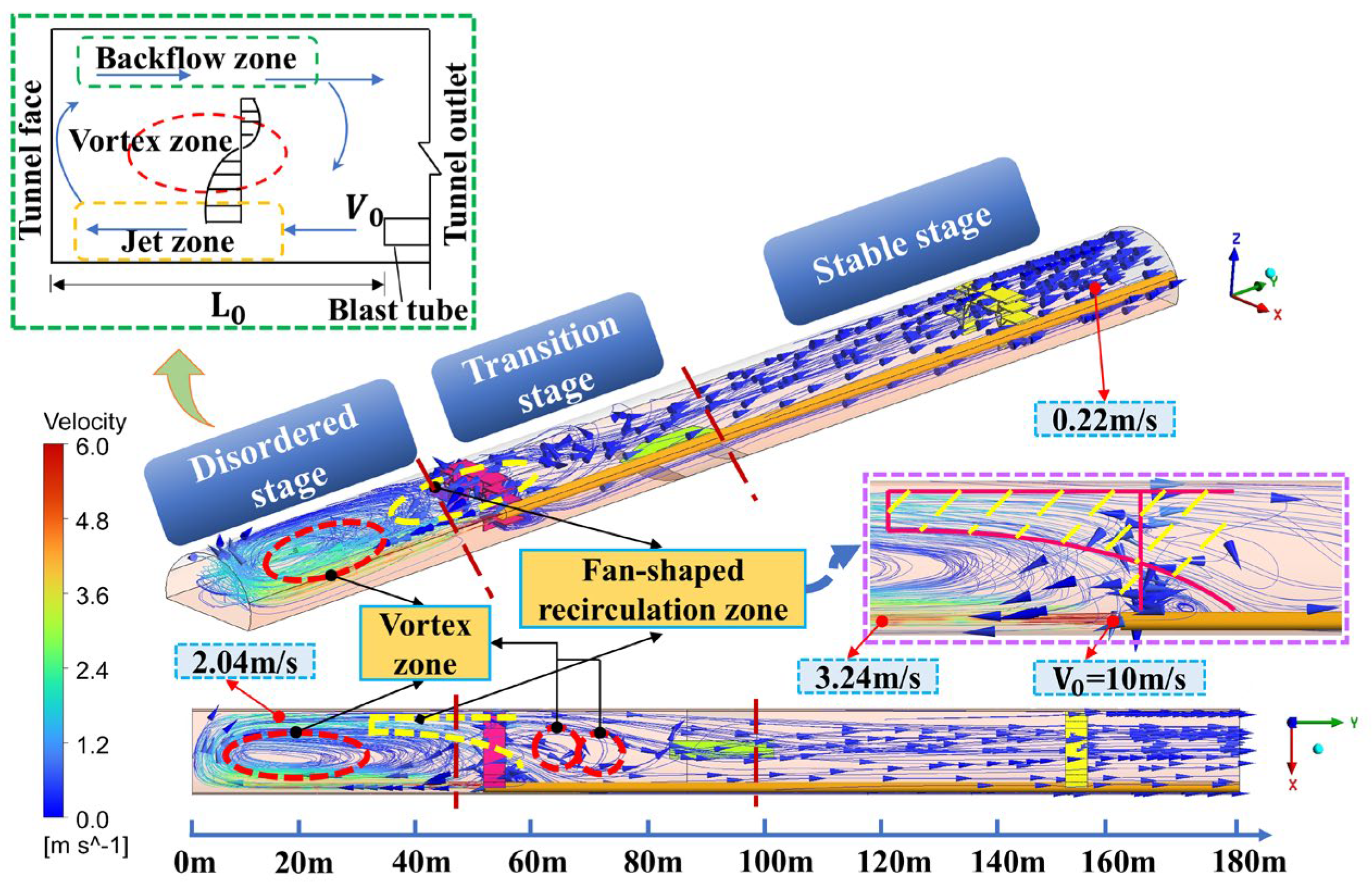
3.1. Airflow Field Distribution Characteristics
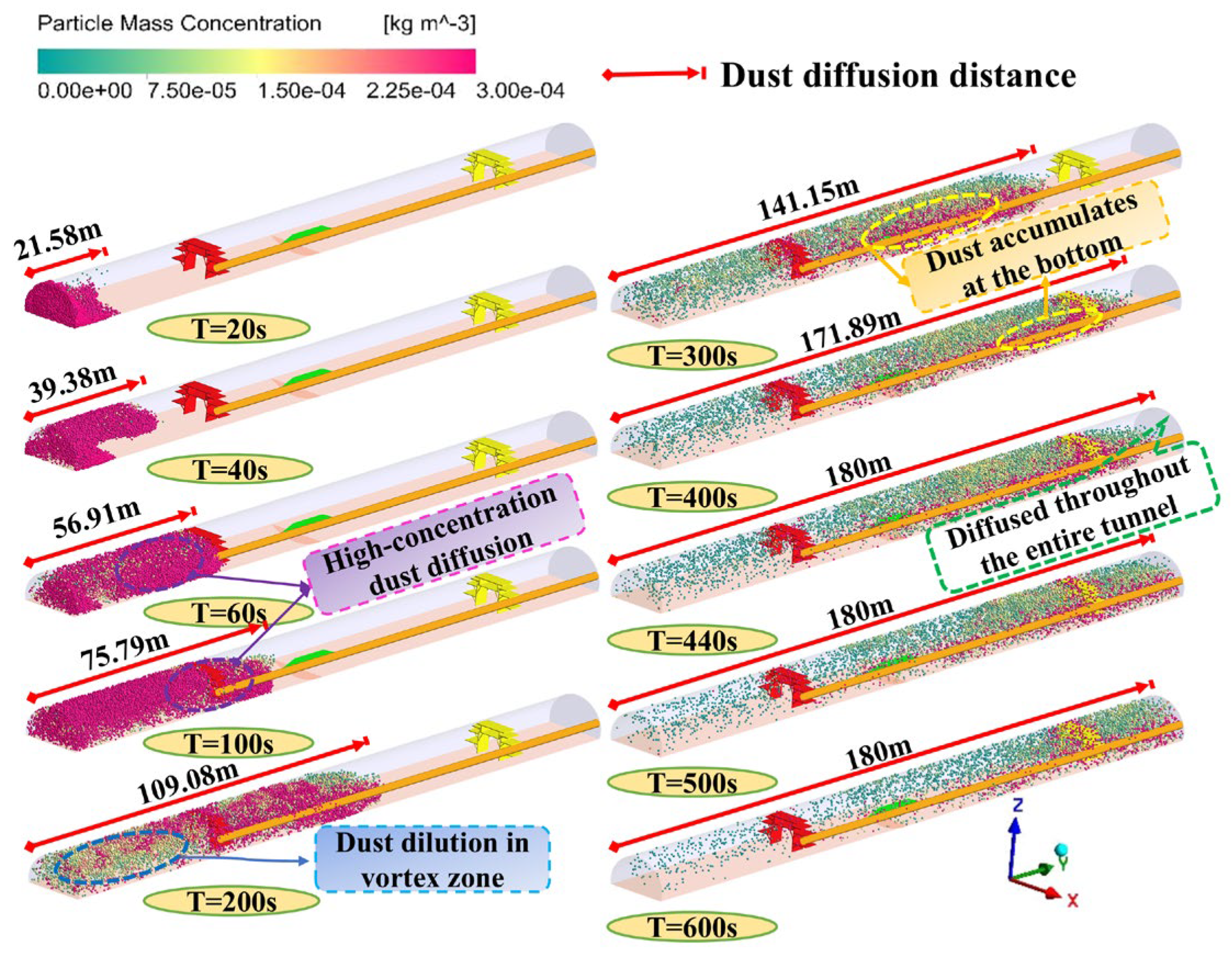
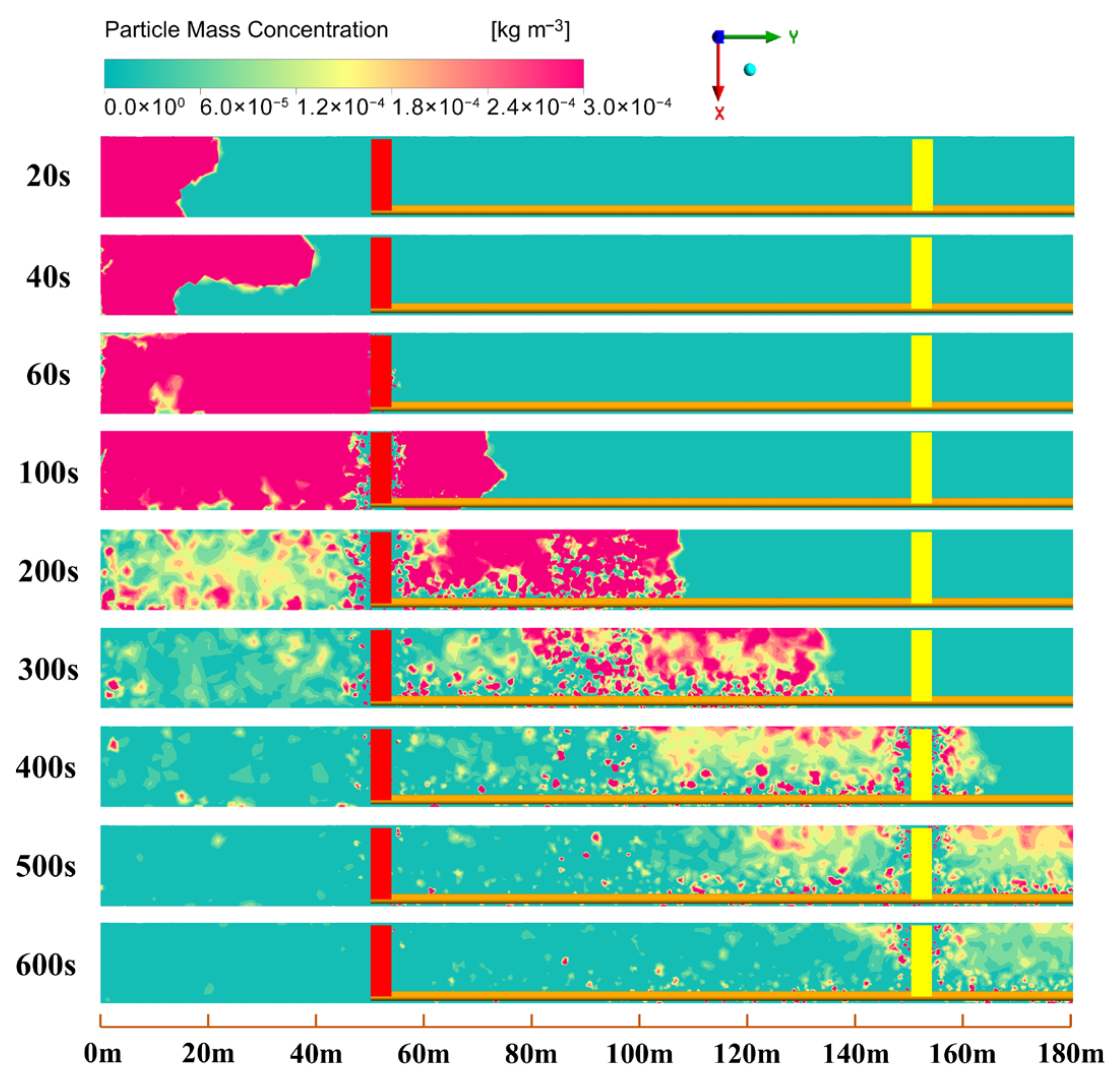
3.2. Spatiotemporal Diffusion Characteristics of the Dust Field
- (1)
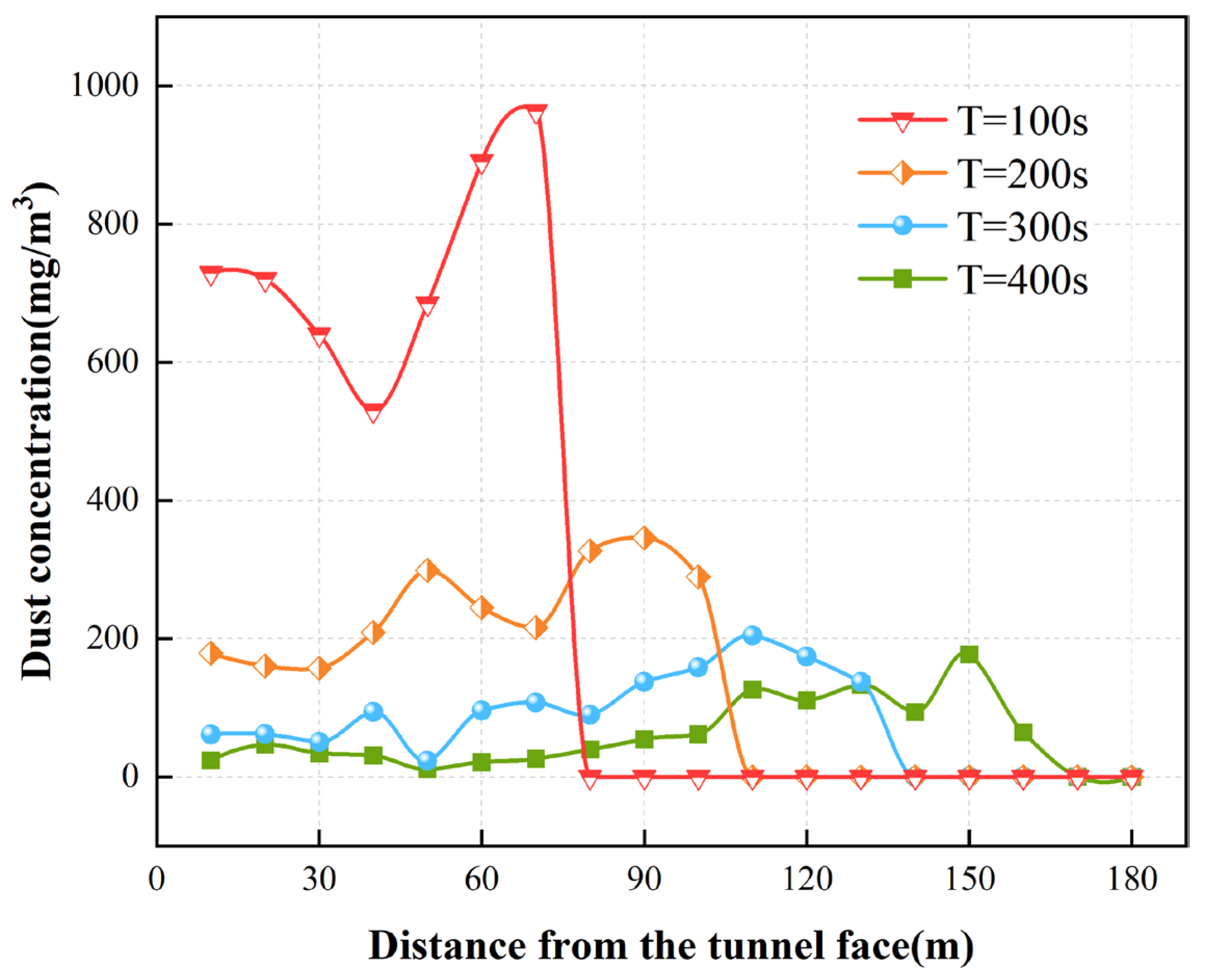
- A substantial amount of dust is generated immediately after blasting. Coarse particles settle rapidly by gravity, whereas fine particles remain suspended and couple with the airflow, forming a dust-laden flow. Driven by the airflow, high-concentration dust is primarily distributed on the side opposite the ventilation duct, with dust accumulation occurring in the vortex zone due to entrainment effects.
- (2)
- At t = 100 s, the dust has propagated as far as 75.79 m from the source. By t = 400 s, the average dust concentration close to the tunnel face drops from 445.13 mg/m3 to 49.50 mg/m3, while dense dust clouds remain present near the excavation trolley and air duct. At t = 440 s, the dust reaches the tunnel exit, and its further diffusion is hindered by the secondary lining trolley. At t = 600 s, the average dust concentration in the 1.6 m breathing zone is 36.8 mg/m3, which exceeds the safety limit of 2 mg/m3 stipulated in the Technical Specification for Construction of Highway Tunnels [29].
4. Optimization Study of Forced Ventilation Parameters for Large-Section Tunnels
4.1. Calculation of Required Air Volume for Large-Section Tunnels
4.2. Optimization of Ventilation Parameters Based on Orthogonal Experiments
4.3. Visualization Analysis of Orthogonal Experiment Results
4.4. Range Analysis of Orthogonal Experimental Results
- (1)
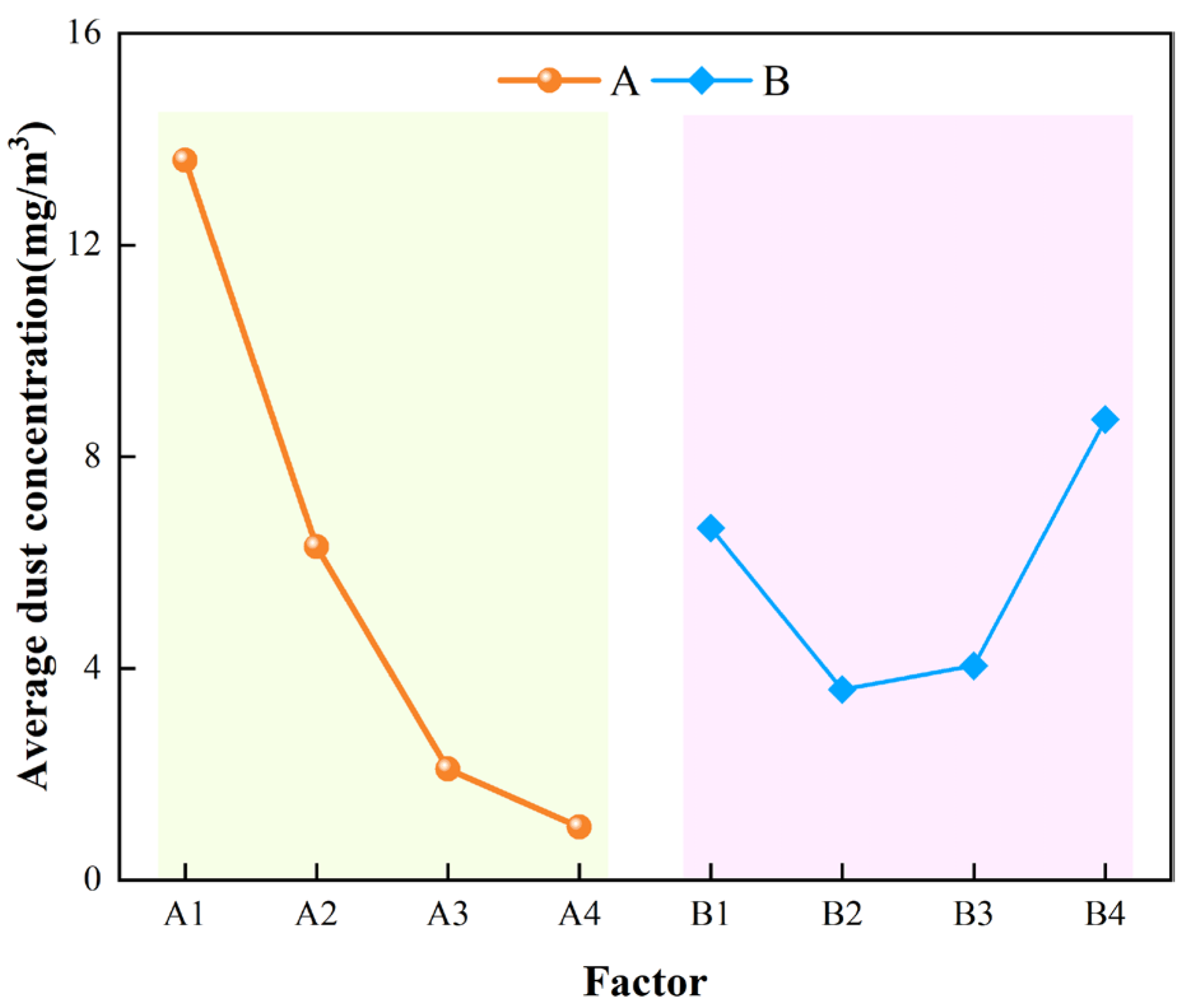
- When the outlet air velocity (Factor A) rises from 14 m/s to 20 m/s, the average dust concentration in the tunnel exhibits a declining tendency. At 20 m/s, the dust removal efficiency is optimal. However, the marginal benefit of further increasing the air velocity diminishes, leading to a gradual decline in the incremental effectiveness of dust removal.
- (2)
- When the spacing between the air duct and the tunnel face (Factor B) is raised from 35 m to 40 m, the average dust concentration exhibits a decreasing trend. When the distance increases from 40 m to 50 m, the average dust concentration shows an increasing trend. Therefore, the dust removal efficiency is optimal when the duct-to-face distance is 40 m.
4.5. Economic Analysis of Construction
4.6. Field Measurements and Error Analysis
5. Conclusions
- (1)
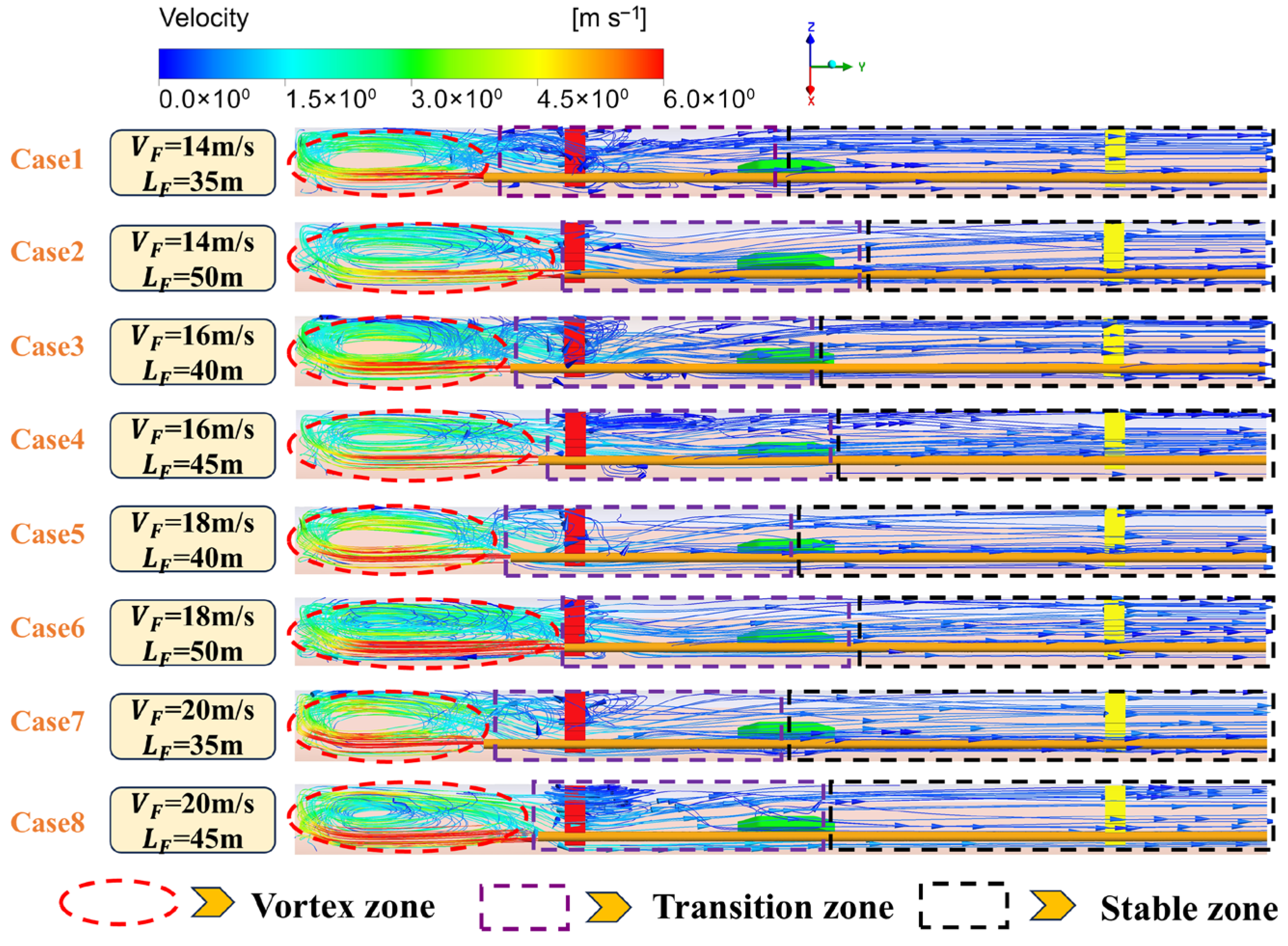
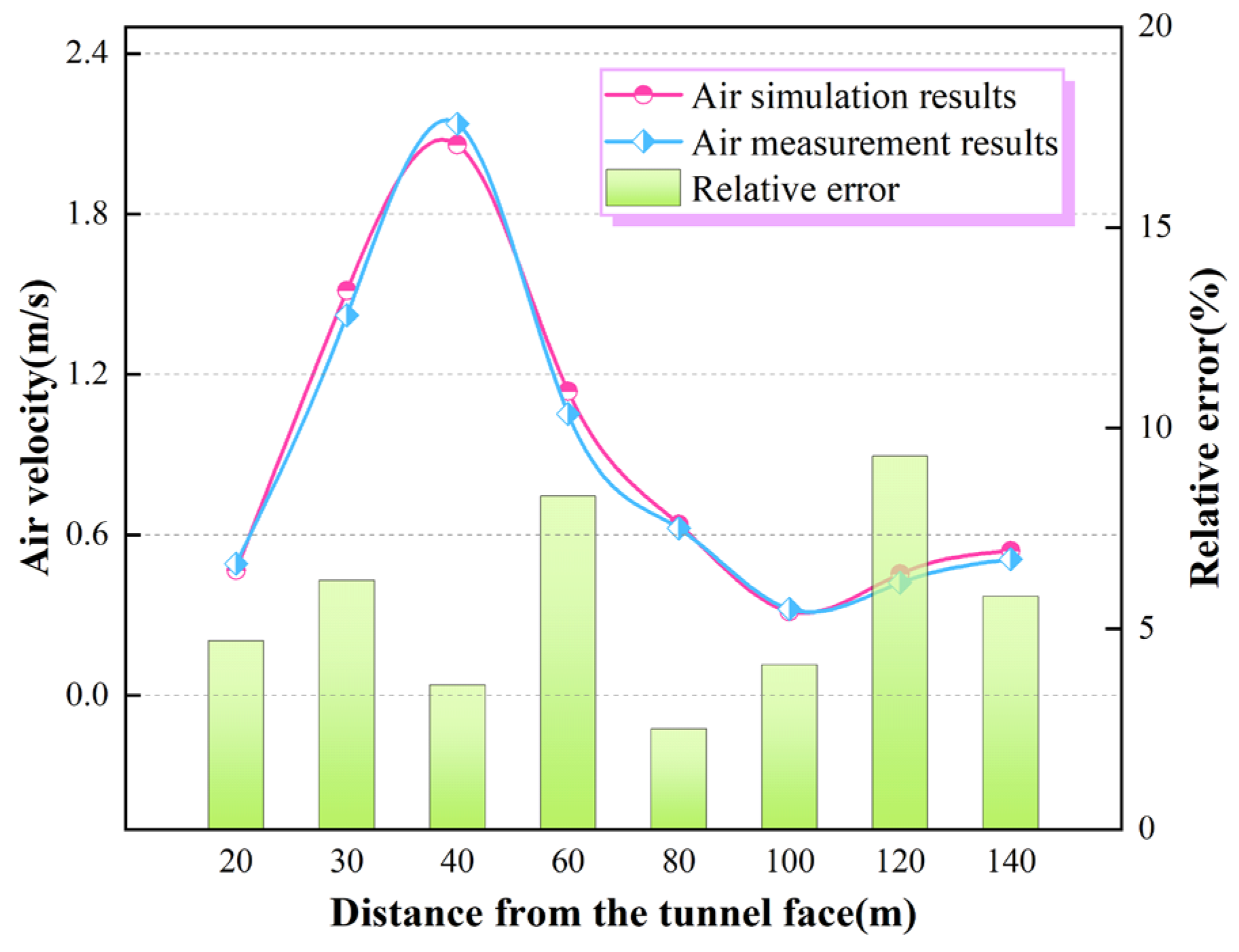
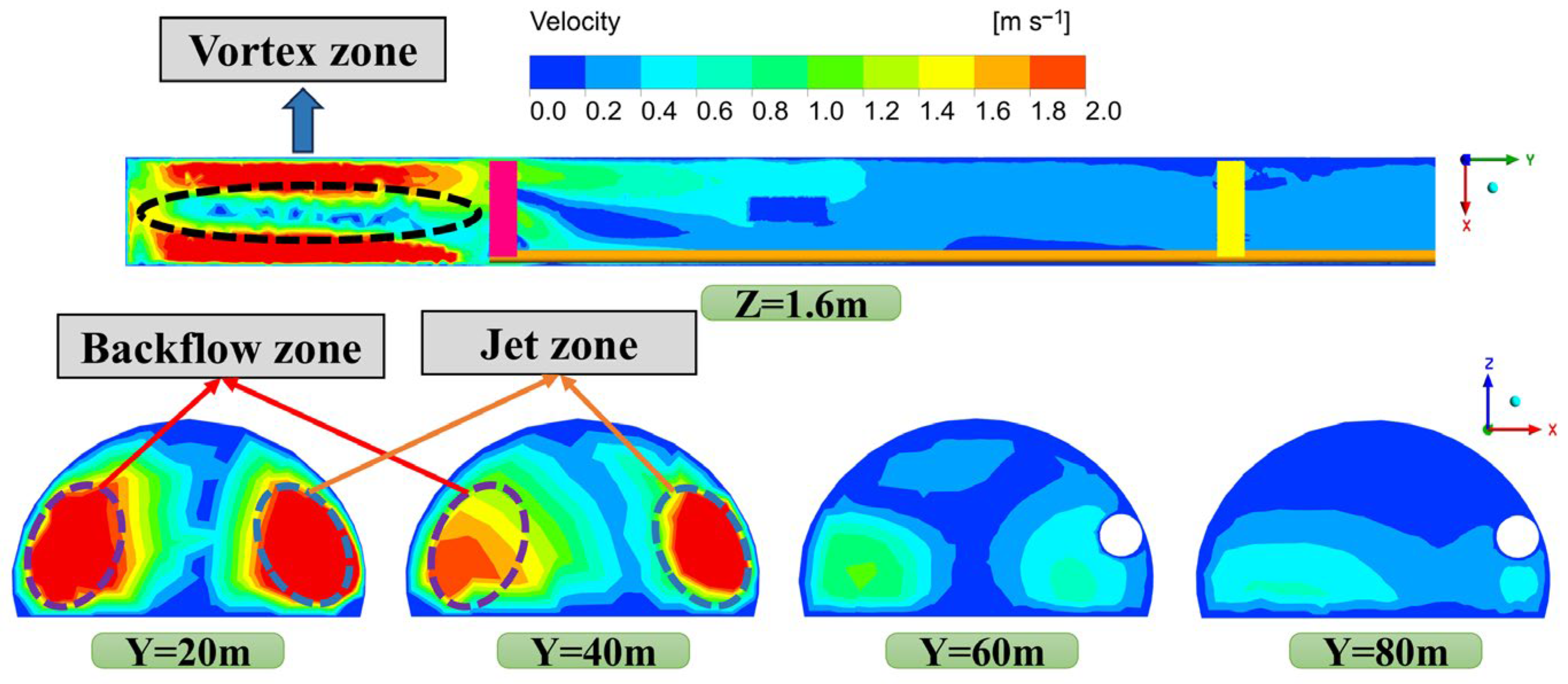
- The airflow field can be categorized into three distinct zones: the disordered zone, transition zone, and stable zone. The core air velocity within the vortex zone remains comparatively low. As a result of entrainment, a portion of the recirculated flow is drawn into the high-speed jet, forming vortex structures, while the remaining recirculated flow propagates toward the tunnel rear in a fan-shaped pattern. Because of the tunnel’s substantial cross-sectional area, the mean air velocity remains low, dropping to roughly 0.2 m/s before stabilizing. The transport of dust within the tunnel is primarily governed by advective airflow.
- (2)
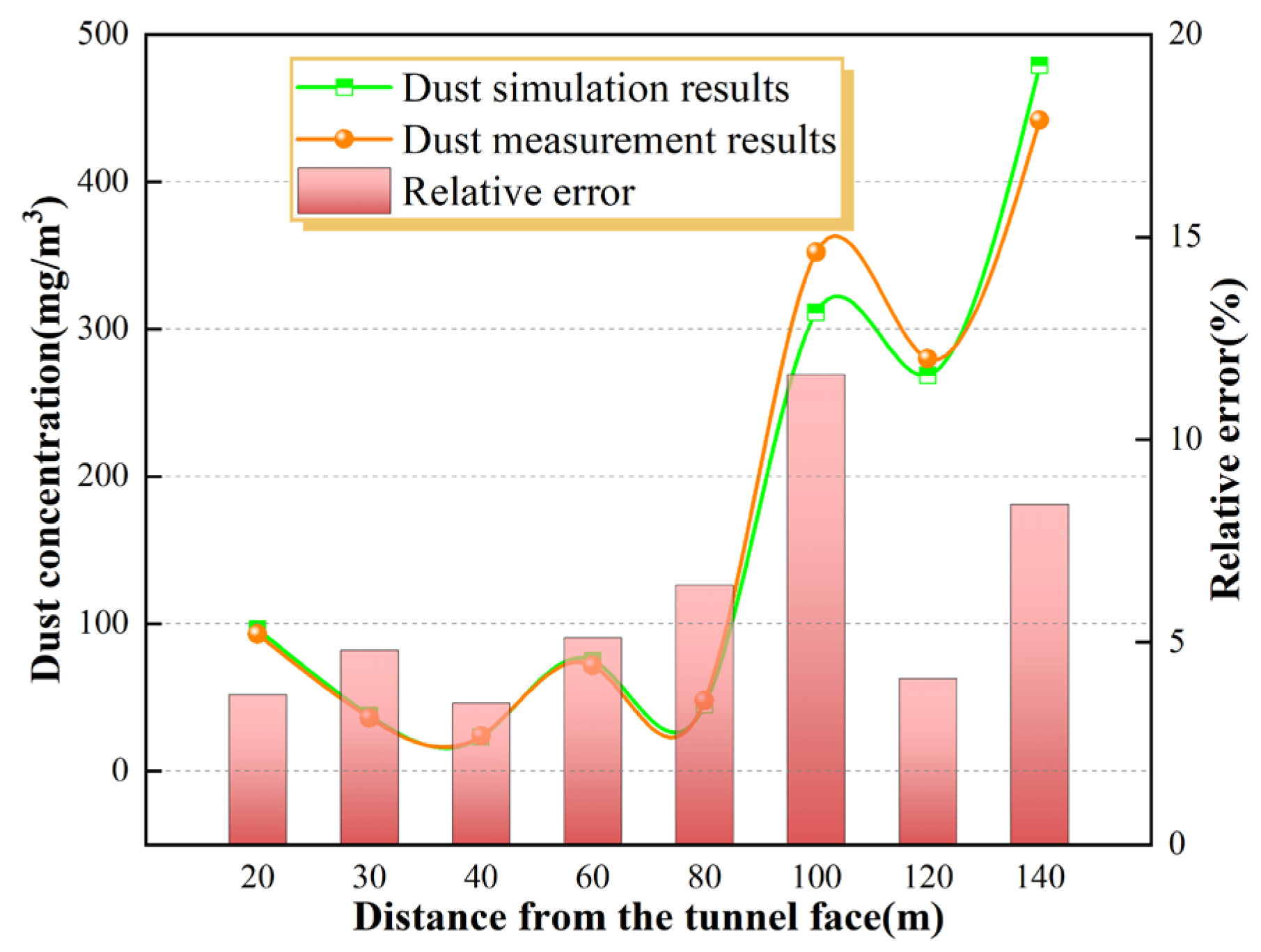
- Dust transport within the tunnel is primarily governed by airflow advection. Under the original ventilation conditions, coarse particles settle rapidly due to gravity, whereas fine particles are conveyed by the airflow. The dust concentration in the vortex zone is significantly higher than that in the lateral regions. At t = 440 s, dust has diffused to the tunnel exit. By t = 600 s, the average dust concentration in the breathing zone (1.6 m above ground) reaches 36.8 mg/m3, exceeding the construction safety limit.
- (3)
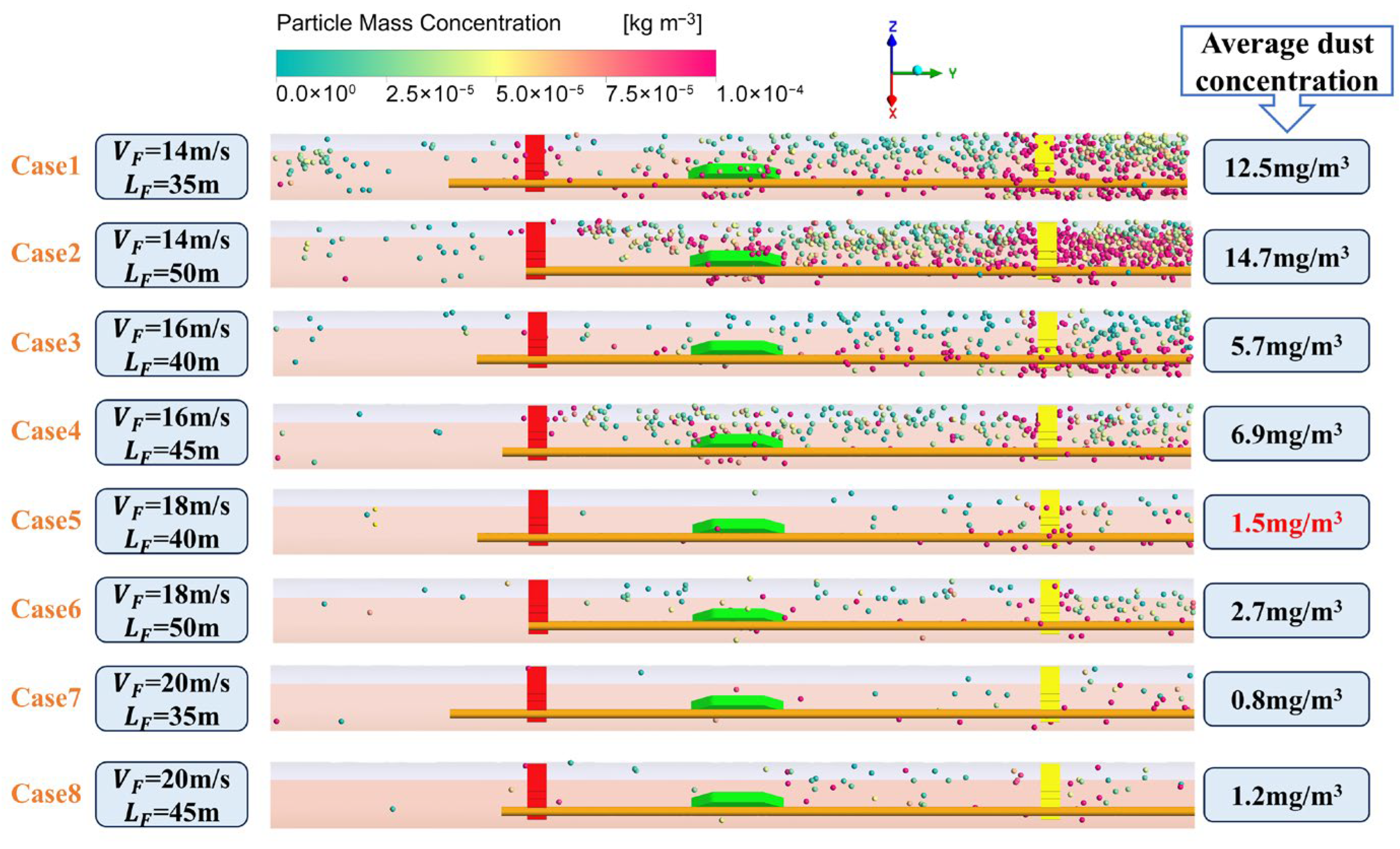
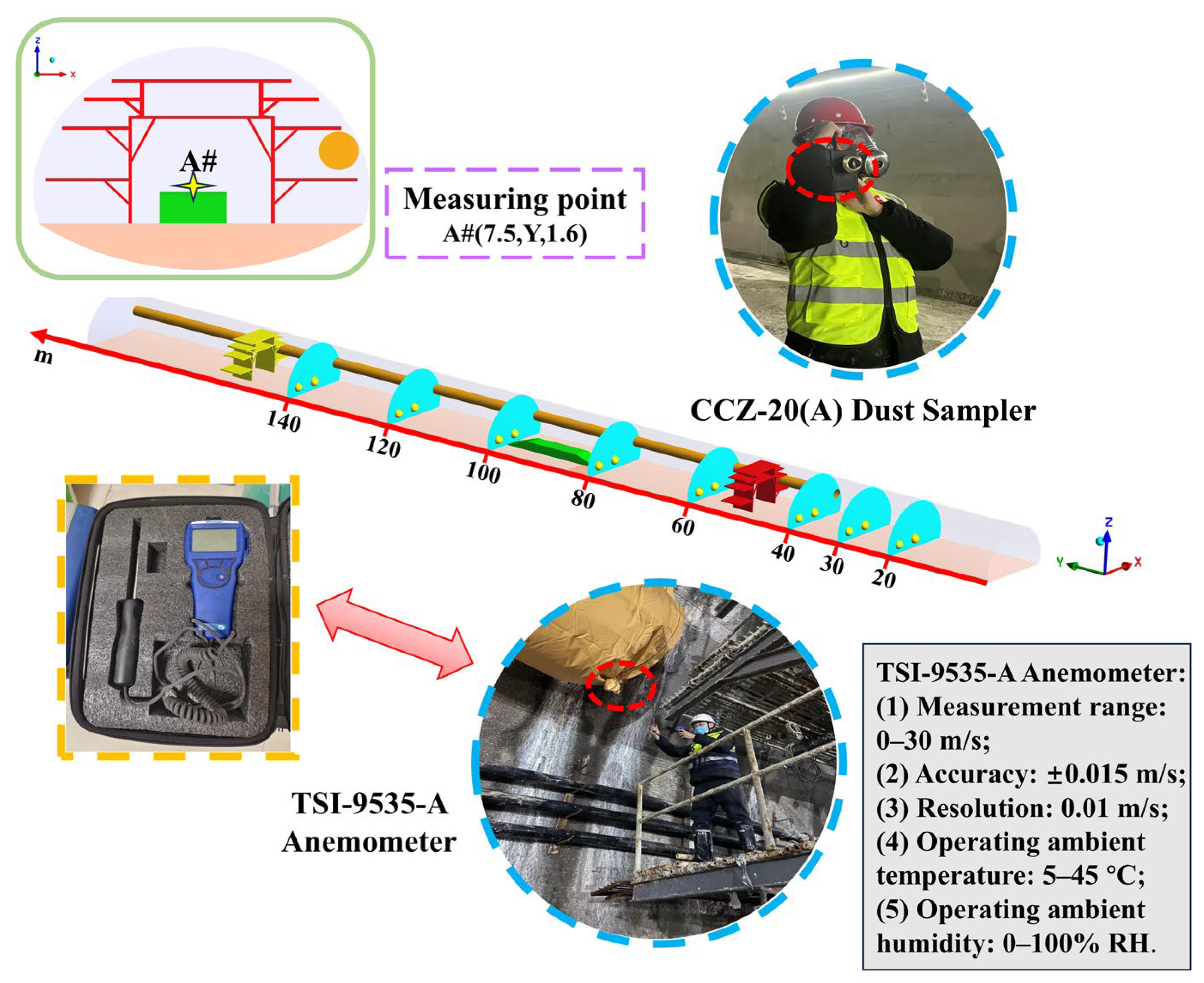
- A two-factor orthogonal experimental design was adopted to identify the ventilation parameter combination that minimizes construction costs while satisfying the tunnel air demand and reducing dust concentration to within the safety limit. The results indicate that the significance of the key parameters affecting dust removal efficiency is ranked as follows: outlet air velocity > duct-to-face distance. Based on the experimental results and economic considerations, the optimal ventilation parameters for the forced ventilation system were determined as an outlet velocity of 18 m/s and a duct-to-face distance of 40 m. Under this configuration, the average dust concentration at 600 s after blasting is 1.5 mg/m3, corresponding to a 95.9% improvement in dust removal efficiency compared to the original conditions. Furthermore, the hourly electricity cost at 18 m/s is USD 4.39 lower than that at 20 m/s, thereby enhancing worker occupational safety while reducing project costs. Both numerical simulations and field measurements confirm the reliability and practical applicability of the proposed method.
Author Contributions
Funding
Data Availability Statement
Acknowledgments
Conflicts of Interest
References
- Zeng, F.; Jiang, Z. Spatial and temporal evolution of mine dust research: Visual knowledge mapping analysis in Web of Science from 2001 to 2021. Environ. Sci. Pollut. Res. 2023, 30, 62170–62200. [Google Scholar] [CrossRef]
- Sun, B.; Shi, Y.; Yang, X.; Zhao, T.; Duan, J.; Sun, Z. DNA methylation: A critical epigenetic mechanism underlying the detrimental effects of airborne particulate matter. Ecotoxicol. Environ. Saf. 2018, 161, 173–183. [Google Scholar] [CrossRef]
- Niu, W.; Nie, W.; Yuan, M.; Bao, Q.; Zhou, W.; Yan, J.; Xue, Q. Study of the microscopic mechanism of lauryl glucoside wetting coal dust: Environmental pollution prevention and control. J. Hazard. Mater. 2021, 412, 125223. [Google Scholar] [CrossRef]
- Baur, X.; Sanyal, S.; Abraham, J.L. Mixed-dust pneumoconiosis: Review of diagnostic and classification problems with presentation of a work-related case. Sci. Total Environ. 2019, 652, 413–421. [Google Scholar] [CrossRef]
- Hua, Y.; Nie, W.; Liu, Q.; Yin, S.; Peng, H. Effect of wind curtain on dust extraction in rock tunnel working face: CFD and field measurement analysis. Energy 2020, 197, 117214. [Google Scholar] [CrossRef]
- Pu, Q.; Luo, Y.; Huang, J.; Zhu, Y.; Hu, S.; Pei, C.; Li, X. Simulation Study on the Effect of Forced Ventilation in Tunnel under Single-Head Drilling and Blasting. Shock. Vib. 2020, 2020, 8857947. [Google Scholar] [CrossRef]
- Chen, T.; Li, Y.; Luan, D.; Jiao, A.; Yang, L.; Fan, C.; Shi, L. Study of flow characteristics in tunnels induced by canyon wind. J. Wind Eng. Ind. Aerodyn. 2020, 202, 104236. [Google Scholar] [CrossRef]
- Guo, L.; Nie, W.; Yin, S.; Liu, Q.; Hua, Y.; Cheng, L.; Du, T. The dust diffusion modeling and determination of optimal airflow rate for removing the dust generated during mine tunneling. Build. Environ. 2020, 178, 106846. [Google Scholar] [CrossRef]
- Jiang, Z.A.; Wang, Y.P.; Men, L.G. Ventilation control of tunnel drilling dust based on numerical simulation. J. Cent. South Univ. 2021, 28, 1342–1356. [Google Scholar] [CrossRef]
- Xie, Z.; Xiao, Y.; Jiang, C.; Ren, Z.; Li, X.; Yu, K. Numerical study on fine dust pollution characteristics under various ventilation time in metro tunnel after blasting. Build. Environ. 2021, 204, 108111. [Google Scholar] [CrossRef]
- Xie, Z.; Xiao, Y.; Jiang, C.; Ren, Z.; Li, X.; Yu, K. Numerical research on airflow-dust migration behavior and optimal forced air duct installation position in a subway tunnel during drilling operation. Powder Technol. 2021, 388, 176–191. [Google Scholar] [CrossRef]
- Xie, Z.; Ruan, C.; Zhao, Z.; Huang, C.; Xiao, Y.; Zhao, Q.; Lin, J. Effect of ventilation parameters on dust pollution characteristic of drilling operation in a metro tunnel. Tunn. Undergr. Space Technol. 2023, 132, 104867. [Google Scholar] [CrossRef]
- Chen, Z.; Zhao, S.; Wang, S.; Guo, Y.; Sun, B.; Chen, W.; Guo, C. Forced-exhaust-air curtain dust removal measures of tunnel blasting dust based on CFD and orthogonal experiments. Tunn. Undergr. Space Technol. 2025, 155, 106223. [Google Scholar] [CrossRef]
- Nie, W.; Cai, Y.; Wang, L.; Liu, Q.; Jiang, C.; Hua, Y.; Zhang, H. Coupled diffusion law of windflow-gas-dust in tunnel energy extraction processes and the location of optimal pollution control exhaust duct. Energy 2024, 304, 132145. [Google Scholar] [CrossRef]
- Kokkonen, A.; Linnainmaa, M.; Säämänen, A.; Kanerva, T.; Sorvari, J.; Kolehmainen, M.; Lappalainen, V.; Pasanen, P. Control of dust dispersion from an enclosed renovation site into adjacent areas by using local exhaust ventilation. Ann. Work. Expos. Health 2019, 63, 468–479. [Google Scholar] [CrossRef] [PubMed]
- Liu, N.; Chen, K.; Deng, E.; Yang, W.; Wang, Y. Study on dust suppression performance of a new spray device during drilling and blasting construction in the metro tunnel. Tunn. Undergr. Space Technol. 2023, 133, 104975. [Google Scholar] [CrossRef]
- Liu, N.; Wu, X.; Deng, E.; Liu, X.; Wang, Y. A U-shaped spray device on a front boom-type roadheader for dust suppression in a metro tunnel. Sustain. Cities Soc. 2023, 89, 104369. [Google Scholar] [CrossRef]
- Liu, N.; Wu, X.; Deng, E.; Ni, Y.Q.; Yang, W.C.; Li, G.Z. Dust diffusion laws during partition excavation by boom-type roadheader in a metro tunnel. Tunn. Undergr. Space Technol. 2023, 141, 105382. [Google Scholar] [CrossRef]
- Yang, W.C.; Wang, J.; Deng, E.; Liu, Y.K.; Luo, L.S.; Yang, J. A hybrid ventilation scheme applied to bidirectional excavation tunnel construction with a long inclined shaft. J. Cent. South Univ. 2024, 31, 3187–3205. [Google Scholar] [CrossRef]
- Yan, J.; Nie, W.; Xiu, Z.; Yuan, M.; Zhou, W.; Bao, Q.; Yu, F. Development and characterization of a dust suppression spray agent based on an adhesive NaAlg−gln−poly/polysaccharide polymer. Sci. Total Environ. 2021, 785, 147192. [Google Scholar] [CrossRef]
- Fooladgar, E.; Brackmann, C.; Mannazhi, M.; Ögren, Y.; Bengtsson, P.E.; Wiinikka, H.; Tóth, P. CFD modeling of pyrolysis oil combustion using finite rate chemistry. Fuel 2021, 299, 120856. [Google Scholar] [CrossRef]
- de Oliveira Marum, V.J.; Reis, L.B.; Maffei, F.S.; Ranjbarzadeh, S.; Korkischko, I.; dos Santos Gioria, R.; Meneghini, J.R. Performance analysis of a water ejector using Computational Fluid Dynamics (CFD) simulations and mathematical modeling. Energy 2021, 220, 119779. [Google Scholar] [CrossRef]
- Korkmaz, K.B.; Werner, S.; Bensow, R. Verification and validation of CFD based form factors as a combined CFD/EFD method. J. Mar. Sci. Eng. 2021, 9, 75. [Google Scholar] [CrossRef]
- Morozova, N.; Trias, F.X.; Capdevila, R.; Pérez-Segarra, C.D.; Oliva, A. On the feasibility of affordable high-fidelity CFD simulations for indoor environment design and control. Build. Environ. 2020, 184, 107144. [Google Scholar] [CrossRef]
- Upadhyay, M.; Kim, A.; Paramanantham, S.S.; Kim, H.; Lim, D.; Lee, S.; Lim, H. Three-dimensional CFD simulation of proton exchange membrane water electrolyser: Performance assessment under different condition. Appl. Energy 2022, 306, 118016. [Google Scholar] [CrossRef]
- Sun, D.J.; Shi, X.; Zhang, Y.; Zhang, L. Spatiotemporal distribution of traffic emission based on wind tunnel experiment and computational fluid dynamics (CFD) simulation. J. Clean. Prod. 2021, 282, 124495. [Google Scholar] [CrossRef]
- ANSYS. ANSYS Fluent Theory Guide 2020R2; ANSYS, Inc.: Canonsburg, PA, USA, 2020; Available online: http://www.ansys.com (accessed on 9 April 2026).
- Zhang, X.; Li, H. The calculation and analysis of the dust discharge amount of open-pit blasting. Met. Mine 1996, 3, 41–44. [Google Scholar]
- JTG/T 3660-2020; Technical Specification for Construction of Highway Tunnels. China Communications Press: Beijing, China, 2020.
- Wang, Z.S.; Chen, Z.Y.; Wang, Z.X.; Li, J.; Zhang, J.Q. Research on construction ventilation technology for deep-buried long tunnels at high altitudes. Def. Transp. Eng. Technol. 2022, 20, 43–47. [Google Scholar] [CrossRef]
- Xiao, Y.; Liu, J.W.; Zeng, J.F.; Lu, X.; Tian, Y.; Shu, C.M. Coupling effect of operational factors on heat extraction from a coal pile using a two-phase closed thermosyphon. Energy 2022, 239, 122371. [Google Scholar] [CrossRef]







| Project | Name | Parameter | Project | Name | Parameter |
|---|---|---|---|---|---|
| General | Gravity | −9.81 m/s2 | Dust information | Minimum Diameter | 8.7 × 10⁻⁷ m |
| Solver | Pressure base | Maximum Diameter | 1.63 × 10⁻⁴ m | ||
| Sticky model | K-epsilon | Realizable | Median Diameter | 1.85 × 10⁻⁵ m | |
| Wall function | Standard wall | Total flow rate | 4.72 kg/s | ||
| Boundary condition | Duct inlet | Velocity-inlet | Resistance Law | Spherical | |
| Tunnel Exit | Pressure-outlet | Particle size distribution | Rosin-Rammler | ||
| Inlet velocity | 10 m/s | Solution methods | Pressure velocity coupling | PISO | |
| Turbulence intensity | 2.77% | Turbulent kinetic energy | Second order upwind | ||
| Shear condition | Non-slip wall | Turbulent dissipation rate | Second order upwind | ||
| DPM | Reflect | ||||
| Trap | |||||
| Escape |
| Factor Level | A Air Velocity (m/s) | B Distance from the Tunnel Face (m) |
|---|---|---|
| 1 | 14 | 35 |
| 2 | 16 | 40 |
| 3 | 18 | 45 |
| 4 | 20 | 50 |
| Factor Experiment Number | A | B |
|---|---|---|
| 1 | A1 | B1 |
| 2 | A1 | B4 |
| 3 | A2 | B2 |
| 4 | A2 | B3 |
| 5 | A3 | B2 |
| 6 | A3 | B4 |
| 7 | A4 | B1 |
| 8 | A4 | B3 |
| Factor Experiment | A | B | Evaluation Index |
|---|---|---|---|
| Average Dust Concentration (mg/m3) | |||
| 1 | 1 | 1 | 12.5 |
| 2 | 1 | 4 | 14.7 |
| 3 | 2 | 2 | 5.7 |
| 4 | 2 | 3 | 6.9 |
| 5 | 3 | 2 | 1.5 |
| 6 | 3 | 4 | 2.7 |
| 7 | 4 | 1 | 0.8 |
| 8 | 4 | 3 | 1.2 |
| Parameter | Factors of Index | |
|---|---|---|
| A | B | |
| K1 | 13.60 | 6.65 |
| K2 | 6.30 | 3.60 |
| K3 | 2.10 | 4.05 |
| K4 | 1.00 | 8.70 |
| R | 12.6 | 5.10 |
| Air Velocity (m/s) | Air Volume (m3/s) | Power (kW) | Hourly Electricity Costs (USD) |
|---|---|---|---|
| 14 | 35.61 | 84.5 | 9.32 |
| 16 | 40.70 | 120.9 | 13.34 |
| 18 | 45.78 | 161.6 | 17.83 |
| 20 | 50.87 | 201.4 | 22.22 |
Disclaimer/Publisher’s Note: The statements, opinions and data contained in all publications are solely those of the individual author(s) and contributor(s) and not of MDPI and/or the editor(s). MDPI and/or the editor(s) disclaim responsibility for any injury to people or property resulting from any ideas, methods, instructions or products referred to in the content. |
© 2026 by the authors. Licensee MDPI, Basel, Switzerland. This article is an open access article distributed under the terms and conditions of the Creative Commons Attribution (CC BY) license.
Share and Cite
Xin, S.; Cui, Q.; Gao, H.; Wang, Q.; Liu, C.; Niu, L. Research on Optimization of Forced Ventilation Parameters for Blasting Construction in Large-Section Tunnels Based on CFD. Buildings 2026, 16, 1563. https://doi.org/10.3390/buildings16081563
Xin S, Cui Q, Gao H, Wang Q, Liu C, Niu L. Research on Optimization of Forced Ventilation Parameters for Blasting Construction in Large-Section Tunnels Based on CFD. Buildings. 2026; 16(8):1563. https://doi.org/10.3390/buildings16081563
Chicago/Turabian StyleXin, Song, Qi Cui, Huidong Gao, Qian Wang, Changhao Liu, and Lijun Niu. 2026. "Research on Optimization of Forced Ventilation Parameters for Blasting Construction in Large-Section Tunnels Based on CFD" Buildings 16, no. 8: 1563. https://doi.org/10.3390/buildings16081563
APA StyleXin, S., Cui, Q., Gao, H., Wang, Q., Liu, C., & Niu, L. (2026). Research on Optimization of Forced Ventilation Parameters for Blasting Construction in Large-Section Tunnels Based on CFD. Buildings, 16(8), 1563. https://doi.org/10.3390/buildings16081563