1. Introduction
The building sector is one of the major contributors to global energy consumption and carbon emissions, with residential buildings accounting for a significant proportion of total building energy use [
1,
2]. Within the energy consumption structure of residential buildings, heating, ventilation, and air conditioning (HVAC) systems typically represent the dominant share of energy demand [
3,
4]. With the continuous advancement of building energy efficiency and low-carbon development goals, reducing the operational energy consumption of HVAC systems while maintaining indoor thermal comfort and air quality has become a critical issue in building environment and energy research [
5,
6,
7]. In this context, the use of passive environmental control strategies to reduce reliance on mechanical air-conditioning systems has been widely regarded as an effective approach to improving energy efficiency.
Natural ventilation is a typical passive environmental regulation strategy. By utilizing outdoor airflow to remove indoor heat and pollutants, it can reduce mechanical cooling demand and improve indoor air quality to a certain extent [
8,
9]. Previous studies have shown that when outdoor climatic conditions are close to the indoor thermal comfort range, natural ventilation can effectively reduce building cooling energy consumption and partially replace the operation of mechanical air-conditioning systems [
10,
11,
12]. Research on the application of natural ventilation in building energy conservation has mainly focused on building envelope design, building material applications, and ventilation control strategies. For example, Salihi et al. [
13] integrated phase change materials (PCM) into building envelopes and investigated their combined performance with natural ventilation. The results showed that in warm and temperate Mediterranean climates, the combination of PCM with night natural ventilation (NNV) significantly increased the activation rate of PCM and reduced building cooling energy consumption.
In addition, in terms of building envelope design, Sanchez et al. [
14] proposed an improved double-skin façade system and systematically analyzed its thermal performance by considering thermally driven natural ventilation and heat transfer processes under solar radiation. Their results indicated that an appropriate design of the cavity width could significantly enhance the thermal performance of the façade system and effectively reduce building heating and cooling demand, thereby outperforming conventional single-skin façade systems. Meanwhile, some studies have investigated the factors influencing natural ventilation performance from the perspective of building design parameters. Yin et al. [
15] pointed out that factors such as window geometry, opening ratio, opening position, and orientation can significantly affect natural ventilation efficiency. Proper window design can not only extend the available period for natural ventilation but also reduce building cooling loads to a certain extent.
In actual building operation, natural ventilation rarely functions independently but typically operates in conjunction with mechanical ventilation or air-conditioning systems, forming a hybrid ventilation mode [
16,
17]. Under this mode, buildings can switch between natural ventilation and mechanical air conditioning according to indoor and outdoor environmental conditions, thereby reducing energy consumption while maintaining indoor environmental quality [
18]. In recent years, hybrid ventilation has attracted increasing attention in both residential and office buildings and is considered a building operation strategy with significant energy-saving potential [
19,
20].
For example, Moharrami et al. [
21] investigated a continuously operating hybrid attic ventilation system and found that it could reduce indoor temperature by approximately 1 °C, decrease relative humidity by 7%, and achieve about a 10% reduction in building energy consumption. Hadded et al. [
22] analyzed the performance of passive and hybrid ventilation strategies in residential buildings across different climate zones through building energy simulations. Their results indicated that optimized natural ventilation strategies could reduce annual building energy consumption by 38.4–42.6%. In addition, under arid climate conditions, Niyadi et al. [
23] reported that hybrid ventilation systems could achieve approximately a 23% reduction in annual energy consumption while significantly lowering building carbon emissions. However, these studies also indicate that the energy-saving performance of hybrid ventilation strategies is strongly influenced by climatic conditions. Meteorological factors such as outdoor air temperature, humidity, and diurnal temperature variation can significantly affect the availability period of natural ventilation and its energy-saving potential [
24].
Under mild or dry climatic conditions, natural ventilation can generally reduce the sensible heat load of buildings effectively. However, in hot and humid climates, the high moisture content of outdoor air may increase the latent cooling load of buildings, thereby weakening the energy-saving benefits of natural ventilation [
25,
26]. Previous studies have shown that when natural ventilation control strategies are based solely on temperature conditions while neglecting humidity factors, the introduction of outdoor air in humid environments may increase indoor dehumidification demand, which can offset the potential energy savings achieved through natural ventilation [
27].
Therefore, in recent years, some studies have begun to incorporate additional constraints into natural ventilation control strategies. For example, Chen et al. [
28] proposed an adaptive model–based natural ventilation control strategy that optimizes the activation thresholds of natural ventilation, thereby improving the utilization of natural ventilation and reducing building energy consumption while maintaining thermal comfort conditions. Safdari et al. [
29] considered both sensible and latent loads in natural ventilation studies and evaluated the energy-saving potential of window ventilation in cities under different climatic conditions. Khan et al. [
30] employed an artificial intelligence approach to develop an adaptive neuro-fuzzy inference system (ANFIS) to predict and optimize building thermal loads, thereby improving the operational efficiency of ventilation control strategies. However, due to substantial differences among studies in terms of control strategies, climatic conditions, and building models [
31], the role of humidity constraints in natural ventilation control remains insufficiently understood. In particular, the mechanisms through which humidity constraints influence the balance between sensible and latent loads in buildings still require further systematic investigation.
Building operational regulations can also influence the actual performance of natural ventilation strategies [
32]. In Japanese residential buildings, regulations related to indoor air quality typically require the continuous operation of mechanical ventilation systems for 24 h to ensure adequate indoor air quality [
33]. Under this regulatory framework, natural ventilation does not replace mechanical ventilation but instead operates as a supplementary mode on top of the mechanical ventilation system [
34]. Therefore, Japanese residential buildings provide a representative context for investigating the coordinated operation of natural ventilation and mechanical ventilation [
35]. However, the performance of natural ventilation strategies under conditions of continuous mechanical ventilation has not yet been systematically studied.
In addition, Japan spans a wide latitudinal range, with climatic conditions transitioning from cold regions in the north to hot and humid subtropical climates in the south [
36]. According to the Japanese residential building energy efficiency design standards, Japan is divided into eight climate zones (CZ1–CZ8) [
35], covering typical environmental conditions ranging from cold climates to hot and humid climates [
37,
38]. This pronounced climatic gradient provides an ideal context for investigating the adaptability of natural ventilation strategies under different climatic conditions [
39]. By varying the meteorological input data while maintaining a consistent building model, it is possible to systematically analyze the influence of climatic differences on building energy consumption and the operational performance of natural ventilation strategies [
40].
Although existing research has explored the application of natural ventilation and mixed-mode ventilation strategies in building energy conservation from various perspectives, there are still certain limitations overall. First, most existing studies treat natural ventilation as an independent operating strategy that replaces mechanical air conditioning systems. However, in actual operation, particularly in Japanese residences, mechanical ventilation typically needs to operate continuously due to indoor air quality requirements, and natural ventilation more often manifests as a superimposed operating mode with mechanical ventilation. Under this operational context, the mechanism by which natural ventilation affects building energy consumption still lacks systematic research.
Second, existing research primarily focuses on the reduction effect of natural ventilation on sensible heat load, while paying insufficient attention to the latent heat load changes caused by humid air introduced through ventilation. Under hot and humid climate conditions, this increase in latent heat load may significantly affect the overall energy consumption performance of buildings, but the relevant mechanisms still need to be further clarified.
Furthermore, when analyzing natural ventilation performance, existing research is mostly based on single climate conditions or individual cases, lacking systematic comparative studies across different climate zones under a unified modeling framework, thereby limiting the in-depth understanding of the applicable scope of natural ventilation and its climate dependency.
Based on the above background, this study investigates a typical two-story detached house in Japan and employs dynamic building energy simulation to systematically analyze the performance of different natural ventilation control strategies across the eight climate zones. Four ventilation operation strategies were developed, including a baseline mechanical ventilation strategy and three natural ventilation strategies representing shoulder-season natural ventilation, summer night ventilation, and adaptive natural ventilation with humidity constraints. By comparing the annual HVAC load variation, monthly load distribution, and the structural changes in cooling latent loads under different strategies, this study systematically examines the mechanisms through which natural ventilation strategies influence building energy consumption under varying climatic conditions.
The main contributions of this study are as follows: (1) A multi-climate comparative framework is developed to systematically analyze the performance of natural ventilation strategies across the eight climate zones of Japan, identifying the applicability of different strategies from the perspective of climatic gradients. (2) The energy performance of different natural ventilation control strategies is compared, evaluating the impacts of shoulder-season natural ventilation, summer night ventilation, and adaptive ventilation strategies on residential HVAC loads. (3) The influence of humidity constraints on the structure of latent loads is revealed. By analyzing variations in the proportion of cooling latent loads, the role of humidity in natural ventilation control is identified. (4) The findings provide insights for optimizing hybrid ventilation strategies in residential buildings and offer a theoretical basis for the coordinated operation of natural and mechanical ventilation under different climatic conditions.
The remainder of this paper is organized as follows.
Section 2 introduces the study area, the building model, and the natural ventilation control strategies.
Section 3 presents the analysis and discussion of the simulation results across different climate zones, including the HVAC load structure under baseline operating conditions, the impacts of different natural ventilation strategies on HVAC loads, and the variation in latent load structure.
Section 4 summarizes the main conclusions and outlines directions for future research.
2. Materials and Methods
2.1. Study Area and Climate Conditions
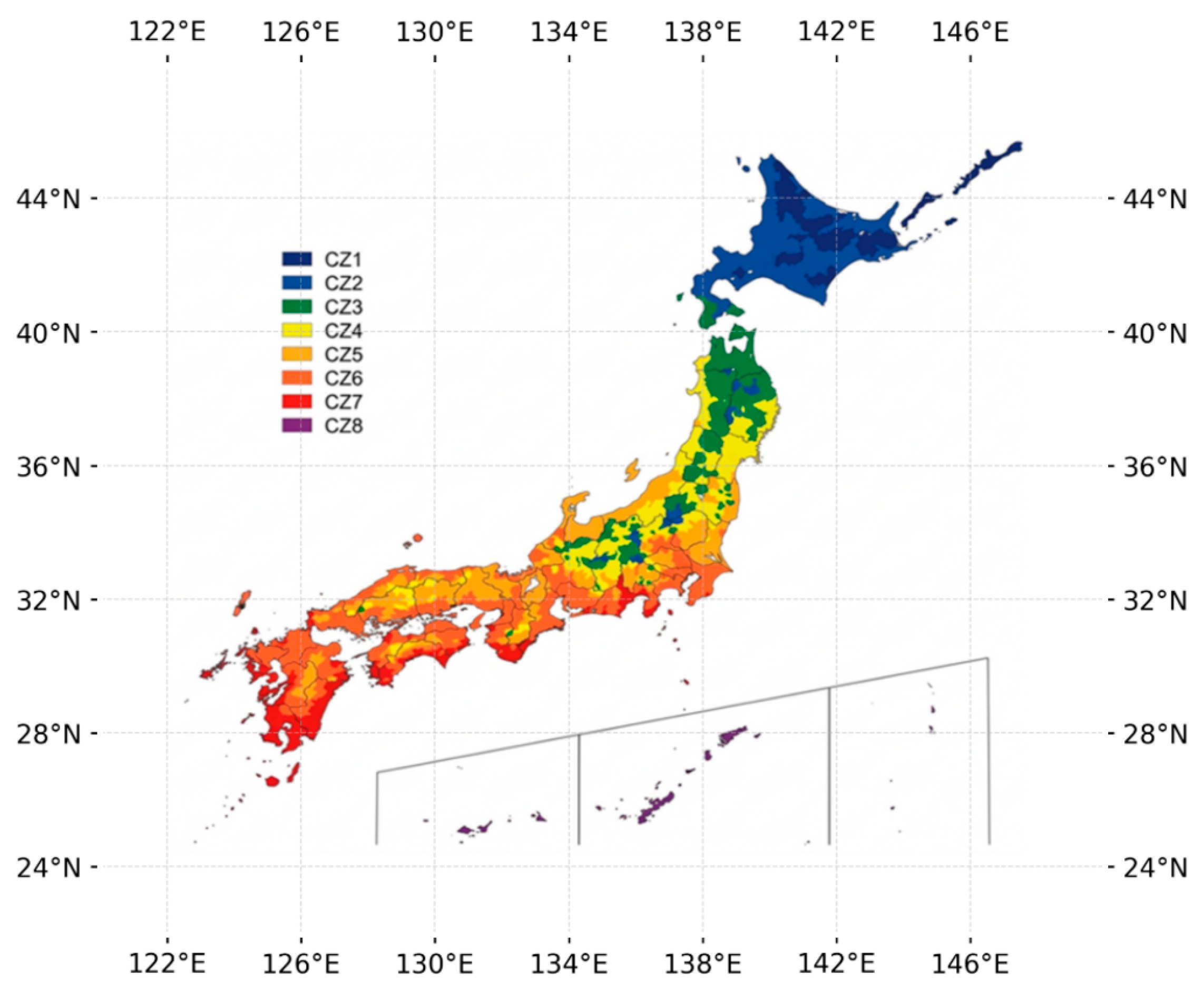
This study focuses on detached residential buildings across different climate zones in Japan to evaluate the impact of natural ventilation control strategies on residential HVAC loads under multiple climatic conditions. According to the Japanese residential building energy efficiency design standards, Japan is divided into eight climate zones (CZ1–CZ8) [
35], covering typical climatic conditions ranging from cold regions to hot and humid regions (
Figure 1). By varying the meteorological input data while maintaining a consistent building model, the influence of climatic conditions on the performance of natural ventilation can be systematically analyzed.
The meteorological data used in this study were obtained from the Typical Meteorological Year (TMY) database integrated within The BEST Program. This dataset provides hourly meteorological information and serves as the climatic boundary condition for the building energy simulations. All simulations were performed using hourly weather data through dynamic calculations in order to capture the characteristics of building thermal loads under different climate zone conditions.
In addition to temperature and humidity, solar radiation and wind conditions are considered as key climatic boundary conditions in the simulation. The TMY dataset provides hourly data of solar radiation, wind speed, and wind direction, which are used as time-varying inputs in the BEST Program. Solar radiation on building surfaces is calculated by accounting for solar position, surface orientation, and tilt angles. The model decomposes solar radiation into direct, diffuse, and ground-reflected components to determine the total incident radiation on vertical and inclined surfaces.
Wind speed and direction are incorporated into the natural ventilation calculation through wind-driven pressure differences. Wind speed determines the magnitude of pressure acting on building surfaces, while wind direction, relative to building orientation, influences airflow patterns and ventilation rates. Since the same building model is applied across all climate zones, differences in both solar radiation and wind effects are solely driven by the climatic data.
2.2. Building Model and Simulation Settings
The simulations were conducted using the BEST Program, Professional Edition 2510 (Institute for Built Environment and Carbon Neutral for SDGs [IBECs], Tokyo, Japan), a dynamic building energy simulation tool widely used for residential energy analysis in Japan. The software is based on heat and moisture balance models and can simulate heat transfer through building envelopes, indoor thermal conditions, HVAC system loads, and the interaction between natural and mechanical ventilation. Its consistency with Japanese residential energy calculation standards makes it suitable for comparative analysis across multiple climate zones in this study [
41].
Boundary conditions are defined by hourly TMY weather data, including outdoor temperature, humidity, solar radiation, and wind conditions. Building-related parameters, such as envelope thermal properties, geometry, and system configurations, are specified based on standardized settings, while internal heat gains from occupants and equipment are also included. Under this framework, heat transfer through the envelope, internal gains, and ventilation-related heat exchange are simultaneously considered, ensuring a consistent physical basis for the dynamic simulation.
To ensure the comparability of simulation results across different climate zones, a unified standard residential building model was adopted in this study. The model represents a typical two-story detached wooden house commonly found in Japan, with a total floor area of approximately 120 m2. The floor height is 2.9 m on the first floor and 2.7 m on the second floor. The thermal performance of the building envelope was set according to the minimum energy efficiency requirements for newly constructed residential buildings in Japan, ensuring the model’s practical representativeness.
The dwelling is equipped with split-type air-conditioning systems for heating and cooling and includes a mechanical ventilation system to meet the requirement of continuous 24-h ventilation in residential buildings. The building model parameters were established based on the Manual for Residential Energy Consumption Calculation [
42]. During the simulations across different climate zones, all parameters other than meteorological conditions—such as envelope thermal performance, internal heat gains, occupant schedules, and equipment efficiency—were kept constant. This approach eliminates the influence of non-climatic factors and highlights the effects of climatic conditions on building energy consumption and natural ventilation performance.
The main parameters of the standard residential building model are summarized in
Table 1.
The thermal performance of the building envelope is defined according to the minimum energy-efficiency standard for newly constructed residential buildings in Japan. The U-value of the external walls is approximately 0.46 W/(m2·K), representing a typical level for standard wooden residential buildings. The building is equipped with typical double-glazed windows, with a solar heat gain coefficient (SHGC) of approximately 0.50. The same envelope properties are applied across all climate zones to ensure comparability.
The selection of a two-story detached residential building in this study is intended to represent a typical housing type in Japan, where such dwellings are widely adopted and subject to the requirement of continuous mechanical ventilation (24 h). Under this regulatory context, natural ventilation is generally operated as a supplementary strategy rather than a replacement, making this building type suitable for investigating the combined operation of natural and mechanical ventilation.
In addition, the relatively simple geometry and airflow characteristics of low-rise residential buildings help reduce the influence of complex airflow interactions associated with building height, such as strong stack effects and vertical airflow coupling. This allows the analysis to focus more clearly on the interaction between ventilation strategies and climatic conditions.
Therefore, the chosen building model serves as a controlled reference case for comparative analysis across different climate zones, rather than representing a specific building type optimized for ventilation performance.
Internal heat gains from occupants, lighting, and household equipment are included in the model based on standardized schedules. These gains are divided into sensible and latent components and are incorporated into the indoor heat balance. In addition, the thermal effects of ventilation are fully considered. Heat gain and loss associated with both mechanical and natural ventilation are calculated based on indoor and outdoor air conditions, including temperature and humidity. The energy carried by exhaust air is also accounted for, ensuring a complete heat balance in the building simulation.
2.3. Ventilation Strategies
Under the condition that the building model, envelope performance, and internal operating conditions remain consistent, four different ventilation operation strategies were developed in this study to evaluate the impact of natural ventilation on residential HVAC loads under different climatic conditions. The four strategies include a baseline mechanical ventilation strategy (S0) and three natural ventilation strategies (S1–S3). All ventilation controls were determined based on hourly meteorological data, meaning that at each simulation time step the activation of natural ventilation was decided according to indoor and outdoor thermal and humidity conditions.
S0 represents the baseline operation scenario. Under this strategy, the dwelling relies solely on a mechanical ventilation system to satisfy the requirement for continuous 24-h ventilation, while all windows remain closed and natural ventilation is not used. This scenario serves as the reference case for evaluating the impacts of different natural ventilation control strategies on building HVAC loads.
S1 represents the shoulder-season natural ventilation strategy. In this strategy, natural ventilation primarily occurs during daytime periods in spring and autumn transition seasons, utilizing relatively mild outdoor conditions to reduce mechanical cooling or heating demand. To avoid activating natural ventilation during the heating season or under extreme weather conditions, temperature and humidity constraints were introduced. Natural ventilation can be activated when the indoor temperature exceeds the heating setpoint by a certain threshold, the outdoor temperature falls within an appropriate range, and a temperature difference between indoor and outdoor environments provides sufficient driving force.
S2 represents a summer night ventilation strategy. Under this strategy, natural ventilation is only activated during nighttime periods in summer. By utilizing the lower outdoor air temperature at night, the heat stored in the building envelope and indoor air can be dissipated, thereby reducing cooling demand during the daytime. To ensure effective cooling through ventilation, this strategy requires a certain indoor–outdoor temperature difference and also limits the moisture content of outdoor air to prevent the introduction of excessive latent loads under high-humidity conditions.
S3 represents an adaptive natural ventilation strategy. In this strategy, the activation of natural ventilation is controlled not only by temperature conditions but also by humidity constraints to limit the entry of humid outdoor air. When the outdoor dew point temperature or indoor relative humidity approaches a predefined upper threshold, natural ventilation is restricted in order to reduce the impact of latent loads on building cooling demand. By introducing coupled thermal–humidity constraints into the ventilation control logic, this strategy aims to reduce sensible cooling loads through natural ventilation while suppressing increases in latent loads, thereby improving the applicability of natural ventilation strategies in hot and humid climates.
The specific operating conditions of the four ventilation strategies are summarized in
Table 2.
In this study, natural ventilation is implemented as a supplementary strategy on top of the continuously operating mechanical ventilation system (MV24), rather than as a replacement. When predefined temperature and humidity conditions are satisfied, windows are assumed to open, introducing additional airflow into the building.
As a result, the total ventilation rate is determined by the combined effect of mechanical and natural ventilation. Both airflow components are simultaneously considered in the calculation of heat and moisture balance, allowing the impact of natural ventilation on HVAC loads to be evaluated under continuous mechanical ventilation conditions.
The ventilation strategies are defined based on a rule-based control framework described in
Table 2, which combines temperature-driven activation conditions with humidity constraints. In general, natural ventilation is enabled when outdoor conditions are favorable for reducing indoor thermal loads, as determined by temperature differences between indoor and outdoor air. Additional constraints related to humidity are applied to prevent excessive latent load introduction.
When the predefined conditions are satisfied, windows are assumed to open, introducing additional airflow into the building. The resulting ventilation rate is determined by the combined effect of natural and mechanical ventilation, and the associated heat and moisture exchange are incorporated into the building energy balance.
3. Results
3.1. Climate-Dependent HVAC Load Structure Under Baseline Operation
Before comparing the performance of different natural ventilation strategies, it is necessary to first clarify the characteristics of HVAC load structures for residential buildings across the different climate zones under consistent operating conditions.
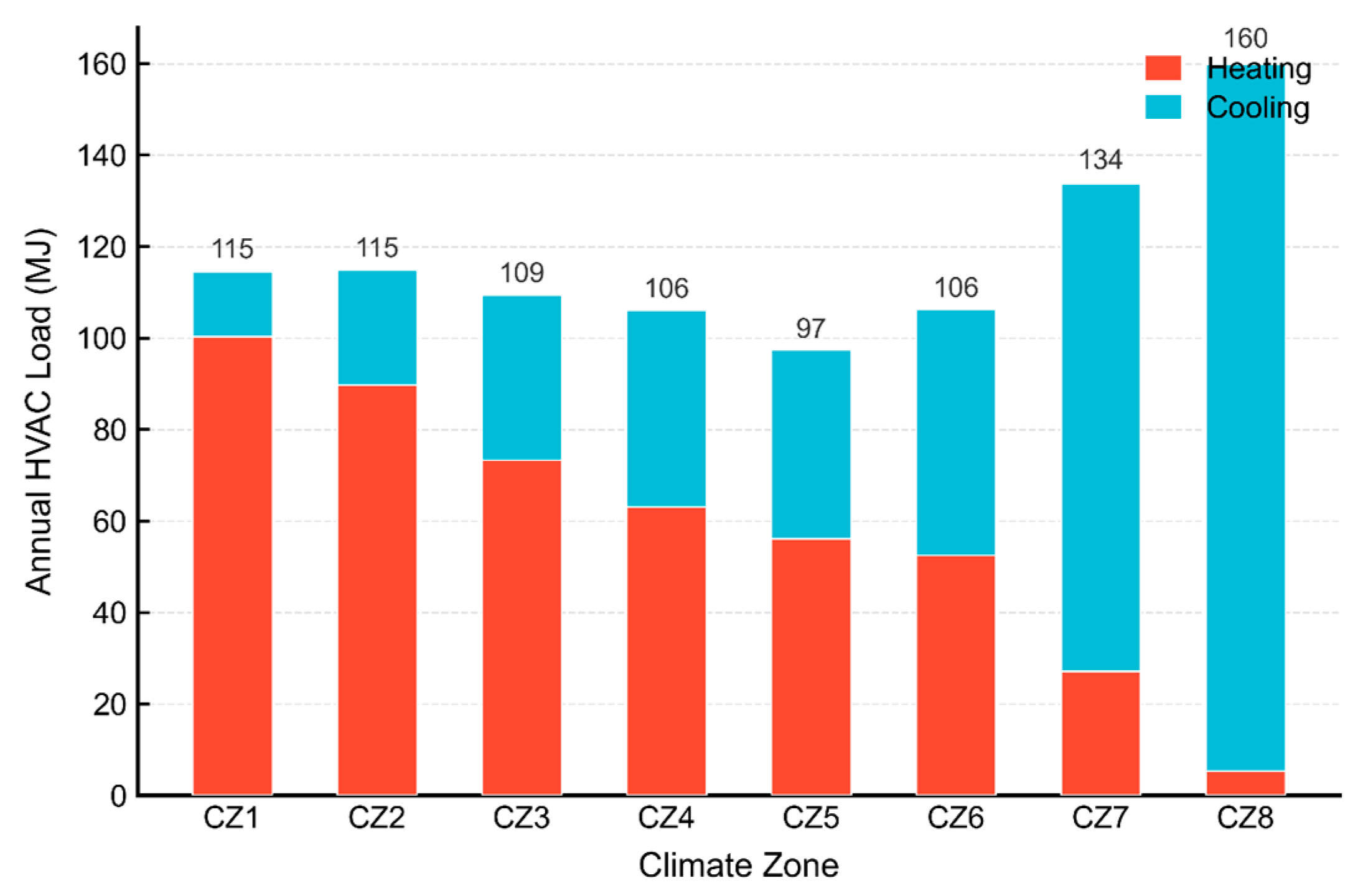
Figure 2 presents the composition of annual heating and cooling loads across the eight climate zones under the baseline operation scenario (S0), in which only mechanical ventilation (MV24) is operated throughout the year. Since the annual HVAC load consists of both heating and cooling loads, these results not only reflect the differences in total load magnitude among the climate zones but also reveal the variation characteristics in the heating–cooling load structure of the buildings.
As shown in
Figure 2, the structure of HVAC loads exhibits a systematic transition across climate zones, reflecting a shift in dominant driving mechanisms. In cold regions (CZ1–CZ3), annual energy demand is governed by low ambient temperatures, resulting in heating-dominated load profiles concentrated in winter. As the climate becomes milder (CZ4–CZ6), the reduction in heating demand coincides with the emergence of cooling demand, leading to a more balanced load structure. In warm regions (CZ7–CZ8), the dominant driver shifts to prolonged high-temperature conditions, under which cooling demand becomes the primary contributor to annual HVAC loads.
In addition to changes in the heating–cooling proportion,
Figure 2 also reveals the variation in the total annual HVAC load across different climate zones. While the total annual HVAC load remains relatively stable from CZ1 to CZ5, a noticeable increase is observed in CZ7 and CZ8. This increase is associated with the extended duration of cooling demand under sustained high-temperature conditions, rather than peak intensity alone. This phenomenon indicates that as the climate shifts from cold to warm conditions, the building load structure not only transitions from heating dominance to cooling dominance but also gradually shifts in overall magnitude from winter heating demand to summer cooling demand.
To further examine how this structural transition manifests over time,
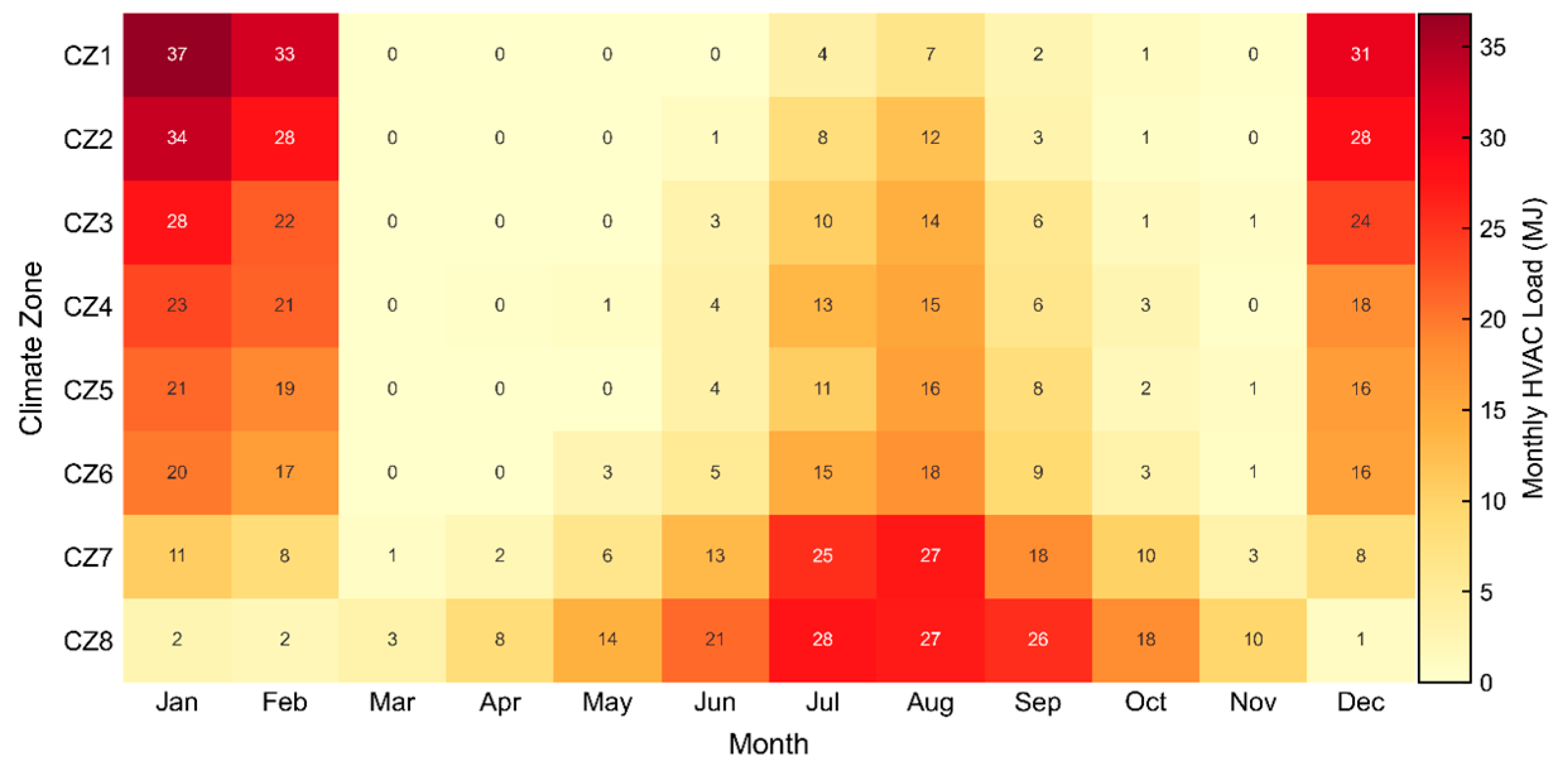
Figure 3 presents the monthly HVAC load distribution for each climate zone under the baseline scenario. The annual load profiles show distinct seasonal patterns across the different climate zones. The monthly distribution of HVAC loads reveals distinct temporal patterns governed by different climatic drivers. In cold climate zones (CZ1–CZ3), loads are concentrated within short but high-intensity winter periods, indicating a peak-driven heating demand. In contrast, in hot climate zones (CZ7–CZ8), cooling loads are distributed over an extended summer period, reflecting a duration-driven accumulation of energy demand. Transitional climate zones (CZ4–CZ6) exhibit a bimodal pattern, where both heating and cooling peaks coexist, indicating the simultaneous influence of winter and summer climatic drivers. In these regions, loads begin to increase gradually from late spring and reach their peak during midsummer. For the intermediate climate zones CZ4–CZ6, both winter heating and summer cooling peaks are observed, resulting in a bimodal annual load distribution pattern.
Further comparison of
Figure 2 and
Figure 3 reveals that the differences in HVAC load structures among climate zones are reflected not only in the heating–cooling ratio but also in the duration of high-load periods. In cold climate zones, high loads are concentrated in a few winter months, representing short-duration but high-intensity heating demand. In contrast, in hot climate zones, the duration of cooling loads is significantly extended. For example, in CZ7 and CZ8, cooling demand begins to increase gradually from early summer and remains at a high level throughout the summer season, forming a prolonged high-load period. By comparison, in CZ4–CZ6, high loads are concentrated in two distinct periods—winter and summer—while the spring and autumn seasons form a clear transitional period with relatively low loads.
A comparison of the annual load structure and the monthly distribution further indicates that the mechanisms governing HVAC load formation differ substantially among climate zones. In cold climate zones, HVAC loads are primarily driven by low winter temperatures, with annual energy consumption concentrated in a few months with extreme climatic conditions. In contrast, in hot climate zones, HVAC loads are largely driven by the duration of high-temperature conditions, resulting in energy consumption that accumulates over an extended period. For transitional climate zones, the annual HVAC load is influenced by both winter heating and summer cooling demands, leading to a pronounced bimodal distribution.
Overall, the variation in HVAC loads across climate zones is governed by fundamentally different formation mechanisms. In cold regions, energy demand is dominated by short-duration, high-intensity heating events driven by low temperatures, whereas in warm regions, it is primarily determined by the cumulative effect of prolonged cooling demand. Transitional climates exhibit a combination of these mechanisms, leading to a bimodal load structure. This distinction highlights that both peak intensity and duration play critical roles in shaping annual HVAC energy consumption.
3.2. Impact of Mid-Season Natural Ventilation on HVAC Loads
After clarifying the HVAC load structures across different climate zones under the baseline operating condition, the influence of the shoulder-season natural ventilation strategy (S1) on building HVAC loads is further analyzed.
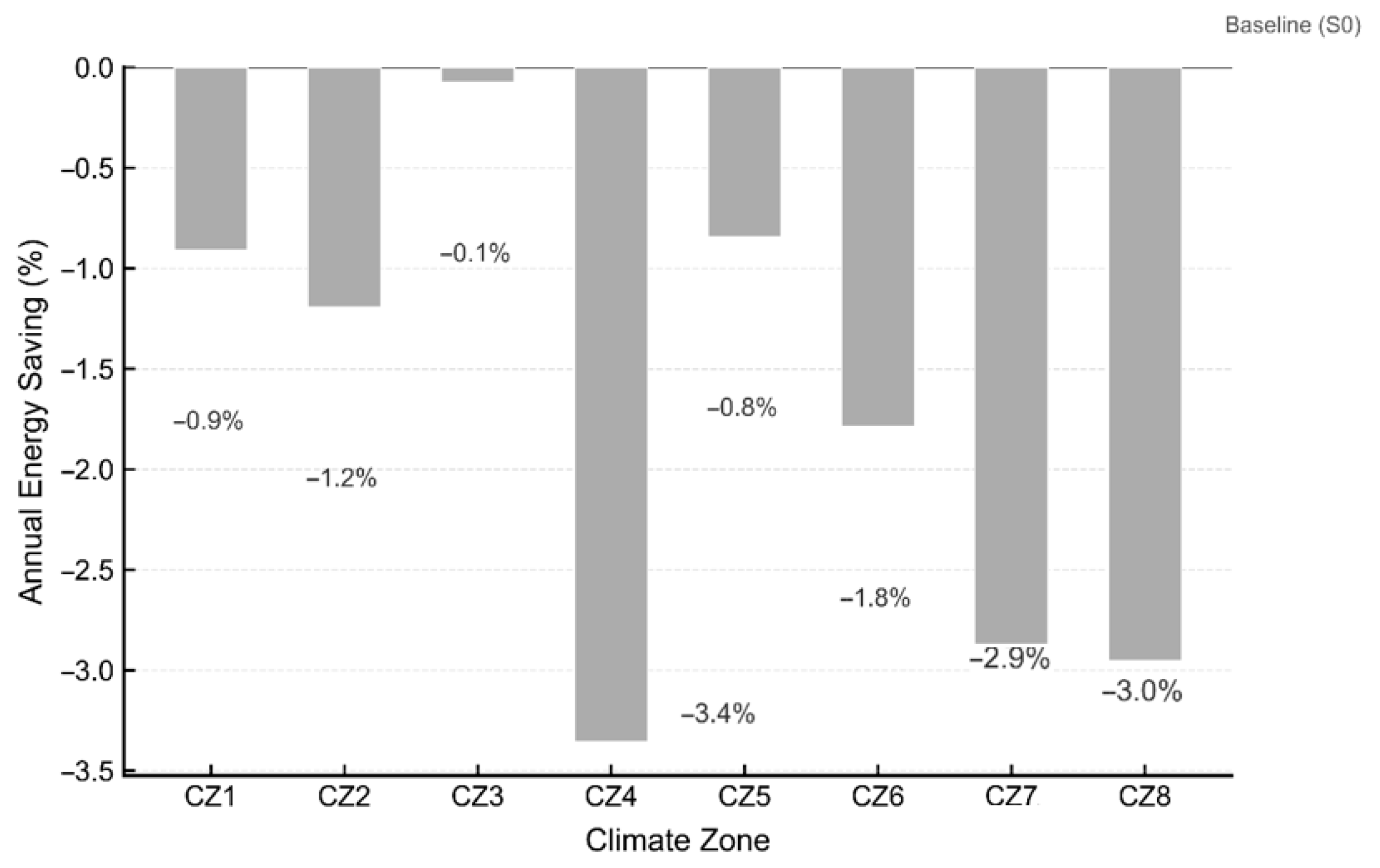
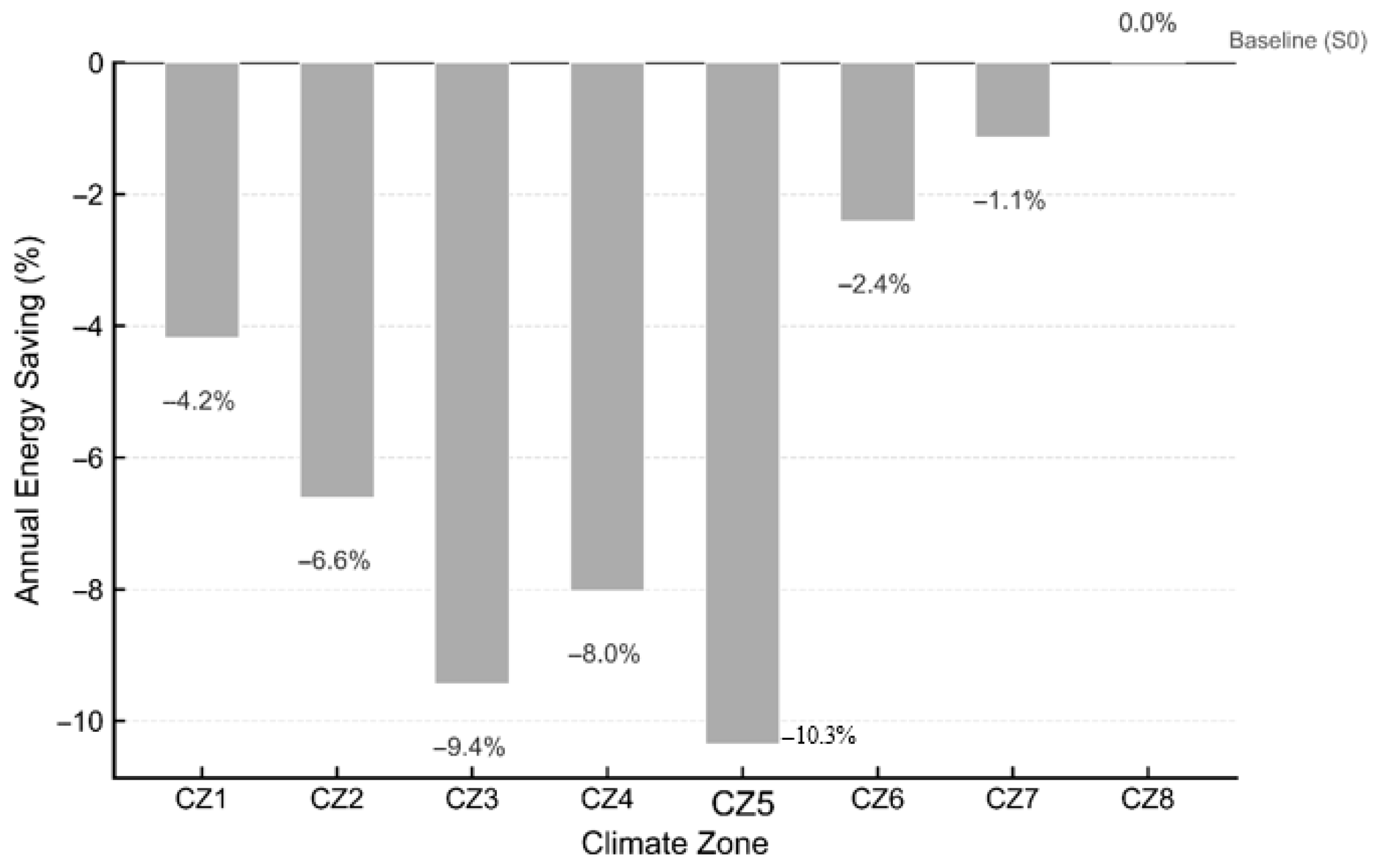
Figure 4 presents the variation in annual HVAC energy consumption across the climate zones under the S1 strategy relative to the baseline scenario S0. The annual energy change is calculated with respect to the baseline scenario, and the formulation is given in Equation (1).
In this equation, QS0 represents the annual HVAC load under the baseline scenario, while QS1 denotes the annual HVAC load under the shoulder-season natural ventilation strategy.
As shown in
Figure 4, the S1 strategy does not lead to a reduction in annual HVAC loads in any of the climate zones; instead, a slight increase in load is generally observed. The magnitude of this change varies across climate zones, with CZ4 exhibiting the most pronounced variation, whereas the changes in CZ1, CZ3, and CZ5 are relatively small. Overall, at the annual scale, the S1 strategy does not achieve energy savings but instead results in a modest increase in HVAC loads across the different climate zones.
To identify the temporal distribution of these variations,
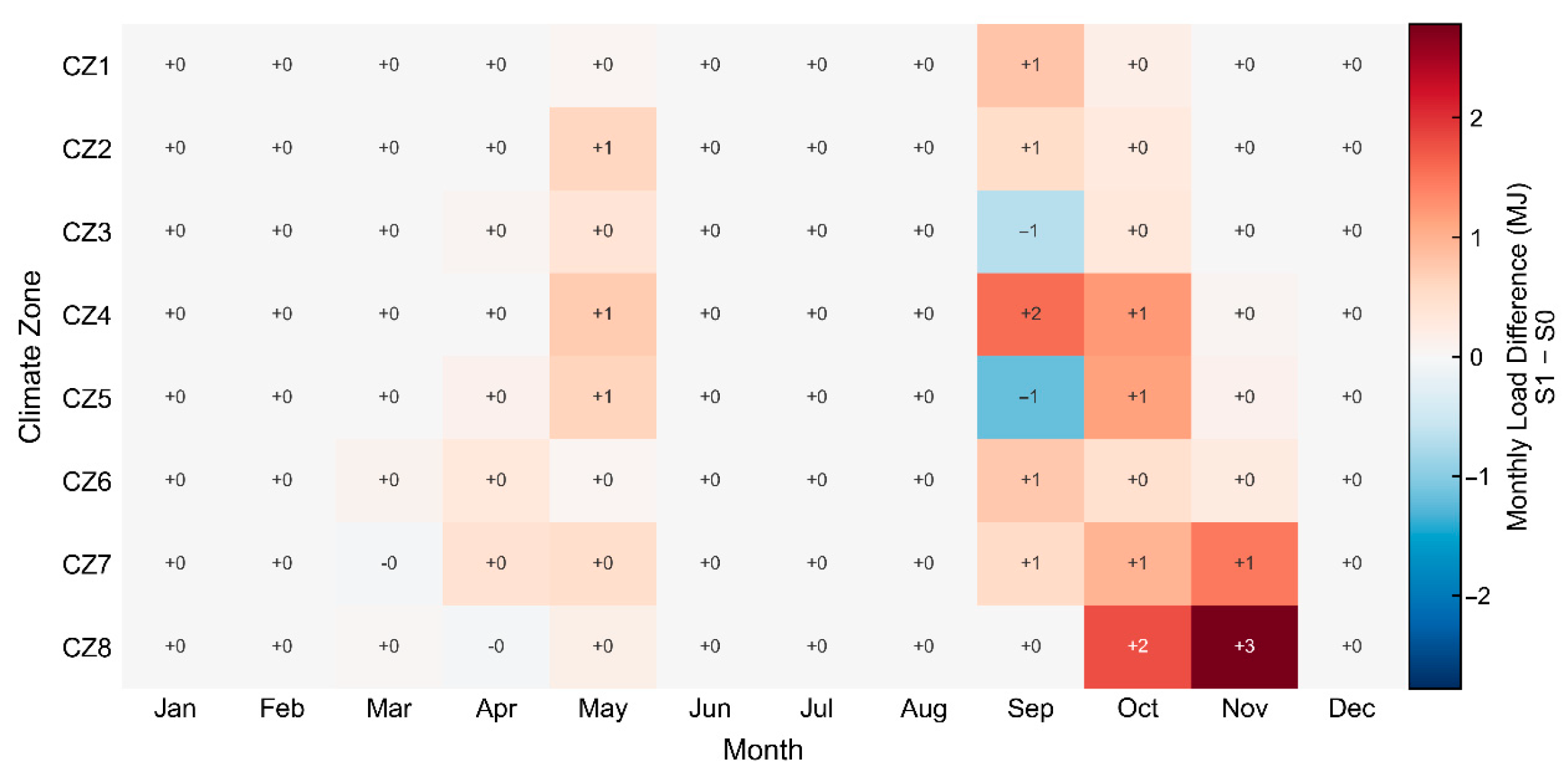
Figure 5 presents the monthly differences in HVAC loads under the shoulder-season natural ventilation strategy relative to the S0 scenario for each climate zone. As shown in the figure, the load variations across the different climate zones are mainly concentrated during the transitional seasons of spring and autumn, particularly from April to May and from September to November. In contrast, during the winter heating period and the peak summer cooling season, the differences between the two operating strategies are relatively small. This indicates that the influence of the S1 strategy on HVAC loads primarily occurs during transitional periods when outdoor climatic conditions are close to the indoor temperature range.
A further comparison of the monthly load variations across different climate zones shows that the changes in HVAC loads are more pronounced in transitional climate zones such as CZ4–CZ6. For example, in CZ4 and CZ5, noticeable increases in HVAC loads occur during May and September–October. In contrast, in colder climate zones such as CZ1, the load variation is mainly concentrated around September, with a relatively smaller overall magnitude. Meanwhile, in hot climate zones such as CZ7 and CZ8, load variations appear not only during the spring transition period but also show a clear increase in October–November. These differences reflect substantial variations among climate zones in terms of the duration of transitional seasons and the rate of climatic change.
By combining the results of
Figure 4 and
Figure 5, it can be further observed that the influence of the S1 strategy on annual HVAC loads is primarily formed through the cumulative effect of load variations during transitional seasons. Although the load change in any single month is generally small, the strategy operates across multiple transitional months throughout the year, and the cumulative effect leads to a stable difference in annual HVAC loads. From a spatial perspective, this cumulative effect is more pronounced in transitional climate zones, where climatic conditions remain closer to the natural ventilation applicability range for a longer period during the year.
In addition,
Figure 5 indicates that the S1 strategy affects building load structures differently across seasons. During the spring period (April–May), load changes mainly occur when outdoor temperatures gradually increase, whereas during the autumn period (September–November), load variations appear when temperatures begin to decrease. This seasonal pattern suggests that natural ventilation is more likely to be activated when outdoor environmental temperatures approach the indoor thermal comfort range, thereby altering the heat exchange process between the building envelope and indoor air.
The increase in energy consumption observed for S3 in some climate zones can be attributed to the trade-off between sensible load reduction and latent load increase. While natural ventilation reduces sensible cooling demand under favorable temperature conditions, the introduction of humid outdoor air increases latent cooling loads. When the increase in latent load exceeds the reduction in sensible load, the overall HVAC energy consumption increases. This effect is further amplified by the cumulative impact of frequent ventilation events over extended periods.
Overall, the combined annual and monthly results indicate that the influence of the shoulder-season natural ventilation strategy on HVAC loads is primarily characterized by the cumulative effect of load variations during transitional seasons, with significant differences among climate zones. In transitional climate zones, where suitable conditions for natural ventilation persist for longer periods, the annual load variation caused by this strategy is more evident. In contrast, in cold or hot climate zones, where transitional seasons are relatively short, the overall annual impact remains limited.
It should be noted that during transitional seasons, the HVAC system operating load itself is relatively low in some climate zones, and therefore the absolute energy-saving potential of natural ventilation during this period is limited. However, the results of this study indicate that even under conditions where outdoor temperatures are close to the thermal comfort range, the introduction of natural ventilation still does not bring the expected energy consumption reduction. Instead, it manifests as a slight increase in annual HVAC load in some climate zones.
This phenomenon suggests that the impact of natural ventilation on building energy consumption depends not only on temperature conditions but is also significantly constrained by humidity factors. During transitional seasons, when natural ventilation is activated based solely on temperature conditions, water vapor in outdoor air enters the interior space, potentially leading to an increase in latent heat load, which offsets or even exceeds the reduction in sensible heat load. Since this strategy operates continuously throughout multiple transitional months of the year, this small load increase accumulates over time and is ultimately reflected in the energy consumption variation on an annual scale.
Therefore, this result does not simply indicate that natural ventilation has “insignificant energy-saving effects” during transitional seasons, but rather reveals that without considering humidity constraints, natural ventilation may introduce additional latent heat loads, thereby affecting overall energy consumption performance.
3.3. Impact of Night Ventilation on Cooling Load Reduction
After analyzing the influence of the shoulder-season natural ventilation strategy on HVAC loads, the performance of the night natural ventilation strategy (S2) across different climate zones is further evaluated. This strategy is activated only during nighttime hours in summer and utilizes the lower outdoor air temperatures at night to achieve passive heat removal from the building interior.
Figure 6 illustrates the variation in annual HVAC energy consumption under the S2 strategy relative to the baseline scenario S0 across the different climate zones. The annual energy change is again calculated with reference to the baseline scenario, and the formulation is given in Equation (2).
where Q
S2 represents the annual HVAC load under the night natural ventilation strategy.
As shown in
Figure 6, unlike the shoulder-season natural ventilation strategy, the night natural ventilation strategy exhibits a clear trend of reducing annual HVAC energy consumption across all climate zones. However, the magnitude of energy savings varies significantly among the climate zones. The most pronounced reductions occur in CZ3–CZ5, where the annual HVAC load decreases by approximately 8–10%. In CZ1 and CZ6, the reduction is moderate, whereas in CZ7 and CZ8 the energy-saving effect is relatively weaker. Overall, the night natural ventilation strategy generally reduces HVAC energy consumption at the annual scale, but its energy-saving potential exhibits clear spatial variations across different climate zones.
To identify how these differences manifest over time,
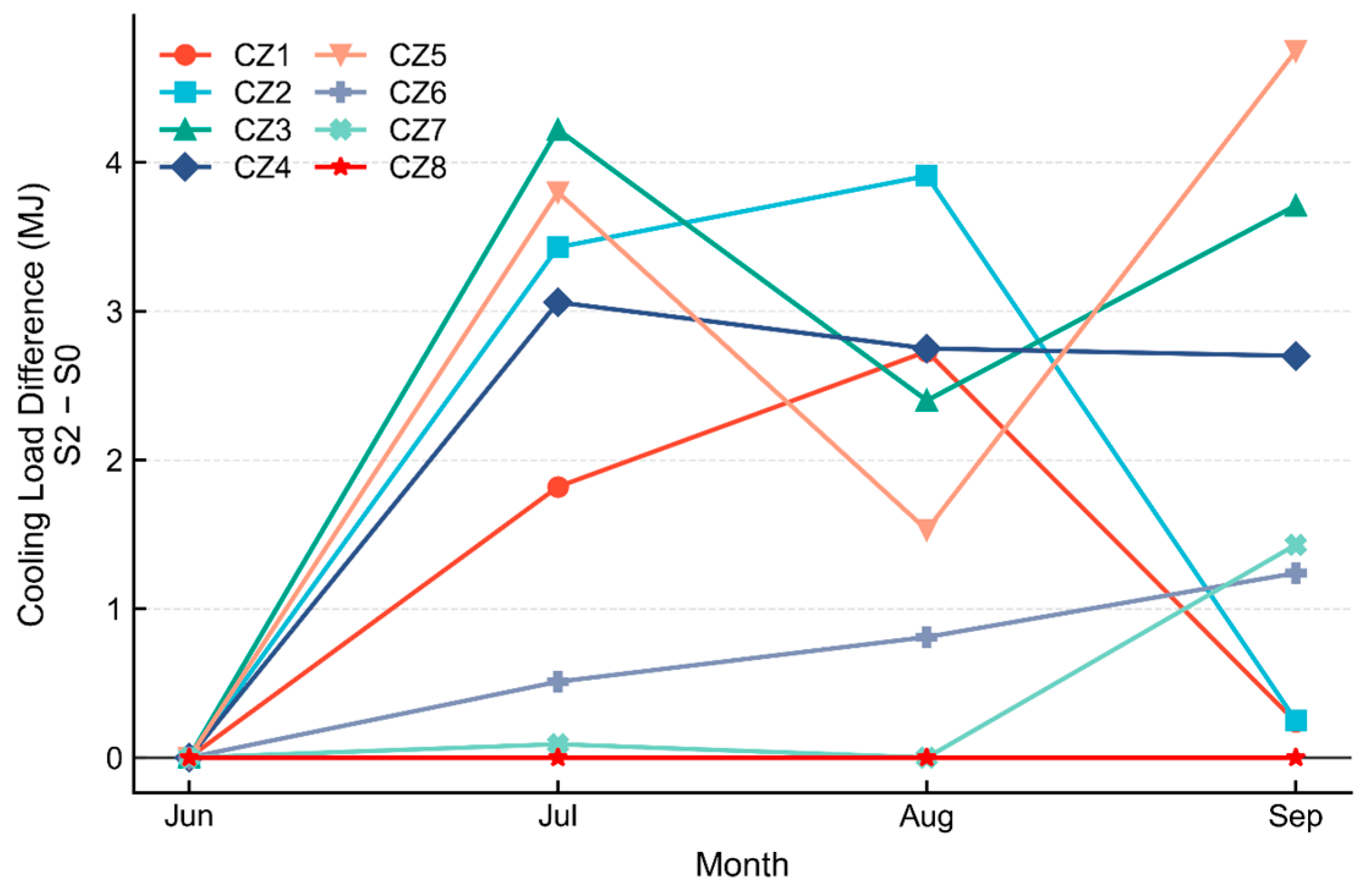
Figure 7 presents the changes in cooling loads under the S2 strategy relative to the baseline scenario during typical summer months. The monthly distribution indicates that the influence of the S2 strategy on building loads is mainly concentrated between July and September, while almost no noticeable differences are observed among climate zones in June. This suggests that the night ventilation strategy has limited impact during the early summer period. As outdoor temperatures gradually increase and heat accumulation within the building intensifies, the effect of this strategy becomes progressively more pronounced.
A further comparison of the monthly load variations across different climate zones reveals that transitional climate zones such as CZ2–CZ4 exhibit the most pronounced reductions in cooling loads during July, with CZ3 showing the largest decrease. In August, most climate zones still maintain a noticeable reduction in cooling loads, although the magnitude of the change becomes slightly smaller compared with July. By September, the variation trends begin to diverge among climate zones. CZ5 and CZ3 still maintain relatively evident load reductions, while the changes in CZ1 and CZ2 become significantly weaker.
By combining the results of
Figure 6 and
Figure 7, it can be observed that the influence of the S2 strategy on annual HVAC loads mainly originates from load reductions during the mid-summer period. In CZ3–CZ5, nighttime temperatures decline more noticeably, allowing night ventilation to effectively dissipate the heat stored within the building and thereby reduce cooling demand during the following daytime period. This night-time heat removal mechanism contributes significantly to the overall annual energy savings. In contrast, in hot climate zones such as CZ7 and CZ8, the nighttime outdoor temperature drop is relatively limited. As a result, night ventilation has a weaker capacity to reduce heat accumulation within the building, leading to a comparatively smaller annual energy-saving effect.
In addition,
Figure 7 indicates that the load response patterns during summer vary across different climate zones. In some regions, night natural ventilation achieves energy savings primarily by reducing cooling loads in July, whereas in other climate zones the strategy continues to exert noticeable effects during August and September. This difference reflects the relationship between seasonal temperature evolution and nighttime cooling potential in different climates, which in turn influences the effectiveness of night ventilation strategies across different months.
Overall, the combined annual and monthly results demonstrate that the S2 strategy can effectively reduce building HVAC energy consumption in most climate zones. The energy-saving effect mainly results from cooling load reductions achieved through nighttime heat dissipation during the mid-summer period. However, due to differences in nighttime temperature variation and the duration of summer across climate zones, the energy-saving potential of this strategy exhibits clear spatial variability.
3.4. Role of Humidity Constraint in Adaptive Natural Ventilation
After identifying the performance of the shoulder-season natural ventilation and night natural ventilation strategies, the operation of the adaptive natural ventilation strategy with humidity constraints (S3) is further analyzed across different climate zones. In this strategy, dew point temperature and indoor humidity constraints are incorporated into the activation criteria for natural ventilation. This approach aims to suppress the increase in latent loads while maintaining thermal comfort conditions.
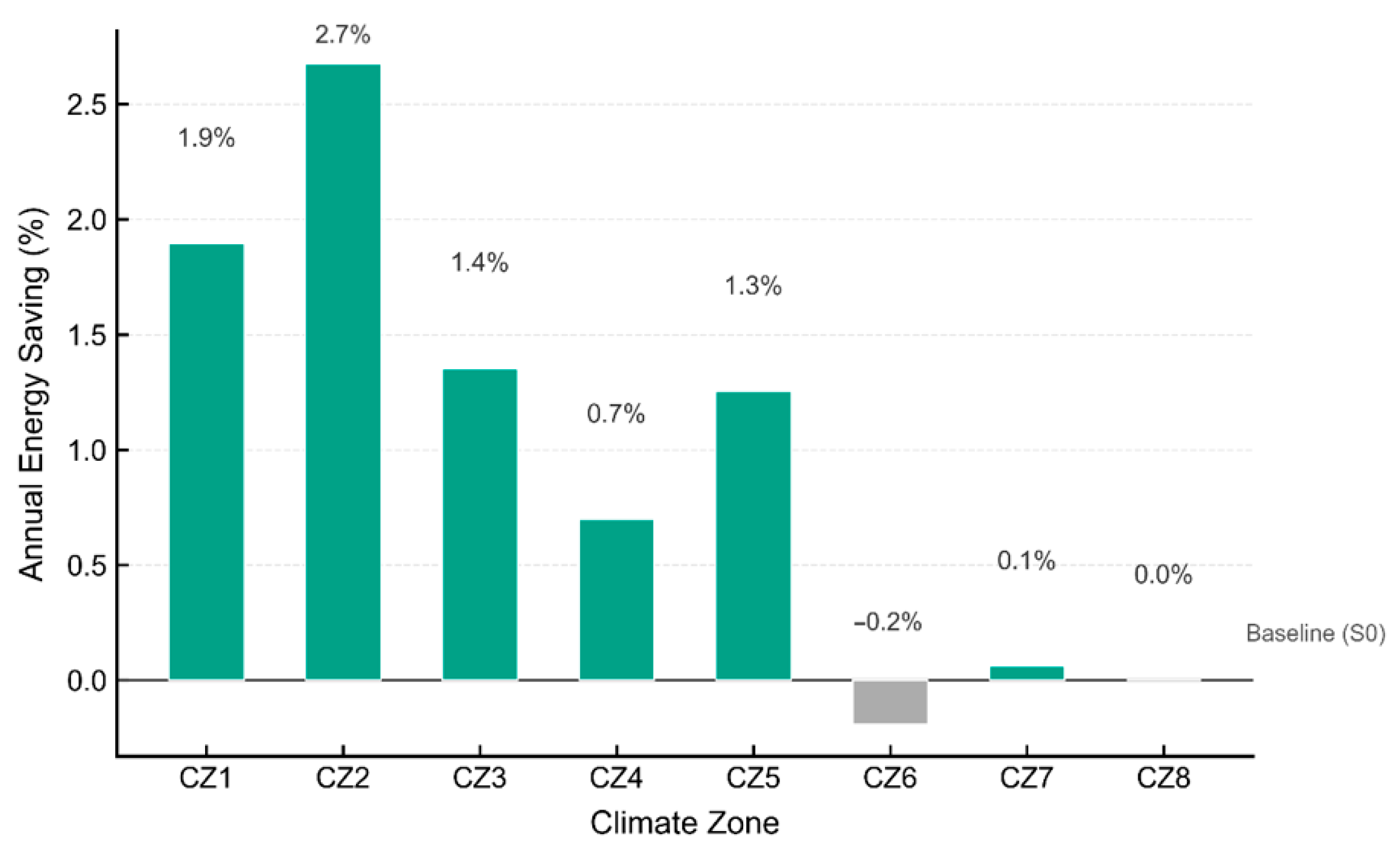
Figure 8 presents the variation in annual HVAC energy consumption under the S3 strategy relative to the baseline scenario S0 across the different climate zones. As with the previous analysis, the annual energy change is calculated with reference to the baseline scenario, and the formulation is given in Equation (3).
where Q
S3 represents the annual HVAC load under the adaptive natural ventilation strategy.
As shown in
Figure 8, the S3 strategy leads to a certain degree of reduction in HVAC energy consumption in most climate zones, although the magnitude of change varies considerably across regions. In CZ1–CZ5, the strategy generally exhibits positive energy-saving effects. Among these zones, CZ2 shows the highest reduction, with the annual HVAC load decreasing by approximately 2.7%, while CZ1 and CZ3 also demonstrate relatively stable reductions in energy consumption. In contrast, in CZ6 the annual HVAC load shows a slight increase, whereas in CZ7 and CZ8 the change in energy consumption is close to zero. Overall, the S3 strategy achieves a certain level of energy savings in cold and moderate climate zones, while its influence on annual energy consumption remains limited in hot and humid climate regions.
To further identify the underlying structural changes in building loads,
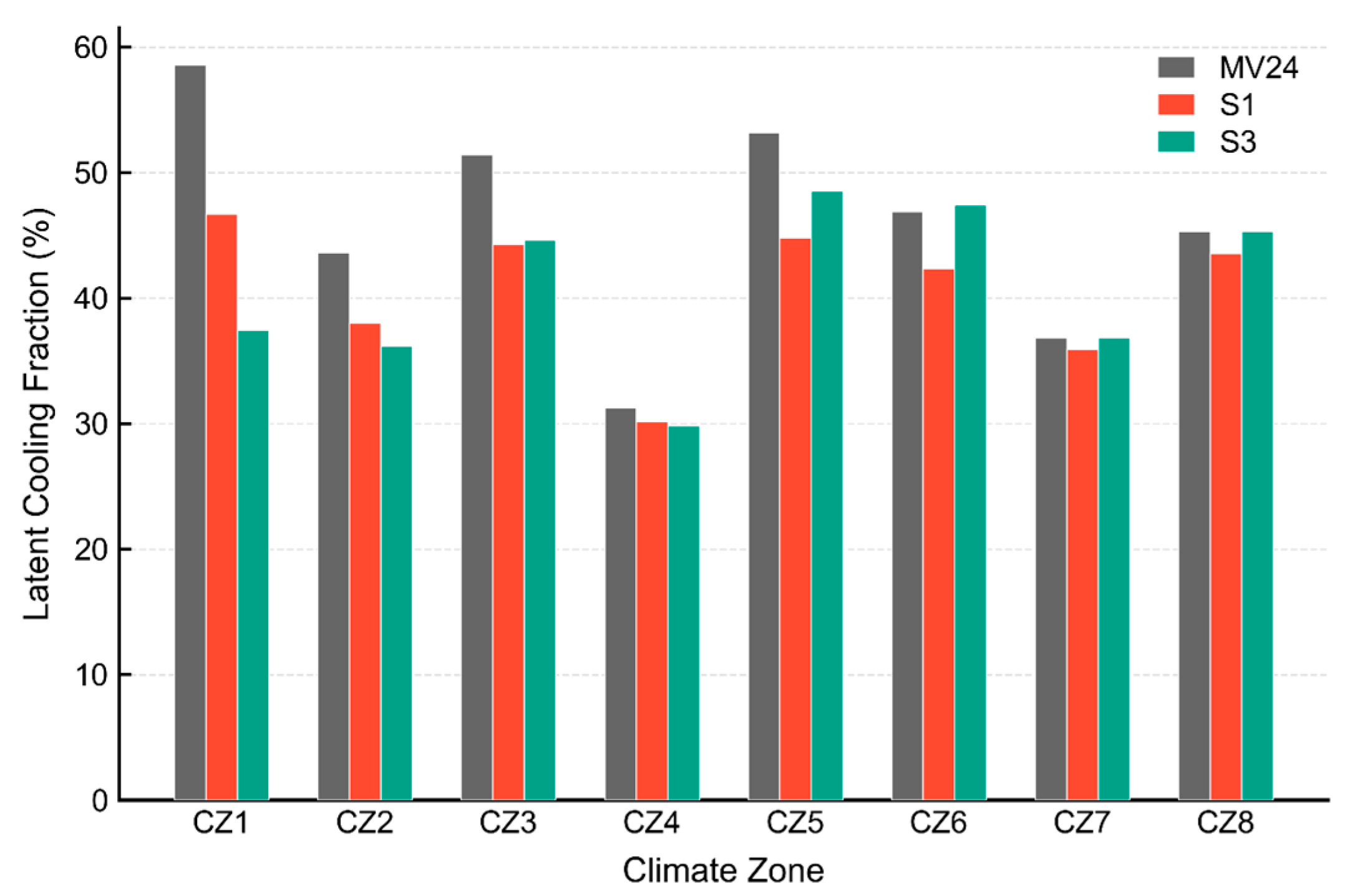
Figure 9 presents the variation in the proportion of cooling latent loads within the total annual cooling load under different ventilation strategies. It can be observed that under the baseline MV24 scenario, the proportion of latent load is relatively high in most climate zones, with the latent load fraction approaching or exceeding 50% in CZ1 and CZ5. When the S1 strategy is applied, the latent load proportion decreases slightly in most climate zones, although the overall magnitude of change remains relatively limited. In contrast, under the S3 strategy, the latent load proportion further decreases in most climate zones. In CZ1, for example, the latent load fraction decreases from approximately 58% under the MV24 condition to about 37%, representing the most significant structural change. Similar trends can also be observed in CZ2 and CZ5.
A further comparison of latent load structure changes across different climate zones shows that in cold and moderate climate regions such as CZ1–CZ5, the adaptive natural ventilation strategy can significantly reduce the proportion of latent loads within the total cooling load. In contrast, in hot and humid climate zones such as CZ6–CZ8, this change is relatively limited, and in some regions the latent load proportion even increases slightly. This difference reflects the distinct mechanisms through which humidity constraints operate under different climatic environments. In climate zones with relatively low humidity, humidity constraints impose only minor restrictions on the activation of natural ventilation. As a result, the strategy can still utilize outdoor air for extended periods to reduce indoor sensible heat loads while avoiding a substantial increase in latent loads. By contrast, in hot and humid climates, the high moisture content of outdoor air causes humidity constraints to significantly reduce the available operating time for natural ventilation, thereby weakening the overall influence of this strategy on annual HVAC loads.
By examining
Figure 8 and
Figure 9 together, it can be observed that the energy-saving performance of the adaptive natural ventilation strategy depends not only on its ability to reduce sensible heat loads but also on its influence on the latent load structure. In cold or moderate climates, where outdoor humidity levels are relatively low, natural ventilation with humidity constraints can still meet activation conditions during most time periods. This allows the strategy to effectively reduce indoor sensible loads while preventing a substantial increase in latent loads. In contrast, in hot and humid climates, the high moisture content of outdoor air causes humidity constraints to significantly limit the activation time of natural ventilation. Consequently, the operating duration of this strategy at the annual scale is substantially reduced, thereby diminishing its influence on HVAC energy consumption.
In addition, changes in latent load structure also reflect differences among ventilation strategies in terms of humidity control. Compared with the S1 strategy, the S3 strategy introduces dew point temperature and indoor humidity criteria to restrict the activation of natural ventilation under high-humidity conditions, thereby reducing the probability of humid air entering the indoor environment. This control approach results in more pronounced structural changes in climate zones where latent loads account for a large proportion of the cooling demand.
Overall, the combined results of annual energy consumption and latent load structure indicate that the S3 strategy introduces humidity constraints into the natural ventilation criteria, allowing ventilation behavior to exhibit stronger regional adaptability under different climatic conditions. In cold and moderate climate zones, this strategy can maintain the utilization of natural ventilation while reducing the proportion of latent loads, thereby achieving certain energy-saving benefits. In contrast, in hot and humid climates, the humidity constraints limit the activation of natural ventilation, resulting in relatively limited energy-saving potential.
It should be noted that this study is based on a standardized building model and has not been directly validated against field measurements. While the adopted simulation tool and model settings are consistent with established residential energy calculation standards in Japan, the absolute values of HVAC loads may still be subject to uncertainties associated with modeling assumptions. However, the primary objective of this study is to conduct comparative analysis of different ventilation strategies under consistent modeling conditions across multiple climate zones. Therefore, the main conclusions rely on the relative differences between scenarios rather than the absolute magnitude of energy consumption.
4. Conclusions
This study compared the performance of different natural ventilation control strategies across eight climate zones and revealed the differentiated impacts of natural ventilation on residential HVAC loads under varying climatic conditions. The results indicate that the influence of natural ventilation on building energy consumption is not a single energy-saving effect but is jointly determined by climatic conditions, ventilation timing, and humidity constraints. At the annual scale, shoulder-season natural ventilation (S1) does not produce consistent energy reductions in most climate zones and may even lead to slight increases in HVAC loads (approximately 0–2%), whereas the summer night ventilation strategy (S2) demonstrates more pronounced energy-saving potential, achieving reductions of approximately 8–10% in moderate and transitional climates.
Further analysis shows that natural ventilation strategies affect not only the overall annual HVAC load level but also the structural composition of building cooling loads. By introducing humidity constraints, the adaptive natural ventilation strategy (S3) reduces the proportion of latent cooling loads within the total cooling load in most climate zones, while achieving moderate energy savings of about 2–3% in selected regions. These results indicate that in hot and humid climates, the performance of natural ventilation largely depends on the balance between sensible load reduction and latent load increase.
This study has several limitations. First, the analysis is based on a standardized building model and has not been directly validated against field measurements. Second, the ventilation strategies are defined using rule-based control and do not represent optimized operation. In addition, occupant behavior is simplified in the model. These limitations may affect the absolute magnitude of the results; however, as this study focuses on comparative analysis under consistent conditions, the main conclusions regarding the relative performance and underlying mechanisms remain valid.
Overall, the results of this study indicate that the impact of natural ventilation on building energy consumption is not a single energy-saving effect, but rather is jointly determined by the trade-off between sensible heat load reduction and latent heat load increase. During transitional seasons, even when outdoor temperatures are close to the comfort range, natural ventilation may still increase latent heat loads due to the introduction of humid air, thereby weakening or even offsetting its energy-saving effect. In contrast, under climatic conditions with significant diurnal temperature variations, night ventilation can effectively release accumulated building heat, thus demonstrating more stable energy-saving potential. These results indicate that the effectiveness of natural ventilation strategies exhibits significant climate dependency, and their applicable scope is jointly constrained by coupled temperature and humidity conditions.
From a methodological perspective, conducting multi-climate zone comparative analysis under a unified building model and operating conditions helps to isolate the influence of individual building differences, thereby more clearly identifying the mechanisms of interaction between climatic factors and ventilation strategies. This study provides mechanism-level explanations for understanding the energy consumption performance of natural ventilation under different climatic conditions and offers reference for the optimization of ventilation control strategies.