A Compliance-Driven Generative Framework for Zhejiang-Style Rural Facades
Abstract
1. Introduction
- Addressing the contradiction between “governance efficiency” and “massive personalized needs”: Constructing an automated candidate supply mechanism oriented toward governance workflows.
- 2.
- Addressing the “non-tectonic nature” of general AI: Establishing a hierarchical control mechanism with semantic constraints.
- 3.
- Addressing the disconnection between “generation and evaluation”: Implementing a clause-driven Evaluation-Diagnosis-Reranking feedback mechanism.
2. Materials and Methods
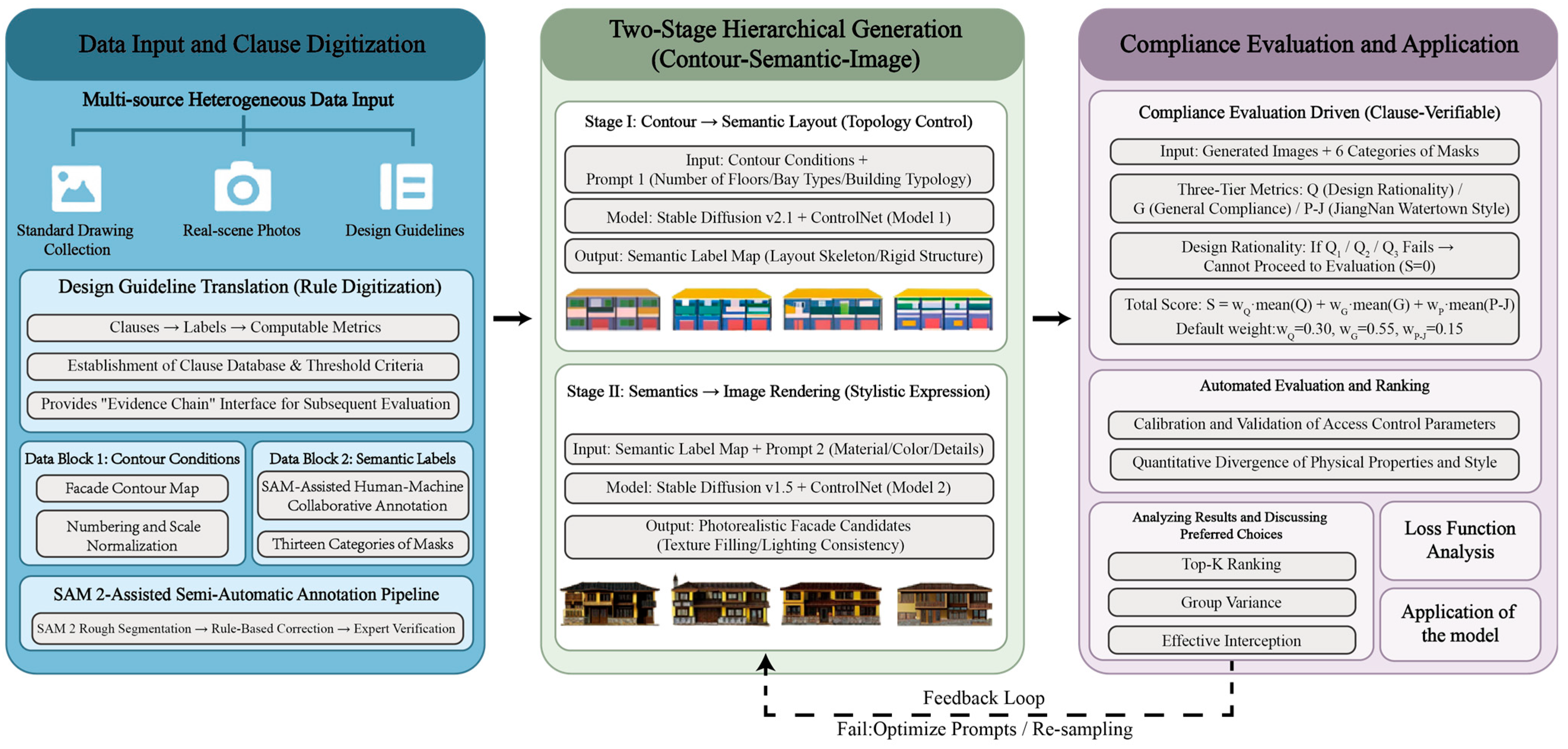
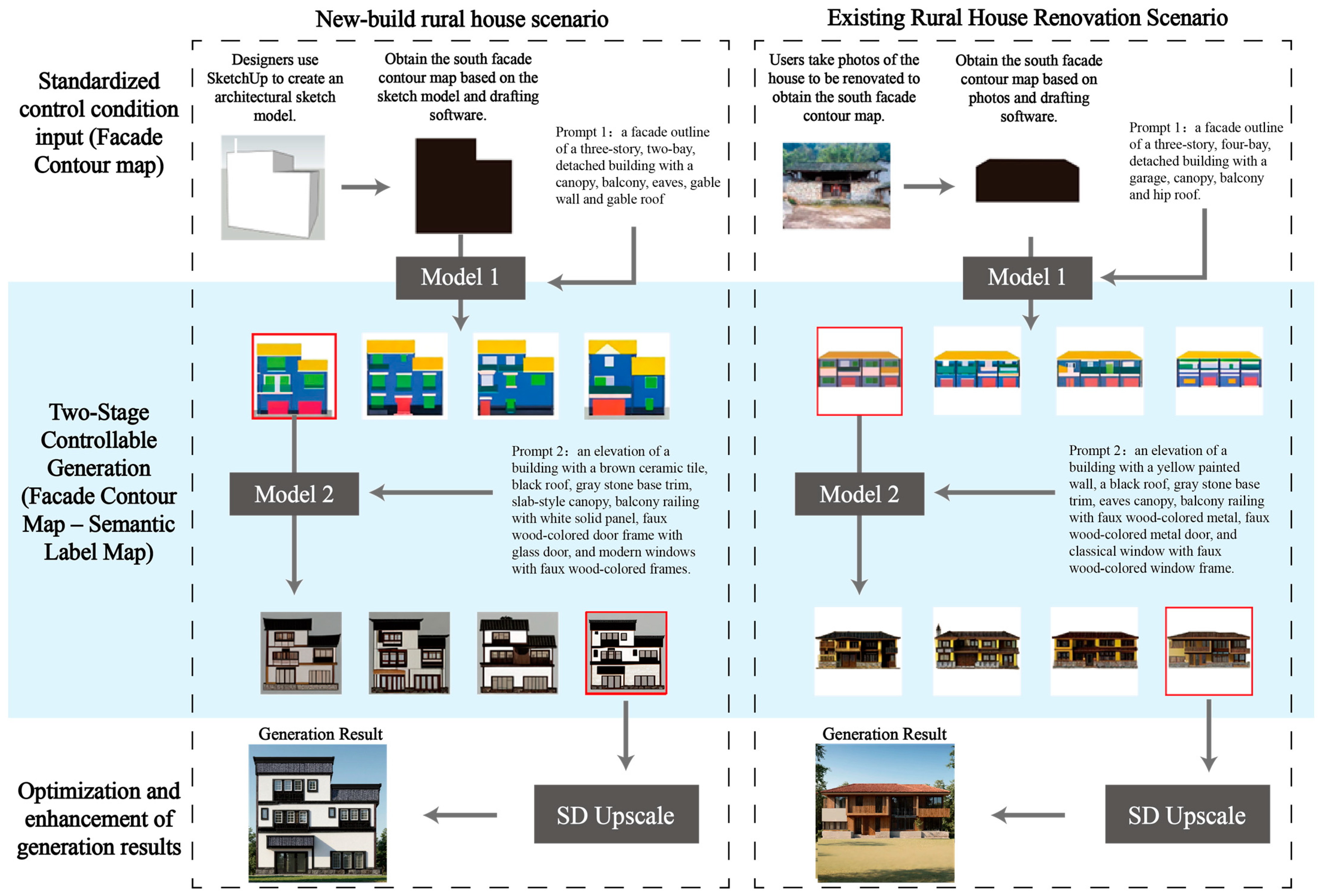
2.1. “Contour-Semantic-Image” Hierarchical Control Framework
2.2. Dataset Development and Rule Interpretation
2.2.1. Collection of Multi-Source Data
2.2.2. Data Preprocessing and Rule Conversion
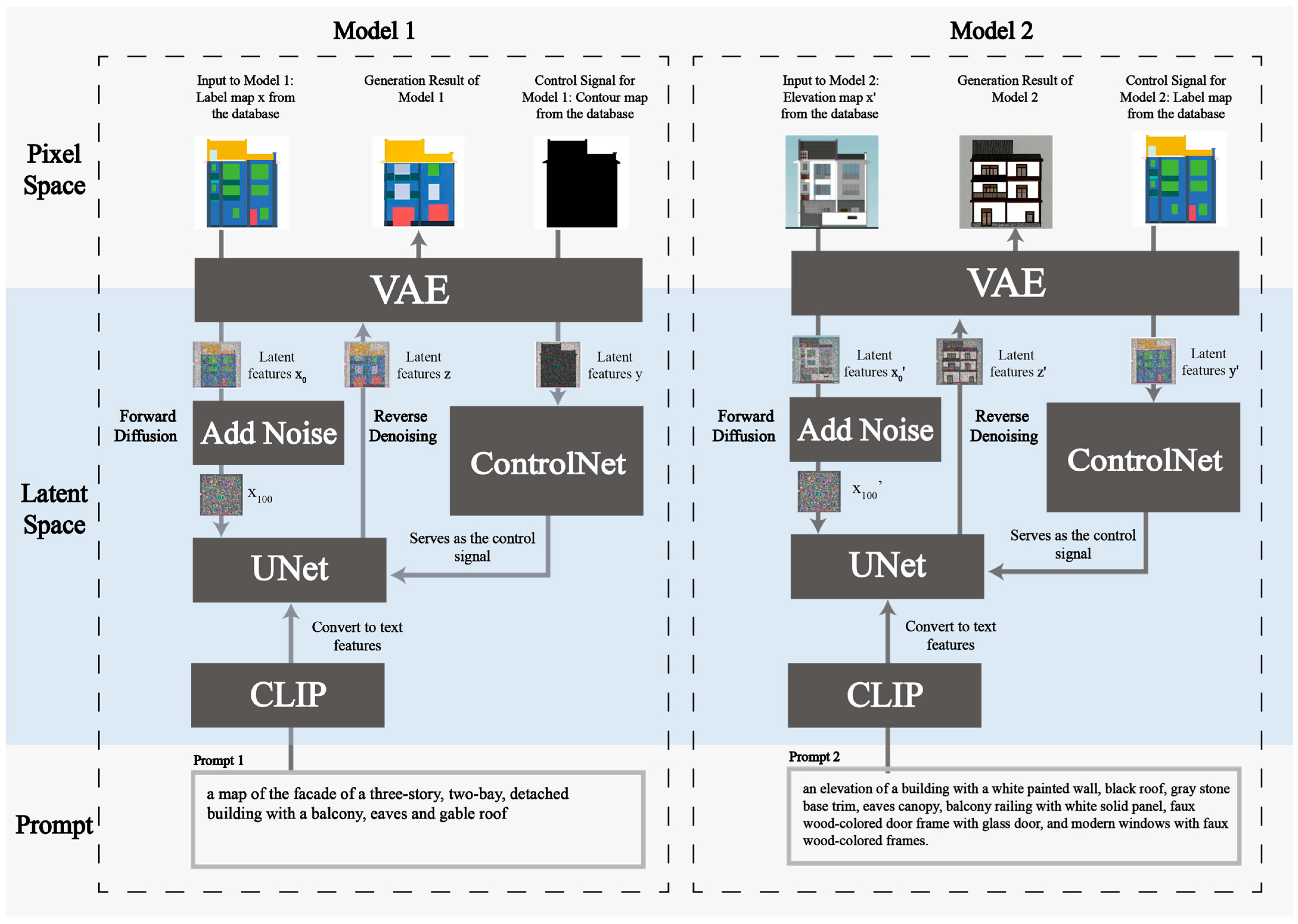
2.3. Model Development and Training Framework
2.4. Compliance Evaluation Driven by Clauses
2.4.1. Assessment Inputs and Mask Protocol
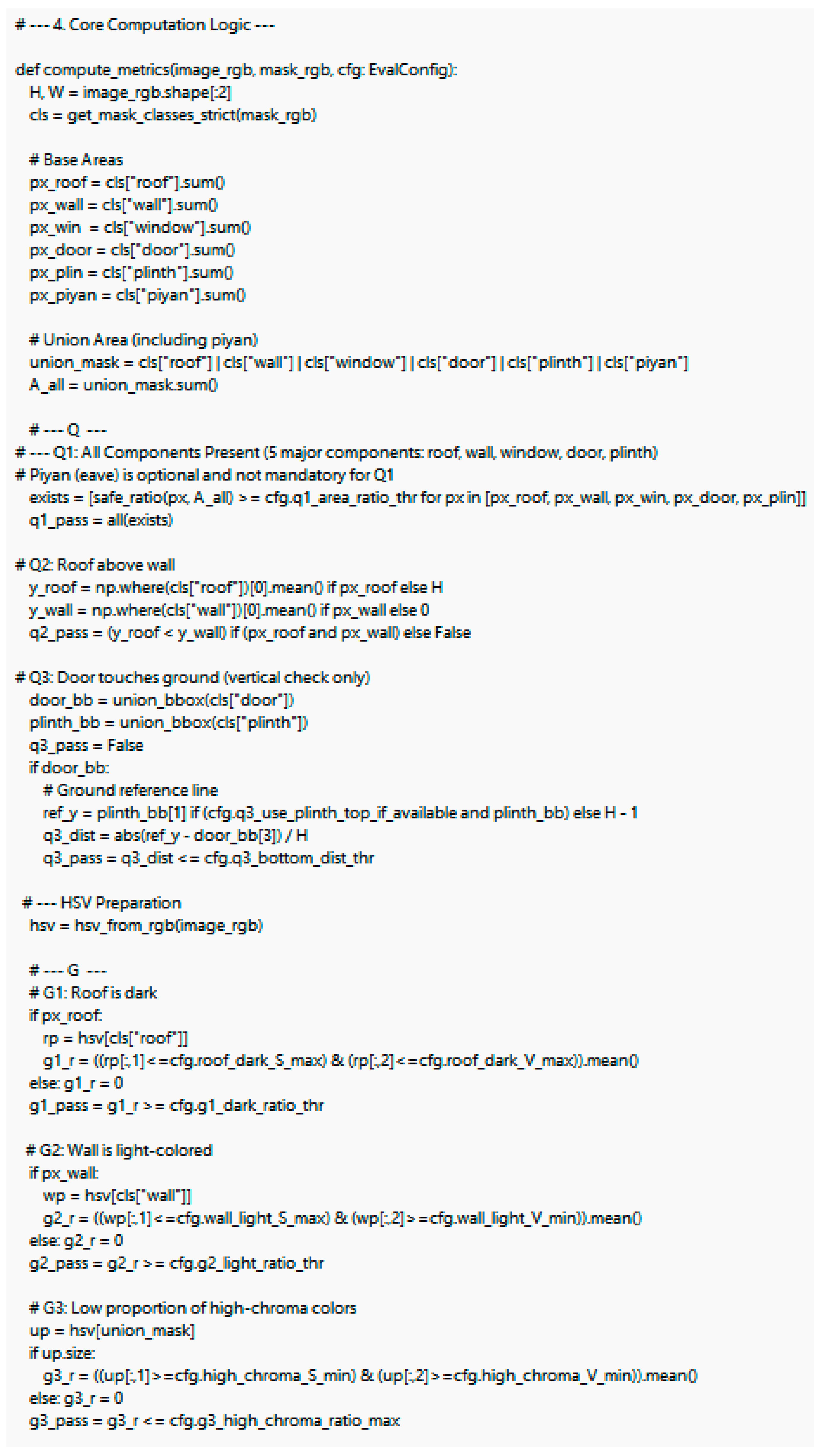
2.4.2. Translation of Clauses and Definition of Metrics
2.4.3. Holistic Scoring, Gatekeeper, and Diagnosis
2.4.4. Top-k Reordering and Closed Loop
2.4.5. Execution and Efficacy
3. Results
3.1. Controlled Validation of Decoupled Layout and Style Generation
- (1)
- Validation of Model 1: Morphological Response and Topological Consistency in Layout Generation:
- (2)
- Model 2 Validation: Texture Mapping and Geometric Stability in Style Rendering:
3.2. Validation of the Effectiveness of the Compliance Screening Mechanism
3.2.1. Generation of Candidate Solution Set
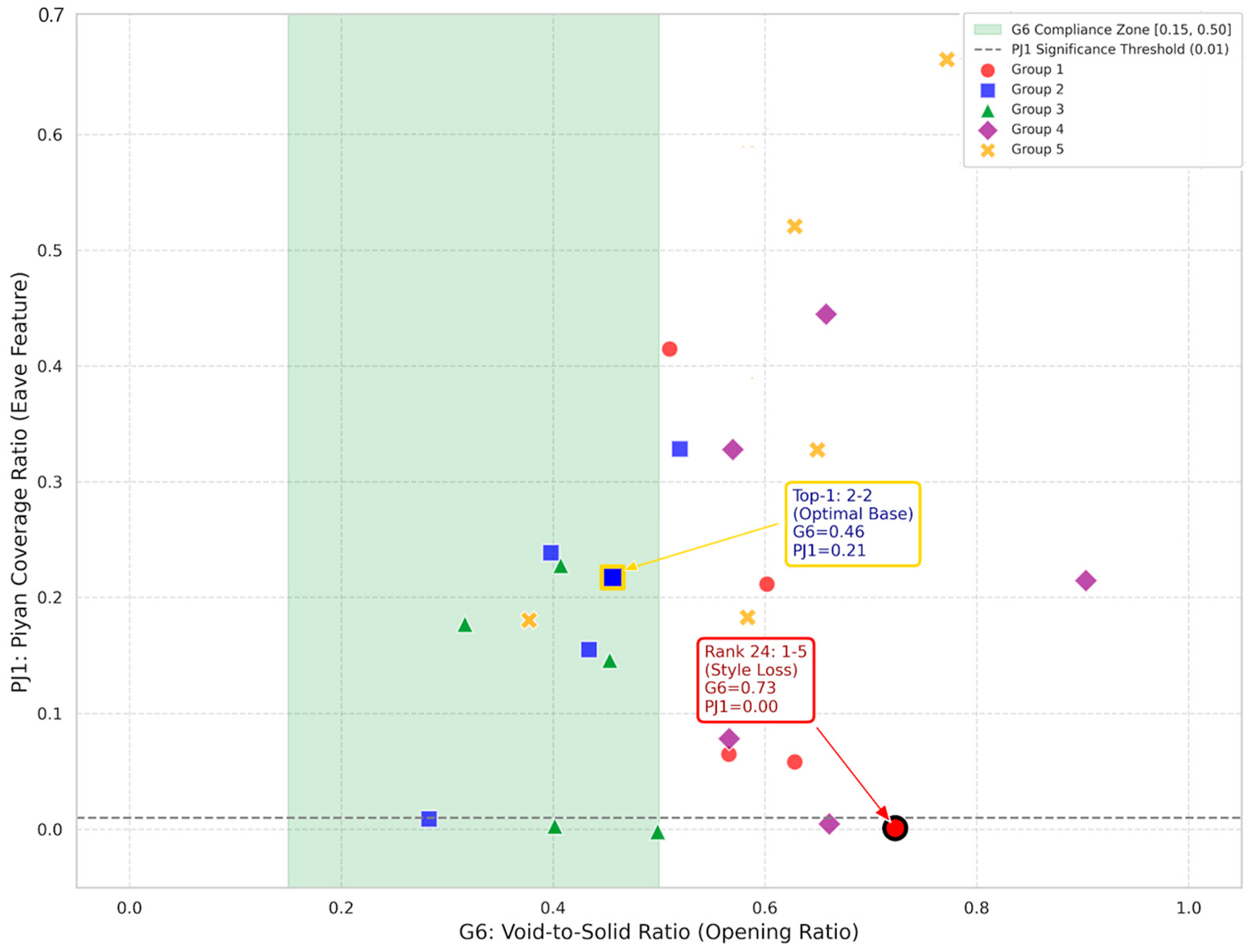
3.2.2. Automated Assessment and Ranking Analysis
- (1)
- Calibration and Validation of Gatekeeping Indicators:
- (2)
- Quantitative Divergence of Physical Attributes and Style:
3.2.3. Evaluating Outcomes and Deliberating on Preferred Selections
4. Discussion
4.1. Efficacy of the Generation Method—Analysis of the Loss Function
4.2. Performance Comparison with the Baseline Model (Pix2Pix)
4.3. Application Scenarios
4.4. Limitations and Future Prospects
4.4.1. Coupling of Geometric Constraints and Building Physics
4.4.2. Digital Workflow and Semantic-Based Integration
4.4.3. Economic Feasibility, Life Cycle Cost, and Multi-Context Adaptability
5. Conclusions
Author Contributions
Funding
Data Availability Statement
Acknowledgments
Conflicts of Interest
Abbreviations
| SAM | Segment Anything Model |
| LDM | Latent Diffusion Models |
| MSE | Mean Squared Error |
Appendix A

| Image ID | Q1_Score | Q1_Pass | Q2_Score | Q2_Pass | Q3_Score | Q3_Pass | G1_Score | G1_Pass | G2_Score | G2_Pass | G3_Score | G3_Pass | G4_Score | G4_Pass | G5_Score | G5_Pass | G6_Score | G6_Pass | G6_Val | G7_Score | G7_Pass | G8_Score | G8_Pass | G9_Score | G9_Pass | PJ1_Score | PJ1_Pass | PJ1_Val | PJ2_Score | PJ2_Pass | Mean_Q | Mean_G | Mean_P | S | Status | Diagnosis | Rank |
|---|---|---|---|---|---|---|---|---|---|---|---|---|---|---|---|---|---|---|---|---|---|---|---|---|---|---|---|---|---|---|---|---|---|---|---|---|---|
| 2-2 | 1 | 1 | 1 | 1 | 1 | 1 | 0.95 | 1 | 0.84 | 1 | 1.00 | 1 | 1 | 1 | 1.00 | 1 | 1.00 | 1 | 0.46 | 0.97 | 1 | 0.86 | 1 | 1 | 1 | 0.21 | 1 | 0.21 | 0.46 | 0 | 1 | 0.96 | 0.34 | 0.88 | Pass | Fail: PJ2 | 1 |
| 3-2 | 1 | 1 | 1 | 1 | 1 | 1 | 0.94 | 1 | 0.86 | 1 | 0.98 | 1 | 1 | 1 | 0.69 | 0 | 1.00 | 1 | 0.39 | 0.69 | 1 | 0.91 | 1 | 1 | 1 | 0.24 | 1 | 0.24 | 0.47 | 0 | 1 | 0.90 | 0.35 | 0.85 | Pass | Fail: G5,PJ2 | 2 |
| 5-1 | 1 | 1 | 1 | 1 | 1 | 1 | 0.94 | 1 | 0.83 | 1 | 1.00 | 1 | 1 | 1 | 1.00 | 1 | 0.00 | 0 | 0.62 | 0.89 | 1 | 0.92 | 1 | 1 | 1 | 0.52 | 1 | 0.52 | 0.58 | 1 | 1 | 0.84 | 0.55 | 0.85 | Pass | Fail: G6 | 3 |
| 2-3 | 1 | 1 | 1 | 1 | 1 | 1 | 0.95 | 1 | 0.56 | 0 | 1.00 | 1 | 1 | 1 | 1.00 | 1 | 1.00 | 1 | 0.39 | 0.88 | 1 | 0.90 | 1 | 1 | 1 | 0.24 | 1 | 0.24 | 0.26 | 0 | 1 | 0.92 | 0.25 | 0.84 | Pass | Fail: G2,PJ2 | 4 |
| 2-1 | 1 | 1 | 1 | 1 | 1 | 1 | 0.96 | 1 | 0.84 | 1 | 1.00 | 1 | 1 | 1 | 1.00 | 1 | 0.67 | 0 | 0.53 | 0.69 | 1 | 0.94 | 1 | 1 | 1 | 0.34 | 1 | 0.34 | 0.32 | 0 | 1 | 0.90 | 0.33 | 0.84 | Pass | Fail: G6,PJ2 | 5 |
| 3-4 | 1 | 1 | 1 | 1 | 1 | 1 | 0.94 | 1 | 0.80 | 1 | 1.00 | 1 | 1 | 1 | 1.00 | 1 | 1.00 | 1 | 0.42 | 0.53 | 1 | 0.94 | 1 | 1 | 1 | 0.00 | 0 | 0.00 | 0.55 | 1 | 1 | 0.91 | 0.27 | 0.84 | Pass | Fail: PJ1 | 6 |
| 5-3 | 1 | 1 | 1 | 1 | 1 | 1 | 0.91 | 1 | 0.72 | 1 | 0.98 | 1 | 1 | 1 | 1.00 | 1 | 1.00 | 1 | 0.39 | 0.87 | 1 | 0.90 | 1 | 1 | 1 | 0.19 | 1 | 0.19 | 0.15 | 0 | 1 | 0.93 | 0.17 | 0.84 | Pass | Fail: PJ2 | 7 |
| 5-5 | 1 | 1 | 1 | 1 | 1 | 1 | 0.97 | 1 | 0.70 | 1 | 0.98 | 1 | 1 | 1 | 1.00 | 1 | 0.00 | 0 | 0.78 | 0.90 | 1 | 0.91 | 1 | 1 | 1 | 0.68 | 1 | 0.68 | 0.30 | 0 | 1 | 0.83 | 0.49 | 0.83 | Pass | Fail: G6,PJ2 | 8 |
| 2-5 | 1 | 1 | 1 | 1 | 1 | 1 | 0.95 | 1 | 0.43 | 0 | 0.99 | 1 | 1 | 1 | 1.00 | 1 | 1.00 | 1 | 0.43 | 0.86 | 1 | 0.93 | 1 | 1 | 1 | 0.14 | 1 | 0.14 | 0.21 | 0 | 1 | 0.91 | 0.18 | 0.83 | Pass | Fail: G2,PJ2 | 9 |
| 1-4 | 1 | 1 | 1 | 1 | 1 | 1 | 0.99 | 1 | 0.59 | 0 | 1.00 | 1 | 1 | 1 | 1.00 | 1 | 0.99 | 0 | 0.50 | 0.46 | 0 | 0.96 | 1 | 1 | 1 | 0.40 | 1 | 0.40 | 0.06 | 0 | 1 | 0.89 | 0.23 | 0.82 | Pass | Fail: G2,G6,G7,PJ2 | 10 |
| 2-4 | 1 | 1 | 1 | 1 | 1 | 1 | 0.98 | 1 | 0.67 | 1 | 1.00 | 1 | 1 | 1 | 1.00 | 1 | 1.00 | 1 | 0.30 | 0.69 | 1 | 0.91 | 1 | 1 | 1 | 0.00 | 0 | 0.00 | 0.23 | 0 | 1 | 0.92 | 0.12 | 0.82 | Pass | Fail: PJ1,PJ2 | 11 |
| 3-5 | 1 | 1 | 1 | 1 | 1 | 1 | 0.98 | 1 | 0.60 | 0 | 1.00 | 1 | 1 | 1 | 0.69 | 0 | 1.00 | 1 | 0.43 | 0.89 | 1 | 0.92 | 1 | 1 | 1 | 0.15 | 1 | 0.15 | 0.20 | 0 | 1 | 0.90 | 0.17 | 0.82 | Pass | Fail: G2,G5,PJ2 | 12 |
| 3-1 | 1 | 1 | 1 | 1 | 1 | 1 | 0.98 | 1 | 0.48 | 0 | 1.00 | 1 | 1 | 1 | 0.69 | 0 | 1.00 | 1 | 0.30 | 0.73 | 1 | 0.87 | 1 | 1 | 1 | 0.19 | 1 | 0.19 | 0.39 | 0 | 1 | 0.86 | 0.29 | 0.82 | Pass | Fail: G2,G5,PJ2 | 13 |
| 5-2 | 1 | 1 | 1 | 1 | 1 | 1 | 0.97 | 1 | 0.77 | 1 | 1.00 | 1 | 1 | 1 | 1.00 | 1 | 0.00 | 0 | 0.66 | 0.85 | 1 | 0.92 | 1 | 1 | 1 | 0.33 | 1 | 0.33 | 0.24 | 0 | 1 | 0.83 | 0.29 | 0.80 | Pass | Fail: G6,PJ2 | 14 |
| 3-3 | 1 | 1 | 1 | 1 | 1 | 1 | 0.96 | 1 | 0.57 | 0 | 0.98 | 1 | 1 | 1 | 1.00 | 1 | 0.89 | 0 | 0.51 | 0.78 | 1 | 0.94 | 1 | 1 | 1 | 0.00 | 0 | 0.00 | 0.05 | 0 | 1 | 0.90 | 0.03 | 0.80 | Pass | Fail: G2,G6,PJ1,PJ2 | 15 |
| 4-1 | 1 | 1 | 1 | 1 | 1 | 1 | 0.97 | 1 | 0.76 | 1 | 1.00 | 1 | 1 | 1 | 1.00 | 1 | 0.00 | 0 | 0.67 | 0.74 | 1 | 0.87 | 1 | 1 | 1 | 0.46 | 1 | 0.46 | 0.10 | 0 | 1 | 0.82 | 0.28 | 0.79 | Pass | Fail: G6,PJ2 | 16 |
| 5-4 | 1 | 1 | 1 | 1 | 1 | 1 | 0.93 | 1 | 0.76 | 1 | 1.00 | 1 | 1 | 1 | 1.00 | 1 | 0.09 | 0 | 0.59 | 0.81 | 1 | 0.91 | 1 | 1 | 1 | 0.18 | 1 | 0.18 | 0.05 | 0 | 1 | 0.83 | 0.12 | 0.78 | Pass | Fail: G6,PJ2 | 17 |
| 4-3 | 1 | 1 | 1 | 1 | 1 | 1 | 0.99 | 1 | 0.71 | 1 | 1.00 | 1 | 1 | 1 | 0.30 | 0 | 0.35 | 0 | 0.57 | 0.72 | 1 | 0.93 | 1 | 1 | 1 | 0.09 | 1 | 0.09 | 0.39 | 0 | 1 | 0.78 | 0.24 | 0.76 | Pass | Fail: G5,G6,PJ2 | 18 |
| 1-2 | 1 | 1 | 1 | 1 | 1 | 1 | 0.97 | 1 | 0.59 | 0 | 0.92 | 0 | 1 | 1 | 1.00 | 1 | 0.32 | 0 | 0.57 | 0.62 | 1 | 0.94 | 1 | 1 | 1 | 0.05 | 1 | 0.05 | 0.11 | 0 | 1 | 0.82 | 0.08 | 0.76 | Pass | Fail: G2,G3,G6,PJ2 | 19 |
| 1-1 | 1 | 1 | 1 | 1 | 1 | 1 | 0.96 | 1 | 0.35 | 0 | 0.96 | 1 | 1 | 1 | 1.00 | 1 | 0.00 | 0 | 0.64 | 0.69 | 1 | 0.97 | 1 | 1 | 1 | 0.07 | 1 | 0.07 | 0.34 | 0 | 1 | 0.77 | 0.20 | 0.75 | Pass | Fail: G2,G6,PJ2 | 20 |
| 4-2 | 1 | 1 | 1 | 1 | 1 | 1 | 0.97 | 1 | 0.61 | 1 | 1.00 | 1 | 1 | 1 | 1.00 | 1 | 0.00 | 0 | 0.66 | 0.63 | 1 | 0.99 | 1 | 1 | 1 | 0.00 | 0 | 0.00 | 0.18 | 0 | 1 | 0.80 | 0.09 | 0.75 | Pass | Fail: G6,PJ1,PJ2 | 21 |
| 4-4 | 1 | 1 | 1 | 1 | 1 | 1 | 0.98 | 1 | 0.62 | 1 | 1.00 | 1 | 1 | 1 | 0.69 | 0 | 0.15 | 0 | 0.58 | 0.46 | 0 | 0.99 | 1 | 1 | 1 | 0.33 | 1 | 0.33 | 0.06 | 0 | 1 | 0.77 | 0.19 | 0.75 | Pass | Fail: G5,G6,G7,PJ2 | 22 |
| 4-5 | 1 | 1 | 1 | 1 | 1 | 1 | 0.97 | 1 | 0.80 | 1 | 0.93 | 0 | 1 | 1 | 0.30 | 0 | 0.00 | 0 | 0.91 | 0.57 | 1 | 0.96 | 1 | 1 | 1 | 0.21 | 1 | 0.21 | 0.12 | 0 | 1 | 0.73 | 0.17 | 0.72 | Pass | Fail: G3,G5,G6,PJ2 | 23 |
| 1-5 | 1 | 1 | 1 | 1 | 1 | 1 | 0.96 | 1 | 0.59 | 0 | 1.00 | 1 | 1 | 1 | 1.00 | 1 | 0.00 | 0 | 0.73 | 0.58 | 1 | 0.61 | 1 | 1 | 1 | 0.00 | 0 | 0.00 | 0.10 | 0 | 1 | 0.75 | 0.05 | 0.72 | Pass | Fail: G2,G6,PJ1,PJ2 | 24 |
| 1-3 | 1 | 1 | 1 | 1 | 1 | 1 | 0.89 | 1 | 0.62 | 1 | 0.96 | 1 | 1 | 1 | 1.00 | 1 | 0.00 | 0 | 0.60 | 0.16 | 0 | 0.90 | 1 | 1 | 1 | 0.22 | 1 | 0.22 | 0.03 | 0 | 1 | 0.73 | 0.13 | 0.72 | Pass | Fail: G6,G7,PJ2 | 25 |
Appendix B

Appendix C
| Collection Method | Region | Atlas Name | Number of Plans Collected | Number of Plans Retained After Filtering | Image Example | |
|---|---|---|---|---|---|---|
| City | District | |||||
| Online Collection | Hangzhou | Lin’an District | 2017 Hangzhou Lin’an District New Rural Residential Universal Atlas | 12 | 9 |  |
| 2021 Hangzhou Lin’an District Rural Housing Universal Atlas | 4 | 4 |  | |||
| Yuhang District | Hangzhou Yuhang District Hang-style Residential Floor Plan Collection | 15 | 15 |  | ||
| Chun’an District | Chun’an County 2016 New Rural Residential Design Universal Atlas for Lakeside and Route Areas | 15 | 8 |  | ||
| Quzhou | Qujiang District | Quzhou Qujiang District Western Zhejiang Residential Design Proposals | 19 | 19 |  | |
| Jinhua | Lanxi City | Lanxi City Rural Self-built Housing Universal Atlas | 5 | 2 |  | |
| Shaoxing | - | Shaoxing City Rural Housing Design Universal Atlas | 24 | 24 | 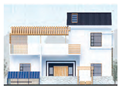 | |
| Shaoxing City Rural Housing Design Proposal Universal Atlas | 30 | 18 |  | |||
| Yuecheng District | Yuecheng District Rural Housing Design Construction Drawing Universal Atlas | 36 | 36 |  | ||
| Shangyu District | Shangyu District Rural Housing Design Proposal Universal Atlas | 16 | 10 | 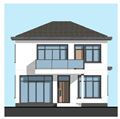 | ||
| Shengzhou City | Shengzhou City Rural Housing Design Proposal Universal Atlas | 7 | 7 |  | ||
| Wenzhou | Lucheng District | Lucheng District Rural Housing Design Universal Atlas | 10 | 10 |  | |
| Yongjia County | Yongjia County Rural Housing Design Universal Atlas | 33 | 25 |  | ||
| Zhoushan | - | 2022 Zhoushan Rural Housing Universal Atlas | 6 | 3 |  | |
| Lishu | Jinyun County | 2019 Jinyun County Farmer Housing Construction Universal Atlas | 7 | 3 |  | |
| Qingyuan County | 2019 Qingyuan County Farmer Housing Construction Universal Atlas | 15 | 2 |  | ||
| Liandu District | 2019 Liandu District Farmer Housing Construction Universal Atlas | 20 | 12 |  | ||
| Offline Collection | Hangzhou | Lin’an District | 2022 Hangzhou Lin’an District Rural Housing Universal Atlas | 12 | 6 | 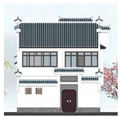 |
| 2022 Lin’an District Rural Construction Style Control Guidelines | 50 | 29 | 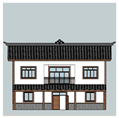 | |||
| Chun’an District | 2017 Chun’an New Rural Residential Design Universal Atlas | 15 | 7 |  | ||
| Shaoxing | Xinchang County | Xinchang County Rural Housing Design Universal Atlas | 20 | 9 |  | |
| Zhuji City | Zhuji City Rural Residential Proposal Atlas | 12 | 5 |  | ||
| Wenzhou | Rui’an City | Rui’an City Rural Housing Design Universal Atlas | 6 | 2 |  | |
| On-site Photography | Hangzhou | Lin’an District | - | 78 | 33 |  |
| Ningbo | Cixi City | - | 45 | 11 |  | |
| Wenzhou | Rui’an City | - | 49 | 14 |  | |
| Quzhou | Qujiang District | - | 35 | 10 |  | |
| - | - | - | - | 596 | 333 | - |
Appendix D
| Hyperparameter | Model 1 | Model 2 |
|---|---|---|
| Base Architecture | Stable Diffusion v2.1 + ControlNet | Stable Diffusion v2.1 + ControlNet |
| Optimizer | AdamW | AdamW |
| Learning Rate | 2 × 10⁻⁵ | 1 × 10⁻⁵ |
| LR Scheduler | Cosine Annealing (with 10% warm-up) | Constant |
| AdamW β1 | 0.9 | 0.9 |
| AdamW β2 | 0.999 | 0.999 |
| Weight Decay | 0.01 | 0.01 |
| Batch Size | 4 | 4 |
| Training Steps | 30,000 | 50,000 |
| Mixed Precision | fp16 | fp16 |
| Image Resolution | 512 × 512 | 512 × 512 |
| Condition Dropout Prob | - | 0.1 |
| Validation Frequency | Every 1000 steps | Every 1000 steps |
| Random Seed | 42 | 42 |
References
- Wu, Y.; Chen, X.; Zhou, X.; Wang, Y.; Pan, X. Research on the Construction Method Based on Menu-Type Standard Drawing Collections in Lin’an District of Hangzhou. World Archit. 2021, 8, 94–101+127. [Google Scholar] [CrossRef]
- Su, Q.; Chen, X.; Wu, Y.; Huang, W. Research on Menu-style Farmhouse Design System under the Background of New Countryside. Archit. Cult. 2019, 7, 35–37. [Google Scholar]
- Xu, L.; Huang, W.; Wu, Y. Study on the New Type of Farmhouse under the Cooperation of Multiple Partners—A Case of Construction of Farmhouses in Xiaogucheng Village, Yuhang District, Hangzhou. Archit. Cult. 2018, 6, 171–173. [Google Scholar]
- Li, Y.; Westlund, H.; Liu, Y. Why some rural areas decline while some others not: An overview of rural evolution in the world. J. Rural. Stud. 2019, 68, 135–143. [Google Scholar] [CrossRef] [Scilit]
- Duarte, J.P. Towards the mass customization of housing: The grammar of Siza’s houses at Malagueira. Environ. Plan. B Plan. Des. 2005, 32, 347–380. [Google Scholar]
- Fortenberry, B.R. Digital documentation in vernacular architecture studies. Build. Landsc. J. Vernac. Archit. Forum 2019, 26, 98–114. [Google Scholar] [CrossRef] [Scilit]
- Isola, P.; Zhu, J.-Y.; Zhou, T.; Efros, A.A. Image-to-image translation with conditional adversarial networks. In Proceedings of the IEEE Conference on Computer Vision and Pattern Recognition, Honolulu, HI, USA, 21–26 July 2017; IEEE: New York, NY, USA, 2017; pp. 1125–1134. [Google Scholar]
- Newton, D. Generative deep learning in architectural design. Technol. Archit. Des. 2019, 3, 176–189. [Google Scholar] [CrossRef] [Scilit]
- Rombach, R.; Blattmann, A.; Lorenz, D.; Esser, P.; Ommer, B. High-resolution image synthesis with latent diffusion models. In Proceedings of the IEEE/CVF Conference on Computer Vision and Pattern Recognition, New Orleans, LA, USA, 18–24 June 2022; IEEE: New York, NY, USA, 2022; pp. 10684–10695. [Google Scholar]
- Zhang, L.; Rao, A.; Agrawala, M. Adding conditional control to text-to-image diffusion models. In Proceedings of the IEEE/CVF International Conference on Computer Vision, Paris, France, 2–3 October 2023; IEEE: New York, NY, USA, 2023; pp. 3836–3847. [Google Scholar]
- Yiannoudes, S. Shaping architecture with generative artificial intelligence: Deep learning models in architectural design workflow. Architecture 2025, 5, 94. [Google Scholar] [CrossRef] [Scilit]
- Nawari, N.O. Automated code checking in BIM environment. In Proceedings of the 14th International Conference on Computing in Civil and Building Engineering, Moscow, Russia, 27–29 June 2012. [Google Scholar]
- Eastman, C.; Lee, J.-M.; Jeong, Y.-S.; Lee, J.-K. Automatic rule-based checking of building designs. Autom. Constr. 2009, 18, 1011–1033. [Google Scholar] [CrossRef] [Scilit]
- Ravi, N.; Gabeur, V.; Hu, Y.-T.; Hu, R.; Ryali, C.; Ma, T.; Khedr, H.; Rädle, R.; Rolland, C.; Gustafson, L. Sam 2: Segment anything in images and videos. arXiv 2024, arXiv:2408.00714. [Google Scholar]
- Chen, T.; Lu, A.; Zhu, L.; Ding, C.; Yu, C.; Ji, D.; Li, Z.; Sun, L.; Mao, P.; Zang, Y. Sam2-adapter: Evaluating & adapting segment anything 2 in downstream tasks: Camouflage, shadow, medical image segmentation, and more. arXiv 2024, arXiv:2408.04579. [Google Scholar] [CrossRef] [Scilit]
- Xiong, X.; Wu, Z.; Tan, S.; Li, W.; Tang, F.; Chen, Y.; Li, S.; Ma, J.; Li, G. Sam2-unet: Segment anything 2 makes strong encoder for natural and medical image segmentation. arXiv 2024, arXiv:2408.08870. [Google Scholar] [CrossRef] [Scilit]
- Fagin, R.; Kumar, R.; Sivakumar, D. Comparing top k lists. SIAM J. Discret. Math. 2003, 17, 134–160. [Google Scholar]
- Podell, D.; English, Z.; Lacey, K.; Blattmann, A.; Dockhorn, T.; Müller, J.; Penna, J.; Rombach, R. Sdxl: Improving latent diffusion models for high-resolution image synthesis. arXiv 2023, arXiv:2307.01952. [Google Scholar] [CrossRef] [Scilit]
- Fan, J.; Tang, G.; Wu, K.; Zhao, Z.; Zhou, Y.; Huang, S. Score-VAE: Root Cause Analysis for Federated-Learning-Based IoT Anomaly Detection. IEEE Internet Things J. 2024, 11, 1041–1053. [Google Scholar] [CrossRef] [Scilit]
- Razghandi, M.; Zhou, H.; Erol-Kantarci, M.; Turgut, D. Smart Home Energy Management: VAE-GAN Synthetic Dataset Generator and Q-Learning. IEEE Trans. Smart Grid 2024, 15, 1562–1573. [Google Scholar] [CrossRef] [Scilit]
- Hafner, M.; Katsantoni, M.; Köster, T.; Marks, J.; Mukherjee, J.; Staiger, D.; Ule, J.; Zavolan, M. CLIP and complementary methods. Nat. Rev. Methods Primers 2021, 1, 20. [Google Scholar] [CrossRef] [Scilit]
- Ramesh, A.; Dhariwal, P.; Nichol, A.; Chu, C.; Chen, M. Hierarchical text-conditional image generation with clip latents. arXiv 2022, arXiv:2204.06125. [Google Scholar] [CrossRef] [Scilit]
- Ronneberger, O.; Fischer, P.; Brox, T. U-net: Convolutional networks for biomedical image segmentation. In Medical Image Computing and Computer-Assisted Intervention–MICCAI 2015: 18th International Conference, Munich, Germany, 5–9 October 2015; Springer: Cham, Switzerland, 2015; pp. 234–241. [Google Scholar]
- GB 50033-2013; Standard for Daylighting Design of Buildings. China Architecture & Building Press: Beijing, China, 2013.
- GB/T 50824-2013; Design Standard for Energy Efficiency of Rural Residential Buildings. China Architecture & Building Press: Beijing, China, 2013.
- Ilyas, I.F.; Beskales, G.; Soliman, M.A. A survey of top-k query processing techniques in relational database systems. ACM Comput. Surv. (CSUR) 2008, 40, 11. [Google Scholar] [CrossRef] [Scilit]
- Howse, J. OpenCV Computer Vision with Python; Packt Publishing: Birmingham, UK, 2013; Volume 27. [Google Scholar]
- Janocha, K.; Czarnecki, W.M. On loss functions for deep neural networks in classification. arXiv 2017, arXiv:1702.05659. [Google Scholar] [CrossRef] [Scilit]
- Dickson, M.C.; Bosman, A.S.; Malan, K.M. Hybridised loss functions for improved neural network generalisation. In Proceedings of the Pan-African Artificial Intelligence and Smart Systems Conference; Springer: Cham, Switzerland, 2021; pp. 169–181. [Google Scholar]
- Ma, C.; Kunin, D.; Wu, L.; Ying, L. Beyond the quadratic approximation: The multiscale structure of neural network loss landscapes. arXiv 2022, arXiv:2204.11326. [Google Scholar] [CrossRef] [Scilit]
- Ho, J.; Jain, A.; Abbeel, P. Denoising diffusion probabilistic models. Adv. Neural Inf. Process. Syst. 2020, 33, 6840–6851. [Google Scholar]
- Niu, C.; Song, Y.; Song, J.; Zhao, S.; Grover, A.; Ermon, S. Permutation invariant graph generation via score-based generative modeling. In Proceedings of the 23rd International Conference on Artificial Intelligence and Statistics, Palermo, Italy, 26–28 August 2020; pp. 4474–4484. [Google Scholar]
- Sohl-Dickstein, J.; Weiss, E.; Maheswaranathan, N.; Ganguli, S. Deep unsupervised learning using nonequilibrium thermodynamics. In Proceedings of the International Conference on Machine Learning, Lille, France, 6–11 July 2015; pp. 2256–2265. [Google Scholar]
- Wood, D.; Mu, T.; Brown, G. Bias-variance decompositions for margin losses. In Proceedings of the International Conference on Artificial Intelligence and Statistics, Valencia, Spain, 28–30 March 2022; pp. 1975–2001. [Google Scholar]
- Kynkäänniemi, T.; Karras, T.; Aittala, M.; Aila, T.; Lehtinen, J. The role of imagenet classes in Fréchet inception distance. arXiv 2022, arXiv:2203.06026. [Google Scholar]
- Dimitrakopoulos, P.; Sfikas, G.; Nikou, C. Wind: Wasserstein inception distance for evaluating generative adversarial network performance. In Proceedings of the ICASSP 2020—2020 IEEE International Conference on Acoustics, Speech and Signal Processing (ICASSP), Barcelona, Spain, 4–8 May 2020; IEEE: New York, NY, USA, 2020; pp. 3182–3186. [Google Scholar]
- Turhan, C.; Özbey, M.F.; Lotfi, B.; Akkurt, G.G. Integration of psychological parameters into a thermal sensation prediction model for intelligent control of the HVAC systems. Energy Build. 2023, 296, 113404. [Google Scholar] [CrossRef] [Scilit]
- Turhan, C.; Özbey, M.F.; Çeter, A.E.; Akkurt, G.G. A novel data-driven model for the effect of mood state on thermal sensation. Buildings 2023, 13, 1662. [Google Scholar] [CrossRef] [Scilit]
- Islam, H.; Jollands, M.; Setunge, S. Life cycle assessment and life cycle cost implication of residential buildings—A review. Renew. Sustain. Energy Rev. 2015, 42, 129–140. [Google Scholar] [CrossRef] [Scilit]
- Liu, Y.; Wu, P.; Li, X.; Mo, W. Application and renovation evaluation of Dalian’s industrial architectural heritage based on AHP and AIGC. PLoS ONE 2024, 19, e0312282. [Google Scholar]
- Sadek, M.G.; Hassan, A.; O Diab, T.; Abdelhafeez, A. Creating Images with Stable Diffusion and Generative Adversarial Networks. Int. J. Telecommun. 2024, 4, 1–14. [Google Scholar] [CrossRef] [Scilit]
- Beri, G.; Srivastava, V. Advanced Techniques in Prompt Engineering for Large Language Models: A Comprehensive Study. In Proceedings of the 2024 IEEE 4th International Conference on ICT in Business Industry & Government (ICTBIG), Indore, India, 13–14 December 2024; IEEE: New York, NY, USA, 2024; pp. 1–4. [Google Scholar]
- Sahoo, P.; Singh, A.K.; Saha, S.; Jain, V.; Mondal, S.; Chadha, A. A systematic survey of prompt engineering in large language models: Techniques and applications. arXiv 2024, arXiv:2402.07927. [Google Scholar] [CrossRef] [Scilit]
- Baltrušaitis, T.; Ahuja, C.; Morency, L.-P. Multimodal machine learning: A survey and taxonomy. IEEE Trans. Pattern Anal. Mach. Intell. 2018, 41, 423–443. [Google Scholar] [CrossRef] [Scilit] [PubMed]
- Ngiam, J.; Khosla, A.; Kim, M.; Nam, J.; Lee, H.; Ng, A.Y. Multimodal deep learning. In Proceedings of the 28th International Conference on Machine Learning, Washington, DC, USA, 28 June–2 July 2011; Omnipress: Madison, WI, USA, 2011; pp. 689–696. [Google Scholar]
- Turk, M. Multimodal interaction: A review. Pattern Recognit. Lett. 2014, 36, 189–195. [Google Scholar] [CrossRef] [Scilit]


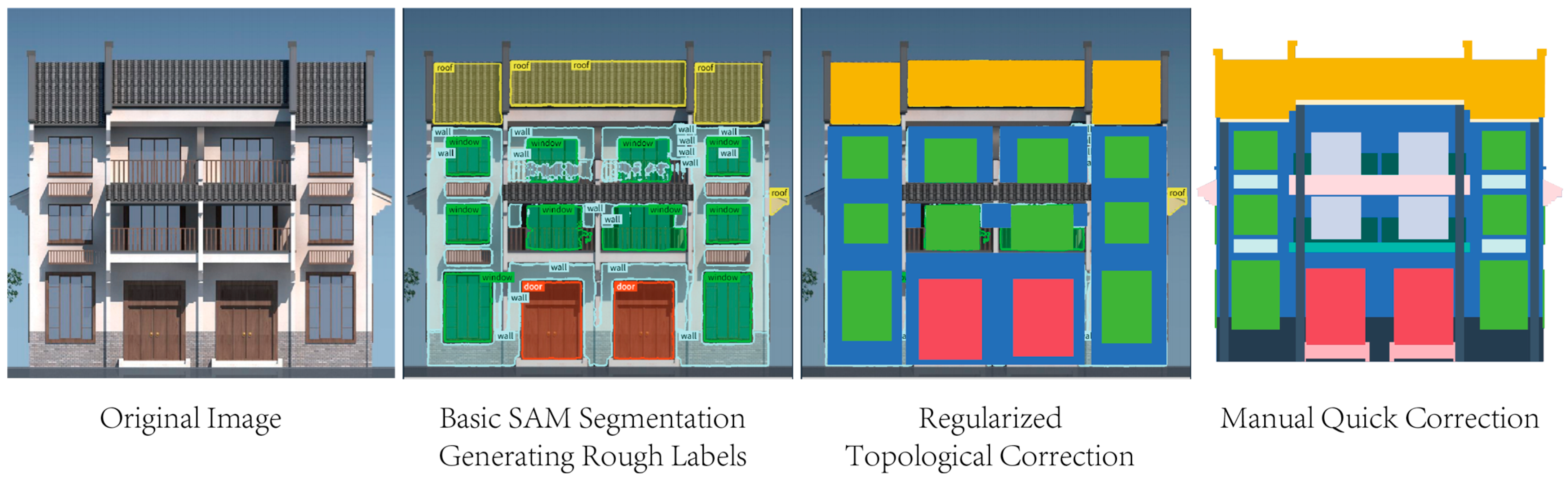



| Title of the Image | Original Facade Illustration from Standard Drawing Compilation | Standardized Facade Illustration | Facade Contour Map | Semantic Label Map |
|---|---|---|---|---|
| Schematic Representation |  |  |  |  |
| Particular Operations | Obtain authentic facade designs from the Standard Drawing Collection. | Choose the southern facade of the building and normalize the original image. | Create the facade contour map and align it with Prompt 1. | Illustrate the labeled diagram and correspond with Prompt 2. |
| Prompt 1 | a facade outline of a three-story, two-bay, detached building with a canopy, balcony, eaves, gable wall and gable roof. | |||
| Prompt 2 | an elevation of a building with a white painted wall, black roof, gray ceramic tile base trim, eaves canopy, balcony railing with faux wood-colored metal, faux wood-colored metal door, and classical window with faux wood-colored window frame. | |||
| Prompt 1 Corresponding Content | Unit Type | Story | Bay | Exterior Design Elements | Complete Prompt 1 | ||||
|---|---|---|---|---|---|---|---|---|---|
| Wall Elements | Roof Elements | Main Entrance Elements | Door and Window Elements | A Facade Outline of a Three-Story, Three-Bay, Detached Building with a Canopy, Balcony and Hip Roof. | |||||
| Prompt 2 Corresponding Content | Detached | 3 | 3 | With Plinth | Hip Roof | With Canopy | Balcony | ||
| Wall material and color | Primary wall surface | White paint + blue brick veneer |  | ||||||
| Plinth | Dark gray ceramic tiles | ||||||||
| Roof Material and Color | Roof | Black cement tiles | |||||||
| Eaves | Gray Paint Trim | ||||||||
| Main Entrance Material and Color | Front door | Faux wood-colored metal frame copper door | |||||||
| Canopy | Simplified Chinese-style PiYan canopy | ||||||||
| Steps | Gray cement mortar | ||||||||
| Door and Window Material Colors | Windows | Faux wood-colored metal frames with classic glass panes | |||||||
| Balcony door | Faux wood-colored metal frame classic glass door | ||||||||
| Balcony Floor Slab | Gray Paint | ||||||||
| Balcony Railing | Faux wood-colored metal railings | ||||||||
| Complete Prompt 2 | An elevation of a modern building with subtle Chinese accents, featuring smooth white-painted walls accented by blue brick cladding above a dark gray plinth, topped by a black cement tile roof edged with a gray painted eaves trim; a faux-wood-grained metal door with bronze accents is sheltered by a simple Chinese-style canopy, accessed by gray cement mortar steps, with faux-wood-grained metal-framed classical glass windows and balcony doors, and balconies finished with gray-painted slabs and sleek faux-wood-grained metal railings. | ||||||||
| Environment | Setup |
|---|---|
| CPU | 10 × Intel(R) Xeon(R) Platinum 8160T CPU @ 2.10GHz |
| GPU | NVIDIA Tesla V100-16GB |
| Python | 3.8.15 |
| PyTorch | 1.12.1 |
| Graphics Card | GPU v100 (16GB) |
| CUDA | 11.6 |
| ID | Indicator Category | Indicator Name & Description | Quantification Logic & Definition | Target/ Threshold | Failure Diagnosis Keyword |
|---|---|---|---|---|---|
| Q1 | Design Rationality (Gate) 1 | Component Integrity: All five key components (roof, walls, windows, doors, plinth) must be present simultaneously. | min(Ai) > 0; if satisfied, score = 1. | Area Ratio Aratio ≥ 0.002 | Missing Component |
| Q2 | Design Rationality (Gate) 2 | Topological Correctness: The overall center of gravity of the roof must be located above the center of gravity of the walls. | CenterYroof < CenterYwall, if satisfied, score = 1. | Must be satisfied | Topology Error |
| Q3 | Design Rationality (Gate) 3 | Entrance Grounding: The normalized vertical distance between the bottom edge of the main entrance and the ground reference line (preferably the top of the plinth, otherwise the bottom of the image) must not be excessive. | If Distnorm ≤ 0.08, score = 1. | Normalized distance Distnorm ≤ 0.08 | Entrance Floating |
| G1 | General Compliance-Color 1 | Roof Color Theme: Proportion of pixels in the roof area falling within the “dark gray/black” color range (tending toward slate tiles). | Score = Proportion r. | Ratio ≥ 0.70 | Roof Too Bright/Colored |
| G2 | General Compliance-Color 2 | Wall Color Theme: The proportion of wall area pixels falling within the “white/light gray” color range (tendency toward whitewashed walls). | Score = Proportion r. | Ratio ≥ 0.60 | Wall Too Dark/Colored |
| G3 | General Compliance-Color 3 | Color Saturation: 1.0-(Percentage of high-saturation pixel areas in the entire image). | Score = 1.0−rhigh_chroma. | High-purity ratio ≤ 0.05 | Excessively High Saturation |
| G4 | General Compliance-Component Proportion 1 | Plinth Existence: The plinth component must be present and have a minimum height. | If Hratio ≥ 0.03, score = 1. | Height Ratio Hratio ≥ 0.03 | Missing Plinth |
| G5 | General Compliance-Component Proportion 2 | Plinth Proportion: Score = 1 if plinth height ratio falls within target range; otherwise, score is linearly decayed. | Score = 1 if within target range, otherwise decay. | Target Range: [0.05, 0.18] | Plinth Too High/Low |
| G6 | General Compliance-Component Proportion 3 | Facade Void-to-Solid Ratio: Ratio of facade opening areas (windows + doors) to wall surface area. | Score = 1 if within target range, otherwise decayed. | Target Range: [0.15, 0.50] | Over-glazed/Too Solid |
| G7 | General Compliance-Compositional Order 1 | Window Alignment: Measures vertical alignment of window tops on the same level. | Hierarchical calculation based on clustering. Windows are clustered into layers by their top edge Y-coordinate (threshold 0.08H). The standard deviation of top edge Y within each layer is calculated and normalized into a score. Finally, the (weighted) average of scores across all layers is determined. Higher is better. | Score ≥ 0.50 | Windows Misaligned |
| G8 | General Compliance-Compositional Order 2 | Bay Rhythm: Measures the uniformity of horizontal spacing between windows in the bay. | Hierarchical calculation based on clustering. Windows are clustered hierarchically by their top edge Y-coordinates. The coefficient of variation (CV) for the horizontal spacing between centers of adjacent windows within each layer is calculated and normalized. Finally, the average score for each layer is determined. Higher is better. | Score ≥ 0.50 | Irregular Rhythm |
| G9 | General Compliance-Form | Aspect Ratio: If the overall height-to-width ratio (H/W) of the facade falls within the empirical range, score = 1. | Score = 1 within the range. | Range: [0.6, 1.8] | Extreme Proportion |
| P-J1 | Regional Characteristics of the Jiangnan water-town 1 | Weather Shed Coverage Ratio: The ratio of the manually annotated PiYan coverage area to the total area of all door and window openings. | Ratio APiYan/(Awindow + Adoor). | Ratio ≥ 0.01 | Weak PiYan Feature |
| P-J2 | Regional Characteristics of the Jiangnan water-town2 | Plinth Materiality: The proportion of pixels in the plinth area falling within the “blue-gray” (stone-like) color range. | Score = Ratio r. | Ratio ≥ 0.50 | Plinth Warm/Wrong Color |
| Prompt 1 | a facade outline of a three-story, six-bay, duplex building with a canopy, balcony, eaves, and gable roof |  | |||
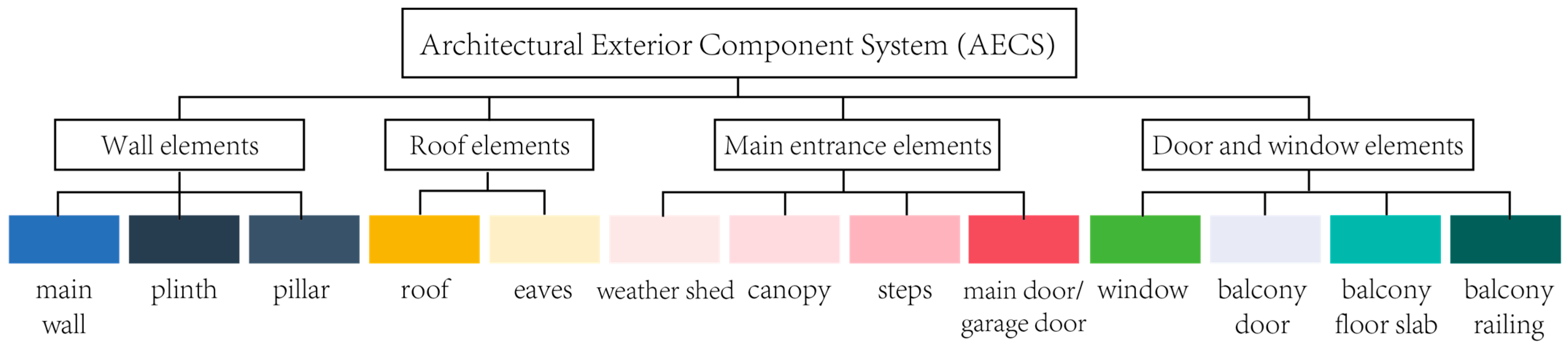
| Architectural Exterior Component System and Corresponding Semantic Label Hierarchy |  | ||||
| Replacement Element Items | Generated Image 1 | Generated Image 2 | Generated Image 3 | Generated Image 4 | Generate Image 5 |
| Do not replace elements |  |  |  |  |  |
| Replace only duplex with detached |  |  |  | 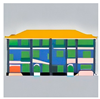 |  |
| Replace only three-story buildings with two-story buildings |  |  |  |  | 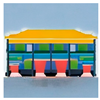 |
| Replace only six bays with four bays |  |  |  |  |  |
| Add garage only |  |  |  |  |  |
| Remove balconies |  |  |  |  |  |
| Prompt 2 | An elevation of a building featuring a white-painted wall, black roof, granite base trim, slab-style canopy, balcony railing with faux wood-colored metal, faux wood-colored metal door, and modern windows with faux wood-colored frames. |  | |||
| Replacement Element Item | Generated Image 1 | Generated Image 2 | Generate Image 3 | Generate Image 4 | Generate Image 5 |
| Do not replace elements |  |  |  |  |  |
| Replace only the roof with tile roof |  |  |  |  |  |
| Replace only the walls with gray tiles |  |  |  |  |  |
| Replace only the railing style with black metal railings |  |  |  |  |  |
| Replace window style with classical style only |  |  |  |  |  |
| Source | Result | Avg. Total Score () | Top-1 in Group | |||||
|---|---|---|---|---|---|---|---|---|
| Facade Contour Map |  | |||||||
| Group 1 |  Label Map 1 |  1-1 |  1-2 |  1-3 |  1-4 |  1-5 | 0.76 | 1-4 |
| Group 2 |  Label Map 2 |  2-1 |  2-2 |  2-3 |  2-4 |  2-5 | 0.84 | 2-2 |
| Group 3 |  Label Map 3 |  3-1 |  3-2 |  3-3 |  3-4 |  3-5 | 0.83 | 3-2 |
| Group 4 |  Label Map 4 |  4-1 |  4-2 |  4-3 |  4-4 |  4-5 | 0.75 | 4-1 |
| Group 5 |  Label Map 5 |  5-1 |  5-2 |  5-3 |  5-4 |  5-5 | 0.82 | 5-1 |
| Image ID | Gate Status | Mean Q () | Mean G () | Mean P () | G2 (Wall) | G6 (Open%) | P-J1 (Eave) | Total Score (S) | Rank | Diagnosis (Fail Items) |
|---|---|---|---|---|---|---|---|---|---|---|
| 2-2 | Pass | 1 | 0.958 | 0.34 | 0.84 (1.0) | 0.46 (1.0) | 0.21 (1.0) | 0.877 | 1 | PJ2 |
| 3-1 | Pass | 1 | 0.897 | 0.35 | 0.86 (1.0) | 0.39 (1.0) | 0.24 (1.0) | 0.846 | 2 | G5, PJ2 |
| 5-1 | Pass | 1 | 0.843 | 0.55 | 0.83 (1.0) | 0.62 (0.0) | 0.52 (1.0) | 0.846 | 3 | G6 |
| … | … | … | … | … | … | … | … | … | … | … |
| 1-5 | Pass | 1 | 0.750 | 0.05 | 0.59 (0.0) | 0.73 (0.0) | 0.0 (0.0) | 0.720 | 24 | G2, G6, PJ1, PJ2 |
| 1-3 | Pass | 1 | 0.725 | 0.13 | 0.62 (1.0) | 0.60 (0.0) | 0.22 (1.0) | 0.718 | 25 | G6, G7, PJ2 |
| Metric | Core Evaluation Dimension | Significance for Architectural Facade Generation | Pix2Pix (Baseline) | Proposed Model |
|---|---|---|---|---|
| IS | Quality and diversity of generated images [34] | Measures the richness and rationality of generated schemes in terms of architectural style and semantic expression | 1.72 | 1.92 |
| FID | Similarity between generated and real image distributions [35] | Reflects the realism of material textures and lighting physics | 186.13 | 150.01 |
| KID | Distributional discrepancy based on kernel methods [36] | Provides a more robust evaluation of architectural detail generation quality | 0.076 | 0.042 |
Disclaimer/Publisher’s Note: The statements, opinions and data contained in all publications are solely those of the individual author(s) and contributor(s) and not of MDPI and/or the editor(s). MDPI and/or the editor(s) disclaim responsibility for any injury to people or property resulting from any ideas, methods, instructions or products referred to in the content. |
© 2026 by the authors. Licensee MDPI, Basel, Switzerland. This article is an open access article distributed under the terms and conditions of the Creative Commons Attribution (CC BY) license.
Share and Cite
Wu, C.; He, L.; Tong, S.; Zhao, J.; Wu, Y. A Compliance-Driven Generative Framework for Zhejiang-Style Rural Facades. Buildings 2026, 16, 1544. https://doi.org/10.3390/buildings16081544
Wu C, He L, Tong S, Zhao J, Wu Y. A Compliance-Driven Generative Framework for Zhejiang-Style Rural Facades. Buildings. 2026; 16(8):1544. https://doi.org/10.3390/buildings16081544
Chicago/Turabian StyleWu, Chengzong, Liping He, Shishu Tong, Jun Zhao, and Yun Wu. 2026. "A Compliance-Driven Generative Framework for Zhejiang-Style Rural Facades" Buildings 16, no. 8: 1544. https://doi.org/10.3390/buildings16081544
APA StyleWu, C., He, L., Tong, S., Zhao, J., & Wu, Y. (2026). A Compliance-Driven Generative Framework for Zhejiang-Style Rural Facades. Buildings, 16(8), 1544. https://doi.org/10.3390/buildings16081544