Article

Millennials’ Consumption Intention Toward Green Stadiums in the Context of Environmental Law: The Roles of Facility Visibility, Green Communication, and Interactive Experience

1
Faculty of Humanities and Foreign Languages, Xi’an University of Technology, Xi’an 710048, China
2
International Design Trend Center, Hongik University, Seoul 04068, Republic of Korea
3
Faculty of Innovation Design, City University of Macau, Macau 999078, China
*
Author to whom correspondence should be addressed.
Buildings 2026, 16(8), 1534; https://doi.org/10.3390/buildings16081534
Submission received: 19 March 2026 / Revised: 6 April 2026 / Accepted: 9 April 2026 / Published: 14 April 2026
(This article belongs to the Section Architectural Design, Urban Science, and Real Estate)

Abstract

Promoting the green development of large public buildings is a crucial pathway toward environmental sustainability. As a type of public building characterized by both high energy consumption and high public engagement, green stadiums provide an important setting for examining whether building-embedded green features are visible, understandable, and valued by users. In this sense, green stadium consumption intention is treated in this study as a building-related outcome that reflects user acceptance of green building spaces and services rather than as a generic green marketing preference alone. This study examines the effects of Green Facility Visibility, Perceived Green Communication, and Green Interactive Experience on Millennials’ Green Stadium Consumption Intention, while investigating the parallel mediating roles of Green Self-Efficacy and Future Orientation. A sample of 976 millennial users was surveyed. The hypothesized model was tested using covariance-based structural equation modeling (CB-SEM), and Bootstrapping was employed to validate the significance of the mediating effects. Findings reveal that: (1) Green Facility Visibility and Perceived Green Communication significantly and positively influence Green Stadium Consumption Intention, whereas the direct effect of Green Interactive Experience is insignificant; (2) Green Self-Efficacy mediates the relationships between Green Facility Visibility, Perceived Green Communication, and consumption intention; and (3) Future Orientation similarly mediates the relationships between Green Facility Visibility, Perceived Green Communication, and consumption intention. Rather than proposing a major theoretical breakthrough, this study offers a context-specific extension of green consumption research by introducing Green Self-Efficacy and Future Orientation as parallel mediators in a stadium setting. The findings show how building-related green cues and user cognition jointly shape the acceptance of green stadiums, thereby providing evidence relevant to the design, operation, and evaluation of public-facing green buildings.

1. Introduction

Promoting the green development of large-scale public buildings is one of the important paths to realize the goal of environmental sustainability [1]. As a type of building with both high energy consumption characteristics and high public participation, the construction and operation of green stadiums is related to the actual effectiveness of energy saving and emission reduction, and has increasingly become a frontier scene for the public to contact the concept of environmental protection and experience green life [2,3]. However, the current promotion of green buildings has encountered a disconnect between technical rationality and social perception. On the one hand, many green venues focus too much on the stacking of energy-saving technologies, ignoring the functional comfort and micro-experience of users, leading to the paradox of energy-saving but not comfortable [4,5]: On the other hand, the environmental value of green buildings is often presented as abstract data and lacks a visual and perceptible interactive carrier, making it difficult for the public to intuitively understand the benefits of green technologies and forming a cognitive barrier [6]. In practice, whether users choose green stadiums for consumption depends largely on whether they perceive, recognize and ultimately choose these green spaces [7]. Therefore, from the perspective of consumer behavior, it is of great significance to explore the public’s willingness to consume green sports stadiums and its formation mechanism, in order to optimize green stadium design and operation and enhance the market transformation efficiency of environmental protection inputs. At the same time, such willingness should not be understood only as a general consumer preference, but also as a building-related indicator reflecting whether the green attributes of stadiums can be effectively perceived and accepted by users. Therefore, from the perspective of consumer behavior, it is of great significance to explore the public’s willingness to consume green sports stadiums and its formation mechanism, in order to optimize the green building design and enhance the market transformation efficiency of environmental protection inputs.
Among the potential consumers of green stadiums, millennials are a segment to watch [8]. This group refers to people born between 1981 and 1996, a group of people who are on the rise in terms of career development and spending power [9]. In terms of economic characteristics, Millennials have strong spending power [10]. In the sports and leisure sector, they are equally willing to pay a premium for a quality experience [11]. Millennials are also the core segment that makes up the consumer scene for sporting events, fitness and leisure [12]. In terms of the information environment, this generation’s upbringing highly overlaps with the popularization of the Internet, and the infiltration of digital media has led to more diversified channels of exposure to environmental information, and a generally higher level of concern for sustainable development issues than that of their predecessors [13,14]. In terms of institutional background, the continuous improvement of China’s environmental protection legal system, especially the implementation of the new Environmental Protection Law in 2015 and the proposal of the “dual-carbon” goal in recent years, constitutes an important policy environment for the formation of the millennial generation’s consumption concepts [15]. Although legal constraints themselves do not directly determine individual behavior, the continued strengthening of environmental institutional arrangements has objectively increased the public’s sensitivity to environmental issues and created institutional legitimacy for companies to deliver green value. The superposition of economic ability, information exposure and institutional environment gives millennials both the motivation and ability to incorporate environmental considerations into their consumption decisions, making them a potential market for green stadiums to focus on.
However, existing research is still relatively limited in exploring consumer willingness in relation to green stadiums. On the one hand, traditional green building research has long focused on technical performance indicators, such as energy efficiency, material selection, and design standards [16,17,18]. Insufficient attention has been given to the psychological cognitive process of users, which makes it difficult to explain why technologically advanced green buildings may not be favored by the market. On the other hand, although the research on green consumption in the field of consumer behavior has accumulated abundant results, most of them are focused on the category of daily consumer goods, and their applicability to such special scenarios as large-scale public buildings has yet to be verified [19,20]. Consumer decision-making in green sports venues is unique. The stadium itself is a physical space, and consumers need to be present to form a judgment; the green attributes of the stadium are often embedded in the building facilities and service processes, which need to be actively publicized and mentioned by the stadium operator or recognized and understood by the consumers; at the same time, stadium consumption involves a long time span and diversified dimensions of experience, and the complexity of the consumer’s psychological mechanism is higher than that of the purchase of ordinary commodities. Therefore, in this study, green stadium consumption intention is positioned not simply as a generic green consumption construct, but as a user response closely related to the perception and acceptance of green building spaces and services.
Based on the above background, this study focuses on the formation mechanism of millennials’ willingness to consume in the context of green stadiums, examining the effects of three key antecedent variables, Green Facility Visibility, Perceived Green Communication, and Green Interactive Experience, and exploring the parallel mediating roles of Green Self-efficacy and Future Orientation. By constructing and testing this mediation model, the study attempts to reveal how external environmental cues and internal psychological processes work together to shape consumers’ willingness to choose green venues and to provide empirical evidence for more user-oriented green stadium design and operation. In theoretical terms, this study should be understood as an extension of green consumption research in a stadium context, rather than a major theoretical breakthrough.

2. Literature Review and Research Hypotheses

2.1. Green Facility Visibility, Perceived Green Communication, Green Interactive Experience, and Green Stadium Consumption Intention

In environmental research, visibility usually refers to the degree to which environmental elements are directly seen by individuals under specific observation viewpoints and visual field conditions, and it is an important spatial attribute that connects objective spatial configurations with individual environmental perceptions [21]. In recent years, green space research has gradually shifted from focusing solely on the quantity of green space to simultaneously focusing on multidimensional indicators such as availability, accessibility, and visibility, with visibility emphasizing whether green elements enter an individual’s actual visual experience rather than just their objective existence [22]. In green environment research, scholars usually measure the visibility of green elements through visual exposure indicators. For example, the Green Window View Index (GWVI) defines green visibility as the proportion of visible vegetation area in the field of view at a given viewpoint, which is used to measure the extent to which natural elements enter the visual experience of individuals [23]. Similarly, the Green View Index (GVI) study at the streetscape level shows that there is a significant difference between the visible exposure of green measured from the pedestrian’s perspective and indicators such as green space coverage or NDVI obtained from remote sensing, suggesting that the “visible green” reflects a visual environment that is different from the macroscopic green volume. It shows that “visible green” reflects a different visual environment from the macro green quantity [24]. In addition, relevant studies have also pointed out that the visibility of green vegetation can influence individuals’ sense of security and overall evaluation of the environment, suggesting that exposure to green at the visual level plays an important role in the perception of the environment [25]. At the conceptual level, Yang et al. further distinguish three levels of “planning green”, “visual green” and “perceived green”, where “visual green” emphasizes green elements seen from the observer’s perspective as an important mediator between objective environmental configuration and subjective perception. Visual green” emphasizes the green elements seen from the observer’s perspective, and is an important intermediary between objective environmental configuration and subjective perception [26]. Based on the above study, it can be inferred that visibility is an important prerequisite for a green environment to influence individual perception. Although existing studies mainly focus on the visual exposure of natural vegetation or green landscapes, their theoretical logic is also applicable to green facilities with ecological symbolism. Therefore, on the basis of visibility research and green visual exposure research, this paper defines Green Facility Visibility as the degree of visual accessibility and salience perception of green facilities, building systems, and related eco-design elements in a specific stadium space, i.e., the degree to which these green elements can be seen and recognized in an individual’s field of vision. This concept emphasizes not the objective existence of green facilities, but whether they can enter the user’s field of vision and form a recognizable green impression.
In green marketing and sustainable communication research, communication is more about how the audience receives and understands these messages [27]. The study points out that green marketing communication further influences consumer participation and behavioral responses by affecting the public’s perceptions and attitudes toward the company and its products, so the audience’s understanding and evaluation of green messages is an important prerequisite for the functioning of green communication [28]. Related studies have further shown that an individual’s receptivity to green communication significantly influences his or her subsequent environmental behavior. For example, Iliopoulou et al. found that consumers’ receptivity to green communication enhanced their willingness to engage in sustainable behaviors and to disseminate environmental information, with clarity and credibility of the information being particularly critical [29]. At the same time, the study also points out that there may be discrepancies between the green messages communicated by companies and the actual Perceived Green Communication of consumers, which may weaken the effectiveness of green communication if it is not effectively recognized or perceived as lacking authenticity [30]. Further research also found that when consumers develop Perceived Green Bleaching, their attitude and willingness to purchase environmentally friendly products decrease significantly, suggesting that the credibility of Perceived Green Communication has a significant impact on consumer evaluations [31]. Based on the above research, this paper defines Perceived Green Communication as an individual’s subjective reception and evaluation of the green message delivered by a stadium, i.e., his/her perception of the clarity, credibility, and consistency of the content of the green communication with the actual green design, facilities, and operational practices of the venue.
In experiential research, interactive experience usually refers to an individual’s dynamic connection with a particular environment through participating, communicating, and acting, and developing a sense of engagement, immersion, and subjective experience in the process [32]. Research has shown that interactive activities can enhance the quality of the experience while also deepening the individual’s understanding of the value of the place and the content of the environment through the participatory process, elevating the experience from one of mere exposure to one that is both cognitive and affective [33]. Green Interactive Experiences are further linked to environmental perceptions and sustainable behaviors. Lee and Park’s study found that biophilic design elements significantly enhanced individuals’ cognitive immersion and behavioral immersion, and further strengthened the willingness to sustain engagement, suggesting that Green Interactive Experiences are not just static contexts, but can be translated into stronger experiential engagement through interactive processes [34]. Chen and Cheng further noted that the sense of presence, online interaction, and perceived environmental education in environmentally friendly short videos can promote nature empathy and environmental responsibility, and influence low-carbon behavioral intentions [35]. In addition, research on nature education has shown that immersive, hands-on, and place-based learning can significantly increase environmental awareness and promote individual participation in green and low-carbon actions [36]. Cárdenas et al.’s study on nature-based solutions further found that both passive learning and more active citizen science engagement, where individuals interact with green infrastructure, contribute to their understanding, motivation, and confidence to act on environmental sustainability [37]. Based on the above research, this paper defines Green Interactive Experience as the comprehensive experience formed by individuals through participation, interaction and practice in green stadium spaces and green facility situations, i.e., the sense of participation, immersion and environmental cognitive experience generated by individuals in the process of interacting with building-related green elements.
In green building research, the core outcome variable at the consumer end is usually expressed as willingness to buy, willingness to pay, or willingness to consume green buildings or green building services [38]. For example, Zhang et al. in their study of green housing purchase intention of young Chinese consumers directly defined it as the behavioral tendency of consumers to have purchase intention for green housing, and pointed out that this tendency is an important prerequisite for green building market promotion [39]. Wu, Zheng and Li’s study on willingness to pay for green housing also suggests that residents’ willingness to pay higher costs for green homes essentially reflects their Green Stadium Consumption Intention and market selection tendency [40]. Similarly, Pangaribuan et al. constructed a green housing willingness-to-pay model with green housing purchase intention as a more direct antecedent variable and noted that it was significantly associated with subsequent willingness-to-pay [41]. The logic remains the same if the concept is put into the context of sports stadiums or green building services; Liu et al.’s study on green stadium services found that the public’s willingness to choose and consume green stadiums is essentially the same as the Green Stadium Consumption Intention; it is just that the object has been expanded from “green homes” to “green building spaces and their services”. “Green building space and its services” [42]. Based on the above research, this paper defines Green Stadium Consumption Intention as an individual’s acceptance and choice intention toward green stadium buildings, green stadium spaces, or related green building services, which is specifically embodied in his/her willingness to choose, purchase, pay for, or preferentially use such venues. This concept emphasizes not the actual transaction behavior itself, but a user-side response formed after cognition and evaluation of stadium green attributes, and is therefore suitable as a dependent variable to explain whether the green design, facilities, and operational strategies of stadium buildings are effectively perceived and accepted by users.
Existing research suggests that Green Stadium Consumption Intention is essentially a consumer’s willingness to buy, choose and pay for a green building, green home or green venue service [42,43], which is not solely dependent on the green attributes themselves, but rather is influenced by a combination of antecedents such as environmental cues, information transfer and experiential processes [41,44]. At the level of environmental attributes, green building consumers tend to form value judgments based on directly perceivable spatial features. It has been found that the environmental attitudes, location and environmental attributes of green homes affect their purchase intentions, while the visible green landscape and visual green volume also enhance the economic value of the living space and consumer preferences, which suggests that “visible green cues” have the potential to stimulate consumer evaluations. This suggests that “visible green cues” have the potential to stimulate consumer evaluations [45,46]. At the information and communication level, green marketing and green communication studies generally point out that clear and credible green information helps to enhance consumers’ green trust, green Perceived Green Value and purchase intention, while subjective knowledge, policy information and green communication have also been shown to influence green housing purchase intention in green housing studies [41,47]. Finally, at the level of experience and participation, relevant studies have shown that customer experience, service scenarios and participation processes affect consumers’ perceived value, satisfaction and subsequent behavioral intentions; in green consumption research, green purchasing experience, consumer participation and perceived value in green venues also further promote the formation of consumption intentions [42,48,49]. Based on the above literature, it can be inferred that in the context of green stadium buildings, an individual’s Green Facility Visibility, Perceived Green Communication, and Green Interactive Experience may translate into a more positive judgment and choice propensity toward the green design, spaces, and services of stadiums. Therefore, the following hypotheses are proposed in this paper:
H1a: 
Green Facility Visibility Positively Influences Green Stadium Consumption Intention.
H1b: 
Green Stadium Consumption Intention is positively influenced by Perceived Green Communication.
H1c: 
Green Interactive Experience Positively Influences Green Stadium Consumption Intention.

2.2. The Mediating Role of Green Self-Efficacy

Green Self-Efficacy is based on Bandura’s theory of self-efficacy. Self-efficacy theory emphasizes an individual’s belief in his or her ability to successfully perform a particular behavior and thereby achieve a desired outcome, i.e., a subjective judgment of “can I do it [50]?” Placing this concept in an environmental and green consumption context, Green Self-Efficacy can be understood as an individual’s belief that he or she can positively contribute to environmental improvement through green choices, green participation, or green consumption behaviors. This variable has been shown to have important explanatory value in the area of green consumption, and Sharma and Dayal’s study found that Green Self-Efficacy positively influences green purchase intentions, and that this effect is further transmitted through perceived consumer effectiveness [51]. Xu et al. further noted that self-efficacy is an important predictor variable influencing green purchase intention in a green purchase context and has a strong explanatory role among several influencing factors [52]. In addition, Zheng et al. found that environmental awareness can significantly enhance Green Self-Efficacy, and Green Self-Efficacy further promotes green food purchase intention, suggesting that this variable is the resultant cognition of green behavior, and moreover, it is an important psychological mechanism connecting environmental cognition and green consumption [53]. In the green venue study, Cao et al. also incorporated Green Self-Efficacy into the environmental perception system and found that it had a significant positive effect on green venue consumption intention [54]. Based on the above literature, this paper defines Green Self-Efficacy as an individual’s belief that he or she can understand, participate in, and positively impact the environment through green behavior or green consumption.
Tandon et al. further noted in their study of green clothing consumption that external stimuli such as ecological concerns and attributions of responsibility work together through Green Self-Efficacy, Green Attitudes, and Personal Norms to contribute to green purchase intentions [55]. At the same time, it has also been shown that factors such as value orientation, environmental identity and external marketing stimuli will first affect individuals’ self-regulation and efficacy judgments, and then further influence their green consumption behaviors. Le and Manh found that value orientation further influences Green Self-Efficacy through environmental identity and ultimately acts on Green consumption behavior; [56]. Zhang, Chao, and Chen, on the other hand, suggest that external stimuli such as social media advertisements can enhance consumers’ self-efficacy and further promote sustainable food purchase intentions [57]. Based on the above literature, it can be inferred that Green Stadium Consumption Intention, Green Facility Visibility, Perceived Green Communication and Green Interactive Experience, as external green stimuli, may first enhance individuals’ beliefs about the validity of their own green choices, i.e., Green Self-Efficacy, which may further enhance their Green Building Consumption Intention. Based on this, the following hypotheses are proposed in this paper:
H2a: 
Green Self-Efficacy Plays an Intermediate Role between Green Facility Visibility Influencing Green Stadium Consumption Intention.
H2b: 
Green Self-Efficacy plays an intermediate role between Perceived Green Communication influencing Green Stadium Consumption Intention.
H2c: 
Green Self-Efficacy plays an intermediate role between Green Interactive Experience and Green Stadium Consumption Intention.


2.3. The Mediating Role of Future Orientation

Future Orientation is an important concept in the psychology of time, which usually refers to an individual’s tendency to focus on future outcomes and emphasize the long-term consequences of his or her behavior in judgment and decision-making [58]. According to Gjesme, Future Orientation is reflected in an individual’s psychological orientation toward future goals and future outcomes [59]; Rappange et al. build on this by further stating that Future Orientation reflects the extent to which individuals will consider and be influenced by the distant outcomes of their current behavior [60]. In the context of green stadium consumption, Future Orientation can be further understood as containing two closely related dimensions. The first is Future Rational Orientation, which refers to an individual’s tendency to evaluate green buildings in a more deliberate and analytical way by paying attention to long-term performance, efficiency, and environmental outcomes. The second is Future Perceptual Orientation, which refers to an individual’s more intuitive and affective orientation toward the future, reflected in confidence, positive imagination, and perceived meaning regarding the long-term development of sustainable stadiums. Although these two dimensions differ in emphasis, they jointly reflect the same underlying psychological mechanism, namely the extent to which individuals interpret present green choices in light of future consequences and future value. In other words, Future Orientation is not simply “thinking about the future”, but refers to whether individuals will actively weigh future consequences in their present choices. In green consumption research, Future Orientation has important explanatory value. Since green consumption often requires individuals to weigh immediate costs against long-term environmental benefits, consumers with a strong Future Orientation are more likely to understand the significance of green choices from a long-term perspective. Polonsky et al. found that Future Orientation further promotes pro-environmental consumer behavior through Environmental Orientation [61]; Chen et al. also pointed out that Future Orientation can significantly and positively predict green consumption intention and green consumption behavior [62]; Chekima et al. further found in a study of organic food consumption that Future Orientation reinforces the influence of product attitudes on green consumption behavior [63].
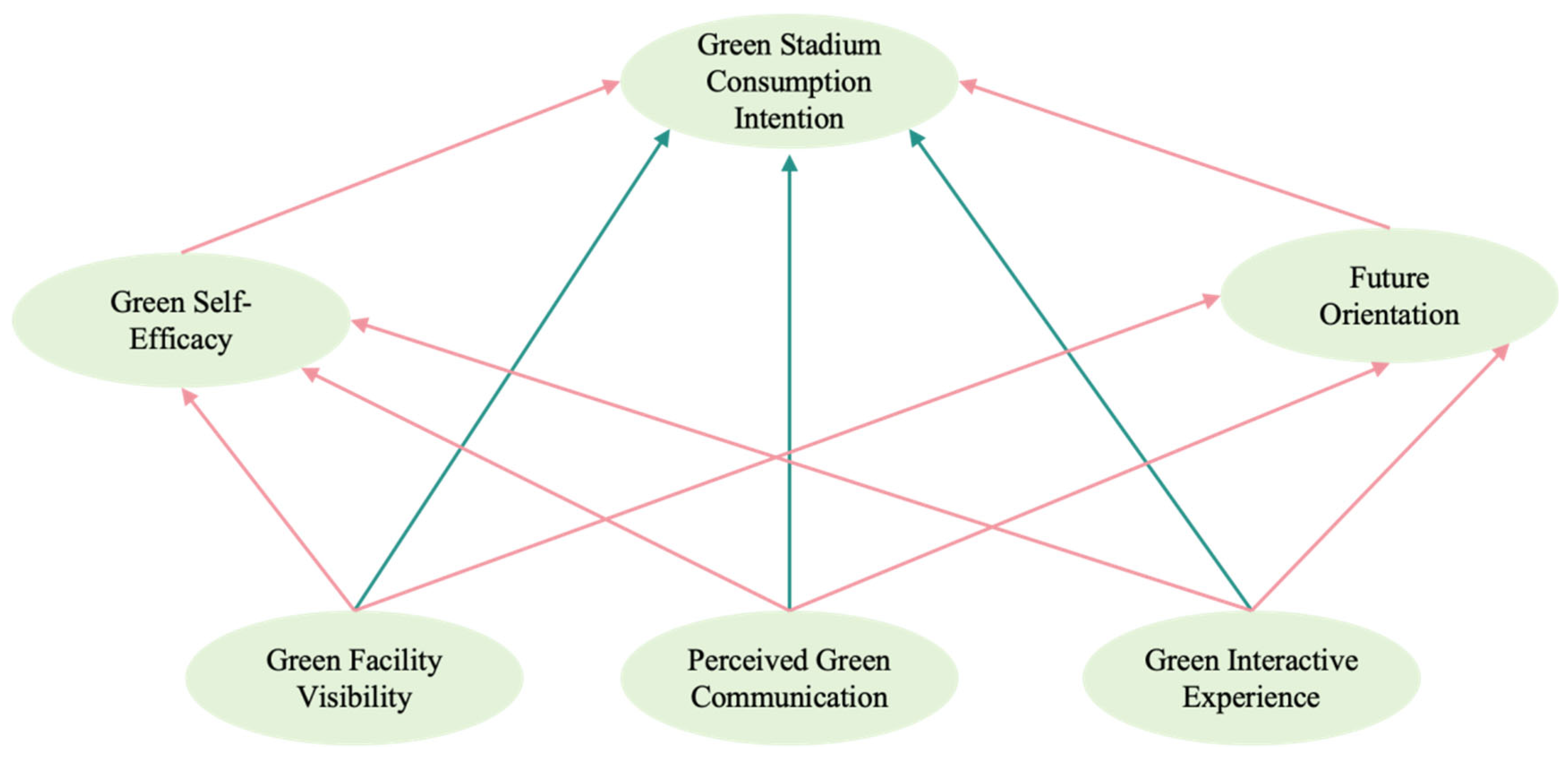
An important reason why green consumption is different from ordinary consumption is that it usually requires consumers to pay a certain cost in the present, but is oriented towards longer-term environmental benefits and social values. Therefore, Future Orientation is not just a contextual variable that affects the outcome of green consumption but may be an important psychological mechanism for transforming external stimuli into green consumption judgments. This idea can already be seen in existing studies. Chairy and Syahrivar, in their study of the relationship between Karma and green purchase intentions, found that long-term orientation played a mediating role, suggesting that an individual’s Future Orientation temporal perspective can further translate more abstract value beliefs into green purchase intentions [64]. Jiang’s research on bring-your-own-shopping-bag behavior also suggests that Future Orientation does not act directly and in isolation on green behavioral intentions, but can further influence green behavioral intentions by enhancing an individual’s perceptions of the importance of the behavior and ethical judgments [65]. Similarly, Zhang et al. found in their study of green electronics purchases that future consequence considerations further influence purchase intentions through personal ethics, suggesting that Time Orientation-related factors often do not remain at the level of general attitudes, but rather enter into consumers’ mental processing and act through intermediate cognitive mechanisms in green consumption decisions [66]. Based on the above research, the possible role of Future Orientation in green building consumption can be further understood. In this study, it is modeled as a second-order construct because future-oriented judgment in green stadium consumption is reflected not only in rational evaluation of long-term building performance, but also in perceptual and affective anticipation of future sustainable value. The energy efficiency benefits, environmental value, and social significance of green buildings are usually more long-term than those of products in general, so it is especially critical that consumers are willing to understand green buildings in terms of future benefits. It is inferred that when green facilities are more easily visible, green information is more clearly communicated, or individuals have a stronger Green Interactive Experience in green environments, these context-specific cues may motivate consumers to pay more attention to the long-term environmental value and future returns of green buildings, thus activating their Future Orientation and further enhancing their Green Stadium Consumption Intention. Based on this, this paper proposes the following hypotheses (The proposed modeling diagram for this paper is shown in Figure 1):
H3a: 
Future Orientation Plays an Intermediate Role between Green Facility Visibility Influencing Green Stadium Consumption Intention.
H3b: 
Future Orientation plays an intermediate role between Perceived Green Communication and Green Stadium Consumption Intention.
H3c: 
Future Orientation plays an intermediate role between Green Interactive Experience and Green Stadium Consumption Intention.

3. Research Design

3.1. Respondents and Questionnaire Distribution

This study used a questionnaire survey to collect data from millennials with experience using green sports venues. Following the commonly accepted definition of the millennial generation, eligible respondents were those born between 1981 and 1996. To improve sample relevance and data quality, the study adopted an offline field-intercept survey design. The field investigation was conducted in seven green sports venues located in Beijing, Shanghai, Guangzhou, Shenzhen, Hangzhou, Chengdu, and Xi’an. Candidate venues in these first-tier and emerging first-tier cities were screened before the formal survey. To identify field sites, this study used a practical screening framework for green sports venues. Candidate venues were considered eligible if they exhibited one or more observable green-related characteristics relevant to users‘ on-site perceptions, such as formal green-building certification recognized by domestic or international authorities, verifiable green technological measures in architectural design or operation, public-facing green facilities or installations, or explicit public communication of green philosophy or sustainable operation strategy by venue operators. Based on these criteria, seven green sports venues in Beijing, Shanghai, Guangzhou, Shenzhen, Hangzhou, Chengdu, and Xi’an were retained as the formal survey sites. These criteria were used to identify venues with perceivable green attributes in real-world field settings, rather than to imply that all venues were equivalent in the strength, formalization, or certification level of greenness.
At each selected venue, visitors leaving the venue after fitness, leisure, or event-related activities were approached by trained researchers and invited to participate. Eligible respondents were first screened to confirm that they met the age requirement and had visited a green sports venue at least once in the previous six months. Those who met the criteria were then invited to scan a QR code and complete the questionnaire on site. The data collection period was from October 2025 to December 2025. Before the formal survey began, the first page of the questionnaire explained the research purpose, anonymity protection, and data confidentiality measures. Only respondents who provided informed consent proceeded to the questionnaire. A total of 1156 questionnaires were collected. After excluding invalid responses, including questionnaires with excessively short completion times, patterned responses, and failed reverse-item checks, 976 valid questionnaires were retained, yielding an effective response rate of 84.4%. Overall, the sample covered millennials with different genders, ages, and educational, and occupational backgrounds (Table 1), providing a reliable empirical basis for the subsequent hypothesis testing.

3.2. Variable Measurement

In order to ensure the reliability and validity of the measurement instruments, all constructs in this study were measured using adapted items from previously validated scales. The scale development process followed a standardized procedure of adaptation, contextual revision, and pretesting. All items were measured using a five-point Likert scale ranging from 1 (“strongly disagree”) to 5 (“strongly agree”).
Green Facility Visibility (GFV) was measured using four items adapted from previous studies on natural visibility and visible environmental perception in sports and green environments [67]. The items were revised to fit the green stadium context. A representative item is: “I can clearly see the environmental facilities in this stadium.”
Perceived Green Communication (PGC) was measured using four items adapted from previous research on green communication and green message perception [68,69]. These items were revised to reflect respondents’ subjective evaluation of the clarity, credibility, and authenticity of the venue’s green communication. A representative item is: “The venue’s green campaign made me feel that it was genuinely committed to environmental protection.”
Green Interactive Experience (GIE) was measured using four items adapted from the Environmental Sustainability Gamification Scale and related studies on environmental interaction and engagement [70]. In this study, the items were adjusted to capture respondents’ participatory, immersive, and experiential perceptions of green interaction in stadium settings. A representative item is: “The venue’s environmental interactive design makes me feel that environmental learning is interesting rather than one-way teaching.”
Green Self-Efficacy (GS) was measured using four items adapted from prior research on green self-efficacy [71]. The items were modified to reflect respondents’ confidence in understanding, participating in, and practicing environmentally responsible behavior in green stadium contexts. A representative item is: “I believe I can successfully practice environmental protection when using a green stadium.”
Future Orientation (FO) was conceptualized as a second-order construct consisting of two first-order dimensions: Future Rational Orientation and Future Perceptual Orientation. It was measured using six items adapted from previous studies on future orientation in green and sustainability-related contexts [72]. Three items were used to capture the rational dimension, and three items were used to capture the perceptual dimension. A representative item is: “When I learn that a sports venue adopts green technology, I pay attention to its energy-consumption data, environmental quality indicators, and green performance.” Another representative item is: “When I learn that a stadium is certified as a green building, I feel more confident about the future of sustainable sports facilities.”
Green Stadium Consumption Intention (GSCI) was measured using four items. The core items were adapted from an established scale on green stadium consumption intention, and one additional item was incorporated based on previous research on willingness to pay for green stadiums in order to better capture the consumption context of sports venues [54,73]. A representative item is: “Compared with conventional stadiums, I am willing to pay a premium for green stadiums.”
Before the formal survey, the revised questionnaire was pretested with 45 respondents. The pretest results were satisfactory and were not included in the final analysis. Based on participant feedback, several item wordings were further refined to improve clarity and contextual appropriateness. In addition, two architects and two senior scholars reviewed the questionnaire to assess content validity and wording suitability.
Because the questionnaire was adapted from multiple previously published scales and contextually revised for this study, the manuscript reports the source, item number, and representative items for each construct rather than reproducing the full instrument verbatim.

3.3. Data Analysis Strategy

This study employed covariance-based structural equation modeling (CB-SEM) to test the hypothesized model, using SPSS 26.0 and AMOS 24.0 for data analysis. A bootstrapping procedure with 5000 resamples was conducted to examine the significance of mediating effects. Prior to hypothesis testing, the reliability and validity of the measurement model were assessed through confirmatory factor analysis (CFA), Cronbach’s α, composite reliability (CR), and average variance extracted (AVE).
To facilitate the presentation of results, the following abbreviations are used for core variables: Green Facility Visibility (GFV), Perceived Green Communication (PGC), Green Interactive Experience (GIE), Green Self-Efficacy (GS), and Green Stadium Consumption Intention (GSCI). Future Orientation (FO) is conceptualized as a second-order construct comprising two dimensions: Future Rational Orientation (FOA) and Future Perceptual Orientation (FOB). All subsequent tables and figures adopt these abbreviations.

4. Data

4.1. Reliability Testing

In this study, the reliability of the scale of each research variable was examined using three indexes: corrected item total correlation (CITC), alpha coefficient of deleted items, and Cronbach’s alpha coefficient to ensure the stability and consistency of the scale measurements, in which the CITC value was greater than 0.7, the alpha coefficient of deleted items did not appear significantly higher than the overall Cronbach’s alpha coefficient, and the Cronbach’s alpha coefficient greater than 0.8 was regarded as a good reliability. Cronbach’s alpha coefficient is greater than 0.8 are regarded as good reliability of the scale. Table 2 shows that the CITC values of the four items of the GFV variable are 0.716, 0.725, 0.740, 0.751, which are higher than 0.7, and the alpha coefficients of the deleted items range from 0.834 to 0.848, which do not exceed the overall Cronbach’s alpha coefficient of 0.876, indicating that the correlation of each item of the GFV scale with the overall scale is strong and that deleting any item is not significantly higher than the overall Cronbach’s alpha coefficient. This indicates that the correlation between each item of the GFV scale and the overall scale is strong and deleting any item will not significantly improve the reliability of the scale; the CITC values of the four items of the PGC variable range from 0.710 to 0.752, the alpha coefficients of the deleted items range from 0.822 to 0.839, and the overall Cronbach’s alpha coefficient is 0.870, which fulfills the standard of the reliability test and indicates that the PGC scale has a better internal consistency; the CITC values of the four items of the GIE variable The CITC values of the four question items of the GIE variable are between 0.754 and 0.793, the alpha coefficients of the item deleted are between 0.859 and 0.873, and the overall Cronbach’s alpha coefficient reaches 0.897, which indicates that the scale has a high level of reliability; the CITC values of the four question items of the GS variable are between 0.703 and 0.754, and the alpha coefficients of the item deleted are between 0.830 and 0.851, and the overall Cronbach’s alpha coefficient is 0.874, which meets the requirements of the reliability test; the 3 question–item CITC values for the FOA variable are 0.767, 0.737, and 0.772, respectively, and the alpha coefficients for the item has been deleted range from 0.811 to 0.843, with an overall Cronbach’s alpha coefficient of 0.875, which indicates that the reliability of the scale is good; the three-item CITC values for the FOB variable ranged from 0.726 to 0.740, the alpha coefficients of the items that had been deleted ranged from 0.796 to 0.809, and the overall Cronbach’s alpha coefficient was 0.859, which satisfies the criterion of reliability test; the four-item CITC values for the GSCI variable ranged from 0.757 to 0.765, the alpha coefficients of the items that had been deleted were stable around 0.860 or so, and the overall Cronbach’s alpha coefficient was 0.892, showing high internal consistency. In summary, all the reliability indicators of all the research variable scales meet the standards of academic research, and the scale measurements are reliable and can be used for subsequent empirical analysis.

4.2. Exploratory Factor Analysis (EFA)

See Table 3, the KMO test value is 0.930, much higher than the standard threshold of 0.7, in which the KMO value of 0.9 or more indicates that the sampling appropriateness of the research data is at an excellent level, and there is a strong correlation relationship between the variables, which fully meets the applicable prerequisites of the factor analysis, and it can guarantee the reliability and validity of the results of the factor analysis, and the approximation of Bartlett’s test of sphericity is 15,704.871, and the corresponding p-value is 325, which is less than 0.001 significance level. The approximate chi-square value of Bartlett’s test of sphericity is 15,704.871, the degree of freedom is 325, and the corresponding p-value is 0.000, which is less than the significance level of 0.001. This result clearly rejects the original hypothesis of Bartlett’s test of sphericity, i.e., it rejects the hypothesis that “the correlation matrix between the variables is a unitary matrix”, and further verifies that there is a significant correlation among the variables at the statistical level. This result clearly rejects the original hypothesis of Bartlett’s test of sphericity, that is, the hypothesis that “the correlation matrix between variables is a unit matrix” is rejected, and further verifies the existence of significant correlation between variables at the statistical level. This indicates that the study data are not independent of each other and are suitable for subsequent factor extraction work.
See Table 4, the results of exploratory factor analysis show that the factor loading coefficients of all the observed variables are higher than the standard threshold of 0.7, indicating that each observed variable has strong convergent validity to its corresponding common factor, and that the factor structure has good rationality and stability, among which the four observed variables from GFV1 to GFV4 are loaded centrally on factor 4, with loading coefficients of 0.759, 0.776, 0.774, and 0.796, respectively, with high loading levels and centralized distribution, indicating that these four variables can effectively reflect the same underlying conceptualization, constituting a relatively independent and stable factor dimension; PGC1 to PGC4 are all loaded on Factor 5, with loading coefficients ranging from 0.743 to 0.813, with the highest loading coefficient of 0.813 for PGC4, which indicates that the variable is most representative of Factor 5. Factor 5 is the most representative, and the four variables together constitute another clear factor dimension. GIE1 to GIE4 are all loaded on Factor 1, with loading coefficients ranging from 0.790 to 0.829, and the overall loading level is high and with less fluctuation, indicating that the internal consistency of this group of variables is good, and the corresponding potential factors can be measured efficiently. GS1 to GS4 are loaded on Factor 3, with loading coefficients ranging from 0.773 to 0.813. GS1 to GS4 are loaded on factor 3, with loading coefficients ranging from 0.773 to 0.799, and the loadings of each variable are more balanced, indicating that the observed variables of this group reflect factor 3 in a more stable way, which can be used as an effective indicator of the factor. FO1 to FO3 are loaded on factor 6, with loading coefficients of 0.813, 0.809, and 0.825, respectively, and FO4 to FO6 are loaded on factor 7, with loading coefficients of 0.788 to 0.794. The two groups of variables correspond to different factors, and the loading levels reach the standard, indicating that the FO-related variables can be divided into two independent factor dimensions. GSCI1 to GSCI4 are loaded on Factor 2, with loading coefficients ranging from 0.772 to 0.798, with the loadings evenly distributed and higher than the standard thresholds, which indicates that the variables in this group can effectively reflect the latent conceptualizations of Factor 2. The overall factor structure is basically in line with the theoretical preconceptions, the dimensions of the factors are clearly delineated, and the loadings of the observed variables are good, which lays a solid foundation for the subsequent reliability test and model construction.

4.3. Common Methodological Biases

Considering that the singularity of data sources may bring about the problem of common method bias, this study used the CFA one-way comparison method to test common method bias. By constructing two competing models: a one-factor model (attributing all observed indicators to the same latent variable) and a hypothetical multifactor measurement model, the goodness-of-fit of the two was compared to determine the severity of common method bias. The model fitting results (see Table 5) show that none of the fit indices of the one-factor model reached acceptable levels (χ2/df = 23.318, RMSEA = 0.151, GFI = 0.578, SRMR = 0.104, NFI = 0.560, TLI = 0.533, CFI = 0.570), indicating that the grouping of all the variables into a common factor structure does not effectively reflect the true relationship between the data. In contrast, the hypothesized multifactor measurement model performed well in all fitting indicators (χ2/df = 2.178, RMSEA = 0.035, GFI = 0.955, SRMR = 0.022, NFI = 0.962, TLI = 0.975, and CFI = 0.979), which was significantly better than the one-factor model. It can be inferred that the problem of common method bias in this study is effectively controlled and does not significantly interfere with the reliability and validity of the results of subsequent hypothesis testing. It should be noted that the multifactor measurement model reported in Table 5 was estimated for the purpose of common method bias assessment and is not identical to the final structural model reported. Therefore, differences in degrees of freedom between the two models are expected and do not imply estimation inconsistency.

4.4. Confirmatory Factor Analysis (CFA)

See Table 6, the results of the validated factor analysis showed good convergent validity for the measurement items of each latent variable, and the standardized loading coefficients of all the measurement items were higher than the critical criterion of 0.75, with the standardized loading coefficients of each measurement item of GFV ranging from 0.781 to 0.816, the standardized loading coefficients of each measurement item of PGC ranging from 0.775 to 0.817, the standardized loading coefficients of each measurement item of GIE The standardized loading factors for each of the GIE measurements ranged from 0.809 to 0.850, for each of the GS measurements ranged from 0.759 to 0.826, for each of the FOA measurements ranged from 0.805 to 0.853, for each of the FOB measurements ranged from 0.808 to 0.830, for each of the GSCI measurements the standardized loading factors ranged from 0.811 to 0.831, indicating that the measurement items can effectively reflect the connotations of the corresponding latent variables, and the measurement model has good convergence, and the average variance extracted (AVE) values of the latent variables are all greater than the critical value of 0.5, with the AVE values of 0.639 for GFV, 0.627 for PGC, 0.686 for GIE, and 0.637 for GS. The AVE of FOA was 0.701, the AVE of FOB was 0.670, and the AVE of GSCI was 0.673, indicating that each latent variable was able to explain more than half of the variance in its measurement term, further verifying the goodness of convergent validity, while the combined reliability (CR) of each latent variable was higher than the criterion of 0.8 for GFV, PGC, GIE, GS, and FOA, FOB, and GSCI have CR values of 0.876, 0.870, 0.897, 0.875, 0.875, 0.859, and 0.892, respectively, which indicates that the measurement items of each latent variable have high internal consistency, and the reliability of the measurement model has reached a desirable level.

4.5. Discriminant Validity

Discriminant validity was examined to determine whether the latent variables in this study measured different concepts. In other words, it was used to test whether each construct captured its own meaning rather than overlapping with the others. In this study, discriminant validity was assessed by using the Fornell–Larcker criterion and HTMT.
As shown in Table 7, the square root of AVE for each latent variable was greater than its correlation coefficients with the other latent variables. For example, the square root of AVE for GFV was 0.799, which was higher than its correlations with PGC, GIE, GS, FOA, FOB, and GSCI (0.572, 0.469, 0.476, 0.474, 0.485, and 0.574, respectively). The same pattern was found for PGC, GIE, GS, FOA, FOB, and GSCI, indicating that each construct was more strongly related to its own measurement items than to other constructs.
Table 8 reports the HTMT results. The HTMT values ranged from 0.414 to 0.576, and none of them exceeded the threshold of 0.85. This indicates that the latent variables measured different concepts and could be adequately distinguished from one another. Based on these results, the measurement model showed acceptable discriminant validity.

4.6. Correlation Analysis

The results of the Pearson correlation analysis showed that there was a significant positive correlation between the variables in the study (Table 9). GFV was highly significantly positively correlated with PGC, with a correlation coefficient of 0.503, indicating that the higher the level of GFV, the higher the level of PGC. GFV was significantly increased. GFV also showed a highly significant positive correlation with GIE and GS, with correlation coefficients of 0.416 and 0.419, respectively, indicating that there was a stable positive association between GFV and these two variables. The correlation coefficients were 0.416 and 0.419, respectively, indicating that there was a stable positive correlation between GFV and these two variables, and the highly significant positive correlation between GFV and FO and GSCI further confirmed the basic correlation role of GFV in the whole variable system, with correlation coefficients of 0.492 and 0.509, respectively. PGC showed a highly significant positive correlation with GIE, with a correlation coefficient of 0.439, and a highly significant positive correlation coefficient of GS of 0.361, while PGC also has a highly significant positive correlation with FO and GSCI, with correlation coefficients of 0.480 and 0.492, respectively, showing that there are strong positive associations between PGC and each core variable. GIE has a highly significant positive correlation with GS, with a correlation coefficient of 0.457, and a highly significant positive correlation coefficient of 0.512 with FO, which is a relatively high strength group among its associations with the variables, and a relatively high strength group of its associations with the variables. The highly significant positive correlation coefficient between GIE and GSCI is 0.457, and the highly significant positive correlation coefficient with FO reaches 0.512, which is the relatively high strength of its association with each variable, while the highly significant positive correlation between GIE and GSCI further completes the association network between the variables. The correlation coefficients are 0.468, 0.480, and 0.439, respectively. FO and FOA and FOB are all highly significant positively correlated, and the correlation coefficients are as high as 0.854 and 0.844, respectively, indicating that there is an extremely strong positive correlation between FO and FOA, FOB, and the correlation coefficients are 0.442, and the correlation coefficients between FO, FOA, and FOB and the GSCI also all have highly significant positive correlations, with correlation coefficients of 0.496, 0.392, and 0.451, respectively. On the whole, all the research variables show highly significant positive correlations with each other, and the variables interact and correlate with each other, which together constitute a relatively tight positive correlation system.

4.7. Structural Equation Model

In this study, structural equation modeling (SEM) was employed to test the proposed hypotheses. The model fit results are presented in Table 10. All commonly used fit indices met or exceeded the recommended threshold values, indicating a good model fit. Specifically, the chi-square to degrees of freedom ratio (χ2/df) was 2.566, which is below the recommended upper limit of 3. In addition, GFI, AGFI, CFI, NFI, RFI, TLI, and IFI were all above 0.90, while RMSEA was 0.040, which is well below the acceptable threshold. Overall, these findings indicate that the proposed theoretical model fits the observed data well and provides a reliable basis for subsequent hypothesis testing.
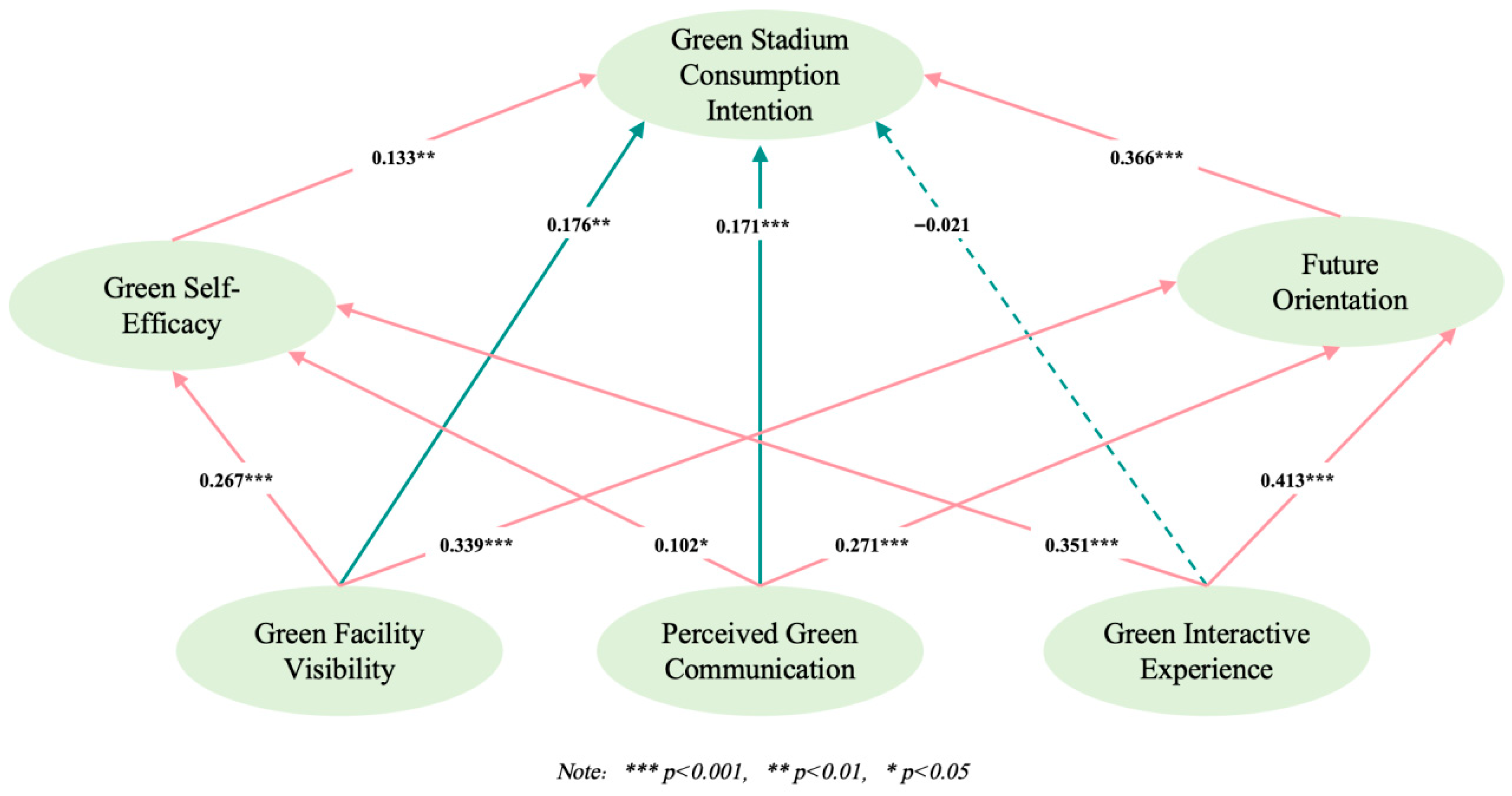
The structural path estimates are reported in Table 10, and the final structural model is illustrated in Figure 2. To improve clarity, the key direct effects are summarized here using standardized coefficients. First, GFV, PGC, and GIE all had significant positive effects on GS. Among them, GIE showed the strongest positive effect on GS (β = 0.351, p < 0.001), followed by GFV (β = 0.267, p < 0.001) and PGC (β = 0.102, p = 0.016). These results indicate that improvements in GFV, reasonable control of PGC, and enrichment of GIE all contribute positively to GS.
Second, GFV, PGC, and GIE also exerted significant positive effects on FO. GIE again showed the strongest effect (β = 0.413, p < 0.001), followed by GFV (β = 0.339, p < 0.001) and PGC (β = 0.271, p < 0.001). This suggests that all three antecedent variables are important drivers of FO, with GIE playing the most prominent role.
Third, FO significantly influenced both of its dimensions. The standardized coefficient from FO to FOA was 0.685, and that from FO to FOB was 0.736 (p < 0.001), indicating that FO can be effectively translated into both attitudinal and behavioral loyalty outcomes.
Finally, with respect to GSCI, GFV, PGC, GS, and FO, all had significant positive direct effects. The standardized coefficients were 0.176 for GFV (p = 0.001), 0.171 for PGC (p < 0.001), 0.133 for GS (p < 0.001), and 0.366 for FO (p < 0.001). Among these predictors, FO had the largest direct effect on GSCI, indicating that it is a core driver of GSCI formation. In contrast, the direct effect of GIE on GSCI was not significant (β = −0.021, p = 0.715). This finding suggests that the influence of GIE on GSCI is mainly transmitted through indirect pathways rather than through a direct relationship. Figure 2 provides a visual summary of the final structural model, including the relationships among the antecedent variables, the mediators, and GSCI.

4.8. Mediating Effect Analysis

To examine the mediating effects, this study employed the bias-corrected percentile Bootstrap method with 5000 resamples. Point estimates, standard errors, and 95% confidence intervals were calculated for each indirect effect. A mediating effect was considered significant when the 95% confidence interval did not include zero. The results are reported in Table 11.
The results show that both GS and FO significantly mediated the relationships between the antecedent variables and GSCI. For GFV, the indirect effect through GS was significant (β = 0.036, 95% CI [0.012, 0.071], p = 0.005), and the indirect effect through FO was also significant (β = 0.124, 95% CI [0.052, 0.255], p = 0.001). The total indirect effect of GFV on GSCI was 0.160 (95% CI [0.082, 0.292], p = 0.001), while the direct effect remained significant (β = 0.176, 95% CI [0.024, 0.312], p = 0.032). The total effect was 0.335 (95% CI [0.250, 0.434], p = 0.001). These findings indicate that GS and FO play significant partial mediating roles in the relationship between GFV and GSCI, with the indirect effect through FO being stronger than that through GS.
For PGC, the indirect effect through GS was significant (β = 0.014, 95% CI [0.001, 0.039], p = 0.032), and the indirect effect through FO was also significant (β = 0.099, 95% CI [0.032, 0.222], p = 0.001). The total indirect effect was 0.113 (95% CI [0.043, 0.243], p = 0.001), while the direct effect of PGC on GSCI remained significant (β = 0.171, 95% CI [0.005, 0.299], p = 0.045). The total effect was 0.283 (95% CI [0.169, 0.377], p = 0.002). These results likewise support partial mediation, indicating that PGC influences GSCI through both direct and indirect pathways, with FO again showing a stronger mediating role than GS.
For GIE, the indirect effect through GS was significant (β = 0.047, 95% CI [0.016, 0.087], p = 0.006), and the indirect effect through FO was likewise significant (β = 0.151, 95% CI [0.062, 0.322], p = 0.001). The total indirect effect of GIE on GSCI was 0.198 (95% CI [0.105, 0.373], p = 0.001). However, the direct effect of GIE on GSCI was not significant (β = −0.021, 95% CI [−0.178, 0.112], p = 0.822), whereas the total effect was significant (β = 0.177, 95% CI [0.091, 0.265], p = 0.001). This pattern suggests that the influence of GIE on GSCI is transmitted primarily through the indirect paths via GS and FO in the tested model, rather than through a significant direct path.
Overall, the mediation analysis demonstrates that GS and FO are important mechanisms linking GFV, PGC, and GIE to GSCI. GFV and PGC affect GSCI through both direct and indirect pathways, indicating partial mediation, whereas the results for GIE are consistent with an indirect-only mediation pattern, as the indirect effects were significant while the direct effect was not significant in the tested model. Across all three antecedent variables, the mediating effect through FO was consistently stronger than that through GS. Together with the structural model shown in Figure 2, these findings provide a clear picture of how the antecedent variables influence GSCI through the two mediating mechanisms.
For greater clarity and ease of reading, Table 12 summarizes the results of hypothesis testing. Based on the structural model and mediation analyses, the table presents whether each hypothesis proposed in this study was supported.

5. Discussion

5.1. Direct Effects

The findings show that, among millennial users in the context of green stadiums, Green Facility Visibility and Perceived Green Communication are positively associated with Green Stadium Consumption Intention, whereas the direct effect of Green Interactive Experience is not significant. These results suggest that, in this setting, users’ consumption intention is more strongly related to whether green attributes are visible and cognitively interpretable than to whether the venue merely provides interactive environmental experiences.
More specifically, Green Facility Visibility helps users notice the physical presence of green design and environmental technologies in the stadium environment, such as energy-saving systems, daylighting strategies, rainwater reuse facilities, or other visible eco-design elements. Perceived Green Communication, in turn, helps users interpret these green attributes by making the stadium’s environmental logic clearer, more credible, and easier to connect with actual building practices. For millennial users, who are generally more accustomed to information-rich and symbolically mediated consumption environments, visible and understandable green cues may therefore play a more immediate role in shaping positive evaluations of green stadiums.
By contrast, the non-significant direct effect of Green Interactive Experience is one of the more noteworthy findings of this study. This result suggests that experiential interaction, by itself, may not be sufficient to directly strengthen consumption intention in the stadium context. Compared with commercial retail or educational sustainability settings, stadium use is often goal-oriented and time-constrained: users typically focus on watching events, exercising, moving through the venue efficiently, and accessing services. Under such conditions, environmental interaction may remain secondary unless it is tightly integrated into core user journeys. This implies that the practical route to influencing consumption intention in green stadiums may be more cognitive-symbolic than purely experiential. In other words, users may respond more directly to visible green evidence and credible green meaning than to standalone interactive features.
At the same time, these findings should not be interpreted in a strong causal sense. Because this study is based on self-reported cross-sectional questionnaire data, the results support statistically significant associations rather than definitive causal direction. Although the proposed model assumes that visibility and communication are related to psychological mechanisms such as Green Self-Efficacy and Future Orientation, reverse causality and reciprocal perception effects are also possible. For example, users who are already more future-oriented or more confident in their own green agency may be more likely to notice green facilities, pay attention to environmental information, and evaluate the stadium more positively. Therefore, the present findings should be understood as evidence of plausible relationships and psychological pathways rather than conclusive proof of causal sequence.

5.2. Intermediary Effect

The mediation results indicate that Green Self-Efficacy and Future Orientation are both significantly associated with the relationship between the three antecedent variables and Green Stadium Consumption Intention. However, given the cross-sectional design, these mediation paths should be interpreted cautiously. They are better understood as theoretically informed explanatory mechanisms consistent with the observed data, rather than as fully established causal chains.
Within this cautious interpretation, the findings still provide useful insight. Green Self-Efficacy reflects whether users feel that they can understand, participate in, and contribute to environmental improvement through their own choices in green stadiums. Future Orientation reflects whether users interpret present stadium choices in light of longer-term environmental value and future sustainable outcomes. The results suggest that visible facilities and credible communication may be associated with stronger beliefs that one’s green choices matter and with greater attention to long-term value, which in turn are associated with stronger consumption intention. At the same time, the indirect significance of Green Interactive Experience, despite its non-significant direct path, implies that interaction may matter mainly when it helps users cognitively process green meaning or strengthens their sense of environmental agency and future value.
This point is important for interpretation. The findings do not suggest that interactive design is unimportant, but rather that its influence may be conditional and indirect. If interaction remains peripheral, decorative, or disconnected from the main stadium experience, it may not directly affect intention. If, however, it is designed to reinforce users’ understanding of environmental performance, their sense of participation, or their long-term perception of green value, it may become more meaningful. In this sense, interaction appears to be most effective not as an isolated experiential add-on but as a supporting mechanism that strengthens cognition, interpretation, and value recognition.
Another boundary condition concerns the sample. This study focuses only on millennials, which is theoretically reasonable because this cohort has relatively strong exposure to sustainability discourse, digital information environments, and lifestyle-based consumption logics. However, the present study does not test whether the same mechanism applies equally to other age groups. Therefore, the findings should be interpreted as specific to millennial users rather than generalized to stadium users as a whole.

5.3. Practical Implications for Green Stadium Design and Operation

The findings have practical implications for designers, architects, operators, and facility managers, but these implications need to be translated into concrete measures. First, if Green Facility Visibility is positively associated with consumption intention, then green features should not remain hidden in technical back-of-house systems. Designers should make key green elements more legible in public-facing areas. This may include exposing or visually highlighting rainwater reuse systems, energy-saving lighting strategies, natural ventilation devices, green roofs, daylighting features, recycled-material applications, or waste-sorting facilities where users can easily notice them. Such visibility can also be reinforced through spatial placement, contrast, lighting, transparent interfaces, and circulation design so that green features become part of what users naturally see while entering, moving through, and using the stadium.
If Perceived Green Communication is important, then green communication should be embedded into the stadium environment rather than treated as a generic promotional message. In practice, this means linking environmental information to specific building features and user touchpoints. For example, designers and operators can place concise environmental explanations along major circulation routes, concourses, entrances, waiting zones, façades, digital screens, mobile interfaces, and service counters. Real-time displays of energy saving, water reuse, indoor environmental quality, or carbon reduction can help transform abstract sustainability claims into verifiable building information. QR codes, short scenario-based messages, and event-linked digital prompts may further improve credibility and user comprehension.
The non-significant direct effect of Green Interactive Experience suggests that interactive systems should not be added simply for novelty. Instead, interaction should be integrated into core user behaviors and decision moments. For example, interactive environmental features may be more effective when embedded into ticketing, wayfinding, queueing areas, recycling points, concession zones, seating sections, or post-event circulation, where users already pause or make choices. In other words, the design goal should be not merely to increase interaction frequency, but to connect interaction with comprehension, recognition, and perceived relevance.
Facility managers can use these findings operationally. Environmental communication should be consistent across physical space, digital media, and on-site service practices. Staff scripts, event-day announcements, app-based messages, and venue signage should deliver the same environmental logic as the building itself. This can help reduce the gap between green design intention and user perception. From a management perspective, the findings imply that effective green stadium operation depends not only on technical performance, but also on whether that performance is made visible, credible, and meaningful to users.
Finally, the applicability of the findings should be treated with appropriate caution. Green perception, environmental awareness, and behavioral intention are known to vary across cultural, regional, and social contexts. The present results are based on millennial users in a specific research context and may be influenced by local sustainability discourse, policy background, digital communication habits, and cultural attitudes toward environmental responsibility. Therefore, the observed relationships should not be assumed to apply uniformly to other populations, age groups, or countries without further verification.
In addition, this study examines consumption intention rather than actual consumption behavior. Intention is an important antecedent of behavior, but it does not necessarily translate into actual action. Users may express favorable attitudes toward green stadiums yet still be constrained by price, convenience, habit, social influence, or situational trade-offs. Accordingly, the present findings are most appropriately interpreted as evidence about how users evaluate and accept green stadiums at the level of intention, rather than as direct evidence of actual purchasing or usage behavior.

5.4. Research Comparison

This study examines the effects of Green Stadium Consumption Intention, Perceived Green Communication and Green Interactive Experience on Green Stadium Consumption Visibility and their psychological mechanisms, and the results can be linked with the established research on Green Purchase Intention. Consistent with Zhuang et al.’s findings on perceived green value and green attitudes promoting green purchase intention, this study suggests that the formation of the above psychological variables in green building contexts may partly stem from an individual’s visual exposure to green amenities, comprehension of green information, and interactive participation in green environments [74]. Razali and Osman’s finding that Green Facility Visibility enhances residential preferences and Liu et al.’s conclusion that immersive Green Interactive Experience promotes consumption propensity corroborate the results of this study [42,45]. Further, the present study found that Green Self-Efficacy mediates the relationship between the three independent variables and the propensity to consume, echoing Tiwari’s view that Green Self-Efficacy mediates the relationship between external green stimuli and behavioral intentions, and Zaremohzzabieh et al.’s finding that attitudes mediate the relationship between green perceptions and purchase intentions [75]. As well as Zaremohzzabieh et al.’s finding that attitudes mediate the relationship between green perceptions and purchase intentions [76], it suggests that external green cues can indirectly contribute to consumption tendencies by enhancing individuals’ beliefs that they “can be positively influenced by green choices”. Meanwhile, the mediating role of Future Orientation was validated, in dialogue with Polonsky et al.’s study on the effect of Future Orientation-enhanced green attitudes on purchase intentions [60], suggesting that external green cues can be further transformed into consumption propensities by activating individuals’ concern for long-term environmental benefits in the consumption context of Green Stadium Consumption Intention, a context where the long-term value of Green Stadium is significant. Overall, this study incorporates three types of external cues, namely Green Stadium Consumption Intention, Perceived Green Communication, and Green Interactive Experience, and two types of intrinsic psychological mechanisms, namely Green Self-Efficacy and Future Orientation, into the same framework, revealing the pathways through which external environmental cues influence Green Stadium Consumption Intention by activating individuals’ beliefs of efficacy and time preference. This framework further opens up the formation process of green building consumer decision-making based on the existing theory of green purchase intention, responds to the core question of how external stimuli are internalized into consumer motivation, and explains the psychological sources of consumers’ willingness to pay in the context of high input and long return of green buildings. The findings of the study provide theoretical references for the subsequent study of green building adoption behavior from the perspective of environmental psychology, as well as clear managerial insights into the spatial design, information dissemination, and experience creation of green buildings.
While most studies support the positive role of green information and experience, there are some differences or complementary perspectives. Tan et al. point out that perceived quality and price sensitivity of green products moderate green purchase intentions, suggesting that external stimuli do not significantly influence intentions under all conditions [77]. While most studies support the positive effects of Green Information and Interactive Experience on purchase intention, there are some complementary and divergent perspectives. Patiño-Toro et al. show that social factors, subjective norms, and situational values are diverse and conditional in the formation of Green Intention, which suggests that the roles of Perceived Green Communication and Interactive Experience may be subject to individual and social contextual constraints [78]. Bala et al. found that sustainability awareness moderated multiple pathways while enhancing the effect of attitudes on green purchase intentions, further suggesting that psychological traits such as Future Orientation or value perception may influence the role of external stimuli on behavior under different conditions [79]. In addition, the “value-action gap” study pointed out the inconsistency between individual attitudes and actual behaviors, suggesting that there is no simple equivalence between green purchase intentions and final behaviors [80]. Taken together, these studies suggest that while Green Facility Visibility, Perceived Green Communication, and Interactive Experience are important in green building consumption contexts, their roles may be moderated by information credibility, social norms, and individual psychological traits, and thus understanding the formation of green consumption intentions needs to take into account the interactions of external cues and psychological and social boundary conditions simultaneously.
To summarize, most of the existing studies have explored the formation of green purchase intention from the perspectives of Green Marketing, Green Information Communication, or Consumer Psychological Factors, whereas this paper, based on this, focuses the research context on the specific spatial scenario of green buildings, and reveals how external stimuli affect consumers’ Green Facility Visibility, Green Perceived Green Interactive Experience, Green Self-Efficacy, Future Orientation, and other psychological perspectives. Green Stadium Consumption Intention. By introducing the psychological intermediary path, this paper further enriches the theoretical framework of the formation mechanism of green consumption intention, and provides a new empirical basis for green building design, environmental information transfer and experience optimization.

6. Conclusions

Focusing on the context of green stadiums, this study examined the relationships among Green Facility Visibility, Perceived Green Communication, Green Interactive Experience, Green Self-Efficacy, Future Orientation, and Green Stadium Consumption Intention among millennial users. The results show that Green Facility Visibility and Perceived Green Communication are positively associated with Green Stadium Consumption Intention, whereas Green Interactive Experience does not show a significant direct association with intention. At the same time, Green Self-Efficacy and Future Orientation are significantly associated with the relationships between the three antecedent variables and consumption intention. These findings contribute to the understanding of user responses to green stadiums by suggesting that visible and interpretable green cues may be more directly related to consumption intention than interaction alone. In particular, the non-significant direct effect of Green Interactive Experience indicates that the influence of interactive design may depend on whether it supports users’ cognitive understanding of green value, strengthens their perceived environmental agency, or connects present stadium use with longer-term sustainability meaning. This implies that in green stadiums, behavioral influence may often operate through cognitive-symbolic routes rather than through experience alone. From a practical perspective, the findings suggest that green stadium design and operation should not rely only on technical performance or on isolated interactive installations. Instead, green facilities should be made more visible in user-facing spaces, green communication should be embedded into circulation and information systems, and interactive features should be integrated into core usage scenarios where they can support recognition, interpretation, and meaningful participation.
At the same time, the conclusions of this study should be interpreted with clear boundaries. First, because the study relies on self-reported cross-sectional data, the results do not support strong causal claims and should be understood as evidence of statistically significant associations rather than definitive causal effects. Second, the findings apply specifically to millennials in the present research context and should not be generalized to all stadium users. Third, the study examines intention rather than actual behavior, and therefore, the results reflect user acceptance and evaluative tendency more directly than realized consumption action. Finally, because green perception and environmental behavior are shaped by broader cultural and regional contexts, the transferability of the findings to other populations requires further verification. Overall, the study suggests that in the green stadium context, what users can see, understand, and meaningfully interpret may matter more directly for consumption intention than interaction alone. This provides a more user-oriented perspective for understanding how green stadium design and operation may be perceived and accepted by millennial users.

7. Shortcomings and Prospects

This study provides an initial basis for understanding how visible green cues, communication, interactive experience, and user psychology are associated with green stadium consumption intention in the millennial cohort, but it also opens several avenues for further inquiry. A first priority for future research is to move beyond the present static analytical framework and examine how users’ evaluations of green stadiums are formed and adjusted across different stages of use, since perception in such environments is likely to evolve through entry, circulation, participation, service contact, and exit rather than emerge at a single moment. At the same time, because all core variables in the present study were collected from the same respondents using the same questionnaire at the same time, some residual common method variance cannot be completely ruled out, even though a commonly used statistical assessment was conducted. This issue should therefore be kept in mind when interpreting the present findings. A second direction is to refine the internal structure of the psychological mechanism proposed here. Although Green Self-Efficacy and Future Orientation were modeled as parallel mediators in the present study, future work may investigate whether they interact, operate sequentially, or reinforce one another under different conditions of stadium use, thereby allowing a more nuanced account of how cognition translates environmental cues into evaluative responses. In addition, the explanatory framework could be strengthened by incorporating richer forms of evidence that connect subjective judgment with real spatial behavior, such as movement trajectories, eye-tracking records, digital interaction data, or other observational indicators, which may help clarify which specific design elements are most effective in attracting attention and generating meaningful interpretation. Further progress would also benefit from a more refined classification of green stadiums themselves. In the present study, venue selection followed a relatively inclusive field-screening framework, which helped capture real-world green venue settings, but may also have introduced heterogeneity across research sites. A formally certified green stadium is not necessarily equivalent to a venue that mainly adopts selected green measures or publicly communicates sustainability concepts. Future research could therefore distinguish more clearly between certified and non-certified venues, or compare different levels and types of green attributes in a more systematic way. Further progress would also benefit from more fine-grained comparison across stadium types and design strategies, because the effects of visibility, communication, and interaction may differ between large event venues, community fitness facilities, university sports centers, and retrofitted stadiums, as well as across different configurations of signage, display systems, environmental interfaces, and public-facing green technologies. Finally, extending this line of inquiry to other categories of public-facing green buildings may help distinguish which findings are specific to the stadium context and which reflect broader patterns in the perception and acceptance of green building environments. In this sense, future research should not only test the robustness of the present framework but also deepen its spatial, behavioral, and comparative dimensions so as to generate more precise and design-relevant knowledge for green building practice.

Author Contributions

Conceptualization, B.G. and S.W.; Data Curation, B.G.; Methodology, B.G.; Formal Analysis, S.W.; Investigation, S.W.; Resources, K.N.; Software, S.W. and K.N.; Supervision, S.W. and K.N.; Validation, S.W. and K.N.; Visualization, B.G., S.W. and K.N.; Project Administration, B.G. and K.N.; Writing—Original Draft, B.G., S.W. and K.N.; Writing—Review and Editing, B.G., S.W. and K.N. All authors have read and agreed to the published version of the manuscript.

Funding

This research received no external funding.

Institutional Review Board Statement

Ethical review and approval were waived for this study. The research is of an investigative nature (a questionnaire survey) and did not involve any form of intervention in the participants’ lives. All data collection was based on anonymized information, and participants provided informed consent prior to their participation. The study did not involve sensitive personal information or commercial interests. This waiver is in accordance with national regulations, specifically Article 32, Chapter III of the ‘Measures for Ethical Review of Life Science and Medical Research Involving Human Beings’.

Informed Consent Statement

Informed consent was obtained from all subjects involved in the study.

Data Availability Statement

The original contributions of the study are included in the article; further inquiries can be directed to the corresponding author.

Conflicts of Interest

The authors declare no conflicts of interest.

References

  1. Teng, J.; Mu, X.; Wang, W.; Xu, C.; Liu, W. Strategies for sustainable development of green buildings. Sustain. Cities Soc. 2019, 44, 215–226. [Google Scholar] [CrossRef]
  2. Salimi, M.; Labbaf, A.H. A Development Model for Green Management of Sports Venues and Facilities Based on Grounded Theory. J. Sport Manag. 2025, 14, 25–44. [Google Scholar]
  3. Salimi, M.; Taghavy, A. Toward an integrated sustainability framework for large sports venues: A multidimensional green model. Sustain. Resilient Infrastruct. 2026, 1–15. [Google Scholar] [CrossRef]
  4. Kellison, T.B. Building sport’s green houses: Issues in sustainable facility management. In Sport Management and the Natural Environment; Routledge: Abingdon, UK, 2015; pp. 218–237. [Google Scholar]
  5. Wang, X. Research on environmental green development technology by sustainable utilisation of green sports buildings. Int. J. Environ. Technol. Manag. 2020, 23, 162–171. [Google Scholar] [CrossRef]
  6. Pourhassan, S.; Safania, A.M.; Amirtash, A.M.; Nikbakhsh, R. Designing a green management model for Iranian sports venues and facilities. Sport Manag. Stud. 2022, 14, 163–188. [Google Scholar]
  7. Maniatis, P. Investigating factors influencing consumer decision-making while choosing green products. J. Clean. Prod. 2016, 132, 215–228. [Google Scholar] [CrossRef]
  8. Naderi, I.; Van Steenburg, E. Me first, then the environment: Young Millennials as green consumers. Young Consum. 2018, 19, 280–295. [Google Scholar] [CrossRef]
  9. Levenson, A.R. Millennials and the world of work: An economist’s perspective. J. Bus. Psychol. 2010, 25, 257–264. [Google Scholar] [CrossRef]
  10. García-Rodríguez, F.J.; Gutiérrez-Taño, D.; Ruiz-Rosa, I.; Baute-Díaz, N. New models for collaborative consumption: The role of consumer attitudes among millennials. Sage Open 2022, 12, 21582440221140389. [Google Scholar] [CrossRef]
  11. Yim, B.H.; Byon, K.K.; Baker, T.A.; Zhang, J.J. Identifying critical factors in sport consumption decision making of millennial sport fans: Mixed-methods approach. Eur. Sport Manag. Q. 2021, 21, 484–503. [Google Scholar] [CrossRef]
  12. Maemunah, S.; Susanto, P.H. The effect of attitude and purchasing of millennials consumers towards brand love in sports wear brands. Int. J. Adv. Sci. Technol. 2019, 29, 515–523. [Google Scholar]
  13. Briandana, R.; Dwityas, N.A. Media literacy: An analysis of social media usage among millennials. Int. J. Engl. Lit. Soc. Sci. 2019, 4, 488–496. [Google Scholar] [CrossRef]
  14. Bedard, S.A.N.; Tolmie, C.R. Millennials’ green consumption behaviour: Exploring the role of social media. Corp. Soc. Responsib. Environ. Manag. 2018, 25, 1388–1396. [Google Scholar] [CrossRef]
  15. Jiang, Y.; Wang, S.; Yu, X.; Xiao, Y. Eliminating the myth of individual penalties in environmental law: Individual penalties and pollution emission reduction before and after the revision of China’s environmental protection act. PLoS ONE 2025, 20, e0319410. [Google Scholar] [CrossRef]
  16. Al-Atesh, E.A.; Rahmawati, Y.; Zawawi, N.A.W.A.; Utomo, C. A decision-making model for supporting selection of green building materials. Int. J. Constr. Manag. 2023, 23, 922–933. [Google Scholar] [CrossRef]
  17. Li, J. Green building design and energy efficiency improvement in architectural engineering. Results Eng. 2025, 27, 106973. [Google Scholar] [CrossRef]
  18. Doan, D.T.; Ghaffarianhoseini, A.; Naismith, N.; Zhang, T.; Ghaffarianhoseini, A.; Tookey, J. A critical comparison of green building rating systems. Build. Environ. 2017, 123, 243–260. [Google Scholar] [CrossRef]
  19. Ali, M.; Ullah, S.; Ahmad, M.S.; Cheok, M.Y.; Alenezi, H. Assessing the impact of green consumption behavior and green purchase intention among millennials toward sustainable environment. Environ. Sci. Pollut. Res. 2023, 30, 23335–23347. [Google Scholar] [CrossRef] [PubMed]
  20. Wang, S.; Yang, W.; Xia, Y.; Yan, W.; Cai, Z. Analysis of Dating App Classification and Predictors of Dating Apps Addiction Based on User Experience Factors. Hum. Soc. Sci. Commun. 2026, 13, 50. [Google Scholar] [CrossRef]
  21. Sánchez, I.A.V.; Labib, S.M. Accessing eye-level greenness visibility from open-source street view images: A methodological development and implementation in multi-city and multi-country contexts. Sustain. Cities Soc. 2024, 103, 105262. [Google Scholar] [CrossRef]
  22. Lee, D.H.; Chamberlain, B.; Park, H.Y. Toward a construct-based definition of urban green space: A literature review of the spatial dimensions of measurement, methods, and exposure. Land 2025, 14, 517. [Google Scholar] [CrossRef]
  23. Bolte, A.M.; Niedermann, B.; Kistemann, T.; Haunert, J.H.; Dehbi, Y.; Kötter, T. The green window view index: Automated multi-source visibility analysis for a multi-scale assessment of green window views. Landsc. Ecol. 2024, 39, 71. [Google Scholar] [CrossRef]
  24. Larkin, A.; Hystad, P. Evaluating street view exposure measures of visible green space for health research. J. Expo. Sci. Environ. Epidemiol. 2019, 29, 447–456. [Google Scholar] [CrossRef]
  25. Li, X.; Zhang, C.; Li, W. Does the visibility of greenery increase perceived safety in urban areas? Evidence from the place pulse 1.0 dataset. ISPRS Int. J. Geo-Inf. 2015, 4, 1166–1183. [Google Scholar] [CrossRef]
  26. Yang, Q.; Cao, C.F.; Li, H.M.; Qiu, W.S.; Li, W.J.; Luo, D. Is greenery green? An analytical comparison between the planned, visual, and perceived green. Int. J. Archit. Comput. 2023, 21, 498–515. [Google Scholar] [CrossRef]
  27. Kuria, B. Influence of green marketing strategies on consumer behavior. Int. J. Mark. Strateg. 2024, 6, 48–59. [Google Scholar] [CrossRef]
  28. Nguyen, N.P.; Mogaji, E. A theoretical framework for the influence of green marketing communication on consumer behaviour in emerging economies. In Green Marketing in Emerging Economies: A Communications Perspective; Springer International Publishing: Cham, Switzerland, 2022; pp. 253–274. [Google Scholar]
  29. Iliopoulou, E.; Koronaki, E.; Vlachvei, A.; Notta, O. From knowledge to action: The power of green communication and social media engagement in sustainable food consumption. Sustainability 2024, 16, 9202. [Google Scholar] [CrossRef]
  30. Seyfi, S.; Elhoushy, S.; Kuhzady, S.; Vo-Thanh, T.; Zaman, M. Bridging the green marketing communication gap: Assessing image coherence in green hotels. Int. J. Tour. Res. 2025, 27, e70027. [Google Scholar] [CrossRef]
  31. Barbosa, B.; Oliveira, Z.; Coelho, A.M.R. Perceived greenwashing and its impact on eco-friendly product purchase. Tour. Manag. Stud. 2024, 20, 1–12. [Google Scholar] [CrossRef]
  32. Lo, S.C.; Tsai, H.H. Design of 3D virtual reality in the metaverse for environmental conservation education based on cognitive theory. Sensors 2022, 22, 8329. [Google Scholar] [CrossRef]
  33. Fang, Z.; Yao, J.; Shi, J. The influence of environmental factors, perception, and participation on industrial heritage tourism satisfaction—A study based on multiple heritages in Shanghai. Buildings 2024, 14, 3508. [Google Scholar] [CrossRef]
  34. Lee, K.; Park, S.J. Effects of biophilic design-based sports facilities on exercise continuation intention: Mediating effects of exercise immersion and moderating effect of environmental awareness. Front. Psychol. 2025, 16, 1623057. [Google Scholar] [CrossRef]
  35. Chen, X.; Cheng, Z.F. The impact of environment-friendly short videos on consumers’ low-carbon tourism behavioral intention: A communicative ecology theory perspective. Front. Psychol. 2023, 14, 1137716. [Google Scholar] [CrossRef] [PubMed]
  36. Xu, L.; Dai, Y. How Does Nature-Based Education Contribute to Green and Low-Carbon Development? Integr. Conserv. 2025, 4, 126–133. [Google Scholar] [CrossRef]
  37. Cárdenas, M.L.; Wilde, V.; Hagen-Zanker, A.; Seifert-Dähnn, I.; Hutchins, M.G.; Loiselle, S. The circular benefits of participation in nature-based solutions. Sustainability 2021, 13, 4344. [Google Scholar] [CrossRef]
  38. Hou, Y.; Chen, S.; Yao, Z.; Huang, Q.; Shen, X.; Cao, L.; Cheng, J.; Gui, F.; Zhang, Y.; Wang, X. Green building consumption perception and its impact on fitness service purchasing intentions: An extended institutional analysis and development decision-making model analysis. Buildings 2023, 13, 2536. [Google Scholar] [CrossRef]
  39. Zhang, L.; Chen, L.; Wu, Z.; Zhang, S.; Song, H. Investigating young consumers’ purchasing intention of green housing in China. Sustainability 2018, 10, 1044. [Google Scholar] [CrossRef]
  40. Wu, Q.; Zheng, Z.; Li, W. Can housing assets affect the Chinese residents’ willingness to pay for green housing? Front. Psychol. 2022, 12, 782035. [Google Scholar] [CrossRef] [PubMed]
  41. Pangaribuan, E.; Yuniaristanto, Y.; Zakaria, R. Development of Green Housing Willingness to Pay Conceptual Model on Jabodetabek Community. J. Tek. Ind. J. Keilmuan Apl. Tek. Ind. 2023, 25, 97–110. [Google Scholar] [CrossRef]
  42. Liu, C.; Guo, K.; Wu, J.; Zhao, K.; Li, H.; Qi, L. A Study on the Effect of Perceived Functional Risk on the Public’s Purchase Intention in Green Sports Stadium Services—Based on the Perspective of Motivational Protection Theory. Buildings 2025, 15, 2099. [Google Scholar] [CrossRef]
  43. Wang, S.; Bao, Q.; Yu, J. Large Language Model Self-Efficacy and Metacognition as Bridges in Cross-Linguistic Self-Efficacy Transfer. Asia-Pac. Educ. Res. 2026, 1–18. [Google Scholar] [CrossRef]
  44. Zhao, S.; Chen, L. Exploring residents’ purchase intention of green housings in China: An extended perspective of perceived value. Int. J. Environ. Res. Public Health 2021, 18, 4074. [Google Scholar] [CrossRef]
  45. Razali, A.S.; Osman, W.N. Buyer’s Attitude Influence towards Neighbourhood, Safety and Health, and Environment on Intention to Purchase Green Housing. J. Adv. Res. Soc. Behav. Sci. 2025, 39, 45–57. [Google Scholar] [CrossRef]
  46. Lee, J.W.; Lee, S.W.; Kim, H.G.; Jo, H.K.; Park, S.R. Green space and apartment prices: Exploring the effects of the green space ratio and visual greenery. Land 2023, 12, 2069. [Google Scholar] [CrossRef]
  47. Rachanakul, S.; Wiriyakitjar, R. Adopting Green Marketing on Consumers’ Purchase Intention in Retail Market of Coating Industry in Thailand. J. Posthumanism 2025, 5, 724–749. [Google Scholar] [CrossRef]
  48. Fernandes, T.; Neves, S. The role of servicescape as a driver of customer value in experience-centric service organizations: The Dragon Football Stadium case. J. Strateg. Mark. 2014, 22, 548–560. [Google Scholar] [CrossRef]
  49. García-Salirrosas, E.E.; Rondon-Eusebio, R.F. Green marketing practices related to key variables of consumer purchasing behavior. Sustainability 2022, 14, 8499. [Google Scholar] [CrossRef]
  50. Bandura, A.; Wessels, S. Self-Efficacy; Cambridge University Press: Cambridge, UK, 1997; Volume 10. [Google Scholar]
  51. Sharma, N.; Dayal, R. Drivers of green purchase intentions: Green self-efficacy and perceived consumer effectiveness. Glob. J. Enterp. Inf. Syst. 2016, 8, 27–32. [Google Scholar] [CrossRef]
  52. Xu, Y.; Du, J.; Khan, M.A.S.; Jin, S.; Altaf, M.; Anwar, F.; Sharif, I. Effects of subjective norms and environmental mechanism on green purchase behavior: An extended model of theory of planned behavior. Front. Environ. Sci. 2022, 10, 779629. [Google Scholar] [CrossRef]
  53. Zheng, M.; Zheng, Q.; Chen, J.; Tang, D. Are non-competitors greener? The effect of consumer awareness differences on green food consumption. Front. Psychol. 2023, 14, 1276261. [Google Scholar] [CrossRef]
  54. Cao, L.; Hou, Y.; Shen, X.; Feng, S.; Liu, C.; Huang, Q. The Influence of Social Mass Environmental Cognition on Consumption Intentions in Green Stadiums from the Perspective of CAC Modeling. Buildings 2024, 14, 2744. [Google Scholar] [CrossRef]
  55. Tandon, A.; Sithipolvanichgul, J.; Asmi, F.; Anwar, M.A.; Dhir, A. Drivers of green apparel consumption: Digging a little deeper into green apparel buying intentions. Bus. Strategy Environ. 2023, 32, 3997–4012. [Google Scholar] [CrossRef]
  56. Le, Y.H.; Manh, T.N. Antecedents of pro-environmental behaviors: A study on green consumption in an emerging market. Int. J. Asian Bus. Inf. Manag. (IJABIM) 2022, 13, 1–17. [Google Scholar] [CrossRef]
  57. Zhang, X.Y.; Chao, C.T.; Chen, H.S. Fostering sustainable food consumption: A theoretical framework for upcycled foods. Front. Psychol. 2025, 16, 1682850. [Google Scholar] [CrossRef] [PubMed]
  58. Kees, J. Advertising framing effects and consideration of future consequences. J. Consum. Aff. 2011, 45, 7–32. [Google Scholar] [CrossRef]
  59. Gjesme, T. On the concept of future time orientation: Considerations of some functions’ and measurements’ implications. Int. J. Psychol. 1983, 18, 443–461. [Google Scholar] [CrossRef]
  60. Rappange, D.R.; Brouwer, W.B.; Van Exel, N.J.A. Back to the consideration of future consequences scale: Time to reconsider? J. Soc. Psychol. 2009, 149, 562–584. [Google Scholar] [CrossRef]
  61. Polonsky, M.J.; Vocino, A.; Grimmer, M.; Miles, M.P. The interrelationship between temporal and environmental orientation and pro-environmental consumer behaviour. Int. J. Consum. Stud. 2014, 38, 612–619. [Google Scholar] [CrossRef]
  62. Chen, Y.; Liu, Q.; Shan, S.; Jin, C. Matching is best: Enhancing effects of future orientation and construal level on green consumption. Behav. Sci. 2024, 14, 1100. [Google Scholar] [CrossRef]
  63. Chekima, B.; Bouteraa, M.; Ansar, R.; Lada, S.; Fook, L.M.; Tamma, E.; Adis, A.-A.A.; Chekima, K. Determinants of organic food consumption in narrowing the green gap. Sustainability 2023, 15, 8554. [Google Scholar] [CrossRef]
  64. Chairy, C.; Syahrivar, J. You reap what you sow: The role of Karma in Green purchase. Cogent Bus. Manag. 2020, 7, 1798066. [Google Scholar] [CrossRef]
  65. Jiang, T. Future orientation predicts BYOB (bring your own shopping bags) behavior intention: The mediation effects of perceived importance and ethical judgement. World J. Educ. 2024, 6, 226. [Google Scholar] [CrossRef]
  66. Zhang, J.; Cherian, J.; Abbas Sandhu, Y.; Abbas, J.; Cismas, L.M.; Negrut, C.V.; Negrut, L. Presumption of green electronic appliances purchase intention: The mediating role of personal moral norms. Sustainability 2022, 14, 4572. [Google Scholar] [CrossRef]
  67. Zhang, Z.; Liu, W.; Du, L.; Ding, L. Enhancing Place Attachment Through Natural Design in Sports Venues: The Roles of Nature Connectedness and Biophilia. Buildings 2025, 15, 2980. [Google Scholar] [CrossRef]
  68. Chang, H.H.; Lu, Y.Y.; Li, P.R. The Yale model of green message sharing and environmental consciousness on social media platforms. Online Inf. Rev. 2023, 47, 333–355. [Google Scholar] [CrossRef]
  69. Tan, L.; Johnstone, M.L.; Yang, L. How do Consumers Perceive Green Products, Messages and Consumption Behaviour? In Proceedings of the 2014 ANZMAC Annual Conference: Agents of Change, Brisbane, QLD, Australia, 1–3 January 2014. [Google Scholar]
  70. Hsu, C.L. Environmental sustainability gamification: Conceptualization and scale development. Technol. Forecast. Soc. Change 2025, 212, 123978. [Google Scholar] [CrossRef]
  71. Chen, Y.S.; Chang, C.H.; Yeh, S.L.; Cheng, H.I. Green shared vision and green creativity: The mediation roles of green mindfulness and green self-efficacy. Qual. Quant. 2015, 49, 1169–1184. [Google Scholar] [CrossRef]
  72. Hou, Y.; Chen, S.; Zhang, Y.; Yao, Z.; Huang, Q. Green Skepticism? How Do Chinese College Students Feel about Green Retrofitting of College Sports Stadiums? Buildings 2024, 14, 2237. [Google Scholar] [CrossRef]
  73. Lyu, S.O. Unveiling willingness to pay for green stadiums: Insights from a choice experiment. J. Clean. Prod. 2024, 434, 139985. [Google Scholar] [CrossRef]
  74. Zhuang, W.; Luo, X.; Riaz, M.U. On the factors influencing green purchase intention: A meta-analysis approach. Front. Psychol. 2021, 12, 644020. [Google Scholar] [CrossRef] [PubMed]
  75. Tiwari, P. Analysing green self-efficacy and green altruism of millennials customers toward green purchases through the lens of the theory of planned behaviour. Public Organ. Rev. 2023, 23, 1545–1561. [Google Scholar] [CrossRef]
  76. Zaremohzzabieh, Z.; Ismail, N.; Ahrari, S.; Samah, A.A. The effects of consumer attitude on green purchase intention: A meta-analytic path analysis. J. Bus. Res. 2021, 132, 732–743. [Google Scholar] [CrossRef]
  77. Tan, C.N.L.; Fauzi, M.A.; Harun, S.A.B. From perceived green product quality to purchase intention: The roles of price sensitivity and environmental concern. Mark. Intell. Plan. 2025, 43, 1329–1348. [Google Scholar] [CrossRef]
  78. Patiño-Toro, O.N.; Valencia-Arias, A.; Palacios-Moya, L.; Uribe-Bedoya, H.; Valencia, J.; Londoño, W.; Gallegos, A. Green purchase intention factors: A systematic review and research agenda. Sustain. Environ. 2024, 10, 2356392. [Google Scholar] [CrossRef]
  79. Bala, R.; Singh, S.; Sharma, K.K. Relationship between environmental knowledge, environmental sensitivity, environmental attitude and environmental behavioural intention–a segmented mediation approach. Manag. Environ. Qual. Int. J. 2023, 34, 119–136. [Google Scholar] [CrossRef]
  80. Young, W.; Hwang, K.; McDonald, S.; Oates, C.J. Sustainable consumption: Green consumer behaviour when purchasing products. Sustain. Dev. 2010, 18, 20–31. [Google Scholar] [CrossRef]
Figure 1. Proposed modeling diagram.
Buildings 16 01534 g001
Figure 2. Final structural equation model with standardized path coefficients and significance levels.
Buildings 16 01534 g002
Table 1. Respondent information.
VariantCategoryN%
GenderMale50251.4%
Female47448.6%
Marital statusUnmarried35936.8%
Married61763.2%
Educational backgroundHigh school and below13613.9%
Bachelor’s Degree60361.8%
Master and above23724.3%
OccupationStudent Group16917.3%
Corporate Employee47448.6%
Institution Staff21121.6%
Freelancers and others12212.5%
Table 2. Reliability test results.
VariantSubjectCorrection Term Total Correlation (CITC)Deleted Alpha Coefficients for ItemCronbach’s Alpha Coefficient
GFVGFV10.7160.8480.876
GFV20.7250.844
GFV30.740.839
GFV40.7510.834
PGCPGC10.710.8390.87
PGC20.7170.836
PGC30.7110.838
PGC40.7520.822
GIEGIE10.7930.8590.897
GIE20.7540.873
GIE30.7650.869
GIE40.7730.867
GSGS10.7270.8410.874
GS20.7540.83
GS30.7030.851
GS40.7390.836
FOAFO10.7670.8150.875
FO20.7370.843
FO30.7720.811
FOBFO40.7260.8090.859
FO50.7340.802
FO60.7400.796
GSCIGSCI10.7620.860.892
GSCI20.7620.86
GSCI30.7570.862
GSCI40.7650.860
Table 3. KMO and Bartlett’s test.
KMO value0.930
Bartlett’s test of sphericityApproximate cardinality15,704.871
df325
p-value0.000
Table 4. Exploratory factor analysis results.
NameFactor Loading Factor
Factor 1Factor 2Factor 3Factor 4Factor 5Factor 6Factor 7
GFV1 0.759
GFV2 0.776
GFV3 0.774
GFV4 0.796
PGC1 0.778
PGC2 0.764
PGC3 0.743
PGC4 0.813
GIE10.829
GIE20.790
GIE30.795
GIE40.806
GS1 0.779
GS2 0.799
GS3 0.773
GS4 0.777
FO1 0.813
FO2 0.809
FO3 0.825
FO4 0.788
FO5 0.795
FO6 0.794
GSCI1 0.787
GSCI2 0.796
GSCI3 0.798
GSCI4 0.772
Table 5. Model fit index test results.
Fit IndexSingle-Factor ModelMeasurement Model
χ26972.026605.360
χ2/df23.3182.178
RMSEA0.1510.035
GFI0.5780.955
SRMR0.1040.022
NFI0.5600.962
TLI0.5330.975
CFI0.5700.979
Table 6. Validated factor analysis test results.
Latent VariableMeasurement TermStandard Load FactorAVECR
GFVGFV10.7810.6390.876
GFV20.790
GFV30.810
GFV40.816
PGCPGC10.7750.6270.870
PGC20.788
PGC30.786
PGC40.817
GIEGIE10.8500.6860.897
GIE20.809
GIE30.822
GIE40.832
GSGS10.7920.6370.875
GS20.826
GS30.759
GS40.813
FOAFO10.8530.7010.875
FO20.805
FO30.852
FOBFO40.8080.6700.859
FO50.818
FO60.830
GSCIGSCI10.8210.6730.892
GSCI20.819
GSCI30.811
GSCI40.831
Table 7. Distinguishing validity: correlation coefficient between latent variables and AVE square root.
Latent VariableGFVPGCGIEGSFOAFOBGSCI
GFV0.799
PGC0.5720.792
GIE0.4690.4950.828
GS0.4760.4170.5120.798
FOA0.4740.4100.5020.5360.837
FOB0.4850.5270.4840.5540.5040.819
GSCI0.5740.5580.4690.4930.4460.5160.821
Note: Diagonal values (in bold) are the square roots of AVE and are reported for discriminant validity assessment.
Table 8. HTMT discriminant validity results.
ConstructsFOAFOBGFVGIEGSGSCIPGC
FOA
FOB0.510
GFV0.4750.483
GIE0.5000.4870.469
GS0.5350.5540.4790.516
GSCI0.4450.5160.5760.4700.497
PGC0.4140.5260.5760.4970.4140.559
Note: All HTMT values are below the recommended threshold of 0.85, indicating satisfactory discriminant validity.
Table 9. Pearson’s correlation analysis table.
GFVPGCGIEGSFOFOAFOBGSCI
GFV1
PGC0.503 **1
GIE0.416 **0.439 **1
GS0.419 **0.361 **0.457 **1
FO0.492 **0.480 **0.512 **0.558 **1
FOA0.415 **0.361 **0.443 **0.468 **0.854 **1
FOB0.419 **0.455 **0.427 **0.480 **0.844 **0.442 **1
GSCI0.509 **0.492 **0.420 **0.439 **0.496 **0.392 **0.451 **1
Note: ** p < 0.01.
Table 10. Structural equation modeling path coefficients.
TrailsNon-Standardized CoefficientS.E.C.R.pStandardized Coefficient
GFVGS0.2810.0446.338***0.267
PGCGS0.1070.0452.4080.0160.102
GIEGS0.3720.0418.974***0.351
GFVFO0.2580.0377.063***0.339
PGCFO0.2070.0375.628***0.271
GIEFO0.3170.0359.165***0.413
FOFOA1 0.685
FOFOB1.0090.06914.64***0.736
GFVGSCI0.1790.0553.2430.0010.176
PGCGSCI0.1750.053.468***0.171
GIEGSCI−0.0220.06−0.3650.715−0.021
GSGSCI0.1290.0363.567***0.133
FOGSCI0.4910.1383.566***0.366
Note: *** p < 0.001.
Table 11. Bootstrap results for indirect, direct, and total effects.
ParameterEstimateSELowerUpperp
GFV → GS → GSCI → Ind0.0360.0150.0120.0710.005
GFV → FO → GSCI → Ind0.1240.0530.0520.2550.001
GFV → Total → Ind0.1600.0550.0820.2920.001
GFV → GSCI → Direct0.1760.0750.0240.3120.032
GFV → GSCI → Total0.3350.0470.250.4340.001
PGC → GS → GSCI → Ind0.0140.0090.0010.0390.032
PGC → FO → GSCI → Ind0.0990.0490.0320.2220.001
PGC → Total → Ind0.1130.0510.0430.2430.001
PGC → GSCI → Direct0.1710.0750.0050.2990.045
PGC → GSCI → Total0.2830.0530.1690.3770.002
GIE → GS → GSCI → Ind0.0470.0180.0160.0870.006
GIE → FO → GSCI → Ind0.1510.0640.0620.3220.001
GIE → Total → Ind0.1980.0660.1050.3730.001
GIE → GSCI → Direct−0.0210.076−0.1780.1120.822
GIE → GSCI → Total0.1770.0450.0910.2650.001
Table 12. Summary of hypothesis testing results.
HypothesisHypothesis ContentResult
H1aGreen Facility Visibility positively influences Green Stadium Consumption Intention.Supported
H1bPerceived Green Communication positively influences Green Stadium Consumption Intention.Supported
H1cGreen Interactive Experience positively influences Green Stadium Consumption Intention.Not supported
H2aGreen Self-Efficacy mediates the relationship between Green Facility Visibility and Green Stadium Consumption Intention.Supported
H2bGreen Self-Efficacy mediates the relationship between Perceived Green Communication and Green Stadium Consumption Intention.Supported
H2cGreen Self-Efficacy mediates the relationship between Green Interactive Experience and Green Stadium Consumption Intention.Supported
H3aFuture Orientation mediates the relationship between Green Facility Visibility and Green Stadium Consumption Intention.Supported
H3bFuture Orientation mediates the relationship between Perceived Green Communication and Green Stadium Consumption Intention.Supported
H3cFuture Orientation mediates the relationship between Green Interactive Experience and Green Stadium Consumption Intention.Supported
Disclaimer/Publisher’s Note: The statements, opinions and data contained in all publications are solely those of the individual author(s) and contributor(s) and not of MDPI and/or the editor(s). MDPI and/or the editor(s) disclaim responsibility for any injury to people or property resulting from any ideas, methods, instructions or products referred to in the content.