1. Introduction
Earthquakes represent one of the most destructive natural phenomena affecting buildings and infrastructure, causing severe human, economic, and social losses. In recent decades, the increase in seismic activity has prompted a critical reassessment of conventional structural design approaches, which typically rely on increasing the strength and stiffness of load-bearing elements. However, these methods exhibit significant limitations, as they do not always ensure post-earthquake functional integrity or structural safety. In response, structural engineering has increasingly focused on the development of seismic control technologies aimed at reducing structural demand through energy dissipation, rather than relying exclusively on enhanced load-carrying capacity [
1,
2].
To comply with seismic design requirements prescribed by standards such as the Peruvian National Building Regulations Technical Standard E.030, which establishes limits for maximum interstory drifts and other structural performance parameters, seismic engineering has adopted strategies aimed at improving the overall dynamic behavior of buildings. Recent studies highlight that code compliance based solely on strength and stiffness is not always sufficient to limit structural and non-structural damage, particularly in existing structures. This limitation has motivated the incorporation of energy dissipation systems as a complementary design approach, enhancing performance beyond traditional code-based criteria [
3,
4].
Passive seismic control constitutes one of the most effective and widely implemented strategies worldwide. Its fundamental principle consists of incorporating devices that absorb a portion of the vibrational energy generated during an earthquake, thereby limiting displacements and deformations in the primary structural elements [
5,
6]. Within this group, energy dissipation systems can be classified according to their operating mechanism into active, semi-active, passive, and intelligent systems [
7,
8]. Passive systems are particularly valued for their simplicity, cost-effectiveness, and operational reliability, characteristics that have driven their widespread application in both new buildings and structural retrofitting projects.
Among the most commonly used passive devices are velocity-dependent dampers, displacement-dependent dampers, and hybrid systems, each designed to transform seismic energy into heat or other non-damaging forms. Among these devices, viscous fluid dampers (VFDs) stand out due to their high efficiency and stability under dynamic loading. Their operating principle is based on the movement of a piston through a viscous fluid, generating damping forces proportional to the relative velocity of deformation. This mechanism enables effective control of the seismic response without significantly altering the stiffness of the structural system, thereby preserving its overall elastic behavior [
9].
Viscous fluid dampers (VFDs) increase the effective damping of structural systems, thereby reducing lateral displacements, seismic forces, and maximum interstory drifts. Lan et al. [
10] and Ma et al. [
11] demonstrated that the incorporation of VFDs allows seismic drift criteria prescribed by seismic design codes to be satisfied and even exceeded, significantly enhancing seismic performance without introducing substantial increases in structural stiffness.
Viscous fluid dampers (VFDs) offer multiple advantages over other energy dissipation devices. In addition to their high energy dissipation capacity, they exhibit stable behavior under cyclic loading, do not experience material degradation, and require minimal maintenance [
12]. Recent studies have shown that the incorporation of VFDs enables reductions in interstory drift, effective control of lateral displacements, and improvements in effective stiffness, thereby contributing to a more uniform and resilient structural response [
13,
14].
Several studies have examined their performance from different perspectives. Parra Moreno et al. [
1] demonstrated that VFDs significantly reduce deformation demands in reinforced concrete frames. Aguiar et al. [
15] highlighted that their implementation enhances load-carrying capacity, prevents collapse, and improves the overall stability of the structural system, while Castellanos et al. [
16] verified that the dissipated energy increases considerably with their use, allowing improved control of structural response under severe seismic excitations.
In the context of seismic retrofitting of existing buildings, several studies have indicated that viscous fluid dampers (VFDs) constitute an appropriate solution, as they enhance the seismic performance of structures without requiring invasive structural interventions. Riaz et al. [
4] and Ma y Juan [
11] have shown that the application of these devices in existing reinforced concrete buildings leads to significant reductions in interstory drifts and lateral displacements, as well as increased energy dissipation during seismic response, proving particularly effective in multi-story structures.
Nevertheless, despite the progress achieved, challenges and discrepancies remain regarding the optimal design and arrangement of viscous fluid dampers (VFDs). Bay and Palazzo [
17] and Haque et al. [
9] point out that the efficiency of these devices depends on their placement and quantity, factors that are still often determined empirically. Al-arab et al. [
12] and Pedone et al. [
18] emphasize the need to compare different static and dynamic analysis approaches in order to comprehensively evaluate their effectiveness. Furthermore, Cuyán y Muñoz [
14] and Montuori [
19] highlight the importance of considering the coupling between stiffness, damping, and structural configuration, since an inadequate arrangement may alter vibration modes and reduce the overall efficiency of the system.
Despite the extensive body of literature on viscous fluid dampers, most studies focus on idealized structures or single structural typologies. Research remains limited on the evaluation of existing mid-rise buildings with mixed structural systems designed under local codes and analyzed using real seismic records, while also incorporating energy balance as a performance parameter.
In this context, comparative analyses are required to assess the influence of viscous fluid dampers on the structural response of multi-story buildings, considering performance parameters such as displacements, interstory drifts, shear forces, and energy dissipation capacity. Such studies not only contribute to validating the effectiveness of VFDs compared to conventional seismic-resistant design systems but also provide a scientific basis for optimizing their application in real projects.
Therefore, the objective of this study is to comparatively evaluate the seismic response of a five-story hotel building with and without viscous fluid dampers by applying static, dynamic spectral, and time-history analyses using ETABS software. This approach allows for a comprehensive examination of the influence of VFDs on the global behavior of the structure and for the establishment of technical criteria for their proper implementation.
The results of this research have significant theoretical relevance and substantial practical value, as they contribute to the refinement of design methods related to seismic mitigation technology through energy dissipation. Moreover, they promote the application of this technology in multi-story structures, strengthening the foundations for the design of safer, more efficient, and more resilient buildings against future seismic events.
2. Materials and Methods
2.1. Research Design
The present study corresponds to applied research, aimed at evaluating the effectiveness of viscous fluid dampers in improving the seismic performance of buildings. The methodological approach is quantitative and non-experimental, as it is based on numerical simulation of structural models.
In the structural modeling, viscous fluid dampers (VFDs) are represented through velocity-dependent nonlinear elements implemented in ETABS software, using mechanical parameters defined according to formulations widely accepted in the specialized literature [
20]. The seismic performance evaluation was carried out considering fundamental criteria such as interstory drifts, displacements, and internal forces, which are recognized as appropriate indicators for comparing a mixed-use hotel building under two structural configurations: one without VFDs and another with VFDs.
2.2. General Description of the Project
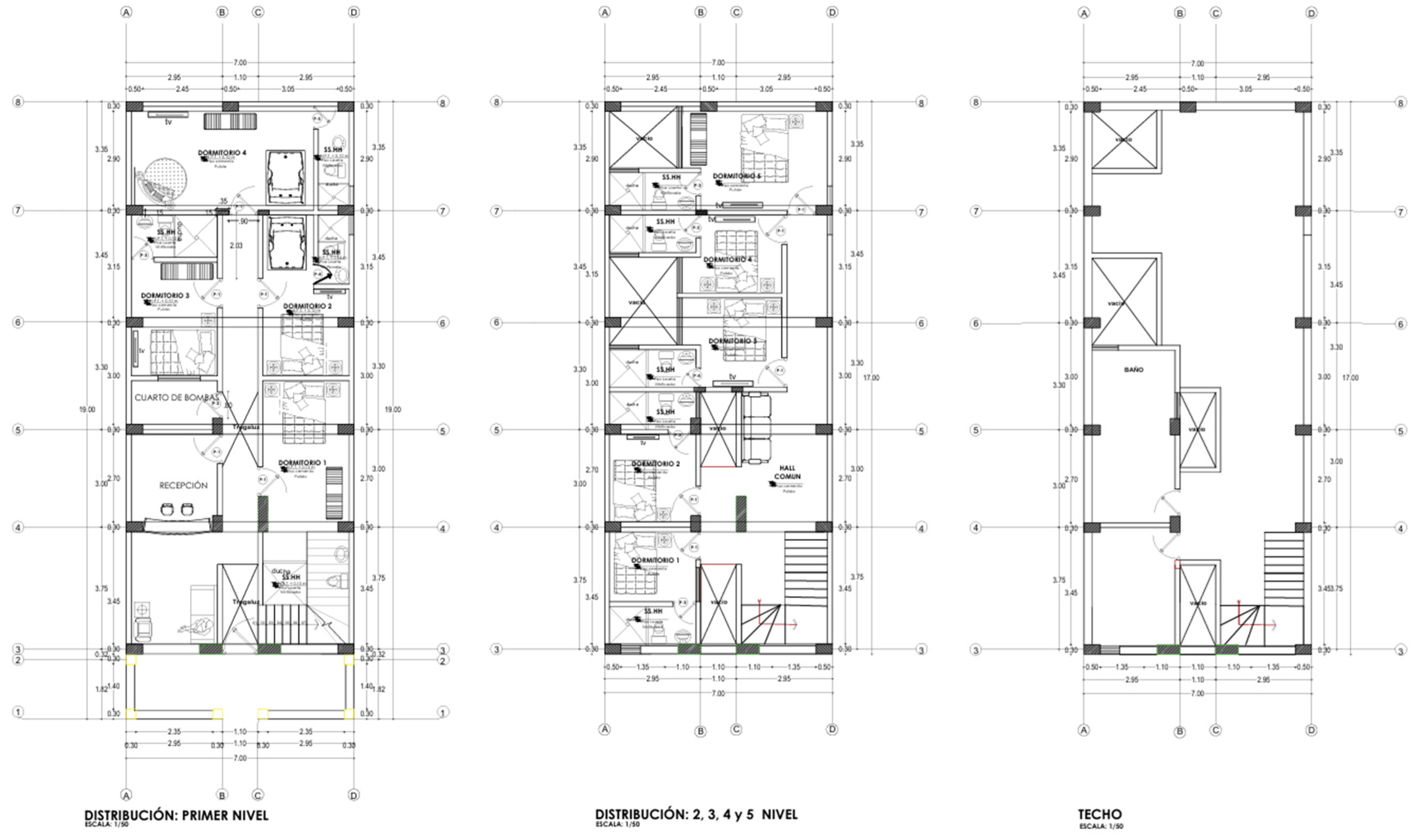
The project was developed considering a five-story hotel building located in the city of Trujillo, Peru, as shown in
Figure 1. The research aims to integrate viscous fluid dampers to enhance the seismic performance of the structure by evaluating their influence on the control of displacements, interstory drifts, and internal forces, considering that it is an already constructed mixed-structure building, unlike the proposal developed in manuscript Buildings-4044733. [
21]
The results obtained serve as a reference to promote the implementation of energy dissipation systems in mid-rise buildings located in regions with high seismic hazard.
2.3. Structural Modeling and General Parameters
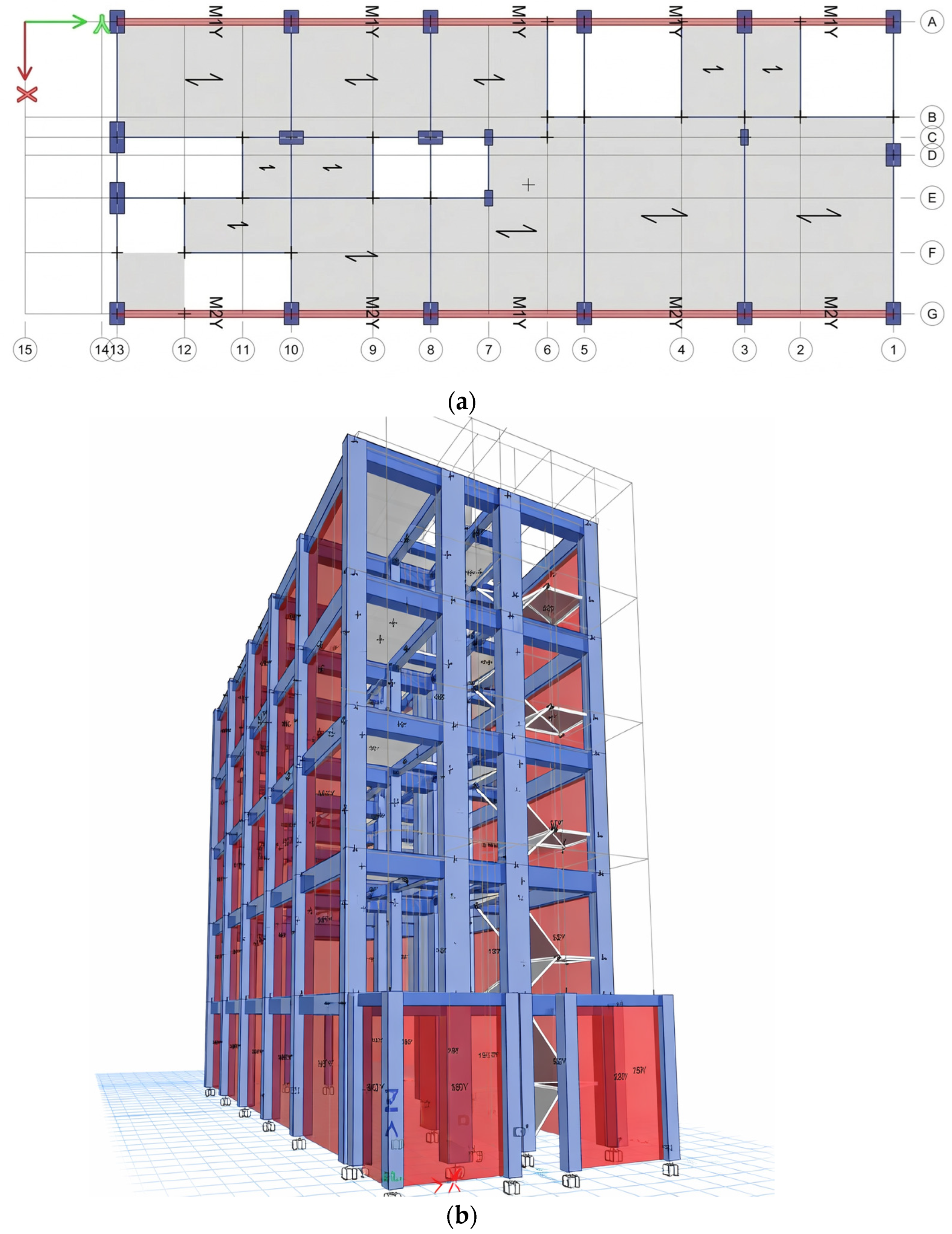
For the development of the structural model, the mechanical properties of the materials were defined based on the structural demands of the building and Peruvian design standards, as shown in
Figure 2. In this study, reinforced concrete with a compressive strength of f’c = 210 kg/cm
2, a Poisson’s ratio of 0.20, and a unit weight of 2.4 tonf/m
3, was considered, while the reinforcing steel was characterized by a yield strength of f’y = 4200 kg/cm
2. The three-dimensional model was developed using ETABS version 22 software, employing frame elements for columns and beams, and shell elements for slabs and walls.
3D modeling enabled the representation of columns, beams, slabs, and walls, as well as their interactions, by consistently transferring the properties defined in the design drawings into the ETABS environment. Columns with cross-sections of 0.30 × 0.50 m and 0.30 × 0.30 m; beams of 0.30 × 0.50 m, 0.30 × 0.40 m, 0.20 × 0.30 m, 0.20 × 0.20 m and 0.25 × 0.40 m; and solid slabs with a thickness of 0.20 m were defined. Design loads were also applied, including a dead load of 0.300 tons/m2 and a live load of0.200 tons/m2. Fixed support conditions were assigned at the base in all directions, and rigid diaphragms were defined for each floor level, allowing an adequate representation of the structural system behavior. These conditions enabled the performance of static analysis, modal response spectrum analysis, and time-history analysis using an accelerogram corresponding to the 2007 Ica earthquake in Peru. From these analyses, interstory drifts and floor displacements were obtained. The results were interpreted and verified in accordance with the parameters established by the Peruvian seismic code E.030. In the X direction, a maximum drift of 0.007123, was observed, exceeding the prescribed limit of 0.007. Based on this finding, further analysis, interpretation, and design were carried out for the implementation of viscous fluid dampers.
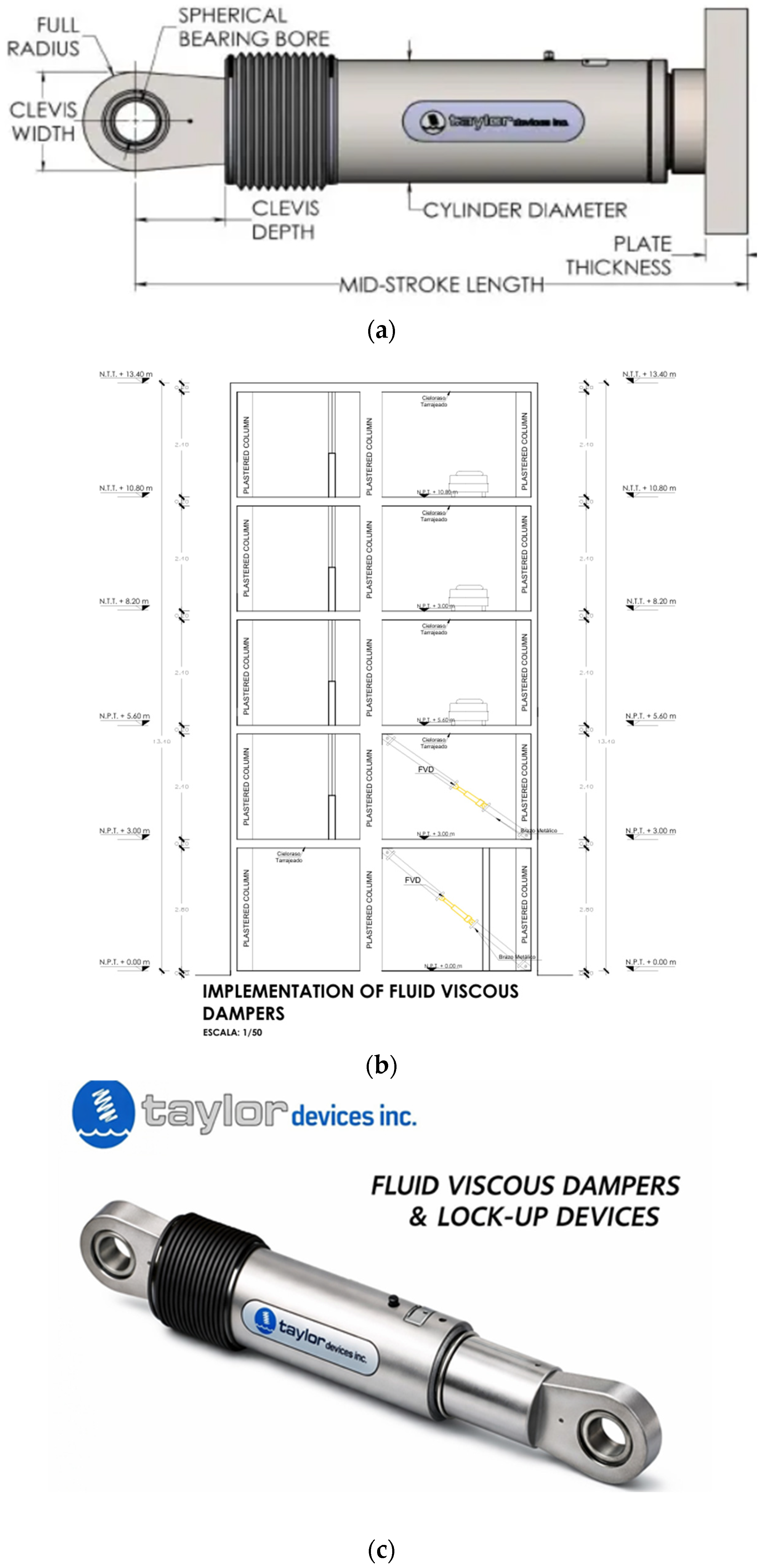
The viscous fluid dampers used in this research consist of a high-strength steel cylinder that houses a viscous fluid (seismic-grade silicone) and a piston with a movable rod, which generates velocity-dependent viscous dissipation during seismic deformation, as shown in
Figure 3. The main components include a sealed cylinder equipped with a dynamic seal to prevent fluid leakage, containing the viscous fluid, and a movable steel piston connected to a rod and articulated bearings. The proper interaction of these components ensures stable and reliable performance under seismic loading.
The design of the three dampers was carried out based on the interstory drift reduction criterion established by the Peruvian seismic code E.030 (limit: 0.007), considering the X direction as the most critical. Based on the maximum drift obtained without dampers (X = 0.0071), a target reduction factor was defined to establish the damping demand required to control the seismic response under a severe earthquake. This led to a target drift value of 0.0033 in the X direction. To satisfy this requirement, viscous fluid dampers manufactured by Taylor Devices were selected due to their stable response, high energy dissipation capacity, and extensive experimental and code-based validation.
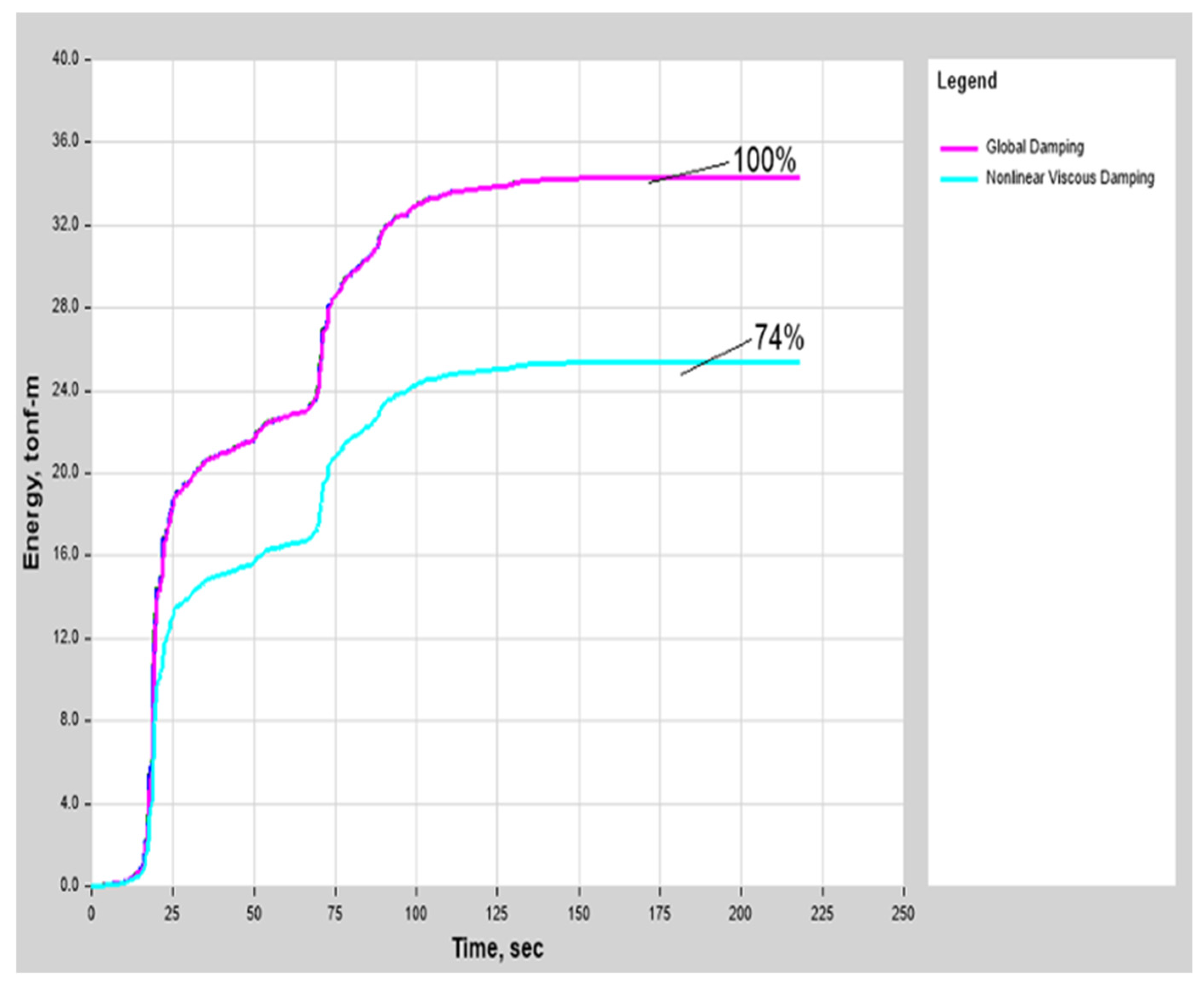
Subsequently, the additional damping required from the dampers was determined using the reduction factor. This calculation considered a natural damping ratio of 5% for the reinforced concrete structure. Based on these parameters, the total damping necessary to reduce interstory drifts from 0.0071 to 0.0033 in the X direction was obtained, corresponding to a reduction of 52.86%. This increase in damping capacity enabled the dampers to absorb approximately 74% of the total seismic energy dissipated by the system.
The equivalent stiffness of the damper system was analyzed by considering the geometry of the steel brace, modeled as an HSS-type section. This analysis made it possible to obtain a total equivalent stiffness of Keq, X =28,705.64 ton/m for the three devices. Subsequently, the nonlinear damping coefficient was determined for the most critical direction (X), optimizing its distribution among the three dampers strategically located at Levels 1 and 2. This configuration ensures efficient implementation under the seismic demands established by the Peruvian seismic code E.030.
2.4. Analysis Without Viscous Fluid Dampers
In the first stage of the study, the structure was analyzed without the incorporation of viscous fluid dampers (VFDs). Static, modal response spectrum, and time-history analyses were performed to evaluate the global behavior of the building, as well as floor displacements and maximum interstory drifts. This stage provided baseline reference values for comparison with the model incorporating viscous fluid dampers.
2.5. Time-History Analysis
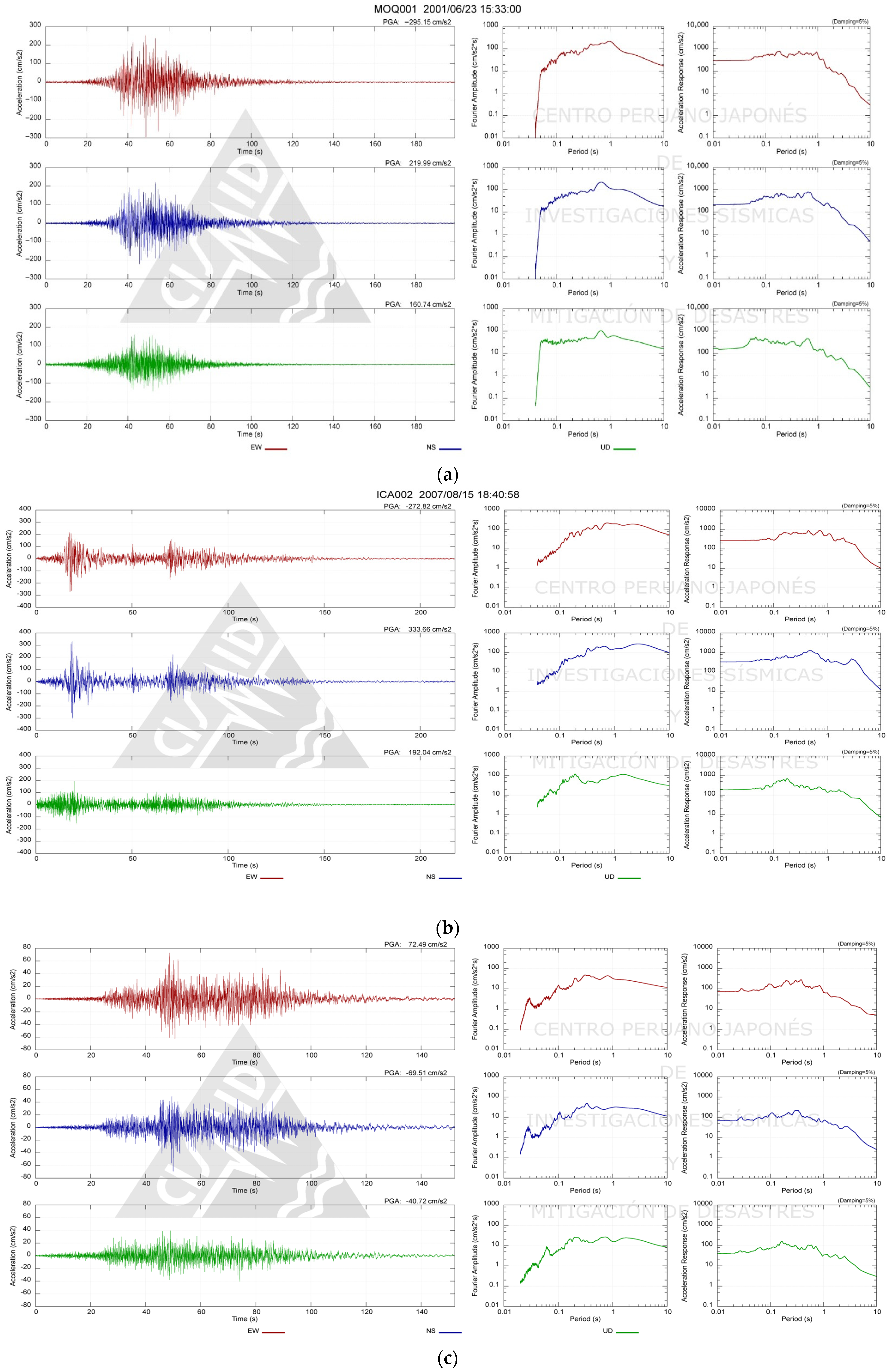
Time-history analysis was conducted to more accurately represent the structural behavior under a real seismic event. For this purpose, three earthquakes were considered; however, the record of the Pisco, Peru earthquake that occurred in 2007, with a moment magnitude of 7.9 Mw, was selected, as it is one of the most significant seismic events in Peruvian territory and representative of the seismic conditions of the country’s northern coast, as shown in
Figure 4. These accelerograms were obtained from the CISMID–UNI database and subsequently scaled in accordance with the E.030 standard [
22], ensuring spectral compatibility with the corresponding seismic zone.
The record was applied in both principal directions of the structural model, considering the global response of the building under real ground accelerations. This analysis made it possible to evaluate the dynamic response of the building and to identify the need for incorporating energy dissipation systems to enhance its structural performance under severe ground motions.
Based on the analysis of these seismic records, it was identified that the maximum interstory drift constitutes the most representative parameter of structural performance, as it directly reflects the level of distortion and allows for the evaluation of the magnitude of seismic demand to be controlled through the incorporation of viscous fluid dampers (VFDs). Therefore, this study focuses on the assessment of the maximum drift obtained from time-history analysis, considering that these values exceed the admissible limits established by the Peruvian seismic code E.030 for high-seismicity zones.
2.6. Modeling with Viscous Fluid Dampers
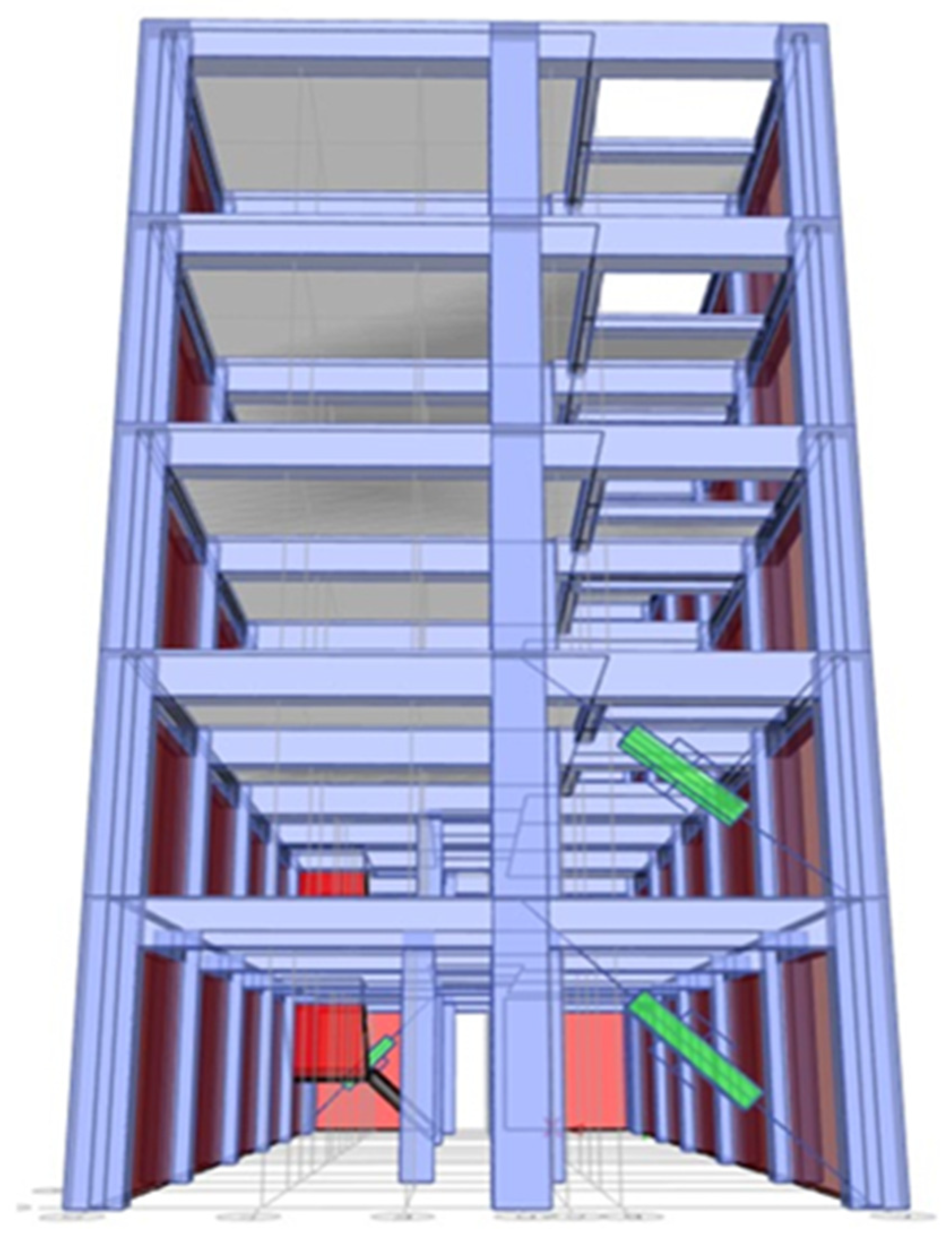
In the second stage, viscous fluid dampers were incorporated into the structural model with the objective of increasing the seismic energy dissipation capacity. The devices were arranged diagonally between beams and columns at each level, forming an auxiliary damping system acting in parallel with the primary lateral load-resisting elements, as shown in
Figure 5.
Each damper was modeled considering its representative mechanical characteristics, defined according to the level of energy to be dissipated by the structure. Subsequently, the seismic analyses were repeated to compare the building response with and without dampers, evaluating variations in displacements, interstory drifts, and internal forces.
4. Discussion
The results obtained allow an evaluation of the seismic behavior of the hotel building without energy dissipation devices, considering static, modal–spectral, and time-history analyses using the 2007 Pisco–Peru earthquake record (Mw 7.9). The structural configuration—moment-resisting frame system in the X direction and confined masonry in the Y direction—exhibits a differentiated response in each direction, which is reflected in the recorded seismic demands. Maximum displacements in the X direction were reduced by 51.16%, while interstory drifts decreased by 52.86% compared to the model without viscous fluid dampers (VFDs). These results are consistent with the findings of Scozzese et al. [
23], who reported displacement reductions ranging between 40% and 60%, particularly when VFDs are installed at levels with higher modal demand. Similar trends were observed by Liu et al. [
24], whose time-history analyses showed reductions in both displacements and interstory drifts between 45% and 65% in structures equipped with viscous fluid devices. These differences between analysis methods are consistent with the findings reported by Jadhav and Vedpathak [
25], who indicated that time-history analysis tends to yield interstory drift values approximately 10% to 20% higher than those obtained from modal–spectral analysis, due to nonlinear dynamic interaction induced by real ground motion records. The values obtained in this study fall within this range, which validates the consistency and reliability of the results. In contrast, in the Y direction, both modal–spectral and time-history analyses resulted in significantly lower displacements and interstory drifts, confirming the higher stiffness provided by the confined masonry walls. This behavior is consistent with the studies conducted by Mavroeidakos et al. [
3], who emphasized that the effectiveness of viscous fluid dampers strongly depends on their placement and alignment with the dominant vibration modes.
Approximately 74% of the incoming seismic energy was dissipated, resulting in a significantly more stable structural response. The magnitude of these reductions is consistent with the findings reported by Saldaña and Scaletti [
8], who documented energy dissipation values ranging between 40% and 70% in Peruvian buildings equipped with hysteretic and viscous damping devices. Overall, the results indicate that viscous fluid dampers significantly enhance seismic performance and represent an efficient solution for controlling the dynamic response of buildings exhibiting critical levels of flexibility.
5. Conclusions
This study evaluated the seismic behavior of a five-story hotel building located in Trujillo, Peru, considering structural scenarios with and without the incorporation of viscous fluid dampers (VFDs). The three-dimensional structural modeling was developed using ETABS software, incorporating the mechanical properties of the materials, the building geometry, and design loads in accordance with current Peruvian regulations. The dampers were strategically placed within the structural system, enabling both static and dynamic seismic analyses using representative earthquake records from the national context.
The main results obtained from the comparative analysis of both structural models demonstrated that the inclusion of viscous fluid dampers allowed for:
- (1)
Significant reduction in maximum displacements and interstory drifts. The building equipped with dampers exhibited substantially lower values compared to the conventional model, remaining within the established regulatory limits and demonstrating the effectiveness of these devices in controlling the seismic response.
- (2)
Increased seismic energy dissipation capacity. The dampers absorbed a significant portion of the seismic energy—approximately 74%—reducing the seismic demand on primary structural elements, such as columns and beams, and contributing to the preservation of structural integrity under severe seismic events.
- (3)
Overall improvement in structural performance without substantial modifications to fundamental dynamic properties. The incorporation of dampers increased the effective damping of the system without significantly altering the vibration periods or the predominant modal shapes, indicating that the seismic performance enhancement is achieved through energy dissipation rather than significant changes in the building’s global stiffness.
While the results demonstrate favorable seismic performance, it is necessary to acknowledge certain limitations inherent to the scope of the study. The analysis was conducted using a limited set of representative earthquake records, which restricts the extrapolation of the findings to all possible seismic scenarios. Furthermore, the research considered a single configuration of viscous fluid dampers, without exploring variations in their number, spatial distribution, or mechanical properties. Additionally, the study relied on a numerical model developed in ETABS, applied to a single representative building case, highlighting the need for future investigations that evaluate different structural configurations and seismic conditions to further validate the findings.