Article

Axial Load–Bending Moment Interaction Diagram of Double Curvature Slender Columns Exposed to High Temperatures


by
Bara’a R. Alnemrawi
1,*,
Rajai Z. Al-Rousan
2 and
Osama K. Nusier
2
1
Department of Engineering and Smart Systems, Faculty of Technical Education, Al Al-Bayt University, Mafraq 25113, Jordan
2
Department of Civil Engineering, Jordan University of Science and Technology, Irbid 22110, Jordan
*
Author to whom correspondence should be addressed.
Buildings 2026, 16(8), 1525; https://doi.org/10.3390/buildings16081525
Submission received: 24 February 2026 / Revised: 27 March 2026 / Accepted: 3 April 2026 / Published: 14 April 2026
(This article belongs to the Section Building Structures)

Abstract

The behavior of Reinforced Concrete (RC) rectangular, slender columns is examined in this study upon exposure to heat-damage effects and fully confined by Carbon Fiber Reinforced Polymer (CFRP) wraps, where a new interaction diagram is proposed. The Nonlinear Finite Element Analysis (NLFEA) method is adopted to comprehensively understand the behavior of the RC columns, where a validation process takes place, followed by a wide parametric study. The studied parameters include the effect of different temperatures (23 °C (room temperature), 200 °C, 400 °C, 600 °C, and 800 °C) and nine eccentricity-to-height ratios where biaxial moments exist (0, 0.1, 0.2, 0.3, 0.4, 0.5, 0.6, 0.7, and 0.8). It has been found that the deformation, toughness, and the axial column’s strength are significantly improved by providing one layer of CFRP sheets for heat-damaged RC columns, while the stiffness behavior is only marginally affected. In addition, increasing the temperature reduces the energy absorption capacity and the ultimate strength of the columns while these are reduced by increasing the loading eccentricity value. However, columns experience a sudden and brittle failure when subjected to combined bending and axial loadings that might be accompanied by steel yielding or buckling of the column’s cross-section. Finally, the interaction diagram between the load and bending actions was constructed by addressing the results of the simulated columns.

1. Introduction

The utilization of concrete material has been widely increased in the construction industry due to its low thermal conductivity and resistance to combustion at high temperatures upon exposure to accidental fire [1]. It has been demonstrated in the literature that the structure’s safety and integrity are consequently affected, besides the significant reduction in its durability [2]. The mechanical properties of the concrete material are significantly reduced, degrading the affected member’s strength, stiffness, and toughness [3]. The damage depends on the applied loading intensity, the exposure temperature, the element’s geometry, and the material properties, all affecting the stress distribution within the inner and outer core of the affected structural system [4]. Researchers conducted several studies to investigate the structural performance of Reinforced Concrete (RC) columns under different loading types (eccentric or concentric) after being exposed to high temperatures for different time durations [5]. Results showed that increasing the high-temperature duration degraded the ultimate capacity by larger percentages, varying between 27 and 38 % after an exposure time of 2–4 h, with higher reduction percentages recorded for the stiffness capacity, as demonstrated by the literature review done by Liu et al. [6].
The structural behavior of RC columns under combined bending and axial stresses can be introduced using the interaction diagrams, where the effect of loading eccentricity in one or more directions is accounted for, and any point on the diagram represents the amount of sustained load by the RC column member [7,8,9]. Several integration methods were investigated to theoretically calculate the stress-resultant composite sections [10]. Generally, columns are vertically loaded structural members through their longitudinal axis with or without eccentricity from their center point [11]. However, moments are induced within the member’s cross-section due to the presence of loading eccentricity associated with the applied axial load that is more resisted by short columns if compared with slender columns having the same cross-section [12]. In addition, the second-order effect takes place within the column’s induced stresses, where nonlinear behavior exists that could be considered during the analysis and design stages [13]. It is well-known that the second order takes place due to the nonlinearity in the column’s geometry or material, and it largely depends on the slenderness ratio of the column and its confinement [14]. Bujotzek and Waldmann [15] stated that the buckling length of a slender column is of major interest due to its direct effect on the nonlinear second-order behavior, as it is directly associated with the slenderness ratio of the column. This was also demonstrated by Hamid et al. [16], where the slenderness and the confinement effect were demonstrated using numerical and analytical approaches. However, columns are usually designed according to the second-order nonlinear effect, where a magnification factor is calculated and represents the curvature type (single or double) as introduced in the design codes [17,18,19].
Exposing the concrete columns to eccentric loading resulted in increasing the amount of induced stresses on the column’s cross-section as a result of the additional bending moment applied [20]. However, the combination of eccentricity and high temperatures worsens the situation regarding the column’s structural performance. It is known that the column’s strength is highly dependent on the ultimate capacity of the utilized concrete material, especially since it is a material with compression-dominant behavior [21,22]. Therefore, the utilization of high-strength concrete could be an efficient solution to provide more strength to the RC column, compared to the utilization of normal-strength concrete material [23].
Using high-strength concrete in slender RC columns with low eccentricity values is advisable, especially where the load-carrying capacity is reached once the concrete compressive strength is exceeded [9]. In addition, the utilization of Carbon Fiber Reinforced Polymers (CFRP) using the wrapping technique, where additional confinement is introduced, ends with enhanced concrete performance and might eliminate the unfavorable brittleness and sudden concrete failure [24]. It was found in the literature that the overall structural performance of the strengthened RC columns with CFRP wrapping is improved, including the toughness, strength, ductility, and stiffness, where the lateral expansion of the concrete material is restrained by the confinement effect provided by the wrapping process [25]. Limited research exists on investigating the structural behavior of columns subjected to eccentric loading, even though reaching the concentric situation is very difficult, and in most cases, eccentricity exists. Hung et al. [26], in 2024, investigated the behavior of slender columns with double curvature under the effect of high axial loading and stated that high moment magnification appears, and a recommendation for extensive future research was mentioned. In addition, Hamoda et al. [27] investigated the columns’ behavior with a circular cross-section upon exposure to double curvature and found that the column’s strength requires closer attention, and the existing research is not enough.
The behavior of RC columns depends on their slenderness, where the performance of short columns is totally different from that of slender columns, as the latter suffers from the buckling effect that significantly reduces their axial capacity. Additionally, the behavior of slender columns has not been appropriately investigated in the literature, and more studies are required to fully understand their performance. Moreover, it is essential to include the effect of other parameters on the confined RC columns, such as the presence of loading eccentricity, high-temperature exposure, and curvature. Therefore, addressing the interaction between the load and applied moments is a must that could be fulfilled using the development of interaction diagrams. It was demonstrated that the induced bending moments and the failure possibility are increased by increasing the amount of loading eccentricity. Additionally, for strengthened structural members, the debonding or rupture of the FRP strengthening material is the dominant failure mode. On the other hand, the ultimate strength and stiffness of the strengthened specimen are highly improved, especially in the first stage of the load–deflection curve [28,29]. It was previously demonstrated by previous research that heat-damaged RC columns are more efficient in circular cross-sections compared with rectangular or square-shaped ones [30]. Moreover, the direction of the used fibers plays a major role in their efficiency, whereas placing them along the column’s perpendicular axis plays a major role in restoring the original structural behavior regarding the axial strength. In contrast, the stiffness of the member before the steel-yielding occurrence cannot be restored [31], as the confinement effect is more significant regarding strength enhancement.
Limited research exists in the literature considering the construction of axial loading–bending moment interaction diagrams for strengthened RC slender columns with single curvature, while the double curvature effect was not considered for FRP-confined columns [32]. Bisby et al. [33] introduce an interaction diagram for a confined RC column, but modifications regarding the reduction percentages are still required. Therefore, to the best of the author’s knowledge, the behavior of heat-damaged RC slender columns confined with CFRP composites has not been previously studied, including the loading eccentricity-to-column’s height ratios e / h where nine values were considered (0, 0.1, 0.2, 0.3, 0.4, 0.5, 0.6, 0.7, and 0.8) formed using nine biaxial eccentricity values (0, 12.5, 25.0, 37.5, 50.0, 62.5, 75.0, 87.5, and 100.0 mm). In addition, the effect of the exposure temperature was included to examine the behavior of RC columns confined with CFRP wraps using five values covering normal and high temperatures (23 °C, 200 °C, 400 °C, 600 °C, and 800 °C).

2. Significance of the Study

Exposing the RC structures to accidental fire harmfully affects their structural components, where damage occurs due to the high temperatures and the mechanical characteristics of their constituent material are degraded. Therefore, upgrading their structural capacity is essential and could be achieved using several approaches, such as CFRP wrapping, where restoring and enhancing the structural performance of the RC columns could be achieved using low-cost material. However, further research is required on the feasibility and efficiency of the utilization of the strengthening material for the heat-damaged columns under eccentric loading with different e / h ratios. In addition, there is a need to easily investigate the confined column’s behavior using a simple and direct approach; therefore, an interaction diagram is required with conservative and accepted predictions. The NLFEA method was utilized to examine and achieve the expected goals in this study regarding the structural behavior of eccentrically loaded RC slender columns under the effect of high temperatures and CFRP confinement.

3. The Nonlinear Finite Element Analysis Program

3.1. General

The ANSYS software 16 [34] was adopted to investigate the behavior of confined columns subjected to loading eccentricities and high temperatures. The system was discretized into small elements and solved using the Newton–Raphson iterative procedure [35]. Models were first validated against experimental data and then extended to study further parameters using fifty simulated models, followed by detailed results analysis and discussion. Many limitations are associated with the NLFEA method, including computational cost, assumptions correctness, accuracy, and reliability. However, this was overcome by the performed sensitivity analysis, where the best computational time was ensured without affecting the system’s accuracy of the performed simulation.

3.2. Experimental Work Review

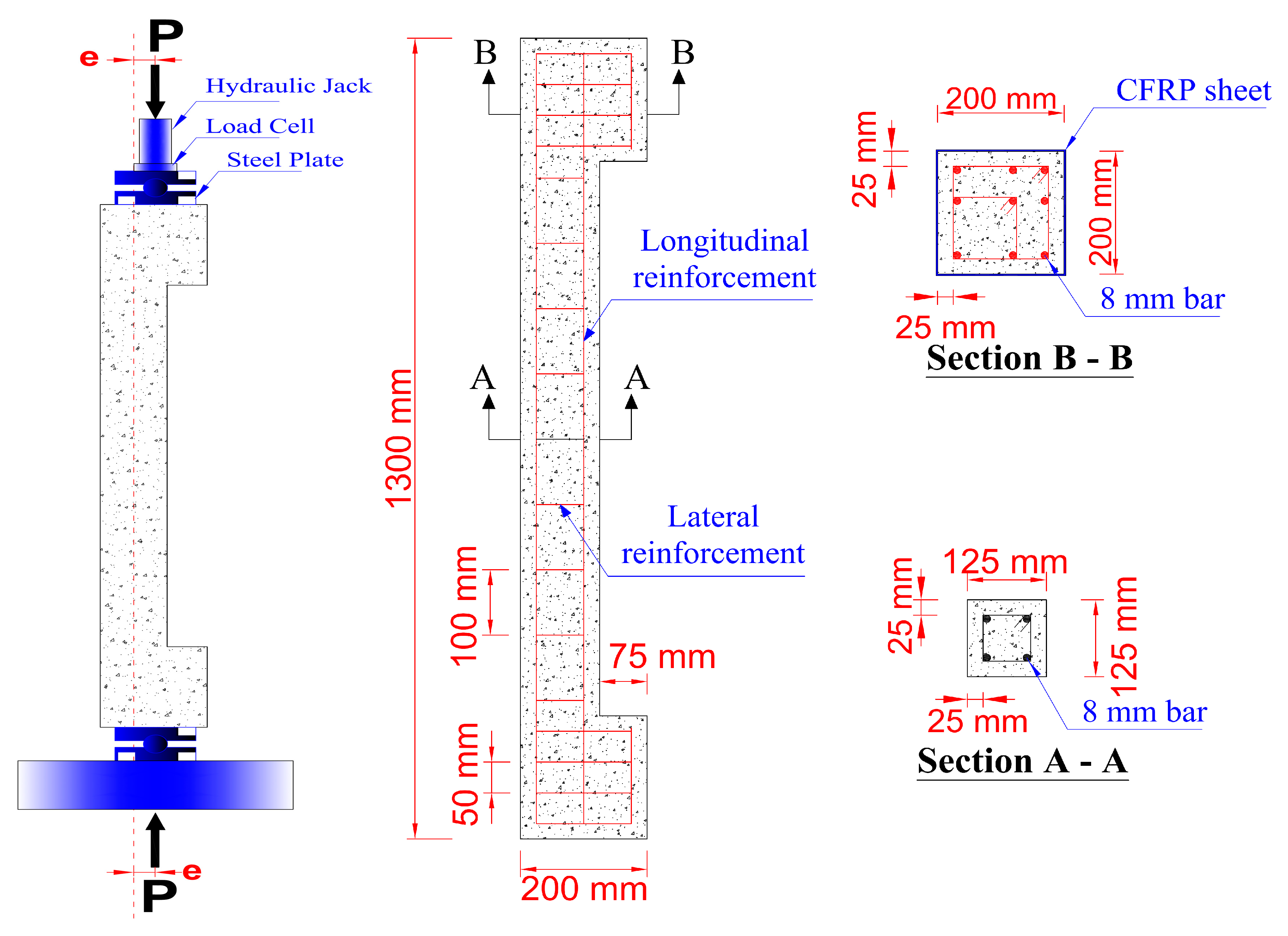
The validation of the NLFEA models was achieved using the experimental work of Cengiz et al. [36], where different CFRP configurations were utilized. Square-shaped columns of 125 mm sides were used with a length of 1300 mm and two RC brackets of 200 × 200 × 200 mm3 attached at the column’s two ends for the application of the eccentric loading, with a 34.67 slenderness ratio calculated according to the ACI 318-19 code [17]. The detailed specimens are illustrated in Figure 1, where the loading and testing conditions are illustrated with two pinned-end boundary conditions. In addition, the induced strain values were recorded at four different locations within the middle region of the column’s height. Loading was applied incrementally, and the loading and deflection values were recorded throughout the loading history.

3.3. NLFEA Description

3.3.1. Material Properties

The concrete material behavior was simulated using the stress–strain theoretical model proposed by Wee et al. [37], where the experimentally obtained concrete compressive strength was equal to 50 MPa and the adopted Poisson’s ratio was 0.2. The theoretical equations are illustrated in Equations (1)–(6). Additionally, the open and closed shear transfer coefficient values were taken as 0.2 and 1.0, respectively, with the modulus of elasticity represented by the slope of the initial linear part in the stress–strain curve and equal to 40 and 472 MPa.
f c = f c / × β × ε ε o β 1 + ε ε o β   0 ε ε o
f c = k 1 × f c / × β × ε ε o k 1 × β 1 + ε ε o k 2 × β   ε > ε o
ε o = 0.00078 f c / 0.25
β = 1 / 1 f c / ε o E i t
k 1 = 50 f c / 3
E it = 10200 f c / 1 / 3 = 40472   MPa
It is well-known that the effect of high temperatures can be addressed using two procedures: mechanical property degradation and thermal variation. It was demonstrated in the literature that both ways are correct and could be adopted during the NLFEA simulation of the structural member under consideration. In this study, the method of mechanical property degradation was adopted, where the stress–strain curve of the concrete and steel material was modified based on experimental and theoretical data from the literature, along with their structural characteristics. Additionally, it was found and proved in the literature that this method could effectively capture real behavior, and minor differences appear that will not affect the study’s conclusions.
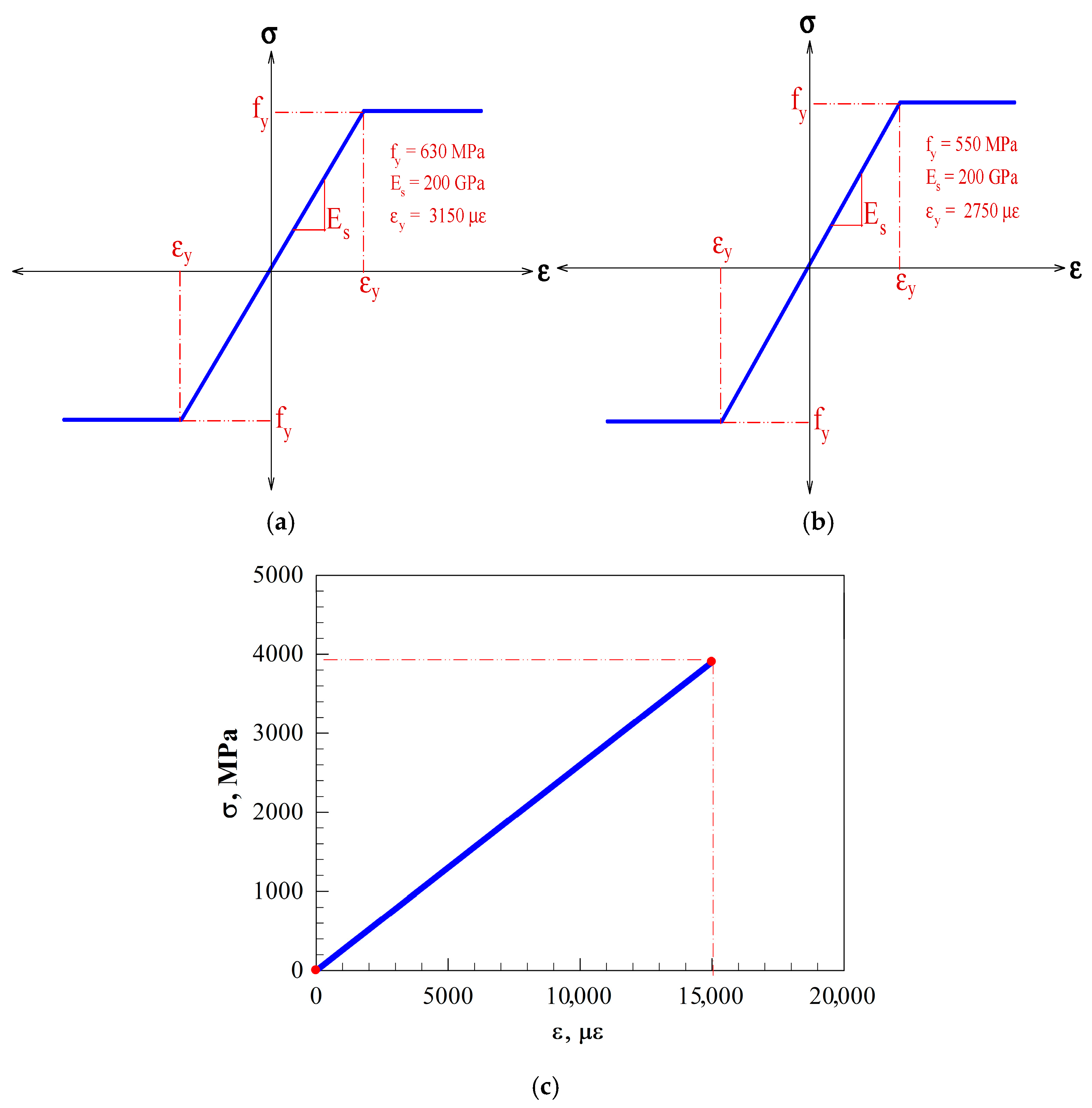
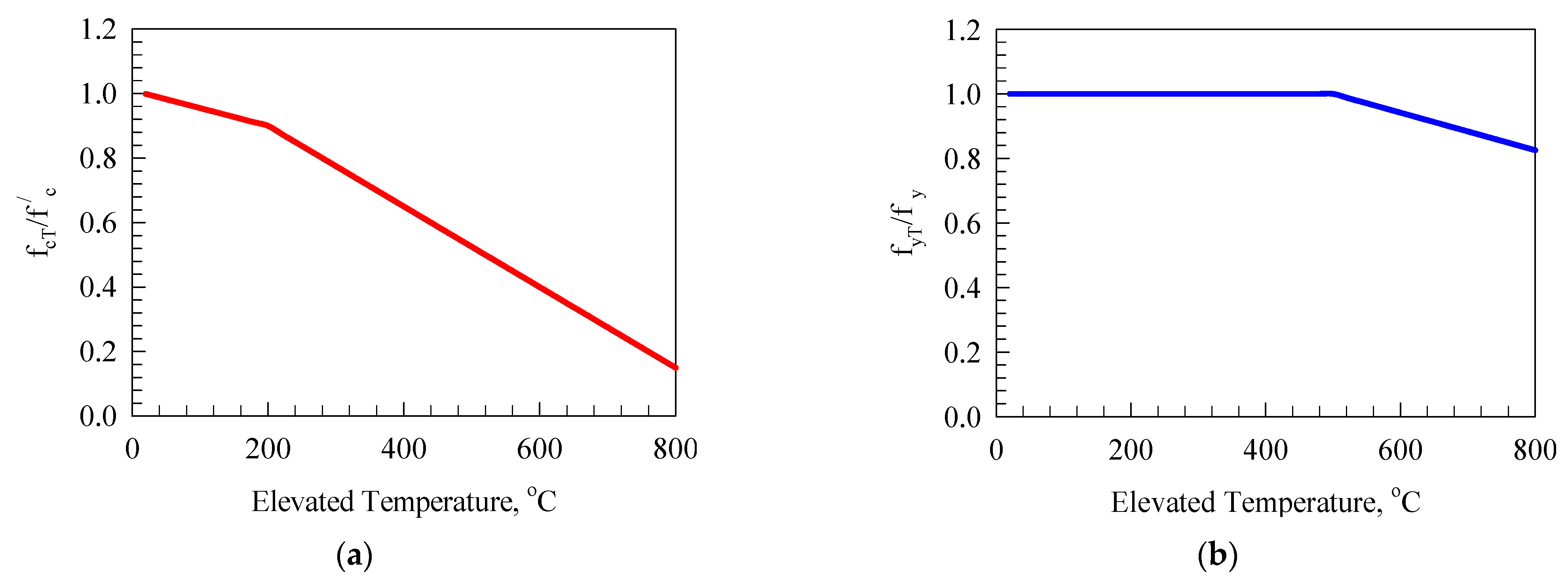
The steel material was modeled using the bilinear perfectly plastic relationship that appears in Figure 2a,b with 550 MPa and 630 MPa yielding strengths for the transverse and longitudinal reinforcement, respectively, with 200 GPa and 0.3 for the elastic modulus and Poisson’s ratio. Finally, the 0.166 mm thickness CFRP was simulated as a linear elastic material with 3900 MPa and 0.015 for the ultimate stress and strain values, respectively, as shown in Figure 2c. However, the concrete structural characteristics are degraded upon being subjected to elevated temperatures, and the resulting degradation was adopted by Chang et al. [38], as shown in Figure 3a. In contrast, the steel reinforcement is minimally affected, as introduced by Tao et al. [39] and shown in Figure 3b. It should also be illustrated that the degradation in the CFRP material was not addressed since the strengthening material was applied after the high temperature was applied, and this only affects the bond between the concrete and the CFRP material, as illustrated in the following sections.

3.3.2. Types of Elements

Materials were simulated using the elements available in the ANSYS library to capture the real behavior of the concrete, steel, and CFRP materials. The nonlinear behavior of concrete was captured, including its cracking and crushing behavior, using the SOLID 65 element with the translational and rotational abilities in the three directions at each of its eight nodes, where plastic deformations are also captured. In addition, the LINK 180 element was utilized to simulate the steel reinforcement behavior with two nodes, each having three rotational and translational abilities in all directions, enabling the real capturing of the stresses and strain values at the integration point of each node. Finally, the uniform stress distribution within the column’s cross-section confined by CFRP was guaranteed using the SOLID 185 element to model its composite behavior.
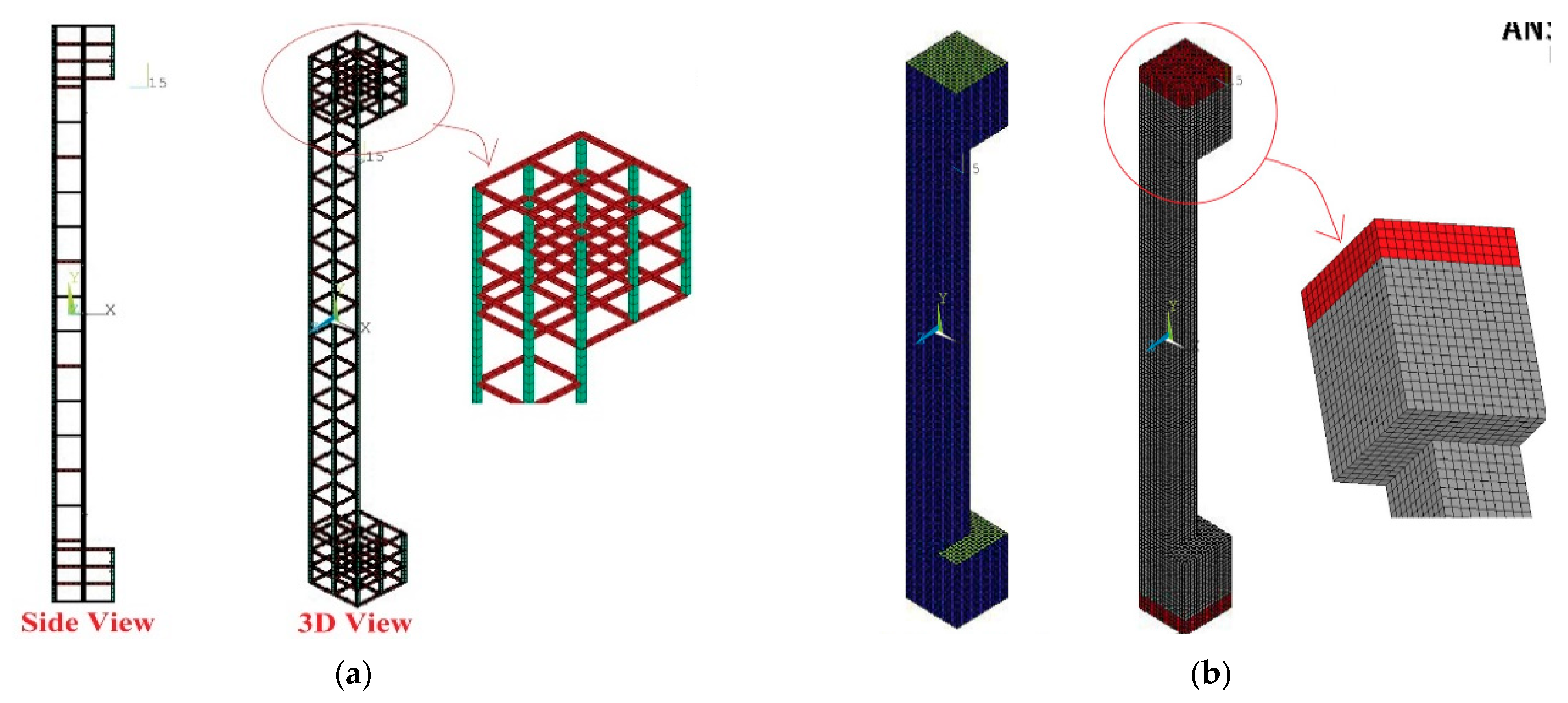
A perfect bond was assumed between the concrete and steel materials, where they share the same node at their interface; a perfect bond was also assumed at the steel plate contact region with the concrete material. The interfacial bond between the concrete and CFRP material was modeled in this study using a theoretical expression previously derived and verified by Haddad et al. [40] on the bond behavior of concrete and CFRP material after exposure to high temperatures, considering the temperature value and the geometrical dimensions (length and width) for the two interfacial materials. It is also important to mention that the model assumed that the CFRP strengthening material is applied as a strengthening action after the concrete is degraded and the CFRP characteristics are not affected, which is the same assumption adopted in this study. The interfacial zone was modeled using two elements available in the ANSYS software (CONTA 174 and TARGE 170). The first model used is related to Lu et al. [41], while the behavior under different temperature levels was adopted from the previous work of Haddad et al. [40]. Consequently, the debonding and failure possibilities could be easily captured. The maximum bond strength τ m a z and its corresponding slippagae capacity s 0 are calculated as given by Equations (7) and (8), where f t is the concrete tensile strength, two regression factors α 1   and   α s consider the effect of high temperatures, and β factors considering the ratio between the FRP and concrete length or width are given by Equations (9)–(11).
τ m a x = α 1 α τ β w ,   τ β L f t
s o = α 1 α s β w , s β L f t
β L = 2.25 + L f L c 1.25 + L f L c
β w , τ = 2.25 b f b c 1.25 + b f b c
β w , s = 0.25 + b f b c 2.5 b f b c
The expressions of the regression factors are illustrated in Equations (12) and (13) and depend mainly on the temperature value T .
α c ,   τ ,   N W A C = 10 6 T 2 3 × 10 4 × T + 1.01
α c ,   s ,   N W A C = 2 × 10 5 T 2 5.2 × 10 3 × T + 1.0963

3.3.3. Meshing, Boundary, and Loading Conditions

The failure criterion introduced by William and Wranke [42] was adopted based on the Von Mises failure criterion, where failure occurs once the stress state point lies outside the failure surface [43]. Loading was applied in small steps using the iteration procedure of Newton–Raphson, where the step size was determined automatically depending on the solution convergence. The studied structural system was meshed with a 12.5 mm element size, as shown in Figure 4, and pinned boundary conditions were provided at the column’s end, where displacement was constrained. A pinned support can resist both vertical and horizontal forces, but not for a moment where that rotational freedom is fully preserved, and the end plates prevent artificial fixity. They will allow the structural member to rotate, but not to translate in any direction. Many connections are assumed to be pinned connections even though they might resist a small amount of the moment in reality. Loading was applied using two eccentric points that were coupled to the steel plates to prevent any excess stress concentration. In addition, the effective slenderness ratio (kl/r) for the simulated NLFEA columns was equal to 34.67, which clearly states that the columns simulated in this study were all slender column types. Finally, geometric nonlinearities were enabled to capture the second-order P-Δ effect and get accurate results for the interaction curves generated.

3.4. Control and Confined Specimen Validation

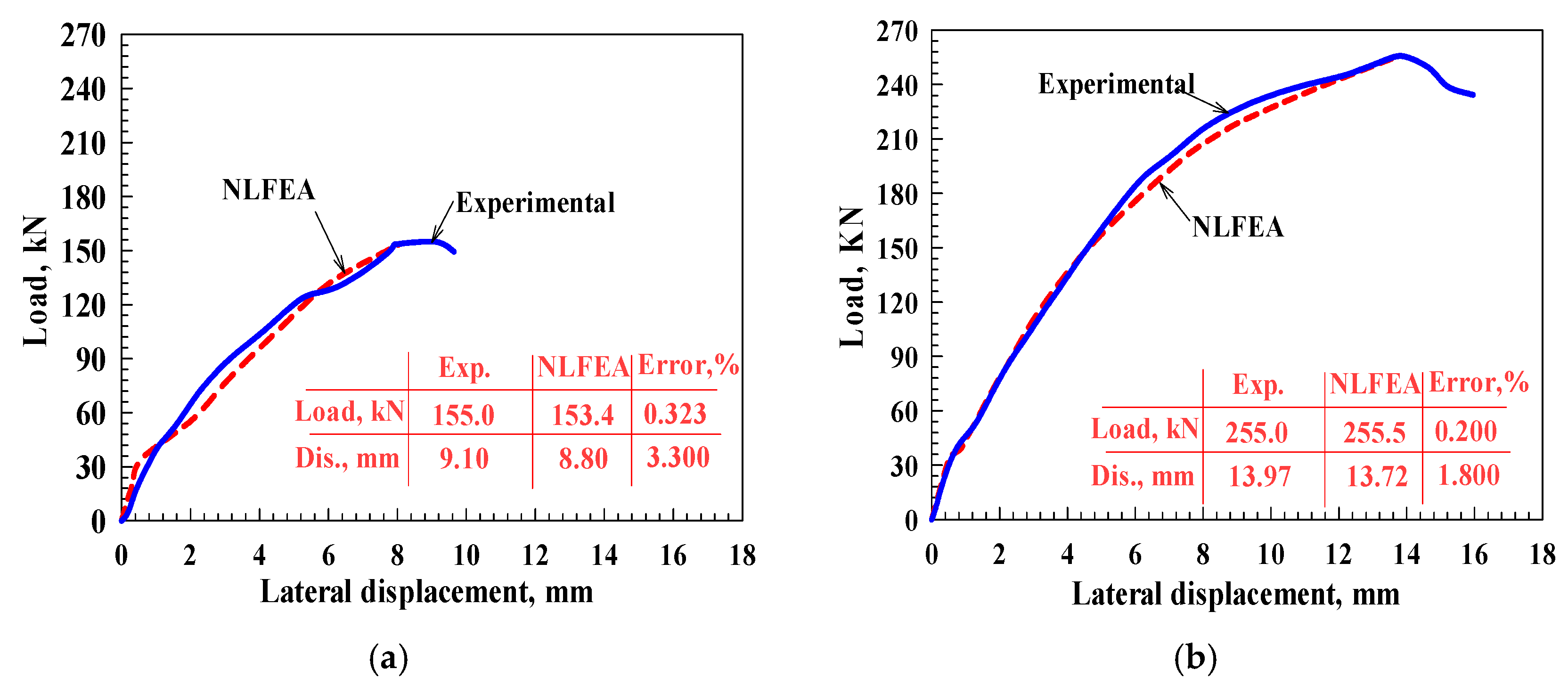
Validation of the (C2-0) control specimen from the experimental work of Cengiz et al. [36] was used, where the load–deflection behavior was compared between the simulated and tested specimens, as appears in Figure 5a, where a high correlation was revealed with minor differences. In addition, the behavior of the strengthened confined RC columns with CFRP composites was also validated using the (C2-I) specimen, as presented in Figure 5b.

3.5. Studied Parameters

A total of fifty NLFEA models were simulated using the ANSYS software. However, the RC column’s length was kept constant at 1700 mm while equal biaxial eccentricities were induced, resulting in nine different eccentricity-to-height ratios (0.0, 0.1, 0.2, 0.3, 0.4, 0.5, 0.6, 0.7, and 0.8) to represent the full possible cases required to generate the interaction diagram between the pure axial and pure bending loading cases. Moreover, specimens were divided into five groups depending on the exposure temperatures (23, 200, 400, 600, and 800 °C) that were chosen as the normal and maximum values where the CFRP strengthening still had an effect. However, it is believed that columns exposed to 800 °C temperature lose their material strength, and no more loading can be sustained; therefore, no higher temperatures were considered. In addition, the temperature effect was applied using the reduction percentages in the material and bond strength based on previously conducted experimental testing. Specimen designations adopted in this study were as follows: the first letter (C or B) stands for the type of the studied structural element (column or beam), the second is for the eccentricity value in mm, and the last one stands for the temperature value.

4. Results and Discussion

4.1. Failure Modes and Load vs. Concrete Deformations

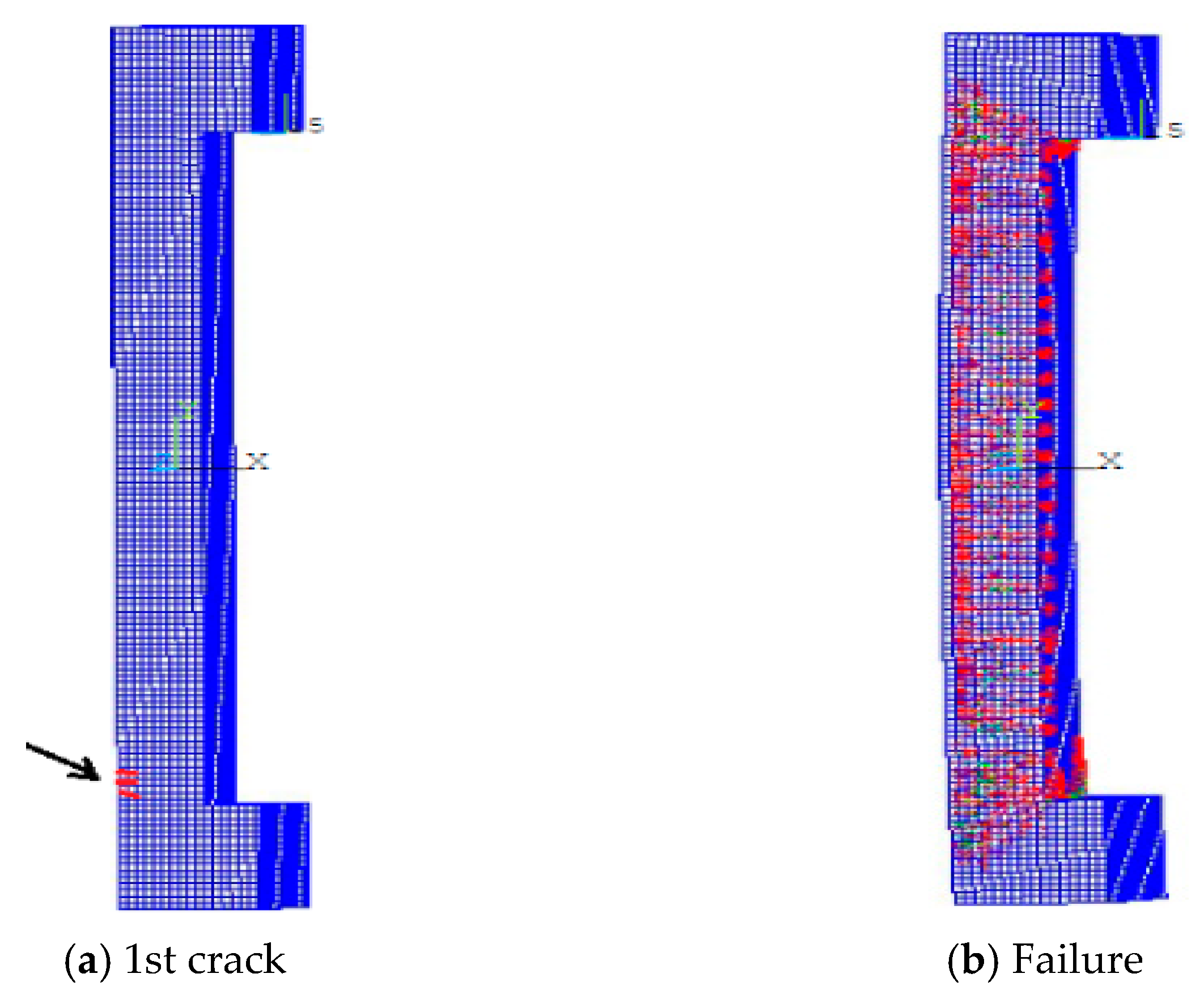
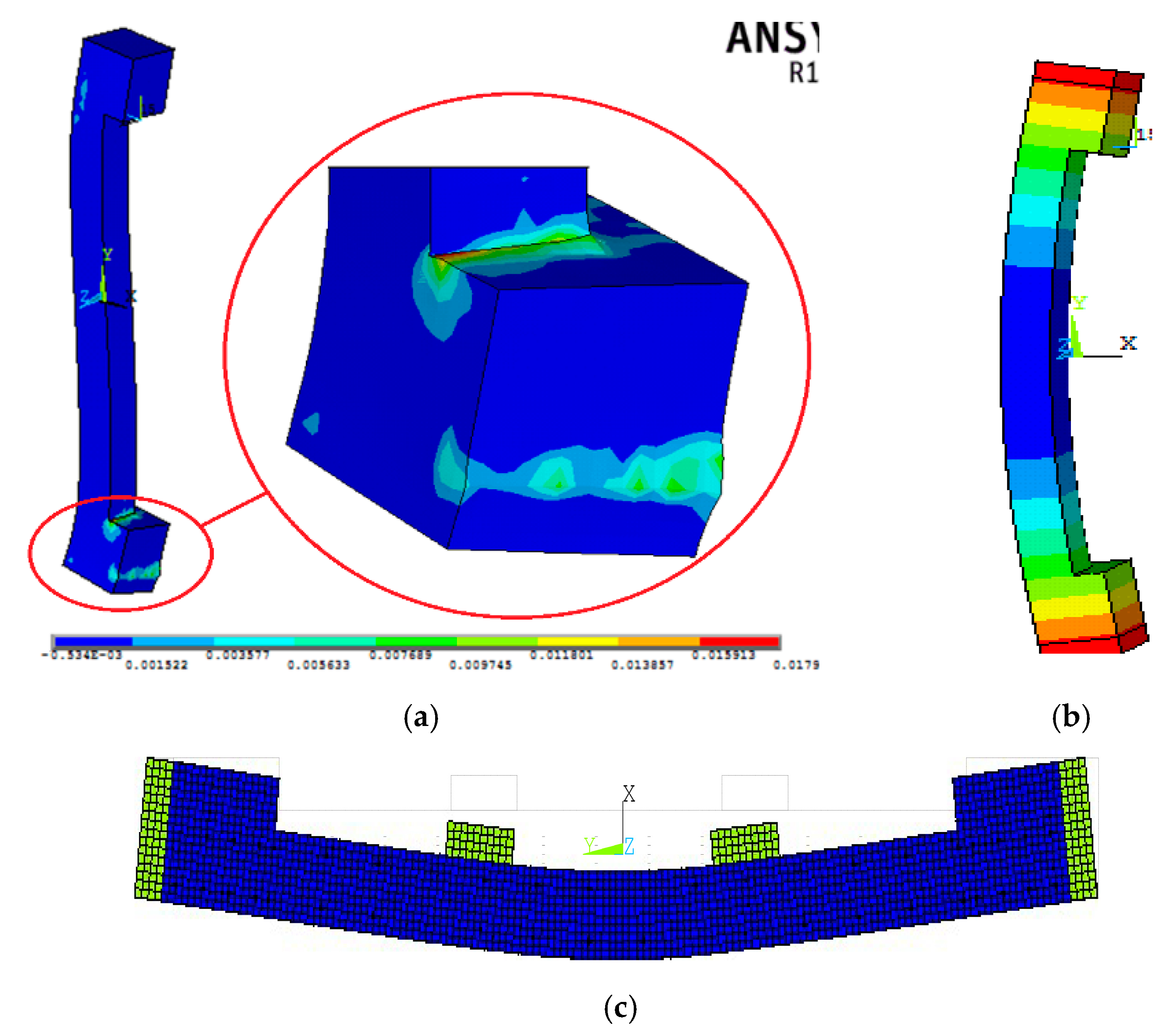
This section introduces the failure modes and the interaction between the load and concrete deformations. The test results of all the simulated models are presented in Table 1, including the strength and serviceability characteristics. A comparison was made between the failure mode of an RC slender column and an RC beam exposed to pure bending moment subjected to four-point loading, as shown in Figure 6. This was presented to highlight the failure mode of each case separately and connect the results with the behavior of RC columns subjected to double curvature (axial compression and bending moment). Figure 7 presents the cracking propagation process of the columns subjected to axial loading and bending moment at two main stages (first cracking and final cracking).
Comparing the results of Figure 6c and Figure 7 reveals that cracking is propagated within the connection region in the two cases as a result of the bending moment and further extends to other regions upon increasing the amount of applied loading. This ends with a column in the final failure mode with a buckled shape. It was also found that columns with wrapped CFRP show that the failure brittleness was reduced upon the addition of the high-strength material that provides confinement to the column’s concrete core. However, the presence of high temperatures increases the brittleness of the concrete material by different percentages depending on the temperature value. Therefore, the situation is worsened by the combination of the bending moment and high temperatures, where the concrete becomes weak, and the CFRP wrapping sheet helps in reducing the safety concerns by adding more strength and ductility to the RC column, but this is still not enough to achieve full ductile behavior, and caution is a must. This is confirmed by Mostofinejad et al. [44]’s observations on the generation of the failure modes for columns wrapped with CFRP sheets and subjected to loading eccentricities and high temperatures.
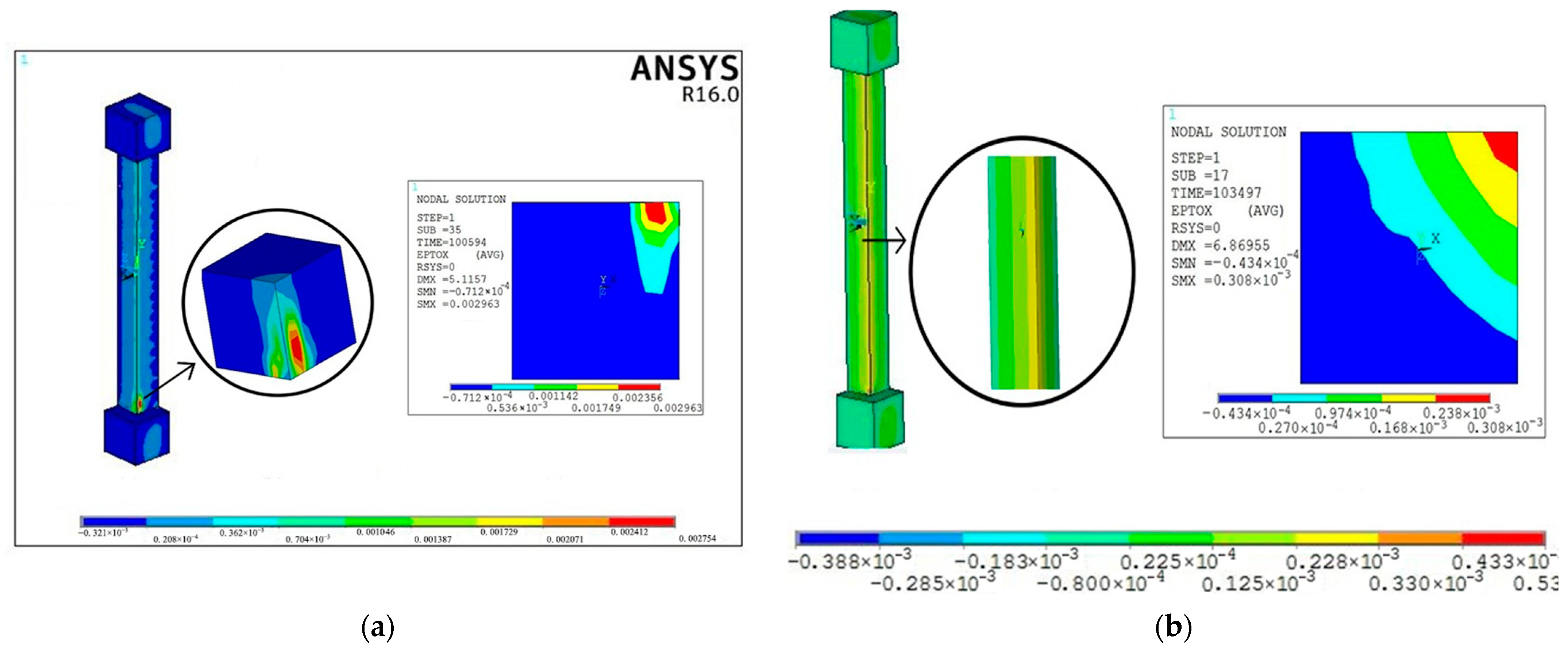
Moreover, the maximum induced lateral strain values are presented in Figure 8, where the strain values exceed the failure strain of the plain concrete. Once the maximum strain of the concrete material exceeds its failure strain, the ultimate capacity of the columns is significantly reduced, and the residual capacity is only carried out by the softening and confining behavior mechanisms. The failure modes of the unconfined and confined columns are presented in Figure 8a,b, respectively, where the effect of the CFRP strengthening can be highlighted. The failure brittleness was significantly reduced, and warnings were enabled once the concrete was crushed by the additional time provided by the CFRP confining effect, which ended with breaking the fibers of the wrapped material. The behavior of the slender columns was found to be highly affected by the geometric nonlinearities, where the deflection and bending moment values were magnified. Therefore, the inclusion of this effect in the design procedure is a must since columns no longer behave as pure-compression structural elements, but as beam-column members. Recent research highlights the increased tendency toward buckling and excessive lateral deformations for slender columns compared to short columns. The failure mode is shifted from material-based failure to instability-based failure, where buckling governs the failure mode rather than material crushing [45].
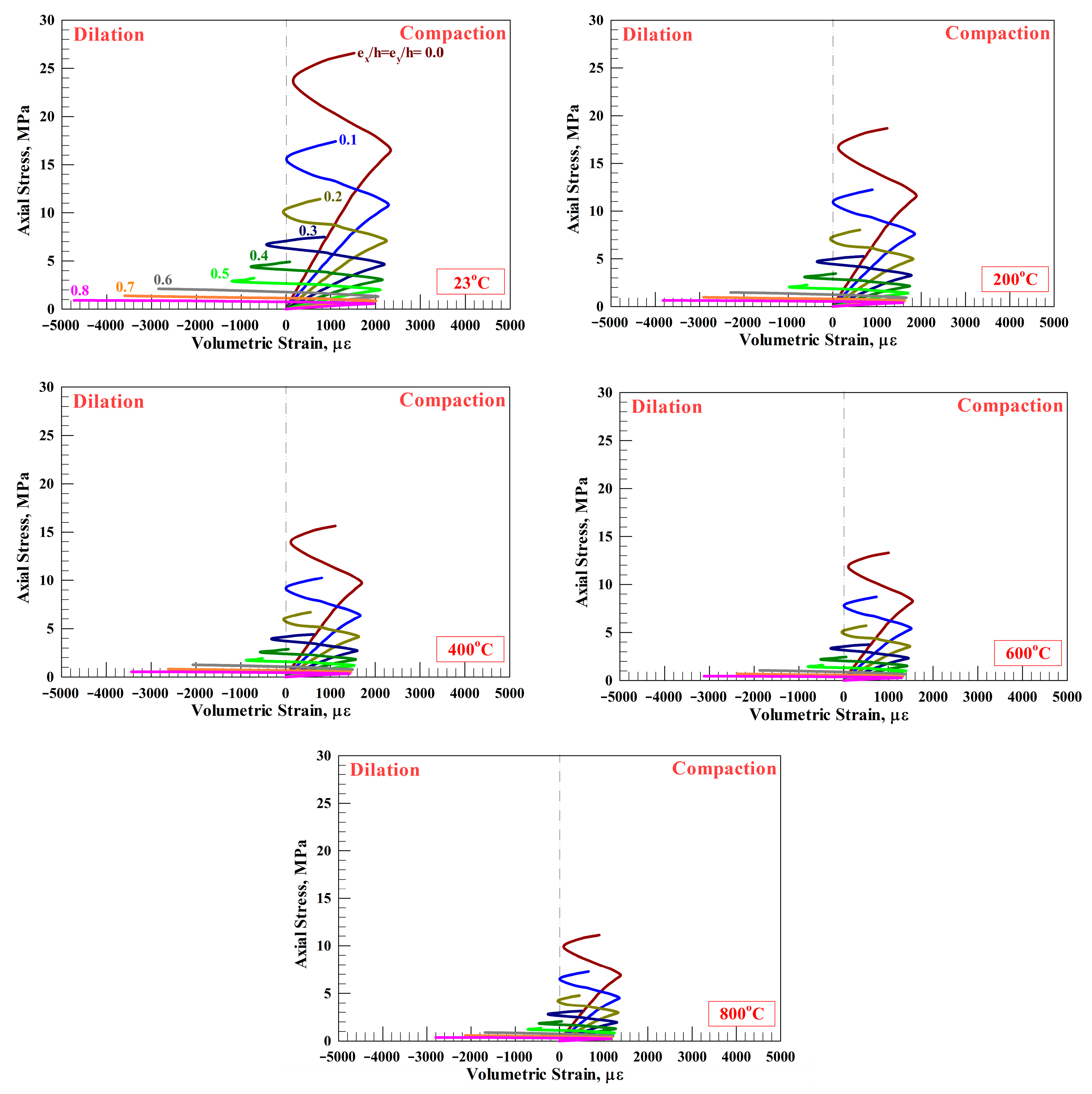
The extent of deformation can be addressed within the concrete material using the change in volume with respect to the original value, known as the volumetric strain, which equals two times the ε l a t e r a l and one time the ε a x i a l values. The axial loading versus the contraction or dilation of concrete material was plotted in Figure 9 for concentrically and eccentrically loaded RC slender columns under five different temperatures. However, increasing the exposure temperature resulted in a decrease in the compaction values while increasing the e / h ratios and increasing the dilation values significantly, which decreased upon increasing the temperature value. This confirms the findings provided by Hu et al. [46], where the properties of the FRP and steel material were examined, and their effect on the column’s deformability and buckling behaviors was addressed. It was found that the column extends upon increasing the exposure temperature and turned local and asymmetrical after being global and symmetric. This could be interpreted as several mechanisms that interact together, especially under the effect of high temperatures. The first mechanism is the difference in thermal expansion of the column’s constitutive materials that results in increasing the original length of the RC column. In addition, the degradation in stiffness of the column components plays a major role, where concrete undergoes significant degradation in its modulus of elasticity and steel gets softer at high temperatures, especially at values higher than 400 °C. Consequently, the column becomes more flexible and shows lower resistance to deformation.

4.2. Load Versus Deflection Behavior

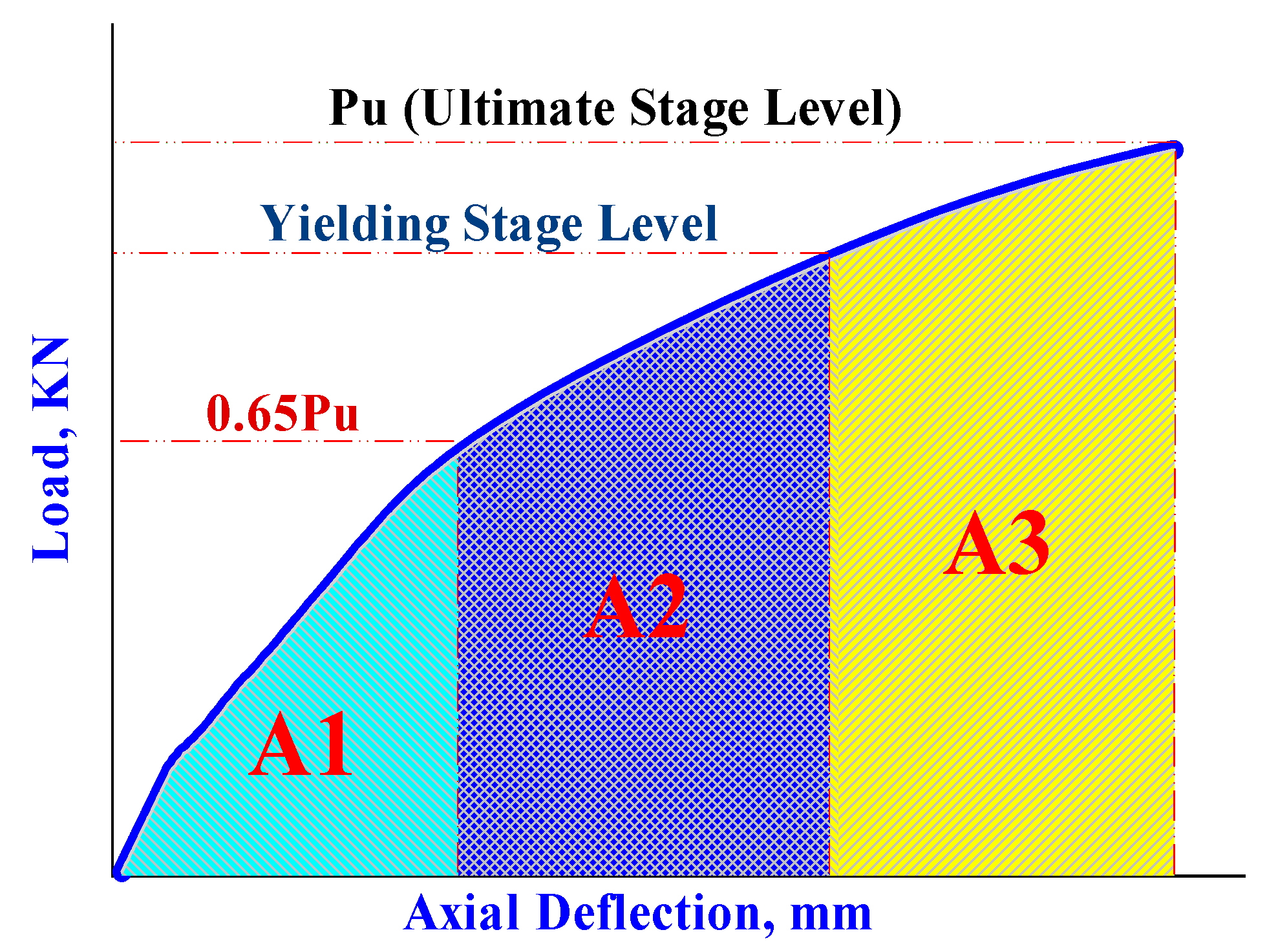
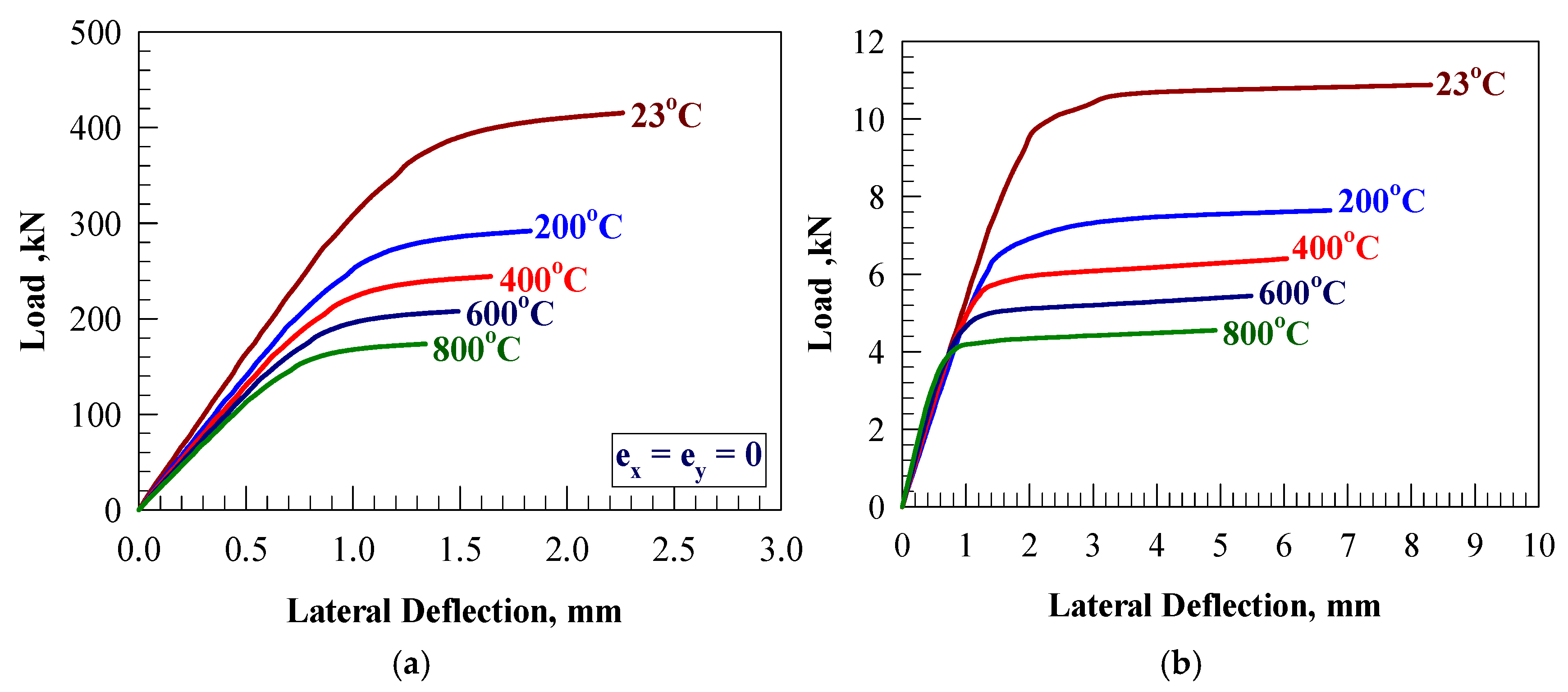
The overall load versus deflection behavior was recorded and plotted for all simulated specimens. It could be divided into three main stages, as per Figure 10. The first stage is associated with small deflection values corresponding to 0.65 times the ultimate axial strength, followed by the second, with nonlinear behavior until 0.86 times the ultimate strength. The final one extends up to the RC column’s failure, where excessive cracking was observed associated with concrete crushing and/or buckling behavior. However, the investigated parameters’ results were divided into two main categories, different temperature values and eccentricities, as shown in Figure 11. The slenderness ratio has a large effect on the behavior of the RC column that is directly affected by the second-order effect and the induced instability. Recent studies demonstrated that the axial strength of the columns is highly degraded upon increasing the slenderness ratio [47]. It was also demonstrated that slender columns show lower ultimate strength values compared to short columns. This could be interpreted by the inclusion of the second-order effect P where the loading is not purely compressive, but additional bending moments appear [48].
Moreover, the behaviors of slender columns and beams were plotted in Figure 11a,b, respectively, for concentric loadings under five different temperatures (23, 200, 400, 600, and 800 °C), where biaxial eccentricity was applied. Observing Figure 11a reveals that the lateral deflection of concentrically loaded RC columns decreases under increasing exposure temperatures, reflecting the occurrence of column buckling. However, beams tested at four-point loading exhibited larger deflection values with a lower ultimate strength, associated with a long plateau observed in the load–deflection curves at all temperature values. It was observed that the load vs. lateral deflection behavior of a column with single curvature (Figure 11a) is different from that of beams with bending moment action (Figure 11b). Therefore, it is expected that RC columns with axial and bending moment action are a combination of the two previously described behaviors.

4.3. Load vs. Strains Behavior and Energy Absorption (EA)

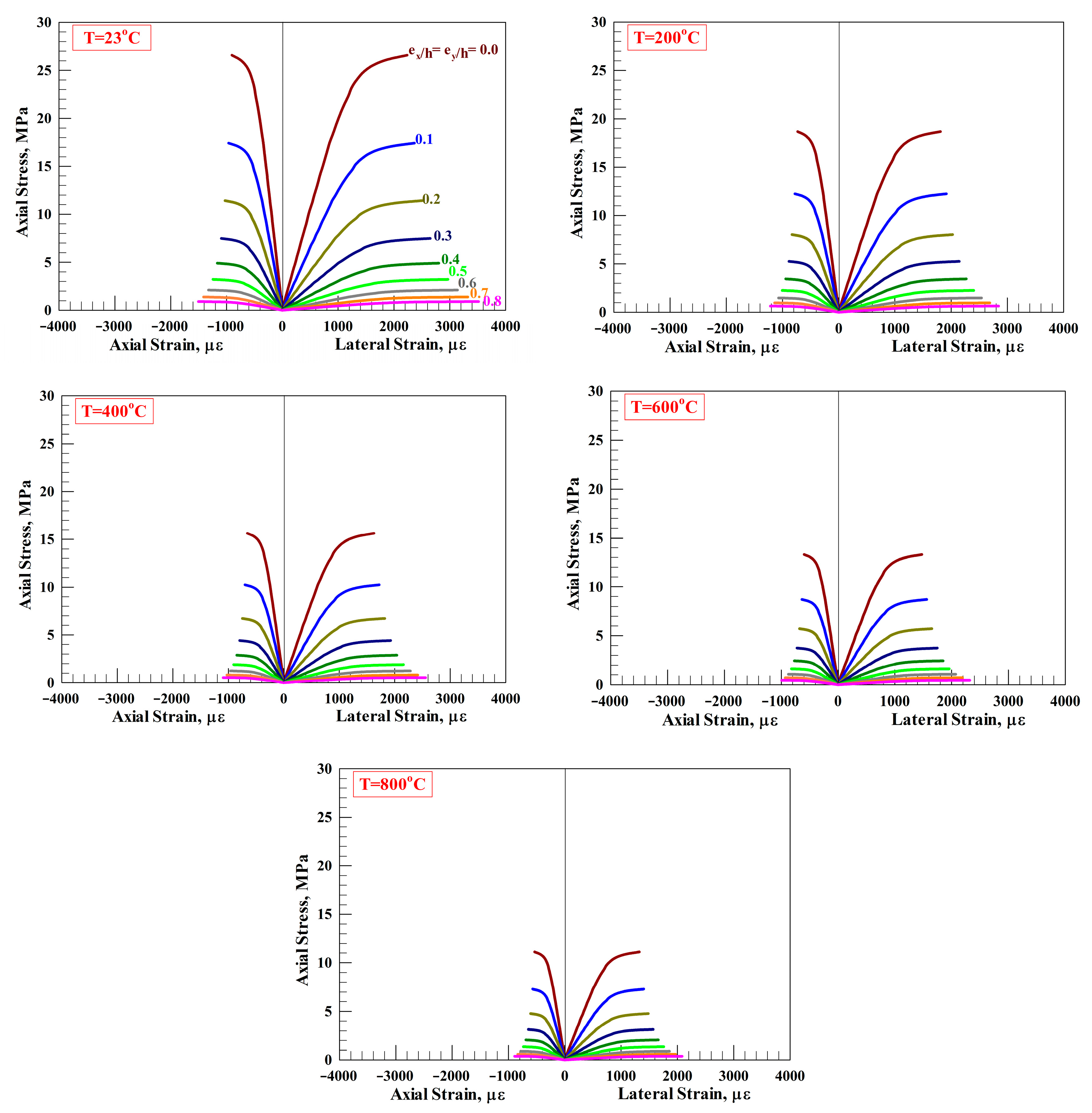
Figure 12 presents the behavior of the columns in terms of the load vs. displacement curves, where both the axial and lateral deflection behavior are addressed. In addition, the detailed results are shown in Table 1 for all the simulated specimens. However, increasing the exposure temperature has a major role in the curve’s behavior, where curves significantly decrease even at low-temperature values (200 °C), while the capacity was lost at high eccentricity-to-height ratios. For concentrically loaded columns, increasing the exposure temperature (200, 400, 600, and 800 °C) reduces the axial strain capacity and lateral strains by different percentages while increasing the e / h ratio increases the strain capacity and reduces the axial loading strength, as per Figure 12 and Table 1. It was found that large curvatures were observed within the RC columns upon failure, associated with larger deformations. In addition, studies in the literature confirmed that the variation within the ductility and curvature characteristics is maximized upon the addition of loading eccentricity and column slenderness [49]. To sum up, induced instabilities in the RC columns reduced their structural safety and increased awareness regarding threatened serviceability as a result of the large variation in the ductility performance.
Table 1. Parametric study results.
GroupNLFEA ModelPu a x i a l , mm l a t e r a l , mm ε a x i a l , με ε l a t e r a l , με
kN% *
1CT23415.40.02.265.599042236
C12.5XYT23272.3−34.52.415.929632366
C25.0XYT23178.4−57.02.576.2610272504
C37.5XYT23117.0−71.82.746.6210942650
C50.0XYT2376.7−81.52.927.0111662804
C62.5XYT2350.2−87.93.117.4212432967
C75.0XYT2332.9−92.13.317.8513243140
C87.5XYT2321.6−94.83.538.3114113322
C100.0XYT2314.1−96.63.768.7915043516
BT2310.9−97.48.35.598682147
2CT200291.9−29.71.834.5210972714
C12.5XYT200191.3−53.91.954.7911692872
C25.0XYT200125.4−69.82.085.0712463039
C37.5XYT20082.2−80.22.215.3613283216
C50.0XYT20053.9−87.02.365.6714153404
C62.5XYT20035.3−91.52.516.0015083602
C75.0XYT20023.1−94.42.686.3516083811
C87.5XYT20015.2−96.32.866.7217134033
C100.0XYT2009.9−97.63.047.1118264268
BT2007.6−98.26.74.5210532606
3CT400244.3−41.21.644.079862439
C12.5XYT400160.1−61.51.754.3010512581
C25.0XYT400105.0−74.71.874.5511202731
C37.5XYT40068.8−83.41.994.8211942890
C50.0XYT40045.1−89.12.125.1012723059
C62.5XYT40029.6−92.92.265.3913563237
C75.0XYT40019.4−95.32.415.7114453425
C87.5XYT40012.7−96.92.576.0415403624
C100.0XYT4008.3−98.02.736.3916413835
BT4006.4−98.56.04.079472342
4CT600207.8−50.01.493.698952213
C12.5XYT600136.2−67.21.593.909542342
C25.0XYT60089.3−78.51.694.1310162479
C37.5XYT60058.5−85.91.814.3710832623
C50.0XYT60038.3−90.81.924.6311542775
C62.5XYT60025.1−93.92.054.8912302937
C75.0XYT60016.5−96.02.185.1813113108
C87.5XYT60010.8−97.42.335.4813973289
C100.0XYT6007.1−98.32.485.8014893480
BT6005.4−98.75.53.698592125
5CT800173.6−58.21.343.318031987
C12.5XYT800113.8−72.61.433.508562103
C25.0XYT80074.6−82.01.523.719122225
C37.5XYT80048.9−88.21.623.929722355
C50.0XYT80032.0−92.31.734.1510362492
C62.5XYT80021.0−94.91.844.3911042637
C75.0XYT80013.8−96.71.964.6511772790
C87.5XYT8009.0−97.82.094.9212542953
C100.0XYT8005.9−98.62.235.2113373124
BT8004.5−98.94.93.317711908
Note: Pu is the ultimate load, a x i a l and l a t e r a l are the axial and lateral deflections, respectively, and ε a x i a l and ε l a t e r a l are the axial and lateral strains, respectively. *: percentage with respect to CFT23.
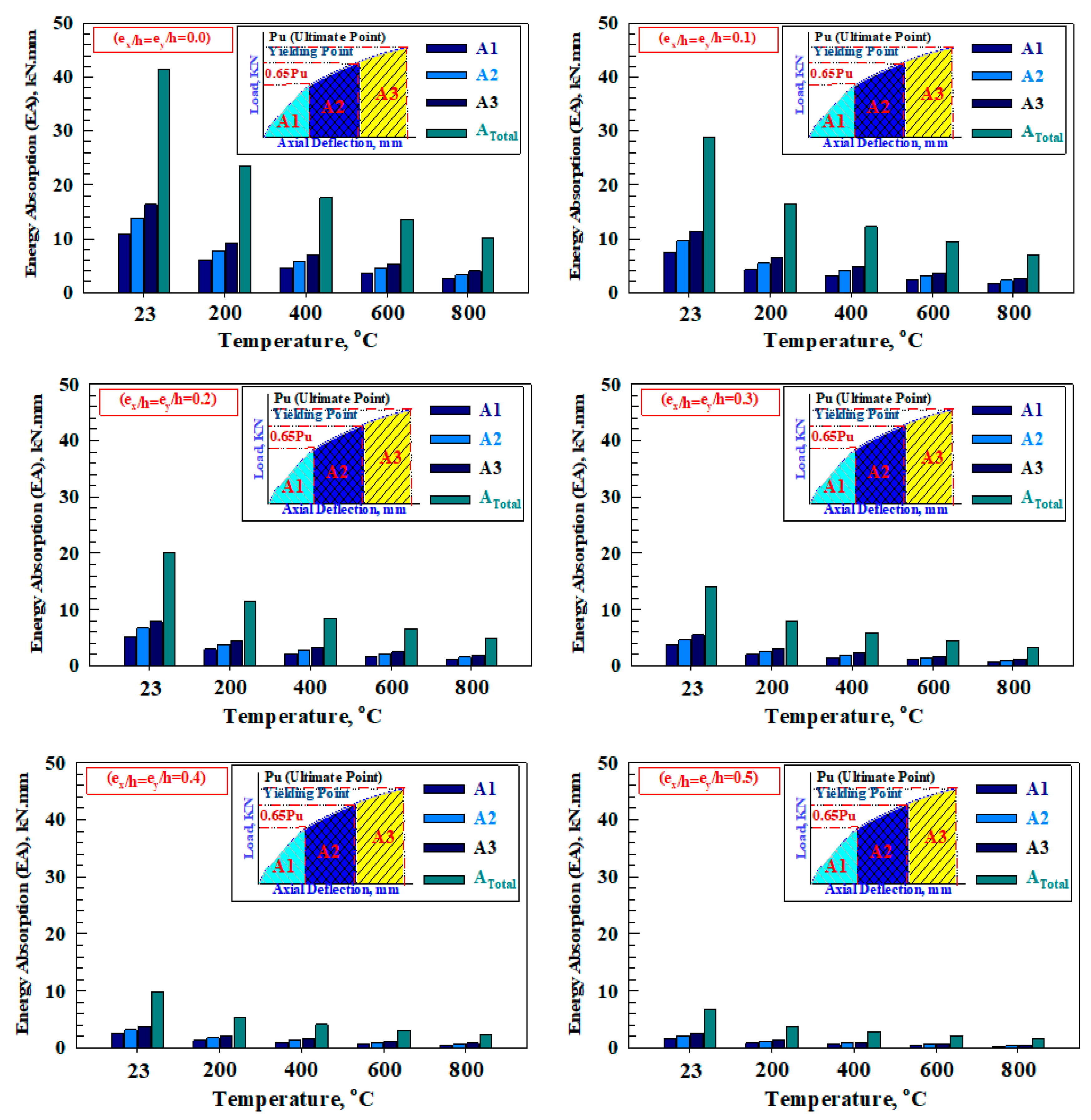
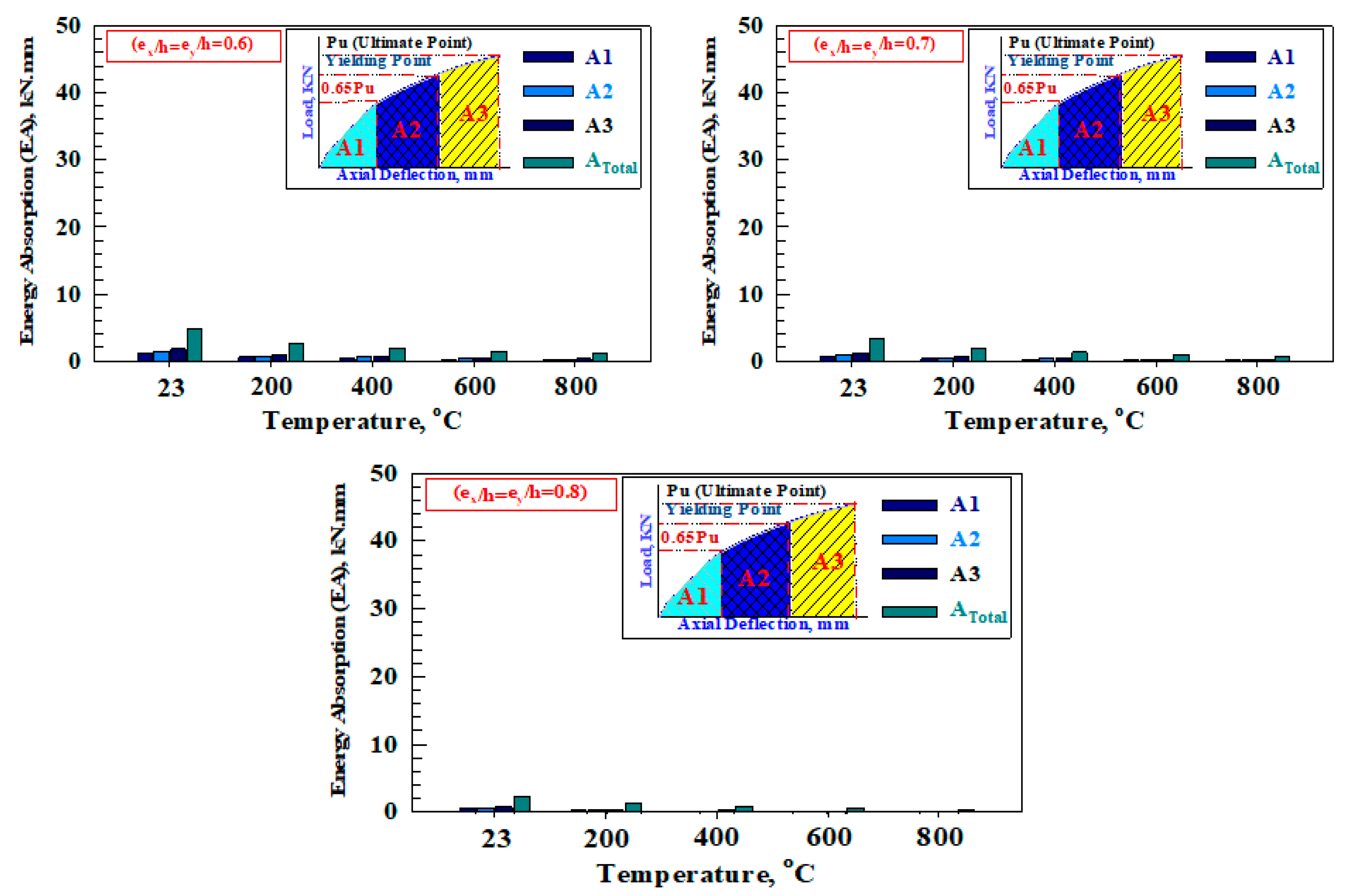
The energy absorption was calculated as the total area underneath the load–deflection curve to reflect the total amount of mechanical work dissipated by the structural member during loading. The energy absorption is used as an indicator to reflect the elastic and inelastic deformability of the member under investigation, and could be called toughness. In addition, energy absorption could be used as a direct indicator for ductility from an engineering point of view, since the ability to sustain deformation is described prior to failure. Members with ductile behavior can dissipate energy through cracking, inelastic deformation, material yielding, and plastic hinging, which in turn ends with preventing the possibility of sudden failure. Energy absorption is also used as a direct measure of the member’s resilience, especially under extreme conditions. Resilient infrastructures are well-known for their ability to dissipate energy or rapidly recover without collapsing. Therefore, the failure characteristics, such as the stress concentration, gradual and intensive cracking, and damage tolerance, are all stabilized and improved for resilient structures, which in turn increases the structural integrity and safety of the RC structures. The overall area under the axial load versus the deflection curve is defined as the system’s ability to absorb energy prior to failure [50] and could be divided for columns into three main regions A 1 , A 2   and   A 3 , as shown in Figure 13. However, the three regions correspond to the three loading stages: concrete cracking, steel yielding, and failure [51].
The energy absorption capacities were plotted against the temperature values for the nine different e / h ratios to examine the contribution of each region to the RC column’s capacity (Figure 13). It could be stated that the contribution of the three regions was significantly reduced by increasing the exposure temperature or the eccentricity-to-height ratio. This is confirmed by the conclusion provided by Nematzadeh et al. [52], where the energy absorption of slender columns was reduced by the presence of loading eccentricity. In addition, Wang et al. [53] stated that increasing the temperature value for the slender columns has a detrimental effect on their overall behavior, including their energy absorption. Additionally, the second and third regions form about 80% of the final capacity and have a higher reduction rate when the temperature value increases. Generally, increasing the reduction rate by increasing the temperature value is associated with large induced deformations, with further additional decreases observed for increasing the loading eccentricity. It was observed that slender columns with high (e/h) ratios are more sensitive to the increase in temperature values where a greater reduction in energy absorption, stability, and strength occur. In addition, the ability to undergo a larger amount of deformations does not indicate improved efficiency, but indicates higher damage accumulation and stiffness loss.

4.4. Ultimate Load, Deflection, Stiffness, and Energy Absorption Ratios

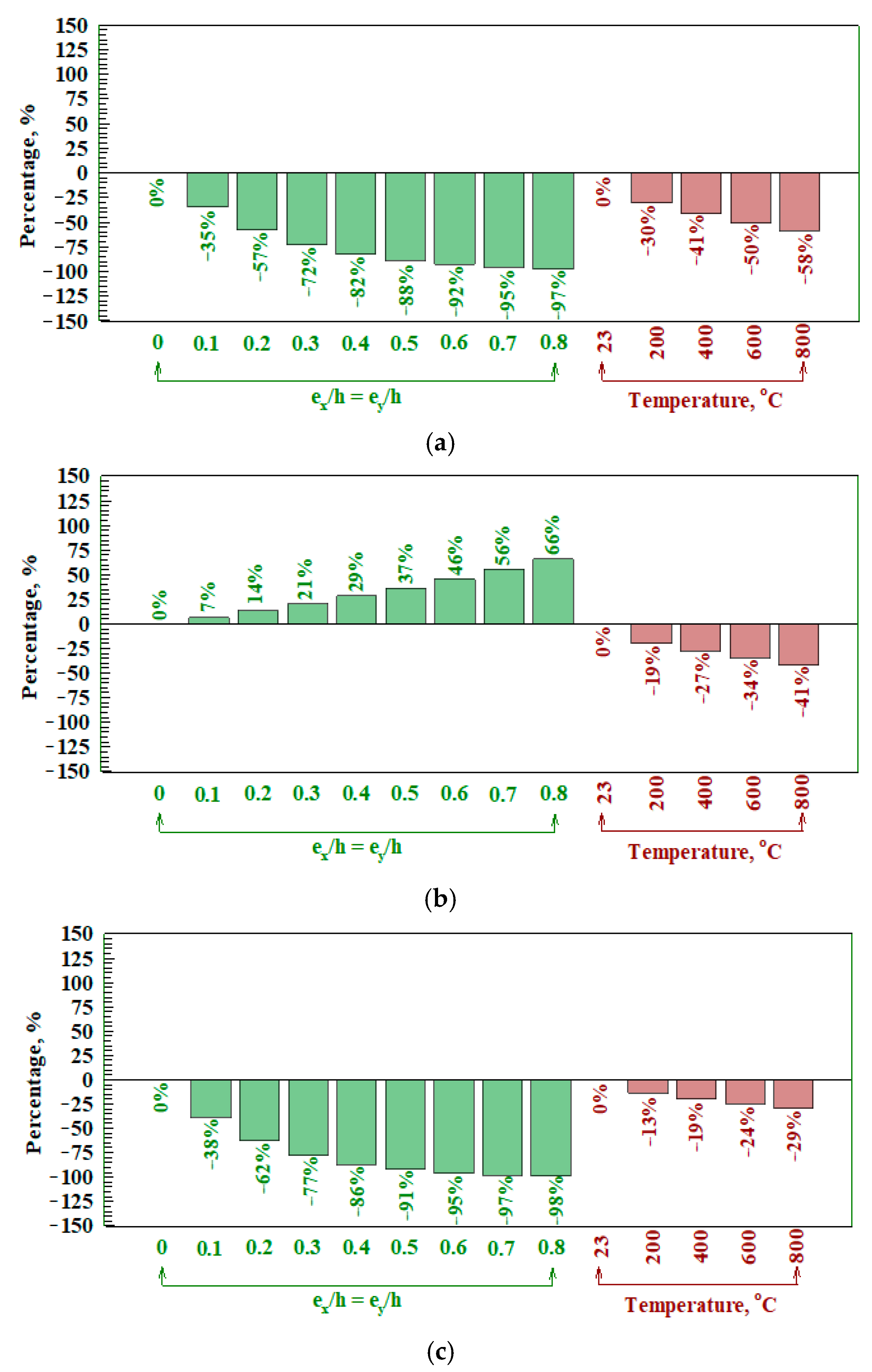
The behavior of the ultimate load-carrying capacity was normalized with respect to the C F T 23 , a concentrically-loaded specimen tested at ambient temperature, and the percentages (35, 57, 72, 82, 88, 92, 95, and 97%) for the columns with biaxial eccentricity values (0, 12.5, 25.0, 37.5, 50.0, 62.5, 75.0, 87.5, and 100.0 mm) corresponded to the e / h ratios (0.1, 0.2, 0.3, 0.4, 0.5, 0.6, 0.7, and 0.8), respectively, as per Figure 14a. The results of Table 1 show that significant reductions in the ultimate load capacity are observed with increasing temperatures and eccentricity values. Therefore, it is recommended to address the resulting reduction and design the structural member accordingly to maintain its integrity and resilience under service loading. The overall behavior of the RC columns is affected, including the lateral deflection, axial strength, and failure mode. In addition, the P is magnified upon increasing the slenderness ratio of the column, where the column’s behavior is dominated by the geometric nonlinearity and the induced instabilities rather than being affected by the strength of the constitutive materials. Consequently, a large reduction in the column’s stiffness appears as a result of the increase in the bending moment generated. This necessitates the use of the second-order analysis of the columns, where their behavior was shifted from compression-controlled into buckling-controlled behavior [48].
It was found by Siddiqui et al. [54] that if the slenderness ratio of the FRP-confined column is more than the limit value, the column will fail due to buckling much earlier than reaching its ultimate strength. In addition, Hu and Feng [55] revealed that increasing the loading eccentricity reduces the axial strength of the column by different ratios depending on the amount of eccentricity, which is strongly confirmed by the results obtained in this study. However, the accompanying deflection values at failure increase upon increasing the eccentricity value, and the improvement percentages (7, 14, 21, 29, 37, 46, 56, and 66%) for slender columns with biaxial eccentricity values (0, 12.5, 25.0, 37.5, 50.0, 62.5, 75.0, 87.5, and 100.0 mm) corresponded to the e / h ratios (0.1, 0.2, 0.3, 0.4, 0.5, 0.6, 0.7, and 0.8, respectively), as per Figure 14b. Moreover, exposing the specimens to elevated temperatures (200, 400, 600, and 800 °C) reduces the load strength capacity (by 30, 41, 50, and 58%) compared to a specimen tested at ambient temperature (23 °C), while the ultimate deflection values are reduced (by 19, 27, 34, and 41%).
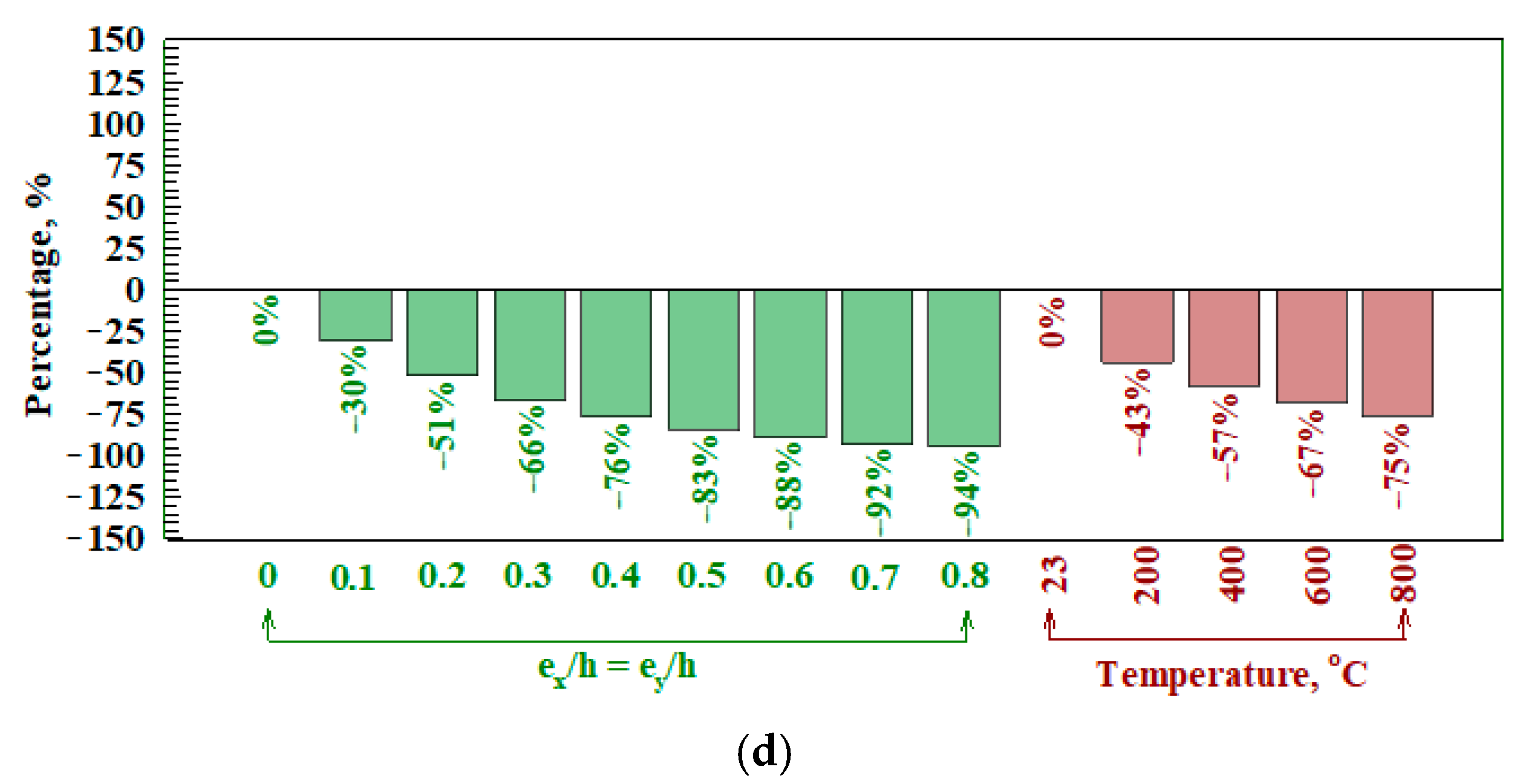
Other structural characteristics, such as toughness and stiffness, are a major concern for researchers and designers in the civil engineering field. However, the initial stiffness is calculated as the slope of the first linear part in the load–deflection curve, where the column behaves according to its gross moment of inertia, as shown in Figure 14c. Generally, the initial stiffness is decreased by increasing the temperature value of the e / h , where reduction percentages (38, 62, 77, 86, 91, 95, 97, and 98%) were recorded for specimens with different e / h ratios after being normalized with the C F T 23 , a concentrically-loaded specimen tested at ambient temperature. At the same time, the stiffness is reduced (by 13, 19, 24, and 29%) under high temperature values (200, 400, 600, and 800 °C). The energy absorption was reduced (by 30, 51, 66, 76, 84, 89, 92, and 94%) for specimens with different e / h ratios, compared to that (43, 57, 67, and 75 %) under high temperature values (200, 400, 600, and 800 °C), as shown in Figure 14d.

4.5. New Double-Curvature Interaction Diagram

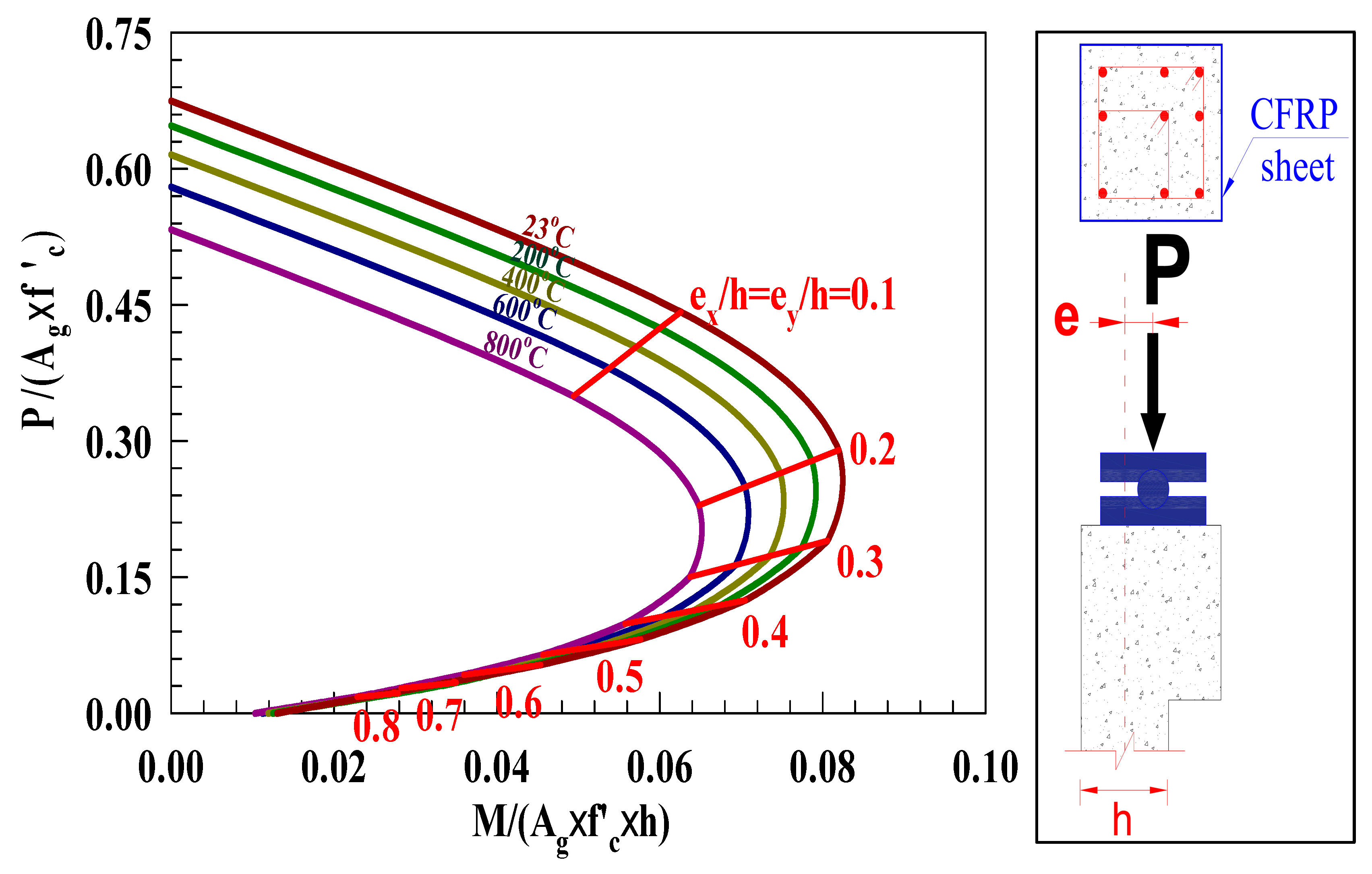
This section introduces a new developed interaction diagram for slender columns that undergo a combined compressive axial loading and biaxial bending moment action, which in turn results in a double curvature. In addition, the effect of temperature was directly addressed in this diagram, covering a temperature range between 23 °C and 800 °C, as the interaction curve is not applicable outside this range. Additionally, this curve was developed for columns strengthened with one-layer CFRP wraps, and the thickness of the CFRP sheet must not exceed 1 mm to ensure that the added confinement effect is not outside the practicality of the introduced curve. It is worth mentioning that the proposed interaction diagram is only applicable for rectangular or square slender columns, since they pose a more critical case than short columns.
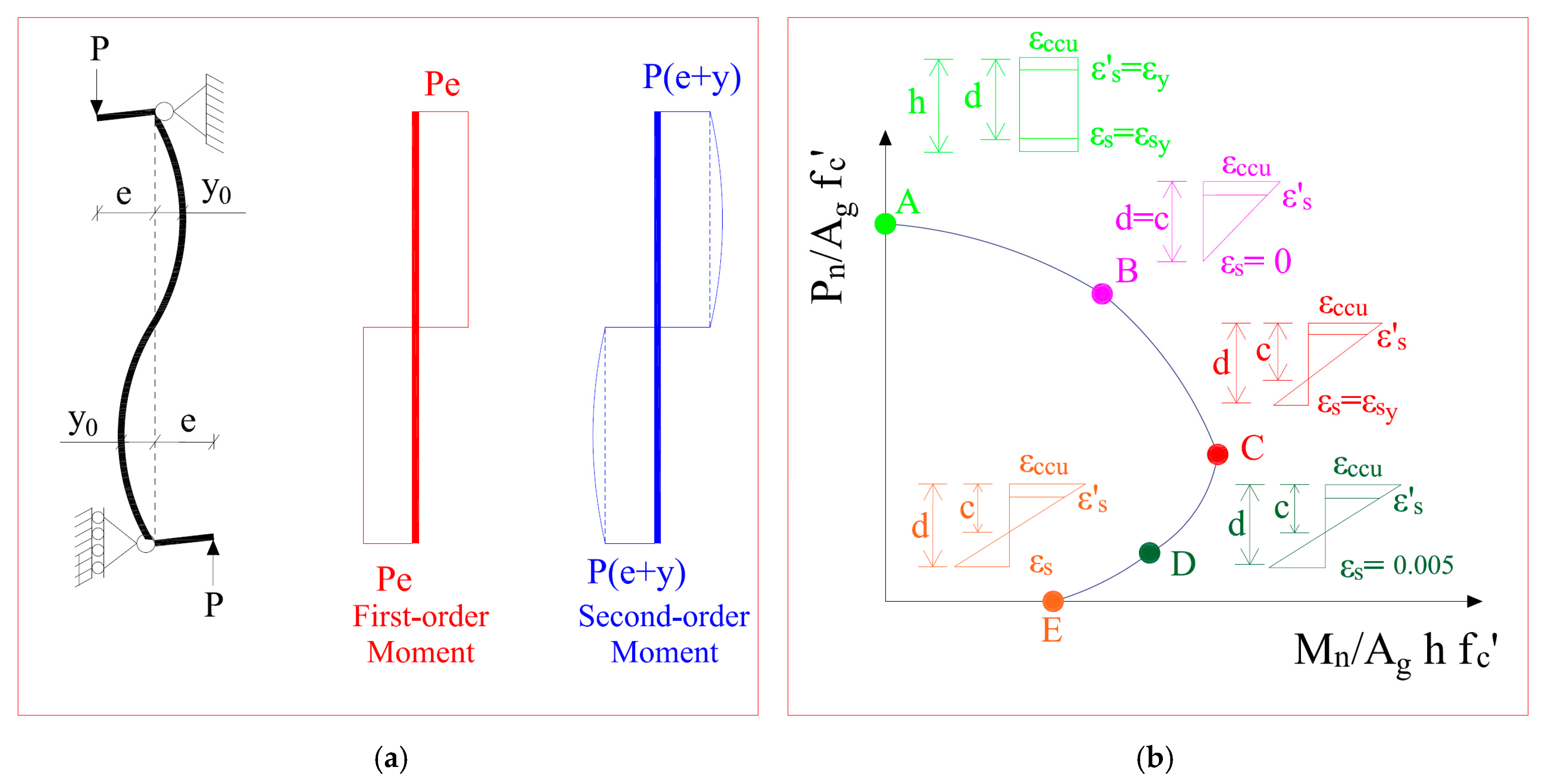
Eccentric loading in two directions was introduced in the new proposed interaction diagram, where the bending action takes place along with the axial loading, resulting in a combined stress effect where the subjected column experiences a clear stress gradient within its cross-section. However, integrating the internal stresses in the column’s section could enable the calculation of the bending moments and axial stresses, where moments are equal to the axial load times the eccentricity value in a first-order linear relationship, as presented in Figure 15. The interaction diagram includes the effect of different normal and high-temperature values (23 °C (room temperature), 200 °C, 400 °C, 600 °C, and 800 °C) and e/h ratios (0, 0.1, 0.2, 0.3, 0.4, 0.5, 0.6, 0.7, and 0.8), as shown in Figure 16. It has been found that increasing the temperature value significantly reduces the sustained loading and bending moments, as previously stated by Hales et al. [43]’s analytical expression.

5. Conclusions

The behavior of slender columns subjected to combined biaxial eccentricity with nine different ratios was examined under the effect of normal and high temperature exposure using the simulation done by the ANSYS software. The following conclusions could be stated based on the results obtained in this study:
  • The failure mode of the slender columns was shifted from a material-controlled into an instability-controlled type under the exposure to eccentric loading and high temperatures. In addition, it becomes prone to buckling due to the geometric nonlinearities which exist.
  • A strong coupling between the geometric nonlinearities and the temperature gradient was identified, where the p is magnified upon increasing the exposure temperature, reflected by the increased lateral deflections and reduced elasticity.
  • A high reduction in the column’s strength was observed at high eccentricity values (e/h > 0.5), reflecting a threshold where columns become very sensitive to temperature and major instabilities exist.
  • Strengthening post-fire RC members by CFRP wrapping is efficient in restoring strength and ductility reductions, especially when the exposure temperature is lower than 400 °C, but fails to recover stiffness.
  • The efficiency of the CFRP wrapping is valuable when the (e/h) ratio is less than 0.3, and the exposure temperature is lower than 400 °C, but beyond these limits, the confinement effect is diminished, and failure is governed by instability.
  • An interaction diagram was introduced for the structural behavior of RC confined slender columns under different temperatures (23 °C (room temperature), 200 °C, 400 °C, 600 °C, and 800 °C) and e/h ratios (0, 0.1, 0.2, 0.3, 0.4, 0.5, 0.6, 0.7, and 0.8) that is suitable for the analysis and design purposes.
  • This study introduces guidelines for designers on strengthening heat-damaged columns using CFRP wraps, where the proper amount of strengthening material can be addressed based on the resulting damage level.

Author Contributions

Conceptualization, B.R.A. and R.Z.A.-R.; methodology, B.R.A. and R.Z.A.-R.; formal analysis, B.R.A. and R.Z.A.-R.; investigation, B.R.A. and R.Z.A.-R.; resources, B.R.A. and R.Z.A.-R.; data curation, B.R.A. and R.Z.A.-R.; writing—original draft preparation, B.R.A. and R.Z.A.-R.; writing—review and editing, B.R.A. and O.K.N.; visualization, B.R.A., R.Z.A.-R. and O.K.N.; supervision, B.R.A., R.Z.A.-R. and O.K.N.; project administration, B.R.A. and R.Z.A.-R. All authors have read and agreed to the published version of the manuscript.

Funding

This research received no external funding.

Data Availability Statement

The original contributions presented in this study are included in the article. Further inquiries can be directed to the corresponding author.

Conflicts of Interest

The authors declare no conflict of interest.

References

  1. Habib, A.; Barakat, S.; Al-Toubat, S.; Junaid, M.T.; Maalej, M. Developing Machine Learning Models for Identifying the Failure Potential of Fire-Exposed FRP-Strengthened Concrete Beams. Arab. J. Sci. Eng. 2025, 50, 8475–8490. [Google Scholar] [CrossRef]
  2. Ali, M.; Chen, L.; Feng, B.; Rusho, M.A.; Jelodar, M.B.; Reyes Silva, F.D.; Llamuca Llamuca, J.L.; Tasán Cruz, D.M.; Samandari, N. Thermal and dynamic response of hybrid fiber-reinforced concrete to fire exposure: Experimental and computational approaches. Constr. Build. Mater. 2025, 478, 141397. [Google Scholar] [CrossRef]
  3. Jovanović, B.; Caspeele, R.; Reynders, E.; Lombaert, G.; Put, F.; Lucherini, A.; Van Coile, R. Experimental investigation on the effect of natural fire exposure on the post-fire behavior of reinforced concrete beams using electric radiant panel. Struct. Concr. 2025, 26, 3629–3644. [Google Scholar] [CrossRef]
  4. Reynders, E.P.B.; Godeau, J.; Jovanović, B.; van de Velde, M.; Anastasopoulos, D.; Lombaert, G.; Caspeele, R.; Van Coile, R. Experimental analysis of the influence of moderate fire damage on the dynamic and incremental static behavior of reinforced concrete beams. Eng. Struct. 2025, 323, 119213. [Google Scholar] [CrossRef]
  5. Zhu, H.; Chen, S.; Ahmed, M.; Li, C.; Kong, X.; Ghazali, H.; Liang, Q.Q. Behavior and design of eccentrically loaded circular concrete-filled double steel tubular beam-columns under fire exposure. Thin-Walled Struct. 2025, 208, 112806. [Google Scholar] [CrossRef]
  6. Liu, C.; Wu, X.; Du, J. Fire Resistance of Steel-Reinforced Concrete Columns: A Review of Ordinary Concrete to Ultra-High Performance Concrete. Buildings 2026, 16, 24. [Google Scholar] [CrossRef]
  7. Kim, H.-S. Effective flexural rigidity for interaction diagram of slender reinforced concrete columns exposed to fire. Structures 2022, 46, 1657–1668. [Google Scholar] [CrossRef]
  8. Al-Rousan, R.Z.; Alnemrawi, B.a.R. Nonlinear finite element analysis for the torsional and bending behavior of heat-damaged RC beams strengthened with CFRP composites. Int. J. Struct. Integr. 2025, 16, 1529–1556. [Google Scholar] [CrossRef]
  9. Al-Rousan, R.Z.; Alnemrawi, B.R. Interaction diagram of rectangular RC columns confined with CFRP composite under biaxial bending. Structures 2025, 75, 108833. [Google Scholar] [CrossRef]
  10. Bonet, J.L.; Barros, M.H.F.M.; Romero, M.L. Comparative study of analytical and numerical algorithms for designing reinforced concrete sections under biaxial bending. Comput. Struct. 2006, 84, 2184–2193. [Google Scholar] [CrossRef]
  11. Charalampakis, A.E.; Koumousis, V.K. Ultimate strength analysis of composite sections under biaxial bending and axial load. Adv. Eng. Softw. 2008, 39, 923–936. [Google Scholar] [CrossRef]
  12. Papanikolaou, V.K. Analysis of arbitrary composite sections in biaxial bending and axial load. Comput. Struct. 2012, 98–99, 33–54. [Google Scholar] [CrossRef]
  13. Vaz Rodrigues, R. A new technique for ultimate limit state design of arbitrary shape RC sections under biaxial bending. Eng. Struct. 2015, 104, 1–17. [Google Scholar] [CrossRef]
  14. Barros, H.; Silva, V.D.; Ferreira, C. Second order effects in slender concrete columns-reformulation of the Eurocode 2 method based on nominal curvature. Eng. Struct. 2010, 32, 3989–3993. [Google Scholar] [CrossRef]
  15. Bujotzek, L.; Waldmann, D. Innovative buckling safety verification method for the determination of second-order effects in slender FRP reinforced columns including effects of FRP creep. Eng. Struct. 2025, 322, 119143. [Google Scholar] [CrossRef]
  16. Hamid, F.L.; Yousif, A.R. Behavior of Short and Slender RC Columns with BFRP Bars under Axial and Flexural Loads: Experimental and Analytical Investigation. J. Compos. Constr. 2024, 28, 04023072. [Google Scholar] [CrossRef]
  17. ACI 318 (2019); Building Code Requirements for Reinforced Concrete and Commentary. American Concrete Institute: Farmington Hills, MI, USA, 2019.
  18. EN 1992-1-1; Eurocode 2: Design of Concrete Structures—Part 1-1: General Rules and Rules for Buildings. British Standard Institution: London, UK, 2004.
  19. de Araújo, J.M. Comparative study of the simplified methods of Eurocode 2 for second order analysis of slender reinforced concrete columns. J. Build. Eng. 2017, 14, 55–60. [Google Scholar] [CrossRef]
  20. Khamis, A.M.; Selmy, Y.M.; El-Salakawy, E.F. Behavior of Slender GFRP-RC Circular Columns Bent in Single and Double Curvature Under Eccentric Load. In Proceedings of the 12th International Conference on FRP Composites in Civil Engineering (CICE 2025); Correia, J.R., Cabral-Fonseca, S., Gonilha, J., Firmo, J., Garrido, M., Eds.; Springer Nature: Cham, Switzerland, 2026; pp. 583–593. [Google Scholar]
  21. Mahmoud, K.A. Behavior of Slender RC Columns Bent in Single and Double Curvature at Elevated Temperatures. Fire Technol. 2021, 57, 1313–1363. [Google Scholar] [CrossRef]
  22. Al-Rousan, R.Z.; Alnemrawi, B.a.R. Empirical and precise finite element modelling of bond-slip contact behavior between heat-damaged concrete and anchored CFRP composites with groove. Eng. Struct. 2025, 332, 120042. [Google Scholar] [CrossRef]
  23. Albero, V.; Ibáñez, C.; Piquer, A.; Hernández-Figueirido, D. Ultra-high performance concrete-filled dual steel tubular slender columns subjected to eccentric loads. J. Constr. Steel Res. 2026, 236, 109981. [Google Scholar] [CrossRef]
  24. Al-Rousan, R.Z.; Alnemrawi, B.a.R. Impact of elevated temperatures on the torsional behavior of thin-walled tubular RC structures strengthened with CFRP sheets. Structures 2025, 80, 109705. [Google Scholar] [CrossRef]
  25. Pan, M.; Wang, D.; Wang, Z.; Yu, T. Experimental investigation on eccentric compression behavior of FRP-confined concrete-encased cross-shaped steel columns. Compos. Struct. 2023, 303, 116347. [Google Scholar] [CrossRef]
  26. Hung, C.-C.; Pham, P.-A.-H.; Yuen, T.Y.P.; Mosalam, K.M. Full-scale cyclic testing of slender RC columns bent in double curvature under high axial load. J. Build. Eng. 2024, 82, 108186. [Google Scholar] [CrossRef]
  27. Hamoda, A.; Fayed, S.; Mansour, W.; Emara, M. Behavior of Reinforced Concrete Circular Columns Subjected to Double Curvature Buckling Moment. Int. J. Concr. Struct. Mater. 2024, 18, 70. [Google Scholar] [CrossRef]
  28. Ombres, L.; Verre, S. Structural behaviour of fabric reinforced cementitious matrix (FRCM) strengthened concrete columns under eccentric loading. Compos. Part B Eng. 2015, 75, 235–249. [Google Scholar] [CrossRef]
  29. Yazici, V.; Hadi, M.N. Axial Load-Bending Moment Diagrams of Carbon FRP Wrapped Hollow Core Reinforced Concrete Columns. J. Compos. Constr. 2009, 13, 262–268. [Google Scholar] [CrossRef]
  30. Yaqub, M.; Bailey, C.G. Cross sectional shape effects on the performance of post-heated reinforced concrete columns wrapped with FRP composites. Compos. Struct. 2011, 93, 1103–1117. [Google Scholar] [CrossRef]
  31. Yaqub, M.; Bailey, C.G. Repair of fire damaged circular reinforced concrete columns with FRP composites. Constr. Build. Mater. 2011, 25, 359–370. [Google Scholar] [CrossRef]
  32. Al-Rousan, R.Z.; Barfed, M.H. Impact of curvature type on the behavior of slender reinforced concrete rectangular column confined with CFRP composite. Compos. Part B Eng. 2019, 173, 106939. [Google Scholar] [CrossRef]
  33. Bisby, L.; Ranger, M. Axial–flexural interaction in circular FRP-confined reinforced concrete columns. Constr. Build. Mater. 2010, 24, 1672–1681. [Google Scholar] [CrossRef]
  34. ANSYS. ANSYS User’s Manual Revision 16.0; ANSYS, Inc.: Canonsburg, PA, USA, 2016. [Google Scholar]
  35. Alnemrawi, B.R.; Al-Rousan, R.Z. Flexural performance of NSM and PNSM beams maintaining the ACI440 bar diameter to groove size limitation. Results Eng. 2025, 25, 104570. [Google Scholar] [CrossRef]
  36. Dundar, C.; Erturkmen, D.; Tokgoz, S. Studies on carbon fiber polymer confined slender plain and steel fiber reinforced concrete columns. Eng. Struct. 2015, 102, 31–39. [Google Scholar] [CrossRef]
  37. Wee, T.H.; Chin, M.S.; Mansur, M.A. Stress-Strain Relationship of High-Strength Concrete in Compression. J. Mater. Civ. Eng. 1996, 8, 70–76. [Google Scholar] [CrossRef]
  38. Chang, Y.F.; Chen, Y.H.; Sheu, M.S.; Yao, G.C. Residual stress–strain relationship for concrete after exposure to high temperatures. Cem. Concr. Res. 2006, 36, 1999–2005. [Google Scholar] [CrossRef]
  39. Tao, Z.; Wang, X.-Q.; Uy, B. Stress-Strain Curves of Structural and Reinforcing Steels after Exposure to Elevated Temperatures. J. Mater. Civ. Eng. 2013, 25, 1306–1316. [Google Scholar] [CrossRef]
  40. Haddad, R.H.; Al-Rousan, R.; Almasry, A. Bond-slip behavior between carbon fiber reinforced polymer sheets and heat-damaged concrete. Compos. Part B Eng. 2013, 45, 1049–1060. [Google Scholar] [CrossRef]
  41. Lu, X.Z.; Teng, J.G.; Ye, L.P.; Jiang, J.J. Bond–slip models for FRP sheets/plates bonded to concrete. Eng. Struct. 2005, 27, 920–937. [Google Scholar] [CrossRef]
  42. Willam, K.J. Constitutive model for the triaxial behavior of concrete. In Proceedings of the International Association for Bridge and Structural Engineering Proceeding, Bergamo, Italy, 13–19 May 1974; Volume 1, pp. 1–30. [Google Scholar] [CrossRef]
  43. Hales, T.A.; Pantelides, C.P.; Reaveley, L.D. Analytical buckling model for slender FRP-reinforced concrete columns. Compos. Struct. 2017, 176, 33–42. [Google Scholar] [CrossRef]
  44. Mostofinejad, D.; Salimian, M.S.; Taherirani, M.; Noroozolyaee, M. Behavior of Square Slender RC Columns Strengthened with Longitudinal FRP Sheets Subjected to Eccentric Loading. J. Compos. Constr. 2021, 25, 04021006. [Google Scholar] [CrossRef]
  45. Karmaker, R.; Hoque, M.R.; Deb, U.K. Influence of Slenderness Ratio on Buckling Behavior of Reinforced Concrete Columns: A Finite Element Analysis. Adv. Mater. Sci. Eng. 2025, 2025, 9978864. [Google Scholar] [CrossRef]
  46. Hu, L.; Liang, X.; Feng, P.; Li, H.-T. Temperature effect on buckling behavior of prestressed CFRP-reinforced steel columns. Thin-Walled Struct. 2023, 188, 110879. [Google Scholar] [CrossRef]
  47. Hamid Fkrat, L.; Ramadhan Yousif, A.; Rauf Hassan, B. Advancing Slender FRP RC Column Design: A Novel Analytical Equation for Predicting Effective Flexural Stiffness. J. Struct. Des. Constr. Pract. 2026, 31, 04026021. [Google Scholar] [CrossRef]
  48. Ashteyat, A.M.; Obaidat, A.T. Experimental Investigation of Heat-Damaged RC Slender Spiral Columns Repaired with CFRP Rope. Infrastructures 2025, 10, 21. [Google Scholar] [CrossRef]
  49. Aboukifa, M.; Moustafa, M.A. Structural and buckling behavior of full-scale slender UHPC columns. Eng. Struct. 2022, 255, 113928. [Google Scholar] [CrossRef]
  50. Pham, T.M.; Hadi, M.N.S. Strain Estimation of CFRP-Confined Concrete Columns Using Energy Approach. J. Compos. Constr. 2013, 17, 04013001. [Google Scholar] [CrossRef]
  51. Perrone, M.; Barros, J.A.O.; Aprile, A. CFRP-Based Strengthening Technique to Increase the Flexural and Energy Dissipation Capacities of RC Columns. J. Compos. Constr. 2009, 13, 372–383. [Google Scholar] [CrossRef]
  52. Nematzadeh, M.; Shakibanasab, F.; Ahmadi, M.; Mousavimehr, M. Synergistic Effects of CFRP and Steel Fiber in Slender RC Columns Under Eccentric Compressive Loads: Experimental and Predictive Analysis. Arab. J. Sci. Eng. 2024, 49, 13933–13956. [Google Scholar] [CrossRef]
  53. Wang, L.; Fan, X.; Chen, H.; Liu, W. Axial crush behavior and energy absorption capability of foam-filled GFRP tubes under elevated and high temperatures. Compos. Struct. 2016, 149, 339–350. [Google Scholar] [CrossRef]
  54. Siddiqui, N.A.; Alsayed, S.H.; Al-Salloum, Y.A.; Iqbal, R.A.; Abbas, H. Experimental investigation of slender circular RC columns strengthened with FRP composites. Constr. Build. Mater. 2014, 69, 323–334. [Google Scholar] [CrossRef]
  55. Hu, L.; Feng, P. Prestressed CFRP-reinforced steel columns under axial and eccentric compression. Compos. Struct. 2021, 268, 113940. [Google Scholar] [CrossRef]
Figure 1. Confined RC columns subjected to biaxial eccentric loading.
Buildings 16 01525 g001
Figure 2. Stress–strain curve. (a) Longitudinal steel. (b) Lateral steel. (c) CFRP composite.
Buildings 16 01525 g002
Figure 3. Concrete stress and steel reinforcement stress. (a) Concrete stress. (b) Steel reinforcement stress.
Buildings 16 01525 g003
Figure 4. Typical finite element meshing. (a) Steel reinforcement. (b) CFRP composite patterns.
Buildings 16 01525 g004
Figure 5. Load–displacement validation. (a) Control specimen. (b) Fully confined column.
Buildings 16 01525 g005
Figure 6. Typical deformed shapes. (a) Concentric loaded column. (b) Single curvature. (c) Pure beam bending.
Buildings 16 01525 g006
Figure 7. Typical crack patterns. (a) First crack. (b) Failure.
Buildings 16 01525 g007
Figure 8. Maximum lateral strain distribution. (a) Unconfined. (b) Confined.
Buildings 16 01525 g008
Figure 9. Typical axial stress versus exposed elevated temperature.
Buildings 16 01525 g009
Figure 10. Load versus axial deflection behavior stages.
Buildings 16 01525 g010
Figure 11. Axial load versus lateral deflection curve. (a) RC slender column. (b) Beam under pure bending.
Buildings 16 01525 g011
Figure 12. Typical axial stress–axial and lateral strains.
Buildings 16 01525 g012
Figure 13. EA versus load eccentricity and exposed temperature.
Buildings 16 01525 g013aBuildings 16 01525 g013b
Figure 14. The structural characteristics of slender RC columns. (a) Failure load. (b) Failure deflection. (c) Stiffness. (d) Energy absorption (EA).
Buildings 16 01525 g014aBuildings 16 01525 g014b
Figure 15. Axial loading and bending moment interactions. (a) Single curvature (first and second-order). (b) P–M interaction diagram.
Buildings 16 01525 g015
Figure 16. Interaction diagram.
Buildings 16 01525 g016
Disclaimer/Publisher’s Note: The statements, opinions and data contained in all publications are solely those of the individual author(s) and contributor(s) and not of MDPI and/or the editor(s). MDPI and/or the editor(s) disclaim responsibility for any injury to people or property resulting from any ideas, methods, instructions or products referred to in the content.