A Multi-Analytical Study of Historical Materials from the Old Armenian Church in Türkiye


Abstract
1. Introduction
2. The Old Armenian Church
3. Experimental Program
3.1. Materials
3.2. Methods
4. Results and Discussion
4.1. XRD Analysis
4.2. FTIR Analysis
4.3. Raman Spectroscopy
4.4. TGA
4.5. SEM Analysis
4.6. Physical Properties
4.7. Mechanical Properties
5. Conclusions and Recommendations
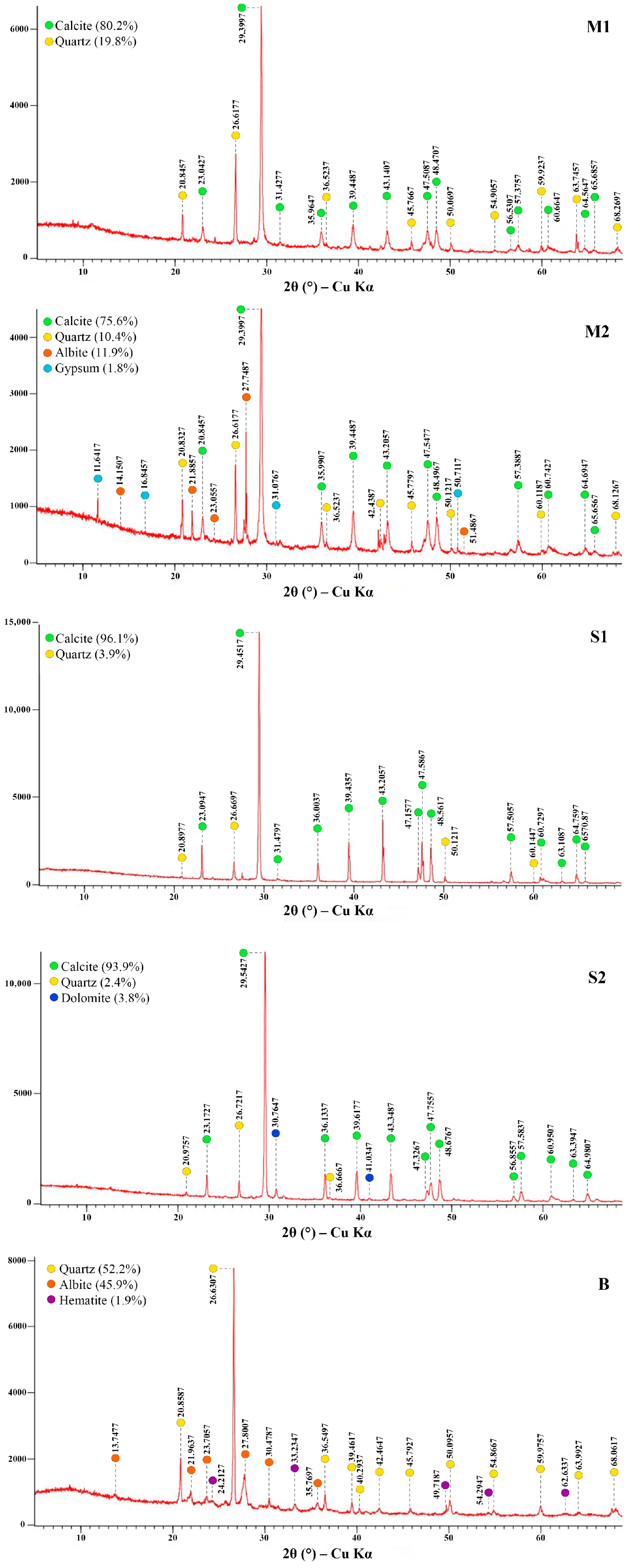
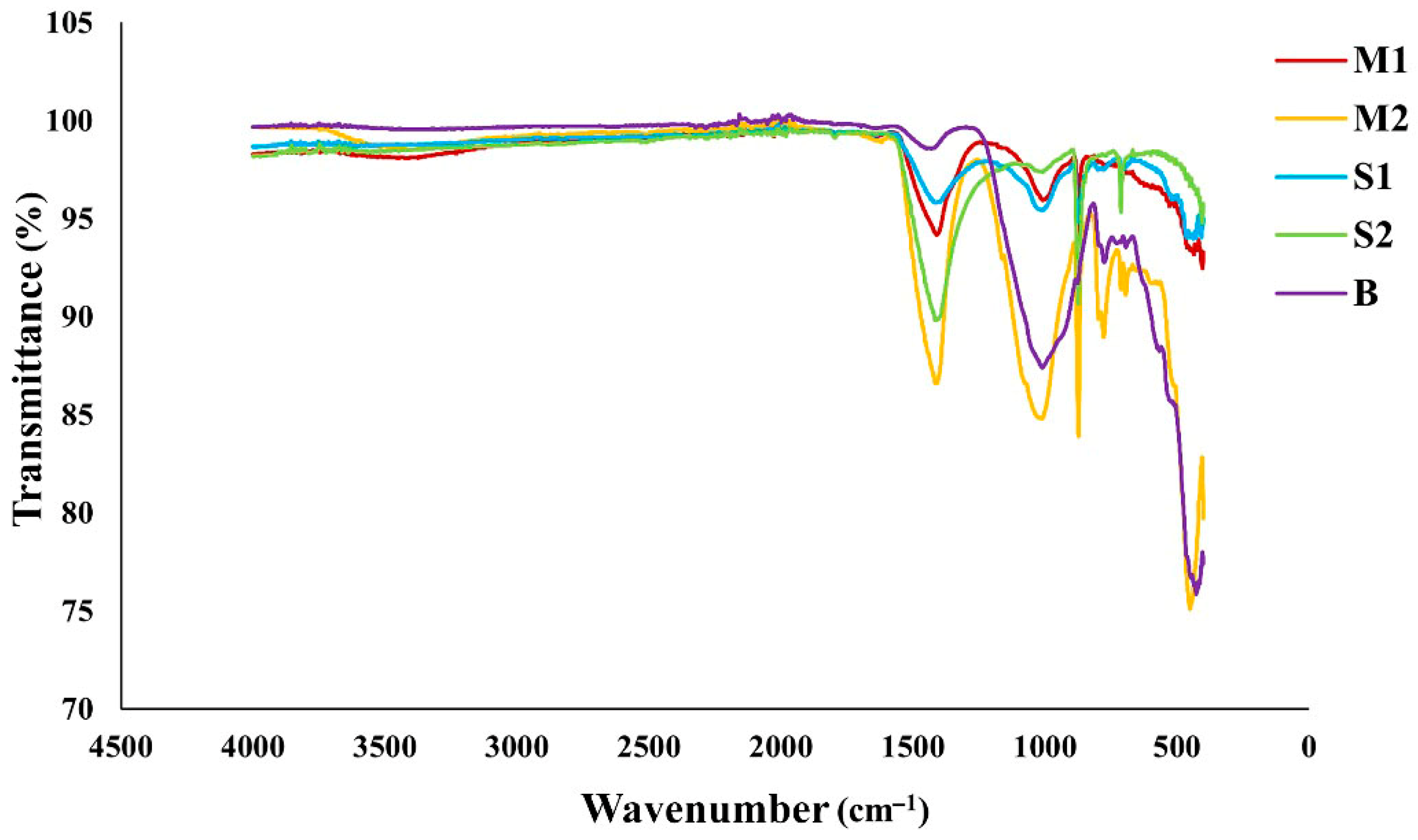
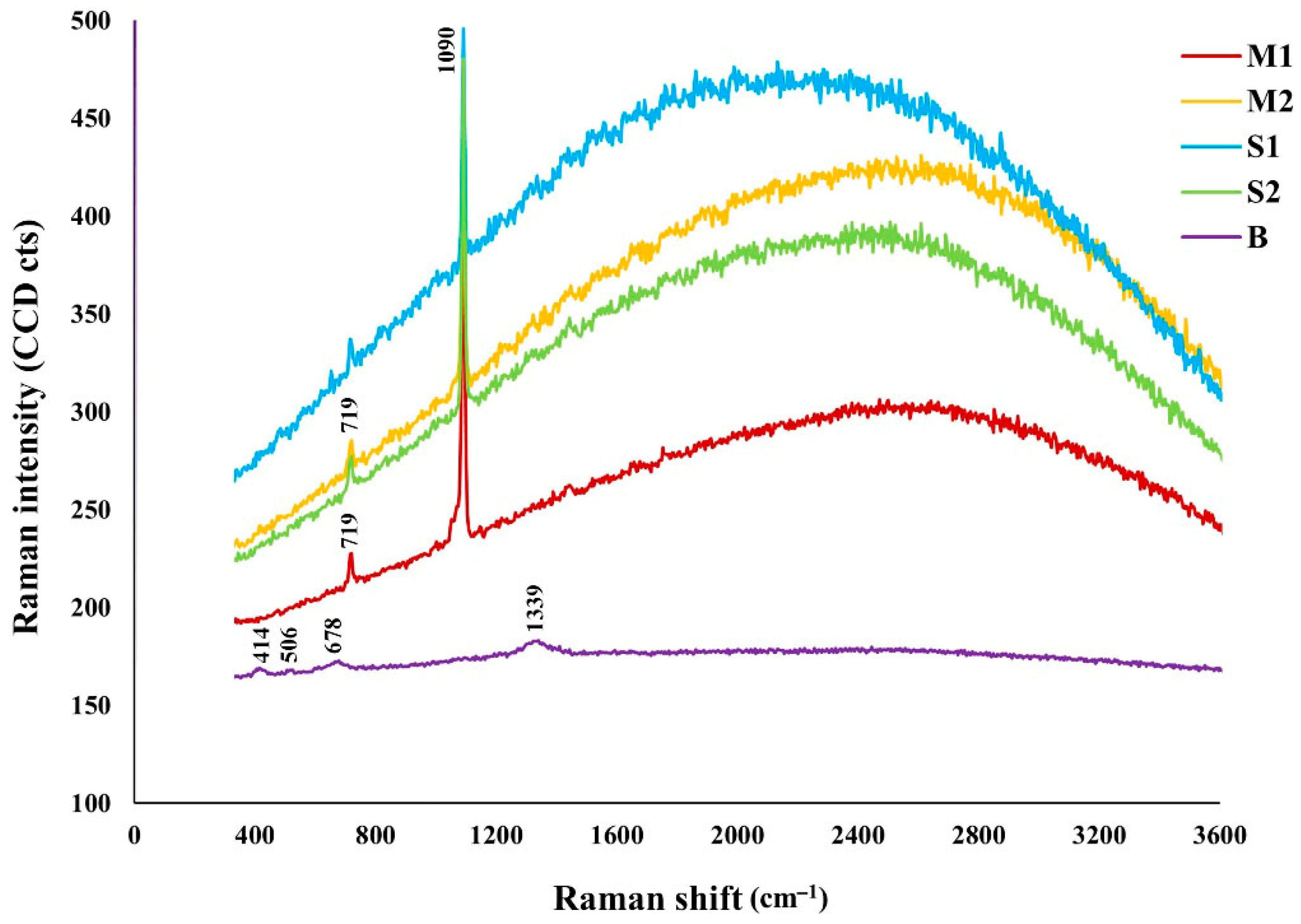
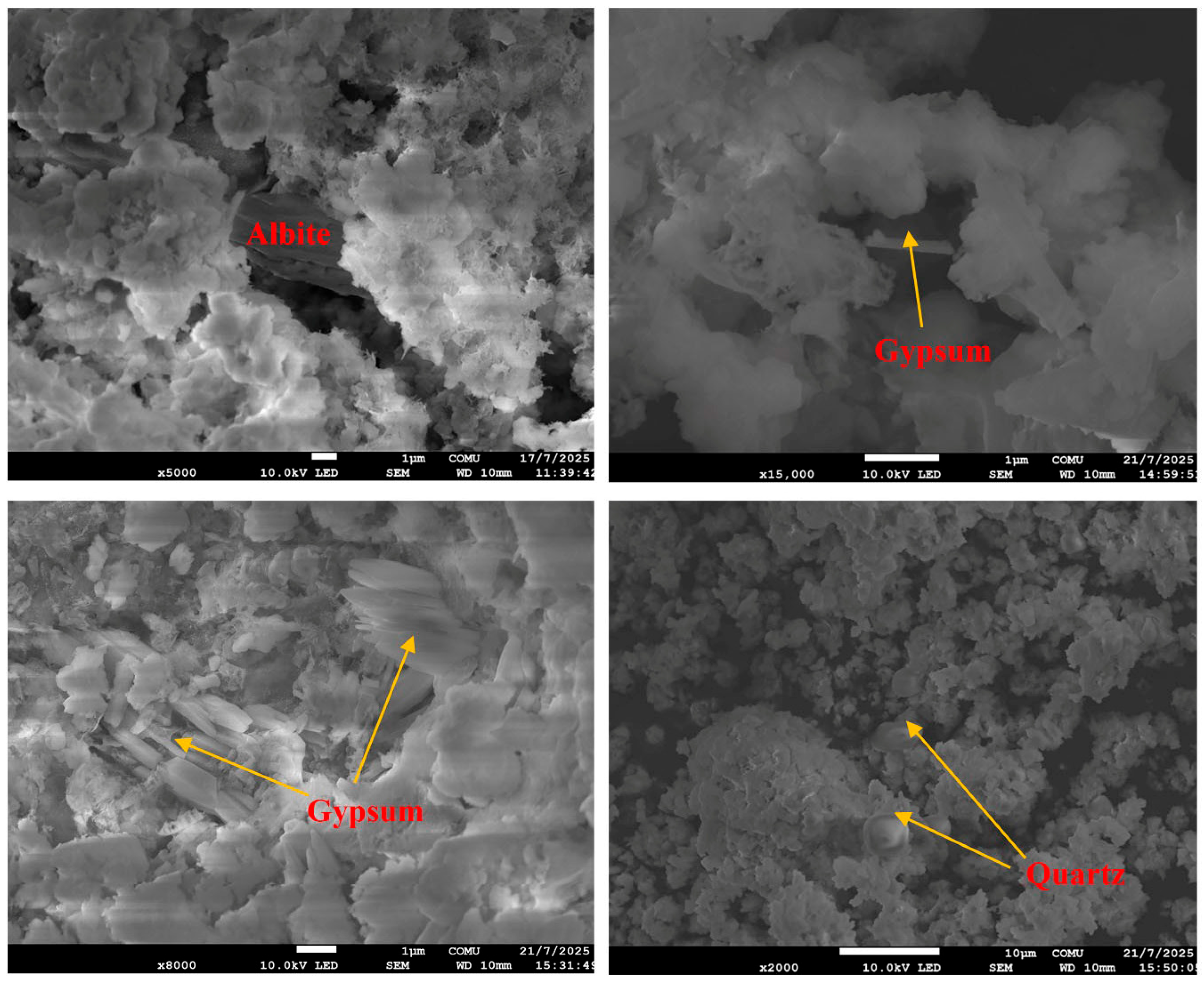
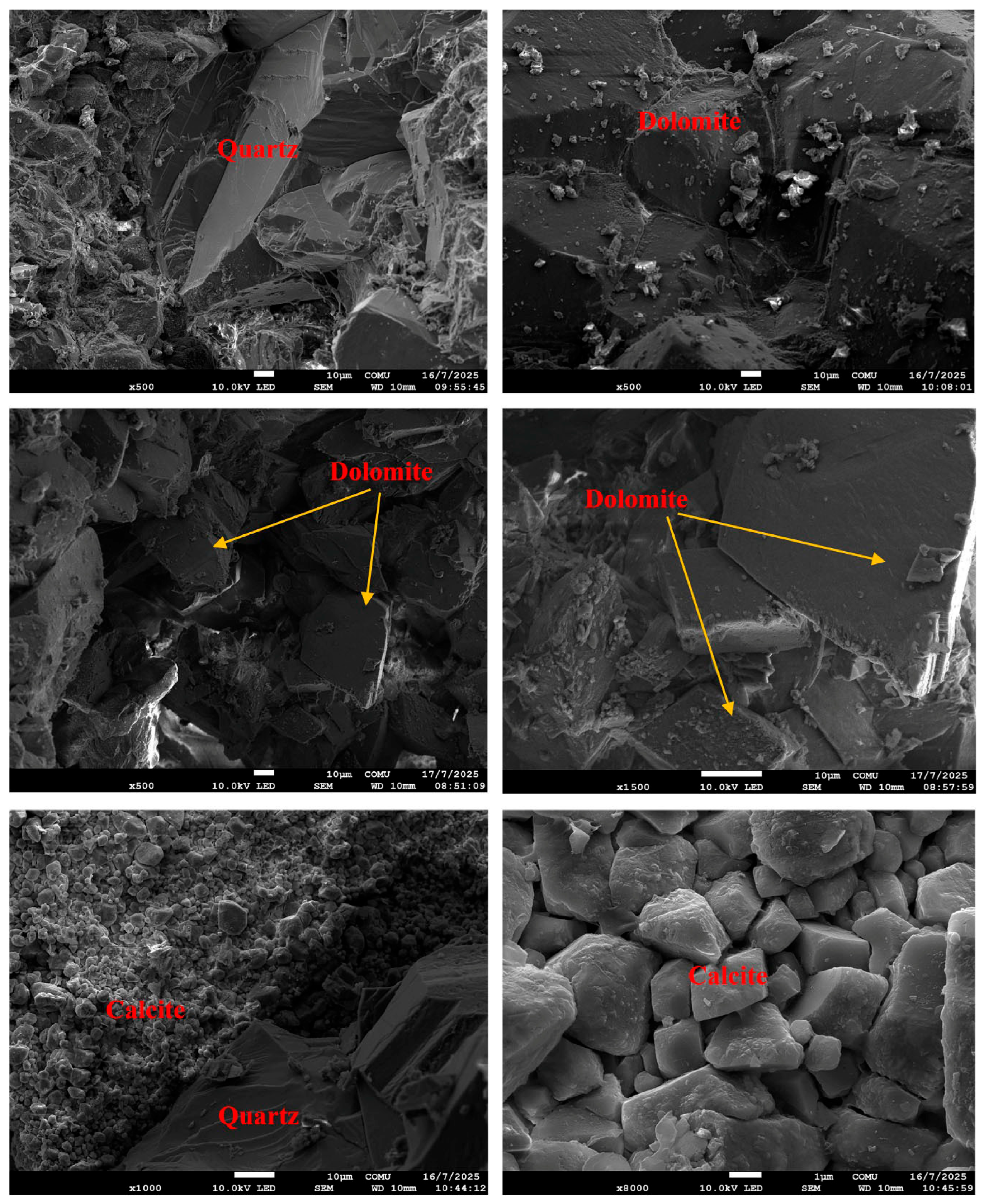
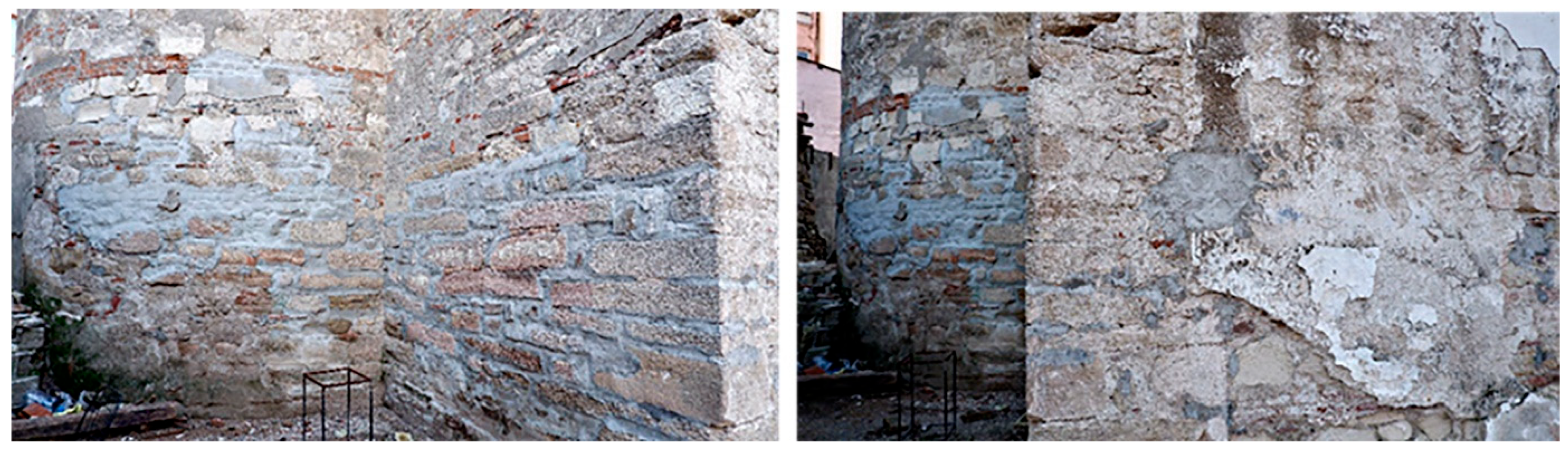
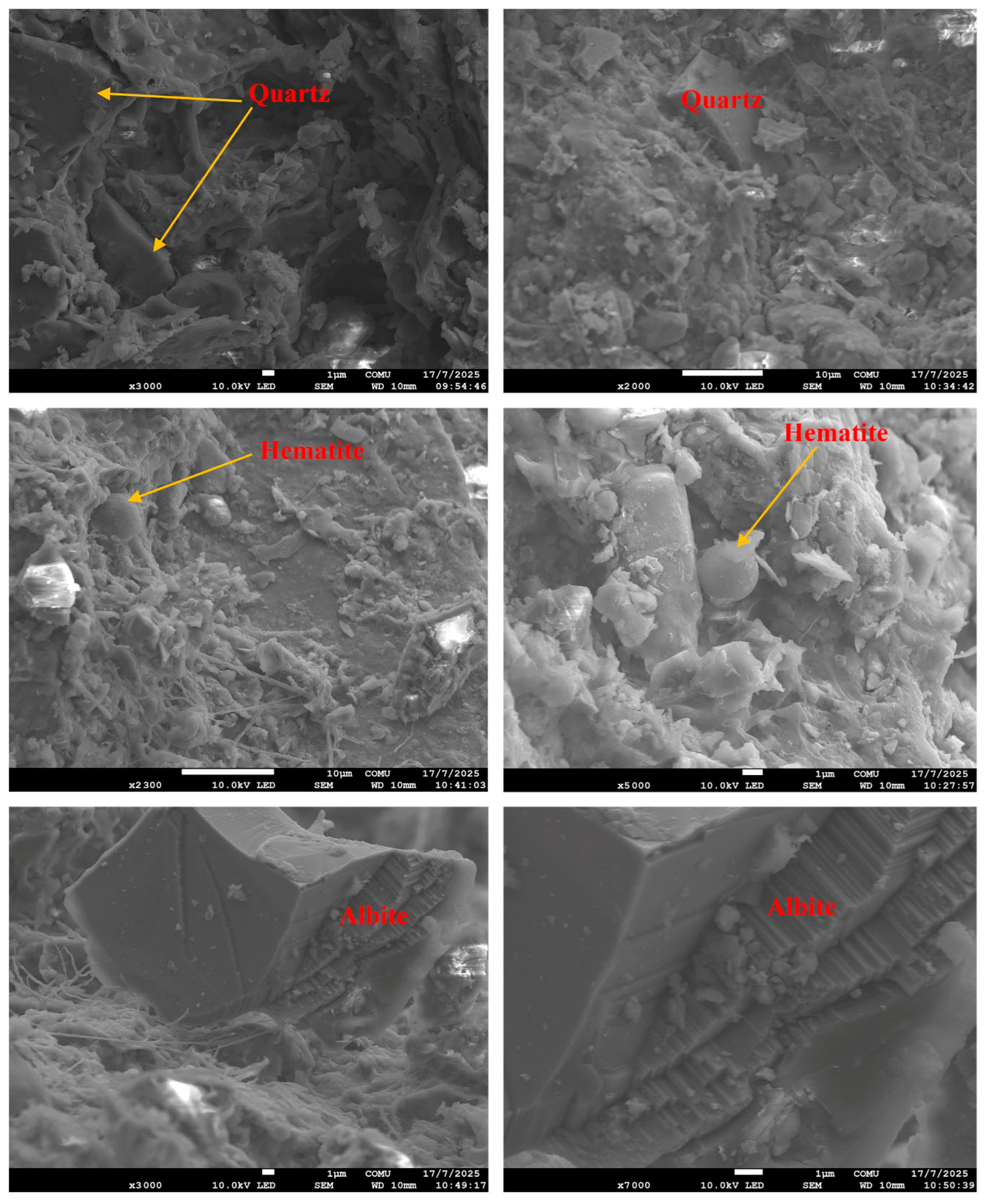
- XRD results indicated that calcite is the dominant mineral phase in the mortar and stone samples, with quartz also present in significant amounts in some samples. Additionally, dolomite, albite, gypsum, and hematite were detected. FTIR and Raman spectroscopy confirmed the presence of these mineral phases, while SEM images showed calcite-based binder matrices with quartz aggregates within the mortars. When the results obtained from XRD, FTIR, and Raman analyses are evaluated together, it is seen that the mineral phases determined in the samples show a high level of consistency. While XRD analyses constitute the basic reference method in the identification of crystalline phases, FTIR analyses support these phases with characteristic vibrational bands belonging to carbonate and silicate groups. Raman analyses, on the other hand, provide additional verification, especially in the identification of carbonate minerals. In the interpretation of spectral overlaps, multiple characteristic peaks were evaluated together instead of only individual bands, and the findings obtained were verified by comparing them among different analytical techniques. This multiple evaluation approach reduces uncertainties that may occur in phase identification and increases the reliability of the results.
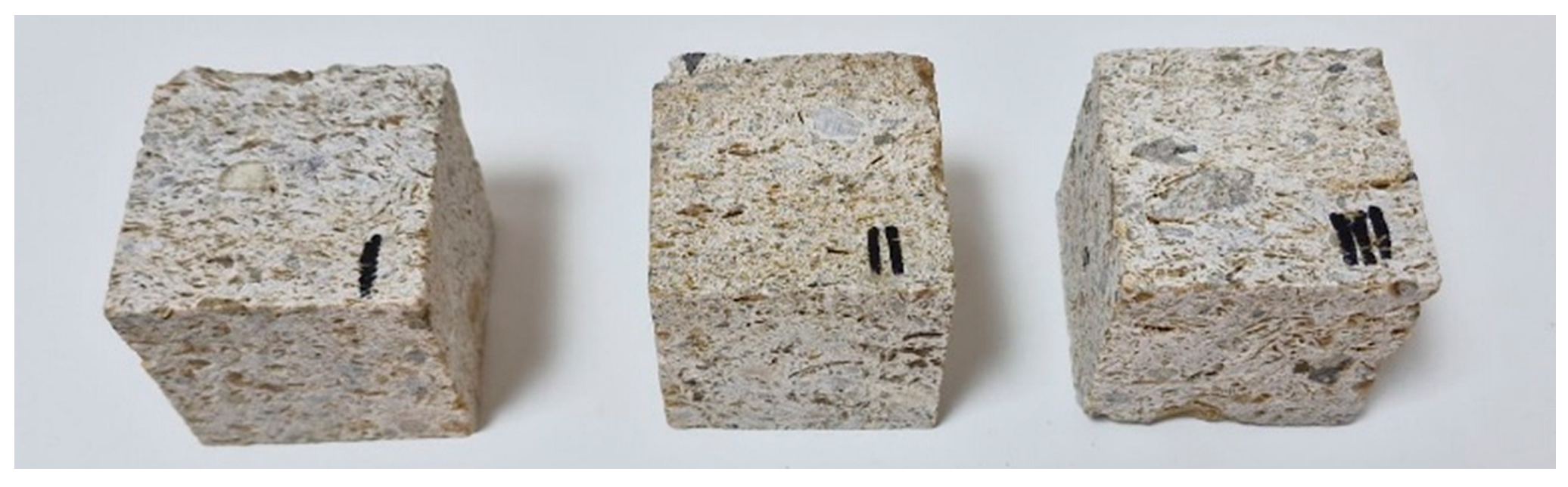
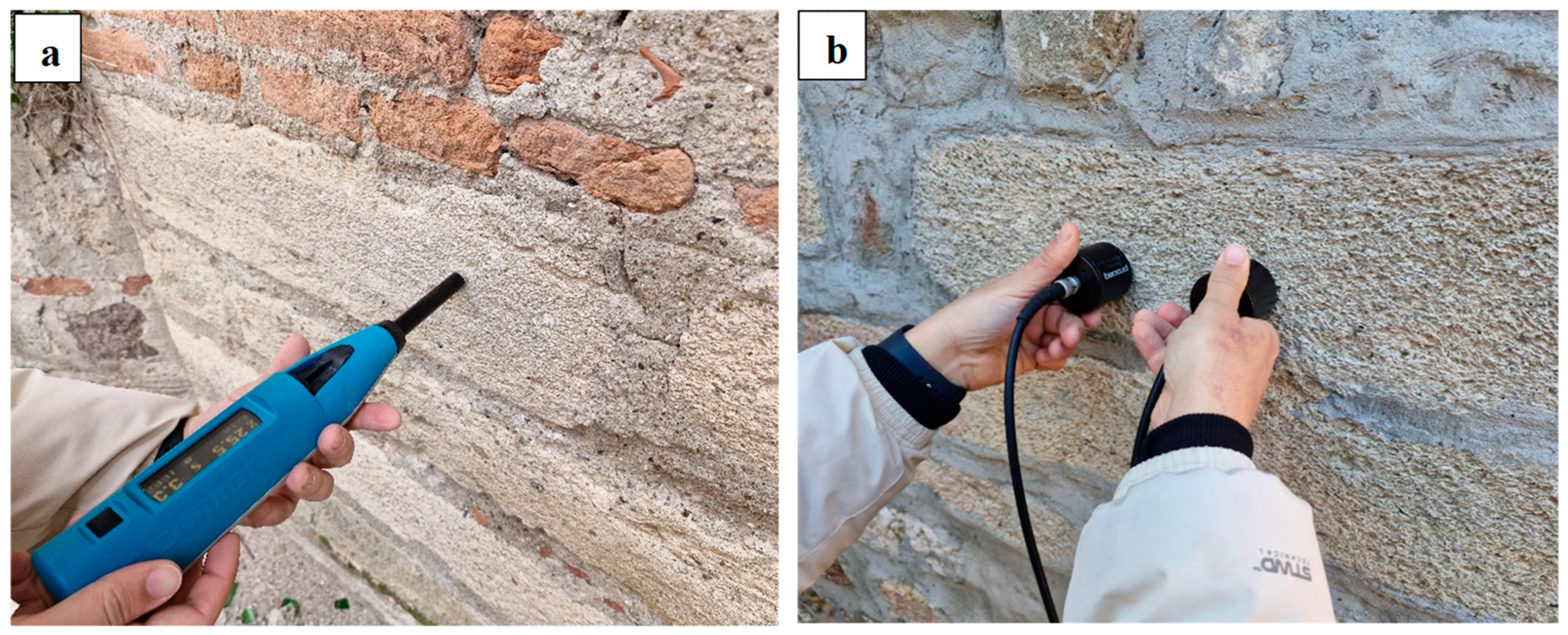
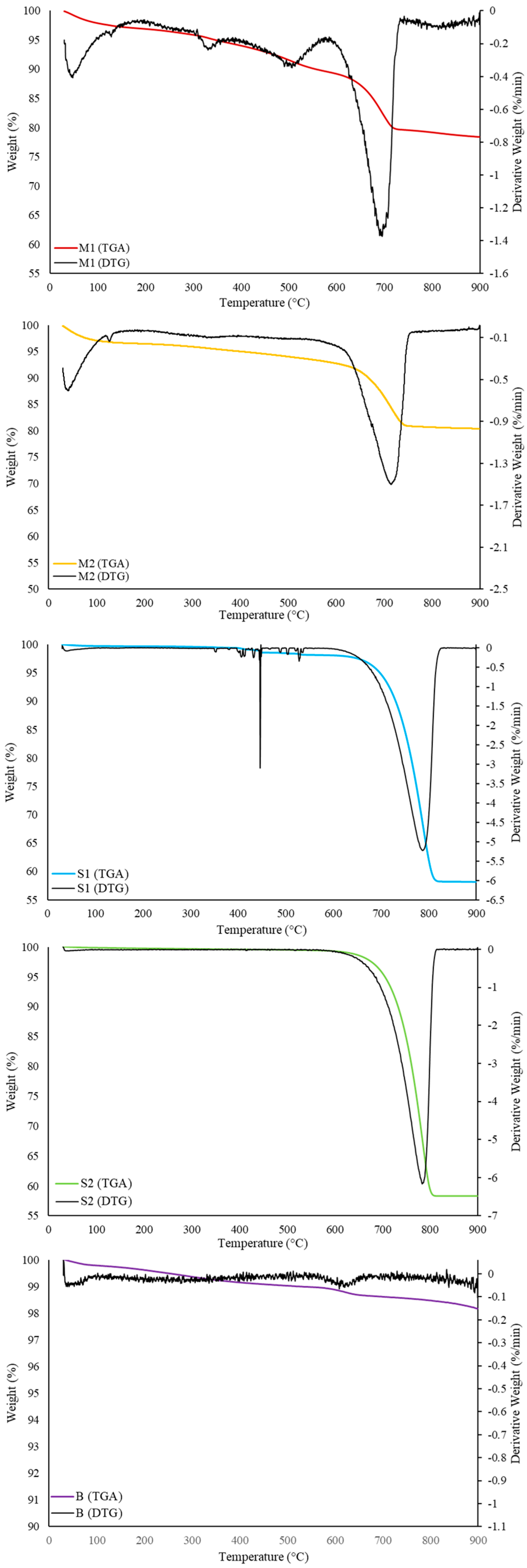
- TGA results revealed low moisture and clay mineral content in the samples, whereas carbonate-based mineral phases were present in high amounts. Physical tests showed that the stone samples have a porosity of approximately 7% and a water absorption rate of 1.93%. Mechanical tests determined the compressive strength to be 15.42 MPa. UPV measurements indicated an average ultrasonic pulse velocity of 1519.72 m/s, and Schmidt hammer tests showed variable strength values across different facades. The dynamic elastic modulus, calculated according to ASTM C597, was 5.36 GPa.
- The results suggest that the carbonate-rich mineralogical structure and low porosity indicate a generally compact internal structure of the materials. However, relatively low ultrasonic velocities and variations in Schmidt hammer values across facades indicate that micro-cracks, weathering, or surface degradation may be present. This study demonstrates a direct relationship between the physical, chemical, and mineralogical properties of the building materials and environmental effects.
- Materials used in conservation and restoration should be compatible with the original building materials in terms of mineralogical and chemical composition. The analyses indicate that carbonate-based mineral phases dominate the building materials. Therefore, restoration mortars should preferably use air lime or natural hydraulic lime as binders. Quartz-based silica sand as aggregate in the mortars can help replicate the mineralogical and microstructural properties of the original mortars. For stone repairs, fine-crystalline, medium-porosity limestone with mineralogical and physical properties similar to the original stones is recommended. Samples containing dolomite suggest that dolomitic limestones can also be considered for restoration stones. Additionally, the physical properties of the replacement stones—such as density, porosity, water absorption, and mechanical strength—should closely match those of the existing stones.
- To achieve a more comprehensive assessment of the building’s structural behavior, the material properties obtained in this study can be used for numerical modeling and structural performance analyses. Finite Element Method (FEM)-based analyses, in particular, can evaluate the behavior of the structure under seismic and environmental loads, providing a reliable engineering basis for future conservation and restoration interventions.
- The analytical results indicate that carbonate-based mineralogical compositions are dominant in the building materials, highlighting the necessity for restoration materials to be compatible with the original structure in terms of mineralogical, physical, and mechanical properties. In this context, fine-crystalline and moderately porous limestones, along with dolomitic limestones, emerge as suitable alternatives. Furthermore, the identification of quartz within the carbonate matrix suggests that calcite-cemented sandstones may also be considered under appropriate conditions. Mechanical test results reveal that the examined stones are characterized by high porosity and low compressive strength. Therefore, the use of stones and mortars with higher strength and modulus of elasticity than the original materials may lead to mechanical incompatibilities. In particular, cement-based binding systems, due to their low vapor permeability and high rigidity, are likely to induce cracking, detachment, and surface deterioration. Physical and thermal analyses indicate low moisture and clay content, suggesting that the current deterioration processes are largely driven by environmental and atmospheric factors. Accordingly, it is recommended that restoration practices employ breathable lime-based mortars with high water vapor permeability, such as air lime, natural hydraulic lime, and pozzolan-enhanced lime mortars. As aggregates, silica sands or river sands with appropriate grain size distribution are recommended.
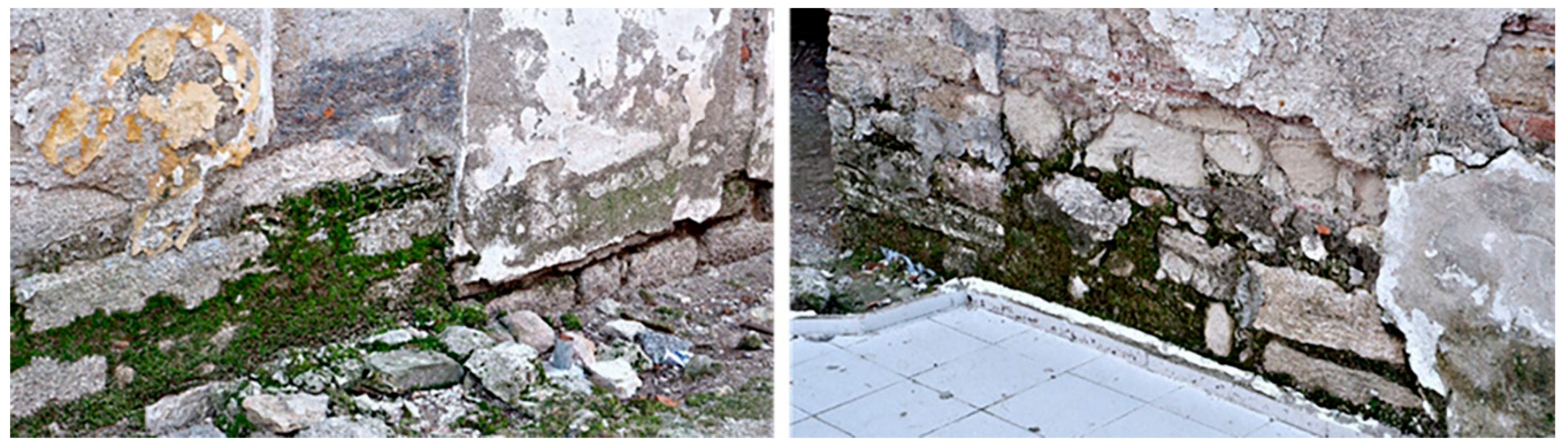
- In future studies, microcracks and surface degradation characteristics can be identified. Furthermore, measurements of, for example, moisture and salt content, which support environmental degradation mechanisms, can be performed, and the compatibility or performance of the proposed lime-based restoration materials can be verified through laboratory tests or simulations. Addressing these shortcomings in future studies is crucial for a more reliable assessment of degradation mechanisms and the validation of restoration works.
- To provide a more comprehensive assessment of the building’s structural behavior, the material properties obtained in this study can be used in numerical modeling and structural performance analysis. In particular, Finite Element Method (FEM)-based analyses can provide a reliable engineering basis for future conservation and restoration interventions by evaluating the building’s behavior under seismic and environmental loads. In addition, it is recommended that many more samples be taken and analyzed when deciding on the building’s restoration in the future.
Author Contributions
Funding
Data Availability Statement
Acknowledgments
Conflicts of Interest
References
- Demirarslan, D. Kentsel ve kültürel bellek bağlamında tarihi bir şehir ve yakın çevresi: Gelibolu. Int. J. Soc. Humanit. Sci. Res. (JSHSR) 2018, 5, 910–932. [Google Scholar]
- Mason, R. Fixing historic preservation: A constructive critique of ‘significance’. Places 2004, 16, 64–71. Available online: https://escholarship.org/uc/item/74q0j4j2 (accessed on 4 June 2025).
- Tıkır, S. Çanakkale ilinin inanç turizmi potansiyelinin değerlendirilmesine ilişkin bir inceleme. Boyabat İktisadi İdari Bilim. Fakültesi E-Derg. 2023, 3, 179–209. Available online: https://dergipark.org.tr/tr/pub/biibfed/article/1402133 (accessed on 18 June 2025).
- Körpe, R. Antik çağın turizm merkezi olarak Troia. Gastroia J. Gastron. Travel Res. 2019, 3, 122–146. [Google Scholar]
- Karataş, L.; Alptekin, A. Kagir yapılardaki taş malzeme bozulmalarının lidar tarama yöntemi ile belgelenmesi: Geleneksel Silvan Konağı vaka çalışması. Türkiye Lidar Derg. 2022, 4, 71–84. [Google Scholar] [CrossRef]
- Gürel, Ş.S.; Dereli, M. Kültür mirası mimari yapılarda malzeme bozulmaları: Hoca Hasan Mescidi. Konya Sanat 2023, 6, 182–194. [Google Scholar] [CrossRef]
- Yan, Y.; Wang, Y. A Review of atmospheric deterioration and sustainable conservation of Calcareous Stone in historical buildings and monuments. Sustainability 2024, 16, 10751. [Google Scholar] [CrossRef]
- Li, W.; Bai, X.; Pan, Z. Air pollution and its impact on stone heritage sites: Mechanisms and mathematical models. Npj Herit. Sci. 2025, 13, 247. [Google Scholar] [CrossRef]
- Charola, A.E. Salts in the deterioration of porous materials: An overview. J. Am. Inst. Conserv. 2000, 39, 327–343. [Google Scholar] [CrossRef]
- Ruffolo, S.A.; La Russa, M.F.; Rovella, N.; Ricca, M. The impact of air pollution on stone materials. Environments 2023, 10, 119. [Google Scholar] [CrossRef]
- Marszałek, M.; Dudek, K.; Gaweł, A. Black crust from historic buildings as a natural indicator of air pollution: A case study of the Lipowiec Castle, Babice, Southern Poland. Sustainability 2024, 16, 3816. [Google Scholar] [CrossRef]
- López-Arce, P.; Garcia-Guinea, J.; Gracia, M.; Obis, J. Bricks in historical buildings of Toledo City: Characterisation and restoration. Mater. Charact. 2003, 50, 59–68. [Google Scholar] [CrossRef]
- Roca, P. Restoration of historic buildings: Conservation principles and structural assessment. Int. J. Mater. Struct. Integr. 2011, 5, 151–167. [Google Scholar] [CrossRef]
- Zhao, C.; Zhang, Y.; Wang, C.C.; Hou, M.; Li, A. Recent progress in instrumental techniques for architectural heritage materials. Herit. Sci. 2019, 7, 36. [Google Scholar] [CrossRef]
- Radnić, J.; Matešan, D.; Abaza, A. Restoration and strengthening of historical buildings: The example of Minceta Fortress in Dubrovnik. Adv. Civ. Eng. 2020, 2020, 8854397. [Google Scholar] [CrossRef]
- Uz, A. Tarihi Yapıların Koruma-Onarımı İçin Malzeme Karakterizasyon Yöntemlerinin Değerlendirilmesi. Master’s Thesis, Mimar Sinan Fine Arts University, İstanbul, Türkiye, 2021. [Google Scholar]
- Pekmezci, I.P. Venedik Tüzüğü’nden günümüze kültürel mirasın korunmasında malzemenin önemi ve korunması üzerine ilkesel açılımlar. mimar.ist 2024, 24, 94–99. Available online: https://mimaristdergi.org/year/2024/volume/24/issue/81 (accessed on 18 February 2025).
- Tellioğlu, S.; Satıcı, B. Tarihi yapılarda restorasyon tekniklerine göre uygulanacak malzemelerin belirlenmesi. İstanbul Ticaret Üniversitesi Teknol. Uygulamalı Bilim. Derg. 2023, 6, 37–49. [Google Scholar] [CrossRef]
- Hughes, J.J.; Callebaut, K. In-situ visual analysis and practical sampling of historic mortars. Mater. Struct. 2002, 35, 70–75. [Google Scholar] [CrossRef]
- Önge, M. Türkiye’de mimari mirasın korunmasında proje sürecine ilkesel bazda bir yaklaşım denemesi. GRID-Archit. Plan. Des. J. 2020, 3, 28–50. [Google Scholar]
- Robador, M.D.; Arroyo, F.; Perez-Rodriguez, J.L. Study and restoration of the Seville City Hall façade. Constr. Build. Mater. 2014, 53, 370–380. [Google Scholar] [CrossRef]
- Chiarelli, N.; Miriello, D.; Bianchi, G.; Fichera, G.; Giamello, M.; Memmi, I.T. Characterisation of ancient mortars from the S. Niccolò archaeological complex in Montieri (Tuscany-Italy). Constr. Build. Mater. 2015, 96, 442–460. [Google Scholar] [CrossRef]
- Loureiro, A.M.S.; da Paz, S.P.A.; do Rosário Veiga, M.; Angelica, R.S. Investigation of historical mortars from Belém do Pará, Northern Brazil. Constr. Build. Mater. 2020, 233, 117284. [Google Scholar] [CrossRef]
- Al-Omari, A.; Khattab, S. Characterization of building materials used in the construction of historical Al-Omariya mosque minaret in Mosul’s old city, Iraq. J. Build. Eng. 2021, 33, 101645. [Google Scholar] [CrossRef]
- de Oliveira, L.M.G.; de Oliveira Freire, F.L.; Ribeiro, F.R.C.; Sousa, I.N.L.; Mesquita, E.; Bertini, A.A. Investigation of the mortars and clay bricks of a luso-brazilian historic structure from XVIII century: The Nosso Senhor do Bonfim Church. J. Build. Eng. 2022, 45, 103592. [Google Scholar] [CrossRef]
- Qian, K.; Song, Y.; Lai, J.; Qian, X.; Zhang, Z.; Liang, Y.; Ruan, S. Characterization of historical mortar from ancient city walls of Xindeng in Fuyang, China. Constr. Build. Mater. 2022, 315, 125780. [Google Scholar] [CrossRef]
- Özmen, A.; Sayın, E. Evaluation of material properties of cultural heritage building by destructive and non-destructive testing: Malatya Taşhoran Church case study. Constr. Build. Mater. 2023, 392, 131693. [Google Scholar] [CrossRef]
- Ponce-Antón, G.; Zuluaga, M.C.; Ortega, L.Á.; Jiménez Echevarría, J.; Alonso Fernández, C. Characterization of historic lime mortars from the arch of San Martin to identify the construction phases of the city wall of Burgos (Spain). Minerals 2024, 14, 147. [Google Scholar] [CrossRef]
- Calvillo, A.S.; Guzmán, E.M.A.; Ezquerra, A.N.; Mendoza, M.R.; Molina, W.M.; Galindo, J.I.Á.; Rincón, L. Physical-chemical, mechanical and durability characterization of historical adobe buildings from the State of Michoacan, Mexico. J. Build. Eng. 2024, 86, 108802. [Google Scholar] [CrossRef]
- Uygunoğlu, T.; Topçu, İ.; Cinar, E.; Resuloğulları, D. Electrical and mechanical properties of historical mortars in Bursa/Turkey. Rev. La Constr. 2019, 18, 54–67. [Google Scholar] [CrossRef]
- Aksoy, H.S.; Karaton, M. Tarihi yığma yapıların malzeme karakteristiklerinin hasarsız yöntemlerle belirlenmesi: Diyarbakır Ulu Camii. Bitlis Eren Üniversitesi Fen Bilim. Derg. 2019, 8, 109–117. [Google Scholar] [CrossRef]
- Korkmaz, M. Göller Yöresi Tarihi Yapılarda Kullanılan Taş ve Harç Örneklerinin Fiziksel ve Mekanik Özelliklerinin Belirlenmesi. Master’s Thesis, Süleyman Demirel University, Isparta, Türkiye, 2019. [Google Scholar]
- Pirchio, D.; Walsh, K.Q.; Kerr, E.; Giongo, I.; Giaretton, M.; Weldon, B.D.; Ciocci, L.; Sorrentino, L. An aggregated non-destructive testing (NDT) framework for the assessment of mechanical properties of unreinforced masonry Italian medieval churches. Constr. Build. Mater. 2022, 342, 128041. [Google Scholar] [CrossRef]
- Salvatici, T.; Centauro, I.; Calandra, S.; Segabinazzi, E.; Intrieri, E.; Garzonio, C.A. Non-destructive methods applied for in situ mechanical diagnosis: Florentine historical buildings in Pietra Serena. Herit. Sci. 2023, 11, 116. [Google Scholar] [CrossRef]
- Jordán, M.M.; Jordá, J.; Pardo, F.; Montero, M.A. Mineralogical analysis of historical mortars by FTIR. Materials 2018, 12, 55. [Google Scholar] [CrossRef]
- Uygun, Y. Balıkesir’deki Tarihi Kaya Bey, İbrahim Bey ve Halhallı Camilerinin Malzeme Özelliklerinin Araştırılması. Master’s Thesis, Balıkesir University, Balıkesir, Türkiye, 2019. [Google Scholar]
- İş, M. İmaret-i Atik Camii’nde Kullanılan Osmanlı-Bizans Dönemi Harç ve Sıvalarının İncelenmesi. Master’s Thesis, Fatih Sultan Mehmet Vakıf University, İstanbul, Türkiye, 2019. [Google Scholar]
- Işık, N. Aspendosta Tarihi Yapılarda Kullanılan Harçların Özellikleri. Master’s Thesis, Akdeniz University, Antalya, Türkiye, 2019. [Google Scholar]
- Owsiak, Z. Microscopic methods for analysis of mortars from historical masonry structures. Bull. Pol. Acad. Sci. Tech. Sci. 2021, 69, e136042. [Google Scholar] [CrossRef]
- Santhanam, K.; Ramadoss, R. Conservation & restoration of historic mortars at Alamparai fort with valley conical arch, Tamilnadu, India. Constr. Build. Mater. 2022, 339, 127619. [Google Scholar] [CrossRef]
- Carvalho, F.; Nunes, A.; Pagará, A.; Costeira, I.; da Silva, T.P.; Lima, M.M.R.A.; Veiga, J.P. Historical lime-based flooring mortars from the Church of Santa Maria de Alcobaça monastery (12th century), Portugal: A multi-analytical approach. Archaeometry 2024, 66, 1177–1190. [Google Scholar] [CrossRef]
- Medeghini, L.; Calzolari, L.; Capriotti, S.; Bernabale, M.; De Vito, C.; Giustini, M.; Pettiti, I.; Dell’Agli, G.; Spiridigliozzi, L.; Antonacci, A.; et al. How the materials knowledge of Roman mortars could be helpful for the production of future materials: The case of the Aqua Traiana aqueduct (Rome, Italy). Cem. Concr. Res. 2024, 179, 107478. [Google Scholar] [CrossRef]
- Loke, M.E.; Pallav, K.; Cultrone, G.; Di Filippo, C. Investigating the standard design and production procedure of heritage mortars for compatible and durable masonry restoration. J. Build. Eng. 2024, 94, 110012. [Google Scholar] [CrossRef]
- Bilgilioğlu, H. Geochemical and physical properties of historical mortars from the Tyana Octagonal Church: Implications for restoration. Npj Herit. Sci. 2025, 13, 288. [Google Scholar] [CrossRef]
- Koyuncu, A. Osmanlı Devleti’nde kilise ve havra politikasına yeni bir bakış: çanakkale örneği. Çanakkale Araştırmaları Türk Yıllığı 2014, 12, 35–87. [Google Scholar] [CrossRef]
- Tombul, M. Çanakkale Kültür Envanteri; Matsis Matbaası: İstanbul, Türkiye, 2015. [Google Scholar]
- Döndüren, M.; Şişik, Ö.; Demiröz, A. Tarihi yapılarda görülen hasar türleri. Selçuk Üniversitesi Sos. Tek. Araştırmalar Derg. 2017, 13, 45–58. Available online: https://dergipark.org.tr/tr/pub/sosyoteknik/article/1343871 (accessed on 7 August 2025).
- Artık, K.; Turan, M.T. Karbonatlı yapı taşlarında görülen kimyasal alterasyonlar. Bilim Gençlik Derg. 2018, 6, 52–61. [Google Scholar]
- Singh, M.; Kumar, S.V.; Waghmare, S.A.; Sabale, P.D. Aragonite-vaterite-calcite: Polymorphs of CaCO3 in 7th century CE lime plasters of Alampur group of temples, India. Constr. Build. Mater. 2016, 112, 386–397. [Google Scholar] [CrossRef]
- Banerjee, D.; Sarkar, S.; Yadav, R.; Singh, M.R. Chemical and microbial characterization of cyanobacterial extracellular polymeric substances (EPS) in biofilm extracts from Hathi Khana, An ancient monument in Agra, Taj complex. Vib. Spectrosc. 2024, 131, 103652. [Google Scholar] [CrossRef]
- Mishra, A.K.; Mishra, A.; Anshumali. Geochemical characterization of bricks used in historical monuments of 14-18th century CE of Haryana region of the Indian subcontinent: Reference to raw materials and production technique. Constr. Build. Mater. 2021, 269, 121802. [Google Scholar] [CrossRef]
- Ditta, A.; Carneiro, A.; Galacho, C.; Moita, P. Mortars and renders: The case of the Roman Villa Horta da Torre Fronteira, Portugal. Heritage 2024, 7, 1589–1617. [Google Scholar] [CrossRef]
- Medjelekh, D.; Kenai, A.; Claude, S.; Ginestet, S.; Escadeillas, G. Multi-technique characterization of ancient materials as part of an eco-renovation of historic centres, case of Cahors centre in France. Constr. Build. Mater. 2020, 250, 118894. [Google Scholar] [CrossRef]
- Hövelmann, J.; Putnis, A.; Geisler, T.; Schmidt, B.; Golla-Schindler, U. The replacement of plagioclase feldspars by albite: Observations from hydrothermal experiments. Contrib. Mineral. Petrol. 2010, 159, 43–59. [Google Scholar] [CrossRef]
- Thirumalini, S.; Ravi, R.; Sekar, S.K.; Nambirajan, M. Knowing from the past-Ingredients and technology of ancient mortar used in Vadakumnathan temple, Tirussur, Kerala, India. J. Build. Eng. 2015, 4, 101–112. [Google Scholar] [CrossRef]
- Ravi, R.; Thirumalini, S.; Taher, N. Analysis of ancient lime plasters-Reason behind longevity of the Monument Charminar, India a study. J. Build. Eng. 2018, 20, 30–41. [Google Scholar] [CrossRef]
- Singh, M.; Arbad, B.R. Characterization of traditional mud mortar of the decorated wall surfaces of Ellora caves. Constr. Build. Mater. 2014, 65, 384–395. [Google Scholar] [CrossRef]
- Saikia, B.J.; Parthasarathy, G.; Sarmah, N.C. Fourier transform infrared spectroscopic estimation of crystallinity in SiO2 based rocks. Bull. Mater. Sci. 2008, 31, 775–779. [Google Scholar] [CrossRef]
- Kamel, A.M.; Marie, H.A.; Mahmoud, H.A.; Ali, M.F. Mineralogical characterization of Islamic stucco: Minaret of Shams El-Deen El-Wasty, Bulaq, Egypt. Constr. Build. Mater. 2015, 101, 692–701. [Google Scholar] [CrossRef]
- Reig, F.B.; Adelantado, J.G.; Moreno, M.M. FTIR quantitative analysis of calcium carbonate (calcite) and silica (quartz) mixtures using the constant ratio method. Application to geological samples. Talanta 2002, 58, 811–821. [Google Scholar] [CrossRef]
- Volkov, D.S.; Rogova, O.B.; Proskurnin, M.A. Organic matter and mineral composition of silicate soils: FTIR comparison study by photoacoustic, diffuse reflectance, and attenuated total reflection modalities. Agronomy 2021, 11, 1879. [Google Scholar] [CrossRef]
- Edwards, H.G.; Farwell, D.W. The conservational heritage of wall paintings and buildings: An FT-Raman spectroscopic study of prehistoric, Roman, mediaeval and Renaissance lime substrates and mortars. J. Raman Spectrosc. 2008, 39, 985–992. [Google Scholar] [CrossRef]
- Schmid, T.; Dariz, P. Chemical imaging of historical mortars by Raman microscopy. Constr. Build. Mater. 2016, 114, 506–516. [Google Scholar] [CrossRef]
- Ishikawa, S.T.; Gulick, V.C. An automated mineral classifier using Raman spectra. Comput. Geosci. 2013, 54, 259–268. [Google Scholar] [CrossRef]
- Bersani, D.; Lottici, P.P. Raman spectroscopy of minerals and mineral pigments in archaeometry. J. Raman Spectrosc. 2016, 47, 499–530. [Google Scholar] [CrossRef]
- Apostolopoulou, M.; Delegou, E.T.; Alexakis, E.; Kalofonou, M.; Lampropoulos, K.C.; Aggelakopoulou, E.; Bakolas, A.; Moropoulou, A. Study of the historical mortars of the Holy Aedicule as a basis for the design, application and assessment of repair mortars: A multispectral approach applied on the Holy Aedicule. Constr. Build. Mater. 2018, 181, 618–637. [Google Scholar] [CrossRef]
- Pinto, A.F.; da Fonseca, B.S.; Silva, D.V. The role of aggregate and binder content in the physical and mechanical properties of mortars from historical rubble stone masonry walls of the National Palace of Sintra. Constr. Build. Mater. 2021, 268, 121080. [Google Scholar] [CrossRef]
- Cantisani, E.; Calandra, S.; Barone, S.; Caciagli, S.; Fedi, M.; Garzonio, C.A.; Liccioli, L.; Salvatici, T.; Vettori, S. The mortars of Giotto’s Bell Tower (Florence, Italy): Raw materials and technologies. Constr. Build. Mater. 2021, 267, 120801. [Google Scholar] [CrossRef]
- Paama, L.; Pitkänen, I.; Rönkkömäki, H.; Perämäki, P. Thermal and infrared spectroscopic characterization of historical mortars. Thermochim. Acta 1998, 320, 127–133. [Google Scholar] [CrossRef]
- Lezzerini, M.; Legnaioli, S.; Lorenzetti, G.; Palleschi, V.; Tamponi, M. Characterization of historical mortars from the bell tower of St. Nicholas Church (Pisa, Italy). Constr. Build. Mater. 2014, 69, 203–212. [Google Scholar] [CrossRef]
- Hashim, M.S.; Kaczmarek, S.E. Experimental stabilization of carbonate sediments to calcite: Insights into the depositional and diagenetic controls on calcite microcrystal texture. Earth Planet. Sci. Lett. 2020, 538, 116235. [Google Scholar] [CrossRef]
- Lüttge, A.; Metz, P. Mechanism and kinetics of the reaction: 1 dolomite + 2 quartz = 1 diopside + 2 CO2: A comparison of rock-sample and of powder experiments. Contrib. Mineral. Petrol. 1993, 115, 155–164. [Google Scholar] [CrossRef]
- Rad, B.A.; Alizadeh, P. Pressureless sintering and mechanical properties of SiO2-Al2O3-MgO-K2O-TiO2-F (CaO-Na2O) machinable glass-ceramics. Ceram. Int. 2009, 35, 2775–2780. [Google Scholar] [CrossRef]
- Tadic, M.; Trpkov, D.; Kopanja, L.; Vojnovic, S.; Panjan, M. Hydrothermal synthesis of hematite (α-Fe2O3) nanoparticle forms: Synthesis conditions, structure, particle shape analysis, cytotoxicity and magnetic properties. J. Alloys Compd. 2019, 792, 599–609. [Google Scholar] [CrossRef]
- Li, X.; Chen, H. Mechanochemical treatment of hexachlorobenzene-contaminated soil with additives. Environ. Sci. Pollut. Res. 2023, 30, 41910–41922. [Google Scholar] [CrossRef]
- Buck, B.J.; Van Hoesen, J.G. Snowball morphology and SEM analysis of pedogenic gypsum, southern New Mexico, USA. J. Arid Environ. 2002, 51, 469–487. [Google Scholar] [CrossRef]
- Molina, O.; Vilarrasa, V.; Zeidouni, M. Geologic carbon storage for shale gas recovery. Energy Procedia 2017, 114, 5748–5760. [Google Scholar] [CrossRef]
- Guo, L.; Shen, Y.; Lyu, M.; Zhang, D.; Huang, Z. Non-parametric seismic fragility assessment of underground structures incorporating stochastic ground motion. Soil Dyn. Earthq. Eng. 2026, 200, 109893. [Google Scholar] [CrossRef]





| Sample | Unit Weight (g/cm3) | Specific Gravity | Compactness (%) | Porosity (%) | Water Absorption Rate (%) |
|---|---|---|---|---|---|
| S | 2.40 | 2.58 | 93 | 7 | 1.93 |
| Sample | Schmidt Hammer (MPa) | UPV (m/s) | Poisson’s Ratio [77] | Compressive Strength (MPa) |
|---|---|---|---|---|
| S | 5.51 | 1519.72 | 0.20 | 15.42 |
| Sample | Modulus of Elasticity (GPa) | ||||
|---|---|---|---|---|---|
| Ed | E (DBYBHY) | E (FEMA 356) | E (TBDY) | E (Eurocode 6) | |
| S | 5.36 | 3.08 | 8.48 | 11.57 | 15.42 |
Disclaimer/Publisher’s Note: The statements, opinions and data contained in all publications are solely those of the individual author(s) and contributor(s) and not of MDPI and/or the editor(s). MDPI and/or the editor(s) disclaim responsibility for any injury to people or property resulting from any ideas, methods, instructions or products referred to in the content. |
© 2026 by the authors. Licensee MDPI, Basel, Switzerland. This article is an open access article distributed under the terms and conditions of the Creative Commons Attribution (CC BY) license.
Share and Cite
Topsakal, A.; Altun, M.G. A Multi-Analytical Study of Historical Materials from the Old Armenian Church in Türkiye. Buildings 2026, 16, 1499. https://doi.org/10.3390/buildings16081499
Topsakal A, Altun MG. A Multi-Analytical Study of Historical Materials from the Old Armenian Church in Türkiye. Buildings. 2026; 16(8):1499. https://doi.org/10.3390/buildings16081499
Chicago/Turabian StyleTopsakal, Alican, and Muhammet Gökhan Altun. 2026. "A Multi-Analytical Study of Historical Materials from the Old Armenian Church in Türkiye" Buildings 16, no. 8: 1499. https://doi.org/10.3390/buildings16081499
APA StyleTopsakal, A., & Altun, M. G. (2026). A Multi-Analytical Study of Historical Materials from the Old Armenian Church in Türkiye. Buildings, 16(8), 1499. https://doi.org/10.3390/buildings16081499