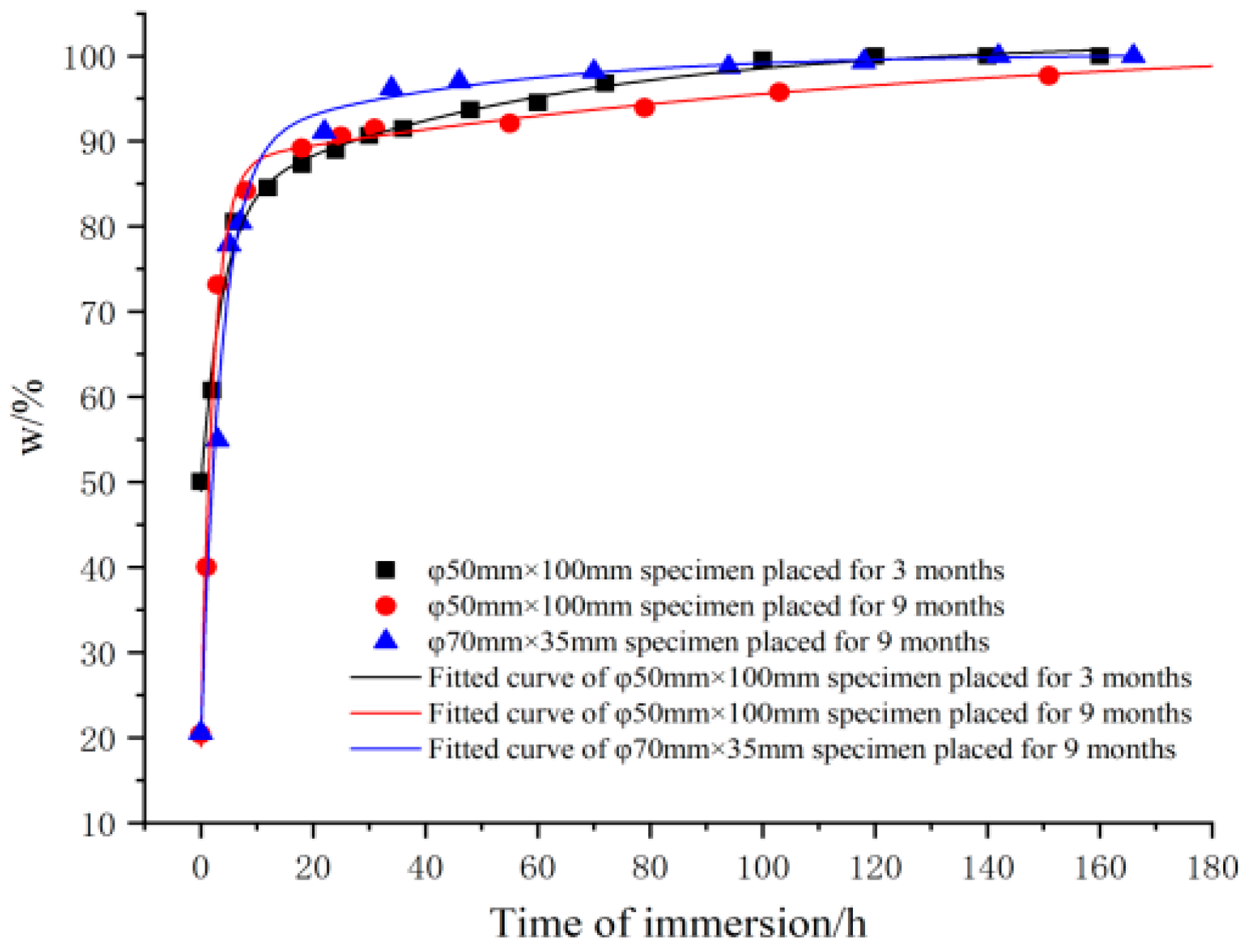
1. Introduction
Due to their political, economic, and military significance, large-scale water-retaining dams have become prime targets in regional conflicts and terrorist attacks. During World War II, the Royal Air Force launched a surprise attack on the Möhne Dam, built by Germany on a tributary of the Ruhr River, causing severe damage to downstream railways and other infrastructure; more than 1200 people lost their lives in the resulting flooding. Additionally, dams may be subjected to severe impact loads, such as those caused by earthquakes or explosions. For example, in 1962, the Xinfengjiang Dam in Guangdong Province, China, was struck by an earthquake with a magnitude exceeding 6.0, whose epicenter was approximately 1100 m from the dam site. This caused a large crack over 80 m long to form at a certain elevation along a section of the dam, resulting in water leakage through the crack in the dam structure [
1]. For conventional water-retaining structures such as gravity dams and arch dams, the submerged portion typically accounts for 30% to 60% of the total volume. For submerged structures used for flood discharge and water conveyance (such as energy dissipation basins, bottom outlets, and dam foundations), the proportion of the submerged portion may reach 70% or more, or even approach 100% [
2,
3]. Significant differences exist between dry and wet concrete in terms of dynamic mechanical properties [
4,
5,
6]. The physical mechanisms underlying changes in concrete strength after water immersion are more complex, and the safety design and construction of underwater concrete structures present greater challenges than those in dry concrete environments. Neglecting the influence of moisture coupling on concrete strength during the design of structures serving in humid or underwater environments—which may simultaneously face threats such as impact, shock, or explosive loads—could lead to catastrophic consequences [
7]. Therefore, investigating the variation patterns of wet concrete’s dynamic strength and the physical mechanisms underlying moisture coupling’s impact on strength holds significant practical importance.
Regarding the mechanisms underlying the dynamic strength enhancement of dry concrete, previous studies have proposed explanations from various scales and perspectives, which can be summarized as follows: (1) energy dissipation mechanisms: the generation and growth of cracks in concrete are the main factors leading to material failure, and the energy consumed by crack nucleation is much higher than the energy required for growth. Consequently, elevated strain rates trigger the development of numerous new cracks, thereby absorbing significantly greater amounts of energy. When subjected to rapid loading, the material must elevate its internal stress levels to quickly gather the necessary energy, which manifests macroscopically as enhanced concrete strength [
8]. In addition, if internal microcracks do not have enough time to fully propagate when concrete is damaged, it can lead to the destruction of concrete aggregates. The higher the strain rate, the more the aggregate is destroyed and the higher the strength of the concrete is. Using a split Hopkinson pressure bar (SHPB), Xie [
9,
10] evaluated the impact compression behavior of engineered cementitious composites (ECCs). These findings demonstrated that ECCs are highly sensitive to strain rates between 50 and 150 s
−1. Specifically, faster loading not only improved the dynamic compressive strength but also enhanced the energy absorption capabilities and the overall extent of material fragmentation. Additionally, higher water-to-binder (
W/
b) ratios were found to amplify this rate sensitivity. Some scholars [
11] have provided an explanation for the increase in concrete strength under tensile loading, postulating that it arises from the increase in viscous resistance caused by the Stefan effect, resulting in more energy required for crack expansion. However, under compressive load, the influence of the Stefan effect is small and can be ignored. (2) Mechanisms of thermal activation and phonon viscosity: concrete is a multiphase composite material consisting of cement, aggregates, water, and additives, whose hardened structure resembles that of amorphous or quasicrystalline solids, containing microstructural defects (microcracks and micropores) analogous to dislocations. These microdefects are not as regular as dislocations in crystalline materials, but they also have an important effect on the mechanical properties of concrete. These microdefects in concrete can be regarded as “dislocations” in the concrete material. Therefore, the effect of strain rate on the strength of brittle materials, such as concrete or rock, can be regarded as the result of the joint control of thermal activation mechanism and viscosity mechanism [
12,
13,
14]. At a low strain rate, the thermal activation mechanism primarily dictates the strain rate effect of concrete strength. Therefore, the overall strain rate effect of concrete strength is considered to be the result of the parallel existence and ongoing competition between the thermal activation mechanism and the viscosity mechanism. (3) Inertial effects (stress wave effects): it is generally accepted that structural inertia exerts minimal influence at strain rates under 10
0 s
−1 and that at strain rates greater than this, the inertial force cannot be ignored at all; especially when the strain rate reaches 10
1 s
−1, the inertial effect is more significant [
15]. On the microscopic scale, the inertial mechanism refers to the free vibration of the internal particles of the concrete material under high strain rate, and a certain acceleration is obtained, resulting in the inertial force. The higher the strain rate, the faster the particle vibrates, the greater the acceleration, and the greater the inertial force. The strength of the material increases in proportion to the increase in strain rate [
16,
17]. On the macroscopic scale, the reason for the inertial effect is that axial motion and acceleration cause radial acceleration due to the Poisson effect, thus producing confining pressure. The higher the strain rate, the greater the confining pressure and the higher the strength.
The above is the reasonable explanation provided by current researchers regarding the strain rate strengthening mechanism of dry concrete. However, the mechanical properties of concrete serving in underwater or wet environments differ considerably from those of dry concrete, and the infiltration of free water will have a non-negligible impact on the strength of concrete. Kaplan [
18] believes that under compression load, the micropores and channels perpendicular to the loading direction inside the concrete tend to close, making free water in the pores flow inside the specimen. In addition, due to viscosity, this motion will be accompanied by a water pressure gradient. The pore water pressure will increase as the loading rate increases, delaying the occurrence of cracks and increasing the compressive strength of wet concrete. Shady [
6] and Ross [
19] have conducted dynamic tests on wet and dry concrete, and they found that the strain rate has a more significant impact on the strength of wet concrete than that of dry concrete; they concluded that free water is an important reason for the increase in concrete strength. Cadoni [
4] and Weerheijm [
20] believe that the increase in the strength of wet concrete is caused by the viscosity of free water in concrete, which confirms the influence of water content on the strain rate sensitivity of concrete. However, other researchers present opposing perspectives. For instance, Wang [
21] asserts that when evaluated at room temperature and an identical strain rate, the dynamic strength of dry concrete greatly exceeds the dynamic strength of saturated concrete. Zhou [
22] points out that the dynamic compressive strength and static strength have a similar variation law, and the strength is higher when the water content is low, while the strength is weaker when the water content is high. Only when the concrete is close to saturation does the compressive strength increase; furthermore, the influence of water content on the average DIF (dynamic increase factor) of concrete is not significant. Wang [
23] examined the influence patterns and mechanisms of wet–dry cycling on concrete’s physical properties, mechanical performance, and microstructure. The study summarized the coupled effects of wet–dry cycling with other factors and analyzed the underlying causes affecting the efficacy of wet–dry cycling. Shao [
24] conducted wet–dry cycling tests on concrete of different strength grades to investigate its effects on physical and mechanical properties. At the microscale, the relationship between concrete strength and pore structure was analyzed, revealing that concrete strength initially increases and then decreases with the number of wet–dry cycles.
In summary, scholars have analyzed the strength variation law and physical mechanism of dry concrete under dynamic loading from different perspectives and scales, and they have obtained valuable results. The strain rate’s effect on wet concrete’s strength has also been studied preliminarily, and most scholars [
18,
19,
20,
21,
22,
23,
24] agree that water significantly affects concrete’s compressive strength. However, controversies persist among scholars regarding whether free water causes dynamic strength attenuation or enhancement in concrete, as well as regarding its effect on strain rate sensitivity. In particular, the coupling behavior and physical mechanisms between strain rate and moisture in concrete remain unclear. Addressing these knowledge gaps is essential for establishing a theoretical basis for the design and protection of hydraulic concrete structures against dynamic threats.
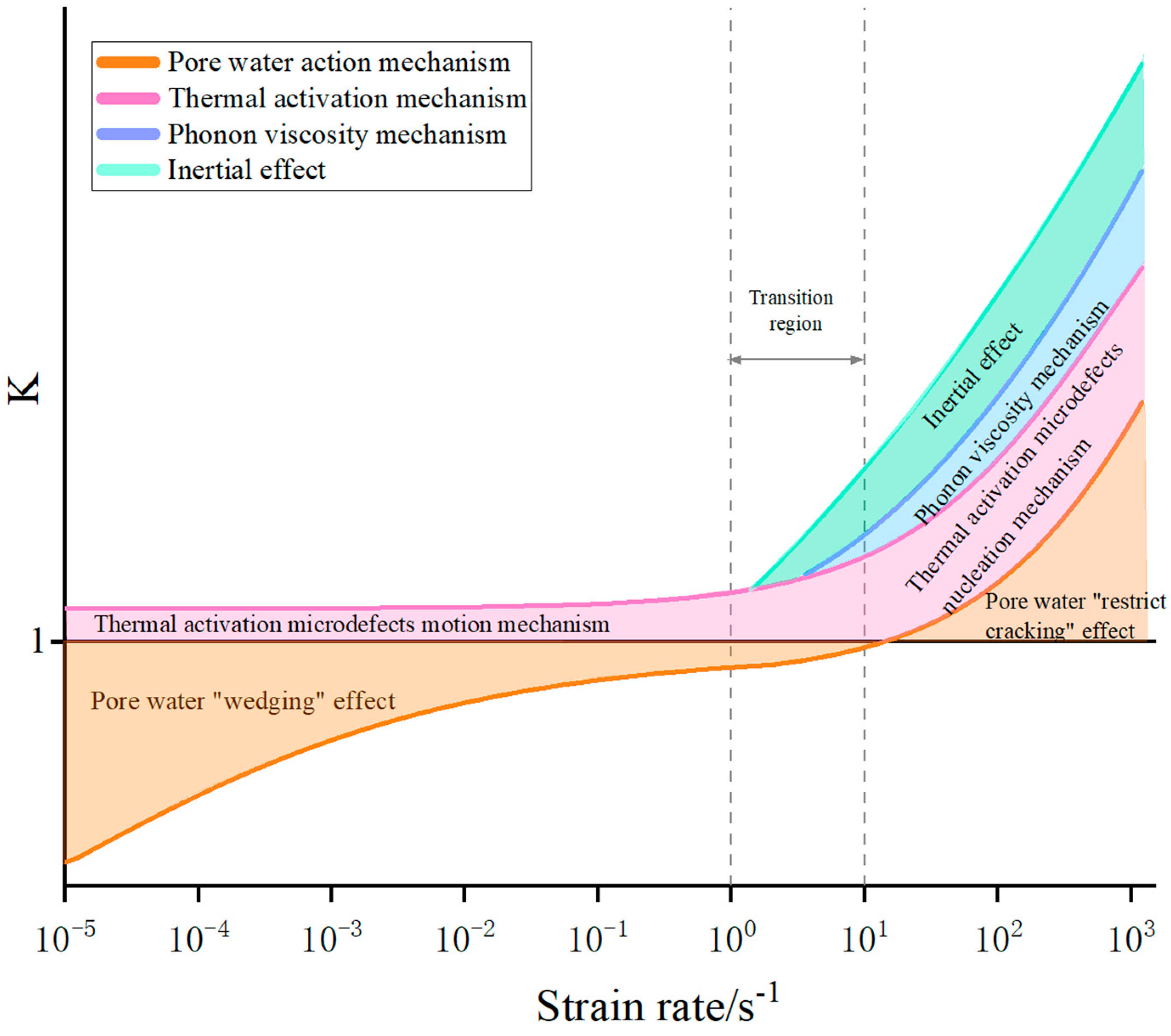
In response to the above controversies and issues, this article conducted an experimental study on concrete with different moisture contents at different strain rates, and the results show that under quasi-static loading, free water has a weakening effect on concrete strength. The quasi-static strength shows a nonlinear decaying trend with increasing water content. With the increase in strain rate, the wet concrete strength increased slowly, but the strain rate effect is not obvious. And when the strain rate reaches the transition strain rate , the strain rate effect of wet concrete strength gradually becomes significant; the higher the water content, the smaller the transition strain rate, and the more significant the strain rate sensitivity, which leads to the division of the strain rate-sensitive and non-sensitive zones of strength according to the relationship between the transition strain rate and the water content. When the strain rate reaches the characteristic strain rate (i = 1, 2, 3…), the strength of wet concrete under the same strain rate gradually becomes higher than the strength of dry concrete. According to the relationship between characteristic strain rate and water content, the dominant region of the strain rate strengthening effect and the water softening effect is divided. It can be seen that the strain rate effect of concrete strength and pore water effect are coupled with each other, and the effect of water on concrete strength depends on the change interval of strain rate. Based on the experimental results, the mechanism of strain rate dependence of concrete strength has been investigated. It is found that in the range of low strain rate, the strain rate dependence of concrete strength is controlled by both the thermally activated microdefect motion mechanism and the pore water wedging effect. As the strain rate increases further, the thermally activated microdefect motion mechanism is transformed into a thermally activated microdefect nucleation mechanism, the pore water “promotes cracking” effect is transformed into a pore water “restricts cracking” effect, and the viscous mechanism (phonon damping) emerges and exerts an important influence. At the same time, the inertia effect also gradually becomes obvious, resulting in a significant increase in the dynamic strength of wet concrete, which shows that the strength of wet concrete is more dependent on the strain rate. The variation law of transition strain rate and dynamic strength is a result of the coupling effect of pore water action, thermal activation, viscous mechanisms, and inertia effects. Water is involved in the initiation and action of every mechanism in the concrete from the low-strain-rate to high-strain-rate region, so there are significant differences in the dynamic and static strength variation law of wet concrete and dry concrete.
This paper systematically analyzes the variation patterns of wet concrete strength across a wide strain rate range from low to high, based on conducted dynamic and static experiments (10−5–2 × 10² strain rates) and experimental data from the published literature (10−5–6 × 10² strain rates). It reveals the physical mechanisms underlying the wet-coupling effect across different strain rate intervals. It provides a scientifically sound explanation for the phenomenon where wet concrete exhibits higher strength than dry concrete under high strain rates, grounded in thermodynamics and material dynamics. This work resolves the controversy surrounding the influence of pore water on dynamic strength and strain rate sensitivity, offering theoretical support for the protection and design of hydraulic concrete structures such as dams, ports, and docks.
3. Analysis of Experimental Results
3.1. Strain Rate Effect and Sensitivity Analysis of Wet Concrete Strength
In order to study the variation law of the strength of concrete with the same water content under different strain rates, the relative strain rate effect factor DIF of wet concrete strength is defined as:
where
is the dynamic uniaxial compressive strength of concrete with a relative saturation of
, and
is the quasi-static (
) uniaxial compressive strength of concrete with a relative saturation of
. Based on the dynamic and static experimental data of dry and wet concrete at different strain rates in this paper, the
relationship curve for the variation in
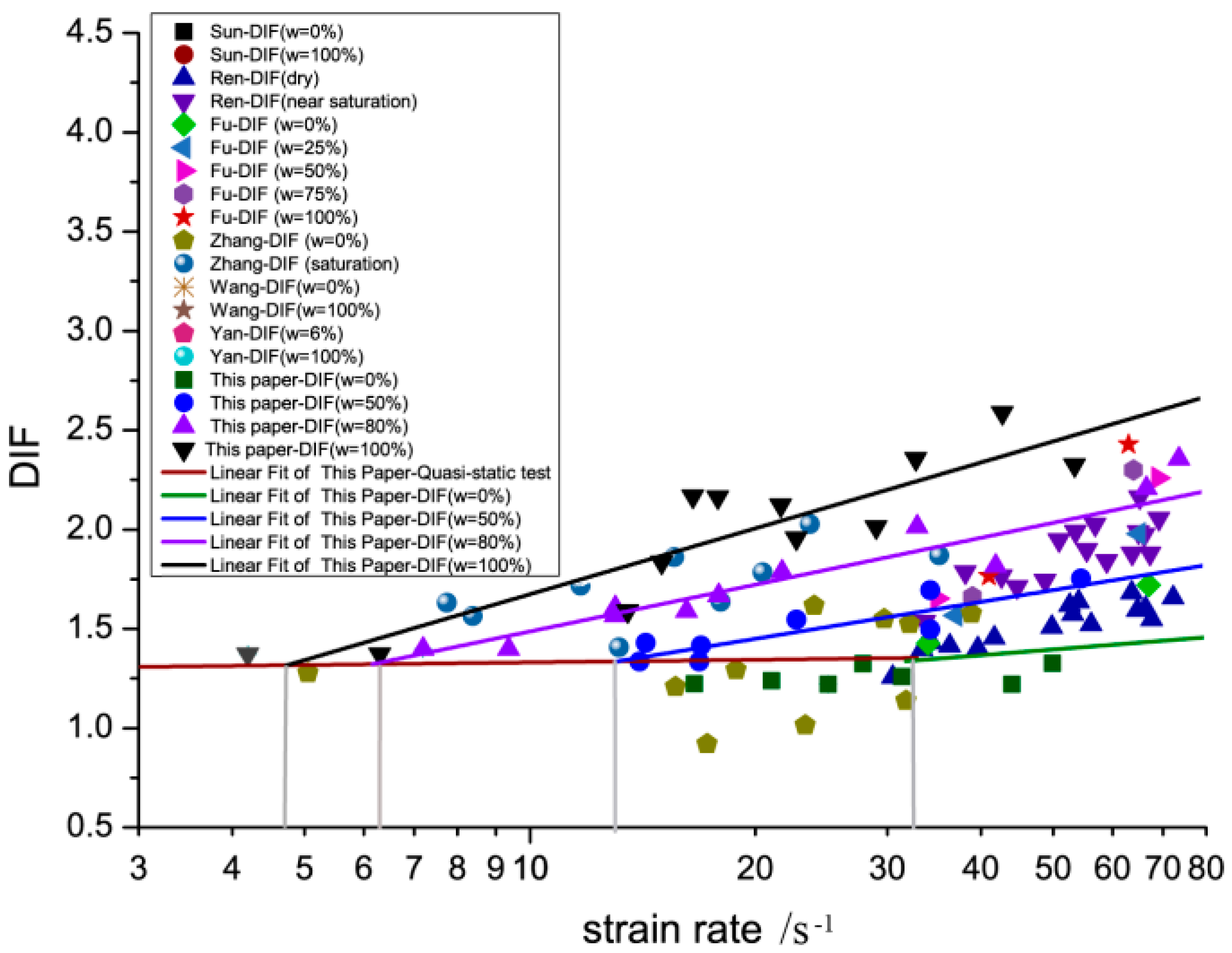
with strain rate can be fitted. Comparative analysis of the experimental results of this paper and the existing experimental results [
25,
26,
27,
28,
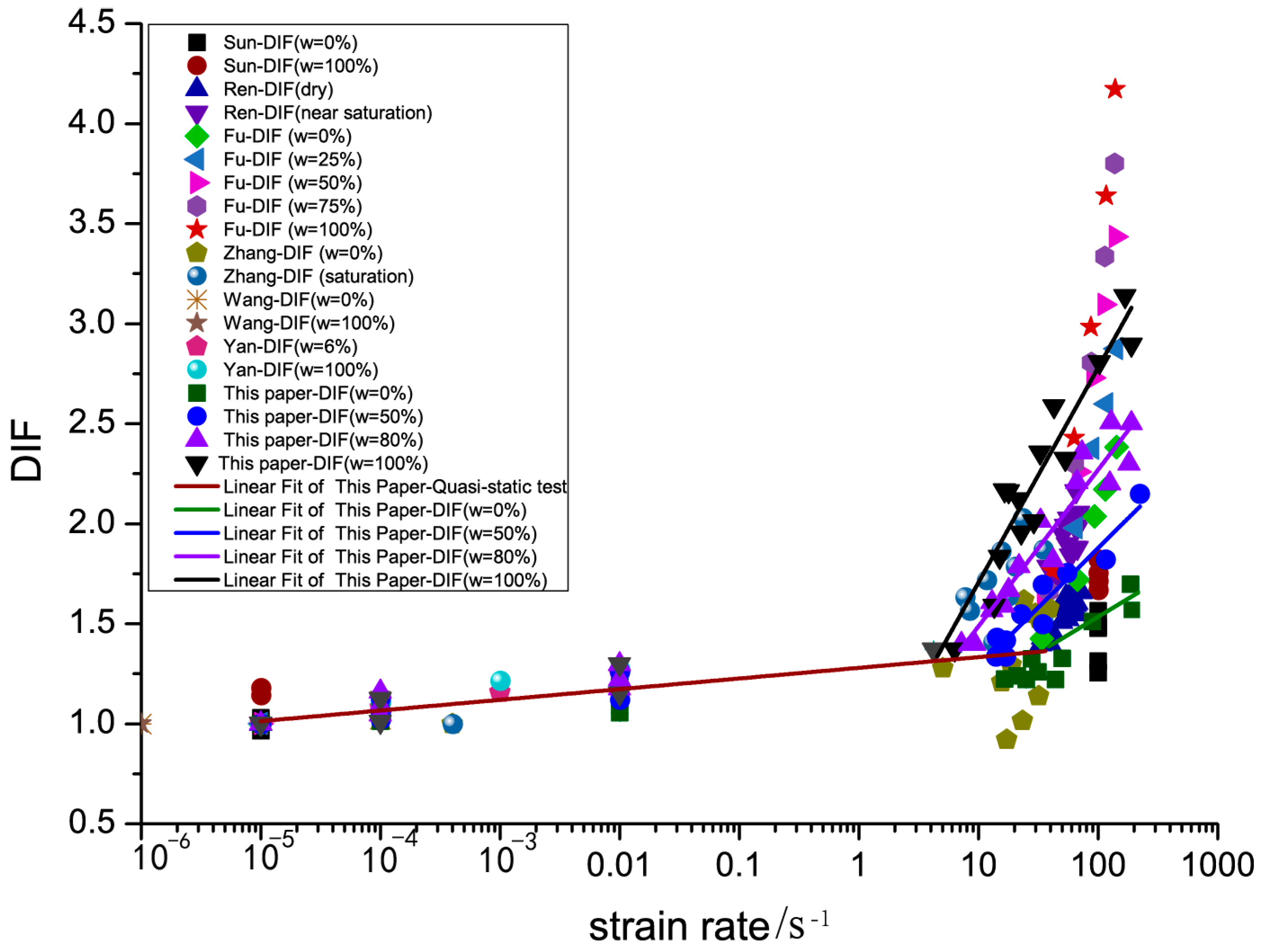
29] is shown in
Figure 4.
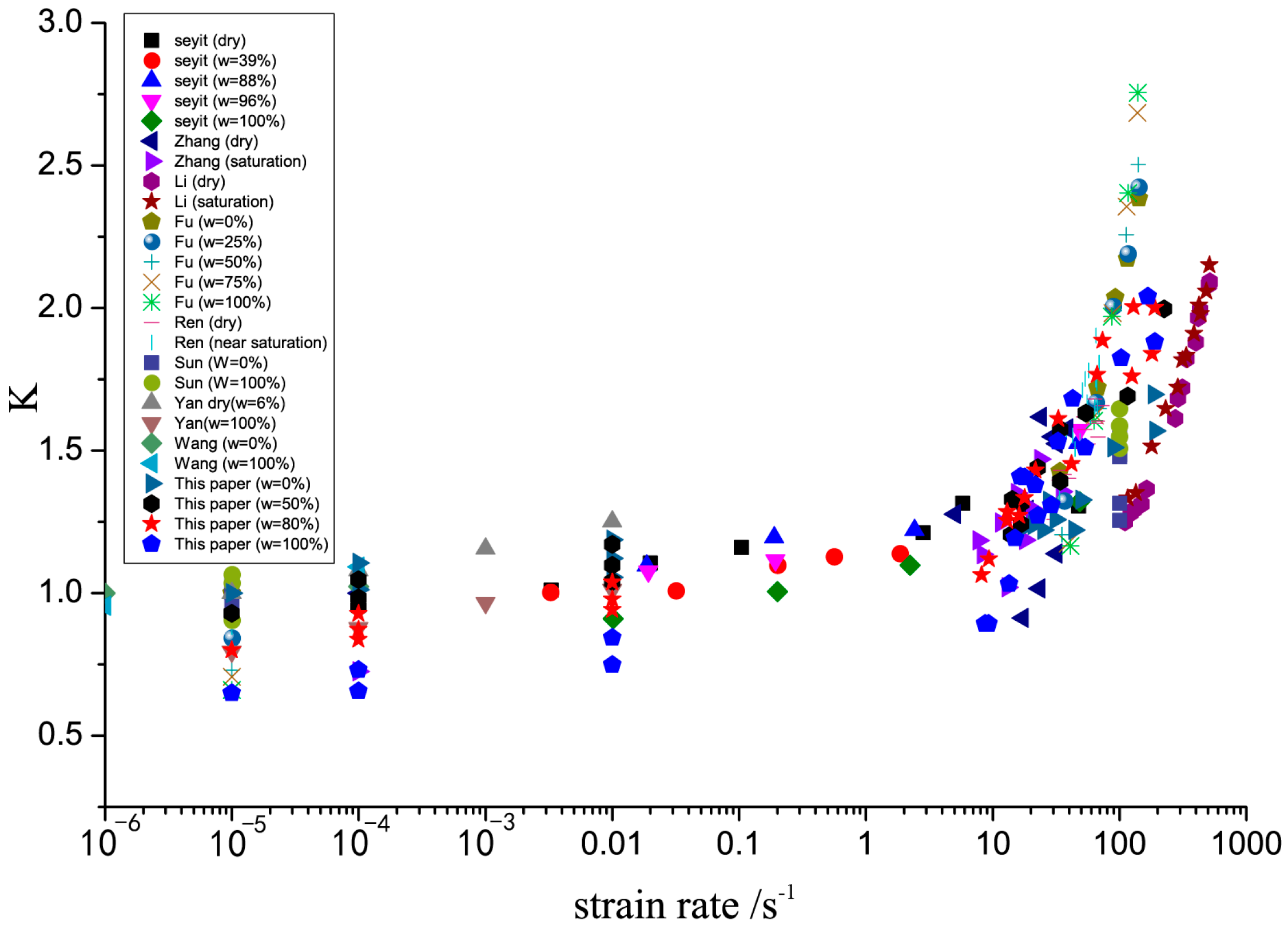
It can be found that under the combined conditions of strain rate and water, although there are certain differences in the compressive strength of concrete obtained by different researchers, the variation law of DIF with strain rate is very similar, mainly consisting of the following two points:
(1) Evident distinctions exist in how the strength of dry and wet concrete evolves under both quasi-static and dynamic loading. Furthermore, the relationship curve plotting concrete strength against strain rate reveals a specific transition strain rate. At levels below this transition strain rate, the growth in concrete strength proceeds at a gradual pace. Water content exerts a small influence on the relative strain rate effect between concretes with different humidity levels (in this paper, the difference in the DIF relationship curve between dry and wet concrete at low strain rate is ignored, and the same fitting line is adopted to describe the dependency between DIF). Conversely, once the applied strain rate surpasses the transition strain rate, a rapid escalation in strength occurs.
(2) When the strain rate reaches the transition strain rate, the variation in the relative strain rate effect factor DIF of concrete strength with different water contents is obviously different, and the strain rate effect is more sensitive to higher water content.
Zooming in locally on
Figure 4, the fitted curve between DIF and strain rate
at a high strain rate (
) in this experiment is shown in
Figure 5.
From the fitting results, the relationship equation between the relative strain rate effect factor DIF for wet concrete strength and the strain rate
is obtained as:
where a(w) and b(w) are fitting parameters related to the relative saturation rate w of concrete,
is the strain rate,
is the reference strain rate taken as
, and
is the transition strain rate. The
,
, and
values for concrete with different water contents are shown in
Table 1.
Developed collaboratively by the European Committee for Concrete (CEB) and the International Federation for Prestressed Concrete (FIP), the CEB-FIP model serves as a comprehensive framework for designing and analyzing concrete structures. It is widely used for predicting and calculating concrete properties and holds significant application value in bridges, high-rise buildings, and prestressed structures [
30]. The CEB-FIP model provides the following relationship equations between DIF and strain rate:
Here, and represent the dynamic strain rate and static reference strain rate, respectively, while and are parameters related to the compressive strength of concrete cubes. Comparing the CEB-FIP model with the equation established in this paper reveals that the CEB-FIP model does not account for the influence of moisture content on concrete strength. Its piecewise equation describes the variation in DIF at different strain rates, with a transition strain rate of 30 s−1. This value is very close to the transition strain rate of 32 s−1 obtained from the drying concrete experimental data fitted in this paper. However, Equation (3) presented herein incorporates the rate-of-wetness effect on concrete strength, making it applicable to both dry and wet concrete.
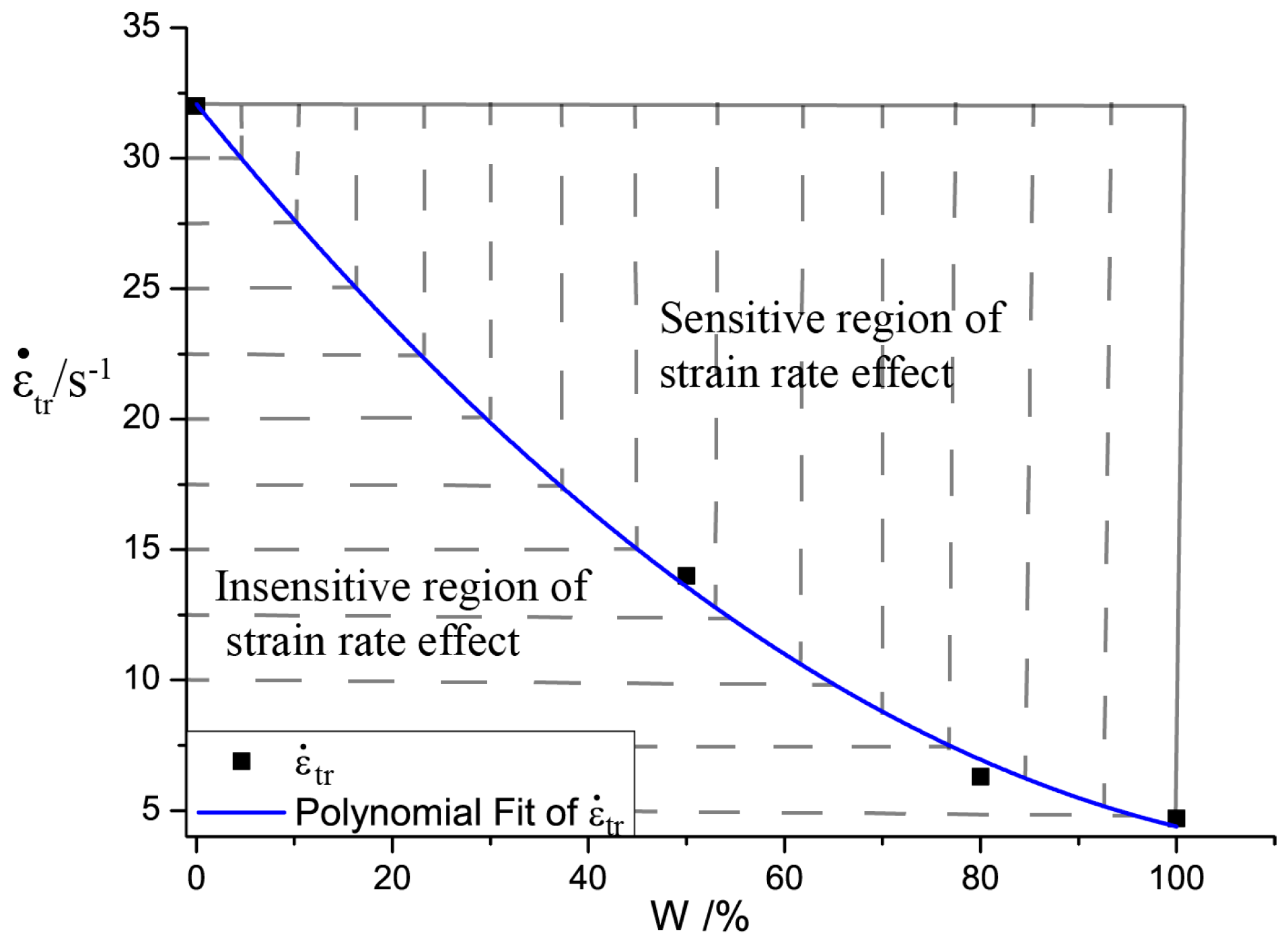
Moreover, the aforementioned fitting results reveal the following: (1) The water content amplifies the strain rate effect on the dynamic strength of concrete. Specifically, an increase in water content corresponds to a reduction in the transition strain rate. Consequently, moisture drives a forward shift of the transition point associated with the strain rate effect of the concrete strength. Based on these mathematical fits,
Figure 6 illustrates the relationship curve between the transition strain rate and the water content.
The equation for the relationship between the transition strain rate, after normalization, and the relative saturation is:
where
,
.
In addition, in repetitions of the experiment (three to five effective experiments under the condition of the same water content and similar strain rate), the transition strain rate corresponding to the change in the slope of the is not a definite point but a smaller interval around this point (i.e., the transition strain rate provided in this paper is the average value of the transition strain rate statistically obtained from the data of multiple repetitions of the experiment, and this value is affected by many factors such as the mix ratio of the specimen itself, size and strength grade, experimental equipment, loading method, etc. However, we do not discuss these influencing factors in this paper and only focus on the effect of water content on it. According to the relationship between the transition strain rate and water content, the influence area is divided into a strain rate-sensitive area and a non-sensitive area, and the results of this division can provide an intuitive reference basis for the judgment of strain rate sensitivity of concrete under the condition of strain rate–water coupling).
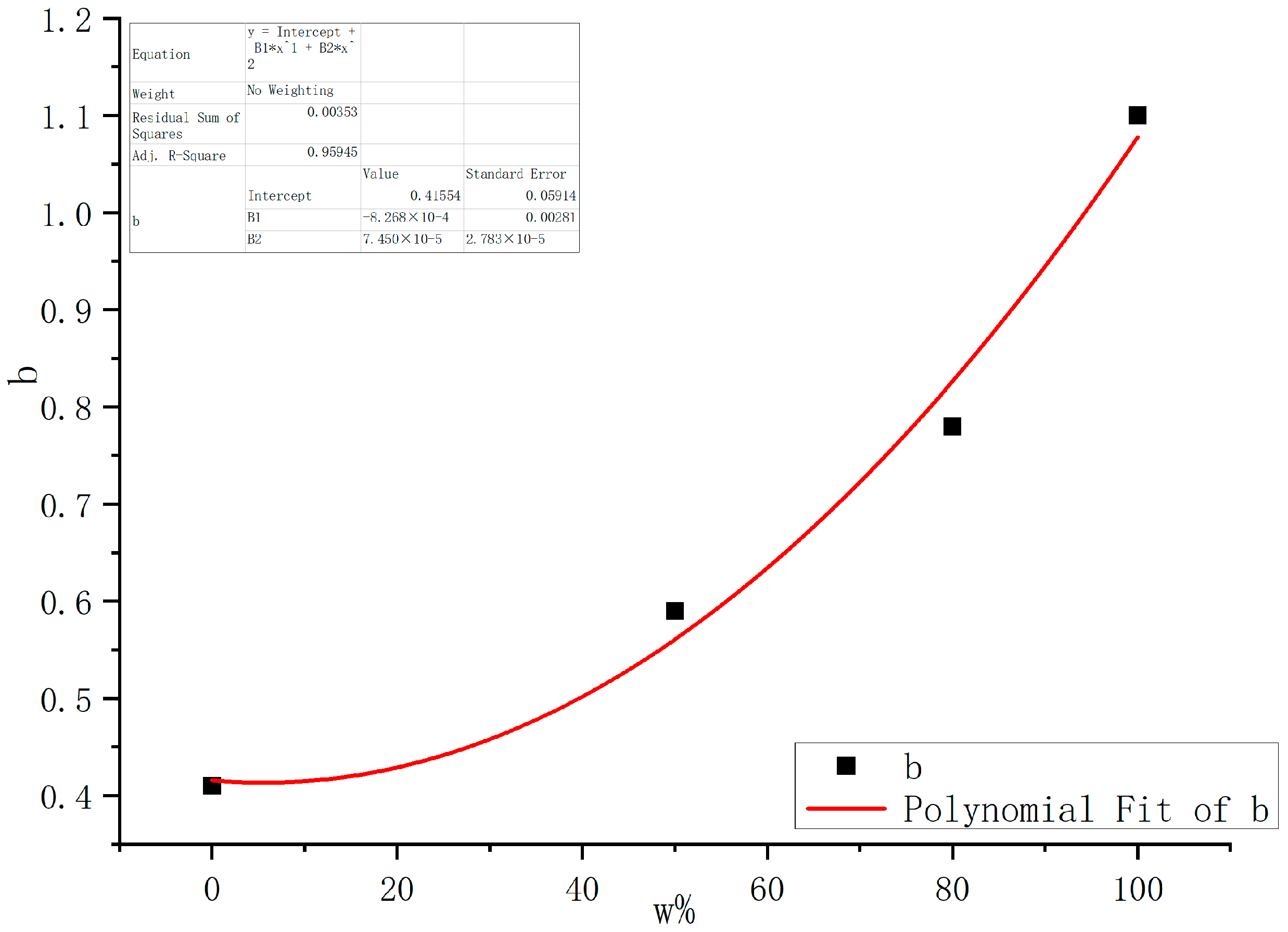
The parameter b in Formula 3 reflects the rate
(
) at which
changes with strain rate. As can be seen from
Figure 4,
Figure 5 and
Figure 6 and
Table 1, at higher strain rates, the higher the water content, the greater the
, and the more significant the strain rate effect, indicating that the presence of water makes the strain rate effect of concrete strength more sensitive. The parameter
can characterize the strain rate sensitivity of wet concrete, so the parameter
can be called the strain rate sensitivity coefficient of concrete strength. From the fitting results, we can obtain the variation in the relationship between parameter
and water content as:
where
,
, and
. The fitted curve is shown in
Figure 7 below.
Observations indicate that the strain rate sensitivity coefficient b grows in tandem with rising water content. Specifically, higher moisture levels accelerate the rate of increase for parameter b, thereby amplifying the strain rate effect on concrete strength.
3.2. Strain Rate–Water Coupling Effect of Concrete Strength Under Different Relative Saturation and Strain Rate Conditions
From the above results, we can find the law of the strain rate effect of water content on the strength of concrete. While the relative strain rate effect factor (DIF) captures the strain rate effect on concrete compressive strength at a constant water content, it is evident that both water content and strain rate exhibit a mutually coupled influence on the material’s compressive behavior. To facilitate a clear analysis of how concrete strength fluctuates under these dual influences, the strain rate–water coupling effect factor of concrete compressive strength is defined as:
where
,
and
have the same meaning as in Formula (1),
is the quasi-static uniaxial compressive strength of dry concrete at room temperature, and
reflects the water softening effect of concrete under quasi-static conditions. Data gathered from the experiments demonstrate that the parameter
undergoes a distinct nonlinear attenuation as the water content rises. Consequently, the mathematical correlation linking
to the relative saturation w can be formulated as:
where
,
, and
.
Within Formula (7), the strain rate–water coupling effect factor K captures how the compressive strength of concrete shifts when subjected to both water and dynamic loading simultaneously. Comparative analysis of the experimental data of concrete materials in this experiment and the existing literature [
18,
27,
29,
31] is shown in
Figure 8. This figure illustrates that the strain rate–water coupling effect factor K for concrete strength follows a behavioral trend closely resembling that of the DIF, particularly concerning adjustments in both water content (relative saturation) and strain rate. There are significant differences in the variation in
with strain rate under dynamic and quasi-static conditions for concrete with different water contents. Furthermore, an elevated water content directly accelerates the rate of change for the K value.
As illustrated in
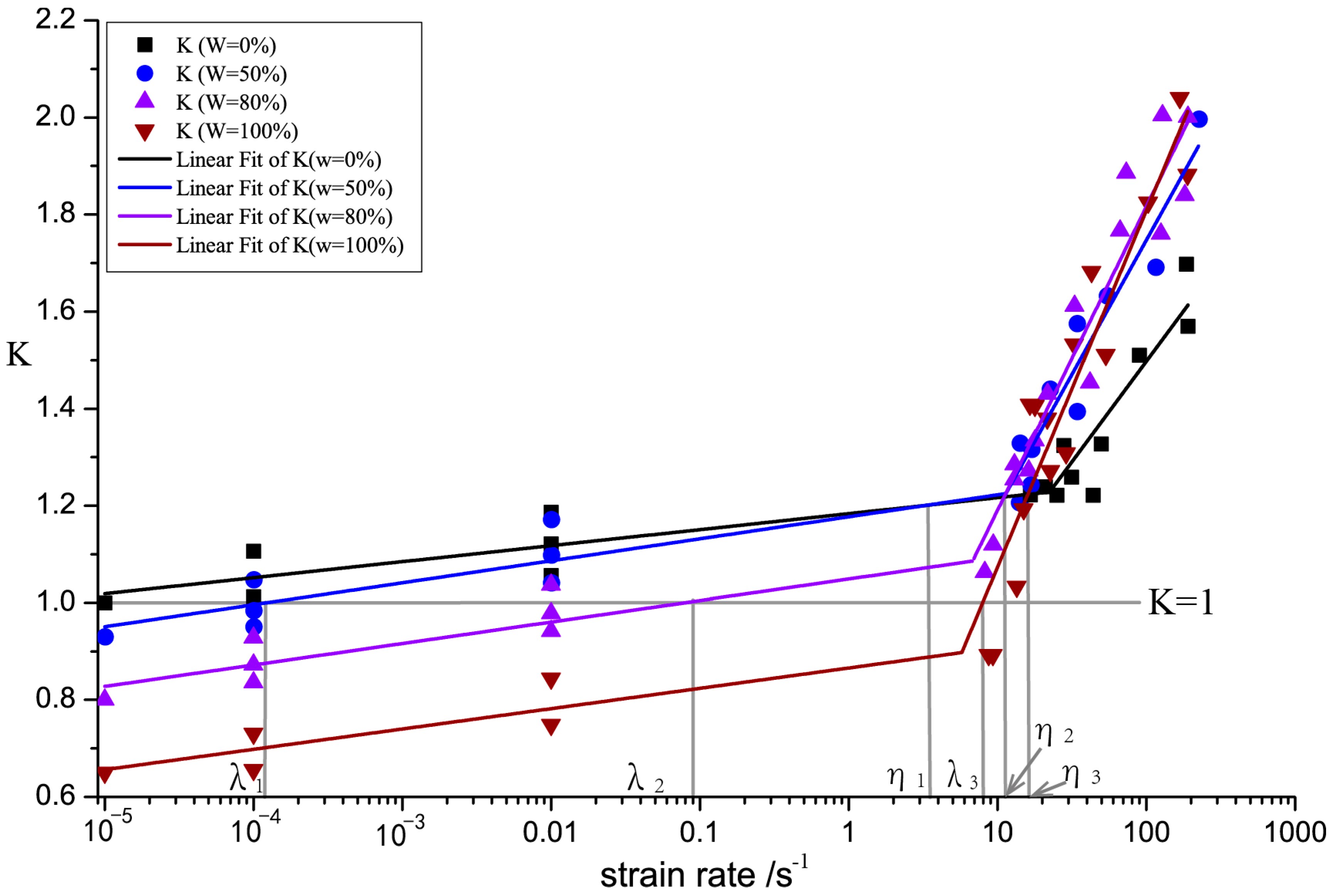
Figure 9, we have fitted the relationship between strain rate and relative saturation, as well as the strain rate–water coupling effect factor K, based on the experimental results presented in this paper.
Specifically, a scenario where K > 1 signifies that the concrete’s compressive strength under combined water and dynamic loading surpasses its dry, quasi-static counterpart. This implies that within the competition of these dual influences, the strain rate strengthening effect ultimately dominates over the water weakening effect. Conversely, if K < 1, the material’s strength under these coupled conditions drops below the dry, quasi-static baseline, demonstrating that the water weakening effect controls the competing mechanisms. Finally, an equilibrium state of K = 1 indicates that the coupled strength exactly matches the dry static baseline; at this juncture, the strain rate strengthening and water weakening effects exert comparable impacts on the overall compressive strength of concrete.
From the values of
,
, and
at the intersection points of the concrete with the straight line
for the relative saturations
of 50%, 80%, and 100% in
Figure 10, it can be seen that when the strain rate reaches about 10
−4 s
−1, 10
−1 s
−1, and 10 s
−1, respectively,
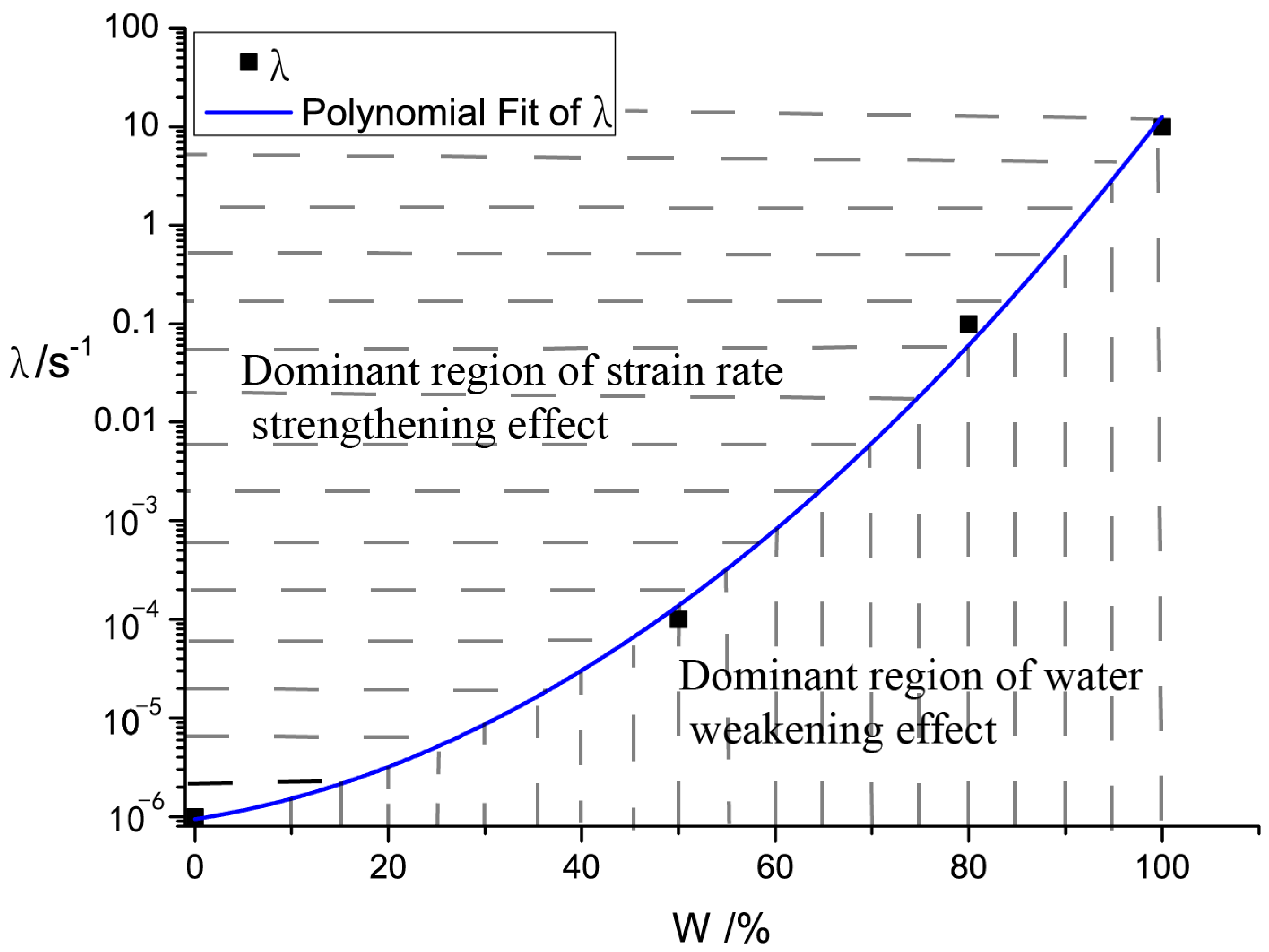
. Then, the compressive strength of the wet concrete is higher than that of the dry concrete in a quasi-static state, and the strain rate strengthening effect is dominant. Therefore, λ is referred to as the characteristic strain rate of wet concrete strength, and
,
, and
are the characteristic strain rates of concrete with relative saturation rates of 50%, 80%, and 100%, respectively. According to the fitting results in
Figure 9, the dominant regions of the strain rate strengthening effect and water weakening effect of concrete under strain rate–water coupling conditions can be obtained as shown in
Figure 10.
Through the mechanism analysis in the next subsection, it can be determined that the weakening effect of water on concrete strength gradually decreases with the increase in strain rate, and the role of pore water changes from promoting crack evolution to hindering crack evolution. On a macroscopic scale, concrete strength is the result of competition and coordination between strain rate effects and pore water action in concrete. The intersection points between the curves of wet concrete with 50%, 80%, and 100% relative saturation and curves of dry concrete are , , and , respectively. Once the applied strain rate for specimens holding varying water contents hits these exact intersection thresholds (, , and ), the wet concrete actually demonstrates a higher compressive strength compared to the dry concrete tested at an identical strain rate. Under these specific circumstances, moisture actively exerts a reinforcing effect on the material’s dynamic strength. Notably, an elevated water content directly amplifies the magnitude of this reinforcing effect. This strengthening effect is dependent on the water and strain rate, which we call the “restrict cracking” effect of pore water at high strain rates.
4. Mechanism Analysis
Building upon the preceding experimental evaluations and the existing literature concerning the strain rate effect in dry concrete [
12,
13,
14,
15,
16,
17], this manuscript delineates the underlying physical mechanisms governing strength variation across diverse strain rate regimes. Specifically, it thoroughly accounts for how water incorporation modifies concrete strength under varying dynamic loading conditions.
4.1. The “Wedging Effect” of Pore Water
Pore water primarily affects how cracks develop, impacting concrete’s characteristics. A fundamental conclusion in fracture mechanics is that the strength of a cracked body heavily depends on the mechanical field characteristics in the immediate vicinity of the crack tip [
32]. There is free water in the initial microcracks inside the concrete, and under ambient room temperature conditions, roughly half of the hydrogen bonds within this trapped water exist in a ruptured state. When the hydrogen bonds are broken, the material’s surface charge becomes unsaturated. This increases the surface energy, which induces surface tension in the liquid. This results in a large number of molecules that tend to agglomerate together. Under static or low-strain-rate compressive loading, the volume of concrete undergoes two phases of compression and expansion. Firstly, under compressive loading, the microcracks and pores inside the concrete are compressed, and the free water in the cracks generates pore pressures, which at the crack tip act as a “wedge” to promote crack growth [
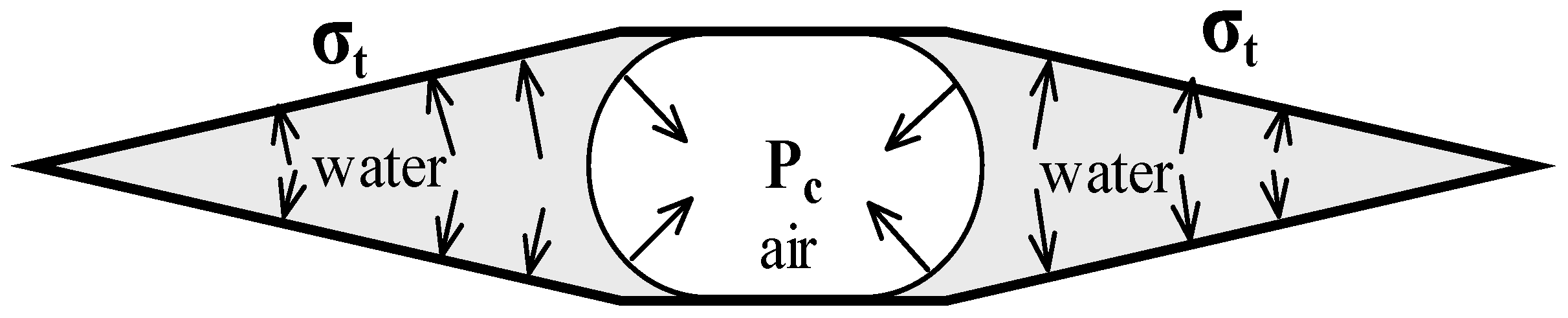
33]. When the pressure reaches a certain level, the microcracks begin to grow, and the volume of concrete appears to expand. However, due to the slow crack growth rate, the free water in the crack has enough time to reach the crack tip and fully infiltrate the crack under the action of crack surface tension. As the crack expands, the water forms an outwardly convex meniscus on the surface of the crack, as shown in
Figure 11. Under the action of the surface force of the free water meniscus, the free water at the crack tip will still have a wedging effect on the crack. Moreover, since the size of the microcracks in concrete is relatively small, the curvature radius of the meniscus is very small, and the additional pressure generated is quite large. Therefore, the wedging effect of free water promotes the development of microcracks and intensifies the damage of concrete, thus reducing the macroscopic strength of wet concrete. Therefore, water exerts a weakening effect on the strength of concrete under static or low-strain-rate loading.
In short, the free water stress on the cracked surface is mainly generated by the pore water pressure formed during the compacting of the pore and is related to the rate of crack expansion. Under static or low-strain-rate loading, the free water is able to continue to diffuse along the newly formed microcracks, and the pore water pressure decreases continuously until it disappears.
Furthermore, the water absorbed by the concrete specimens during immersion process reduces the van der Waals forces between the material molecules, making microcracks easily expand and merge into large cracks, contributing to the reduction in the compressive strength of the concrete.
4.2. The “Restrict Cracking” Effect of Pore Water
Under higher-strain-rate conditions, the process of the wedging effect is extremely short. Due to the rapid propagation of the crack, free water has no time to reach the crack tip to form a wedge; meanwhile, the capillary action and surface tension make it difficult for free water to reach the crack tip. Therefore, when the crack propagation rate is greater than or equal to the pore water motion rate, the “wedge” effect of pore water at the crack tip disappears. Instead, pore water moves towards the crack center at a relative rate, and a concave meniscus is formed on the crack surface in the opposite direction of the quasi-static loading, as shown in
Figure 12.
The presence of the surface tension of the concave meniscus surface of free water in the crack leads to an additional force on the crack surface that inhibits the crack development. Furthermore, a higher loading rate and greater water content result in a large additional force . As a result, the supplementary force generated by the concave meniscus exhibits a direct proportionality with the applied stress loading rate. Specifically, an accelerated loading pace amplifies the meniscus surface force, while a higher initial water content further accentuates this enhancement. Ultimately, this phenomenon explains why concrete containing higher amounts of pore water demonstrates a markedly stronger strain rate sensitivity. Although the pore water surface tension effect can delay the localization of microcracks and inhibit the propagation of macroscopic cracks, the water surface tension does not grow indefinitely with the increase in strain rate, which is limited by the physical properties of water; i.e., the effect disappears due to the cavitation phenomenon produced by the water in the microcavities.
As a result, when the loading rate changes from low to high, the effect of pore water in wet concrete changes from promoting crack propagation to inhibiting crack propagation. Benjamin’s layer splitting tests [
34] revealed that wet concrete exhibits a 30% higher strength than dry concrete within a strain rate range of 30–150 s
−1. Lateral impact tests further demonstrated that free water retards the initiation and propagation of microcracks in concrete, confirming that as strain rate increases, the effect of pore water on concrete strength shifts from “splitting” to “crack arresting.”
4.3. Coupling of Thermal Activation Mechanisms and Pore Water Action
The process of thermal activation, whereby thermal vibrations break the atomic bonds of atoms, is the reason for the derivation and expansion of cracks. This results in microcracks in the concrete. The vibration of the atoms is intensified by the higher loading rate, which also leads to the formation of more microcracks. Under static or low-strain-rate loading, thermal activation is the dominant mechanism in dry concrete. The water in immersed concrete has an indirect effect on the thermal activation process through its unique physicochemical properties. Water molecules and the free ions dissolved therein diffuse into the microdefects, thus affecting the evolution process of the microdefects, as well as the breakage of the chemical bonds, reducing the short-range potential barrier to be overcome by the microscopic deformations, and making thermal activation easier to achieve. Coupled with the wedging effect of pore water on cracks described above, the strength of wet concrete is significantly lower than that of dry concrete, and the higher the water content, the smaller the strength of concrete. In other words, the thermally activated microdefect (microcrack or micropore) motion and the wedging effect of pore water are jointly controlled and coupled with each other in wet concrete at static or low strain rates.
With escalating strain rates, the wedging effect of pore water at the crack tip diminishes, eventually giving way to the inner concave meniscus effect of pore water. Concurrently, a surge in strain rate drives a reduction in thermal activation energy. As the requisite potential barrier for microdefect motion climbs, the overall material strength inherently escalates. Once the loading pace surpasses the transition strain rate, an abundance of fresh microdefects nucleates within the concrete matrix. Moreover, the resulting concrete failure exhibits a crack quantity that drastically exceeds observations recorded under quasistatic loading. Simultaneously, the motion mechanism of thermally activated microdefects is gradually transformed into the nucleation mechanism of thermally activated microdefects, and the energy required for the nucleation of microdefects is greater than that required for the motion of microdefects, so the strength of the concrete increases rapidly when the strain rate reaches the transition strain rate. This paper combines Bai Yilong’s proposed [
35] mechanism for the formation and evolution of microcracks with Qi Chengzhi’s concept [
12] that the strain rate effect on the strength of brittle materials like rock is governed by a heat activation mechanism. It proposes that the transformation of the internal heat activation mechanism in wet concrete is one reason for the increased strain rate sensitivity of its strength.
In other words, as the strain rate increases, on the one hand, the effect of pore water on cracking changes from “promoting cracking” to “restricting cracking”, and on the other hand, the potential barrier to be overcome by the motion of microdefects increases under a high strain rate, and a large number of newborn microdefects appear in the interior. Accordingly, the material strength increases rapidly when the strain rate reaches the transition strain rate. The mechanism of pore water and thermal activation effects on the mechanical behavior of concrete is shown in
Figure 13.
4.4. Coupling of Viscous Mechanisms and Pore Water Action
Viscous drag (phonon damping) refers to the phenomenon of friction and resistance due to interactions of phonons as they propagate through a solid. Phonons are quantized energy carriers of atomic vibrations, and as they propagate in solids, they collide and interact with other phonons or microdefects, resulting in friction and drag, thereby inducing viscous effects. As a multiphase composite material, concrete has an irregular internal atomic arrangement, and when the strain rate is greater than a certain value (about 10
0 ~10
2 ), the internal viscous drag mechanism of concrete appears [
36]. As a series of physical and chemical reactions occur inside the concrete during the immersion process, it makes the wet concrete structure more loose, which affects the free path and scattering process of the phonons, and the phonon motion is accordingly more hindered than that of the dry concrete. Moreover, with the increase in water content and strain rate, the phonon motion resistance increases, and the internal viscous drag effect becomes more significant. Simultaneously, the infiltration of water in the concrete immersion process weakens the interatomic interaction force, which further aggravates the difficulty of phonon motion and increases the phonon viscosity. Additionally, the dynamic response at high strain rates leads to the motion of microdefects, nucleation, grain refinement, and changes in molecular structure and stress state, which, in turn, affect the phonon motion and interactions and change the phonon viscosity accordingly. Therefore, the phonon motion and dynamic response at high strain rate are coupled with each other, and the dynamic strength of concrete increases significantly compared with the quasi-static concrete strength.
4.5. Coupling of Inertial Effects (Stress Wave Effects) and Pore Water Action
During wave propagation, the particles inside the specimen experience axial acceleration and undergo axial plastic deformation. Due to the Poisson effect, axial deformation causes lateral acceleration of the particles through plastic flow. That is to say, the part of the particles that undergoes plastic deformation first generates confining pressure disturbance on the surrounding elastic particles, producing confining pressure waves and causing non-uniform distribution of transverse stress. Consequently, the strain rate effect of concrete strength measured by experiment is larger than the actual strain rate effect. Yuan Liangzhu et al. [
37] demonstrated through true triaxial impact tests on concrete that inertial effects emerge in concrete’s dynamic strength when strain rates exceed 30 s
−1. Using high-speed cameras, Wen Lei et al. [
38] captured the evolution of cracks from single tensile cracks to X-shaped shear networks at strain rates ranging from 10
2 s
−1 to 10
4 s
−1, confirming that the strain rate range where inertial effects dominate spans from 10
2 s
−1 to 10
4 s
−1. For wet concrete, under the action of axial dynamic compression load, water replaces air to fill microdefects. As the viscosity and density of water are greater than those of air, the wave velocity and wave impedance inside the material increase, and the inertia effect is enhanced. Therefore, the compressive strength of wet concrete increases more significantly at high loading rates than that of dry concrete.
In addition, cracks within the concrete can interfere with the propagation of the stress wave, which diffracts at the crack, thus affecting the mechanical field at the crack tip. When the characteristic time (e.g., the duration time) of the stress wave action process is much larger than the characteristic time of the dynamic response of the structure (where , is the characteristic size of the crack, and is the characteristic wave velocity of the stress wave)—i.e., when —the interaction between the stress wave and the crack can be neglected. On the contrary, when , it is necessary to consider the stress wave effect on the mechanical field near the crack tip.
Water also indirectly affects wave propagation by influencing the crack evolution process. Although the moisture in the wet concrete increases the porosity and connectivity of the concrete, making the wave propagate slightly faster in wet concrete than in dry concrete, the increase in the characteristic size of the cracks inside the concrete after immersing results in the dynamic response characteristic time of the cracks under the action of the stress wave still being larger than the dynamic response characteristic time of the cracks in the dry concrete. Furthermore, an elevated water content directly prolongs the dynamic response characteristic time associated with cracks within the wet concrete. And the larger the characteristic time , the smaller the corresponding critical strain rate whether the inertia effect (stress wave response) is considered or not, so the concrete containing greater moisture levels will inevitably possess a lower critical strain rate.
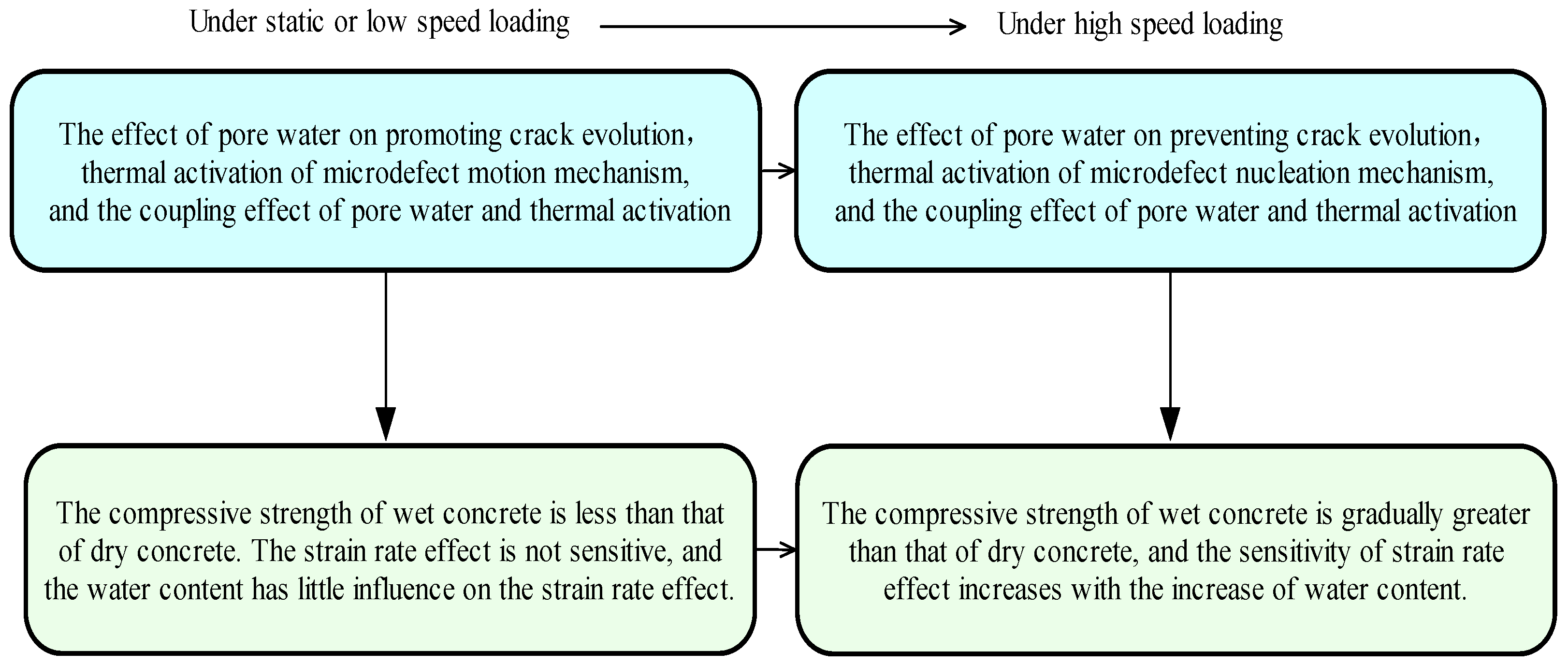
The strain rate effect of wet concrete caused by the coupling of pore water action, thermal activation, and viscous drag is regarded as the “material true strain rate effect”. Nevertheless, the curve of concrete dynamic strength factor with strain rate obtained by experimental results is the coupling result of the “material true strain rate effect” and the “structural inertia effect”. The higher the water content, the more significant the stress wave effect and the material true strain rate effect and the smaller the transition strain rate or characteristic strain rate.
The mechanism of different strain rate regions is shown in
Figure 14.