2.1. Building Information Modeling (BIM)
Building Information Modeling (BIM) has evolved significantly over the past decades. Early studies from the 1990s to the early 2000s suggested that BIM, although not clearly defined at the time, had the potential to transform the construction sector in the long term [
14]. Over the past decade, BIM has developed rapidly and has had a profound impact on the architectural, engineering, and construction (AEC) industry. This rapid evolution was predicted by Miettinen and Paavola [
17], who argued that BIM would progress quickly through research, knowledge development, and the establishment of systems, guidelines, standards, and complementary software [
15]. Consequently, BIM adoption has expanded beyond the building sector into horizontal infrastructure and asset management [
14].
A key concept in BIM literature is BIM maturity, which refers to the quality, repeatability, and level of excellence in implementing BIM-enabled services or products [
16]. The United Kingdom adopted the Bew–Richards model as a standard framework for BIM maturity classification [
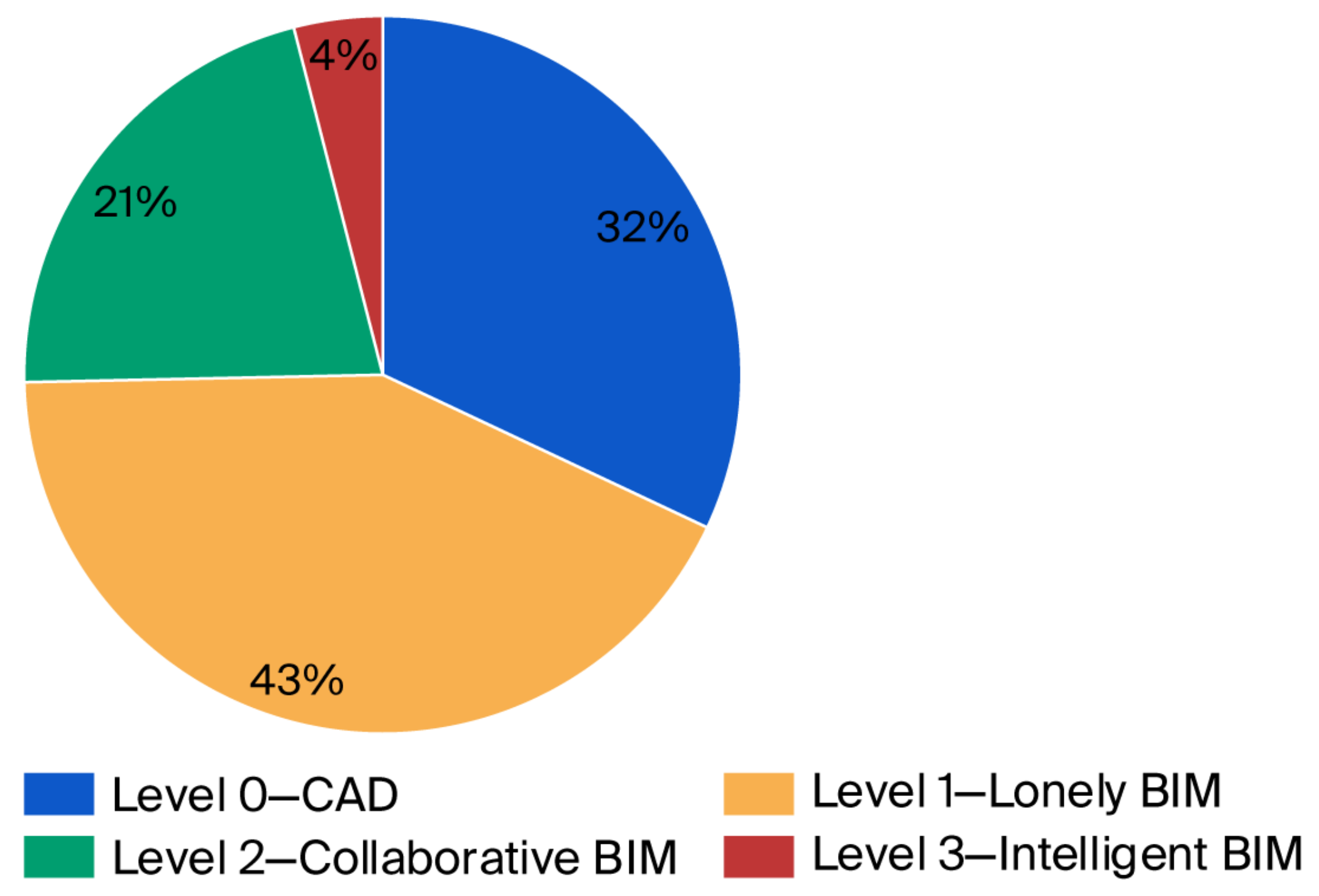
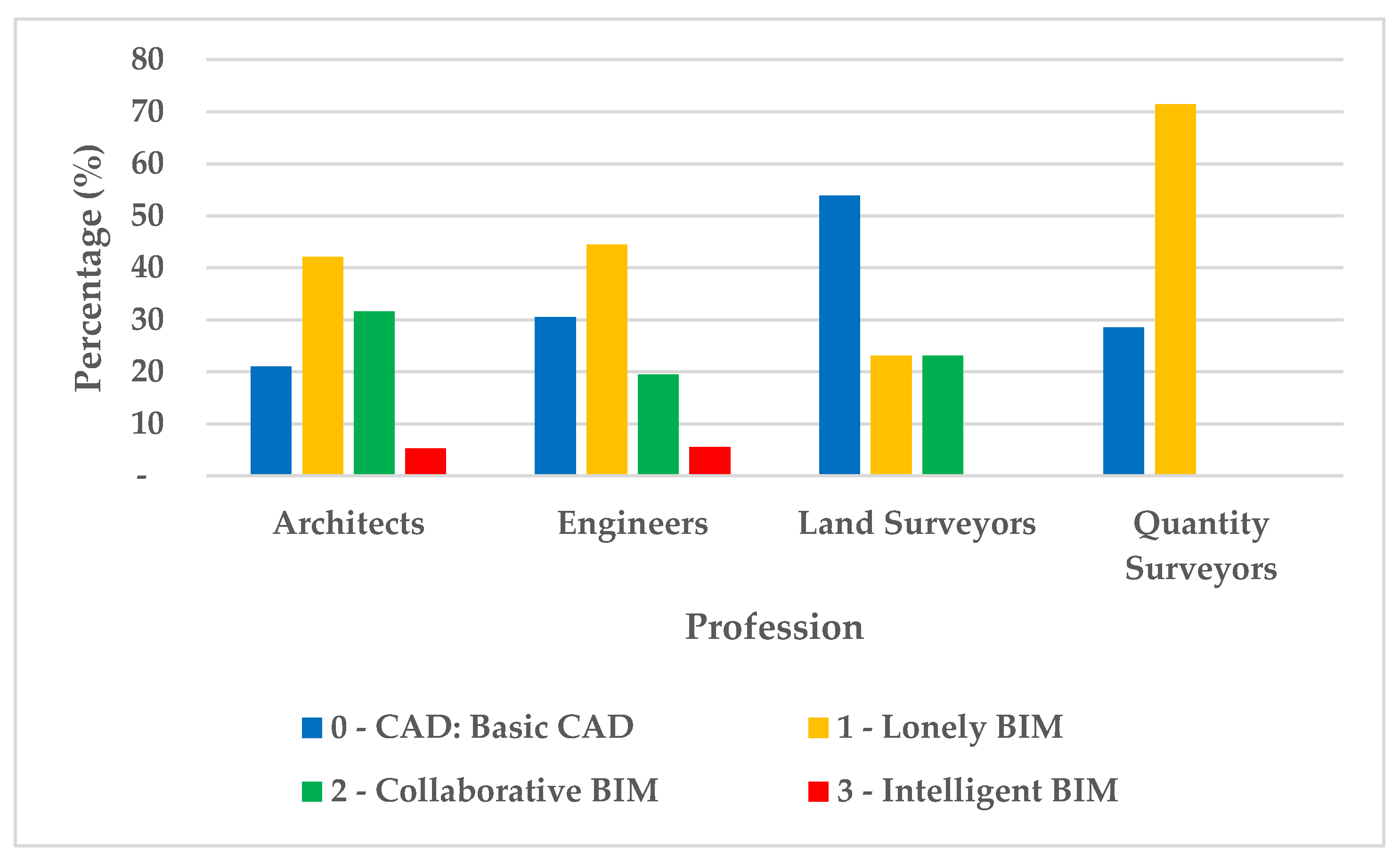
17]. This model defines four maturity levels ranging from Level 0 (basic CAD drawings) to Level 3 (full integration of BIM into project management processes) [
18,
19]. The maturity framework is important because it conceptualizes BIM adoption as a gradual progression rather than a single technological shift, highlighting the importance of organizational processes, collaboration, and information integration.
BIM adoption varies across countries depending on technological capacity, regulatory frameworks, and construction industry maturity. However, empirical evidence consistently shows that developed countries demonstrate higher BIM adoption levels than developing economies due to stronger institutional support, better digital infrastructure, and more established regulatory environments [
18,
19].
Early adopters such as the United States, the United Kingdom, Finland, Norway, Denmark, Hong Kong, Australia, and Singapore demonstrate how national policies and industry readiness can accelerate technological diffusion in the construction sector [
20]. In many of these countries, government mandates and digital transformation strategies played a central role in normalizing BIM usage in both public and private construction projects. This policy-driven adoption created incentives for firms to invest in BIM software, training, and collaborative workflows.
More recently, BIM adoption has expanded in large construction markets such as China, the United States, and India. According to Prinsloo and Bekker [
20], these countries have institutionalized BIM in public infrastructure projects due to efficiency gains, improved project coordination, enhanced design accuracy, and cost savings associated with BIM usage. This suggests that BIM adoption is often driven by efficiency gains and policy mandates rather than purely technological innovation.
An important analytical distinction in the literature is between BIM adoption and BIM implementation. Although these terms are often used interchangeably, they represent different stages of technological integration [
21,
22]. BIM adoption refers to the willingness or ability of professionals and firms to use BIM tools through technical expertise and practical application, whereas BIM implementation refers to the institutionalization of BIM through legislation, regulatory frameworks, and policy mandates that require its use in project delivery processes. This distinction is important because high levels of professional adoption do not necessarily translate into industry-wide implementation.
In practice, BIM adoption often occurs more rapidly in the private sector, particularly among consultants and contractors who face competitive pressures to improve efficiency and reduce project costs [
11]. However, widespread industry adoption typically depends on supportive policies, regulatory mandates, and standardized guidelines. Without such institutional frameworks, BIM adoption may remain fragmented and limited to isolated firms or projects.
Africa’s adoption and application of BIM remains relatively slow compared with that of developed economies, suggesting that the diffusion of digital construction technologies on the continent is still in an early stage. Evidence from the literature indicates that scholarly engagement with BIM in Africa only began to emerge around 2010 [
2]. Although the number of annual publications increased to 28 by 2018, the global surge in BIM-related research, this growth primarily reflects rising academic interest rather than widespread industry implementation. This distinction is important, as the expansion of research output does not necessarily imply equivalent progress in practical adoption across the construction sector.
The spatial distribution of BIM-related research across Africa further illustrates the uneven nature of technological diffusion on the continent. North Africa accounts for the largest share of publications, with 52 studies originating mainly from Egypt, Morocco, and Algeria. West Africa follows with 26 publications, largely from Nigeria, Ghana, and Côte d’Ivoire, while Southern Africa contributes 13 publications from South Africa and Zambia. Central Africa remains significantly underrepresented, with only two publications from Cameroon and the Central African Republic [
2]. This pattern suggests that BIM research activity tends to concentrate in countries with relatively larger construction markets, stronger research institutions, and more developed digital infrastructure. Consequently, the regional imbalance in publications may reflect broader structural differences in technological capacity and institutional support for digital innovation within the construction industry.
Moreover, the countries with the highest number of BIM publications—such as Egypt, Nigeria, and South Africa, also report relatively higher levels of professional awareness of the technology [
2]. This relationship indicates a feedback mechanism in which research activity contributes to awareness creation, while increased awareness stimulates further academic and professional engagement with BIM.
Despite these improvements in awareness, the transition from knowledge to practical implementation remains limited across much of Africa. In sub-Saharan Africa, for example, a study conducted in Kenya in 2018 reported a BIM awareness level of 88.7% among construction professionals [
23]. Similarly, in Nigeria, awareness increased significantly from 30% in 2015 to 84% in 2021 [
24,
25]. South Africa shows a comparable trend, with awareness rising from 44% in 2014 to 91% in 2024 [
20]. While these figures indicate a rapid expansion in professional familiarity with BIM, they also highlight a persistent gap between awareness and actual adoption.
Research on BIM adoption in developing countries employs different methodological approaches. Most studies rely on questionnaire surveys to collect professionals’ opinions on the benefits and challenges of BIM adoption [
20,
21,
22]. Other studies use case studies or longitudinal approaches to examine how BIM is implemented within organizations over time [
23,
24]. More recent studies combine quantitative and qualitative methods to better understand organizational culture, leadership, and teamwork in BIM implementation, particularly in resource-limited countries.
Ndwandwe et al. [
14] used a survey of 189 respondents combined with descriptive statistics, one-sample
t-tests, and factor analysis to rank challenge factors influencing BIM implementation. The study identified barriers such as lack of expertise, high implementation costs, weak legislative frameworks, procurement inefficiencies, software integration challenges, and limited awareness. However, the study primarily focused on perceptual data and did not analyze structural factors such as national policy frameworks, educational curricula, or comparative positioning within developing economies, which are important for characterizing BIM adoption status.
In Malawi, the literature indicates that BIM adoption is still occurring mainly at the individual firm level and is not well coordinated across the industry. Although many professionals are aware of BIM benefits, actual use in projects remains low due to limited training opportunities, lack of practical experience, and poor integration of BIM into existing workflows [
10,
12,
25]. Comparative studies suggest that BIM adoption improves when firms have strong knowledge management systems and leadership support to guide implementation [
26,
27].
Recent studies have also adopted mixed-methods approaches. For example, Olawumi and Chan [
21] combined surveys with case studies of African construction firms and found that leadership support and knowledge management significantly improve BIM implementation. Similarly, Khosrowshahi and Arayici [
22] used longitudinal studies of small and medium-sized enterprises and found that long-term studies help identify adoption patterns and the role of institutional support, software compatibility, and workforce preparedness. These studies suggest that relying only on surveys may not be sufficient to understand BIM adoption and that mixed-method approaches provide deeper insights into adoption dynamics.
Malawi is still at an early stage when it comes to BIM adoption, and the level of use is not the same across all firms or projects. Some bigger companies have access to BIM software, but they mostly use it for design visualization and simple clash detection. Other important areas, such as project planning and cost management, are still done manually in many cases [
13,
14,
15]. Small and medium-sized firms face even more challenges because they often do not have the required technology or clear internal processes to use BIM properly. Similarly, Ariono et al. [
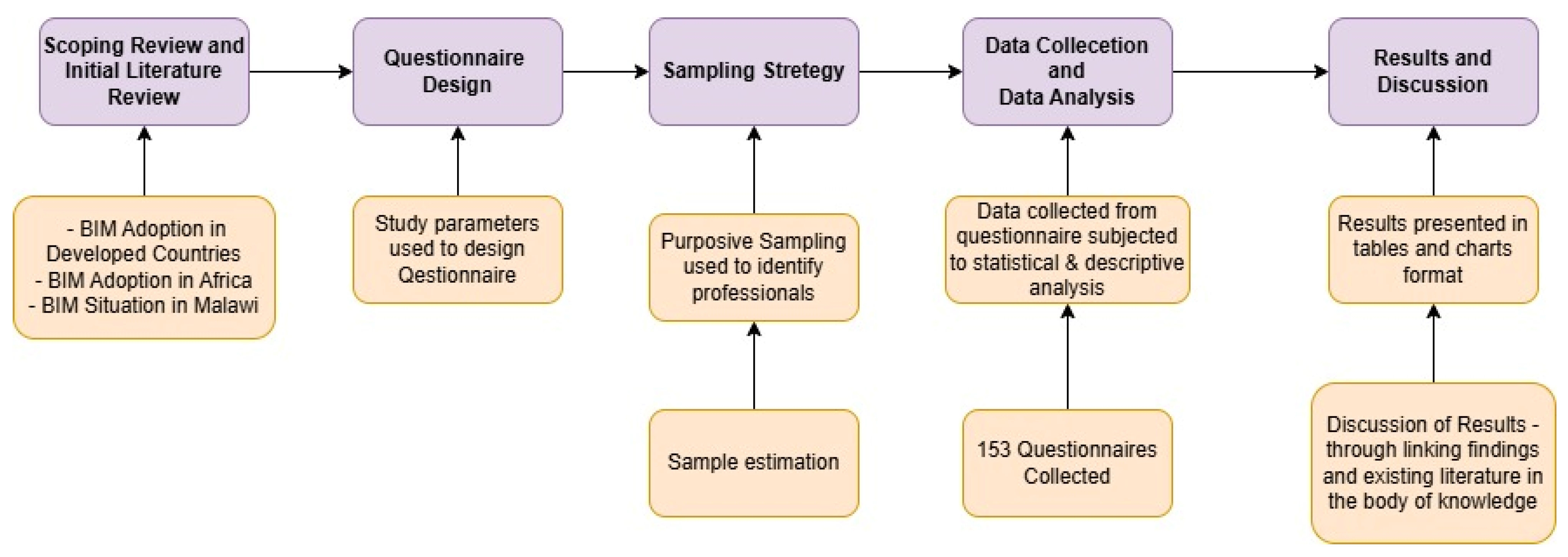
23] adopt a systematic literature review (SLR) to identify BIM drivers, followed by a purposive questionnaire survey and weighted-mean analysis to rank critical enablers. The study advances theoretical discourse by proposing a conceptual framework and outlining policy and industry strategies. However, its analytical focus is primarily technological and process-oriented, emphasizing software interoperability, standardized datasets, data-exchange protocols, and knowledge resources. Although valuable in identifying enablers, the analysis does not systematically synthesize institutional gaps across regulatory systems, organizational maturity structures, or educational ecosystems.
Saka and Chan [
24] further reinforce the organizational maturity perspective through a survey of 189 construction professionals. Their findings reveal moderate awareness of BIM and availability of BIM-capable software within firms, yet low levels of technical proficiency among practitioners. This indicates that access to digital tools does not automatically translate into effective adoption. However, like the preceding studies, their analysis is largely confined to firm-level dynamics and does not interrogate macro-level policy structures or curriculum depth.
The level of organizational readiness for BIM is not the same across all firms. A few leading companies are trying to follow more structured BIM processes, but most firms still work without clear workflows, proper coordination between different disciplines, or regular internal training programs. This suggests that simply having access to BIM technology is not enough. Successful adoption also depends on factors such as organizational culture, active leadership involvement, and how well knowledge is shared within the firm [
25].
When it comes to using BIM, Malawi is behind its neighbors. Countries like Zambia and Benin have set up step-by-step plans and national assessments to guide BIM adoption, giving the construction industry a clear path to grow and use it more widely [
25,
26]. In Malawi, most BIM use comes from individual companies doing their own thing, which makes it hard for knowledge to spread or for the industry to learn. Research shows that having clear policies, shared standards, and cooperation between all the players is key to catching up with other countries and making digital construction work in the long run.
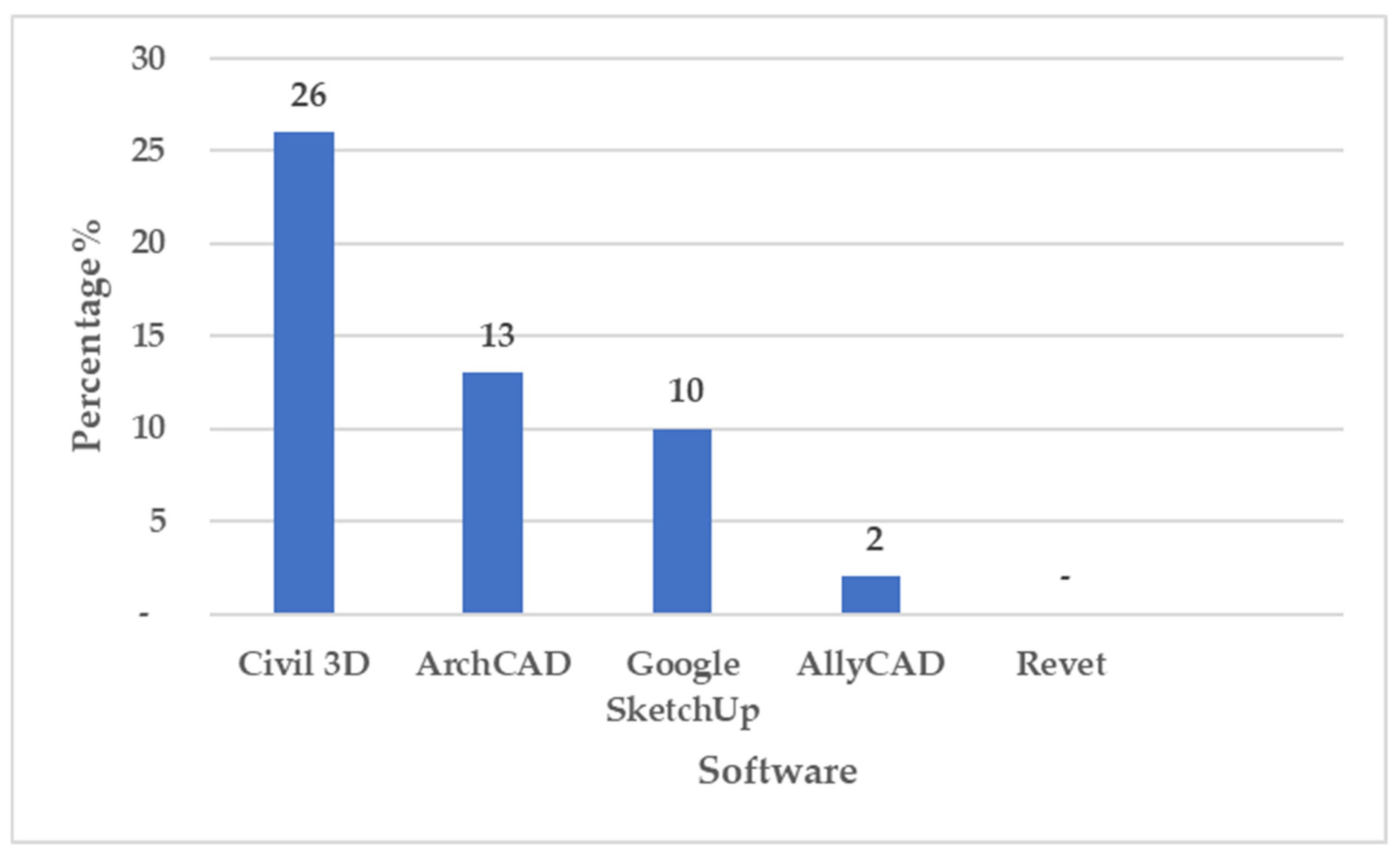
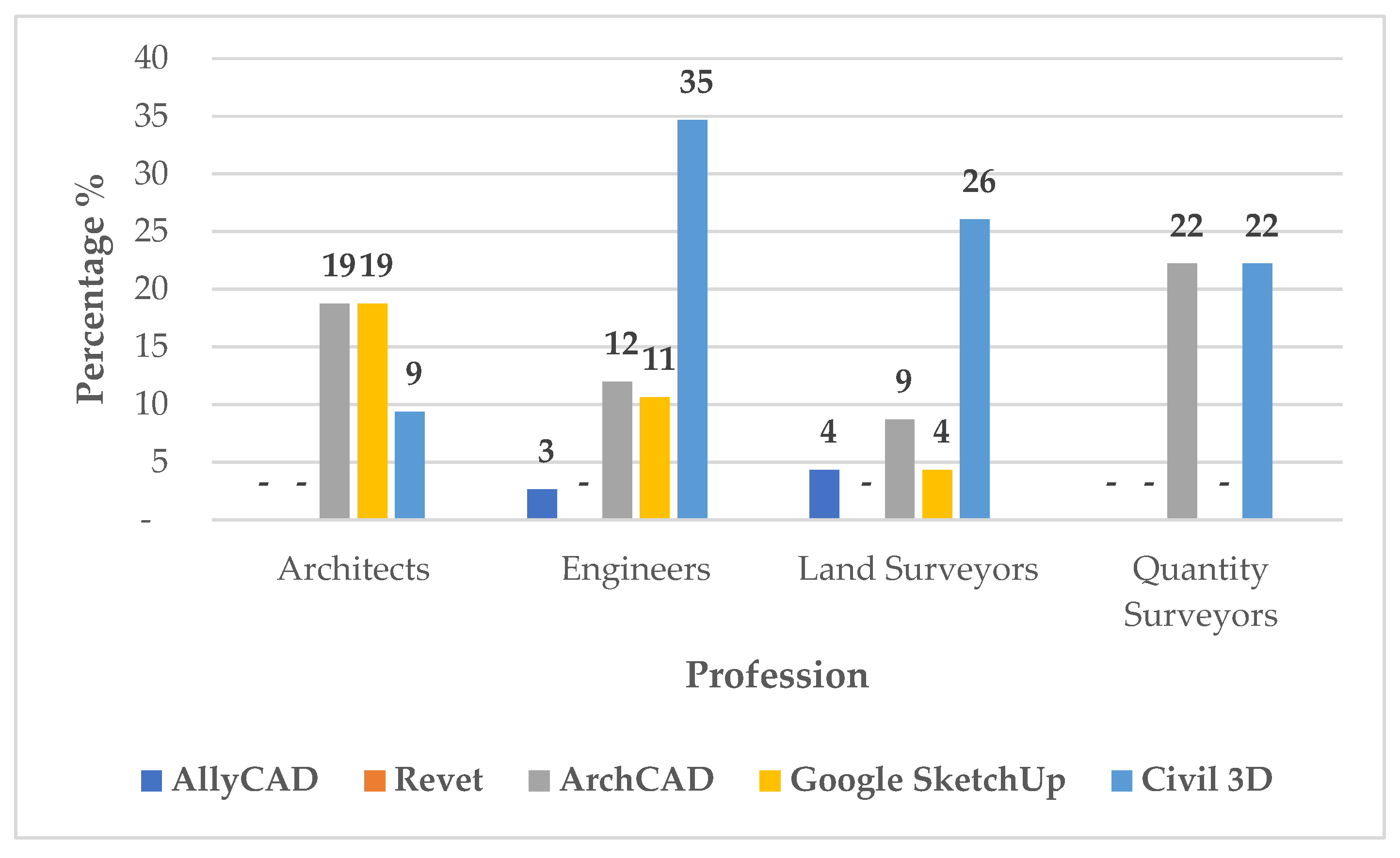
Research has shown that many countries in the initial stage of BIM adoption tend to use basic software. This is because, once an organization starts using BIM, gradual acquisition of relevant software is carried out based on need. The first stage is to improve the data management from the traditional method to the 3D production of output. The other BIM stages are implemented during the technology use.
Despite the growing body of literature on Building Information Modeling (BIM) adoption, several important gaps remain, particularly in the context of developing countries such as Malawi. Much of the existing literature focuses primarily on BIM awareness, perceived benefits, and barriers to adoption, with limited attention given to organizational maturity and the progression of firms across BIM maturity levels. As a result, while awareness levels are relatively well documented, the extent to which organizations have developed structured BIM workflows, collaboration systems, and integrated project management processes remains insufficiently examined. Most studies analyze BIM adoption at the firm or professional level, often overlooking the broader institutional environment, including national policies, regulatory frameworks, procurement systems, and industry standards that influence industry-wide implementation. Although several studies exist on BIM adoption in Africa, very few studies position Malawi within the broader BIM adoption trajectory of developing economies, making it difficult to assess whether Malawi is progressing at a similar pace to comparable countries. Furthermore, the methodological approaches in many BIM adoption studies rely heavily on perception-based surveys, which identify barriers and enablers but do not fully explain organizational behavior, institutional constraints, and long-term adoption patterns.
2.2. The Conceptual Framework
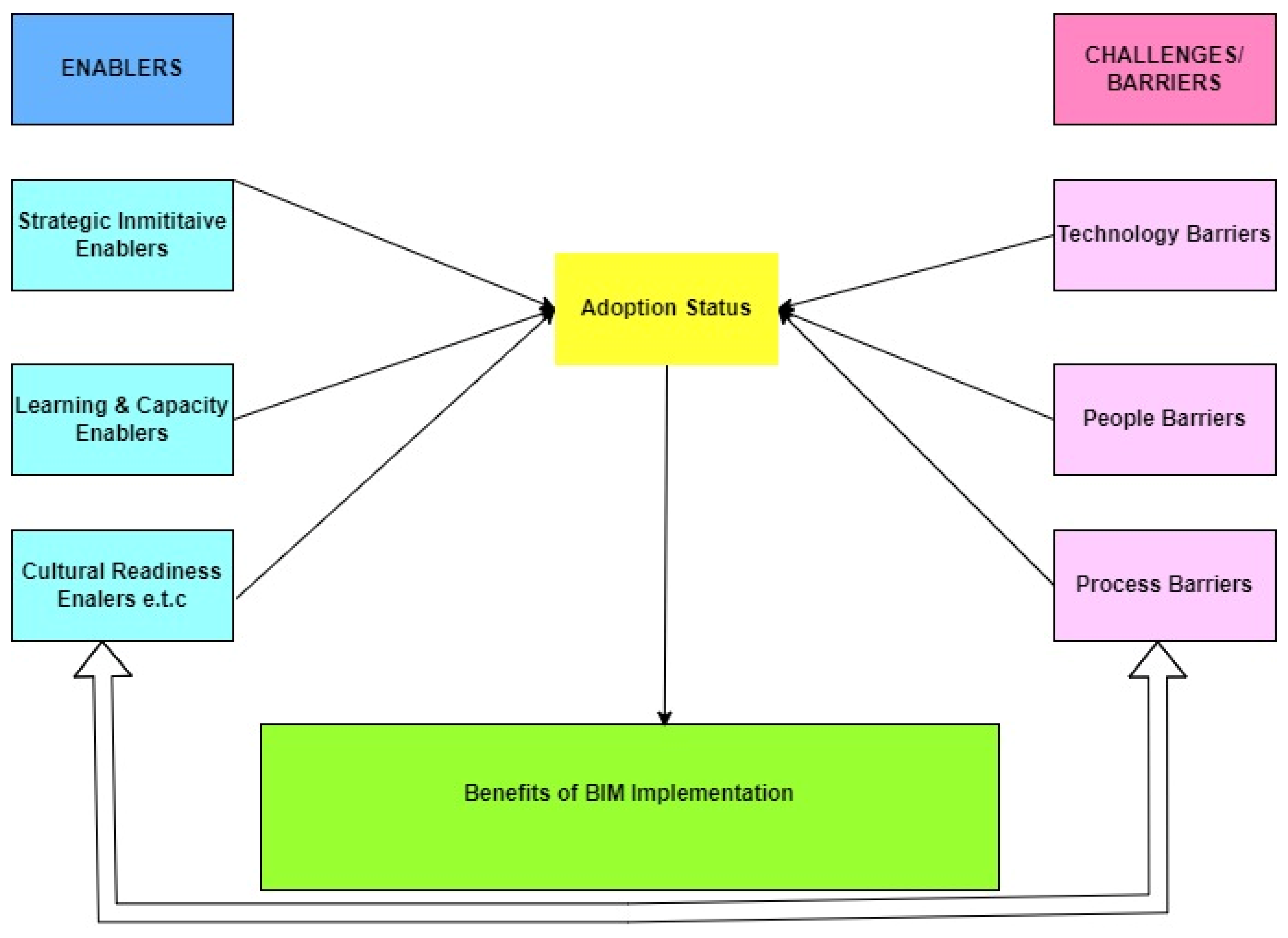
This conceptual framework presents the operationalization of BIM. As stated by Succar & Kassem [
27], BIM implementation is basically an organizational innovation and is subject to the influence of the individual, institutional, and environmental setup of an organization. Additionally, this operationalization of BIM is affected by its enablers, challenges, and associated benefits [
28,
29,
30]. Abbasnejad et al. [
29] studied a list of 33 BIM implementation enablers. These were categorized into seven categories of strategic initiative enablers, learning capacity enablers, cultural readiness enablers, IT leveragability and knowledge, network relationship enablers, change management enablers, and process and performance management enablers [
29]. On the other hand, Wong et al. [
31] categorized BIM adoption challenges into three main groups of technology barriers, people barriers, and process barriers. Therefore, an understanding of the barriers to BIM adoption can facilitate finding solutions to BIM adoption on projects that will translate to a widespread BIM adoption at a continuous and consistent pace [
32]. Similarly, the benefits of BIM adoption influence the adoption of technology. Conversely, a lack of awareness of BIM benefits can also be a barrier to BIM adoption [
33,
34]
Enablers are drivers of BIM uptake. The very first aspect relates to the IT leveragability and knowledge, which presents the prerequisites for BIM adoption. In developing countries like Malawi, the key enablers include the availability of BIM software, especially those supporting industry foundation classes, and the presence of basic digital infrastructure [
16]. These are reliable high-speed internet and cloud-based data storage. Recent studies have emphasized that the effectiveness of these technologies depends on a conceptual shift from viewing BIM merely as a three-dimensional visualization tool to recognizing it as an integrated tool throughout the entire lifecycle [
35].
In addition to software availability, digital infrastructure plays a critical role. Reliable broadband connectivity, cloud-based data storage systems, and adequate computing hardware are necessary for real-time model sharing, remote collaboration, and secure data management. However, in many low-income contexts, inconsistent internet access and limited ICT investment constrain the practical use of BIM, especially outside major urban centers [
36]. Thus, establishing status is very important in scaling up its adoption.
The framework identifies organizational capacity as the most volatile component influencing BIM adoption. Although BIM offers substantial benefits, including improved clash detection and reduced material waste, many firms in developing regions, particularly Small and Medium Enterprises (SMEs), experience significant post-adoption barriers. These arise when the high costs of software licensing, hardware upgrades, and continuous training outweigh perceived short-term gains [
37]. In addition, organizational maturity is often constrained by skilled labor migration and resistance to change, as employees tend to favor familiar two-dimensional workflows over the steep learning curve associated with BIM technologies [
38,
39].
The environmental dimension of the framework highlights the influence of external institutional and policy pressures. In developing economies, government intervention remains the most significant driver of BIM diffusion, particularly through the introduction of mandatory BIM requirements in public infrastructure projects [
24,
40]. Such mandates generate a cascading effect that compels private-sector actors and supply chains to adopt digital practices. However, the absence of comprehensive national BIM standards continues to pose a major challenge. This regulatory gap often results in fragmented implementation, with stakeholders operating under incompatible data formats and operational protocols.
The final component of the framework focuses on implementation outcomes. Effective BIM adoption contributes to enhanced sustainability and cost-efficient construction through advanced functions such as predictive energy modeling, lifecycle analysis, and real-time site monitoring [
41]. These performance improvements generate a self-reinforcing value creation loop: as project transparency, efficiency, and reliability increase, stakeholder confidence and institutional trust are strengthened. This, in turn, stimulates further investment in technological, organizational, and regulatory enablers, thereby sustaining long-term BIM integration [
30,
42].
Figure 1 shows the study concept framework based the value loop creation.