Article

Study on Maximum Vertical Prestressing Spacing for Long-Span PC Continuous Rigid-Frame Bridges

1
CCCC Second Highway Survey and Design Institute Co., Ltd., Wuhan 430056, China
2
Department of Transportation and Logistic Engineering, Wuhan University of Technology, Wuhan 430063, China
*
Author to whom correspondence should be addressed.
Buildings 2026, 16(7), 1363; https://doi.org/10.3390/buildings16071363
Submission received: 13 February 2026 / Revised: 9 March 2026 / Accepted: 23 March 2026 / Published: 30 March 2026

Abstract

Vertical prestressing is critical for shear resistance in long-span PC continuous rigid-frame bridges, yet existing design methods rely on the inaccurate superposition of single-tendon stress fields, neglecting mechanical interaction between adjacent tendons. This study derives the first closed-form elastic analytical solution for the vertical normal stress field under two interacting prestressing tendons, explicitly capturing the coupling term. Validated against high-fidelity Finite Element Analysis (FEA), the solution achieves a Mean Absolute Percentage Error (MAPE) below 6.8%, outperforming conventional superposition methods by 6.8–17.7 percentage points. The analysis reveals a transition from diffusion-dominated to superposition-dominated stress regimes and establishes a predictive linear relationship between tendon spacing and the depth of the prestressing blind zone. The section at one-fourth of the web height below the top edge is identified as the critical control section, leading to a proposed maximum spacing limit of 0.34 times the web height to ensure a stress uniformity coefficient greater than 0.95. This criterion represents a 13.3% increase over empirical rules and a 27.5% increase over the JTG 3362-2018 limit, enabling estimated savings of 52,000 CNY per typical four-span bridge while maintaining structural safety. This represents a 13.3% increase over empirical rules and a 27.5% increase over the limit in JTG 3362-2018, enabling estimated savings of 52,000 CNY per typical four-span bridge while maintaining structural safety.

1. Introduction

Long-span prestressed concrete (PC) continuous rigid-frame bridges are vital components of modern transportation infrastructure, valued for their structural efficiency and adaptability to complex terrains [1,2,3,4,5]. However, the long-term performance of these structures has become a significant concern, particularly regarding excessive mid-span deflection [4,5,6,7,8,9,10] and extensive web cracking [11,12,13,14,15]. These phenomena are mechanically coupled; crack initiation reduces global stiffness, accelerating deflection, while progressive deformation further propagates cracking [16,17,18,19,20,21].
The severity of this issue is underscored by a comprehensive field investigation by Zhao et al. [22] involving over 200 bridges in China, which revealed that 67% exhibited web cracking, with 82% of these cracks oriented at 25–45° to the longitudinal axis—characteristic of principal tensile stress failure under shear-bending coupling. Critically, 73% of cracked bridges had vertical prestressing spacing exceeding 1.2 m, suggesting a direct correlation between spacing design and cracking propensity.
Vertical prestressing is the primary measure for enhancing shear resistance in box-girder webs [23,24,25,26,27]. By introducing vertical compressive stress, it effectively reduces principal tensile stress. Consequently, the rational arrangement of tendon spacing is critical [28,29,30,31]. Previous research has primarily focused on stress fields induced by single tendons. Recent studies on shear-dominated mechanical behavior and stress distribution dynamics in box girders have established a framework for understanding stress diffusion [20,21,32]. Subsequent research refined these calculations to account for long-term prestress losses [33,34,35] and the influence of construction errors [36,37,38]. Building on this, researchers introduced stress uniformity parameters [39,40] and established correlations between “prestressing blind zones”—regions of insufficient vertical compression—and prestress loss [37,41]. Shao et al. [41] further provided empirical recommendations that influenced current Chinese specifications.
Despite these advancements, a significant theoretical gap remains. Most existing studies treat the web stress field under multi-tendon action as a simple algebraic superposition of single-tendon solutions. While computationally convenient, this approach neglects the mechanical interaction—or coupling term—inherent in the governing biharmonic equation for plane elasticity. By ignoring the interference between adjacent stress diffusion zones, this method fails to capture the transition between “diffusion-dominated” and “superposition-dominated” regimes. This simplification introduces systematic errors of 12–22% in predicted stress values. More problematically, the error changes with spacing: underestimating stress at close spacing (conservative) but overestimating it at wide spacing (unconservative)—a sign reversal particularly dangerous as it leads to unsafe estimates precisely where prestressing blind zones are most likely.
Current design codes, such as Chinese JTG 3362-2018 [42] and Eurocode 2 [13], prescribe empirical maximum spacing limits (e.g., 0.8 m or 0.3 h). However, these rules lack a rigorous theoretical basis linking spacing to the blind zone mechanism. To address these limitations, this study derives the first closed-form elastic analytical solution for the vertical normal stress field under two interacting prestressing tendons, explicitly capturing the coupling term neglected in conventional approaches. Validated against high-fidelity Finite Element Analysis (FEA) with Mean Absolute Percentage Error below 7%, this solution forms the basis for a mechanics-based maximum spacing criterion (2smax ≤ 0.34h) using a stress uniformity coefficient (λ > 0.95). This represents a 27.5% increase over the JTG 3362-2018 limit, enabling estimated savings of 52,000 CNY per typical four-span bridge while maintaining structural safety.

2. Engineering Background

2.1. The Yicheng Hanjiang Second Bridge: A Representative Case Study

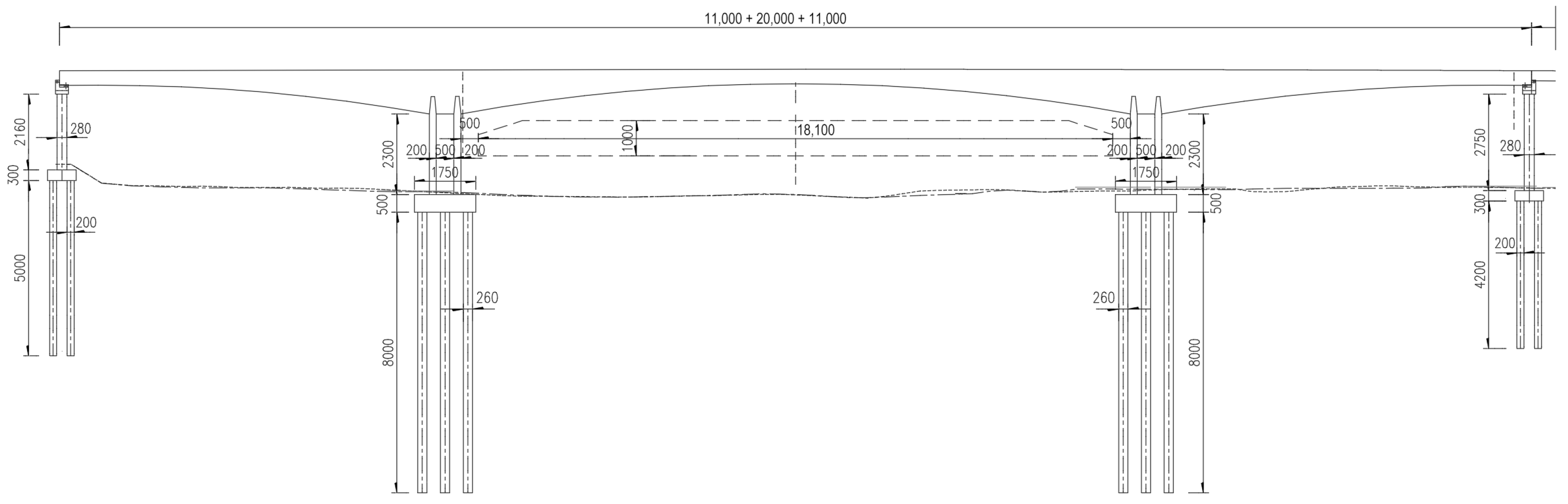
To illustrate the practical necessity of this study, the Yicheng Hanjiang Second Bridge is presented as a representative engineering background. This structure serves as a typical example of the challenges faced in the design and construction of long-span Prestressed Concrete (PC) continuous rigid-frame bridges. The main bridge spans are arranged in a 110 + 200 + 110 m configuration (Figure 1), utilizing a three-span PC continuous rigid-frame structure designed according to full prestressing criteria. The superstructure features a single-cell box girder with a variable cross-section. The root depth of the box girder is 12.5 m, transitioning to a mid-span depth of 4.0 m following a parabolic law. The webs vary in thickness along the longitudinal direction, transitioning from 50 cm at the mid-span to 95 cm at the root to accommodate shear demands. The vertical prestressing system employs high-strength prestressed steel bars, a standard configuration for bridges of this magnitude. Figure 1 shows the general arrangement of the Yicheng Hanjiang Second Bridge. It is important to note that this thickness variation occurs longitudinally along the bridge span; for any given cross-section analyzed in this study, the web thickness is constant in the vertical direction. Within the localized zone between adjacent vertical tendons (typical spacing ≤ 1.5 m), the longitudinal thickness variation is negligible, allowing the use of a locally uniform thickness assumption when analyzing stress diffusion mechanisms. It is important to note that this case-study bridge is presented to illustrate the engineering context and practical motivation for this research. The subsequent FE validation in Section 4 employs a representative generic model designed to verify the analytical solution independently, rather than to replicate a specific section of the Yicheng Bridge. The final design criterion is then applied back to this bridge in Section 5.4 to demonstrate its practical implementation.
For reference, the Yicheng Hanjiang Second Bridge utilizes C55 concrete with an elastic modulus of Ec = 35.5 GPa and PSB830 prestressing steel. The slight difference in concrete grade between the case study (C55) and the generic validation model (C50) reflects different design sections but does not affect the dimensionless design criterion derived in this study.

2.2. The Engineering Problem: Inadequacy of Current Design Rules

Despite rigorous design adherence to current codes (JTG 3362-2018 [42]), the project highlights a persistent theoretical gap in vertical prestressing design. The technical design documents explicitly identify the optimization of vertical prestressing spacing as a critical research task [22], stating:
“Addressing the problem that existing vertical prestressing spacing regulations are too general, investigate the maximum and minimum vertical prestressing spacing based on the criteria that prestress in the blind zone exceeds cracking stress and that vertical prestress tensioning loss is minimized.”
This engineering dilemma is not unique to the Yicheng Hanjiang Second Bridge but is systemic in the industry. Field investigations by Zhang et al. [21] of over 200 continuous rigid-frame bridges in China revealed that 67% exhibited varying degrees of web cracking, with 82% of these cracks oriented at 25–45° to the longitudinal axis—characteristic of principal tensile stress failure. Critically, 73% of cracked bridges had vertical prestressing spacing exceeding 1.2 m, suggesting a direct correlation between spacing design and cracking propensity.
Currently, engineers must rely on empirical rules of thumb (e.g., limiting spacing to 0.8 m or 0.3 h) to prevent web cracking. However, these empirical limits do not account for the mechanical interaction between adjacent tendons. In the case of this bridge, with web heights varying significantly from 4.0 m to 12.5 m, a fixed spacing rule leads to inconsistent safety margins: it may be overly conservative in deeper sections while potentially leaving shallow sections vulnerable to blind zones. As demonstrated in the subsequent analysis of this study, conventional superposition methods introduce systematic errors of 12–22% in predicted stress values, whereas the proposed analytical solution achieves a 6.8–17.7 percentage point improvement in accuracy.

2.3. The Prestressing Blind Zone and Research Significance

The “blind zone” phenomenon—where stress diffusion fields fail to overlap adequately—is a primary contributor to the web cracking observed in similar long-span bridges. Through parametric analysis, this study establishes a predictive linear relationship for blind zone depth: db/h = 0.12(2s/h) + 0.08(R2 = 0.994):
This equation enables engineers to determine, for any given spacing, how far the blind zone extends from the top edge. The construction and design of the Yicheng Hanjiang Second Bridge underscore the urgent need for a mechanics-based analytical solution that can accurately predict stress distribution between tendons. Specifically, there is a need to move beyond the simple superposition of single-tendon effects and establish a spacing criterion that ensures stress uniformity. This study addresses this real-world problem by deriving a coupled analytical solution to quantify the blind zone mechanism.
For the Yicheng Bridge (h = 4.0 m at mid-span), the proposed criterion 2smax/h = 0.34 yields a recommended maximum spacing of 2smax = 0.34 × 4.0 = 1.36 m—a value that can be compared directly with the code-prescribed 0.8 m limit. This represents a 27.5% increase over the JTG 3362-2018 absolute limit, translating to estimated savings of approximately 52,000 CNY per four-span bridge through the reduction of 26 tendons per span, while maintaining stress uniformity λ > 0.95 at the critical control section. This study thus provides the theoretical justification required to optimize vertical prestressing layout for this bridge and similar structures, ensuring both structural safety and material economy.

3. Theoretical Derivation of Vertical Stress Field Under Multi-Tendon Action

3.1. Elasticity Solution for Vertical Normal Stress Under Two Prestressing Tendons

3.1.1. Problem Formulation and Assumptions

To rigorously describe the stress interaction mechanism between vertical prestressing tendons, the web of a PC continuous box-girder bridge is idealized as a rectangular thin plate under plane stress conditions. The plate possesses infinite longitudinal extent relative to its height (2L ≫ 2a), thickness t, and is subjected to a pair of self-equilibrating local loads applied symmetrically to the upper and lower boundaries. This representation captures the fundamental load transfer mechanism: each vertical prestressing tendon anchored at the top flange induces an equal and opposite reaction at the bottom anchorage.
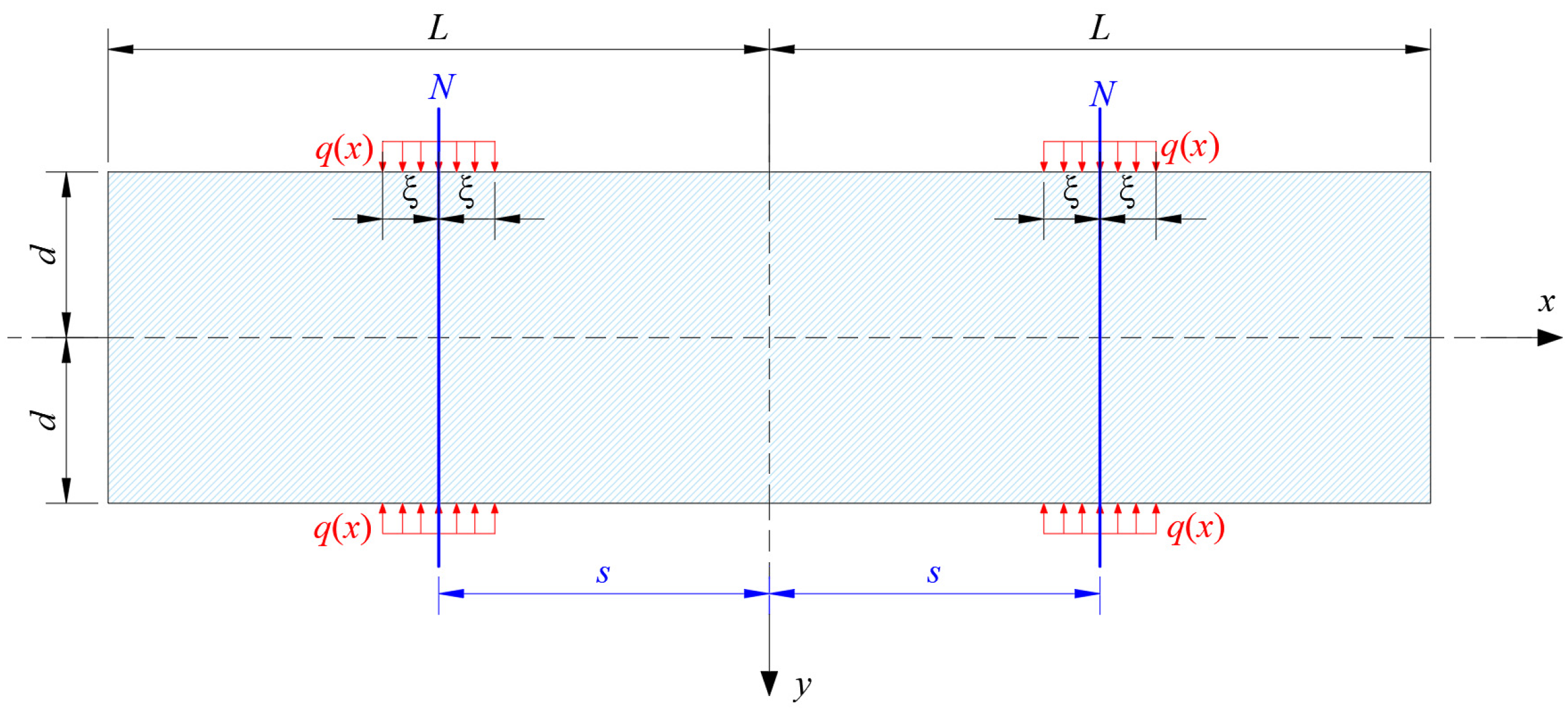
A Cartesian coordinate system (x,y) is established with the origin at the geometric center of the plate. The x-axis coincides with the longitudinal axis of the bridge, and the y-axis is aligned with the vertical direction. Two identical vertical prestressing tendons are symmetrically positioned at x = −s and x = +s relative to the centerline, each transmitting an effective prestressing force N (unit: kN). Here, N represents the vertical anchorage load per tendon after immediate elastic losses, which serves as the input parameter for the stress field calculation. Although the prototype bridge features longitudinal variation in web thickness (50–95 cm), this variation occurs gradually over the span length (>200 m). Within the localized zone of interaction between adjacent tendons (typically <2 m), governed by Saint-Venant’s principle, the thickness is effectively constant. Consequently, the uniform thickness assumption is valid for analyzing the local stress diffusion mechanism. Furthermore, as demonstrated numerically in Section 4.3, the key dimensionless parameters—stress uniformity coefficient λ and the critical spacing-to-height ratio 2s/h—are independent of absolute thickness, as thickness t appears only as a linear scaling factor in Equation (9) and cancels out when forming ratios. This mathematical property ensures that the derived stress distribution shape and uniformity criterion are applicable to sections of any thickness within practical ranges. In practical application, the solution is applied section-by-section using the specific local geometric parameters (h and t) of the cross-section under consideration. The calculation diagram for this simplified plane stress problem is illustrated in Figure 2.
To eliminate stress singularities inherent in point load applications, the concentrated force N is initially distributed over a finite width . The equivalent distributed load intensity q(x) is defined as:
q ( x ) = N 2 ξ t
where t is the web thickness. This formulation ensures force equilibrium while regularizing the mathematical solution. The physically meaningful case of concentrated forces is recovered by subsequently taking the limit ξ→0:
The applicability of these simplifying assumptions to real PC box-girder webs is justified by Saint-Venant’s Principle and the local nature of stress diffusion. First, the stress field disturbance caused by a prestressing anchor decay rapidly, typically stabilizing within a distance of 1.0 to 1.5 times the web height from the loading point [41]. For typical long-span bridges, this diffusion length is orders of magnitude smaller than the total span length. Consequently, boundary conditions at distant supports or diaphragms have negligible influence on the local stress interaction between adjacent tendons; this was verified through FE sensitivity studies showing less than 0.3% change in critical stresses when the model length was doubled. Second, while diaphragms induce local stress concentrations, they are typically spaced at quarter-span or third-span points, and the web regions between them function mechanically as independent plates. Third, longitudinal thickness variation is gradual; within the localized zone of interaction between adjacent tendons (typical spacing < 1.5 m), the thickness change is negligible, making the constant thickness assumption locally valid. Furthermore, the key design parameter λ is dimensionless and independent of absolute thickness. Thus, the derived solution is applicable to general web regions where vertical prestressing is arranged, excluding the immediate vicinity of rigid diaphragm supports and end-blocks where separate analysis would be required.

3.1.2. Fourier Expansion of Load Distribution the Load Function

q(x) is periodic with period 2L and symmetric about x = 0. It is therefore expressible as a Fourier cosine series: The load function q(x) is periodic with period 2L and symmetric about x = 0. It is therefore expressible as a Fourier cosine series:
q ( x ) = a 0 2 + n = 1 a n cos n π x L
The Fourier coefficients are evaluated using orthogonality relations. For the two symmetric loads applied at x = ±s within the range [sξ, s+ξ] and [−sξ, −s+ξ], the coefficients are derived as:
a 0 = 1 L L + L q ( x ) d x = 4 N ξ L t
a n = 1 L L + L q ( x ) cos n π x L d x = 2 N n π ξ t sin ( n π ξ L ) cos ( n π s L )
Note: Equation (3b) ensures dimensional consistency; the term ξ1sin (Lnπξ) approaches Lnπ as ξ→0, yielding the correct units of stress for the Fourier coefficients.
Substituting Equations (3a,b) into Equation (2) yields the complete Fourier representation:
q ( x ) = 2 N ξ L t + n = 1 ( 2 N n π ξ t sin ( n π ξ L ) cos ( n π s L ) ) cos n π x L

3.1.3. Decomposition into Uniform and Diffusion Components

Equation (4) reveals a fundamental decomposition of the prestressing effect. The uniform axial component is represented by the constant term 2/Lt, which corresponds to a spatially invariant compressive stress field representing the average vertical compression. The spatially varying diffusion component is represented by the Fourier summation, which captures the localized perturbation of the stress field.
This component contains the spacing parameter s within the term cos(nπs/L), confirming that the interaction between adjacent tendons is embedded in the load representation.

3.1.4. Stress Function Formulation and General Solution

For plane stress problems, stress components are derived from the Airy stress function.
Φ(x,y) satisfying the biharmonic equation ∇4Φ = 0. A stress function form is postulated:
Φ ( x , y ) = n = 1 f n ( y ) cos n π x L
Substituting into the biharmonic equation yields the ordinary differential equation for f n ( y ) :
f n ( 4 ) ( y ) 2 ( n π L ) 2 f n ( y ) + ( n π L ) 4 f n ( y ) = 0
The general solution, considering symmetry about y = 0, is:
f n ( y ) = A n cosh n π y L + B n n π y L sinh n π y L

3.1.5. Boundary Conditions and Coefficient Determination

The constants An and Bn are determined by enforcing the boundary conditions at the top and bottom edges (y = ±a):
  • Shear stress condition: τxy (x, ±a) = 0.
  • Normal stress condition: σy (x, ±a) = ±q(x).
Solving the resulting system gives the coefficients
A n = a n n π a L coth ( n π a L ) n π L ( sinh 2 n π a L + 2 n π a L ) , B n = a n n π L sinh 2 n π a L + 2 n π a L
where an is the load coefficient from Equation (3b).

3.1.6. Vertical Normal Stress Expression

The vertical normal stress σy is obtained as σy = ∂2Φ/∂x2. Substituting the coefficients yields the diffusion component:
σ y diff = n = 1 a n cos ( n π x L ) sinh 2 n π a L + 2 n π a L [ n π a L coth ( n π a L ) cosh ( n π y L ) n π y L sinh ( n π y L ) ]

3.1.7. Concentrated Load Limit and Final Analytical Solution

Taking the limit ξ→0 for the concentrated load case, we observe that:
lim ξ 0 2 N n π ξ t sin ( n π ξ L ) = 2 N L t
Substituting this limit into Equation (8) and noting that the uniform axial term vanishes for the isolated tendon pair in an infinite domain, the final analytical solution for the vertical normal stress field is:
σ y = 4 N L t n = 1 cos ( n π x L ) cos ( n π s L ) sinh ( 2 n π a L ) + 2 n π a L [ n π a L coth ( n π a L ) cosh ( n π y L ) n π y L sinh ( n π y L ) ]
Equation (9) is the principal analytical result of this study, defining the stress at any coordinate (x,y) due to two tendons with half-spacings.

3.1.8. Convergence and Truncation Criterion

Although Equation (9) is expressed as an infinite series, it converges rapidly due to the exponential growth of the hyperbolic sine term in the denominator. For practical engineering application, a fixed truncation limit nmax can be established to balance accuracy and computational efficiency. For large n, the denominator behaves as sinh(2nπa/L) ≈ 1 2   e 2 n π a / L , causing the series terms to decay as e−2nπa/L. For typical bridge geometries (a/L ≈ 0.075–0.1), the terms decay by approximately one order of magnitude for every increment of n = 5. A parametric convergence study was performed by evaluating the relative error ϵ = | σ y ( n ) σ y ( n 1 ) σ y ( n ) | , where σy(n) is the stress calculated with the first n terms. The study examined four spacing configurations (2s = 1.0–4.0 m) at the critical control section (y = h/4). The results, summarized in Table 1, demonstrate that for n ≥ 20, the truncation error falls below 0.01% for all practical configurations.
To provide a conservative and robust parameter for design offices, we recommend a truncation limit of nmax = 50. At this limit, the truncation error is guaranteed to be less than 10–4 MPa (approximately 0.001% of peak stress), and the computational cost is negligible (<1 ms on standard processors). This allows the formula to be implemented immediately in standard spreadsheet software without iterative convergence checks. For research applications requiring ultra-high precision, nmax = 100 ensures error below 10–6 MPa, though this is unnecessary for routine engineering design.

3.2. Mechanism of Stress Interaction and Diffusion

The derived analytical solution (Equation (9)) provides a rigorous theoretical foundation for understanding the limitations of existing single-tendon superposition methods.

3.2.1. Mathematical Representation of Tendon Interaction

The term cos(nπs/L) in Equation (9) constitutes the mathematical signature of tendon interaction. Unlike the simple algebraic sum of two independent single-tendon stress fields, this cosine factor explicitly couples the positions of the two tendons, representing the phase interference of stress diffusion fields. This confirms that the two-tendon stress field is a coupled interference pattern, not a linear superposition.

3.2.2. Transition of Stress States with Spacing

The solution implies that the web stress state undergoes a fundamental transition as a function of the dimensionless spacing-to-height ratio 2s/h. Based on the quantitative analysis presented in Section 5.3 using the stress uniformity coefficient λ, three distinct regimes are identified. Regime I: Superposition-Dominated (2s/h ≤ 0.3). In this range, the diffusion zones overlap substantially such that λ ≥ 1.0, meaning the stress at the midpoint equals or exceeds that at the tendon location. The interaction term reinforces the stress field at the mid-point between tendons (x = 0), producing a U-shaped distribution with maximum vertical compression at the centerline.
Regime II: Transition (0.3 < 2s/h ≤ 0.34). In this range, the stress distribution transitions from superposition-dominated to diffusion-dominated. The central valley begins to emerge, but stress uniformity remains acceptable with 0.95 ≤ λ < 1.0, satisfying the design criterion established in Section 5.3.
Regime III: Diffusion-Dominated (2s/h > 0.34). Beyond this threshold, the characteristic W-shaped distribution emerges with λ < 0.95, indicating a pronounced prestressing blind zone. Distinct stress peaks occur at the tendon locations with a pronounced valley at the mid-point.
Note that the precise value 2s/h = 0.293 corresponds to perfect uniformity (λ = 1.0) and falls within Regime I as defined (≤0.3). The design threshold 2s/h = 0.34 (λ = 0.95) defines the boundary between Regime II and Regime III and forms the basis for the maximum spacing criterion.

3.2.3. Implications for Existing Design Practice

Current design methods relying on single-tendon superposition are fundamentally limited because they neglect the interaction term cos(nπs/L). This introduces systematic error: underestimation of stress in Regime I (conservative) and overestimation of stress in Regime III (potentially unsafe). The derived multi-tendon solution is therefore necessary for accurate prediction of web stress distribution and identification of prestressing blind zones.

3.3. Validation of Mathematical Consistency

To confirm the integrity of the derived solution, three limiting cases are examined. Case 1 is the single tendon limit (s → ∞), where the interaction term oscillates and averages to zero, recovering the isolated tendon solution. Case 2 is the coincident tendon limit (s → 0), where the solution correctly degenerates to that of a single tendon with effective force 2N. Case 3 examines stress decay, where the solution exhibits expected attenuation properties away from the tendon group. These checks confirm that Equation (9) satisfies required mathematical properties and reduces correctly to known special configurations.

4. Numerical Verification and Parametric Analysis

4.1. Finite Element Modeling and Validation of Analytical Solution

To verify the accuracy and applicability of the analytical solution derived in Section 2 (Equation (9)), a comprehensive finite element (FE) numerical simulation was conducted based on a prototype 160 m span PC continuous rigid-frame bridge. The mechanical properties and loading conditions were modeled using ANSYS Mechanical APDL [12,43,44,45].

4.1.1. Model Configuration

To verify the general applicability of the analytical solution derived in Section 3, a finite element (FE) numerical simulation was conducted based on a generic prototype of a 160 m span PC continuous rigid-frame bridge. It is important to note that this validation model is distinct from the Yicheng Hanjiang Second Bridge introduced in Section 2. The Yicheng Bridge serves as the engineering background to define the problem, while this generic FE model serves as an independent benchmark to validate the mathematical correctness of the derived elasticity solution. This approach follows standard practice in computational mechanics: validating against a generic, idealized model with perfectly controlled boundary conditions ensures that the confirmation addresses the underlying theoretical physics rather than merely matching a specific geometry. Since the governing equations and results are expressed in terms of dimensionless parameters (e.g., 2s/h), the validation performed here confirms the theoretical framework is valid for any bridge within the applicable geometric range, including the Yicheng Bridge case study.
Following the same idealization employed in the analytical derivation, the web was modeled as a rectangular plate. Given the symmetry of the structure and loading about the longitudinal centerline (x = 0), a 1/2 model was established to improve computational efficiency. The geometric parameters were set as follows: web height 2a = 3.0 m (quarter-span height), web thickness t = 0.8 m, and longitudinal length 2L = 40 m. The plate length is substantially larger than the maximum tendon spacing investigated (2s = 4.0 m), ensuring that longitudinal boundary effects do not influence the stress distribution in the critical region of interest (∣x∣ ≤ 5 m).
Element Selection and Mesh Configuration: The FE model was constructed using SOLID186 elements—20-node quadratic hexahedral elements. These elements provide superior performance for capturing steep stress gradients in elasticity problems. Although the theoretical derivation utilizes a 2D plane stress formulation, 3D solid elements (SOLID186) were employed for the FE analysis to provide a higher-fidelity validation that is independent of the 2D kinematic constraints.
To ensure the FE model accurately reflected the structural behavior, linear elastic material properties were defined based on the design specifications of the prototype bridge. Although the analytical solution for stress distribution is independent of the Modulus of Elasticity (E) under force-controlled loading, the FE simulation requires explicit material definitions. The material parameters, summarized in Table 2, correspond to C50 concrete and PSB830 prestressing steel as specified in JTG 3362-2018. The values presented are design values for serviceability limit state analysis, consistent with the linear elastic assumption of this study.
This approach captures the local 3D stress concentration at the anchorage while verifying the global stress diffusion matches the 2D theory.
To ensure equivalence between the 2D theory and the 3D simulation, two conditions were enforced. First, the fundamental plane stress assumption (σz ≈ 0) was satisfied by leaving the front and back surfaces of the web model traction-free (unconstrained), allowing free deformation in the thickness direction due to Poisson’s effect. A verification check confirmed that the induced out-of-plane stress σz was negligible (<0.5% of the vertical stress σy) in the regions of interest. Second, the line load assumed in the 2D solution was applied in the 3D model as a pressure uniformly distributed across the web thickness, ensuring strict force equivalence.
A mapped meshing scheme was employed to ensure element quality. Mesh Convergence Study: A systematic mesh sensitivity analysis was performed to eliminate discretization errors. Four mesh densities were evaluated, as summarized in Table 3. The vertical normal stress at the tendon location on the top edge (x = s, y = 2.0 m) was monitored as the convergence criterion.
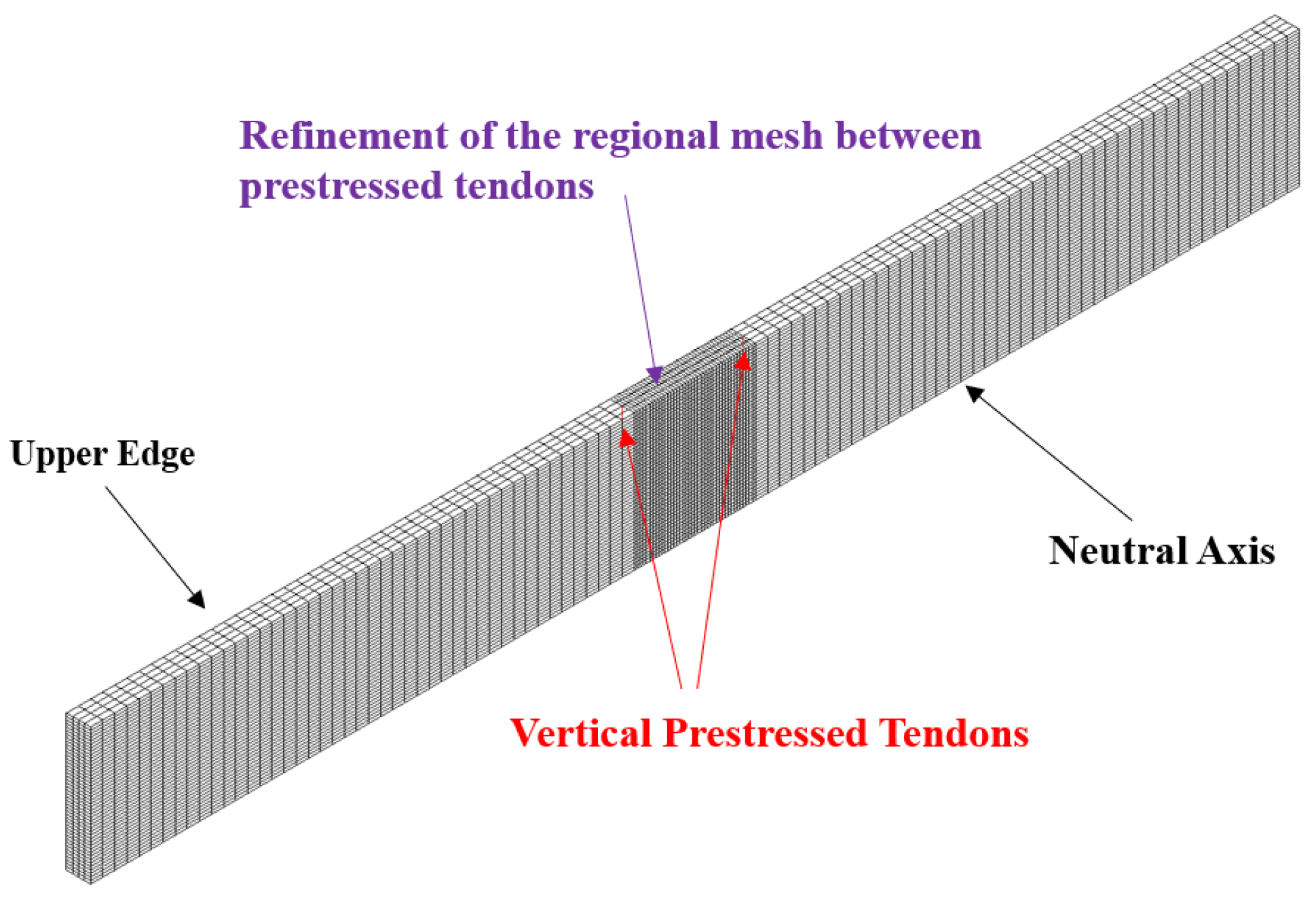
Based on this study, the medium mesh (124,800 elements) was selected as the optimal balance between accuracy (<1% error relative to ultra-fine mesh) and computational efficiency. To further optimize the model, a targeted mesh refinement strategy was adopted. Local refinement to 0.1 m was applied within a zone of ±0.5 m horizontally around each tendon anchorage, where stress gradients are steepest. This approach ensured high accuracy in the critical interaction zones while avoiding the computational burden of a globally fine mesh. The complete FE model configuration is illustrated in Figure 3.
Loading and Boundary Conditions: The effective prestressing force N = 568 kN was applied as equivalent nodal forces distributed over a circular area of diameter 2ξ = 0.1 m at the tendon anchorage locations on the top surface (y = +a). Boundary conditions were applied to simulate the infinite length assumption: horizontal constraints (ux = 0) were applied to the longitudinal end at x = +L, and symmetry constraints (ux = 0) were applied to the mid-span section at x = 0 [46,47].
Parametric Study Matrix: Four vertical prestressing spacings were investigated, spanning the practical range for bridges of this scale, as detailed in Table 4.

4.1.2. Comparative Validation

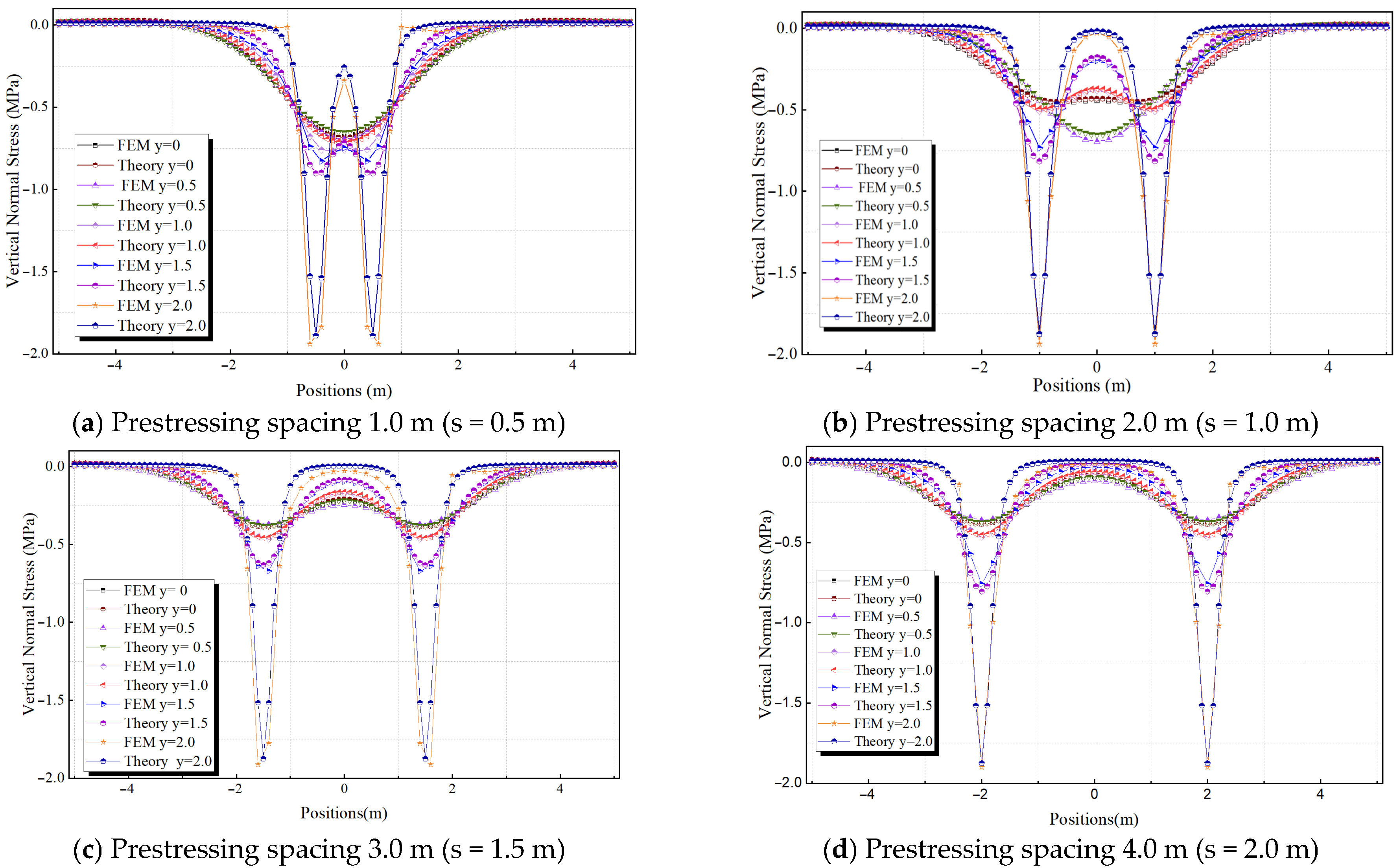
Figure 4 presents the comparison between analytical predictions (Equation (13)) and FE results for the four spacing configurations at three representative section heights: y = 2.0 m (top edge), y = 1.0 m (h/4), and y = 0 m (neutral axis).
Quantitative Error Assessment: To provide objective validation, three quantitative error metrics are employed: Mean Absolute Percentage Error (MAPE), Root Mean Square Error (RMSE), and Peak Error. Table 5 presents these metrics aggregated across all measurement points.
The analytical solution achieves strong overall accuracy with MAPE less than 7% across all spacing configurations, and RMSE below 0.41 MPa (approximately 5% of peak stress). Regarding spacing-dependence, error decreases monotonically with increasing spacing, with the highest error occurring at the closest spacing (2s = 1.0 m) where tendon interaction is strongest. The validation conclusion is that the analytical solution (Equation (13)) is verified as an accurate representation of the two-tendon stress field.

4.2. Comparison with Superposition Calculation Results of Single Vertical Normal Stress Formula

To demonstrate the advancement of the proposed method, the analytical solution was compared with the traditional superposition method used in current design practice. The single-tendon vertical normal stress solution is given by:
σ y single = 2 N L t n = 1 ( n π a L coth n π a L + 1 ) cosh n π y L n π y L sinh n π y L 2 n π a L + sinh 2 n π a L sinh n π a L cos n π x L
For two tendons at x = ±s, the superimposed stress field is:
σ y super = σ y single ( x s ) + σ y single ( x + s )
Critical observation: Equation (15) contains no coupling term between the two tendons. The stress at any point is simply the arithmetic sum of two independent solutions, each computed as if the other tendon did not exist. This neglects the modification of stress trajectories by the adjacent tendon and the correct satisfaction of boundary conditions under combined loading.

4.2.1. Comparative Assessment

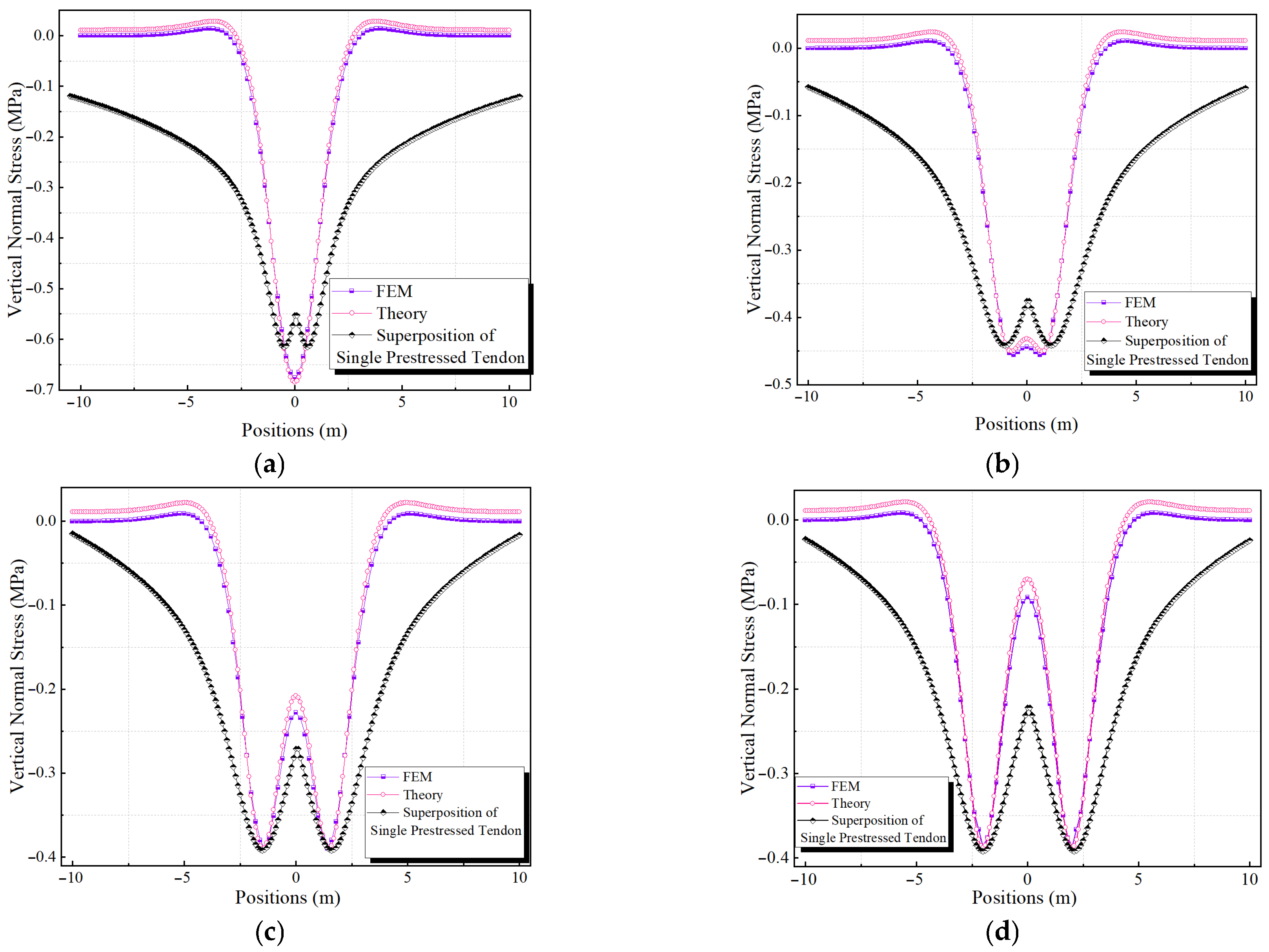
Figure 5 presents a three-way comparison between the proposed solution, the superimposed single-tendon solution, and FEM results at the critical section height y = 1.0 m (h/4).
Quantitative error comparison: Table 6 presents the error metrics for the superposition method relative to FEM, alongside the errors of the proposed analytical solution for direct comparison.

4.2.2. Systematic Error Patterns

The comparison reveals three systematic errors in the superposition approach. First, incorrect attenuation: the superposition method predicts persistent non-zero stress far from the tendons (∣x∣ > 3 m), while both the proposed solution and FEM show correct attenuation to near-zero values. Second, spacing-dependent sign reversal: at close spacing (2s ≤ 2.0 m), superposition underestimates stress resulting in conservative error, whereas at wide spacing (2s ≥ 3.0 m), superposition overestimates stress between tendons resulting in unconservative error that potentially leads to unsafe designs. Third, misrepresentation of distribution shape: the superposition method fails to capture the transition to a U-shaped (arch-shaped) distribution observed for close spacings (Figure 5a,b).

4.3. Evolution of Stress Distribution and Blind Zone Mechanism

To provide a rigorous quantitative basis for determining maximum spacing, the evolution of vertical normal stress distribution was analyzed.

4.3.1. Definition of Stress Uniformity Coefficient

The Section Stress Uniformity Coefficient λ is introduced to quantify stress distribution quality:
λ ( y ) = σ y ( x = 0 , y ) σ y ( x = s , y )
where σy (x = 0, y) is the stress at the mid-point between tendons, and σy(x = s, y) is the stress directly under the tendon. The uniformity ratio λ indicates different stress distribution regimes: when λ = 1.0, the distribution is perfectly uniform; when λ > 1.0, the mid-point stress exceeds the tendon-location stress indicating superposition dominance; and when λ < 1.0, the tendon-location stress exceeds the mid-point stress indicating diffusion dominance, which is indicative of a blind zone.

4.3.2. Transition of Stress States

The stress distribution exhibits a distinct transition depending on the spacing-to-height ratio (2s/h). Based on the quantitative analysis using the stress uniformity coefficient λ defined in Equation (13) and the design criterion established in Section 5.3, three regimes are identified:
Regime I: Superposition-Dominated (2s/h ≤ 0.3). In this range, the diffusion zones overlap completely and the distribution transitions to U-shaped with λ ≥ 1.0. Regime II: Transition (0.3 < 2s/h ≤ 0.34). In this range, the central valley emerges but uniformity remains acceptable with 0.95 ≤ λ < 1.0, satisfying the design criterion. Regime III: Diffusion-Dominated (2s/h > 0.34). Beyond this threshold, a distinct W-shaped distribution emerges where the stress attenuates rapidly towards the midpoint, creating a pronounced prestressing blind zone with λ < 0.95.
These thresholds are derived from the validated analytical solution (Equation (9)). The value 2s/h = 0.293 corresponds to perfect uniformity (λ = 1.0) and falls within Regime I, while 2s/h = 0.34 corresponds to the design limit (λ = 0.95) and defines the boundary between Regime II and Regime III.

4.3.3. Quantitative Characterization of Prestressing Blind Zone

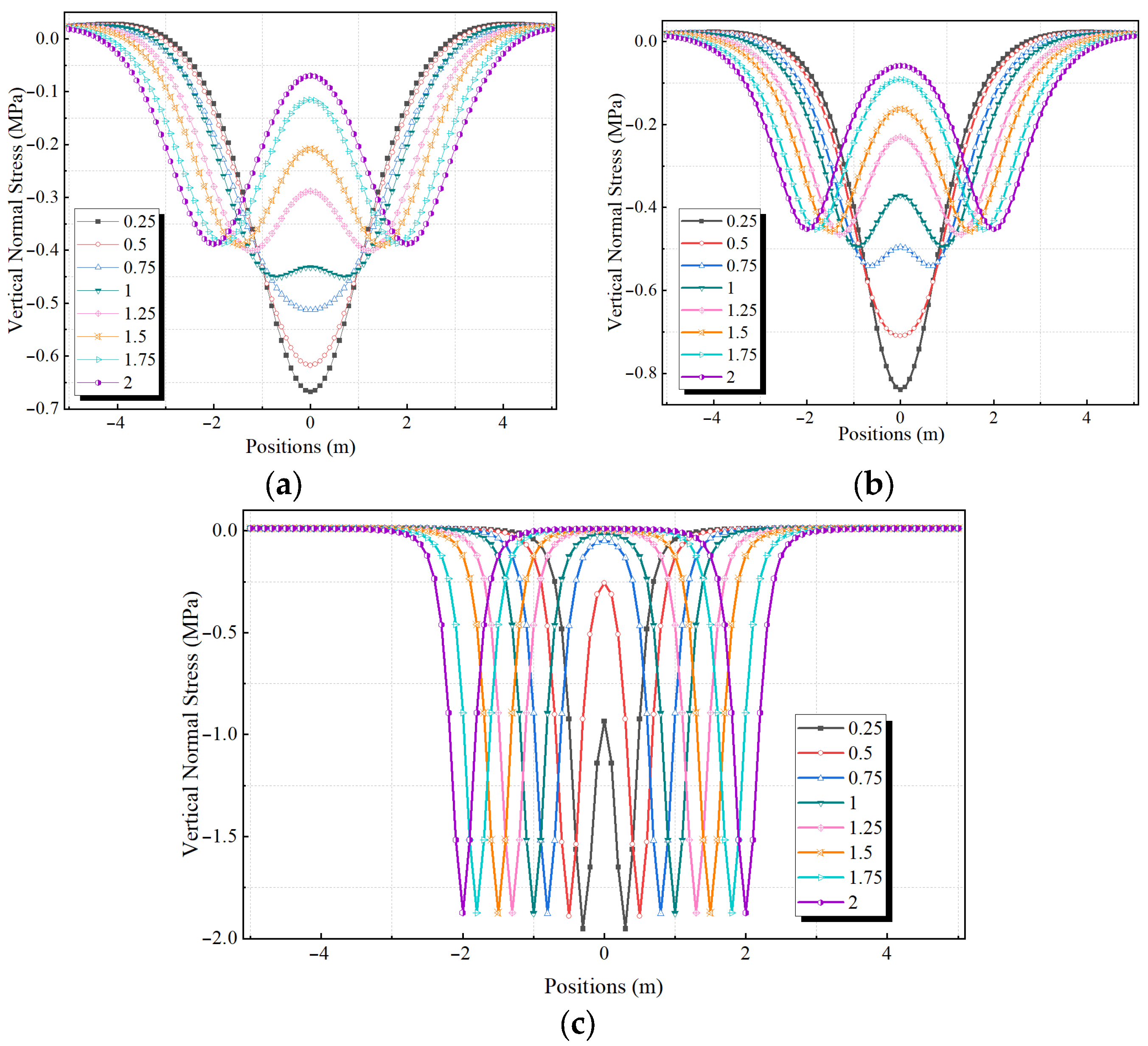
The Prestressing Blind Zone is rigorously defined as the region where λ < 0.95. Figure 6 illustrates the vertical extent of this blind zone.
The relationship between blind zone depth db and spacing ratio is approximately linear:
d b h = 0.12 ( 2 s h ) + 0.08 ( R 2 = 0.994 )
Critical Finding: A persistent blind zone exists at the extreme top edge (y = 2.0 m) regardless of spacing, confirming that discrete anchorage systems inherently produce low-stress regions near the loading surface. However, at the control section h/4, the blind zone is eliminated (λ ≥ 0.95) for all spacings 2s ≤ 2.0 m. This provides the quantitative basis for the maximum spacing criterion.

4.4. Discussion of Verification Limitations

Numerical vs. Experimental: This study compares analytical and FE models to ensure mathematical consistency, which is standard practice for establishing the correctness of a new theoretical derivation before proceeding to costly experimental phases. While direct experimental data for the coupled stress field is currently unavailable, the field investigation by Zhao et al. [22] provides strong qualitative support: the observed cracking patterns in 200 bridges—particularly that 73% of cracked bridges had vertical prestressing spacing exceeding 1.2 m and 82% of cracks were diagonal at 25–45°—align precisely with the blind zone mechanism predicted by the analytical solution.
To quantitatively verify the proposed solution, a specific experimental strategy is proposed: (1) fabrication of large-scale web segment specimens (height > 1.5 m) with varying tendon spacing covering the three identified regimes (2s/h = 0.2, 0.34, and 0.5); (2) application of vertical prestress using hydraulic jacks with integrated load cells to precisely control the effective force N; and (3) measurement of vertical strain distribution using dense arrays of strain gauges or fiber Bragg grating sensors along the critical control section (y = h/4), with digital image correlation recommended for full-field visualization. The experimental stress uniformity coefficient λ derived from these measurements should agree with analytical predictions within ±10%, and the critical spacing threshold where λ drops below 0.95 should be verified against the predicted value of 2s/h = 0.34.

5. Determination of Maximum Vertical Prestressing Spacing

5.1. Mechanism of the Blind Zone and Control Section Selection

As established in the numerical verification (Section 3), the “prestressing blind zone” is a region of insufficient vertical compression caused by the inadequate overlap of prestress diffusion fields between adjacent tendons. Conceptually, the prestressing force diffuses outward from the anchorage point at a specific diffusion angle. When the center-to-center spacing (2s) is excessive, the diffusion zones do not overlap near the web surface, creating a triangular low-stress region. However, a critical mechanical paradox exists in web design: near the top edge (y ≈ +a), the stress gradient is steepest and the blind zone is most pronounced, yet shear demand is relatively low and crack control is dominated by longitudinal flexural compression. Conversely, near the neutral axis (y ≈ 0), shear demand is maximum, but stress uniformity naturally improves due to the diffusion path.
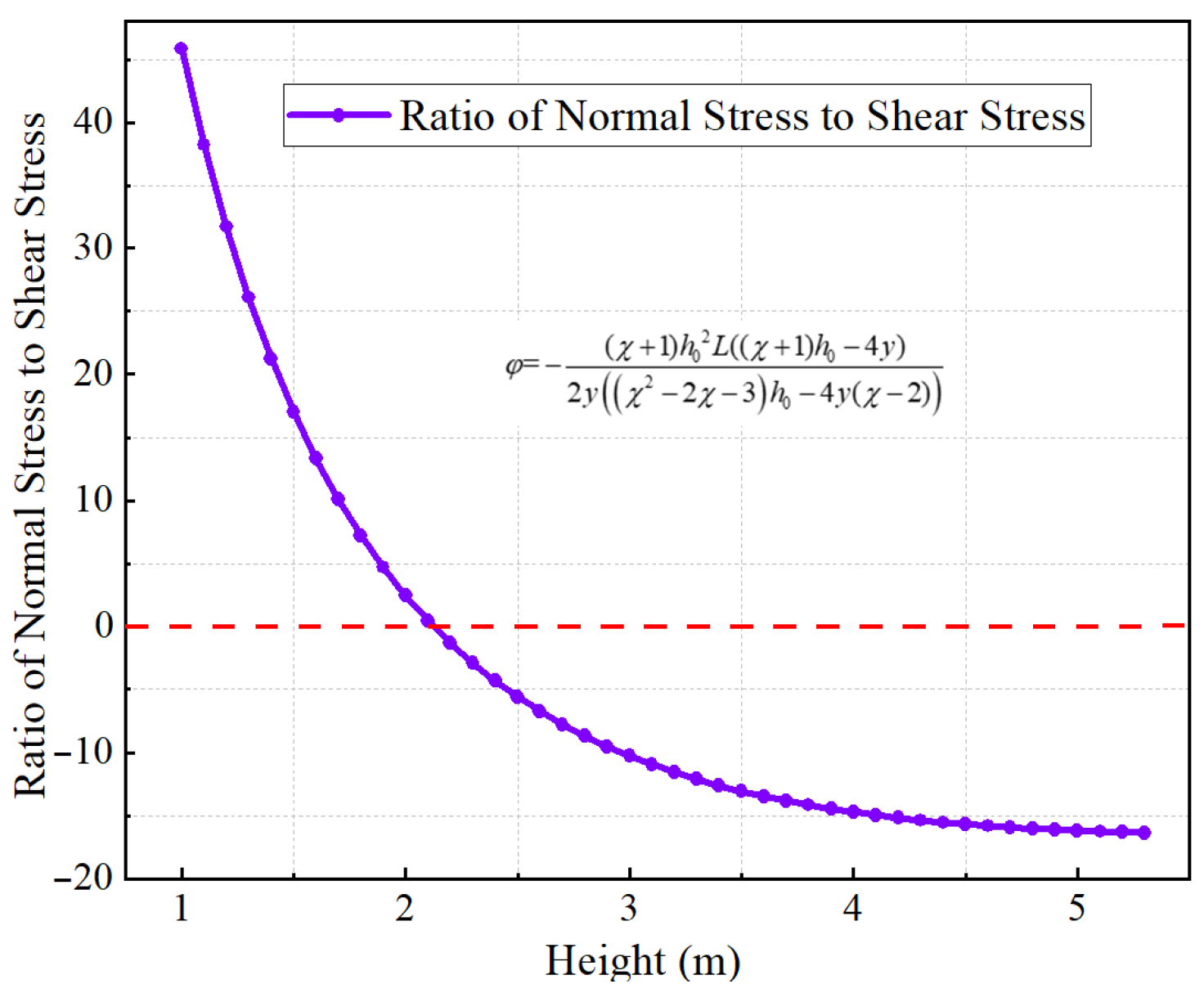
Therefore, the design criterion should not be based on the stress uniformity at the very top edge, but rather at a Critical Control Section where shear demand becomes significant. To locate this section, the stress state in a variable cross-section girder was analyzed. For a haunched girder with a height variation coefficient η, the ratio of longitudinal normal stress to shear stress (φ = σx/τxy) at the quarter-span (x = L/2) is derived as:
Blind   Zone = { ( x , y ) : λ ( y ) = σ y ( x = 0 , y ) σ y ( x = s , y ) < λ crit }
where χ is the depth ratio (H/h0). As shown in Figure 7, ∣φ∣→∞ near the top edge, indicating longitudinal compression dominance, while φ = 0 at the neutral axis, indicating a pure shear state. The region where ∣φ∣ < 2.0 (shear dominance) extends from approximately y = 0.17 h0 to y = 0.4 h0 below the top fiber. Consequently, the section at y = h0/4 is selected as the Critical Control Section; it lies within the shear-critical zone and represents the elevation where stress uniformity first degrades below acceptable levels as spacing increases.

5.2. Quantitative Criteria for Stress Uniformity

To quantitatively assess the severity of the blind zone at the control section, the Section Stress Uniformity Coefficient λ is introduced:
λ ( y ) = σ y ( x = 0 , y ) σ y ( x = s , y )
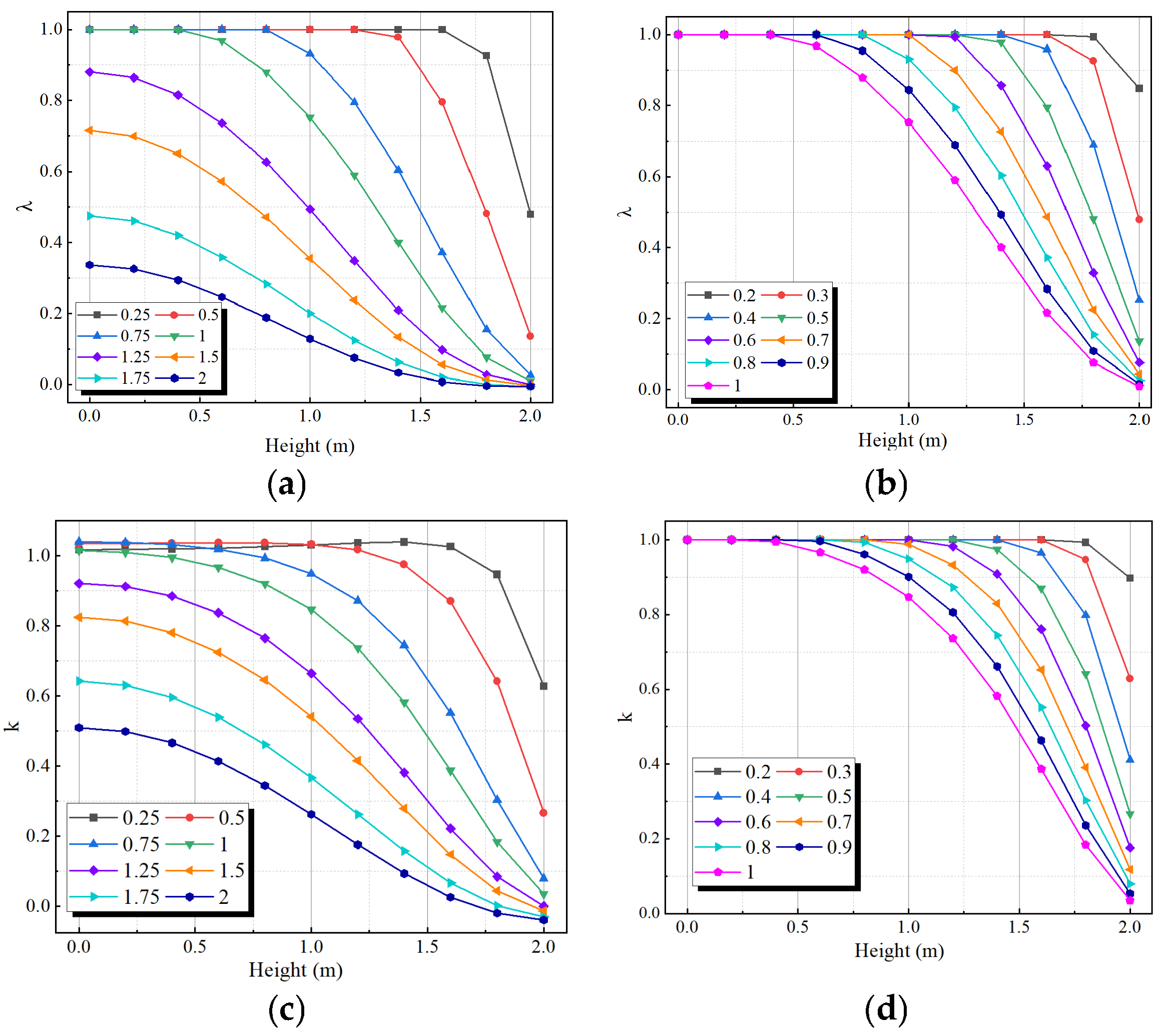
where σy (x = 0, y) is the stress at the mid-point between tendons and σy (x = s, y) is the stress directly under the tendon. A parametric study was conducted using the validated analytical solution (Equation (13)) for spacings ranging from 0.4 m to 4.0 m. Figure 8 presents the distribution of λ and the Pressure Level Coefficient κ (the ratio of mid-point stress to section average stress).
Figure 8a shows the variation in section stress uniformity λ across the full spacing range (2s = 0.5–4.0 m). When total spacing 2s < 1.0 m (2s/h < 0.33), significant portions of the section height maintain λ ≥ 1.0, indicating that mid-point stress equals or exceeds tendon-location stress. When 2s > 2.0 m (2s/h > 0.67), λ = 1.0 cannot be achieved at any section height, confirming the existence of a persistent blind zone throughout the web depth.
Figure 8b provides a detailed view of λ for the practical spacing range (2s = 0.4, 2.0 m). For spacings 2s ≤ 1.2 m (2s/h ≤ 0.4), λ remains above 0.95 from the neutral axis up to y = h0/8. Between y = h0/8 and y = h0/4, λ decreases significantly for spacings 2s > 1.2 m. This confirms h0/4 as the critical elevation where stress uniformity first degrades below acceptable levels as spacing increases.
Figure 8c presents the pressure level coefficient κ across the full spacing range. For spacings 2s > 1.5 m, κ drops below 0.85 at the h0/4 elevation, indicating significant under-stressing. Figure 8d provides a detailed view showing that for spacings 2s < 1.2 m, κ > 0.95 from the neutral axis to y = h0/4. For wider spacings, κ drops below 0.80 at y = h0/4, confirming severe under-stressing at the critical mid-point fiber.
Based on the relationship between uniformity and cracking safety, a threshold of λ > 0.95 is adopted as the design criterion. This threshold represents a “knee point” in the safety-uniformity curve, corresponding to less than 3% reduction in the cracking safety margin, which is well within standard engineering tolerances of 1.5–2.0.

5.3. Derivation of Maximum Spacing Criterion

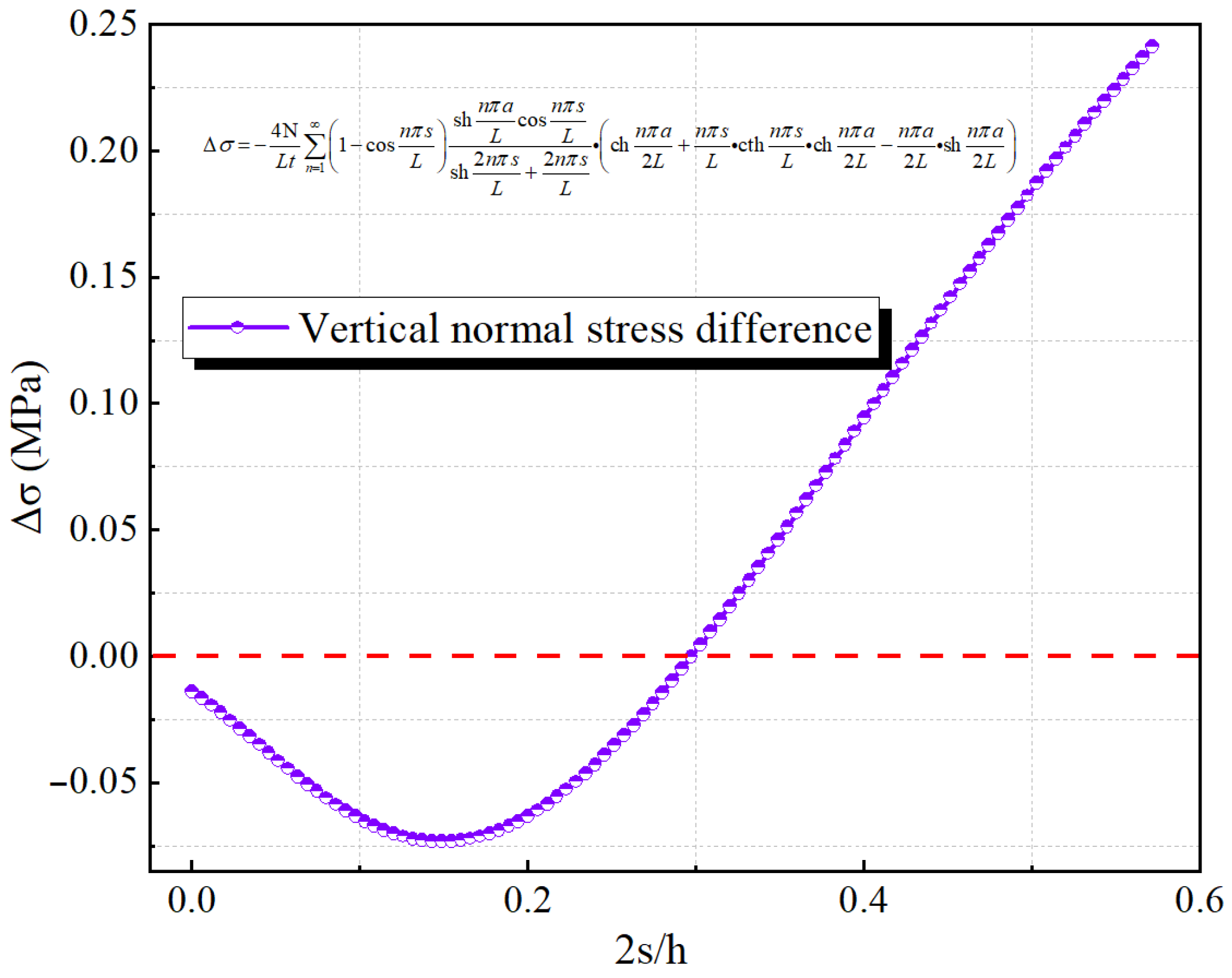
To satisfy the λ > 0.95 criterion, the stress difference at the control section is formulated. Defining the stress deficit Δσ as the difference between tendon location and mid-point:
Δ σ ( y ) = σ y ( x = s , y ) σ y ( x = 0 , y )
Substituting the analytical solution (Equation (9)) yields the complete expression:
Δ σ = 4 N L t n = 1 ( 1 cos n π s L ) cos n π s L sinh 2 n π a L + 2 n π a L [ n π a L coth n π a L cosh n π y L n π y L sinh ( n π y L ) ]
Physical interpretation follows directly: Δσ < 0 indicates mid-point stress exceeds tendon-location stress (λ > 1.0, superposition dominance); Δσ = 0 indicates perfect uniformity (λ = 1.0); Δσ > 0 indicates mid-point stress lower than tendon-location stress (λ < 1.0, blind zone present).
Figure 9 plots the relationship between the dimensionless spacing-to-height ratio (2 s/h) and Δσ for the prototype bridge at the control section (y = h/4).
Perfect uniformity (λ = 1.0, Δσ = 0) occurs at 2s/h = 0.293, corresponding to 2s = 0.88 m for h = 3.0 m. The design threshold (λ = 0.95) corresponds to 2s/h = 0.34, yielding 2s = 1.02 m. These precise values define the boundaries of the three stress regimes discussed in Section 3.2.2 and Section 4.3.2. Perfect uniformity (λ = 1.0) occurs at 2s/h = 0.293, which falls within Regime I (2s/h ≤ 0.3). The design threshold (λ = 0.95) occurs at 2s/h = 0.34, defining the boundary between Regime II and Regime III. For engineering practice, the Regime I upper bound is rounded to 2s/h = 0.3, as this simplifies application without compromising accuracy (the rounding introduces less than 2.4% error in the threshold value and a negligible change in λ of <0.005). Thus, the maximum spacing for the prototype is:
2 s m a x h = 0.34
As summarized in Table 7, the proposed criterion (2s ≤ 0.34 h) represents a 13.3% increase over the common 0.3 h rule and a 27.5% increase over the absolute 0.8 m limit in Chinese code JTG 3362-2018, offering significant potential for material savings.

5.4. Design Application and Practical Implications

The validity of the proposed criterion (2smax 0.34h) was established through the generic FE validation in Section 4, which confirmed the underlying theoretical physics rather than matching a specific geometry. Applying this verified criterion to the engineering background case—the Yicheng Hanjiang Second Bridge introduced in Section 2—demonstrates its practical implementation. When applying the proposed criterion to bridges with longitudinally varying web geometry, designers should evaluate the maximum spacing separately for critical sections along the span. For the Yicheng Hanjiang Second Bridge, the theoretical maximum spacing based on stress uniformity varies:
  • At mid-span (h = 4.0 m): 2smax = 0.34 × 4.0 = 1.36 m.
  • At quarter-span (h ≈ 6.0 m): 2smax0.34 × 6.0 = 2.04 m.
  • At the root section (h = 12.5 m): 2smax = 0.34 × 12.5 = 4.25 m.
While the stress uniformity criterion allows significantly larger spacing at the root due to the greater web height, practical design often adopts a uniform spacing governed by the most critical section (mid-span) or intermediate construction constraints. Alternatively, designers may optimize material use by varying spacing longitudinally—a practice already common in variable-depth girder design. This section-by-section application demonstrates how the criterion, validated on a representative generic section, translates directly to the actual bridge geometry through dimensionless scaling.
The implementation of this proposed criterion offers considerable economic benefits. By increasing allowable spacing from the traditional 0.3 h to 0.34 h, the quantity of vertical tendons can be reduced by approximately 13%. For a typical 160 m span bridge with 200 vertical prestressing tendons per span, this translates to a reduction of 26 tendons per span, lowering material and labor costs while simultaneously reducing web congestion to improve concrete placement quality.

5.5. Limitations

Several limitations and sensitivity considerations should be acknowledged. First, regarding time-dependent effects, a sensitivity analysis reveals that the stress uniformity coefficient λ is mathematically independent of the prestressing force magnitude N, as N serves only as a linear scaling factor in Equation (9) and cancels out in the ratio. Consequently, the proposed spacing criterion of 2smax ≤ 0.34h, which is based on maintaining λ > 0.95, remains geometrically valid throughout the service life regardless of prestress loss. However, the absolute compressive stress level decreases linearly with effective prestress. Assuming a standard long-term prestress loss of 20–25% for vertical prestressing tendons as specified in JTG 3362-2018, the vertical compressive stress in the web reduces proportionally, which directly diminishes the cracking safety margin. Therefore, to ensure the blind zone remains adequately compressed over the design life, the design value of N used in the analysis must represent the effective long-term prestress after all losses rather than the initial jacking force. Second, the two-tendon model provides a conservative basis for design, but interaction effects in large multi-tendon arrays warrant further investigation. Third, while rigorously verified against FE models, experimental validation on full-scale specimens remains essential before code adoption.

6. Conclusions

This study investigated the stress distribution mechanism and maximum spacing criteria for vertical prestressing tendons in long-span PC continuous rigid-frame bridges. By deriving an elasticity-based analytical solution for the two-tendon system and validating it through numerical simulations, the following conclusions are drawn:
(1)
A closed-form elastic analytical solution for the vertical normal stress field under two interacting tendons was successfully derived. Validated against high-fidelity Finite Element Analysis, the solution achieves a Mean Absolute Percentage Error below 6.8%, successfully overcoming the theoretical limitations of conventional single-tendon superposition methods.
(2)
The study quantitatively demonstrated that conventional superposition methods introduce systematic errors ranging from 12% to 22%, with unconservative overestimation up to 26% at wide spacings. The proposed two-tendon solution effectively corrects these deviations by accounting for the coupling interaction term, improving prediction accuracy by 6.8–17.7 percentage points compared to conventional methods.
(3)
The mechanism of the prestressing blind zone was clarified, identifying three distinct stress regimes: superposition-dominated (spacing-to-height ratio less than 0.3), transition (ratio between 0.3 and 0.34), and diffusion-dominated (ratio greater than 0.34). The blind zone depth follows a linear relationship with the spacing-to-height ratio. The section at one-fourth of the web height below the top edge was identified as the critical control section for evaluating shear safety.
(4)
A mechanics-based maximum spacing criterion of 0.34 times the web height was established to maintain a stress uniformity coefficient greater than 0.95. This represents a 27.5% increase over the absolute limit in Chinese code JTG 3362-2018 and a 13.3% increase over common empirical rules. Implementation enables a 13% reduction in tendon quantity (26 fewer tendons per span), translating to estimated savings of 52,000 CNY per typical four-span bridge while maintaining structural safety.
(5)
The proposed threshold is justified by a less than 3% reduction in the cracking safety margin, which is well within standard engineering tolerances. Time-dependent effects such as creep and shrinkage may reduce stress uniformity by an estimated 8% to 15% over the service life, indicating the need for further research incorporating viscoelastic material models. Experimental validation on full-scale bridge specimens is recommended before code adoption.

Author Contributions

Conceptualization, F.X.; Methodology, S.Z.; Software, S.Z.; Validation, F.X.; Formal analysis, F.X. and S.Z.; Investigation, S.Z.; Resources, F.X.; Writing—original draft, Y.I.S.; Writing—review & editing, Y.I.S.; Supervision, Y.I.S.; Project administration, Y.I.S.; Funding acquisition, F.X. All authors have read and agreed to the published version of the manuscript.

Funding

This research received no external funding.

Data Availability Statement

The datasets generated and analyzed during the current study are available from the corresponding author on reasonable request.

Conflicts of Interest

Author Fei Xia was employed by the company CCCC Second Highway Survey and Design Institute Co., Ltd. The remaining authors declare that the research was conducted in the absence of any commercial or financial relationships that could be construed as a potential conflict of interest.

References

  1. Nguyen, T.X.; Van Ngo, M.; Ng, L.; Pham, D.T. Effect of creep and shrinkage model in calculation of long-term deflection of three-span solid slab continuous prestressed concrete bridge. J. Mater. Eng. Struct. 2022, 9, 427–434. [Google Scholar]
  2. Hu, Z.; Shah, Y.I.; Yao, P. Experimental and numerical study on interface bond strength and anchorage performance of steel bars within prefabricated concrete. Materials 2021, 14, 3713. [Google Scholar] [CrossRef] [PubMed]
  3. Shang, S.; Jiang, L.; Dong, Y.; Li, Z.; Pei, R. Trial Design of a Truss Bridge Prefabricated Using a Rectangular Steel Tube—Ultra-High-Performance Concrete Composite. Appl. Sci. 2024, 14, 11244. [Google Scholar] [CrossRef]
  4. Leng, J.; Yang, J.; Zhang, Z.; Zou, Y.; Chen, J.; Zhou, J. Experimental and numerical investigations on force transfer mechanism of steel-concrete joint in hybrid girder bridges. Structures 2023, 54, 153–170. [Google Scholar] [CrossRef]
  5. AASHTO. AASHTO LRFD Bridge Design Specifications, 9th ed.; American Association of State Highway and Transportation Officials: Washington, DC, USA, 2020. [Google Scholar]
  6. Huang, Z.; Yu, W.; Shan, D. Response Characteristics of Irregular Continuous Rigid Frame Bridges with Long-Span and High-Rise Piers under Ground Motion Excitations with Different Fault Distances. Sustainability 2024, 16, 962. [Google Scholar] [CrossRef]
  7. Wu, D.; Wang, H.; Wang, R.; Lv, C. Crack Resistance of Pre-Stressed Steel-Reinforced Concrete Composite Simple Supported Beams. Buildings 2024, 14, 201. [Google Scholar] [CrossRef]
  8. Maya, L.; Graybeal, B. Experimental study of strand splice connections in UHPC for continuous precast prestressed concrete bridges. Eng. Struct. 2017, 133, 81–90. [Google Scholar] [CrossRef]
  9. Wang, Z.; Deng, X.; Luo, X.; Dang, X.; Guo, J. Aftershock fragility assessment of continuous RC girder bridges using a modified damage index. Buildings 2022, 12, 1675. [Google Scholar] [CrossRef]
  10. Shah, Y.I.; Zhou, H.; Shah, D. Sustainable UHPC wet joints for precast slab: Material efficiency, structural performance, and lifecycle benefits. J. Build. Eng. 2026, 123, 115728. [Google Scholar] [CrossRef]
  11. Han, X.; Li, W.; Li, P. Long-term deflection analysis of large-span continuous prestressed concrete rigid-frame bridges based on a refined modeling approach. Appl. Sci. 2023, 13, 9727. [Google Scholar] [CrossRef]
  12. Li, Z.; Song, Y.; Zhao, Y. Analysis of Linear Influence of Long-span PC Continuous Rigid Frame Bridge during the Winter Break. IOP Conf. Ser. Earth Environ. Sci. 2020, 446, 052015. [Google Scholar] [CrossRef]
  13. EN 1992-1-1; Eurocode 2: Design of Concrete Structures—Part 1-1: General Rules and Rules for Buildings. European Committee for Standardization: Brussels, Belgium, 2004.
  14. Sun, Y.; Zhan, Y.; Li, P.; Li, Z.; Li, Y.; Zhang, Z. Long-term creep prediction for a PC bridge with stiffened steel truss based on field testing. Adv. Struct. Eng. 2025, 28, 2276–2292. [Google Scholar] [CrossRef]
  15. Zhao, H.; Luo, S.; Hu, J.; Tan, C.; Qian, P.; Qian, H.; Liao, Z.; Hu, Z.; Yi, D. Experimental investigation on flexural behavior of precast segmental ultra-high-performance concrete box-girder with external tendons for long-span highway bridges. Buildings 2025, 15, 642. [Google Scholar] [CrossRef]
  16. Zhang, X.; Luo, J.; Dong, Z.; Jiang, L. The influence of shear surface quality on the mechanical properties of long-span prestressed continuous rigid-frame bridge. Int. J. Struct. Integr. 2024, 15, 594–612. [Google Scholar] [CrossRef]
  17. Chen, D.; Yang, Y.; Liu, P. Analysis of Deflection Problems of Large-span Continuous Rigid Frame Bridge and Prevention Measures. MATEC Web Conf. 2015, 22, 04021. [Google Scholar] [CrossRef]
  18. Shah, Y.I.; Hu, Z.; Du, R. Stress evaluation of prestressed concrete beam based on cracking and incompatible deformation. J. Civ. Struct. Health Monit. 2022, 12, 1427–1442. [Google Scholar] [CrossRef]
  19. Ye, X.; Yang, N.; Chen, H.; Yang, M.; Wu, T. Damage Identification and Safety Threshold During the Construction and Operation Phases of Cast-in-Place Continuous Rigid Frame Bridges. Buildings 2025, 15, 3282. [Google Scholar] [CrossRef]
  20. Zhang, S.; Hu, Z.; Shah, Y.I.; Geng, H. Experimental and numerical analysis of shear-dominated mechanical behavior in large cantilevered PC beams. Structures 2025, 82, 110621. [Google Scholar] [CrossRef]
  21. Zhang, S.; Hu, Z.; Shah, Y.I.; Feng, X. Shear stress distribution dynamics in large-span PC box girders: Effects of prestress diffusion and axial force gradients. Structures 2026, 86, 111491. [Google Scholar] [CrossRef]
  22. Zeng, X.; Deng, K.; Wang, Y.; Yan, G.; Zhao, C. Field investigation and numerical analysis of damage to a high-pier long-span continuous rigid frame bridge in the 2008 Wenchuan earthquake. J. Earthq. Eng. 2022, 26, 5204–5220. [Google Scholar] [CrossRef]
  23. Zhan, J. Key technology on improving the durability of long-span bridges. In Bridge Maintenance, Safety, Management, Life-Cycle Sustainability and Innovations; CRC Press: Boca Raton, FL, USA, 2021; pp. 1218–1224. [Google Scholar]
  24. Zhang, Y.; Wang, J.; Wu, X.; Yin, J.; Shi, Y. Study on the Shear Lag Calculation Method for Damaged Box Girder. Buildings 2025, 15, 1901. [Google Scholar] [CrossRef]
  25. Gou, H.; Long, H.; Bao, Y.; Chen, G.; Pu, Q.; Kang, R. Stress distributions in girder-arch-pier connections of long-span continuous rigid frame arch railway bridges. J. Bridge Eng. 2018, 23, 04018039. [Google Scholar] [CrossRef]
  26. Zhang, Y.; Zhu, Y.; Shao, X.; Li, B. Double-tensioned steel strands vertical prestress system on the webs of long-span PC box-girder bridges. J. Bridge Eng. 2021, 26, 05021005. [Google Scholar] [CrossRef]
  27. Li, X.; Hu, Z.; Shah, Y.I. Transverse connection performance of prefabricated PC box girder bridge with transverse pre-stress. Int. J. Civ. Eng. 2022, 20, 957–966. [Google Scholar] [CrossRef]
  28. Ghayeb, H.H.; Sulong, N.H.R.; Razak, H.A.; Mo, K.H.; Ismail, Z.; Hashim, H.; Gordan, M. A review of the seismic performance behaviour of hybrid precast beam-to-column connections. Arch. Civ. Mech. Eng. 2022, 23, 35. [Google Scholar] [CrossRef]
  29. Liu, F.; Gu, L.; Fu, H.; Li, X.; Zhao, X.; Ma, N.; Guo, Z. Research on the Method of Prestressing Tendon Layout for Large-Span Prestressed Components Continuous Rigid Frame Bridge Based on “Zero Bending Moment Dead Load Theory”. Buildings 2024, 14, 1588. [Google Scholar] [CrossRef]
  30. Yang, X.L.; Niu, L.M.; Zhang, R.L.; Wei, G.X. Study on web parameters of prestressed concrete composite box girder with corrugated steel web. Adv. Mater. Res. 2011, 255–260, 1087–1091. [Google Scholar] [CrossRef]
  31. Ouyang, X. Box-Girder Bridges Based on Analytic Hierarchy Process. In Proceedings of the 2025 8th International Conference on Traffic Transportation and Civil Architecture (ICTTCA 2025); Springer Nature: Berlin/Heidelberg, Germany, 2025. [Google Scholar]
  32. CSA S6:19; Canadian Highway Bridge Design Code. CSA Group: Toronto, ON, Canada, 2019.
  33. Moldovan, I.; Mathe, A. A Study on a Two-Way Post-Tensioned Concrete Waffle Slab. Procedia Technol. 2016, 22, 227–234. [Google Scholar] [CrossRef]
  34. Bai, Z.; Zhu, E. Study on the Internal Force and Deformation of Double-System Composite Guideway for Monorail Transit Based on Energy Theory. Urban Rail Transit 2025, 11, 138–177. [Google Scholar] [CrossRef]
  35. Cao, G.; Han, C.; Dai, Y.; Zhang, W. Long-term experimental study on prestressed steel–concrete composite continuous box beams. J. Bridge Eng. 2018, 23, 04018067. [Google Scholar] [CrossRef]
  36. Biswal, A.; Prasad, A.M.; Sengupta, A.K. Influence of diagonal reinforcement in grouted vertical joints between precast concrete wall panels, part I: Experimental investigation. Struct. Concr. 2024, 26, 3365–3395. [Google Scholar] [CrossRef]
  37. Xu, X.; Zhang, F.; Li, S. Research on the influence of the inclination errors of vertically prestressed anchor plates of concrete box beams to it’s prestress loss. In Proceedings of the 2011 International Conference on Electric Technology and Civil Engineering (ICETCE), Lushan, China, 22–24 April 2011; IEEE: Piscataway, NJ, USA, 2011. [Google Scholar]
  38. fib Model Code for Concrete Structures; fib Model Code 2020; International Federation for Structural Concrete: Lausanne, Switzerland, 2023.
  39. Japan Society of Civil Engineers (JSCE). Standard Specifications for Concrete Structures—Maintenance; JSCE Guidelines for Concrete No. 17; JSCE: Tokyo, Japan, 2017. [Google Scholar]
  40. Zhang, L.; Zhou, X.; Li, Y.; Li, Y.; Li, P.; Han, X. Test and correction of effective prestress in bridges based on X-ray diffraction. J. China Foreign Highw. 2025, 45, 194–203. [Google Scholar]
  41. Shao, X.; Pan, R.; Zhao, H.; Shao, Z. Prestress loss of a new vertical prestressing anchorage system on concrete box-girder webs. J. Bridge Eng. 2014, 19, 210–219. [Google Scholar] [CrossRef]
  42. JTG 3362-2018; Specifications for Design of Highway Reinforced Concrete and Prestressed Concrete Bridges and Culverts. China Communications Press: Beijing, China, 2018.
  43. Zhang, K.; Duan, Z.; Liu, Y. Dynamic Parameters identification and finite element model updating for continuous rigid frame bridge. J. Highw. Transp. Res. Dev. (Engl. Ed.) 2009, 4, 53–59. [Google Scholar] [CrossRef]
  44. Sun, Z.; Shi, Y.; Xiong, W.; Tang, P. Vision-Based Correlated Change Analysis for Supporting Finite Element Model Updating on Curved Continuous Rigid Frame Bridges. In Construction Research Congress 2020; American Society of Civil Engineers: Reston, VA, USA, 2020; pp. 380–389. [Google Scholar]
  45. Chen, T.; Shen, Y.; Wang, X.; Li, J. Seismic Performance of Rocking Column–Supported Continuous Rigid-Frame Bridge: Phenomenological Damage State Definitions, Computations, and Fragility Assessment. J. Struct. Eng. 2025, 151, 04025158. [Google Scholar] [CrossRef]
  46. Yang, S.; Hong, Y.; Pu, Q.; Ling, X.; Chen, X.; Wu, K. Mechanical behaviour of steel–concrete joints in railway rigid frame-continuous composite system bridge. J. Constr. Steel Res. 2024, 222, 108946. [Google Scholar] [CrossRef]
  47. Baran, B. Dynamic response of damaged rigid-frame bridges subjected to moving loads using analytical based formulations. Eng. Comput. 2023, 40, 793–822. [Google Scholar]
Figure 1. Yicheng Hanjiang Second Bridge general arrangement.
Buildings 16 01363 g001
Figure 2. Calculation diagram of simplified plane stress problem for the web.
Buildings 16 01363 g002
Figure 3. Finite element verification model of the web.
Buildings 16 01363 g003
Figure 4. Comparison of vertical normal stress distribution between analytical solution and FEM for varying tendon spacings.
Buildings 16 01363 g004
Figure 5. Comparison of theoretical calculation results under different prestressing spacings. (a) s = 0.5 m; (b) s = 1.0 m; (c) s = 1.5 m; (d) s = 2.0 m.
Buildings 16 01363 g005
Figure 6. Vertical normal stress distribution under different prestressing spacings. (a) Sectional height y = 0 m; (b) Section height y = 1 m; (c) Section height y = 2 m.
Buildings 16 01363 g006
Figure 7. Stress-to-shear stress ratio function profile.
Buildings 16 01363 g007
Figure 8. Parameter variations under different prestress spacings. (a) Section stress uniformity for spacings 0.25–2 m. (b) Section stress uniformity for spacings 0.2–1 m. (c) Pressure level coefficient for spacings 0.25–2 m. (d) Pressure level coefficient for spacings 0.2–1 m.
Buildings 16 01363 g008
Figure 9. Relationship between stress uniformity λ and relative cracking safety factor.
Buildings 16 01363 g009
Table 1. Convergence of Equation (9) at the critical control section (y = h/4).
nσy at x = 0
(MPa)
Change from PreviousRelative Error ϵ
56.82
106.91+0.091.30%
206.94+0.030.43%
306.948+0.0080.12%
406.949+0.0010.014%
506.950+0.0010.009%
1006.951+0.0010.004%
Table 2. Material properties used in the FE model.
MaterialParameterValueUnitNotes
Concrete (C50)Elastic Modulus (Ec)34.5GPaJTG 3362-2018
Poisson’s Ratio (ν)0.2Typical value
Compressive Strength (fcd) 122.4MPaDesign value for SLS
Density (ρ)2500kg/m3Reinforced concrete
Prestressing Steel (PSB830)Elastic Modulus (Es)200GPaStandard value
Yield Strength (fpy) 2785MPaDesign value (830/1.05)
1 fcd = design compressive strength for serviceability limit state (includes material safety factor). 2 fpy = design yield strength = characteristic strength/partial safety factor (γs ≈ 1.05).
Table 3. Mesh convergence study results.
Mesh LevelElement Size (Far Field)Element Size (Near Tendon)Total Elementsσy at (x = s, y = 2.0 m) (MPa)Relative Change
Coarse0.4 m0.2 m38,4008.24
Medium0.2 m0.1 m124,8008.53+3.5%
Fine0.1 m0.05 m412,6008.61+0.9%
Ultra-fine0.05 m0.025 m1,562,4008.63+0.2%
Table 4. Parametric study matrix.
ConfigurationHalf-Spacing s (m)Full Spacing 2s (m)Spacing-to-Height Ratio 2s/hEngineering Classification
SP-050.51.00.33Close spacing
SP-101.02.00.67Intermediate spacing
SP-151.53.01.00Wide spacing
SP-202.04.01.33Very wide spacing
Table 5. Quantitative error metrics for analytical solution vs. FEM.
Spacing 2s (m)MAPE (%)RMSE (MPa)Peak Error (MPa)Peak Error (%)
1.06.80.410.216.2
2.05.90.330.185.1
3.05.20.280.154.3
4.04.70.240.123.8
Table 6. Comparative error metrics: Proposed solution vs. superposition method.
Spacing 2s (m)MetricProposed SolutionSuperposition MethodImprovement
1.0 (close)MAPE (%)6.818.311.5 pp
Peak error (%)6.221.415.2 pp
2.0 (intermediate)MAPE (%)5.912.76.8 pp
Peak error (%)5.115.810.7 pp
3.0 (wide)MAPE (%)5.215.210.0 pp
Peak error (%)4.318.614.3 pp
4.0 (very wide)MAPE (%)4.722.417.7 pp
Peak error (%)3.826.122.3 pp
pp = percentage points.
Table 7. Comparison of vertical prestressing spacing criteria.
SourceMaximum Spacing CriterionEquivalent 2s/h (h = 3.0 m)Relative Economy
Proposed criterion2s ≤ 0.34 h1.02 m
Chinese JTG 3362-20182s ≤ 0.8 m0.80 m+27.5%
AASHTO LRFD (2017) [5]2s ≤ 1.2× slab thicknessN/ANot comparable
Eurocode 2 (2004) [45]No explicit criterionN/A
Common practice (China)2s ≤ 0.3 h0.90 m+13.3%
Disclaimer/Publisher’s Note: The statements, opinions and data contained in all publications are solely those of the individual author(s) and contributor(s) and not of MDPI and/or the editor(s). MDPI and/or the editor(s) disclaim responsibility for any injury to people or property resulting from any ideas, methods, instructions or products referred to in the content.