Article

Feasibility of Industrial High-Titanium Heavy Slag for Thermally Induced Self-Healing Asphalt Pavement Materials: Road Performance and Thermal Conductivity Analysis

1
School of Transportation and Logistics Engineering, Wuhan University of Technology, Wuhan 430063, China
2
Jiangxi Province Huagan Environment Group Co., Ltd., Nanchang 330000, China
3
School of Infrastructure Engineering, Nanchang University, Nanchang 330031, China
*
Author to whom correspondence should be addressed.
Buildings 2026, 16(7), 1333; https://doi.org/10.3390/buildings16071333

Submission received: 11 February 2026 / Revised: 13 March 2026 / Accepted: 25 March 2026 / Published: 27 March 2026

Abstract

Thermally induced self-healing technology is regarded as an effective approach to mitigating the frequent occurrence of asphalt pavement distresses. Its efficiency, however, is highly dependent on the thermal conductivity of asphalt mixtures, which conventional aggregates can hardly satisfy. Meanwhile, high-titanium heavy slag (HTHS), an industrial solid waste rich in TiO2, has been stockpiled in large quantities, and its large-scale resource utilization remains a critical challenge. Against this background, HTHS was employed in this study to replace limestone at equal mass ratios for the preparation of seven asphalt mastics (replacement rates of 0%, 20%, 40%, 60%, 80%, 100%, and neat asphalt) and four types of asphalt mixtures differentiated by coarse and fine aggregate compositions. The results indicate that with increasing HTHS content, the proportion of structural asphalt in the mastic increased markedly, leading to significant improvements in temperature susceptibility, high-temperature stability, and rutting resistance. Compared with the 100% limestone system, the penetration index (PI) of the 100% HTHS mastic increased by 8.4%, the softening point rose by 18.0%, and the rutting resistance factor at five temperatures from 46 °C to 70 °C increased by 21.8%, 56.8%, 79.2%, 171.7%, and 169.6%, respectively. Although low-temperature ductility decreased by 21.3% due to the reduction in free asphalt, it remained within acceptable limits. Regarding asphalt mixture performance, both high-temperature stability and low-temperature cracking resistance improved progressively with increasing HTHS replacement, showing increases of 75.56% and 11.75%, respectively, at full replacement. Water stability decreased by approximately 9% owing to the porous and water-absorptive nature of the slag, yet still satisfied specification requirements. In addition, the incorporation of HTHS significantly enhanced the thermal conductivity of the system, with increases of 0.125 W/(m·K) for asphalt mastics and 0.666 W/(m·K) for asphalt mixtures, corresponding to improvements of 33.7% and 32.2%, respectively. This study confirms that HTHS can serve as a viable asphalt pavement material capable of meeting the thermal conductivity requirements of thermally induced self-healing technology, while simultaneously providing a promising pathway for its large-scale resource utilization.

1. Introduction

Asphalt pavements have been extensively adopted worldwide for high-grade highways due to their advantages in riding comfort, low tire–road noise, construction convenience, and operational safety [1,2,3]. Nevertheless, throughout their service life, conventional asphalt pavements inevitably suffer from frequent distress development and heavy maintenance burdens. Statistics indicate that the total length of highways under maintenance in China has reached 5.25 million km, with annual maintenance costs amounting to 2.4 trillion CNY [4]. Under the coupled effects of traffic loading and environmental conditions, microcracks readily initiate within asphalt pavements and, if not promptly treated, rapidly evolve into macro-scale distresses such as alligator cracking and rutting, which not only threaten traffic safety but also pose major challenges to pavement maintenance [5,6,7,8].
Although green technologies represented by plant hot recycling can partially realize the reuse of reclaimed asphalt materials, they essentially remain periodic, energy-intensive short-term interventions. Such approaches fail to fundamentally inhibit material degradation and are accompanied by considerable resource consumption and carbon emissions, which conflict with the long-term goals of sustainable development and carbon neutrality [9,10,11,12].
To overcome these limitations, the development of intelligent pavements has become a critical research direction, among which self-healing technology is considered a highly promising transformative approach [13,14]. Asphalt materials inherently possess a certain degree of self-healing capability; however, under natural conditions, this capability is insufficient for effectively repairing microcracks [15,16]. Consequently, asphalt pavement self-healing technologies aim to mimic biological wound-healing mechanisms by promoting asphalt repair processes through external stimuli [17,18,19].
The existing studies suggest that rejuvenator-based methods and thermally induced methods constitute the two primary technical approaches [20]. Rejuvenator-based self-healing is typically achieved by incorporating microcapsules, hollow fibers, or microvascular networks into asphalt; however, the number of healing cycles is limited by the available rejuvenator supply, leading to deficiencies in repeated healing performance and long-term durability [20]. In contrast, thermally induced self-healing technologies are more convenient to apply and exhibit broader prospects, mainly relying on induction heating and microwave heating [21,22,23,24,25]. Induction heating generates internal heat through eddy currents induced in conductive networks under alternating magnetic fields, thereby promoting crack closure via Joule heating [26,27], whereas microwave heating converts electromagnetic energy into thermal energy through dielectric and magnetic losses of microwave-absorbing materials [28,29,30,31].
Existing studies have demonstrated that high-thermal-conductivity slag exhibits an excellent enhancement effect on the thermally induced self-healing performance of asphalt mixtures. For instance, Cui et al. found that the healing ratio of nano-Fe3O4-loaded slag asphalt mixtures with favorable thermal conductivity reached 79.1% after 60 s of microwave heating, which was considerably higher than that of conventional asphalt mixtures [32]. In the research by Hu et al., under a microwave heating power of 700 W and a heating duration of 80 s, the heating rate was increased by 48.2% and the healing index was improved by 6.24% when the replacement ratio of copper slag for natural aggregate was 40% [33].
Clearly, the effectiveness of thermally induced self-healing is highly dependent on the thermal conductivity of asphalt mixtures. Since conventional natural aggregates such as limestone are thermally transparent, the selection of novel thermally responsive aggregates has become a key factor in advancing this technology.
With the ever-increasing demand for natural aggregates in the global construction industry and the limited availability of geological resources, the resource utilization of industrial solid wastes has become an inevitable pathway toward sustainable development [34,35,36]. High-titanium heavy slag (HTHS) is an industrial by-product generated during blast-furnace smelting of vanadium–titanium magnetite, mainly produced in the Panzhihua region of China [37,38]. Although its TiO2 content can reach 20–24%, the slag has long suffered from low-value utilization due to its low titanium grade, complex mineral phases, and high impurity content, leading to large-scale stockpiling [39,40,41]. It is estimated that more than 5 million tons of HTHS are produced annually in China, with cumulative stockpiles reaching 70–100 million tons, while the comprehensive utilization rate remains below 3% [42,43].
In the construction field, the existing studies on the resource utilization of HTHS have mostly focused on cement concrete. For example, Chao Wang et al. explored the feasibility of preparing green high-strength concrete using high-titanium slag to fully replace natural aggregate, and investigated its mechanical properties and microscopic characteristics [42]. Jinxin Wang et al. studied the mechanical properties and drying shrinkage behavior of ultra-high-performance concrete prepared with high-titanium slag under different curing conditions [44]. Yafeng Rui et al. analyzed the effects of vanadium-titanium slag and blast furnace slag on the fluidity, mechanical properties, and hydration performance of cement-based materials [39]. Lindong Li et al. developed lightweight high-titanium slag concrete composite beams by replacing natural gravel and sand with HTHS and incorporating fly ash ceramsite to reduce self-weight [45]. Jinkun Sun et al. adopted HTHS as aggregate to fabricate precast concrete sandwich shear walls and investigated its seismic performance [46].
Although the feasibility of applying HTHS in cement concrete has been verified, its current resource utilization scale is still insufficient to alleviate the problem of large stockpiles. In contrast, research achievements regarding its application in asphalt pavements are relatively limited, and studies combining it with thermally induced self-healing technology are extremely scarce. The existing studies have demonstrated that HTHS exhibits excellent physical and mechanical properties. After crushing and sieving, its particles are angular, with a rough surface and an internal microporous structure, which endow it with high hardness, high compressive strength, and good wear resistance [47]. Its chemical composition rich in high-thermal-conductivity transition metal oxides (e.g., TiO2, Fe2O3) and the dense multiphase physical structure lay the foundation for its relatively high thermal conductivity [48,49].
In the asphalt mastic system, the asphalt adsorbed onto the surface of mineral filler is defined as structural asphalt, whose proportion directly determines the rheological properties and mechanical strength of the system. The rough surface morphology and chemical composition of HTHS may promote the formation of structural asphalt, thereby enhancing the high-temperature performance of the system.
These characteristics suggest that HTHS has the potential to replace natural aggregates in thermally induced self-healing asphalt pavements. Therefore, systematically investigating the feasibility and thermal conductivity performance of HTHS in asphalt pavement applications is essential for overcoming its high-value utilization bottleneck and for providing novel materials for thermally induced self-healing technology.
Accordingly, this study aims to comprehensively evaluate the feasibility of using HTHS in asphalt pavements and its adaptability to thermally induced self-healing technology. Asphalt mastics and mixtures with varying HTHS replacement levels were prepared through equal-mass substitution of limestone, and their road performance and thermal conductivity were systematically investigated.

2. Materials and Methods

2.1. Materials and Mix Design

2.1.1. Raw Materials

A 70 penetration-grade asphalt binder obtained from Huichun Petrochemical Co., Ltd. (Shanghai, China) and used in this study. Its fundamental physical properties were determined in accordance with the Chinese standard Test Methods of Asphalt and Asphalt Mixtures for Highway Engineering (JTG E20–2011) [50], as summarized in Table 1.
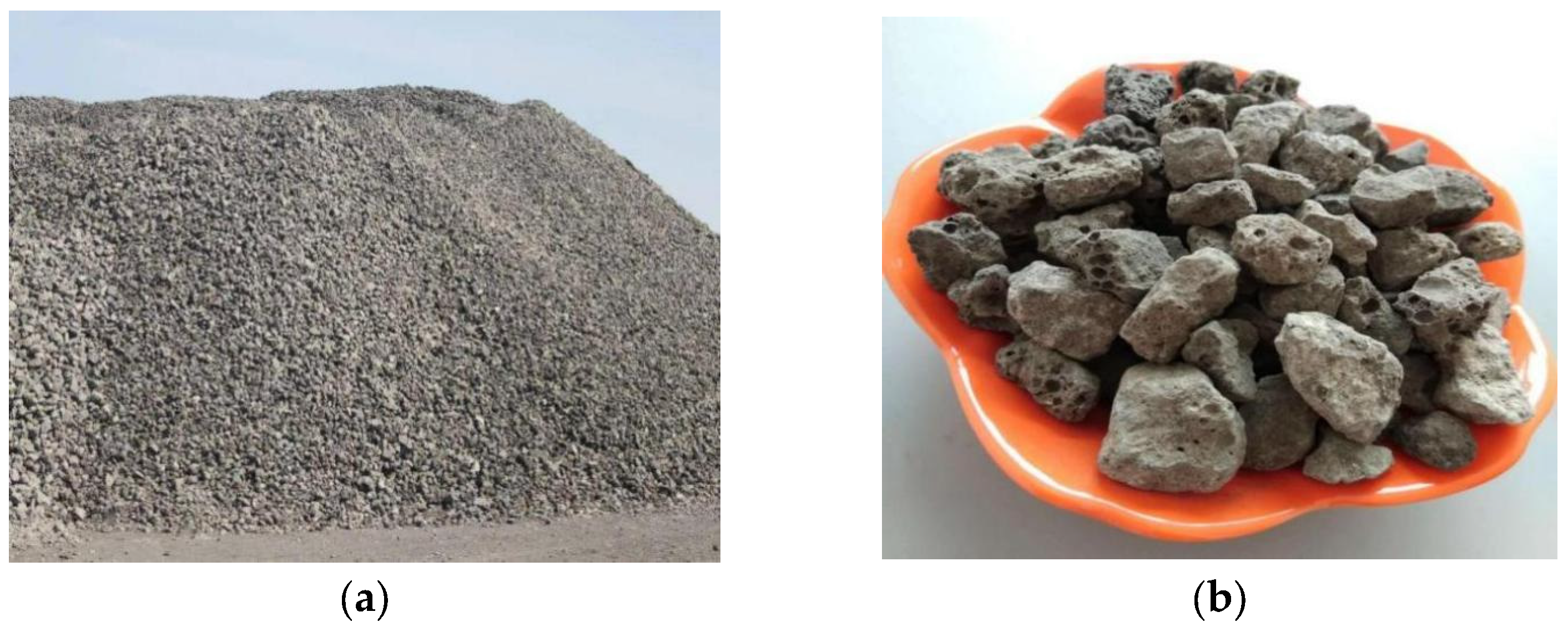
Limestone (LS) aggregates were sourced from Jiangxi Limestone Mining Co., Ltd. (Nanchang, China). High-titanium heavy slag (HTHS) was obtained from Pangang Group Panzhihua Steel & Vanadium Co., Ltd. (Panzhihua, China). These were employed as mineral aggregates. The morphology of HTHS is illustrated in Figure 1, and the basic physical properties of both aggregates are listed in Table 2. Compared with LS, HTHS exhibits a higher water absorption, indicating a stronger asphalt adsorption capacity. Although the crushing value of HTHS is slightly higher than that of LS, it remains well below the specification limit. Moreover, the two aggregates show comparable densities, allowing for equal-mass replacement in the experimental design.
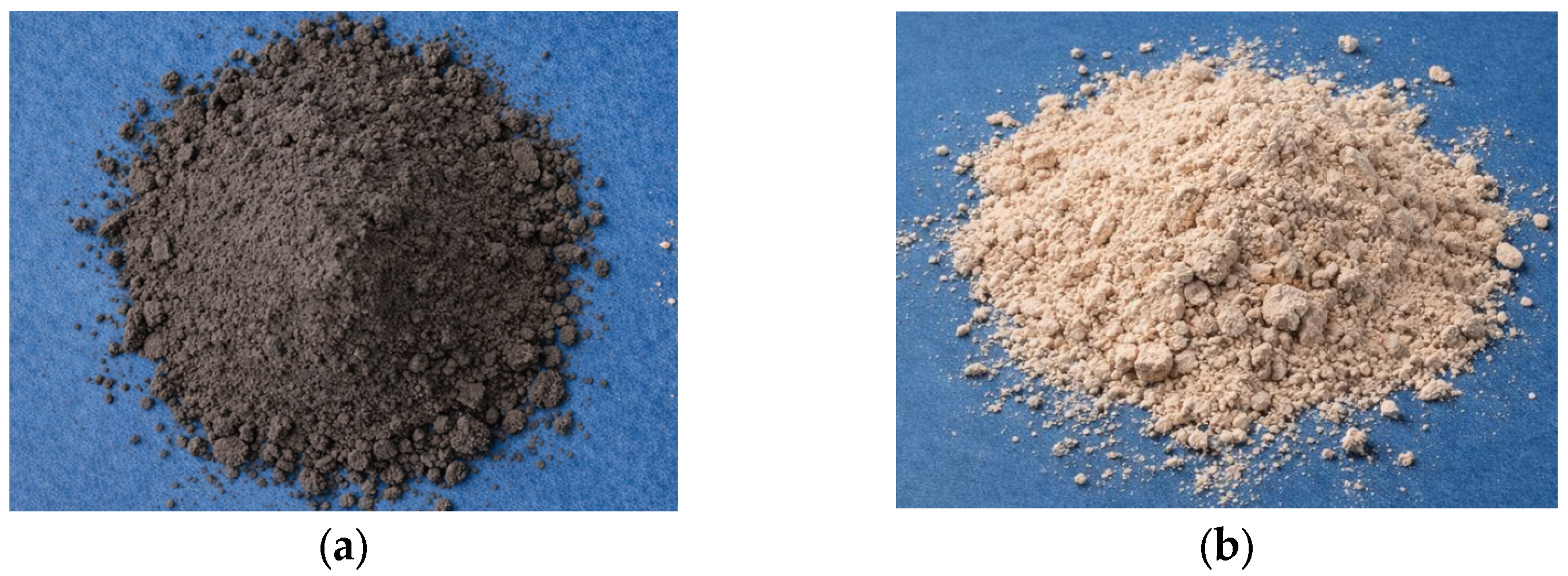
Mineral fillers were produced by grinding the corresponding aggregates, as shown in Figure 2. Initially, both aggregates were air-dried and subsequently oven-dried at 105 °C to constant mass. They were then manually crushed and sieved to pass a 20-mesh sieve, followed by grinding in a laboratory planetary ball mill (GJ-3B) at a rotational speed of 120 r/min for 10 min with a ball-to-powder mass ratio of 10:1. Finally, the ground material was sieved through a 0.075 mm sieve to obtain mineral powder suitable for use as filler. The basic properties of LS and HTHS fillers are presented in Table 3.
The main chemical compositions of HTHS and LS are summarized in Table 4. It can be observed that CaO is the dominant component in LS, whereas HTHS contains significantly higher contents of transition-metal oxides such as Al2O3 and TiO2. As CaO is a basic oxide, LS exhibits a much higher alkalinity than HTHS, resulting in stronger chemical bonding with the acidic components of asphalt. In contrast, the abundance of metal oxides in HTHS provides an inherent advantage in thermal conductivity.

2.1.2. Experimental Design

Previous studies [53] have demonstrated that, for conventional dense-graded asphalt systems, a filler–asphalt ratio (F/A) within the range of 0.6–1.4 can achieve a balance between high- and low-temperature performance. As a commonly used intermediate value, 0.9 serves as a critical threshold for balancing the high-temperature and low-temperature performance of asphalt mastic. This ratio can effectively eliminate the interference of filler–bitumen ratio variations on pavement performance [54]. This study aims to investigate the performance of materials when HTHS replaces LS under standard test conditions. Selecting F/A = 0.9 allows for the effective control of other variables and enables direct comparison of the effects of mineral filler type on mastic performance. Given the similar densities of the two fillers (density deviation < 3%), HTHS filler was used to replace LS filler at mass replacement ratios of 20%, 40%, 60%, 80%, and 100%, resulting in a total of seven asphalt mastic groups, as listed in Table 5.
The asphalt mastic preparation procedure was as follows. Molten 70# base asphalt at 135 °C was transferred into a preheated mixing vessel. The filler, preheated to 120 °C, was gradually added for preliminary mechanical mixing. Subsequently, a high-speed shear mixer operating at 1200 rad/min was employed to ensure uniform dispersion. Throughout the process, the temperature was maintained at 170 ± 2 °C using a PID temperature control system.
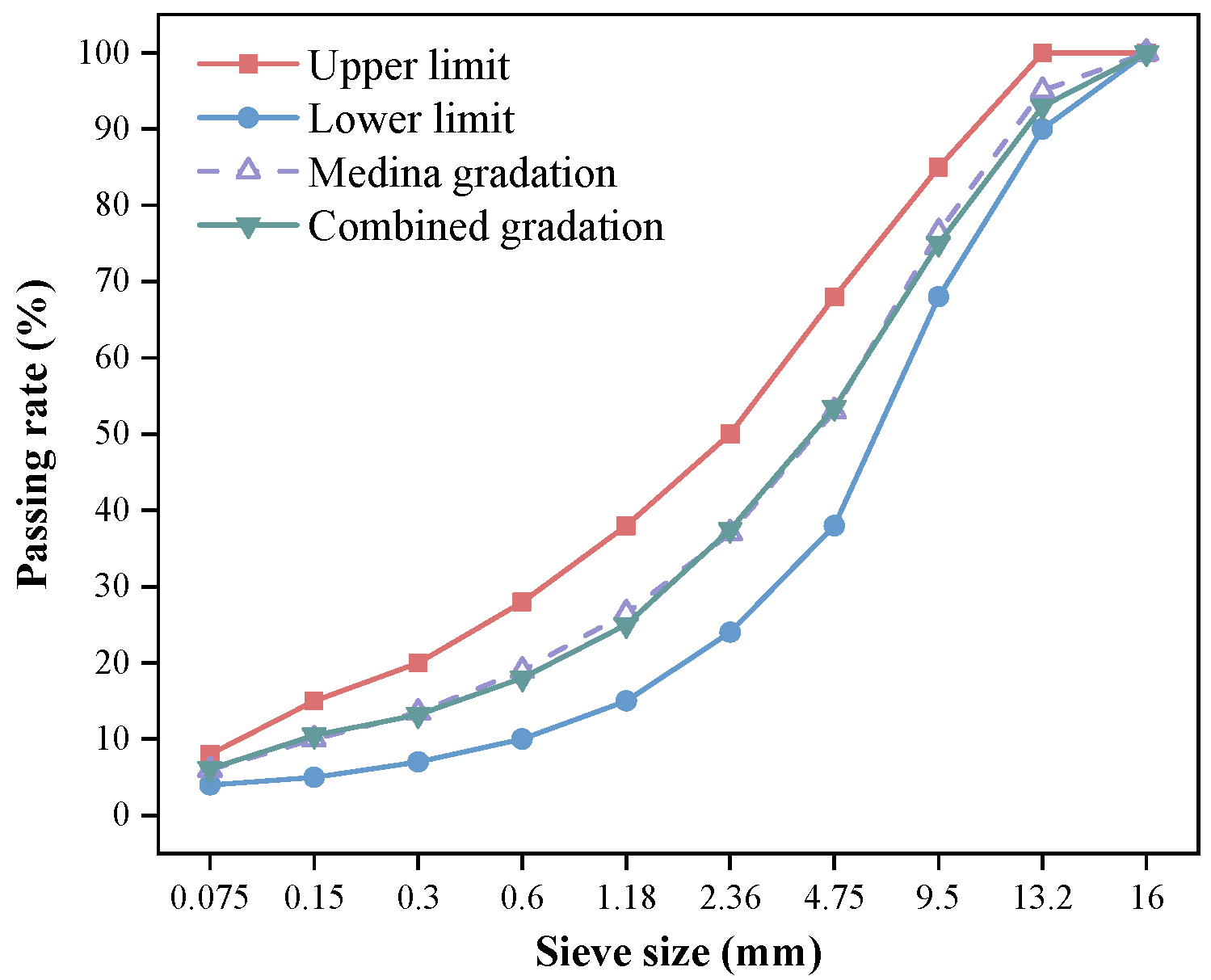
An AC-13 gradation was selected for asphalt mixture design (Figure 3). Its suspended dense structure forms a continuously distributed micropore system internally, which is conducive to the uniform dispersion of fillers. Meanwhile, it increases the heat exchange area between mastic and aggregates and shortens the heat transfer path. The pores can also act as heat storage units to stabilize the internal temperature, thereby improving the thermally induced efficiency. The mixture system comprised 70# base asphalt, LS aggregates, and HTHS aggregates with three size fractions (0–5 mm, 5–10 mm, and 10–15 mm), while LS filler and HTHS filler were used as functional fillers. Based on different combinations of coarse and fine aggregates and fillers, four types of asphalt mixtures were designed, as shown in Table 6. The boundary between coarse and fine aggregates was set at 2.36 mm. The mix design was conducted in accordance with the specification JTG F40-2004 [55]. The optimum asphalt–aggregate ratio for each mixture type is presented in Table 6. The temperatures for asphalt heating, mixing, and specimen compaction were controlled at 160 ± 2 °C.

2.2. Test Methods

2.2.1. Asphalt Mastic Tests

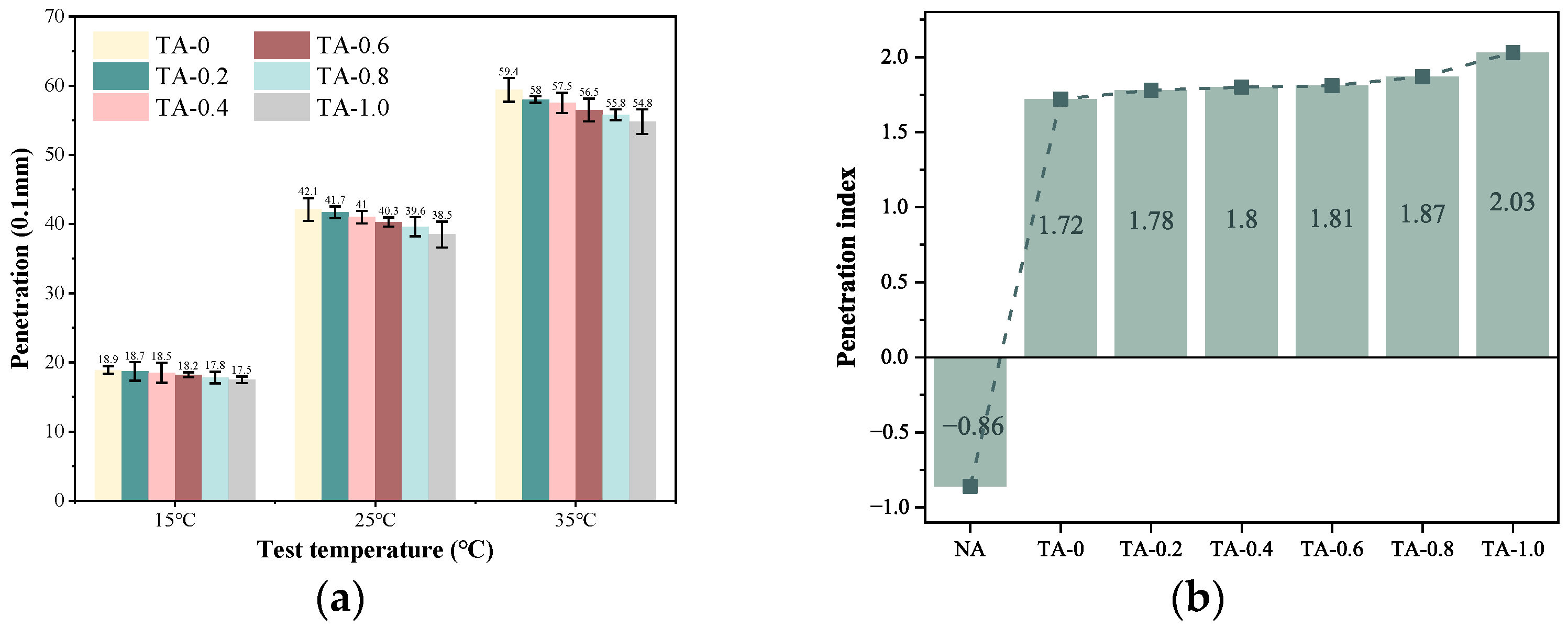
Three characteristic temperatures—15 °C (low-temperature phase transition zone), 25 °C (viscoelastic transition point), and 30 °C (high-temperature critical point)—were selected for asphalt mastic testing. At each temperature, three parallel tests were conducted and averaged, while temperature–penetration response curves were synchronously recorded. The linear relationship between the logarithm of penetration and temperature was obtained using Equation (1), and the penetration index (PI) was derived from Equation (2) to quantitatively evaluate temperature susceptibility (for every 0.5 increase in PI, the brittle point temperature decreases by approximately 3 °C).
l g P = K + A l g P e n × T
P I = 20 500 A l g P e n 1 + 50 A l g P e n
where lgP is the logarithm of penetration measured at different temperatures, T is the test temperature (°C), K is the regression constant (a), and AlgPen is the regression coefficient (b).
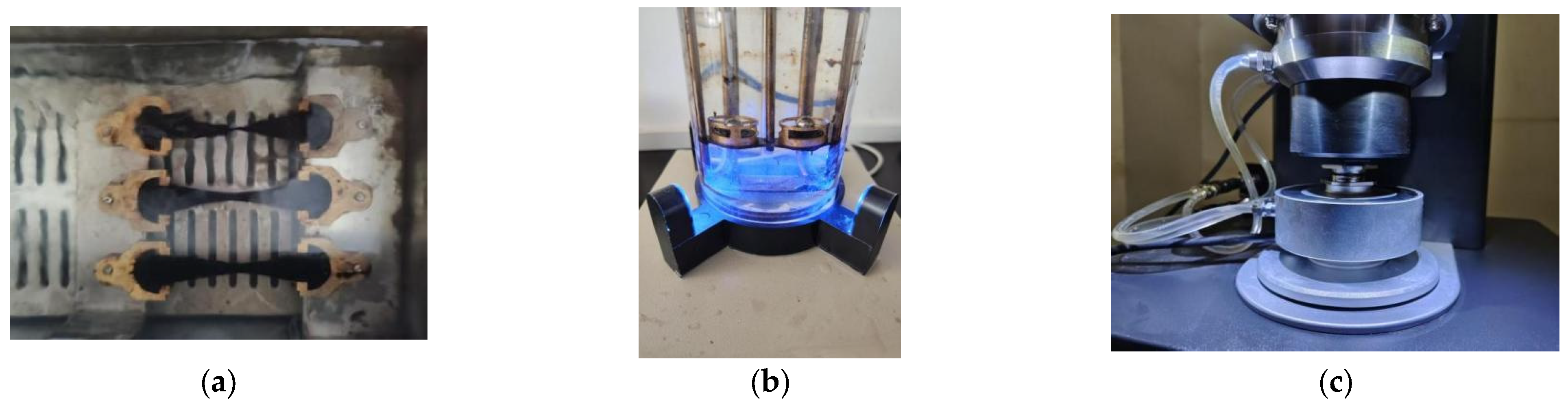
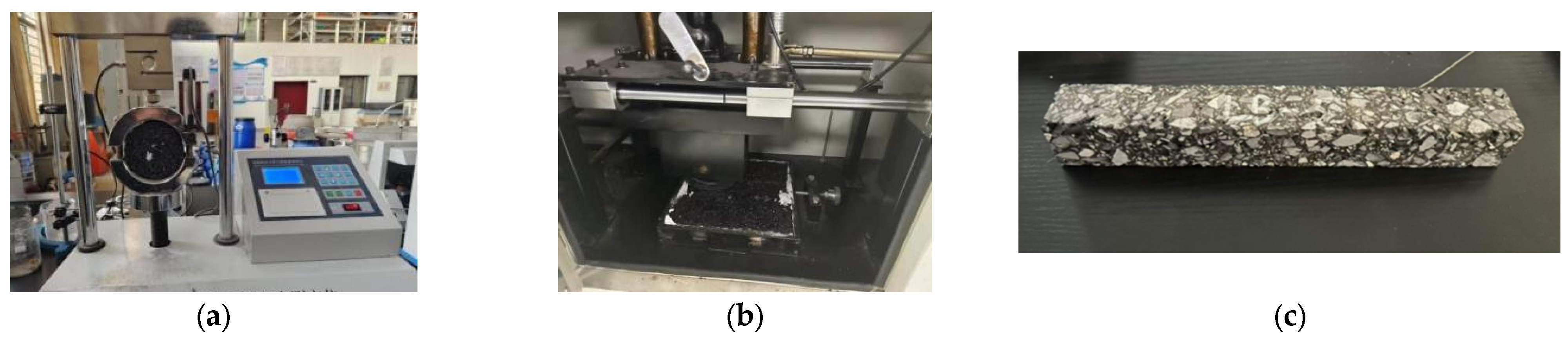
Low-temperature cracking resistance of asphalt mastic was evaluated by the ductility test (T0605-2011) (Figure 4a). Three parallel tests were conducted, the specimen was stretched at a constant rate of 5 cm/min until fracture occurred at the necked section, and the maximum elongation was recorded as the ductility value [50]. The softening point was determined using the Ring-and-Ball method (T0606-2011) (Figure 4b) to characterize high-temperature stability [50]. Three sets of test specimens were prepared, under programmed heating controlled by a PID system, the equilibrium temperature at which the steel ball contacted the base plate was recorded as the critical temperature for the transition from elastic solid to viscous fluid.
Dynamic shear rheometer (DSR) tests (T0628-2011) (Figure 4c) were conducted at a strain amplitude of γ = 12% and an angular frequency of ω = 10 rad/s over a temperature range of 46–70 °C, with data collected every 6 °C. The complex shear modulus (G*) and phase angle (δ) were obtained to calculate the rutting resistance factor (G*/sin δ), three parallel tests were conducted in total [50].

2.2.2. Asphalt Mixture Performance Tests

Water stability was evaluated using the Marshall immersion test (T0709-2011) (Figure 5a) [50]. Marshall specimens were immersed in a 60 °C water bath for 48 h and 35 min, respectively, and their stabilities were measured. Three parallel specimens were tested for each condition, and the average value was reported. Water stability was characterized by the residual stability (MS0), calculated using Equation (3).
M S 0 = M S 1 M S × 100 %
where MS0 is the residual stability (%), MS1 is the stability after 48 h immersion (kN), and MS is the stability from the conventional Marshall test (kN).
Rutting slab specimens (T0709-2011) with dimensions of 300 mm × 300 mm × 50 mm were prepared using a rolling compaction method [50]. Three samples were prepared, after curing at room temperature for 48 h, the specimens were subjected to rutting tests under a wheel-tracking device at 60 °C with a contact stress of 0.7 MPa (Figure 5b). Rut depths at 45 min and 60 min were recorded, and the dynamic stability (DS) was calculated using Equation (4) to represent the number of load applications sustained per unit deformation rate [56].
DS = t 2 t 1 × N d 60 d 45 × C 1 × C 2
where N is the wheel loading frequency (42 times/min), d45 and d60 are the rut depths at 45 min and 60 min (mm), t2 and t1 are the corresponding loading times (60 min and 45 min), and C1 and C2 are correction factors, both taken as 1.0 in this study.
Low-temperature cracking resistance (T0715-2011) was assessed using the low-temperature bending beam test. Prismatic beams with dimensions of 250 mm × 30 mm × 35 mm were cut from the cooled rutting slabs (Figure 5c). Tests were conducted at −10 °C ± 0.5 °C, and the maximum tensile strain (εB) was calculated using Equation (5), three tests were performed in total [50].
ε B = 6 × h × d L 2
where d is the maximum mid-span deflection (mm), h is the beam height at mid-span (mm), and L is the span length between supports (mm).

2.2.3. Thermal Conductivity Measurement

Thermal conductivity (λ) is a fundamental thermophysical parameter characterizing a material’s heat transfer capability and directly reflects its heat conduction efficiency. Variations in thermal conductivity significantly influence the internal temperature field distribution; therefore, accurate determination of λ for HTHS-modified systems is of critical engineering importance for optimizing self-healing performance.
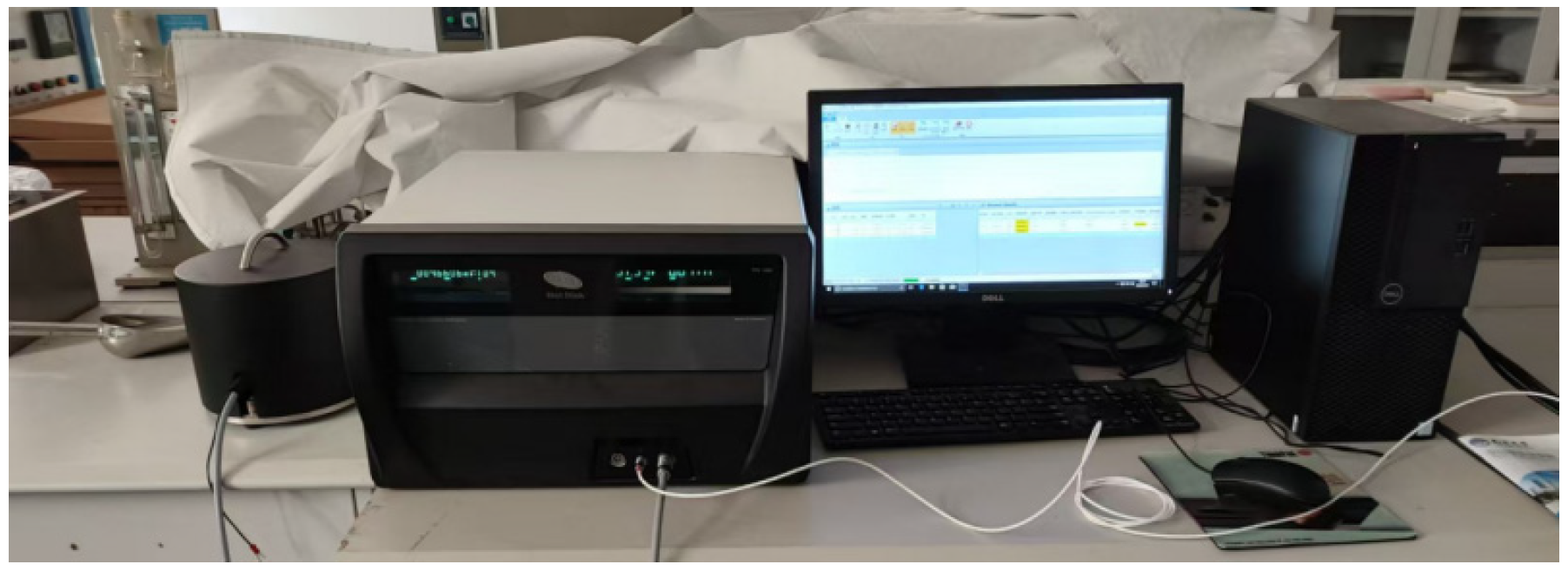
Tests were conducted in accordance with the Chinese standard GB/T 32064-2015 [57]. Three parallel measurements were performed using the transient plane source method (TPS). A multifunctional Hot Disk sensor, integrating both a heat source and a temperature sensor, was adopted. The thermal conductivity (λ) of asphalt mastic and mixtures was determined by a TPS1500 thermal constant analyzer (Figure 6). A constant direct current was applied to raise the probe temperature, inducing changes in electrical resistance and voltage. By fitting the measured values to obtain a line with the highest correlation to R(t), the thermal conductivity λ of the specimen was calculated from the slope C. The time-dependent resistance behavior of the probe is described in Equations (6)–(8).
R ( t ) = R + C D ( F 0 )
R = R 0 1 + α Δ T i
C = α QR 0 λ r 0 π 3
where R0 is the probe resistance at t = 0, α is the temperature coefficient of resistance, ΔTi is the temperature difference across the protective film layer, F0 is the dimensionless time, Q is the heating power, r0 is the probe radius, λ is the thermal conductivity of the specimen, and D(F0) is a function of the dimensionless time.

3. Results and Discussion

3.1. Performance of Asphalt Mastics

3.1.1. Penetration, Ductility, and Softening Point

Under a fixed filler–asphalt ratio (F/A) of 0.9, the influence of HTHS replacement level on asphalt mastic penetration is illustrated in Figure 7a. At a given temperature, penetration decreased monotonically with increasing HTHS content, indicating a progressive increase in system stiffness. This modification effect originates from a multiscale synergistic mechanism. At the microscale, the quasi-fractal surface morphology of HTHS—with a specific surface area approximately 38% higher than that of limestone (LS)—enhances interfacial bonding through mechanical interlocking. At the chemical scale, the alkaline nature of HTHS promotes chemical interactions with acidic components in asphalt, facilitating the formation of a stable three-dimensional cross-linked network.
The penetration index (PI), which quantitatively characterizes the temperature susceptibility of asphalt mastics, is presented in Figure 7b. As the replacement ratio of LS filler by HTHS increased, the PI value exhibited a clear upward trend. This behavior can be attributed to the higher surface roughness and porous structure of HTHS compared with LS, which provide a larger specific surface area for the formation of a high-viscosity structural asphalt layer at the aggregate–binder interface, thereby enhancing the stiffness and hardness of the mastic [58].
According to specifications [55], the PI of asphalt mastics should generally remain within the range of −1.5 to 1.0 to ensure durability. However, for pavements subjected to heavy traffic loading and severe climatic conditions, engineering practice recommends increasing PI to ≥2.0 to balance low-temperature cracking resistance and high-temperature rutting resistance [59]. Previous studies have shown that when PI lies between −2.0 and 2.0, asphalt exhibits a sol–gel structure, whereas a PI greater than 2.0 corresponds to a gel-dominated structure, which effectively reduces temperature susceptibility [60]. In this study, the PI of TA-1.0 reached 2.03, significantly higher than that of TA-0 (1.72), representing an 18.0% improvement. These results demonstrate that the incorporation of HTHS effectively optimizes temperature susceptibility while enhancing engineering applicability.
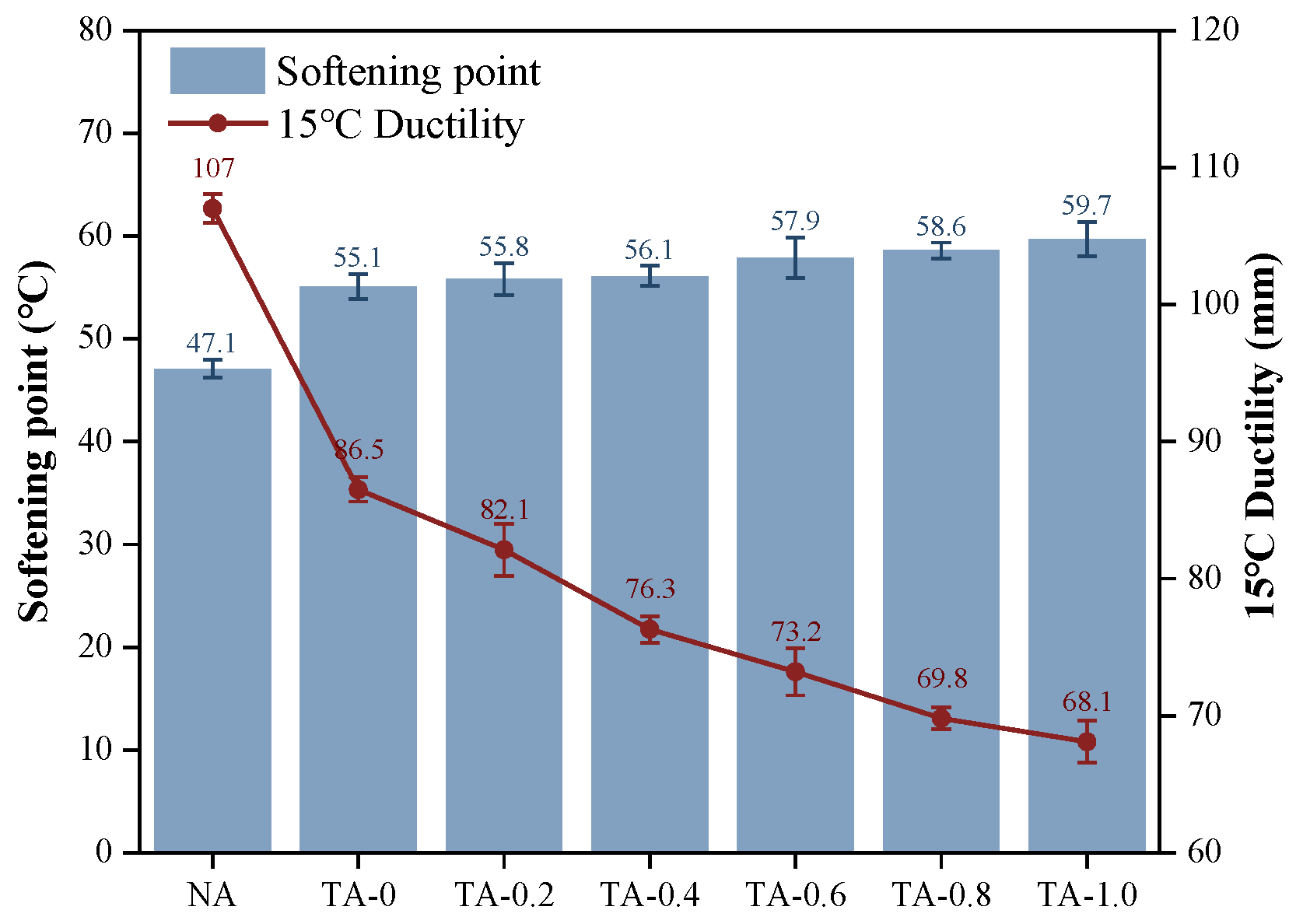
The results of the softening point and ductility tests are shown in Figure 8. As a key indicator of the viscoelastic transition of asphalt, an increase in softening point reflects improved high-temperature stability and reduced temperature sensitivity. Ductility, on the other hand, characterizes the flow and deformation capacity of asphalt at low temperatures. With increasing HTHS content, the softening point increased continuously, whereas ductility exhibited a systematic decrease, indicating a clear trade-off between high- and low-temperature performance. When LS was completely replaced by HTHS, the softening point increased by 8.4%, while ductility decreased by 21.3%.
This phenomenon is closely related to the surface characteristics of HTHS. Its strong adsorption capacity increases the proportion of structural asphalt, significantly enhancing resistance to permanent deformation and high-temperature performance. However, excessive adsorption of light components reduces the amount of free asphalt, thereby increasing low-temperature brittleness.

3.1.2. High-Temperature Rutting Resistance

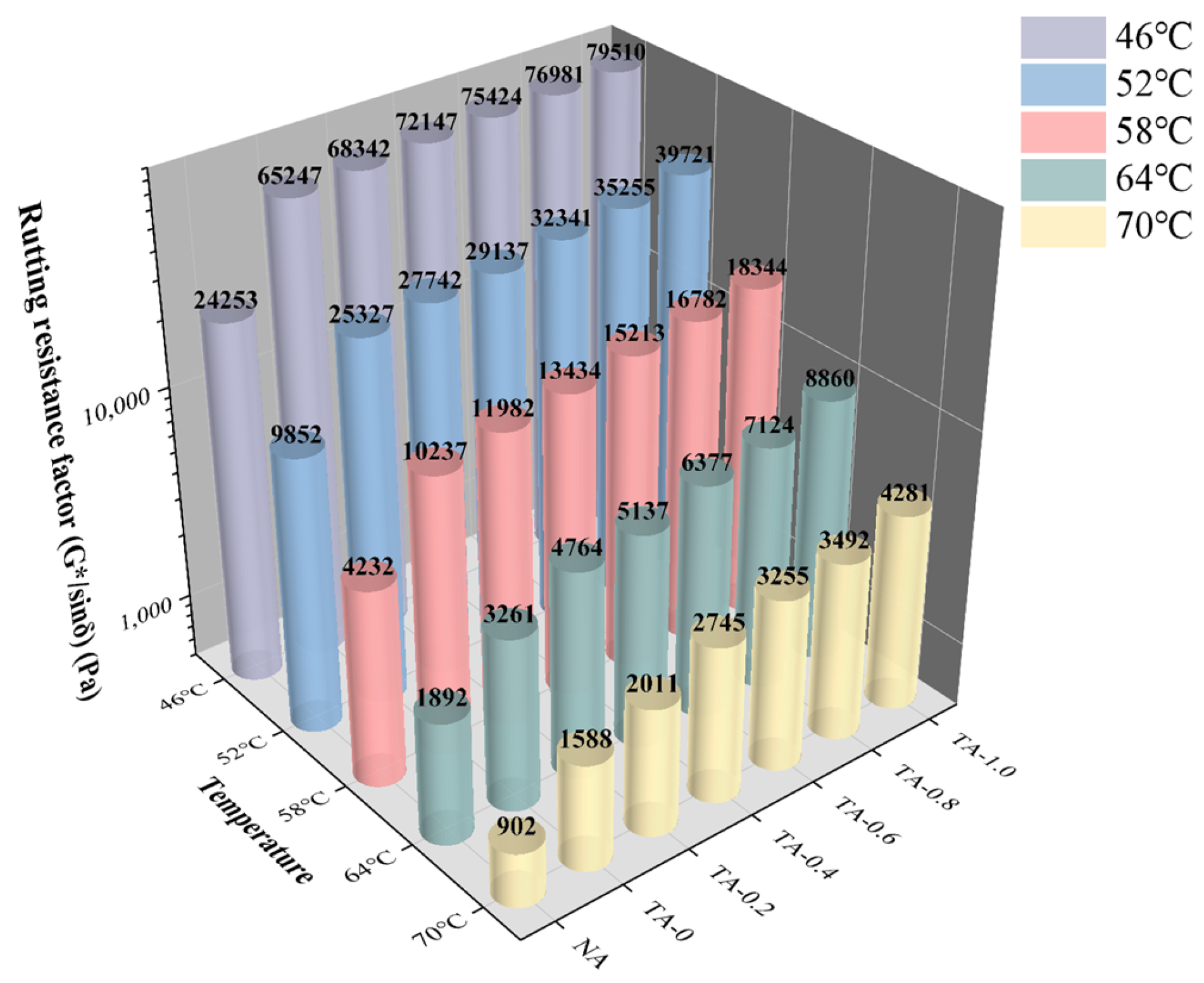
The high-temperature rutting resistance of asphalt mastics was evaluated using the rutting resistance factor (G*/sin δ), which is positively correlated with deformation resistance. The DSR test results at 46 °C, 52 °C, 58 °C, 64 °C, and 70 °C are shown in Figure 9. At an F/A ratio of 0.9, G*/sin δ increased continuously with increasing HTHS replacement.
Compared with TA-0, TA-1.0 exhibited increases in G*/sin δ of 21.8%, 56.8%, 79.2%, 171.7%, and 169.6% at the five respective temperatures. Relative to neat asphalt, the corresponding increases were 227.8%, 303.1%, 333.5%, 368.3%, and 374.6%. The superior high-temperature performance of TA-1.0 fundamentally results from enhanced filler–asphalt interfacial interactions. Compared with LS filler, HTHS possesses a larger particle size, a higher specific surface area, and a rougher surface morphology, which promote asphalt adsorption and the formation of a thicker asphalt film. Consequently, the proportion of structural asphalt molecules increases, leading to significantly enhanced deformation resistance at elevated temperatures.

3.2. Pavement Performance of Asphalt Mixtures

3.2.1. Water Stability

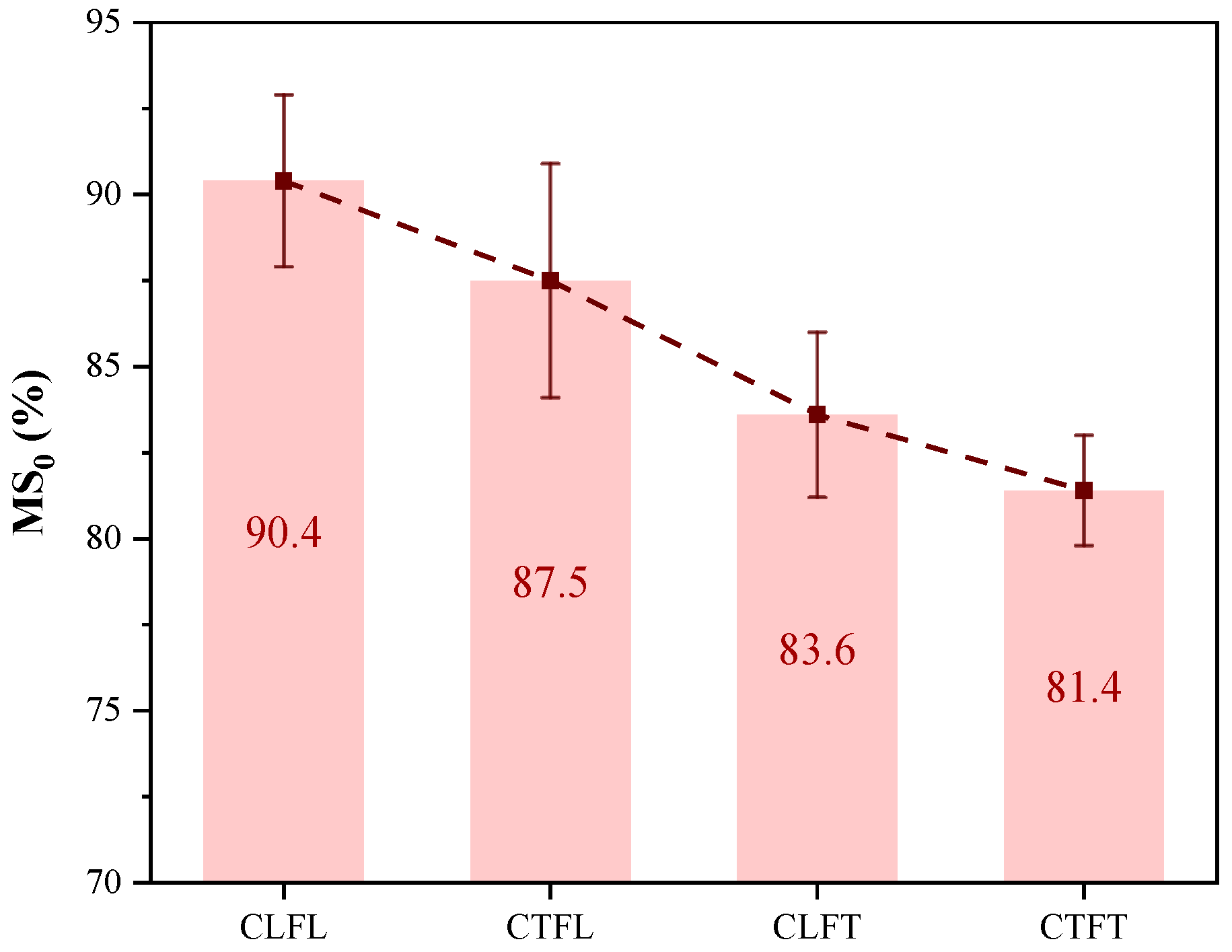
The residual Marshall stability (MS0) results are presented in Figure 10. After immersion in water at 60 °C for 48 h, the Marshall stability of all specimens decreased. With increasing HTHS replacement, the residual stability of asphalt mixtures declined. Compared with the limestone mixture (CLFL), the residual stability of the HTHS-modified mixtures CTFL, CLFT, and CTFT decreased by 2.9%, 3.9%, and 9.0%, respectively, with the largest reduction observed for full replacement (CTFT).
Nevertheless, the residual stability of all HTHS-modified mixtures remained above 80%, satisfying the specification requirements [61], and the results are consistent with those reported by Wang Wei et al. [47]. The reduction in water stability can be attributed to the porous structure and higher water absorption of HTHS. As water molecules are strongly polar, they exhibit strong affinity for the rough mineral surface, thereby competing with asphalt for bonding sites at the aggregate–binder interface.

3.2.2. High-Temperature Stability

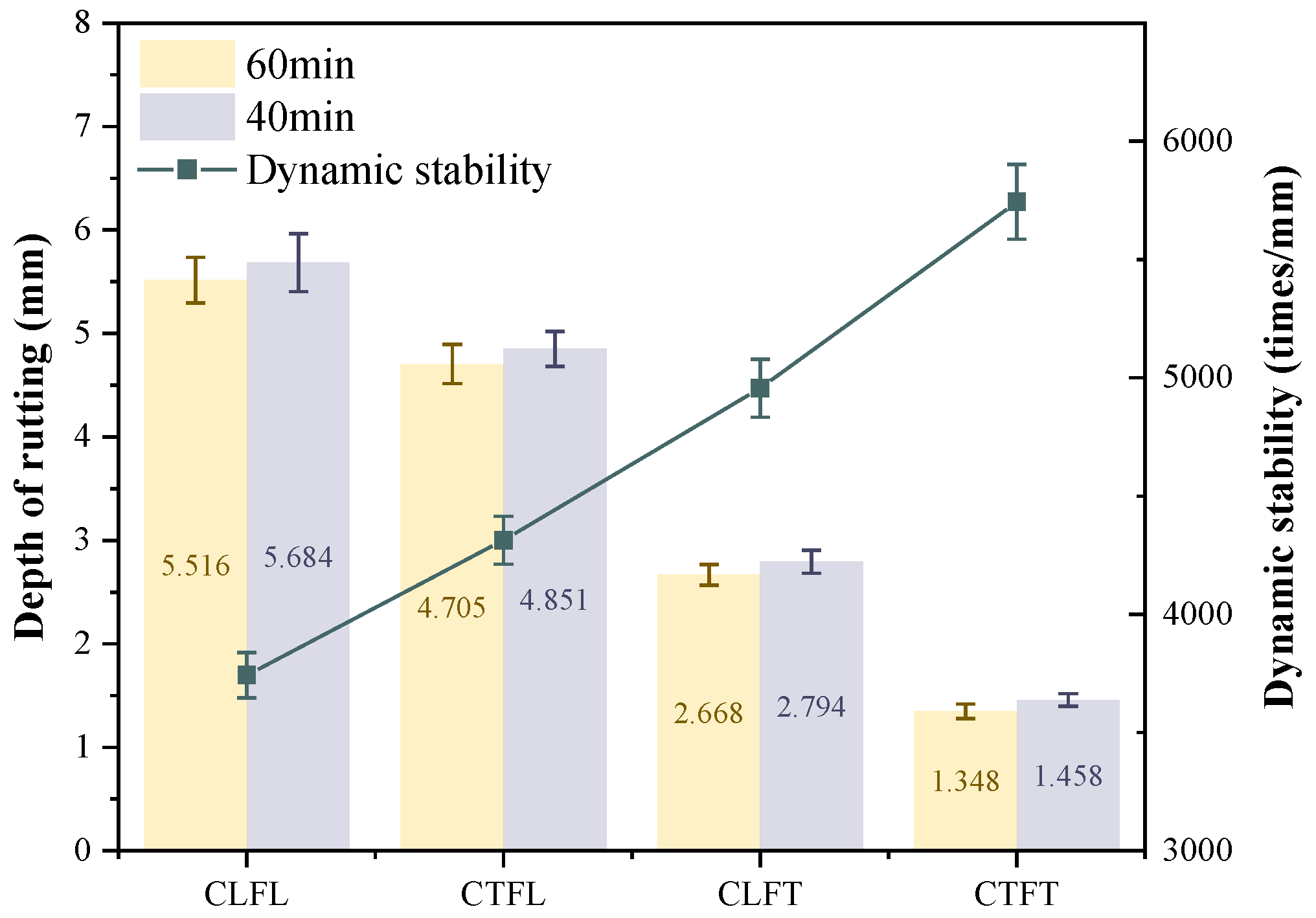
The rutting test results are summarized in Figure 11. As the HTHS replacement level increased, the dynamic stability increased, while rut depths at 45 min and 60 min decreased, indicating a significant improvement in high-temperature stability. Specifically, the dynamic stability of CTFL, CLFT, and CTFT increased by 15.3%, 32.4%, and 53.5%, respectively, compared with CLFL, while the 60 min rut depth decreased by 14.6%, 50.8%, and 74.3%.
The enhancement in high-temperature performance can be attributed to three primary material characteristics of HTHS. First, its higher hardness helps maintain the integrity of the aggregate skeleton under cyclic loading, thereby suppressing plastic flow. Second, the rough surface texture strengthens mechanical interlocking with asphalt, improving the shear resistance of the mixture.

3.2.3. Low-Temperature Cracking Resistance

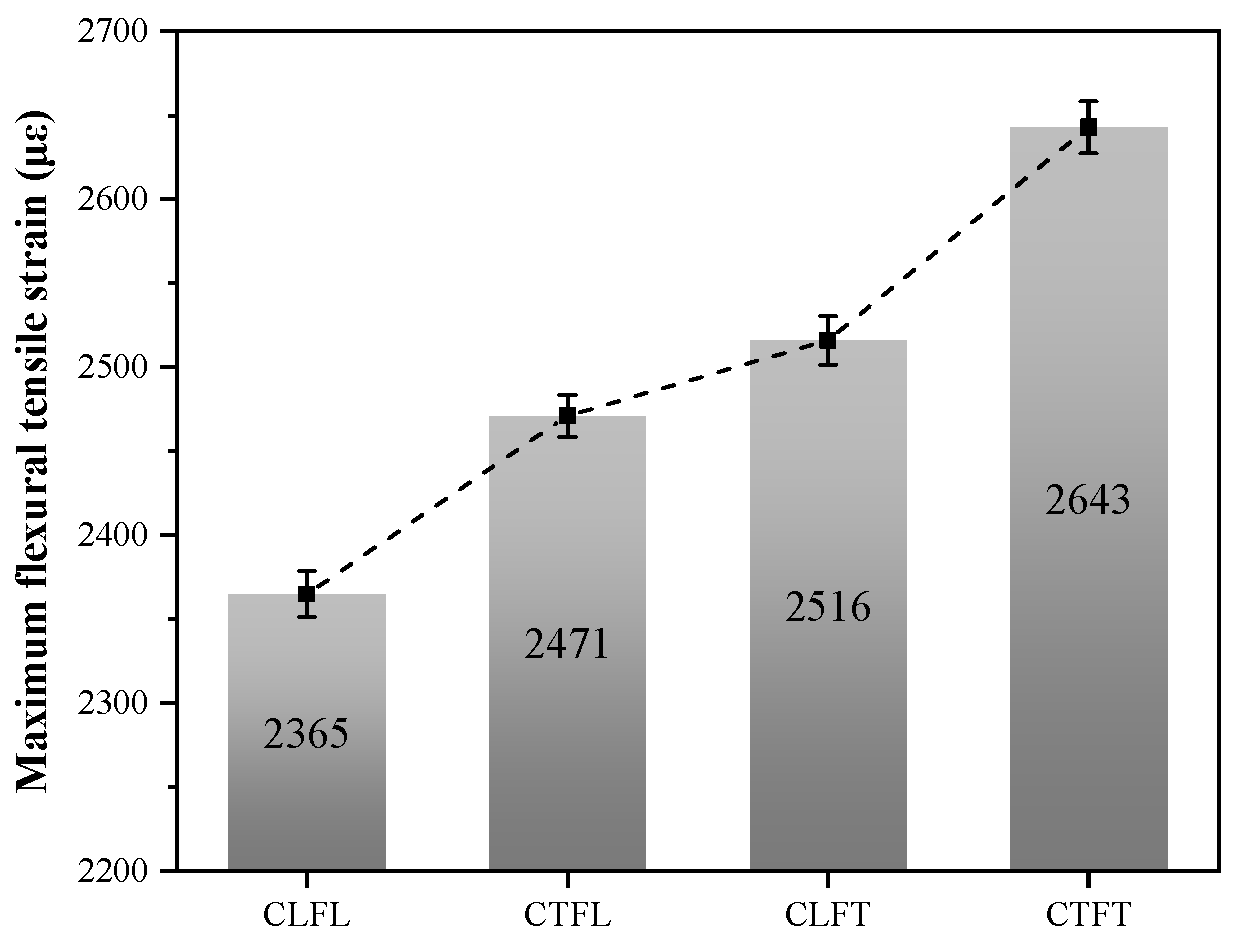
The results of the low-temperature bending tests are shown in Figure 12. Replacing conventional aggregates with HTHS effectively improved the low-temperature cracking resistance of asphalt mixtures. The maximum tensile strains of CTFL, CLFT, and CTFT were 2471 με, 2516 με, and 2643 με, respectively, representing increases of 4.5%, 6.4%, and 11.8% relative to CLFL (2365 με). The mixture with complete LS replacement exhibited the best low-temperature cracking resistance.
This improvement is attributed to the multiphase mineral composition of HTHS, which provides micro-deformation capacity and enhanced energy dissipation. Its lower equivalent constraint stiffness, combined with the tough interfacial transition zone formed by the rough, multiphase surface, allows stress relaxation during low-temperature loading and increases resistance to crack propagation.
It is noteworthy that among the pavement performance tests, the results of the fine aggregate–filler replacement system (CLFT) were closer to those of the fully replaced system (CTFT) than those of the coarse aggregate replacement system (CTFL). This indicates that the mechanical and durability-related properties of asphalt mixtures are predominantly governed by mesoscopic interfacial behavior. Therefore, enhancing the asphalt mastic matrix should be prioritized when optimizing overall pavement performance. This finding is consistent with previous studies by Shi et al., Tang et al., and Lou et al. [62,63,64].

3.3. Thermal Conductivity

3.3.1. Thermal Conductivity of Asphalt Mastics

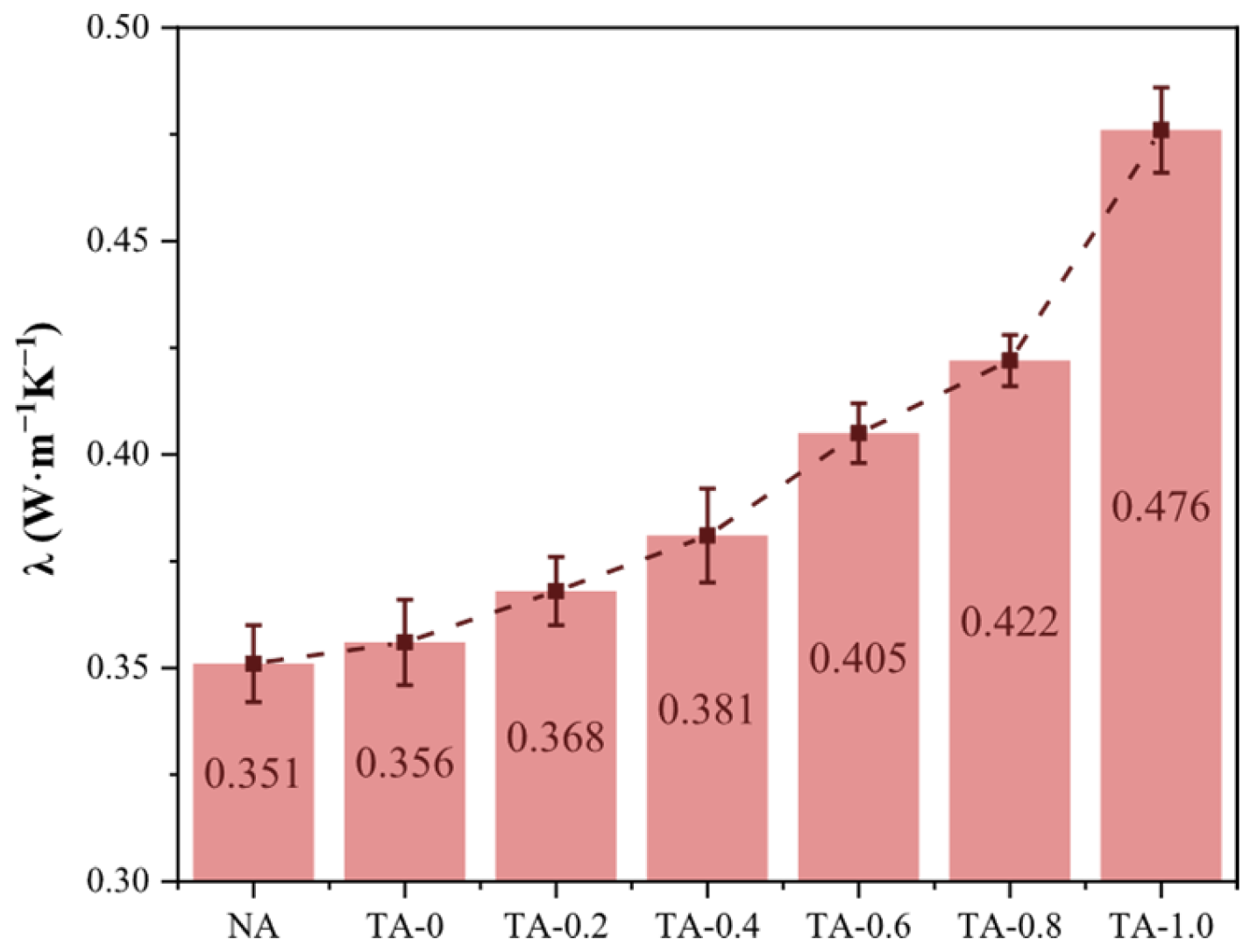
The measured thermal conductivity (λ) of asphalt mastics is shown in Figure 13. As the proportion of HTHS filler replacing LS increased, λ exhibited a monotonic upward trend. The thermal conductivity of neat 70# asphalt was 0.351 W/(m·K), that of the pure limestone mastic (TA-0) was 0.356 W/(m·K), whereas the pure HTHS mastic (TA-1.0) reached 0.476 W/(m·K), representing a 33.7% increase relative to TA-0.
These results demonstrate that replacing LS filler with HTHS effectively enhances the thermal conductivity of asphalt mastics, enabling faster and more uniform temperature rise under external heating. This improvement is mainly attributed to the high content of Fe- and Ti-based metal elements and their oxides (e.g., Fe2O3 and TiO2) in HTHS, whose crystalline structures exhibit higher intrinsic thermal conductivity than limestone, thereby providing more efficient heat transfer pathways.

3.3.2. Thermal Conductivity of Asphalt Mixtures

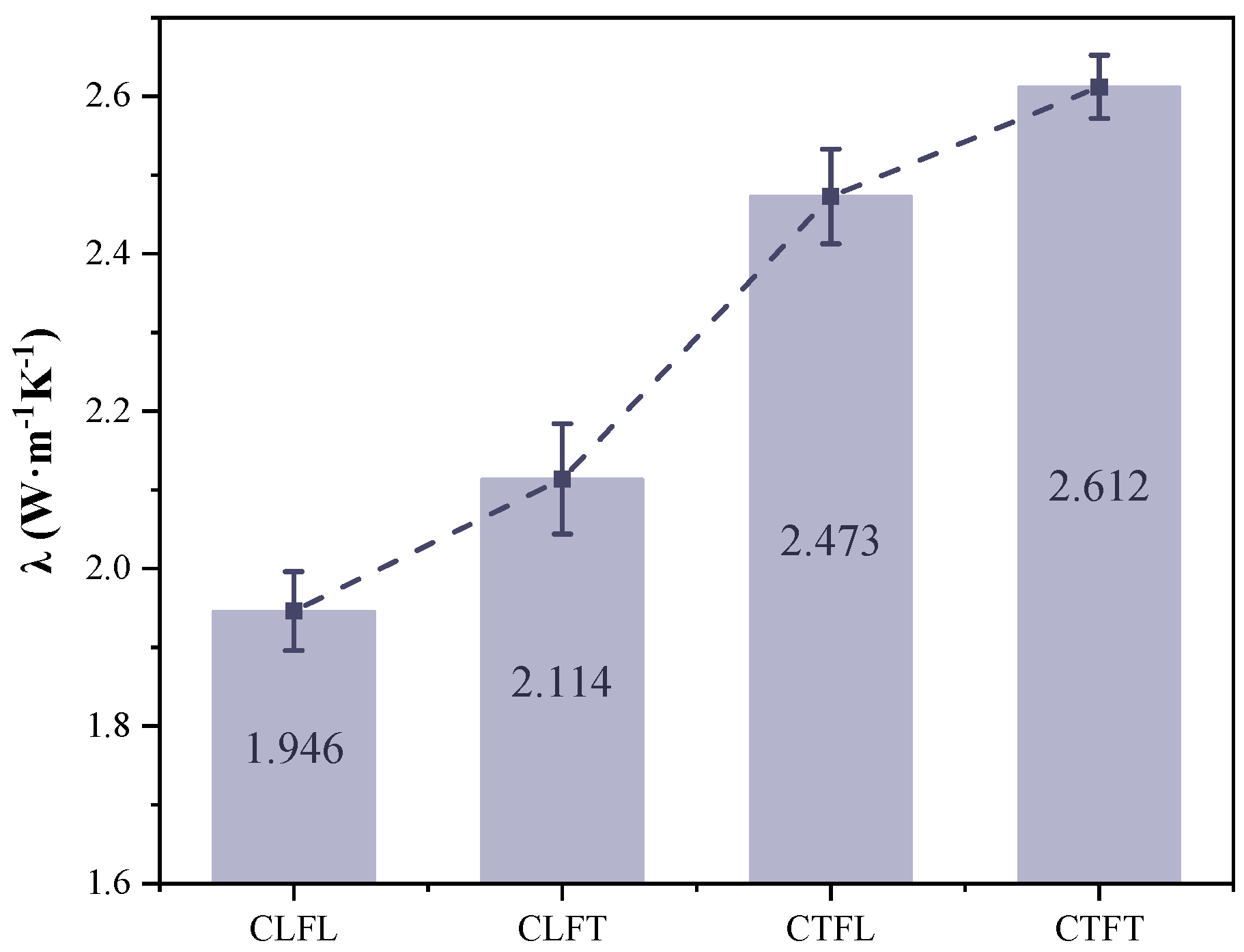
The thermal conductivity results of asphalt mixtures are presented in Figure 14. The data show a continuous enhancement in thermal conductivity with increasing HTHS content. The thermal conductivity of the pure limestone mixture (CLFL) was 1.95 W/(m·K), while that of the fully replaced mixture (CTFT) reached 2.612 W/(m·K), corresponding to an increase of 0.666 W/(m·K), or 32.2%.
Notably, unlike the trends observed for pavement performance, the thermal conductivity of CTFL was higher than that of CLFT. This indicates that the thermal conductivity of asphalt mixtures is primarily governed by the macroscopic heat-conduction network formed by coarse aggregates. The increased λ can be attributed to the surface energy characteristics of HTHS, which promote tighter physical contact between mineral particles. These contact points progressively evolve into a three-dimensional heat-transfer network, significantly enhancing thermal conductivity. The results indicate that during thermally induced crack healing via external heating, heat can be transferred more rapidly and uniformly within the asphalt mixture. This helps shorten the time required to reach the target healing temperature, reduce energy consumption, and avoid localized overheating, thereby improving the crack healing efficiency.

4. Conclusions and Prospects

Based on comprehensive experimental investigations and mechanistic analysis, this study systematically evaluated the feasibility of using high-titanium heavy slag (HTHS) as a substitute for natural limestone (LS) in asphalt mastics and mixtures, with particular emphasis on thermal conductivity. The main conclusions are as follows:
(1) In terms of the performance of asphalt mortar, at an F/A ratio of 0.9, increasing the replacement of LS filler with HTHS led to a higher proportion of structural asphalt, reduced temperature susceptibility, and significantly enhanced high-temperature stability and rutting resistance. At full replacement, the penetration index (PI), softening point, and rutting resistance factor (G*/sin δ at 64 °C) increased by 18.0%, 8.4%, and 171.7%, respectively, compared with the 100% LS system. Although low-temperature ductility decreased by 21.3% due to the reduction in free asphalt, it still satisfied specification requirements. These results indicate that HTHS filler is suitable for asphalt mastics and can markedly improve high-temperature deformation resistance.
(2) In terms of the road performance of asphalt mixtures, with increasing HTHS aggregate replacement, both high-temperature stability and low-temperature cracking resistance of asphalt mixtures improved significantly. In the fully replaced system, dynamic stability increased by 53.5% and maximum tensile strain increased by 11.8%, primarily due to the high hardness and rough surface texture of HTHS, which enhance skeleton interlocking and shear strength. Although residual Marshall stability decreased by 9.0% at full replacement due to the porous structure and higher water absorption of HTHS, it remained above the 80% specification threshold, confirming adequate water stability. Overall, the results demonstrate the feasibility of HTHS as an asphalt pavement material.
(3) The thermal conductivity (λ) of both asphalt mastics and mixtures increased monotonically with HTHS content. At full replacement, λ increased by 33.7% for asphalt mastics and by 32.2% for asphalt mixtures. These findings confirm that the chemical composition and surface characteristics of HTHS significantly enhance the thermal conductivity of asphalt systems, meeting the core material requirements of thermally induced self-healing technology.
(4) The variation trends of pavement performance and thermal conductivity with HTHS replacement differ and are governed by different structural scales. Pavement performance is mainly controlled by mesoscopic aggregate–asphalt interfacial behavior, as evidenced by the similarity between the fine aggregate–filler replacement system (CLFT) and the fully replaced system (CTFT). In contrast, thermal conductivity is dominated by the macroscopic three-dimensional heat-transfer network formed by coarse aggregate contacts, as reflected by the higher λ of the coarse aggregate replacement system (CTFL). This distinction provides a theoretical basis for targeted material design and performance optimization.
Nevertheless, this study still has the following limitations, which deserve further investigation in future work:
One of the core conclusions of this study is that HTHS can significantly improve the thermal conductivity (λ) of the mixture and enable efficient thermally induced self-healing. Future research may directly verify and evaluate the fatigue-healing performance of HTHS-modified mixtures, focusing on the enhancement effect of improved thermal conductivity on crack healing efficiency.
Based on the finding in Conclusion (4) of this paper that pavement performance and thermal conductivity are dominated by structures at different scales, future studies can adopt deep-learning-based computer vision techniques. For instance, the DeepLab semantic segmentation model can be used to quantitatively characterize voids, aggregate contact, and crack closure in pixel-level detail on polished cross-section images of specimens before and after heating. Meanwhile, an efficient convolutional neural network optimized by neural architecture search (e.g., EfficientNet) can be applied to extract and learn the features correlating crack morphology with healing efficiency [65,66].

Author Contributions

Conceptualization, Z.T.; methodology, Z.H.; software, X.L.; validation, X.L.; formal analysis, X.L.; investigation, Z.H.; resources, Z.H.; data curation, Z.T.; writing—original draft preparation, H.X.; writing—review and editing, H.X.; visualization, H.X.; supervision, B.L.; project administration, B.L.; funding acquisition, B.L. All authors have read and agreed to the published version of the manuscript.

Funding

This work was supported by the National Natural Science Foundation of China (Grant No. 52268043), the Training Plan for Academic and Technical Leaders of Major Disciplines in Jiangxi Province—the Leading Talent Project (Grant No. 20204BCJ22003).

Data Availability Statement

The original contributions presented in the study are included in the article, further inquiries can be directed to the corresponding author.

Conflicts of Interest

Author Xiaobao Li was employed by the Jiangxi Province Huagan Environment Group Co., Ltd. The remaining authors declare that the research was conducted in the absence of any commercial or financial relationships that could be construed as a potential conflict of interest.

References

  1. Zeng, B.J.; Wan, N.; Zhang, S.P.; Yu, X.H.; Zhang, Z.; Chen, J.W.; Lei, B. Feasibility study of waste rock wool fiber as asphalt mixture additive: Performance test and environmental effect analysis. Buildings 2025, 15, 2022. [Google Scholar] [CrossRef]
  2. Noufal, A.T.; Elgendi, E.; Morsy, T.M. Integration of lab experiments and simulation for evaluating rubberized asphalt mixtures containing recycled asphalt. Buildings 2024, 14, 4058. [Google Scholar] [CrossRef]
  3. Yang, B.; Jiang, J.; Leng, Z.; Jiang, X.; Sun, Y.; Yan, C.; Tan, Z.; Li, G. Maintenance mechanisms of rejuvenator-optimized asphalt emulsion in damaged porous asphalt mixture: Morphological, physicochemical, and rheological characterizations. Constr. Build. Mater. 2025, 464, 140185. [Google Scholar] [CrossRef]
  4. Guo, M.; Zhang, R.; Du, X.L.; Liu, P.F. A state-of-the-art review on the functionality of ultra-thin overlays towards a future low carbon road maintenance. Engineering 2024, 32, 82–98. [Google Scholar] [CrossRef]
  5. Deef-Allah, E.; Ragab, M.; Attia, M.; Abdelrahman, M. Microstructural evolution and rheological enhancement of asphalt-rubber binders: Unveiling the role of morphology in performance. Buildings 2025, 15, 1963. [Google Scholar] [CrossRef]
  6. Zhang, H.G.; Lv, S.T.; Pang, J.S.; Chen, J.; Xuan, W.A. Effects of aging on rheological properties and microstructural evolution of sbs modified asphalt and crumb rubber modified asphalt binders. Buildings 2024, 14, 1722. [Google Scholar] [CrossRef]
  7. Tang, F.L.; Fan, J.W.; Ma, T.; Sun, Y.H. Study on the performances of pac-13 asphalt mixture containing reclaimed porous asphalt pavement. Buildings 2025, 15, 1395. [Google Scholar] [CrossRef]
  8. Ma, R.; Li, Y.M.; Cheng, P.F.; Chen, X.L.; Cheng, A.T. Low-temperature cracking and improvement methods for asphalt pavement in cold regions: A review. Buildings 2024, 14, 3802. [Google Scholar] [CrossRef]
  9. Luan, Y.C.; Sun, Q.X.; Li, H.; Xu, M.; Li, Y.H.; Ma, T.; Tian, C.J. Investigation on compaction warm mix effect of plant hot recycled asphalt mixture. J. Mater. Civ. Eng. 2026, 38, 04025566. [Google Scholar] [CrossRef]
  10. Gao, Y.; Hossain, M.; Jones, C.; Heptig, B. Quality control and acceptance of recycled hot-mix asphalt mixtures. Transp. Res. Rec. 2026, 2680, 442–452. [Google Scholar] [CrossRef]
  11. Shi, Q.Y.; Zhou, L.X.; Li, B. Road performance of hot central plant versus hot in-place recycling asphalt mixtures: A quantitative comparison and adaptability analysis. Materials 2025, 18, 5149. [Google Scholar] [CrossRef] [PubMed]
  12. Ferrotti, G.; Mancinelli, E.; Passerini, G.; Canestrari, F. Comparison of energy and environmental performance between warm and hot mix asphalt concrete production: A case study. Constr. Build. Mater. 2024, 418, 135453. [Google Scholar] [CrossRef]
  13. Xu, S.; Tabakovic, A.; Lynch, A.; Recordon, P.; Liu, X.; Collier, C.; Winterlich, E.; Schlangen, E. Development and optimization of sustainable asphalt self-healing systems for sma mix. Constr. Build. Mater. 2025, 492, 143054. [Google Scholar] [CrossRef]
  14. Arteaga-Perez, L.E.; Larrere, S.; Chavez-Delgado, M.; Ordonez, Y.J.R.; Concha, J.L.; Segura, C.; Norambuena-Contreras, J.; Casas-Ledon, Y. Environmental life cycle assessment of encapsulated rejuvenators from mining truck waste tires via pyrolysis for asphalt self-healing. J. Clean. Prod. 2025, 490, 144787. [Google Scholar] [CrossRef]
  15. Quezada, G.R.; Solar, C.; Saavedra, J.H.; Petit, K.; Martin-Martinez, F.J.; Arteaga-Perez, L.E.; Norambuena-Contreras, J. Operando ftir-atr with molecular dynamic simulations to understand the diffusion mechanism of waste tire-derived pyrolytic oil for asphalt self-healing. Fuel 2024, 357, 129834. [Google Scholar] [CrossRef]
  16. Xiao, M.; Li, C. Sustainable asphalt: Self-healing and its impact on fatigue life and damage model. Nondestruct. Test. Eval. 2025, 40, 1269–1294. [Google Scholar] [CrossRef]
  17. Yu, M.; Zhang, H.; Wang, J.; Sun, J.; Liu, D.; Sun, Y.; Chen, J. Multi-scale analysis of virgin/aged/recycled asphalt self-healing performance based on molecular simulation and micro-macro tests. Constr. Build. Mater. 2024, 431, 136535. [Google Scholar] [CrossRef]
  18. Sun, Q.; Wang, X.; Wang, S.; Shao, R.; Su, J. Investigation of asphalt self-healing capability using microvasculars containing rejuvenator: Effects of microvascular content, self-healing time and temperature. Materials 2023, 16, 4746. [Google Scholar] [CrossRef]
  19. Yue, J.; Fu, J.; Wang, Y.; Ming, Y.; Tang, G.; Li, R. Effects of complex environmental conditions on fatigue self-healing properties of fast-melting sbs-modified asphalt. Materials 2025, 18, 2157. [Google Scholar] [CrossRef]
  20. Anupam, B.R.; Sahoo, U.C.; Chandrappa, A.K. A methodological review on self-healing asphalt pavements. Constr. Build. Mater. 2022, 321, 126395. [Google Scholar] [CrossRef]
  21. Norambuena-Contreras, J.; Concha, J.L.; Varela, M.J.; Trigos, L.; Poulikakos, L.; Gonzalez, A.; Arraigada, M. Microwave heating and self-healing performance of asphalt mixtures containing metallic fibres from recycled tyres. Materials 2024, 17, 5950. [Google Scholar] [CrossRef] [PubMed]
  22. Xu, H.; Sun, M.; Luo, G. Enhanced induction heating and self-healing properties of steel slag powder based asphalt and asphalt mixture under microwave irradiation. Materials 2023, 16, 3312. [Google Scholar] [CrossRef] [PubMed]
  23. Zhang, L.; Zhang, Z.; Yu, W.; Miao, Y. Review of the application of microwave heating technology in asphalt pavement self-healing and de-icing. Polymers 2023, 15, 1696. [Google Scholar] [CrossRef] [PubMed]
  24. Yan, Y.; Li, W.; Liu, C.; Pan, B. Comprehensive review of thermally induced self-healing behavior in asphalt mixtures and the role of steel slag. Coatings 2025, 15, 668. [Google Scholar] [CrossRef]
  25. He, Y.; Xiong, K.; Zhang, J.; Guo, F.; Li, Y.; Hu, Q. A state-of-the-art review and prospectives on the self-healing repair technology for asphalt materials. Constr. Build. Mater. 2024, 421, 135660. [Google Scholar] [CrossRef]
  26. Jahandideh, A.; Mirabdolazimi, S.M.; Arabani, M. Effect of aging levels and induction factors on self-healing ability by induction heating method in hot asphalt mixtures. Case Stud. Constr. Mater. 2025, 23, e05564. [Google Scholar] [CrossRef]
  27. Ye, X.; Chen, Y.; Yang, H.; Xiang, Y.; Ye, Z.; Li, W.; Hu, C. Enhancing self-healing of asphalt mixtures containing recycled concrete aggregates and reclaimed asphalt pavement using induction heating. Constr. Build. Mater. 2024, 439, 137361. [Google Scholar] [CrossRef]
  28. Lu, D.; Fu, C.; Jiang, X.; Chen, Z.; Qu, F.; Huo, Y.; Leng, Z.; Zhong, J. Sustainable microwave-heating healing asphalt concrete incorporating functional aggregates and waste ferrite. Transp. Res. D Transp. Environ. 2024, 129, 104117. [Google Scholar] [CrossRef]
  29. Zhao, Y.; Kong, B.; Wan, T.; Zheng, Y. Preparation of microwave-absorbing asphalt mixture and microwave self-healing properties. J. Mater. Sci. Eng. 2024, 42, 129–136. [Google Scholar]
  30. Zhao, H.; Tang, J.; Gao, H.; Guan, B. Effect of silicon carbide powder on asphalt material properties and microwave-induced self-healing. Case Stud. Constr. Mater. 2024, 21, e03658. [Google Scholar] [CrossRef]
  31. Deng, Y.; Xu, L.; Ni, H.; Tian, Y.; Sun, D. Extended research on microwave heating-healing capacity of asphalt mixture: Asphalt flow analysis combining capillary flow test with temperature distribution. J. Mater. Civ. Eng. 2024, 36, 17567. [Google Scholar] [CrossRef]
  32. Cui, P.D.; Zhou, X.; Xiao, Y.; Wang, F. Enhanced environmental and self-healing performance of asphalt mixture using steel slag as the substrate of functional coatings. Constr. Build. Mater. 2025, 489, 142427. [Google Scholar] [CrossRef]
  33. Hu, C.H.; Li, P.F.; Zhu, Y.L.; Zhao, Q.; Zhang, H. Experimental study on microwave absorption properties of hma containing copper slag. Constr. Build. Mater. 2022, 341, 127850. [Google Scholar] [CrossRef]
  34. Wang, Z.; Qin, F.; Liu, J.; Jin, X. Evolution trajectory and driving mechanism of the synergistic effect on construction waste and carbon reduction: Evidence from China. Waste Manag. 2025, 203, 114891. [Google Scholar] [CrossRef] [PubMed]
  35. Yuan, L.; Yang, B.; Lu, W.; Peng, Z. Carbon footprint accounting across the construction waste lifecycle: A critical review of research. Environ. Impact Assess. Rev. 2024, 107, 107551. [Google Scholar] [CrossRef]
  36. Hu, K.; Gillani, S.T.A.; Tao, X.; Tariq, J.; Chen, D. Eco-friendly construction: Integrating demolition waste into concrete masonry blocks for sustainable development. Constr. Build. Mater. 2025, 460, 139797. [Google Scholar] [CrossRef]
  37. Sun, J.; Yu, Y.; Li, R.Y.M.; Wang, Z.; Li, L.; Guo, F.; Yu, L.; Deng, C. Study on the flexural deformation behavior of high-titanium heavy-slag concrete composite beams: Material application, experimental investigation, and theoretical refinement. Materials 2024, 17, 4721. [Google Scholar] [CrossRef]
  38. Zhou, P.; Ding, Q.; Huang, S.; Yang, J. Determination and calculation of gamma and neutron shielding characteristics of uhpc with high titanium heavy slag sand. Constr. Build. Mater. 2024, 448, 138238. [Google Scholar] [CrossRef]
  39. Rui, Y.F.; Li, N.; Tang, R.F.; Zhao, S.X.; Zhang, X.; Zhao, S.W.; Zheng, Y.C.; Huang, T.Y. The influence of vanadium titanium slag and blast furnace slag on the properties of cement-based materials: Fluidity, mechanical properties, and hydration. Constr. Build. Mater. 2025, 504, 144679. [Google Scholar] [CrossRef]
  40. Ke, K.; Yu, H.; Zhao, J.H.; Lv, Y.; Li, X.G. Study on the influence of ultrafine titanium slag on the properties of ultra-high performance concrete. Cem. Wapno Beton 2025, 30, 2–13. [Google Scholar] [CrossRef]
  41. Wang, S.; Li, H.J.; Zhao, X.Y.; Sun, H.X.; Luo, Y.Q.; Wang, M.; Gao, W.T. Dynamic energy absorption performance of titanium slag reinforced concrete: An experimental and numerical simulation-based study. Processes 2025, 13, 1877. [Google Scholar] [CrossRef]
  42. Wang, C.; Wan, W.J.; Chen, S.; Zhang, J.P.; Wang, M. Sustainable high-strength titanium slag concrete: Full aggregate replacement enabled by pore-surface synergy. J. Build. Eng. 2026, 118, 114960. [Google Scholar] [CrossRef]
  43. Cheng, S.K.; Li, W.B.; Vaughan, J.; Ma, X.D.; Chan, J.X.; Wu, X.K.; Han, Y.X.; Peng, H. Advances in the integrated recovery of valuable components from titanium-bearing blast furnace slag: A review. Sustain. Mater. Technol. 2025, 44, e01384. [Google Scholar] [CrossRef]
  44. Wang, J.X.; Li, J.; Gao, Y.; Lu, Z.Y.; Hou, L. Mechanical and drying shrinkage performance study of ultra-high-performance concrete prepared from titanium slag under different curing conditions. Materials 2024, 17, 4201. [Google Scholar] [CrossRef]
  45. Li, L.D.; Sun, J.K.; Wu, Z.Q.; Deng, C.X. Development and flexural performance of lightweight prefabricated composite beams using high-titanium blast furnace slag concrete. Buildings 2025, 16, 75. [Google Scholar] [CrossRef]
  46. Sun, J.K.; Li, R.; Su, D.G.; Gong, H.S.; Zhang, X.T. Experimental study on seismic performance of precast high-titanium heavy slag concrete sandwich panel wall. Buildings 2024, 14, 2450. [Google Scholar] [CrossRef]
  47. Wang, W.; Li, X.S.; Shen, J.A.; Zhu, H.Z.; Wang, J. Feasibility of high titanium heavy slag used as aggregates for asphalt mixtures. J. Clean. Prod. 2023, 411, 137332. [Google Scholar] [CrossRef]
  48. Xu, B.; An, M.; Masubuchi, S.; Li, Y.; Guo, R.; Machida, T.; Shiomi, J. Heat conduction modulation in incommensurate twisted stacking of transition-metal dichalcogenide. Adv. Funct. Mater. 2025, 35, 2422761. [Google Scholar] [CrossRef]
  49. Wu, P.; Kong, X.; Feng, Y.; Ding, W.; Sheng, Z.; Liu, Q.; Ji, G. Phase engineering on amorphous/crystalline γ-Fe2O3 nanosheets for boosting dielectric loss and high-performance microwave absorption. Adv. Funct. Mater. 2024, 34, 2311983. [Google Scholar] [CrossRef]
  50. JTG E20-2011; Standard Test Methods of Bitumen and Bituminous Mixtures for Highway Engineering. Ministry of Transport of the People’s Republic of China: Beijing, China, 2011.
  51. JTG E42-2005; Test Specification for Aggregates in Highway Engineering. Ministry of Transport of the People’s Republic of China: Beijing, China, 2005.
  52. JTG/T F20-2015; Technical Guidelines for Construction of Highway Pavement Base Courses. Ministry of Transport of the People’s Republic of China: Beijing, China, 2015.
  53. Cai, Y.; Cao, L.H.; Guo, J.; Tan, Z.F. Restoring road performance of recycled asphalt mastic through filler asphalt ratio adjustment. Sci. Rep. 2025, 15, 17775. [Google Scholar] [CrossRef]
  54. Yan, K.; Xu, H.; Zhang, H. Effect of mineral filler on properties of warm asphalt mastic containing sasobit. Constr. Build. Mater. 2013, 48, 622–627. [Google Scholar] [CrossRef]
  55. JTG F40-2004; Technical Specifications for Construction of Highway Asphalt Pavements. Ministry of Transport of the People’s Republic of China: Beijing, China, 2004; p. 113.
  56. Kim, K.W.; Doh, Y.S.; Amrikhanian, S.N. Feasibility of deformation strength for estimation of rut resistance of asphalt concrete. Road Mater. Pavement Des. 2004, 5, 303–322. [Google Scholar] [CrossRef]
  57. GB/T 32064-2015; Test Method for Thermal Conductivity and Thermal Diffusivity of Building Materials by Transient Plane Heat Source Method. Ministry of Transport of the People’s Republic of China: Beijing, China, 2015; p. 19.
  58. Lei, B.; Xiong, Q.H.; Zhao, H.B.; Dong, W.K.; Tam, V.; Sun, Z.H.; Li, W.G. Performance of asphalt mortar with recycled concrete powder under different filler-to-asphalt weight ratios. Case Stud. Constr. Mater. 2023, 18, e01834. [Google Scholar] [CrossRef]
  59. Yaro, N.; Bin Napiah, M.; Sutanto, M.H.; Usman, A.; Saeed, S.M. Modeling and optimization of mixing parameters using response surface methodology and characterization of palm oil clinker fine modified bitumen. Constr. Build. Mater. 2021, 298, 123849. [Google Scholar] [CrossRef]
  60. Amini, A. Performance characteristics and rheological behavior of rap binder containing nanoclay: Laboratory evaluation, statistical analysis, and multiobjective optimization. J. Mater. Civ. Eng. 2026, 38, 20448. [Google Scholar] [CrossRef]
  61. JTG D50-2017; Specifications for Design of Highway Asphalt Pavement. Ministry of Transport of the People’s Republic of China: Beijing, China, 2017; p. 106.
  62. Shi, C.Y.; Ge, J.G.; Yu, H.A.; Qian, G.P.; Zhou, H.Y.; Ma, Y.T.; Nian, T.F.; Yao, D.; Wang, Y.; Zhong, Y.X. Interfacial adhesion properties and debonding mechanisms in rejuvenated asphalt mixtures. Constr. Build. Mater. 2024, 425, 135973. [Google Scholar] [CrossRef]
  63. Tang, Q.; Xiao, P.; Lou, K.K.; Wu, Y.H. Interfacial characteristics of fiber asphalt mastic and aggregates: Impact on mixture crack resistance performance. Constr. Build. Mater. 2024, 414, 134866. [Google Scholar] [CrossRef]
  64. Lou, K.K.; Xiao, P.; Ong, G.P.; Li, B.; Kang, A.H.; Wu, Z.G. Micromechanical behavior of single fiber-asphalt mastic interface: Experimental studies by self-designed innovative pullout test. Constr. Build. Mater. 2024, 414, 134873. [Google Scholar] [CrossRef]
  65. Song, Z.; Zou, S.; Zhou, W.; Huang, Y.; Shao, L.; Yuan, J.; Gou, X.; Jin, W.; Wang, Z.; Chen, X.; et al. Clinically applicable histopathological diagnosis system for gastric cancer detection using deep learning. Nat. Commun. 2020, 11, 4294. [Google Scholar] [CrossRef]
  66. Kabir, H.; Wu, J.; Dahal, S.; Joo, T.; Garg, N. Automated estimation of cementitious sorptivity via computer vision. Nat. Commun. 2024, 15, 9935. [Google Scholar] [CrossRef]
Figure 1. Morphology of HTHS: (a) HTHS stockpile; (b) crushed HTHS aggregate.
Buildings 16 01333 g001
Figure 2. Appearance of fillers: (a) HTHS filler; (b) LS filler.
Buildings 16 01333 g002
Figure 3. Gradation design curve of AC-13 asphalt mixture.
Buildings 16 01333 g003
Figure 4. Asphalt mastic tests: (a) ductility test; (b) softening point test; (c) DSR test.
Buildings 16 01333 g004
Figure 5. Asphalt mixture tests: (a) water stability test; (b) rutting test; (c) low-temperature bending beam specimen.
Buildings 16 01333 g005
Figure 6. Thermal constant analyzer.
Buildings 16 01333 g006
Figure 7. Penetration and PI of asphalt mastics: (a) penetration; (b) penetration index.
Buildings 16 01333 g007
Figure 8. Softening point and ductility of asphalt mastics.
Buildings 16 01333 g008
Figure 9. Rutting resistance factor (G*/sin δ) of asphalt mastics at different temperatures.
Buildings 16 01333 g009
Figure 10. Residual Marshall stability of asphalt mixtures.
Buildings 16 01333 g010
Figure 11. Rut depth and dynamic stability of asphalt mixtures.
Buildings 16 01333 g011
Figure 12. Maximum tensile strain of asphalt mixtures.
Buildings 16 01333 g012
Figure 13. Measured thermal conductivity of seven asphalt mastics.
Buildings 16 01333 g013
Figure 14. Measured thermal conductivity of four asphalt mixtures.
Buildings 16 01333 g014
Table 1. Basic properties of the base asphalt binder.
PropertyTest ResultSpecification RequirementTest Method [50]
Penetration (25 °C, 100 g, 5 s)/0.1 mm6860~80T0604-2000
Penetration index (PI)−0.86−1.5~+1T0604-2000
Softening point/°C47.1≥46T0606-2000
Ductility (5 cm/min, 15 °C)/cm107≥100T0605-1993
Density (15 °C)/(g·cm−3)1.034Measured ValueT0611-1993
Dynamic viscosity (60 °C)/Pa·s270≥180T0615-2000
Table 2. Basic properties of aggregates.
PropertyHTHSLSSpecification Requirement [51]
Apparent density (g·cm−3)10–16 (mm)2.8932.884≥2.60
5–10 (mm)2.9672.846≥2.60
3–5 (mm)2.8652.826≥2.50
0–3 (mm)2.7022.634≥2.50
Water absorption (%)2.921.82≤3
Crushing value (%)22.3219.5≤26
Table 3. Basic properties of mineral fillers.
PropertyHTHS FillerLS FillerSpecification Requirement [52]Test Method [49,50]
Specific surface area (cm2·g−1)2.5422.667-T0358
Apparent density (g·cm−3)2.7642.712≥2.50T0352
Los Angeles abrasion value20.821.2≤28T0317
Plasticity index (%)3.32.7<4T0354
Hydrophilic coefficient0.810.72<1T0353
Moisture content (%)0.30.2≤1T0359
Table 4. Main chemical composition of HTHS and LS (wt.%).
PropertyCaOTiO2SiO2Fe2O3Al2O3MgO
LS92.1-1.54.10.80.8
HTHS28.5127.3721.320.8111.537.58
Table 5. Mass proportions of fillers in asphalt mastics.
GroupLS FillerHTHS Filler
Neat Asphalt (NA)0%0%
TA-0100%0%
TA-0.280%20%
TA-0.460%40%
TA-0.640%60%
TA-0.820%80%
TA-1.00%100%
Table 6. Asphalt mixture types.
Specimen IDAggregate CompositionAsphalt–Aggregate Ratio
CTFT100% HTHS6.7%
CTFL100% HTHS (≥2.36 mm),
100% LS (<2.36 mm)
6.2%
CLFT100% LS (≥2.36 mm),
100% HTHS (<2.36 mm)
6.0%
CLFL100% LS5.8%
Disclaimer/Publisher’s Note: The statements, opinions and data contained in all publications are solely those of the individual author(s) and contributor(s) and not of MDPI and/or the editor(s). MDPI and/or the editor(s) disclaim responsibility for any injury to people or property resulting from any ideas, methods, instructions or products referred to in the content.