Experimental Study on Compressive Strength and Chloride Permeability Improvement of Recycled Aggregate Concrete Modified by Glazed Hollow Beads, Fly Ash, and Fiber Composites

 ,
, 
Abstract
1. Introduction
2. Experimental Program
2.1. Materials
2.2. Design of Mixture Proportions
2.3. Specimen Preparation and Testing
3. Results and Discussion
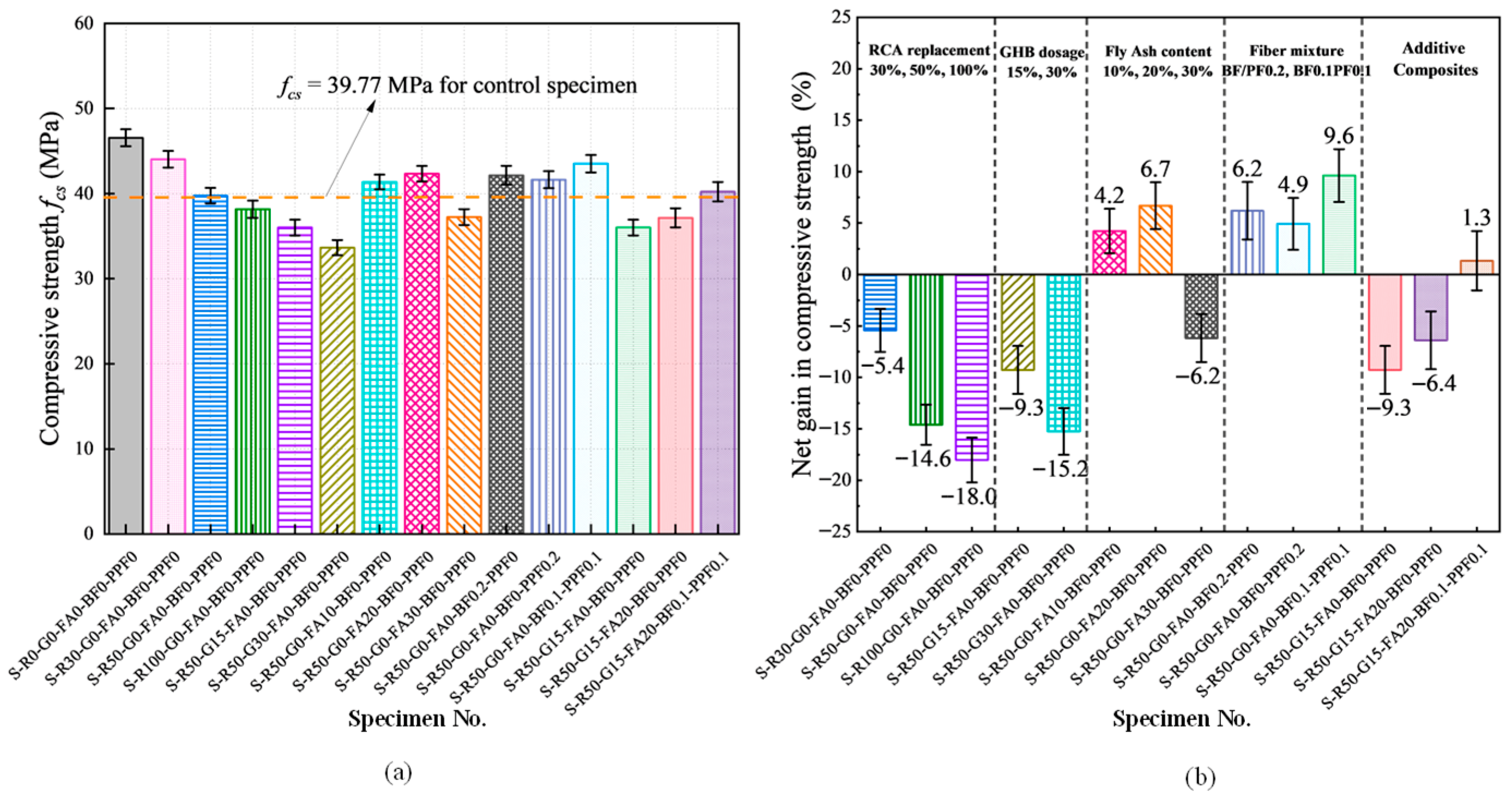
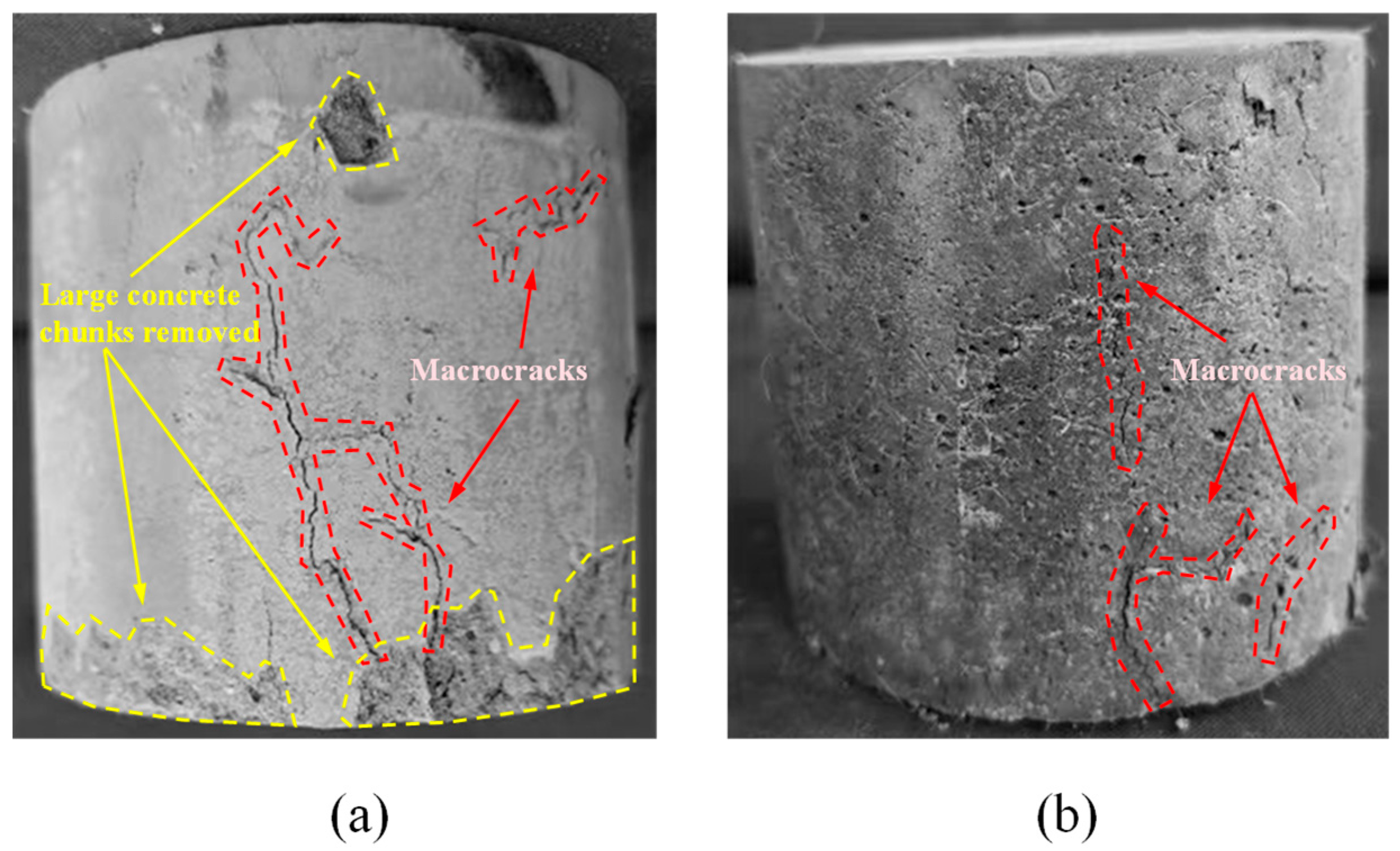
3.1. Compressive Strength
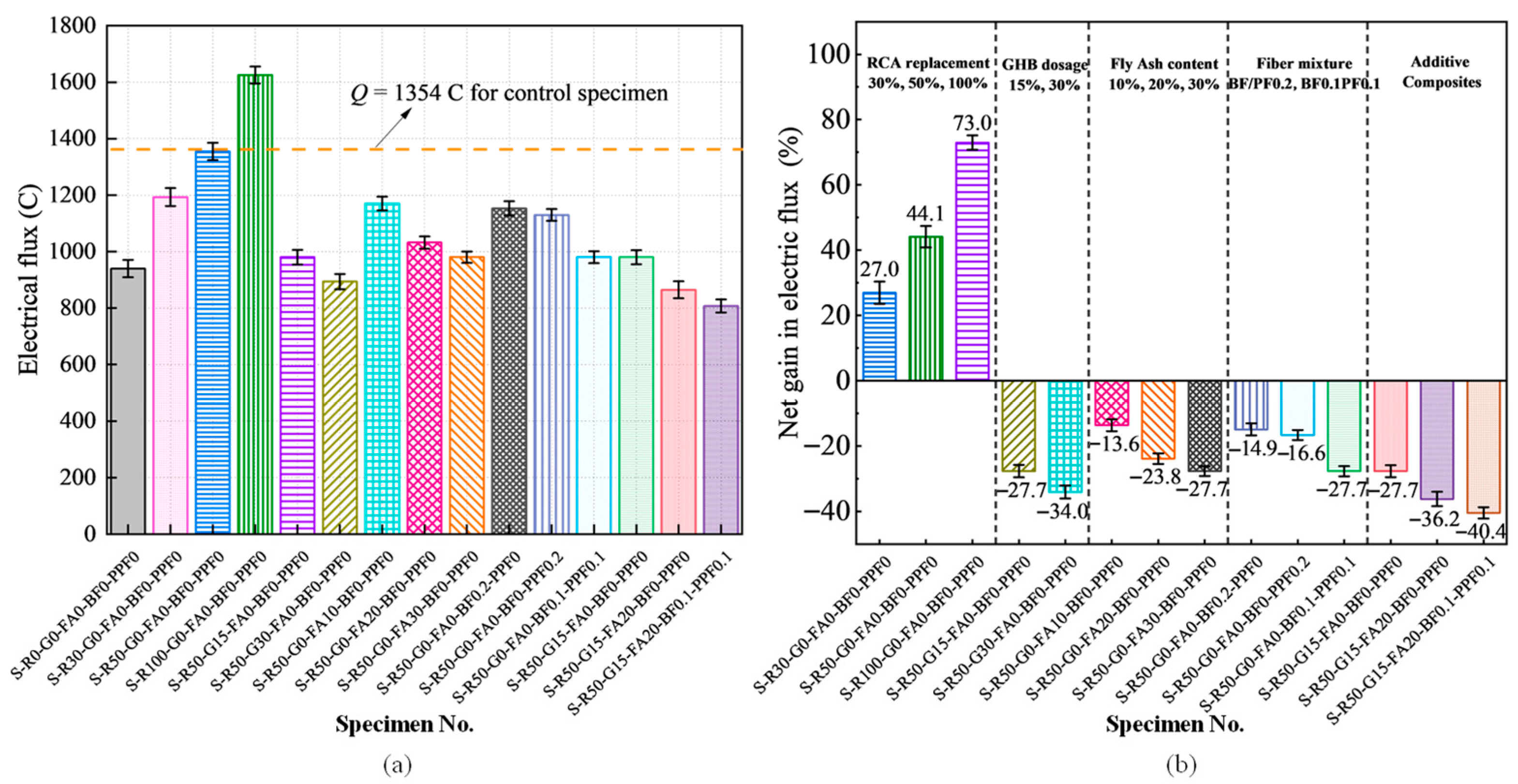
3.2. Chloride Permeability
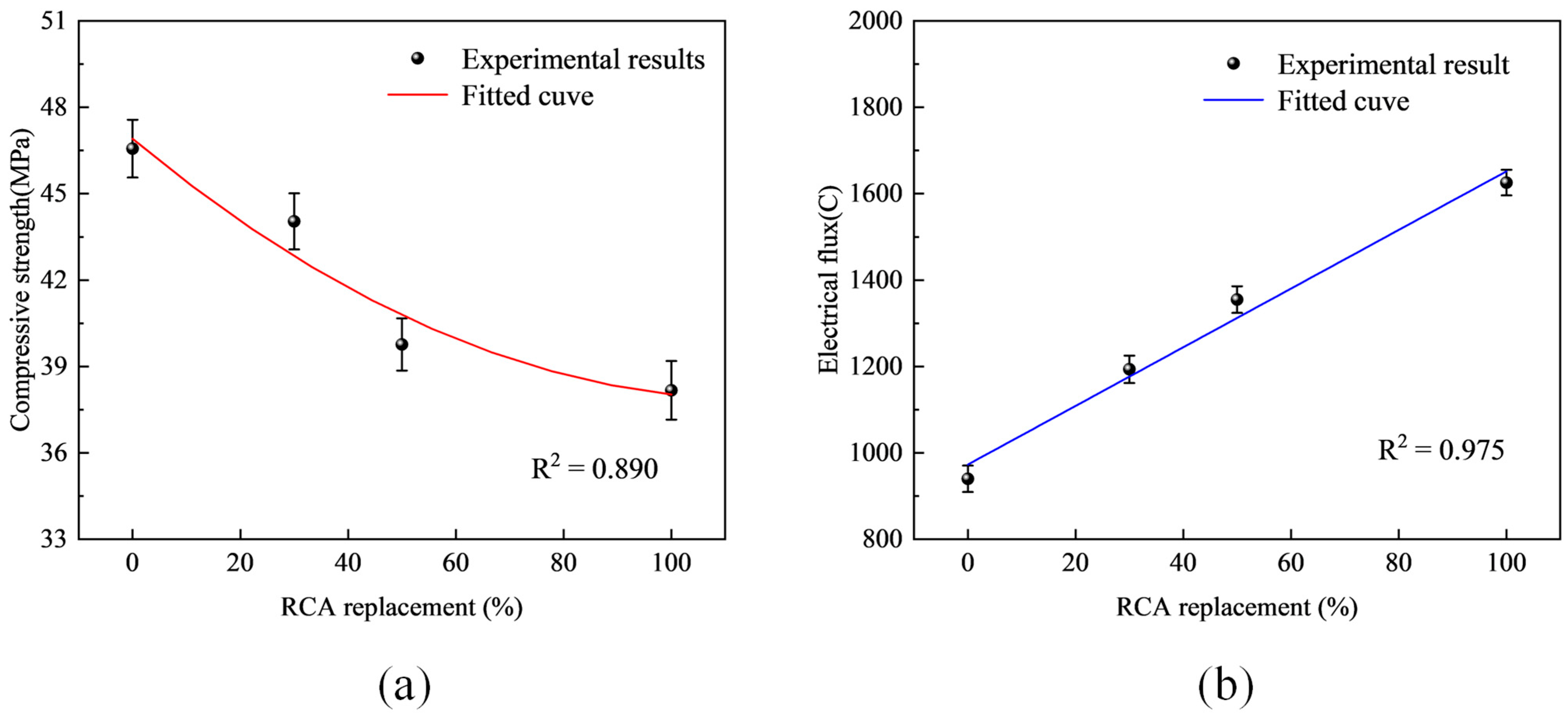
3.3. Effect of RCA Replacement on Compressive Strength and Chloride Permeability
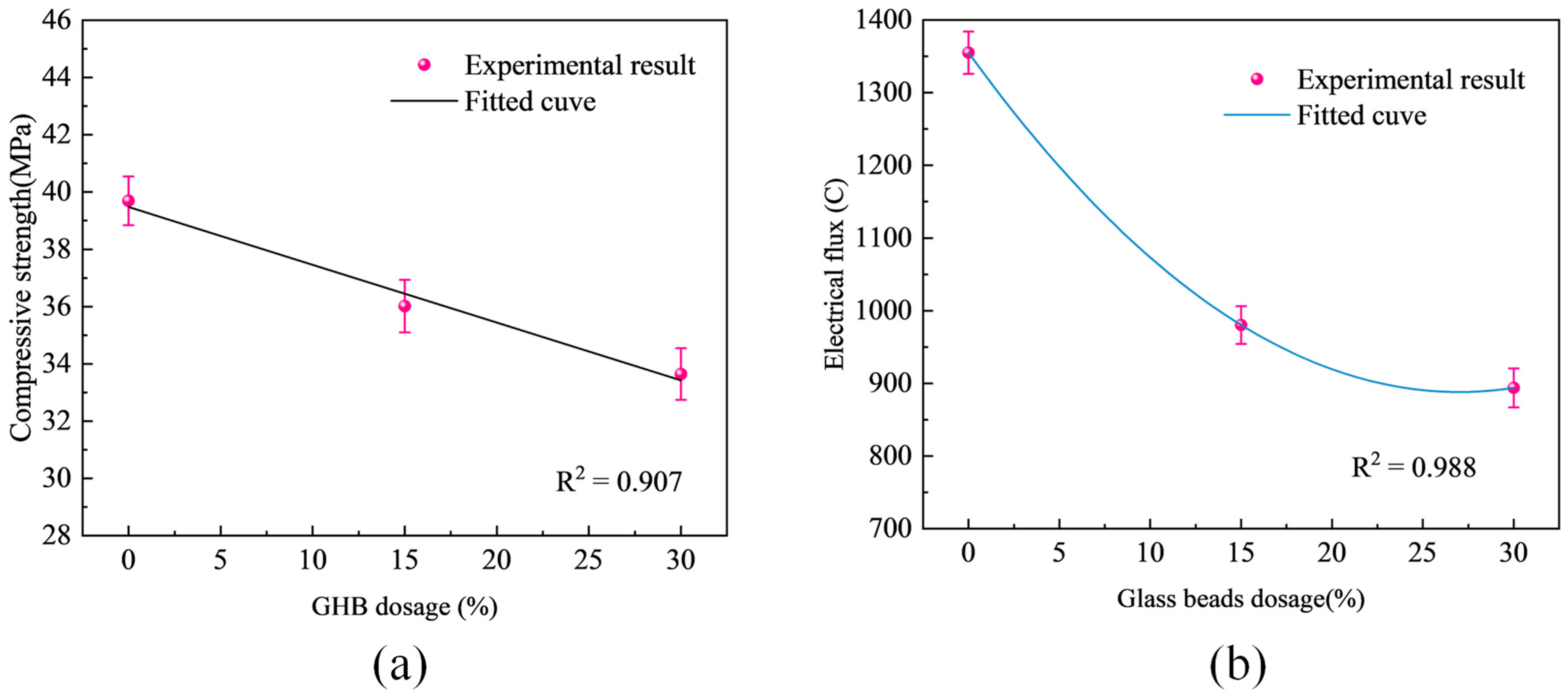
3.4. Effect of GHB Dosage on Compressive Strength and Chloride Permeability
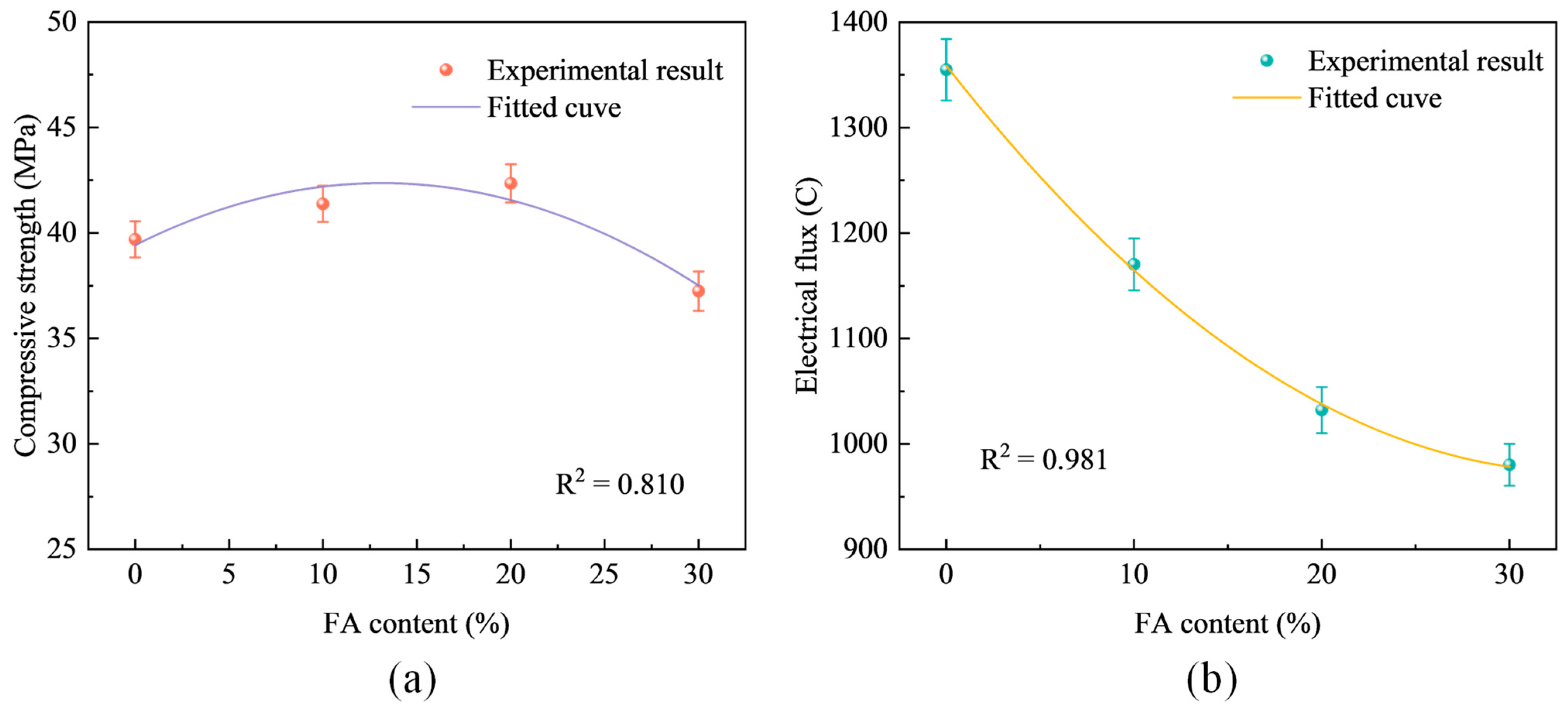
3.5. Effect of FA Content on Compressive Strength and Chloride Permeability
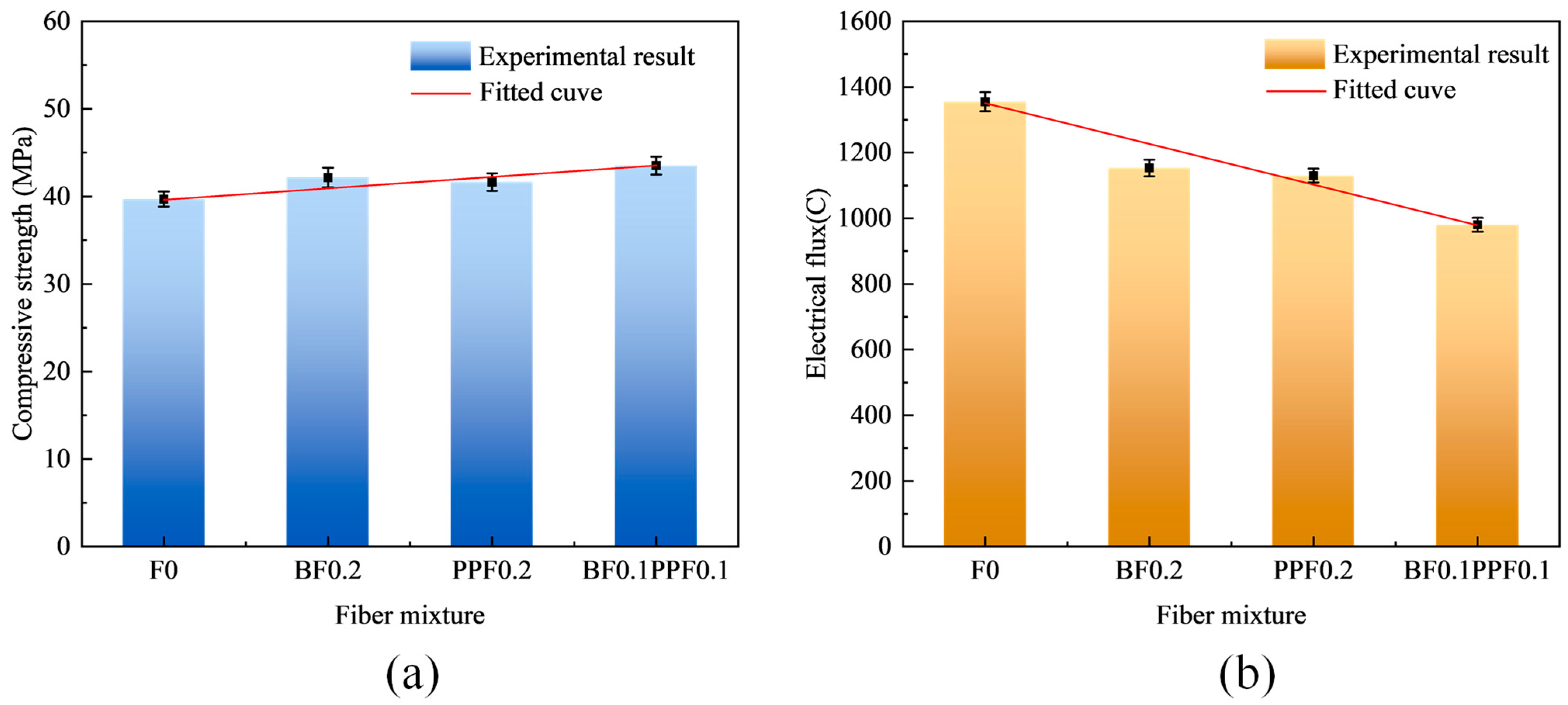
3.6. Effect of Single and Hybrid Fibers on Compressive Strength and Chloride Permeability
4. Performance Assessment and Ranking of RAC
5. Future Work
- (i)
- Long-term mechanical and durability performance of hybrid RAC under combined axial, cyclic, and environmental loading.
- (ii)
- Seismic behavior of RAC shear walls and columns in dual structural systems, accounting for soil–structure interaction.
- (iii)
- Development of design guidelines and constitutive models for RAC in high-rise applications, incorporating life-cycle assessment and resilience-based metrics.
- (iv)
- Further experimental investigations should be performed to evaluate the structural performance of modified RAC under realistic loading scenarios (e.g., bending, shear, or combined loading) to demonstrate its applicability in engineering structures.
6. Conclusions
- (1)
- Increasing RCA replacement reduced both the compressive strength and chloride permeability of RAC. Notably, 100% RCA replacement showed an 18.1% strength reduction and a 72.7% increase in electric flux, deteriorating its permeability grade from ‘very low’ to ‘low’ per ASTM C1202.
- (2)
- Single GHB or FA additions enhanced chloride resistance but compromised compressive strength. A 30% GHB dosage reduced electric flux by 34.1% but decreased strength by 9.4%, whereas a 30% FA content offered a 16.3% flux reduction with a smaller 6.0% strength loss.
- (3)
- FA content exhibited a nonlinear effect on strength, peaking at a 6.6% increase with 20% FA dosage but decreasing at 30%. Conversely, chloride resistance was improved consistently, with electric flux decreasing by approximately 30% at 30% FA content.
- (4)
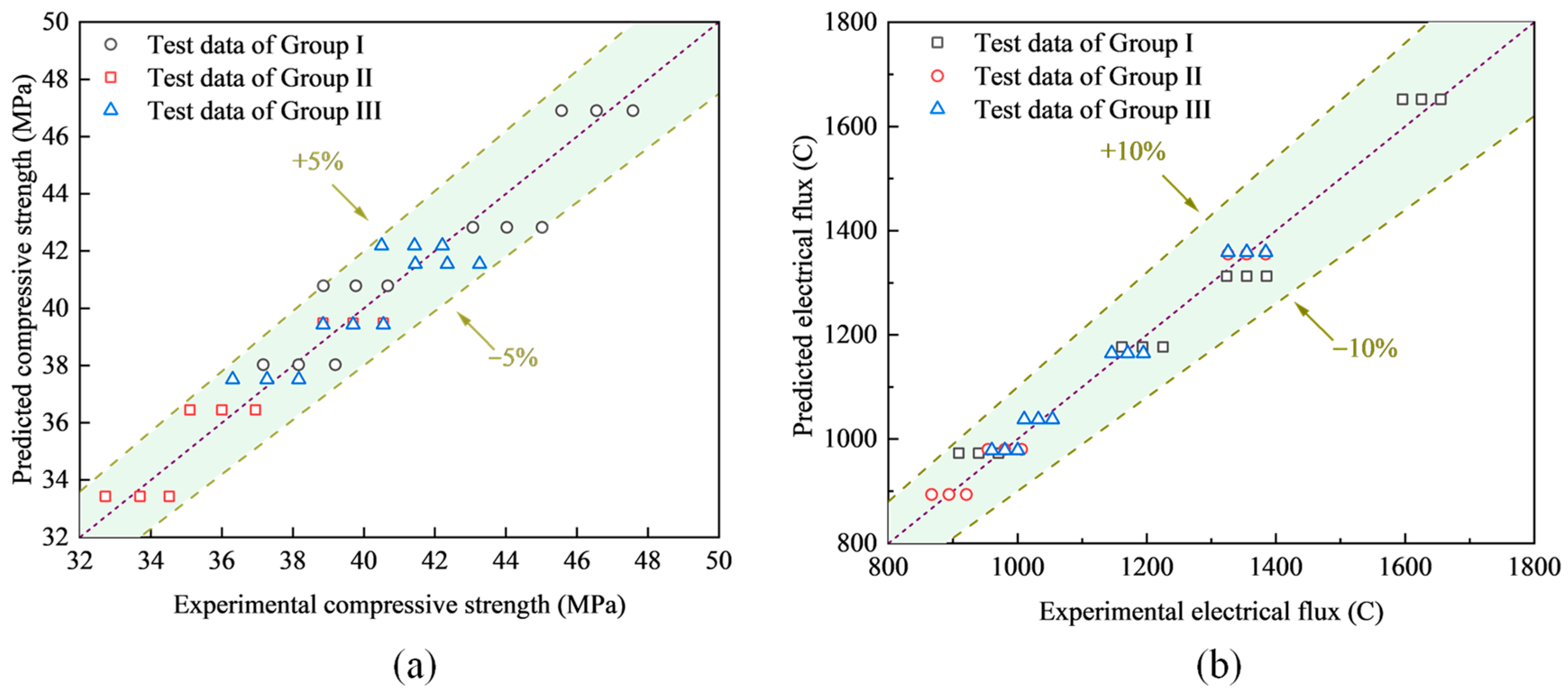
- Multilinear correlations were established among the compressive strength, electric flux, and dosages of RCAs, GHBs, and FA. The proposed regression models enable the prediction of compressive strength and electric flux based on the known values of a single additive.
- (5)
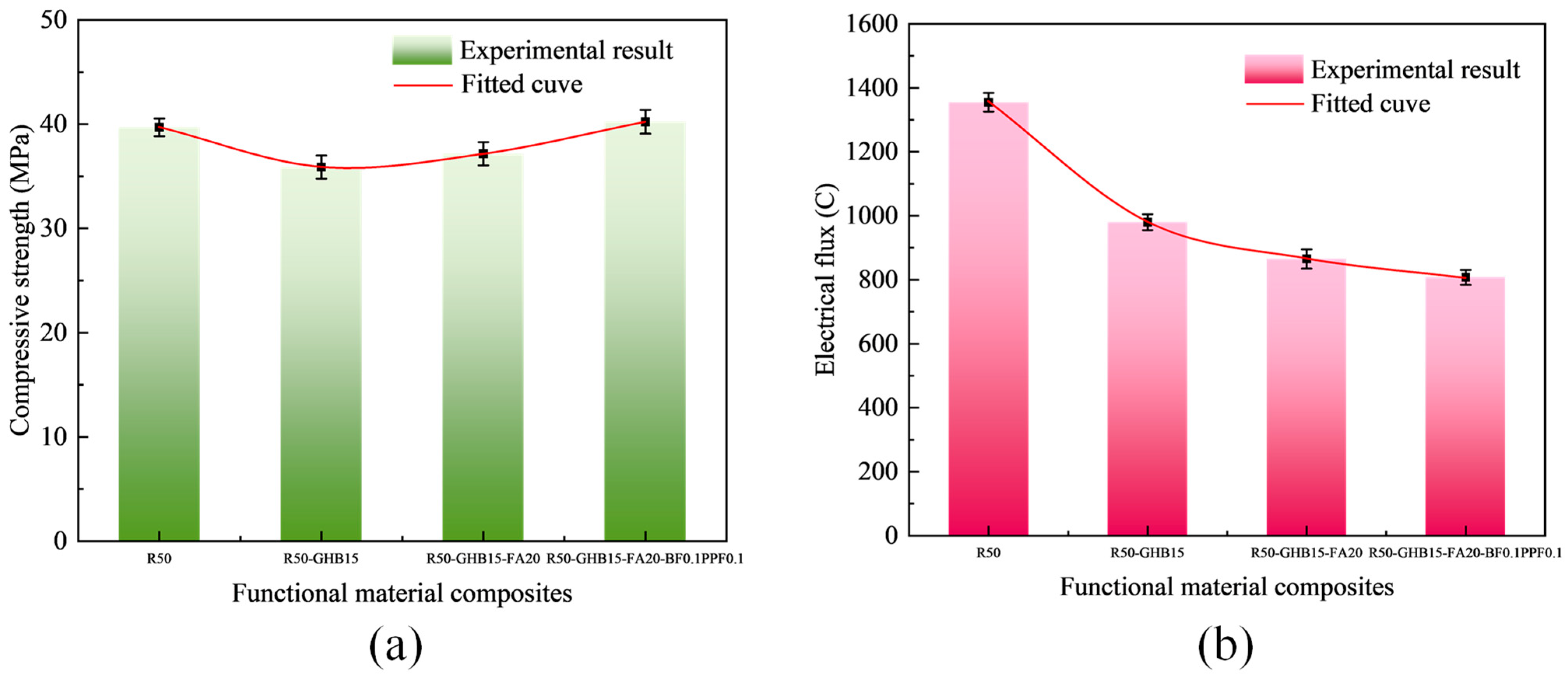
- Hybrid BF-PPF significantly improved both strength and permeability more effectively than single BF or PPF. The optimal hybrid mix (0.1% each) yielded the highest enhancements with a 10.3% increase in compressive strength and a 28.0% reduction in electric flux.
- (6)
- According to the overall performance score of multicriteria assessment, RAC (50% RCA replacement) reinforced with 15% GHB dosage, 20% FA content, and 0.1% dosage of hybrid BF-PPF achieved the highest overall performance score, demonstrating a significant increase of 40.7% in electric flux without any losses in compressive strength.
Author Contributions
Funding
Data Availability Statement
Conflicts of Interest
References
- Mukharjee, B.B.; Barai, S.V. Influence of Nano-Silica on the properties of recycled aggregate concrete. Constr. Build. Mater. 2014, 55, 29–37. [Google Scholar] [CrossRef] [Scilit]
- Sasanipour, H.; Aslani, F. Durability properties evaluation of self-compacting concrete prepared with waste fine and coarse recycled concrete aggregates. Constr. Build. Mater. 2020, 236, 117540. [Google Scholar] [CrossRef] [Scilit]
- de Andrade Salgado, F.; de Andrade Silva, F. Recycled aggregates from construction and demolition waste towards an application on structural concrete: A review. J. Build. Eng. 2022, 52, 104452. [Google Scholar] [CrossRef] [Scilit]
- Tam, V.W.Y.; Gao, X.F.; Tam, C.M.; Chan, C.H. New approach in measuring water absorption of recycled aggregates. Constr. Build. Mater. 2008, 22, 364–369. [Google Scholar] [CrossRef] [Scilit]
- Kong, D.; Lei, T.; Zheng, J.; Ma, C.; Jiang, J.; Jiang, J. Effect and mechanism of surface-coating pozzalanics materials around aggregate on properties and ITZ microstructure of recycled aggregate concrete. Constr. Build. Mater. 2010, 24, 701–708. [Google Scholar] [CrossRef] [Scilit]
- Zhang, H.; Tang, H.; Yang, Z.; Gong, F. Chloride-induced reinforcement corrosion and rust filling in recycled aggregate concrete. Constr. Build. Mater. 2025, 486, 141997. [Google Scholar] [CrossRef] [Scilit]
- Xiao, J.; Li, W.; Sun, Z.; Lange, D.A.; Shah, S.P. Properties of interfacial transition zones in recycled aggregate concrete tested by nanoindentation. Cem. Concr. Compos. 2013, 37, 276–292. [Google Scholar] [CrossRef] [Scilit]
- Wang, J.; Yuan, Y.; Xu, Q.; Qin, H. Prediction of corrosion-induced longitudinal cracking time of concrete cover surface of reinforced concrete structures under load. Materials 2022, 15, 7395. [Google Scholar] [CrossRef] [Scilit]
- Wang, J.; Ng, P.L.; Su, H.; Du, J. Meso-scale modelling of stress effect on chloride diffusion in concrete using three-phase composite sphere model. Mater. Struct. 2019, 52, 55. [Google Scholar] [CrossRef] [Scilit]
- Chernin, L.; Val, D.V.; Volokh, K.Y. Analytical modelling of concrete cover cracking caused by corrosion of reinforcement. Mater. Struct. 2010, 43, 543–556. [Google Scholar] [CrossRef] [Scilit]
- Otsuki, N.; Miyazato, S.; Yodsudjai, W. Influence of recycled aggregate on interfacial transition zone, strength, chloride penetration and carbonation of concrete. J. Mater. Civ. Eng. 2003, 15, 443–451. [Google Scholar] [CrossRef] [Scilit]
- Villagrán-Zaccardi, Y.A.; Zega, C.J.; Di Maio, Á.A. Chloride penetration and binding in recycled concrete. J. Mater. Civ. Eng. 2008, 20, 449–455. [Google Scholar] [CrossRef] [Scilit]
- Kang, X.; Tong, X.; Chen, R.; Chen, Y. Effect of ITZ on chloride ion transport in recycled aggregate concrete: Analytical and numerical studies. J. Build. Eng. 2024, 83, 108443. [Google Scholar] [CrossRef] [Scilit]
- Srubar, W.V., III. Stochastic service-life modeling of chloride-induced corrosion in recycled-aggregate concrete. Cem. Concr. Compos. 2015, 55, 103–111. [Google Scholar] [CrossRef] [Scilit]
- Zhao, Y.; Dong, J.; Wu, Y.; Wang, H.; Li, X.; Xu, Q. Steel corrosion and corrosion-induced cracking in recycled aggregate concrete. Corros. Sci. 2014, 85, 241–250. [Google Scholar] [CrossRef] [Scilit]
- Zhang, H.; Zhao, Y. Performance of recycled concrete beams under sustained loads coupled with chloride ion (Cl−) ingress. Constr. Build. Mater. 2016, 128, 96–107. [Google Scholar] [CrossRef] [Scilit]
- Bagheri, A.; Zanganeh, H.; Alizadeh, H.; Shakerinia, M.; Marian, M.A.S. Comparing the performance of fine fly ash and silica fume in enhancing the properties of concretes containing fly ash. Constr. Build. Mater. 2013, 47, 1402–1408. [Google Scholar] [CrossRef] [Scilit]
- de Brito, J.; Kurda, R. The past and future of sustainable concrete: A critical review and new strategies on cement-based materials. J. Clean. Prod. 2021, 281, 123558. [Google Scholar] [CrossRef] [Scilit]
- Gopalakrishna, B.; Dinakar, P. The evaluation of the life cycle and corrosion properties of recycled aggregate geopolymer concrete incorporating fly ash and GGBS. J. Build. Eng. 2024, 94, 109977. [Google Scholar] [CrossRef] [Scilit]
- Lin, H.; Takasu, K.; Suyama, H.; Koyamada, H.; Liu, S. A study on properties, static and dynamic elastic modulus of recycled concrete under the influence of modified fly ash. Constr. Build. Mater. 2022, 347, 128585. [Google Scholar] [CrossRef] [Scilit]
- Zhang, P.; Chen, X.; Qi, D.; Li, H.; Wang, Z.; Chen, Y.; Hou, G.; Zhang, D. Effect of GGBS and fly ash on the microstructure, mechanical properties, and hydration of ferroaluminate cement. Mater. Struct. 2025, 58, 188. [Google Scholar] [CrossRef] [Scilit]
- Kurda, R.; de Brito, J.; Silvestre, J.D. Combined influence of recycled concrete aggregates and high contents of fly ash on concrete properties. Constr. Build. Mater. 2017, 157, 554–572. [Google Scholar] [CrossRef] [Scilit]
- Banthia, N.; Gupta, R. Hybrid fiber reinforced concrete (HyFRC): Fiber synergy in high strength matrices. Mater. Struct. 2004, 37, 707–716. [Google Scholar] [CrossRef] [Scilit]
- Fu, Q.; Niu, D.; Zhang, J.; Huang, D.; Wang, Y.; Hong, M.; Zhang, L. Dynamic compressive mechanical behaviour and modelling of basalt-polypropylene fibre-reinforced concrete. Arch. Civ. Mech. Eng. 2018, 18, 914–927. [Google Scholar] [CrossRef] [Scilit]
- Smarzewski, P. Influence of basalt-polypropylene fibres on fracture properties of high performance concrete. Compos. Struct. 2019, 209, 23–33. [Google Scholar] [CrossRef] [Scilit]
- Wang, D.; Ju, Y.; Shen, H.; Xu, L. Mechanical properties of high performance concrete reinforced with basalt fiber and polypropylene fiber. Constr. Build. Mater. 2019, 197, 464–473. [Google Scholar] [CrossRef] [Scilit]
- Afroughsabet, V.; Biolzi, L.; Monteiro, P.J.M. The effect of steel and polypropylene fibers on the chloride diffusivity and drying shrinkage of high-strength concrete. Compos. Part B Eng. 2018, 139, 84–96. [Google Scholar] [CrossRef] [Scilit]
- Algin, Z.; Ozen, M. The properties of chopped basalt fibre reinforced self-compacting concrete. Constr. Build. Mater. 2018, 186, 678–685. [Google Scholar] [CrossRef] [Scilit]
- Sadrmomtazi, A.; Tahmouresi, B.; Saradar, A. Effects of silica fume on mechanical strength and microstructure of basalt fiber reinforced cementitious composites (BFRCC). Constr. Build. Mater. 2018, 162, 321–333. [Google Scholar] [CrossRef] [Scilit]
- Ahmed, W.; Lim, C.W. Multicriteria performance assessment of sustainable recycled concrete produced via hybrid usage of basalt, polypropylene and glass fiber. Constr. Build. Mater. 2023, 397, 132462. [Google Scholar] [CrossRef] [Scilit]
- Liu, Y.; Wang, W.; Chen, Y.F.; Ji, H. Residual stress-strain relationship for thermal insulation concrete with recycled aggregate after high temperature exposure. Constr. Build. Mater. 2016, 129, 37–47. [Google Scholar] [CrossRef] [Scilit]
- Wang, W.; Zhao, L.; Liu, Y.; Li, Z. Mechanical properties and stress-strain relationship in axial compression for concrete with added glazed hollow beads and construction waste. Constr. Build. Mater. 2014, 71, 425–434. [Google Scholar] [CrossRef] [Scilit]
- Ma, G.; Zhang, Y.; Liu, Y.; Li, Z. Seismic behaviour of recycled aggregate thermal insulation concrete (Ratic) shear walls. Mag. Concr. Res. 2015, 67, 145–162. [Google Scholar] [CrossRef] [Scilit]
- Hao, L.; Liu, Y.; Wang, W.; Zhang, J.; Zhang, Y. Effect of salty freeze-thaw cycles on durability of thermal insulation concrete with recycled aggregates. Constr. Build. Mater. 2018, 189, 478–486. [Google Scholar] [CrossRef] [Scilit]
- Wang, Z.; Liu, Y.; Tu, J.; Gao, Y. Calculation analysis method to model the creep of recycled aggregate of thermal insulation concrete. Constr. Build. Mater. 2022, 331, 127229. [Google Scholar] [CrossRef] [Scilit]
- Song, B.; Xu, X.; Shangguan, Y.; Wang, Q.; Yao, L.; Guo, L.; Lei, H. Experimental and numerical investigation of square glazed hollow beads recycled aggregate concrete-filled double-skin steel tubular (GRCFDST) short columns under axial compression. Constr. Build. Mater. 2025, 466, 140254. [Google Scholar] [CrossRef] [Scilit]
- Prasittisopin, L.; Tuvayanond, W.; Kang, T.H.K.; Kaewunruen, S. Concrete mix design of recycled concrete aggregate (rca): Analysis of review papers, characteristics, research trends, and underexplored topics. Resources 2025, 14, 21. [Google Scholar] [CrossRef] [Scilit]
- Du, S.; Liang, B.; Zhang, Y.; Lei, C.; Wang, C.; Jin, Z.; Li, B.; Li, X.; Liu, Y. Mechanical properties and damage characteristics analysis on recycled aggregate concrete with glazed hollow beads after high temperatures by acoustic emission method. J. Build. Eng. 2024, 90, 109429. [Google Scholar] [CrossRef] [Scilit]
- Wang, X.; Wang, W.; Liu, Y.; Duan, P.; Liang, X.; Zhang, H.; Ge, Z. Enhancing chloride ion permeability resistance of recycled aggregate concrete through internal curing with glazed hollow beads. Constr. Build. Mater. 2024, 438, 137293. [Google Scholar] [CrossRef] [Scilit]
- Zeng, M.H.; Wang, H.W.; Wang, Y.J.; Zheng, J.J.; Wu, Z.M. Meso-crack propagation process of concrete based on macro-fracture parameters: Numerical and experimental. Theor. Appl. Fract. Mech. 2024, 129, 104216. [Google Scholar] [CrossRef] [Scilit]
- GB/T 25177-2010; Recycled Coarse Aggregate for Concrete. Standards Press of China: Beijing, China, 2017.
- GB/T1596-2017; Fly Ash Used for Cement and Concrete. Standards Press of China: Beijing, China, 2017.
- GB/T 18736-2017; Mineral Admixtures for High Strength and High Performance Concrete. Standards Press of China: Beijing, China, 2017.
- Li, B.; Gao, A.; Li, Y.; Xiao, H.; Chen, N.; Xia, D.; Wang, S.; Li, C. Effect of silica fume content on the mechanical strengths, compressive stress-strain behavior and microstructures of geopolymeric recycled aggregate concrete. Constr. Build. Mater. 2023, 384, 131417. [Google Scholar] [CrossRef] [Scilit]
- GB/T 50081-2019; Standard for Test Methods of Concrete Physical and Mechanical Properties. Standards Press of China: Beijing, China, 2017.
- ASTM C39/C39M-23; Standard Test Method for Compressive Strength of Cylindrical Concrete Specimens. American Society for Testing and Materials (ASTM): Conshohocken, PA, USA, 2023.
- GB/T 50082-2009; Test Method of Long-Term and Durability on Ordinary Concrete. Standards Press of China: Beijing, China, 2009.
- ASTM C1202-2010; Standard Test Method for Electrical Indication of Concrete Ability to Resist Chloride Ion Penetration. American Society for Testing and Materials (ASTM): West Conshohocken, PA, USA, 2010.
- JGJ/T 443-2018; Technical Standard for Recycled Concrete Structures. China Architecture & Building Press: Beijing, China, 2018.
- Ahmed, W.; Lim, C.W. Effective recycling of disposable medical face masks for sustainable green concrete via a new fiber hybridization technique. Constr. Build. Mater. 2022, 344, 128245. [Google Scholar] [CrossRef] [Scilit]
- He, W.; Kong, X.; Fu, Y.; Zhou, C.; Zheng, Z. Experimental investigation on the mechanical properties and microstructure of hybrid fiber reinforced recycled aggregate concrete. Constr. Build. Mater. 2020, 261, 120488. [Google Scholar] [CrossRef] [Scilit]
- Banthia, N.; Sappakittipakorn, M. Toughness enhancement in steel fiber reinforced concrete through fiber hybridization. Cem. Concr. Res. 2007, 37, 1366–1372. [Google Scholar] [CrossRef] [Scilit]
- El Ouni, M.H.; Shah, S.H.A.; Ali, A.; Muhammad, S.; Mahmood, M.S.; Ali, B.; Marzouki, R.; Raza, A. Mechanical performance, water and chloride permeability of hybrid steel-polypropylene fiber-reinforced recycled aggregate concrete. Constr. Build. Mater. 2022, 16, e00831. [Google Scholar] [CrossRef] [Scilit]
- Sun, D.; Fan, X.; Xie, Y.; Ren, X.; Ding, F.; Wu, R.; Ji, H. Experimental study and multi-objective optimization of the shear mechanical properties of recycled aggregate concrete with hybrid fibers and nano SiO2. Constr. Build. Mater. 2024, 429, 136463. [Google Scholar] [CrossRef] [Scilit]
- Lima, C.; Caggiano, A.; Faella, C.; Martinelli, E.; Pepe, M.; Realfonzo, R. Physical properties and mechanical behaviour of concrete made with recycled aggregates and fly ash. Constr. Build. Mater. 2013, 47, 547–559. [Google Scholar] [CrossRef] [Scilit]
- Saravanakumar, P.; Dhinakaran, G. Durability aspects of HVFA-based recycled aggregate concrete. Mag. Concr. Res. 2014, 66, 186–195. [Google Scholar] [CrossRef] [Scilit]
- Li, Y.; Sheng, J.; Tan, K.H.; Gao, Y. Effect of pore structure on shear resistance and chloride transport of macro-synthetic fiber reinforced concrete. Constr. Build. Mater. 2023, 382, 131366. [Google Scholar] [CrossRef] [Scilit]
- Cibelli, A.; Di Luzio, G.; Ferrara, L. Numerical simulation of the chloride penetration in cracked and healed UHPC via a discrete multiphysics model. J. Eng. Mech. ASCE 2023, 149, 05023001. [Google Scholar] [CrossRef] [Scilit]
- Li, J.; Zhang, X.; Xu, X.; Wu, H. Fully Recycled Aggregate Concrete Composite Functional Additives: Proportioning Tests and Verification of Engineering Adaptability. Results Eng. 2025, 27, 106910. [Google Scholar] [CrossRef] [Scilit]
- Fishburn, P.C. Methods of estimating additive utilities. Manag. Sci. 1967, 13, 435–453. [Google Scholar] [CrossRef] [Scilit]
- Hossain, M.U.; Liu, J.C.; Xuan, D.; Ng, S.T.; Ye, H.; Abdulla, S.J. Designing sustainable concrete mixes with potentially alternative binder systems: Multicriteria decision making process. J. Build. Eng. 2022, 45, 103587. [Google Scholar] [CrossRef] [Scilit]
- Asadoullahtabar, S.R.; Asgari, A.; Tabari, M.M.R. Assessment, identifying, and presenting a plan for the stabilization of loessic soils exposed to scouring in the path of gas pipelines, case study: Maraveh-Tappeh city. Eng. Geol. 2024, 342, 107747. [Google Scholar] [CrossRef] [Scilit]
- Bagheri, M.; Malidarreh, N.R.; Ghaseminejad, V.; Asgari, A. Seismic resilience assessment of RC superstructures on long–short combined piled raft foundations: 3D SSI modeling with pounding effects. Structures 2025, 81, 110176. [Google Scholar] [CrossRef] [Scilit]



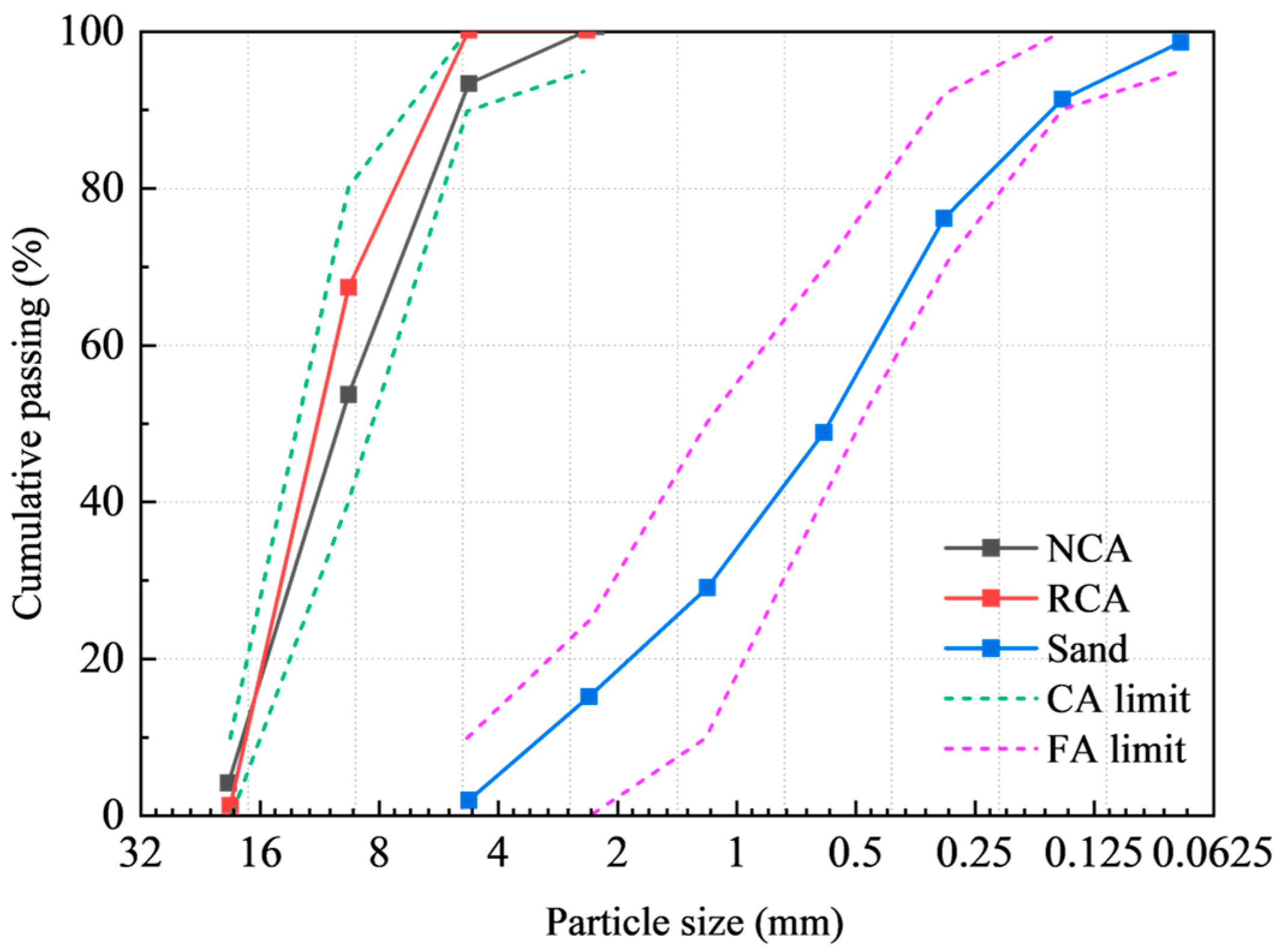
| Materials | Size (mm) | Apparent Density (kg/m3) | Compact Density (kg/m3) | Water Absorption Rate (%) | Clay Content (%) | Crush Value (%) |
|---|---|---|---|---|---|---|
| NCA | 5–10 | 2560 | 1570 | 0.43 | 0.35 | 8.90 |
| RCA | 5–10 | 2450 | 1401 | 4.03 | 0.45 | 17.5 |
| River sand | 0.08–4.75 | 2640 | 1710 | 4.93 | 1.50 | – |
| SSA | 5–10 | 3290 | 1870 | – | – | 6.30 |
| Materials | SiO2 | Al2O3 | Fe2O3 | CaO | MgO | SO3 | MnO | P2O3 |
|---|---|---|---|---|---|---|---|---|
| Cement | 22.45 | 4.40 | 2.05 | 61.70 | 4.52 | 2.20 | – | – |
| SF | 95.73 | 0.72 | 4.25 | 0.35 | 0.70 | 0.65 | – | – |
| FA | 65.20 | 20.22 | 4.30 | 3.25 | 2.05 | 0.69 | – | – |
| SSA | 19.45 | 3290 | 22.32 | 37.53 | 6.04 | – | 1.90 | 1.38 |
| GHBs | 75.90 | 13.11 | 0.92 | 1.17 | 0.06 | – | 0.08 | 0.07 |
| Bulk Density (kg/m3) | Cylinder Compressive Strength (kPa) | Thermal Conductivity (W⋅m−1⋅K−1) | Water Absorption Ratio (g/g) | |
|---|---|---|---|---|
| 112.5 | 215.7 | 0.042 | Tap water | Saturated lime water |
| 5.3 | 3.7 | |||
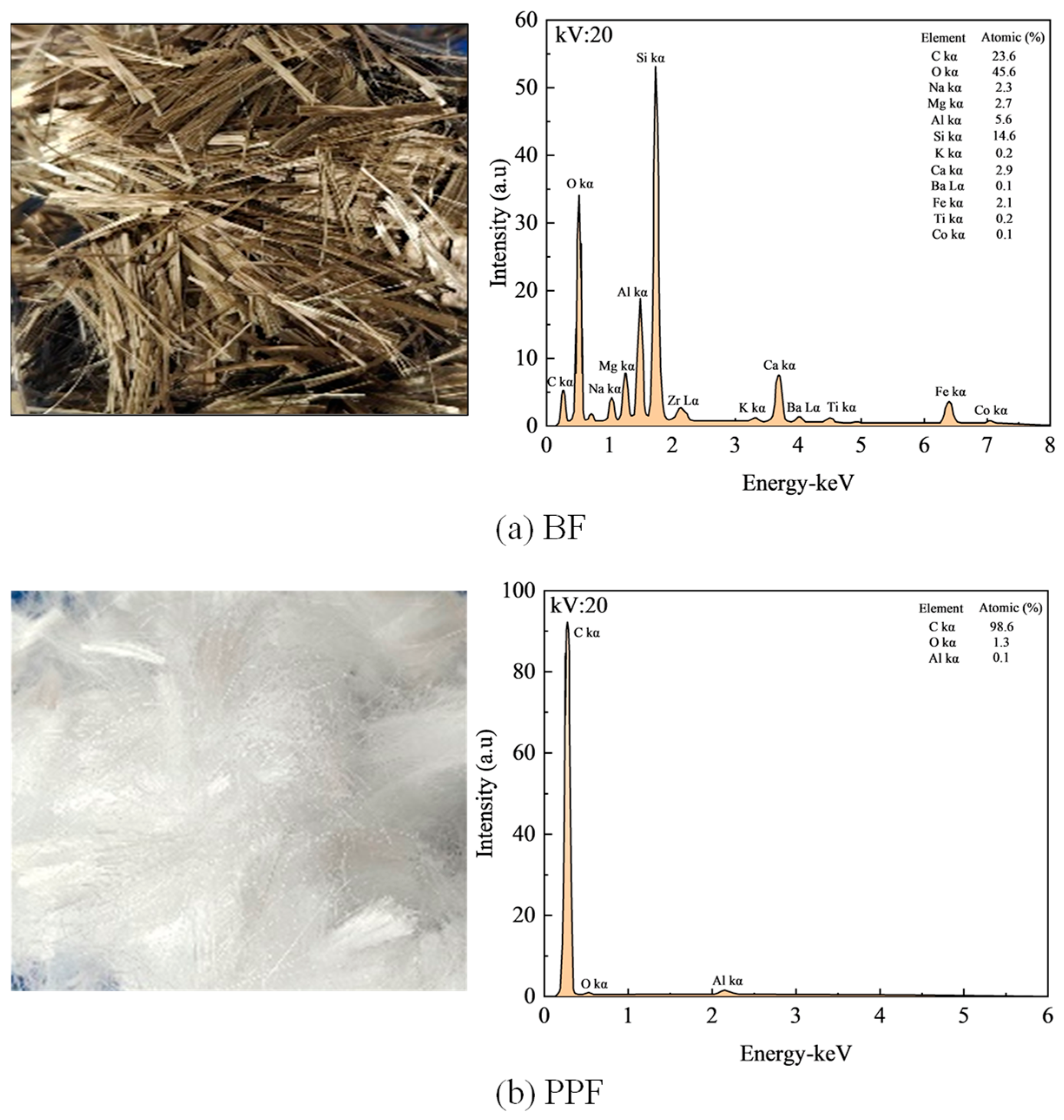
| Fiber Type | Length (mm) | Diameter (μm) | Elastic Modulus (GPa) | Tensile Strength (MPa) | Density (g/cm3) | Melting Point (°C) | Elongation at Break (%) |
|---|---|---|---|---|---|---|---|
| PPF | 12 | 69 | 5.0 | 490 | 0.84 | 180 | 8.2 |
| BF | 12 | 15 | 99.0 | 3000 | 2.75 | 1500 | 3.7 |
| Group | Group Purpose and Factorial Coverage | Specimen No. | Aggregate (kg/m3) | Binder (kg/m3) | Fiber Dosage (%) | GHB Dosage (%) | ||||||
|---|---|---|---|---|---|---|---|---|---|---|---|---|
| NCA | RCA | SSA | Sand | Cement | SF | FA | PPF | BF | ||||
| Control | Reference mix (50% RCA, no additives) | S-RA50-G0-FA0-BF0-PPF0 | 432 | 432 | 216 | 460 | 420 | 31 | 0 | 0 | 0 | 0 |
| I | RCA ratio effect with varying RCA (30%, 50%, 100%) | S-RA30-G0-FA0-BF0-PPF0 | 605 | 259 | 216 | 460 | 420 | 31 | 0 | 0 | 0 | 0 |
| S-RA50-G0-FA0-BF0-PPF0 | 432 | 432 | 216 | 460 | 420 | 31 | 0 | 0 | 0 | 0 | ||
| S-RA100-G0-FA0-BF0-PPF0 | 0 | 864 | 216 | 460 | 420 | 31 | 0 | 0 | 0 | 0 | ||
| II | GHB dosage effect with varying GHB (15%, 30%) | S-RA50-G15-FA0-BF0-PPF0 | 432 | 432 | 216 | 391 | 420 | 31 | 0 | 0 | 0 | 69 |
| S-RA50-G30-FA0-BF0-PPF0 | 432 | 432 | 216 | 322 | 420 | 31 | 0 | 0 | 0 | 138 | ||
| III | FA content effect with varying FA (10%, 20%, 30%) | S-RA50-G0-FA10-BF0-PPF0 | 432 | 432 | 216 | 460 | 378 | 31 | 42 | 0 | 0 | 0 |
| S-RA50-G0-FA20-BF0-PPF0 | 432 | 432 | 216 | 460 | 336 | 31 | 84 | 0 | 0 | 0 | ||
| S-RA50-G0-FA30-BF0-PPF0 | 432 | 432 | 216 | 460 | 294 | 31 | 126 | 0 | 0 | 0 | ||
| IV | Fiber hybridization—single vs. hybrid fibers | S-RA50-G0-FA0-BF0.2-PPF0 | 432 | 432 | 216 | 460 | 420 | 31 | 0 | 0 | 0.2 | 0 |
| S-RA50-G0-FA0-BF0-PPF0.2 | 432 | 432 | 216 | 460 | 420 | 31 | 0 | 0.2 | 0 | 0 | ||
| S-RA50-G0-FA0-BF0.1-PPF0.1 | 432 | 432 | 216 | 460 | 420 | 31 | 0 | 0.1 | 0.1 | 0 | ||
| V | Synergistic effects—GHB + FA combination | S-RA50-G15-FA20-BF0-PPF0 | 432 | 432 | 216 | 391 | 336 | 31 | 84 | 0 | 0 | 69 |
| Synergistic effects—GHB + FA + Fibers combination | S-RA50-G15-FA20-BF0.1-PPF0.1 | 432 | 432 | 216 | 391 | 336 | 31 | 84 | 0.1 | 0.1 | 69 | |
| Electric Flux (C) | Chloride Penetrability | Typical Concrete Example |
|---|---|---|
| >4000 | High | High w/c ratio (>0.6) concrete |
| 2000 to 4000 | Moderate | Moderate w/c ratio (0.5–0.6) concrete |
| 1000 to 2000 | Low | Low w/c ratio (<0.5) concrete |
| 100 to 1000 | Very low | Low w/c ratio concrete with 5–10% silica fume |
| <100 | Negligible | Polymer-modified concrete with 5–10% silica fume |
| Specimen No. | Compressive Strength (MPa) | Electrical Flux (C) |
|---|---|---|
| RA0-G0-FA0-BF0-PPF0 | 46.565 ± 1.871 | 939.891 ± 30.654 |
| RA30-G0-FA0-BF0-PPF0 | 44.037 ± 1.974 | 1193.411 ± 31.735 |
| RA50-G0-FA0-BF0-PPF0 | 39.765 ± 1.506 | 1354.743 ± 40.906 |
| RA100-G0-FA0-BF0-PPF0 | 38.172 ± 1.114 | 1625.597 ± 59.588 |
| RA50-G15-FA0-BF0-PPF0 | 36.016 ± 0.923 | 980.281 ± 25.956 |
| RA50-G30-FA0-BF0-PPF0 | 33.642 ± 1.402 | 893.822 ± 26.838 |
| RA50-G0-FA10-BF0-PPF0 | 41.376 ± 1.855 | 1170.340 ± 34.555 |
| RA50-G0-FA20-BF0-PPF0 | 42.351 ± 1.907 | 1032.113 ± 21.857 |
| RA50-G0-FA30-BF0-PPF0 | 37.245 ± 0.931 | 980.202 ± 20.021 |
| RA50-G0-FA0-BF0.2-PPF0 | 42.156 ± 1.122 | 1153.198 ± 25.194 |
| RA50-G0-FA0-BF0-PPF0.2 | 41.647 ± 1.729 | 1130.077 ± 20.945 |
| RA50-G0-FA0-BF0.1-PPF0.1 | 43.516 ± 1.025 | 980.262 ± 21.103 |
| RA50-G15-FA0-BF0-PPF0 | 36.016 ± 1.223 | 980.244 ± 24.898 |
| RA50-G15-FA20-BF0-PPF0 | 37.157 ± 1.436 | 865.029 ± 29.985 |
| RA50-G15-FA20-BF0.1-PPF0.1 | 40.227 ± 1.147 | 807.471 ± 23.182 |
| Mix ID | Ps | Rank |
|---|---|---|
| S-RA0-G0-FA0-BF0-PPF0 | 1.859 | 2 |
| S-RA30-G0-FA0-BF0-PPF0 | 1.622 | 8 |
| S-RA50-G0-FA0-BF0-PPF0 | 1.450 | 13 |
| S-RA100-G0-FA0-BF0-PPF0 | 1.316 | 14 |
| S-RA50-G15-FA0-BF0-PPF0 | 1.597 | 11 |
| S-RA50-G30-FA0-BF0-PPF0 | 1.627 | 6 |
| S-RA50-G0-FA10-BF0-PPF0 | 1.58 | 12 |
| S-RA50-G0-FA20-BF0-PPF0 | 1.692 | 5 |
| S-RA50-G0-FA30-BF0-PPF0 | 1.624 | 7 |
| S-RA50-G0-FA0-BF0.2-PPF0 | 1.605 | 10 |
| S-RA50-G0-FA0-BF0-PPF0.2 | 1.609 | 9 |
| S-RA50-G0-FA0-BF0.1-PPF0.1 | 1.758 | 3 |
| S-RA50-G15-FA20-BF0-PPF0 | 1.732 | 4 |
| S-RA50-G15-FA20-BF0.1-PPF0.1 | 1.864 | 1 |
Disclaimer/Publisher’s Note: The statements, opinions and data contained in all publications are solely those of the individual author(s) and contributor(s) and not of MDPI and/or the editor(s). MDPI and/or the editor(s) disclaim responsibility for any injury to people or property resulting from any ideas, methods, instructions or products referred to in the content. |
© 2026 by the authors. Licensee MDPI, Basel, Switzerland. This article is an open access article distributed under the terms and conditions of the Creative Commons Attribution (CC BY) license.
Share and Cite
Yu, X.; Lin, Z.; Li, Y.; Li, Z.; Chang, Z.; Liu, H.; Yu, Z.; Gong, P.; Hu, X.; Wang, Y. Experimental Study on Compressive Strength and Chloride Permeability Improvement of Recycled Aggregate Concrete Modified by Glazed Hollow Beads, Fly Ash, and Fiber Composites. Buildings 2026, 16, 810. https://doi.org/10.3390/buildings16040810
Yu X, Lin Z, Li Y, Li Z, Chang Z, Liu H, Yu Z, Gong P, Hu X, Wang Y. Experimental Study on Compressive Strength and Chloride Permeability Improvement of Recycled Aggregate Concrete Modified by Glazed Hollow Beads, Fly Ash, and Fiber Composites. Buildings. 2026; 16(4):810. https://doi.org/10.3390/buildings16040810
Chicago/Turabian StyleYu, Xin, Zhitao Lin, Yongtao Li, Zetong Li, Ziheng Chang, Hengjian Liu, Zhuohui Yu, Ping Gong, Xiaozhi Hu, and Yanjie Wang. 2026. "Experimental Study on Compressive Strength and Chloride Permeability Improvement of Recycled Aggregate Concrete Modified by Glazed Hollow Beads, Fly Ash, and Fiber Composites" Buildings 16, no. 4: 810. https://doi.org/10.3390/buildings16040810
APA StyleYu, X., Lin, Z., Li, Y., Li, Z., Chang, Z., Liu, H., Yu, Z., Gong, P., Hu, X., & Wang, Y. (2026). Experimental Study on Compressive Strength and Chloride Permeability Improvement of Recycled Aggregate Concrete Modified by Glazed Hollow Beads, Fly Ash, and Fiber Composites. Buildings, 16(4), 810. https://doi.org/10.3390/buildings16040810