Next Article in Journal
Clustering-Based Pricing of Inspection Services for Building Structures Affected by Water Leakage
Previous Article in Journal
Feasibility of Industrial High-Titanium Heavy Slag for Thermally Induced Self-Healing Asphalt Pavement Materials: Road Performance and Thermal Conductivity Analysis
 
 
Due to scheduled maintenance work on our servers, there may be short service disruptions on this website between 11:00 and 12:00 CEST on March 28th.
Article

Study on the Influence Mechanism of Dynamic Properties in PVA-Fiber-Reinforced Rubber Concrete Under High-Temperature- and Erosion-Induced Damage

1
School of Mining Engineering, Anhui University of Science and Technology, Huainan 232001, China
2
School of Civil Engineering, Anhui University of Science and Technology, Huainan 232001, China
*
Author to whom correspondence should be addressed.
Buildings 2026, 16(7), 1334; https://doi.org/10.3390/buildings16071334
Submission received: 20 January 2026 / Revised: 1 March 2026 / Accepted: 2 March 2026 / Published: 27 March 2026
(This article belongs to the Section Building Materials, and Repair & Renovation)

Abstract

To investigate the deterioration law of the mechanical properties of PVA-fiber-reinforced rubber concrete under the combined action of high-temperature and salt erosion, physical index tests, dynamic mechanical property experiments, and microstructural morphology observations were carried out on specimens subjected to different temperatures (ambient temperature, 100 °C, 300 °C) and various solution attacks (water, 5% NaCl, 5% Na2SO4, and 5% NaCl + 5% Na2SO4 mixture). The results show that, after exposure to 300 °C, the PVA fibers melt and the rubber pyrolyzes, since this temperature exceeds their melting points. A residual pore network is formed inside the matrix, and the damage degree of ultrasonic pulse velocity is about 2.3 times that of the 100 °C group. Although salt solution and its crystallization products can physically fill the pores and cause a partial recovery of pulse velocity, this change is mainly due to the alteration of the pore medium and does not represent a substantial restoration of the microstructure. The effects of different salt solutions on dynamic mechanical properties vary significantly: Sulfate erosion improves the dynamic performance significantly at ambient temperature by forming gypsum and ettringite to fill pores, but this strengthening effect disappears after 300 °C. Sodium chloride attack generates Friedel’s salt and consumes C3A, leading to general strength deterioration. In composite salt erosion, the competitive and synergistic effects of Cl and SO42− destabilize erosion products and weaken interfacial bonding, resulting in consistent decreases in dynamic compressive strength and elastic modulus under all temperatures and impact pressures. The strength reduction reaches 66.2% after 300 °C. Microscopic analysis confirms that composite salt erosion leads to the dissolution of ettringite and loose structure, which verifies the synergistic deterioration law of macroscopic properties. This study systematically reveals the damage evolution mechanism of PVA-fiber-reinforced rubber concrete under the coupled action of high-temperature and salt erosion, and provides a theoretical basis for the dynamic bearing capacity evaluation and durability design of concrete structures in such coupled environments.

1. Introduction

In engineering environments dominated by typical dynamic loads—such as tunnel excavation lining vibrations, cyclic impacts on railway sleepers, and ship collisions at port terminals—concrete structures are subjected to long-term, high-frequency, high-strain-rate actions while often simultaneously facing high-temperature exposure. Their impact resistance and toughness are directly related to structural safety and durability. Among various material modification strategies [1,2,3], PVA-fiber-reinforced rubber concrete has attracted increasing attention due to the bridging and toughening effects of PVA fibers and the energy dissipation capacity of rubber particles, and it has been applied in the aforementioned fields [4,5,6].
Despite these advantages, the composite frequently serves in environments where high temperature and salt attack coexist—e.g., coastal tunnels subjected to both geothermal or solar heating and sea-salt spray, or industrial pavements and sleepers exposed to cyclic loading, elevated temperatures, and aggressive solutions. Such coupled conditions pose complex threats to both microstructure and macroscopic performance.
PVA fibers exhibit good compatibility with cementitious matrices, yet their thermal stability is limited, with initial decomposition occurring between 200 °C and 250 °C. Practical engineering environments often involve coupled factors such as deep geothermal heat (100–300 °C), high temperatures in railway sleepers, or coastal high-temperature climates, alongside groundwater infiltration, salt solution erosion, and seawater salt spray corrosion. High temperatures can also trigger the propagation of microcracks within concrete, facilitating the penetration of erosive media and leading to further degradation of the material’s dynamic mechanical properties [7,8,9]. At 300 °C, significant fiber pyrolysis takes place: the original fiber-bridging mechanism is essentially replaced by a “porosity effect”, and the resulting voids not only impair matrix continuity but also serve as preferential pathways for subsequent ingress of aggressive ions. Meanwhile, rubber particles, although beneficial to energy absorption, are inherently hydrophobic and create a weak, porous interfacial transition zone (ITZ) with the cement paste—a well-recognized weak link in rubberized concrete [10]. Elevated temperature can cause softening, expansion and even pyrolysis of rubber particles, further deteriorating the ITZ in terms of both interfacial structure and material phase morphology. The decomposition of PVA fiber and rubber failed at high temperature, and a double pore network with fiber pores and interfacial micropores was built in concrete. This composite damage structure will significantly aggravate the ion penetration and crystal expansion effects in the process of salt solution erosion.
At present, most studies consider high temperature and erosion separately; they study the influence of temperature on the physical and mechanical properties of concrete alone, or the durability deterioration in a single erosion environment. Research on the deterioration of mechanical properties of PVA-fiber-reinforced rubber concrete under the coupling effect of high temperature and erosion is still relatively limited. Jia Bin et al. [11] reported that elevated temperatures and higher loading rates enhance concrete toughness. Mo Jinxu et al. [12] found that polypropylene fibers improve the strength of rubber concrete. Yang Shaowei et al. [13] observed that high temperature reduces peak stress, elastic modulus, and energy absorption in steel-fiber-reinforced concrete. Fan Lei et al. [14] systematically examined rubber concrete under combined salt erosion and impact, identifying a non-monotonic degradation pattern over corrosion time. Chen Qian [15] studied sulfate-attacked concrete and noted shifts in dynamic elastic modulus evolution. Shahjalal et al. [16] highlighted that wet–dry cycles accelerate chloride ingress and crack propagation. Fu Tongren et al. [17] demonstrated that chloride–sulfate dual environments impose the most severe damage on impact compressive strength. Guo Yang [18] reported strain rate sensitivity variations in sulfate-eroded mortar. Luo Qirui et al. [19] showed that rubber particles induce local stress concentration despite pore filling, and that fiber incorporation mitigates these drawbacks. Tang et al. [20] found that high temperature reduces the compressive strength of rubber-modified recycled aggregate concrete, with temperature being the key factor. Yu et al. [21] identified an obvious strength loss of rubber concrete at 400 °C through SHPB tests. Luo et al. [22] discovered that the influence of sulfate on chloride diffusion varies with corrosion stages, and fibers can improve the resistance of concrete to chloride–salt attacks. Bashar et al. [23] pointed out that high temperature reduces the residual strength of rubberized engineering cementitious composites, although the material exhibits excellent resistance to high-temperature spalling. Sengottaiyan et al. [24] showed that polypropylene fiber reinforced concrete retains good high-temperature resistance up to 200 °C, with less strength loss than ordinary concrete. Ali et al. [25] found that polypropylene fibers enhance the residual mechanical properties of high-strength concrete subjected to high temperature.
To address the above deficiencies, this paper proposes a systematic research plan: by setting different temperature conditions (room temperature, 100 °C, 300 °C) and erosion environments (clean water, NaCl, Na2SO4, and composite salt solutions), the damage law of PVA-fiber-reinforced rubber concrete under the dual conditions of high temperature and salt corrosion is studied; the changes of its physical indicators such as mass and longitudinal wave velocity are measured to screen typical damage states; then, the split Hopkinson pressure bar (SHPB) technique is adopted to study the evolution law of its dynamic compressive strength and elastic modulus; finally, microscopic analysis is carried out by electron microscope to clarify the microscopic damage mechanism under the coupled action of high temperature and salt corrosion. The purpose of this study is to reveal the synergistic damage mechanism of high temperature and salt corrosion on the properties of PVA-fiber-reinforced rubber concrete, and to provide a theoretical basis for the durability design and safety evaluation of PVA-fiber-reinforced rubber concrete in complex environments.

2. Materials and Methods

2.1. Sample Preparation and Processing

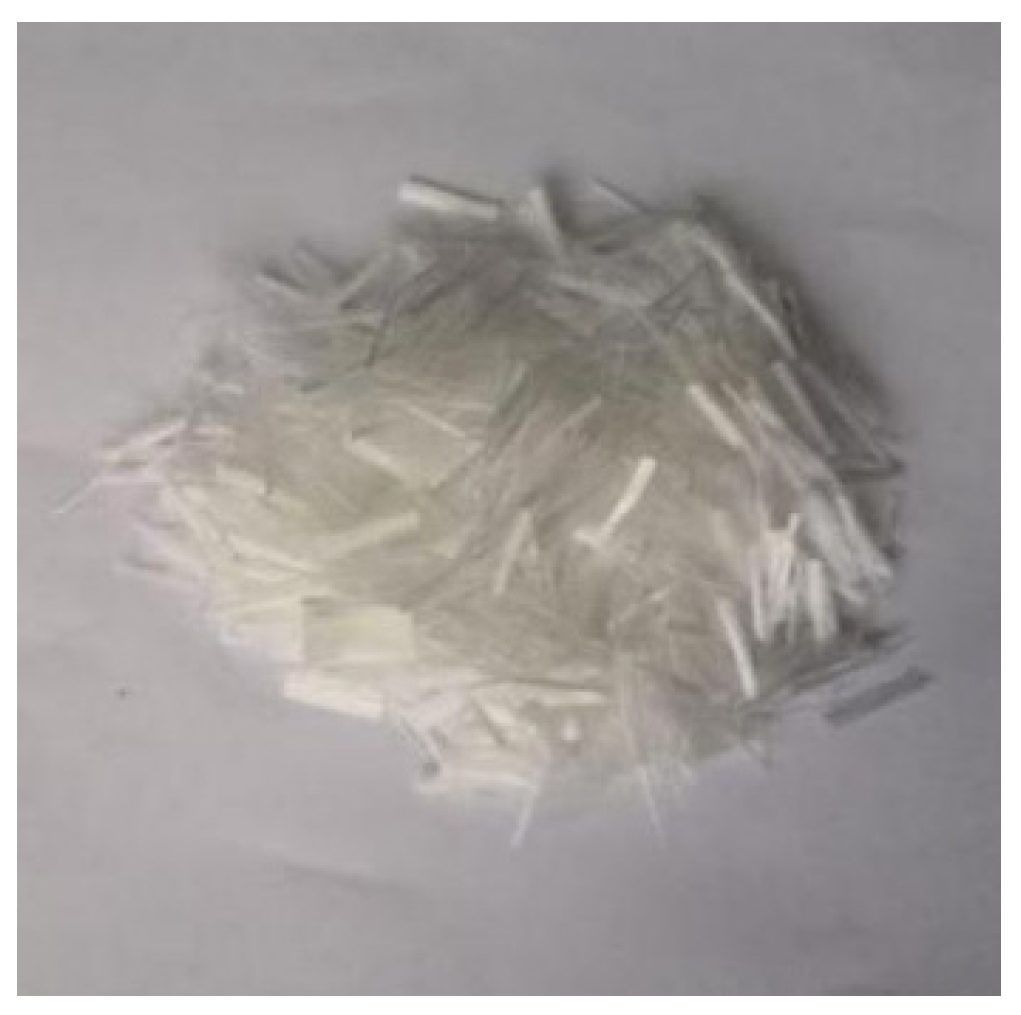
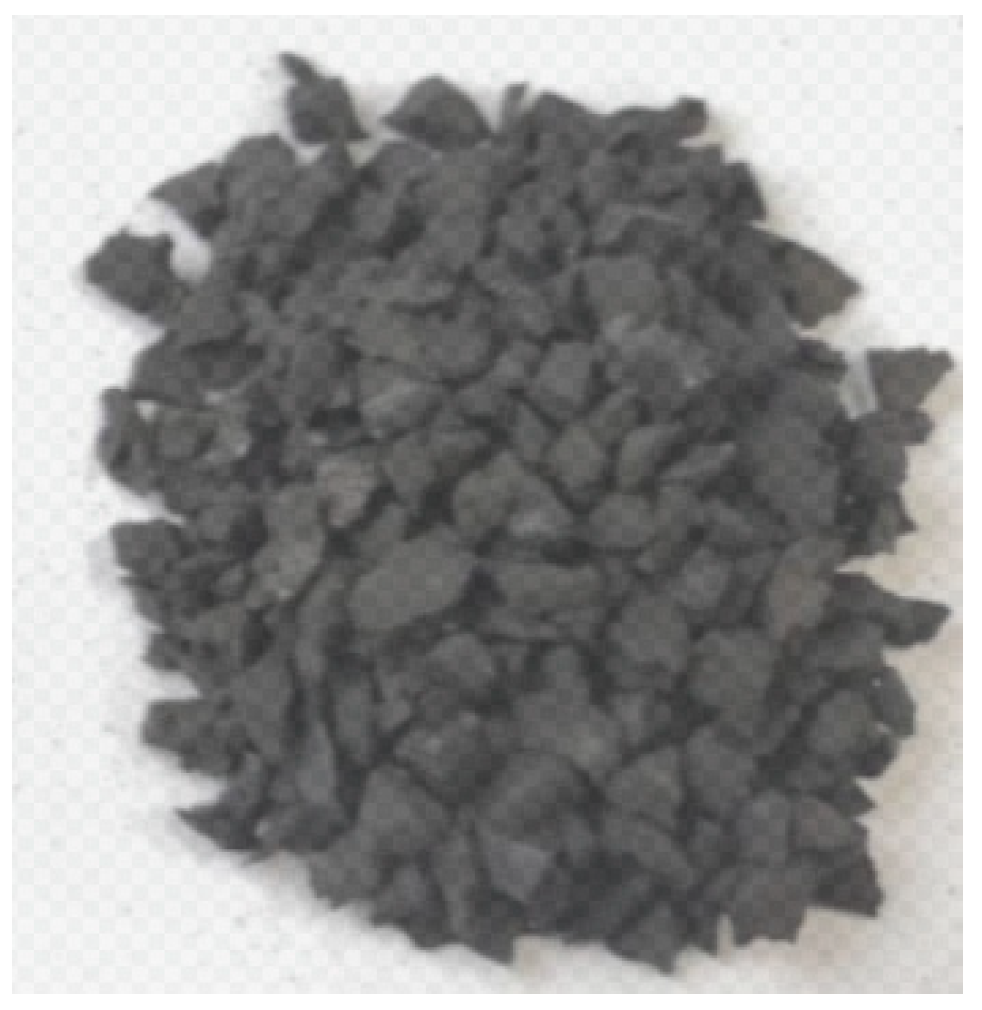
The cement used in this test was P.O 42.5 grade ordinary Portland cement manufactured by Bagongshan Cement Plant, Huainan, China. The coarse aggregate consisted of continuously graded crushed stone with a particle size range of 5–15 mm, sourced from Huaixi Sand and Stone Co., Ltd., Huainan, China. The fine aggregate was ordinary medium sand from the Huai River, with a fineness modulus of 2.65. Class I fly ash produced in Henan Province was used, and its composition parameters are shown in Table 1. Its pozzolanic activity and micro-aggregate filling effect contribute to optimizing the pore structure of concrete and enhancing matrix compactness, thereby improving the material’s permeability resistance and durability in salt erosion environments. The rubber particles had a size of 3–6 mm, manufactured by Dujiangyan Huayi Rubber Co., Ltd., Dujiangyan, China. Rubber particles were used to replace coarse aggregate by 5% of equal volume. The PVA fibers, manufactured by Suzhou Shuangjing Plastic Technology Co., Ltd., Suzhou, China, had a diameter of 15.09 μm, tensile strength of 1830 MPa, initial modulus of 40 GPa, elongation at break of 6.9%, and density of 1.29 g/cm3. A standard liquid high-performance water-reducing agent manufactured by Bagongshan Cement Plant, Huainan, China was used as the superplasticizer, and laboratory tap water served as the mixing water. Photographs of polypropylene fibers and rubber particles are shown in Figure 1 and Figure 2. The concrete mix proportions used in this test are shown in Table 2. This mix ratio is derived from our previous systematic optimization study on the synergistic strengthening effect of PVA fiber and rubber. It was determined as the optimal mix by multi-index trade-off, considering compressive strength, splitting tensile strength and flexural strength, aiming to balance both mechanical properties and toughness of the concrete.

2.2. Test Method

Specimens were fabricated as standard cylinders with a diameter of 50 mm and a height of 100 mm. This diameter conforms to the conventional requirements of the split Hopkinson pressure bar (SHPB) dynamic testing system and facilitates performance comparison following high-temperature and erosion treatments. In dynamic material testing, specimen size is a critical factor influencing the representativeness of results. The ratio of specimen diameter to maximum aggregate size may introduce data fluctuations attributable to mesoscale heterogeneity. To mitigate such effects and to reliably evaluate performance evolution under coupled conditions, this study employed multiple parallel specimens and statistical analysis, with emphasis on identifying performance trends under each test condition. After casting, vibration, and compaction, specimens were demolded at 24 h and standard-cured in saturated Ca(OH)2 solution for 28 days. Upon curing completion, specimens were cut and ground into short cylinders measuring 50 mm in diameter and 25 mm in height, in accordance with SHPB test specifications. All specimens were prepared using identical mixing, casting, and curing procedures to ensure material consistency. Prior to impact testing, each specimen was visually inspected to confirm the absence of exposed coarse aggregate or rubber particles on the surface, thereby avoiding stress concentration or data deviation caused by surface irregularities. Specimens were first numbered and grouped according to temperature (ambient temperature, 100 °C, 300 °C) and erosion solution (none, clean water, 5% NaCl solution, 5% Na2SO4 solution, and 5% NaCl + 5% Na2SO4 mixed solution, all by mass fraction), constituting a total of 15 test conditions. Three parallel specimens were assigned to each group to ensure statistical validity and to capture the overall response trend of the material. Following grouping, initial mass, height, and longitudinal wave velocity were measured for each specimen. Longitudinal wave velocity was measured using an NM-4B non-metallic ultrasonic detector (manufactured by Beijing Huarui Xinyi Technology Co., Ltd., Beijing, China). High-temperature treatment was conducted in an SX-5-12 chamber electric furnace manufactured by Tianjin Taiste Instrument Co., Ltd., Tianjin, China, with a heating rate of approximately 10 °C per 3 min. Upon reaching the target temperature, the temperature was maintained for 8 h, after which specimens were naturally cooled to room temperature inside the furnace. Immediately after each high-temperature treatment, the mass and longitudinal wave velocity of the specimens were re-measured, and the specimens were sealed in plastic bags to prevent moisture absorption from ambient air during prolonged cooling, which could otherwise affect test results. The erosion test spanned 60 days, during which specimens subjected to different temperature treatments were immersed in the five aforementioned solutions. After immersion, specimens were removed, surface-dried, and oven-dried at 60 °C for 6 h. Following cooling, final mass and longitudinal wave velocity were recorded. Dynamic mechanical properties were tested using an SHPB system at three impact air pressures: 0.3 MPa, 0.4 MPa, and 0.5 MPa. Qualified specimens were selected for impact testing under each condition to obtain dynamic compressive strength and elastic modulus data. Finally, a Zeiss Gemini Sigma 300 VP SEM (Carl Zeiss AG, Oberkochen, Germany) equipped with its SmartSEM control software was employed to observe the microstructural morphology of representative specimens, enabling analysis of material structure evolution under the coupled effects of erosion and high temperature. The experimental grouping design is summarized in Table 3.

3. Results

3.1. Physical Index Change

3.1.1. Apparent Damage Characteristics After High-Temperature Exposure

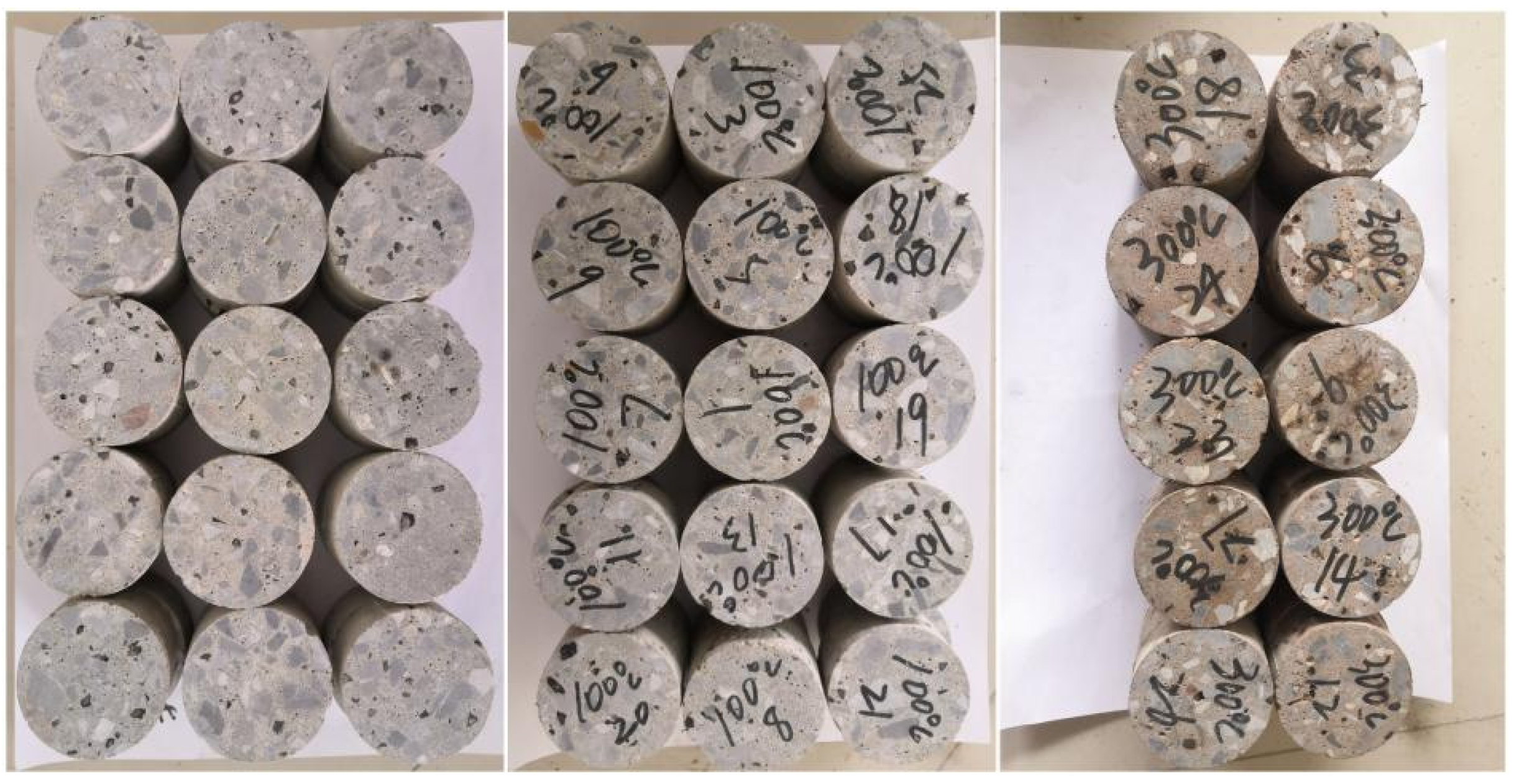
In this study, PVA-fiber-reinforced rubber concrete specimens were subjected to high-temperature heating treatments at 100 °C and 300 °C. The typical apparent morphological changes of the specimens under room-temperature conditions (control group) and after exposure to different high temperatures are shown in Figure 3.
From Figure 3, significant morphological evolution can be observed. The specimens at room temperature exhibit a uniform gray–white color overall, with clearly identifiable exposed black rubber particles distinctly dispersed within the concrete matrix. After exposure to 100 °C, the overall color of the specimens darkens to a deep gray. Although the rubber particles remain visible, their black color appears somewhat dull or blurred, and subtle changes may occur at the interface between the particles and the matrix. When the temperature rises to 300 °C, the apparent morphology of the specimens undergoes drastic changes: the main surface color turns reddish-brown with interspersed gray areas. This significant color transformation indicates that organic components within the concrete (such as rubber particles and PVA fibers) have undergone complex physicochemical reactions including oxidation, decomposition, or carbonization under high temperatures. It can be clearly observed that the originally dispersed black rubber particles have undergone softening and melting, manifesting as the enlargement of black spots and the blurring of their boundaries. This indicates that the temperature has reached or exceeded the softening or melting point of the rubber component, resulting in a significant change in its physical state. These visible color variations, together with the softening and boundary blurring of rubber, serve not only as direct evidence of high-temperature action but also imply that substantial physicochemical changes have occurred inside the material. Darkening of the color is often associated with dehydration of the cement matrix and decomposition of organic substances, which may weaken the intrinsic bonding performance of the matrix. Meanwhile, the softening of rubber and the blurring of interfaces imply a loss of volume stability, which is likely to leave pores in situ or form weak interfaces after cooling. At the same time, PVA fibers also melt at high temperatures and thus lose their reinforcing effect. Collectively, these high-temperature-induced changes in material components and interfacial degradation are expected to lead to an increase in internal pore structure and micro-defects within the concrete, providing important apparent evidence and a prerequisite for structural deterioration underlying the overall degradation of the mechanical properties of the material.

3.1.2. Variation of Longitudinal Wave Velocity of Specimen

Take the longitudinal wave velocity data of each group of specimens before and after high temperature and after erosion, and calculate the loss, relative wave velocity and damage degree of longitudinal wave velocity of the treated specimens according to the following formula.
Δ V = V T V 0
V R = V T V 0
D = 1 V T V 0
where: Δ V is the change value of P-wave velocity before and after high temperature, km/s; V T is the longitudinal wave velocity after high-temperature treatment, km/s; V 0 is the longitudinal wave velocity before processing, km/s; V R is the relative wave velocity; D is the degree of damage.
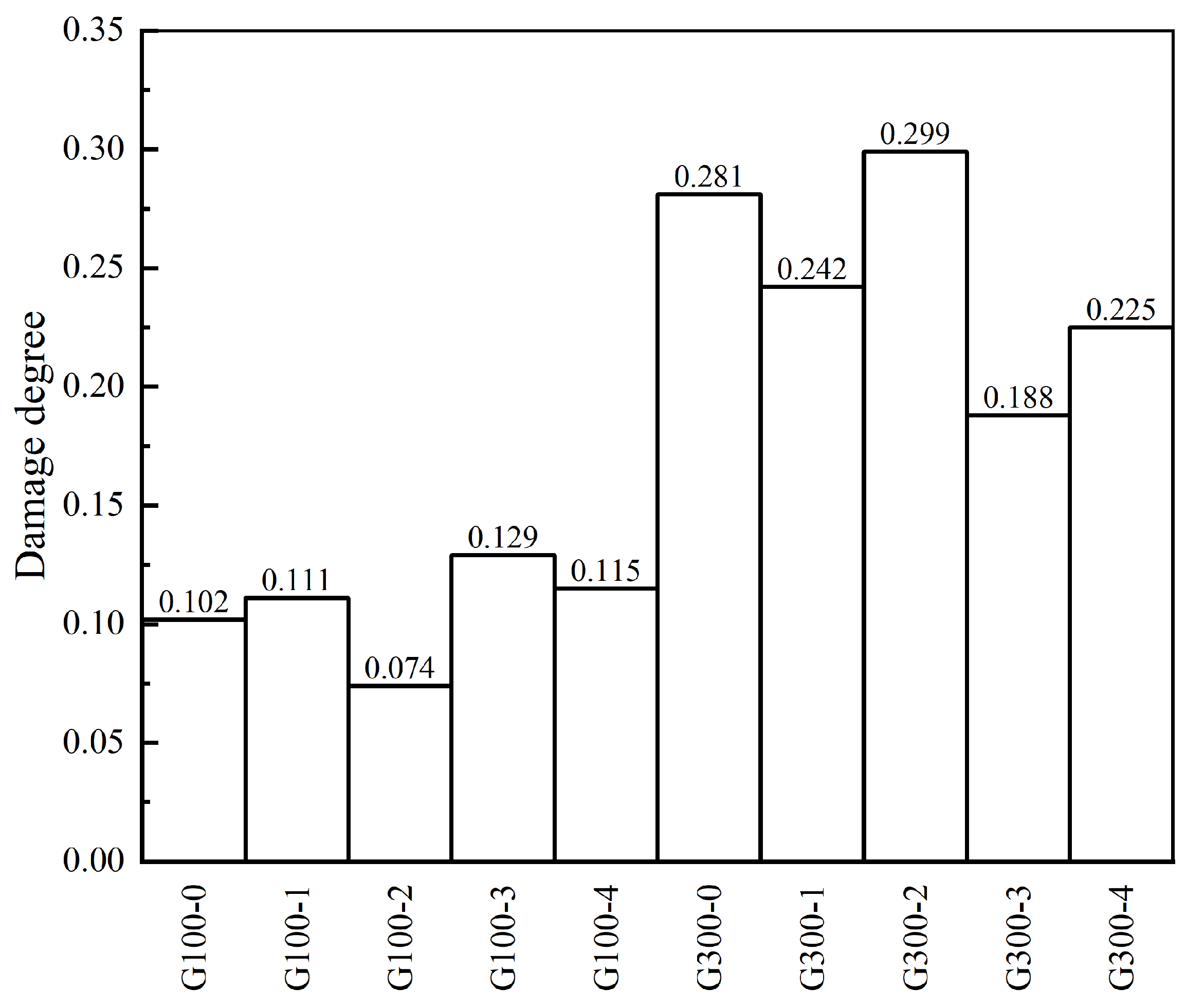
The wave velocity change and damage degree of the specimen before and after high temperature are shown in Table 4 and Figure 4. It can be seen that the average damage degree of the concrete specimen after high-temperature treatment at 100 °C is 0.1062. After high-temperature treatment at 300 °C, the average damage degree of concrete specimens is 0.247. From the above data, it can be known that the damage to the specimen at 300 °C is obviously higher than that at 100 °C, which is about 2.3 times. The influence of the high-temperature environment on the internal structure of concrete specimens is mainly reflected in two aspects [26]: On the one hand, under the action of high temperature, the original cracks will expand and new cracks will be produced due to the difference of thermal expansion coefficients of various components in concrete. On the other hand, high temperatures will accelerate the evaporation of water in concrete specimens and increase the pore volume. The increase in porosity and the new cracks cause the deterioration of internal structure, which will have a blocking effect on the propagation of stress waves, leading to the aggravation of energy attenuation when stress waves propagate in the specimen, thus reducing the longitudinal wave velocity. Furthermore, for PVA-fiber-reinforced rubber concrete, high temperature also exerts a significant influence on the organic materials incorporated. PVA fibers undergo melting and shrinkage at high temperatures, while rubber particles soften and decompose, resulting in volume reduction or morphological changes. These processes not only directly cause mass loss, but also form voids left by fiber debonding, pores from rubber phase decomposition, and consequent interfacial cracks within the matrix. This additionally aggravates the loosening and internal damage of such concrete.
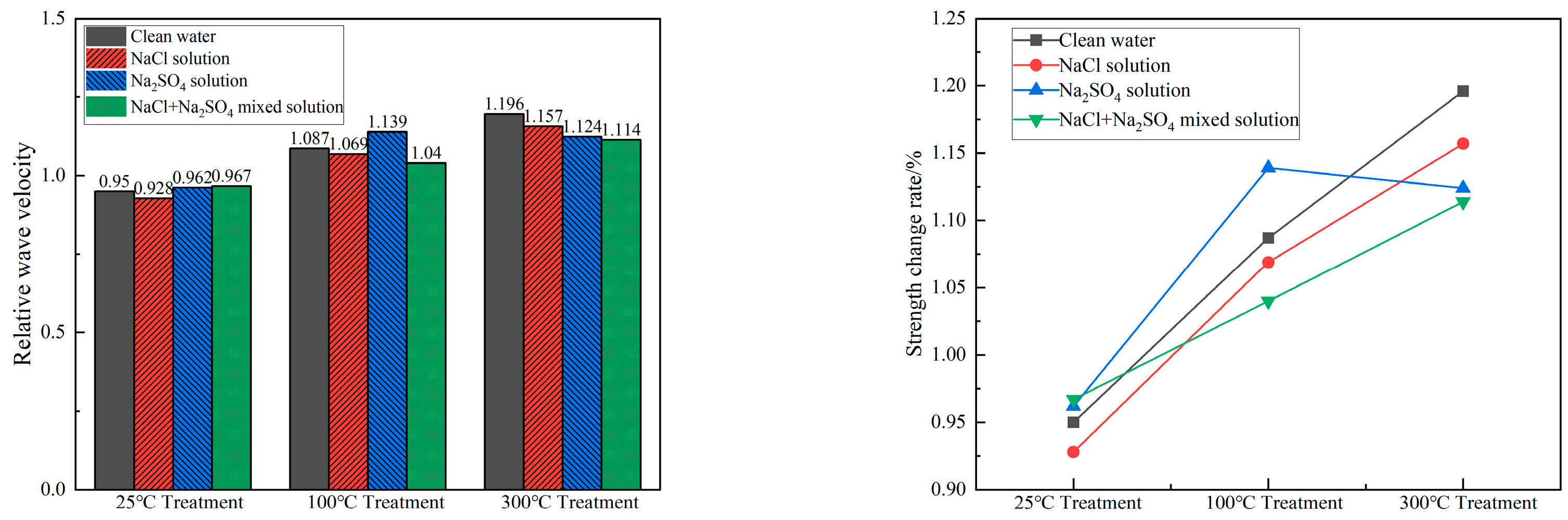
The changes in longitudinal wave velocity and damage degree of specimens after solution erosion are recorded in Table 5 and Figure 5. It can be observed that the longitudinal wave velocity of concrete specimens shows a downward trend after 60 days of solution erosion at room temperature, indicating that the internal structural damage of concrete is aggravated by solution erosion. The damage degree of different solutions to concrete is significantly different, and the damage order is as follows: sodium chloride solution > clean water > sodium sulfate solution > sodium chloride + sodium sulfate compound solution. It can be seen that the addition of sodium chloride increases the loss of longitudinal wave velocity of the specimen compared with the clear water immersion group. The addition of sodium sulfate reduces the loss of longitudinal wave velocity of the specimen. The different effects of sodium chloride and sodium sulfate on the longitudinal wave velocity loss of concrete are mainly due to their completely different microscopic mechanisms in the erosion process. These differences lead to different changes in the internal structure of concrete and then affect its mechanical properties and durability. The diffusion coefficient of Cl in NaCl solution is significantly higher than that of SO42−, and the radius of Cl ion is smaller, and the diffusion coefficient in concrete pore solution is higher, with fast transmission speed, which can quickly penetrate into concrete, destroy the cementation structure of cement hydration products, expand pores and reduce compactness. After evaporation of water, the crystallization and expansion of NaCl in pores produce local stress, which further aggravates the microcrack propagation. However, the corrosion products of sodium sulfate solution can fill the micropores in concrete at the initial stage of corrosion, improve the compactness, and thus offset some wave velocity losses caused by corrosion in a short time [27].
For concrete specimens treated at high temperatures (100 °C and 300 °C), the longitudinal wave velocity after solution erosion is higher than that after only high-temperature treatment, but still generally lower than the initial velocity of untreated specimens. This phenomenon can be attributed to the physical mechanism of the coupled effect of high-temperature and solution erosion: high temperature causes internal moisture evaporation and microcracking in concrete, leaving pores filled with air. During solution immersion, liquid water and dissolved salts penetrate into these cracks and pores. Since ultrasonic waves propagate much faster in liquid and solid salt media than in air, the change in pore-filling medium directly leads to an increase in the overall measured wave velocity [28]. In addition, the crystallization of salt solutions within the pores can physically fill part of the voids in the short term, further providing a more continuous acoustic path for stress-wave propagation. Notably, the increase in wave velocity after erosion is significantly higher in the 300 °C group than in the 100 °C group. This is mainly because 300 °C causes more severe internal cracking and better pore connectivity, providing larger space for solution and salt crystal filling and a more pronounced acoustic path replacement effect. It should be emphasized that this increase in wave velocity mainly reflects the physical change in the acoustic properties of the pore-filling medium (from air to water or salt crystals) and is not an indicator of substantial recovery in the mechanical properties or microstructure of the material.

3.1.3. Quality Change in Specimen

In the process of the high-temperature and solution erosion of concrete specimens, after high-temperature exposure, the internal water evaporation and concrete peeling on the surface of the specimens will lead to the quality degradation of the specimens; on the other hand, immersion in salt solution will make some substances in the concrete specimen dissolve or react with salt solution, which will lead to the decrease in specimen quality. If the specimen is not completely dried after immersion, or salt crystals and crystallized substances produced by chemical reaction are attached to the surface of the specimen, specimen quality will increase. We calculate the mass change rate according to the following formula (see Table 3):
M n = ( M n M 0 ) M 0 × 100 %
where M n is the mass change rate of the specimen after high temperature or solution erosion; M 0 is the initial mass of the specimen before treatment; M n is the mass of the specimen after high temperature or solution erosion.
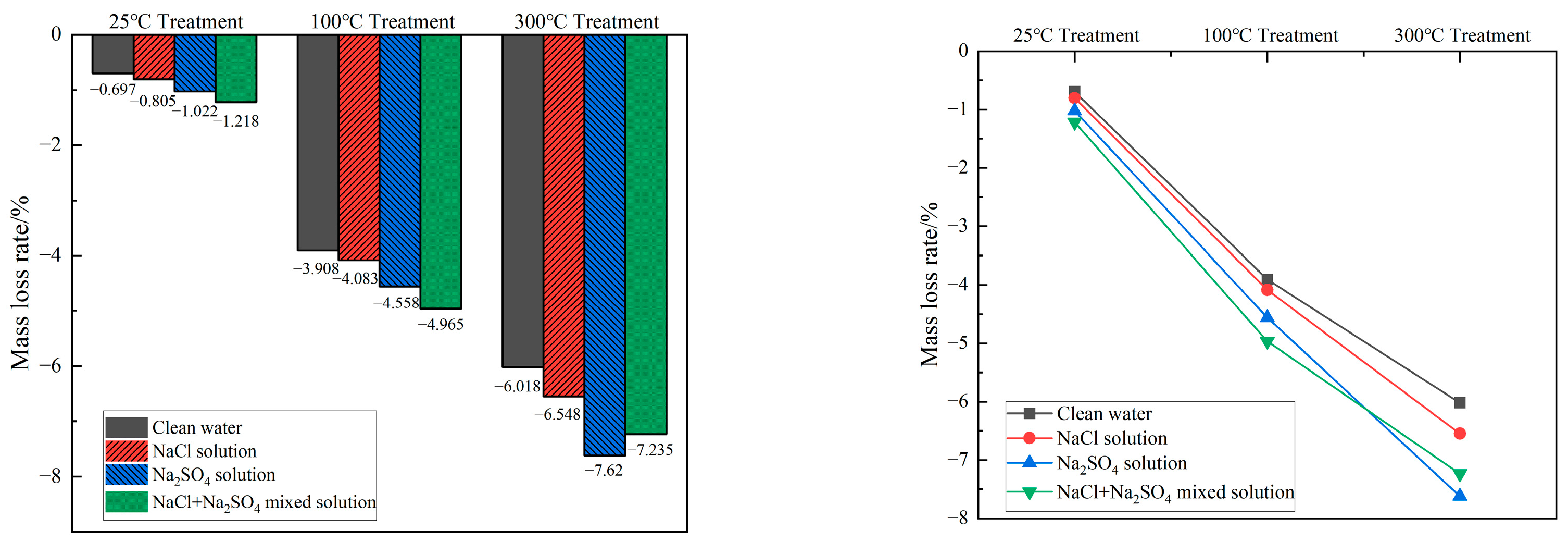
As shown in Table 6, all the concrete specimens have mass loss after high-temperature exposure. The average loss rate at 100 °C is 3.276%, but it rises to 5.886% at 300 °C, which indicates that the mass loss of the specimen increases significantly when the temperature rises from 100 °C to 300 °C. The evaporation of water in the concrete specimen at 100 °C and the spalling of concrete on the surface of the specimen will lead to a decrease in the quality of the specimen. However, for the concrete specimen at 300 °C, the rubber particles on the surface of the specimen will burn or vaporize under the action of high temperature, which will further aggravate the quality loss of the concrete specimen and lead to a significant decline in its quality [29,30].
The experimental data show that the mass loss rate at 300 °C (5.886%) is about 1.8 times that at 100 °C (3.276%). The difference is mainly due to the melting of PVA fiber and the decomposition and gasification of rubber particles at 300 °C. After they disappear, slender channels and multi-scale holes are formed in the matrix, which significantly improves the porosity and connectivity. Therefore, the increase in mass loss rate directly reflects the deterioration of pore structure caused by organic phase degradation. The well-developed pore network greatly improves the invasiveness of the solution and makes the mass increase rate of 300 °C specimens in various solutions generally higher.
The mass change in PVA-fiber-reinforced rubber concrete after erosion in clean water, sodium chloride, sodium sulfate and composite salt solutions, following pretreatment at room temperature, 100 °C and 300 °C, is shown in Table 7 and Figure 6. It can be observed that under different solution erosion conditions, the mass of PVA-fiber-reinforced rubber concrete specimens at room temperature showed a certain degree of increase. Specifically, after immersion in deionized water, the mass growth rate of the specimens was 0.624%; after erosion in sodium chloride solution, the mass increased by 0.712%; erosion in sodium sulfate solution led to a mass increase of 0.909%; and under the combined action of sodium chloride and sodium sulfate composite salt solution, the mass growth rate was the highest, reaching 1.078%. The order of mass increase under various solution conditions from largest to smallest was as follows: composite salt solution > sodium sulfate solution > sodium chloride solution > deionized water. This indicates that salt erosion, particularly in composite salt environments, has a certain mass gain effect on concrete.
When specimens treated at 100 °C were subjected to the same erosion conditions, their mass also showed an increasing trend, and the increase was significantly higher than that of the room-temperature specimens. After immersion in deionized water, the mass increased by 3.624%; after erosion in sodium chloride solution, it increased by 3.758%; in sodium sulfate solution, it reached 4.102%; and after erosion in composite salt solution, the mass increase was the highest, at 4.557%. Although the increase was significantly larger, the order of mass increase caused by different solutions remained consistent with the room-temperature group, still following the pattern: composite salt > sodium sulfate > sodium chloride > deionized water. This result indicates that high-temperature pretreatment enhances the absorption capacity of concrete for solution substances.
For specimens treated at 300 °C, the mass continued to increase during the erosion process, with the overall increase higher than that of the room-temperature and 100 °C groups. However, it is worth noting that under composite salt solution erosion, the mass increase was abnormal and lower than that of the sodium sulfate solution group. The reason for this phenomenon may be that the 300 °C high temperature caused significant damage to the internal structure of the concrete, leading to increased surface vulnerability. The high temperature of 300 °C makes PVA fiber melt and rubber decompose, forming a connected pore network, which accelerates the transmission of corrosive media. The synergistic erosion of Cl and SO42− aggravates the matrix loss through two ways: one is chemical instability (SO42− consumes Ca2+, C-S-H decalcifies and weakens cementation); the second is the physical crystallization pressure (Friedel’s salt and ettringite expansion products crystallize and swell in pores). Both of them promote the other, and the salt mass gain is offset by the matrix loss, resulting in a low net mass increase rate.

3.2. Influence of Dynamic Mechanical Property of Concrete

3.2.1. Dynamic Compressive Strength Change

According to the formula for strength change rate, the strength change rate diagram of fiber-reinforced rubber concrete in different solution environments is plotted, with the formula presented as follows:
Δ f N = ( f N f 0 ) f 0
where f N is the change rate of dynamic compressive strength of different solutions at the same temperature and under the same impact pressure; f 0 is the dynamic compressive strength under the same impact pressure at the same temperature without solution erosion; f N is the dynamic compressive strength of different solutions at the same temperature and under the same impact pressure; N is clear water, sodium chloride solution, sodium sulfate solution and sodium chloride + sodium sulfate mixed solution in turn.
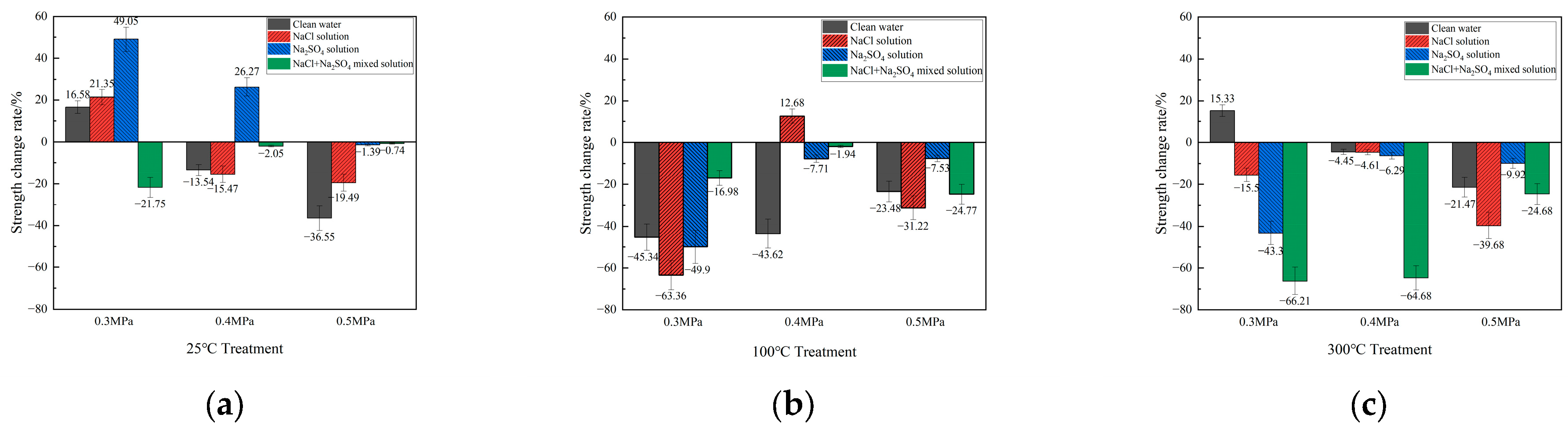
The dynamic strength-change rate of fiber rubber concrete specimens after solution soaking, calculated according to the formula, is shown in Figure 7. It can be seen that the dynamic compressive strength of fiber-reinforced rubber concrete specimens after soaking in different solutions shows significant differences at room temperature. Under the conditions of 25 °C and 0.3 MPa impact air pressure, the dynamic compressive strength of specimens is generally improved except those soaked in mixed solutions. Among them, the strength of the specimens soaked in sodium sulfate solution increased most significantly, with an increase of 49.05%, and the specimens soaked in sodium chloride solution and clear water also improved, but the extent was small. With the impact pressure rising to 0.4 MPa, the strength was increased only in sodium sulfate solution, which was 26.27%, and the dynamic compressive strength of the specimens soaked in other solutions was weakened to some extent. However, under the impact pressure of 0.5 MPa, the dynamic compressive strength of the specimens soaked in sodium sulfate solution and mixed solution remained basically unchanged, but the dynamic compressive strength of the specimens soaked in water and sodium chloride solution decreased greatly. It is worth noting that, in the mixed salt solution of sodium chloride and sodium sulfate, the strength decreased significantly (21.75%) under the impact pressure of 0.3 MPa, while the strength remained basically unchanged under the impact pressure of 0.4 MPa and 0.5 MPa. The enhancement effect of sodium sulfate solution on concrete strength stems from its unique chemical reaction mechanism. The sulfate ion (SO42−) in the solution will react with calcium hydroxide, the hydration product of cement, to generate calcium sulfate dihydrate (CaSO4∙2H2O, gypsum), and release free water [31]. As shown in the formula:
C a ( O H ) 2 + S O 4 2 + 2 H 2 O C a S O 4 · 2 H 2 O + 2 O H
Gypsum crystals generated by this reaction may fill the internal pores and microcracks of concrete at room temperature, reduce the overall porosity, and thus enhance the density of materials. Under moderate impact load (0.3–0.4 MPa), this kind of filling effect can significantly improve the dynamic compressive strength of concrete. However, under higher impact load (0.5 MPa), the brittleness of gypsum crystal may lead to stress concentration and weaken its reinforcement effect; the corrosion of concrete by sodium chloride solution is a typical chloride corrosion mechanism. Under the impact pressure of 0.3 MPa, the strength of the specimen soaked in sodium chloride solution decreases to 63.36% at the maximum. In NaCl solution, chloride ion (Cl) will penetrate the surface of concrete and directly react with C3A in cement to generate C3A∙CaCl2∙10H2O, which is F salt. This reaction consumes C3A, the key component of cement that contributes to strength, leading to the decrease in the early strength of concrete. At the same time, the crystallization pressure of chloride salt will aggravate the internal microcrack propagation, especially under the impact of high pressure of 0.4–0.5 MPa, the crack propagation will accelerate, making the strength loss more obvious [32].
The high-temperature environment significantly aggravated the negative impact of solution erosion on the dynamic strength of fiber rubber concrete. Pretreatment at 100 °C and 300 °C resulted in the formation of thermal damage microcrack network in concrete, which provided a rapid diffusion channel for corrosive ions, resulting in the amplification of strength attenuation effect. Under the high temperature of 100 °C and 300 °C, the dynamic compressive strength of most specimens showed a downward trend after soaking in four solutions. After the high temperature of 100 °C, the strength of the sample immersed in NaCl solution decreased by 63.36% under the impact pressure of 0.3 MPa, while the strength of the sample immersed in mixed solution decreased by 66.21% under the same impact pressure after the high temperature of 300 °C. Concrete undergoes complex physical and chemical changes under the action of high temperature. At 100 °C, the evaporation of free water leads to the increase in capillary pressure and the initiation of microcracks. When the temperature rises to 300 °C, the hydration products of cement are dehydrated and decomposed, and the difference of thermal expansion coefficient between aggregate and cement paste intensifies the expansion of interface cracks and accelerates the erosion process [33]. Fu et al. [17] investigated the impact compressive strength of concrete exposed to chloride salt attack. Their results showed that the damage degree of high-strength concrete was 32.09%, that of high-performance concrete was 29.24%, while the damage degree of fiber-reinforced concrete could be reduced to 13.71–27.16%, indicating that fibers can effectively inhibit strength degradation caused by chloride salt. In the present study, the strength loss of the NaCl group after 100 °C high-temperature treatment reached 63.36% under 0.3 MPa impact pressure, which was much higher than the damage degree of fiber-reinforced concrete reported in the literature. This is mainly because the high-temperature pretreatment caused the melting and failure of PVA fibers. Consequently, PVA fibers not only lost their inhibitory effect on microcracks but also left fiber voids that accelerated the intrusion of chloride ions.
It is found that the strength-drop value and amplitude after soaking in single NaCl or Na2SO4 solution are smaller than those in mixed solution, which indicates that the ion erosion effect in composite solution is superimposed, and the damage effect on ettringite crystal is stronger than that of a single ion. Ettringite crystal originally improved the internal pore structure of concrete through bonding and filling, but its erosion and shedding made the concrete structure denser and its strength improved.
It can be seen that the dynamic compressive strength of some specimens is increased by 12.68% and 15.33%, respectively, after soaking in NaCl solution at 100 °C and water at 300 °C. This is mainly attributed to two mechanisms: first, the microcracks formed by high-temperature treatment are filled with water through capillary adsorption during the immersion process, and the generated capillary water pressure inhibits the expansion of microcracks under external forces to a certain extent; second, high-temperature treatment does not completely exhaust the hydration potential of cement. During the immersion process, water re-enters the interior of concrete and undergoes secondary hydration reactions with the previously unhydrated cement particles or active admixtures, generating additional C-S-H gel to fill the pores. To sum up, the dynamic mechanical properties of PVA-fiber-reinforced rubber concrete show complex changes under the coupled erosion of high temperature and solution, mainly showing a downward trend in strength, but the strength may also increase under certain conditions, such as soaking in Na2SO4 at 25 °C or soaking in a specific solution after high-temperature exposure.
The variation law of the above dynamic compressive strength indicates that the performance response of concrete under the coupled action of high temperature and salt corrosion is complex and nonlinear. For structures in coastal areas, saline soil areas, or those that may be exposed to salt environments after high-temperature effects such as fires, the design and durability evaluation of concrete materials should fully consider the temperature threshold, the type of corrosive ions and their synergistic effects, and focus on the performance retention rate under dynamic loads.

3.2.2. Dynamic Elastic Modulus Change

According to the elastic modulus change rate formula, the elastic modulus change rate diagram of fiber rubber concrete in different solution environments is shown in Figure 6, and the calculation formula is as follows:
Δ E N = ( E N E 0 ) E 0
where E N is the change rate of dynamic elastic modulus of different solutions at the same temperature and under the same impact pressure; E 0 is the dynamic elastic modulus under the same impact pressure at the same temperature without solution erosion; E N is the dynamic elastic modulus of different solutions at the same temperature and under the same impact pressure; N is clear water, sodium chloride solution, sodium sulfate solution and sodium chloride + sodium sulfate mixed solution in turn.
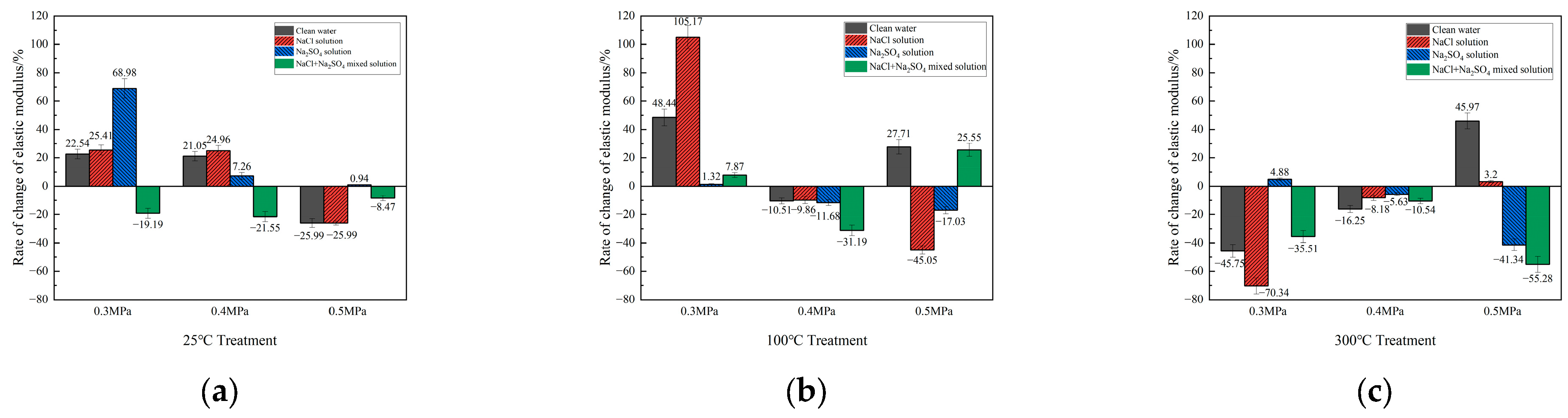
The calculated results of the elastic modulus change rate in the solution environment are shown in Figure 8. By analyzing the changes of the dynamic elastic modulus of the specimens immersed in different solutions under the same temperature and impact pressure, it is found that the dynamic elastic modulus of the specimens immersed in sodium chloride + sodium sulfate composite solution decreased at 25 °C, and the dynamic elastic modulus of the specimens immersed in the other three solutions increased under the impact pressure of 0.3 MPa and 0.4 MPa. Among them, the elastic modulus of fiber rubber concrete specimens soaked in sodium sulfate solution increased most significantly, with an increase of 68.98%.
The specimen without high-temperature treatment contains more free water micropores. Adding rubber particles not only increases the faltering of the internal pore structure of the specimen but also reduces the bonding performance between rubber particles and coarse aggregate due to its hydrophobicity and air-entraining characteristics, and introduces a large number of bubbles into the concrete [34,35]. These bubbles not only reduce the diffusion rate of salt ions and free water content but also lead to an increase in the number of microcracks. In the process of soaking in sodium sulfate solution, a chemical reaction will occur, as shown in the formula:
3 C a S O 4 2 H 2 O + 4 C a O A l 2 O 3 12 H 2 O + 14 H 2 O = 3 C a O A l 2 O 3 3 C a S O 4 32 H 2 O + C a O H 2
As indicated by this reaction equation, with prolonged immersion time, the internal reaction accelerates, bound water is gradually consumed, and the formation of ettringite increases. The continuous filling of pores reduces pore water, resulting in a denser specimen structure. Consequently, the fiber-reinforced rubber concrete exhibits reduced deformation and improved elastic modulus during the stress–strain process.
For specimens treated at 100 °C, the highest elastic modulus change rate (105.17%) was observed under NaCl solution immersion and 0.3 MPa impact pressure. The high temperature causes evaporation and loss of free water and some bound water in the concrete, increasing microcracks and providing more channels for the reaction between chloride ions and C3A. On one hand, the reduction in C3A content decreases the material’s drying shrinkage deformation, reducing the total deformation of the specimen. On the other hand, the formation of Friedel’s salt further reduces porosity, ultimately leading to decreased deformation capacity and significantly improved elastic modulus when the concrete is subjected to stress.
After exposure to a high temperature of 300 °C, the elastic modulus of fiber-reinforced rubber concrete mostly decreases under immersion in four solutions. At 300 °C, the internal free water and part of the bound water are lost as high-temperature water vapor. The escape of water vapor increases microcracks, weakens the integrity, and enlarges the deformation, resulting in a decline in the elastic modulus. The maximum change rate of elastic modulus reaches 70.34% under immersion in sodium chloride solution and 0.3 MPa impact pressure. Notably, although the elastic modulus increases or decreases under single-solution immersion, specimens immersed in composite salt solution all show a decreasing trend in elastic modulus under the three impact pressures (the reduction range is 10.54–55.28% at 300 °C). This indicates that the influence of the two ion species on the stiffness of fiber-reinforced rubber concrete is not a simple superposition, but a synergistic acceleration of damage. This is consistent with the trend observed by Liu et al. [36] that the damage degree of fiber-reinforced concrete increases quadratically under chloride salt attack. The high diffusivity of Cl accelerates the intrusion of SO42−, and the unstable products from their competitive reaction cause continuous loss of interfacial bonding, eventually leading to fundamental deterioration of stiffness.
The change in the dynamic elastic modulus shows that the stiffness response is closely related to erosion mechanism and temperature. The stiffness of sodium sulfate can be improved by ettringite filling at room temperature, but this effect disappears at high temperature. The modulus of sodium chloride increases abnormally at 100 °C, but with the decrease in strength, it is not an improvement in performance. The composite salt solution leads to a consistent decrease in modulus, which proves that it systematically weakens the stiffness of the sample. The above laws suggest that in the structural design of dynamic load or deformation control, we should focus on stiffness and durability after high-temperature and compound salt erosion.

3.3. Micro-Morphological Changes of Concrete

After the impact test of PVA-fiber-reinforced rubber concrete treated by different factors, the samples were collected, and the microscopic images of the samples were photographed by Zeiss Sigma 300 scanning electron microscope, which can be used to observe and obtain the microscopic morphology, structure and composition of the samples.
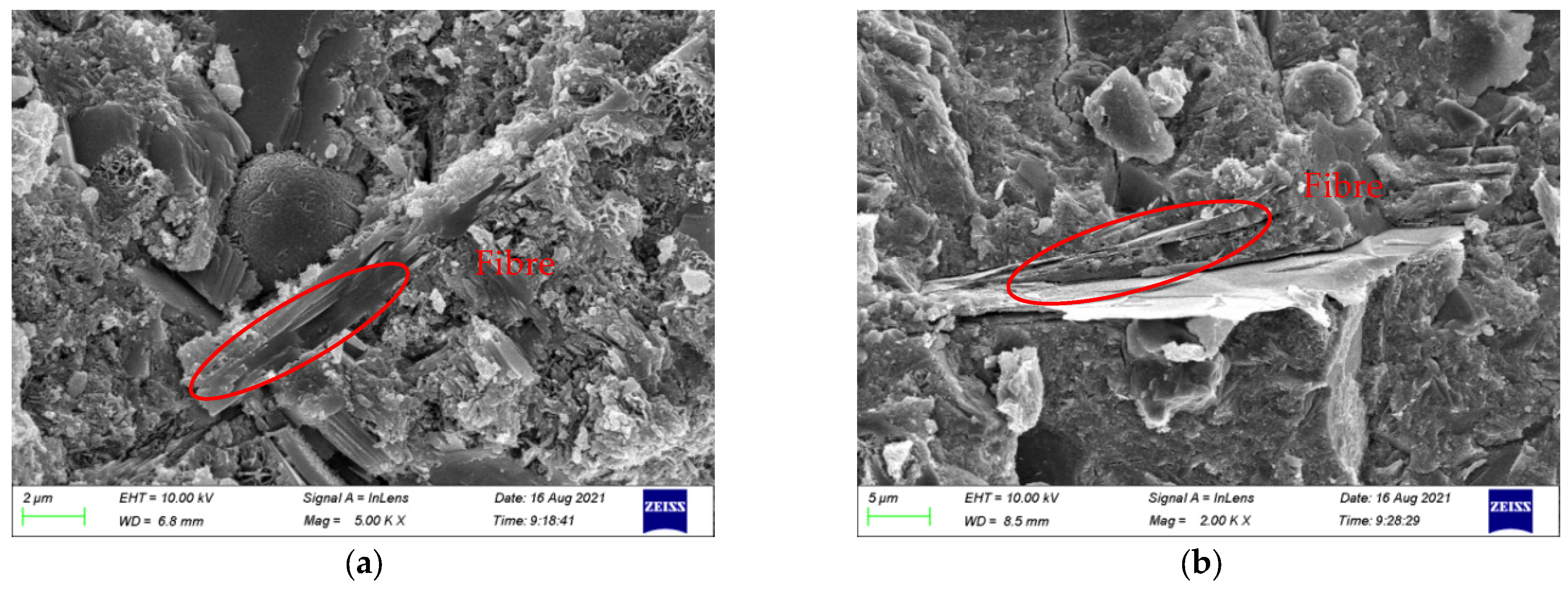
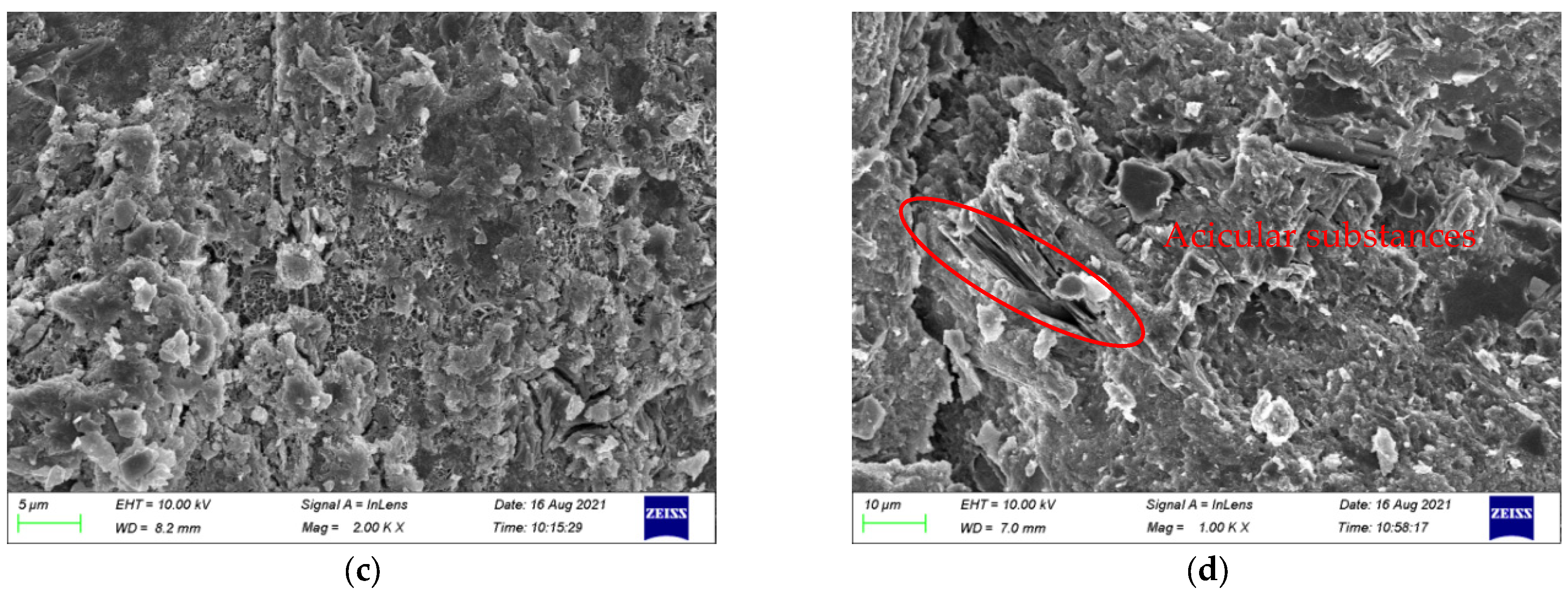
Four groups of microscopic electron microscope images of PVA-fiber-reinforced rubber concrete corroded by different solutions at the same temperature are shown in Figure 9, and the following conclusions can be drawn from the observation.
As shown in Figure 9a, rubber particles are well wrapped by coarse and fine aggregates, PVA fibers and C-S-H gel under the condition of no solution erosion and are closely combined with each other. This structure not only gives full play to the reinforcing effect of the spatial network structure formed by PVA fibers in concrete, and improves the integrity of materials, but also significantly enhances the toughness of concrete with the introduction of rubber particles, thus effectively improving its mechanical properties. This complete microstructure is the basis for the material to have good initial dynamic strength and energy dissipation capacity.
As shown in Figure 9b, after being corroded by clean water solution, the micropores and microcracks in PVA-fiber-reinforced rubber concrete are filled with free water, which leads to pore water pressure in the matrix, which leads to the formation of some microcracks and the shedding of rubber particles. Therefore, its toughness and mechanical properties are lower than those under non-corrosive conditions. At the moment of dynamic impact, the high pressure generated by the pore water can aggravate the crack propagation, which explains the macro phenomenon that the strength of the clean water group fluctuates or decreases under high impact pressure.
As shown in Figure 9c, after being corroded by sodium chloride solution, C3A∙CaCl2∙10H2O, that is, F salt, is generated in concrete due to ion intrusion. This substance exists in the form of tiny particles, which fill some pores, thus reducing the number of pores to some extent. Although the reduction in pores is helpful to improve the strength of the material, the generated F salt is small and cannot be effectively attached to the pores to significantly enhance the mechanical properties [37]. At the same time, the formation of F salt consumes a lot of C3A, which leads to the decrease in the early strength of concrete. Therefore, the mechanical properties of this group of specimens are lower than those of non-erosion group and clean water erosion group. The consumption of C3A by the formation of F salt directly weakens the chemical bonding of the matrix, which is the internal reason for the general significant decrease in its dynamic strength at various temperatures. At the same time, the physical filling effect of a small amount of F salt is limited, which cannot change the strength deterioration trend dominated by its chemical erosion.
As shown in Figure 9d, a large number of needle-like substances are generated in the concrete matrix under the corrosion of sodium sulfate solution, and it is known from the literature [25,26] that this substance is calcium sulfate dihydrate. The substance is generated by the reaction of sulfate ions with calcium hydroxide, and free water is released at the same time. The formation of calcium sulfate dihydrate fills the internal cracks and reduces the porosity. On the other hand, the consumption of calcium hydroxide helps to improve the early strength of concrete, while the generated calcium sulfate dihydrate enhances the integrity of the matrix, thus improving the mechanical properties of PVA-fiber-reinforced rubber concrete. This effective pore filling and matrix densification directly correspond to the significant improvement of dynamic compressive strength and elastic modulus of this group of specimens at room temperature and medium and low strain rate. However, under high-impact load, brittle gypsum crystal may become a weakness, which leads to the weakening of reinforcement effect.
When concrete is corroded by sodium chloride + sodium sulfate solution, the first reaction is that the formation of internal F salt promotes the ion transport speed in the compound salt solution to a certain extent, which strengthens the corrosive action phase of internal travertine crystals. Through the erosion of travertine crystals, the travertine crystals, which were originally bonded and filled into the internal fine pores of fiber concrete, fell off and disappeared, which deteriorated the internal interface structure and the pore structure of the concrete, making it looser and reducing its strength.

4. Conclusions

In this study, we conducted experiments involving high-temperature treatment (ambient temperature, 100 °C, 300 °C) and multi-solution erosion (water, 5% NaCl, 5% Na2SO4, and 5% NaCl + Na2SO4 composite solution). Combined with SHPB impact tests and SEM microanalysis, the physical property evolution, dynamic mechanical response, and microscopic damage mechanism of polypropylene-fiber-reinforced rubber concrete under coupled high-temperature and salt erosion were systematically investigated. The main conclusions are as follows:
  • High temperature significantly alters the physical properties and microstructure. After 300 °C exposure, fibers melt and rubber pyrolyzes, forming a dual pore network from fiber-derived channels and rubber-induced interfacial micropores. The damage degree of longitudinal wave velocity reaches 0.247, about 2.3 times that of the 100 °C group, while mass loss reaches 5.886%, approximately 1.8 times that of the 100 °C group. Wave velocity recovery after solution erosion primarily results from pore medium replacement by water or salt crystals rather than microstructural restoration.
  • Different salt solutions exhibit distinct effects on dynamic mechanical properties. Sodium sulfate erosion generates calcium sulfate dihydrate, filling pores and densifying the matrix at ambient temperature: dynamic compressive strength increases by 49.05% and elastic modulus by 68.98% under 0.3 MPa impact. However, this strengthening disappears after 300 °C treatment. Sodium chloride erosion forms Friedel’s salt, consuming C3A and reducing matrix cementation—strength decreases by 63.36% after 100 °C, and elastic modulus declines by 70.34% after 300 °C. Composite salt erosion shows pronounced synergistic deterioration: Cl accelerates ion migration and aggravates SO42− attack on ettringite, causing consistent strength and modulus reductions across all conditions, with maximum strength loss of 66.21% after 300 °C.
  • The coupled damage mechanism involves high-temperature decomposition of organic components creating developed pore networks that facilitate corrosive media penetration. Salt solutions accumulate in these pores, with crystallization stress acting on weakened interfaces. The competitive interaction between Cl and SO42− destabilizes erosion products and compromises matrix bonding. Under dynamic loading, pore water pressure and salt crystallization pressure synergistically accelerate crack propagation, forming a chain failure mechanism: “high-temperature damage → microstructural degradation → accelerated salt erosion → synergistic deterioration of dynamic performance”.
  • SEM microanalysis reveals erosion-specific microstructural features: rubber particles are fully encapsulated by intact C-S-H gel under non-eroded conditions; water-filled micropores inducing microcracks and particle detachment; Friedel’s salt particles partially filling pores but with weakened cementation after chloride attack; acicular calcium sulfate dihydrate crystals filling cracks after sulfate erosion; and ettringite dissolution with loose interfacial structure after composite salt attack, directly confirming the macroscopic deterioration trends.
Under coupled high-temperature and salt erosion, damage evolution exhibits clear temperature and ion-type dependence, with composite salt causing the most severe deterioration. In engineering environments involving such coupled actions, both thermal history and ion types should be considered, and dynamic performance evaluation must incorporate microstructural mechanisms to avoid misinterpreting local physical improvements as true performance recovery. Future research should explore simultaneous or cyclic high-temperature and erosion effects, combined with multi-field numerical simulation and long-term exposure tests, to deepen our understanding of material behavior in realistic complex environments.

Author Contributions

Z.Z.: Writing—review and editing, Writing—original draft, Investigation, Formal analysis, Data curation. X.Z.: Writing—review and editing, Supervision, Project administration, Funding acquisition, Conceptualization. Q.C.: Writing—review and editing, Supervision, Formal analysis. Z.W.: Investigation, Formal analysis, Data curation. All authors have read and agreed to the published version of the manuscript.

Funding

This work was supported by the Anhui University of Science and Technology Postgraduate Innovation Fund (2025): Damage Mechanism Analysis of Deep High Ground Temperature Soft Rock Roadway under the Influence of Dynamic Pressure, 2025cx2034, Ziyao Zhang. National Natural Science Foundation of China Upper Level Project: Research on the Spatial Structural Evolution of the Pre-cracking Blasting and Overburdening Rock of the Hard Top Plate and the Control of Catastrophe, 52074007, Xiangyang Zhang. Anhui Provincial Natural Science Foundation General Program, 2508085ME131, Xiangyang Zhang. Anhui University of Science and Technology Innovation Training Fund Project (2024): Study on Dynamic Mechanical Properties of PVA Fiber Toughened Rubber Concrete, 202410361102, Zijian Wu.

Data Availability Statement

The original contributions presented in the study are included in the article, further inquiries can be directed to the corresponding author.

Conflicts of Interest

The authors declare that they have no known competing financial interests or personal relationships that could have appeared to influence the work reported in this paper.

References

  1. Fattuhi, N.I.; Clark, L.A. Cement-based materials containing shredded scrap truck tyre Rubber. Constr. Build. Mater. 1996, 10, 229–236. [Google Scholar] [CrossRef]
  2. Khalil, E.; Abd-Elmohsen, M.; Anwar, M.A. Impact Resistance of Rubberized Self-Compacting Concrete. Water Sci. 2015, 29, 45–53. [Google Scholar] [CrossRef]
  3. Zhang, Z.; Feng, J.; Gou, K.; Ma, W.; Zhu, Z.; Pan, Y.; Sun, M. Experimental and numerical evaluation for tunnel structural stability of fiber concrete lining with different crack features under train Load. Eng. Fail. Anal. 2023, 153, 107530. [Google Scholar] [CrossRef]
  4. Lai, D.; Demartino, C.; Xiao, Y. High-strain rate compressive behavior of Fiber-Reinforced Rubberized Concrete. Constr. Build. Mater. 2022, 319, 125739. [Google Scholar] [CrossRef]
  5. Zhang, E.; Lu, G.; Yang, H.; Zhao, Z. Experimental study on work performance and mechanical properties of polypropylene fiber modified rubber concrete. Concrete 2021, 86–89. Available online: https://kns.cnki.net/kcms2/article/abstract?v=iMwhGHIyCLaa3zGP_szC4bhR9ci5ZMdLP3upKKWBe_nge5n51dYmPzk4b40PaAyrr1Ye6kyqT7Wjksok_bPG8ox3wrz60sS7mHQAmgKfSwZIpgwHnbrCbiDrUoXsL_c1bBs2uopzjialA2Jue2X_yYBTlaRJlPTSRjS6U5kqV2ChUY-U6Tv7lv9acTATG5UqI4z9cBWlXbc&uniplatform=NZKPT&captchaId=b3fe9d56-eca1-4bdf-bae3-6945c504a803 (accessed on 19 January 2026).
  6. Feng, Y.; Niu, Z.; Zhao, C.; Li, L. Compressive Test Investigation and Numerical Simulation of Polyvinyl-Alcohol (PVA)-Fiber-Reinforced Rubber Concrete. Buildings 2023, 13, 431. [Google Scholar] [CrossRef]
  7. Liu, W. Experimental Research on Fire Resistance Performance for R.C. Joints with Damages Caused by Marine Environment. Ph.D. Thesis, Qingdao Technological University, Qingdao, China, 2013. [Google Scholar]
  8. Wang, D.; Yang, Y.; Yu, Z.; Liu, R. Mechanical properties of PVA fiber reinforced cementitious composites (PVA-FRCC) after high Temperature. Case Stud. Constr. Mater. 2024, 21, e04020. [Google Scholar] [CrossRef]
  9. Liu, Z.; Chen, X.; Wang, X.; Diao, H. Investigation on the dynamic compressive behavior of waste tires Rubber-modified self-compacting concrete under multiple impacts Loading. J. Clean. Prod. 2022, 336, 130289. [Google Scholar] [CrossRef]
  10. Zhu, S. Study on the Interfacial Transition Zone Feature and Improving Mechanical Properties of Rubber Concrete with Waste Tires. Ph.D. Thesis, China University of Mining and Technology, Xuzhou, China, 2020. [Google Scholar]
  11. Jia, B.; Tao, J.; Li, Z.; Wang, R. SHPB test for dynamic mechanical performances of concrete at high temperatures. Acta Armamentarii 2009, 30, 208–212. [Google Scholar]
  12. Mo, J.; Zeng, L.; Guo, F.; Lui, Y.; Xiang, S. Effect of rubber powder on mechanical properties and microstructure of polypropylene fiber reinforced concrete. J. Build. Mater. 2020, 23, 1222–1229. [Google Scholar]
  13. Yang, S.; Liu, L.; Wang, Y.; Ba, H. SHPB experiment of steel fiber reactive powder concrete exposed to high temperature. J. Sichuan Univ. (Eng. Sci. Ed.) 2010, 42, 25–29. [Google Scholar]
  14. Fan, L. Study on Basic Mechanical Properties of Rubber Concrete and Its Damage Mechanism Under Salt Corrosion and Impact Load. Ph.D. Thesis, Inner Mongolia University of Technology, Hohhot, China, 2018. [Google Scholar]
  15. Chen, Q. Study on the Experiments of Micro and Dynamic Properties of Concrete Under the Seawater Erosion. Ph.D. Thesis, Ningbo University, Ningbo, China, 2012. [Google Scholar]
  16. Shahjalal, M.; Islam, K.; Rahman, J.; Ahmed, K.S.; Karim, M.R.; Billah, A.M. Flexural response of fiber reinforced concrete beams with waste tires rubber and recycled aggregate. J. Clean. Prod. 2021, 278, 123842. [Google Scholar] [CrossRef]
  17. Fu, T. Static and Dynamic Mechanical Properties of Concrete in the Pavement of the Airport Under Environmental Effects. Ph.D. Thesis, Nanjing University of Aeronautics and Astronautics, Nanjing, China, 2013. [Google Scholar]
  18. Guo, Y. Research on Meso-Scale Dynamic Constitutive Relation of Concrete Under Sulfate Attack. Ph.D. Thesis, Harbin Institute of Technology, Harbin, China, 2014. [Google Scholar]
  19. Luo, Q.; Wang, W.; Guo, Q.; Sun, Z.; Wang, B. Numerical analysis of mesoscopic properties of rubber concrete. Earthq. Eng. Eng. Dyn. 2020, 40, 74–83. [Google Scholar]
  20. Tang, Y.; Wang, Y.; Wu, D.; Chen, M.; Pang, L.; Sun, J.; Feng, W.; Wang, X. Exploring temperature-resilient recycled aggregate concrete with waste rubber: An experimental and multi-objective optimization analysis. Rev. Adv. Mater. Sci. 2023, 62, 20230347. [Google Scholar] [CrossRef]
  21. Yu, Y.; Jin, Z.; Shen, D.; An, J.; Sun, Y.; Li, N. Microstructure evolution and impact resistance of crumb rubber concrete after elevated temperatures. Constr. Build. Mater. 2023, 384, 131340. [Google Scholar] [CrossRef]
  22. Luo, Y.; Niu, D.; Su, L. Chloride Diffusion Property of Hybrid Basalt–Polypropylene Fibre-Reinforced Concrete in a Chloride–Sulphate Composite Environment under Drying–Wetting Cycles. Materials 2021, 14, 1138. [Google Scholar] [CrossRef]
  23. Mohammed, B.S.; Yen, L.Y.; Haruna, S.; Huat, M.L.S.; Abdulkadir, I.; Al-Fakih, A.; Zawawi, N.A.W.A. Effect of Elevated Temperature on the Compressive Strength and Durability Properties of Crumb Rubber Engineered Cementitious Composite. Materials 2020, 13, 3516. [Google Scholar] [CrossRef]
  24. Thirumurugan, S.; Anandan, S. Residual Strength Characteristics of Polymer Fibre Concrete Exposed to Elevated Temperature. Eng. J. 2015, 19, 117–131. [Google Scholar] [CrossRef]
  25. Behnood, A.; Ghandehari, M. Comparison of compressive and splitting tensile strength of high-strength concrete with and without polypropylene fibers heated to high temperatures. Fire Saf. J. 2009, 44, 1015–1022. [Google Scholar] [CrossRef]
  26. Ping, Q.; Su, H.; Ma, D.; Zhang, H.; Zhang, C. Experimental study on physical and dynamic mechanical properties of limestone after different high temperature treatments. Rock Soil Mech. 2021, 42, 932–942+953. [Google Scholar]
  27. Liu, J.; Zhao, L.; Song, S.; Ji, H. Ultrasonic velocity and acoustic emission properties of concrete eroded by sulfate and its damage mechanism. Chin. J. Eng. 2016, 38, 1075–1081. [Google Scholar]
  28. Ma, C. Mechanical Properties and Microscopic Evolution of Rubber Concrete at High Temperature and After High Temperature. Ph.D. Thesis, China University of Mining and Technology, Xuzhou, China, 2023. [Google Scholar]
  29. Lu, T.; Zhao, G.; Lin, Z.; Yue, Q. Microscopic analysis of long standing concrete after high temperature. J. Build. Mater. 2003, 6, 135–141. [Google Scholar]
  30. Handoo, S.K.; Agarwal, S.; Agarwal, S.K. Physicochemical, mineralogical, and morphological characteristics of concrete exposed to elevated temperatures. Cem. Concr. Res. 2002, 32, 1009–1018. [Google Scholar] [CrossRef]
  31. Tian, W.; Wang, Z.; Han, N. Study of meso-damage mechanism of concrete under sulfate attack. J. Disaster Prev. Mitig. Eng. 2019, 39, 16–22+60. [Google Scholar]
  32. Cai, Y.; Luo, R.; Wang, C. Microstructure analysis on Friedel’s salt in hydrate of cement and GGBS. Hydro-Sci. Eng. 2001, 45–49. [Google Scholar]
  33. Liu, J.; Xu, J.; Li, Z.; Bai, E.; Gao, Z. Experimental study on dynamic compressive mechanical properties of concrete after high temperature exposure. Concrete 2012, 11–14. Available online: https://kns.cnki.net/kcms2/article/abstract?v=iMwhGHIyCLa1_Fogls_lZrPi6QTmz_WEKB5-y2qDAGDVkIP92t7iBD9Zkg8CMr4Jf8LjluLglfEjEtk3d9Uhy-c4sFdJAPOL3EiaURJ_2pqISOAJ2FGr6Uy6IsHYfCE6bMxTglITL_nd3bA7DQnsIjHWYA_NE7la8qoXuMy7cgzlEvbwAT-KIq8aIdNCP8Ul&uniplatform=NZKPT&captchaId=7068c258-a38f-4718-a0d9-3b7c955b5a7d (accessed on 19 January 2026).
  34. Liu, C. Crumb Rubber Concrete Durability Research and Application Study as Bridge Deck Pavement. Ph.D. Thesis, Tianjin University, Tianjin, China, 2010. [Google Scholar]
  35. Fu, Q.; Niu, D.; Xie, Y.; Long, G. Sulfate erosion resistance of rubberized self-compacting concrete. J. Build. Mater. 2017, 20, 359–365. [Google Scholar]
  36. Liu, J.; Wang, X.; Huang, R.; Qiao, H.; Li, J.; Li, A. Damage and Deterioration of Fiber Reinforced Concrete in Chloride Corrosion Environment. J. Mater. Sci. Eng. 2022, 40, 848–853. [Google Scholar]
  37. Zhang, C.; Liu, Q. Coupling erosion of chlorides and sulfates in reinforced concrete: A review. Mater. Rep. 2022, 36, 69–77. [Google Scholar]
Figure 1. Photograph of PVA fiber.
Buildings 16 01334 g001
Figure 2. Photograph of rubber particles.
Buildings 16 01334 g002
Figure 3. Apparent morphological changes at different temperatures.
Buildings 16 01334 g003
Figure 4. Damage degree of specimen after high-temperature exposure.
Buildings 16 01334 g004
Figure 5. Relative wave velocity of specimen after solution erosion.
Buildings 16 01334 g005
Figure 6. Change in specimen quality after solution erosion.
Buildings 16 01334 g006
Figure 7. Solution–strength variation values: (a) 25 °C; (b) 100 °C; (c) 300 °C.
Buildings 16 01334 g007
Figure 8. Solution–elastic modulus variation values: (a) 25 °C; (b) 100 °C; (c) 300 °C.
Buildings 16 01334 g008
Figure 9. Micrograph from SEM with different solutions after 300 °C temperature. (a) After no solution erosion. (b) After erosion by clean water solution. (c) After erosion by sodium chloride solution. (d) After erosion by sodium sulfate solution.
Buildings 16 01334 g009aBuildings 16 01334 g009b
Table 1. Composition table of fly ash.
NameAl2O3SiO2CaOSO3ClMoisture ContentAlkali ContentIron Content
Content (%)24.245.15.62.10.0150.851.20.85
Table 2. Concrete mix ratio of impact test.
Sand (kg/m3)Rubber Particle Size
(A)
Rubber Particle Substitution Rate (%)
(B)
PVA Fiber Length (mm)
(C)
PVA Fiber Content (kg/m3)
(D)
8333–6 mm5181.2
Note: water: 185 kg/m3; cement: 400 kg/m3; stone: 877 kg/m3; fly ash: 41 kg/m3; water reducer: 3.2 kg/m3.
Table 3. Group classification of concrete specimens.
Group NumberSpecimen NumberTreatment TemperatureErosion Solution Category
1C-025 °CNone
2C-1Clean water
3C-25% NaCl solution
4C-35% Na2SO4 solution
5C-45% NaCl + 5% Na2SO4 solution
6G100-0100 °CNone
7G100-1Clean water
8G100-25% NaCl solution
9G100-35% Na2SO4 solution
10G100-45% NaCl + 5% Na2SO4 solution
11G300-0300 °CNone
12G300-1Clean water
13G300-25% NaCl solution
14G300-35% Na2SO4 solution
15G300-45% NaCl + 5% Na2SO4 solution
Note: 0—no solution; 1—clear water solution; 2—NaCl solution; 3—Na2SO4 solution; 4—NaCl + Na2SO4 solution; C—treatment at 25 °C; G100—treatment at 100 °C; G300—treatment at 300 °C.
Table 4. Variation of longitudinal wave velocity of specimen after high-temperature exposure.
Specimen ClassificationWave Velocity km/sWave Velocity Loss
(km/s)
Relative Wave Velocity
VR
Damage Degree
D
Specimen NumberTreatment TemperatureInitial Wave Velocity
V0
Post-Heating Wave Velocity VT
G100-0100 °C2.2312.0040.2270.8980.102
G100-12.2091.9650.2450.8890.111
G100-22.1762.0150.1620.9260.074
G100-32.1431.8660.2770.8710.129
G100-42.2401.9820.2580.8850.115
G300-0300 °C2.2131.5910.6220.7190.281
G300-12.1281.6130.5150.7580.242
G300-22.3191.6250.6940.7010.299
G300-32.1651.7570.4070.8120.188
G300-42.2481.7420.5060.7750.225
Table 5. Variation of longitudinal wave velocity of specimen after solution erosion.
Specimen NumberWave Velocity/km/sAfter Erosion
InitialAfter High TemperatureAfter ErosionWave Velocity Loss (km/s)Relative Wave VelocityDamage Degree
C-02.256
C-12.267 2.154 0.113 0.950 0.050
C-22.316 2.150 0.166 0.928 0.072
C-32.212 2.129 0.083 0.962 0.038
C-42.203 2.131 0.072 0.967 0.033
G100-02.231 2.004
G100-12.209 1.965 2.137 −0.172 1.087 −0.087
G100-22.176 2.015 2.154 −0.139 1.069 −0.069
G100-32.143 1.866 2.125 −0.259 1.139 −0.139
G100-42.240 1.982 2.062 −0.080 1.040 −0.040
G300-02.213 1.591
G300-12.128 1.613 1.930 −0.317 1.196 −0.196
G300-22.319 1.625 1.881 −0.256 1.157 −0.157
G300-32.165 1.757 1.975 −0.217 1.124 −0.124
G300-42.248 1.742 1.942 −0.199 1.114 −0.114
Table 6. Quality change in specimen after high-temperature exposure.
Specimen ClassificationQuality (g)Mass Loss (g)Mass Loss Rate (%)
Specimen NumberTreatment TemperatureBefore High TemperatureAfter High Temperature
G100-0100 °C113.028109.13.9283.48
G100-1111.647107.8423.8053.41
G100-2112.243108.6673.5773.19
G100-3114.555111.1123.4433.01
G100-4112.663108.9523.7123.29
G300-0300 °C111.840105.3026.5385.85
G300-1112.322105.3606.9626.20
G300-2111.327104.7006.6275.95
G300-3110.663103.9286.7356.09
G300-4111.462105.5135.9485.34
Table 7. Quality change in specimen after solution erosion.
Specimen ClassificationMass (g)After Erosion
Specimen NumberInitialAfter High TemperatureAfter CorrosionMass Loss (g)Mass Loss Rate (%)
C-0113.715
C-1111.667 112.363 −0.697 −0.624%
C-2113.117 113.922 −0.805 −0.712%
C-3112.407 113.428 −1.022 −0.909%
C-4113.062 114.280 −1.218 −1.078%
G100-0113.028 109.1
G100-1111.647 107.842 111.750 −3.908 −3.624%
G100-2112.243 108.667 112.750 −4.083 −3.758%
G100-3114.555 111.112 115.670 −4.558 −4.102%
G100-4112.663 108.952 113.917 −4.965 −4.557%
G300-0111.840 105.302
G300-1112.322 105.360 111.378 −6.018 −5.712%
G300-2111.327 104.700 111.248 −6.548 −6.254%
G300-3110.663 103.928 111.548 −7.620 −7.332%
G300-4111.462 105.513 112.748 −7.235 −6.857%
Disclaimer/Publisher’s Note: The statements, opinions and data contained in all publications are solely those of the individual author(s) and contributor(s) and not of MDPI and/or the editor(s). MDPI and/or the editor(s) disclaim responsibility for any injury to people or property resulting from any ideas, methods, instructions or products referred to in the content.