Article

Enhancing Asset Management: Deterioration and Seismic-Based Decision-Support Framework for Heterogeneous Portfolios


1
Department of Geosciences, University of Padova, Via Gradenigo 6, 35131 Padova, Italy
2
Department of Cultural Heritage, University of Padova, Piazza Capitaniato 7, 35139 Padova, Italy
3
Department of Information Engineering, University of Padova, Via Gradenigo 6/b, 35131 Padova, Italy
*
Authors to whom correspondence should be addressed.
Buildings 2026, 16(7), 1293; https://doi.org/10.3390/buildings16071293
Submission received: 2 March 2026 / Revised: 17 March 2026 / Accepted: 20 March 2026 / Published: 25 March 2026

Abstract

The management of large and heterogeneous building stocks requires decision-support tools capable of prioritising interventions under limited technical and financial resources. In this framework, the role of structural deterioration is rarely integrated within a unified prioritisation framework. This study proposes a rapid deterioration-based assessment for prioritising maintenance within heterogenous portfolios. The assessment is articulated into two levels. A Project Level (PL) is based on visual inspections and component-level condition ratings, while a Network Level (NL) introduces contextual and functional modifiers related to the relevance of each structural unit within the building stock. A seismic assessment procedure is integrated in proposed decision-making system for optimising intervention planning. The two assessments are integrated through a decision-tree logic providing an overall classification of buildings within portfolios. The proposed framework is applied to an industrial-oriented building stock located in Italy, comprising 79 structural units characterised by significant typological heterogeneity, including masonry, reinforced concrete, precast reinforced concrete, and steel buildings. The application illustrates the internal consistency of the proposed framework and its ability to support a transparent and articulated prioritisation process for maintenance and risk mitigation within heterogeneous building portfolios. Further applications to different building stocks are required to explore the general applicability of the methodology.

1. Introduction

The safety and functionality of the built environment are essential for the socio-economic sustainability of communities. Large stocks of existing buildings—particularly public and industrial assets—require continuous management and rational maintenance planning to ensure acceptable safety levels under limited technical and financial resources. Recent structural failures have highlighted the consequences of inadequate maintenance strategies. A notable example is the partial collapse of the 12-storey Surfside condominium in Florida in 2021, which resulted in 98 fatalities [1,2]. Subsequent investigations identified long-standing structural deterioration associated with water infiltration, corrosion of load-bearing elements, and insufficient maintenance as contributing factors. This event emphasised how degradation processes, if left unaddressed, can progressively compromise structural safety even in the absence of extreme environmental actions.
Several methodologies have been proposed to evaluate the state of deterioration of buildings, ranging from empirical and factorial approaches to more advanced probabilistic models [3]. Factorial methods offer a significant advantage in terms of simplicity and direct applicability, even under conditions of limited data. The first notable example is the AIJ method [4], developed by the Architectural Institute of Japan in the 1980s, which subsequently inspired numerous methodological developments and applications in different contexts [5,6,7,8,9]. Although these approaches provide valuable tools for describing and quantifying deterioration phenomena, they focus on either non-structural elements or façades (e.g., Refs. [10,11,12,13]) and rarely consider the implications on the building fabric. Their application to large and heterogeneous building stocks is often limited, and they rarely address the problem of comparing degradation states across different construction technologies in a way that directly supports the prioritisation of maintenance interventions.
In parallel, an extensive body of literature has documented the mechanisms and manifestations of structural deterioration for various construction materials. For masonry structures, degradation phenomena are well studied due to the prevalence of this material in historical and monumental heritage. Since the 1980s, standardised classifications of alteration forms have been developed [14,15], and were later consolidated in standards such as [16]. These classifications, together with more recent monitoring and seismic-oriented studies [17,18], highlight how cracking, material loss, and surface alterations may affect both durability and seismic performance. In reinforced concrete (RC) structures, reinforcement corrosion has long been recognised as the dominant deterioration mechanism [19,20], leading to cracking, spalling, and bond degradation, with well-established implications for structural reliability [21], and the issue is addressed in design standards through minimum cover prescriptions [22]. While other phenomena such as colour alteration or biological colonisation may occur, their influence on safety is generally limited compared to corrosion. Similar considerations apply to steel structures, for which corrosion is the primary source of degradation affecting load-bearing capacity and long-term serviceability [23,24], with recent studies emphasising the accelerating role of environmental exposure and climate-related effects [25].
Despite this extensive knowledge base, deterioration studies are largely material-specific and often focused on individual components or building typologies, limiting their direct applicability to the comparative assessment and management of large and heterogeneous building stocks.
To address this gap, the present study first proposes a structured methodology for the assessment of structural deterioration and prioritisation of maintenance interventions across heterogenous building portfolios. The approach, built upon the framework developed by Saler et al. [26], is specifically designed to allow the comparison of degradation states among different construction technologies and to support maintenance-oriented decision-making at the stock level. The methodology combines standardised visual inspections with component-level condition evaluation and introduces consistent criteria for aggregating deterioration information at the building scale. The methodology includes two distinct levels of deterioration assessment: a Project Level (PL), based on on-site visual inspections and component-level condition evaluation, and a Network Level (NL), which incorporates broader decision-critical aspects such as functional relevance and expected deterioration evolution. To support field application and ensure consistency, the approach is complemented by standardised survey forms and component-specific visual tools (Condition Value charts), provided in the appendices.
Moreover, in the framework of portfolio decision-making, optimising intervention strategies are essential to minimise costs, service disruptions, and overall risk. This is particularly relevant when accounting for additional sources of vulnerability, such as seismic hazard, which represents a major concern in many regions, including the Mediterranean area. Based on this perspective, prioritising maintenance actions without considering other dominant vulnerabilities may limit the overall effectiveness of intervention planning.
In light of these considerations, this study also addresses the need for integrated approaches optimising maintenance and retrofit intervention planning, in continuity with the seismic-only prioritisation framework proposed by Gaspari et al. [27]. The integration is achieved through a simplified and operational combination of prioritisation classes, designed to be both rapid and transparent and suitable for application to large and heterogeneous building stocks.
The proposed methodology was applied to an industrial-oriented building stock located in Italy, comprising 79 structural units and characterised by a high degree of typological heterogeneity, including masonry (M), reinforced concrete (RC), large-span or precast reinforced concrete (I-RC), and steel (I-ST) buildings. This case study was previously analysed by [27], allowing for a direct comparison and extension of existing seismic-only prioritisation results.
The results demonstrate that combining the two risk domains enables a more comprehensive identification of structures requiring urgent intervention and enhances the efficiency of planning and resource allocation for building maintenance and seismic upgrading.

2. Integrated Ranking Framework Based on Structural Condition and Seismic Priority

2.1. Overview of the Integrated Framework

This study proposes an integrated decision-support framework aimed at prioritising further investigations and/or structural interventions across heterogeneous building portfolios. The framework merges two distinct yet complementary assessment approaches: one focused on the physical condition of the structures and the other on their seismic priority. Each approach independently produces a priority class for every structural unit (SU) within a building stock, and their combination results in a single, actionable ranking.
The condition-based assessment evaluates the degradation state of buildings through a rapid visual inspection procedure, adapted from an established infrastructure maintenance model originally developed for bridges [28]. The method has been recalibrated to suit building structures of different types—such as masonry, reinforced concrete, precast systems, and steel—by introducing typology-specific inspection forms, rating abaci, and weighting criteria.
The seismic priority assessment builds on a two-level rapid procedure previously developed by the authors [27]. It begins with a qualitative screening based on standardised deficiency forms, followed by simplified mechanical checks to estimate the minimum capacity-to-demand ratio under design-level seismic action. Both the forms and the checks are tailored to the specific structural typology. The result is a seismic priority class, assigned on a five-level scale from A (lowest priority) to E (highest).
The integration of these two methods allows deterioration-related concerns to refine or escalate the priority rankings derived from seismic considerations alone. For instance, a structurally degraded building with moderate seismic vulnerability may warrant earlier intervention than a well-preserved one with higher seismic vulnerability. The combined logic supports maintenance planning in ordinary conditions and decision-making under pre-disaster preparedness contexts.
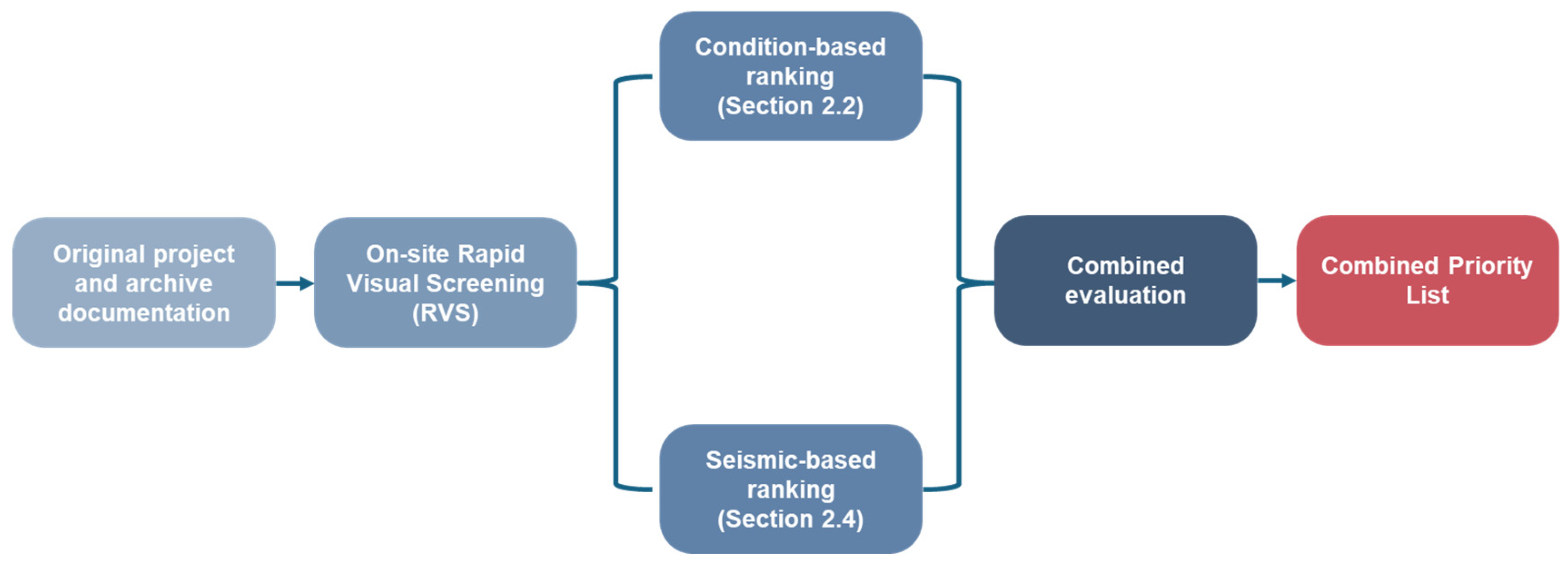
Figure 1 presents the overall workflow of the framework, from data acquisition and typological classification to the generation of condition-based and seismic-based rankings, which are independent, and their final integration into a unified prioritisation class.

2.2. Deterioration-Based Ranking Procedure

The assessment of structural condition builds upon a simplified procedure originally developed for the management of bridge networks [28], adapted and recalibrated here for application to building portfolios. The method is designed to provide a synthetic yet robust representation of degradation through a visual, component-based inspection, enabling consistent comparison across a heterogeneous stock. Each structural unit (SU) is assigned a deterioration rating based on standardised and typology-specific tables and charts.
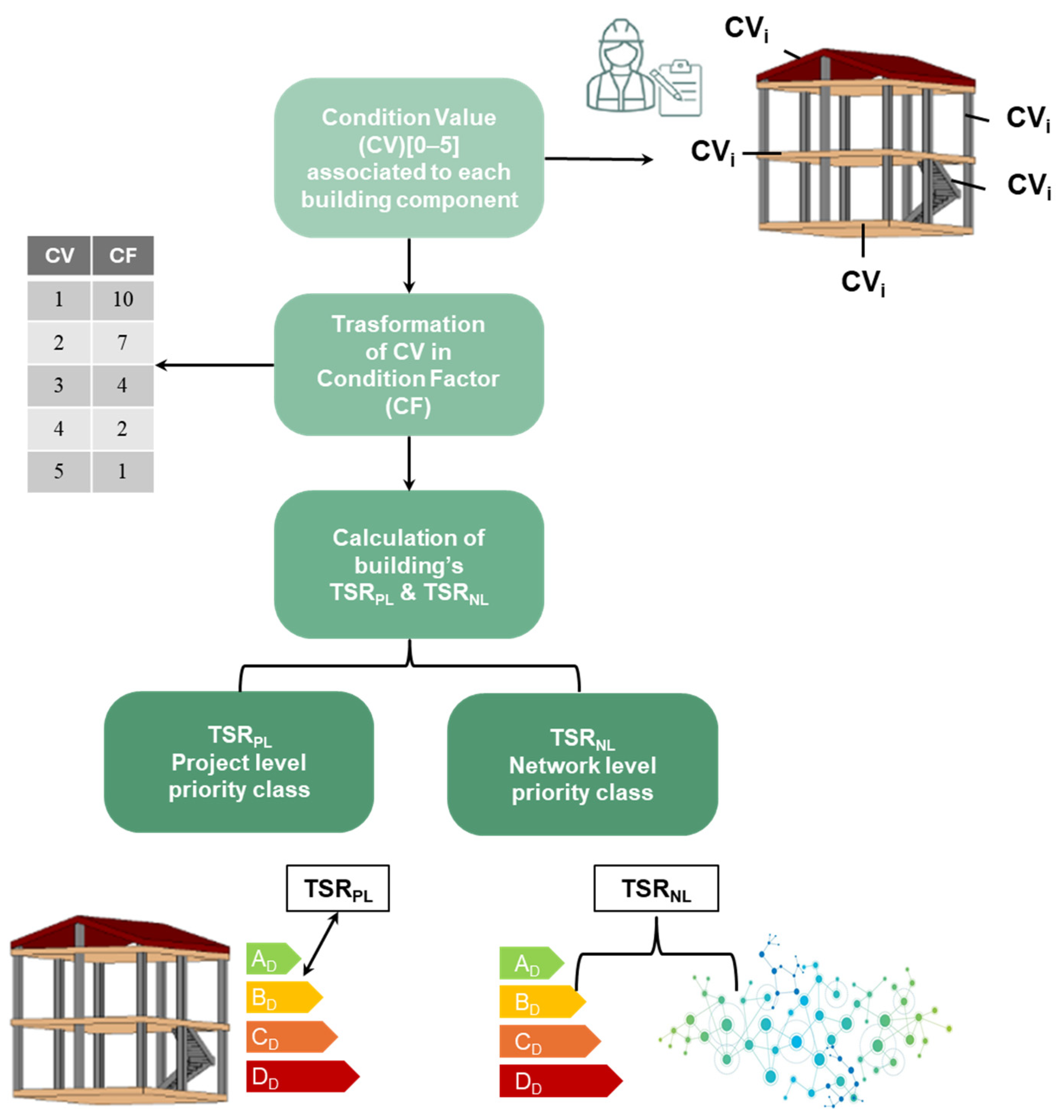
The procedure, illustrated in Figure 2, is structured around two complementary levels of analysis (Project and Network Levels), which are described in the following sections.
At the Project Level, the condition of each individual SU is evaluated in isolation, based solely on the degradation of its structural and non-structural elements. A quantitative score, called the Total Sufficiency Rating (TSR), is computed for each SU by aggregating weighted ratings of its components, expressed through condition and importance factors.
At the Network Level, the TSR is adjusted by introducing a Penalty Factor that account for the broader role of the SU within the building stock. These factors are associated with the SU’s importance within the network, functional use, occupancy, and age—all of which influence the urgency of intervention beyond the degradation state alone.
This two-level approach allows the prioritisation to reflect not only the technical condition of each SU, but also its criticality within the broader system. The resulting condition-based priority classes represent one of the two main inputs to the final combined ranking framework and can also be directly used to generate standalone priority lists for maintenance interventions.

2.2.1. Project Level Assessment

The Project Level assessment aims to quantify the deterioration state of each SU based solely on visual inspection data, with attention to both structural and non-structural components.
To support a systematic on-site inspection, each SU is conceptually broken down into its primary components according to its construction type (M, RC, I-RC, I-ST units). The identified components (Table 1) include both structural and non-structural elements that are specific to individual building types (M1 to M6, RC1 to RC6, and ST1 to ST9), as well as components (mostly non-structural elements and building contents) that are shared across different structural systems (C1 to C12). Each component is then assigned a predefined weight (W), ranging from 5 to 10, which reflects its relative importance in terms of structural or functional contribution. To standardise this step, predefined weighting is also listed in Table 1.
The on-site inspection consists of visually assessing each identified component to detect any signs of alteration or deterioration. Based on these observations, a Condition Value (CV) is assigned on a discrete scale from 1 to 5 (Table 2), reflecting the level of functional impairment of the component, where 1 indicates no visible or negligible deterioration and 5 corresponds to critical damage or complete loss of functionality. If a component cannot be assessed—due to inaccessibility or concealment (e.g., foundations or roof overhangs)—a CV of 0 is assigned.
The assessment follows a worst-case logic: within each component category, the CV reflects the most severely deteriorated element. For instance, if a single column within a group exhibits critical deterioration while the others show only minor or moderate damage, the highest CV is assigned to the entire component category, “Columns”.
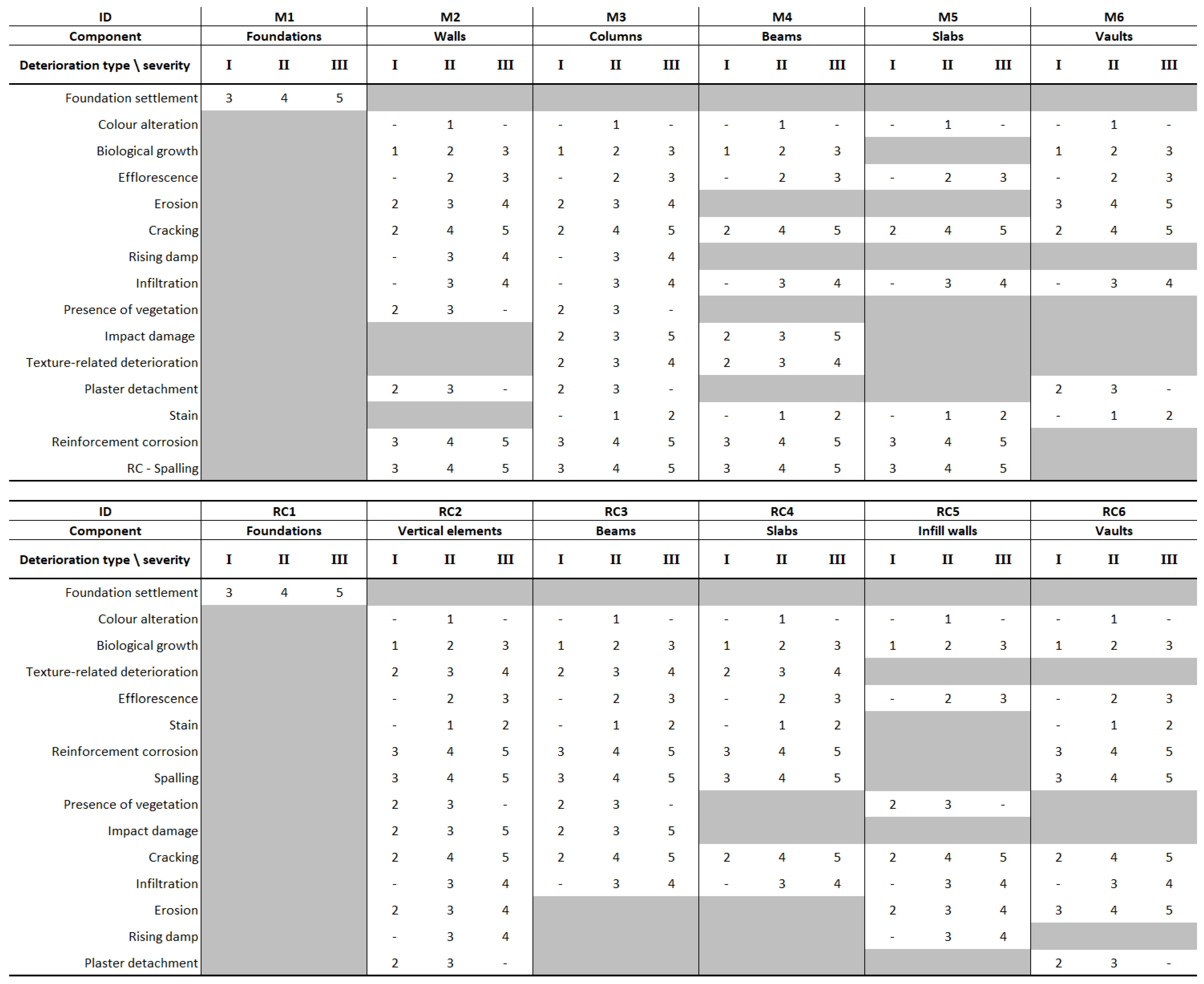
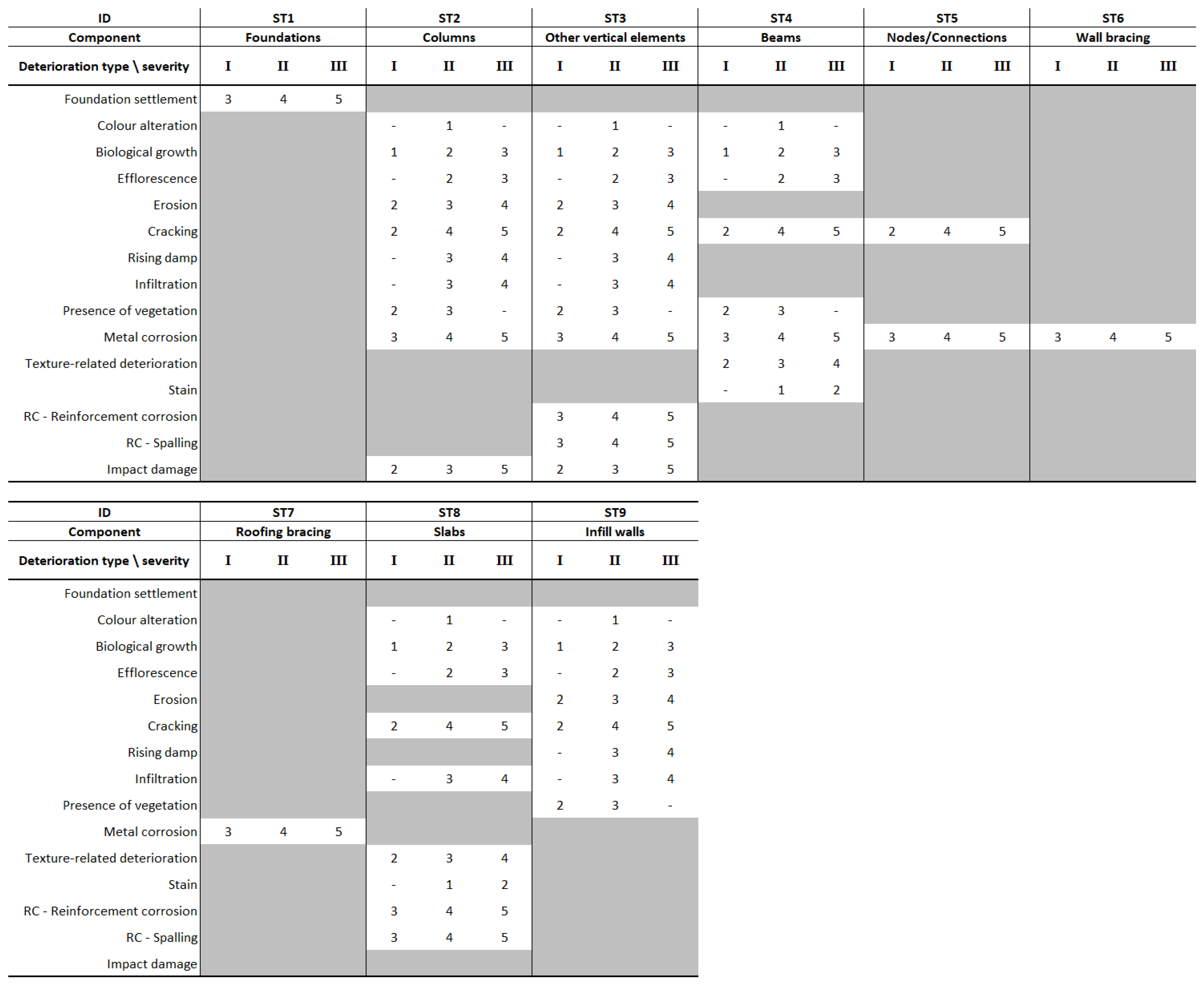
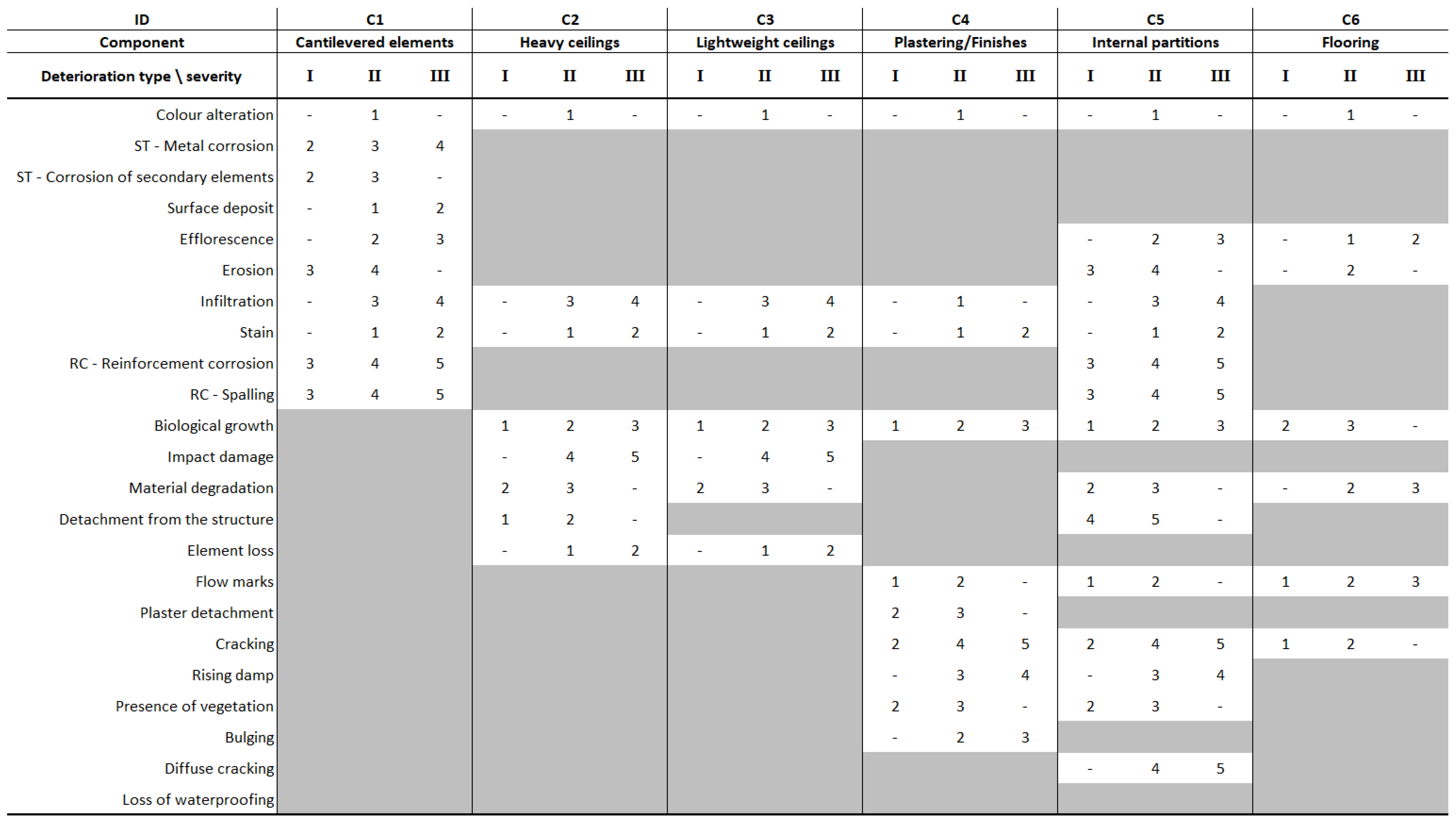
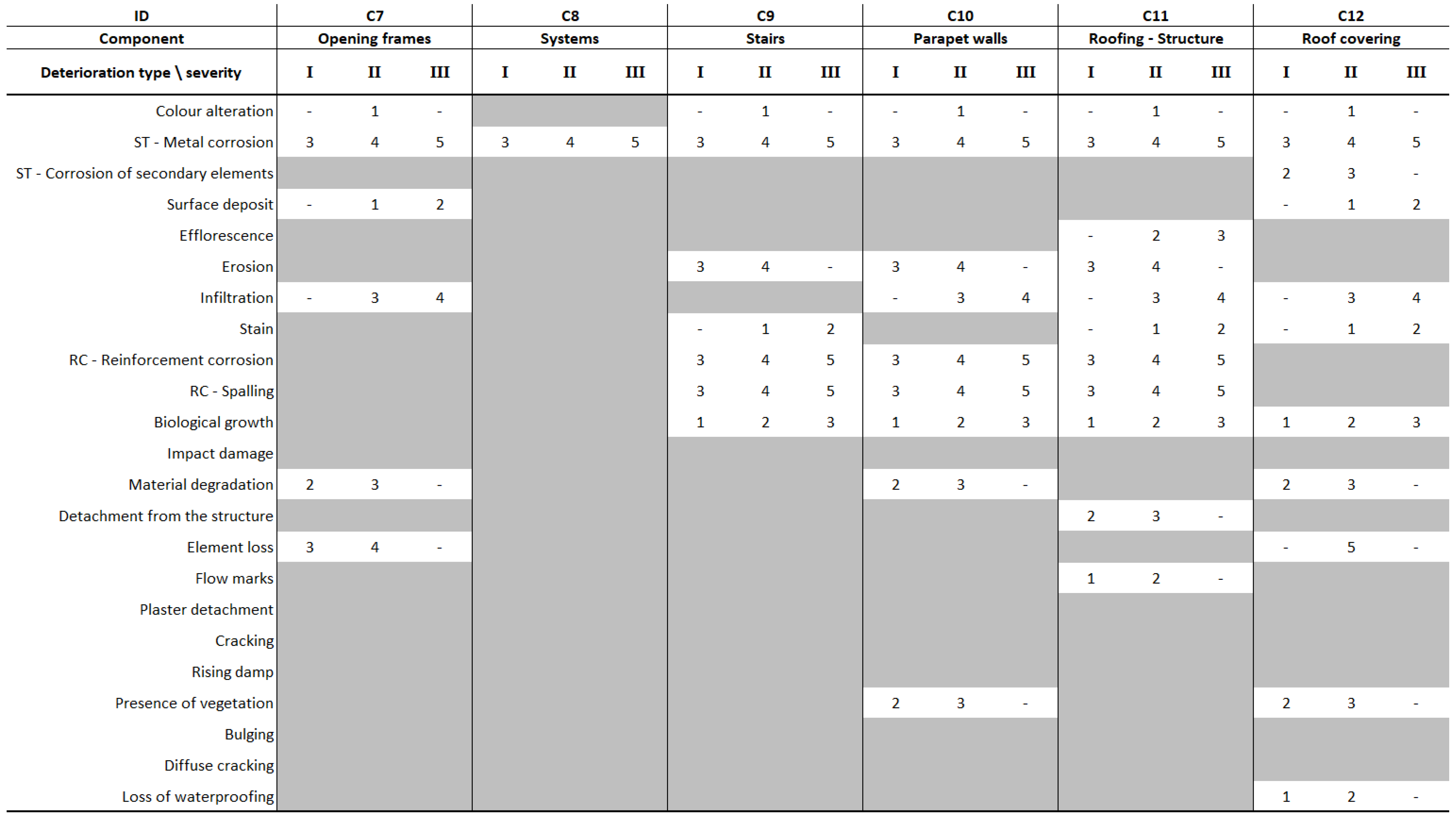
To promote consistency and support surveyors in the assignment of CVs, dedicated reference charts were developed for all identified building components (see Appendix A) to capture the main sources of deterioration relevant to each element, including physical and chemical material degradation as well as damage caused by mechanical actions (e.g., impacts, excessive deformation). The selection of these deterioration phenomena was informed by the relevant literature (e.g., Refs. [16,21,23]), which provides consolidated classifications of damage and degradation in structural materials and components. However, such references do not indicate how different deterioration phenomena should be comparatively evaluated and ranked, nor how the severity of their manifestations should be taken into account. Therefore, CV values were assigned to slight, common, and severe manifestations of each selected deterioration phenomenon based on the authors’ experience from field surveys, with the aim of ensuring a consistent and reproducible translation of deterioration evidence into a numerical rating framework.
It is worth noting that alternative definitions of CVs, potentially derived from specific calibrations or context-dependent considerations, may be adopted without undermining the validity of the overall approach proposed herein. What remains essential is the consistent application of the methodology using a shared CV assignment criterion, to ensure coherence in the assessment process, acknowledging that deterioration assessment inherently involves subjective judgement.
As an example, Table 3 provides the reference chart for the ‘Vertical Elements’ component in RC buildings. As shown, each row of the chart refers to a specific deterioration phenomenon and reports the corresponding CV values associated with its minor (I), intermediate (II), and severe (III) manifestations.
Once the Condition Values (CVs) have been assigned to all inspectable components, they are converted into corresponding Condition Factors (CFs) using the conversion rule reported in Table 4 [28]. Components that could not be assessed are assigned a default value of CV = 0, which corresponds to CF = 0.
The Condition Factors of the assessed components ( CF i ) are then combined with their corresponding importance weights ( W i ) to compute the Real Total Sufficiency Rating ( TSR real ) of the SU, using the weighted average defined in Equation (1). As shown, the summations include only the t components that were actually inspected (i.e., those with CF > 0); accordingly, TSR real reflects the condition of the building based exclusively on the available inspection data.
TSR real = 10 · i = 1 t ( CF i · W i ) i = 1 t W i
Since TSRreal considers only the inspected portion of the structure, an adjustment is introduced to account for components that could not be evaluated. This is achieved by incorporating two additional parameters: the Confidence Factor (CoF), which quantifies the completeness of the inspection, and the Minimum Total Sufficiency Rating TSR m i n , which represents a conservative estimate assuming the worst possible condition for all unassessed elements.
The Confidence Factor (CoF) indicates how complete the inspection was, and is calculated as the ratio between the total weight of the t inspected components and the total weight of all n components comprising the building and listed in the weighting table (Table 1), as shown in Equation (2). A higher CoF corresponds to broader inspection coverage and, consequently, greater confidence in the resulting condition rating.
CoF = 100 · i = 1 t W i i = 1 n W i
The TSRmin expresses a conservative scenario in which all uninspected components are assumed to be in poor condition. Specifically, a Condition Value (CV) of 5 (i.e., Condition Factor, CF = 1) is assigned to each unassessed component, with the exception of foundations, which are reasonably attributed a CV of 3 (i.e., CF = 4). This exception reflects the fact that, unlike other building components that may be occasionally inaccessible, foundations are typically not inspectable through rapid, non-invasive surveys. As a result, their deterioration state is rarely verifiable during standard visual assessments. Therefore, a medium-level condition rating is assumed to balance caution with realism. TSRmin is computed using the same weighted average formula applied for TSRreal, but extended to all n components in the building, as shown in Equation (3).
TSR min = 10 · i = 1 n ( CF i · W i ) i = 1 n W i
The final rating at the Project Level, denoted as TSRPL, is obtained by combining TSRreal and TSRmin through an analytical formulation, which balances the actual assessed condition with a conservative assumption on uninspected components. The applicability of this formulation is bounded by an appropriate level of completeness of the inspections, and thus by a threshold value of the CoF. This aspect was conceptually introduced in the original methodology but not explicitly quantified. In this work, the threshold is set to CoF ≥ 60%. This ensures that the overall condition score reflects both the actual inspection data and the level of uncertainty associated with missing information. The formula is provided in Equation (4).
TSR PL = 100 · TSR real + CoF · TSR min 100 + CoF
The resulting TSRPL value ranges from 0 to 100 and can be directly used to generate prioritisation lists for maintenance planning across the building stock. Lower values indicate severe or widespread deterioration, while values close to 100 correspond to buildings in good condition. In addition to its numerical interpretation, TSRPL can also be translated into an aggregated, qualitative priority metric to support decision-making. As shown in Table 5, four condition-based priority classes are defined:
  • AD (TSRPL between 81 and 100): Buildings with no or negligible deterioration, requiring only scheduled preventive inspections.
  • BD (TSRPL between 61 and 80): Buildings with minor to moderate deterioration, requiring routine maintenance to prevent further degradation.
  • CD (TSRPL between 31 and 60): Buildings with moderate to significant deterioration, where extraordinary maintenance is required to prevent the evolution into critical condition states and to restore component functionality.
  • DD (TSRPL between 0 and 30): Buildings in poor or critical condition, where the extent and severity of degradation compromise structural performance and safety under static loads. Urgent intervention is required to re-establish safe conditions.

Table 5. Priority classes for maintenance intervention based on TSRPL thresholds.
Condition-Based Priority ClassTSRPL
AD—Preventive inspections81–100
BD—Routine maintenance61–80
CD—Planned extraordinary maintenance31–60
DD—Urgent intervention0–30

2.2.2. Network Level Assessment

While the Project Level focuses on the technical condition of each individual structural unit (SU), the Network Level assessment introduces additional factors aimed at contextualising each SU within the broader building stock. This step refines the condition-based ranking by considering strategic, functional, and social attributes that influence the urgency and relevance of maintenance interventions.
Specifically, the Project Level rating (TSRPL) is adjusted through a Penalty Factor (PF), which accounts for critical aspects related to risk exposure and functional significance, rather than physical deterioration. These aspects are captured through the following four parameters:
  • Function (FUN): Represents the building’s intended use. Functions considered more important and associated with greater risk exposure—such as essential service facilities and high-risk industrial plants—are more heavily penalised.
  • Occupancy (OCC): Reflects the average number of people present in the building. Higher penalties are assigned to buildings with higher occupancy levels, as their deterioration may pose a greater risk to human life or economic activities.
  • Age Factor (AF): Relates the building’s age to its expected service life, assumed to be 50 years for ordinary structures. Penalties are applied when this threshold is exceeded, and also in cases where relatively recent buildings already exhibit significant deterioration—a condition often linked to design flaws or adverse environmental and loading conditions, and indicative of an accelerated decline in structural performance.
  • Network Building Importance (NBI): Expresses the strategic role of the building within the overall stock. This parameter qualitatively considers the potential to reallocate the building’s function to nearby units in case of failure, thereby capturing key aspects such as functional redundancy and spatial relationships within the building network.
The Penalty Factor (PF) is defined in Equation (5) as the product of the above parameters (FUN, OCC, AF, and NBI), whose predefined values are listed in Table 6. It acts as a reductive coefficient that penalises the Project Level score (TSRPL) based on contextual factors, resulting in the Network Level Total Sufficiency Rating (TSRNL), calculated as shown in Equation (6).
PF = FUN · OCC · AF · NBI
TSR NL = PF · TSR PL
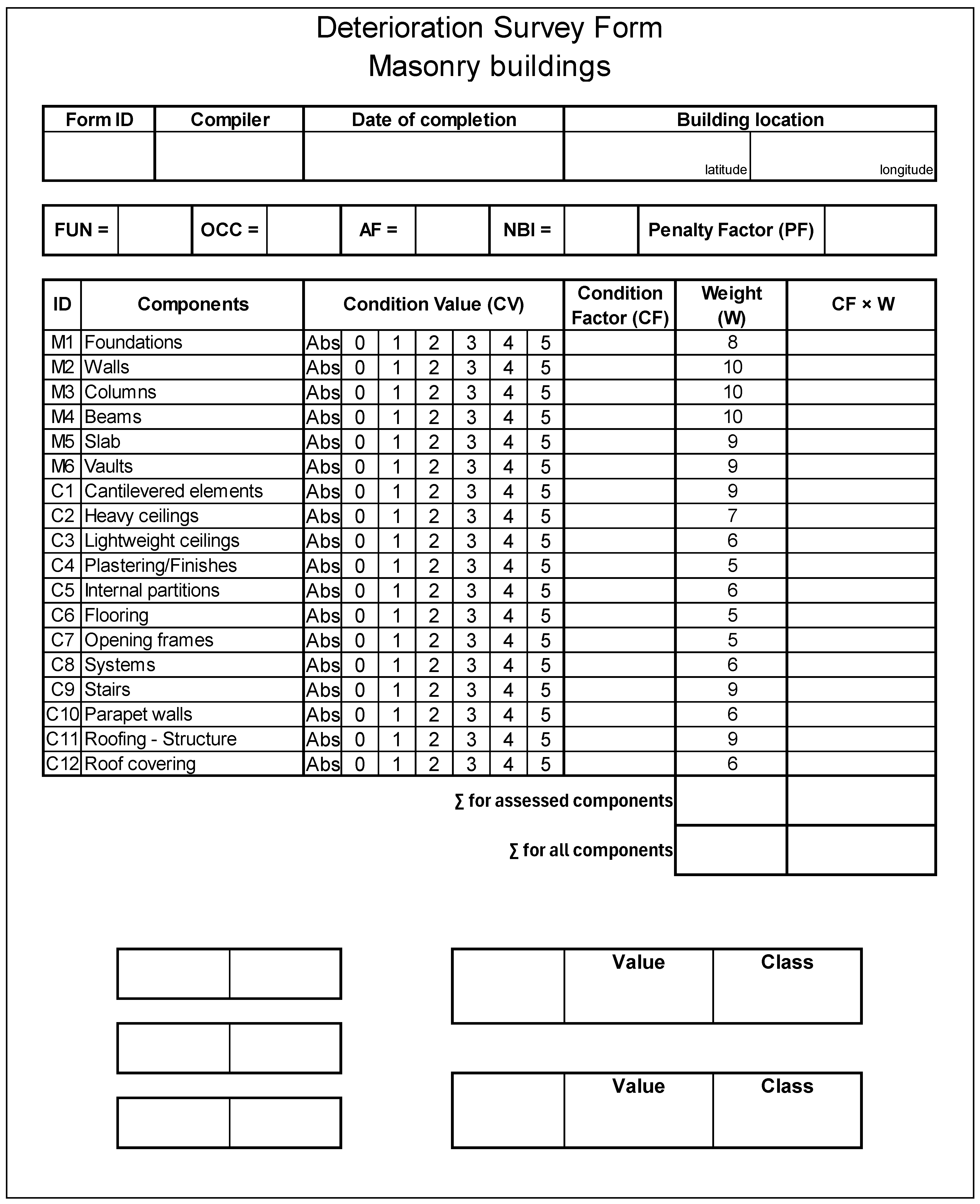
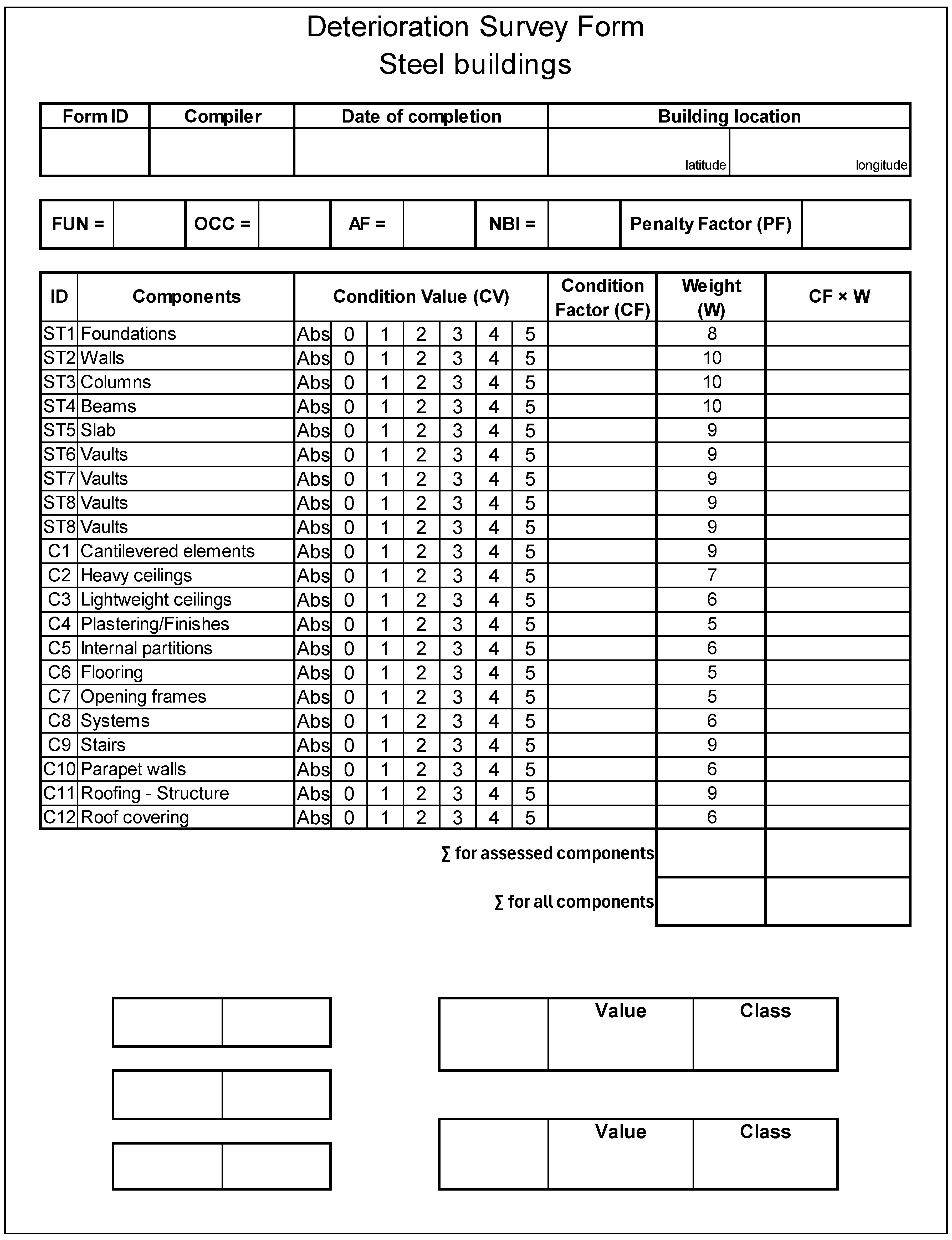
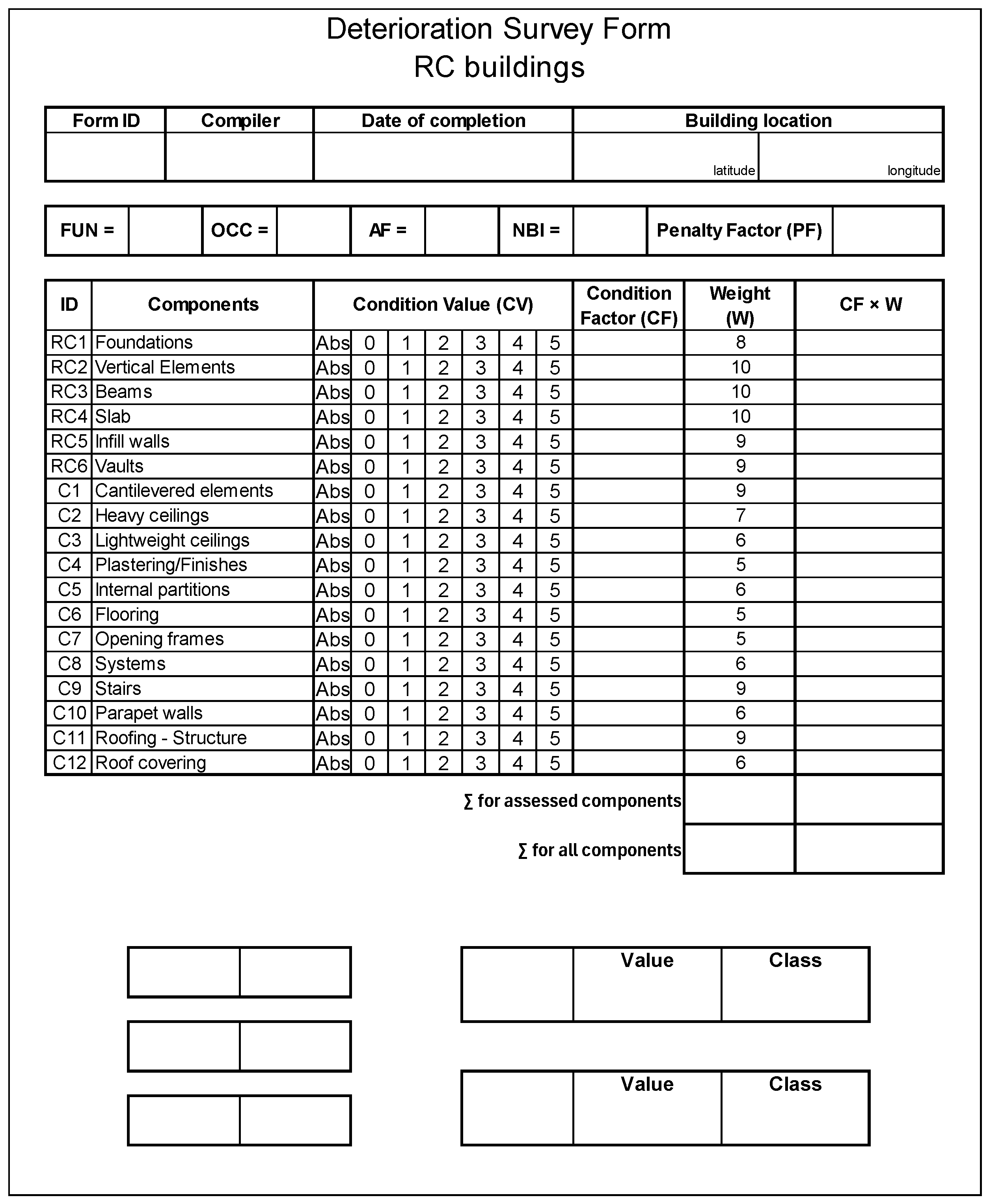
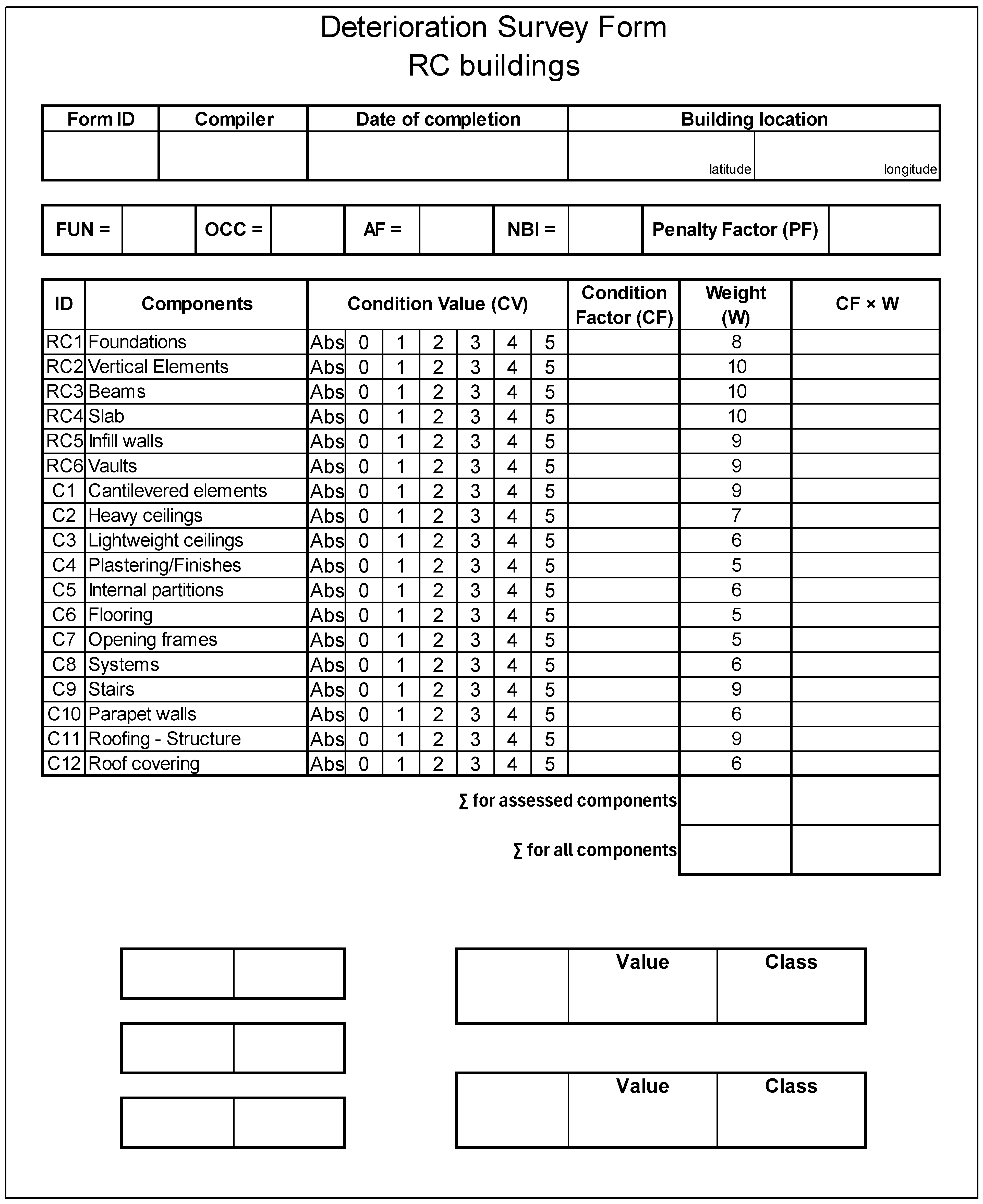
To guide field surveys, a dedicated form was developed for each structural typology. An example for reinforced concrete buildings is shown in Figure 3, while the others are provided in Appendix B. These tools streamline data collection and enable a structured, scalable application of the assessment method across large-scale building stocks. The collected information can directly support informed decision-making for maintenance and preservation planning.
Table 6. Parameters used to compute the Penalty Factor and their predefined values.
Penalty ParametersDescriptionValues
FUN (Function)Storage use; disused or abandoned buildings1.00
Residential buildings; low-risk industrial facilities0.95
Offices; public facilities; medium-risk industrial plants0.90
High-risk industrial facilities0.80
OCC (Occupancy)Fewer than 50 occupants1.00
Between 50 and 100 occupants0.95
More than 100 occupants0.90
AF (Age Factor)Age > Service Life0.90
Age < Service Life1.00
Age < 20 years with significant degradation0.80
NBI (Network Building Importance)Relocation possible within a 10 km radius1.00
Relocation possible within a 10–20 km radius0.95
Relocation possible beyond 20 km, or not feasible0.90
Figure 3. Example of survey form for the deterioration assessment of RC buildings.
Buildings 16 01293 g003

2.3. Seismic Priority-Based Ranking Procedure

The seismic priority of each structural unit (SU) is assessed using a two-level rapid procedure developed in a previous work by the authors [27]. This method combines a qualitative screening based on standardised typology-specific forms with a simplified mechanics-based capacity check, allowing for an efficient evaluation of a large number of buildings with limited input data.
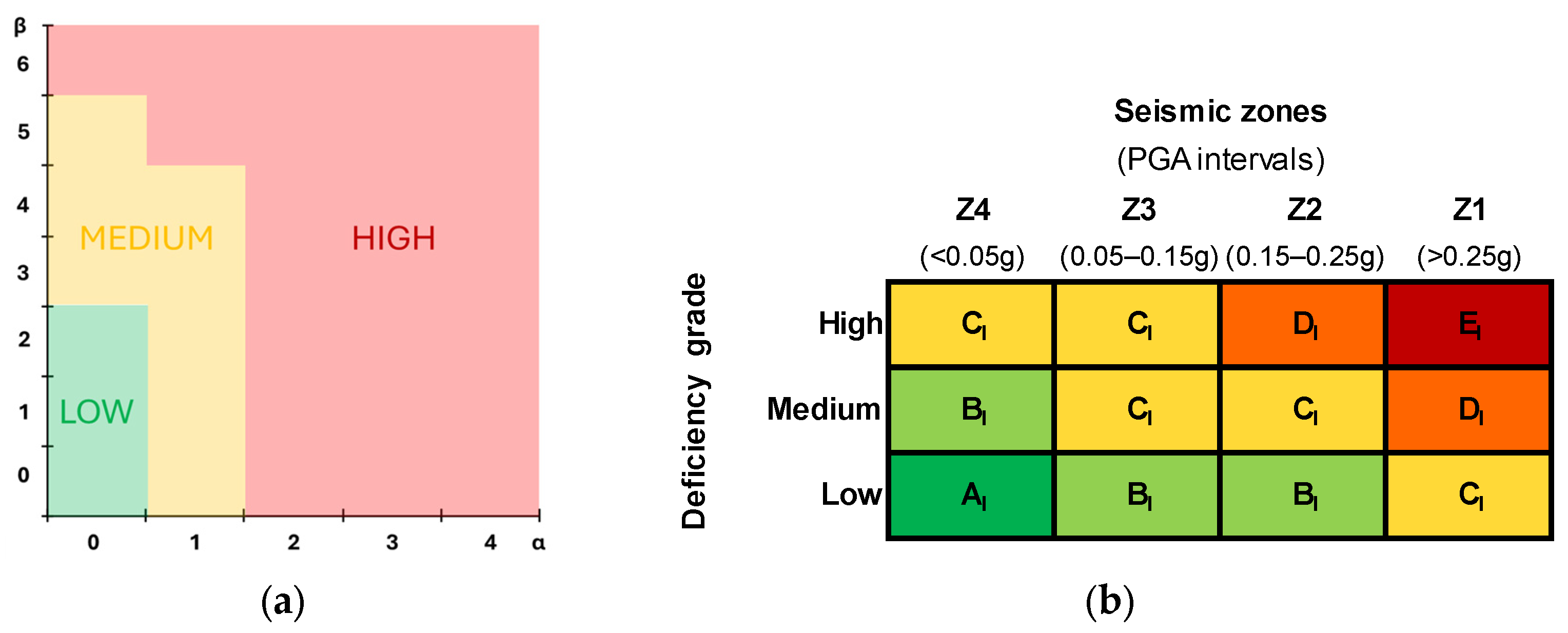
In the first phase, each SU is screened using a standardised deficiency form tailored to its structural type. Specifically, these forms—originally developed by [29] and aligned with regulatory frameworks such as [30]—allow surveyors to systematically and objectively identify recurrent vulnerabilities or structural deficiencies that may affect the seismic performance of buildings, such as irregularities in plan or elevation, insufficient structural connections, or outdated construction practices. Each vulnerability is classified as either severe (α) or moderate (β), and the total number of identified deficiencies determines a deficiency grade: low (L), medium (M), or high (H). Detailed descriptions of the deficiency forms and the associated tables are provided in [27], to which the reader is referred for further information.
Although the deficiency grade provides an indication of building vulnerability, its significance may be limited if not contextualised with the seismic hazard of the construction site. To address this, a prioritisation metric was developed using a decision-tree approach that combines the deficiency grade with site-specific seismic hazard data. The hazard level is classified into four seismic zones (Z1 to Z4) based on peak ground acceleration (PGA) values corresponding to a 475-year return period, as defined by [31]. This combined metric results in the first-level seismic priority classification, expressed in five levels—from AI (lowest priority) to EI (highest priority). Figure 4a and Figure 4b illustrate, respectively, the criteria used to determine the deficiency grade from the deficiency forms and the first-level priority classification.
In the second phase, a quantitative assessment is performed to estimate the seismic capacity of each SU under its design-level earthquake. This assessment is based on simplified mechanical models and methods and returns various safety factors (or seismic capacity-to-demand ratios, C/D) associated with both global and local structural mechanisms. The modelling approach clearly varies according to the structural type.
For M buildings, the VULNUS software (version 4.0) is applied [32,33]. It processes key input data on building geometry, material properties, the types of resistant system, floors and roof, and the effectiveness of wall-to-wall connections. It returns the triggering seismic acceleration for the main in-plane (IP) and out-of-plane (OOP) failure mechanisms. Specifically, IP failure is assessed by a limit equilibrium analysis based on the POR approach [34] and the Turnšek and Čačovič [35] formula for shear resistance, while OOP mechanisms are assessed through linear kinematic analyses.
For RC buildings, seismic capacity is estimated using FIRSTEP-RC [36,37]. The model requires information on building geometry, material properties, the types of RC frames, floors and roof, and reinforcement details for vertical elements. If reinforcement data are not available, a simulated design procedure is applied. FIRSTEP-RC calculates the building’s capacity acceleration—corresponding to the first attainment of a Life-Safety Limit State in a vertical element—using an equivalent linear analysis. Although each vertical element is initially analysed independently according to its static scheme, the model accounts for plan eccentricity in the evaluation of the global response.
For the industrial buildings considered here (I-RC, I-ST), the overall structural behaviour can be reduced to a series of simple “inverted pendulum” systems, where individual columns respond independently without significant interaction with the rest of the structure. Therefore, the proposed assessment method consists of modelling columns with their equivalent single degree of freedom (ESDOF) system. This ESDOF method [27] requires key information on column sections (material properties, dimensions, rebar details), and when collected data is not sufficient, a simulated design is performed. A linear static analysis is implemented to evaluate the combined compression–biaxial bending and shear failures and, for I-RC buildings only, the local failure mechanism due to support loss. The list of mechanical methods adopted for the seismic assessment of the different building types is provided in Table 7, together with the corresponding global and local mechanisms analysed.
The final output of the second-level assessment is an overall safety index for each SU, defined as the minimum among the safety factors (or C/D ratios) associated with the relevant structural mechanisms. Based on this index, and consistent with the qualitative assessment, a second-level priority classification is defined, still expressed in five levels—from AII (lowest priority) to EII (highest priority). Table 8 presents the second-level priority classification.
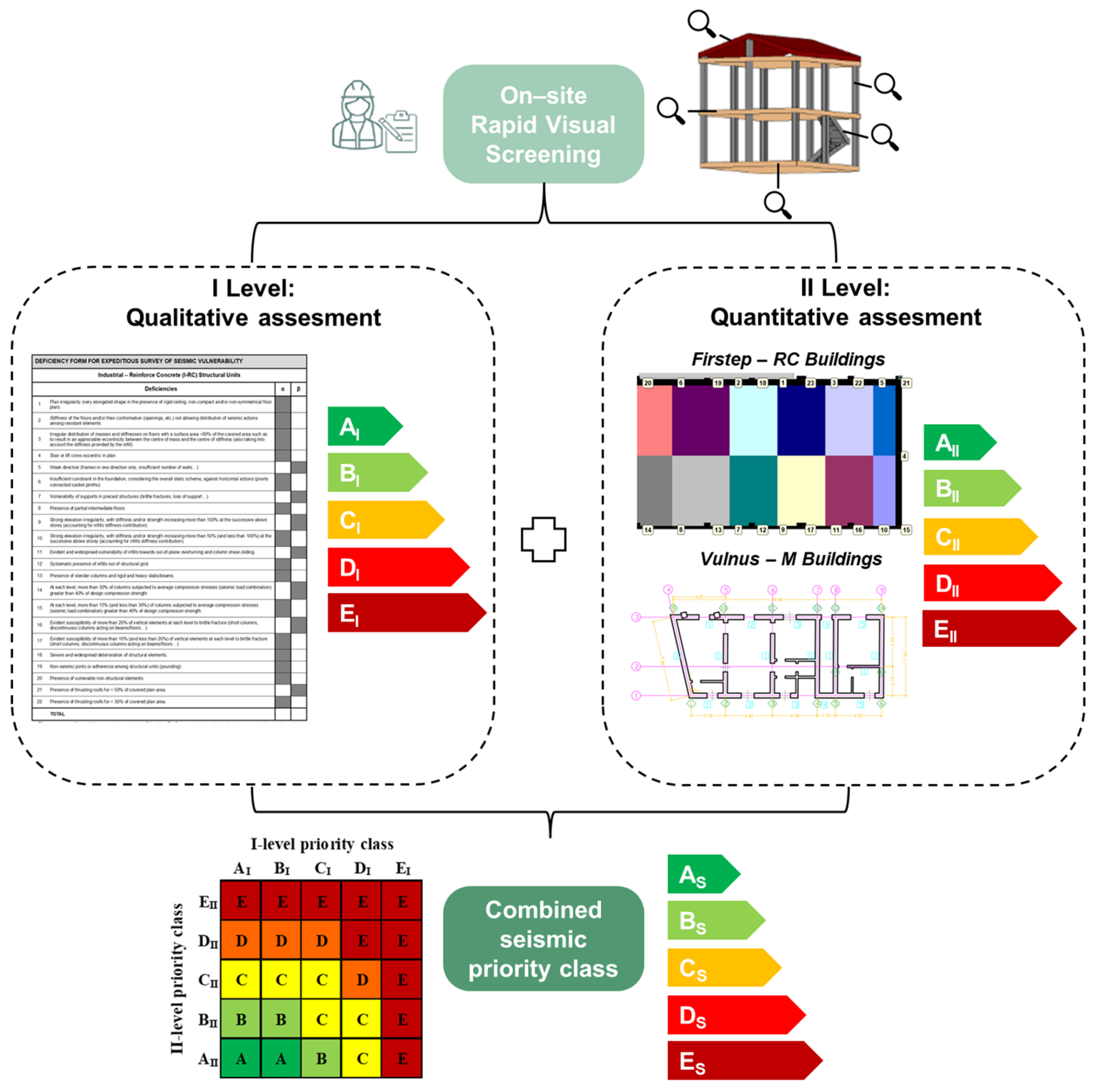
The results of the two assessment phases are then integrated into a single seismic priority metric, expressed across five priority levels, from AS (lowest priority) to ES (highest priority). Figure 5 shows a visual summary of the methodology, illustrating the two assessment phases (qualitative and quantitative) and providing the decision matrix for combined priority classes. Combining the first- and second-level assessments improves the reliability of the seismic prioritisation process. The qualitative method is quick and effective in identifying typical vulnerabilities, including those—such as irregularities or non-structural weaknesses—that may be overlooked by simplified structural models. The quantitative method, on the other hand, refines the evaluation through performance-based checks. By merging the two, the approach balances speed and depth, resulting in a more robust and consistent classification, particularly valuable when dealing with heterogeneous building stocks.
Lastly, this approach also provides a consistent basis for integration with the deterioration-based ranking procedure described earlier, supporting the development of a more comprehensive prioritisation framework for maintenance and risk mitigation planning.

2.4. Combined Ranking Framework Based on Condition State and Seismic Priority

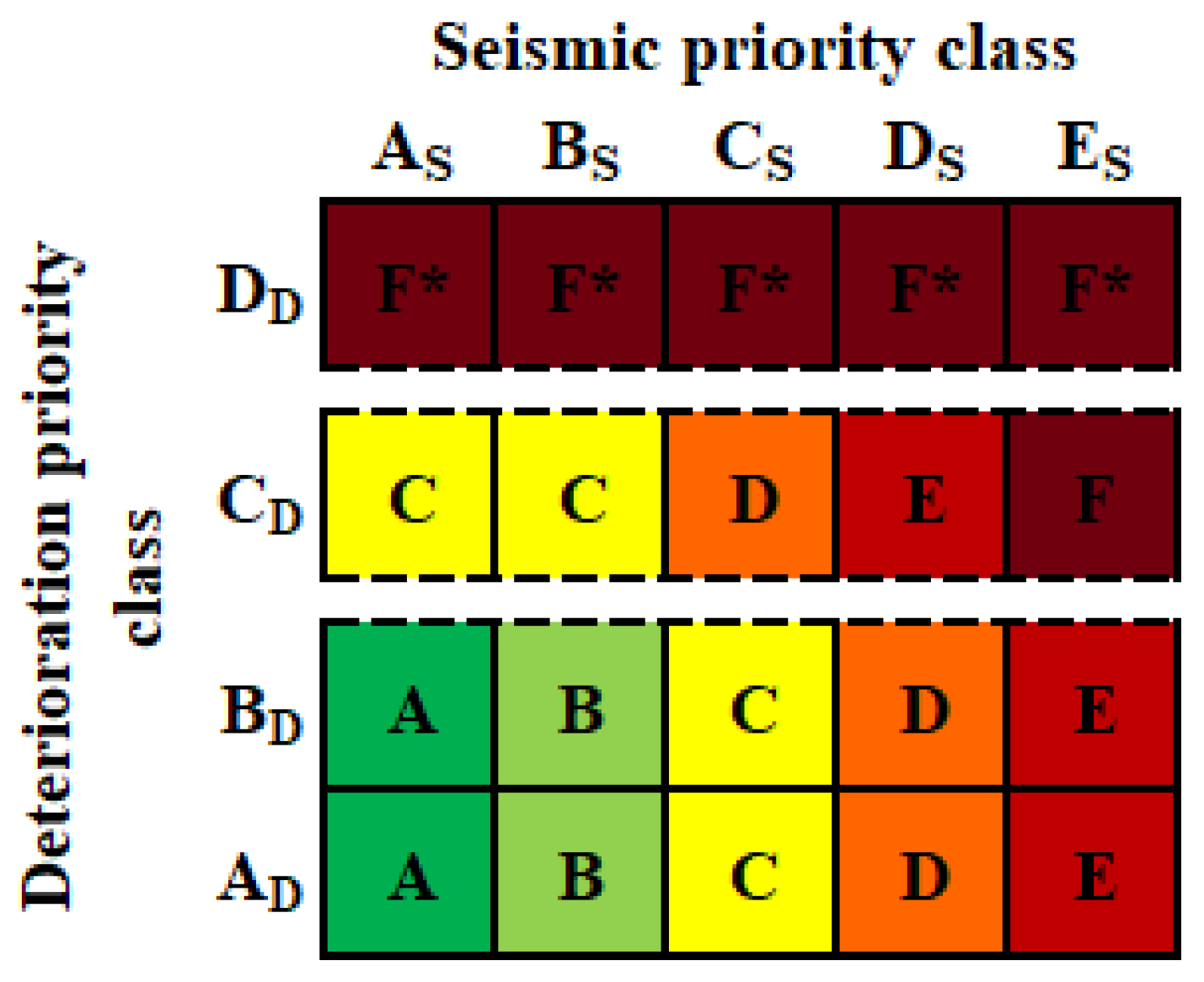
The deterioration-based prioritisation method is herein integrated with the seismic priority classification. Specifically, a decision-tree approach is proposed (Figure 6), aligned with national guidelines such as those outlined by the Italian Civil Protection Department (Ref. [31] and subsequent directives).
According to these, when safety verifications reveal deficiencies related to human-controlled actions—such as permanent loads or service conditions—interventions must be considered mandatory and non-deferrable. This includes cases where structural safety under gravity loads is no longer guaranteed due to severe deterioration or loss of capacity. In contrast, when non-compliance arises from actions not controlled by human activity, such as seismic loads, the decision to intervene is not automatic. In these cases, the law allows for a more flexible approach, where measures are evaluated on a case-by-case basis, considering the severity of the deficiency, available resources, and potential consequences in terms of public safety. Based on this regulatory distinction, deterioration-based ranking is applied as a modifying factor to the seismic classification, resulting in a combined priority ranking, according to the following logic:
  • Structural units (SUs) in deterioration classes AD or BD, corresponding to null or moderate degradation requiring only preventive inspections or routine maintenance, are assigned a combined priority class equal to their seismic classification. In these cases, the deterioration state does not alter the initial seismic assessment.
  • SUs in class CD, where significant deterioration requires extraordinary maintenance, are assigned a combined priority class that is more severe than their seismic classification, depending on the initial priority level. The deterioration condition thus modifies and escalates the prioritisation, ensuring that buildings with both seismic and condition-related vulnerabilities are ranked accordingly.
  • SU in class DD, where degradation is critical and may compromise structural safety under gravity loads, are directly assigned to the critical combined priority class F*. This class overrides the seismic classification entirely and indicates that immediate, non-deferrable intervention is legally required.
Across all cases, deterioration can only worsen the final priority class; it can never mitigate the seismic ranking. The introduction of priority classes F and F* enhances the decision-support framework by clearly distinguishing buildings that require immediate action either due to combined seismic and condition-based concerns (class F), or due to critical structural degradation alone (class F*).
Figure 6 presents the complete decision matrix used to define the combined prioritisation classes. Seismic-based priority classes are indicated with the subscript “S”, while deterioration-based priority classes use the subscript “D”.
This integrated decision-support framework enables a balanced and scalable prioritisation of interventions by jointly accounting for seismic priority and structural degradation. By aligning seismic risk with asset condition, it supports informed and proactive planning for both risk mitigation and long-term maintenance across heterogeneous building stocks.

3. Application of the Integrated Prioritisation Framework

3.1. Overview of the Heterogeneous Building Stock

The proposed framework was applied to a heterogeneous building stock located in a moderate seismic hazard area of Italy. The sample consists of 31 structural complexes, comprising 60 buildings and a total of 79 independent structural units (SUs). All units are operated and managed by the same service operator. For confidentiality reasons, the specific locations of the units and the identity of the service operator are not disclosed.
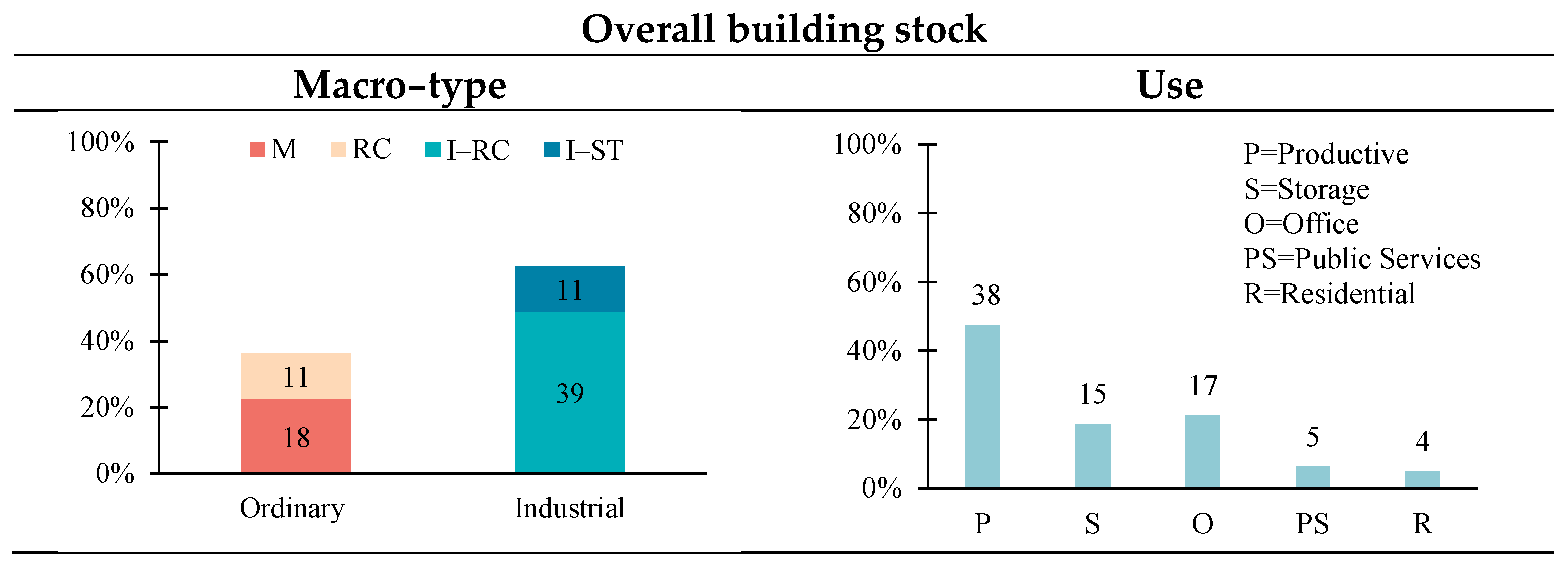
These SUs are classified into two main categories, ordinary and industrial buildings, accounting for 29 and 50 units, respectively. Figure 7 summarises the distribution of the SUs across the building types (M, RC, I-RC, and I-ST) and functional uses. Among ordinary buildings, masonry (M) units are more prevalent than reinforced concrete (RC) ones (18 vs. 11). In the industrial category, reinforced concrete units (I-RC)—including both precast (PRC) and large-span (LRC) solutions– predominate over steel (I-ST) units (39 vs. 11).
In terms of use, production-related functions (e.g., mechanical workshops and service garages) are predominant, accounting for nearly 50% of the total SUs. Office and storage uses each represent approximately 20% of the stock, while a smaller proportion of units is dedicated to public functions (e.g., canteens and ticket offices) or residential purposes (about 6% each).
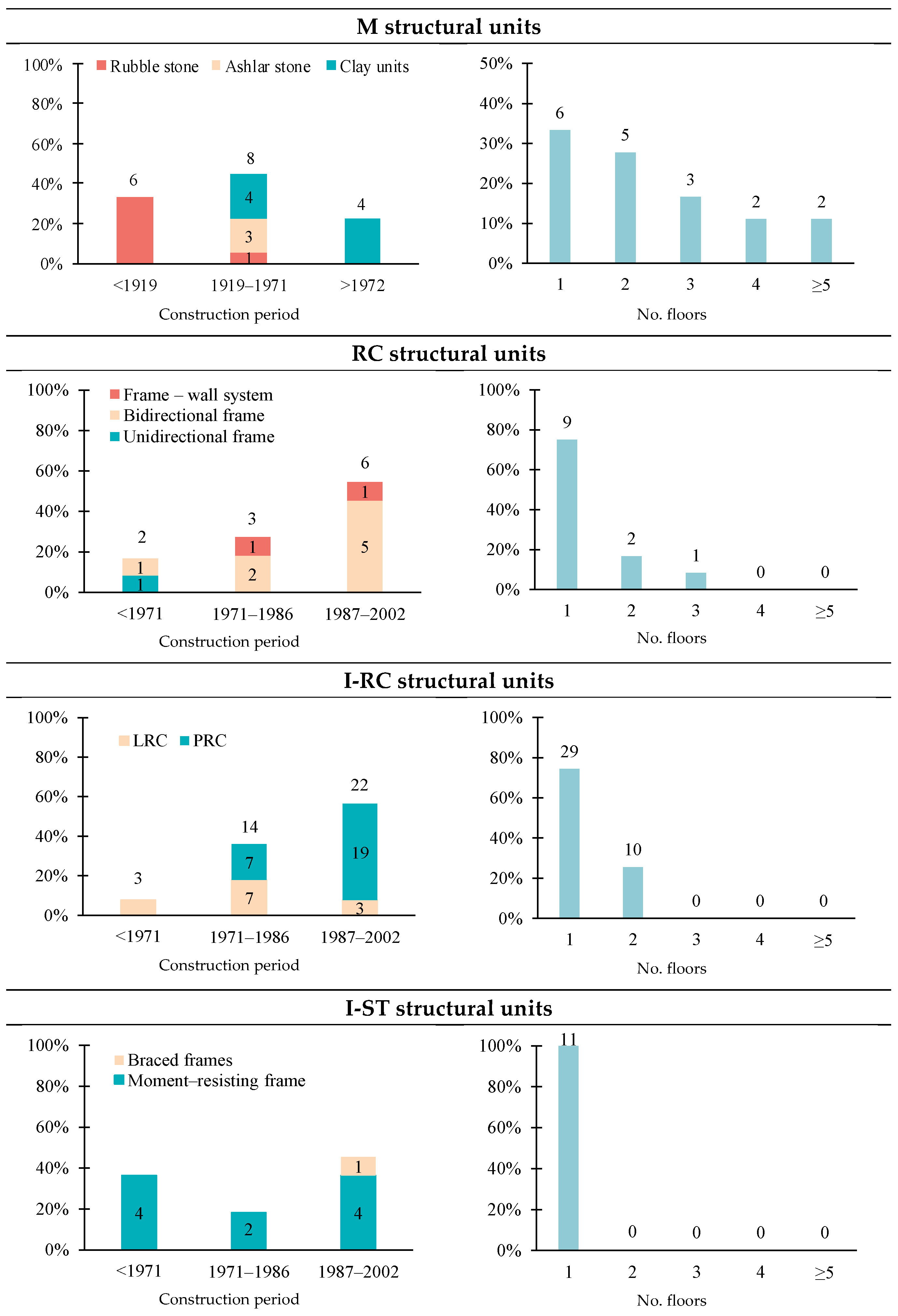
Figure 8 presents, for each building type, the distribution of SUs by construction period and primary structural system, together with their classification by number of storeys. The selected construction period ranges reflect the evolution of Italian building standards, technologies, and construction practices, and are consistent with those adopted in major national building survey tools (e.g., Refs. [39,40]).
Masonry (M) units predominantly date back to pre-1971 construction periods, when seismic design provisions were not yet enforced, and are therefore almost exclusively characterised by gravity load design. In contrast, reinforced concrete and industrial units (RC, I-RC, and I-ST) are generally more recent, having been constructed after 1971, with those built after 1987 meeting at least minimum seismic design requirements.
M units are characterised by different masonry typologies across the construction periods, including rubble stone, ashlar stone, and clay unit masonry. While covering the typical height range of this building type, they are predominantly low-rise structures. Moreover, approximately one third of the units have a footprint of less than 200 m2, and nearly half fall within the 200–500 m2 range.
RC units exhibit unidirectional frames, bidirectional frames, and frame–wall systems as primary structural systems, whereas I-RC units comprise prefabricated (PRC) and large-span (LRC) structures. These reinforced concrete buildings are mostly single-storey, reflecting their prevalent functional use. In terms of plan dimensions, RC units generally have floor areas below 500 m2, whereas I-RC units are distributed over a wider range, from 200 to 3000 m2.
Lastly, I-ST units are mainly braced-frame, single-storey buildings, consistent with standard industrial construction practices, with floor areas mostly ranging from 500 to 1000 m2. Additional details on the characteristics of the analysed building stock can be found in Gaspari et al. [27].

3.2. Deterioration-Based Ranking of the Building Stock

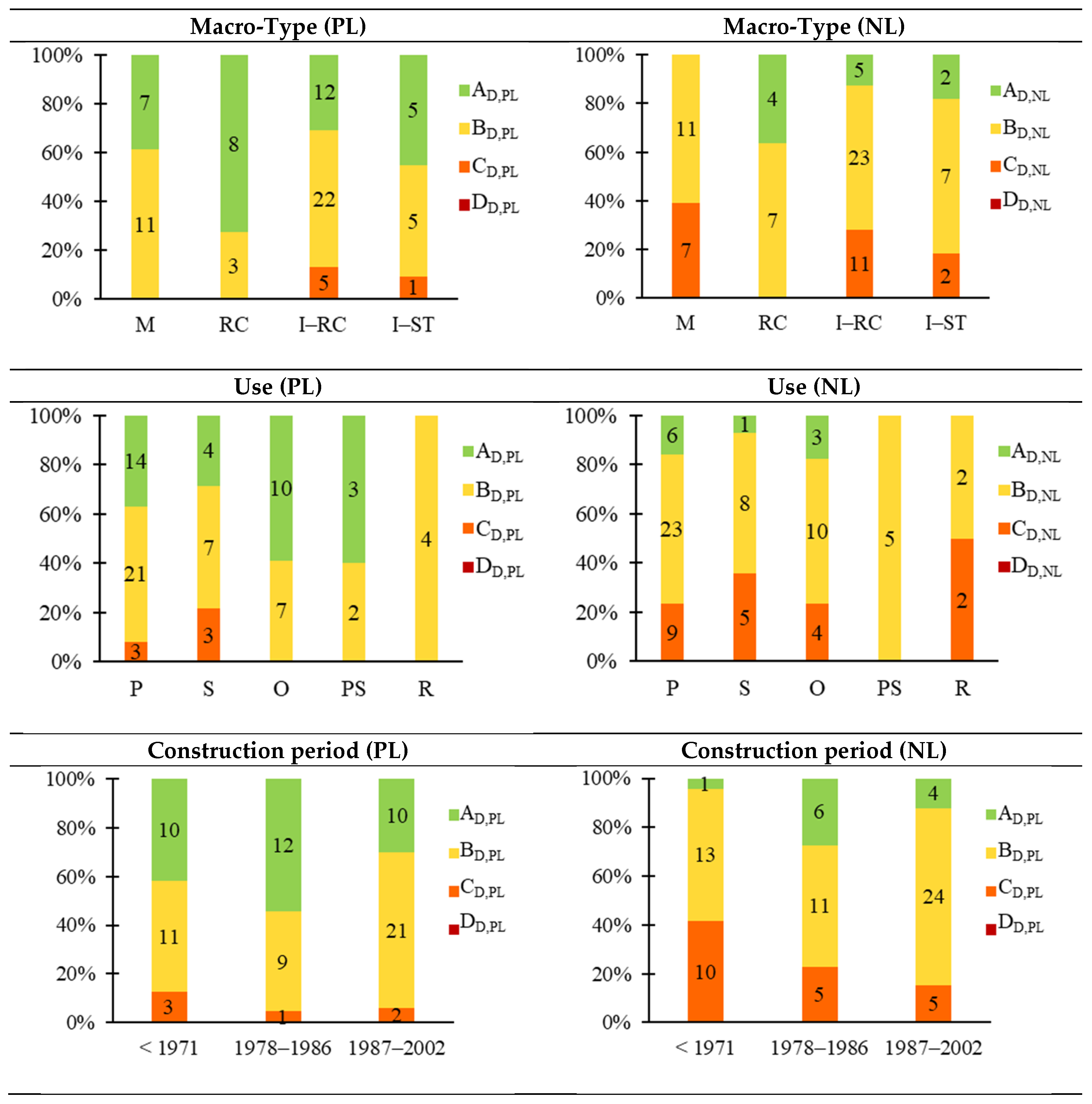
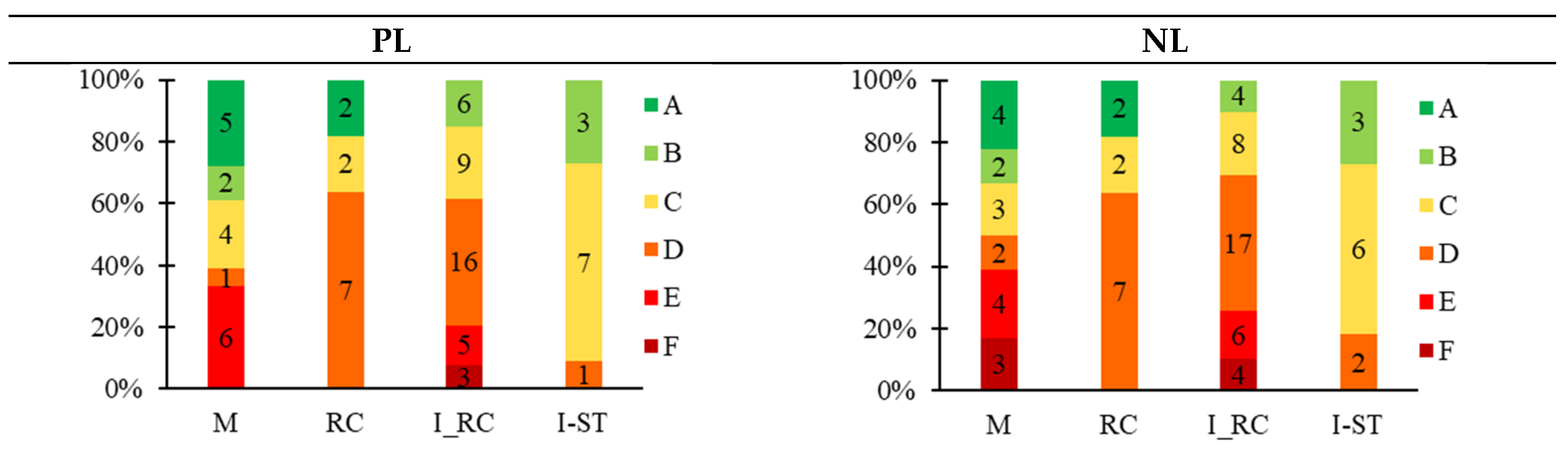
Figure 9 presents the results of the deterioration-based assessment, disaggregated by structural typology, building use, and construction period. For each grouping, the classification obtained at the Project Level (PL) and at the Network Level (NL) is reported, allowing for a direct comparison of the two assessment methods.
At the Project Level, none of the analysed SUs falls within the most critical deterioration class (DD). Only six units (8% of the stock) are classified in Class CD, corresponding to moderate-to-significant deterioration requiring extraordinary maintenance to prevent the evolution towards critical conditions and to restore component functionality. These units all belong to industrial typologies (I-RC or I-ST), are mainly associated with productive or storage functions, and are distributed across the construction periods considered. The remaining stock mainly falls within Class BD (52%), associated with minor to moderate deterioration requiring routine maintenance, and Class AD (39%), indicating no or negligible deterioration.
At the Network Level, the application of the Penalty Factor (PF) leads to a marked redistribution of deterioration-based priority classes. The proportion of SUs classified in Class CD increases to approximately 25% of the stock, while Class BD rises to about 61%, and Class AD decreases to roughly 12%. This shift reflects the role of Network Level parameters in amplifying the priority of units whose deterioration is combined with the functional relevance or strategic importance within the building stock.
Despite the overall worsening of the priority distribution at the Network Level, no SUs are reclassified into the most critical class (DD) in the analysed case study. It should be noted, however, that priority classes are derived from continuous indicators; therefore, even when SUs classified as Class CD at the Project Level remain within the same class at the Network Level, the effect of the PF can still be appreciated in the final prioritisation list (omitted here for conciseness).
When results are examined by structural typology, the most pronounced changes between the Project Level and Network Level classifications are observed for industrial and masonry units, for different reasons.
For industrial units (I-RC and I-ST), the observed changes reflect the sensitivity of the prioritisation ranking to penalties related to functional relevance, occupancy, and network importance, which together account for three of the four parameters included in the PF. In particular, the number of SUs classified in Class CD increases from six at the Project Level to thirteen at the Network Level. This result is consistent with the trend observed in the results disaggregated by building use, which show a marked increase in the number of SUs classified in Class CD for productive (P) and storage (S) functions.
For M units, variations between the Project Level and Network Level rankings are mainly associated with the Age Factor in the PF. Most M units were constructed before 1971 and therefore systematically exceed their nominal service life, resulting in a penalisation at the Network Level. Consequently, these units experience a worsening of their priority classification, with the number of SUs in Class CD increasing from zero to seven. This result is consistent with the trend observed in the results disaggregated by construction period, where Class CD shows an increase from three to ten SUs for pre-1971 buildings. This worsening reflects the increased significance attributed to observed deterioration, whether occurring in buildings that are globally more vulnerable due to their advanced age, or in relatively young structures, where it may indicate non-ordinary degradation processes and an anomalous decline in structural performance.
Overall, the results presented herein indicate that the proposed methodology enables a rational prioritisation of maintenance needs. The transition from the Project Level to the Network Level ranking, through the application of the PF, leads to a more balanced and effective distribution of priority classes, clearly highlighting the structural units that should be prioritised for intervention.

3.3. Seismic-Based Ranking of the Building Stock

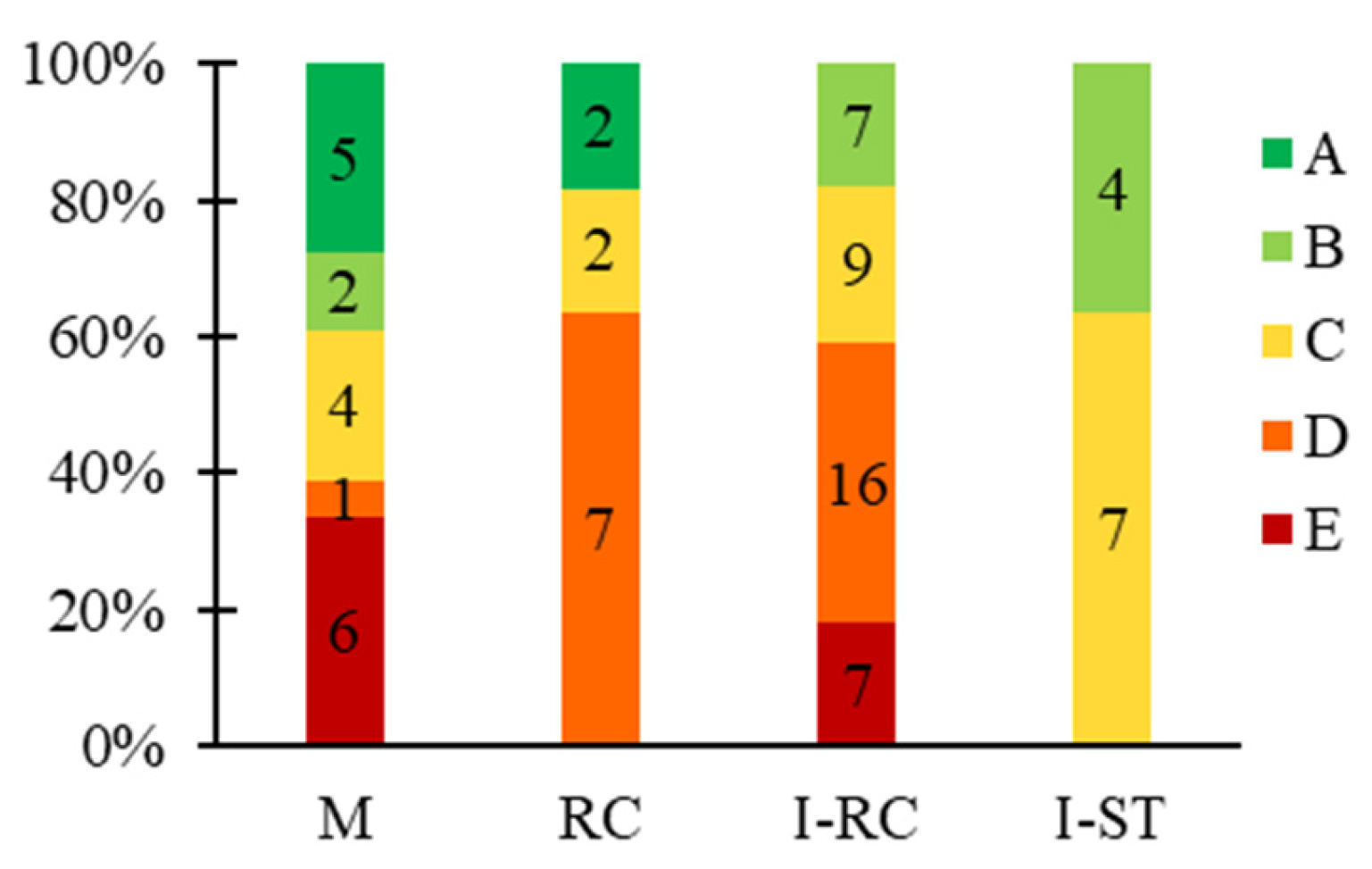
Figure 10 presents the results of the seismic prioritisation methodology described in Section 2.2, applied to the analysed building stock. The outcomes are disaggregated by structural typology (M, RC, I-RC, and I-ST) to highlight differences in ranking across construction types. The focus here is on the final ranking outcomes, while a detailed discussion of the qualitative and quantitative assessment components of the methodology is provided in Gaspari et al. [27].
M units are distributed across all ranking classes, indicating a wide dispersion of the seismic priority indicator within this typology. The most populated classes are Class ES (33% of the sample), Class AS (28%), and Class CS (22%), while the remaining units fall within the intermediate categories (BS, and DS). This distribution reflects the heterogeneity of masonry buildings in terms of construction period and structural system (including masonry type), spanning from older gravity load-designed structures to more recent configurations characterised by improved structural arrangements.
RC units show a clear concentration in Class DS, which accounts for 64% of the sample, while the remaining units fall within lower-priority classes, with no entries in Class ES. This distribution is consistent with the construction period of these units, mostly post-1971, which limits—and, in this specific case study, excludes—the presence in the highest seismic priority class. However, the absence or limited implementation of seismic design provisions not compliant with modern detailing and performance-based design criteria explains the prevailing concentration in Class DS.
I-RC units still show a predominant concentration in Class DS (41% of the sample), while seven units (18%) are classified in Class ES, making this building type the one with the highest number of units classified as seismically critical. The remaining units are distributed between Classes CS and BS, with no presence in Class AS. This trend reflects the marked variability within the I-RC group, which includes both prefabricated (PRC) and large-span (LRC) systems.
Indeed, the concentration of units in the higher seismic priority classes is primarily attributable to PRC buildings, whose structural deficiencies—typical of early prefabricated systems, particularly the lack or inadequacy of beam-to-column connections and limited global ductility—place them in more critical classes.
I-ST units are distributed exclusively between Classes BS and CS, reflecting the generally favourable seismic behaviour of braced steel systems, which benefit from reduced structural mass and relatively regular configurations, resulting in lower inertial forces.
A more detailed discussion of these results is provided in Gaspari et al. [27].

3.4. Combined Deterioration–Seismic Ranking of the Building Stock

The final step of the proposed framework combines the deterioration-based and seismic-based rankings into a unified prioritisation scheme. While Section 3.2 and Section 3.3 examined the two dimensions separately, this stage classifies structural units by jointly considering their degradation condition and seismic priority.
Figure 11 illustrates the combined priority classes derived from the matrix-based decision logic described in Section 2.4. In particular, each SU is assigned to a final category based on the intersection between its deterioration and seismic classes (Figure 6), with the deterioration-based ranking evaluated at both the Project and Network levels.
In line with what was observed for the deterioration-based ranking (Section 3.2), the transition from the Project Level to the Network Level results in a general worsening of the combined attention class, particularly for masonry, but also for RC industrial units. As previously explained, for M units, this shift is mainly attributable to the Age Factor, which penalises older structures exceeding their nominal service life. For industrial units (I-RC and I-ST), the worsening is driven by penalties related to functional relevance, occupancy, and network building importance, reflecting their strategic role within the building stock.
Within the analysed building stock, the most critical combined class reached is Class F, corresponding to buildings that require non-deferrable intervention. Class F*, which corresponds to the highest attention level and is triggered exclusively by a critical deterioration state (Class DD), is not observed, as no SUs were assigned to this deterioration category. In particular, the amount of SUs in Class F increases from three at the Project Level (all I-RC units) to seven at the Network Level (four I-RC and three M units), highlighting the impact of the Network Level modifiers within the integrated framework.
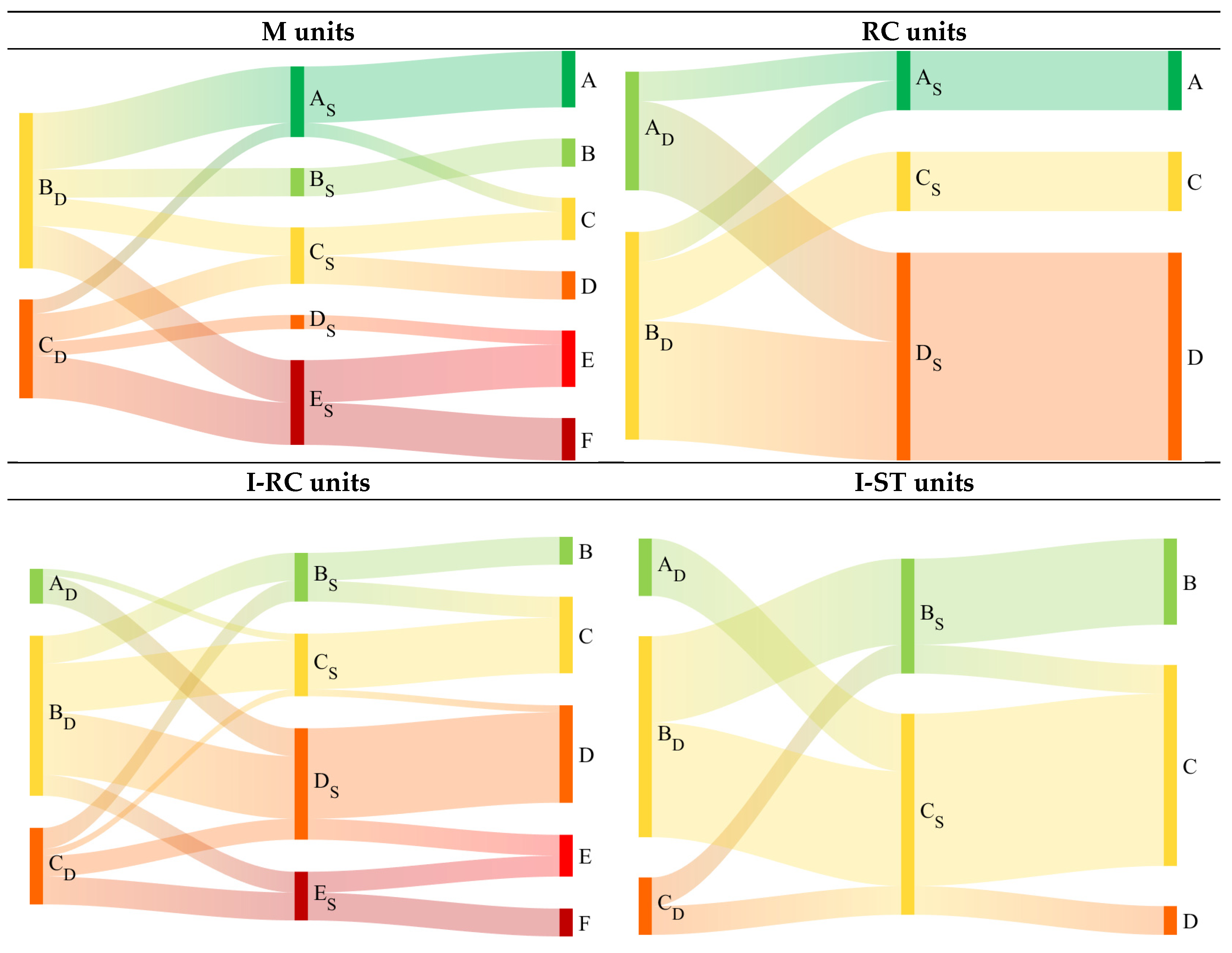
It is worth noting that the added value of the proposed framework does not lie in the actual distribution of combined priority classes, which is inherently specific to the analysed building stock, but in the decision process through which the deterioration-based ranking interacts with the seismic classification to shape the final prioritisation. This process is illustrated by the Sankey diagram in Figure 12, which traces the flow of SUs from the individual rankings to the final combined classes. For brevity, the diagram is presented only for the Network Level assessment.
The Sankey diagram reveals a non-correlation between the deterioration-based and seismic-based rankings. Buildings identified as seismically critical are not systematically those exhibiting high levels of deterioration. This outcome may also be partially influenced by the nature of the seismic methodology, which does not explicitly incorporate structural deterioration effects into the vulnerability assessment, except indirectly through qualitative deficiency-based indicators.
While this simplification preserves the rapid and scalable character of the approach, it further highlights the need of the combined assessment, which allows condition-related aspects to influence the final prioritisation even when not directly embedded in the seismic evaluation.
In accordance with the decision rules defined in Section 2.4, deterioration Classes AD and BD do not alter the seismic ranking, resulting in a direct transfer of SUs into the corresponding combined priority classes. Conversely, deterioration Class CD acts as a modifying condition, leading to a systematic worsening of the seismic priority. According to the adopted decision logic, deterioration classification of Class DD would override the seismic assessment entirely; however, this condition was not observed in the analysed case study.
The combined classification preserves a differentiated distribution of priority categories emerging from the separate assessments, rather than concentrating the building stock into only a few highly critical classes. This aspect is particularly relevant for decision-making, as an excessive clustering of units in the highest priority levels would reduce the framework’s practical usefulness by limiting the ability to phase and schedule interventions effectively.
Overall, integrating deterioration and seismic rankings strengthens the prioritisation framework, allowing intervention needs to be identified more clearly and systematically than when either dimension is considered alone.

4. Conclusions

This study proposed an integrated decision-support framework for prioritising interventions within heterogeneous building stocks by jointly considering structural deterioration and seismic priority. The methodology was conceived to support asset management under constrained technical and financial resources, combining rapid assessment tools with a transparent and scalable decision logic suitable for large portfolios.
The framework is articulated into three main components. First, a structured deterioration-based assessment procedure was developed, based on standardised visual inspections, component-level condition ratings, and predefined weighting schemes. The procedure is organised into two complementary levels: a Project Level (PL), which provides a technically grounded representation of the observed degradation state, and a Network Level (NL), which refines the ranking by incorporating contextual parameters such as functional relevance, occupancy, age, and network importance. Second, an established rapid seismic prioritisation methodology was adopted, combining qualitative deficiency screening and simplified mechanical checks. Third, both dimensions were integrated through a decision-tree logic that ensures regulatory consistency and allows deterioration to refine—without mitigating—the seismic priority classification.
The proposed framework was applied and tested on an industrial-oriented building portfolio composed of 79 structural units. At the deterioration level, the inclusion of Network Level modifiers resulted in a shift in the classification toward higher attention classes, emphasising the role of functional and contextual parameters in shaping maintenance priorities. At the seismic level, the classification reflected typology-specific vulnerabilities, particularly for older masonry and prefabricated industrial buildings. The combined assessment did not reveal a correlation between deterioration and seismic priority, confirming that the two dimensions capture partially independent aspects of structural risk. Their integration, therefore, proved effective in refining the prioritisation process by identifying structural units for which condition state, functional relevance, and seismic vulnerability jointly justify increased attention.
Importantly, the combined framework was found to preserve a differentiated distribution of priority classes, avoiding an excessive concentration of the stock into a limited number of highly critical categories. This characteristic enhances its practical relevance for decision-makers, supporting a phased and rational allocation of maintenance and retrofit interventions. While the obtained results are inherently specific to the analysed building stock and do not constitute statistical validation of the methodology, the case study provided evidence of its internal consistency and operational applicability within a real asset-management context.
Future research should focus on applying the proposed framework to different building portfolios and territorial contexts to further assess its robustness, scalability, and transferability. In addition, the methodology could be extended to additional hazard domains—such as flooding or climate-related hazards—thereby contributing to the development of comprehensive multi-risk decision-support tools for asset management and policy planning.

Author Contributions

Conceptualization, F.d.P., M.D. and E.S.; methodology, M.D. and E.S.; formal analysis, L.T. and M.F.; investigation, L.T., M.F. and M.G.; data curation, M.F.; writing—original draft preparation, M.F. and M.G.; writing—review and editing, M.D. and E.S.; supervision, M.D. and M.G.; project administration, F.d.P.; funding acquisition, F.d.P. All authors have read and agreed to the published version of the manuscript.

Funding

This work was partially supported by the Italian Department of Civil Protection and ReLUIS within the framework of the ReLUIS-DPC Project 2024–2026—Work Package 4 MARS (Maps of Seismic Risk)—Task 7: Industrial buildings. This research also received additional support through private funding.

Data Availability Statement

The data presented in this study would be made available upon request to the corresponding authors, subject to privacy restrictions.

Acknowledgments

This work was partially supported by ReLUIS and the Italian Department of Civil Protection, as part of the activity was carried out in the framework of the ReLUIS-DPC Project 2024–2026—Work Package 4 MARS (Maps of Seismic Risk)—Task 7: Industrial buildings. Special thanks to Giulia Scarabottolo (research scholarship holder) for her support in surveying and analysis activities.

Conflicts of Interest

The authors declare no conflicts of interest.

Abbreviations

The following abbreviations are used in this manuscript:
MMasonry Buildings
RCReinforced Concrete Buildings
I-RCIndustrial Reinforced Concrete Buildings
STSteel Buildings
I-STIndustrial Steel Buildings
PLProject Level
NLNetwork Level
TSRTotal Sufficiency Rating

Appendix A

Reference charts for the assignment of Condition Values (CVs) to the different deterioration types associated with each building component
Figure A1. Component-specific CV charts for masonry (M) and reinforced concrete (RC/I-RC) buildings.
Buildings 16 01293 g0a1
Figure A2. Component-specific CV charts for industrial steel (I-ST) buildings.
Buildings 16 01293 g0a2
Figure A3. Component-specific CV charts for building components common to multiple building types (part 1/2).
Buildings 16 01293 g0a3
Figure A4. Component-specific CV charts for building components common to multiple building types (part 2/2).
Buildings 16 01293 g0a4

Appendix B

Survey form for the deterioration of masonry, reinforced concrete, and steel buildings.
Figure A5. Survey form for the deterioration assessment of masonry buildings.
Buildings 16 01293 g0a5
Figure A6. Survey form for the deterioration assessment of reinforced concrete buildings.
Buildings 16 01293 g0a6
Figure A7. Survey form for the deterioration assessment of steel buildings.
Buildings 16 01293 g0a7

References

  1. Ellis, R.; Silverman, H.; Alonso, M.; Jones, K. Death Toll in Surfside Building Collapse Reaches 94. CNN. 2021. Available online: https://www.cnn.com/2021/07/12/us/miami-dade-building-collapse-monday (accessed on 24 February 2026).
  2. Kallergis, K.; Dinkova, L. Engineer Raised Red Flags More Than 2 Years Before Surfside Condo Collapsed. Real Deal. 2021. Available online: https://therealdeal.com/miami/2021/06/26/engineer-raised-red-flags-more-than-2-years-before-surfside-condo-collapsed/ (accessed on 24 February 2026).
  3. Silva, A.; de Brito, J. Service Life of Building Envelopes: A Critical Literature Review. J. Build. Eng. 2021, 44, 102646. [Google Scholar] [CrossRef]
  4. Gakkai, N.K. The English Edition of the Principal Guide for Service Life Planning of Buildings; Architectural Institute of Japan: Tokyo, Japan, 1993. [Google Scholar]
  5. Emídio, F.; de Brito, J.; Gaspar, P.L.; Silva, A. Application of the Factor Method to the Estimation of the Service Life of Natural Stone Cladding. Constr. Build. Mater. 2014, 66, 484–493. [Google Scholar] [CrossRef]
  6. Condorelli, F.; Lo Faro, A.; Salemi, A. Metodo di valutazione dello stato conservativo degli edifici: Rilevamento speditivo e progettazione del SIT. In S.A.V.E. Heritage: Safeguard of Architectural, Visual, Environmental Heritage; La Scuola di Pitagora: Napoli, Italy, 2011; ISBN 978-88-6542-046-1. [Google Scholar]
  7. Rodrigues, M.F.S.; Cardoso Teixeira, J.M.; Cardoso, J.C.P.; Batel Anjos, A.J. Envelope Index Evaluation Model of Existing Buildings. Civ. Eng. Environ. Syst. 2013, 30, 26–39. [Google Scholar] [CrossRef]
  8. Rodrigues, F.; Matos, R.; Di Prizio, M.; Costa, A. Conservation Level of Residential Buildings: Methodology Evolution. Constr. Build. Mater. 2018, 172, 781–786. [Google Scholar] [CrossRef]
  9. Rodrigues, F.; Matot, R.; Costa, A.; Tavares, A.; Fonseca, J.; Alves, A. Conservation Level Assessment Application to a Heritage Building. MATEC Web Conf. 2019, 279, 01002. [Google Scholar] [CrossRef]
  10. Shohet, I.M.; Puterman, M.; Gilboa, E. Deterioration Patterns of Building Cladding Components for Maintenance Management. Constr. Manag. Econ. 2002, 20, 305–314. [Google Scholar] [CrossRef]
  11. Chew, M.; Tan, S.S.; Kang, K.H. A Technical Evaluation Index for Curtain Wall and Cladding Facades. Struct. Surv. 2004, 22, 210–227. [Google Scholar] [CrossRef]
  12. Gaspar, P.L.; de Brito, J. Quantifying Environmental Effects on Cement-Rendered Facades: A Comparison between Different Degradation Indicators. Build. Environ. 2008, 43, 1818–1828. [Google Scholar] [CrossRef]
  13. Petersen, A.; Silva, A.; González, M. Service Life Prediction of Painted Renderings Using Maintenance Data through Regression Techniques. Buildings 2023, 13, 785. [Google Scholar] [CrossRef]
  14. Grimmer, A.E. A Glossary of Historic Masonry Deterioration Problems and Preservation Treatments; Department of the Interior, National Park Service, Preservation Assistance Division: Washington, DC, USA, 1984. [Google Scholar]
  15. CNR-ICR. NorMal 1/88: Alterazioni Macroscopiche dei Materiali Lapidei: Lessico; CNR-ICR: Roma, Italy, 1990. [Google Scholar]
  16. UNI 11182/2006; Beni Cultirati—Materiali Lapidei Naturali Ed Artificiali Descrizione Della Forma Di Alterazione—Termini e Definizioni. UNI: Milano, Italy, 2006.
  17. Wu, Y.; Li, Q.; Tong, H.; He, Z.; Qu, J.; Zhang, B. Monitoring the Deterioration of Masonry Relics at a UNESCO World Heritage Site. KSCE J. Civ. Eng. 2021, 25, 3097–3106. [Google Scholar] [CrossRef]
  18. Li, S.-Q.; Qin, P.-F.; Chen, P.-C.; Zheng, L.-L.; Zhang, C. Development of Seismic Risk Models for Low-Rise Masonry Structures Considering Age and Deterioration Effects. Bull. Earthq. Eng. 2024, 23, 149–176. [Google Scholar] [CrossRef]
  19. Tuutti, K. Corrosion of Steel in Concrete. Ph.D. Thesis, Lund University, Lund, Sweden, 1982. [Google Scholar]
  20. Alonso, C.; Andrade, C.; Rodriguez, J.; Diez, J.M. Factors Controlling Cracking of Concrete Affected by Reinforcement Corrosion. Mater. Struct. 1998, 31, 435–441. [Google Scholar] [CrossRef]
  21. Val, D.V. Deterioration of Strength of RC Beams Due to Corrosion and Its Influence on Beam Reliability. J. Struct. Eng. 2007, 133, 1297–1306. [Google Scholar] [CrossRef]
  22. CEN 206-1; Concrete—Part 1: Specification, Performance, Production and Conformity. European Committee for Standardization: Bruxelles, Belgium, 2000.
  23. Farhey, D.N.; Thakur, A.M.; Buchanan, R.C.; Aktan, A.E.; Jayaraman, N. Structural Deterioration Assessment for Steel Bridges. J. Bridge Eng. 1997, 2, 116–124. [Google Scholar] [CrossRef]
  24. Zvirko, O.I. In-Service Degradation of Structural Steels (A Survey). Mater. Sci. 2021, 57, 319–330. [Google Scholar] [CrossRef]
  25. Tamimi, M.F.; Alshannaq, A.A.; AbuQamar, M.A.I. Deterioration of Steel Structures Due to Corrosion Considering the Global Effects of Climate Change. Corros. Eng. Sci. Technol. 2024, 59, 273–293. [Google Scholar] [CrossRef]
  26. Saler, E.; Donà, M.; Pernechele, V.; Tecchio, G.; da Porto, F. Characterisation of an Urban Bridge Portfolio and Multi-Risk Prioritisation Accounting for Deterioration and Seismic Vulnerability. Int. J. Disaster Risk Reduct. 2023, 87, 103596. [Google Scholar] [CrossRef]
  27. Gaspari, M.; Fabris, M.; Saler, E.; Donà, M.; da Porto, F. Enhancing Asset Management: Rapid Seismic Assessment of Heterogeneous Portfolios. Buildings 2025, 15, 2560. [Google Scholar] [CrossRef]
  28. Pellegrino, C.; Pipinato, A.; Modena, C. A Simplified Management Procedure for Bridge Network Maintenance. Struct. Infrastruct. Eng. 2011, 7, 341–351. [Google Scholar] [CrossRef]
  29. Saler, E.; Gattesco, N.; da Porto, F. A New Combined Approach to Prioritise Seismic Retrofit Interventions on Stocks of r.c. School Buildings. Int. J. Disaster Risk Reduct. 2023, 93, 103767. [Google Scholar] [CrossRef]
  30. Ordinanza n. 14. 14 February 2013. Available online: https://www.regione.emilia-romagna.it/terremoto/gli-atti-per-la-ricostruzione/2013/ordinanza-n-14-del-14-febbraio-2013 (accessed on 25 September 2025).
  31. OPCM n. 3274. 20 March 2003. Available online: https://www.protezionecivile.gov.it/it/normativa/opcm-n-3274-del-20-marzo-2003/ (accessed on 25 September 2025).
  32. Bernardini, A.; Gori, R.; Modena, C. A Structural Model for Continuous Masonry Building Systems in Historical Centres. In Proceedings of the Structural Conservation of Stone Masonry, International Technical Conference, Athens, Greece, 31 October–3 November 1989; pp. 29–36. [Google Scholar]
  33. Valluzzi, M.R. User Manual of Vulnus 4.0; Original Program by Bernardini, A., Gori, R., Modena, C.; Informer Technologies, Inc.: Los Angeles, CA, USA, 2009. [Google Scholar]
  34. Decreto Ministeriale. 9 January 1987. Available online: https://ediliziainrete.it/leggi/decreto-ministeriale-09011987 (accessed on 17 February 2026).
  35. Turnšek, V.; Čačovič, F. Some Experimental Results on the Strength of Brick Masonry Walls. In Proceedings of the 2nd International Brick Masonry Conference; Stoke-on-Trent, British Ceramic Research Association: London, UK, 1970. [Google Scholar]
  36. Franceschinis, R. Procedura per La Valutazione Della Vulnerabilità Sismica Degli Edifici Scolastici in c.a. Ph.D. Thesis, Università Degli Studi di Brescia, Brescia, Italy, 2012. [Google Scholar]
  37. Gattesco, N.; Franceschinis, R.; Zorzini, F. Analytical Simplified Procedure for the Evaluation of the RC Buildings. In Proceedings of the 15th World Conference on Earthquake Engineering, Lisbon, Portugal, 24–28 September 2012. [Google Scholar]
  38. Munari, M. Sviluppo di Procedure per Valutazioni Sistematiche di Vulnerabilità Sismica di Edifici Esistenti in Muratura. Ph.D. Thesis, Università Degli Studi di Padova, Padua, Italy, 2010. [Google Scholar]
  39. Baggio, C.; Bernardini, A.; Colozza, R.; Corazza, L.; Bella, M.D.; Pasquale, G.D.; Dolce, M.; Goretti, A.; Martinelli, A.; Orsini, G.; et al. Field Manual for Post-Earthquake Damage and Safety Assessment and Short Term Countermeasures (AeDES); European Commission: Brussels, Belgium, 2007. [Google Scholar]
  40. Zuccaro, G.; Dolce, M.; De Gregorio, D.; Speranza, E.; Moroni, C. La Scheda Cartis per La Caratterizzazione Tipologico-Strutturale dei Comparti Urbani Costituiti da Edifici Ordinari. Valutazione dell’esposizione in Analisi di Rischio Sismico. In Proceedings of the 34 Convegno Nazionale GNGTS, Trieste, Italy, 17–19 November 2015. [Google Scholar]
Figure 1. Flowchart of the proposed integrated ranking framework.
Buildings 16 01293 g001
Figure 2. Flowchart of the proposed deterioration-based ranking procedure.
Buildings 16 01293 g002
Figure 4. (a) Criteria used to determine the deficiency grade from the counts of severe (α) and moderate (β) vulnerabilities. (b) First-level seismic priority classification derived from the deficiency grade and the seismic zones.
Buildings 16 01293 g004
Figure 5. Illustration of the adopted seismic priority-based ranking procedure.
Buildings 16 01293 g005
Figure 6. Combined priority classes derived from condition-based and seismic-based rankings.
Buildings 16 01293 g006
Figure 7. Distribution of SUs across the building types and functional uses.
Buildings 16 01293 g007
Figure 8. Distribution of SUs by construction period, primary structural system, and number of storeys for each building types.
Buildings 16 01293 g008
Figure 9. Project Level (PL) and Network Level (NL) deterioration-based rankings, disaggregated by building type, use, and construction period.
Buildings 16 01293 g009
Figure 10. Seismic-based ranking of the building stock, disaggregated by building type.
Buildings 16 01293 g010
Figure 11. Combined deterioration–seismic ranking of the building stock, disaggregated by building type, for both Project Level (PL) and Network Level (NL) assessments.
Buildings 16 01293 g011
Figure 12. Sankey diagrams of combined priority classes for all building types (Network Level).
Buildings 16 01293 g012
Table 1. Weighting tables by structural technology, showing component lists and predefined weights (W).
Load-Bearing Masonry (M Units)Reinforced Concrete (RC, I-RC Units)
IDComponentsWIDComponentsW
M1Foundations8RC1Foundations8
M2Walls10RC2Vertical Elements10
M3Columns10RC3Beams10
M4Beams10RC4Slab9
M5Slab9RC5Infill walls8
M6Vaults9RC6Vaults9
Steel (I-ST units)All technologies (M, RC, I-RC, I-ST units)
IDComponentsWIDComponentsW
ST1Foundations8C1Cantilevered elements9
ST2Columns10C2Heavy ceilings7
ST3Other vertical elements10C3Lightweight ceilings6
ST4Beams10C4Plastering/Finishes5
ST5Nodes/Connections10C5Internal partitions6
ST6Wall bracing8C6Flooring5
ST7Roofing bracing8C7Opening frames5
ST8Slab9C8Systems6
ST9Infill walls8C9Stairs9
C10Parapet walls6
C11Roofing-Structure9
C12Roof covering6
Table 2. Metric for the Condition Value (CV).
Component State ConditionCV
Not assessed (not inspectable)0
Null or negligible deterioration1
Minor deterioration (does not affect component functionality)2
Moderate deterioration (may affect component functionality)3
Severe deterioration (affect component functionality)4
Critical deterioration (loss of component functionality)5
Table 3. Reference chart for the assignment of CVs to deterioration phenomena of the “Vertical Elements” component in RC buildings (RC2).
IDRC2
ComponentVertical Elements
Deterioration Type\SeverityIIIIII
Colour alteration-1-
Biological growth123
Texture-related deterioration234
Efflorescence-23
Stain-12
Reinforcement corrosion345
Spalling345
Presence of vegetation23-
Impact damage235
Cracking245
Infiltration-34
Erosion234
Rising damp-34
Plaster detachment23-
Table 4. Conversion rule from Condition Values (CVs) to Condition Factors (CFs).
MetricsConversion Rule
Condition Values (CVs)012345
Condition Factors (CFs)0107421
Table 7. Mechanical methods used for seismic assessment, with corresponding global and local mechanisms analysed for each building type.
Building TypeAnalysis
Approach
Safety Factors (αi)
Global MechanismsLocal Mechanisms
MVULNUS
[33,38]
αM,IP: in-plane shear of wallsαM,OOP: out-of-plane mechanisms of walls
RCFIRSTEP-RC
[36,37]
αRC,b: compression–biaxial bending of columns/walls
αRC,s: shear of columns/walls
αRC,j: beam–column joint failure
I-RC
(PRC/LRC)
ESDOF
[27]
αI-RC,b: compression–biaxial bending of columns
αI-RC,s: shear of columns
αI-RC,μ: beam–column support loss
I-STESDOF
[27]
αI-ST,b: compression–biaxial bending of columns
αI-ST,s: shear of columns
-
Table 8. Second-level seismic priority classification based on the overall safety index.
Second-Level Priority ClassOverall Safety Index
AII>1.00
BII0.81–1.00
CII0.61–0.80
DII0.31–0.60
EII0–0.30
Disclaimer/Publisher’s Note: The statements, opinions and data contained in all publications are solely those of the individual author(s) and contributor(s) and not of MDPI and/or the editor(s). MDPI and/or the editor(s) disclaim responsibility for any injury to people or property resulting from any ideas, methods, instructions or products referred to in the content.