Enhancing Durability of Plant-Mixed Hot Recycled Asphalt Mixtures in Arid Climates Through Qingchuan Rock Asphalt Modification


Abstract
1. Introduction
2. Materials and Methods
2.1. Materials
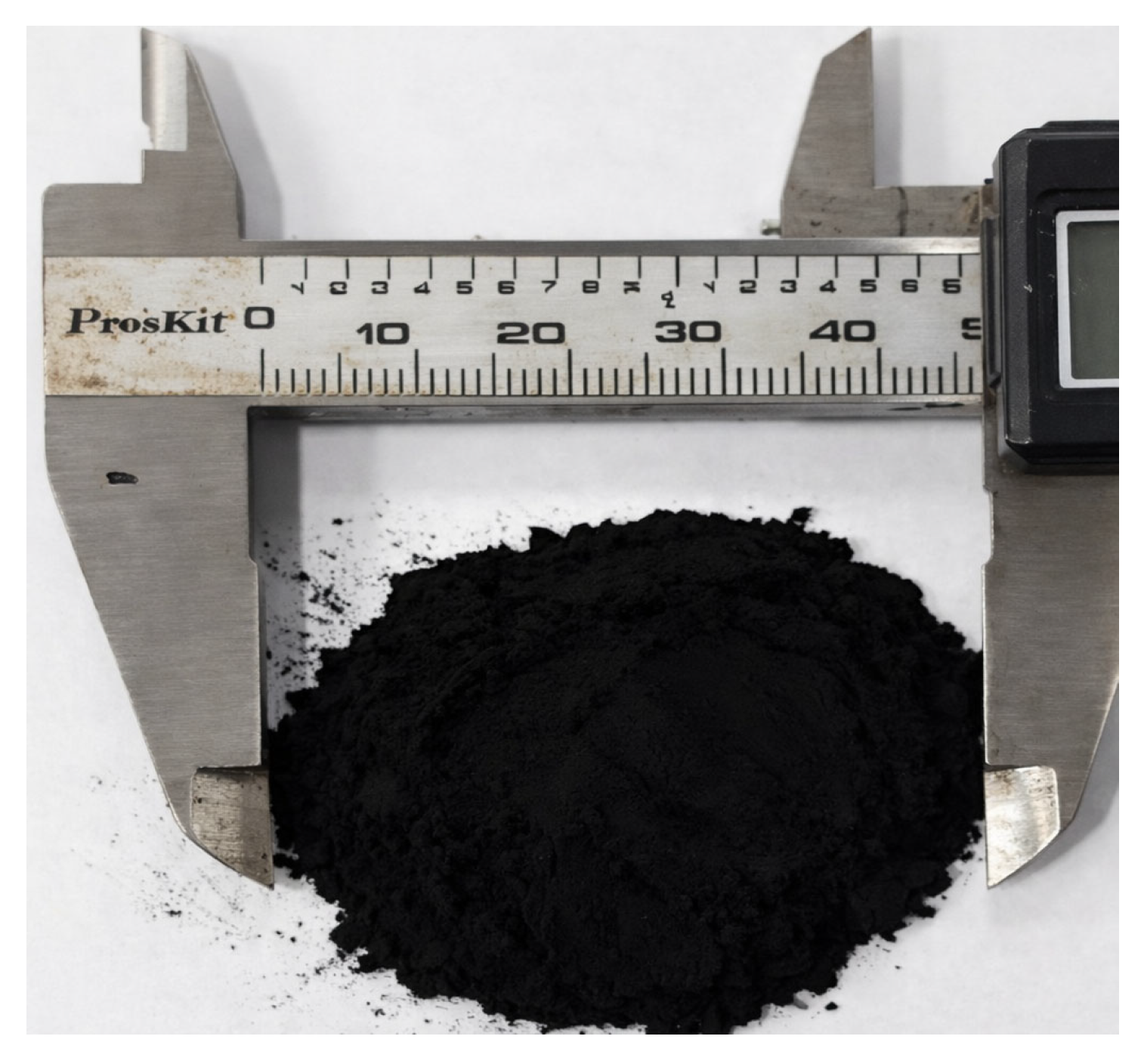
2.1.1. Asphalt
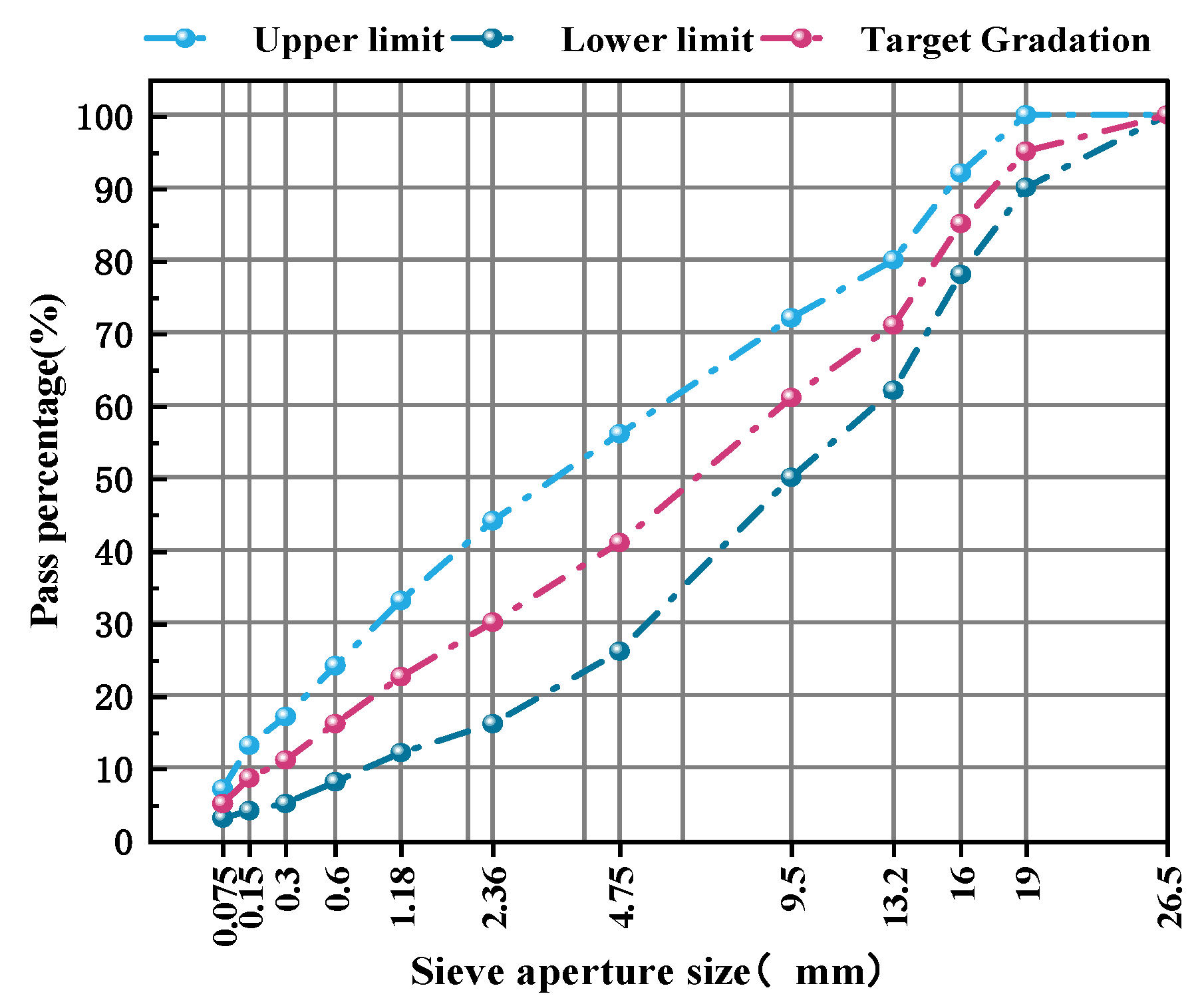
2.1.2. Aggregate Properties
2.1.3. RAP
2.2. Specimen Preparation
2.2.1. Preparation of QRA-Modified Binder
2.2.2. Preparation of Asphalt Mixtures for Testing
2.3. Experimental Methods
2.3.1. Binder Testing
- (1)
- Basic Physical Tests
- (2)
- High-Temperature Rheological Testing
- (3)
- Low-Temperature Rheological Testing
- (4)
- Rotational Viscosity Testing
- (5)
- Fourier Transform Infrared (FTIR) Spectroscopy
2.3.2. Performance Testing of Plant-Mixed Hot Recycled Asphalt Mixtures
- (1)
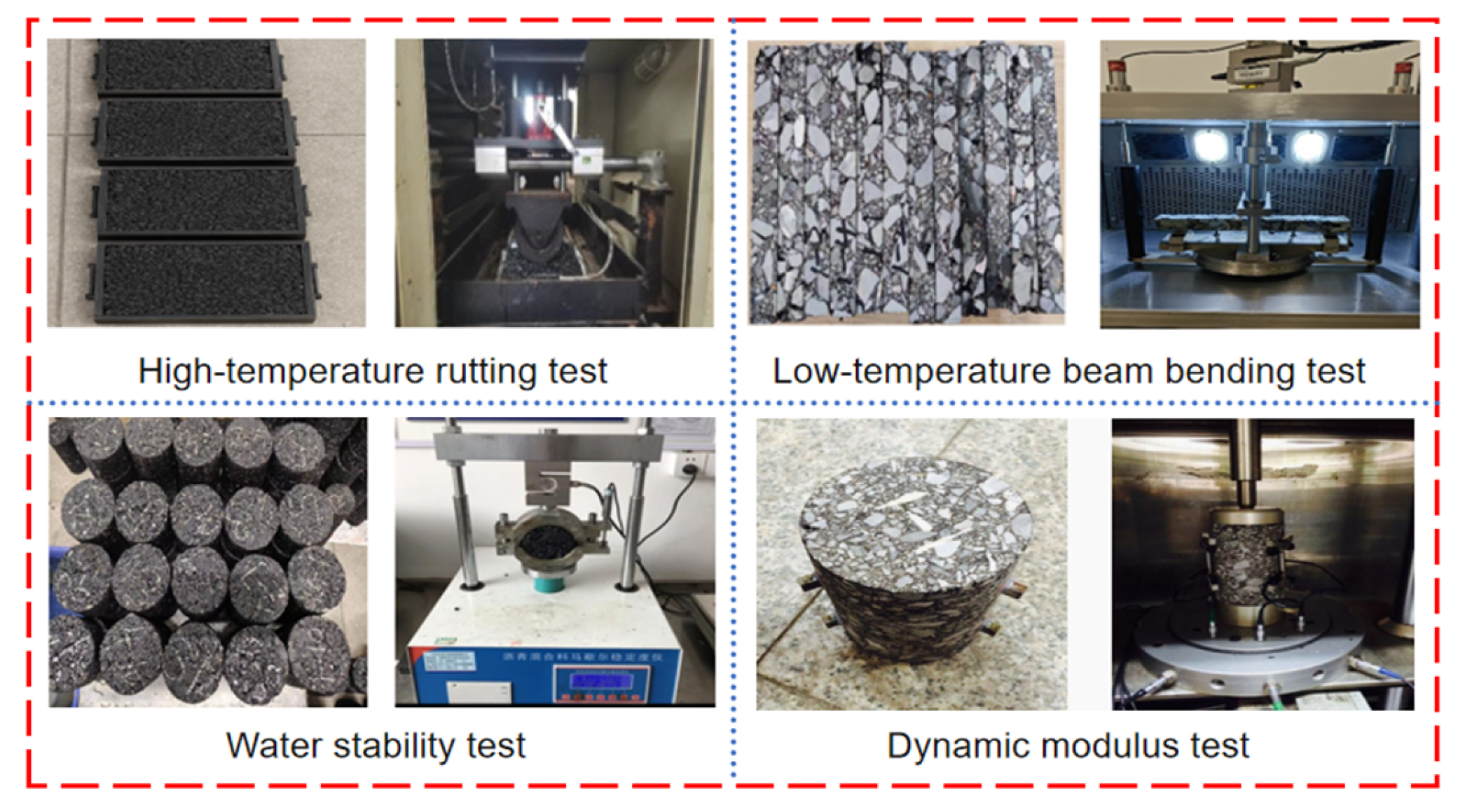
- High-Temperature Rutting Test
- (2)
- Low-Temperature Beam Bending Test
- (3)
- Freeze–Thaw Splitting Test (TSR)
- (4)
- Immersion Marshall Test (RS)
- (5)
- Dynamic Modulus Testing
3. Results
3.1. Analysis of Binder Physical and Rheological Properties
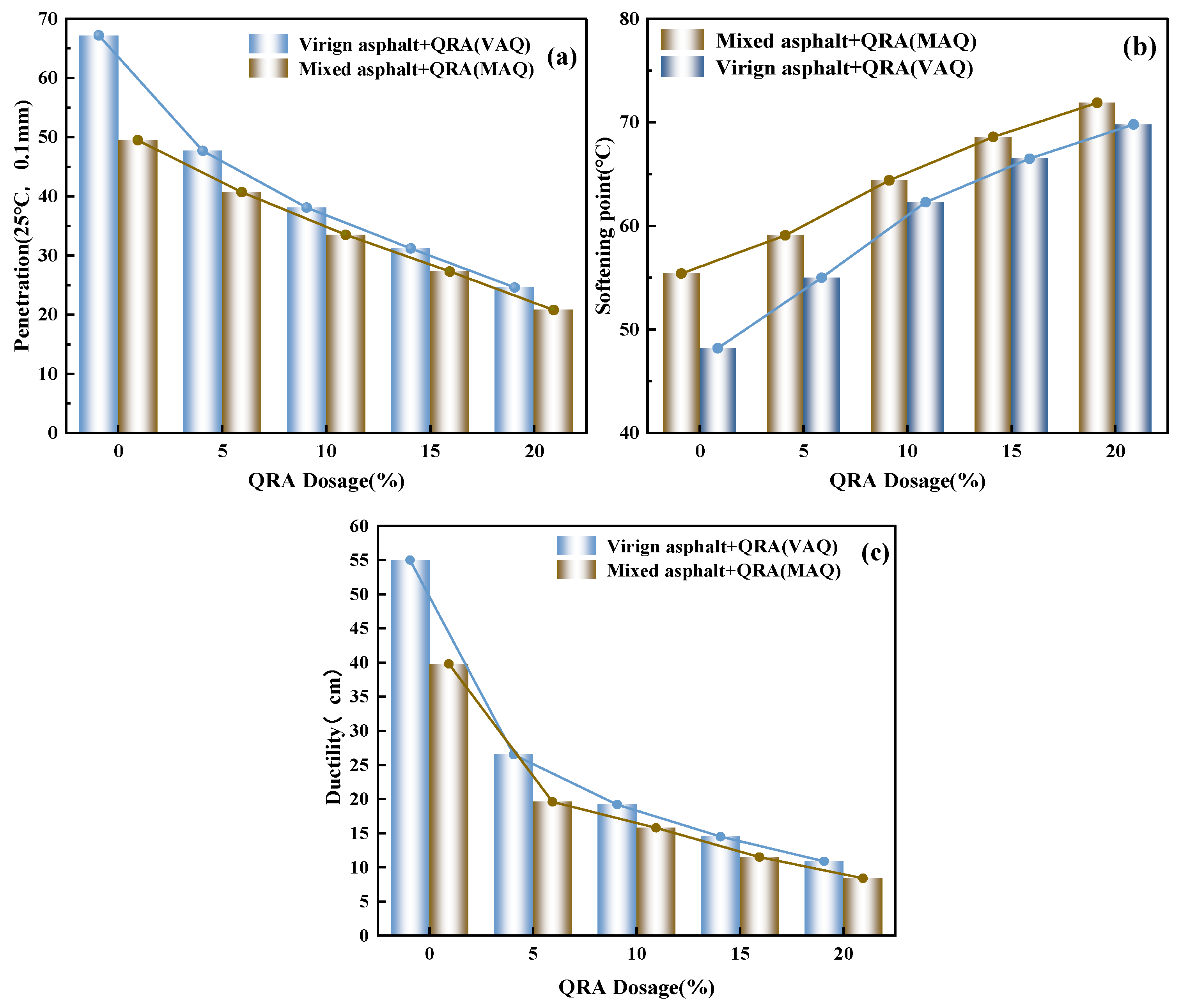
3.1.1. Basic Physical Properties
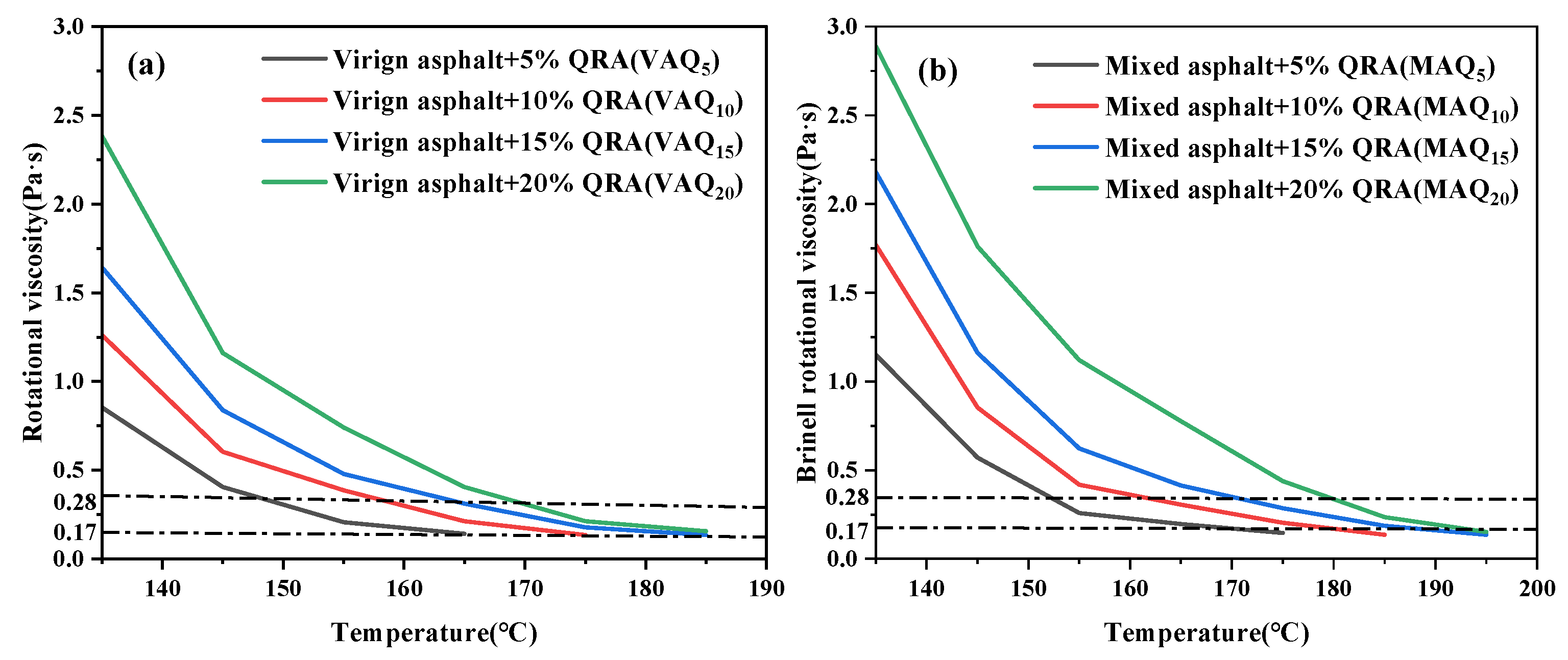
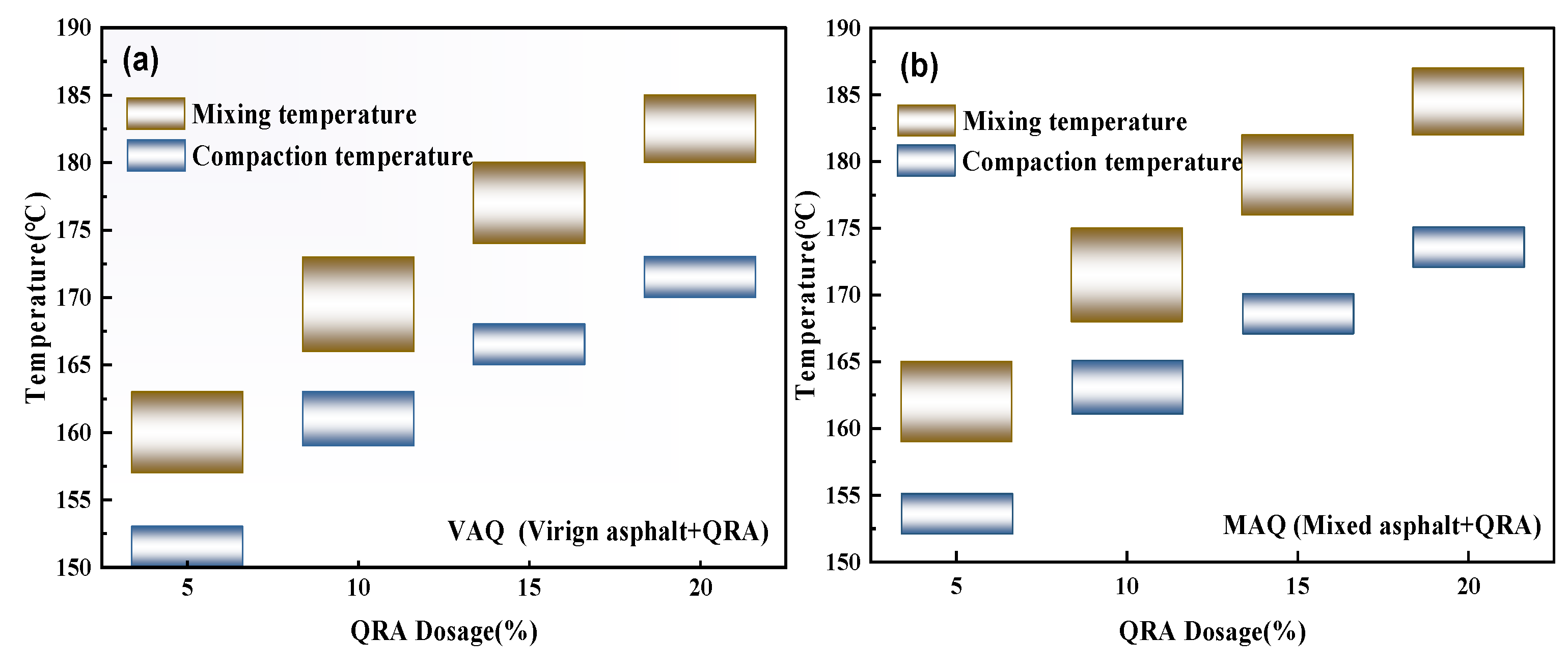
3.1.2. Brookfield Rotational Viscosity
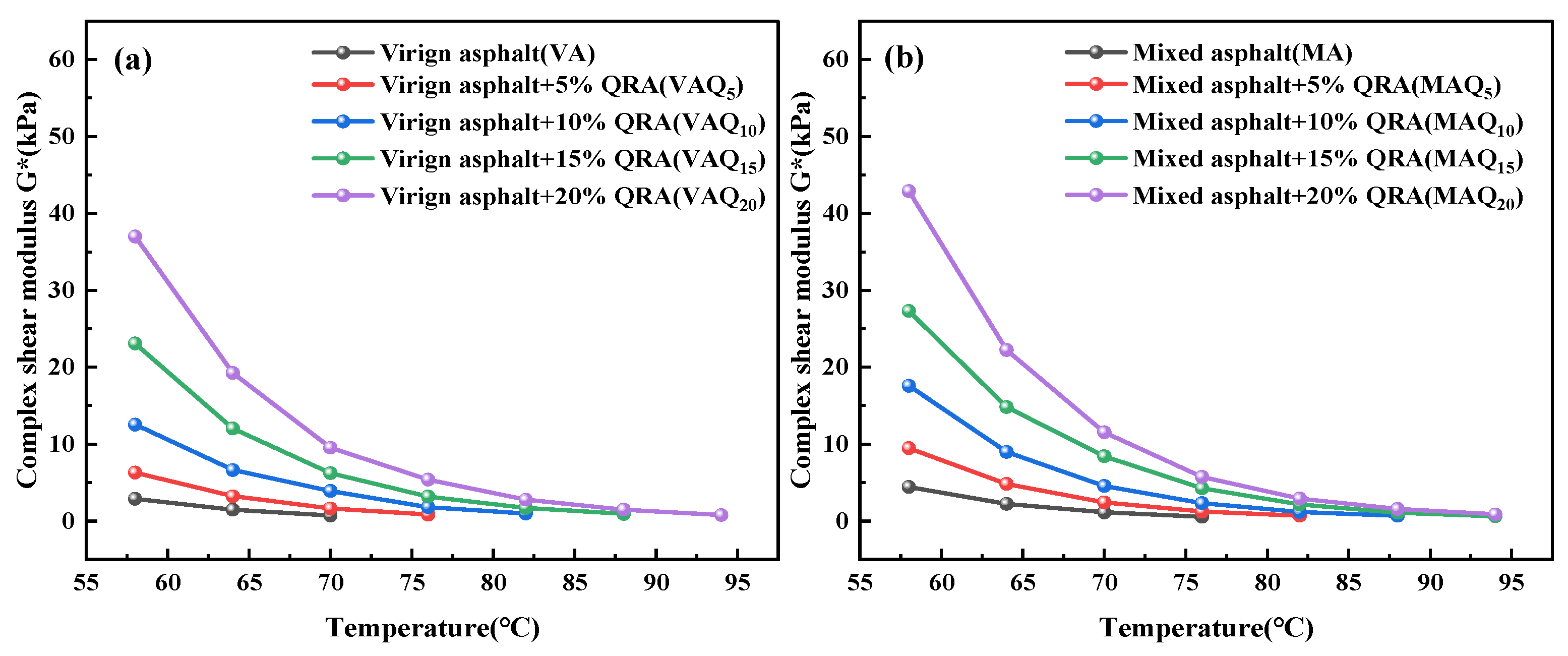
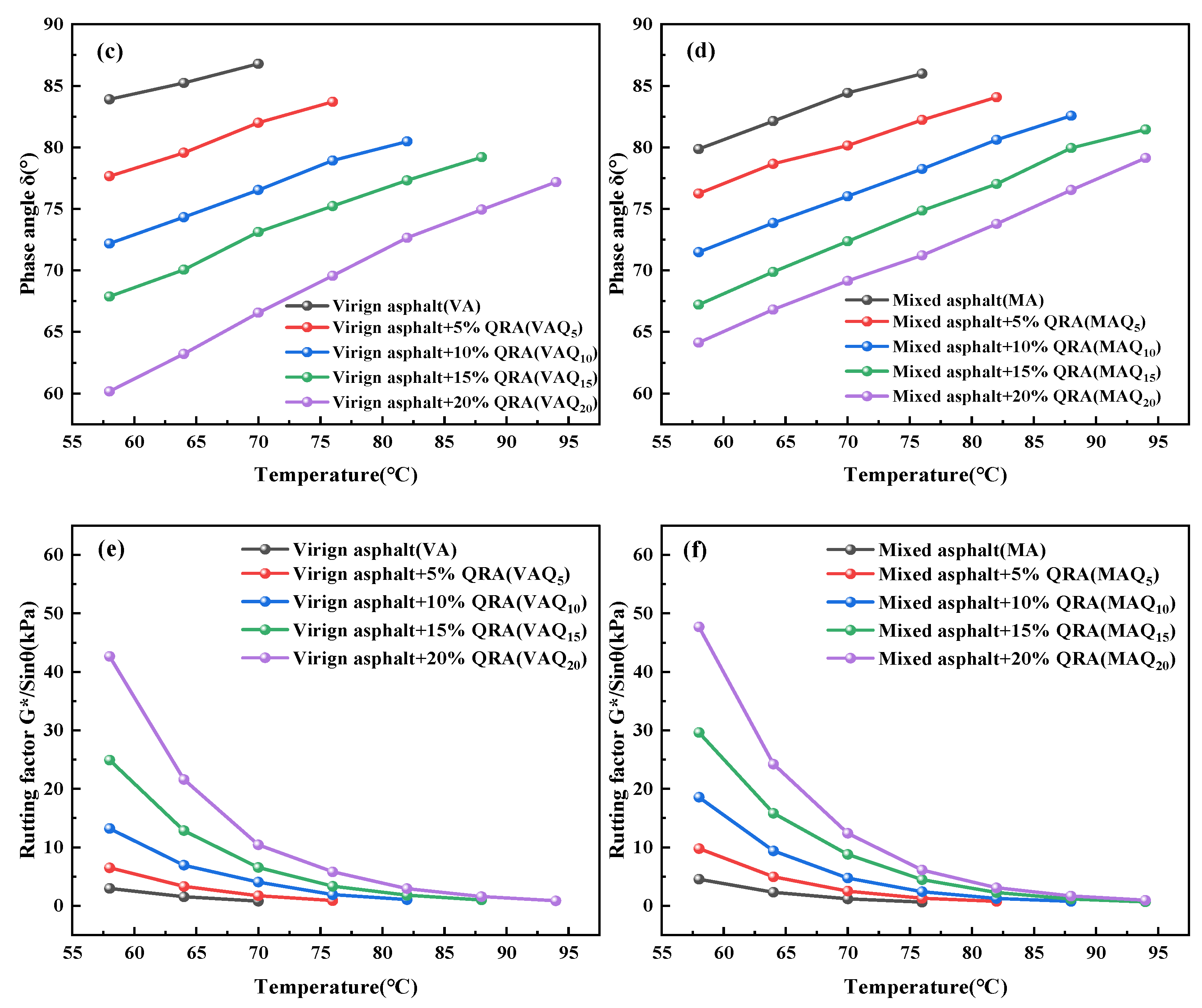
3.1.3. High-Temperature Rheology
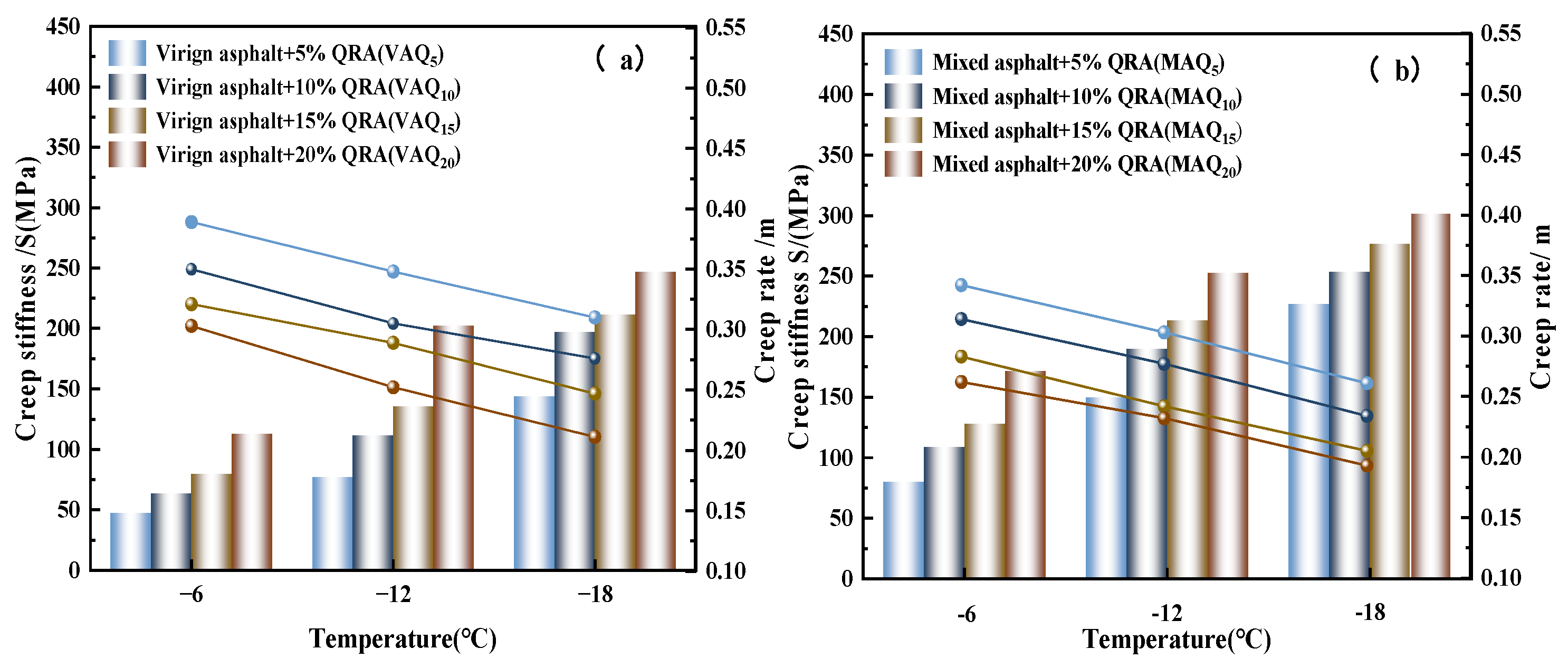
3.1.4. Low-Temperature Rheology
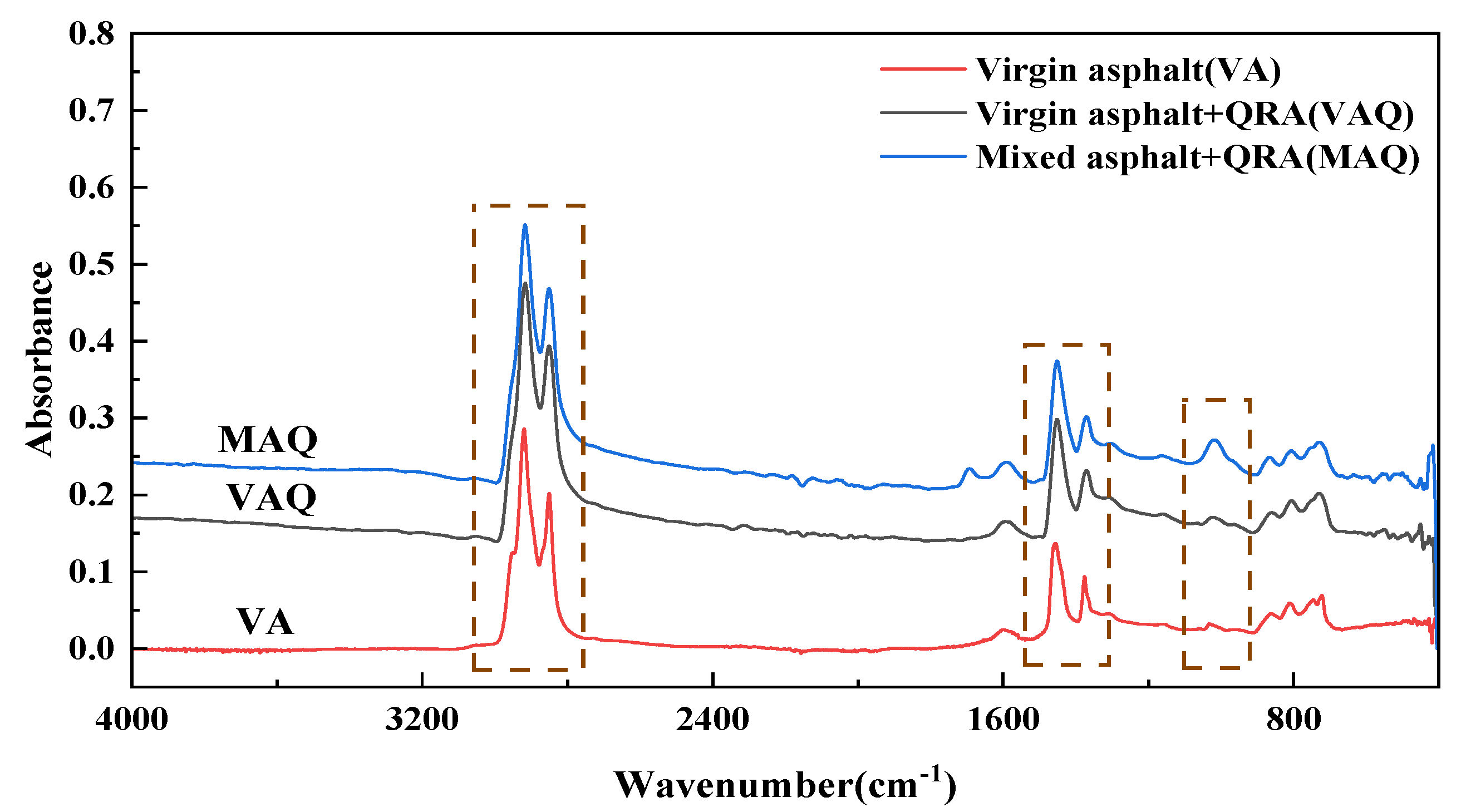
3.1.5. Fourier Transform Infrared (FTIR) Spectroscopy
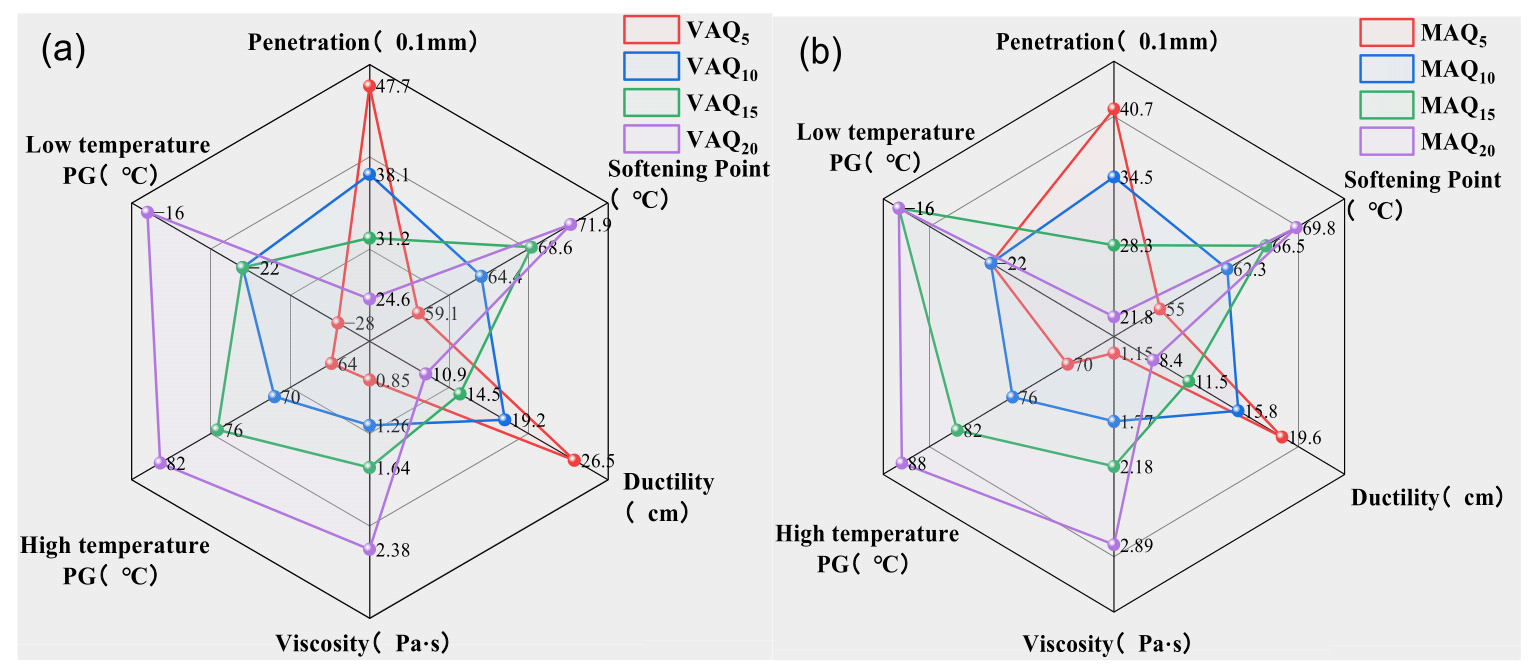
3.1.6. Performance Comparison of Binders
3.2. Performance Analysis of Hot Recycled Asphalt Mixtures
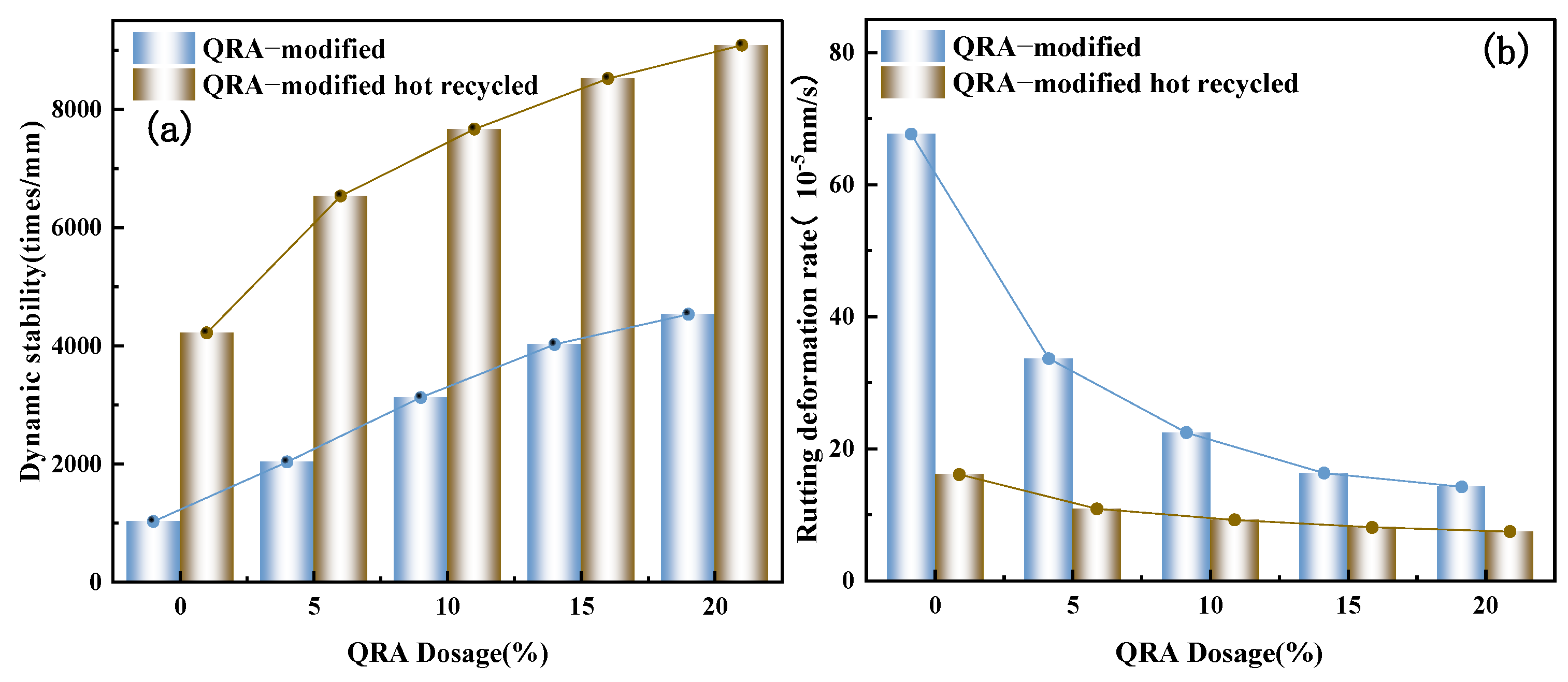
3.2.1. High-Temperature Stability
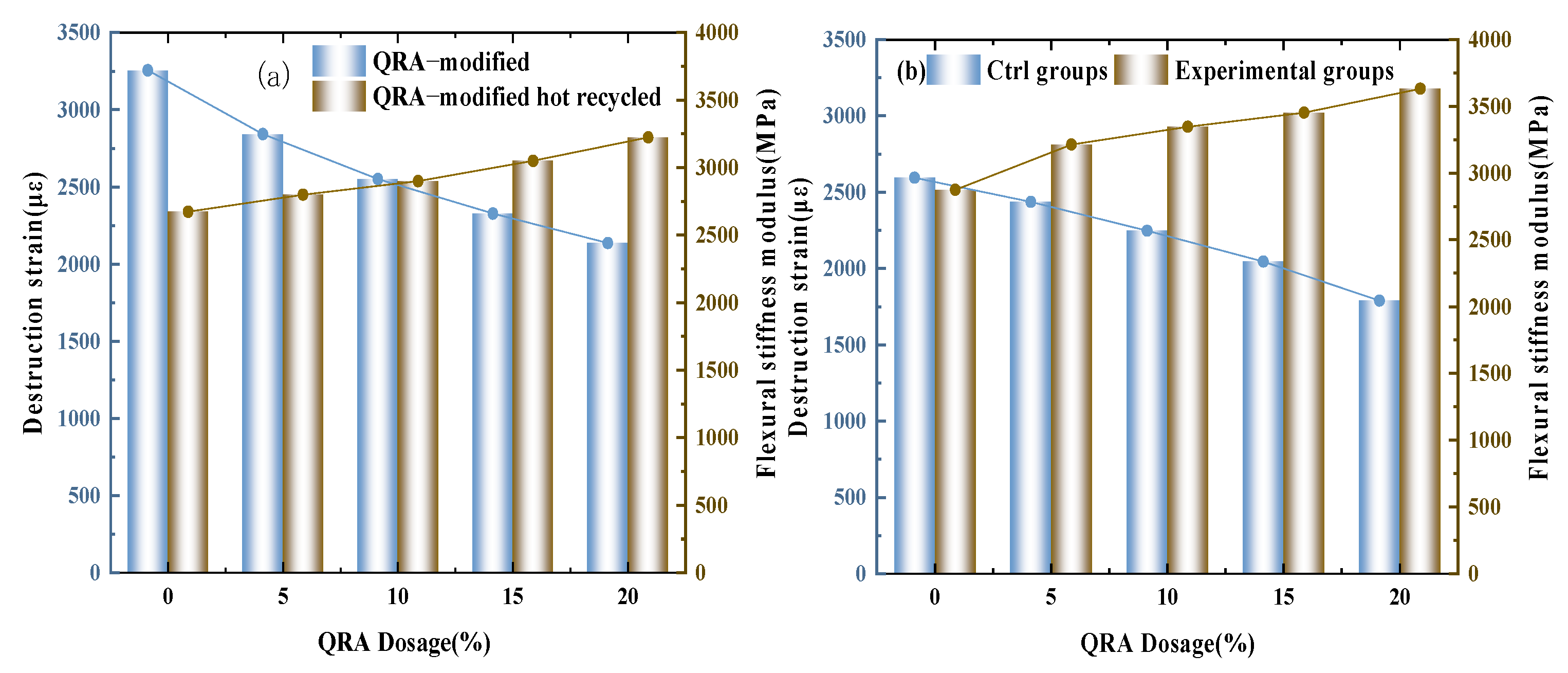
3.2.2. Low-Temperature Cracking Resistance
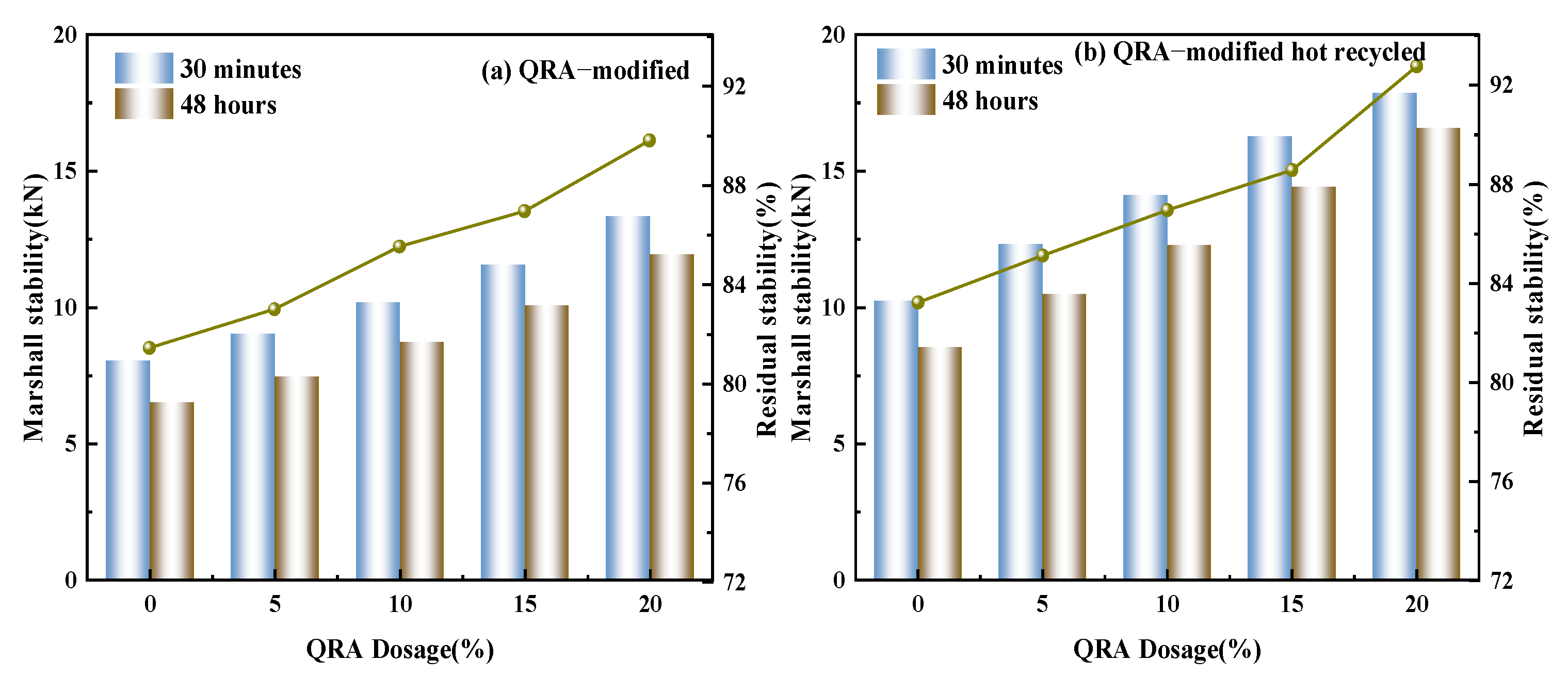
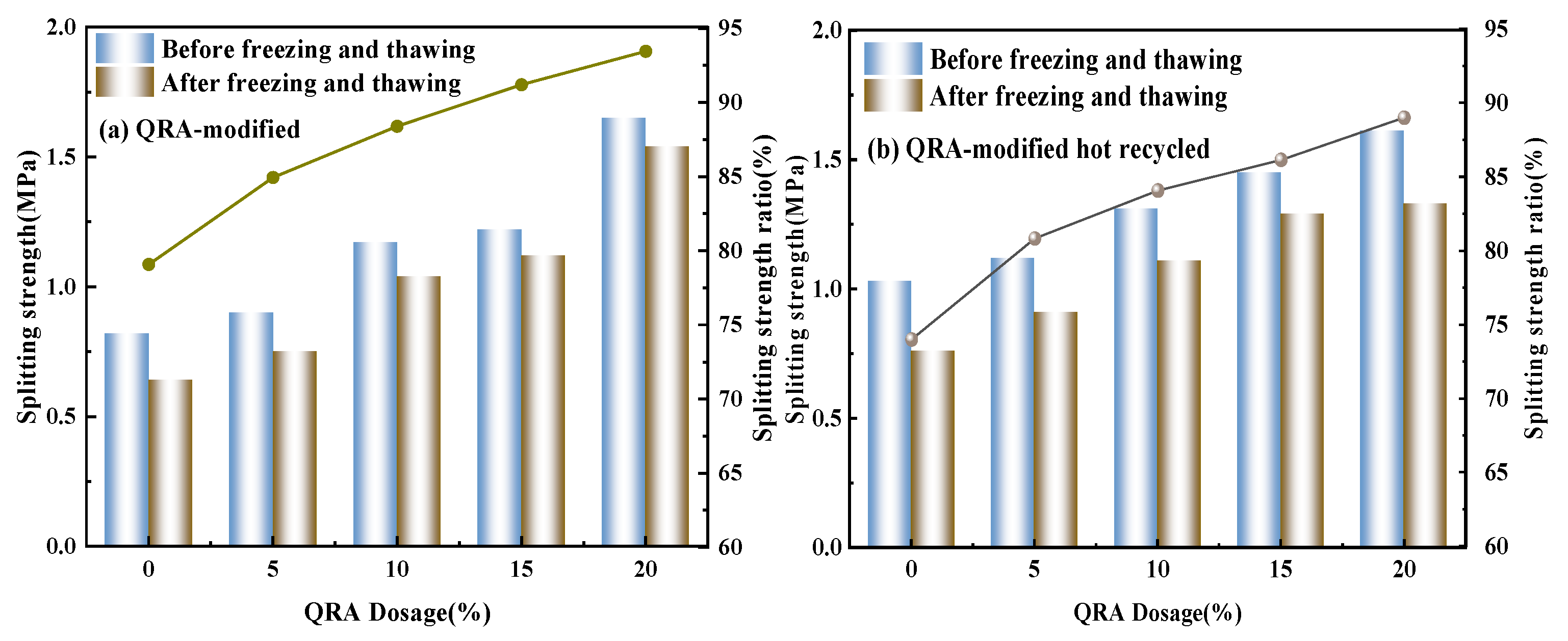
3.2.3. Moisture Susceptibility
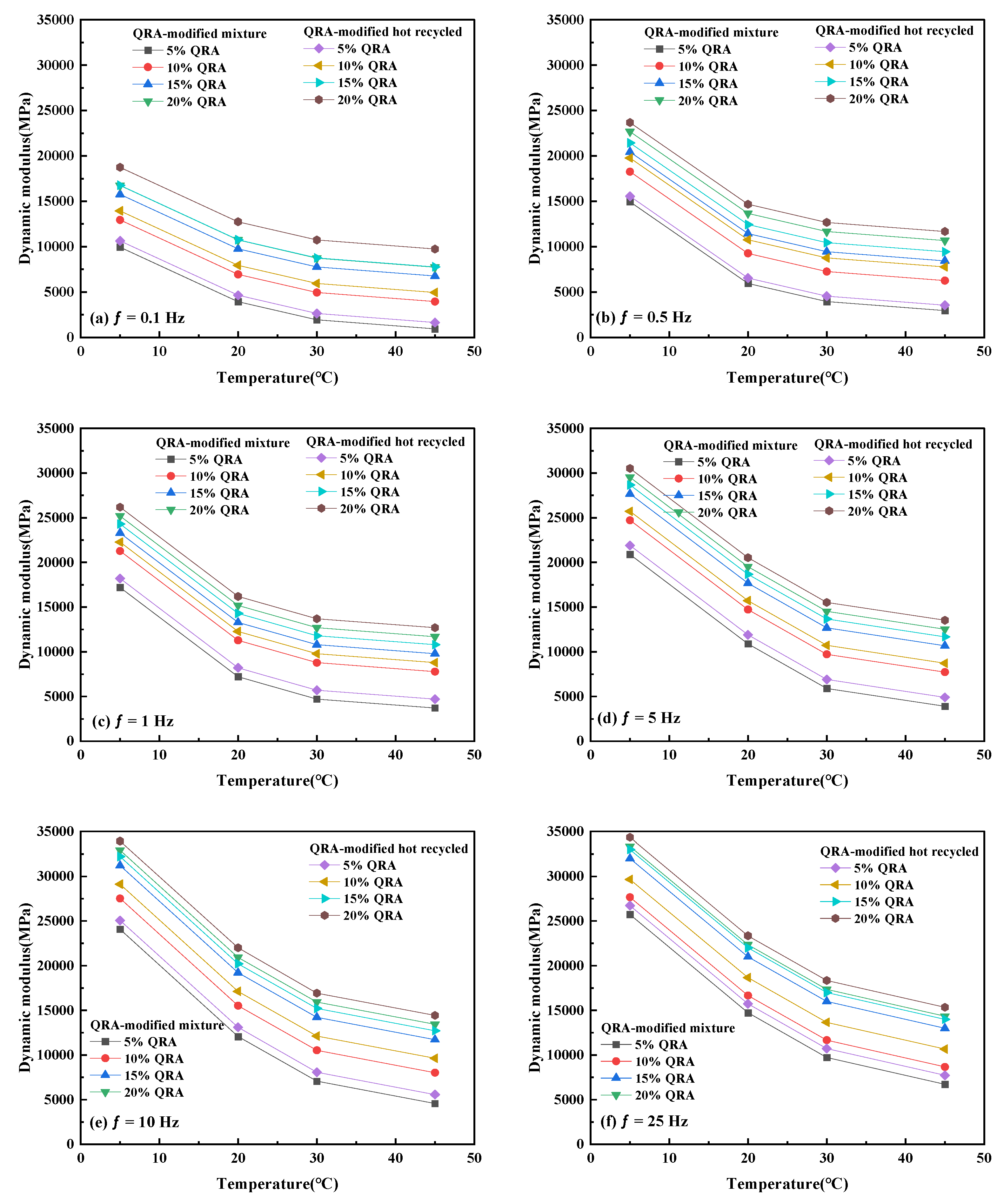
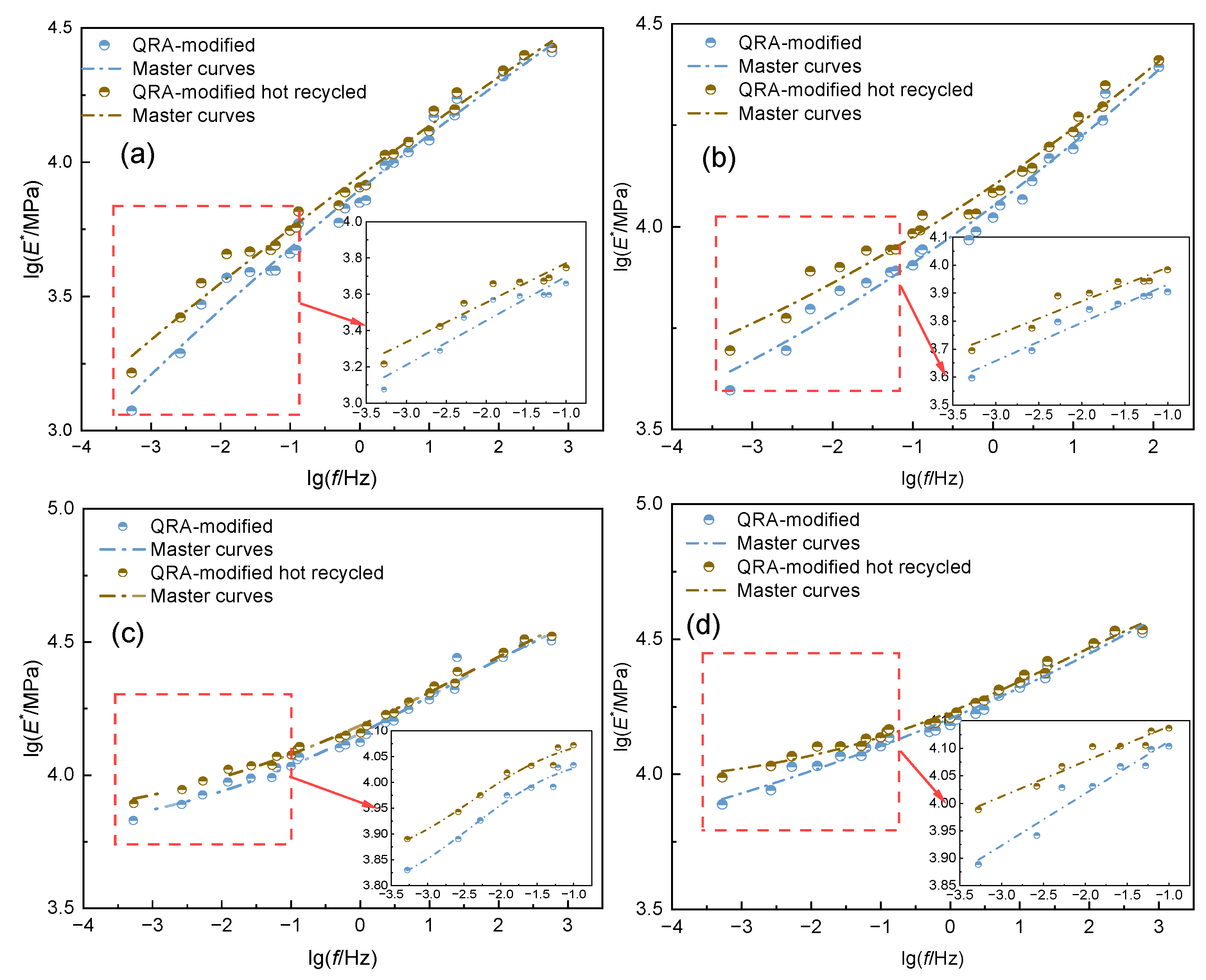
3.2.4. Dynamic Modulus Analysis
4. Conclusions
- (1)
- Increasing QRA content significantly enhanced the binder’s high-temperature performance. The softening point, rutting parameter (G*/sin δ), and PG all increased, reflecting higher stiffness and stronger resistance to permanent deformation. When combined with RAP-aged binder, the improvement was cumulative, and in Turpan (Xinjiang), the MAQ binder reached the regional PG 76–22 grade at a 10% QRA content. However, the gains in high-temperature performance were accompanied by reduced workability and slightly lower low-temperature cracking resistance.
- (2)
- With increasing QRA content, asphalt mixture dynamic stability increased, whereas low-temperature failure strain decreased, indicating a stiffness–ductility trade-off. Under the condition that the low-temperature specification was still satisfied, 15% QRA showed a relatively favorable balance between enhanced high-temperature stability and acceptable cracking resistance at the mixture level. Dynamic stability increased by 115% and failure strain decreased by 30.8% versus the reference, consistent with cumulative reinforcement from RAP-aged binder and QRA.
- (3)
- With increasing QRA content, residual Marshall stability and TSR increased, indicating improved moisture resistance. Relative to unmodified references, TSR rose by 15.70% in the virgin-aggregate mixture (0% RAP) and by 14.38% in the recycled mixture (50% RAP). Nevertheless, the TSR of the recycled mixture remained 1.32% lower than the virgin-aggregate mixture, indicating that QRA mitigates, but does not eliminate, RAP-induced moisture susceptibility.
- (4)
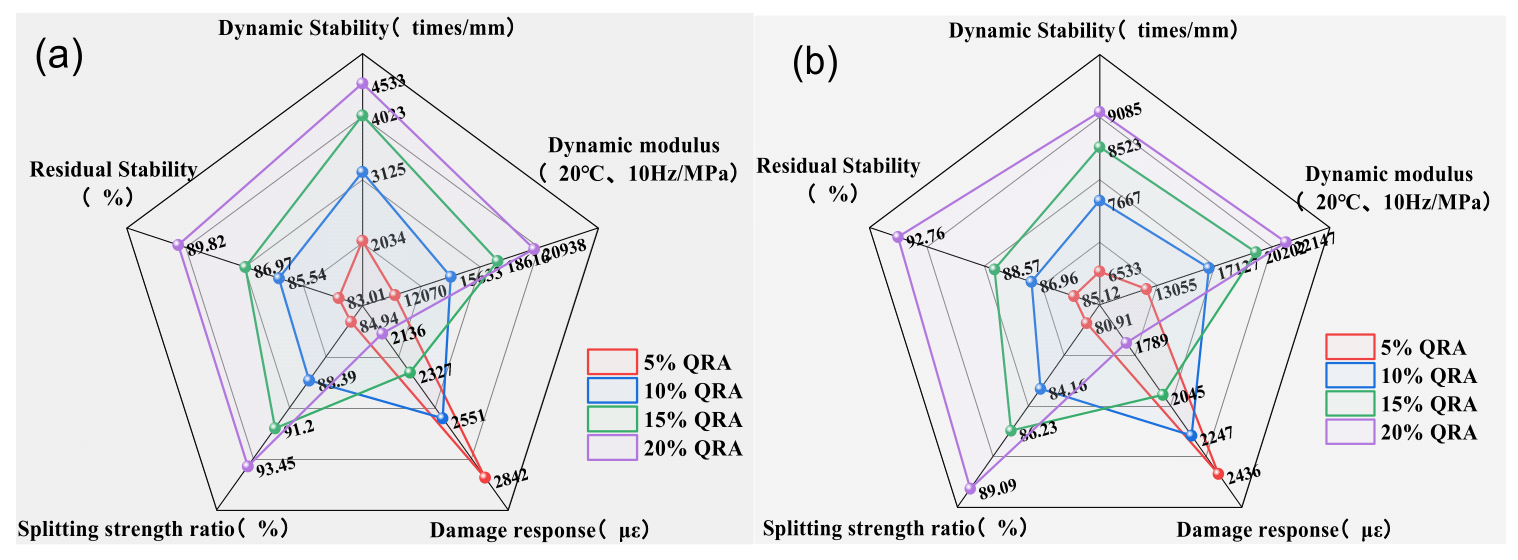
- Based on a multi-criteria evaluation incorporating the regional PG requirement (PG 76–22) and the overall performance of the recycled mixture, 10% QRA was identified as the recommended dosage for the MAQ system with 50% RAP. Although 15% QRA provided further gains in stiffness and rutting resistance, 10% QRA already satisfied the regional binder grade requirement and the relevant mixture performance criteria, while better limiting the loss of low-temperature cracking resistance and construction workability. A design incorporating 10% QRA and 50% RAP thus offers a practical reference for durable pavements in severe climates such as Turpan, Xinjiang. Future studies may further examine the field applicability and long-term durability of QRA-modified high-RAP mixtures under more complex service conditions.
Author Contributions
Funding
Data Availability Statement
Acknowledgments
Conflicts of Interest
References
- Xiao, F.; Xu, L.; Zhao, Z.; Hou, X. Recent applications and developments of reclaimed asphalt pavement in China, 2010–2021. Sustain. Mater. Technol. 2023, 37, e00697. [Google Scholar] [CrossRef] [Scilit]
- Dong, C.; Feng, L.; Xu, Y. Performance zoning of asphalt pavement and performance grade (PG) of asphalt binder in karamay: A case study of Xinjiang, China. Sustainability 2023, 15, 9742. [Google Scholar] [CrossRef] [Scilit]
- Song, L.; Xie, X.; Tu, P.; Fan, J.; Gao, J. Study on aging mechanism and high-temperature rheological properties of low-grade hard asphalt. Materials 2023, 16, 5641. [Google Scholar] [CrossRef] [Scilit] [PubMed]
- Song, Y.; Lu, Z.; Feng, J.; Wu, S.; Wan, P.; Gong, X.; Xu, H.; Xie, J. Investigation on the performance, environmental and economic benefits of coarse-grained recycled asphalt mixture with high RAP content. Constr. Build. Mater. 2026, 510, 145211. [Google Scholar] [CrossRef] [Scilit]
- Jahanbakhsh, H.; Karimi, M.M.; Naseri, H.; Nejad, F.M. Sustainable asphalt concrete containing high reclaimed asphalt pavements and recycling agents: Performance assessment, cost analysis, and environmental impact. J. Clean. Prod. 2020, 244, 118837. [Google Scholar] [CrossRef] [Scilit]
- Zhang, G.; Wu, H.; Li, P.; Qiu, J.; Nian, T. Pavement Properties and Predictive Durability Analysis of Asphalt Mixtures. Polymers 2022, 14, 803. [Google Scholar] [CrossRef] [Scilit]
- Zhao, X.; Shen, A.; Ma, B. Temperature Adaptability of Asphalt Pavement to High Temperatures and Significant Temperature Differences. Adv. Mater. Sci. Eng. 2018, 2018, 9436321. [Google Scholar] [CrossRef] [Scilit]
- Ren, G.; Shen, A.; Wu, H.; Pan, H.; Deng, S.; Wang, L. Mechanical response of flexible asphalt pavement under large temperature difference and temperatures during four seasons. Constr. Build. Mater. 2024, 437, 136967. [Google Scholar] [CrossRef] [Scilit]
- Liu, F.; Yang, S.; Sun, Q. Performance evaluation of Xinjiang Tianzhize 90A road petroleum asphalt and mixture. Constr. Build. Mater. 2023, 363, 129810. [Google Scholar] [CrossRef] [Scilit]
- Song, L.; Hou, L.; Tu, P.; Fan, P.; Gao, J. Study on UV aging characteristics of low-grade asphalt in the desert climate. Mater. Res. Express 2023, 10, 095308. [Google Scholar] [CrossRef] [Scilit]
- Xia, C.; Xiao, G.; Wang, D.; Hou, W.; Lu, W.; Lv, S.; Zhao, T. Fatigue damage behavior of aged high modulus asphalt mixture under small-scale accelerated loading. Constr. Build. Mater. 2025, 486, 142031. [Google Scholar] [CrossRef] [Scilit]
- Abdelmageed, M.A.; Dhasmana, H.; Mousa, M.R.; Hassan, M.; Mohammad, L.; Cooper, S., III. Enhancing the Sustainability and Cost-Effectiveness of High-Modulus Asphalt Concrete Mixes with Crumb Rubber. J. Transp. Eng. Part B Pavements 2026, 152, 04025064. [Google Scholar] [CrossRef] [Scilit]
- Xie, X.; Zhang, Y.; Li, G.; Liu, C.; SiMa, X.; Liu, C.; Si, B.; He, Y.; Shao, J. Study on the composition and properties of EME-SBS-Nano ZnO high modulus asphalt material. Sci. Rep. 2024, 14, 23826. [Google Scholar] [CrossRef] [Scilit] [PubMed]
- Yang, X.; Li, S.; Dou, H.; Yang, W.; Jia, X.; Dai, J.; Liang, J. Study on properties and reaction mechanism of waste cooking oil-microwave activated crumb rubber/PPA composite modified asphalt. Constr. Build. Mater. 2025, 503, 144516. [Google Scholar] [CrossRef] [Scilit]
- Kołodziej, K.; Bichajło, L.; Siwowski, T. The Influence of Zero Shear Viscosity of TLA-Modified Binder and Mastic Composition on the Permanent Deformation Resistance of Mastic Asphalt Mixture. Materials 2021, 14, 5167. [Google Scholar] [CrossRef] [Scilit]
- Amini, A.; Riahi, M.T.M. Effectiveness of combining gilsonite and vacuum tower bottoms in enhancing the properties of recycled binder with high RAB content. Case Stud. Constr. Mater. 2025, 22, e04398. [Google Scholar] [CrossRef] [Scilit]
- Zuluaga-Astudillo, D.A.; Rondón-Quintana, H.A.; Zafra-Mejía, C.A. Mechanical Performance of Gilsonite Modified Asphalt Mixture Containing Recycled Concrete Aggregate. Appl. Sci. 2021, 11, 4409. [Google Scholar] [CrossRef] [Scilit]
- Anupam, K.; Akinmade, D.; Kasbergen, C.; Erkens, S.; Adebiyi, F. A state-of-the-art review of Natural bitumen in pavement: Underlining challenges and the way forward. J. Clean. Prod. 2023, 382, 134957. [Google Scholar] [CrossRef] [Scilit]
- Xiong, L.; Liu, K.; Kadhim, H.A.; Niu, D.; Gao, Y.; Liu, X. Comparative analysis of the fatigue characterisation of natural rock asphalt/SBS composite modified asphalt binders using time sweep test and linear amplitude sweep test. Constr. Build. Mater. 2025, 494, 143315. [Google Scholar] [CrossRef] [Scilit]
- Ghani, U.; Zamin, B.; Tariq Bashir, M.; Ahmad, M.; Sabri, M.M.S.; Keawsawasvong, S. Comprehensive Study on the Performance of Waste HDPE and LDPE Modified Asphalt Binders for Construction of Asphalt Pavements Application. Polymers 2022, 14, 3673. [Google Scholar] [CrossRef] [Scilit]
- Gao, J.; Xu, Y.; Gao, C.; Tao, M.; Song, L.; Yao, Y. Evaluation of polyethylene (PE) modified asphalt prepared by different treatment methods: LDPE powder, LDPE + EVA blend, and maleic anhydride grafted PE. Chem. Eng. Sci. 2026, 321, 122848. [Google Scholar] [CrossRef] [Scilit]
- Pasetto, M.; Baliello, A.; Pasquini, E.; Poulikakos, L. Dry Addition of Recycled Waste Polyethylene in Asphalt Mixtures: A Laboratory Study. Materials 2022, 15, 4739. [Google Scholar] [CrossRef] [Scilit] [PubMed]
- Li, L.; He, Z.; Liu, W.; Jiang, J.; Hu, C. Modification Mechanism and Performance of Qingchuan Rock Asphalt–Modified Asphalt. J. Test. Eval. 2018, 46, 20160347. [Google Scholar] [CrossRef] [Scilit]
- Khanghahi, S.H.; Irdmousa, P.R.; Rezaee, S.; Zakavi, S.J.; Shokorlou, Y.M. Fracture toughness of Gilsonite modified HMA mixtures under mixed mode I/II loading at different temperature conditions. Theor. Appl. Fract. Mech. 2023, 127, 104004. [Google Scholar] [CrossRef] [Scilit]
- Morea, F.; Zerbino, R. Incorporation of synthetic macrofibres in Warm Mix Asphalt. Road Mater. Pavement Des. 2020, 21, 542–556. [Google Scholar] [CrossRef] [Scilit]
- Yang, R.; Chen, H.; Yang, J. Effect of Epoxy Resin on the Properties of Recycled Asphalt. J. Wuhan Univ. Technol.-Mater. Sci. Ed. 2024, 39, 1149–1155. [Google Scholar] [CrossRef] [Scilit]
- Rahman, T.; Widyatmoko, I.; Rachman, A.; Nurhidayati, Z. Buton Rock Asphalt (BRA/Asbuton): A systematic review of the characteristics, performance, sustainability, and future research directions. Road Mater. Pavement Des. 2025, 1–50. [Google Scholar] [CrossRef] [Scilit]
- Zhao, Y.; Guo, R.; Sheng, C.; Wen, L.; Chen, G.; Zong, J. Evaluation of high-proportion RAP mixtures modified with diatomite-rock asphalt composite through gray correlational analysis: Insights into pavement performance. J. Clean. Prod. 2025, 522, 146185. [Google Scholar] [CrossRef] [Scilit]
- Amini, A.; Akrami, M. Improving the performance and rheological properties of RAP binders using gilsonite/nanoclay and softer binder. Constr. Build. Mater. 2023, 400, 132797. [Google Scholar] [CrossRef] [Scilit]
- ASTM D1856-21; Standard Test Method for Recovery of Asphalt from Solution by Abson Method. ASTM International: West Conshohocken, PA, USA, 2021.
- AASHTO T 313-19; Standard Method of Test for Determining the Flexural Creep Stiffness of Asphalt Binder Using the Bending Beam Rheometer (BBR). American Association of State Highway and Transportation Officials: Washington, DC, USA, 2019.
- ASTM D4402; Standard Test Method for Viscosity Determination of Asphalt at Elevated Temperatures Using a Rotational Viscometer. ASTM International: West Conshohocken, PA, USA, 2012.
- AASHTO T 316-22; Standard Method of Test for Viscosity Determination of Asphalt Binder Using Rotational Viscometer. American Association of State Highway and Transportation Officials: Washington, DC, USA, 2022.
- JTG E20-2019; Standard Test Methods of Bitumen and Bituminous Mixtures for Highway Engineering. China Communications Press: Beijing, China, 2019.







| Test Items | Unit | Requirements | Test Results |
|---|---|---|---|
| Penetration (100 g, 5 s, 25 °C) | 0.1 mm | 60–80 | 65.3 |
| Softening point (R&B) | °C | ≥46 | 49.5 |
| Ductility (15 °C) | cm | ≥20 | >100 |
| Dynamic Viscosity (135 °C) | Pa·s | ≤3.0 | 2.356 |
| Asphalt Performance Grade (PG) | / | / | 68–28 |
| Experimental Indicators | Asphalt Content | Ash Content | Moisture Content |
|---|---|---|---|
| Experimental results | 86.5 | 13.5 | 0.2 |
| Indicator requirements | / | <15 | <2 |
| Test Items | Unit | Requirement | Test Results | |||
|---|---|---|---|---|---|---|
| 0.075 mm | 0–8 mm | 8–12 mm | 12–22 mm | |||
| Aggregate Crushing Value | % | ≤28 | / | / | / | 15.3 |
| Flat and Elongated Particle Content | % | ≤20 | / | / | 17.2 | 11.1 |
| Apparent Specific Gravity | / | ≥2.5 | 2.723 | 2.704 | 2.891 | 2.757 |
| Bulk Specific Gravity | / | / | / | / | 2.75 | 2.724 |
| Water Absorption | % | ≤3.0 | / | / | 1.4 | 0.47 |
| Materials | Test Items | Unit | Test Results |
|---|---|---|---|
| Aged Asphalt | Penetration (100 g, 5 s, 25 °C) | 0.1 mm | 29.6 |
| Softening point (R&B) | °C | 63.6 | |
| Ductility (15 °C) | cm | 15.35 | |
| Asphalt Performance Grade | PG | 82–16 |
| Mixture Type | QRA Dosage | δ | α | β | γ |
|---|---|---|---|---|---|
| 0% RAP | 5 | 2.0000 | 2.6518 | −0.8571 | −0.4579 |
| 10 | 2.0000 | 3.5000 | −0.3246 | −0.1704 | |
| 15 | 3.6637 | 1.0921 | 0.3121 | −0.5406 | |
| 20 | 3.4193 | 1.6906 | 0.1999 | −0.2975 | |
| 50% RAP | 5 | 2.0000 | 2.8114 | −0.7479 | −0.366 |
| 10 | 2.1845 | 3.5000 | −0.1664 | −0.1595 | |
| 15 | 3.7612 | 0.9843 | 0.3986 | −0.5687 | |
| 20 | 3.9079 | 0.8363 | 0.5561 | −0.5794 | |
| Mixture Type | QRA Dosage | logαT (5 °C) | logαT (20 °C) | logαT (30 °C) | logαT (45 °C) |
| 0% RAP | 5 | 1.7014 | 0 | −0.8778 | −1.5157 |
| 10 | 1.8525 | 0 | −0.9903 | −1.6239 | |
| 15 | 1.574 | 0 | −0.8162 | −1.3516 | |
| 20 | 1.6017 | 0 | −0.8106 | −1.3045 | |
| 50% RAP | 5 | 1.6711 | 0 | −0.8658 | −1.4523 |
| 10 | 1.7499 | 0 | −0.9211 | −1.4931 | |
| 15 | 1.5716 | 0 | −0.8167 | −1.3548 | |
| 20 | 1.6397 | 0 | −0.8771 | −1.4686 |
Disclaimer/Publisher’s Note: The statements, opinions and data contained in all publications are solely those of the individual author(s) and contributor(s) and not of MDPI and/or the editor(s). MDPI and/or the editor(s) disclaim responsibility for any injury to people or property resulting from any ideas, methods, instructions or products referred to in the content. |
© 2026 by the authors. Licensee MDPI, Basel, Switzerland. This article is an open access article distributed under the terms and conditions of the Creative Commons Attribution (CC BY) license.
Share and Cite
Zhao, J.; Guan, Z.; Song, L.; Dan, Z.; Gao, J. Enhancing Durability of Plant-Mixed Hot Recycled Asphalt Mixtures in Arid Climates Through Qingchuan Rock Asphalt Modification. Buildings 2026, 16, 1236. https://doi.org/10.3390/buildings16061236
Zhao J, Guan Z, Song L, Dan Z, Gao J. Enhancing Durability of Plant-Mixed Hot Recycled Asphalt Mixtures in Arid Climates Through Qingchuan Rock Asphalt Modification. Buildings. 2026; 16(6):1236. https://doi.org/10.3390/buildings16061236
Chicago/Turabian StyleZhao, Jiangnan, Zhikai Guan, Liang Song, Zihao Dan, and Jie Gao. 2026. "Enhancing Durability of Plant-Mixed Hot Recycled Asphalt Mixtures in Arid Climates Through Qingchuan Rock Asphalt Modification" Buildings 16, no. 6: 1236. https://doi.org/10.3390/buildings16061236
APA StyleZhao, J., Guan, Z., Song, L., Dan, Z., & Gao, J. (2026). Enhancing Durability of Plant-Mixed Hot Recycled Asphalt Mixtures in Arid Climates Through Qingchuan Rock Asphalt Modification. Buildings, 16(6), 1236. https://doi.org/10.3390/buildings16061236