Article

Enhancing Durability of Plant-Mixed Hot Recycled Asphalt Mixtures in Arid Climates Through Qingchuan Rock Asphalt Modification


1
Xinjiang Transportation Investment Construction Management Co., Ltd., Urumqi 830099, China
2
School of Traffic and Transportation Engineering, Xinjiang University, Urumqi 830017, China
3
School of Transportation and Logistics, Xinjiang Agricultural University, Urumqi 830091, China
4
School of Civil Engineering and Architecture, East China Jiaotong University, Nanchang 330013, China
*
Author to whom correspondence should be addressed.
Buildings 2026, 16(6), 1236; https://doi.org/10.3390/buildings16061236
Submission received: 11 February 2026 / Revised: 10 March 2026 / Accepted: 18 March 2026 / Published: 20 March 2026
(This article belongs to the Special Issue Mechanical Properties of Asphalt and Asphalt Mixtures: 2nd Edition)

Abstract

This study addresses the severe durability challenges for asphalt pavements in extreme, arid continental climates like Turpan, Xinjiang, where summer surface temperatures exceed 80 °C and winter lows drop below −20 °C. It evaluates Qingchuan rock asphalt (QRA) as a modifier to enhance the durability of plant-mixed hot recycled asphalt mixtures containing reclaimed asphalt pavement (RAP). Laboratory tests at binder and mixture levels evaluated the performance of QRA-modified binder and recycled mixtures. The program included binder specifications, performance grading, dynamic modulus, dynamic stability, and residual stability. Results indicate that increasing QRA dosage raises the softening point, G*/sin δ, and high-temperature PG, enhancing stiffness and rutting resistance. Although blending with RAP binder further improves high-temperature performance, it reduces workability and low-temperature resistance. In mixtures, dynamic stability, residual Marshall stability, and TSR increased by 115%, 6.59%, and 14.38%, respectively, while failure strain decreased by 30.8%. Dynamic modulus master curves confirm improved modulus retention at high temperatures. Considering the local PG 76–22 requirement and relevant specifications, a mixture containing 10% QRA and 50% RAP is recommended for durable plant-mixed hot recycled asphalt pavements in Turpan and similar arid climate regions.

1. Introduction

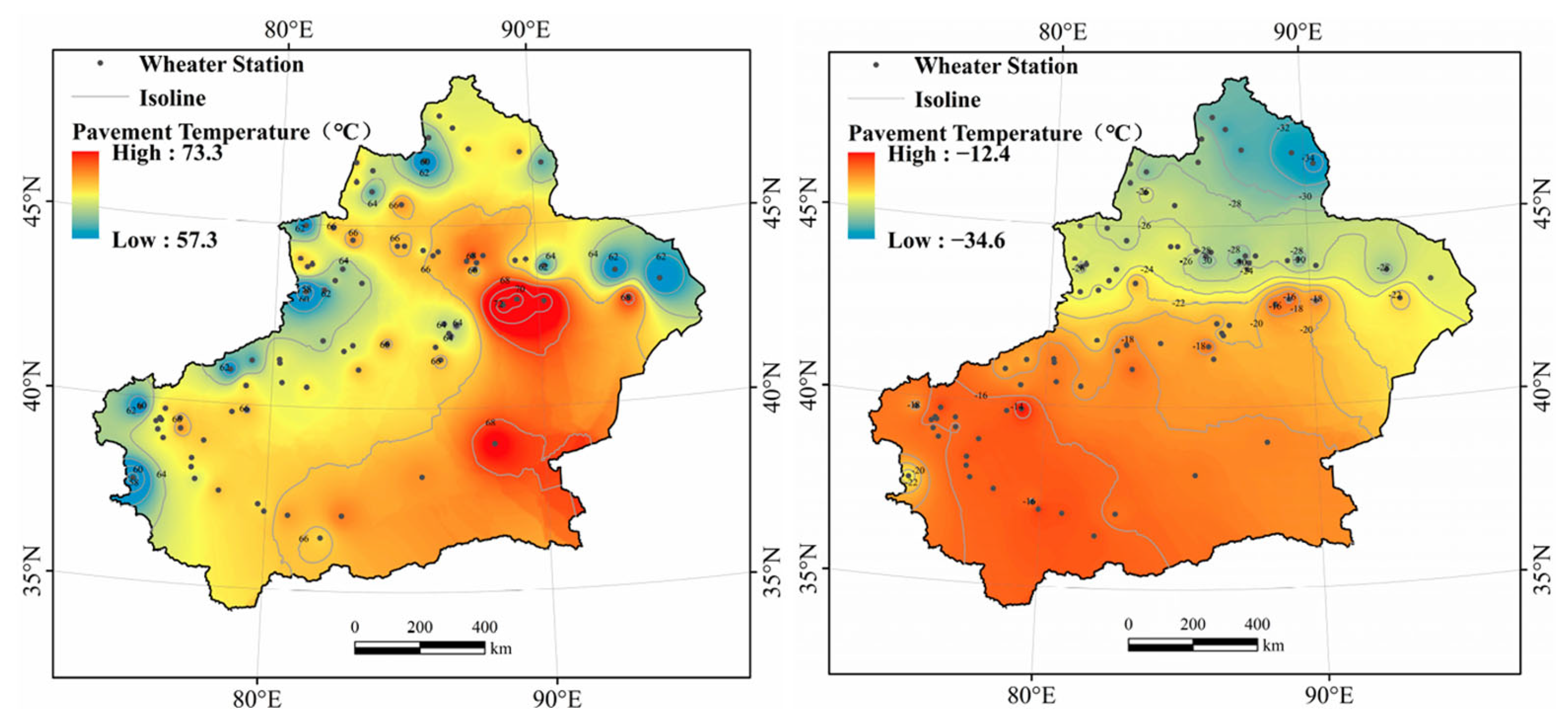
The western region of China is currently in a period of accelerated infrastructure construction. This is particularly urgent in areas like Xinjiang, with its vast territory, extensive road networks, and continuously growing transportation demand, where the tasks of highway renovation and expansion are especially pressing [1]. Taking the Turpan section of the Lianyungang–Horgos Expressway (G30) in southern Xinjiang as a representative case study, this region experiences an average ground temperature of 73.3 °C in summer and −12.4 °C in winter (Figure 1) [2]. Such climatic conditions, characterized by extreme heat in summer and severe cold in winter, impose rigorous durability requirements on asphalt pavements in local highway reconstruction and expansion projects. Accordingly, while ensuring compliance with standard specifications for low-temperature crack resistance, the development of rut-resistant asphalt mixtures with superior high-temperature stability has emerged as a pressing technical priority in contemporary pavement engineering under these specific environmental constraints [3,4].
It is well known that hot recycled mixture asphalt (RHAM) generally exhibits higher modulus and dynamic stability [5] due to the presence of aged binder. Previous studies have emphasized [6] the regional durability challenges in arid and high-temperature areas of Xinjiang. Zhao, X. et al. [7] reported that, based on finite element simulations and field temperature monitoring, the Turpan–Xiaocaohu case revealed that significant diurnal temperature variation alters pavement temperature fields and accelerates early deterioration, providing empirical evidence for climate-induced durability mechanisms and regionalized design strategies. Ren, G. et al. [8] used experimental and numerical analyses to show that combined high temperatures and heavy loading accelerate long-term structural fatigue and permanent deformation in pavements in southeastern Xinjiang. They further found that temperature, axle load, and shear stress jointly govern service life, underscoring the need for material–structure synergy in durable pavement design. Liu, F. et al. [9] assessed the high-temperature performance and dynamic stability of recycled asphalt mixtures on the Tianchi Line and found limited long-term durability of the local materials. Accordingly, binder modification was proposed to improve the durability of recycled mixtures and guide engineering applications. Song, L. et al. [10] showed, based on field sampling and accelerated aging tests, that intense ultraviolet radiation and high temperatures in the Taklamakan Desert region act synergistically to accelerate pavement aging and reduce durability, indicating that coupled environmental factors should be incorporated into durability evaluation and maintenance planning. Therefore, in extremely hot regions such as Turpan, plant-mixed recycled asphalt mixtures may not maintain durability over their service life. Accordingly, increasing the virgin binder’s PG or adjusting the RAP content is recommended to ensure long-term durability and in-service safety.
Conventional asphalt binders undergo viscoelastic softening at elevated temperatures, which limits their ability to resist rutting under heavy traffic. Increasing the mixture stiffness modulus is therefore a key approach to improving high-temperature stability. Prior studies have shown that adding high-modulus modifiers to the binder, such as mineral reinforcers, nanopolymers, and crumb rubber, markedly increases the complex modulus and rutting resistance. One representative strategy is the high-modulus mixture design concept, typified by the French EME2 system [11,12,13]. Blending natural asphalts [14,15,16,17,18], including Trinidad Lake Asphalt, Gilsonite, and Buton rock asphalt, with virgin binder leverages their high carbonaceous content and brittle-phase reinforcement to raise stiffness and high-temperature rutting resistance. Dosages around 20% have been reported to produce marked improvements in stiffness, rutting resistance, and dynamic stability. Polyethylene (PE) modification, including High-Density Polyethylene (HDPE), Low-Density Polyethylene (LDPE), and recycled PE [19,20,21] forms a stable polymer network that increases the elastic modulus and improves the multiple-stress creep and recovery response by reducing non-recoverable strain and increasing elastic recovery. Even so, natural asphalts often provide the most pronounced high-temperature gains. Materials such as Qingchuan rock asphalt (QRA) and Gilsonite [22,23], which are rich in asphaltenes and β-resins, help sustain a high complex modulus at 60–80 °C. In rutting-related tests, they increase the DSR rutting parameter G/sin δ* and reduce the Jnr, thereby enhancing binder stiffness and mixture rutting resistance. Natural rock asphalt, which is rich in asphaltenes and polar resinous components, substantially increases binder viscosity and adhesion, thereby improving mixture durability. Prior studies have shown that rock asphalt modified mixtures exhibit strong resistance to permanent deformation under high-temperature conditions and repeated loading [24]. Morea et al. [25] proposed a hybrid mixture design that combines fibers with polymer-modified natural asphalt. Laboratory results showed substantial durability gains relative to SBS-modified asphalt, indicating suitability for heavy-traffic pavements in hot, rainy climates. Yang et al. [26] developed a composite binder comprising natural rock asphalt and medium-value bisphenol-based (E-44) epoxy resin. Mixture design and performance testing of RAP-based recycled mixtures indicated improved rutting resistance while meeting specified low-temperature and moisture-resistance criteria at high RAP content. Addressing the insufficient durability of high-RAP hot recycled mixtures in humid and hot climates, Rahman [27] showed that introducing rock asphalt markedly improved durability to meet service requirements. Zhao et al. [28] reported that a diatomite-plus-rock-asphalt composite significantly enhanced the durability of high-RAP recycled mixtures, and gray relational analysis identified rock asphalt as the dominant contributor. Amini et al. [29] strengthened high-temperature rheology and reduced temperature susceptibility in high-RAP mixtures by incorporating Gilsonite with vacuum tower bottoms (VTB), identifying 12% rock asphalt as the optimum dosage for high-RAP designs. They also reported that blending Gilsonite or nanoclay with a softer base binder enhanced the elastic recovery and durability of reclaimed asphalt binders, thereby offering a viable approach for producing recycled asphalt mixtures [16].
Existing studies have primarily evaluated the pavement performance of QRA-modified recycled asphalt mixtures in hot and humid regions, whereas evidence on long-term durability and field validation remains limited. For high-temperature regions, research on achieving balanced performance across rutting resistance, moisture susceptibility, and low-temperature cracking is still scarce. In addition, the microscale interaction mechanisms between QRA-modified asphalt and RAP binder, and their links to macroscale pavement performance, remain insufficiently understood. Systematic studies that construct dynamic-modulus master curves at different QRA dosages and use them to predict pavement structural responses are also lacking.
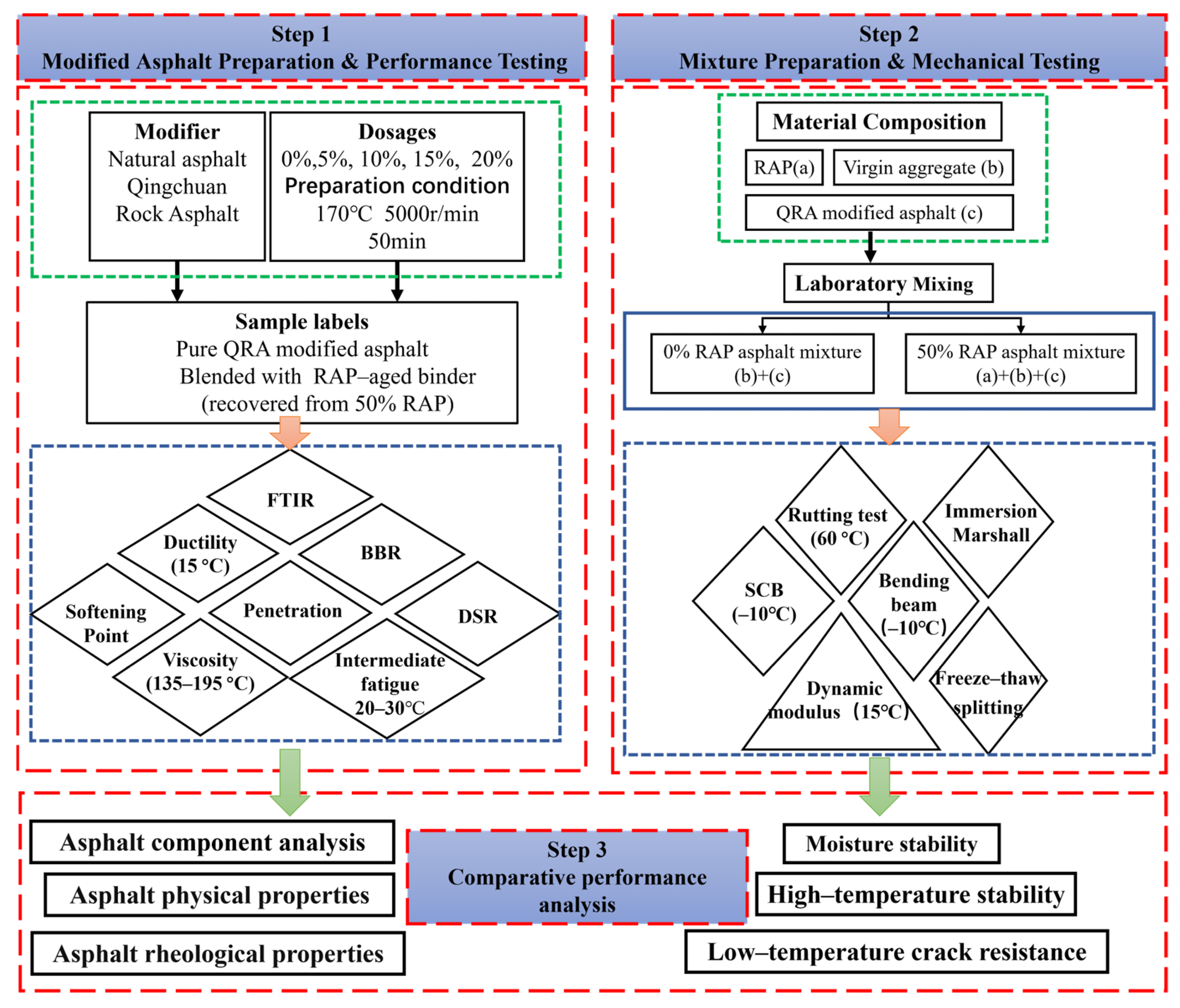
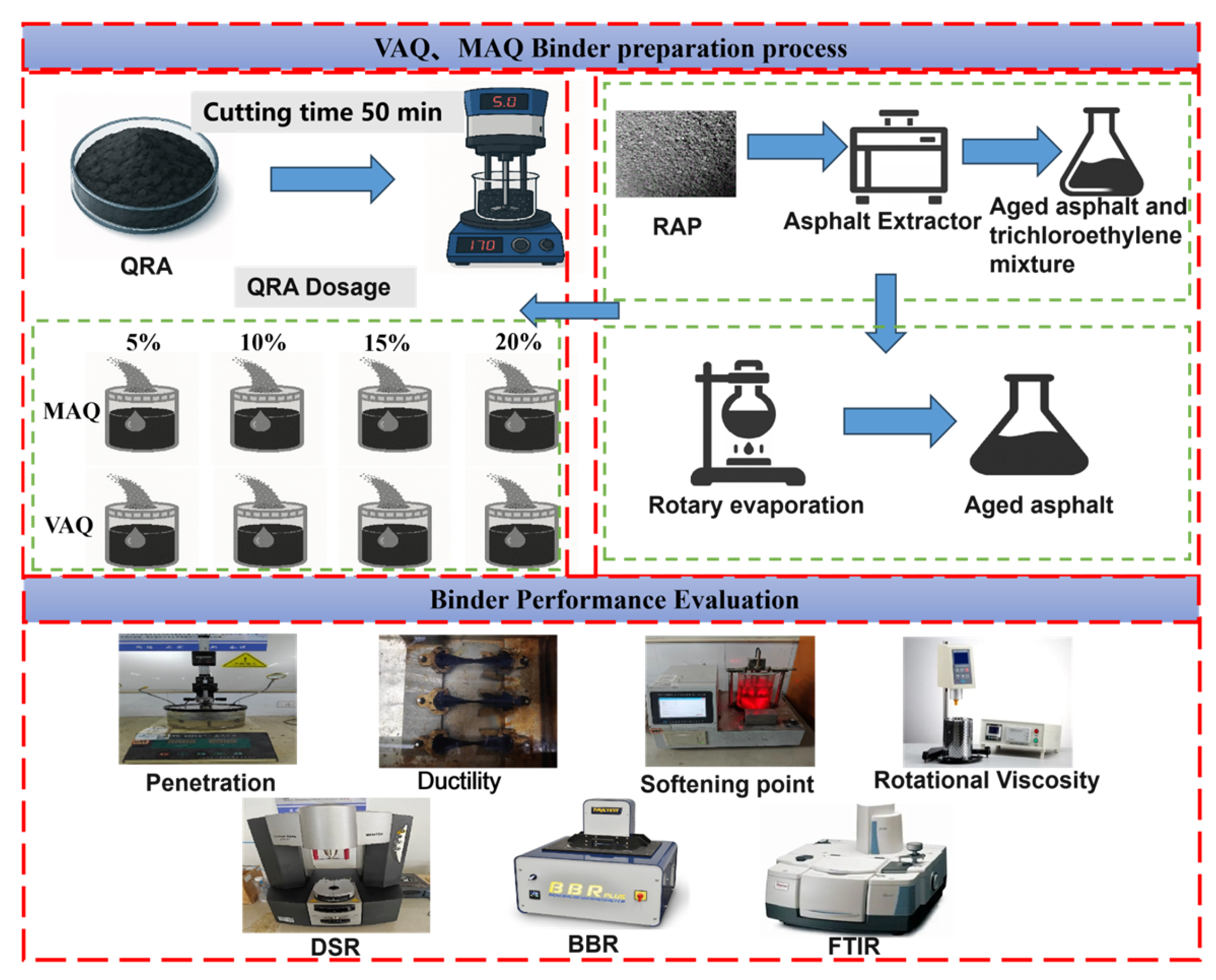
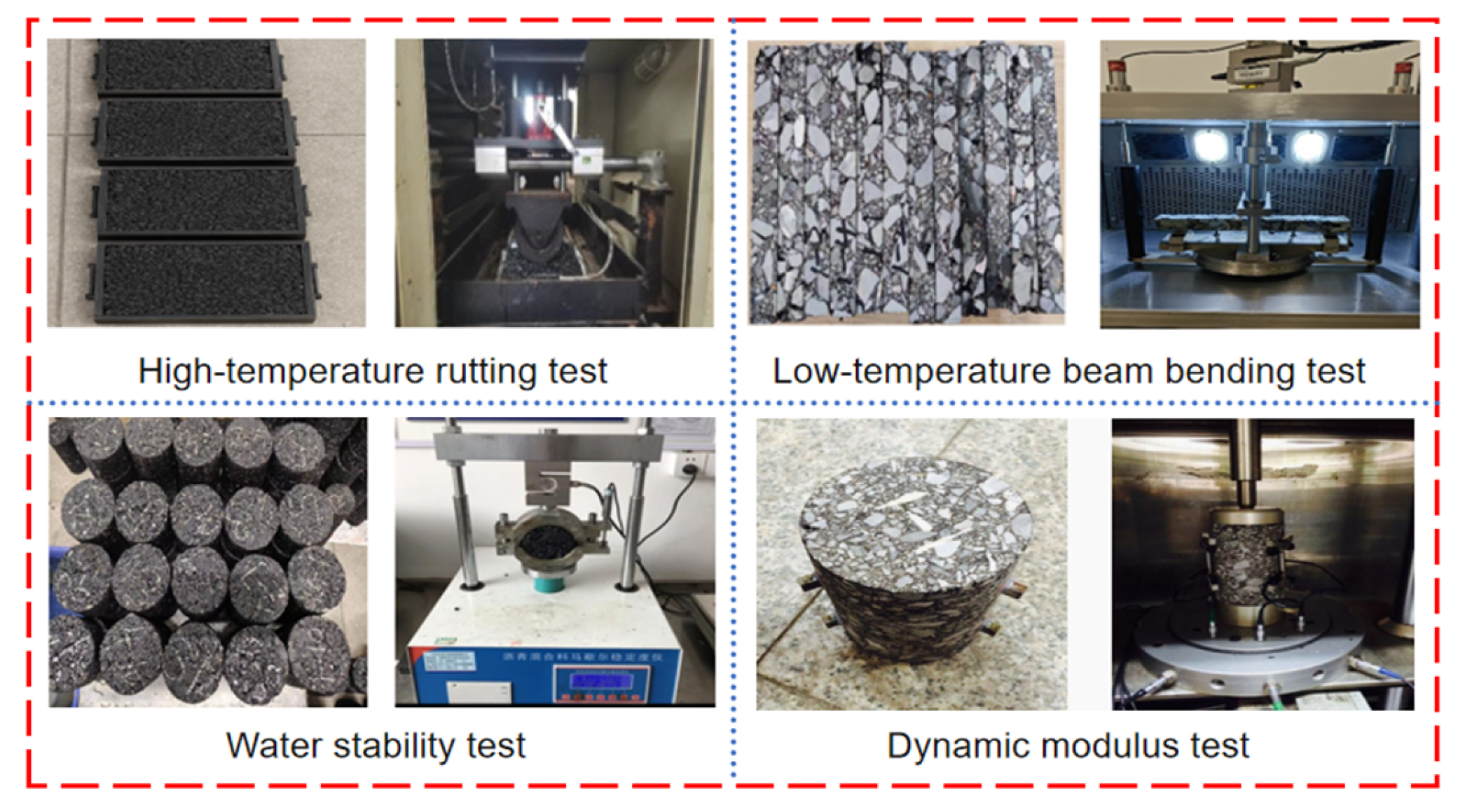
This study investigates Qingchuan rock asphalt (QRA) as a modifier in plant-mixed hot recycled asphalt systems containing 50% RAP. It focuses on how QRA dosage affects the mechanical and durability properties of the binders and mixtures under elevated-temperature conditions. The rheological and chemical properties of QRA-modified binders and blends containing 50% RAP binder were characterized using conventional binder tests, a dynamic shear rheometer, a bending beam rheometer, rotational viscometry, and Fourier transform infrared spectroscopy. Mixture performance was assessed by wheel-tracking, flexural beam testing, freeze–thaw splitting, moisture-stability testing, and dynamic-modulus testing to quantify the overall effect of QRA dosage on RAP-based recycled mixtures. The flowchart of this work is shown in Figure 2. The findings provide practical guidance for durability-oriented mix design and for optimizing asphalt pavements in extreme-climate regions such as Turpan, Xinjiang.

2. Materials and Methods

2.1. Materials

2.1.1. Asphalt

The virgin binder was a 70# paving-grade petroleum asphalt (Xingjiang, China). Its basic properties are summarized in Table 1.
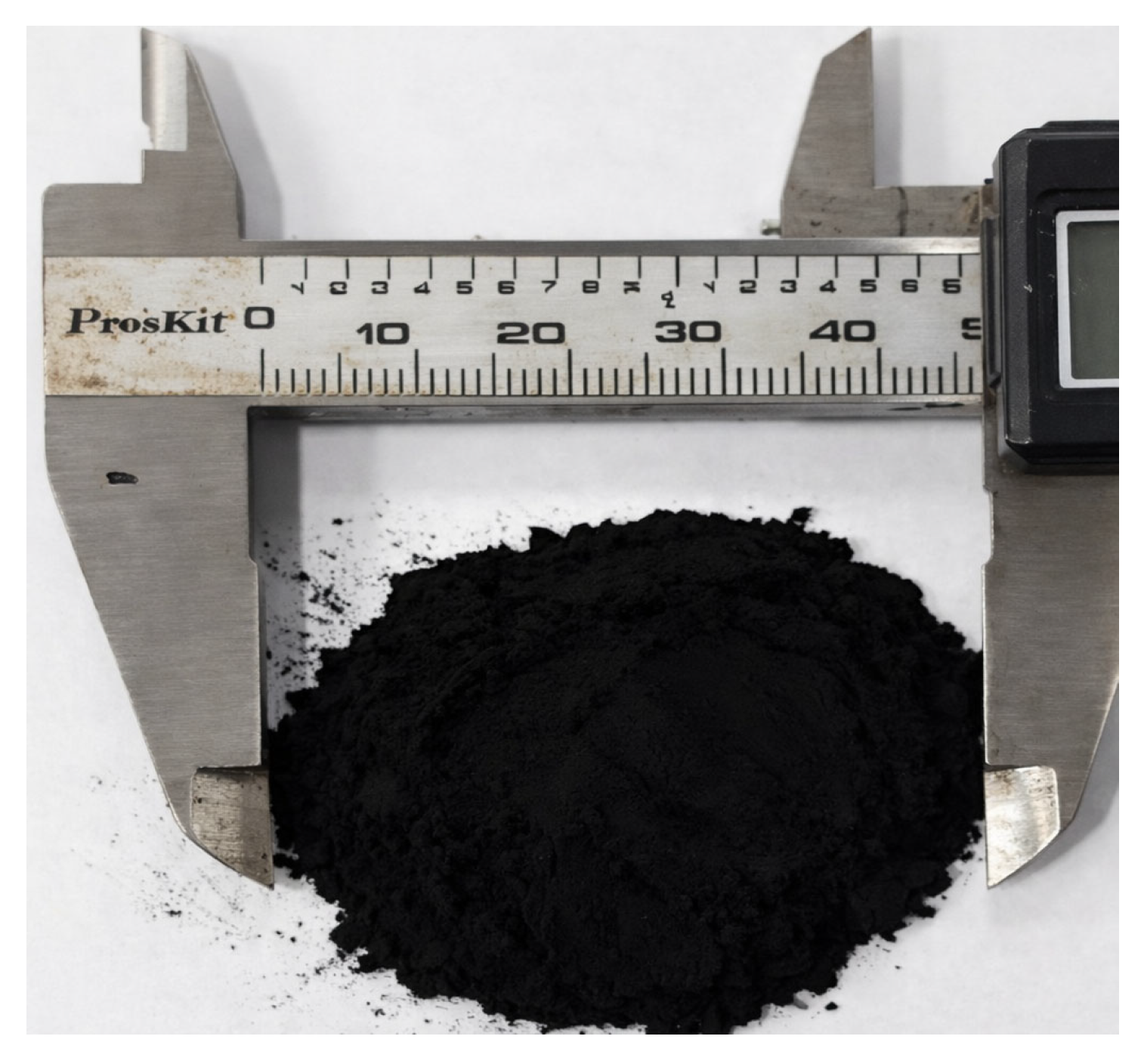
Qingchuan rock asphalt (QRA) was sourced from Sichuan, China. Its basic technical specifications are presented in Table 2. Natural QRA exists in block form and must be ground into a powder before being incorporated into the asphalt binder, as illustrated in Figure 3.

2.1.2. Aggregate Properties

Aggregates were sourced from the Wannian County Highway Stone Materials Plant, Shangrao, Jiangxi, China. The basic physical and mechanical properties are summarized in Table 3.

2.1.3. RAP

Reclaimed asphalt pavement (RAP) millings were obtained from the Shangwan Expressway (Nanchang, China). The binder content and aggregate gradation were determined by centrifugal separation and sieve analysis, respectively. The results are presented in Figure 4.
The extracted aged binder was then recovered from the solvent using the Abson method (ASTM D1856) [30], and its three conventional properties were measured with penetration, softening point, and ductility. The corresponding results are presented in Table 4.

2.2. Specimen Preparation

2.2.1. Preparation of QRA-Modified Binder

Using a high-speed shear mixer (GS–1, Cangzhou, Hebei, China). set at 5000 rpm, Qingchuan rock asphalt (QRA) was added at proportions of 5%, 10%, 15%, and 20%, respectively, followed by shearing for 60 min. The mixtures were subsequently cured in an oven at 165 °C for 30 min. These QRA-modified base asphalt samples are designated as VAQ. The aged binder from RAP, corresponding to a 50% RAP content by mass, was blended with the QRA-modified binder, designated as MAQ. The above procedures are shown in Figure 5.

2.2.2. Preparation of Asphalt Mixtures for Testing

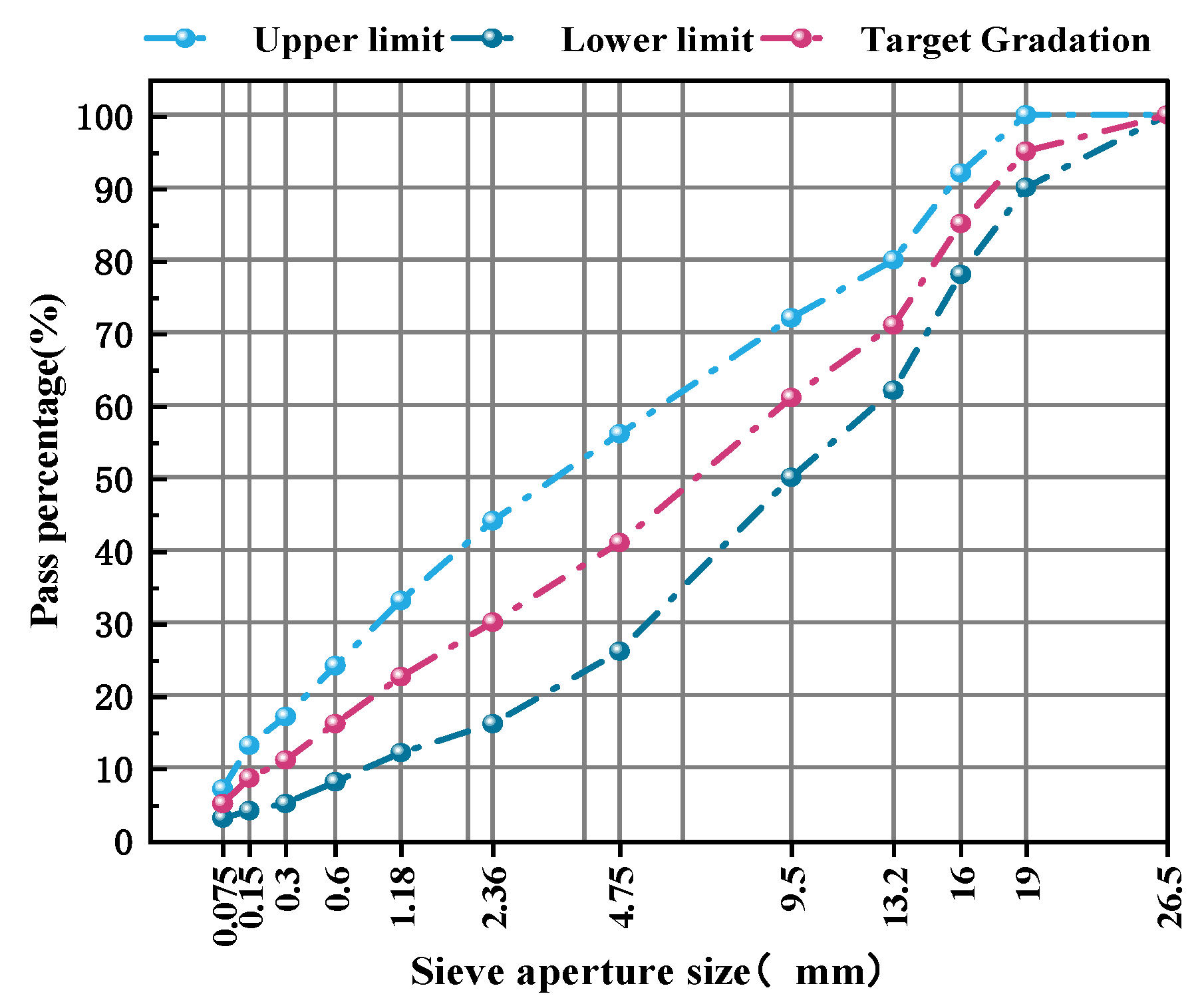
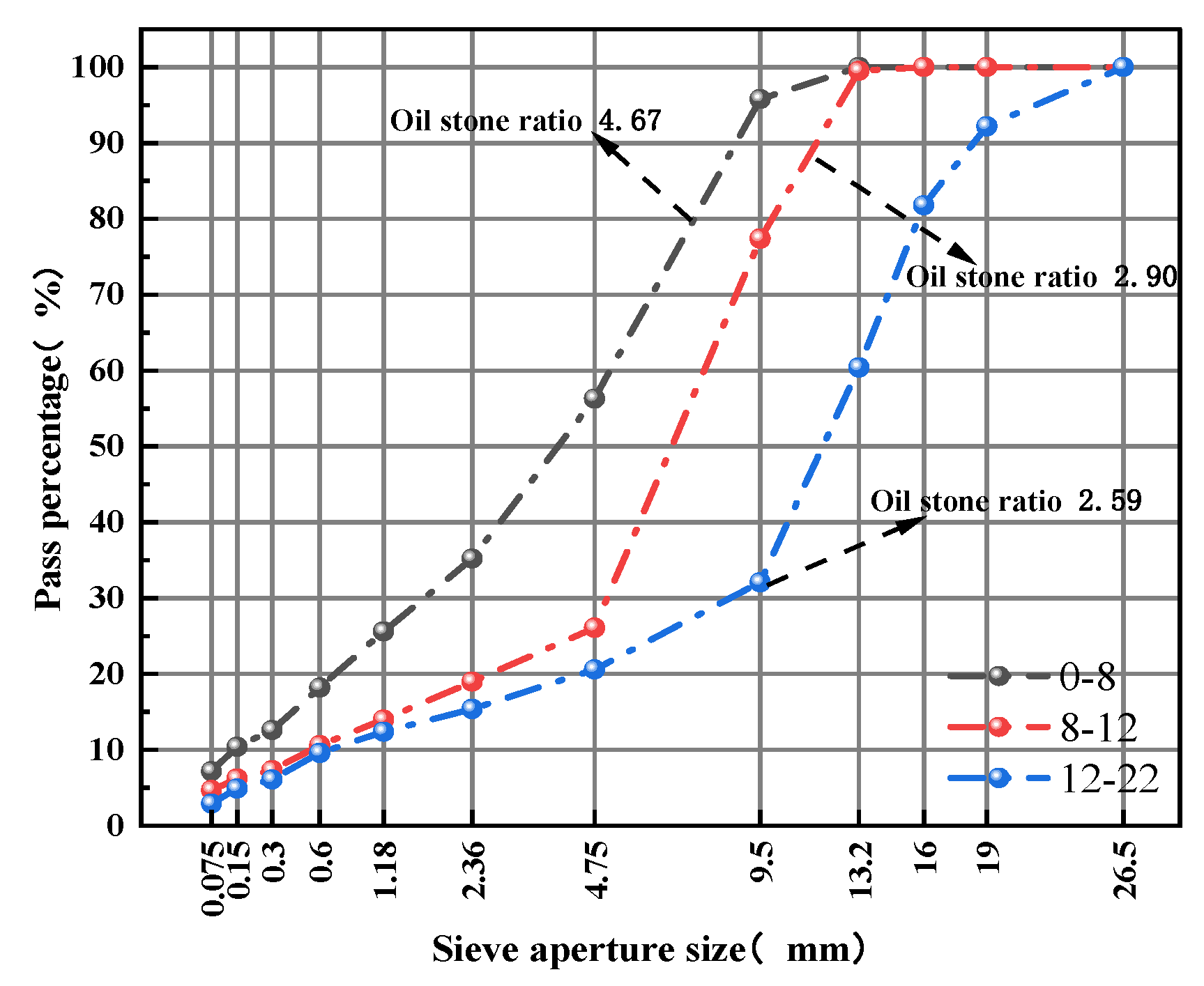
An AC-20 asphalt concrete gradation was adopted with RAP contents of 0% and 50%. Marshall mix design determined an optimum binder content (OBC) of 4.5%; the gradation used in this study is shown in Figure 6.
For the 0% RAP mixture (denoted as VAQ mixture), the QRA-modified binder and the virgin aggregate were preheated to 163 °C and 180 °C, respectively, charged into a laboratory mixer, and mixed for 120 s at 165 °C. Mineral filler preheated to 180 °C was then added, and mixing continued until uniform. For the 50% RAP mixture (denoted as MAQ mixture), RAP was preheated at 130 °C for 2 h, introduced into the mixer, and mixed for 60 s at 170 °C. The QRA-modified binder and the virgin aggregate, preheated to 163 °C and 180 °C, were then added and mixed for an additional 60 s. Finally, mineral filler preheated to 180 °C was incorporated and mixed for 60 s. The QRA-modified mixture without RAP served as the control, and the QRA-modified recycled mixture with 50% RAP served as the reference mixture.

2.3. Experimental Methods

2.3.1. Binder Testing

(1)
Basic Physical Tests
The three conventional binder tests included penetration, softening point, and ductility. Penetration was measured at 25 °C using a 100 g needle for 5 s. The softening point was determined by the Ring-and-Ball method at a heating rate of 5 °C/min, and ductility was measured at 15 °C with a pulling rate of 5 cm/min.
(2)
High-Temperature Rheological Testing
High-temperature rheology was evaluated using a Kinexus dynamic shear rheometer (DSR) at PG temperatures and an angular frequency of 10 rad/s. The rutting factor, G*/sin δ, was calculated from the complex shear modulus (G*) and phase angle (δ). The PG criteria require G*/sin δ ≥ 1.0 kPa for the original binder and G*/sin δ ≥ 2.2 kPa after short-term aging.
(3)
Low-Temperature Rheological Testing
Low-temperature rheology was evaluated by BBR according to AASHTO T 313 [31]. Standard beams were tested at 6 °C intervals to obtain the creep stiffness (S) and m-value at 60 s, with criteria of S ≤ 300 MPa and m ≥ 0.3. Low-temperature performance was also assessed by flexural bending, based on the flexural tensile strain at failure and flexural stiffness modulus.
(4)
Rotational Viscosity Testing
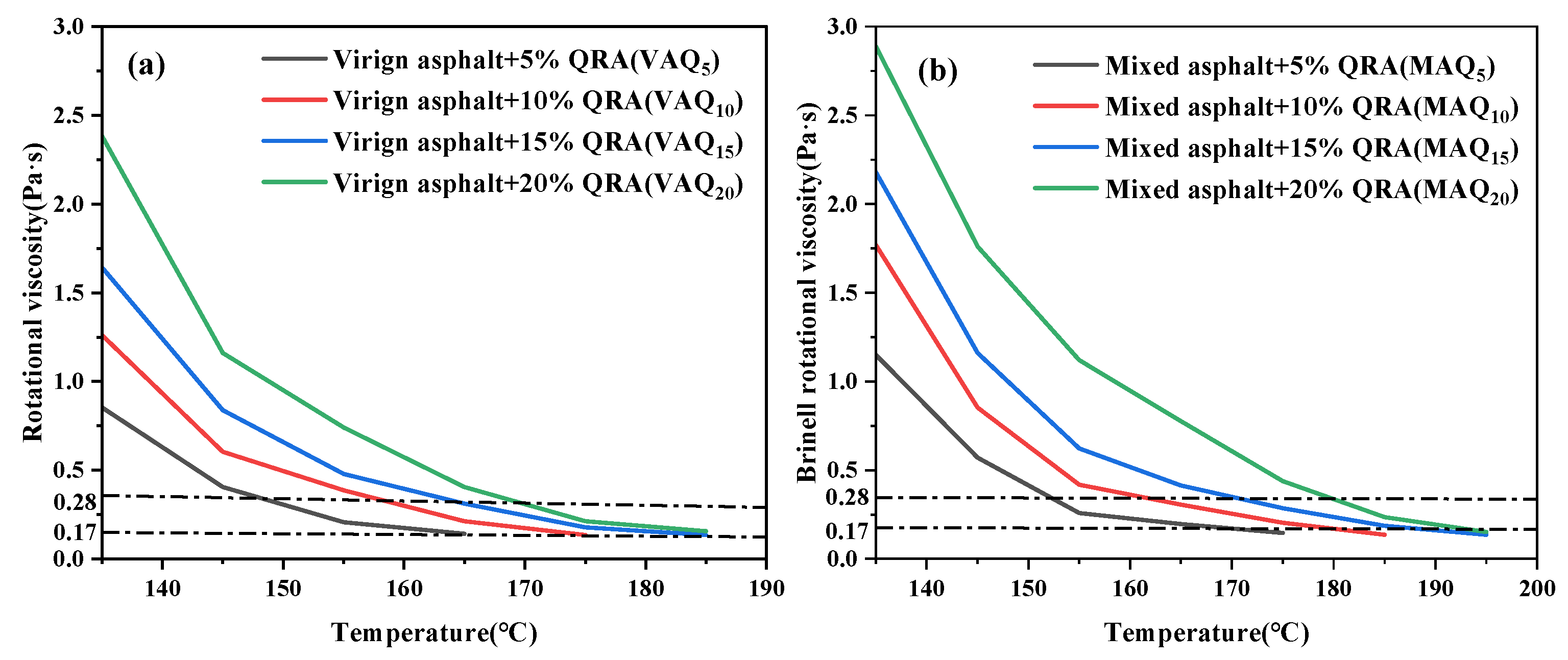
Apparent viscosity was measured using a Brookfield rotational viscometer according to ASTM D4402 [32] and AASHTO T 316 [33]. Tests were performed at 135–195 °C with 10 °C intervals and spindle speeds of 5–20 rpm. The results were used to assess binder flowability, construction workability, and dosage–temperature sensitivity for VAQ and MAQ binders containing 5%, 10%, 15%, and 20% QRA.
(5)
Fourier Transform Infrared (FTIR) Spectroscopy
The chemical characteristics of the binders were analyzed by FTIR in transmission mode over 4000–400 cm−1. Functional groups were identified from characteristic absorption bands, and the appearance of new bands or changes in peak position and intensity were used to distinguish physical blending from possible chemical interaction during modification.

2.3.2. Performance Testing of Plant-Mixed Hot Recycled Asphalt Mixtures

(1)
High-Temperature Rutting Test
Specimens were conditioned in environmental chambers at 60 °C for 5 h. Wheel-tracking tests were then conducted at the same temperatures under a 0.7 MPa load with a reciprocating wheel pass rate of 42 cycles/min. Dynamic stability [34] was calculated in accordance with JTGE20T0703–2019.
(2)
Low-Temperature Beam Bending Test
The cooled prismatic beam specimens were conditioned in a −15 °C water bath for 5 h. At the test temperature of −15 °C, a concentrated load was applied at mid-span at a constant loading rate of 50 mm/min until fracture. The mid-span deflection and the maximum load at failure were recorded, and the flexural tensile strength and ultimate bending strain were calculated in accordance with JTGE20T0703-2019.
(3)
Freeze–Thaw Splitting Test (TSR)
Freeze–thaw tensile strength was evaluated in accordance with JTGE20 T0702–2019 [34] using conditioned and unconditioned specimen sets after water-bath conditioning at 25 °C for at least 2 h. The indirect tensile test was then performed at a loading rate of 50 mm/min, and the tensile strength ratio (TSR) was calculated according to JTG E20 T0703–2019.
(4)
Immersion Marshall Test (RS)
Standard Marshall specimens were prepared using a Marshall compactor (SYD–0702, Shanghai Changji Geological Instrument Co., Ltd., Shanghai, China). One set was conditioned in a 60 °C water bath for 30 min and tested to obtain the Marshall stability (MS0). Another set was conditioned at 60 °C for 48 h and then tested to obtain the Marshall stability (MS1). The residual stability (RS) was calculated as the ratio MS1/MS0.
(5)
Dynamic Modulus Testing
Dynamic modulus was measured according to Chinese specification T0738–2019 [33] using standard cylindrical specimens (100 mm × 150 mm). Tests were conducted at 5, 20, 30, and 45 °C under a haversine load at frequencies from 0.1 to 20 Hz. To minimize experimental error, testing was performed from high to low temperature and from high to low frequency, as shown in Figure 7.

3. Results

3.1. Analysis of Binder Physical and Rheological Properties

3.1.1. Basic Physical Properties

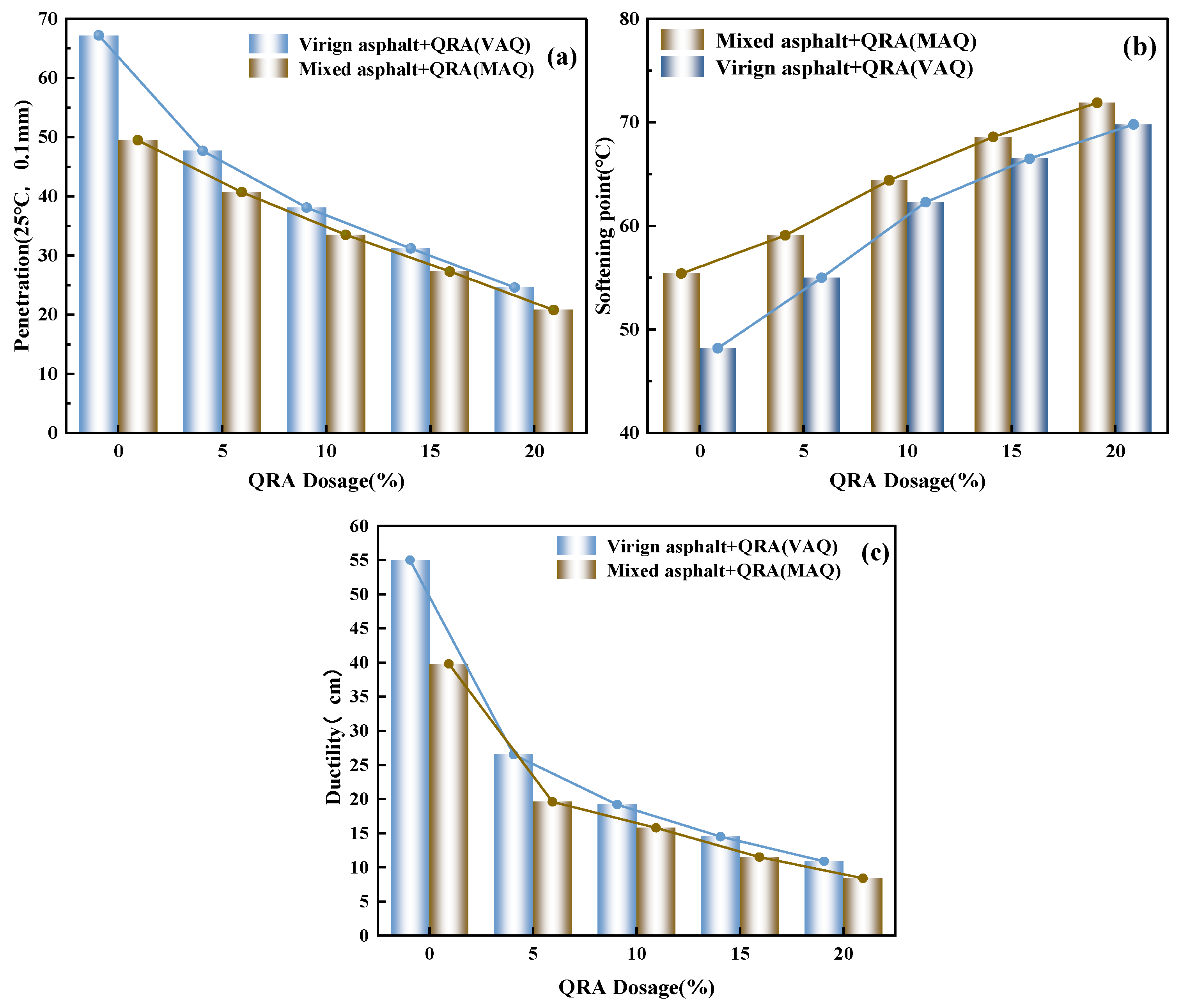
In Figure 8a, the addition of QRA significantly reduced the penetration of both binders, indicating increased binder stiffness and enhanced resistance to high-temperature deformation. As the dosage increased from 0% to 20%, the penetration of the VAQ binder decreased substantially from 67 to 24.6, exhibiting higher modification sensitivity compared to the MAQ binder (which decreased from 49.5 to 20.8). As shown in Figure 8b, the softening points of both binders increased with increasing QRA dosages. The softening point of the VAQ binder rose from 48.2 °C to 69.8 °C, an increase of 21.6 °C, while that of the MAQ binder rose from 55.4 °C to 71.9 °C, an increase of 16.5 °C. In Figure 8c, the ductility of both binders decreased as the QRA dosage increased. At identical QRA dosages, the VAQ binder consistently exhibited higher ductility than the MAQ binder.

3.1.2. Brookfield Rotational Viscosity

As shown in Figure 9, Brookfield rotational viscosity as a function of temperature indicates that MAQ consistently exhibits higher viscosity than VAQ, implying that the presence of RAP-aged fractions markedly increases binder consistency. With increasing QRA dosage, viscosity rises in both systems. The increase is more pronounced for the MAQ binder, which shows a steeper slope and suggests a synergistic thickening effect between QRA and the RAP-aged binder.
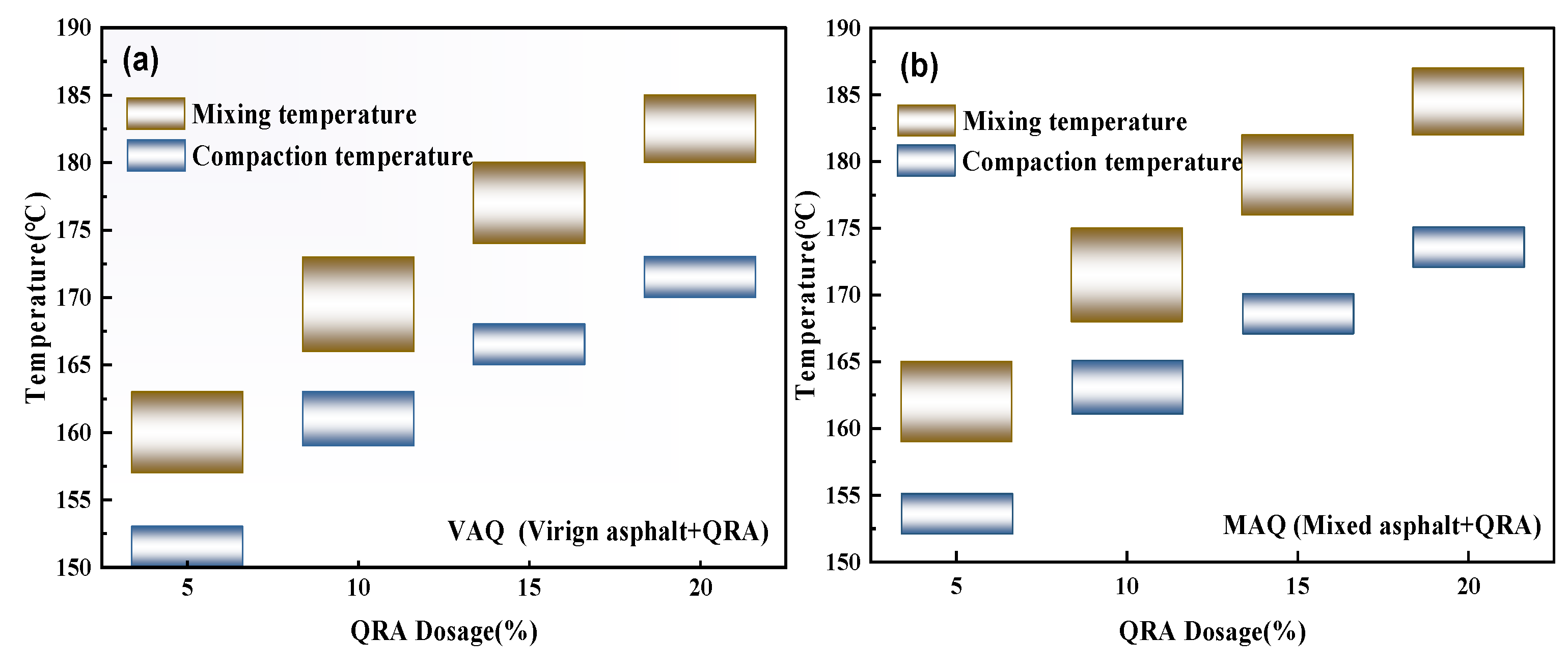
Regarding temperature susceptibility, as shown in Figure 10, the VAQ binder shows a steeper viscosity–temperature response, with viscosity decreasing more rapidly as temperature increases, which indicates better flowability. By contrast, the MAQ binder exhibits a more gradual decline, reflecting greater thermal stability but reduced fluidity during construction. Overall, the VAQ binder provides better low-temperature workability, whereas the MAQ binder, owing to its higher viscosity and lower temperature susceptibility, requires higher mixing temperatures to achieve acceptable workability.

3.1.3. High-Temperature Rheology

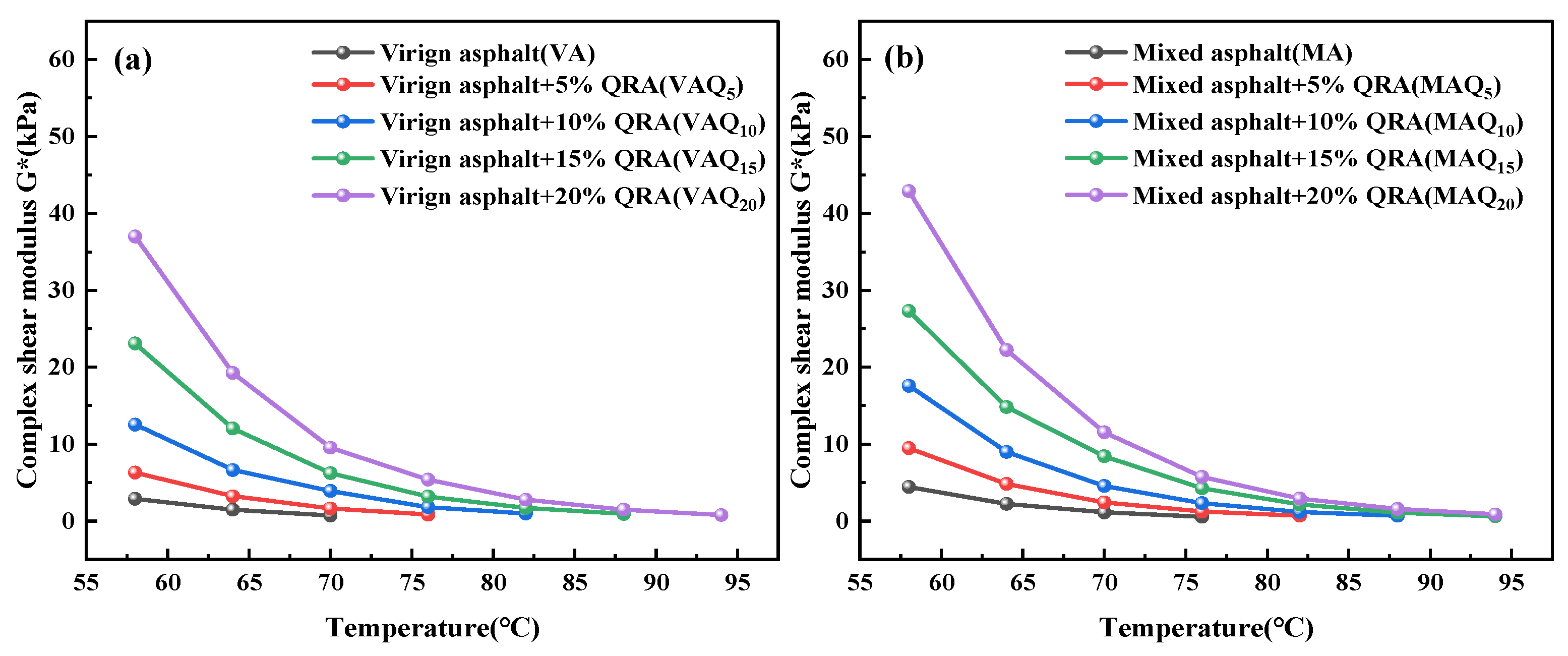
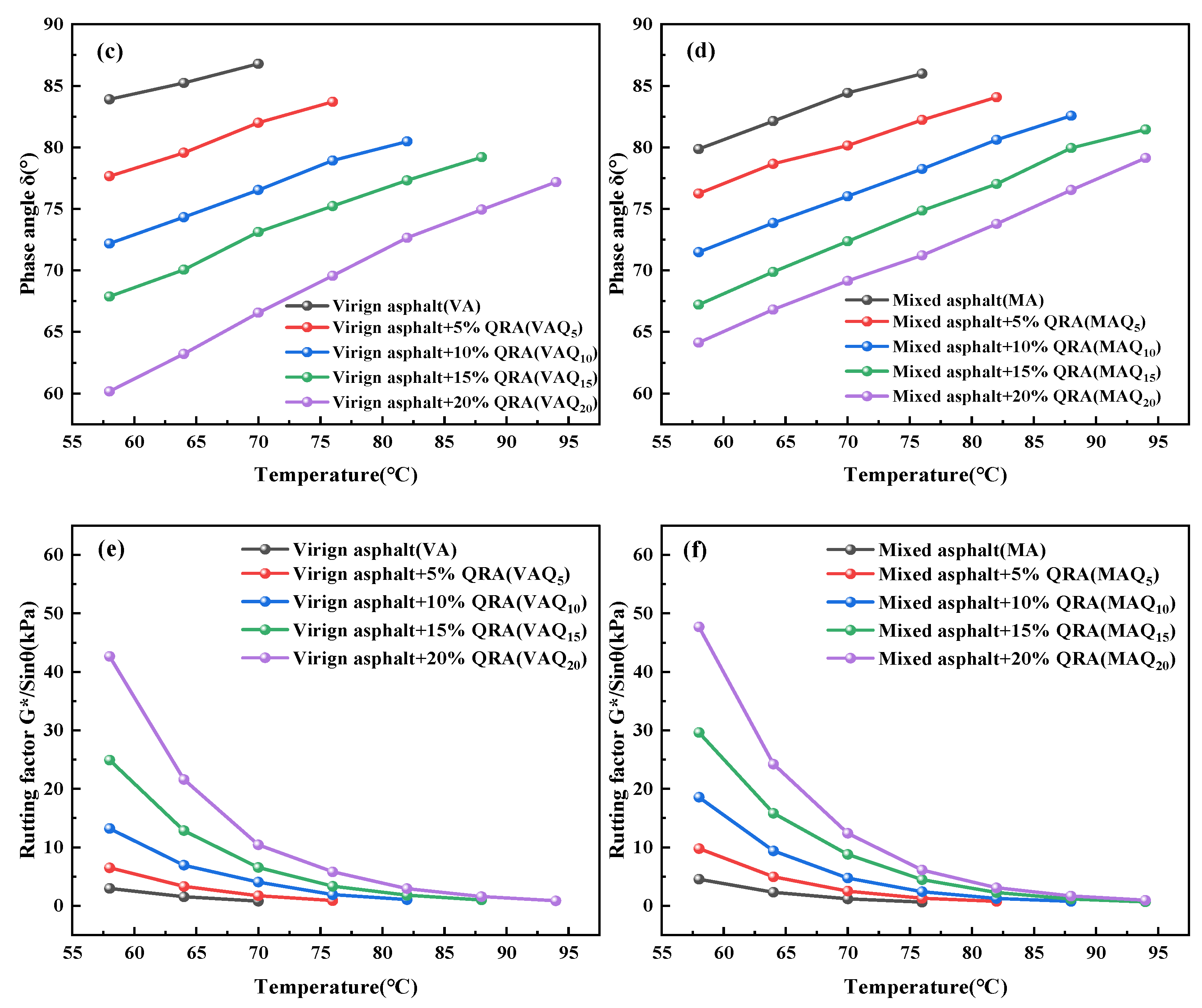
As shown in Figure 11a,b, the complex shear modulus (G) of both VAQ and MAQ binders decreases significantly with increasing temperature, indicating reduced resistance to deformation at elevated temperatures. Meanwhile, Figure 11c,d show that the phase angle (δ) increases for all binders as temperature rises, suggesting a greater viscous contribution and lower elasticity. As a result, the binder response gradually becomes more fluid-like. At a fixed temperature, increasing the QRA dosage causes a pronounced increase in G* and a progressive decrease in δ. These changes indicate a stiffer, more elastic-dominated response and a clear improvement in high-temperature resistance to permanent deformation. Among the binder systems, MAQ exhibits the strongest modification effect and achieves notable increases in G* even at low dosages.
Asphalt binders exhibit significant temperature sensitivity, with their viscoelastic properties evolving as temperature increases. As shown in Figure 11, rising temperatures enhance molecular motion and relax the internal structure, causing the complex modulus (G*) to decrease while the phase angle (δ) increases. Consequently, the material response transitions from elastic-dominant to viscous-dominant, making the binder more susceptible to permanent deformation and rutting at high temperatures. Figure 11a–d shows that for both VAQ and MAQ binders, G* decreases while δ increases with rising temperature, reflecting enhanced viscosity and diminished elasticity. At a constant temperature, increasing the QRA dosage results in a significant rise in G* and a continuous decrease in δ. This indicates increased material stiffness and a more dominant elastic response, thereby improving resistance to high-temperature deformation. Across all dosages, the MAQ binder exhibits higher G* values than the VAQ binder, demonstrating superior modification effects. The rutting factor (G*/sin δ) serves as an indicator for evaluating the high-temperature rutting resistance of binders; higher values imply stronger resistance to permanent deformation. As shown in Figure 11e,f, the G*/sin δ values for all binders decrease as temperature rises, with the rate of decrease slowing beyond 76 °C. However, the incorporation of QRA significantly increases these values. At identical QRA dosages, the G*/sin δ of the MAQ binder remains consistently higher than that of the VAQ binder, demonstrating superior high-temperature rutting resistance.

3.1.4. Low-Temperature Rheology

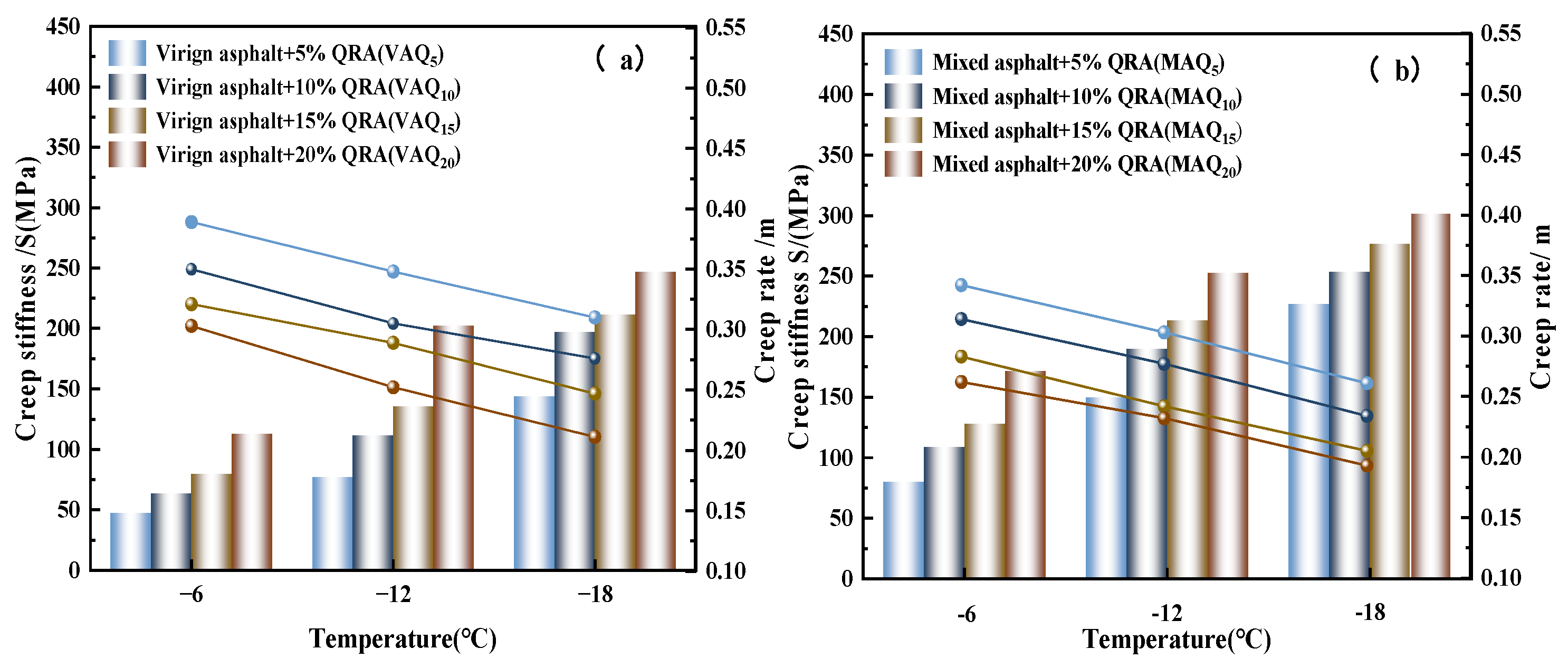
As shown in Figure 12, the bending beam rheometer (BBR) creep rate and stiffness (S) of both modified binders vary systematically with temperature. The creep rate indexes stress-relaxation capacity and reflects the binder’s ability to dissipate thermal stresses and mitigate cracking at low temperatures. By contrast, higher stiffness indicates greater brittleness and poorer crack resistance. For both systems, as temperature decreases, the creep rate decreases and stiffness increases. This pattern signifies increased rigidity and reduced elasticity, and therefore a stronger tendency toward low-temperature brittleness. In terms of low-temperature performance, both modified binders showed a monotonic decrease in the creep rate at 60 s and a marked increase in the stiffness modulus as the modifier content increased. These results indicate that, although the modifier enhances high-temperature properties, it concurrently reduces low-temperature flexibility to a degree that grows with dosage.
According to the test results, the MAQ binder exhibited higher creep stiffness than the VAQ binder under the same temperature and QRA dosage, suggesting higher rigidity. When the temperature is −18 °C, increasing the QRA content from 5% to 20% raised the stiffness from 143.63 MPa to 226.83 MPa for the VAQ and from 246.60 MPa to 302.35 MPa for the MAQ, corresponding to increases of 57.9% and 22.6%, respectively. When the temperature is −12 °C, as the dosage increases from 5% to 20%, the creep rate decreases from 0.36 to 0.25 for the VAQ binder and from 0.32 to 0.21 for the MAQ binder, with reductions of 30.6% and 34.4%, respectively.
At low QRA dosages, the addition of RAP-aged binder led to a pronounced increase in stiffness, indicating that a stiffer QRA–RAP network governed the overall mechanical response. This effect was more evident in the MAQ binder than in the VAQ binder. The curve of creep rate versus temperature became steeper, indicating greater low-temperature susceptibility and a faster loss of stress-relaxation capacity. In the presence of RAP-aged binder, the creep rate was generally lower over the tested temperature range. Furthermore, as the QRA dosage increased, the creep rate continued to decrease while the stiffness modulus increased, suggesting that the binder became progressively stiffer, exhibited lower stress-relaxation capacity, and showed increased brittleness.

3.1.5. Fourier Transform Infrared (FTIR) Spectroscopy

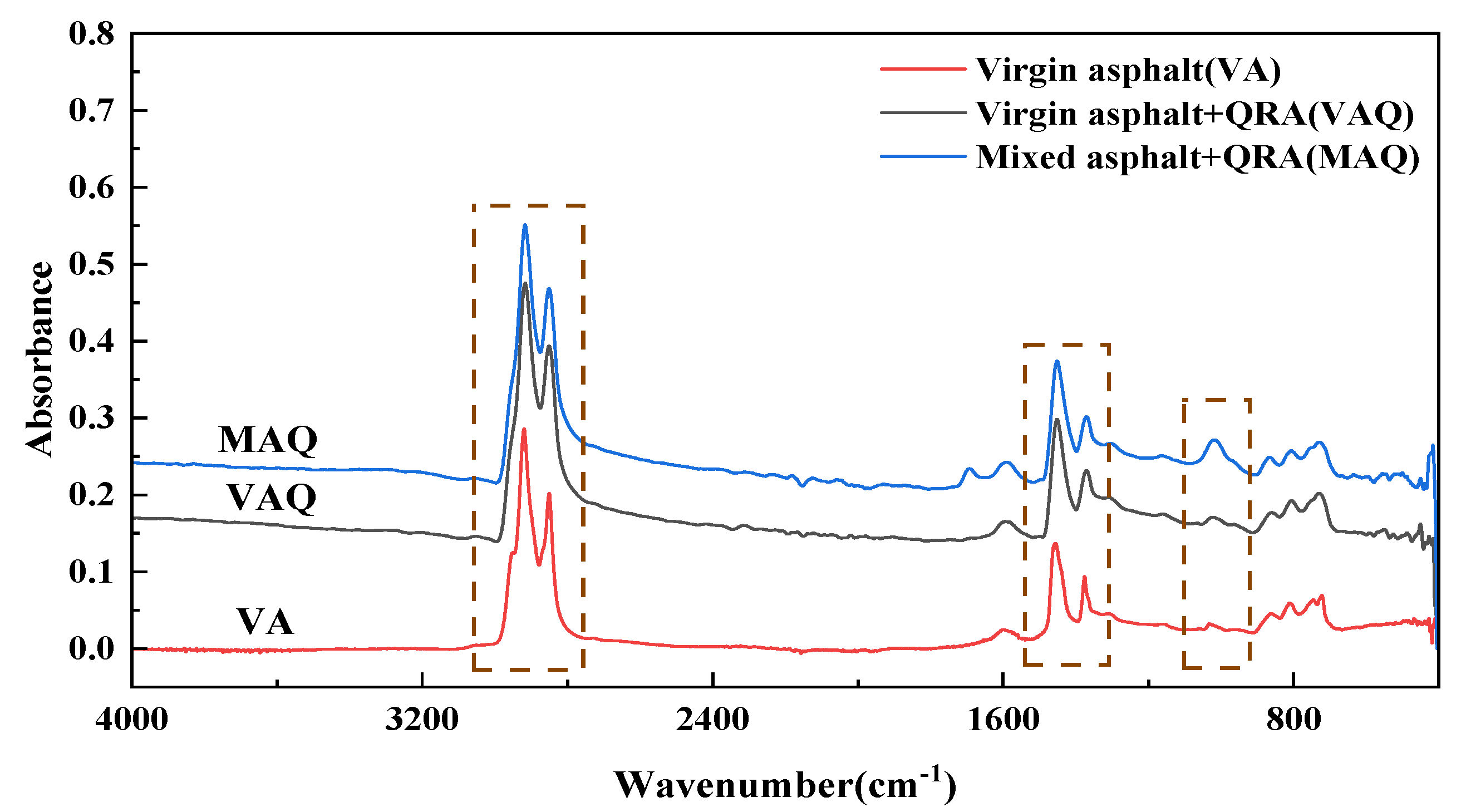
As shown in Figure 13, the 70# virgin asphalt binder exhibits two dominant absorption bands at 2922 and 2855 cm−1, corresponding to the asymmetric and symmetric stretching vibrations of methylene (CH2), which indicate the presence of long-chain aliphatic structures. A weak band near 1602 cm−1 was mainly attributed to the skeletal vibration of aromatic C=C structures. Since carbonyl absorption in oxidized asphalt binders is typically centered in the vicinity of 1700 cm−1, the previous assignment of the 1602 cm−1 band to carbonyl-containing species has been removed. In addition, the band at 1459 cm−1 is associated with CH2 scissoring and CH3 asymmetric deformation, the band at 1376 cm−1 with CH3 symmetric bending, and the band at 724 cm−1 with the rocking vibration of long-chain CH2 groups.
The characteristic absorption bands of the virgin, VAQ, and MAQ binders appeared at essentially the same wavenumbers, and no new absorption bands or significant peak shifts were observed. This indicates that QRA modification and subsequent blending with RAP-aged binder did not generate new functional groups or alter the fundamental chemical structure of the binder. In this respect, the interaction of QRA with the virgin and aged binders is considered to be dominated by physical blending and compositional superposition.
To further improve the rigor of the FTIR interpretation, a semi-quantitative comparison was conducted by normalizing the characteristic bands to the 1459 cm−1 band. The relative contribution of the aromatic band at 1602 cm−1 increased progressively from the virgin binder to the QRA-modified binder and further to the composite binder containing RAP-aged asphalt, whereas the normalized aliphatic stretching response at 2922 and 2855 cm−1 showed an overall decline. Meanwhile, the absorption response near 1030 cm−1 became more pronounced in the composite binder, indicating an enrichment of relatively polar structural components. These results suggest that QRA and RAP-aged binder mainly induced a redistribution of aromatic, polar, and aliphatic fractions within the binder system, which is consistent with the observed increase in stiffness and high-temperature rutting resistance of the MAQ binder.

3.1.6. Performance Comparison of Binders

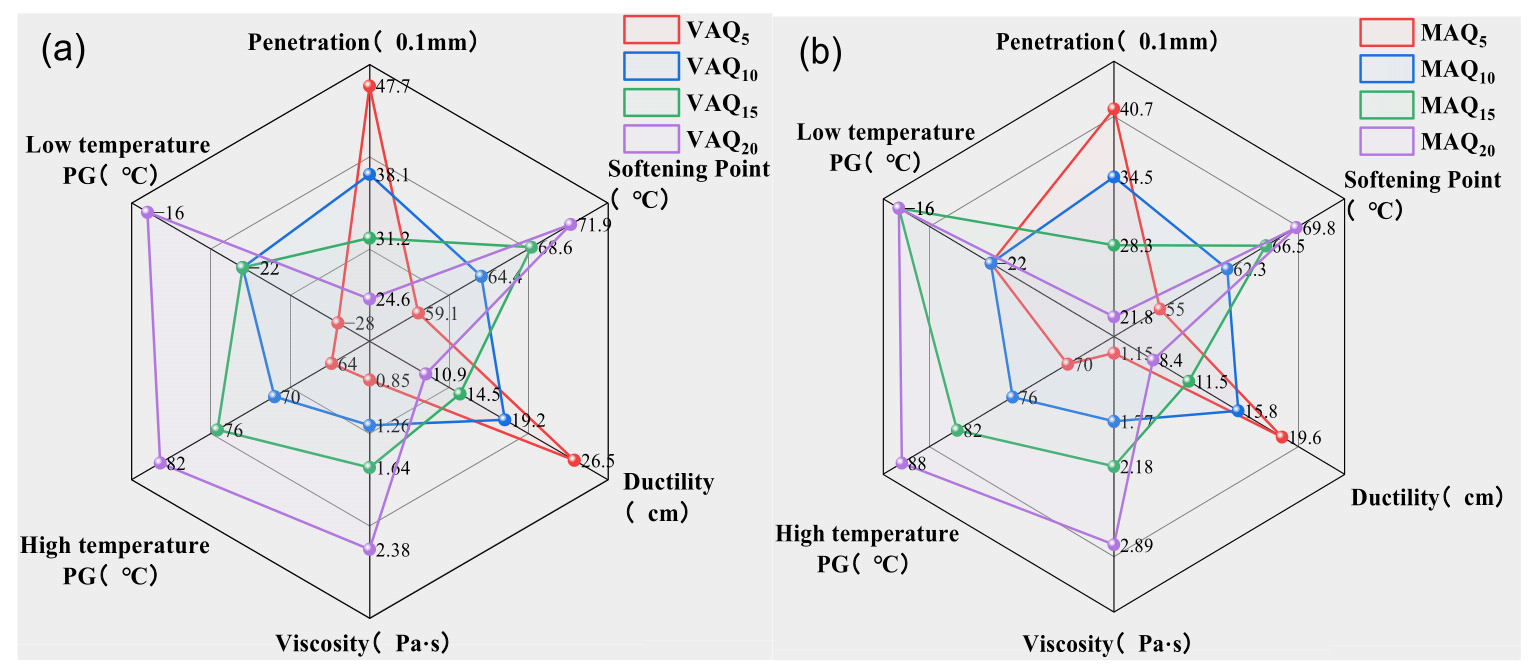
As shown in Figure 14, a comparative assessment of VAQ and MAQ binders indicates that incorporating QRA markedly enhances high-temperature performance. With increasing dosage, penetration decreases, the softening point increases, and the high-temperature PG rating rises, indicating greater stiffness and stronger resistance to permanent deformation. The combined action of QRA and RAP-aged binder further increases these metrics. In Turpan, where the regional requirement is PG 76–22, the MAQ binder meets this grade at a QRA dosage of 10%. Overall, the MAQ binder shows stronger resistance to high-temperature deformation, although its workability during construction and resistance to low-temperature cracking are comparatively lower.

3.2. Performance Analysis of Hot Recycled Asphalt Mixtures

3.2.1. High-Temperature Stability

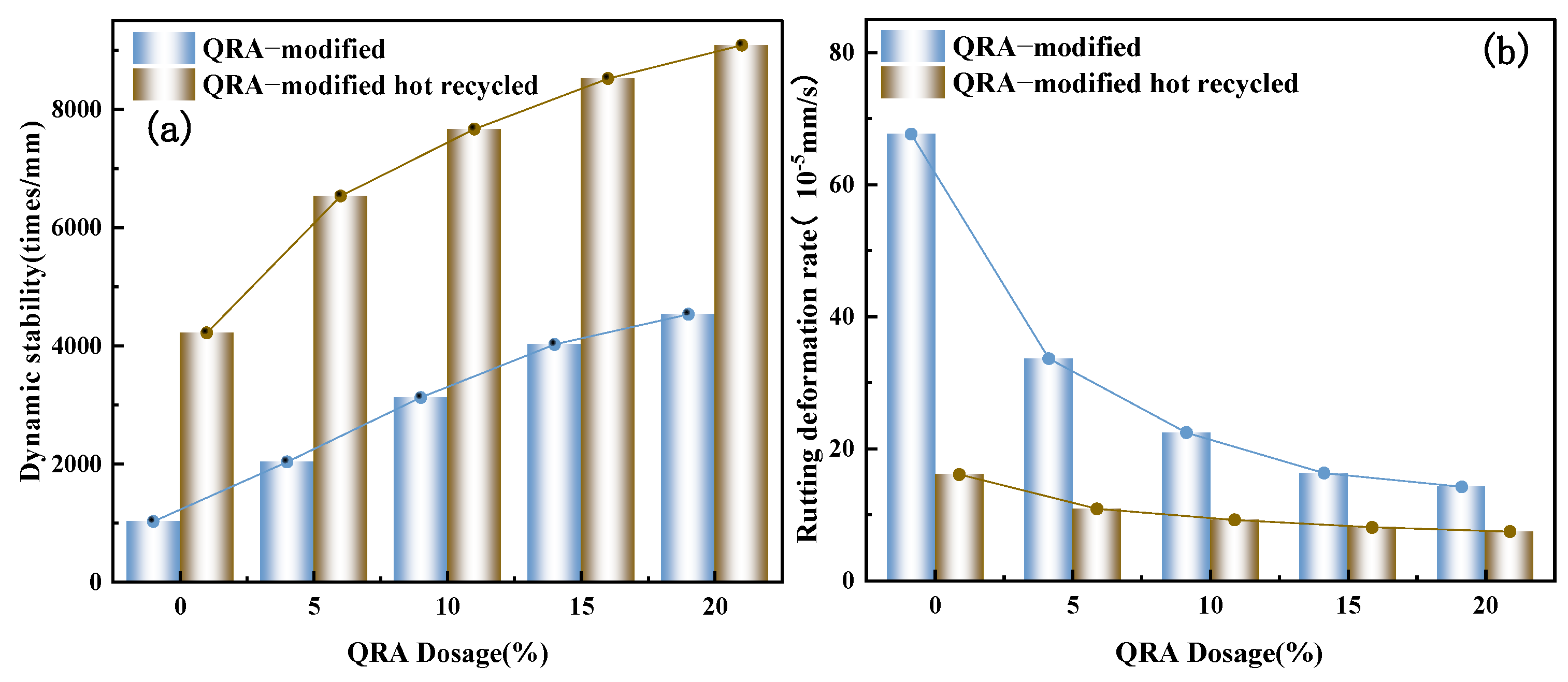
As shown in Figure 15, dynamic stability (DS) increased, and the rutting rate decreased with increasing QRA dosage. For the QRA-modified asphalt mixture with no RAP, as QRA content rose from 0% to 20%, DS increased from 1026 passes·mm−1 to 4533 passes·mm−1 (a 342% increase), while the rutting rate decreased from 67.67 × 10⁻⁵ mm·s−1 to 14.22 × 10⁻⁵ mm·s−1 (a 79.0% reduction). For the QRA-modified hot recycled mixture with 50% RAP in mass, DS increased from 4219 passes·mm−1 to 9085 passes·mm−1 (a 115% increase), and the rutting rate decreased from 16.11 × 10⁻⁵ mm·s−1 to 7.44 × 10⁻⁵ mm·s−1 (a 53.8% reduction). These results indicate that the addition of QRA effectively enhances rutting resistance and high-temperature stability.
At identical QRA dosages, the QRA-modified hot recycled mixture exhibited higher dynamic stability (DS) than the QRA-modified mixture. This improvement was attributed to the presence of RAP-aged binder, which increased binder hardness, raised the stiffness modulus, and reduced flowability. Consequently, the mixture developed greater structural stability and resistance to deformation, thereby enhancing its high-temperature performance.

3.2.2. Low-Temperature Cracking Resistance

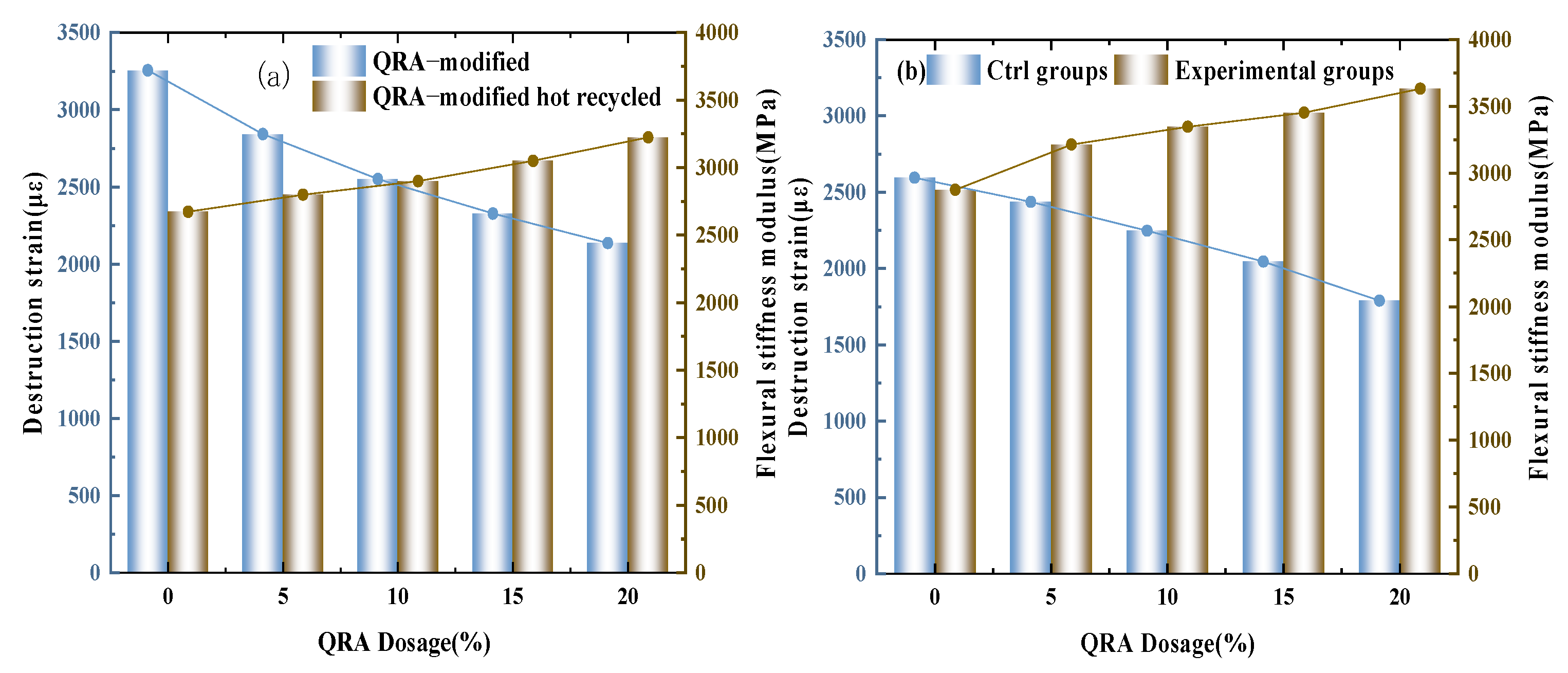
As shown in Figure 16, the flexural stiffness modulus of the asphalt mixtures increases, and the failure strain decreases with increasing QRA dosage. This indicates that incorporating rock asphalt stiffens and embrittles the mixtures, making them more susceptible to low-temperature cracking under load. For the QRA-modified mixture, as the QRA dosage increased from 0% to 20%, the failure strain decreased from 3250 µε to 2245 µε, a reduction of 30.9%, while the stiffness modulus increased from 2523 MPa to 3256 MPa, an increase of 29.0%. For the QRA-modified hot recycled mixture, the failure strain decreased from 2536 µε to 1753 µε, a reduction of 30.9%, and the stiffness modulus increased from 2836 MPa to 3620 MPa, an increase of 29.0%.
At identical QRA dosages, the QRA-modified hot recycled mixture exhibits a higher stiffness modulus and a lower failure strain than the control group. This outcome is attributed to the presence of RAP-aged binder, which increases binder hardness, reduces viscoelastic flow, and raises stiffness, thereby weakening resistance to low-temperature shrinkage stresses and increasing susceptibility to cracking. Nevertheless, 15% QRA of RAM still satisfied the applicable low-temperature cracking specification requirements.

3.2.3. Moisture Susceptibility

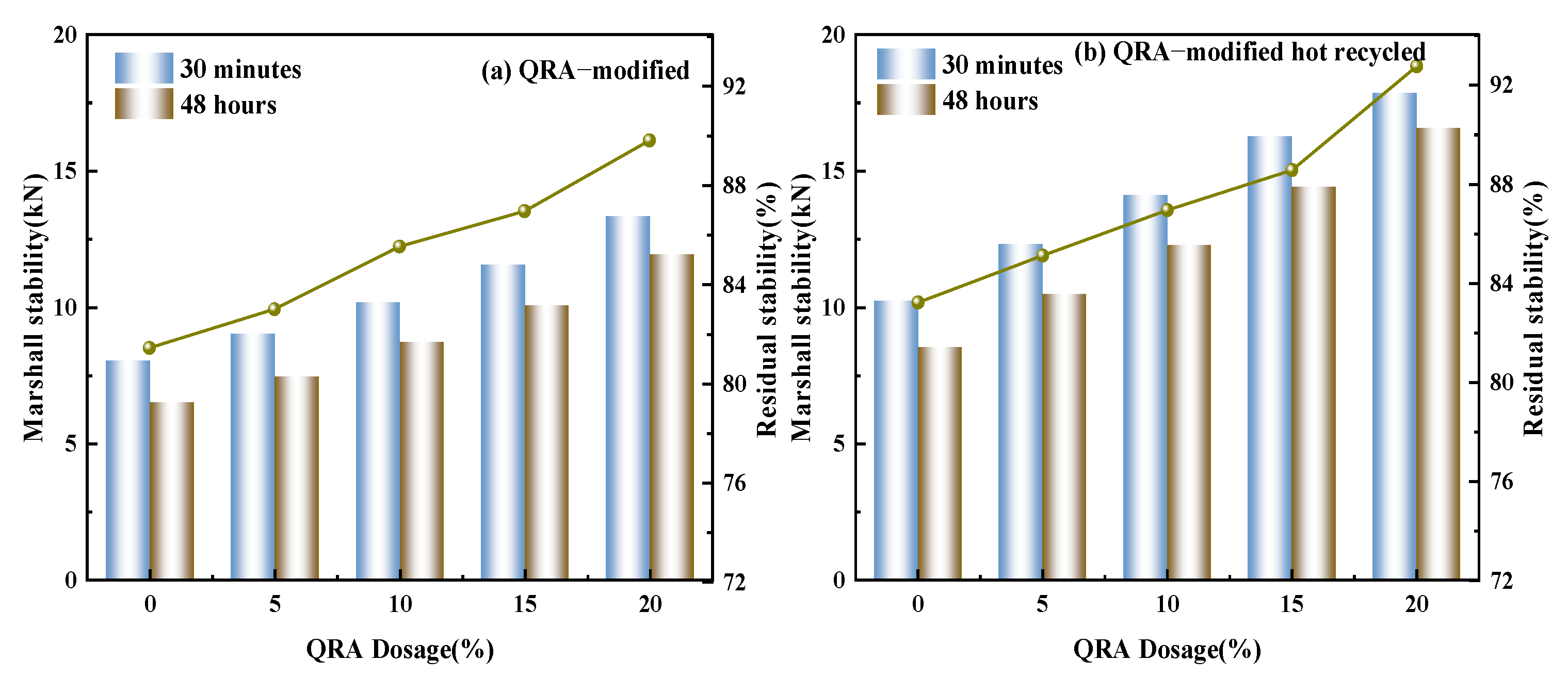
Figure 17 shows that with increasing QRA dosage, both the mixtures exhibited a clear improvement in Marshall stability and residual stability. In the QRA-modified mixture, Marshall stability increased from 6.52 kN to 16.57 kN, and residual stability rose from 81.45% to 92.76%. In the QRA-modified hot recycled mixture, Marshall stability increased from 8.53 kN to 11.95 kN, and residual stability rose from 83.23% to 89.82%, indicating that the incorporation of QRA enhanced the stability of both asphalt mixtures.
These performance improvements are attributed to the higher asphaltene content of QRA, which increases binder consistency, and to possible interactions between QRA and RAP-aged binder that enhance the moisture damage resistance of the recycled asphalt mixtures. Nevertheless, at the same dosage, the hot recycled mixture exhibited lower residual stability, although both mixtures showed a clear, monotonic improvement in Marshall stability and residual stability with increasing QRA dosage.
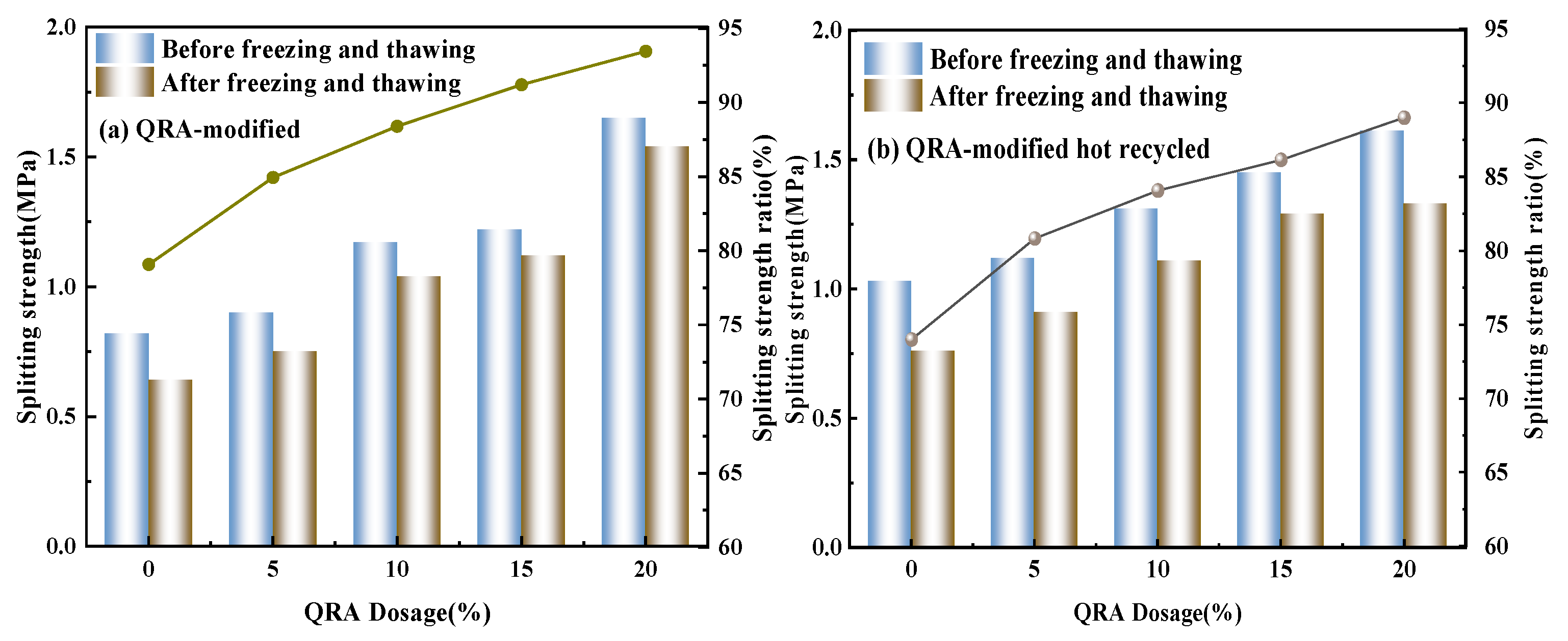
As shown in Figure 18, the effects of varying QRA dosage on the freeze–thaw tensile strength ratio (TSR) were evaluated for both the mixtures. In the QRA-modified mixture, the indirect tensile strength (ITS) increased from 0.64 MPa to 1.54 MPa, while TSR improved from 79.07% to 93.45%, suggesting that the incorporation of rock asphalt effectively enhanced the moisture resistance. In the hot recycled mixture, ITS increased from 0.76 MPa to 1.33 MPa and TSR from 74.00% to 89.07%, demonstrating a similar trend, though with relatively lower absolute values. Overall, increasing the QRA dosage markedly increased ITS, accompanied by a parallel rise in TSR.
However, when the RAP-aged binder was present, the mixtures exhibited lower moisture resistance at all dosages. At identical QRA dosages, the RAP-containing mixtures showed lower ITS and TSR than the control mixtures. This trend was consistent with the higher asphaltene content and greater stiffness of the QRA–RAP binder, which together increased brittleness at low temperatures, weakened aggregate–binder adhesion, and thereby reduced resistance to moisture damage during freeze–thaw cycling.

3.2.4. Dynamic Modulus Analysis

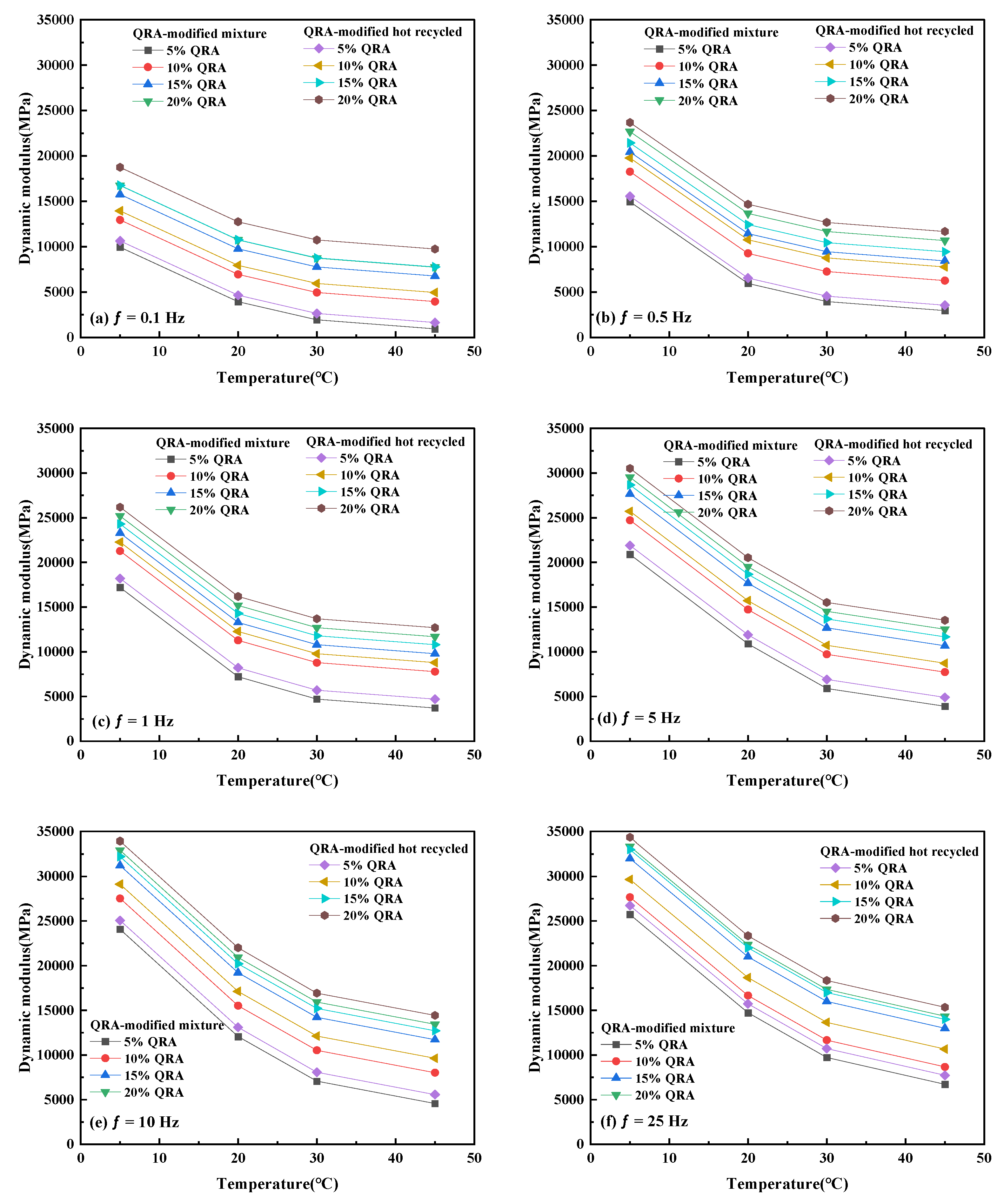
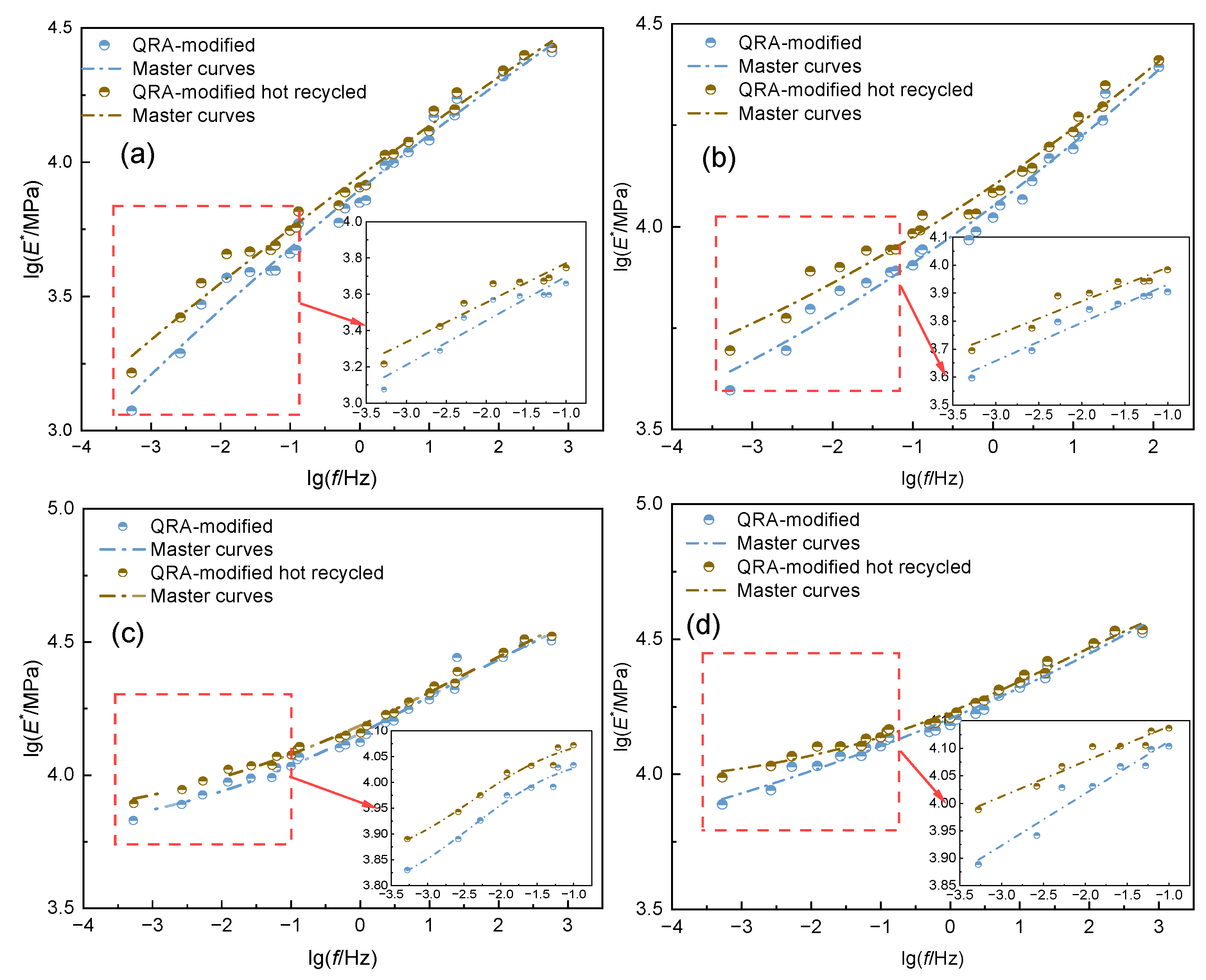
In dynamic modulus characterization, asphalt mixtures behave as viscoelastic materials and are subjected in service to dynamic traffic loading. The stress state and time-dependent response of these specimens, therefore, differ substantially from those observed under conventional quasi-static testing conditions. As shown in Figure 18, at a fixed loading frequency, the dynamic modulus (|E*|) increases with QRA dosage. This indicates that mixtures with higher QRA content distribute cyclic axial loads more effectively and exhibit greater resistance to deformation. Conversely, at a given frequency, |E*| decreases as temperature rises. This trend is consistent with the viscoelastic behavior of asphalt mixtures: the binder softens, the elastic contribution diminishes, and strain under load increases, leading to a progressive reduction in |E*|.
As shown in Figure 19, the dynamic modulus |E*| (dynamic modulus) decreases with increasing temperature for both QRA-modified mixture (0% RAP) and QRA-modified hot recycled mixture (50% RAP) at QRA dosages of 5–20%. With increasing frequency, the difference between two mixtures becomes increasingly evident in the low-temperature range of 5–20 °C. In addition, temperature sensitivity is lower at low frequencies and higher at high frequencies. At 20 °C and 10 Hz, the |E*| of QRA-modified mixture increases from 12,068 MPa to 20,832 MPa, a rise of 72.6%, whereas that of the hot recycled mixture increases from 13,102 MPa to 22,016 MPa, a rise of 68.0%.
The data indicate that QRA has a stronger effect on the dynamic modulus (|E*|) of QRA-modified mixture than on hot recycled, although the latter maintains a higher modulus at all dosages. This difference reflects binder microstructure and composition. In the QRA-modified mixture system using the VAQ binder, QRA can interact more fully with unaged light fractions, reconstructing and strengthening the colloidal network. As a result, the mixture shows greater sensitivity to modification and larger gains in |E*|. By contrast, the hot recycled system is already enriched in asphaltenes due to RAP-induced aging, leaving a smaller margin for further stiffening. Even so, the combined action of QRA and RAP binder provides additional stiffening and improves high-temperature resistance to deformation.
Asphalt mixtures are viscoelastic and exhibit temperature and frequency-dependent mechanical behavior. Accordingly, dynamic modulus master curves (|E*| versus reduced frequency) can be used to predict long-term (low-frequency) and short-term (high-frequency) responses of recycled mixtures. A sigmoidal function is commonly used to fit the master curve. As shown in Figure 20, across the reduced-frequency spectrum and at identical QRA dosages, QRA-modified recycled mixtures display a higher dynamic modulus than QRA-modified virgin mixtures. At the low end of the reduced-frequency spectrum, which represents high-temperature behavior, the results indicate improved resistance to deformation and rutting for the QRA-modified recycled mixtures.
Dynamic modulus master curves were constructed based on the time–temperature superposition principle. A reference temperature of 20 °C was selected, and the measured frequencies at each temperature were shifted horizontally to obtain the reduced frequency, f r   =   f · a T , where aT is the shift factor relative to the reference temperature. The temperature dependence of the shift factor was described using the [WLF/Arrhenius] model. The master curve was then fitted using a sigmoidal function:
log | E * | = δ + α 1 + e x p [ β + γ log f r ]
where δ, α, β, and γ are regression coefficients. The fitting parameters and goodness-of-fit values for each mixture are summarized in Table 5.
As shown in Figure 20, for both mixtures at QRA dosages of 5%, 10%, 15%, and 20%, the dynamic modulus (|E*|) increases with loading frequency ƒ. In the master curves, hot recycled generally lies above QRA-modified. The separation is pronounced in the low- to mid-frequency band (−3.5 ≤ lg ƒ ≤ 0) and narrows in the mid to high-frequency band (0 < lg ƒ ≤ 3), with the hot recycled remaining slightly higher. This pattern indicates superior durability under prolonged high-temperature loading. As the QRA dosage increases, the gap between the two mixtures’ master curves progressively diminishes. At 20% QRA, RAM exhibits the highest values of log |E*| across the full frequency range, with the QRA-modified mixture second.
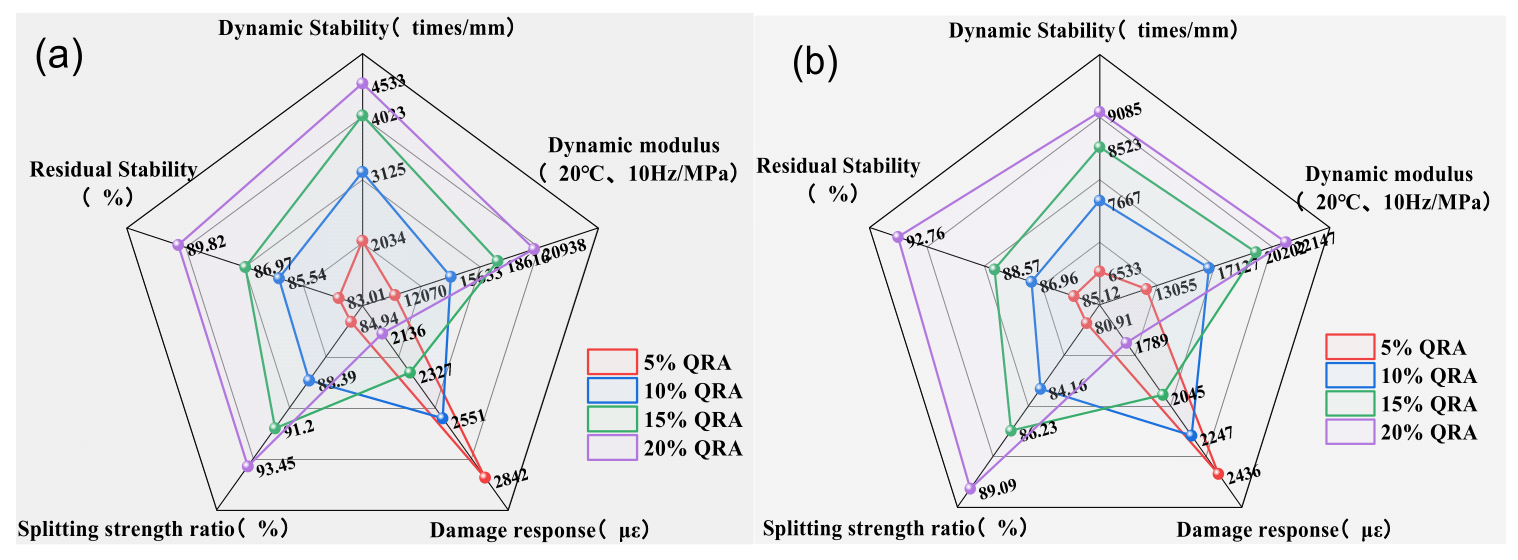
As shown in Figure 21, as QRA dosage increases, high-temperature stability improves. The dynamic stability (DS) of the hot recycled mixture increases from 4533 passes·mm−1 to 9085 passes·mm−1. For low-temperature cracking resistance, failure strain decreases from 2436 µε to 1789 µε for the hot recycled mixture. In terms of moisture resistance, for the hot recycled mixture, residual Marshall stability (RS) increases from 85.12% to 92.76%, while the freeze–thaw tensile strength ratio (TSR) increases from 80.91% to 89.09%. At 20 °C and 10 Hz, the dynamic modulus increases from 13,102 to 22,016 MPa for the hot recycled mixture. Taken together, provided that specification limits are satisfied, an optimal QRA dosage of 15% is recommended.

4. Conclusions

(1)
Increasing QRA content significantly enhanced the binder’s high-temperature performance. The softening point, rutting parameter (G*/sin δ), and PG all increased, reflecting higher stiffness and stronger resistance to permanent deformation. When combined with RAP-aged binder, the improvement was cumulative, and in Turpan (Xinjiang), the MAQ binder reached the regional PG 76–22 grade at a 10% QRA content. However, the gains in high-temperature performance were accompanied by reduced workability and slightly lower low-temperature cracking resistance.
(2)
With increasing QRA content, asphalt mixture dynamic stability increased, whereas low-temperature failure strain decreased, indicating a stiffness–ductility trade-off. Under the condition that the low-temperature specification was still satisfied, 15% QRA showed a relatively favorable balance between enhanced high-temperature stability and acceptable cracking resistance at the mixture level. Dynamic stability increased by 115% and failure strain decreased by 30.8% versus the reference, consistent with cumulative reinforcement from RAP-aged binder and QRA.
(3)
With increasing QRA content, residual Marshall stability and TSR increased, indicating improved moisture resistance. Relative to unmodified references, TSR rose by 15.70% in the virgin-aggregate mixture (0% RAP) and by 14.38% in the recycled mixture (50% RAP). Nevertheless, the TSR of the recycled mixture remained 1.32% lower than the virgin-aggregate mixture, indicating that QRA mitigates, but does not eliminate, RAP-induced moisture susceptibility.
(4)
Based on a multi-criteria evaluation incorporating the regional PG requirement (PG 76–22) and the overall performance of the recycled mixture, 10% QRA was identified as the recommended dosage for the MAQ system with 50% RAP. Although 15% QRA provided further gains in stiffness and rutting resistance, 10% QRA already satisfied the regional binder grade requirement and the relevant mixture performance criteria, while better limiting the loss of low-temperature cracking resistance and construction workability. A design incorporating 10% QRA and 50% RAP thus offers a practical reference for durable pavements in severe climates such as Turpan, Xinjiang. Future studies may further examine the field applicability and long-term durability of QRA-modified high-RAP mixtures under more complex service conditions.

Author Contributions

Conceptualization, J.Z.; methodology, Z.D.; investigation, Z.G.; resources, J.G.; writing—original draft preparation, J.Z.; writing—review and editing, J.Z.; supervision, L.S.; project administration, J.G.; funding acquisition, J.G., J.Z. and L.S. All authors have read and agreed to the published version of the manuscript.

Funding

The Science and Technology Research and Development Project of Xinjiang Transportation Investment Group Co., Ltd. (XJJTZKX-FWCG-202411-0737); The Science and Technology Project of the Xinjiang Uygur Autonomous Region Transportation Industry in 2024 (2024-ZD-002); Tianshan Leading Talents in Scientific and Technological Innovation (2022TSYCLJ0045); National Natural Science Foundation of China (52578520).

Data Availability Statement

Data will be made available on request.

Acknowledgments

The authors gratefully acknowledge the engineers and master’s students for their valuable technical support throughout the field and laboratory phases of this study.

Conflicts of Interest

Authors Jiangnan Zhao and Zhikai Guan were employed by the company Xinjiang Transportation Investment Construction Management Co., Ltd. The remaining authors declare that the research was conducted in the absence of any commercial or financial relationships that could be construed as a potential conflict of interest. This manuscript has not been published previously by any of the authors. It was first submitted to Results in Engineering and is not being considered for publication in any other journals at this time. Please let us know if you need further information.

References

  1. Xiao, F.; Xu, L.; Zhao, Z.; Hou, X. Recent applications and developments of reclaimed asphalt pavement in China, 2010–2021. Sustain. Mater. Technol. 2023, 37, e00697. [Google Scholar] [CrossRef] [Scilit]
  2. Dong, C.; Feng, L.; Xu, Y. Performance zoning of asphalt pavement and performance grade (PG) of asphalt binder in karamay: A case study of Xinjiang, China. Sustainability 2023, 15, 9742. [Google Scholar] [CrossRef] [Scilit]
  3. Song, L.; Xie, X.; Tu, P.; Fan, J.; Gao, J. Study on aging mechanism and high-temperature rheological properties of low-grade hard asphalt. Materials 2023, 16, 5641. [Google Scholar] [CrossRef] [Scilit] [PubMed]
  4. Song, Y.; Lu, Z.; Feng, J.; Wu, S.; Wan, P.; Gong, X.; Xu, H.; Xie, J. Investigation on the performance, environmental and economic benefits of coarse-grained recycled asphalt mixture with high RAP content. Constr. Build. Mater. 2026, 510, 145211. [Google Scholar] [CrossRef] [Scilit]
  5. Jahanbakhsh, H.; Karimi, M.M.; Naseri, H.; Nejad, F.M. Sustainable asphalt concrete containing high reclaimed asphalt pavements and recycling agents: Performance assessment, cost analysis, and environmental impact. J. Clean. Prod. 2020, 244, 118837. [Google Scholar] [CrossRef] [Scilit]
  6. Zhang, G.; Wu, H.; Li, P.; Qiu, J.; Nian, T. Pavement Properties and Predictive Durability Analysis of Asphalt Mixtures. Polymers 2022, 14, 803. [Google Scholar] [CrossRef] [Scilit]
  7. Zhao, X.; Shen, A.; Ma, B. Temperature Adaptability of Asphalt Pavement to High Temperatures and Significant Temperature Differences. Adv. Mater. Sci. Eng. 2018, 2018, 9436321. [Google Scholar] [CrossRef] [Scilit]
  8. Ren, G.; Shen, A.; Wu, H.; Pan, H.; Deng, S.; Wang, L. Mechanical response of flexible asphalt pavement under large temperature difference and temperatures during four seasons. Constr. Build. Mater. 2024, 437, 136967. [Google Scholar] [CrossRef] [Scilit]
  9. Liu, F.; Yang, S.; Sun, Q. Performance evaluation of Xinjiang Tianzhize 90A road petroleum asphalt and mixture. Constr. Build. Mater. 2023, 363, 129810. [Google Scholar] [CrossRef] [Scilit]
  10. Song, L.; Hou, L.; Tu, P.; Fan, P.; Gao, J. Study on UV aging characteristics of low-grade asphalt in the desert climate. Mater. Res. Express 2023, 10, 095308. [Google Scholar] [CrossRef] [Scilit]
  11. Xia, C.; Xiao, G.; Wang, D.; Hou, W.; Lu, W.; Lv, S.; Zhao, T. Fatigue damage behavior of aged high modulus asphalt mixture under small-scale accelerated loading. Constr. Build. Mater. 2025, 486, 142031. [Google Scholar] [CrossRef] [Scilit]
  12. Abdelmageed, M.A.; Dhasmana, H.; Mousa, M.R.; Hassan, M.; Mohammad, L.; Cooper, S., III. Enhancing the Sustainability and Cost-Effectiveness of High-Modulus Asphalt Concrete Mixes with Crumb Rubber. J. Transp. Eng. Part B Pavements 2026, 152, 04025064. [Google Scholar] [CrossRef] [Scilit]
  13. Xie, X.; Zhang, Y.; Li, G.; Liu, C.; SiMa, X.; Liu, C.; Si, B.; He, Y.; Shao, J. Study on the composition and properties of EME-SBS-Nano ZnO high modulus asphalt material. Sci. Rep. 2024, 14, 23826. [Google Scholar] [CrossRef] [Scilit] [PubMed]
  14. Yang, X.; Li, S.; Dou, H.; Yang, W.; Jia, X.; Dai, J.; Liang, J. Study on properties and reaction mechanism of waste cooking oil-microwave activated crumb rubber/PPA composite modified asphalt. Constr. Build. Mater. 2025, 503, 144516. [Google Scholar] [CrossRef] [Scilit]
  15. Kołodziej, K.; Bichajło, L.; Siwowski, T. The Influence of Zero Shear Viscosity of TLA-Modified Binder and Mastic Composition on the Permanent Deformation Resistance of Mastic Asphalt Mixture. Materials 2021, 14, 5167. [Google Scholar] [CrossRef] [Scilit]
  16. Amini, A.; Riahi, M.T.M. Effectiveness of combining gilsonite and vacuum tower bottoms in enhancing the properties of recycled binder with high RAB content. Case Stud. Constr. Mater. 2025, 22, e04398. [Google Scholar] [CrossRef] [Scilit]
  17. Zuluaga-Astudillo, D.A.; Rondón-Quintana, H.A.; Zafra-Mejía, C.A. Mechanical Performance of Gilsonite Modified Asphalt Mixture Containing Recycled Concrete Aggregate. Appl. Sci. 2021, 11, 4409. [Google Scholar] [CrossRef] [Scilit]
  18. Anupam, K.; Akinmade, D.; Kasbergen, C.; Erkens, S.; Adebiyi, F. A state-of-the-art review of Natural bitumen in pavement: Underlining challenges and the way forward. J. Clean. Prod. 2023, 382, 134957. [Google Scholar] [CrossRef] [Scilit]
  19. Xiong, L.; Liu, K.; Kadhim, H.A.; Niu, D.; Gao, Y.; Liu, X. Comparative analysis of the fatigue characterisation of natural rock asphalt/SBS composite modified asphalt binders using time sweep test and linear amplitude sweep test. Constr. Build. Mater. 2025, 494, 143315. [Google Scholar] [CrossRef] [Scilit]
  20. Ghani, U.; Zamin, B.; Tariq Bashir, M.; Ahmad, M.; Sabri, M.M.S.; Keawsawasvong, S. Comprehensive Study on the Performance of Waste HDPE and LDPE Modified Asphalt Binders for Construction of Asphalt Pavements Application. Polymers 2022, 14, 3673. [Google Scholar] [CrossRef] [Scilit]
  21. Gao, J.; Xu, Y.; Gao, C.; Tao, M.; Song, L.; Yao, Y. Evaluation of polyethylene (PE) modified asphalt prepared by different treatment methods: LDPE powder, LDPE + EVA blend, and maleic anhydride grafted PE. Chem. Eng. Sci. 2026, 321, 122848. [Google Scholar] [CrossRef] [Scilit]
  22. Pasetto, M.; Baliello, A.; Pasquini, E.; Poulikakos, L. Dry Addition of Recycled Waste Polyethylene in Asphalt Mixtures: A Laboratory Study. Materials 2022, 15, 4739. [Google Scholar] [CrossRef] [Scilit] [PubMed]
  23. Li, L.; He, Z.; Liu, W.; Jiang, J.; Hu, C. Modification Mechanism and Performance of Qingchuan Rock Asphalt–Modified Asphalt. J. Test. Eval. 2018, 46, 20160347. [Google Scholar] [CrossRef] [Scilit]
  24. Khanghahi, S.H.; Irdmousa, P.R.; Rezaee, S.; Zakavi, S.J.; Shokorlou, Y.M. Fracture toughness of Gilsonite modified HMA mixtures under mixed mode I/II loading at different temperature conditions. Theor. Appl. Fract. Mech. 2023, 127, 104004. [Google Scholar] [CrossRef] [Scilit]
  25. Morea, F.; Zerbino, R. Incorporation of synthetic macrofibres in Warm Mix Asphalt. Road Mater. Pavement Des. 2020, 21, 542–556. [Google Scholar] [CrossRef] [Scilit]
  26. Yang, R.; Chen, H.; Yang, J. Effect of Epoxy Resin on the Properties of Recycled Asphalt. J. Wuhan Univ. Technol.-Mater. Sci. Ed. 2024, 39, 1149–1155. [Google Scholar] [CrossRef] [Scilit]
  27. Rahman, T.; Widyatmoko, I.; Rachman, A.; Nurhidayati, Z. Buton Rock Asphalt (BRA/Asbuton): A systematic review of the characteristics, performance, sustainability, and future research directions. Road Mater. Pavement Des. 2025, 1–50. [Google Scholar] [CrossRef] [Scilit]
  28. Zhao, Y.; Guo, R.; Sheng, C.; Wen, L.; Chen, G.; Zong, J. Evaluation of high-proportion RAP mixtures modified with diatomite-rock asphalt composite through gray correlational analysis: Insights into pavement performance. J. Clean. Prod. 2025, 522, 146185. [Google Scholar] [CrossRef] [Scilit]
  29. Amini, A.; Akrami, M. Improving the performance and rheological properties of RAP binders using gilsonite/nanoclay and softer binder. Constr. Build. Mater. 2023, 400, 132797. [Google Scholar] [CrossRef] [Scilit]
  30. ASTM D1856-21; Standard Test Method for Recovery of Asphalt from Solution by Abson Method. ASTM International: West Conshohocken, PA, USA, 2021.
  31. AASHTO T 313-19; Standard Method of Test for Determining the Flexural Creep Stiffness of Asphalt Binder Using the Bending Beam Rheometer (BBR). American Association of State Highway and Transportation Officials: Washington, DC, USA, 2019.
  32. ASTM D4402; Standard Test Method for Viscosity Determination of Asphalt at Elevated Temperatures Using a Rotational Viscometer. ASTM International: West Conshohocken, PA, USA, 2012.
  33. AASHTO T 316-22; Standard Method of Test for Viscosity Determination of Asphalt Binder Using Rotational Viscometer. American Association of State Highway and Transportation Officials: Washington, DC, USA, 2022.
  34. JTG E20-2019; Standard Test Methods of Bitumen and Bituminous Mixtures for Highway Engineering. China Communications Press: Beijing, China, 2019.
Figure 1. Road-surface temperature map of Xinjiang, China [2].
Buildings 16 01236 g001
Figure 2. Study workflow.
Buildings 16 01236 g002
Figure 3. Qingchuan rock asphalt (QRA).
Buildings 16 01236 g003
Figure 4. RAP aggregate gradation and asphalt binder content.
Buildings 16 01236 g004
Figure 5. Binder preparation process of VAQ (QRA-modified base asphalt) and MAQ (QRA + base asphalt + RAP asphalt).
Buildings 16 01236 g005
Figure 6. AC-20 gradation curve of hot recycled asphalt mixture.
Buildings 16 01236 g006
Figure 7. Performance test of hot recycled asphalt mixture.
Buildings 16 01236 g007
Figure 8. Basic physical properties of VAQ and MAQ binders: (a) penetration; (b) softening point; (c) ductility.
Buildings 16 01236 g008
Figure 9. Viscosity temperature curves of (a) VAQ and (b) MAQ binders.
Buildings 16 01236 g009
Figure 10. Mixing and compaction temperatures for (a) VAQ and (b) MAQ binders.
Buildings 16 01236 g010
Figure 11. Rheological parameters of VAQ and MAQ: (a,b) complex shear modulus (G*), (c,d) phase angle (δ), and (e,f) rutting parameter (G*/sin δ).
Buildings 16 01236 g011aBuildings 16 01236 g011b
Figure 12. BBR creep rate (m) and creep stiffness (S) of (a) VAQ and (b) MAQ binders.
Buildings 16 01236 g012
Figure 13. FTIR spectra of VAQ and MAQ binders.
Buildings 16 01236 g013
Figure 14. Physical and rheological performance indices of (a) VAQ and (b) MAQ binders.
Buildings 16 01236 g014
Figure 15. Dynamic stability (a) and rutting rate (b) of QRA-modified asphalt mixture with 0% RAP and QRA-modified hot recycled asphalt mixture with 50% RAP.
Buildings 16 01236 g015
Figure 16. Failure strain (a) and (b) flexural stiffness modulus of QRA-modified asphalt mixture with 0% RAP, and QRA-modified hot recycled asphalt mixture with 50% RAP.
Buildings 16 01236 g016
Figure 17. Residual Marshall stability (RS) of asphalt mixtures. (a) QRA-modified asphalt mixture with 0% RAP; (b) QRA-modified hot recycled asphalt mixture with 50% RAP.
Buildings 16 01236 g017
Figure 18. Freeze−thaw tensile strength ratio (TSR) of asphalt mixtures. (a) QRA−modified asphalt mixture with 0% RAP; (b) QRA−modified hot recycled asphalt mixture with 50% RAP.
Buildings 16 01236 g018
Figure 19. Dynamic modulus of asphalt mixtures at different frequencies: (a) 0.1 Hz, (b) 0.5 Hz, (c) 1 Hz, (d) 5 Hz, (e) 10 Hz, and (f) 25 Hz.
Buildings 16 01236 g019
Figure 20. Dynamic modulus master curves of asphalt mixtures containing (a) 5%, (b) 10%, (c) 15%, and (d) 20% QRA.
Buildings 16 01236 g020
Figure 21. Pavement performance and mechanical property metrics for (a) (QRA-modified mixture), and (b) QRA-modified hot recycled mixtures.
Buildings 16 01236 g021
Table 1. Main performance indices of 70# paving-grade pssetroleum asphalt.
Test ItemsUnitRequirementsTest Results
Penetration (100 g, 5 s, 25 °C)0.1 mm60–8065.3
Softening point (R&B)°C≥4649.5
Ductility (15 °C)cm≥20>100
Dynamic Viscosity (135 °C)Pa·s≤3.02.356
Asphalt Performance Grade (PG)//68–28
Table 2. Basic technical specifications of Qingchuan rock asphalt (QRA).
Experimental IndicatorsAsphalt ContentAsh ContentMoisture Content
Experimental results86.513.50.2
Indicator requirements/<15<2
Table 3. Main performance indices of limestone aggregate.
Test ItemsUnitRequirementTest Results
0.075 mm0–8 mm8–12 mm12–22 mm
Aggregate Crushing Value%≤28///15.3
Flat and Elongated Particle Content%≤20//17.211.1
Apparent Specific Gravity/≥2.52.7232.7042.8912.757
Bulk Specific Gravity////2.752.724
Water Absorption%≤3.0//1.40.47
Table 4. Main performance indices of aged asphalt binder.
MaterialsTest ItemsUnitTest Results
Aged AsphaltPenetration (100 g, 5 s, 25 °C)0.1 mm29.6
Softening point (R&B)°C63.6
Ductility (15 °C)cm15.35
Asphalt Performance GradePG82–16
Table 5. Summary of sigmoidal fitting parameters for dynamic modulus master curves.
Mixture TypeQRA Dosageδαβγ
0% RAP52.00002.6518−0.8571−0.4579
102.00003.5000−0.3246−0.1704
153.66371.09210.3121−0.5406
203.41931.69060.1999−0.2975
50% RAP52.00002.8114−0.7479−0.366
102.18453.5000−0.1664−0.1595
153.76120.98430.3986−0.5687
203.90790.83630.5561−0.5794
Mixture TypeQRA DosagelogαT (5 °C)logαT (20 °C)logαT (30 °C)logαT (45 °C)
0% RAP51.70140−0.8778−1.5157
101.85250−0.9903−1.6239
151.5740−0.8162−1.3516
201.60170−0.8106−1.3045
50% RAP51.67110−0.8658−1.4523
101.74990−0.9211−1.4931
151.57160−0.8167−1.3548
201.63970−0.8771−1.4686
Disclaimer/Publisher’s Note: The statements, opinions and data contained in all publications are solely those of the individual author(s) and contributor(s) and not of MDPI and/or the editor(s). MDPI and/or the editor(s) disclaim responsibility for any injury to people or property resulting from any ideas, methods, instructions or products referred to in the content.