1. Introduction
Prefabricated reinforced concrete (RC) shear wall structures have attracted increasing attention due to their advantages in industrialized production, shortened construction duration, and enhanced quality controllability, making them a key structural form for promoting sustainable and industrialized construction [
1,
2]. However, the introduction of joints and interfaces in prefabricated structures fundamentally changes the force transfer mechanisms and failure modes compared with monolithic cast-in-place systems [
3,
4,
5,
6]. Consequently, the seismic performance of prefabricated shear walls is highly dependent on the connection details and the integrity of the overall structural system. Therefore, systematic investigations into the connection mechanisms, seismic behaviors, and numerical modeling approaches of prefabricated shear wall systems are of critical importance for their application in regions with high seismic intensity.
Considerable experimental research has been conducted on the seismic performance of prefabricated shear wall connections. Jiang et al. [
7,
8] performed extensive tests on grouted lap splice connections using embedded sleeves and proposed rational recommendations for anchorage and lap splice lengths based on observed failure modes and influencing factors. Qian et al. [
9] conducted quasi-static tests on prefabricated shear walls with grouted anchorage connections and demonstrated that, although the failure modes differed from cast-in-place specimens, the connections effectively transferred reinforcement stresses and exhibited satisfactory seismic performance. Ma et al. [
10] proposed a grouted spiral confinement lap (GSCL) connection, which significantly reduced lap splice length while maintaining favorable seismic behavior. These studies indicate that properly designed connections can ensure reliable seismic performance of prefabricated shear wall systems.
Full-scale and sub-assembly experimental investigations further revealed the global seismic response characteristics of prefabricated shear wall structures. Pekau [
11] reported that vertical joints had a limited influence on the global seismic response and their behavior was comparable to monolithic walls with similar fundamental periods, arguing that the design of vertical joints should primarily focus on shear capacity. Qian et al. [
12] performed pseudo-dynamic tests on a three-story full-scale prefabricated shear wall structure with grouted sleeve connections and clarified the damage evolution process under different seismic intensity levels. Wang et al. [
13] demonstrated that coupling beams and dry connections can act as primary and secondary energy dissipation mechanisms, respectively, and that the overall seismic performance can be comparable to cast-in-place systems. Other studies also confirmed that innovative anchorage and interlocking connection forms can effectively transmit loads and provide favorable ductility and seismic resilience.
In terms of numerical investigations, extensive studies have been conducted to explore the mechanical behavior of connection interfaces in prefabricated shear walls, the seismic response of structural systems, and the sensitivity of key influencing parameters [
14,
15,
16,
17]. Cao et al. [
18] developed a finite element model of mortise–tenon shear walls using ABAQUS and employed a Coulomb friction model to simulate the contact behavior at the interface between new and existing concrete which accurately captured the interfacial failure characteristics, with numerical results showing good agreement with experimental observations. Lin et al. [
19] established finite element models of prefabricated monolithic toothed-groove shear walls and proposed a cohesive–friction mixed model to effectively reproduce the failure mechanisms of toothed joints, revealing a nonlinear trend in load-bearing capacity that first increased and then decreased with the axial compression ratio. Furthermore, Liu [
20] performed static pushover analyses of large-span shear wall structural layouts under rare earthquake scenarios using Midas, demonstrating that an appropriate shear wall layout ratio plays a critical role in enhancing the seismic performance of structures. Afzali et al. [
21] conducted nonlinear time history analyses on six high-rise reinforced concrete buildings using OpenSees and found that low-frequency ground motions had the most significant influence on inter-story drift and story shear responses, with story shear demand increasing with building height. Ahmad et al. [
22] carried out comparative studies on high-rise buildings with and without shear walls using ETABS, indicating that shear wall systems significantly improve base shear capacity and global stiffness while effectively reducing inter-story drift ratios and floor displacements, highlighting the superior seismic performance of shear wall systems under rare earthquake excitations.
Conventional cast-in-place shear walls rely on monolithic concrete casting to ensure structural continuity, and their ductility development and failure mechanisms under strong earthquakes have been extensively validated, forming a mature seismic design framework [
23,
24]. In contrast, prefabricated shear walls inevitably introduce interfaces where concrete casting sequences, surface treatment methods, reinforcement detailing, and load transfer paths differ significantly from cast-in-place systems, leading to more complex seismic behavior [
25,
26,
27]. Post-earthquake investigations have shown that joint regions are often the primary failure locations, characterized by sliding, cracking, debonding, and local crushing [
28,
29,
30,
31]. Therefore, achieving “equivalent monolithic behavior” at joint regions remains a fundamental challenge for prefabricated shear wall systems.
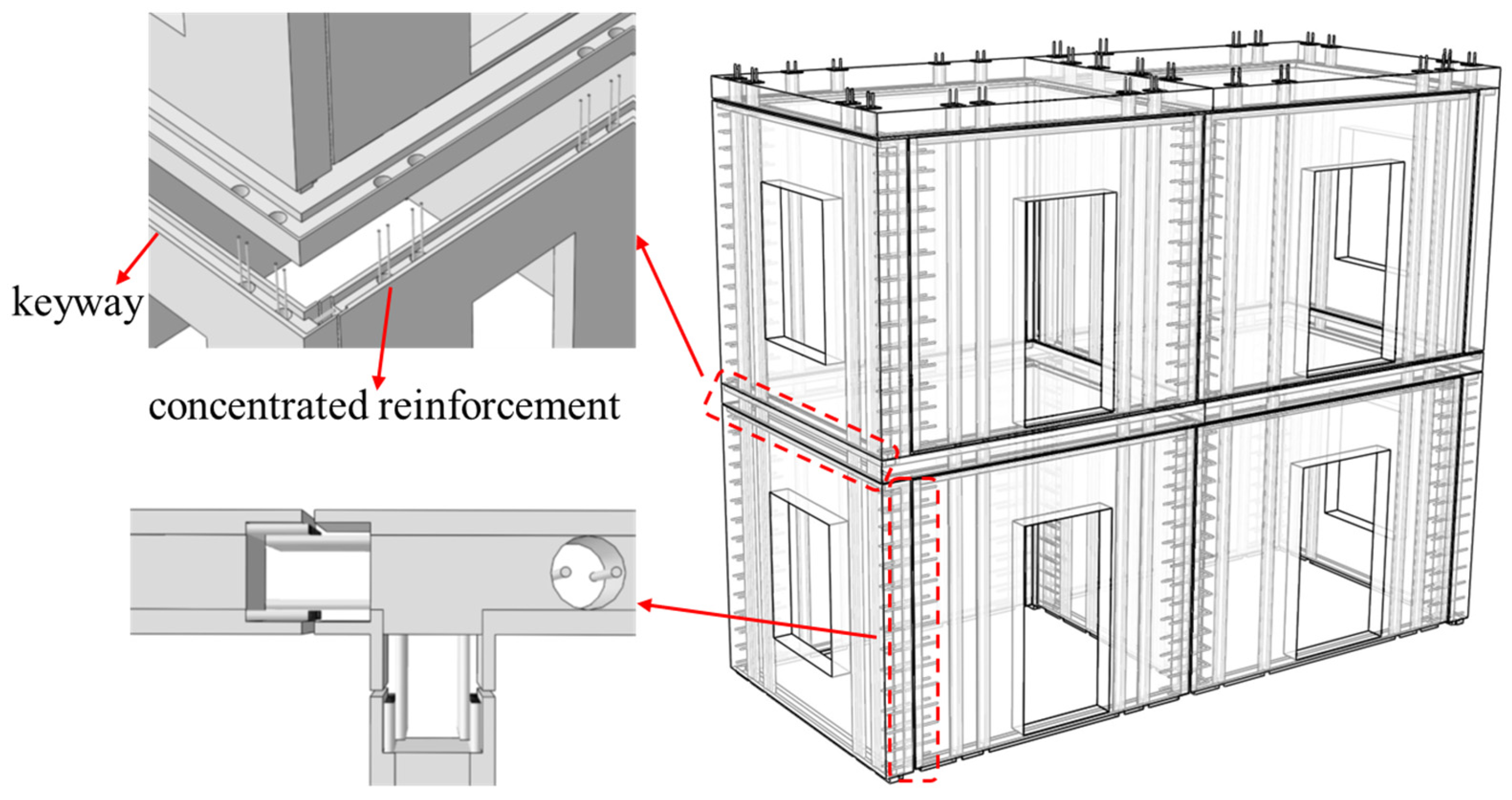
To address these challenges, a novel fully prefabricated shear wall system incorporating keyway interlocking joints and concentrated reinforcement connections is developed by the authors’ research group [
32,
33,
34], as shown in
Figure 1. In this system, horizontal joints are designed with keyway configurations combined with inserted dowel bars, while vertical joints adopt keyway interlocking or ultra-high-performance concrete (UHPC) lap-spliced reinforcement details. The keyway connection introduces a mechanical interlocking mechanism that significantly enhances shear transfer capacity and slip resistance at joint interfaces, mitigating bond degradation under cyclic loading. Meanwhile, the concentrated reinforcement strategy aims to control plastic hinge formation by concentrating longitudinal reinforcement at wall boundaries or critical regions, thereby improving ductility and promoting flexure-dominated failure mechanisms. From a construction perspective, the proposed system offers notable advantages, including simplified assembly procedures, elimination of formwork in keyway regions, improved tolerance to construction inaccuracies, and enhanced construction efficiency. Compared with conventional grouted sleeve systems, which require high installation precision and may face limitations in high seismic intensity regions, the proposed connection system provides a more robust and construction-friendly alternative with significant engineering application potential.
Although considerable progress has been made in the development of prefabricated shear wall systems, several challenges remain in understanding their seismic behavior. Previous studies have investigated various connection types and their structural behavior under cyclic loading [
35,
36]. These studies primarily focused on component-level experimental investigations, while the influence of such connection mechanisms on global structural performance and probabilistic seismic risk has received relatively limited attention.
Therefore, the main objective of this study is to investigate the seismic behavior of a prefabricated shear wall system incorporating keyway interlocking joints and concentrated reinforcement connections, with particular emphasis on its system-level nonlinear response and seismic fragility characteristics. Compared with previous studies, the novelty of this work lies in: (1) proposing a mechanical interlocking connection configuration for fully prefabricated shear walls; (2) establishing validated nonlinear finite element models capable of capturing the global hysteretic response of the system; (3) evaluating the system-level seismic performance through incremental dynamic analysis and fragility assessment of a multi-story prefabricated shear wall building. Through these analyses, this study aims to provide additional insights into the seismic performance of prefabricated shear wall structures and contribute to improving their analytical evaluation and design in earthquake-prone regions.
2. Finite Element Modeling of Shear Walls
2.1. Finite Element Model Development
Two wall specimens adopted in this study were derived from Ref. [
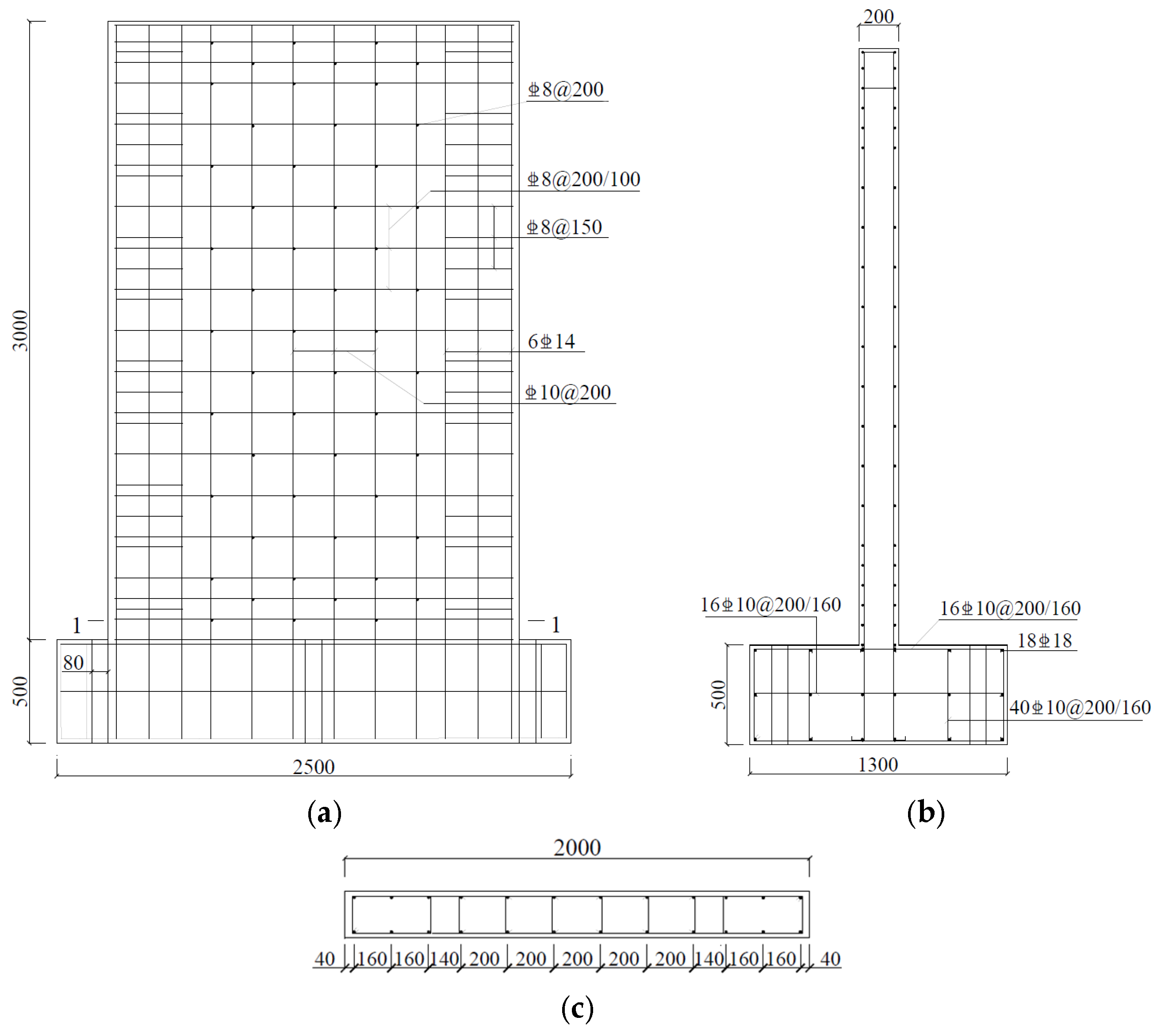
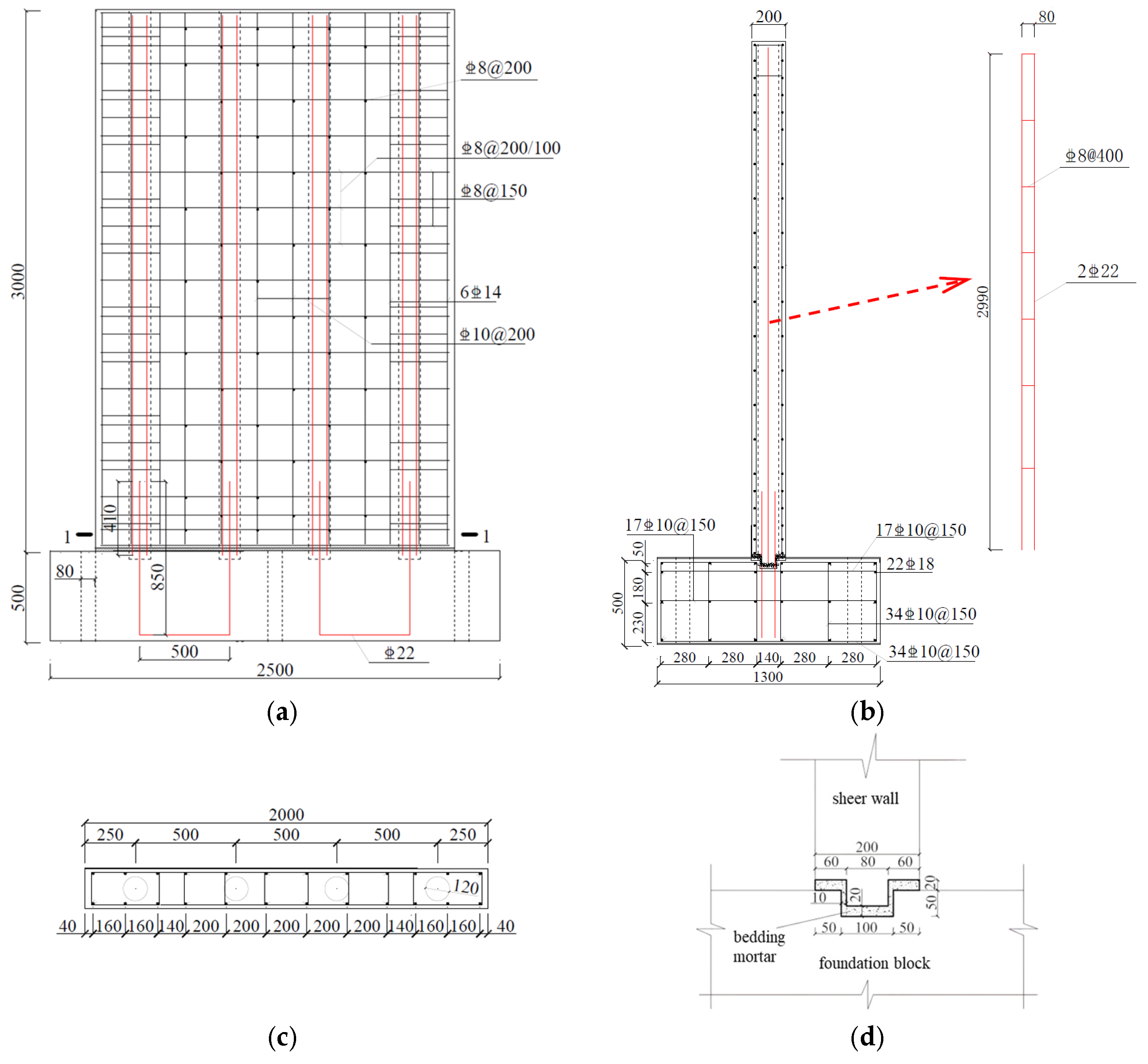
37]. The first specimen, denoted as XJ, represents a conventional wall component without keyway interlocking, while the second specimen, denoted as PW, incorporates a keyway-based connection intended to enhance the mechanical interlocking and shear transfer capacity between the precast wall panel and the foundation block. The base and shear wall dimensions of the two specimens are identical. The shear wall has a height of 3000 mm, a length of 2000 mm, and a thickness of 200 mm, ensuring comparable structural characteristics between the specimens. The reinforcement layouts of the two specimens are shown in
Figure 2 and
Figure 3, including the front elevation, side elevation, and sectional views, which illustrate the arrangement of longitudinal reinforcement, transverse reinforcement, and boundary elements.
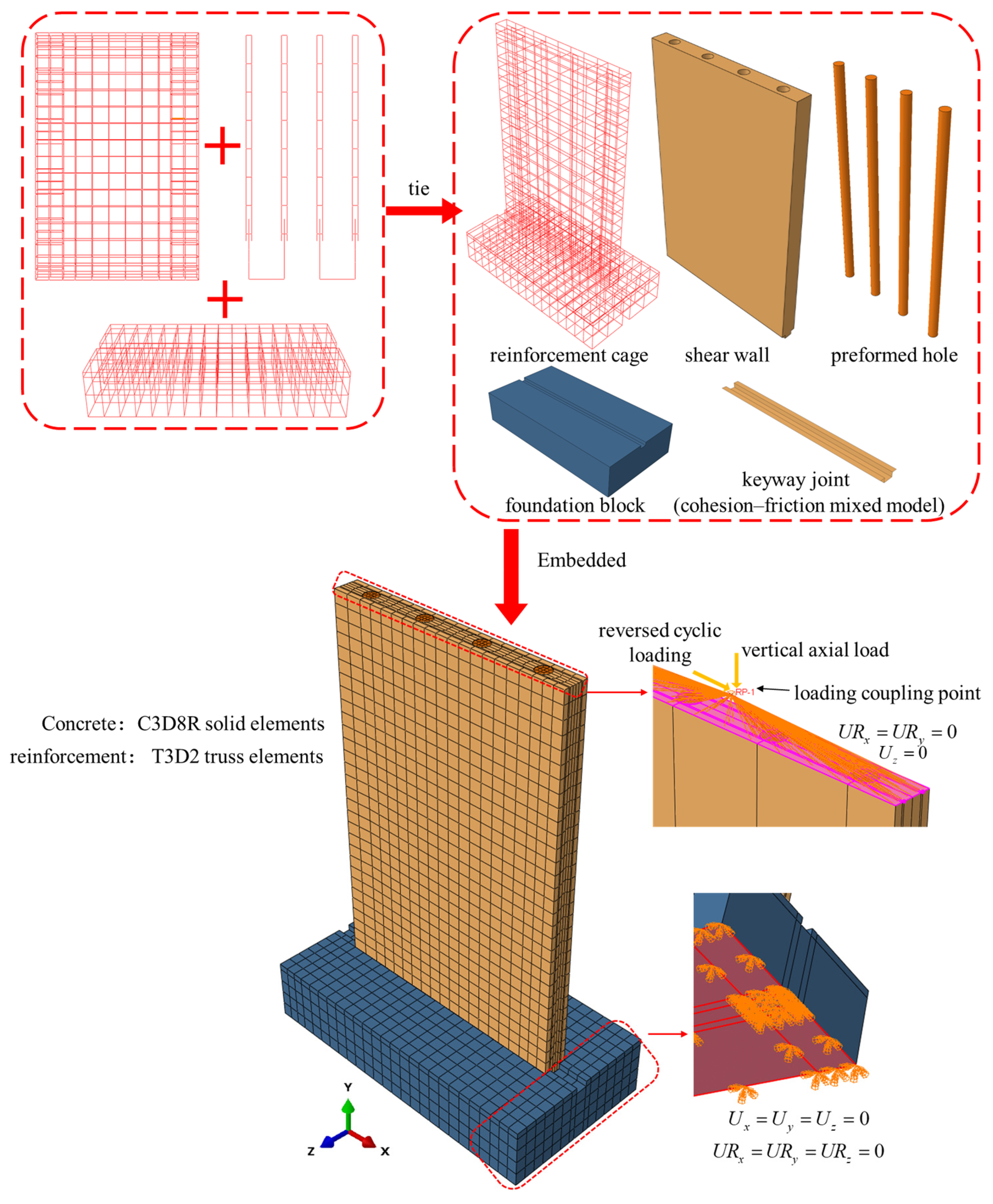
Finite element (FE) models of the prefabricated shear wall specimens were developed using Abaqus 2023, as shown in
Figure 4. Concrete was discretized using C3D8R eight-node reduced-integration solid elements, while reinforcement was modeled using T3D2 truss elements. Because the structural components in the model consist of relatively simple geometric regions, a structured meshing technique was adopted to ensure mesh regularity and numerical stability. Considering both computational accuracy and convergence efficiency, the mesh sizes of the concrete and reinforcement were kept consistent, with a characteristic element size of 100 mm. The foundation beam was fully fixed, and a reference point was coupled to the loading beam to apply boundary conditions. Out-of-plane translation and in-plane rotational degrees of freedom were constrained. Vertical axial load corresponding to the design axial compression ratio was applied as an equivalent uniform pressure on the top surface, and cyclic horizontal displacement was imposed at the reference point to simulate quasi-static loading conditions.
Concrete was modeled using the Concrete Damaged Plasticity (CDP) constitutive model, and the uniaxial compressive and tensile stress–strain relationships were defined in accordance with the Chinese Code for Design of Concrete Structures (GB 50010-2010) [
38]. The key parameters of the CDP model were selected based on commonly adopted values in previous studies and are summarized in
Table 1. Reinforcing steel was modeled using a bilinear elastoplastic constitutive model with strain hardening.
To accurately represent the mechanical behavior of the interface between precast and cast-in-place concrete, a cohesion–friction mixed interface model was adopted, as shown in
Table 2. The interface interaction was defined using surface-to-surface contact with a penalty-based tangential formulation and a friction coefficient of 0.8, while normal behavior was modeled using a “hard” contact algorithm allowing separation after contact. The interaction between reinforcement dowel action and interface friction was represented through the combined modeling strategy of embedded reinforcement and contact interaction. Specifically, reinforcement bars crossing the interface were embedded in the surrounding concrete elements using the embedded region constraint, enabling them to transfer shear forces through dowel action when relative slip occurs at the interface. Meanwhile, the cohesion–friction contact model captured the shear resistance provided by interface cohesion and friction. The combined effect of these mechanisms allows the numerical model to simulate the cooperative shear-transfer behavior between reinforcement dowel action and interface friction.
2.2. Comparison of Hysteretic Responses
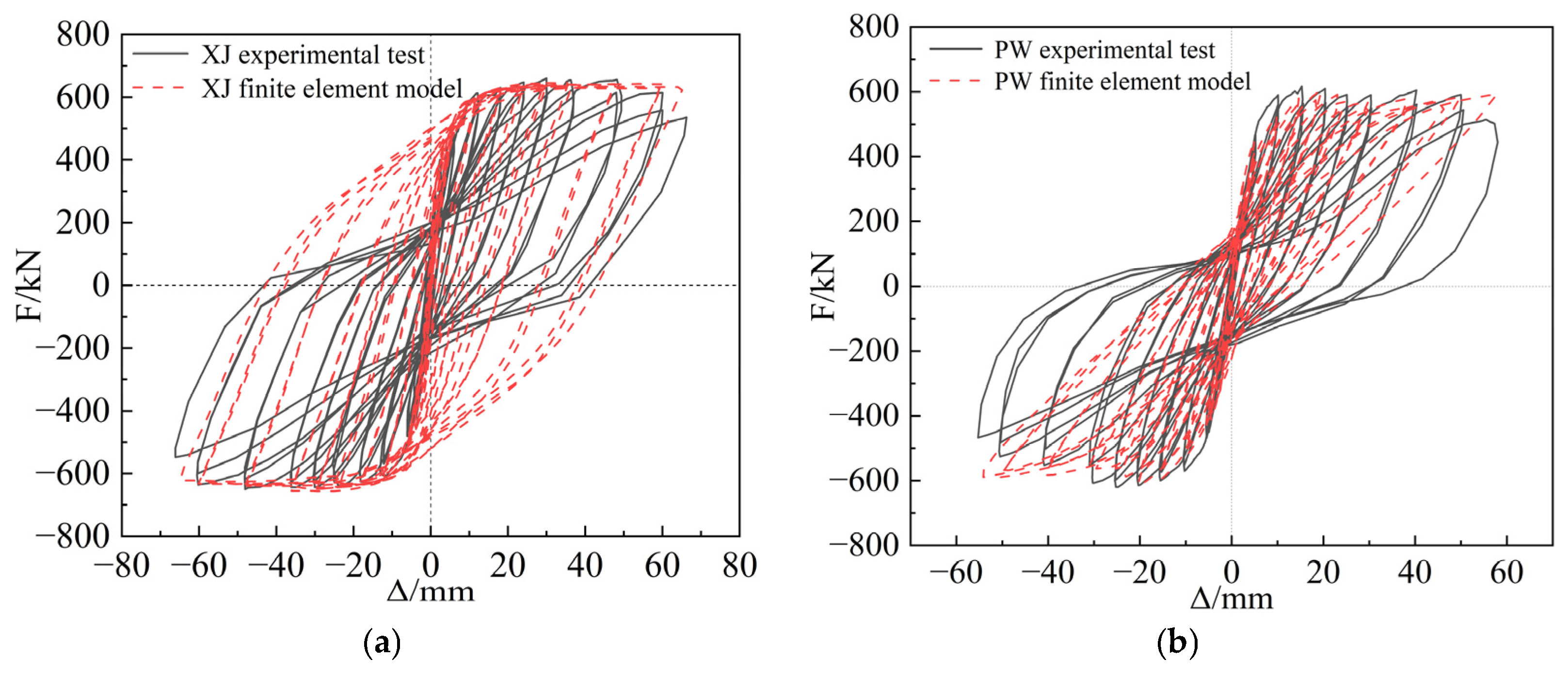
The hysteretic responses of specimens XJ and PW obtained from the finite element (FE) simulations were compared with the experimental results, as shown in
Figure 5. For specimen XJ, the experimental hysteresis curves exhibited pronounced pinching effects and stiffness degradation. With increasing displacement amplitude, the hysteresis loops gradually evolved from relatively full shapes to more pinched forms, reflecting crack propagation and cumulative damage in the concrete. The FE model successfully reproduced the overall backbone curve and the stiffness degradation trend. However, the simulated hysteresis loops appear slightly fuller, and the initial stiffness is marginally higher than that observed in the experiment. This discrepancy is mainly attributed to the omission of reinforcement–concrete bond–slip effects in the numerical model, which tends to increase the apparent stiffness in the early loading stage. For specimen PW, the hysteresis curves displayed a relatively stable spindle-shaped pattern, indicating favorable ductility and energy dissipation capacity. The FE simulation captured the general evolution trend of the hysteresis loops, although slight differences in loop width and unloading stiffness were observed. These differences may be related to simplifications in the interface contact modeling and the neglect of bond–slip behavior.
A quantitative comparison of the characteristic parameters is summarized in
Table 3. For specimen XJ, the simulated peak load was 636.17 kN, compared with the experimental value of 649.87 kN, resulting in a relative error of 2.11%. The initial stiffness obtained from the FE model was 137.67 kN/mm, which is very close to the experimental value of 138.12 kN/mm, with an error of only 0.33%, indicating excellent agreement in stiffness prediction.
For specimen PW, the FE model predicted a peak load of 568.68 kN, compared with the experimental value of 591.44 kN, corresponding to an error of 3.85%, which is still within an acceptable range for nonlinear simulations. However, the simulated initial stiffness (116.94 kN/mm) is higher than the experimental value (101.78 kN/mm), resulting in a stiffness error of 12.96%. This relatively larger deviation is primarily attributed to the simplified interface modeling and the neglect of reinforcement–concrete bond–slip effects, which tend to increase the apparent stiffness of the numerical model, particularly in specimens where interface deformation contributes significantly to the overall displacement.
Overall, the simulated hysteresis curves show good agreement with the experimental responses across the elastic, yielding, and post-yield stages. The relative error in peak load for both specimens is within 5%, demonstrating that the proposed FE modeling approach can reasonably capture the nonlinear behavior of prefabricated shear walls, including their load capacity, stiffness degradation, and ductility characteristics.
2.3. Stiffness and Load Capacity Parametric Analysis
In prefabricated shear wall systems, force transfer between wall panels is primarily achieved through a composite anchorage mechanism formed by embedded reinforcement, grout materials, and interface bonding, which differs significantly from the continuous reinforcement–concrete interaction in cast-in-place shear walls. To evaluate the influence of concentrated reinforcement connections on seismic performance, a parametric study was conducted based on the validated FE model of specimen PW.
A total of 20 shear wall specimens, including prefabricated and cast-in-place configurations, were analyzed by varying three key parameters: axial compression ratio, concrete strength, and wall thickness. The detailed parameter combinations are summarized in
Table 4. For each specimen, cyclic FE analyses were performed to obtain hysteresis curves and corresponding backbone curves.
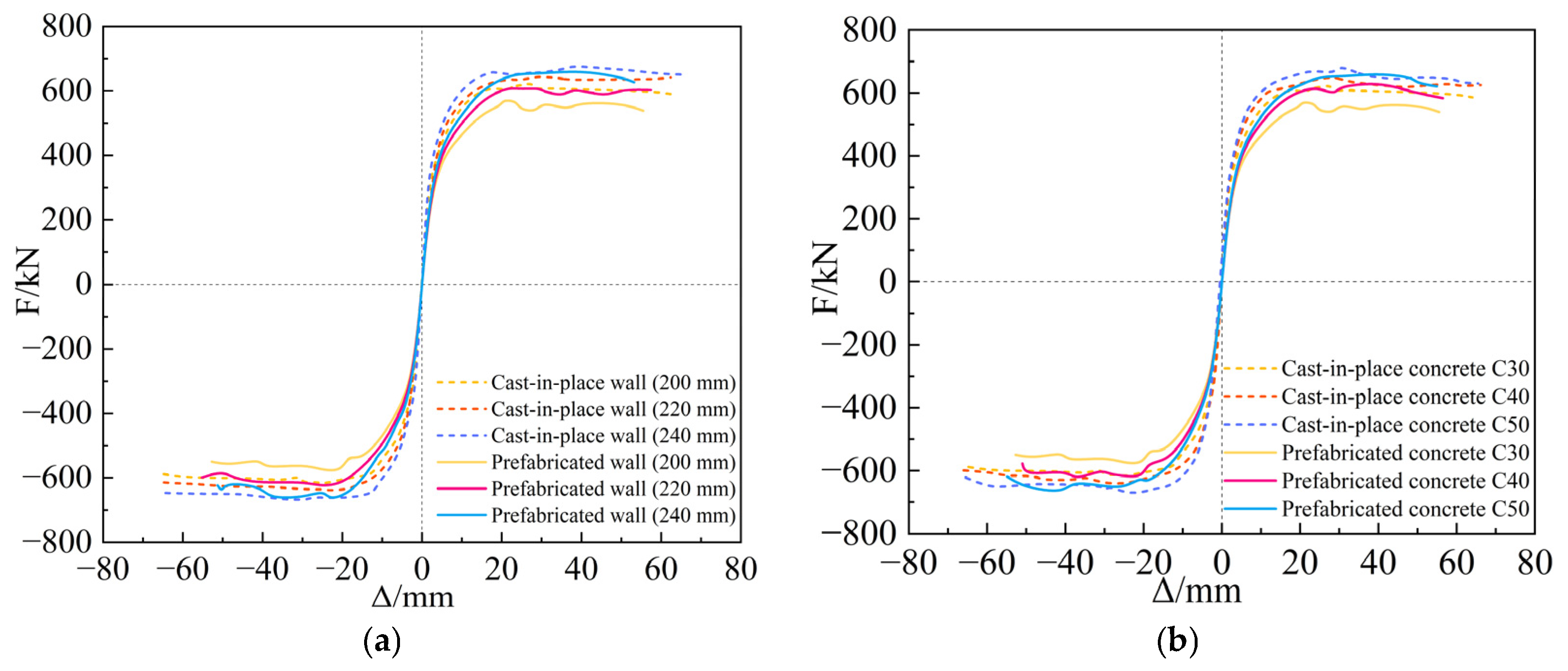
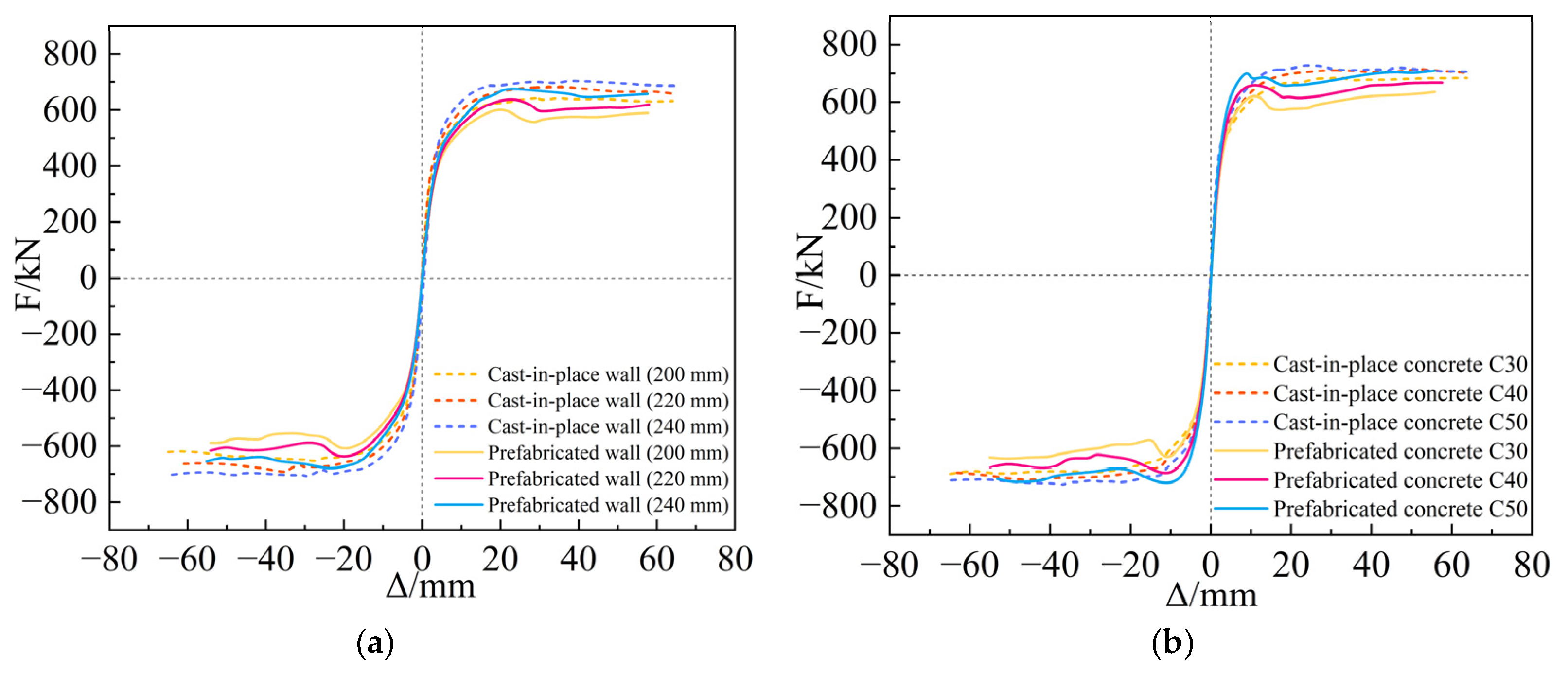
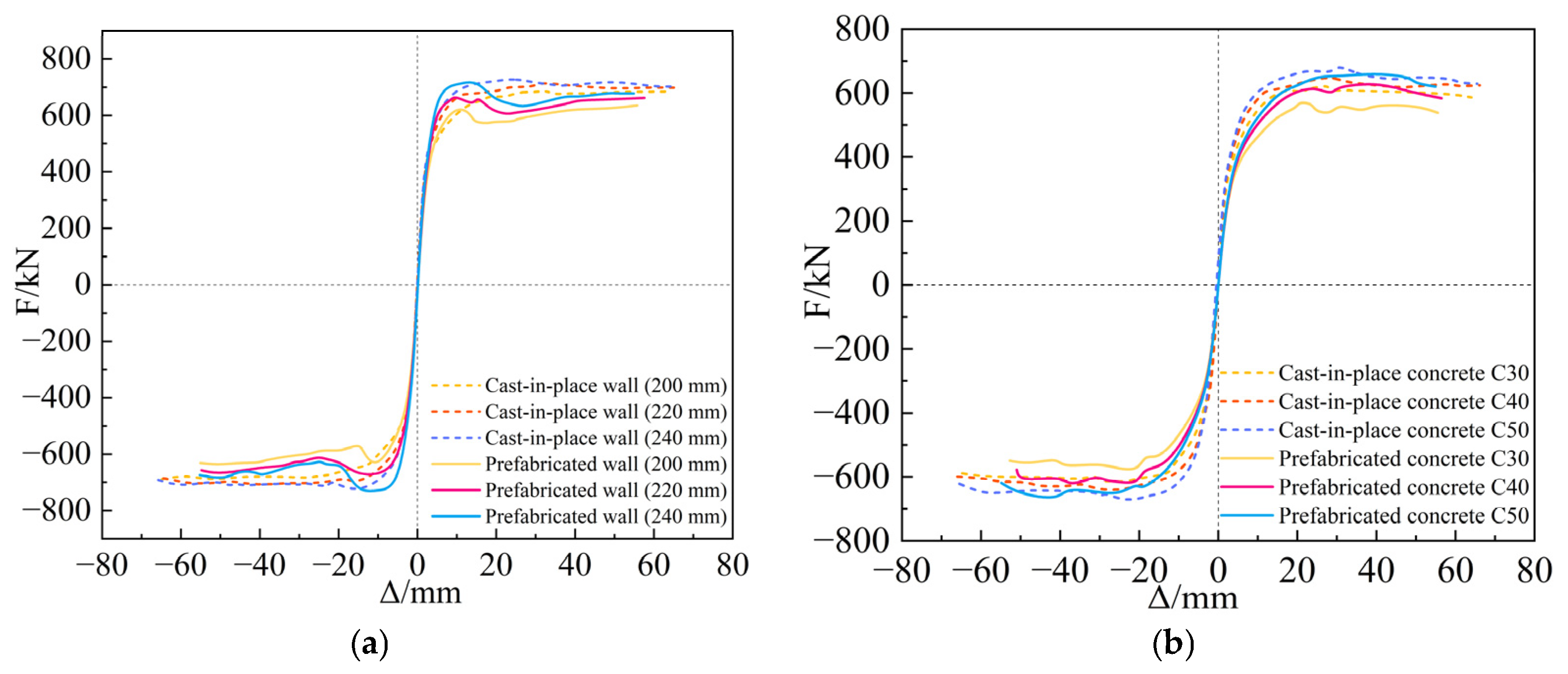
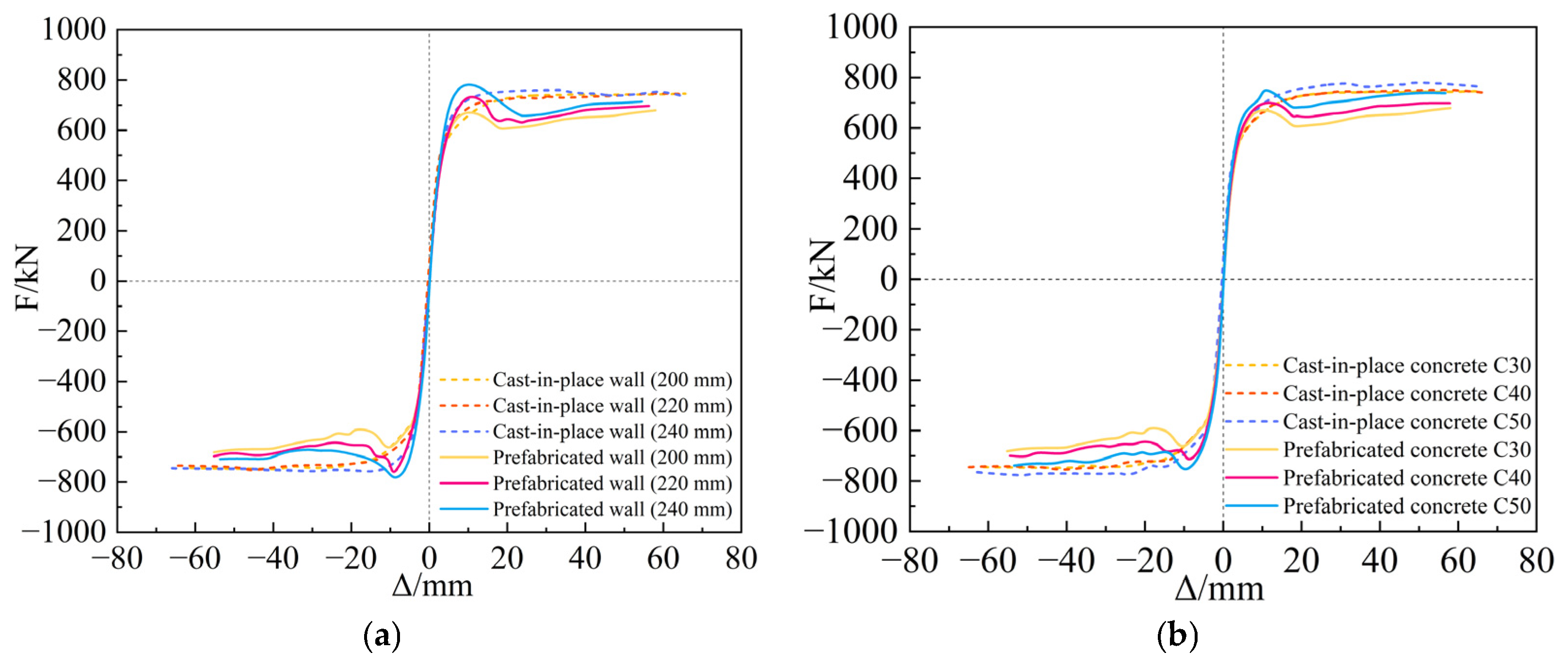
The backbone curves obtained from the cyclic analyses are presented in
Figure 6,
Figure 7,
Figure 8 and
Figure 9, which illustrate the influence of wall thickness and concrete strength on the lateral load–displacement response under different axial compression ratios. Overall, the prefabricated shear wall specimens exhibit backbone curves that are generally similar to those of the cast-in-place counterparts, indicating that the concentrated reinforcement connection can provide effective force transfer and maintain comparable global stiffness and load-bearing capacity.
Figure 6 shows the comparison results under an axial compression ratio of 0.05. When the wall thickness increases from 200 mm to 240 mm, both prefabricated and cast-in-place specimens demonstrate a noticeable increase in lateral load capacity, while the initial stiffness exhibits only a moderate improvement. The overall shapes of the backbone curves remain similar, suggesting that wall thickness primarily affects the ultimate strength rather than the deformation pattern. In terms of concrete strength, increasing the concrete grade from C30 to C50 results in a gradual increase in peak load, while the displacement corresponding to the peak load changes only slightly. The prefabricated specimens show slightly lower peak values compared with the cast-in-place walls, which may be attributed to the interface effects at the precast joint.
Similar trends can be observed under axial compression ratios of 0.10 and 0.15, as illustrated in
Figure 7 and
Figure 8. With the increase in axial compression ratio, the peak load of both structural systems increases significantly, indicating that the axial load provides additional confinement and enhances the compressive resistance of the wall boundary regions. Meanwhile, the post-peak softening becomes slightly more pronounced, reflecting the increased brittleness associated with higher axial compression levels. Nevertheless, the prefabricated walls still maintain a stable load–displacement response comparable to that of the cast-in-place specimens.
Figure 9 presents the results under a higher axial compression ratio of 0.20. At this loading level, the enhancement of load capacity becomes more evident for all specimens. The increase in wall thickness continues to produce a clear improvement in lateral resistance, whereas the influence of concrete strength is relatively moderate. In particular, the difference between C40 and C50 becomes less significant compared with the effect of increasing wall thickness. This indicates that geometric parameters play a more dominant role in determining the global load capacity of the shear wall system.
To quantitatively assess the differences between prefabricated and cast-in-place shear walls, reduction factors for stiffness and load capacity were defined. The load capacity reduction factor was calculated as the ratio of the peak load of prefabricated specimens to that of the corresponding cast-in-place walls at the elastic–plastic interstory drift limit of 1/120, while the stiffness reduction factor was defined as the ratio of the initial stiffness at the elastic interstory drift limit of 1/1000.
Table 5 summarizes the calculated load capacities, initial stiffness values, and the corresponding reduction factors. The load capacity reduction factor ranges from 0.83 to 1.00, while the stiffness reduction factor ranges from 0.77 to 1.02. In most cases, the prefabricated specimens exhibit slightly lower load capacity and stiffness compared with the cast-in-place counterparts. However, a few specimens show marginally higher peak loads. This phenomenon can be attributed to the mechanical interlocking mechanism of the keyway joints, which enhances shear transfer across the interface under axial compression, thereby partially compensating for the potential strength reduction caused by the joint. In addition, the nonlinear interaction between concrete damage evolution and interface contact behavior in the numerical model may lead to small variations in peak load.
Statistical analysis of all specimens indicates a mean load capacity reduction factor of 0.91 with a standard deviation of 0.0464, and a mean stiffness reduction factor of 0.88 with a standard deviation of 0.0906. These results indicate that, although minor variations exist in individual cases, prefabricated shear walls generally exhibit slightly lower stiffness and load capacity than cast-in-place walls, while still maintaining relatively stable and predictable structural performance.
3. Nonlinear Dynamic Analysis of Prefabricated Shear Wall Structures
3.1. Structural Description and Numerical Modeling
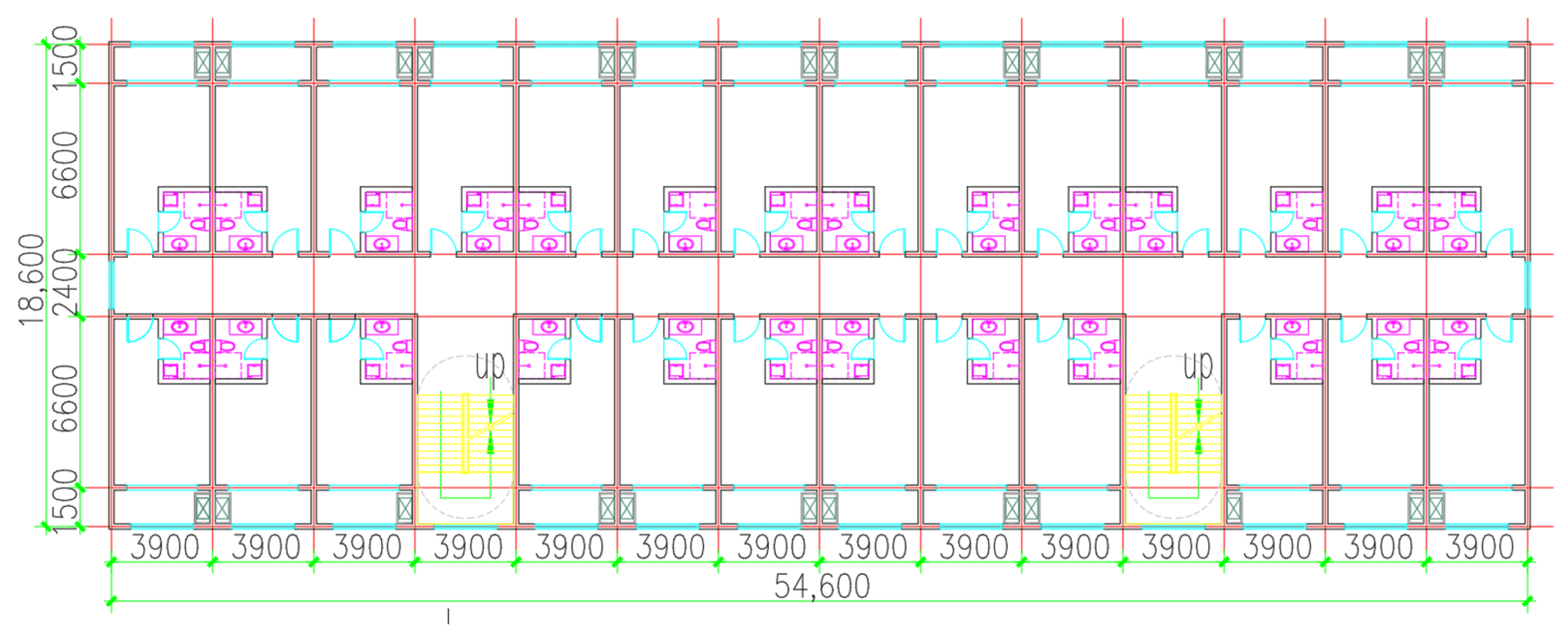
To systematically investigate the nonlinear dynamic seismic response characteristics of prefabricated shear wall structures with concentrated reinforcement, a typical prefabricated residential building adopting a concentrated-reinforcement shear wall system was selected as the prototype structure for numerical modeling and analysis. The prototype building is an eight-story prefabricated reinforced concrete shear wall structure with a total height of 28.8 m and a standard story height of 3.6 m. The plan layout consists of rooms with a depth and bay width of 6.6 m and 3.9 m, respectively, an internal corridor width of 2.4 m, and an external balcony width of 1.5 m, as illustrated in
Figure 10. The thicknesses of the wall panels and floor slabs are 200 mm and 120 mm, respectively. The concrete compressive strength grade is C30, and HRB400 reinforcing steel is used. The structural importance class is classified as Class II, and the seismic fortification intensity is 8 degrees. The site condition corresponds to Site Class II, and the seismic design group is Group I, with a designed basic ground acceleration of 0.2 g and a characteristic period of 0.35 s. According to the Chinese Load Code for the Design of Building Structures (GB 50009-2019) [
39], the uniformly distributed dead load on residential floors is 1.5 kN/m
2, and the live load is taken as 2.0 kN/m
2, including the effect of structural self-weight. Wind loads are not considered in this study.
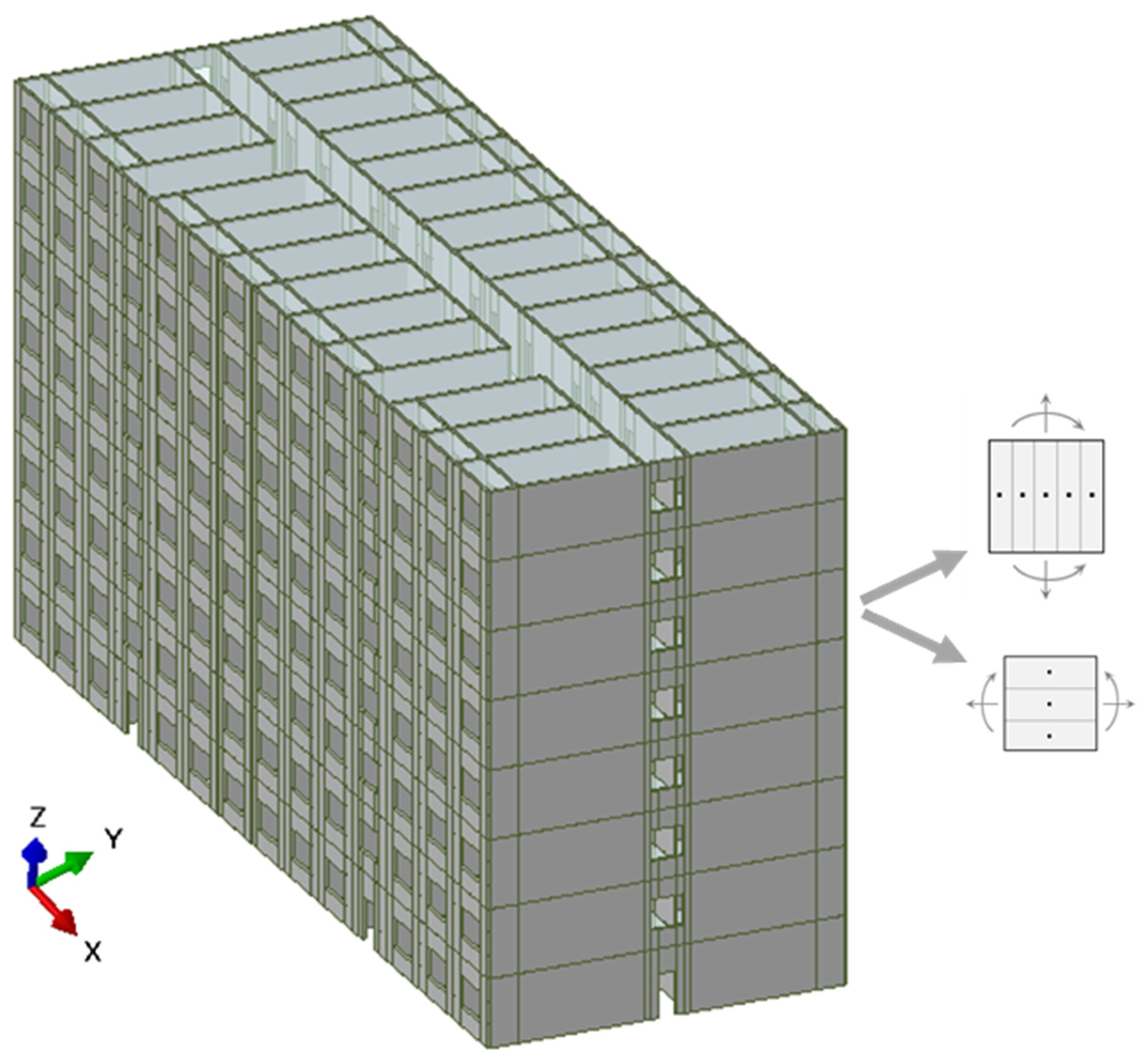
The structural model of the prefabricated concentrated-reinforcement shear wall system was established using Midas Building 2023, as shown in
Figure 11. Fiber-based nonlinear beam–column elements were adopted to simulate the shear wall components, enabling the nonlinear constitutive behavior of concrete and reinforcing steel to be captured through sectional fiber discretization. In this study, the wall section was discretized into five fiber layers along the vertical direction and three fiber layers along the horizontal direction. The stiffness and strength reduction factors were determined according to
Section 2.3. The stiffness reduction was implemented by modifying the sectional stiffness properties, whereas the strength reduction was incorporated by adjusting the constitutive model of concrete. The P–Δ effect was incorporated in the nonlinear dynamic analysis, and the convergence of the numerical solution was controlled using a displacement-based criterion. The dynamic equations were solved using the Newmark time integration scheme, with the Rayleigh damping ratio of the structure set to 0.05.
3.2. Ground Motion Selection and Scaling
Ground motions were selected following the Chinese seismic design codes and the dual-frequency-band selection principle [
40,
41]. The target response spectrum corresponds to an 8-degree seismic intensity, design group I, and site class II.
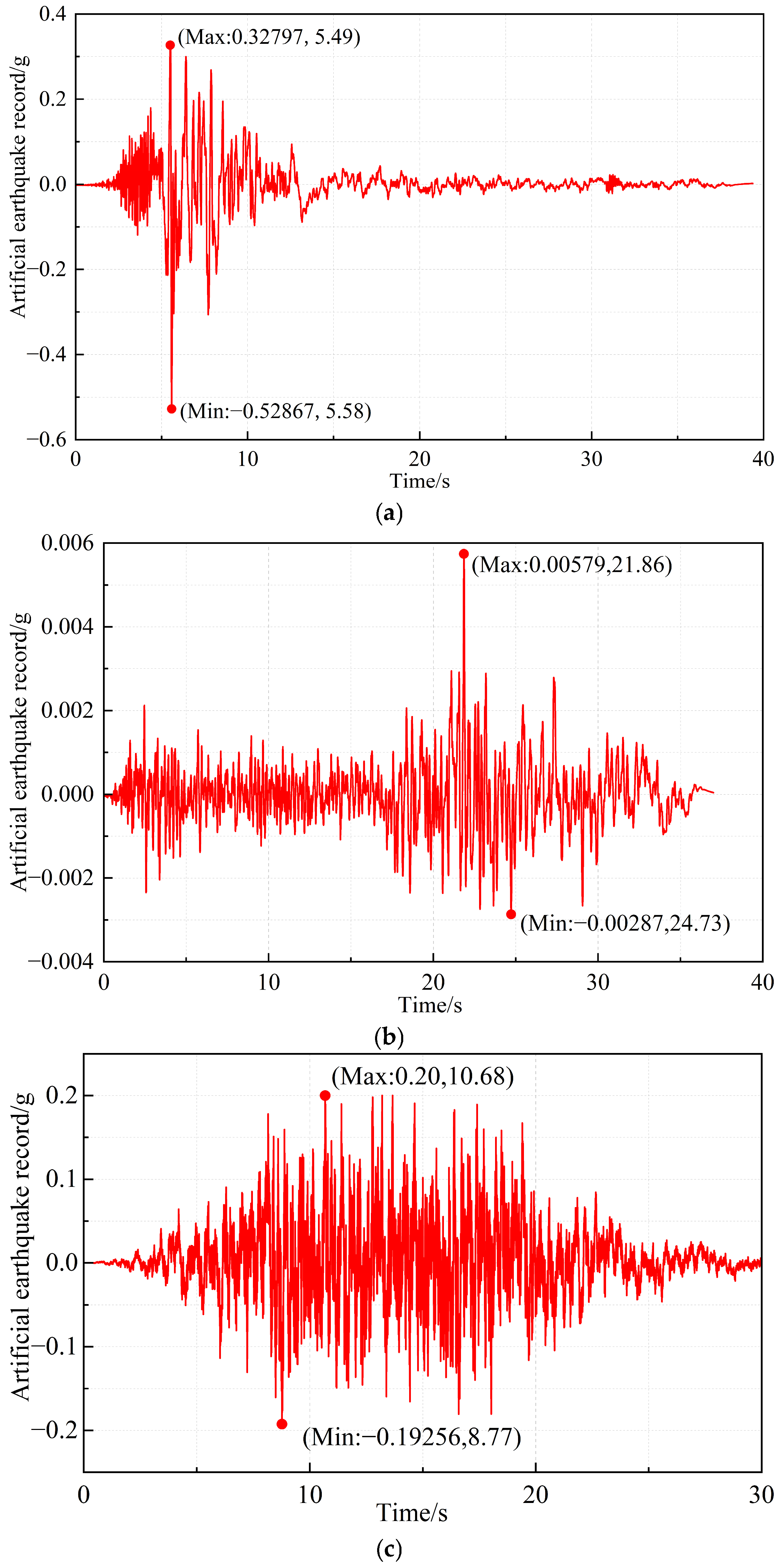
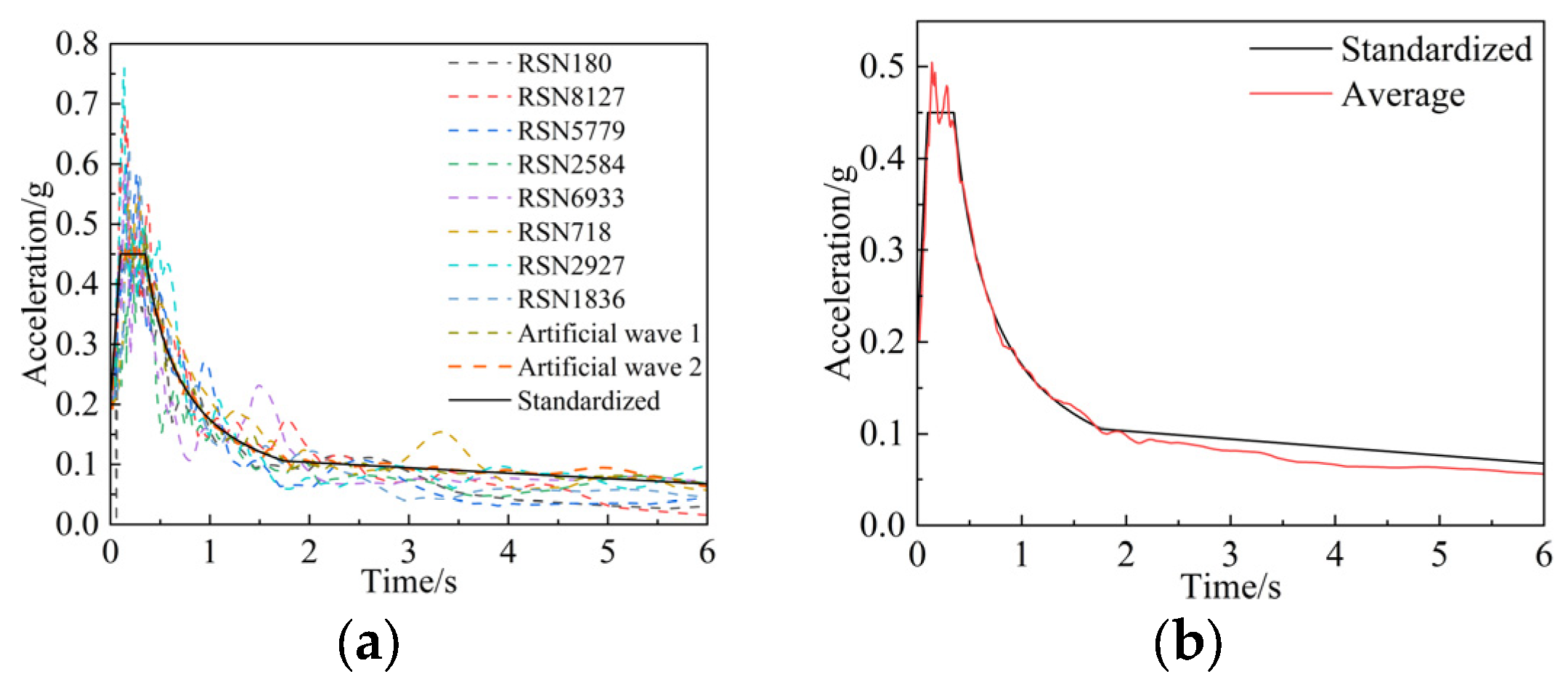
Two recorded earthquakes (Imperial Valley-06 and Chi-Chi Taiwan-03) and one artificial accelerogram were selected. To ensure consistent intensity levels among different records, all ground motions were scaled using peak ground acceleration (PGA) as the intensity measure. A linear scaling factor was applied so that the PGA of each record matched the target design intensity. Key parameters of the selected motions are summarized in
Table 6, and the original acceleration time histories are shown in
Figure 12.
3.3. Story Shear Distribution
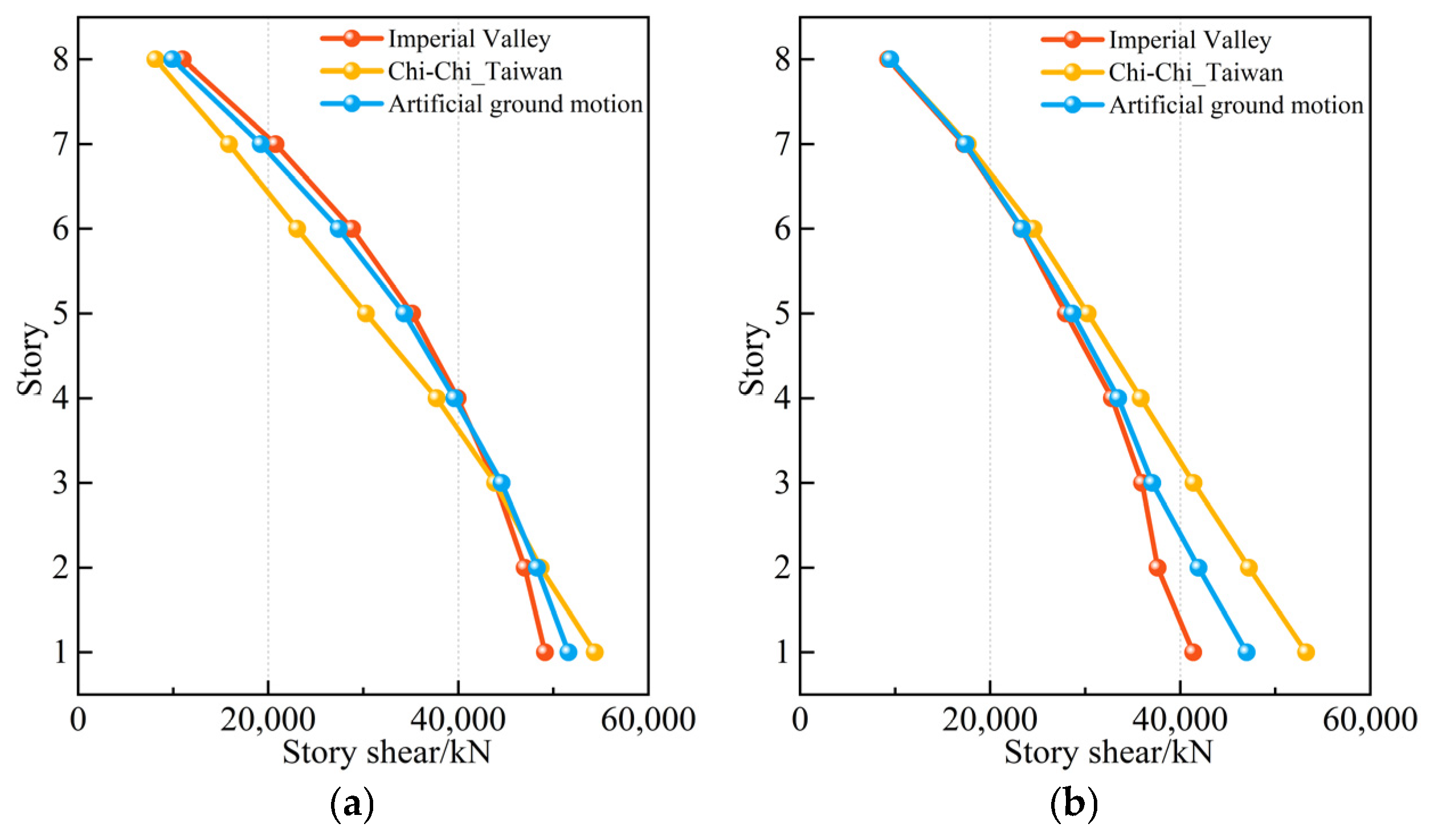
The nonlinear time history analyses were conducted under three scaled ground motions, and the story shear distributions along the building height in both principal directions are illustrated in
Figure 13.
The results demonstrate a typical triangular shear distribution pattern, with the maximum shear demand occurring at the base and gradually decreasing toward the roof. This trend reflects the dominant contribution of the first vibration mode to the global seismic response of the mid-rise shear wall structure. Compared with recorded ground motions, the artificial accelerogram produced slightly higher base shear demands, while the Chi-Chi record resulted in relatively lower shear forces in the upper stories, indicating the influence of spectral characteristics on shear demand distribution.
3.4. Displacement Time History Response
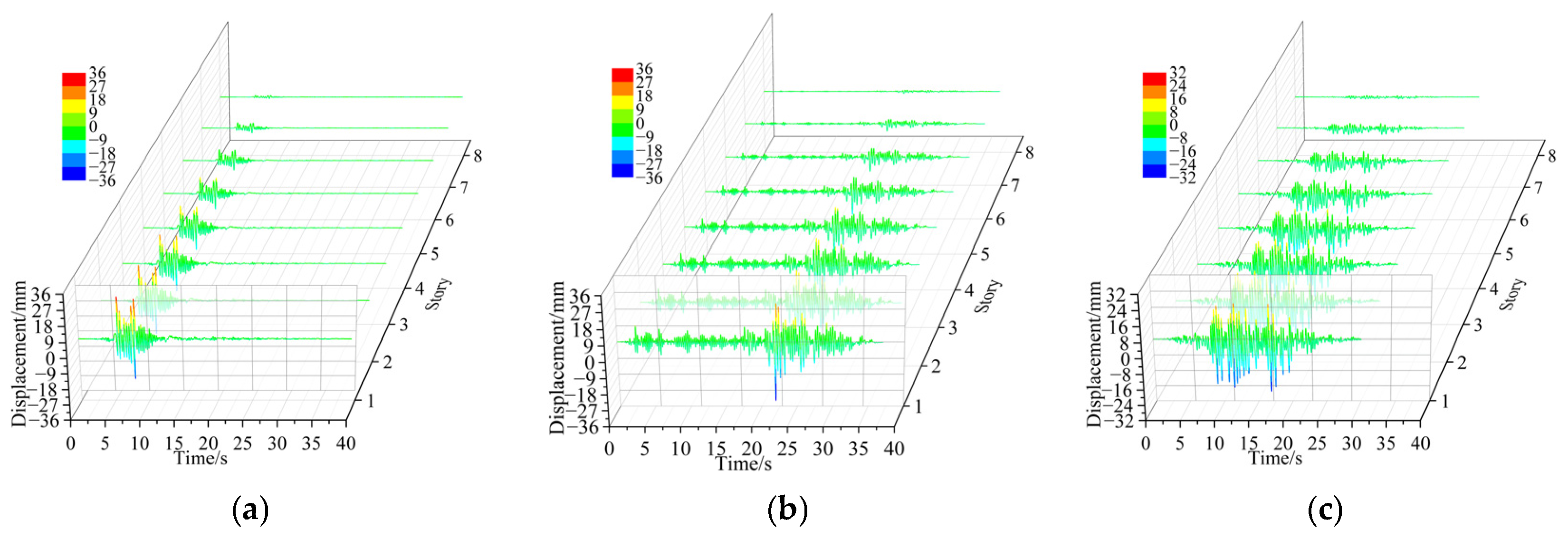
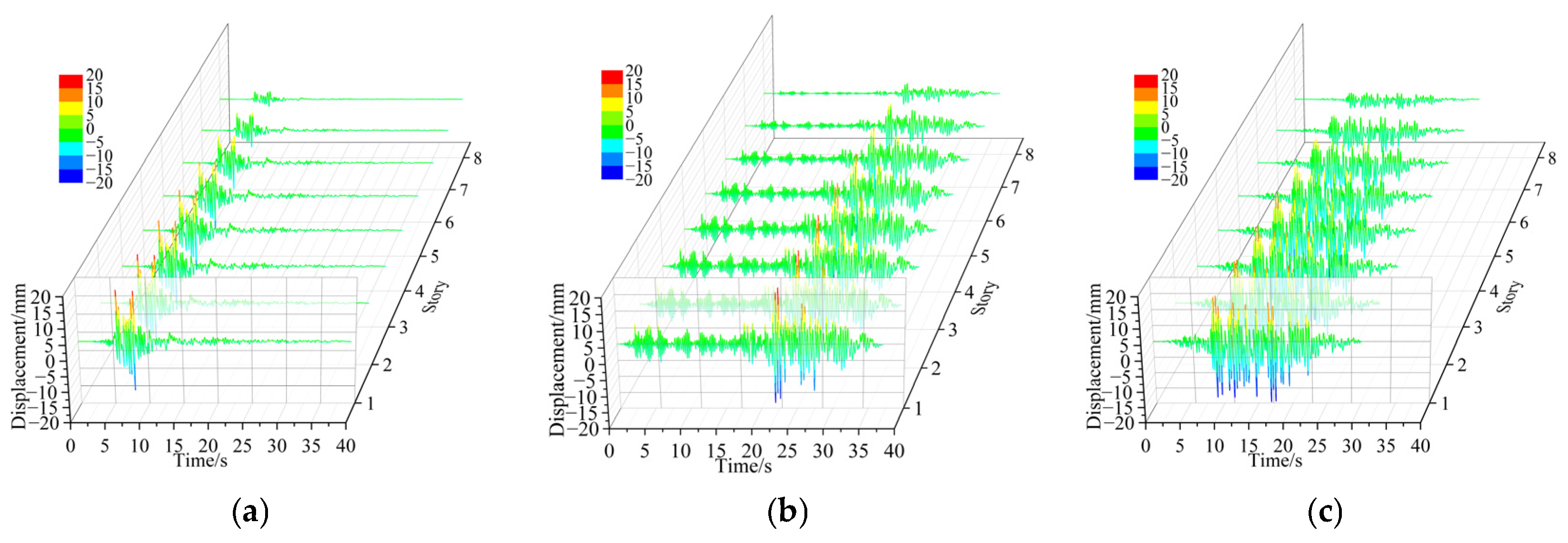
The displacement time histories of representative floors were extracted to evaluate the dynamic response characteristics of the prefabricated shear wall structure, as shown in
Figure 14 and
Figure 15. The displacement response exhibited a clear height-dependent amplification, with the roof displacement being significantly larger than that of the lower stories, which is consistent with the first-mode dominated vibration behavior of shear wall systems.
For the 8-story structure, the peak roof displacements were 19.71 mm in the X direction and 32.85 mm in the Y direction, depending on the ground motion record. The Chi-Chi record induced gradual displacement accumulation in the later stages of excitation, which can be attributed to its long-duration characteristics and low-frequency content. In contrast, the artificial wave generated larger instantaneous displacement peaks due to its relatively higher frequency components. These results highlight that both amplitude and frequency content of seismic input significantly affect the dynamic displacement response of prefabricated shear wall structures.
3.5. Interstory Drift Response and Seismic Deformation Characteristics
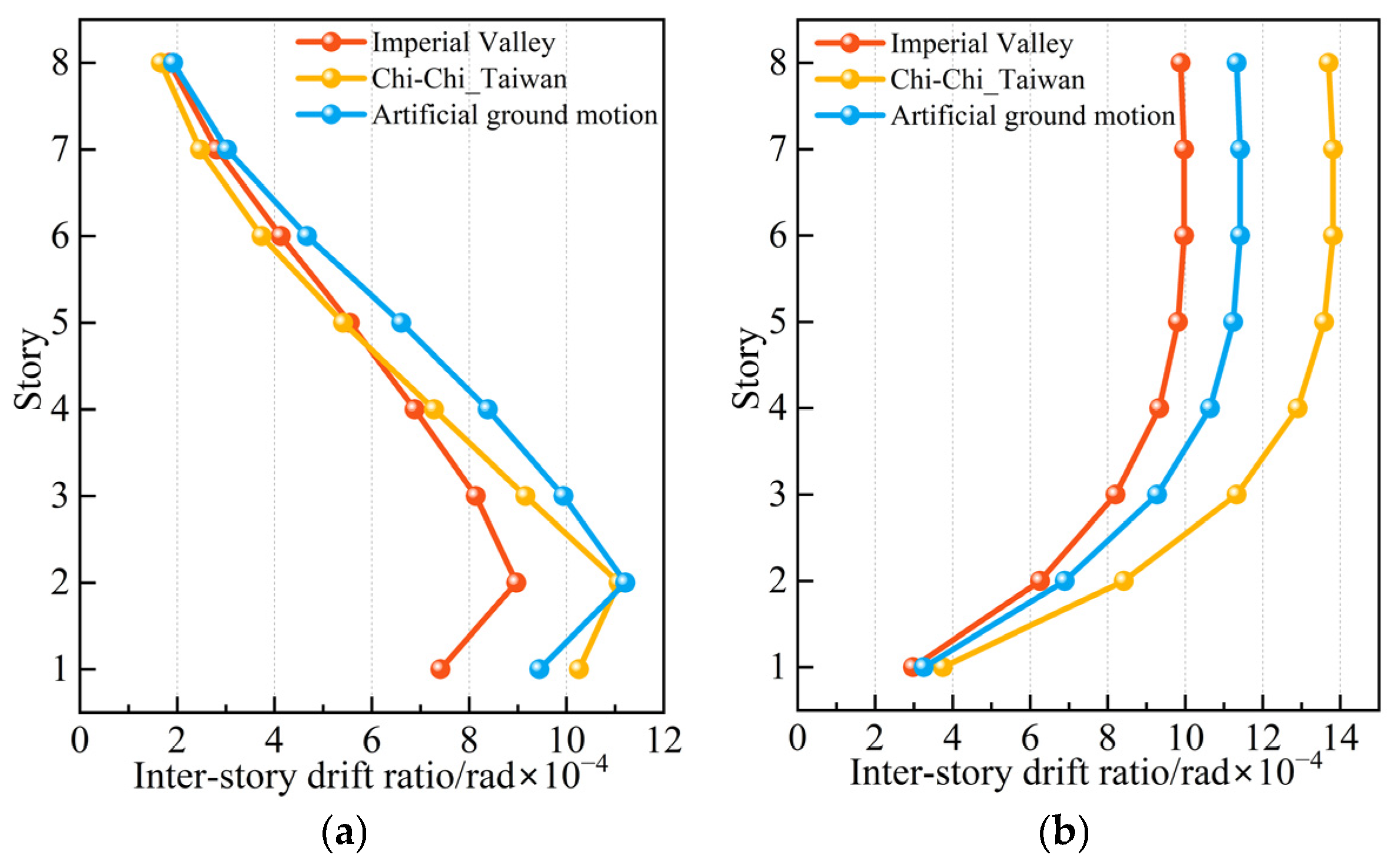
Interstory drift ratios, which are critical indicators of structural damage and performance levels, were calculated based on relative floor displacements and story heights. The distribution of interstory drift ratios along the building height is presented in
Figure 16. The results indicate that the maximum interstory drift ratios were generally concentrated in the lower and middle stories, which is consistent with the expected plastic hinge development regions in shear wall structures. For the analyzed 8-story model, the peak drift ratios were 1/892 in the X direction and 1/724 in the Y direction. The relatively higher drift demands in the Y direction are attributed to the lower lateral stiffness in that direction.
Among the three input motions, the artificial accelerogram produced the largest drift demands, indicating its higher energy content and more unfavorable spectral characteristics. The Chi-Chi record resulted in noticeable drift accumulation in the upper stories, which can be attributed to its long-period components that resonate with higher vibration modes. Nevertheless, no abrupt drift concentration or soft-story mechanism was observed, suggesting that the concentrated reinforcement shear wall system exhibits a globally coordinated deformation pattern and stable nonlinear response.
Furthermore, the drift profiles indicate that the prefabricated shear wall system maintained a flexure-dominated deformation mode without significant joint sliding or localized failure, implying that the proposed keyway and concentrated reinforcement connections effectively ensured structural integrity and deformation compatibility under strong seismic excitation. This behavior demonstrates the favorable seismic deformation capacity and ductility potential of the proposed prefabricated system, which is essential for performance-based seismic design applications.
The nonlinear time history analysis results indicate that the maximum interstory drift ratio under the rare earthquake intensity level is approximately 1/724, which is significantly lower than the assumed collapse limit of 1/120. This relatively small drift demand is mainly attributed to the high lateral stiffness of the shear wall structural system, the continuous vertical wall layout, and the prefabricated wall configuration with keyway connections, which provide effective shear transfer across the interfaces and enhance the overall lateral resistance of the structure.
4. Incremental Dynamic Analysis of Prefabricated Shear Wall Structures
4.1. Definition of Performance Levels
To quantitatively evaluate the seismic performance of the prefabricated shear wall structure, performance levels were defined according to the fundamental principles of the “three-level seismic design objectives” specified in the Chinese seismic design codes [
40]. The maximum interstory drift ratio (
θmax) was adopted as the primary performance index to characterize structural damage and deformation demand under earthquake excitation.
To capture the progressive degradation of structural performance under increasing seismic intensity, five discrete performance levels were defined, as summarized in
Table 7: Intact (P1), Slight Damage (P2), Moderate Damage (P3), Severe Damage (P4), and Collapse (P5). The corresponding drift ratio thresholds were specified as 1/1000, 1/500, 1/250, 1/135, and 1/120, respectively.
These drift limits were selected based on recommendations from relevant Chinese seismic design provisions and previous experimental studies on reinforced concrete shear wall structures. In particular, the elastic drift limit of 1/1000 is consistent with the serviceability requirements specified in the Chinese Code for Seismic Design of Buildings (GB 50011-2010) [
40], while the drift range of 1/500–1/250 corresponds to the typical deformation limits associated with the onset of concrete cracking and moderate structural damage in shear wall systems. The severe damage threshold of 1/135 reflects the deformation capacity commonly adopted for reinforced concrete shear wall structures in nonlinear seismic assessment, while the collapse limit of 1/120 is consistent with deformation-based collapse criteria suggested in Chinese structural design guidelines and previous seismic performance studies.
4.2. Ground Motion Selection and Spectral Matching
Ground motion records were selected from the Pacific Earthquake Engineering Research Center (PEER) database, and spectrum-compatible ground motions were obtained through a rigorous selection and scaling procedure. Key seismological parameters, including earthquake magnitude, source mechanism, and shear-wave velocity of the recording site, were considered to ensure representativeness.
The selection and adjustment process followed the dual-frequency-band control principle [
42,
43]. First, within the period range of [0.1, T
g], the mean acceleration response spectrum of the selected records was constrained to match the target design spectrum with a deviation less than 10%. Second, within the period range surrounding the fundamental period of the structure, [T
1 − ΔT
1, T
1 + ΔT
2], the spectral deviation was further limited to within 10%, where ΔT
1 and ΔT
2 were both taken as 0.5 s.
This dual-band constraint ensured that the selected ground motions exhibited consistent spectral characteristics both over the global frequency range and near the dominant structural vibration period, thereby providing reliable seismic input for nonlinear time history analysis.
A total of ten ground motions, including eight recorded earthquakes and two artificial accelerograms, were selected. The detailed information is summarized in
Table 8. The comparison between the target and selected spectra is presented in
Figure 17, indicating that the selected records adequately envelop the target spectrum.
4.3. Incremental Dynamic Analysis Curves
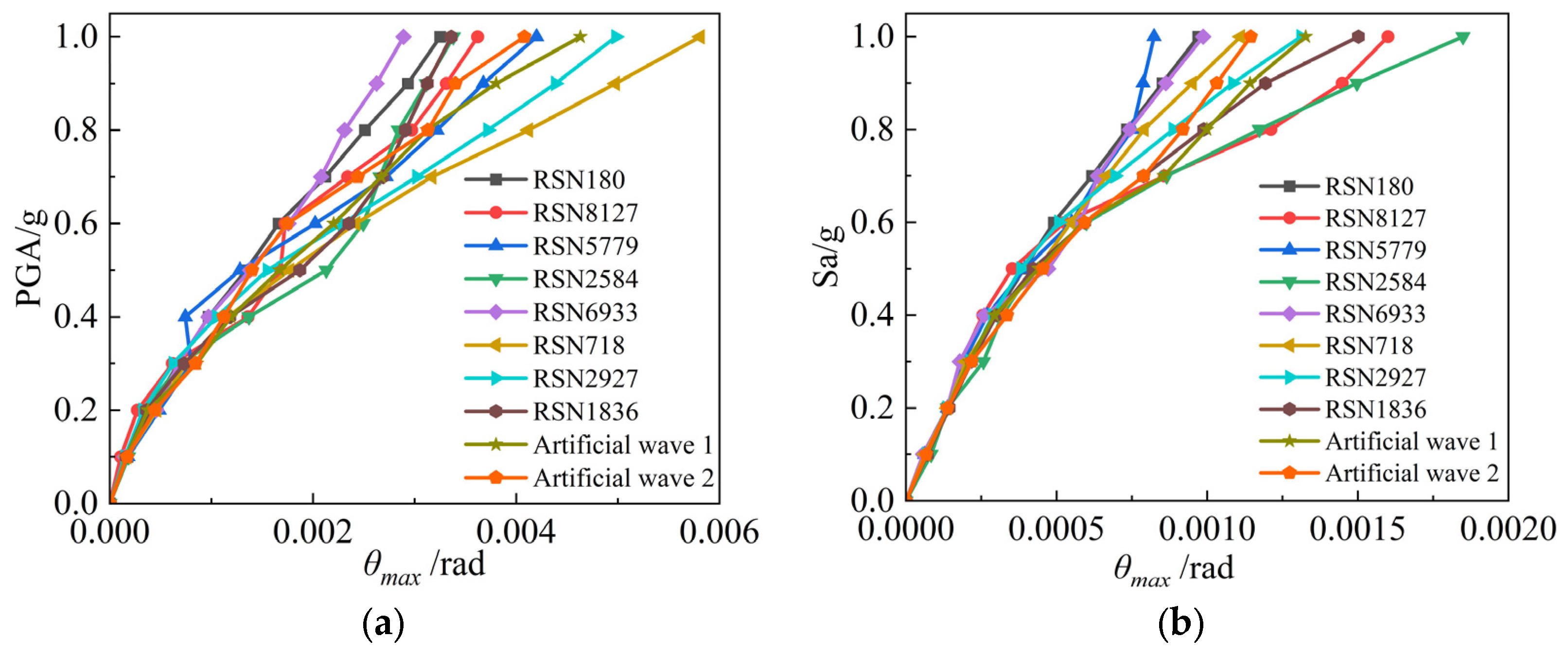
Incremental Dynamic Analysis (IDA) was conducted to investigate the nonlinear seismic response of the prefabricated shear wall structure under multiple ground motion records. The ten selected earthquake records were used as seismic inputs. Two intensity measures (IMs) were adopted in this study: the peak ground acceleration (PGA) and the spectral acceleration at the fundamental period with 5% damping, Sa(T1, 5%). The maximum interstory drift ratio (θmax) was selected as the damage measure (DM).
Each ground motion was progressively scaled to increasing intensity levels, and nonlinear time history analyses were performed to obtain structural responses at each intensity level. The resulting IM–DM relationships were then used to construct the IDA curves, as shown in
Figure 18.
The IDA results indicate that θmax generally increases monotonically with increasing seismic intensity for both intensity measures, reflecting the fundamental trend that structural deformation demand grows with earthquake intensity. At low intensity levels, the structure remained within the elastic or slightly nonlinear range, and the IDA curves exhibited relatively gentle slopes. As the seismic intensity increased, the structure gradually entered the inelastic stage, and the IDA curves displayed pronounced nonlinear characteristics, indicating stiffness degradation and progressive damage accumulation.
A comparison between the two intensity measures shows noticeable differences in the predicted structural response. When PGA is used as the intensity measure, the IDA curves exhibit relatively larger dispersion and higher interstory drift ratios at the same intensity level. In contrast, when Sa(T1, 5%) is adopted as the intensity measure, the corresponding θmax values are generally smaller and the IDA curves appear more concentrated. This behavior can be attributed to the fact that Sa(T1, 5%) directly reflects the spectral demand at the fundamental period of the structure, thereby providing a more period-sensitive and stable representation of seismic intensity for mid-rise shear wall systems.
4.4. Probabilistic Seismic Demand Model
The probabilistic seismic demand model (PSDM) was established to describe the statistical relationship between seismic intensity and structural response, which forms the basis for seismic fragility assessment [
44,
45]. Previous studies have demonstrated that structural demand parameters conditioned on intensity measures can be reasonably approximated by a lognormal distribution.
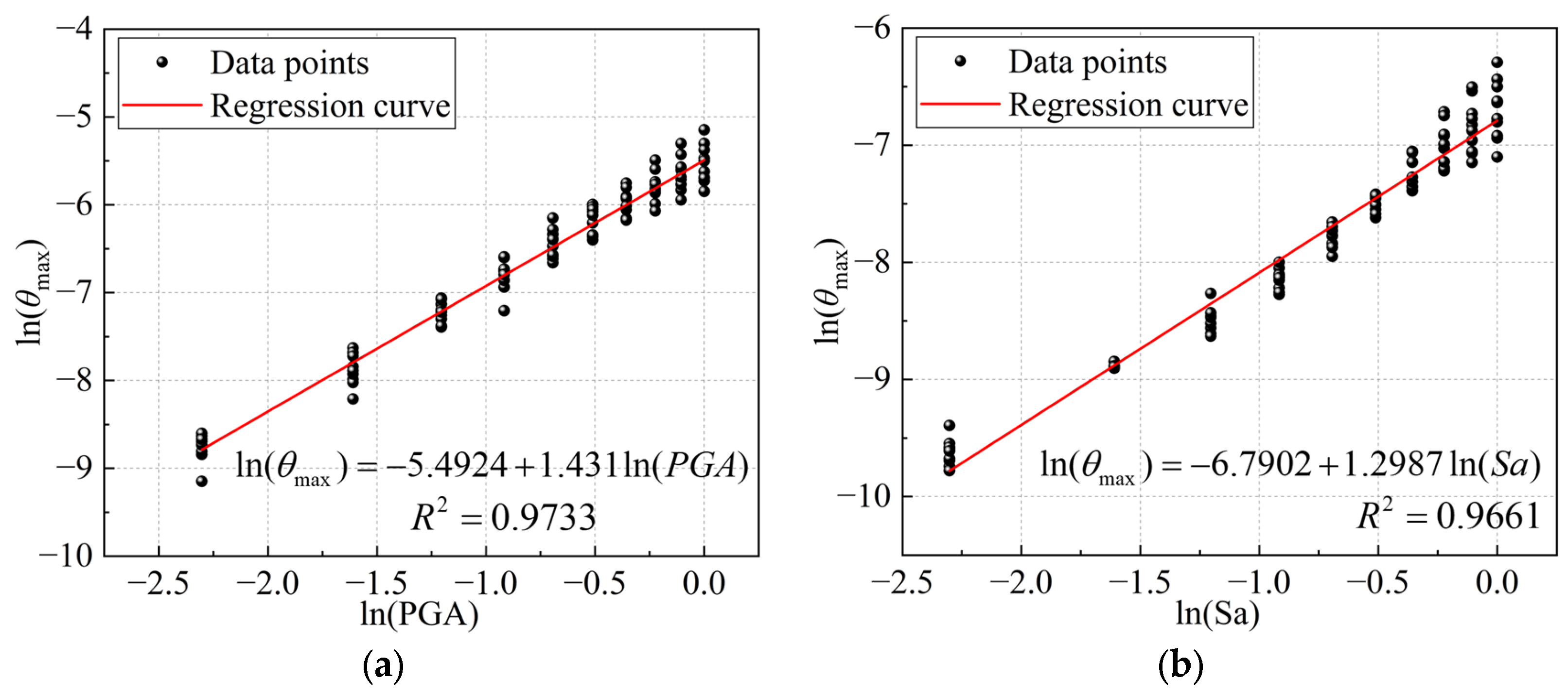
Based on the IDA results, a large number of IM–DM data pairs were obtained. A logarithmic regression model was adopted to establish the relationship between seismic intensity and structural response. For each intensity measure (PGA and Sa(T1, 5%)), the relationship between the intensity measure and
θmax can be expressed as:
where
a and
b are regression coefficients, and
ε is a random error term whose standard deviation represents the dispersion of structural demand.
Linear regression analysis was performed using the least-squares method, where the natural logarithm of the intensity measure (PGA or Sa(T1, 5%)) was taken as the independent variable and the natural logarithm of
θmax was used as the dependent variable. The regression relationship between the seismic intensity measure and structural response is expressed in logarithmic form as follows:
The regression results are presented in
Figure 19, showing a strong correlation between intensity and demand.
4.5. Seismic Fragility Analysis
Based on the probabilistic seismic demand model, seismic fragility curves were developed using the total probability theorem. The conditional probability of exceeding a given damage state was calculated as:
where
Φ(
x) is the standard normal cumulative distribution function,
is the median of the seismic demand of the structure; and
is the median of the seismic capacity of the structure. When PGA is adopted as the intensity measure, the lognormal standard deviation of seismic intensity
is taken as 0.5. When Sa(T1, 5%) is adopted as the intensity measure, the lognormal standard deviation of seismic intensity
is taken as 0.4.
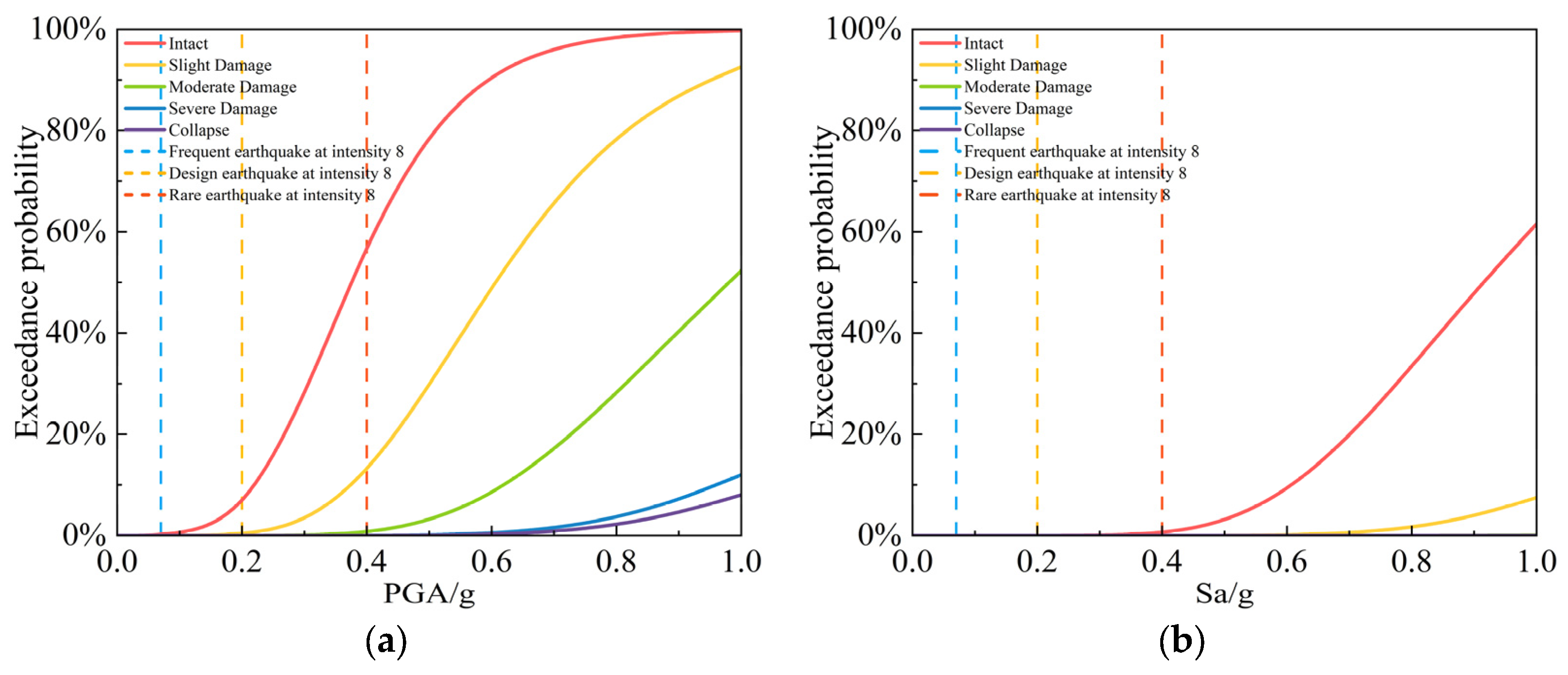
By substituting the regression coefficients into the fragility formulation, the fragility curves of the prefabricated shear wall structure were obtained, as shown in
Figure 20. The results indicated that, within the range of ground motion intensities considered in this study, the structural demand corresponding to Sa(T1, 5%) remained relatively small, resulting in extremely low exceedance probabilities for the defined damage states. Consequently, the fragility relationships derived using Sa(T1, 5%) exhibited very limited variation and provided little additional information for damage state differentiation. In contrast, PGA showed clearer correlations with structural demand and produced more distinguishable fragility trends within the investigated intensity range. Considering these observations, and for consistency with commonly adopted engineering practice in probabilistic seismic assessment of building structures, PGA was selected as the primary intensity measure for the final fragility evaluation.
The exceedance probabilities corresponding to different damage states under seismic intensity levels representing frequent, design, and rare earthquakes (PGA = 0.07 g, 0.20 g, and 0.40 g) are summarized in
Table 9. The fragility curves exhibit the typical lognormal S-shaped distribution, representing the gradual transition from elastic behavior to nonlinear structural response as seismic intensity increases. The fragility results indicate that the structure has a high probability of remaining in the intact or slight damage states under low seismic intensity levels. As PGA increases, the probabilities of moderate and severe damage increase monotonically, while the probability of collapse remains very small even under rare earthquake conditions. Statistical results show that under frequent earthquakes (PGA = 0.07 g), the probability of exceeding the intact state is only 0.01%, indicating that the structure remains predominantly in the elastic range. Under design-level earthquakes (PGA = 0.20 g), limited nonlinear behavior begins to appear, but the probabilities of moderate and higher damage states remain relatively small. Under rare earthquakes (PGA = 0.40 g), the probabilities of exceeding the intact and slight damage states increase, while the probabilities of moderate damage, severe damage, and collapse remain relatively low.
It should be noted that the collapse probability of 0% obtained from the fragility analysis does not imply that structural collapse is impossible. In this study, collapse was defined based on the exceedance of an interstory drift ratio limit of 1/120, which is commonly adopted as a deformation-based collapse criterion for reinforced concrete shear wall structures. However, numerical models based on distributed plasticity elements may not fully capture certain instability mechanisms, such as local connection failure, progressive interface slip, or global stability loss. Therefore, the collapse probability obtained from the numerical model should be interpreted as an idealized estimate under the adopted modeling assumptions, and the potential uncertainties associated with modeling simplifications should be acknowledged.
5. Conclusions
This study investigated the seismic performance and nonlinear behavior of a prefabricated reinforced concrete shear wall system incorporating keyway interlocking joints and concentrated reinforcement connections through finite element modeling, parametric analysis, nonlinear dynamic analysis, and seismic fragility assessment. The main conclusions are summarized as follows:
The developed finite element models reproduced the overall hysteretic behavior, stiffness degradation, and load-carrying capacity of the tested prefabricated shear wall specimens with good agreement with the experimental observations. The results indicate that the adopted Concrete Damaged Plasticity (CDP) model combined with the cohesion–friction interface formulation can reasonably capture the global nonlinear response of a prefabricated shear wall.
The parametric analysis demonstrates that the axial compression ratio, concrete strength, and wall thickness significantly influence the structural stiffness and load-carrying capacity. Compared with cast-in-place shear walls, the prefabricated specimens generally exhibit slightly lower stiffness and strength. The mean stiffness and strength reduction factors are 0.88 and 0.91, respectively, with corresponding standard deviations of 0.0464 and 0.0906, indicating relatively limited variability and stable mechanical performance within the investigated parameter range.
Nonlinear time history analyses of an eight-story prefabricated shear wall building show that the global seismic response is primarily dominated by flexural deformation. The peak roof displacements reached 19.71 mm and 32.85 mm in the X and Y directions, respectively, while the maximum interstory drift ratios were 1/892 and 1/724, which remain significantly below the adopted collapse drift limit of 1/120. These results indicate that the proposed structural system possesses high lateral stiffness and considerable deformation capacity under the ground motions considered.
Incremental Dynamic Analysis results indicate that the structural seismic demand increases monotonically with increasing ground motion intensity. Probabilistic seismic demand models were established based on both PGA and Sa(T1, 5%) intensity measures, showing strong correlations with the maximum interstory drift ratio. Fragility analysis indicates that the structure has a high probability of remaining in intact or slight damage states under frequent and design-level earthquakes, while the probability of severe damage or collapse remains low even under rare earthquakes.
From an engineering perspective, the proposed keyway interlocking connection combined with concentrated reinforcement provides a feasible structural solution for prefabricated shear wall systems, contributing to improved seismic reliability while maintaining the advantages of industrialized construction.
Despite these findings, several limitations of the present study should be acknowledged. Firstly, the numerical investigation mainly focused on the global structural response, while the localized mechanical behavior of the connections, including load transfer mechanisms, local stress distribution, stiffness degradation, and potential failure modes, was not explicitly investigated. Secondly, the structural model employed a fiber-based wall element formulation, which represents sectional nonlinear behavior but may not fully capture localized interface slip, uplift, or progressive connection damage at the joint region. Such modeling simplifications may influence the predicted deformation capacity and fragility results. Finally, the numerical models were calibrated based on limited experimental data, and uncertainties associated with material variability, construction tolerances, and geometric imperfections were not explicitly incorporated.