From Behavioral Characteristics to Spatiotemporal Structures: Identifying Urban Active-Healthy Walking Support Types and Their Environmental Determinants



Abstract
1. Introduction
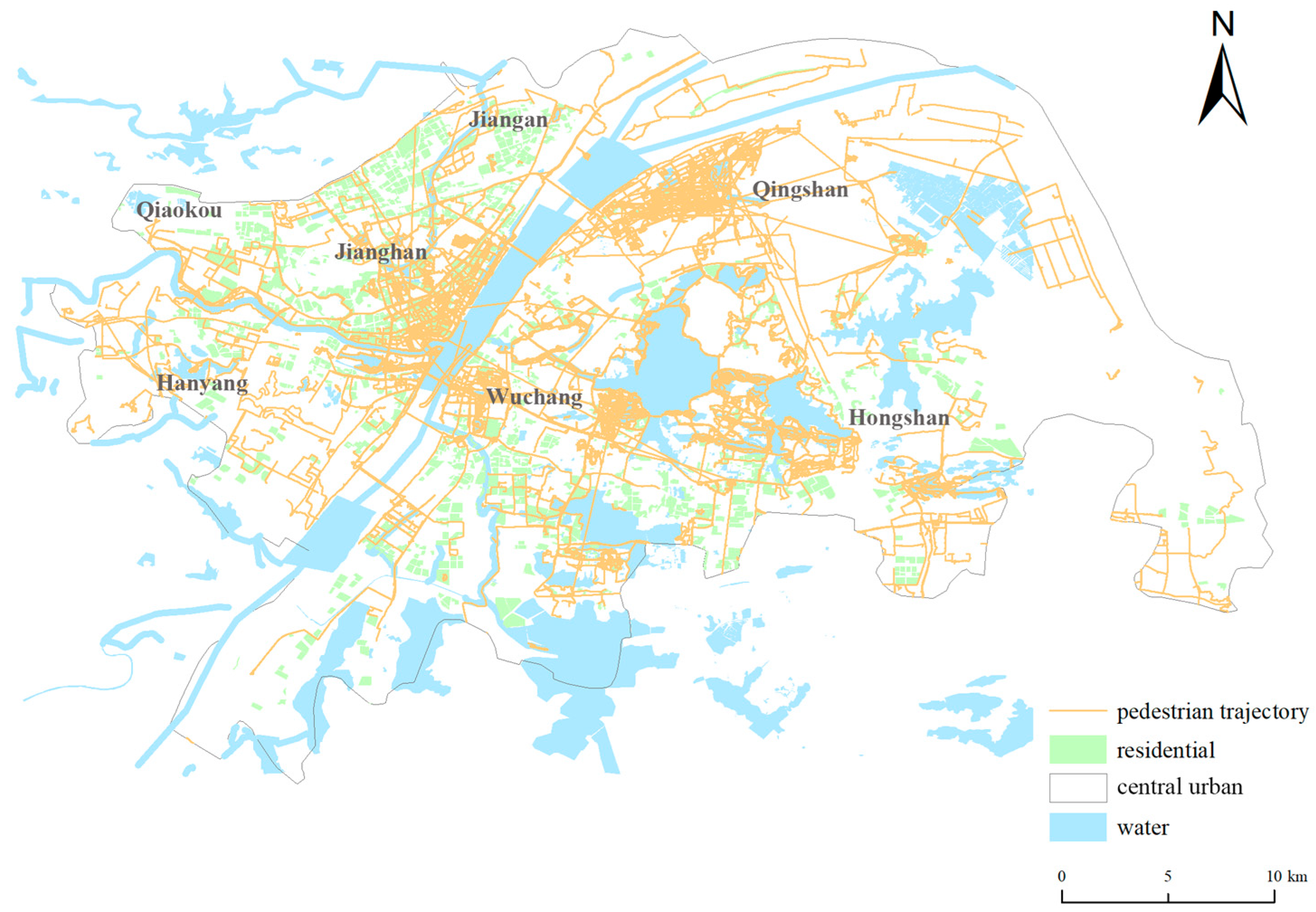
2. Study Area and Data
2.1. Study Area and Data Sources
2.2. Data Preprocessing and Spatialization
3. Methods
3.1. Construction of the Walking Behavioral Indicator System
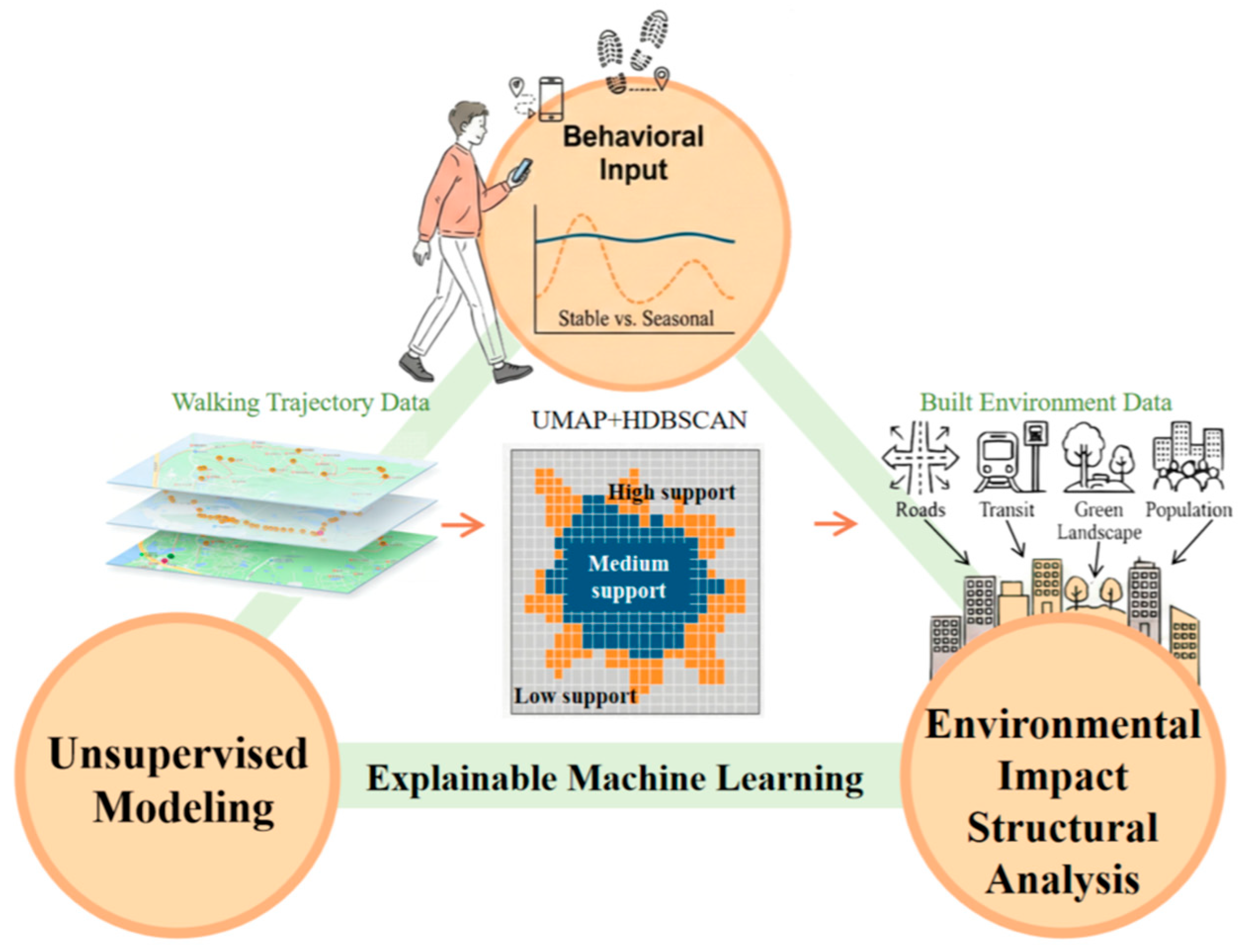
3.2. Spatial Typology Identification Based on Nonlinear Dimensionality Reduction and Density-Based Clustering
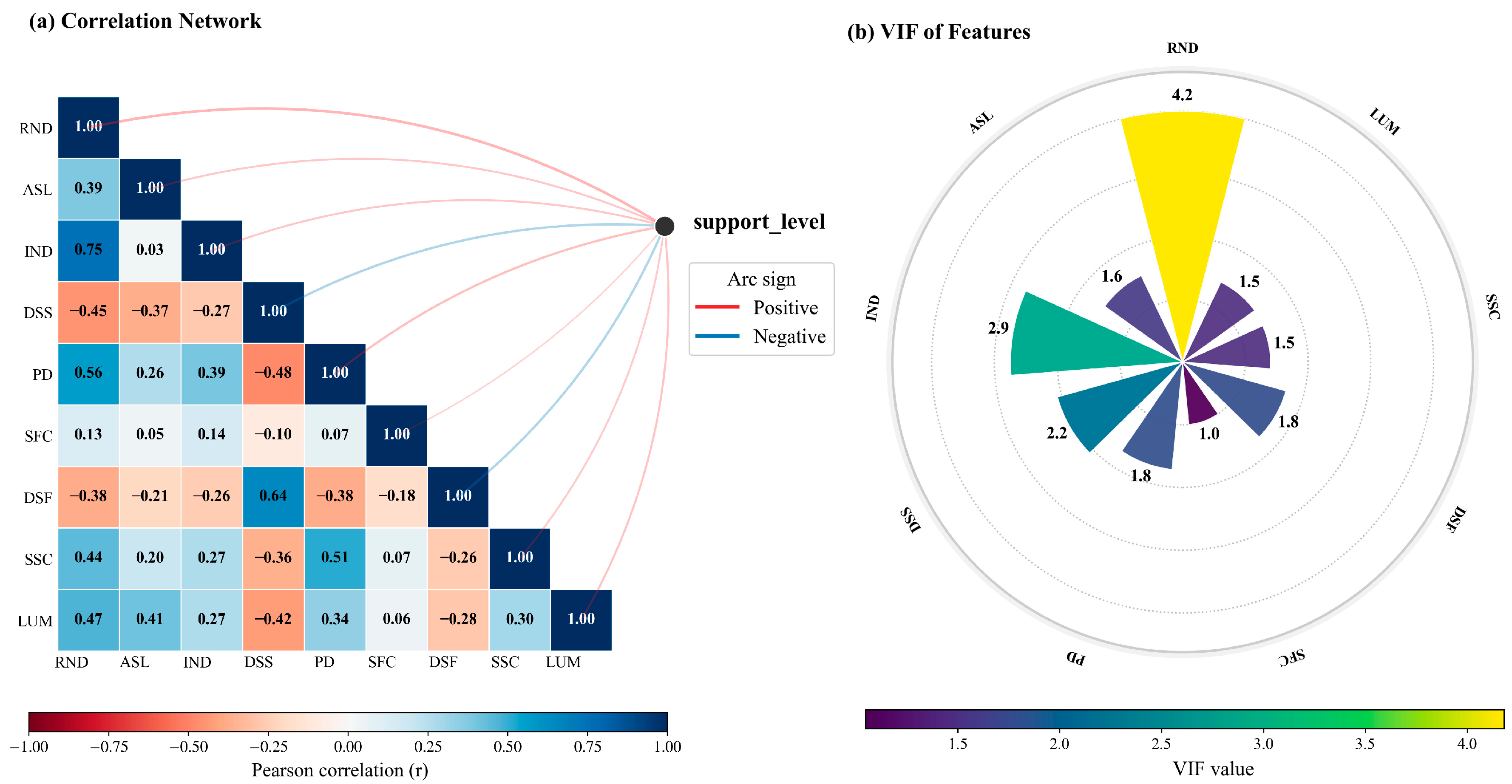
3.3. Quantification of Built-Environment Characteristics and Variable Selection
3.4. Interpretable Machine Learning Modeling and Model Selection
3.4.1. Comparison of Machine Learning Models
3.4.2. Construction of the Random Forest Model
3.4.3. SHAP-Based Model Interpretability Analysis
4. Results
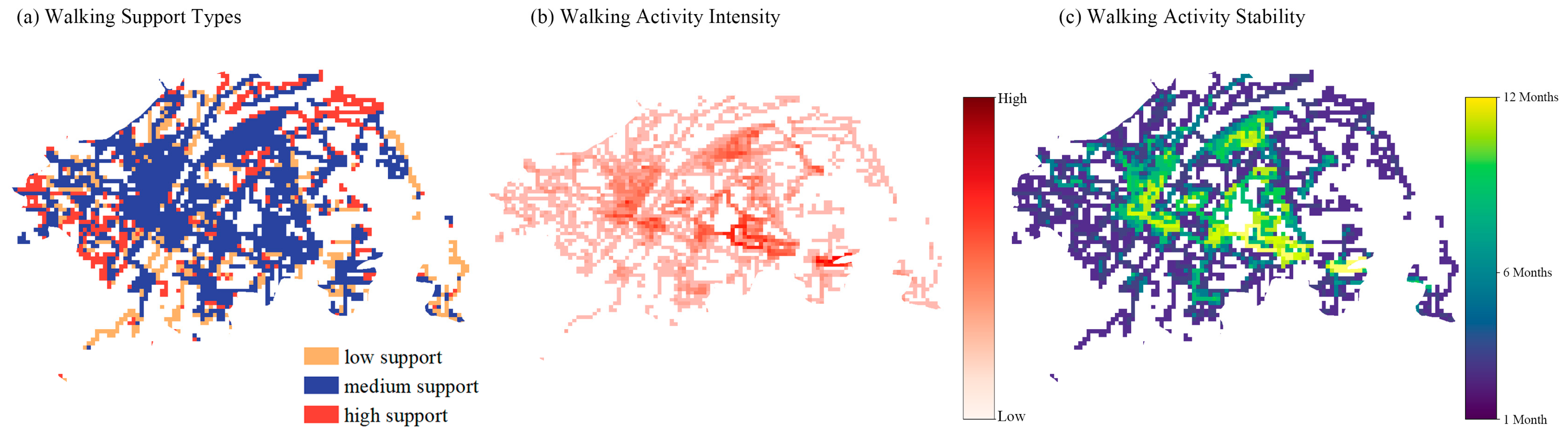
4.1. Walking Support Space Types for Active Healthy Walking and Differences in Behavioral Characteristics
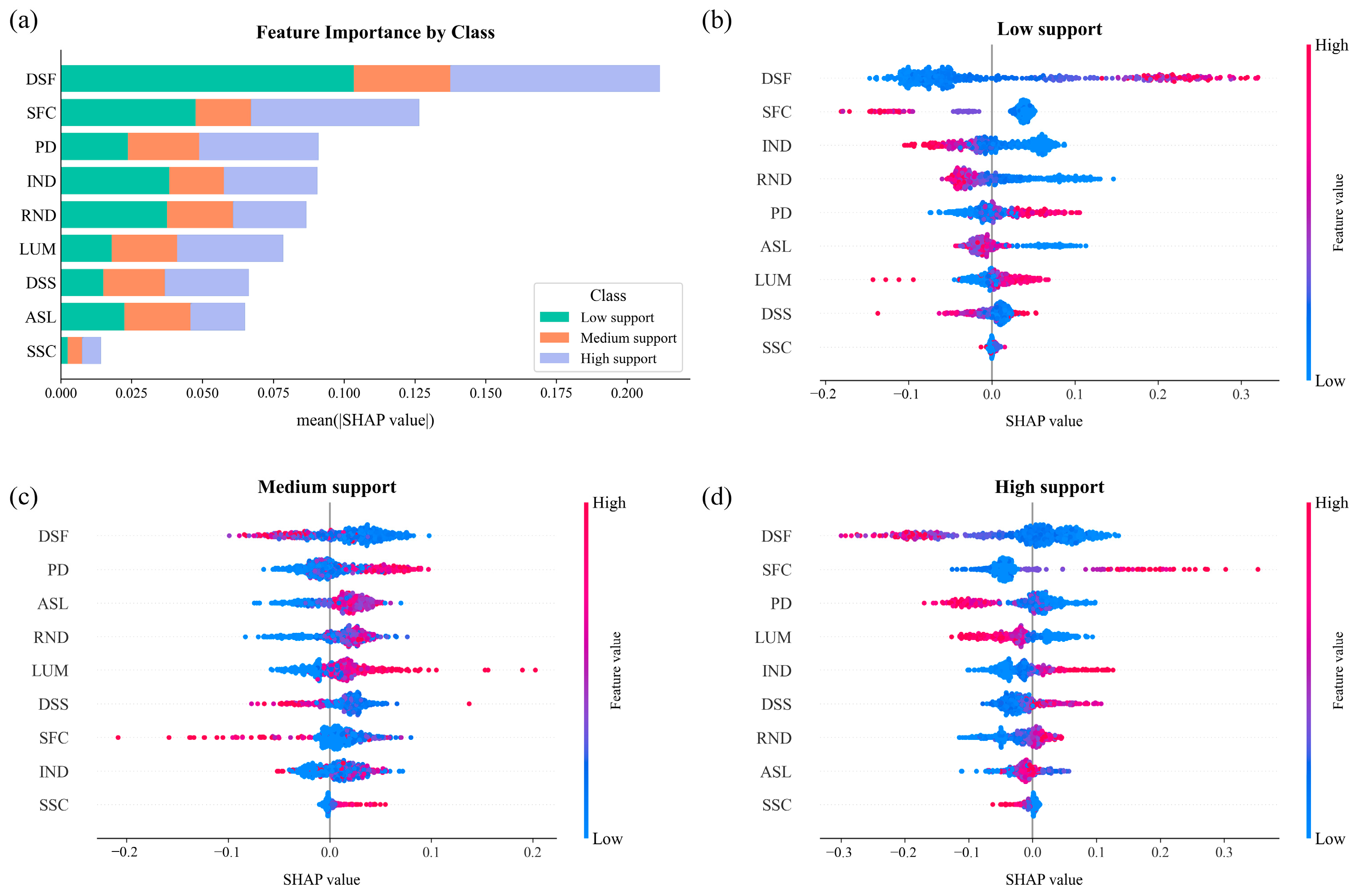
4.2. Overall Importance of Built-Environment Variables for Walking Support Space Types
4.3. Nonlinear and Threshold Characteristics of Built-Environment Variables
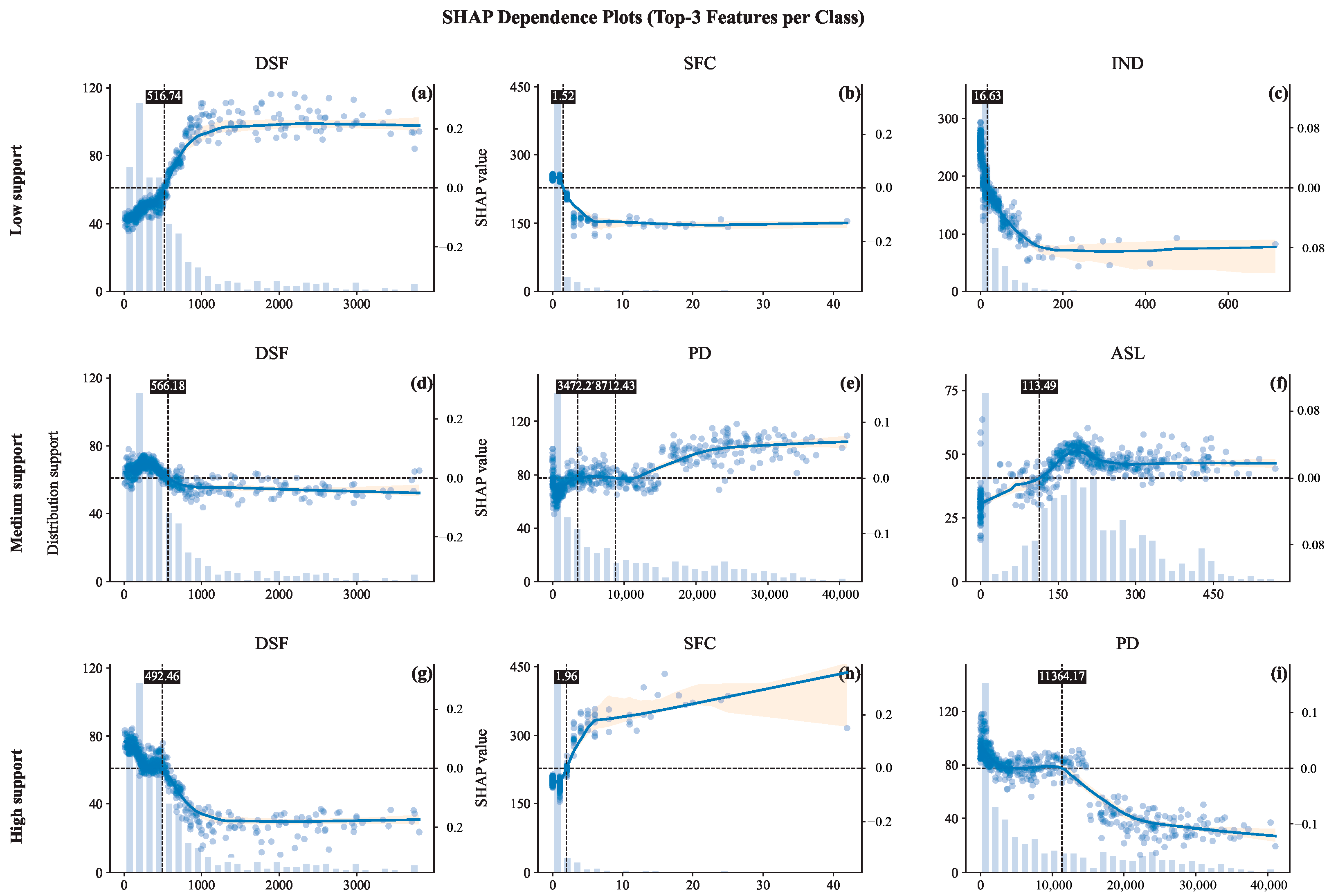
4.3.1. Nonlinear Thresholds and Sensitive Ranges in Univariate Responses
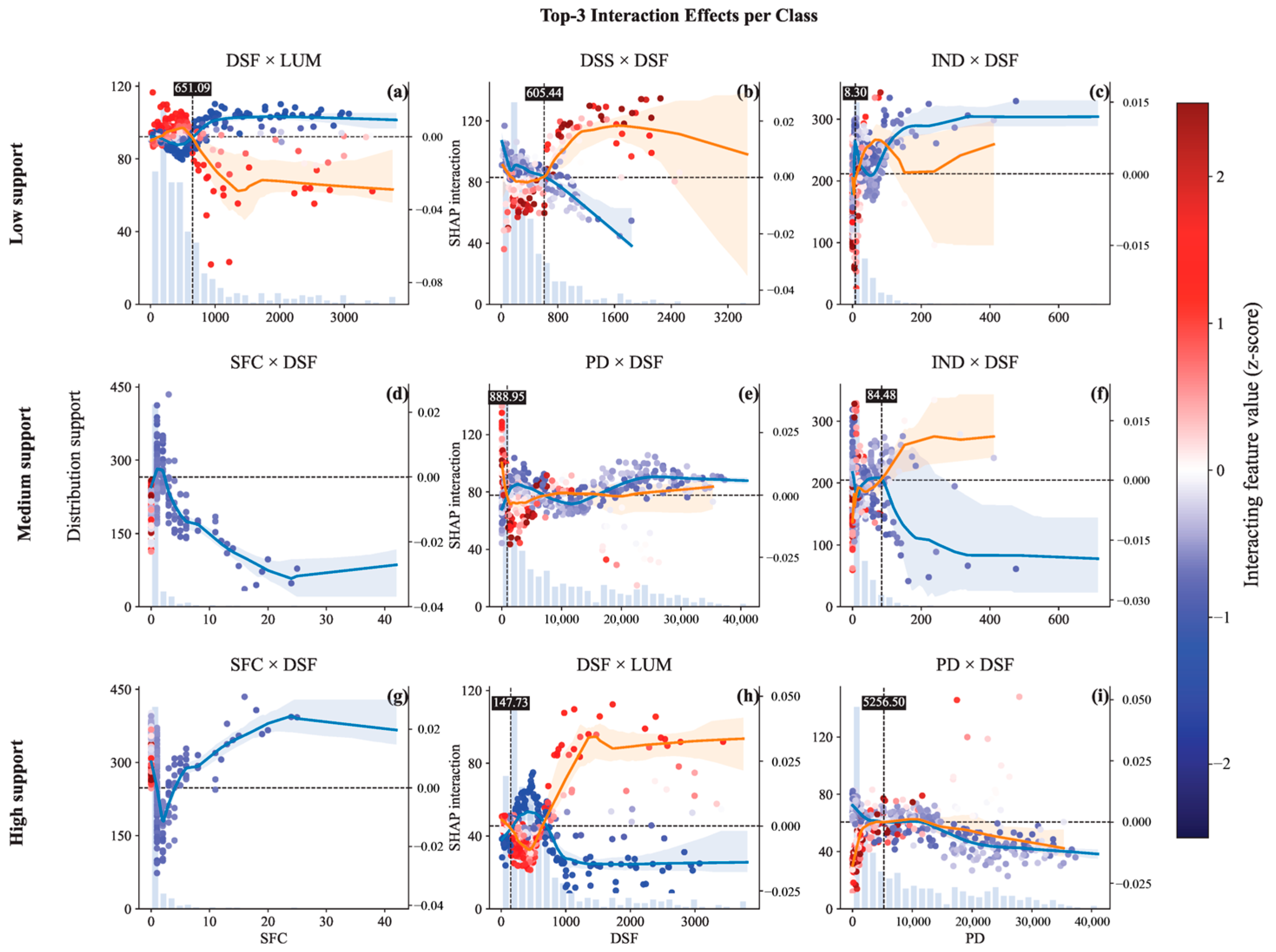
4.3.2. Discriminative Patterns of Multivariable Interactions
5. Discussion
5.1. Spatiotemporal Resilience of Walking Support Capacity and Its Spatial Differentiation
5.2. Targeted Spatial Intervention Strategies for Active Health
5.3. Limitations and Future Research
6. Conclusions
Supplementary Materials
Author Contributions
Funding
Institutional Review Board Statement
Informed Consent Statement
Data Availability Statement
Acknowledgments
Conflicts of Interest
References
- Brand, C.; Götschi, T.; Dons, E.; Gerike, R.; Anaya-Boig, E.; Avila-Palencia, I.; de Nazelle, A.; Gascon, M.; Gaupp-Berghausen, M.; Iacorossi, F.; et al. The climate change mitigation impacts of active travel: Evidence from a longitudinal panel study in seven European cities. Glob. Environ. Chang.-Hum. Policy Dimens. 2021, 67, 102224. [Google Scholar] [CrossRef]
- Ding, D.; Nguyen, B.; Nau, T.; Luo, M.Y.; Cruz, B.D.; Dempsey, P.C.; Munn, Z.; Jefferis, B.J.; Sherrington, C.; Calleja, E.A.; et al. Daily steps and health outcomes in adults: A systematic review and dose-response meta-analysis. Lancet Public Health 2025, 10, e668–e681. [Google Scholar] [CrossRef]
- Veitch, J.; Ball, K.; Rivera, E.; Loh, V.; Deforche, B.; Best, K.; Timperio, A. What entices older adults to parks? Identification of park features that encourage park visitation, physical activity, and social interaction. Landsc. Urban Plan. 2022, 217, 104254. [Google Scholar] [CrossRef]
- Yin, G.M.; Huang, Z.; Fu, C.; Ren, S.L.; Bao, Y.; Ma, X.L. Examining active travel behavior through explainable machine learning: Insights from Beijing, China. Transp. Res. Part D-Transp. Environ. 2024, 127, 104038. [Google Scholar] [CrossRef]
- Albini, A.; La Vecchia, C.; Magnoni, F.; Garrone, O.; Morelli, D.; Janssens, J.P.; Maskens, A.; Rennert, G.; Galimberti, V.; Corso, G. Physical activity and exercise health benefits: Cancer prevention, interception, and survival. Eur. J. Cancer Prev. 2025, 34, 24–39. [Google Scholar] [CrossRef]
- Dempsey, P.C.; Rowlands, A.; Strain, T.; Zaccardi, F.; Dawkins, N.; Razieh, C.; Davies, M.J.; Khunti, K.K.; Edwardson, C.L.; Wijndaele, K.; et al. Physical activity volume, intensity, and incident cardiovascular disease. Eur. Heart J. 2022, 43, 4789–4800. [Google Scholar] [CrossRef] [PubMed]
- Hall, K.S.; Hyde, E.T.; Bassett, D.R.; Carlson, S.A.; Carnethon, M.R.; Ekelund, U.; Evenson, K.R.; Galuska, D.A.; Kraus, W.E.; Lee, I.M.; et al. Systematic review of the prospective association of daily step counts with risk of mortality, cardiovascular disease, and dysglycemia. Int. J. Behav. Nutr. Phys. Act. 2020, 17, 78. [Google Scholar] [CrossRef] [PubMed]
- Stens, N.A.; Bakker, E.A.; Mañas, A.; Buffart, L.M.; Ortega, F.B.; Lee, D.C.; Thompson, P.D.; Thijssen, D.H.J.; Eijsvogels, T.M.H. Relationship of Daily Step Counts to All-Cause Mortality and Cardiovascular Events. J. Am. Coll. Cardiol. 2023, 82, 1483–1494. [Google Scholar] [CrossRef]
- Ungvari, Z.; Fazekas-Pongor, V.; Csiszar, A.; Kunutsor, S.K. The multifaceted benefits of walking for healthy aging: From Blue Zones to molecular mechanisms. Geroscience 2023, 45, 3211–3239. [Google Scholar] [CrossRef] [PubMed]
- Hillnhütter, H. Walking environments for transit access: Travelers’ perspectives. J. Transp. Geogr. 2025, 129, 104414. [Google Scholar] [CrossRef]
- Shilton, T.; Bauman, A.; Beger, B.; Chalkley, A.; Champagne, B.; Elings-Pers, M.; Giles-Corti, B.; Goenka, S.; Miller, M.; Milton, K.; et al. More People, More Active, More Often for Heart Health—Taking Action on Physical Activity. Global Heart 2024, 19, 42. [Google Scholar] [CrossRef]
- Baeza, J.L.; Carpio-Pinedo, J.; Sievert, J.; Landwehr, A.; Preuner, P.; Borgmann, K.; Avakumovic, M.; Weissbach, A.; Bruns-Berentelg, J.; Noennig, J.R. Modeling Pedestrian Flows: Agent-Based Simulations of Pedestrian Activity for Land Use Distributions in Urban Developments. Sustainability 2021, 13, 9268. [Google Scholar] [CrossRef]
- Jiang, F.F.; Ma, J. Predicting Urban Vitality at Regional Scales: A Deep Learning Approach to Modelling Population Density and Pedestrian Flows. Smart Cities 2025, 8, 58. [Google Scholar] [CrossRef]
- Ma, H.; Wang, M.H.; Li, J.Q.; Liu, H. Public Space Optimization Strategy Through Social Network Analysis in Shenzhen’s Gongming Ancient Fair. Land 2025, 14, 1267. [Google Scholar] [CrossRef]
- Zhou, Y.T.; Zhao, Q. Simulation Study on Age-Friendly Design of Community Park Activity Spaces Based on AnyLogic: A Case Study of Qiaokou Park in Wuhan. Buildings 2025, 15, 3419. [Google Scholar] [CrossRef]
- Bin Sulaiman, F. Striding towards sustainable urban livability: Evaluating walkability efficiency vis-a-vis population dynamics in Saudi Arabia cities. Cogent Soc. Sci. 2024, 10, 2340428. [Google Scholar] [CrossRef]
- Fan, P.Y.; Chun, K.P.; Mijic, A.; Tan, M.L.; Liu, M.S.; Yetemen, O. A framework to evaluate the accessibility, visibility, and intelligibility of green-blue spaces (GBSs) related to pedestrian movement. Urban For. Urban Green. 2022, 69, 127494. [Google Scholar] [CrossRef]
- Lee, S.H.; Kim, H.; Han, H. Transforming urban neighborhoods from ‘bed towns’ to eco-friendly smart cities in Korea. Cities 2025, 166, 106258. [Google Scholar] [CrossRef]
- Yoshida, N.; Nakai, T. Impact analysis of street space quality on pedestrian behavior using mobile probe data. Iatss Res. 2024, 48, 477–486. [Google Scholar] [CrossRef]
- Cerin, E.; Sallis, J.F.; Salvo, D.; Hinckson, E.; Conway, T.L.; Owen, N.; van Dyck, D.; Lowe, M.; Higgs, C.; Moudon, A.V.; et al. Determining thresholds for spatial urban design and transport features that support walking to create healthy and sustainable cities: Findings from the IPEN Adult study. Lancet Glob. Health 2022, 10, E895–E906. [Google Scholar] [CrossRef]
- He, X.; He, S.Y. Decoding the spatial effects of walkability on walking behavior among older adults by integrating big data and small data. Cities 2025, 156, 105537. [Google Scholar] [CrossRef]
- Zeng, Q.; Wu, H.; Wei, Y.Y.; Wang, J.J.; Zhang, C.Y.; Fei, N.Y.; Dewancker, B.J. Association between built environment factors and collective walking behavior in peri-urban area: Evidence from Chengdu. Appl. Geogr. 2024, 167, 103274. [Google Scholar] [CrossRef]
- Li, B.; Zhang, H.L.; Yang, Y.W. Mapping environmental influences on walking behavior across urban morphologies: A local climate zone-based study. Urban Clim. 2025, 62, 102503. [Google Scholar] [CrossRef]
- Cruz, B.D.; Ahmadi, M.; Sabag, A.; Saint Maurice, P.F.; Lee, I.M.; Stamatakis, E. Step Accumulation Patterns and Risk for Cardiovascular Events and Mortality Among Suboptimally Active Adults. Ann. Intern. Med. 2025, 178, 1718–1727. [Google Scholar] [CrossRef] [PubMed]
- Wang, M.H.; Haworth, J.; Chen, H.F.; Liu, Y.Z.; Shi, Z.X. Investigating the potential of crowdsourced street-level imagery in understanding the spatiotemporal dynamics of cities: A case study of walkability in Inner London. Cities 2024, 153, 105243. [Google Scholar] [CrossRef]
- Fang, C.Y.; Homma, R.; Liu, Q.; Liu, H.; Ridwan, A.S.S. Research on the Factors of Pedestrian Volume in Different Functional Areas of Kumamoto City. Sustainability 2022, 14, 1636. [Google Scholar] [CrossRef]
- Ge, J.Y.; Wen, Y.H.; Lee, J.; Li, X.W. Assessing Spatial Associations Between Crime Exposure and Neighborhood Walkability: A Cross-Sectional Analysis of Socio-Environmental Moderators in Detroit. Land 2025, 14, 2366. [Google Scholar] [CrossRef]
- Jiang, H.X.; Zhang, Q.R.; Guo, K.F.; Helbich, M.; Yang, H.R. How the built environment shapes our daily journeys: A nonlinear exploration of home and work environments’ relationship with active travel in Shanghai, China. Transp. Res. Part A-Policy Pract. 2025, 192, 104377. [Google Scholar] [CrossRef]
- Ding, Y.; He, H.; Li, Y.; Zhao, X.-Y.; Zhang, H.; Zhang, T. Investigating the Influence Patterns of the Built Environment on Residents’ Self-Rated Health: An Interpretable Machine Learning Approach. Buildings 2026, 16, 66. [Google Scholar]
- Han, Y.; Qin, C.P.; Xiao, L.Z.; Ye, Y. The nonlinear relationships between built environment features and urban street vitality: A data-driven exploration. Environ. Plan. B-Urban Anal. City Sci. 2024, 51, 195–215. [Google Scholar] [CrossRef]
- Tao, T.; Cao, J. Exploring nonlinear and collective influences of regional and local built environment characteristics on travel distances by mode. J. Transp. Geogr. 2023, 109, 103599. [Google Scholar] [CrossRef]
- Tao, T.; Wu, X.Y.; Cao, J.; Fan, Y.L.; Das, K.; Ramaswami, A. Exploring the Nonlinear Relationship between the Built Environment and Active Travel in the Twin Cities. J. Plan. Educ. Res. 2023, 43, 637–652. [Google Scholar] [CrossRef]
- Xu, Y.; Wang, Y.K.; Liu, H.L.; Huang, J.L.; Huang, Y.L.; Luo, M. Examining the Nonlinear Relationship Between Built Environment and Residents’ Leisure Travel Distance: A Case Study of Guangzhou, China. Land 2025, 14, 2392. [Google Scholar] [CrossRef]
- Wu, J.; Li, C.; Zhu, L.; Liu, X.; Peng, B.; Wang, T.; Yuan, S.; Zhang, Y. Nonlinear and threshold effects of built environment on older adults’ walking duration: Do age and retirement status matter? Front. Public Health 2024, 12, 1418733. [Google Scholar] [CrossRef]
- Venerandi, A.; Mellen, H.; Romice, O.; Porta, S. Walkability Indices-The State of the Art and Future Directions: A Systematic Review. Sustainability 2024, 16, 6730. [Google Scholar] [CrossRef]
- Carmes, A.; Catteau, L.; Sonta, A.; Tavakoli, A. Urban forms across continents: A data-driven comparison of Lausanne Philadelphia. Transp. Res. Interdiscip. Perspect. 2026, 36, 101823. [Google Scholar] [CrossRef]
- Peng, W.; Dai, D.; Liu, F.; Wang, X. Spatiotemporal Heterogeneity and Socioeconomic Drivers of Landscape Patterns in High-Density Communities of Wuhan. Sustainability 2025, 17, 8093. [Google Scholar] [CrossRef]
- 2024 Statistical Bulletin on National Economic and Social Development of Wuhan; National Bureau of Statistics of China: Beijing, China, 2025.
- Shi, J.; Xu, A.; Feng, H.; Wang, Z.; Shi, M. Dynamic ventilation network optimization to mitigate urban thermal risk. Sustain. Cities Soc. 2025, 131, 106785. [Google Scholar] [CrossRef]
- Xia, T.; Zhang, L.; Zou, Y. Mismatch Between Heat Exposure Risk and Blue-Green Exposure in Wuhan: A Coupled Spatial Analysis. Sustainability 2025, 17, 8440. [Google Scholar] [CrossRef]
- Yin, C.; Yan, J.; Wen, Q.; Zhang, Y.; An, Z.; Wang, Y. Planar vs. Vertical Dominance? A Nonlinear Analysis of the Urban Landscape-Land Surface Temperature Nexus. Appl. Spat. Anal. Policy 2025, 18, 82. [Google Scholar] [CrossRef]
- Mueller, S.A.; Paltra, S.; Rehmann, J.; Ewert, R.; Nagel, K. Comparing GPS and cell-based mobile phone data to identify activity participation during the COVID-19 pandemic. EPJ Data Sci. 2024, 13, 71. [Google Scholar] [CrossRef]
- Molina-Campoverde, J.J.; Rivera-Campoverde, N.; Campoverde, P.A.M.; Naula, A.K.B. Urban Mobility Pattern Detection: Development of a Classification Algorithm Based on Machine Learning and GPS. Sensors 2024, 24, 3884. [Google Scholar] [CrossRef] [PubMed]
- Macnish, K.; Henschke, A. The Ethics of Surveillance in Times of Emergency; Oxford University Press: Oxford, UK, 2023. [Google Scholar]
- Nathvani, R.; Cavanaugh, A.; Suel, E.; Bixby, H.; Clark, S.N.; Metzler, A.B.; Nimo, J.; Moses, J.B.; Baah, S.; Arku, R.E.; et al. Measurement of urban vitality with time-lapsed street-view images and object-detection for scalable assessment of pedestrian-sidewalk dynamics. Isprs J. Photogramm. Remote Sens. 2025, 221, 251–264. [Google Scholar] [CrossRef]
- Huang, X.R.; Zeng, L.; Liang, H.X.; Li, D.Y.; Yang, X.; Zhang, B. Comprehensive walkability assessment of urban pedestrian environments using big data and deep learning techniques. Sci. Rep. 2024, 14, 26993. [Google Scholar] [CrossRef]
- Paba-Larios, M.F.; Gutiérrez, M.; Ramos, R.; Cantillo, V. Modeling the influence of built environment on pedestrian perceptions in colombian cities. Transp. Policy 2025, 163, 358–369. [Google Scholar] [CrossRef]
- Althoff, T.; Ivanovic, B.; King, A.C.; Hicks, J.L.; Delp, S.L.; Leskovec, J. Countrywide natural experiment links built environment to physical activity. Nature 2025, 645, 407–413. [Google Scholar] [CrossRef]
- Dou, L.; Chen, H.W.; Xia, Y.M.; Lu, E.J. Seasonal variations in moderate-to-vigorous physical activity among children and adolescents with visual impairment during different segments of the school day. Front. Public Health 2025, 13, 1566561. [Google Scholar] [CrossRef]
- Lu, B.; Long, T.; Li, B.; Chen, Y.; Zhu, L. Unraveling nonlinear impacts of seasonal climate and built environments on exercise walking in high-density cities via a modified machine learning approach. Int. J. Health Geogr. 2026. [Google Scholar] [CrossRef]
- Wei, Z.; Cao, K.; Kwan, M.P.; Jiang, Y.H.; Feng, Q.S. Measuring the age-friendliness of streets’ walking environment using multi-source big data: A case study in Shanghai, China. Cities 2024, 148, 104829. [Google Scholar] [CrossRef]
- Gómez-Varo, I.; Delclòs-Alió, X.; Miralles-Guasch, C. Jane Jacobs reloaded: A contemporary operationalization of urban vitality in a district in Barcelona. Cities 2022, 123, 103565. [Google Scholar] [CrossRef]
- Doan, Q.C.; Ma, J.; Chen, S.T.; Zhang, X.H. Nonlinear and threshold effects of the built environment, road vehicles and air pollution on urban vitality. Landsc. Urban Plan. 2025, 253, 105204. [Google Scholar] [CrossRef]
- De Vos, J.; Lättman, K.; van der Vlugt, A.L.; Welsch, J.; Otsuka, N. Determinants and effects of perceived walkability: A literature review, conceptual model and research agenda. Transp. Rev. 2023, 43, 303–324. [Google Scholar] [CrossRef]
- He, S.; Yu, S.; Ai, L.; Dai, J.; Chung, C.K.L. The built environment, purpose-specific walking behaviour and overweight: Evidence from Wuhan metropolis in central China. Int. J. Health Geogr. 2024, 23, 2. [Google Scholar] [CrossRef] [PubMed]
- Yu, C.M.; Wang, X.Y.; Zheng, Z.; Lau, S.S.Y. How Do Urban Environments Impact Walkability? An Analysis Using Multi-Source Data of Beijing. Land 2024, 13, 2101. [Google Scholar] [CrossRef]
- Li, X.; Xie, D.; Zhou, Z.Y.; Zhang, X.; Li, R.; Li, J.Y.; Chen, Z.Y.; Zhang, J.Y. Visualization analysis of research progress for walkability. Sci. Rep. 2024, 14, 1989. [Google Scholar] [CrossRef] [PubMed]
- Yin, C.; Cao, J.; Sun, B.D.; Liu, J.H. Exploring built environment correlates of walking for different purposes: Evidence for substitution. J. Transp. Geogr. 2023, 106, 103505. [Google Scholar] [CrossRef]
- Zhu, M.; Sze, N.N.; Newnam, S.; Zhu, D. Do footbridge and underpass improve pedestrian safety? A Hong Kong case study using three-dimensional digital map of pedestrian network. Accid. Anal. Prev. 2023, 186, 107064. [Google Scholar] [CrossRef]
- Liu, S.; Zhao, H.; Huang, Y.; Wei, W.; Xiong, R.; Yun, Y. Study on the Influence of Built Environment in Mountain Cities on the Walking Times of the Elderly: A Case Study of the Central Urban Area of Guiyang. J. Hum. Settl. West China 2023, 38, 60–67. [Google Scholar]
- Rundle, A.G.; Chen, Y.; Quinn, J.W.; Rahai, N.; Bartley, K.; Mooney, S.J.; Bader, M.D.; Zeleniuch-Jacquotte, A.; Lovasi, G.S.; Neckerman, K.M. Development of a Neighborhood Walkability Index for Studying Neighborhood Physical Activity Contexts in Communities across the US over the Past Three Decades. J. Urban Health-Bull. N. Y. Acad. Med. 2019, 96, 583–590. [Google Scholar] [CrossRef]
- Keskinen, K.E.; Gao, Y.; Rantakokko, M.; Rantanen, T.; Portegijs, E. Associations of Environmental Features With Outdoor Physical Activity on Weekdays and Weekend Days: A Cross-Sectional Study Among Older People. Front. Public Health 2020, 8, 578275. [Google Scholar] [CrossRef]
- Brakenridge, C.J.; Winkler, E.A.H.; Sallis, J.F.; Dunstan, D.W.; Owen, N.; Sugiyama, T.; Chandrabose, M. Associations of neighbourhood walkability with patterns of device-measured stepping, standing and sitting. Int. J. Behav. Nutr. Phys. Act. 2025, 22, 41. [Google Scholar] [CrossRef]
- Wang, S.; Yu, D.; Kwan, M.-P.; Zheng, L.; Miao, H.; Li, Y. The impacts of road network density on motor vehicle travel: An empirical study of Chinese cities based on network theory. Transp. Res. Part A-Policy Pract. 2020, 132, 144–156. [Google Scholar] [CrossRef]
- Liu, Y.; Yang, D.; Timmermans, H.J.P.; de Vries, B. Analysis of the impact of street-scale built environment design near metro stations on pedestrian and cyclist road segment choice: A stated choice experiment. J. Transp. Geogr. 2020, 82, 102570. [Google Scholar] [CrossRef]
- Kim, H.; Park, S.H.; So, J. Identifying walkability factors for urban metro station areas toward transit-oriented development. Int. J. Urban Sci. 2025, 29, 804–824. [Google Scholar] [CrossRef]
- Mariotti, I.; Giavarini, V.; Rossi, F.; Akhavan, M. Exploring the “15-Minute City” and near working in Milan using mobile phone data. Tema-J. Land Use Mobil. Environ. 2022, 39–56. [Google Scholar] [CrossRef]
- Liu, M.; Jiang, Y.; He, J. Quantitative Evaluation on Street Vitality: A Case Study of Zhoujiadu Community in Shanghai. Sustainability 2021, 13, 3027. [Google Scholar] [CrossRef]
- Lee, S.; Son, S.-o.; Park, J.; Park, J. Ensemble-Based Methodology to Identify Optimal Personal Mobility Service Areas Using Public Data. Ksce J. Civ. Eng. 2022, 26, 3150–3159. [Google Scholar] [CrossRef]
- Chen, D.; Kun, Y.; Chun, G. The Relationship between Built Environment Characteristics and Metro Stations Pedestrian Catchment Areas. J. Adv. Transp. 2024, 2024, 2196799. [Google Scholar] [CrossRef]
- Zou, J.; Jiang, H.; Ying, W.; Qiu, B. Scenic Influences on Walking Preferences in Urban Forest Parks from Top-View and Eye-Level Perspectives. Forests 2024, 15, 2020. [Google Scholar] [CrossRef]
- Li, C.; Seymour, M. Children’s perceptions of neighbourhood environments for walking and outdoor play. Landsc. Res. 2019, 44, 430–443. [Google Scholar] [CrossRef]
- Zhang, T.; Deng, S.; Ma, Q.; Sasaki, K. Evaluations of Landscape Locations along Trails Based on Walking Experiences and Distances Traveled in the Akasawa Forest Therapy Base, Central Japan. Forests 2015, 6, 2853–2878. [Google Scholar] [CrossRef]
- Lu, Y.; Sun, G.; Gou, Z.; Liu, Y.; Zhang, X. A dose-response effect between built environment characteristics and transport walking for youths. J. Transp. Health 2019, 14, 100616. [Google Scholar] [CrossRef]
- Cerin, E.; Barnett, A.; Zhang, C.J.P.; Lai, P.-C.; Sit, C.H.P.; Lee, R.S.Y. How urban densification shapes walking behaviours in older community dwellers: A cross-sectional analysis of potential pathways of influence. Int. J. Health Geogr. 2020, 19, 14. [Google Scholar] [CrossRef]
- de Saboya, R.T.; D’Orsi, E.; Keivani, R. Promoting active aging in Brazil: A longitudinal study of land use mix and utilitarian walking in older adults. Cities 2024, 154, 105318. [Google Scholar] [CrossRef]
- da Fontoura, L.C.; Kanashiroal, M.; Urbanoa, M.R. Comparing land use mix measures for different urban areas: An application in a Brazilian city. Urbe-Rev. Bras. Gest. Urbana 2025, 17, e20230301. [Google Scholar] [CrossRef]
- Boakye, K.; Bovbjerg, M.; Schuna, J., Jr.; Branscum, A.; Mat-Nasir, N.; Bahonar, A.; Barbarash, O.; Yusuf, R.; Lopez-Jaramillo, P.; Seron, P.; et al. Perceived built environment characteristics associated with walking and cycling across 355 communities in 21 countries. Cities 2023, 132, 104102. [Google Scholar] [CrossRef]
- Chevance, G.; Baretta, D.; Heino, M.; Perski, O.; Olthof, M.; Klasnja, P.; Hekler, E.; Godino, J. Characterizing and predicting person-specific, day-to-day, fluctuations in walking behavior. PLoS ONE 2021, 16, e0251659. [Google Scholar] [CrossRef]
- Wu, J.; Zhao, C.; Li, C.; Wang, T.; Wang, L.; Zhang, Y. Non-linear Relationships Between the Built Environment and Walking Frequency Among Older Adults in Zhongshan, China. Front. Public Health 2021, 9, 686144. [Google Scholar] [CrossRef]
- Shen, J.; Fan, J.; Peng, Y.; Lu, W.; Li, Y.; Xu, X.; Fei, Y. Systematic review of nonlinear associations between the built environment and walking in older adults. BMC Public Health 2025, 25, 4240. [Google Scholar] [CrossRef]
- Su, C.X.; Chen, Z.Y.; Cheng, Y.X.; Chen, S.F.; Li, W.T.; Ding, Z. Decoding Multi-Scale Environmental Configurations for Older Adults’ Walkability with Explainable Machine Learning. Sustainability 2025, 17, 8499. [Google Scholar] [CrossRef]
- Ma, X.T.; Zeng, T.C.; de Dear, R.; Xie, Y.X.; Yuan, C.; Lu, S. Active route choice to minimize pedestrian thermal discomfort in a high-density subtropical city. Sustain. Cities Soc. 2025, 131, 106697. [Google Scholar] [CrossRef]
- Zeng, Q.; Wu, H.; Zhou, L.; Huang, G.; Li, Y.; Dewancker, B.J. Toward pedestrian-friendly cities: Nonlinear and interaction effects of building density on pedestrian volume. J. Transp. Geogr. 2024, 119, 103954. [Google Scholar] [CrossRef]
- Melnikov, V.R.; Christopoulos, G.I.; Krzhizhanovskaya, V.V.; Lees, M.H.; Sloot, P.M.A. Behavioural thermal regulation explains pedestrian path choices in hot urban environments. Sci. Rep. 2022, 12, 2441. [Google Scholar] [CrossRef] [PubMed]
- Cheng, L.; De Vos, J.; Zhao, P.; Yang, M.; Witlox, F. Examining non-linear built environment effects on elderly’s walking: A random forest approach. Transp. Res. Part D-Transp. Environ. 2020, 88, 102552. [Google Scholar] [CrossRef]
- Basu, R.; Colaninno, N.; Alhassan, A.; Sevtsuk, A. Hot and bothered: Exploring the effect of heat on pedestrian route choice behavior and accessibility. Cities 2024, 155, 105435. [Google Scholar] [CrossRef]



| Metric | Value |
|---|---|
| Total number of walking trajectories | 2485 |
| Total walking distance (km) | 20,527.11 |
| Per-trajectory distance: P25–P75 (km) | 2.69–11.01 |
| Mean per-trajectory distance (km) | 8.26 |
| Minimum per-trajectory distance (km) | 0.21 |
| Maximum per-trajectory distance (km) | 56.99 |
| Per-trajectory duration: P25–P75 (h) | 1.02–4.50 |
| Per-trajectory speed: P25–P75 (km/h) | 1.73–3.62 |
| Dimension | Indicator | Symbol | Calculation | Implication |
|---|---|---|---|---|
| Activity Intensity | Annual walking intensity | , where denotes the walking distance (km) recorded in spatial unit during month . | Reflects the cumulative annual volume of walking activity within a spatial unit, indicating overall walking intensity. | |
| Walking frequency | , where represents the number of walking trajectories observed in spatial unit during month . | Indicates how frequently a spatial unit is repeatedly used, reflecting the degree of routinization in walking activity. | ||
| Temporal Stability | Number of active months | where is an indicator function equal to 1 when walking activity occurs in month j, and 0 otherwise. | Measures the persistence of walking activity over the annual time scale, distinguishing episodic from routine use. | |
| Monthly coefficient of variation | , where and denote the standard deviation and mean of monthly walking distance, respectively. When the mean equals zero, a small constant is used as a substitute to avoid division by zero. | Describes the temporal variability of walking activity across the year, with lower values indicating greater stability. | ||
| Behavioral Rhythm | Peak concentration index | When , the value is set to 0. | Indicates the extent to which walking activity is concentrated in a single month, capturing episodic dependence. | |
| Summer proportion | When , the value is set to 0. | A context-specific indicator capturing the proportion of walking activity sustained during summer months (June–August) under high-temperature conditions. |
| Dimension | Indicator | Abbreviation | Definition | References |
|---|---|---|---|---|
| Road network structure | Road network density | RND | Ratio of total road length to unit area, reflecting road network coverage and basic accessibility. | [59,60] |
| Intersection density | IND | Number of intersections per unit area, representing road network connectivity and diversity of route choices. | [61,62,63] | |
| Average street segment length | ASL | Average street segment length (m), reflecting block scale and walkability. | [64,65] | |
| Public transport | Subway station count | SSC | Number of metro stations within a grid cell, reflecting the intensity of public transport service provision. | [66] |
| Distance to nearest subway station | DSS | Distance to the nearest metro station (m), used to measure public transport accessibility. | [67,68,69,70] | |
| Landscape resources | Scenic feature count | SFC | Number of parks and landscape resources within a grid cell, reflecting the supply of recreational and environmental amenities. | [71,72] |
| Distance to nearest scenic feature | DSF | Distance to the nearest park or landscape resource (m), characterizing accessibility to landscape amenities. | [73] | |
| Population activity | Population density | PD | Population size per unit area, reflecting potential walking activity and travel demand intensity. | [74,75] |
| Land-Use structure | Land-use mix index | LUM | Land-use mix calculated using Shannon entropy, used to measure functional diversity. | [76,77,78] |
| Support Type | Annual Walking Intensity () | Walking Frequency () | Number of Active Months () | Monthly Coefficient of Variation () | Peak Concentration Index () | Summer Proportion ( ) |
|---|---|---|---|---|---|---|
| High-support | 4.525 | 8.009 | 3.774 | 2.128 | 0.589 | 0.283 |
| Medium-support | 0.629 | 1.303 | 1.174 | 2.294 | 0.993 | 0.153 |
| Low-support | 0.234 | 1.178 | 1.082 | 3.290 | 0.992 | 0.011 |
Disclaimer/Publisher’s Note: The statements, opinions and data contained in all publications are solely those of the individual author(s) and contributor(s) and not of MDPI and/or the editor(s). MDPI and/or the editor(s) disclaim responsibility for any injury to people or property resulting from any ideas, methods, instructions or products referred to in the content. |
© 2026 by the authors. Licensee MDPI, Basel, Switzerland. This article is an open access article distributed under the terms and conditions of the Creative Commons Attribution (CC BY) license.
Share and Cite
Li, Y.; Zhang, Q.-H.; Guo, L.; Liu, W.-P.; He, H. From Behavioral Characteristics to Spatiotemporal Structures: Identifying Urban Active-Healthy Walking Support Types and Their Environmental Determinants. Buildings 2026, 16, 1182. https://doi.org/10.3390/buildings16061182
Li Y, Zhang Q-H, Guo L, Liu W-P, He H. From Behavioral Characteristics to Spatiotemporal Structures: Identifying Urban Active-Healthy Walking Support Types and Their Environmental Determinants. Buildings. 2026; 16(6):1182. https://doi.org/10.3390/buildings16061182
Chicago/Turabian StyleLi, Yuan, Qing-Hao Zhang, Liang Guo, Wen-Ping Liu, and Hui He. 2026. "From Behavioral Characteristics to Spatiotemporal Structures: Identifying Urban Active-Healthy Walking Support Types and Their Environmental Determinants" Buildings 16, no. 6: 1182. https://doi.org/10.3390/buildings16061182
APA StyleLi, Y., Zhang, Q.-H., Guo, L., Liu, W.-P., & He, H. (2026). From Behavioral Characteristics to Spatiotemporal Structures: Identifying Urban Active-Healthy Walking Support Types and Their Environmental Determinants. Buildings, 16(6), 1182. https://doi.org/10.3390/buildings16061182