Review

Building Lighting in the Era of Tech Integration: A Comprehensive Review

by
Susan G. Varghese
1,
Ciji Pearl Kurian
1,
Srividya Ravindrakumar
1,*,
Sheryl Grace Colaco
2,
Veena Mathew
3,
Anna Merine George
4 and
Mary Ann George
5
1
Manipal Institute of Technology, Manipal Academy of Higher Education, Udupi 576104, India
2
Department of Electrical & Electronics Engineering, St. Joseph Engineering College, Mangalore 575028, India
3
Department of Electrical & Electronics Engineering, Mar Athanasius Engineering College, Kothamangalam 686666, India
4
Department of Electronics & Communication Engineering, BMS Institute of Technology and Management, Bangalore 560119, India
5
Independent Researcher, Udupi 576104, India
*
Author to whom correspondence should be addressed.
Buildings 2026, 16(6), 1174; https://doi.org/10.3390/buildings16061174
Submission received: 15 December 2025 / Revised: 13 February 2026 / Accepted: 16 February 2026 / Published: 17 March 2026
(This article belongs to the Section Building Energy, Physics, Environment, and Systems)

Abstract

Building lighting has a significant impact on occupant health and well-being, energy efficiency, spatial perception, and visual comfort. Many current building lighting systems, however, continue to be insufficiently responsive to changing environmental conditions and human-centric demands, leading to ineffective energy use, poor visual quality, and disruption of the circadian rhythm. This disparity highlights the need for modern buildings to incorporate integrated, intelligent, and sustainable lighting design strategies. This review offers a methodical examination of current, emerging and future developments in building lighting research in six related fields within an architectural scope of building design and performance. To assess lighting effectiveness, it first examines both qualitative and quantitative performance metrics, including illuminance, luminance distribution, glare, color quality, and user comfort. Second, it examines lighting control systems that use tunable light sources that can dynamically change the spectral composition and intensity in response to task demands, occupancy patterns, and daylight availability. Third, the study examines circadian-centric lighting strategies, focusing on digital modeling and simulation approaches that capture real-world lighting conditions and biological reactions. Fourth, the function of virtual reality and sophisticated visualization tools is examined, emphasizing their role in design decision-making and pre-implementation assessment. Fifth, a critical evaluation is conducted of the expanding use of machine learning and data-driven techniques in adaptive lighting control, prediction, and optimization. Limited real-time adaptability, inadequate personalization, disjointed simulation frameworks, and poor integration of human-centric metrics with intelligent control systems are some of the major research gaps. Sustainable Development Goal (SDG) 7, SDG 11, and SDG 3 are in line with the review, which ends with a summary of future paths toward intelligent, energy-efficient, and human-centered building lighting systems.

1. Introduction

Building lighting now plays a crucial role in affecting visual comfort, spatial perception, energy efficiency, and occupants’ health and well-being, going beyond its traditional role of meeting basic visual requirements. Lighting design is now closely linked to developments in control technologies, human biology, environmental psychology, and digital design tools due to the growing emphasis on sustainable and user-centric built environments. Lighting has a major impact on mood, productivity, alertness, and overall user experience in both residential and commercial buildings, making it an essential part of modern building performance.
Building lighting systems are now dynamic and intelligent rather than static installations due to recent technological advancements. The real-time control of illuminance and associated color temperature in response to user requirements, occupancy, and daylight availability has been made possible by the widespread use of LED-based luminaires and tunable light sources. The flexibility of indoor lighting environments has been further improved by concurrent developments in sensing technologies, window shading systems, and building automation platforms. Furthermore, sophisticated visualization tools and virtual reality have become effective tools for modeling and assessing complicated lighting scenarios before they are physically implemented, assisting in well-informed design choices.
In parallel with such advances, there has been growing interest in circadian rhythm-based lighting, which seeks to synchronize artificial light with human biological rhythms. This has been supported by various studies that have shown light to have non-visual biological effects on alertness, sleep, and biological health. These have tended to confirm the potential of human-centric approaches to lighting. Even with encouraging laboratory results, the current research on biologically based concepts of circadian lighting remains disparate, with a minimal ability to model biological responses.
Individual aspects of building lighting have been addressed in several review papers: review papers on the metrics describing lighting performance, energy-efficient control strategies, circadian lighting, simulation tools, and intelligent algorithms have been published. However, most of the current reviews examine these domains in isolation. A synthesis that integrates lighting quality assessment, tunable and adaptive control systems, circadian lighting principles, digital simulation and visualization tools, and machine learning-based approaches into a unified framework is still lacking. In particular, the interaction between human-centric requirements and emerging data-driven control techniques has not been systematically reviewed, and the respective limitations of existing tools in terms of real-time personalized lighting have not been sufficiently discussed.
This literature review fills the mentioned gaps by presenting an integrated analysis of current lighting research in buildings. This review will go through the current practices in the assessment of lighting performance, the concepts and implementation strategies behind intelligent lighting control systems and circadian lighting systems, the use of simulation and virtual reality in visualization techniques for lighting in buildings, and machine learning in adaptive lighting. This review addresses the control and evaluation of building lighting systems that are increasingly shaped by advanced technologies and the integration of technologies with human needs, digital tools, and intelligent building systems. While the existing reviews largely examine the individual components of building lighting in isolation, this study aims to fill the gap by providing a unified and multidisciplinary review of technological and human-centric approaches that collectively enable intelligent, adaptive, and sustainable building lighting systems. We highlight that the existing reviews provide a limited discussion on the interdependencies between human-centric requirements, digital design tools, and intelligent control systems, as well as the practical challenges of real-time adaptability, personalization, and scalability in real building environments.
Building designs position interior lighting as an integral component of architectural performance, linking visual comfort, occupant well-being, spatial adaptability and energy-efficient design [1]. From an architectural point of view, the lighting quality and quantity metrics inform early-stage decisions related to spatial depth, ceiling articulation, and daylight penetration. Advanced intelligent lighting controls support flexible spatial zoning and adaptable interior environments, supporting space usage without physical reconfiguration [2]. Circadian lighting sets architecture as a mediator of human biological rhythms, positioning façade design, spatial orientation, and material reflectance as contributors to occupant health [3]. Lighting simulations assist architects during concept development by linking lighting performance to spatial form, façade articulation, and interior materiality, while VR-based lighting evaluation enables the assessment of qualities such as brightness, contrast, and spatial ambience before construction, strengthening human-centered design decisions. ML-driven lighting systems contribute to an adaptive architectural environment by responding to occupant patterns and spatial behavior, reinforcing the conception of buildings as dynamic and responsive systems.
Moreover, this review specifically relates the research on building lighting to the goals for sustainability in the world. Its focus on efficient lighting control in terms of using less energy through intelligent systems relates the review to SDG 7 (Affordable and Clean Energy). Its focus on human wellness and well-being in terms of healthy environments also relates the review to SDG 3 (Good Health and Well-Being), and the focus on the incorporation of advanced lighting systems in buildings relates the review to SDG 11 (Sustainable Cities and Communities).

2. Review Organization

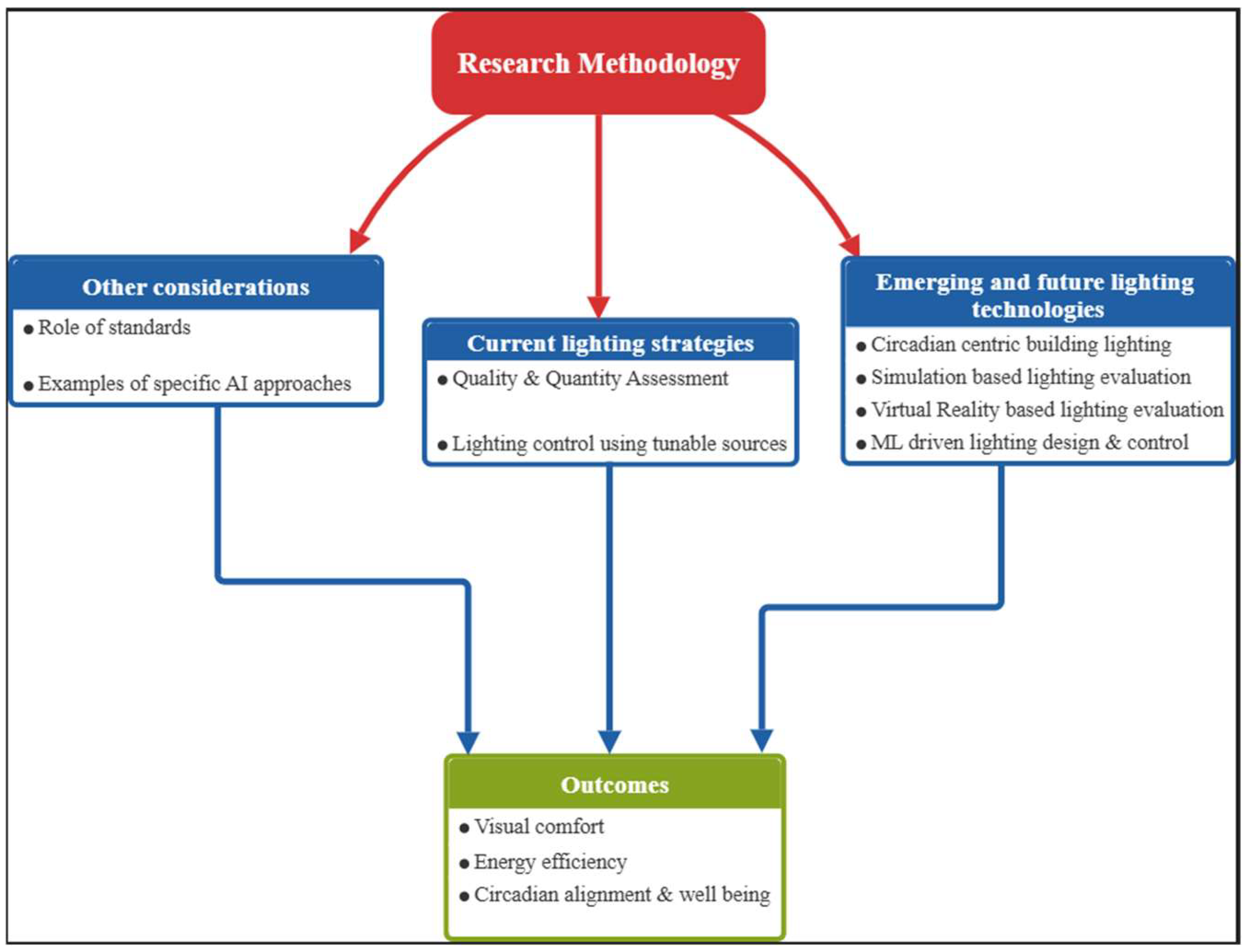
The development of flexible lighting environments through the use of LED luminaires, sensor technology, and intelligent lighting and shading control is a major component of building lighting innovations. There is also an increased focus on enhancing occupant well-being through biophilic design, which uses lighting to foster a stronger connection between indoor spaces and the natural world. In addition, there is growing attention to how lighting can support circadian rhythms, promoting better health and overall well-being. Building lighting is a multidisciplinary field that blends technology, design, and human-centric principles. As shown in Figure 1, this paper classifies building lighting into six key thematic areas—quality and quantity assessment, lighting control with tunable light sources, circadian-centric building lighting, simulation-based lighting evaluation, VR-based lighting evaluation, and ML-driven lighting design and control—by addressing the following research questions.
RQ1: What metrics and methodologies are currently used to assess the quality and quantity of building lighting?
RQ2: How have tunable lighting systems advanced in terms of control technologies, energy efficiency, and adaptability to user needs in building spaces?
RQ3: How can circadian-supportive lighting design be optimized through the evaluation of biologically effective lighting parameters?
RQ4: Which simulation tools and techniques effectively support predictive lighting performance as part of integrated building design workflows?
RQ5: In what ways is VR transforming the visualization, prototyping, and communication of lighting designs?
RQ6: How are machine learning technologies used to automate lighting control, improve design efficiency, and enable personalized lighting experiences?
Section 3.3.1 of the article explores the quality parameters of glare, uniformity, and color rendering index, and the quantity parameters of illuminance and luminance. These objective metrics and subjective human responses are considered when evaluating lighting effectiveness. Section 3.3.2 addresses lighting control with tunable light sources, focusing on the integration of adaptive technologies that allow for dynamic adjustments to color temperature, dimming, and spectral tuning to enhance energy efficiency and visual comfort. Section 3.4.1 examines the role of circadian rhythm in building lighting: how biologically tuned lighting strategies can support human health, alertness, and well-being by aligning with natural sleep cycles. The design, evaluation, and validation of lighting systems to regulate the circadian rhythm, enhance sleep quality, improve alertness, and promote human well-being must consider assessment parameters such as melanopic equivalent daylight illuminance and circadian stimulus. Section 3.4.2 on simulation techniques examines the use of computer tools for the prediction of lighting performance, daylight integration, and energy consumption, which are essential for design validation and sustainability standard compliance. This is followed by a discussion on the role of virtual reality in building lighting in Section 3.4.3, emphasizing how immersive lighting design environments provide benefits to architects and clients. VR tools aid in visualizing lighting effects before construction. A discussion of ML in building lighting and the application of data-driven methods like prediction, optimization, and adaptive control to lighting design are covered in Section 3.4.4. The paper attempts to provide a comprehensive review of how building lighting is evolving in the specified areas, highlighting the emerging trends, research needs, and opportunities for future work.

3. Research Methodologies

The research paper follows the methodology of an organized thematic review that systematically examines the field of building lighting design, control, evaluation and optimization. It critically analyzes the present lighting strategy, assesses the emerging and futuristic-oriented technologies made possible by digitalization and machine learning, and outlines the main challenges and research opportunities.

3.1. Framework of Review and Study Selection

Table 1 shows the database search strategy and inclusion–exclusion criteria for building lighting research.

3.2. Use of AI Tools for Visualization

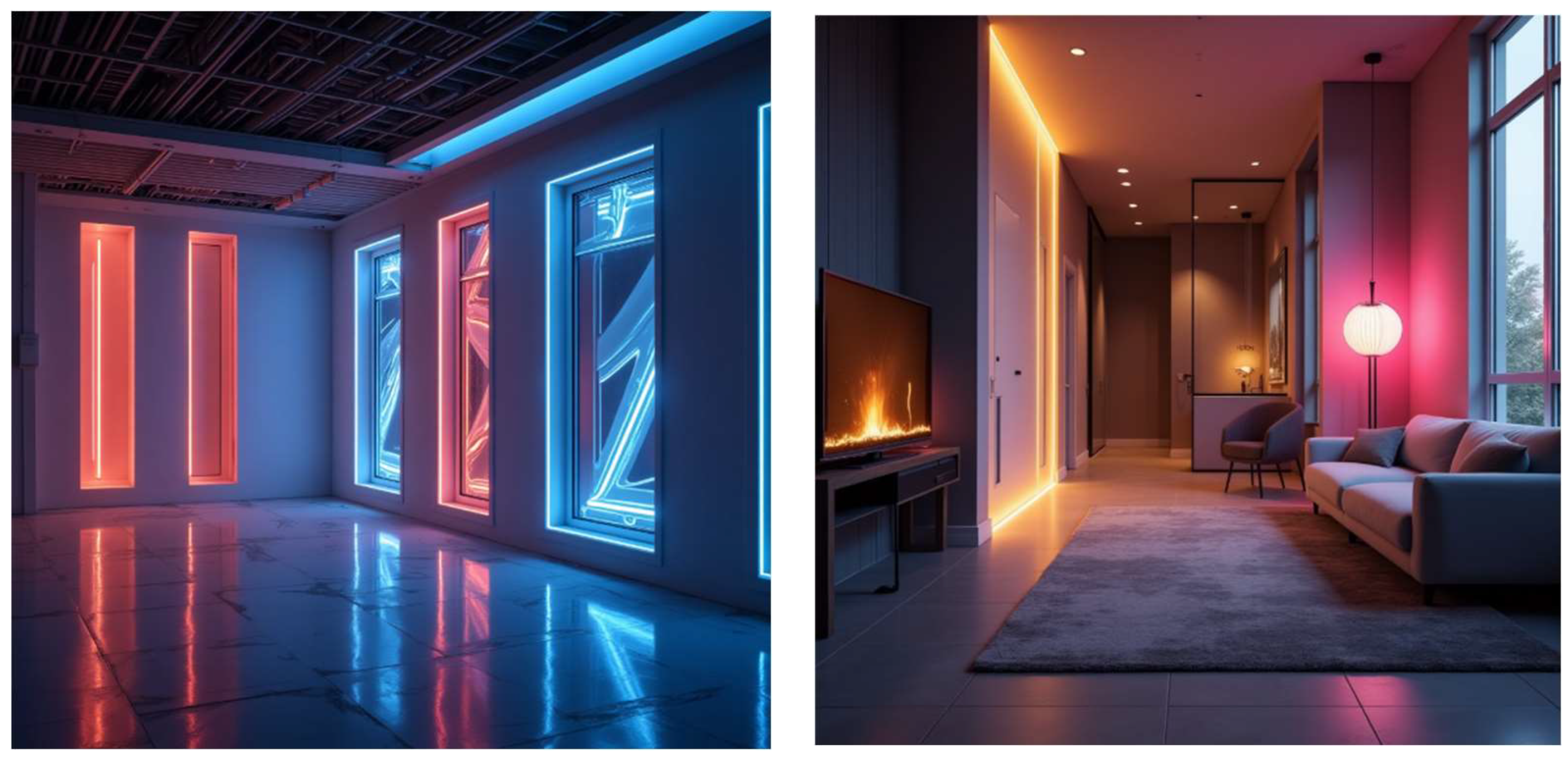
During the preparation of this manuscript, the authors used the AI tool: Imagine Art 5.1 “https://www.imagine.art (accessed on 10 December 2025)” for the purpose of making block diagrams, flow charts and visualizations of room interiors per the authors’ requirements by defining the inputs, outputs and signal flow conditions [4]. The photos were generated using AI, only for visualization of the concept and were developed by giving the same text prompt as the figure captions. The other block diagrams were used only as a graphical aid, not for data analysis or interpretation. The block diagrams were drawn based on the conceptual idea of the authors and were verified manually. More details are provided along with the figure captions.

3.3. Current Strategies in Building Lighting

This part is a synthesis of the firm practices in designing building lighting, particularly in the areas of evaluation metrics, control measures, and considerations of occupants.

3.3.1. Lighting Quality and Quantity Assessment

Lighting quantity is typically assessed in terms of horizontal illuminance, a traditional factor of lighting standards. However, contemporary daylight–artificial light integrated systems (DALIS) combine natural daylight and artificial light sources to optimize energy efficiency and performance. The daylight factor is one of the important metrics considered in the design of such a system and is significantly influenced by the window position and size [5,6,7,8,9,10,11,12]. For obtaining optimal lighting results, natural daylighting variations must be considered throughout the year and during a day [5].
Figure 1. Research organization.
Buildings 16 01174 g001
The quality of lighting has evolved beyond illuminance to include luminance distribution, contrast, color characteristics, and spatial composition. Variations in luminance across a room can alter the sense of depth, with a reduced contrast between an object and its background making the object appear more distant, enhancing the spatial experience [13,14,15,16,17,18]. Incorporating daylight contributes to a naturally lit and health-supportive environment [19].
Modern lighting design has expanded to address both horizontal and vertical illumination to better support visual and biological needs [20,21,22]. Variables like sky conditions, light spectrum, correlated color temperature, and intensity regulation have been shown to impact the physiological and psychological well-being of occupants [23]. A thoughtfully illuminated space can effectively manage these factors by balancing both the quality and quantity of light.
The best practices for balancing quality and quantity of lighting in building projects are:
  • Optimize natural daylight use by strategically orienting the building, adjusting the window-to-wall ratio, and incorporating shading devices to increase daylight penetration while reducing energy consumption. Complement this scheme with advanced lighting simulation tools to ensure reliable performance [24,25].
  • Design lighting systems that support visual tasks and aesthetics by controlling brightness, contrast, and color temperature, while considering health impacts such as circadian rhythm regulation through appropriate light spectrum distribution and duration of exposure [26,27,28,29].
  • Leverage digital tools like Building Information Modeling (BIM), VR, and photorealistic rendering software to effectively simulate, evaluate, and optimize adaptive lighting conditions during the design phase [30,31].
  • Foster a multidisciplinary, phased design process involving architects, engineers, and lighting designers to address diverse needs and create cohesive lighting solutions. Choose materials and surface finishes that enhance light reflectance to improve functionality and visual appeal [32,33,34].
The positioning of lighting fixtures significantly influences how depth and spatial proportions are interpreted in building environments. A high luminance contrast between an object and its background can serve as a visual indicator that brings the object forward in perception, while a lower contrast can cause it to recede into the background [35,36,37,38,39,40]. Illuminating vertical surfaces such as walls or facades can enhance the sense of spatial depth, making areas appear larger and more dimensional [41]. The direction from which light is projected further influences depth perception; narrower beam angles can strengthen the impression of depth, while wider angles may diminish it slightly [42]. Finally, how light interacts with a space—shaped by its distribution pattern, the number of fixtures, and the spectral characteristics of the light—plays a key role in shaping the overall spatial experience [43,44,45]. Variations in the dynamic light spectrum can significantly enhance building spaces by affecting emotions, shaping how environments are visually perceived, and improving the overall spatial experience. Specific lighting colors can evoke different emotional responses—for example, warm white tones are generally associated with more uplifting and pleasant feelings than cooler white shades. Colors such as blue, yellow, and green have been found to support visual comfort and may help alleviate stress or anxiety [46,47,48,49].
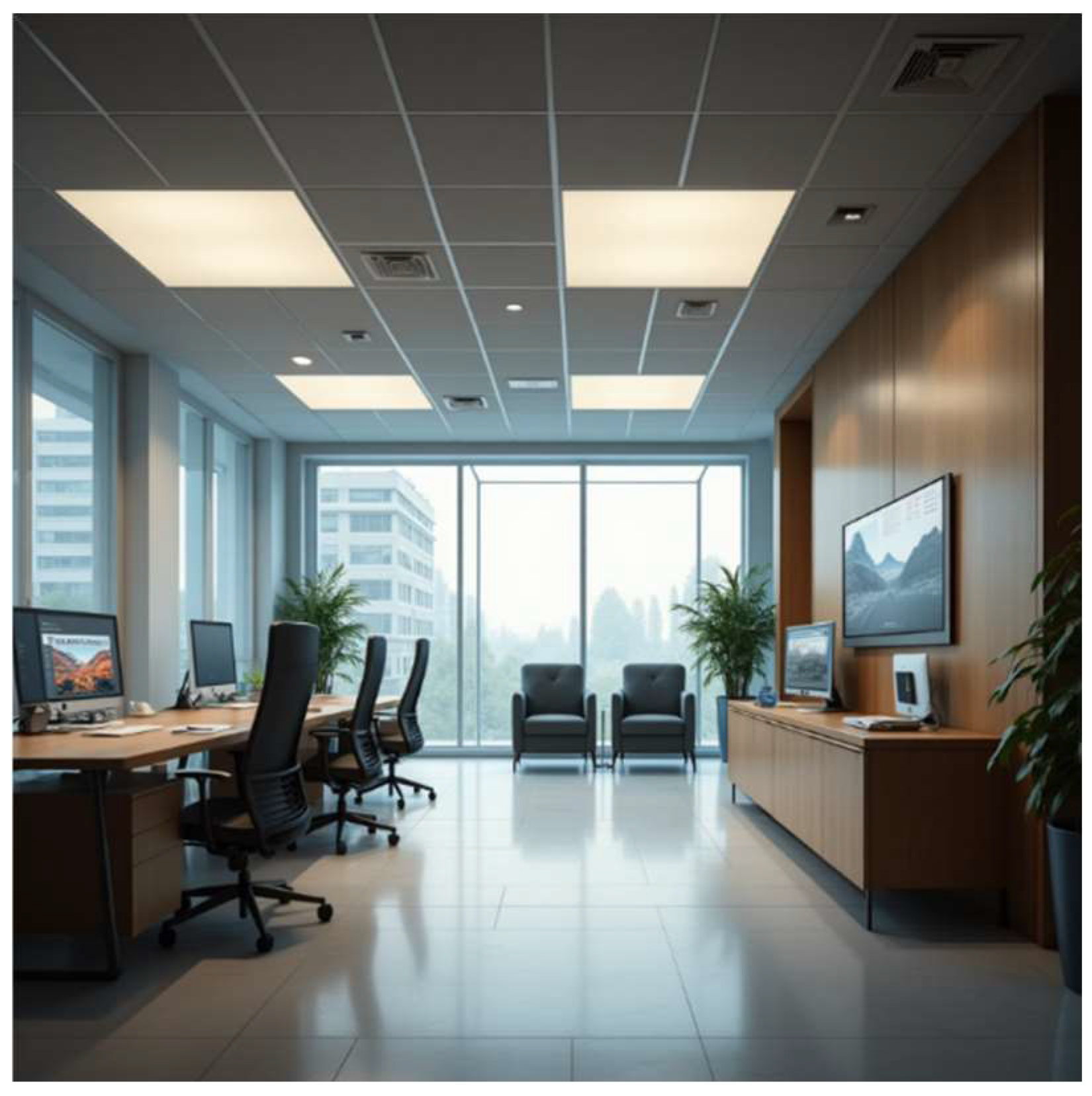
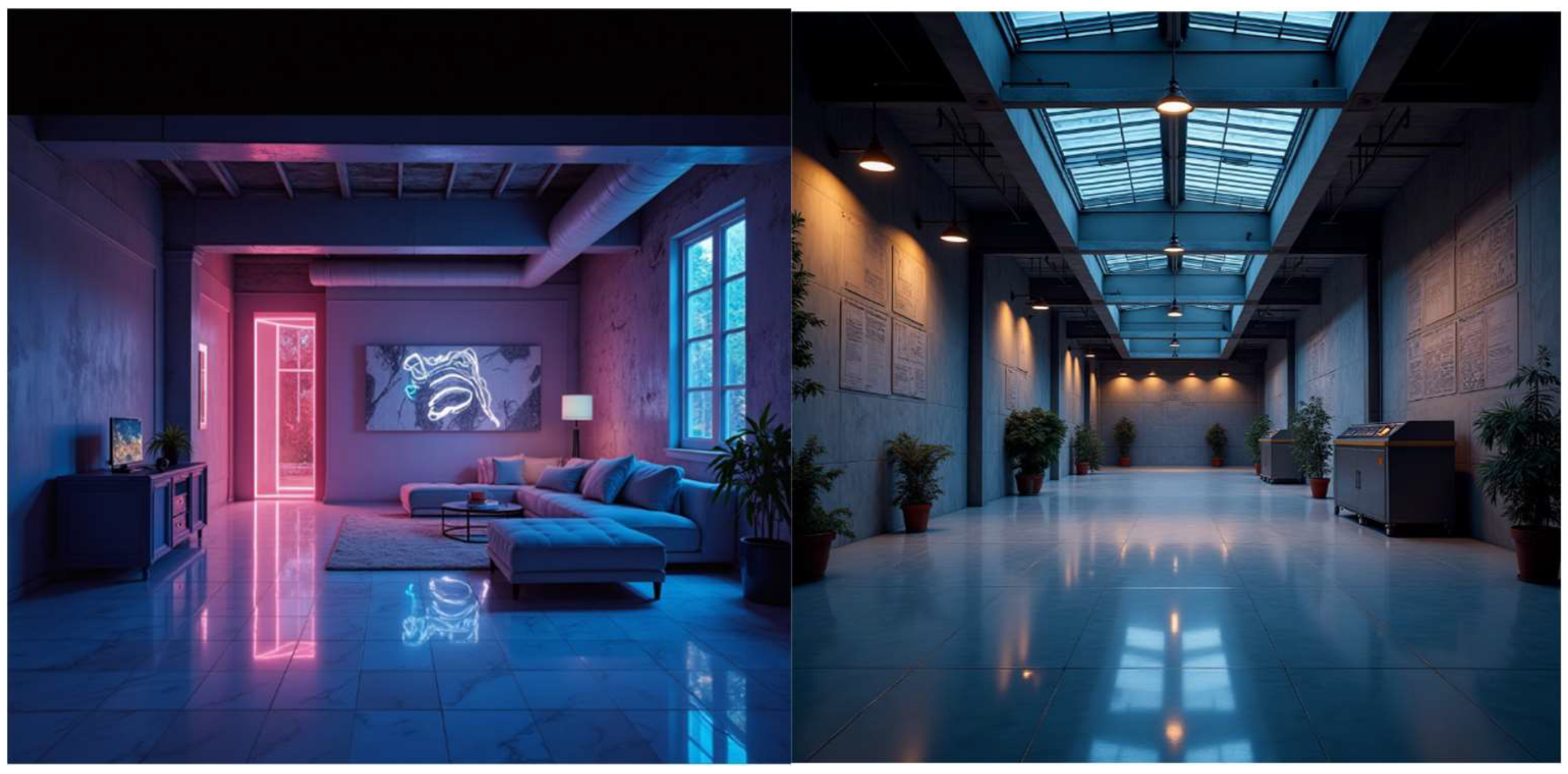
The sample image in Figure 2 illustrates how the quality and quantity of light influence visual comfort when both artificial lighting and daylight are present.
Integrating dynamic, color-shifting lighting into building design can enhance both the visual appeal and the overall experience of a space. Polychromatic lighting systems, which can vary in intensity and spectral output, can influence circadian rhythms [50,51,52,53]. They can have a strong influence on emotions, stress, and visual comfort. Moreover, certain colors may have varying positive or negative effects on people with intellectual disabilities [54,55,56,57].
Challenges and Opportunities
Existing lighting approaches are mostly stalemate and illuminance-based and tend to ignore vertical, spectral, temporal, perceptual, and behavioral and circadian aspects. Such constraints open up possibilities for adaptive, data-driven, human-centric lighting systems that combine real-time sensing, predictive modeling, circadian measurements and immersive tools to balance comfort, energy efficiency, and occupant well-being, as will be discussed in the following sections.

3.3.2. Lighting Control Using Tunable Light Sources

A vital element of building design, lighting has both practical and aesthetic roles. The discussion of RQ1 is presented in this section. In contemporary building spaces, lighting systems must provide illumination; they must be flexible, energy efficient, and support overall well-being. To meet this requirement, tunable light sources and adaptive lighting control systems have been combined. The color temperature, intensity, and spectral content can be dynamically adjusted with respect to human needs and environmental conditions with the help of tunable white and full-spectrum RGBW LEDs. HCL, which can create specific lighting scenes or mimic the natural daylight cycle, is aided by such lighting systems. Tunable LEDs integrated with lighting control systems offer automation when combined with sensors, user interfaces, wireless communication, and software to control lighting behavior depending on climatic conditions, energy savings, and occupant comfort. To adjust the illumination depending on the occupancy and environmental conditions, advanced tunable lighting systems use adaptive control architectures and sensors [58,59]. These systems use passive infrared sensors, pulse-width modulation, LED light sensors, cameras, and adaptive processing units to optimize lighting dynamically.
Variation in the spectrum of light is made possible by tunable light sources. They offer flexibility in creating a variety of colors or altering the correlated color temperature (CCT). The typical types consist of: (i) Tunable white LEDs: They allow for the CCT to be adjusted between 2700 K (warm white) and 6500 K (cool white). (ii) Full-color RGB or RGBW LEDs: These allow for the blending of red, green, blue, and optionally white light to create a wide range of colors. The way these systems work is by combining light from several LED channels. To attain the desired CCT, a tunable white LED might combine warm and cool white diodes. RGB (W) diodes in full-spectrum systems are managed by digital drivers or microcontrollers, which balance the output across channels and control the current [60,61]. Wired or wireless protocols, frequently connected to a centralized lighting management system, can be used to automate or control lighting behavior. Lighting control systems are now more flexible and scalable because of the integration of wireless sensor and actuator technology, and communication protocols like BACnet, ZigBee, DALI, and DMX. These protocols enable effective and flexible lighting adjustments [62,63].
When, where, and how lighting is used are all controlled by lighting control systems. By combining occupancy and daylight sensors, dimming controls and scheduling, scene setting and dynamic color tuning, mobile apps or dashboard-based interfaces, building management system (BMS) and Internet of Things (IoT) integration, and more, these systems can maximize lighting performance [64,65,66]. Depending on the user and environmental data, the control logic may be adaptive, pre-programmed, or manual. Predictive and automated lighting is made possible by sophisticated implementations of control systems that react in real-time to inputs like motion detection, ambient light levels, and even behavioral patterns. These systems contribute to the larger objectives of smart building ecosystems by supporting energy conservation, improved comfort, and functional flexibility through dynamic lighting condition adjustments. A sample block diagram to illustrate a system-level representation of lighting controls is shown in Figure 3.
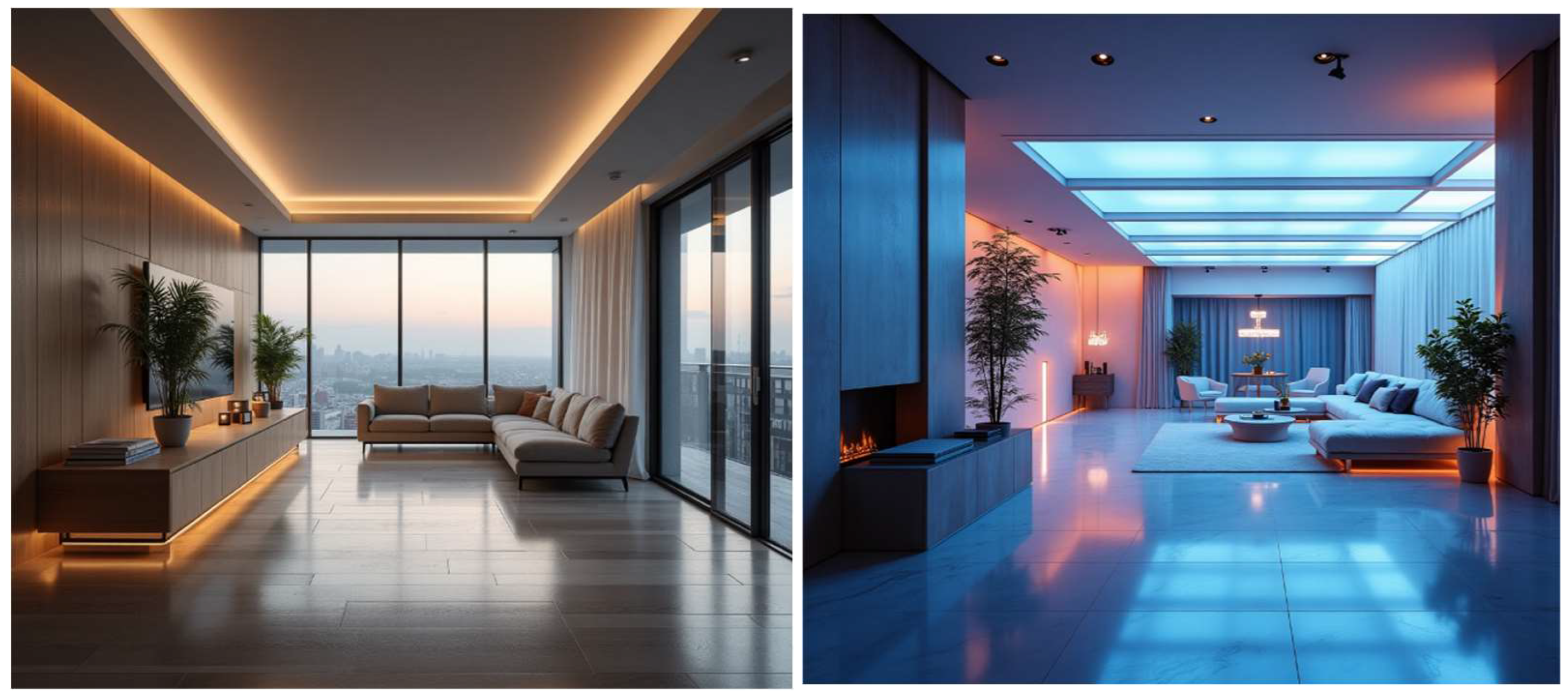
To improve building aesthetics, tunable lighting helps architects control the brightness of the light. It helps to match with the materials, artwork, and layout in environments like museums, hotels, etc. In places where limited natural daylight is available, tunable lighting can enhance health and productivity. Tunable lighting allows architects to control both the color and brightness of the light, improving building spaces. It helps match the lighting with the materials, artwork, layout, or brand aesthetics, which is especially beneficial in cultural environments like museums, hotels, and retail outlets. By simulating natural daylight, tunable lighting can enhance health and productivity, particularly in spaces with limited natural light. The technologies for tunable lighting have broad applications in a variety of building fields, like educational institutions, healthcare facilities, commercial spaces, residential buildings, etc. They can be used to adjust light to class schedules or daylight cycles, which can enhance student comfort and focus; adjust light to circadian rhythm alignment for patient healing; provide eye-catching lighting designs for the improvement of customer engagement; and provide individualized lighting settings for various spaces, activities, and daylight hours. Adaptive lighting systems can drastically cut down on energy use by adjusting usage based on occupancy or daylight levels. The adaptive features, like integrating sensors and control, of lighting systems support green building standards, like LEED and WELL, for attaining sustainability. Studies have demonstrated energy savings of 22% to 70% when compared to conventional lighting systems by modifying the lighting levels according to occupancy and daylight availability in real-time [62,63,64,65,66,67,68,69,70]. The lower range from 22 to 40% is commonly observed when LED luminaires are combined with occupancy sensing or when daylight-responsive control techniques are integrated. The higher range is reported under best-case conditions, including simulation-based studies or controlled experimental environments where multiple advanced control strategies—such as tunable spectra, personalized control, extensive daylight harvesting, and ML-based optimization—are jointly implemented. Innovations like smart windows based on PDLC light transmittance can be modulated. This can lower energy usage and enhance visual comfort by adjusting the light levels. The sample images in Figure 4 show the effect of lighting controls and tunable spectra in the interior of a building.

3.4. Review of Emerging and Future Lighting Technologies

This section focuses on advanced lighting paradigms that extend beyond conventional design and control approaches.

3.4.1. Circadian-Centric Building Lighting

Light–dark (LD) cycles profoundly influence human circadian organization and health. As inhabitants of built environments, exposure to LD patterns is shaped by building design, which affects both the timing and intensity. Studies have shown the relationship of building features with LD exposure and circadian biology [71]. Thirty-one studies in the databases, including 11 human studies and 19 field or simulation studies, have addressed the intersection of architecture, lighting sources, circadian light metrics, and health outcomes.
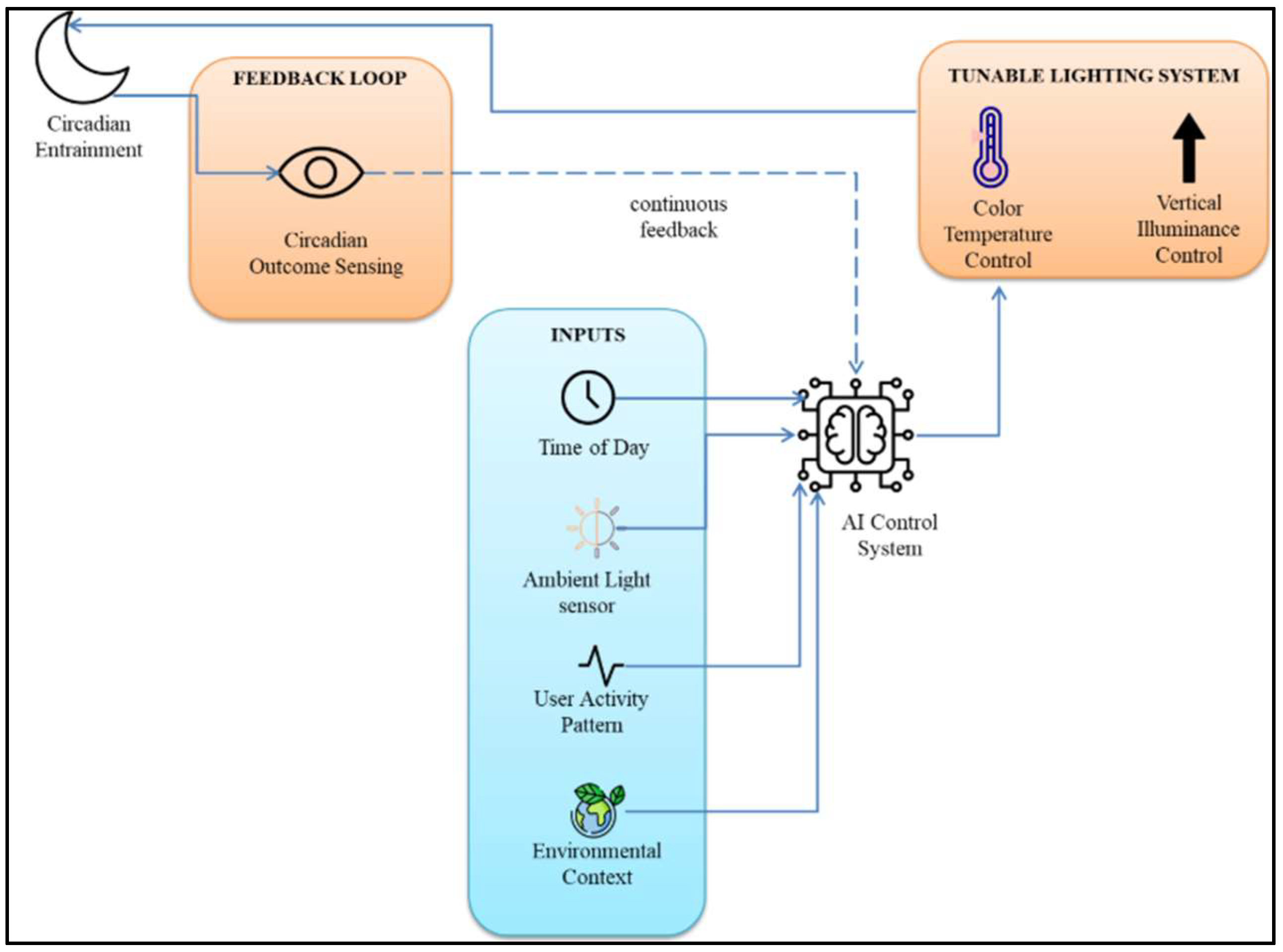
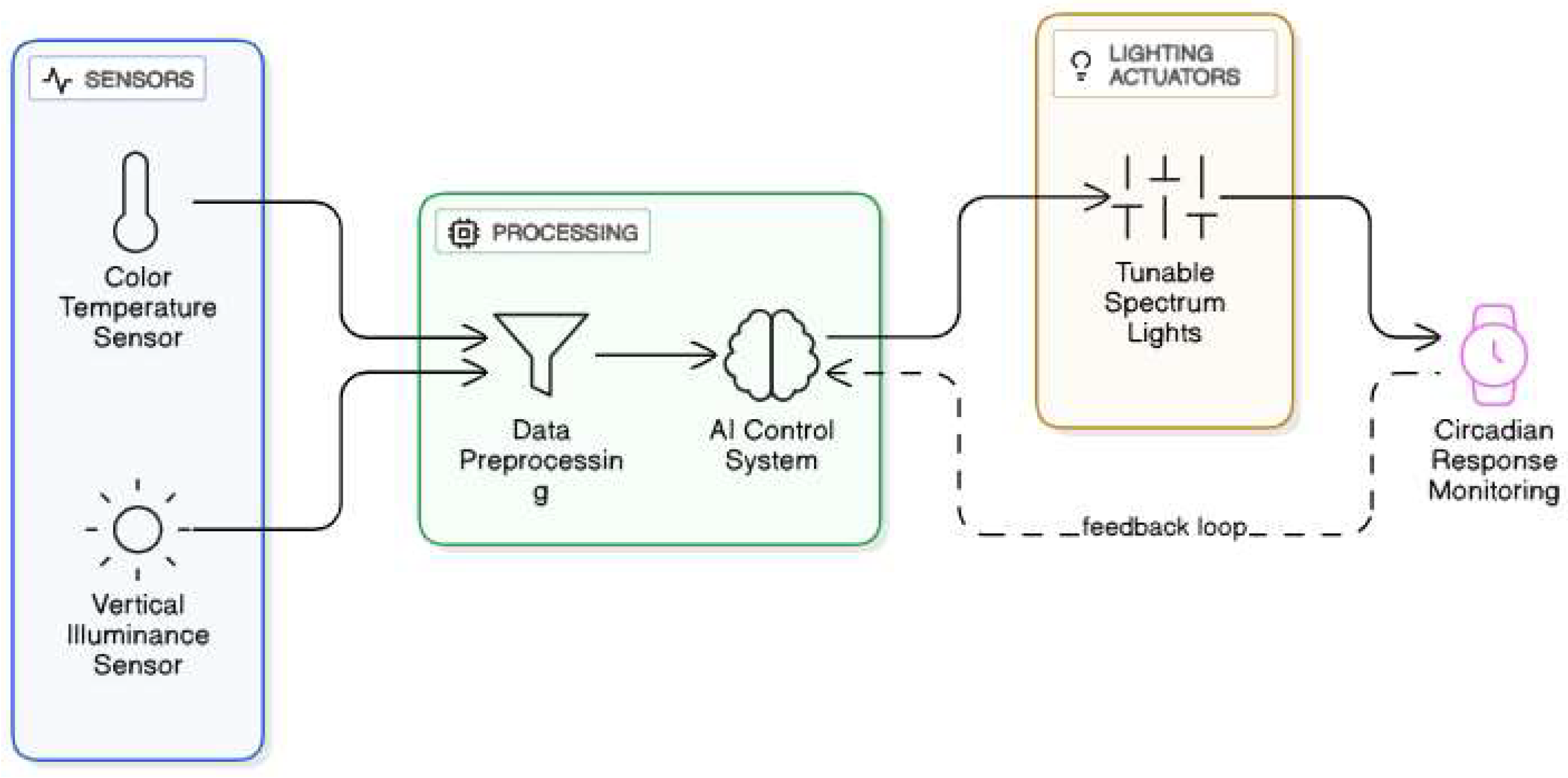
Most investigations have focused primarily on window-related attributes (e.g., glazing type, position), but the studies remain limited by the small sample sizes, narrow building conditions, and few simultaneous measurements. A notable finding is the potential for building elements—like glazing—to dynamically modulate blue-light transmittance. Although circadian-light metrics (e.g., Circadian Stimulus) are in use, integrated analyses that link the building design, measured circadian dose, and biological responses are largely absent. Figure 5 shows a system-level block diagram for circadian entrainment and response monitoring.
Modern office lighting systems designed to support human circadian rhythms must consider more than just the overhead luminaires. One study leveraged an imaging photometer alongside spectral radiometry to estimate the circadian stimulus (CS) levels in real-world office settings [72]. It captured both the direct lighting (from ceiling luminaires and monitors) and reflected light within the workers’ fields of view. This study validated the setup across nine typical workstations, showing that the CS estimates were within 3–6% relative error compared to the spectral radiometry—an acceptable margin for practical applications.
The measurements taken at a tilted angle similar to a typical office worker’s gaze (toward a screen) yielded 10–20% lower CS values, underscoring the need to align measurement setup with actual human behavior. Different FOV models (full half-space, 120° field, CIE standard) produce differing CS outcomes, emphasizing the need for FOV-aware measurement. The presented approach is scalable, flexible, and holds promise for architects and lighting professionals aiming to optimize human-centric office environments.
The development of fluorescent lamps and air-conditioning systems allowed buildings to be lit without relying on daylight, paving the way for deep floor plans and lower ceilings far from natural light. With rising awareness of natural light’s health benefits, there is renewed interest in the impact of daylight on occupants’ well-being. Human circadian rhythms, driven by intrinsically photosensitive retinal ganglion cells (ipRGCs) containing melanopsin, respond to light in terms of intensity, wavelength, timing, and duration. Researchers have thus proposed various circadian-effective metrics to convert photopic light into measures of circadian stimulus [73]. Several circadian-focused metrics—CS, EML (Equivalent Melanopic Lux), Melanomic Equivalent Daylight Illuminance (mEDI), Lark, non-visual Relative Activation Factor for Light Application (nvRALFA), OWL, and Circadian Design Analysis Tool (CDAT)—capture various daylight properties (intensity, spectrum, duration, timing, and view direction), but none comprehensively cover all dimensions. Currently, it is required to create standardized, validated metrics that integrate the temporal patterns, dynamic conditions, and occupant interactions. CS estimates the effectiveness of light at stimulating the human circadian system in terms of melatonin suppression; EML represents the amount of melanopsin-weighted light reaching the eye; mEDI expresses the melanopic light exposure relative to standard daylight illuminance; Lark and OWL represent morning-type and evening-type individuals; nvRALFA evaluates circadian and alertness responses; and CDAT assesses the circadian lighting performance of buildings [74]. A decision tree analysis showing that traditional glazing properties can be practical proxies for circadian performance when used with refined thresholds is presented by the authors of [75]. A novel “circadian transmittance” (Tc) metric aligned with the melanopic action spectrum is introduced. The Tc metric, specifically meant for circadian light transmittance, marks a major advancement in evaluating windows from a non-visual health perspective. By applying machine learning models, the authors demonstrate that Tc-based predictions outperform other glazing predictors for high solar angle and clear sky conditions, confirming the metric’s predictive strength. The framework is designed to allow architects and engineers to make data-driven decisions about window systems that support indoor circadian health, translating complex spectral analyses into actionable design tools. Tc is novel, and its applicability across varied glazing types (e.g., low-e coatings, dynamic tints, multiple panes) is not fully validated, especially under changing environmental conditions. Table 2 shows a comparative analysis of various circadian metrics.
Metrics like Spatial Daylight Autonomy (sDA) and Useful Daylight Illuminance (UDI) help to precisely assess daylight quality during different seasons and times of day [76]. The approach is demonstrated on an actual, large-scale building offering clear relevance to real building projects. The optimized design significantly increases the UDI (100–2000 lx) coverage and ensures that over 55% of primary space meets sDA > 300 lx—enhancing both the visual and circadian daylight exposure. The analysis links daylight performance to reduced artificial lighting use, implying both energy savings and potential health benefits via increased daytime light exposure. While daylight is tied to health benefits, the study does not measure or relate its findings to actual physiological or psychological outcomes like circadian entrainment or mood. The conclusions are based on a single case study; broader validation across multiple building types or climates would strengthen the design recommendations.
The window area, orientation, glazing type, surface reflectance, and other design features greatly influence both daylight’s and artificial light’s circadian effectiveness [77]. The study highlights that circadian considerations should be embedded in the earliest design phases, aligning HCL strategies with foundational building decisions. It explicitly notes that the energy implications of HCL strategies remain unclear, without specifying how to balance energy efficiency with circadian-quality lighting. The review does not address how occupant behavior, occupancy schedules, or furniture layout affects actual light exposure and circadian outcomes.
Five different building modifications—adjusting window-to-wall ratio, wall color, shading, and glazing—were implemented to optimize circadian lighting in school classrooms in [78]. The interventions led to measurable improvements in the Equivalent Melanopic Lux (EML) during key occupancy hours, with gains ranging from 21% in the mornings to 93% in the afternoons. By employing the Equivalent Melanopic Lux—aligned with WELL standards (≥200 EML for ≥4 h)—the study effectively integrated health-centric non-visual lighting criteria into building daylight design. Simulations were conducted in both summer and winter, and across multiple daily time slots (9 AM, 12 PM, 2 PM) throughout the year, providing a comprehensive analysis of circadian exposure variability. There was no direct analysis of occupant behavior, such as student seating patterns, presence of window shades, or how these factors influence circadian exposure in practice.
A simulation-based study investigated how interior finishes and layouts affect circadian lighting (Equivalent Melanopic Lux, EML) in studio classrooms [79]. By choosing high-reflectance wall materials and organizing collaborative desk layouts, design studios can passively enhance non-visual daylight exposure. These accessible strategies offer an easy-to-implement approach to support student well-being and circadian health—especially valuable in early-stage design, retrofit, or low-budget interventions.
Achieving EML compliance often requires more than double the illuminance recommended by the Illuminating Engineering Society (IES)—sometimes up to 2× the IES level [80]. Simulations revealed that supplementing electric lighting to meet EML targets could elevate lighting energy consumption by 10% to 100%, depending on the space and baseline conditions. By incorporating daylight in the annual simulations, the perimeter workstations were shown to often receive sufficient EML from daylight. However, the interior desks—especially those facing away from windows—received much less. Introducing daylight-aware dimming strategies with task lighting reduced the annual electric lighting energy by ~28% compared to overhead-only EML compliance. Overall, it emphasized a holistic, simulation-informed design approach: integrate daylight, use zonal controls, add task lighting, and optimize the HVAC to meet both energy and wellness goals.
Occupant behavior also influences building energy use, especially in lighting and HVAC zones [81]. Plug-load sensor data was analyzed to infer occupant presence and schedules at a zone level. Two approaches, clustering-based layout and genetic algorithm, were used. The clustering-based layout reorganized zones so that occupants with similar schedules were clustered together and the latter one used energy simulations to evaluate the layouts and evolve toward configurations with lower energy usage. Both approaches yielded ~5% reductions in the total lighting energy consumption compared to the baseline layout of a 165-occupant office. A small-scale case (with simulated DOE reference building data) showed ~3.3% annual energy savings through occupant re-alignment. Here, simply rearranging the desks based on behavior data improved the energy efficiency—no expensive system upgrades required. Integrating occupant schedule clustering helps avoid zones being unnecessarily illuminated or conditioned. This methodology can be applied during the initial design or within operational spaces and updated over time as occupancy patterns change.
A digital twin framework integrated real-world physical spaces and user-facing interfaces to allow for lighting adjustments—brightness, color, and fixture type—in real-time within a VR environment in [82]. Using VR engines (Unity, HDRP), a virtual replica (“digital twin”) of a real space—capturing its geometry, furnishings, and light fixtures— was made. The physical measurements (dimensional and luminance) served as the inputs to closely approximate the actual environment. OpenAI’s CLIP model was used to compare photos of the physical space against rendered images from the digital twin. The similarity score served as an objective metric for how accurately the lighting conditions matched. It helped the designers to interactively explore lighting scenarios before physical installation, gaining an intuitive understanding of spatial and atmospheric effects. The work’s precision demonstration and quantification of virtual fidelity mark a meaningful step toward user-centric, simulation-driven lighting workflows.
Challenges and Opportunities
The existing literature on circadian lighting is based on non-standardized measures and mostly simulation studies, while a few studies have been carried out on real-life settings and have incorporated occupant behavior and physiological performance. Such gaps have given room for the creation of dynamic and behavior-aware circadian metrics and the incorporation of physiological detecting, adaptive control of light, and digital twins to support human-centric and health-promoting building lighting.

3.4.2. Simulation-Based Lighting Evaluation

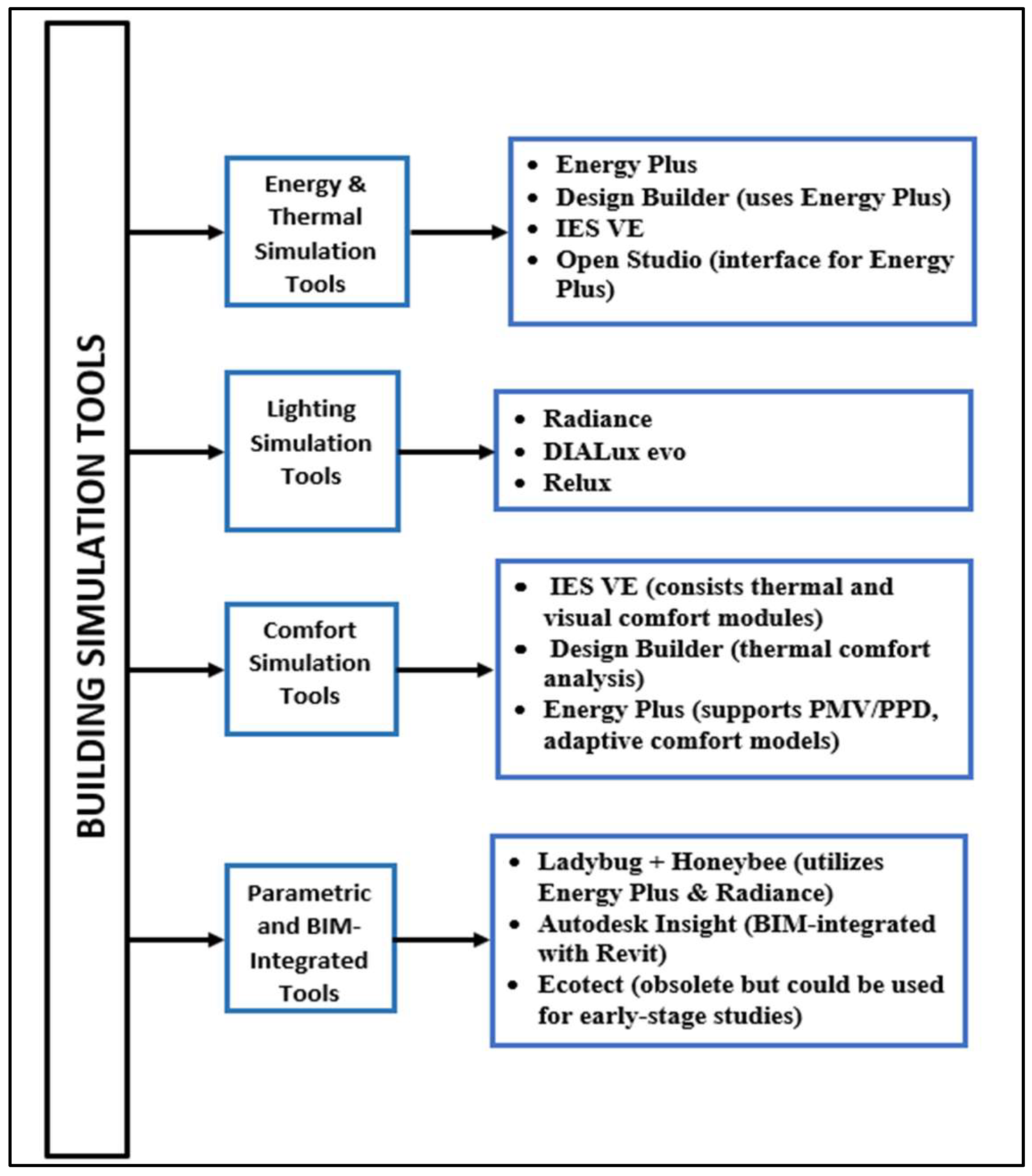
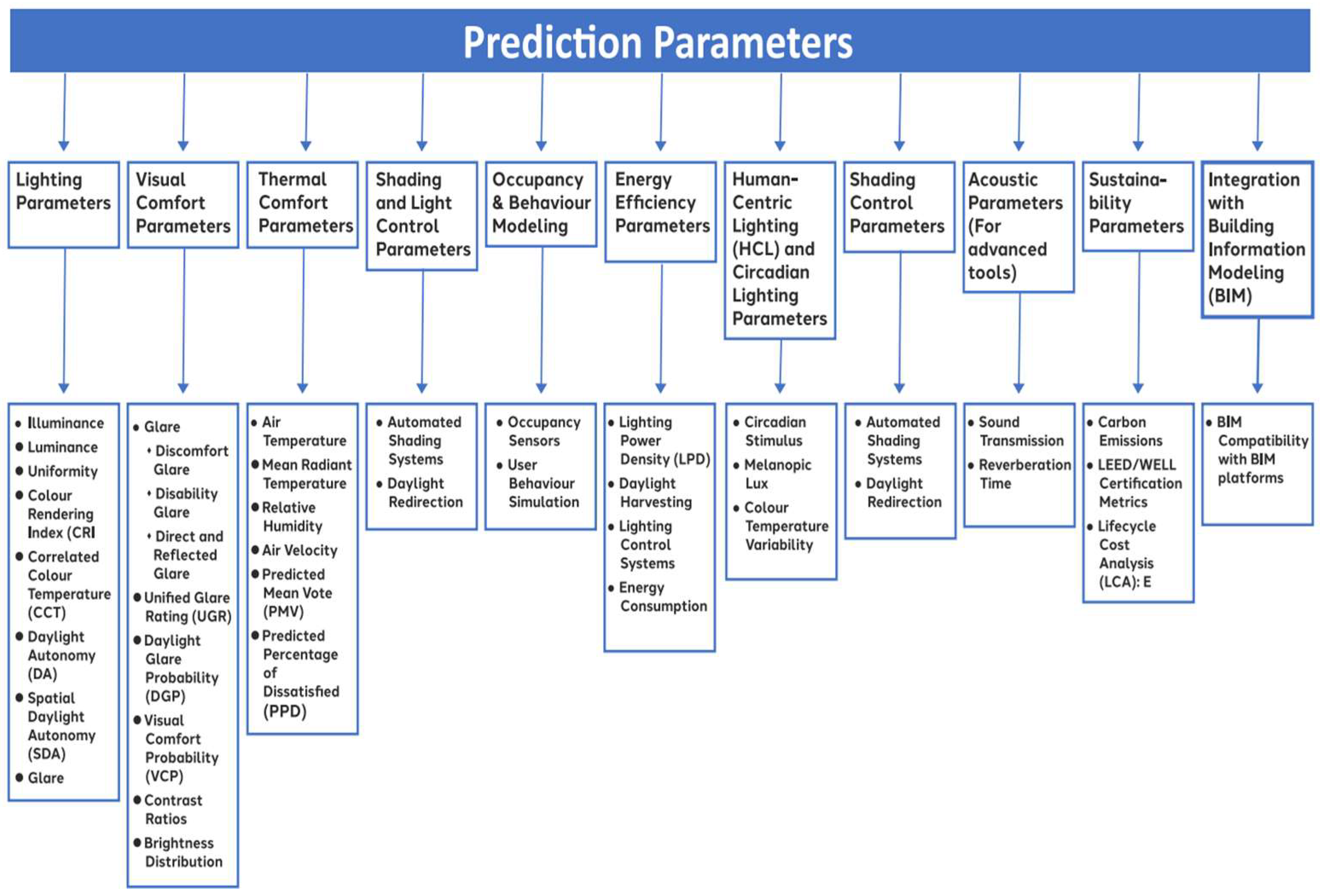
Building lighting simulation tools are critical for both functional and aesthetic considerations in buildings. Building performance simulation techniques represent a dynamic approach that uses computer-based, mathematical models and applies fundamental physical principles and engineering techniques for predicting and optimizing the energy-efficient behavior of buildings while concurrently ensuring thermal and visual comfort [83]. Recent advancements in simulation methods, tools, and assessment techniques offer increasingly sophisticated software solutions for evaluating lighting performance. Figure 6 illustrates the broad spectrum of predictive parameters used in simulation tools for designing and assessing building lighting performance. Figure 7 presents a comparative overview of commonly used building simulation software tools in architecture and engineering practice. An important distinction should be noted regarding lighting-centric simulation tools that prioritize visual performance accuracy and general building energy simulation tools where lighting is considered mainly as an energy load. Conventional lighting simulation tools are mostly physics-based and use deterministic algorithms such as radiosity and ray tracing. Software platforms such as Radiance, DIALux, Relux and AGi32 have become industry standards for electric lighting and daylight analysis [84]. Among all these tools, Radiance is regarded as the gold standard for daylight simulation due to its backward ray-tracing algorithm, high spectral accuracy and the capability to model complex fenestration systems [85]. General building simulation platforms, such as EnergyPlus with OpenStudio, IES VE, and DesignBuilder, include lighting modules, but they tend to focus on energy/thermal analysis rather than detailed lighting physics, so they are not as specialized for lighting/daylighting applications. Nevertheless, conventional methods have their own limitations, such as a high computational cost, a steep learning curve, and a lack of compatibility with real-time operational data that limits the use of these methods in dynamic building environments. Hence, the selection of tool depends on the usability and type of analysis (energy, lighting, thermal comfort, etc.) The latest developments meet sustainability requirements via parametric integration (BIM and non-BIM) and ML for automation, parallel computing, and computer vision for space analysis. Metamodeling (e.g., ANN surrogates) speeds up large-scale simulations. Data-driven techniques using deep learning and Explainable AI (XAI) address the complexity of occupant behaviors. Reviews emphasize the following trends in integration with AI, data mining, digital twins, cyber–physical systems, and the IoT for superior performance. The authors of [86] examine the integration of parametric design methods with a variety of software applications, including Building Information Modeling (BIM), non-BIM, parametric design, and building performance analysis tools. The fusion of ML techniques with building performance simulation highlights a promising avenue for automating and optimizing the design process [87]. The specified ML methods, such as classification, regression, clustering, and model selection, demonstrate considerable potential for addressing challenges of data interpretation, overfitting, interpretability, and algorithmic bias. An exploration of parallel computation expedites complex calculations, while computer vision integration enables an understanding of spatial and visual aspects in building design [87]. The use of metamodeling techniques, particularly ANN surrogate models in Building Process Simulation, has garnered increasing interest in recent years due to its exceptional performance in handling extensive simulations [88,89,90]. Furthermore, the escalating complexity of building energy systems and their interactions with occupant behavior have led to challenges in performance modeling. A new paradigm for data-driven modeling in the building sector leverages advanced data mining, deep learning and explainable machine learning algorithms [91,92,93]. A comprehensive review by the authors of [91] offers a thorough examination analysis of strengths, limitations and challenges associated with the interfacing of emerging domains—namely, artificial intelligence, machine learning, data mining, digital twin technology, cyber–physical systems and the Internet of Things—when integrated with conventional building performance simulation tools. The rapid progress in simulation technologies, techniques, software, and hardware is intensifying data requirements, compelling a greater need for storage and computational resources [94]. The authors of [95] provide a comprehensive review of various methodologies, simulation tools, and case studies focusing on building energy simulation and its significance for optimizing building performance. The review also outlines the current research trends and highlights future research opportunities across five application levels: (1) simulation of performance-driven design within the realms of new building construction and retrofit design, (2) model-based approach for operational performance optimization, (3) integrated simulation approach utilizing data measurements for digital twin development, (4) building simulation to aid in urban energy planning, and (5) modeling building and grid interaction for effective demand–response strategies. The incorporation of digital twins, blockchain technology, and cyber–physical systems into building performance simulation is currently in its nascent phase of development [94,96,97]. Digital twin technology combines the IOT with real-time data from occupancy sensors, illuminance meters, and sometimes wearable devices to continuously monitor which zones are occupied, current light levels, environmental conditions, occupant comfort metrics, and operational efficiency, and uses predictive analytics to generate actionable lighting controls to guide building designers when making decisions for occupant comfort and energy efficiency. The authors of [98] conducted a case study on the application of digital twin technology in higher education buildings, emphasizing a human-centric approach. Their research integrated a digital twin with IoT sensor data to record the temperature, humidity, CO2 levels, and illuminance, along with subjective feedback collected via mobile or wearable devices to assess and improve thermal comfort in real time. Their study highlighted that due to the integration of sensor data with the IOT, digital twins with BIM and the IoT facilitated scalable deployment and advanced automation in building management systems. However, the authors highlighted key challenges, pointing to important future directions requiring empirical validation; data integration with the IoT and BIM demands robust ontologies and interoperability standards and there are significant concerns related to occupant data privacy and governance that necessitate secure and transparent data management frameworks.
Recent advancements in simulation methods, tools, and assessment techniques (Figure 7) offer increasingly sophisticated software solutions for evaluating lighting performance. Table 3 provides a comparative summary of building lighting simulation tools.
This section highlighted the current advancements in building lighting simulation tools (Figure 6), focusing on sophisticated tools like ray tracing and daylight modeling software and the shift towards modern AI-driven simulations and assessment methodologies. Additionally, the review delved into identifying the existing research gaps, including the need for real-time data integration and cross-disciplinary collaboration to enhance the accuracy and relevance of innovative lighting simulation solutions.
Challenges and Opportunities
The existing methods of light simulation are still computationally expensive, not sufficiently realistic for integrating data in real-time, and not adequately tested against occupant behavior and perception. These issues open the prospects for hybrid physics–AI simulation models and digital twin-based lighting systems that could be able to optimize adaptively to changing daylight and occupancy situations. Future studies should combine light metrics that are human-friendly, implement explainable AI to make transparent decisions, proliferate open-source environments, and build multidisciplinary teams to bridge the gap between simulation, perception, and actual performance.

3.4.3. Virtual Reality-Based Lighting Evaluation

Virtual reality (VR), with its ability to simulate physical lighting conditions, has become an important methodological innovation in building lighting design. As opposed to traditional methods of lighting assessment (i.e., non-interactive simulations, photo or physical models), VR allows architects and lighting designers to feel, touch and evaluate lighting conditions in 3D prior to construction. This feature enables visual, auditory and interactive surveying of building spaces with a greater fidelity for assessing the performance of lighting and user perceptions by allowing for real-time interaction between the building elements in three-dimensional environments under controlled lighting conditions.
The early development of the concept of incorporating VR into work on architectural lighting is described in [104], where the authors mention the advantages of this integration, such as the increased precision of designs, three-dimensional visual representation, real-time feedback, and evaluation of the results. Relative to traditional workflows, VR assists with idea design and construction planning and minimizes waste of materials. Nonetheless, because of its potential to transform the notions of sustainable and user-centered design, it has been limited in terms of its widespread usage due to its high implementation costs and the need for specialized technical skills.
One of the most extensive attempts to evaluate the use of VR in the literature on lighting was done by the authors of [105], who organized 33 studies into three prevailing research streams: (i) the interaction of the user with a lighting system, (ii) the comparative validity of VR and real-life settings, and (iii) the evaluation of user experience under various lighting conditions. As seen in this review, VR has solved one of the most important limitations of conventional lighting tools—the failure to reflect subjective perception by allowing for realistic evaluations of color temperature, sense of space and quality of experience. Experimental research also supports the fact that VR is capable of simulating real-world lighting conditions with a reasonable amount of perceptual accuracy.
These findings are supported by comparative validation studies. According to the authors of [106], VR is perceived to be similar to real-life settings in terms of realism, brightness and glare compared to photographs and videos, which confirms VR to be a cheaper option compared to physical prototyping. However, in this work, it is also determined that there are ongoing difficulties, such as limited model validation, hardware limitations, lack of standardized evaluation protocols and diversity in experimental settings. These constraints show that VR is better than the traditional visualization tools, but it requires meticulous calibration and consistency of methods to be reliable.
In addition to the lighting parameters, the architectural qualities have a great impact on user perceptions in VR. As shown by the authors of [107], surface reflectance, the window-to-wall ratio, and shading have a great impact on the perceived brightness in VR-based daylight simulations, whereas color perception is not largely dependent on the illuminance. These results underscore a vital aspect of VR-based techniques, i.e., lighting assessment should consider both the perceptual and material aspects instead of taking photometric indicators as the only measure of lighting impact to capture the perceptions of occupants.
Moving VR technology outside of buildings, [108] generalizes the use of VR in smart urban lighting all over road ways, green spaces and buildings. The review demonstrates the weakness of VR by including only objective measures (illuminance, luminance, and glare) and a subjective characteristic (safety, comfort). It also highlights a long-standing weakness that VR is less accurate for the replication of absolute photometric values, which means that VR is not to be used in place of traditional methods of measurement.
The other means of validation of VR is through experimental validation in controlled laboratory environments. According to the authors of [109], there was no significant difference in the overall lighting appearance between a real and virtual office setting, but it was found that the latter had less contrast and colorfulness because of the limitation of headset resolution. Likewise, a VR-based system with a combination of photometric data, power consumption, and environmental implications was introduced in [110], with a high correlation between the actual and virtual luminance values. All these studies together confirm the validity of VR in its operations, although hardware limitations to fidelity have also been found.
The last changes are an indication of a shift towards AI-powered VR and Extended Reality (XR). The modeling time is greatly minimized with the integration of semantic annotation and VR, as shown in [111], with better visual quality and design accuracy. Deep learning-based solutions, including the U-Net-based refinement framework described in [112], are the next step for enhancing color accuracy and image quality within VR and AR settings, which could result in an improved user experience and decreased perceived visual stress. These advances can be seen as a definite transition from passive visualization to intelligent, perception-sensitive immersive experiences.
A recent study of 270 studies [113] confirms that XR (VR, AR, and MR) is an essential technology in smart built environments for the pre-implementation of test lighting strategies, with quantifiable positive effects on design accuracy, energy use, and human health. Irrespective of the problems associated with pricing, standardization, and practical testing, XR technologies show good prospects for improving psychological and physiological health. VR can also be applied in outdoor settings; [114] demonstrates that the perceived comfort and cognitive load are more affected by illuminance than by the correlated color temperature under urban park lighting, which confirms the importance of VR in the human-centric evaluation of lighting in outdoor settings.
Last but not least, VR integration with BIM, reviewed in [115], allows for collaborative workflows, real-time design analysis, green building education, and green building certification support. Despite the obstacles to its implementation, the integration of VR, BIM, AI, and digital twins is a future-proofed possibility for achieving ecologically conscious and user-friendly lighting design. Figure 8 shows the role of virtual reality in detailing interior lighting effects. Table 4 shows the various aspects of VR fidelity, with their strengths and weaknesses.
Challenges and Opportunities
Although VR successfully allows for the creation of an immersive assessment of the quality of lighting, perception, and user experience, the use of this method is limited by its high cost, hardware requirements, the absence of standardized evaluation procedures, and partial photometric accuracy. These constraints open a path for prospective AI-enhanced rendering, stronger connections with BIM and digital twins systems, the creation of universalized evaluation processes, and scalable XR-related solutions to facilitate human-centered and sustainable lighting design.

3.4.4. Machine Learning-Driven Lighting Design and Control

Lighting design plays an important role in building aesthetics, especially contributing to the visual appearance and functional performance. The adoption of machine learning techniques enables more accurate, efficient and creative lighting solutions.
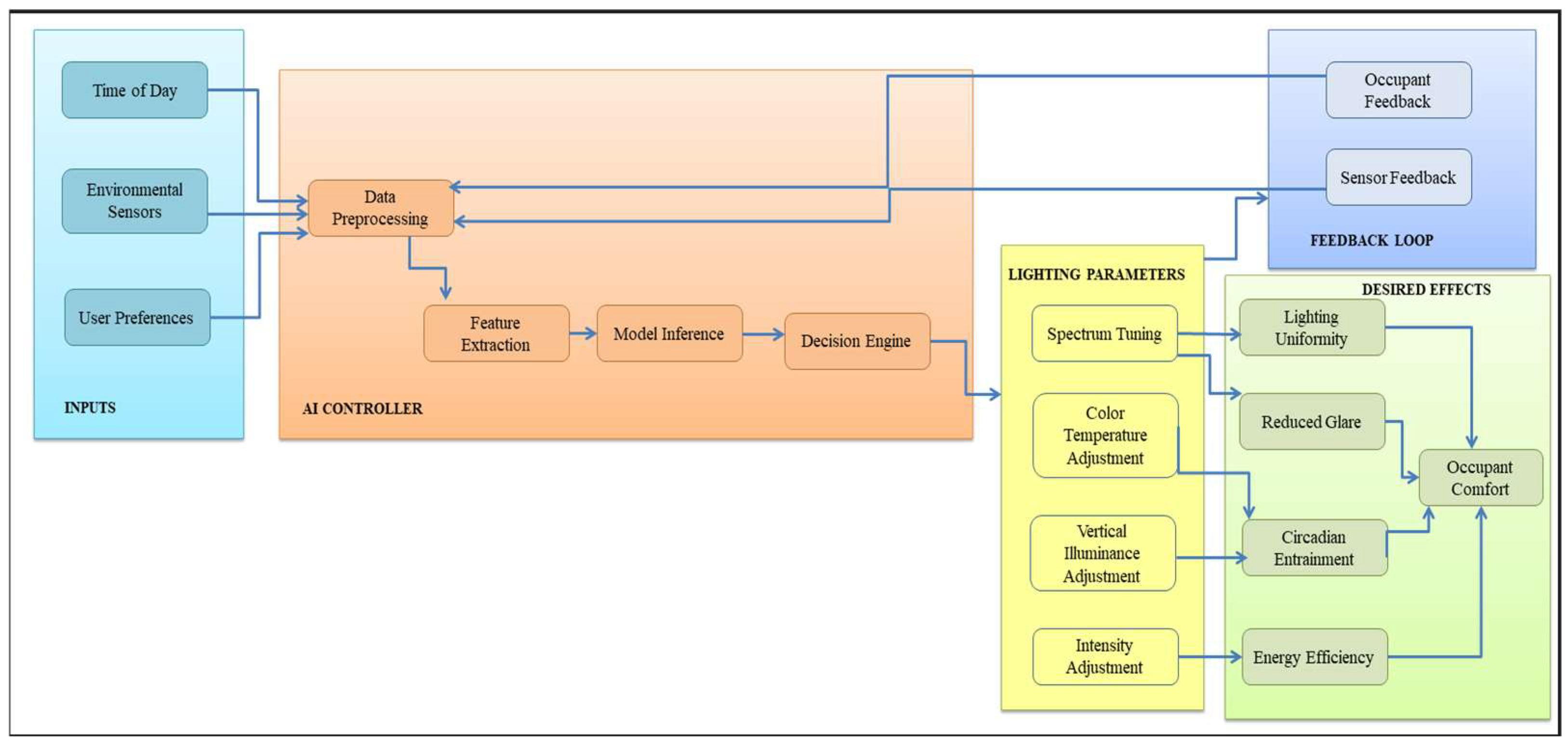
The sample images in Figure 9 show AI-based spectral tuning for improving the visual effects and aesthetics in an interior. A block diagram representation of an AI-based control scheme for circadian entrainment is shown in Figure 10.
Table 5 addresses RQ6, with a focus on the application area, ML technologies used for lighting control, and the significant findings.
Evaluation of specific AI or machine learning approaches
An integrated multi-objective optimization approach to shading systems enhanced by machine learning is suggested by [122] to manage the availability of daylight, glare reduction, and energy efficiency at the same time. The research uses supervised artificial neural networks (ANNs) to substitute for building performance simulations, which are computationally intensive to construct. The ANNs are able to obtain the nonlinear interaction between the shading design variables (self-shading depth, louver geometry, etc.) and the performance variables (e.g., energy use, daylight, and glare measures). ANNs can achieve a high predictive accuracy (R2 of approximately 0.99 regarding energy use and over 0.90 regarding daylight and glare).
The trained ANN models are incorporated into a Non-Dominated Sorting Genetic Algorithm II (NSGA-II) to find a solution to a multi-objective optimization problem. The objective functions are formulated as
min f 1 ( x )   =   E U I   ( x )
max f 2 ( x )   =   s U D I   ( x )
max f 3 ( x )   =   s G A   ( x )
in which x is the parameter space of the shading design, EUI is the Energy Use Intensity, sUDI is the spatial Useful Daylight Illuminance, and sGA is the spatial Glare Autonomy. To be used in an NSGA-II, the maximization goals are converted into minimization as “-sUDI” and “-sGA”.
This AI-based system effectively produces Pareto-optimal designs that prove to be better than traditional or single-objective designs in terms of integrating the visual comfort with the efficiency in energy interactions.
Challenges and Opportunities
Although it has good potential, ML-based lighting design presents issues of data availability, generalization of the models to buildings of different types and climates, scalability, and prediction explainability. These constraints require the creation of resistant, explainable, and sparse ML models in combination with real-time sensing and dynamic control to improve visual comfort, energy savings, and human-centered lighting.

3.5. Role of Lighting Standards

Aligning lighting standards with intelligent lighting control systems, BIM, and IoT technologies is essential to enhance energy efficiency for sustainable building practices [123]. Lighting standards, such as EN 12464-1, IS 3646, and the IES recommendations, focus on ensuring adequate lighting quantity and quality for visual task performance, including maintaining illuminance, uniformity, limiting glare, and ensuring color rendering. The International Commission on Illumination (CIE) defines the fundamental photometric and colorimetric quantities, including luminous flux, glare indices, lighting quality, and color rendering metrics, which remain essential for both conventional and intelligent lighting systems [124,125,126]. The technology focus of the IEC (International Electrotechnical Commission), IEC TC 34, and IECQ, is on LED, smart lighting standards, Li-Fi, and IoT integration [127]. Energy-focused standards and codes, such as ASHRAE 90.1, EN 15193, and national energy conservation building codes, regulate lighting energy use through indicators including the lighting power density, control strategies, and daylight utilization. CIE S 026:2018 and the HCL guidelines, such as WELL Building Standard and DIN SPEC 67600, extend conventional lighting evaluation to the circadian effects of light. The IES standards address visual comfort, energy efficiency, and HCL strategies [128,129]. This is relevant for solid-state lighting and adaptive lighting strategies. IEEE 1789 addresses flicker-related health concerns. The IEEE standards support interoperability and compatibility with smart control architectures, ensuring safety and user comfort [130,131]. Standards such as ISO 8995, which governs lighting requirements for indoor workplaces, focus on ergonomics, visual performance, and energy efficiency [132].

4. Discussion

This review synthesizes the research across six interrelated areas of building lighting, including lighting quality and quantity assessment, tunable lighting control, circadian-centric lighting, simulation-based evaluation, virtual reality (VR), and AI/ML-based lighting systems. Although each of the domains has made major advancements, the literature is still disjointed, with little integration of visual performance, biological effectiveness, user perception, and intelligent control. Conventional illuminance-based measurements cannot be used in modern lighting conditions without the accompaniment of vertical, spectral, temporal, and perceptual measures integrated into the adaptive control techniques.
Integrating circadian metrics into smart lighting applications is crucial for occupant health, with the evolving approaches of: simulation-based, VR-based, and ML-based evaluation. Each approach offers distinct advantages, limitations, and trade-offs. A comparative analysis of key lighting evaluation approaches is reported in Table 6.
The primary trade-off that has been established is between circadian-centric and energy-efficient lighting. Circadian measures like CS, EML and mEDI can be used for health-oriented design, but these measures normally demand more light, which would lead to more energy use when they are not daylight integrated or zonal controlled. In a similar context, physics-based lighting simulations are highly predictive but lack real-time flexibility, whereas data-driven and ML-based models are faster at prediction, personalization, and optimization at the cost of explainability and generalization between different buildings.
Lighting assessment simulations with VR have proven to be a mandatory transition between objective and subjective perceptions, facilitating the approval of a design in its initial phases and its estimation by the end user. But absolute photometric accuracy and standardization make VR an unsuitable substitute for conventional simulations or measurement tools. Across all six themes, AI and machine learning can be seen as an enabling and integrative layer; that is, they support surrogate modeling, adaptive control, behavior-aware optimization, and multi-objective decision-making.
In general, the synthesis suggests that the building lighting systems of the future need to be designed in the format of cyber–physical–human systems, including digital twins, real-time sensing, AI controlled, and immersive validation. This is a comprehensive grid that is necessary to create a balance between visual comfort, circadian health, energy efficiency and user experience in intelligent and sustainable buildings.

5. Conclusions

The review paper brings together fragmented studies on building lighting to create a logical, multidisciplinary view in line with modern architectural, technological and human-focused design. The division of the literature into six thematic areas makes it easier to understand the mutual impact of lighting performance evaluation, control measures, biological aspects, digital technology, and data-driven approaches on building outcomes. Instead of the promotion of a single solution, the study focuses on coordinated strategies throughout the building lifecycle that include early design, operations, and evaluation. The results provide insight into the coordination of lighting design, sustainability and occupant well-being. Future studies could be devoted to real-world validation, interoperable sites, open-minded decision-making, and ethical data management to guarantee credible and socially responsible lighting systems.

Author Contributions

Writing—original draft preparation, S.G.V. and S.R.; Conceptualization and Supervision, C.P.K. and A.M.G.; Writing—review and editing, S.R.; Methodology, S.G.C.; Formal Analysis, V.M.; Visualization, M.A.G. All authors have read and agreed to the published version of the manuscript.

Funding

This research received no external funding.

Informed Consent Statement

Not applicable.

Data Availability Statement

The original contributions presented in this study are included in the article. Further inquiries can be directed to the corresponding author.

Acknowledgments

During the preparation of this manuscript/study, the authors used the AI tool “Imagine Art” “https://www.imagine.art (accessed on 10 December 2025)” for the purpose of making block diagrams, flow charts and visualizations of room interiors as per the authors’ requirements by defining the inputs, outputs and signal flow conditions. The authors have reviewed and edited the output and take full responsibility for the contents of this publication.

Conflicts of Interest

The authors declare no conflicts of interest.

References

  1. Jamala, N.; Hamzah, B.; Mulyadi, R.; Cahyani, I. The Architectural Design of Building Façade Models Related to Optimizing Daylight Distribution. J. Daylighting 2023, 10, 60–71. [Google Scholar] [CrossRef]
  2. Şenalp, M.; Köymen, E.; Yaşa, E.; Başar, M.E. Parametric Exploration of Natural Lighting and Visual Comfort in Contemporary Additions to Historic Buildings. J. Daylighting 2025, 12, 506–519. [Google Scholar] [CrossRef]
  3. Mangkuto, R.A.; Bintoro, A. Sensitivity Analysis and Optimization of Facade Design to Improve Daylight Performance of Tropical Classrooms with an Adjacent Building. J. Daylighting 2025, 12, 235–251. [Google Scholar] [CrossRef]
  4. ImagineArt 1.5, Imagine.Art. Available online: https://www.imagine.art (accessed on 10 December 2025).
  5. Rizal, Y.; Robandi, I.; Yuniarno, E.M. Daylight factor distribution optimization based on sky component on the room for window openings. Int. J. Innov. Comput. Inf. Control 2020, 16, 15–28. [Google Scholar]
  6. Nazari, M.; Matusiak, B. Daylighting simulation and visualisation: Navigating challenges in accuracy and validation. Energy Build. 2024, 312, 114188. [Google Scholar] [CrossRef]
  7. Cabarkapa, A.; Djokic, L. Importance of the color of light for the illumination of urban squares. Color Res. Appl. 2019, 44, 446–453. [Google Scholar] [CrossRef]
  8. Setiawan, M.F.; Santoso, E.B.; Purnomo, A. Study of Natural Lighting Design in Sustainable Education Buildings. IOP Conf. Ser. Earth Environ. Sci. 2024, 1381, 012044. [Google Scholar] [CrossRef]
  9. Bashir, F.M.; Dodo, Y.A.; Mohamed, M.A.; Norwawi, N.M.; Shanna, N.M.; Afghan, A.A. Effects of natural light on improving the lighting and energy efficiency of buildings: Toward low energy consumption and CO2 emission. Int. J. Low-Carbon Technol. 2024, 19, 296–305. [Google Scholar] [CrossRef]
  10. Jarboe, C. Strategies for Delivering Circadian Stimulus in an Office Space While Minimizing Energy Use. Light. Des. Appl. 2019, 49, 46–50. [Google Scholar] [CrossRef]
  11. Schielke, T. Influence of lighting design on marketing communication. Leukos 2015, 11, 109–124. [Google Scholar] [CrossRef]
  12. Maksoud, A.; Mushtaha, E.; Chouman, L.; Jawad, E.A.I.; Samra, S.A.; Sukkar, A.; Yahia, M.W. Study on Daylighting Performance in the CFAD Studios at the University of Sharjah. Civ. Eng. Archit. 2022, 10, 2134–2143. [Google Scholar] [CrossRef]
  13. Loe, D. Energy efficiency in lighting—Considerations and possibilities. Light. Res. Technol. 2009, 41, 209–218. [Google Scholar] [CrossRef]
  14. Yilmaz, F. Lighting energy performance determination in office environments through implementation of EN 15193-1 for Turkey. Light. Res. Technol. 2021, 53, 749–776. [Google Scholar] [CrossRef]
  15. Lotfabadi, P.; Hançer, P. Optimization of visual comfort: Building openings. J. Build. Eng. 2023, 72, 106598. [Google Scholar] [CrossRef]
  16. Skarżyński, K.; Żagan, W. Improving the quantitative features of architectural lighting at the design stage using the modified design algorithm. Energy Rep. 2022, 8, 10582–10593. [Google Scholar] [CrossRef]
  17. Omar, O.; García-Fernández, B.; Fernández-Balbuena, A.; Vazquez-Molini, D. Optimization of daylight utilization in energy saving application on the library in faculty of architecture, design and built environment. Alex. Eng. J. 2018, 57, 3921–3930. [Google Scholar] [CrossRef]
  18. Tai, N. Daylighting and its impact on depth perception in a daylit space. J. Light Vis. Environ. 2012, 36, 16–22. [Google Scholar] [CrossRef][Green Version]
  19. Ozorhon, I.F.; Uraz, T.U. Natural light as a determinant of the identity of architectural space. J. Archit. Urban. 2014, 38, 107–119. [Google Scholar] [CrossRef]
  20. Nikookar, N.; Sawyer, A.O.; Goel, M.; Rockcastle, S. Investigating the Impact of Combined Day-light and Electric Light on Human Perception of Indoor Spaces. Sustainability 2024, 16, 3691. [Google Scholar] [CrossRef]
  21. Diksith, S.; Shetty, R.; Swarnika, B.; Gurpur, P. Optimizing Building Orientation, Window-to-Wall Ratio, and Calculated Solar Shades and Strategies to Enhance the Building’s Daylight Performance and Energy-Saving Potential. In Proceedings of the International Conference on Variabarability of the Sun and Sun-Like Stars: From Asteroseismology to Space Weather; Springer: Singapore, 2022. [Google Scholar]
  22. Zakaria, S.; Rou, N.; En, H.; Iyian, T. Color Light and Wellbeing: A Case Study of M Mall 020 George Town. IOP Conf. Ser. Mater. Sci. Eng. 2017, 291, 012005. [Google Scholar] [CrossRef]
  23. Pierleoni, P.; Belli, A.; Palma, L.; Sabbatini, L. An IoT-based Wireless Sensor Network for Lighting Control Systems. In Proceedings of the 2022 IEEE Intl Conf on Dependable, Autonomic and Secure Computing, Intl Conf on Pervasive Intelligence and Computing, Intl Conf on Cloud and Big Data Computing, Intl Conf on Cyber Science and Technology Congress (DASC/PiCom/CBDCom/CyberSciTech), Falerna, Italy, 12–15 September 2022; IEEE: Piscataway, NJ, USA, 2022; pp. 1–6. [Google Scholar]
  24. Navarro, I.; Sánchez, A.; Redondo, E.; Giménez, L.; Zapata, H.; Fonseca, D. New lighting representation methodologies for enhanced learning in architecture degree. In Proceedings of the World Conference on Information Systems and Technologies, Galicia, Spain, 16–19 April 2019. [Google Scholar]
  25. Ahrens, C.; Chamberlain, R.; Mitchell, S.; Barnstorff, A. Catoptric surface: Image-forming light reflectance. In Proceedings of the 38th Annual Conference of the Association for Computer Aided Design in Architecture: Recalibration on Imprecision and Infidelity, Mexico City, Mexico, 18–20 October 2018. [Google Scholar]
  26. Pierson, M. West Berkeley public library: A case study in zero-net energy lighting design. J. Green Build. 2015, 10, 25–41. [Google Scholar] [CrossRef]
  27. López-Besora, J.; Isalgué, A.; Coch, H.; Crespo, I.; Alonso, C. Yellow is green: An opportunity for energy savings through color in architectural spaces. Energy Build. 2014, 78, 105–112. [Google Scholar] [CrossRef]
  28. Steane, M. Environmental diversity and natural lighting strategies. In Environmental Diversity in Architecture; Routledge: Milton Park, UK, 2004. [Google Scholar]
  29. Tai, N.; Inanici, M. Luminance contrast as depth cue: Investigation and design applications. Comput.-Aided Des. Appl. 2012, 9, 691–705. [Google Scholar] [CrossRef]
  30. Tai, N. Computational investigation of the illusory depth effect of luminance contrast on a three-dimensional architectural scene with binocular vision. J. Asian Archit. Build. Eng. 2015, 14, 331–338. [Google Scholar] [CrossRef]
  31. Tai, N.; Inanici, M. Lighting in real and pictorial spaces: A computational framework to investigate the scene based lighting distributions and their impact on depth perception. In Proceedings of the 15th International Conference on Computer-Aided Architectural Design in Asia, Hong Kong, China, 7–10 April 2010. [Google Scholar]
  32. Schielke, T.; Leudesdorff, M. Impact of lighting design on brand image for fashion retail stores. Light. Res. Technol. 2015, 47, 672–692. [Google Scholar] [CrossRef]
  33. Lindh, U.; Billger, M. Light topography and spaciousness in the urban environment. Nord. J. Archit. Res. 2021, 33, 103–134. [Google Scholar]
  34. Tomasovits, M.; Zerefos, S.; Tsangrassoulis, A.; Th, B.; Vital, R.; Madias, E.; Doulos, L. The impact of facade lighting on environmental sustainability: Investigation methods. Renew. Sustain. Energy Rev. 2025, 210, 115246. [Google Scholar] [CrossRef]
  35. Billger, M.; Wänström, L.U. Light distribution and perceived spaciousness: Light patterns in scale models. Sustainability 2021, 13, 12424. [Google Scholar] [CrossRef]
  36. Espinoza-Sanhueza, C.; Hébert, M.; Lalonde, J.; Demers, C. Biophilic analogous patterns for light-responsive architecture during polar night: Examining the photobiological effects of electrical lighting on surface color configuration. Build. Environ. 2024, 249, 111125. [Google Scholar] [CrossRef]
  37. Liao, P.; Chen, L.; Liang, Z.; Huang, Y.; Chen, H.; Sun, L. Investigating the optimal scale for sub-way station hall designs based on psychological perceptions and eye-tracking methods. J. Build. Eng. 2025, 103, 112175. [Google Scholar] [CrossRef]
  38. Yamada, N.; Maeda, C.; Yamamoto, H.; Suyama, S. Theoretical and measured evaluation of lighting and observation angle dependence of perceived depth in arc 3-D display. Proc. IDW/AD 2012, 12, 21–24. [Google Scholar]
  39. Nasybullina, R.; Slastenin, P.; Fadeev, A. Designing lightspace in contemporary architecture. In Proceedings of the E3S Web of Conferences, Milan, Italy, 13–15 February 2019. [Google Scholar]
  40. Lu, Y.; Li, W.; Xu, W.; Lin, Y. Impacts of LED dynamic white lighting on atmosphere perception. Light. Res. Technol. 2019, 51, 1143–1158. [Google Scholar] [CrossRef]
  41. Gago, E.; Muneer, T.; Knez, M.; Köster, H. Natural light controls and guides in buildings. Energy saving for electrical lighting, reduction of cooling load. Renew. Sustain. Energy Rev. 2015, 41, 1–13. [Google Scholar] [CrossRef]
  42. Li, H.; Wu, D.; Yuan, Y.; Zuo, L. Evaluation methods of the daylight performance and potential energy saving of tubular daylight guide systems: A review. Indoor Built Environ. 2022, 31, 299–315. [Google Scholar] [CrossRef]
  43. Mayhoub, M.; Rabboh, E. Daylighting in shopping malls: Customer’s perception, preference, and satisfaction. Energy Build. 2022, 255, 111691. [Google Scholar] [CrossRef]
  44. Chinchero, H.; Alonso, J.; Ortiz, T.H. LED lighting systems for smart buildings: A review. IET Smart Cities 2020, 2, 126–134. [Google Scholar] [CrossRef]
  45. Vandenbogaerde, L.; Verbeke, S.; Audenaert, A. Optimizing building energy consumption in office buildings: A review of building automation and control systems and factors influencing energy savings. J. Build. Eng. 2023, 76, 107233. [Google Scholar] [CrossRef]
  46. Wei, Y.; Zhang, Y.; Wang, Y.; Liu, C. A study of the emotional impact of interior lighting color in rural bed and breakfast space design. Buildings 2023, 13, 2537. [Google Scholar] [CrossRef]
  47. Zhang, C.; Chen, Y.; Dewancker, B.; Shentu, C.; Tian, H.; Liu, Y.; Wan, J.; Zhang, X.; Li, J. Emotional Landscapes in Urban Design: Analyzing Color Emotional Responses of the Elderly to Community Outdoor Spaces in Yi Jie Qu. Buildings 2024, 14, 793. [Google Scholar] [CrossRef]
  48. Shen, K.; Xi, H.; Hou, W. The effect of correlated color temperatures of indoor light sources in vegetable markets on consumers’ visual preferences and product perceptions. Build. Environ. 2025, 280, 113123. [Google Scholar] [CrossRef]
  49. Colaco, S.G.; Varghese, S.G.; Kurian, C.P.; Kumar, S. A state-of-the-art artificial intelligent techniques in daylighting controller: Models and performance. Sci. Technol. Energy Transit. 2023, 78, 37. [Google Scholar] [CrossRef]
  50. Mathew, V.; George, A.M.; Varghese, S.G.; Kurian, C.P.; Augustine, N.; George, V.I. Review On Human-Centric Lighting Focusing On Smart Solid-State Lighting And Switch-Able Glazing. J. Green Build. 2025, 20, 199–226. [Google Scholar] [CrossRef]
  51. Blanco, J.O.; Arranz, B. Exploring urban lighting design effect on citizens’ emotions through the application of Kansei methodology. Smart Sustain. Built Environ. 2025; ahead-of-print. [Google Scholar]
  52. Wang, Z.; Shen, M.; Huang, Y. Combining Eye-Tracking Technology and Subjective Evaluation to Determine Building Facade Color Combinations and Visual Quality. Appl. Sci. 2024, 14, 8227. [Google Scholar] [CrossRef]
  53. Shah, I.; Su, X.; Talami, R.; Ghahramani, A. Enhancing building envelopes: Parametric analysis of shading systems for opaque facades and their comparison with cool paints. Energy Built Environ. 2024, 6, 904–919. [Google Scholar] [CrossRef]
  54. Kong, D.; Lin, X.; Lu, Z.; Fei, X.; Xie, Y.; Chen, Z. Quantitative study on the color of traditional dwellings in Jianxi River Basin, Fujian Province, based on the lab color space model. J. Asian Archit. Build. Eng. 2025, 24, 1139–1165. [Google Scholar] [CrossRef]
  55. Elaraby, I.; Aly, R. Study of the Effect of Colors Change on Children with Mental Problems. J. Eng. Appl. Sci. 2020, 47, 411–426. [Google Scholar]
  56. Singh, M.; Singari, R.; Bholey, M. A review study of cognitive design research on colors from a visual psychological perspective. Int. J. Exp. Res. Rev. 2023, 30, 75–86. [Google Scholar] [CrossRef]
  57. Mathew, V.; Kurian, C.P.; Varghese, S.G.; Priyadarshini, K.; Bhandary, S.S. Real-time investigations and simulation on the impact of lighting ambience on circadian stimulus. Arab. J. Sci. Eng. 2023, 48, 6703–6716. [Google Scholar] [CrossRef]
  58. Füchtenhans, M.; Grosse, E.H.; Christoph, H. Smart lighting systems: State-of-the-art and potential applications in warehouse. Int. J. Prod. Res. 2021, 59, 3817–3839. [Google Scholar] [CrossRef]
  59. Petkovic, M.; Bajovic, D. Smart Dimmable LED. Sensors 2022, 22, 8523. [Google Scholar] [CrossRef]
  60. Varghese, S.G.; Kurian, C.P.; Joseph, C. Wireless sensor actuator network architecture and energy model of a camera based lighting management system. IEEE Access 2022, 10, 22700–22711. [Google Scholar] [CrossRef]
  61. Kumar, S.; Kurian, C.P.; Varghese, S.G. Ensemble learning model-based test workbench for the optimization of building energy performance and occupant comfort. IEEE Access 2020, 8, 96075–96087. [Google Scholar] [CrossRef]
  62. Cheng, Y.; Fang, C.; Yuan, J.; Zhu, L. Design and Application of a Smart Lighting System Based on Distributed Wireless Sensor Networks. Appl. Sci. 2020, 10, 8545. [Google Scholar] [CrossRef]
  63. Stolojescu-Crisan, C. IoT-Based Smart Home Automation. Sensors 2021, 21, 3784. [Google Scholar] [CrossRef]
  64. Varghese, S.G.; Kurian, C.P.; George, V.I.; Varghese, M.; Kumar, T.M.S. Climate model based test workbench for daylight-artificial light integration. Light. Res. Technol. 2019, 51, 774–787. [Google Scholar] [CrossRef]
  65. Varghese, S.; Kurian, C.; George, V.; John, A.; Nayak, V.; Upadhyay, A. Comparative study of zigBee topologies for IoT—Based lighting automation. IET Wirel. Sens. Syst. 2019, 9, 201–207. [Google Scholar] [CrossRef]
  66. Varghese, S.; Kurian, C.; George, V.; Kumar, T. Daylight-artificial light integrated scheme based on digital camera and wireless networked sensing-actuation system. IEEE Trans. Consum. Electron. 2019, 65, 284–292. [Google Scholar] [CrossRef]
  67. Miller, N.J.; Campiglia, G. A Case Study of Tunable White LED Lighting with Networked Lighting Controls; United States Department of Energy: Washington, DC, USA, 2023. [Google Scholar]
  68. Le, D.M.; Park, D.Y.; Baek, J.; Karunyasopon, P. Multi-criteria decision making for adaptive façade optimal design in varied climates: Energy, daylight, occupants’ comfort, and outdoor view analysis. Build. Environ. 2022, 223, 360–1323. [Google Scholar] [CrossRef]
  69. Zissis, G.; Bertoldi, P. Update on Status of Solid-State Lighting & Smart Lighting Systems; Publications Office of the European Union: Luxembourg, 2023. [Google Scholar]
  70. Soheilian, M.; Fischl, G.; Aries, M. Smart Lighting Application for Energy Saving and User Well-Being in the Residential Environment. Sustainability 2021, 13, 6198. [Google Scholar] [CrossRef]
  71. Lewis, P.; Christoforou, R.; Ha, P.P.; Wild, U.; Schweiker, M.; Erren, T. Architecture, light, and circadian biology: A scoping review. Sci. Total Environ. 2024, 955, 177212. [Google Scholar] [CrossRef]
  72. Dianagri, A.T.; Gocer, O.; Hu, W. Integrating monitors into circadian lighting strategies for offices. J. Build. Eng. 2025, 110, 113051. [Google Scholar] [CrossRef]
  73. Mukherjee, B.; Boubekri, M. Sustainable Architecture and Human Health: A Case for Effective Circadian Daylighting Metrics. Buildings 2025, 315, 315. [Google Scholar] [CrossRef]
  74. Jalali, M.S.; Jones, J.R.; Tural, E.; Gibbons, R.B. Human-Centric Lighting Design: A Framework for Supporting Healthy Circadian Rhythm Grounded in Established Knowledge in Interior Spaces. Buildings 2024, 14, 1125. [Google Scholar] [CrossRef]
  75. Ardabili, N.G.; Digert, N.; Urich, S.; Wang, J. Characterizing architectural glazing performance for circadian light. Energy Build. 2025, 328, 115144. [Google Scholar] [CrossRef] [PubMed]
  76. Hu, H.; Zhang, H.; Wang, L.; Ke, Z. Evaluation and Design of Parameterized Dynamic Daylighting for Large-Space Buildings. Sustainability 2023, 15, 10773. [Google Scholar] [CrossRef]
  77. Alkhatatbeh, B.; Asadi, S. Role of Architectural Design in Creating Circadian-Effective Interior Settings. Energies 2021, 14, 6731. [Google Scholar] [CrossRef]
  78. Ebaid, M.A. Improving Circadian Light Exposure Through Architectural Daylighting Design in School Classrooms. MSA Eng. J. 2024, 3, 38–54. [Google Scholar] [CrossRef]
  79. Fani, M.; Sharp, N.; Anaraki, M.; Shahverdi, A.F. Evaluation of the influence of interior design parameters on circadian daylighting of design-studio classrooms. Build. Simul. 2023, 18, 221–229. [Google Scholar]
  80. Safranek, S.; Collier, J.; Wilkerson, A.; Davis, R.G. Energy impact of human health and wellness lighting recommendations for office and classroom applications. Energy Build. 2020, 226, 110365. [Google Scholar] [CrossRef]
  81. Sonta, A.; Dougherty, T.; Jain, R.K. Data-driven optimization of building layouts for energy efficiency. Energy Build. 2021, 238, 110815. [Google Scholar] [CrossRef]
  82. Mohammadrezaei, E.; Giovannelli, A.; Lane, L.; Gracanin, D. A digital twin based approach to smart lighting design. arXiv 2024, arXiv:2407.087413.5. [Google Scholar]
  83. Attia, S.; Hamdy, M.; O’Brien, W.; Carlucci, S. Assessing gaps and needs for integrating building performance optimization tools in net zero energy buildings design. Energy Build. 2013, 60, 110–124. [Google Scholar] [CrossRef]
  84. McNeil, A.; Lee, E.S. A validation of the Radiance three-phase simulation method for modeling annual daylight performance of optically complex fenestration systems. J. Build. Perform. Simul. 2013, 6, 24–37. [Google Scholar] [CrossRef]
  85. Ward, G.J. The RADIANCE lighting simulation and rendering system. In Proceedings of the SIGGRAPH ’94; Glassner, A., Ed.; ACM: New York, NY, USA, 1994; pp. 459–472. [Google Scholar]
  86. Aksamija, A.; Brown, D. Integration of Parametric Design Methods and Building Performance Simulations for High-Performance Buildings: Methods and Tools. Perkins Will Res. J. 2018, 10, 28–53. [Google Scholar]
  87. Abdelrahman, M.M.; Toutou, A.M.Y. A Machine Learning Approach for Building Performance Simulation: Methods and Development. Acad. Res. Community Publ. 2019, 3, 205–213. [Google Scholar] [CrossRef]
  88. Roman, N.D.; Bre, F.; Fachinotti, V.D.; Lamberts, R. Application and characterization of meta-models based on artificial neural networks for building performance simulation: A systematic review. Energy Build. 2020, 217, 109972. [Google Scholar] [CrossRef]
  89. Sangireddy, S.; Bhatia, A.; Garg, V. Development of a surrogate model by extracting top characteristic feature vectors for building energy prediction. J. Build. Eng. 2019, 23, 38–52. [Google Scholar] [CrossRef]
  90. Edwards, R.; New, J.; Parker, L.; Cui, B.; Dong, J. Constructing large scale surrogate models from big data and artificial intelligence. Appl. Energy 2017, 202, 685–699. [Google Scholar] [CrossRef]
  91. Zhao, Y.; Zhang, C.; Zhang, Y.; Wang, Z.; Li, J. A review of data mining technologies in building energy systems: Load prediction, pattern identification, fault detection and diagnosis. Energy Built Environ. 2020, 1, 149–164. [Google Scholar] [CrossRef]
  92. Shen, Y.; Pan, Y. BIM-supported automatic energy performance analysis for green building de-sign using explainable machine learning and multi-objective optimization. Appl. Energy 2023, 333, 120575. [Google Scholar] [CrossRef]
  93. Kim, C.H.; Kim, M.; Song, Y.J. Sequence-to-sequence deep learning model for building energy consumption prediction with dynamic simulation modeling. J. Build. Eng. 2021, 43, 102577. [Google Scholar] [CrossRef]
  94. De Wilde, P. Building performance simulation in the brave new world of artificial intelligence and digital twins: A systematic review. Energy Build. 2023, 292, 113171. [Google Scholar] [CrossRef]
  95. Pan, Y.; Zhu, M.; Lv, Y.; Yang, Y.; Liang, Y.; Yin, R.; Yang, Y.; Jia, X.; Wang, X.; Zeng, F.; et al. Building energy simulation and its application for building performance optimization: A review of method, tools and case studies. Adv. Appl. Energy 2023, 10, 100135. [Google Scholar] [CrossRef]
  96. Zhang, Y.Y.; Kang, K.; Lin, J.R.; Zhang, J.P.; Zhang, Y. Building information modeling–based cyber-physical plat-form for building performance monitoring. Int. J. Distrib. Sens. Netw. 2020, 16, 1550147720908170. [Google Scholar] [CrossRef]
  97. Kolahan, A.; Maadi, S.R.; Teymouri, Z.; Schenone, C. Blockchain-based solution for energy demand-side management of residential buildings. Sustain. Cities Soc. 2021, 75, 103316. [Google Scholar] [CrossRef]
  98. Bäcklund, K.; Lundqvist, P.; Molinari, M. Showcasing a digital twin for higher educational buildings: Developing the concept toward human centricity. Front. Built Environ. 2024, 10, 1347451. [Google Scholar] [CrossRef]
  99. Zhao, Z.; Gao, Z.; Wang, H.; Meng, F.; Zhu, X.; Xu, F. DIALux evo and Ladybug + Honeybee: A review of performance and application in electric lighting environment. Build. Environ. 2025, 285, 113570. [Google Scholar] [CrossRef]
  100. Acosta, I.; Muñoz, C.; Esquivias, P.; Moreno, D.; Navarro, J. Analysis of the accuracy of the sky component calculation in daylighting simulation programs. Sol. Energy 2015, 119, 54–67. [Google Scholar] [CrossRef]
  101. Mousavi, S.M.; Khan, T.H.; Lim, Y.W. Empirical validation of Radiance-IES daylight simulation for furnished and unfurnished rooms under a tropical sky. Int. J. Sustain. Build. Technol. Urban Dev. 2016, 7, 61–69. [Google Scholar] [CrossRef]
  102. Stevanović, S.; Dashti, H.; Milošević, M.; Al-Yakoob, S.; Stevanović, D. Comparison of ANN and XGBoost surrogate models trained on small numbers of building energy simulations. PLoS ONE 2024, 19, e0312573. [Google Scholar] [CrossRef]
  103. Seo, H.; Yun, W.-S. Digital twin-based assessment framework for energy savings in university classroom lighting. Buildings 2022, 12, 544. [Google Scholar] [CrossRef]
  104. Ahraou, W.; Daoud, K. Employing virtual reality to increase the efficiency of architectural design. Int. J. Intell. Syst. Appl. Eng. 2024, 12, 837–846. [Google Scholar]
  105. Scorpio, M.; Carleo, D.; Gargiulo, M.; Navarro, P.C.; Spanodimitriou, Y.; Sabet, P.; Masullo, M.; Ciampi, G. A review of subjective assessments in virtual reality for lighting research. Sustainability 2023, 15, 7491. [Google Scholar] [CrossRef]
  106. Chen, Y.; Cui, Z.; Hao, L. Virtual reality in lighting research: Comparing physical and virtual lighting environments. Light. Res. Technol. 2019, 51, 820–837. [Google Scholar] [CrossRef]
  107. Mirdamadi, M.S.; Zomorodian, Z.S.; Tahsildoost, M. Evaluation of occupants’ visual perception in day lit scenes: A virtual reality experiment. J. Daylighting 2023, 10, 45–59. [Google Scholar] [CrossRef]
  108. Scorpio, M.; Laé, R.; Masullo, M.; Ciampi, G.; Rosato, A.; Maffeis, L.; Sibilio, S. Virtual reality for smart urban lighting design: Review, applications and opportunities. Energies 2020, 13, 3809. [Google Scholar] [CrossRef]
  109. Abd-Alhamid, F.; Kent, M.B.C.; Calautit, J.K.S.; Wu, Y. Developing an innovative method for visual perception evaluation in a physical-based virtual environment. Build. Environ. 2019, 162, 106278. [Google Scholar] [CrossRef]
  110. Krupiński, R. Virtual reality system and scientific visualisation for smart designing and evaluating of lighting. Energies 2020, 13, 5518. [Google Scholar] [CrossRef]
  111. Li, X. Visualization analysis of architectural interior design combined with virtual reality technology under new process conditions. Appl. Math. Nonlinear Sci. 2024, 9, 1–15. [Google Scholar] [CrossRef]
  112. Abbasi, M.; Váz, P.; Silva, J.; Martins, P. Enhancing visual perception in immersive VR and AR environments: AI-driven color and clarity adjustments under dynamic lighting conditions. Technologies 2024, 12, 216. [Google Scholar] [CrossRef]
  113. Mohammadrezaei, E.; Ghasemi, S.; Dongre, P.; Gračanin, D.; Zhang, H. Systematic review of ex-tended reality for smart built environments lighting design simulations. IEEE Access 2024, 12, 17058–17089. [Google Scholar] [CrossRef]
  114. Masullo, M.; Cioffi, F.; Li, J.; Maffei, L.; Ciampi, G.; Sibilio, S.; Scorpio, M. Urban park lighting quality perception: An immersive virtual reality experiment. Sustainability 2023, 15, 2069. [Google Scholar] [CrossRef]
  115. Elbadawy, H.; Farouk, A. Implementation of virtual reality technology in architecture field, and education: A review. Arch. Comput. Methods Eng. 2025, 32, 2457–2465. [Google Scholar] [CrossRef]
  116. Chan, H.M.; Chow, C.W.; Hsu, L.S.; Liu, Y.; Peng, C.W.; Jian, Y.H.; Yeh, C.H. Utilizing lighting design software for simulation and planning of machine learning based angle-of-arrival (AOA) visible light positioning (VLP) systems. IEEE Photonics J. 2022, 14, 1–7. [Google Scholar] [CrossRef]
  117. Babakhani, R. Automatic Generation of Architectural Plans with Machine Learning. Technol. Archit. Des. 2023, 7, 183–191. [Google Scholar] [CrossRef]
  118. Newton, D. Generative deep learning in architectural design. Technol. Archit. Des. 2019, 3, 176–189. [Google Scholar] [CrossRef]
  119. Najjar, G.A.; Akkad, K.; Almahdaly, A.H. Classification of lighting design aspects in relation to employees’ productivity in Saudi Arabia. Sustainability 2023, 15, 3614. [Google Scholar] [CrossRef]
  120. Ngarambe, J.; Irakoze, A.; Yun, G.Y.; Kim, G. Comparative performance of machine learning algorithms in the prediction of indoor daylight illuminances. Sustainability 2020, 12, 4471. [Google Scholar] [CrossRef]
  121. Ngarambe, J.; Adilkhanova, I.; Uwiragiye, B.; Yun, G.Y. A review on the current usage of ma-chine learning tools for daylighting design and control. Build. Environ. 2022, 223, 109507. [Google Scholar] [CrossRef]
  122. Zhang, W.; Ma, Z.; Qiu, H.; Pan, Y.; Shi, Y.; Zhang, L. Machine learning-enhanced multi-objective optimization of integrated shading systems: Enhancing daylight availability, glare protection, and energy savings. Build. Environ. 2025, 280, 113124. [Google Scholar] [CrossRef]
  123. Zocchi, G.; Hosseini, M.; Triantafyllidis, G. Exploring the synergy of advanced lighting controls, Building Information Modeling and Internet of Things for sustainable and energy-efficient buildings: A systematic literature review. Sustainability 2024, 16, 10937. [Google Scholar] [CrossRef]
  124. EN 12464-1:2021; Light and lighting—Lighting of workplaces—Part 1: Indoor workplaces. European Committee for Standardization: Brussels, Belgium, 2021. Available online: https://standards.iteh.ai/catalog/standards/cen (accessed on 5 January 2026).
  125. CIE S 017/E:2020 ILV; International Lighting Vocabulary. International Commission on Illumination: Vienna, Austria, 2020. Available online: https://cie.co.at/e-ilv (accessed on 5 January 2026).
  126. CIE 015:2018; Colorimetry. International Commission on Illumination: Vienna, Austria, 2018. Available online: https://cie.co.at/publications/colorimetry-4th-edition (accessed on 5 January 2026).
  127. IEC. Smart Lighting [IEC Brochure]; International Electrotechnical Commission: Geneva, Switzerland, 2024; Available online: https://www.iec.ch/system/files/2024-05/2024_iec_smart_lighting_a4_en_lr.pdf (accessed on 5 January 2026).
  128. ANSI/IES TM-30-18; IES Method for Evaluating Light Source Color Rendition. Illuminating Engineering Society: New York, NY, USA, 2018. Available online: https://webstore.ansi.org/preview-pages/IESNA/preview_ANSI+IES+TM-30-18.pdf (accessed on 5 January 2026).
  129. Royer, M.P. Tutorial: Background and guidance for using the ANSI/IES TM-30 method for evaluating light source color rendition. Leukos 2022, 18, 191–231. [Google Scholar] [CrossRef]
  130. Std 1789™-2015; IEEE Recommended Practices for Modulating Current in High-Brightness LEDs for Mitigating Health Risks to Viewers. IEEE Standards Association: Piscataway, NJ, USA; IEEE Power Electronics Society: Piscataway, NJ, USA, 2015. Available online: https://standards.ieee.org/standard/1789-2015.html (accessed on 5 January 2026).
  131. Miller, N.J.; Lehman, B. Flicker: Understanding the New IEEE Recommended Practice. U.S. Department of Energy SSL Program. 2015. Available online: https://www.energy.gov/sites/default/files/2022-11/ssl-miller-lehman_flicker_lightfair2015.pdf (accessed on 5 January 2026).
  132. ISO/CIE 8995-1:2025; Light and Lighting of Workplaces—Part 1: Indoor. ISO/CIE: Geneva, Switzerland, 2025. Available online: https://www.iso.org/standard/76342.html (accessed on 5 January 2026).
Figure 2. Indoor artificial light quality and quantity affect visual comfort. This figure is AI-generated conceptual art designed for illustrative purposes. The authors confirm that the illustration aligns with the theoretical explanation and does not reflect real physical scenes or experimental results.
Buildings 16 01174 g002
Figure 3. System-level representation of building lighting controls leading to occupant comfort. This figure is a conceptual block diagram created by AI, intended for illustration. The authors confirm that the conceptual flows and components reflect the theoretical model discussed.
Buildings 16 01174 g003
Figure 4. The effect of lighting controls and tunable spectra in a building interior. This figure is AI-generated conceptual art designed for illustrative purposes. The authors confirm that the illustration aligns with the theoretical explanation and does not reflect real physical scenes or experimental results.Challenges and OpportunitiesEven with their benefits, existing tunable lighting control solutions have multiple drawbacks, such as high price, complexity of the systems, and interoperability issues due to the presence of different communication protocols and manufacturer-specific solutions. Moreover, many systems are not very personalized and cannot adapt to the occupants’ long-term behavior since they are mostly based on rule-based logic. These difficulties open the prospect of lighting control development moving towards learning-based and data-oriented lighting control. Machine learning, real-time sensing, and predictive modeling could be integrated to make a system change according to user preferences and occupancy. A greater interaction with BMS and IoT platforms would make tunable lighting a smarter and adapting layer in new smart building systems.
Buildings 16 01174 g004
Figure 5. System-level block diagram of circadian entrainment and response monitoring. This figure is a conceptual block diagram created by AI, intended for illustration. The authors confirm that the conceptual flows and components reflect the theoretical model discussed.
Buildings 16 01174 g005
Figure 6. Building simulation tools.
Buildings 16 01174 g006
Figure 7. Prediction parameters.
Buildings 16 01174 g007
Figure 8. Exploring the role of virtual reality in interior lighting design. This figure is AI-generated conceptual art designed for illustrative purposes. The authors confirm that the illustration aligns with the theoretical explanation and does not reflect real physical scenes or experimental results.
Buildings 16 01174 g008
Figure 9. AI-based spectral tuning for adaptive lighting. This figure is AI-generated conceptual art designed for illustrative purposes. The authors confirm that the illustration aligns with the theoretical explanation and does not reflect real physical scenes or experimental results.
Buildings 16 01174 g009
Figure 10. AI-based control scheme for circadian entrainment. This figure is a conceptual block diagram created by AI, intended for illustration. The authors confirm that the conceptual flows and components reflect the theoretical model discussed.
Buildings 16 01174 g010
Table 1. Literature search strategy and selection criteria.
Identification—
Literature Search Keywords
(“building lighting” OR “indoor lighting” OR “architectural lighting”)
AND (“lighting performance” OR “lighting quality” OR “illuminance” OR “luminance” OR “glare” OR “daylight metrics” OR “daylighting performance”)

(“lighting control systems” OR “lighting control” OR “tunable lighting” OR “adaptive lighting” OR “smart lighting” OR “intelligent lighting” OR “dynamic lighting”)
AND (“lighting” OR “illumination”)

(“human-centric lighting” OR “circadian lighting” OR “circadian rhythm” OR “biological lighting” OR “biodynamic lighting” OR “melanopic lighting” OR “non-visual effects of light”) AND (“lighting” OR “illumination” OR “light environment”)

(“lighting” AND “simulation”) AND (“DIALux” OR “Radiance” OR “EnergyPlus”)

(“virtual reality” AND “lighting”) AND (“simulation” OR “perception”)

(“machine learning” AND “lighting”) AND (“control” OR “optimization” OR “smart lighting”)

(“artificial intelligence” AND “lighting”)
AND (“control” OR “optimization” OR “smart lighting” OR “energy efficiency”)
Databases Google Scholar (n = 95), Scopus (70), Web of Science (52) and ScienceDirect (15)
Inclusion Criteria(i) Focus on indoor building lighting (residential, commercial, educational, healthcare). (ii) Address lighting performance (visual, circadian, or energy performance), control, circadian impact, quantitative evaluation, simulation/VR, or ML-based approaches. (iii) Employ experimental, simulation-based, or data-driven methods. (iv) Consider smart, responsive, user-friendly lighting operations.
Exclusion Criteria(i) Studies on outdoor, street, automotive, or display lighting. (ii) Editorials, conference abstracts, book chapters, or non-peer-reviewed works. (iii) Studies lacking relevance to building occupants or indoor environments. (iv) Non-English publications.
Outcome of SelectionStudies included for qualitative synthesis and thematic classification.
Table 2. Comparative analysis of circadian metrics.
MetricPrimary BasisStrengthsWeaknesses
CSMelanopsin-weighted retinal illuminance + response modelPhysiologically grounded; accounts for ipRGC response; widely used.Sensitive to viewing direction; complex measurements.
EMLMelanopic weighting relative to photopic luxSimple; WELL standard; simulation friendly.Ignores timing and duration; risk of overestimation.
mEDICIE melanopic action spectrumInternationally standardized; precise spectral basis.No temporal or behavioral component.
LarkSpectral + temporal weightingConsiders timing; daylight focused.Difficult real-world measurement.
nvRALFARetinal light exposure modelConsiders eye level and directionality.Data intensive; not design friendly.
OWLOutdoor daylight referenceUseful for urban daylight studies.Indirect circadian relevance.
CDATTime-above-threshold metricIncorporates temporal exposure; designer friendly.Threshold dependent; ignores spectrum.
TcMelanopic spectral transmittanceEnvelope specific; strong predictor under clear skies.Limited validation; ignores occupant behavior.
Table 3. Comparative summary of building lighting analysis software tools [85,99,100,101,102,103].
Simulation ToolPrimary EngineKey InputsKey OutputsStrengthsLimitations
Radiance/DaysimBackward ray tracing Geometry, material reflectance, sky modelsIlluminance, luminance, glare, daylight autonomyHigh accuracy, validated modelsComputationally intensive, steep learning curve
DIALux/ReluxDAILux: Ray tracing + standards based
Relux: Real-time ray tracing
Luminaire data, room geometryIlluminance, UGR, lighting layoutUser friendly, industry adoptionLimited daylight and AI capabilities
EnergyPlus (Lighting Module)Split-flux/daylight factor methodSchedules, lighting power densityEnergy use, lighting loadsWhole-building integrationSimplified lighting optics
IES VERadiance-based backward ray tracing + daylight coefficient methodBIM geometry, climate dataEnergy, daylight, comfort metricsIntegrated analysis platformProprietary, limited AI features
AI/ML-Based Surrogate ModelsSupervised regression/metamodeling (typically ANN, XGBoost, or Gaussian Process)Historical simulation or sensor dataPredicted lighting performanceFast computation, scalabilityRequires large datasets
Digital Twin PlatformsHybrid physics-based simulation + real-time data assimilation (often Radiance-derived + ML predictive control)IoT data, BIM, simulation modelsReal-time control, predictive analyticsAdaptive, occupant centricData privacy, interoperability challenges
Table 4. Different aspects of VR fidelity with their strengths and weaknesses.
Aspect of VR FidelityStrengthsLimitationsReferences
Visual realismHigh realism of perception of spatial arrangement, light distribution and glare analysis.Headset resolution results in reduced contrast and colorfulness; decreased absolute luminance accuracy.[106,110]
Color perceptionEfficient visualization of correlated color temperature (CCT) and relative color appearance to make a comparative evaluation.Unable to produce complete spectral power distributions.[107,109]
Spatial perceptionGood depth, scale and spatial relationship conveying ability in different lighting conditions.Highly sensitive to viewing angle. [105,107]
User experience evaluationEnables immersive assessment of comfort, safety, attractiveness, and cognitive load beyond that of traditional means.Findings based on the familiarity of the user with VR and discomfort with the simulator.[105,106]
Dynamic lighting evaluationTesting of a variety of lighting configurations and control strategies in a short period of time without physical representations.Poor validation in conditions of extremely dynamic daylight and outdoor illumination.[106,114]
Design tools integration Good integration with game engines (Unity, Unreal), lighting simulation engines and BIM.Absence of standard working processes and cross-platform capabilities.[108,111]
Cost and accessibilityEliminates waste of materials, and aids in making decisions during design at an early stage.Expensive initial hardware and needs special technical skills.[104,115]
Validation and standardizationIncreasing amount of empirical research supporting perceptual similarity to real environments.Lack of standardized validation procedures. [108,113]
Table 5. ML technologies in automatic lighting control.
Application AreaMachine Learning Techniques UsedKey FindingsReference
Lighting simulation and planning using Visible Light Position SystemsSecond-order linear regression, artificial neural network, convolutional neural network.Using Dialux software incorporates ML-driven angle of arrival in an VLP simulation framework.
Useful for indoor lighting design; reduces the demands of extensive training datasets.
[116]
Automatic generation of building layoutHybrid model of genetic algorithm, k-means clustering, instance-based neural networks.Improves layout design efficiency and accuracy of building plan creation (close to 90% performance at identifying and producing complete layout designs).[117]
Synthesis and analysis of building formsGenerative Adversarial Networks.Generates two-dimensional and three-dimensional building representations based on specific inputs.
Techniques for handling small datasets are explored, which enhance the quality of generated designs; it can analyze design patterns for different building styles.
[118]
Investigation of office lighting conditions and employee productivityMultiple ML algorithms were used to predict employee preferences. Demonstrates high prediction accuracy related to lighting design preferences.
Natural daylight and manual control over lighting intensity enhance user satisfaction and work performance.
Productive workspaces can be created by aligning user-centric lighting with international standards and sustainable practices.
[119]
Predictive modeling for daylighting in buildings Evaluate the effectiveness of generalized linear models, deep neural networks, random forests and gradient boosting models for estimating indoor daylight illuminance.Suggests deep neural networks and long short-term memory networks for real time illumination prediction since they shows high predictive accuracy, R2 = 0.99 and R2 = 0.92 respectively.[120]
To optimize visual comfort and energy efficiencyReview of integration of ML models in daylighting design and operational control.ANN most widely used for modeling daylight behavior.
Points out the challenges of lack of model generalization across different building types and climates and scalability issues.
[121]
Table 6. Advantages, limitations, and trade-offs among key approaches.
Lighting Evaluation ApproachesAdvantagesLimitations Trade-OffsComments
Circadian Metrics
  • Provides a qualitative measure of biological impact.
  • Offers standardized metrics.
  • Considers SPD of light.
  • Complexity is high for designers to calculate.
  • Timing, duration, and light history of the occupant are not considered.
  • Requires precise SPD.
There is a need for daylighting metrics focusing on the non-visual impacts of light, such as the entrainment of the circadian cycle, using all the relevant variables of daylighting.CS, EML, mEDI quantify light’s non- visual impact on human health.
Simulation Tools
  • Accurate illuminance and luminance distribution calculation.
  • In quantitative analyses, it is ideal for energy optimization, compliance checks and glare analysis.
  • Prediction is possible.
  • Representation is in terms of data; visual experience of the space is possible.
  • There may be uncertainty in the input data, modeling, and assumptions; and there are software limitations.
  • Human subjective measures are not measured.
Good for quantitative, technical and regulatory compliance, but does not support the visual experience.Computer-aided software, such as Radiance-based tools (DIVA) or DIALux, are used for modeling lighting environments to analyze daylight availability, energy consumption, and visual comfort.
VR-Based EvaluationProvides an interactive evaluation of different scenarios.
  • Significant development cost and time.
  • Possible brightness and color mismatches with real environments.
Good for qualitative assessment, but less precise for photometric accuracy.VR allows users to experience lighting scenarios in a virtual space.
ML-Based Evaluation
  • Fast processing.
  • Enables real-time, early-stage design optimization.
  • Can model complex problems.
Requires high-quality data for training.Priority is computational efficiency and speed; suitable for early-stage design.Utilizes data-driven algorithms to predict lighting performance based on building, climate, and occupant data.
Disclaimer/Publisher’s Note: The statements, opinions and data contained in all publications are solely those of the individual author(s) and contributor(s) and not of MDPI and/or the editor(s). MDPI and/or the editor(s) disclaim responsibility for any injury to people or property resulting from any ideas, methods, instructions or products referred to in the content.