Dynamic Response and Mechanism Study Under Impact–Corrosion Coupling Effects


Abstract
1. Introduction
2. Materials and Methods
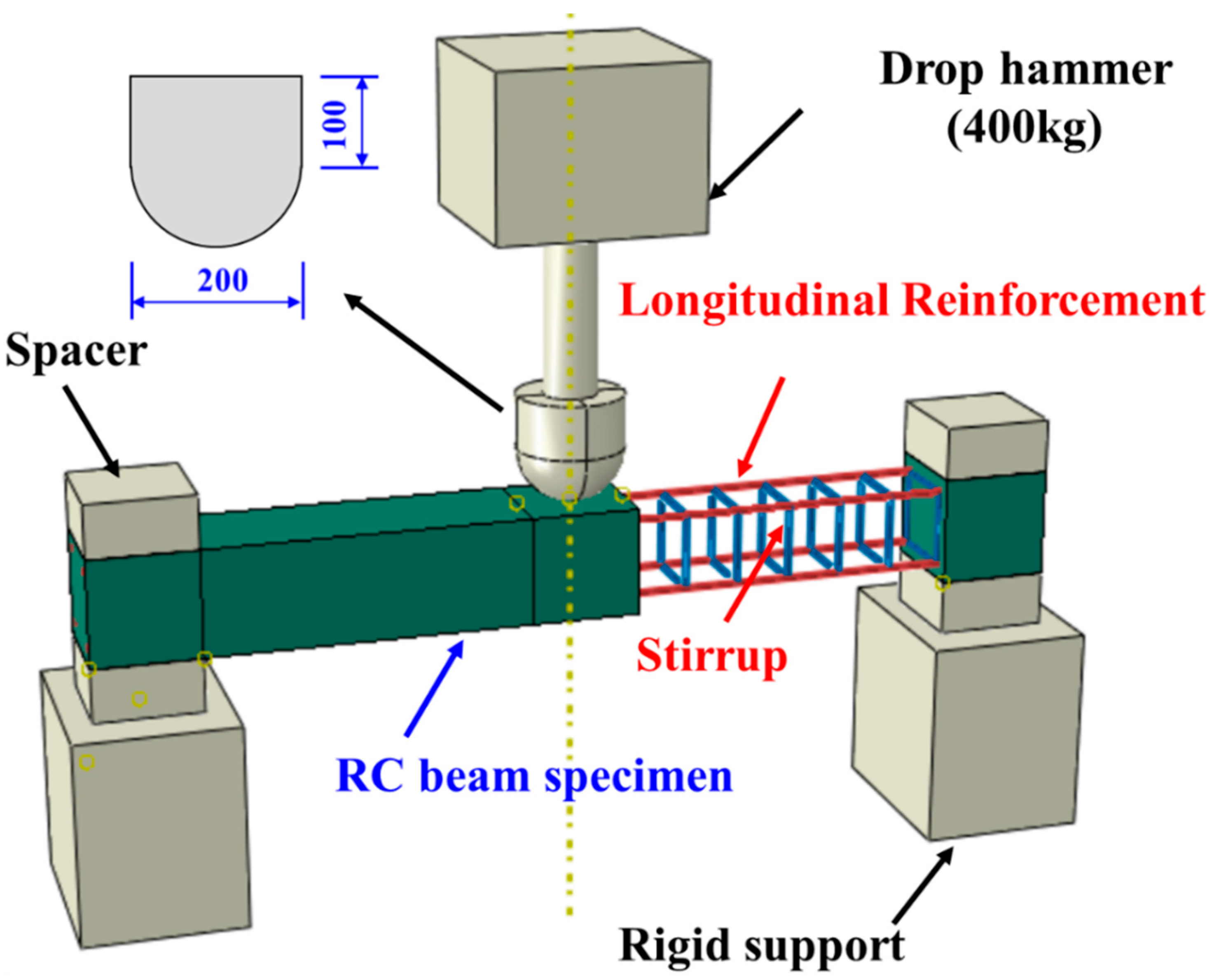
2.1. Overall Problem Definition
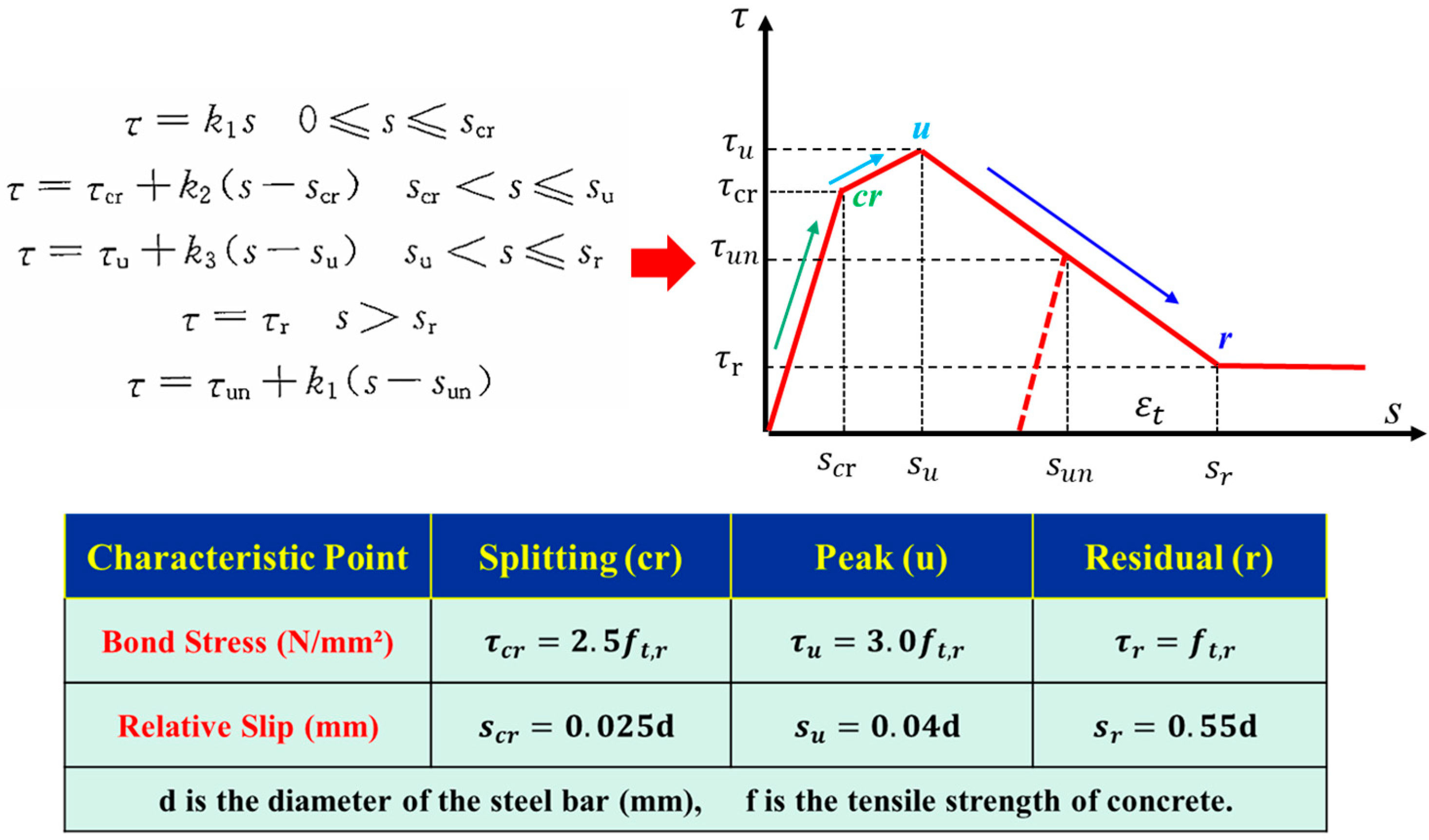
2.2. The Material Constitutive Model and Material Properties of Concrete
2.3. The Material Constitutive Model and Material Properties of Rebar
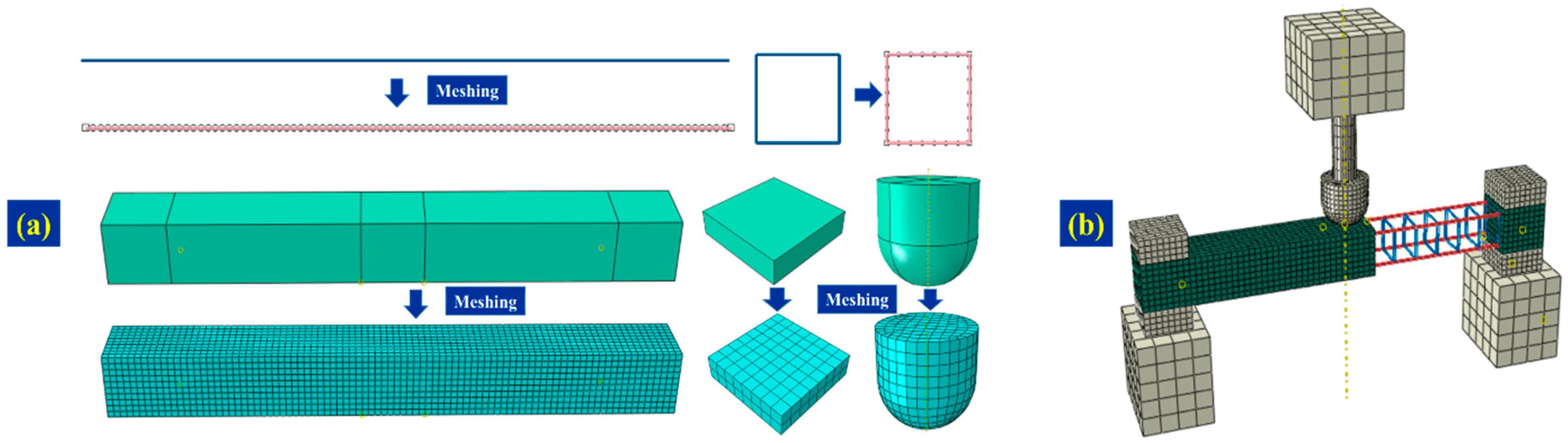
2.4. Contact Interaction and Element Meshes
3. Results
3.1. Impact Force
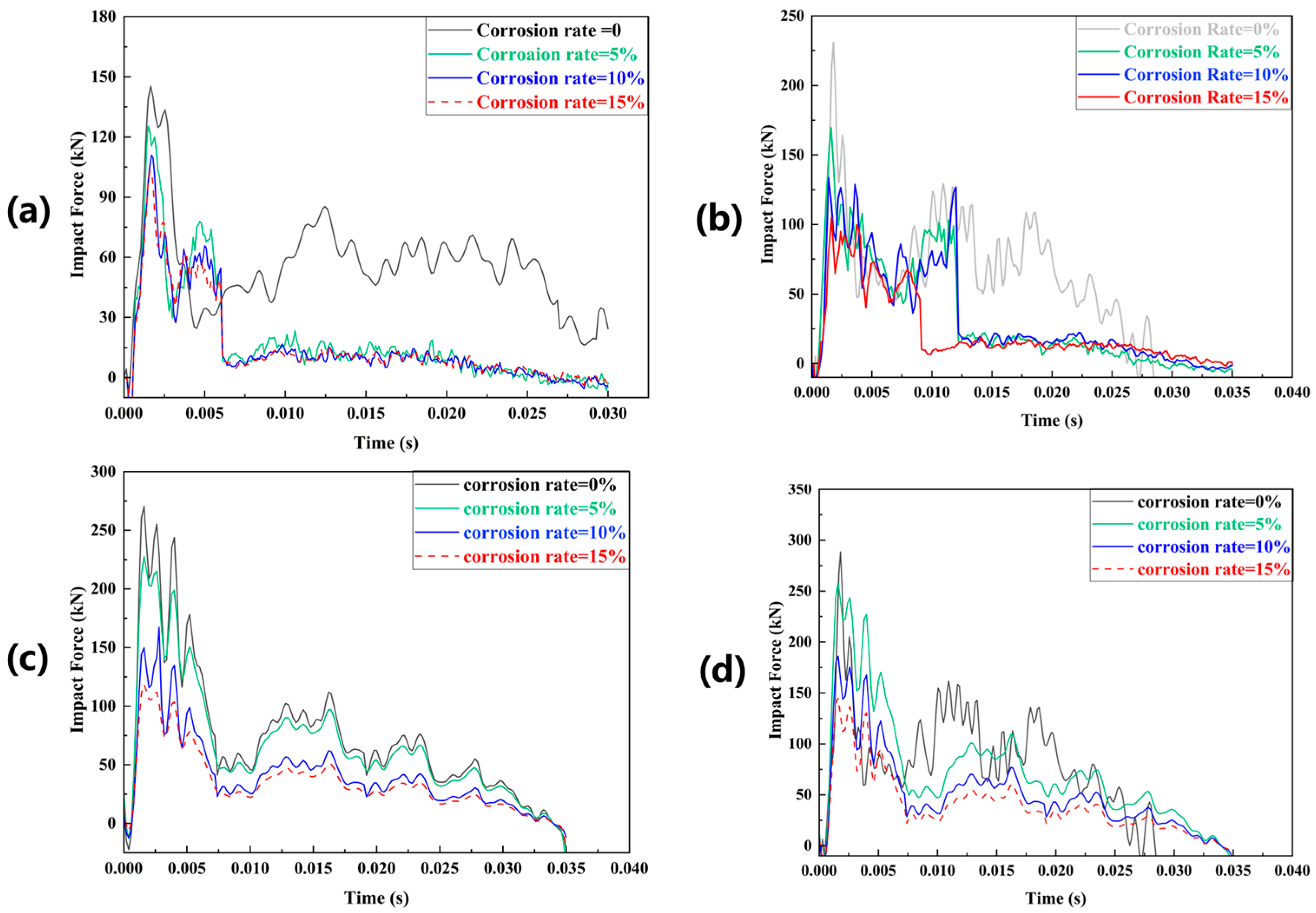
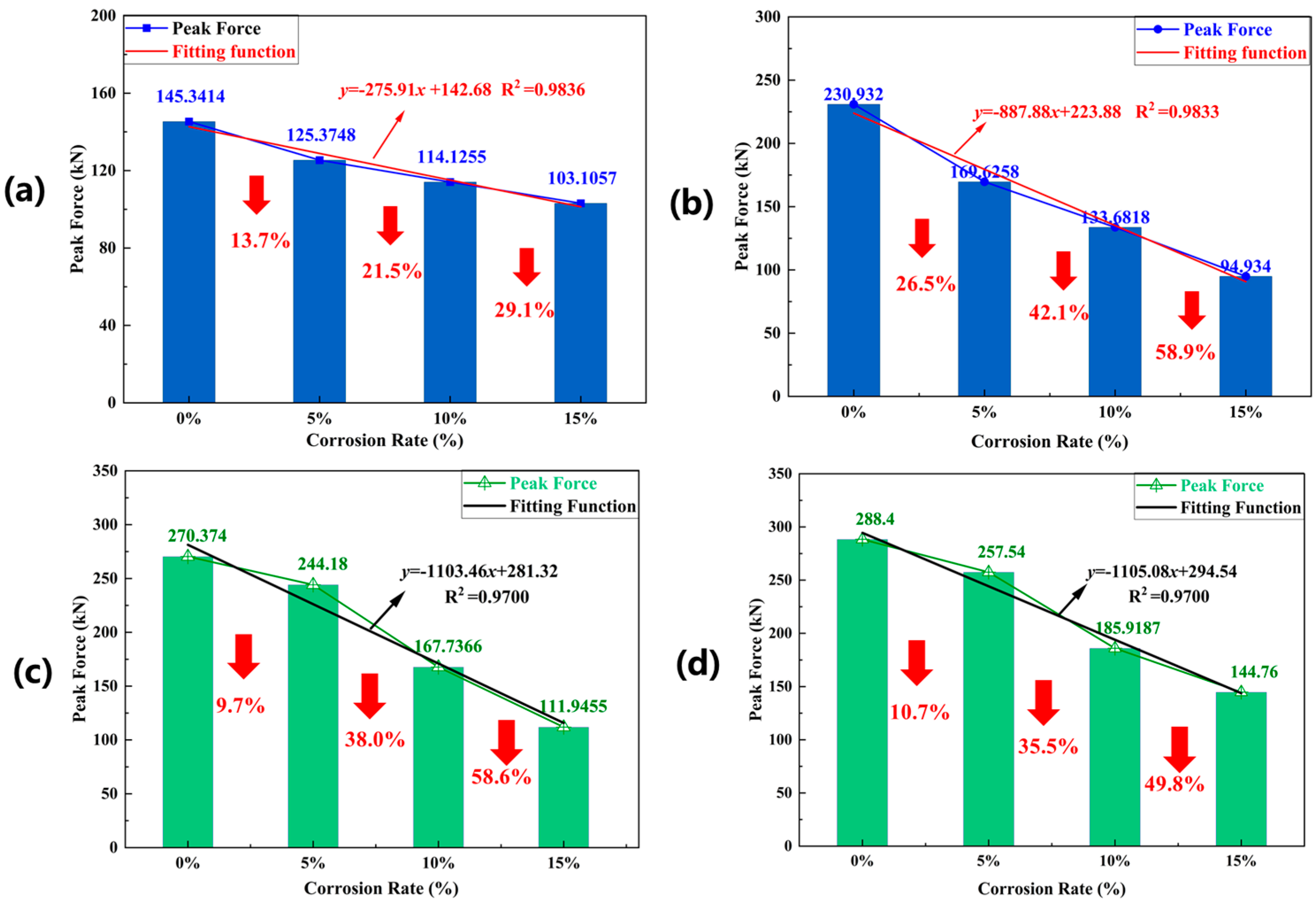
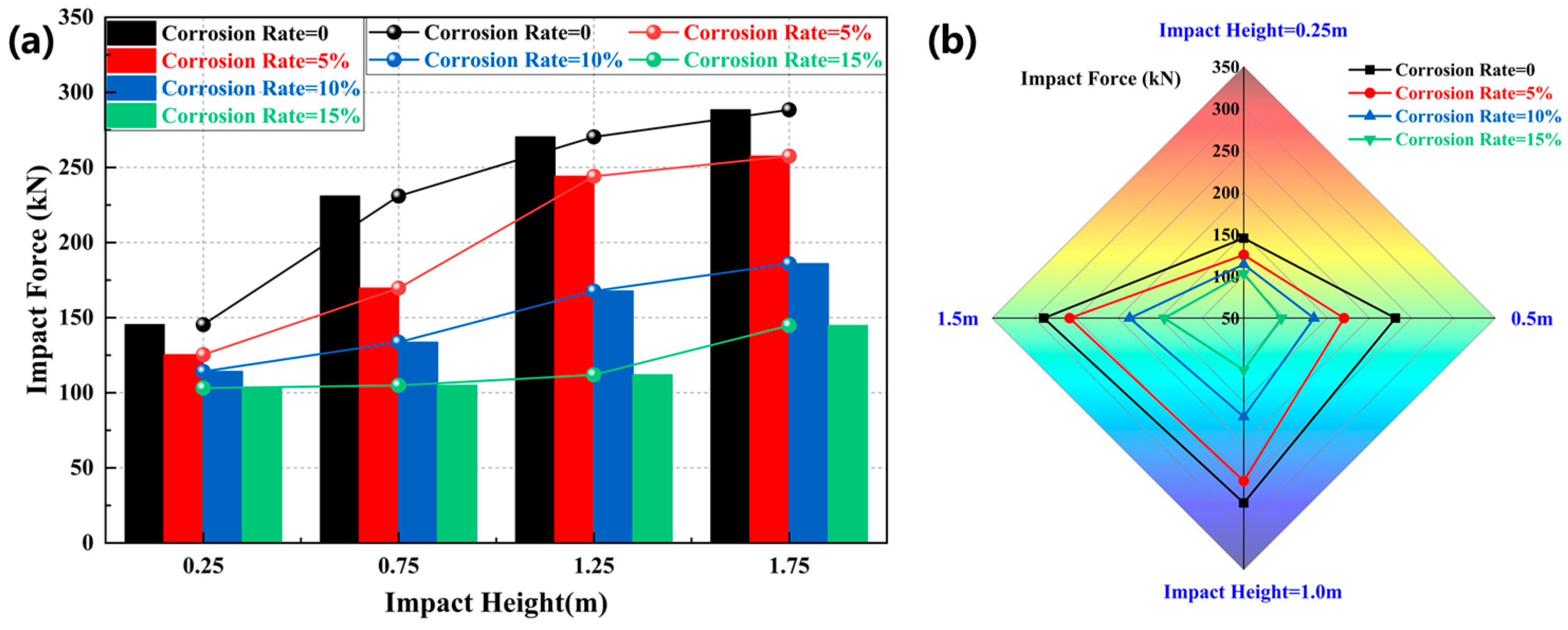
- When the corrosion rate is 0% (no corrosion), the peak impact force is highest, and the fluctuation and attenuation process of the force is more “ductile”, reflecting that the uncorroded reinforced concrete structure has strong bearing and energy dissipation capacities under impact.
- As the corrosion rate increases (5%, 10%, and 15%), the peak impact force shows a significant downward trend, and the attenuation speed of the force accelerates. For example, under the condition of a drop hammer height of 1.5 m (Figure 10d), the peak impact force at a corrosion rate of 15% is much lower than that at a corrosion rate of 0%. This is because steel corrosion leads to section loss and mechanical property degradation of steel bars, and at the same time, the bond performance between steel bars and concrete deteriorates, which greatly reduces the dynamic response capacity of the structure under impact.
3.2. Displacement
- (1)
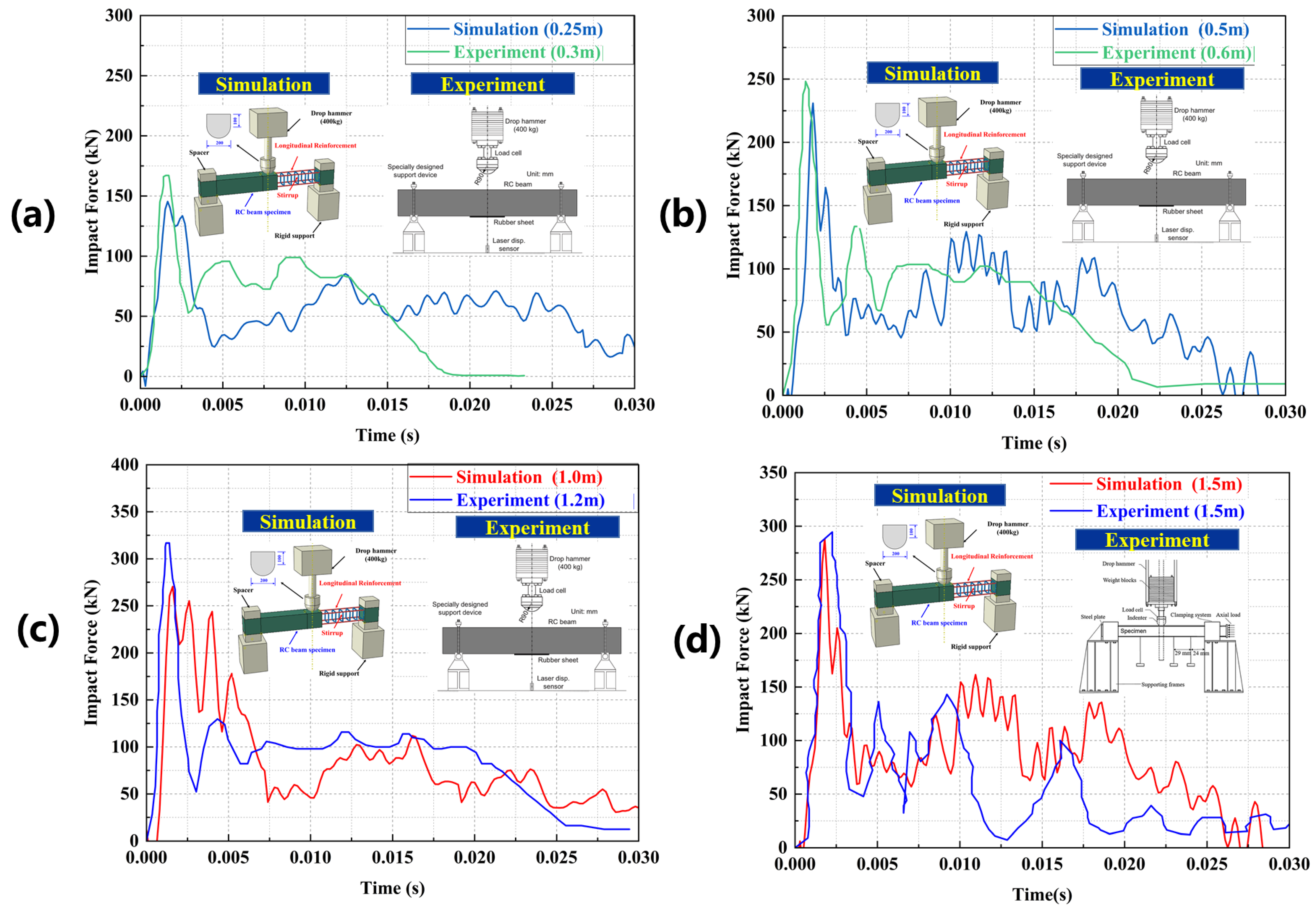
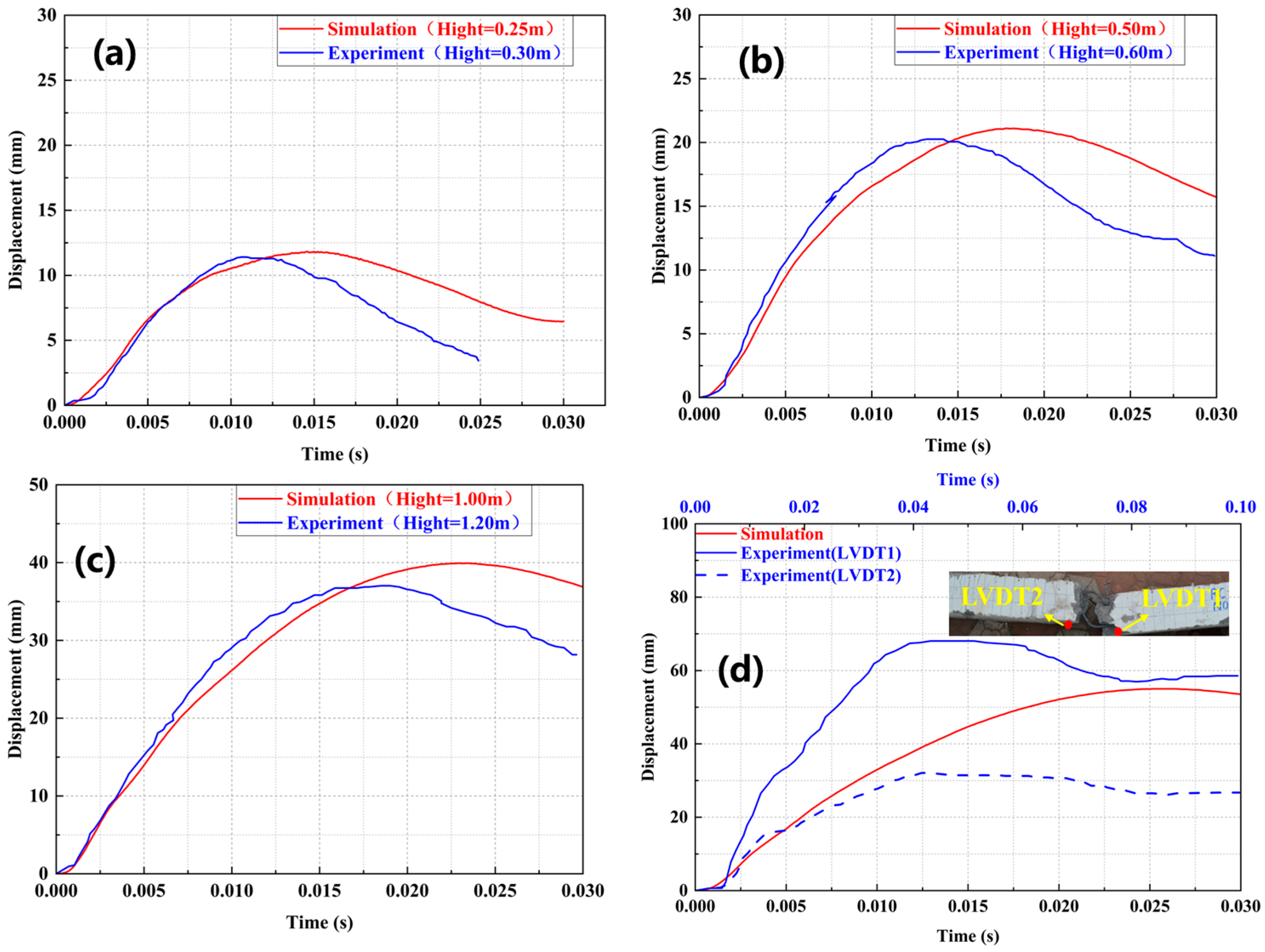
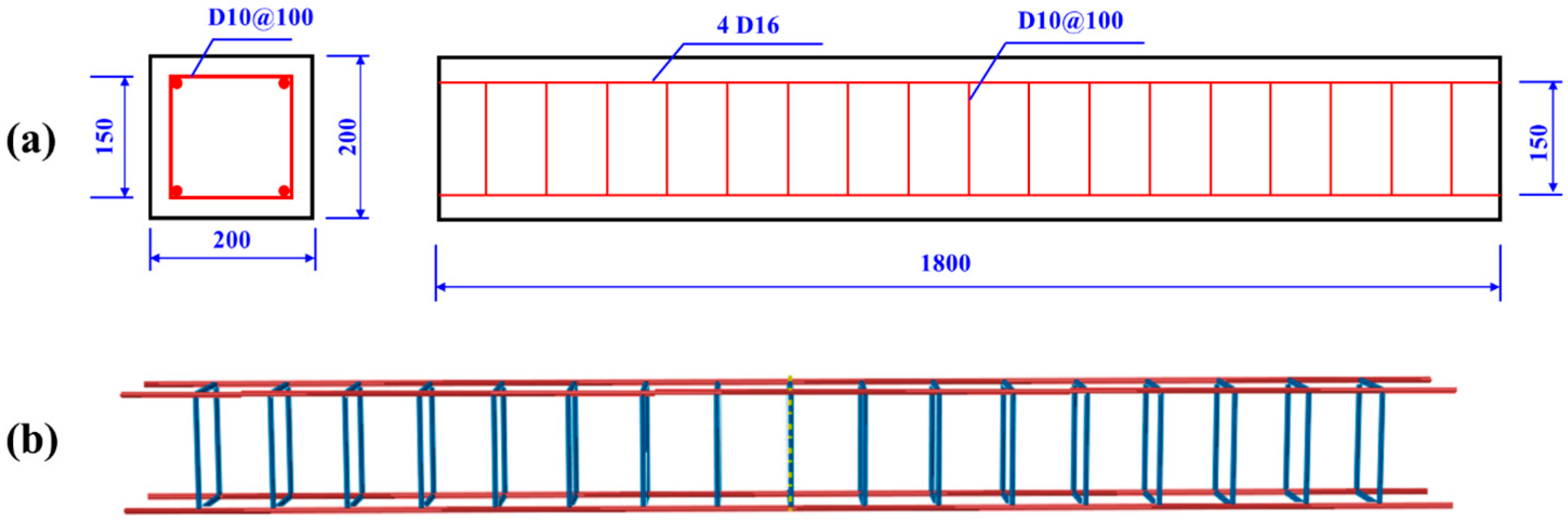
- Influence of discrepancies in cross-sectional dimensions and reinforcement ratio: Compared with the test, the reduced beam cross-sectional dimensions in the numerical model lead to a decrease in the compression zone area of concrete, and the lower reinforcement ratio weakens the tensile stiffness of the structure. The combined effect of these two factors makes the overall stiffness of the simulated specimen slightly lower than that of the experimental specimen, resulting in deviations.
- (2)
- In the experiment reported in Reference [73], the drop hammer heights were set at 0.3 m, 0.6 m, and 1.2 m, while the drop hammer heights adopted in the simulation of this study are 0.25 m, 0.5 m, 1.0 m, and 1.5 m. The differences in drop hammer height (and even drop hammer mass) between the numerical simulation and physical experiments mainly stem from the fact that at the initiation stage of this study, priority was given to referencing experimental data from multiple studies [53,73,74,76]. There are inherent discrepancies in the test device parameters (drop hammer mass: 400–450 kg; drop hammer height: 0.3–1.2 m) across different studies. To construct a unified “corrosion rate–drop hammer height” coupling analysis framework, this study comprehensively determined the parameter system with a drop hammer mass of 400 kg and drop hammer heights ranging from 0.25 m to 1.5 m, without adjusting parameters for a single study’s experiment. This resulted in the inability to fully match parameters with some individual experiments.
- (3)
- There may be differences in the types of boundary constraints between the experiment and the numerical simulation. The numerical model in this study adopts rigid support boundaries, which completely constrain the horizontal displacement and rotation at the ends of the specimen, allowing only vertical deformation. By contrast, the test model may be subject to special constraints, and there may also be discrepancies in the contact conditions between the test specimen and the supporting constraints.
3.3. Shear Force and Moment
3.4. Damage
- (1)
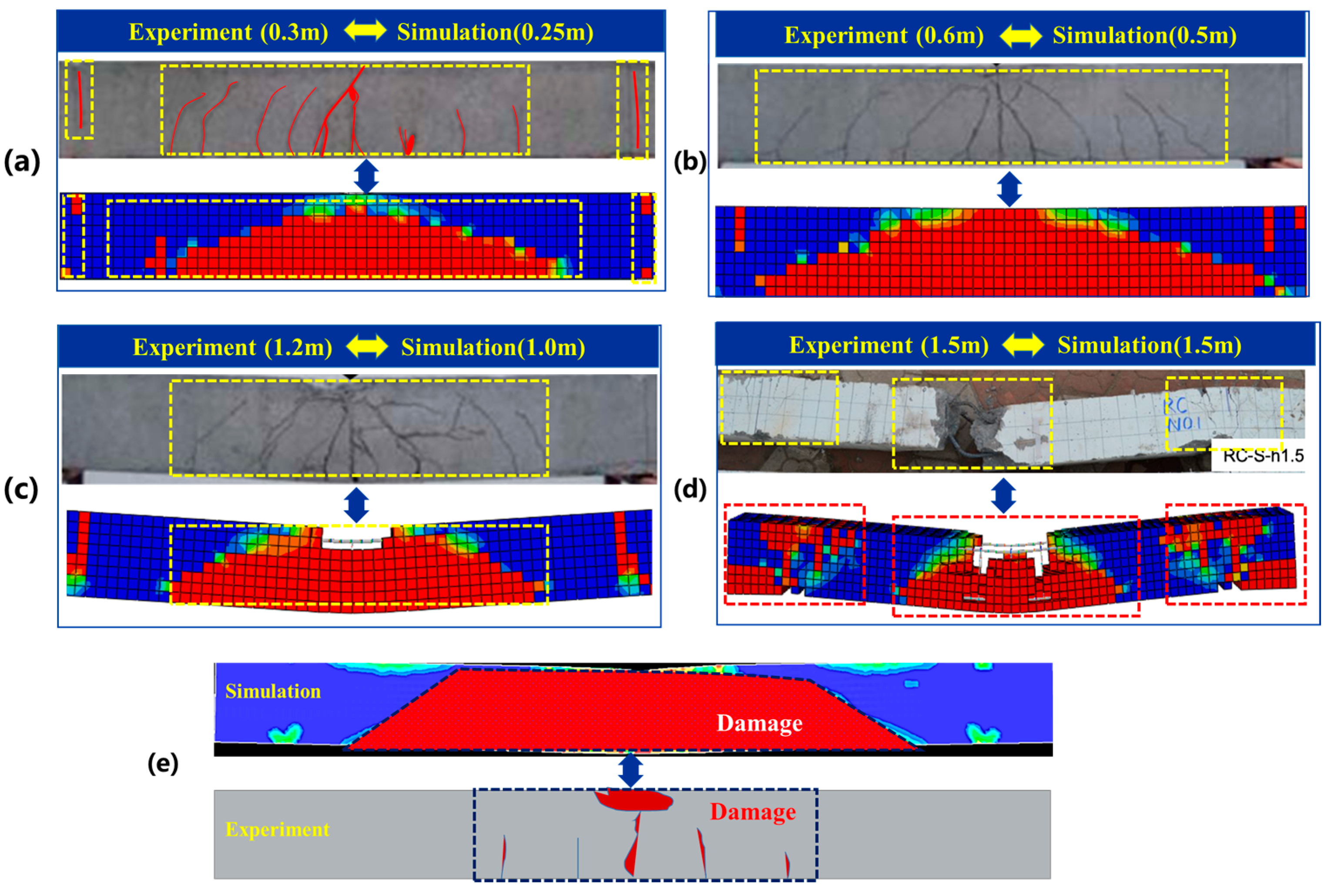
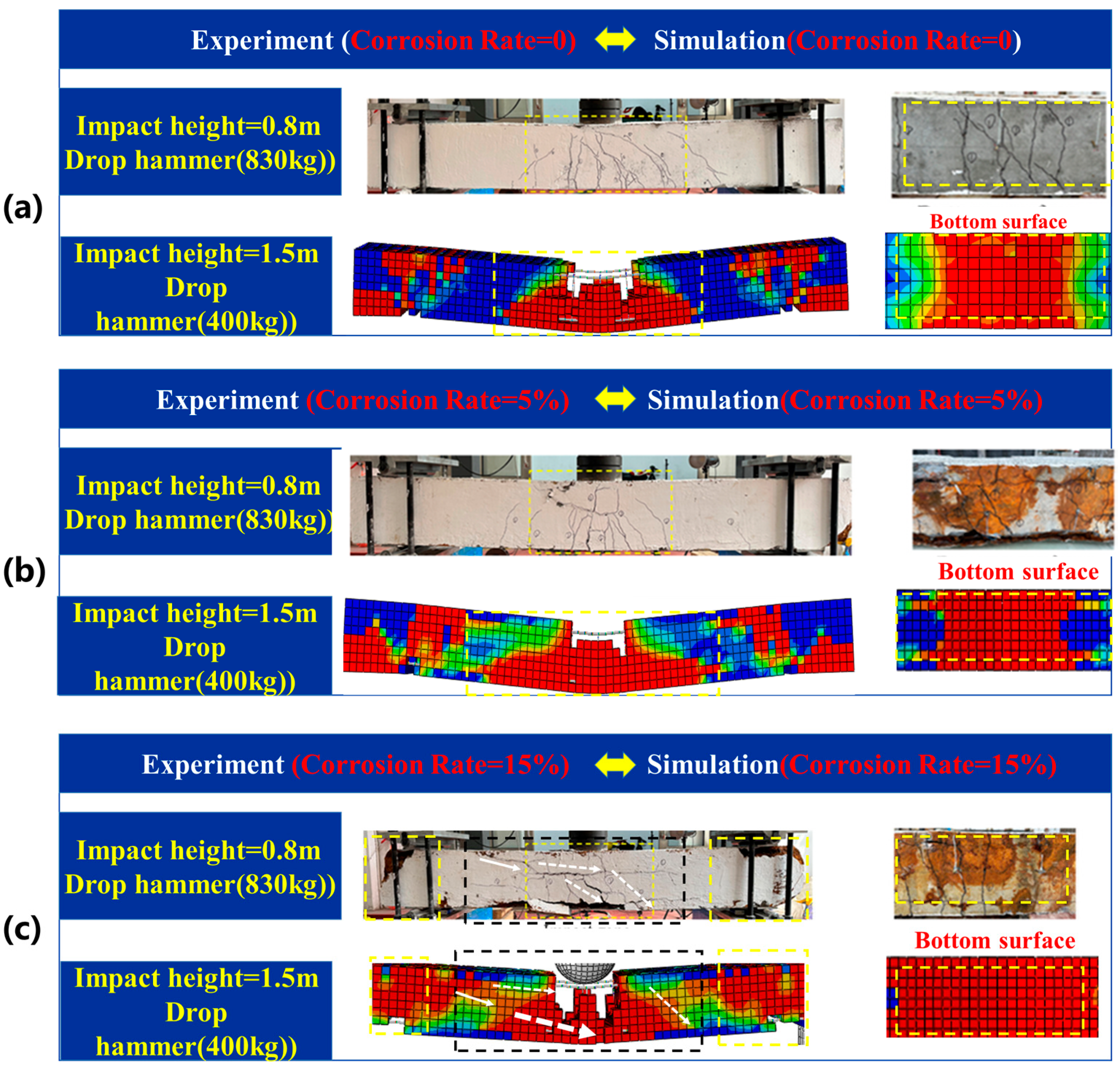
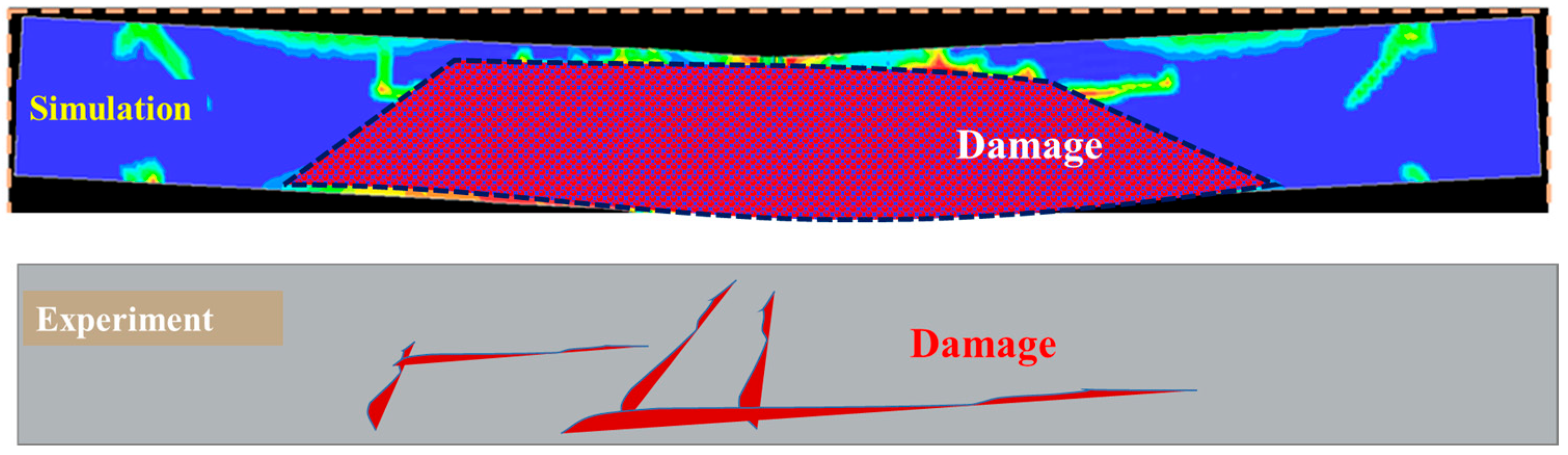
- The reinforcement ratio and cross-sectional dimensions of the experimental specimen are higher than those of the simulated specimen, which endows the steel bars in the experimental specimen with stronger constraint effects and thus leads to more dispersed crack propagation. This is manifested by the occurrence of multiple fine transverse cracks on the beam side in the experiment, while in the simulation, cracks are more concentrated in the mid-span impact zone. Essentially, this discrepancy stems from the regulatory effect of the reinforcement ratio on crack morphology.
- (2)
- There is a difference between the kinetic energy corresponding to the 1.2 m drop height in the numerical simulation and that corresponding to the 1.0 m drop height in the experiment [56]. This energy difference results in more severe concrete spalling in the numerical simulation. The higher impact energy causes the experimental specimen to reach a more severe damage level, with both the crack penetration depth and width being greater than those in the experiment.
- (3)
- Concrete itself exhibits material discreteness. The crack morphologies under the 1.2 m drop height (with a circular arc at the tip of the drop hammer) in the experiment of [56] and the 1.5 m drop height (also with a circular arc at the tip of the drop hammer) in the experiment of [71] show enormous differences (see Figure 22c,d). For the working condition of the 1.5 m drop height in this numerical simulation, the degree of crack penetration and concrete spalling is basically consistent with that in the 1.5 m drop height working condition of the experiment, which verifies the adaptability of the model to different damage levels.
4. Discussion
4.1. Discussion of Mechanism and Results
- (1)
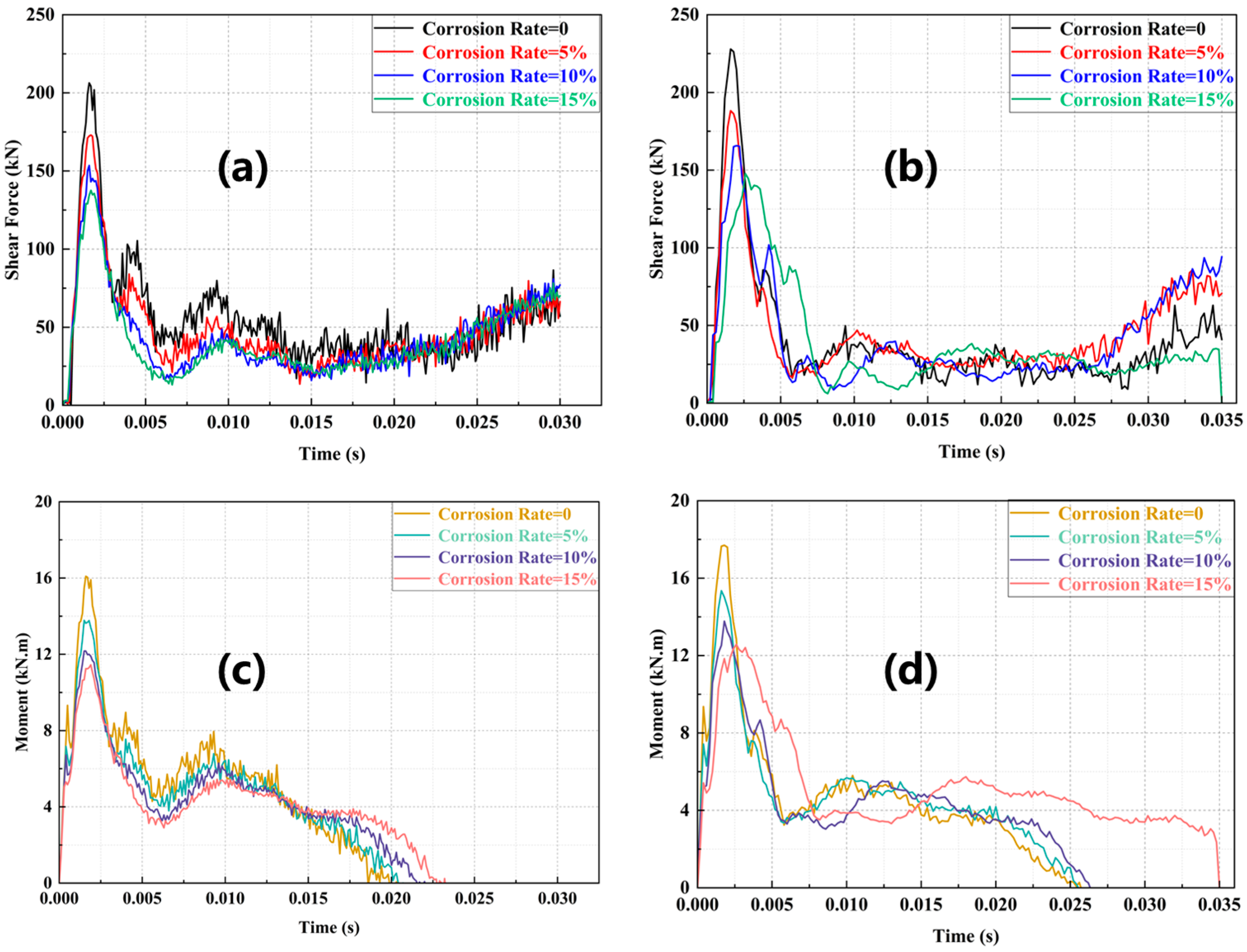
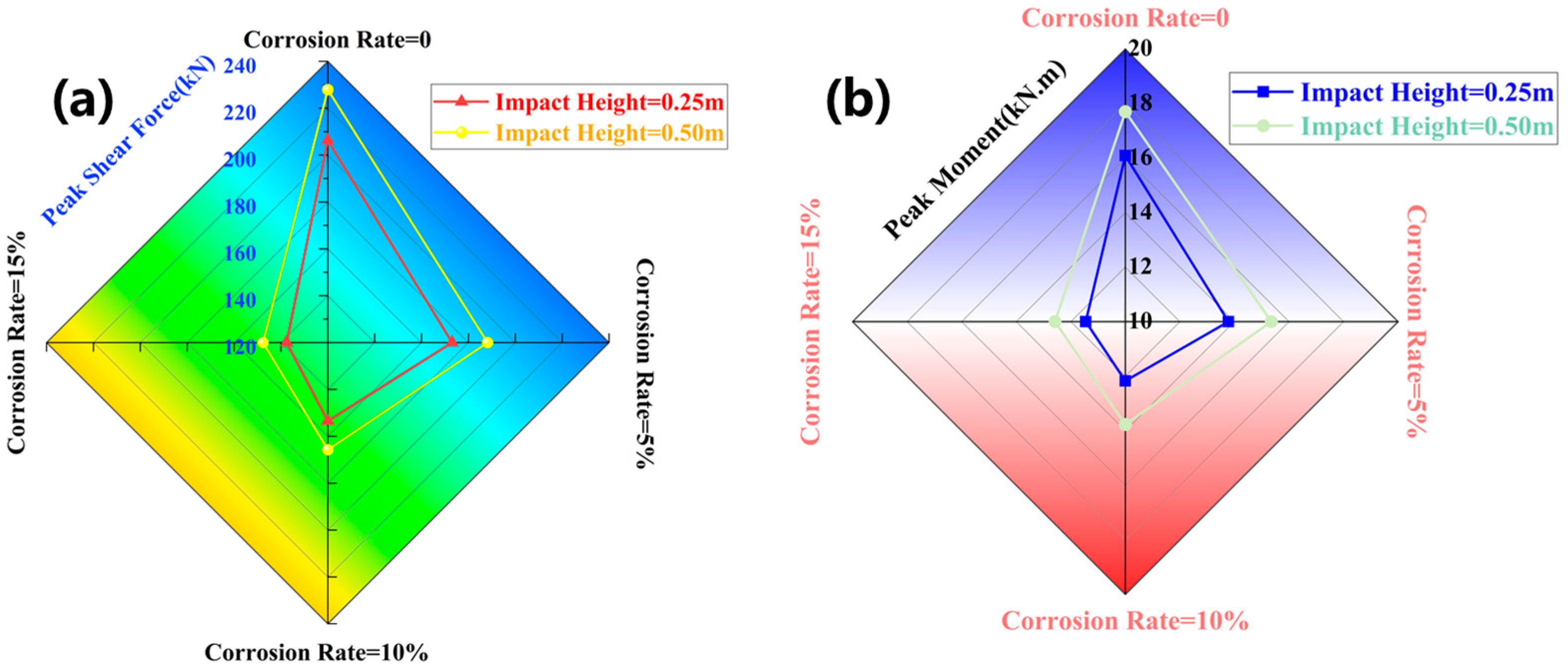
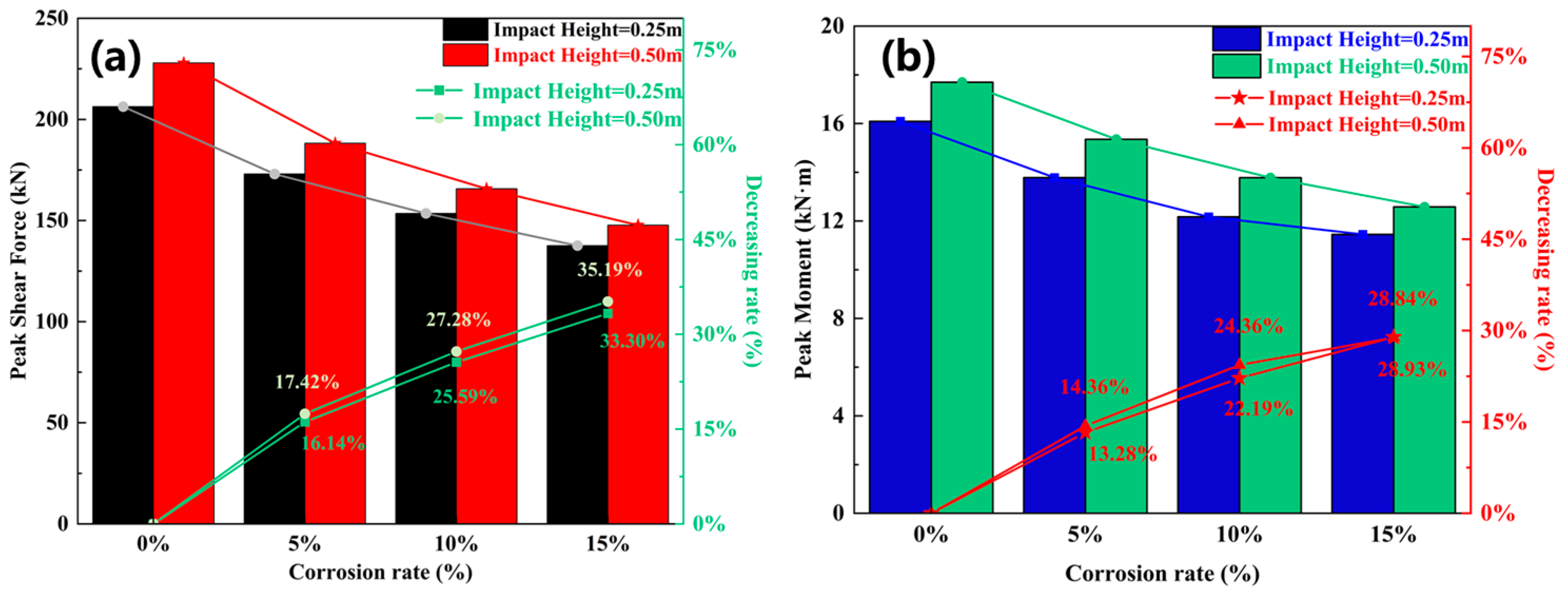
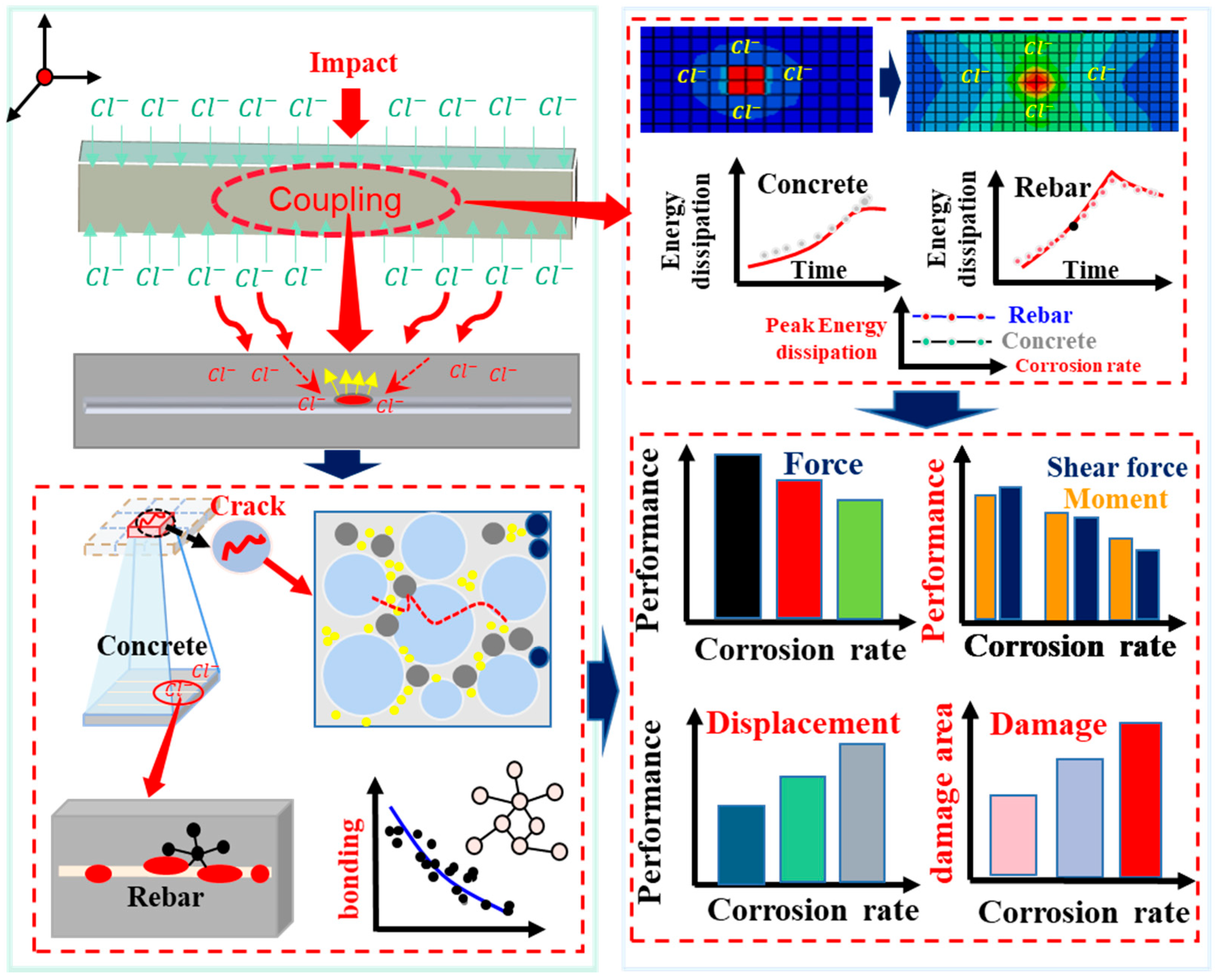
- As the corrosion rate increases, the peak force of the member decreases in a stepwise manner. This is essentially the synergistic effect of “rebar cross-sectional loss + concrete damage accumulation,” and the impact load amplifies the damage through “stress concentration and energy increase.”
- (2)
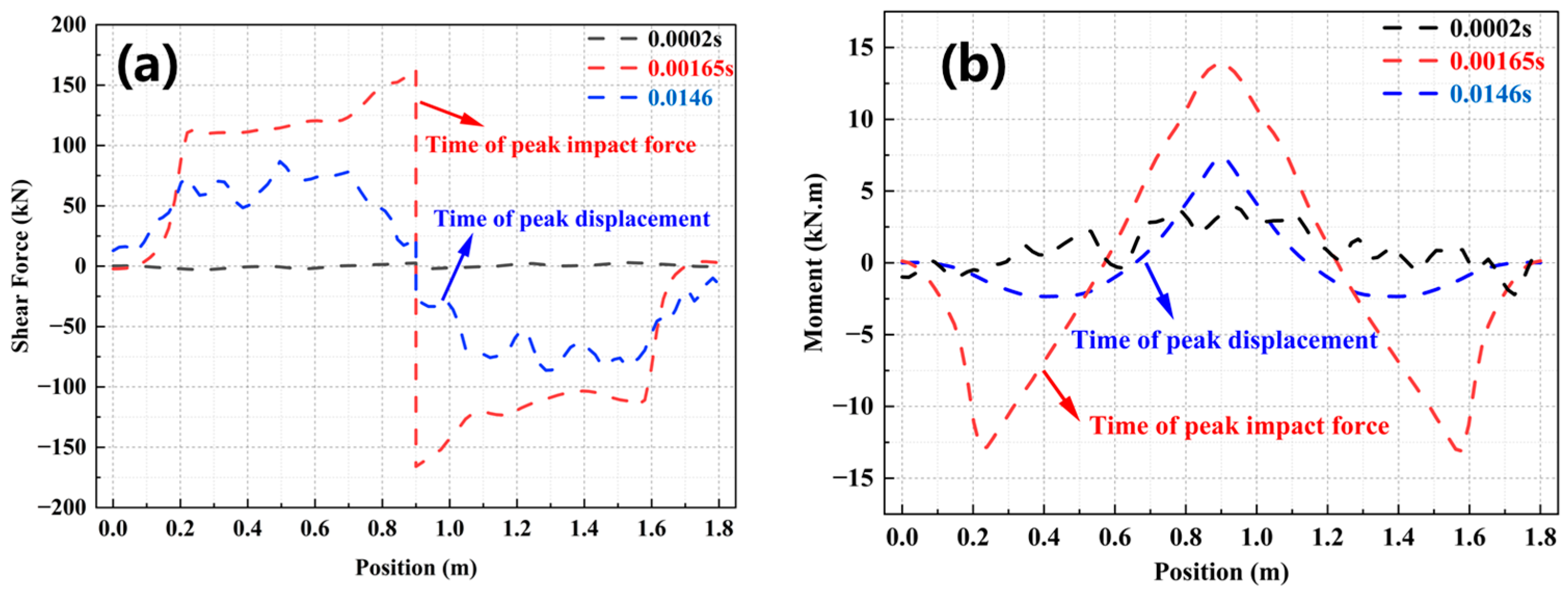
- This may occur because the corrosion-induced interfacial micro-cracks directly damage the shear force transfer mechanism of the member (e.g., aggregate interlocking in the inclined section), while the dynamic shear effect of the impact load further accelerates the attenuation of shear force. Eventually, the law that “shear performance is more sensitive to corrosion–impact coupling” is formed.
- (3)
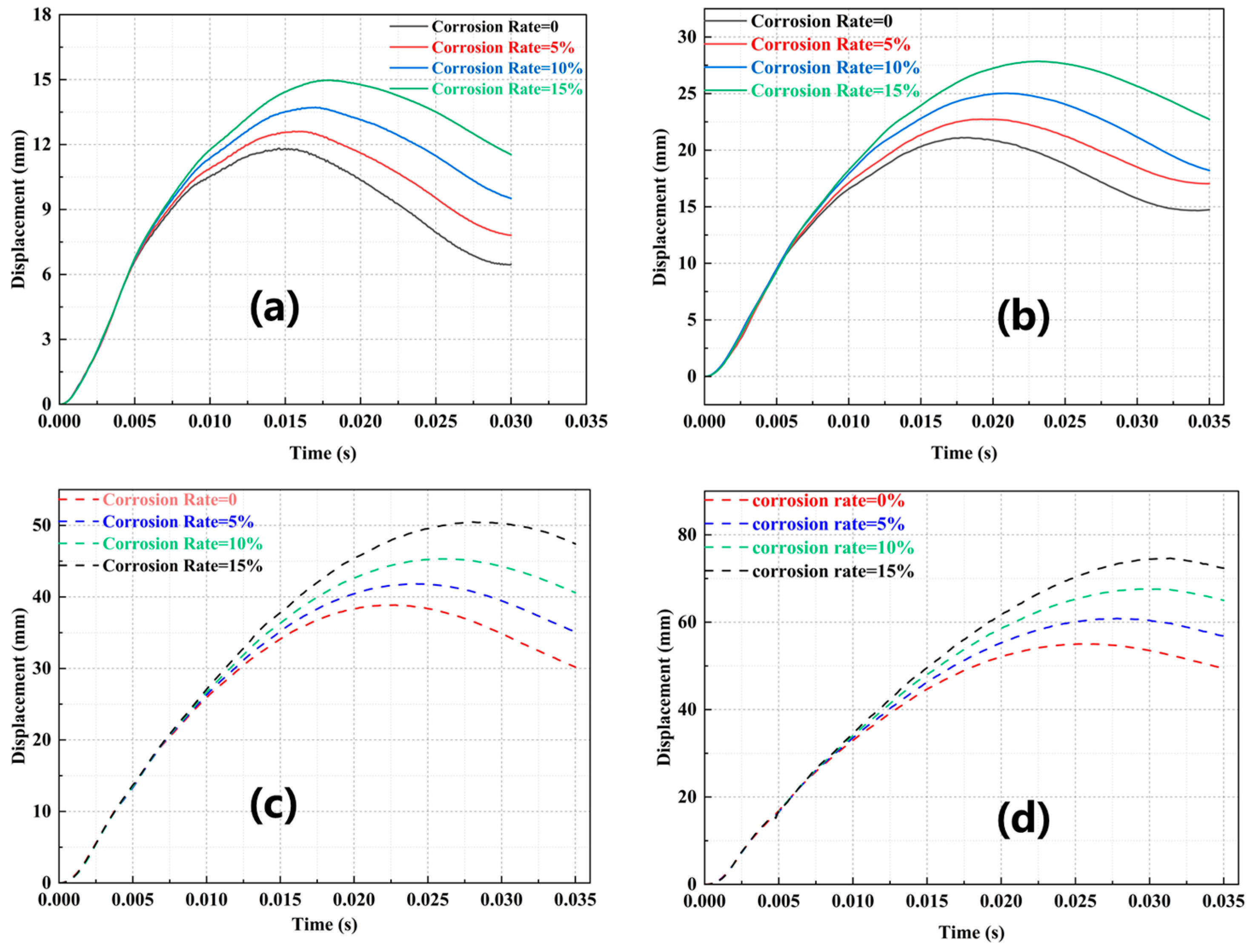
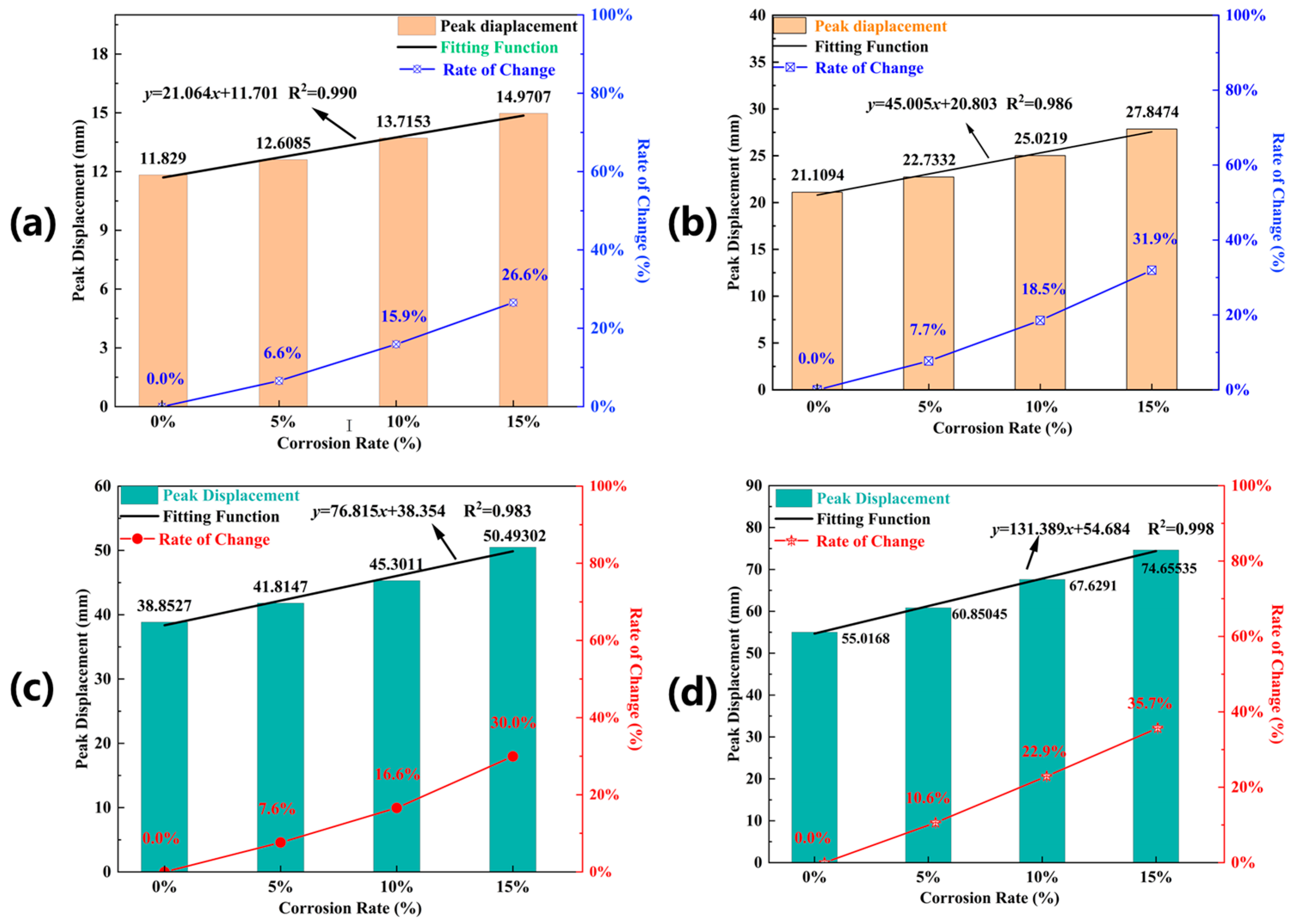
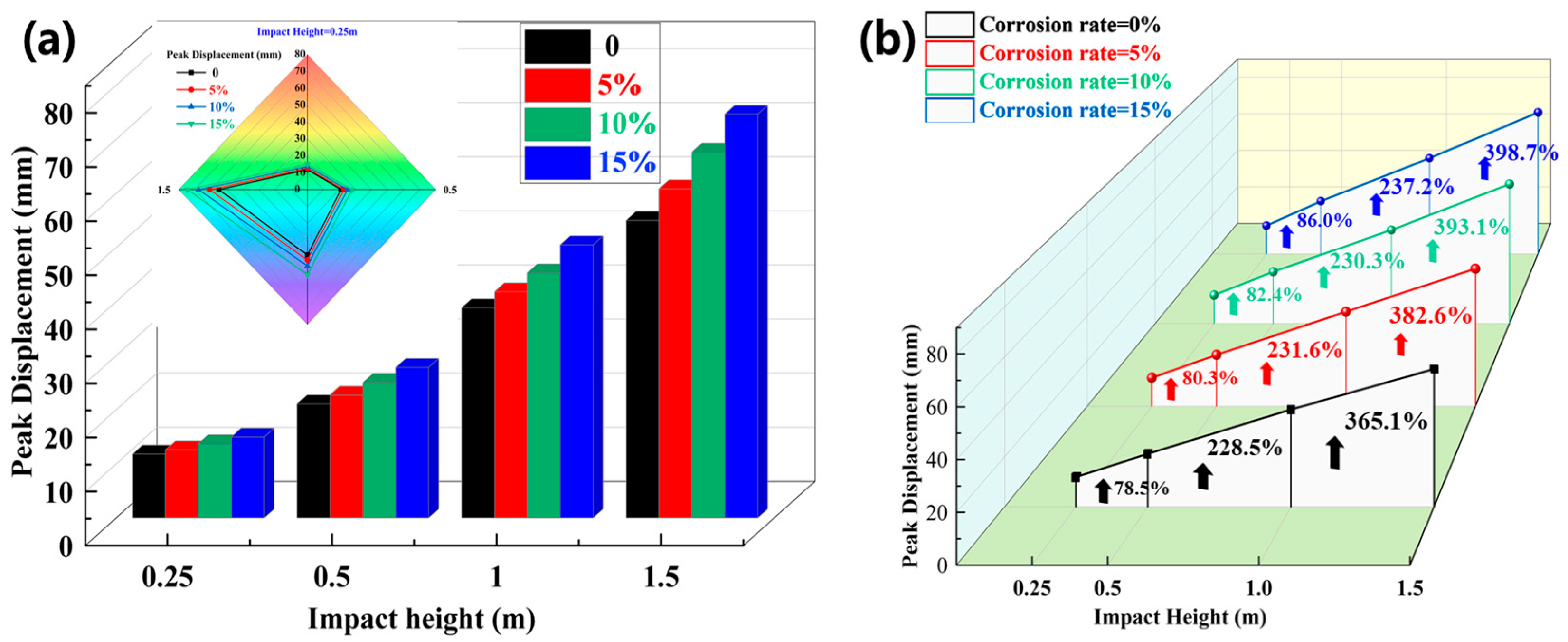
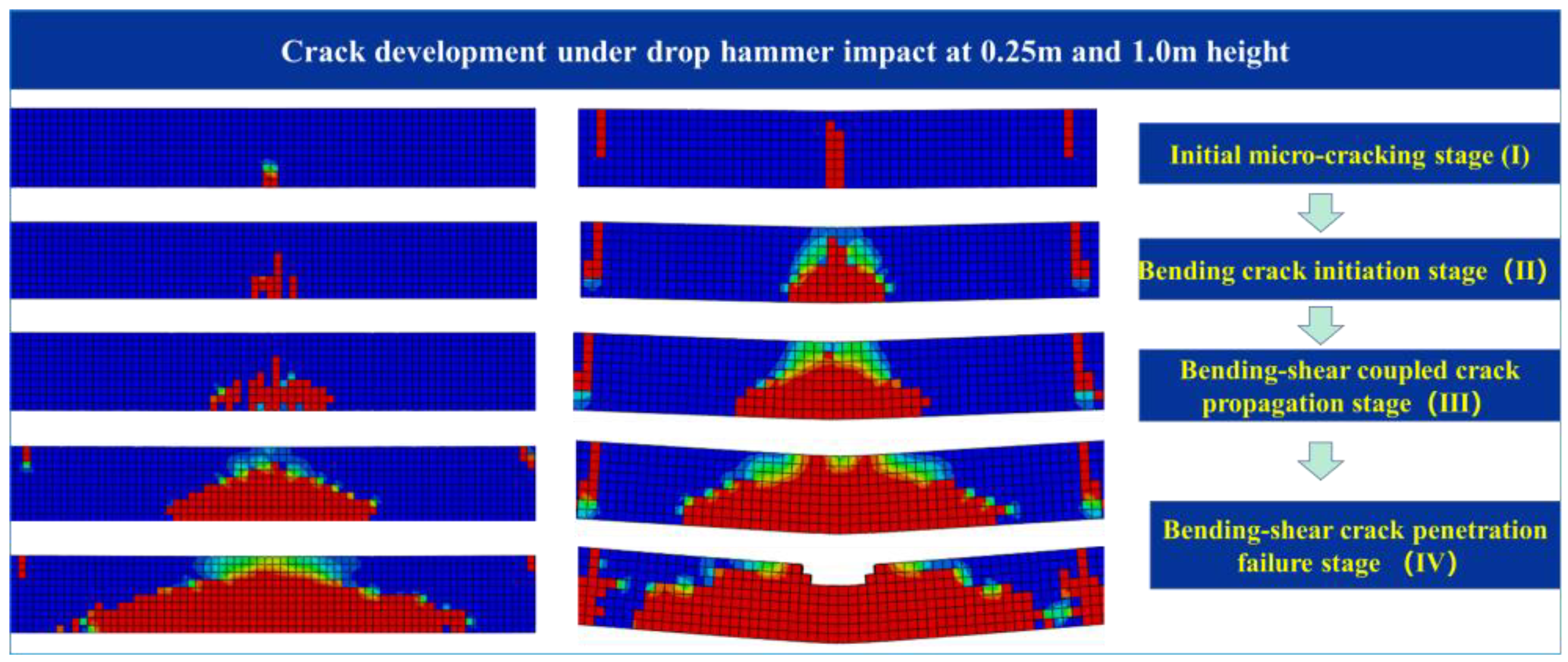
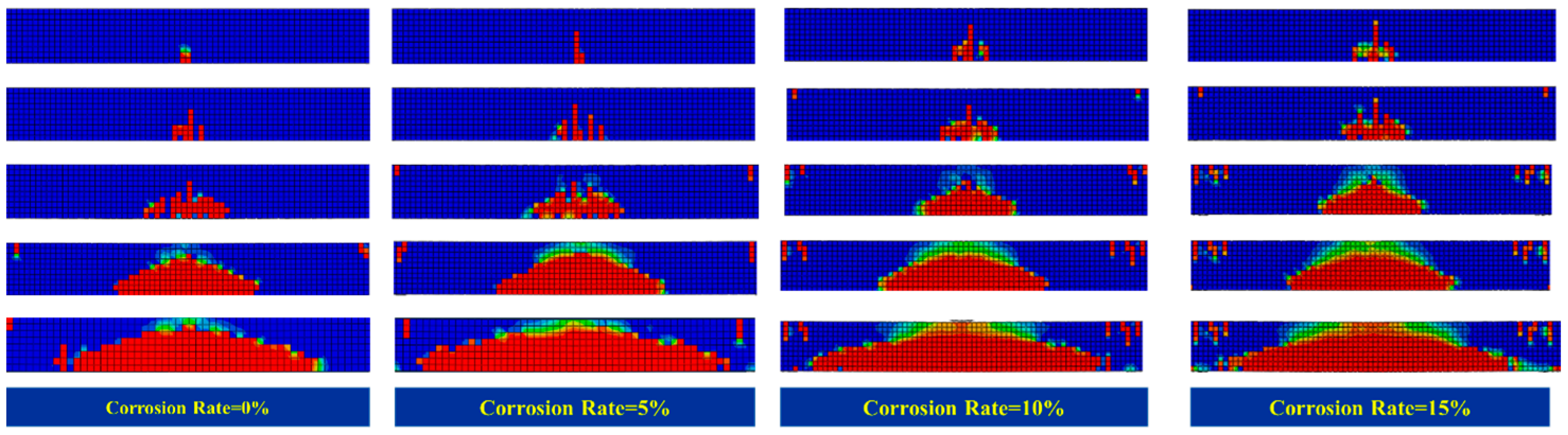
- The mid-span displacement continuously accumulates as the corrosion rate increases, and the damage degree and area also increase with the corrosion rate. A higher corrosion rate leads to more severe initial defects, and the damage amplification effect induced by the impact load becomes stronger.
4.2. Practical Significance, Limitations and Future Research Suggestions
5. Conclusions
- (1)
- The established numerical model exhibits high reliability in simulating the dynamic responses and damage characteristics of corroded reinforced concrete (RC) beams under impact loading. The simulation results are basically consistent with the experimental laws, verifying its effectiveness for corrosion–impact coupling analysis.
- (2)
- Corrosion significantly impairs structural impact resistance, leading to a decrease in peak impact force and an increase in mid-span displacement. This degradation effect is further amplified with the increase in impact height, presenting a notable coupling amplification law.
- (3)
- The shear performance of RC beams is more sensitive to corrosion–impact coupling than flexural performance. At a corrosion rate of 15%, the shear force decreases by 35.19%, while the bending moment decreases by 28.93%. This difference stems from the dual weakening of the stirrup function and steel–concrete bond induced by corrosion, which affects shear performance.
- (4)
- Corrosion drives the evolution of cracks from a localized distribution to a global distribution, and a higher drop height accelerates the transition of the failure mode toward brittle shear failure. When the corrosion rate reaches 15% and the drop height is 1.5 m, the structure transforms from flexural–shear coupled failure to shear-dominated brittle failure, characterized by concrete spalling and full-section through cracks.
- (5)
- The corrosion–impact coupling mechanism forms a positive feedback cycle: corrosion induces initial micro-cracks and material degradation, impact loads amplify these defects into macro-damage, and the expanded cracks further facilitate the penetration of corrosion media. This synergistic effect results in nonlinear degradation in structural performance, the degree of which exceeds the superposition of the individual effects of corrosion and impact.
Author Contributions
Funding
Data Availability Statement
Conflicts of Interest
References
- Zhao, Y.; Xu, X.; Wang, Y.; Dong, J. Characteristics of pitting corrosion in an existing reinforced concrete beam exposed to marine environment. Constr. Build. Mater. 2020, 234, 117392. [Google Scholar] [CrossRef]
- Ma, Y.; Zhang, J.; Wang, L.; Liu, Y. Probabilistic prediction with Bayesian updating for strength degradation of RC bridge beams. Struct. Saf. 2013, 44, 102–109. [Google Scholar] [CrossRef]
- Luo, Q.; Xu, G.; Zhao, J.; Wang, Q. Evolution characteristics of secondary tensile mechanical properties of corroded rebars. Structures 2021, 34, 3478–3486. [Google Scholar] [CrossRef]
- Jin, L.; Li, Y.X.; Zhang, R.B.; Du, X.L. Mesoscopic investigation on seismic performance of corroded reinforced concrete columns. Earthq. Eng. Eng. Vib. 2022, 21, 969–985. [Google Scholar] [CrossRef]
- Han, S.J.; Ju, H.; Lee, D. Practical approach for estimating flexural strengths of corroded RC members considering bond strength degradation. Structures 2022, 39, 808–820. [Google Scholar] [CrossRef]
- Anania, L.; Badalà, A.; D’Agata, G. Damage and collapse mode of existing post tensioned precast concrete bridge: The case of Petrulla viaduct. Eng. Struct. 2018, 162, 226–244. [Google Scholar] [CrossRef]
- Babaee, M.; Castel, A. Chloride diffusivity, chloride threshold, and corrosion initiation in reinforced alkali-activated mortars: Role of calcium, alkali, and silicate content. Cement Concr. Res. 2018, 111, 56–71. [Google Scholar] [CrossRef]
- Xie, Y.; Zhan, T.; Fan, Y.; Chen, J.; Xie, Z. Research on overall bearing characteristics of high-piled wharf under horizontal load. IOP Conf. Ser. Earth Environ. Sci. 2021, 768, 12170. [Google Scholar] [CrossRef]
- Xie, Y.; Liu, C.; Gao, S.; Tang, J.; Chen, Y. Lateral load bearing capacity of offshore high-piled wharf with batter piles. Ocean Eng. 2017, 142, 377–387. [Google Scholar] [CrossRef]
- Wang, W.; Fang, Z.C.; Fu, J.H.; Wang, S.; Zhou, R.X. Damage analyses of the main pylon of a suspension bridge under ship impact using fiber beam elements. Ocean Eng. 2025, 322, 120459. [Google Scholar] [CrossRef]
- Wardhana, K.; Hadipriono, F.C. Analysis of recent bridge failures in the United States. J. Perform. Constr. Fac. 2003, 17, 144–159. [Google Scholar] [CrossRef]
- Xie, L.; Su, L.; Wan, H.-P.; Wang, J.; Bi, J.; Ling, X. Experimental study on dynamic response of pile-supported wharf under wave and ship berthing collision. Appl. Ocean Res. 2023, 135, 103561. [Google Scholar] [CrossRef]
- Wang, C.Q.; Liu, Q.; Gao, J.; Chen, Z. Ship load response test and structural bearing capacity assessment of high-piled wharfs. J. Pearl River 2020, 41, 60–64. [Google Scholar]
- Jiang, H.; Wang, J.J.; Chorzepa, M.G.; Zhao, J.D. Numerical investigation of progressive collapse of a multispan continuous bridge subjected to vessel collision. J. Bridge Eng. 2017, 22, 04017008. [Google Scholar] [CrossRef]
- Shen, D.J.; Sun, W.B.; Fan, W.; Huang, X.; He, Y.B. Behavior and analysis of simply supported bridges under vessel side collisions: Implications from collapse of the Taiyangbu Bridge. J. Bridge Eng. 2022, 27, 04022076. [Google Scholar] [CrossRef]
- Duan, M.; Miao, J.; Wu, J.; Dong, F. Reliability assessment approach for fire resistance performance of prestressed steel-concrete box girder bridges. Fire 2023, 6, 472. [Google Scholar] [CrossRef]
- Duan, M.; Xue, J.; Wang, X.; Wu, Y.; Tao, H. Experimental study on shear performance of perfobond steel plate in ultra-high performance concrete (UHPC)-normal concrete (NC) connection. Structures 2024, 66, 106783. [Google Scholar] [CrossRef]
- Wu, H.; Xu, F.; Li, B.; Gao, Q. Study on expansion rate of steel slag cement-stabilized macadam based on BP neural network. Materials 2024, 17, 3558. [Google Scholar] [CrossRef]
- Apostolopoulos, C.A. The influence of corrosion and cross-section diameter on the mechanical properties of b500 c steel. J. Mater. Eng. Perform. 2009, 18, 190–195. [Google Scholar] [CrossRef]
- Castel, A.; François, R.; Arliguie, G. Mechanical behaviour of corroded reinforced concrete beams-Part 2: Bond and notch effects. Mater. Struct. 2000, 33, 545–551. [Google Scholar] [CrossRef]
- Gu, X.; Zhang, W.; Shang, D.; Wang, X.G. Flexural behavior of corroded reinforced concrete beams. In Earth and Space 2010: Engineering, Science, Construction, and Operations in Challenging Environments; American Society of Civil Engineers: Reston, VA, USA, 2010; pp. 3545–3552. [Google Scholar]
- El Maaddawy, T.A.; Soudki, K.A. Effectiveness of impressed current technique to simulate corrosion of steel reinforcement in concrete. J. Mater. Civ. Eng. 2003, 15, 41–47. [Google Scholar] [CrossRef]
- Padmarajaiah, S.; Ramaswamy, A. A finite element assessment of flexural strength of prestressed concrete beams with fiber reinforcement. Cem. Concr. Compos. 2002, 24, 229–241. [Google Scholar] [CrossRef]
- Francois, R.; Maso, J. Effect of damage in reinforced concrete on carbonation or chloride penetration. Cem. Concr. Res. 1988, 18, 961–970. [Google Scholar] [CrossRef]
- Konin, A.; Francois, R.; Arliguie, G. Penetration of chlorides in relation to the microcracking state into reinforced ordinary and high strength concrete. Mater. Struct. 1998, 31, 310–316. [Google Scholar] [CrossRef]
- Yoon, S.; Wang, K.; Weiss, W.J.; Shah, S.P. Interaction between loading, corrosion, and serviceability of reinforced concrete. Mater. J. 2000, 97, 637–644. [Google Scholar]
- Pham, T.T.; Nguyen, N.T.; Nguyen, T.-T.T.; Nguyen, N.L. Numerical analysis of the shear behavior for steel fiber reinforced concrete beams with corroded reinforcing bars. Structures 2023, 57, 105081. [Google Scholar] [CrossRef]
- Li, Y.; Sun, Z.; Li, Y.; Zhu, W.; Zheng, H.; Zheng, S. Exploring the shear performance and predictive shear capacity of corroded RC columns utilizing the modified compression-field theory: An investigative study. Eng. Struct. 2024, 302, 117390. [Google Scholar] [CrossRef]
- Guo, A.X.; Li, H.T.; Ba, X.; Guan, X.C.; Li, H. Experimental investigation on the cyclic performance of reinforced concrete piers with chloride-induced corrosion in marine environment. Eng. Struct. 2015, 105, 1–11. [Google Scholar] [CrossRef]
- Yuan, W.; Guo, A.X.; Li, H. Experimental investigation on the cyclic behaviors of corroded coastal bridge piers with transfer of plastic hinge due to non-uniform corrosion. Soil Dyn. Earthq. Eng. 2017, 102, 112–123. [Google Scholar] [CrossRef]
- Chinnasamy, Y.; Joanna, P.S.; Kothanda, K.; Gurupatham, B.G.A.; Roy, K. Behavior of Pultruded Glass-Fiber-Reinforced Polymer Beam-Columns Infilled with Engineered Cementitious Composites under Cyclic Loading. J. Compos. Sci. 2022, 6, 338. [Google Scholar] [CrossRef]
- Kashani, M.M.; Lowes, L.N.; Crewe, A.J.; Alexander, N.A. Nonlinear fibre element modelling of RC bridge piers considering inelastic buckling of reinforcement. Eng. Struct. 2016, 116, 163–177. [Google Scholar] [CrossRef]
- Cheng, H.; Li, H.N.; Biondini, F.; Wang, D.S.; Zou, Y. Strain penetration effect on cyclic response of corroded RC columns. Eng. Struct. 2021, 243, 112653. [Google Scholar] [CrossRef]
- Xu, J.G.; Hong, W.; Zhang, J.; Hou, S.T.; Wu, G. Seismic performance assessment of corroded RC columns based on data-driven machine-learning approach. Eng. Struct. 2022, 255, 113936. [Google Scholar] [CrossRef]
- Miao, Z.; Yuan, H.; Liu, Y.; Geng, X. Seismic performance analysis of coastal reinforced concrete frames considering the pitting corrosion in the longitudinal reinforcement bars. J. Build. Eng. 2024, 90, 109478. [Google Scholar] [CrossRef]
- Meda, A.; Mostosi, S.; Rinaldi, Z.; Riva, P. Experimental evaluation of the corrosion influence on the cyclic behaviour of RC columns. Eng. Struct. 2014, 76, 112–123. [Google Scholar] [CrossRef]
- Li, D.W.; Wei, R.; Xing, F.; Sui, L.L.; Zhou, Y.W.; Wang, W.Y. Influence of non-uniform corrosion of steel bars on the seismic behavior of reinforced concrete columns. Constr. Build. Mater. 2018, 167, 20–32. [Google Scholar] [CrossRef]
- Li, J.; Kang, Z.; Yu, G.; Wang, S.; Wu, M.; Bu, L.; Farooq, A.; Kai, C. Dynamic Response and Failure Mode of Reinforced Concrete Beams Subjected to Impact. Buildings 2025, 15, 3250. [Google Scholar] [CrossRef]
- Wu, J.; Ye, F.; Yang, J.; Xu, J. Dynamic Response and Residual Bearing Capacity of Corroded RC Piers Under Rockfall Impact. Buildings 2025, 15, 2592. [Google Scholar] [CrossRef]
- Tran, D.T.; Lee, H.-S.; Singh, J.K.; Yang, H.-M.; Jeong, M.-G.; Yan, S.; Ibrahim, I.S.; Ariffin, M.A.B.M.; Le, A.-T.; Singh, A.K. Effects of Hybrid Corrosion Inhibitor on Mechanical Characteristics, Corrosion Behavior, and Predictive Estimation of Lifespan of Reinforced Concrete Structures. Buildings 2025, 15, 1114. [Google Scholar] [CrossRef]
- Zhu, X.; Zhang, Q.; Zhang, D.J.; Du, Y.F.; Zhang, Q. Experimental and numerical study on the dynamic response of steel-reinforced concrete composite members under lateral impact. Thin-Walled Struct. 2021, 169, 108477. [Google Scholar] [CrossRef]
- Zhu, X.; Zhao, P.J.; Tian, Y.; Wang, R. Experimental study of RC columns and composite columns under low-velocity impact. Thin-Walled Struct. 2021, 160, 107374. [Google Scholar] [CrossRef]
- Pham, T.M.; Hao, H. Effect of the plastic hinge and boundary conditions on the impact behavior of reinforced concrete beams. Int. J. Impact Eng. 2017, 102, 74–85. [Google Scholar] [CrossRef]
- Pham, T.M.; Hao, H. Plastic hinges and inertia forces in RC beams under impact loads. Int. J. Impact Eng. 2017, 103, 1–11. [Google Scholar] [CrossRef]
- Pham, T.M.; Hao, H. Influence of global stiffness and equivalent model on prediction of impact response of RC beams. Int. J. Impact Eng. 2018, 113, 88–97. [Google Scholar] [CrossRef]
- Li, H.W.; Chen, W.S.; Hao, H. Factors influencing impact force profile and measurement accuracy in drop weight impact tests. Int. J. Impact Eng. 2020, 145, 103688. [Google Scholar] [CrossRef]
- Li, M.; Gao, Y.; Wang, C.; Li, Y.; Fan, T. Impact Resistance Test and Numerical Simulation Study of Scrap Steel Fiber Rubber Concrete. Buildings 2025, 15, 2857. [Google Scholar] [CrossRef]
- Wang, Y.; Gu, X.; Xia, Y. Dynamic Response Analysis of Corroded Pipelines Containing SCCO2 under Rockfall Impact. Processes 2024, 12, 2201. [Google Scholar] [CrossRef]
- Cheng, J.S.; Wen, H.M. Effect of impact velocity on the failure modes of a RC beam. Int. J. Impact Eng. 2022, 160, 104061. [Google Scholar] [CrossRef]
- Daneshvar, K.; Moradi, M.; Ahmadi, K.; Hajiloo, H. Strengthening of corroded reinforced concrete slabs under multi-impact loading: Experimental results and numerical analysis. Constr. Build. Mater. 2021, 284, 122650. [Google Scholar] [CrossRef]
- Tamai, H.; Sonoda, Y.; Bolander, J.E. Impact resistance of RC beams with reinforcement corrosion: Experimental observations. Constr. Build. Mater. 2020, 263, 120638. [Google Scholar] [CrossRef]
- Chen, T.; Luo, Y.; Shen, Y.; Zhang, L. Dynamic behaviors of corroded RC column under low-velocity impact loading. Ocean Eng. 2025, 324, 120679. [Google Scholar] [CrossRef]
- Liu, Y.; Hao, Y.; Hao, H.; Li, H.; Zhou, Y. Dynamic response of concrete beams considering spatial variability of pitting corrosion damages subjected to impact loads. Eng. Struct. 2025, 332, 120026. [Google Scholar] [CrossRef]
- Molina, F.J.; Alonso, C.; Andrade, C. Cover cracking as a function of rebar corrosion: Part 2-Numerical model. Mater. Struct. 1993, 26, 532–548. [Google Scholar] [CrossRef]
- Fujikake, K.; Mori, K.; Uebayashi, K.; Ohno, T.; Mizuno, J. Constitutive model for concrete materials with high-rates of loading under tri-axial compressive stress states. In Proceedings of the 3rd International Conference on Concrete Under Severe Conditions of Environment and Loading, Vancouver, BC, Canada, 18–20 June 2001. [Google Scholar]
- Malvar, L.J. Review of static and dynamic properties of steel reinforcing bars. Mater. J. 1998, 95, 609–616. [Google Scholar]
- Lin, H.; Zhao, Y.; Yang, J.; Feng, P.; Ozbolt, J.; Ye, H. Effects of the corrosion of main bar and stirrups on the bond behavior of reinforcing steel bar. Constr. Build. Mater. 2019, 225, 13. [Google Scholar] [CrossRef]
- Lee, J.; Fenves, G.L. Plastic-damage model for cyclic loading of concrete structures. J. Eng. Mech. 1998, 124, 892. [Google Scholar] [CrossRef]
- GB 50010-2010; Code for Design of Concrete Structures. China Architecture & Building Press: Beijing, China, 2010.
- Hanjari, K.Z.; Kettil, P.; Lundgren, K. Analysis of mechanical behavior of corroded reinforced concrete structures. ACI Struct. J. 2011, 108, 532–541. [Google Scholar] [CrossRef]
- Ross, C.A.; Thompson, P.Y.; Tedesco, J.W. Split-Hopkinson pressure-bar tests on concrete and mortar in tension and compression. ACI Mater. J. 1989, 86, 475–481. [Google Scholar]
- Coronelli, D.; Gambarova, P. Structural assessment of corroded reinforced concrete beams: Modeling guidelines. J. Struct. Eng. 2004, 130, 1214–1224. [Google Scholar] [CrossRef]
- Vu, N.S.; Yu, B.; Li, B. Prediction of strength and drift capacity of corroded reinforced concrete columns. Constr. Build. Mater. 2016, 115, 304–318. [Google Scholar] [CrossRef]
- Li, J.B.; Markeset, G.; Kioumarsi, M. Nonlinear FEM simulation of structural performance of corroded RC columns subjected to Axial Compression. Nord. Concr. Res. 2017, 57, 15–22. [Google Scholar]
- Campione, G.; Cannella, F.; Minafo, G. A simple model for the calculation of the axial load-carrying capacity of corroded RC columns. Mater. Struct. 2016, 49, 1935–1945. [Google Scholar] [CrossRef]
- Campione, G.; Cannella, F.; Cavaleri, L.; Ferrotto, M.F. Moment-axial force domain of corroded RC columns. Mater. Struct. 2017, 50, 21. [Google Scholar] [CrossRef]
- Capé, M. Residual Service-Life Assessment of Existing R/C Structures; Chalmers University of Technology: Gothenburg, Sweden, 1999. [Google Scholar]
- Li, S.Y.; Zhao, J.C. Study on the degradation law of mechanical properties of corroded steel bars in salt lake environment. Exp. Technol. Manag. 2019, 36, 50–54. (In Chinese) [Google Scholar]
- Zhang, W.P.; Shang, D.F.; Gu, Y.L. Study on the stress-strain relationship of corroded steel bars. J. Tongji Univ. Nat. Sci. Ed. 2006, 34, 586–592. (In Chinese) [Google Scholar]
- Kartopu, G.; Turkay, D.; Ozcan, C.; Hadibrata, W.; Aurang, P.; Yerci, S.; Unalan, H.; Barrioz, V.; Qu, Y.; Bowen, L.; et al. Photovoltaic performance of CdS/CdTe junctions on ZnO nanorod arrays. Sol. Energy Mater. Sol. Cells 2018, 176, 100–108. [Google Scholar] [CrossRef]
- Wang, X.H.; Liu, X.L. Modeling the flexural carrying capacity of corroded RC beam. J. Shanghai Jiaotong Univ. 2008, 13, 129–135. [Google Scholar] [CrossRef]
- Wu, Q.; Yuan, Y.S. Experimental study on the deterioration of mechanical properties of corroded steel bars. China Civ. Eng. J. 2008, 41, 42–47. (In Chinese) [Google Scholar]
- Fujikake, K.; Li, B.; Soeun, S. Impact response of reinforced concrete beam and its analytical evaluation. J. Struct. Eng. 2009, 135, 938–950. [Google Scholar] [CrossRef]
- Wei, J.; Li, J.; Wu, C. An experimental and numerical study of reinforced conventional concrete and ultra-high performance concrete columns under lateral impact loads. Eng. Struct. 2019, 201, 109822. [Google Scholar] [CrossRef]
- Nagao, T.; Lu, P. A simplified reliability estimation method for pile-supported wharf on the residual displacement by earthquake. Soil Dyn. Earthq. Eng. 2020, 129, 105904. [Google Scholar] [CrossRef]
- Wu, H.; Liu, X.; Cheng, Y.H.; Chen, T.L. Dynamic behaviors of bridge with corroded RC piers under barge collisions. Eng. Struct. 2024, 319, 118843. [Google Scholar] [CrossRef]
- Kuwahara, I.; Tama, H.; Sonoda, Y. Experimental study on impact load resistance of RC beam with corroded reinforcement. MATEC Web Conf. 2016, 47, 02004. [Google Scholar] [CrossRef]







| Expansion Angle (°) | Eccentricity | σb0/σc0 | Kc | Viscosity Parameter |
|---|---|---|---|---|
| 30 | 0.1 | 1.16 | 0.66667 | 1 × 10⁻⁵ |
| Rebar Type | Density (kg/m3) | Elastic Modulus (GPa) | Poisson’s Ratio | Yield Strength (MPa) | Ultimate Tensile Strength (MPa) |
|---|---|---|---|---|---|
| HRB400 | 7850 | 200 | 0.25 | 400 | 540 |
Disclaimer/Publisher’s Note: The statements, opinions and data contained in all publications are solely those of the individual author(s) and contributor(s) and not of MDPI and/or the editor(s). MDPI and/or the editor(s) disclaim responsibility for any injury to people or property resulting from any ideas, methods, instructions or products referred to in the content. |
© 2026 by the authors. Licensee MDPI, Basel, Switzerland. This article is an open access article distributed under the terms and conditions of the Creative Commons Attribution (CC BY) license.
Share and Cite
Li, X.; Zheng, Y.; Pan, T.; Zhou, Y.; Wei, Y.; Cai, Y. Dynamic Response and Mechanism Study Under Impact–Corrosion Coupling Effects. Buildings 2026, 16, 1164. https://doi.org/10.3390/buildings16061164
Li X, Zheng Y, Pan T, Zhou Y, Wei Y, Cai Y. Dynamic Response and Mechanism Study Under Impact–Corrosion Coupling Effects. Buildings. 2026; 16(6):1164. https://doi.org/10.3390/buildings16061164
Chicago/Turabian StyleLi, Xinping, Yonglai Zheng, Tanbo Pan, Yubao Zhou, Yong Wei, and Yujie Cai. 2026. "Dynamic Response and Mechanism Study Under Impact–Corrosion Coupling Effects" Buildings 16, no. 6: 1164. https://doi.org/10.3390/buildings16061164
APA StyleLi, X., Zheng, Y., Pan, T., Zhou, Y., Wei, Y., & Cai, Y. (2026). Dynamic Response and Mechanism Study Under Impact–Corrosion Coupling Effects. Buildings, 16(6), 1164. https://doi.org/10.3390/buildings16061164