Article

Study on Directional Micro-Disturbance Grouting for Settlement Control of Shield Tunnel in Sand Layers Based on Numerical Simulation and In-Situ Test

1
China Railway Siyuan Survey and Design Group Co., Ltd., Wuhan 430063, China
2
School of Civil Engineering, Henan Polytechnic University, Jiaozuo 454003, China
*
Authors to whom correspondence should be addressed.
Buildings 2026, 16(6), 1143; https://doi.org/10.3390/buildings16061143
Submission received: 20 November 2025 / Revised: 5 January 2026 / Accepted: 9 March 2026 / Published: 13 March 2026

Abstract

Due to changes in the surrounding environment, the settlement defects of a shield metro tunnel in Wuhan have become increasingly prominent, seriously affecting its safe operation. Directional micro-disturbance grouting can effectively control the settlement of a shield tunnel. However, the grouting parameters S and H directly affect the grouting effect. This study adopts the finite difference method to analyze the influences of parameters S and H on the displacements of the shield tunnel and surrounding soil. The simulation results indicate that as S/D increases from 0.242 to 0.726, the compaction effect of the soil at the tunnel bottom gradually weakens, and the uplift displacements of both the vault and the track bed decrease accordingly, suggesting that parameter S plays a controlling role in the uplift deformation of the vault and track bed. However, as H/D increases from −0.161 to 0.323, the compaction zone of the soil at the tunnel haunch gradually shrinks, while the compaction zone at the tunnel bottom expands. At the same time, the uplift displacement of the track bed increases, and the horizontal convergence of the tunnel decreases. When parameter H varies within the range of −0.161D to 0.726D, it is observed to have a minimal impact on the uplift displacement of the tunnel vault but exerts a significant influence on both the uplift displacement of the track bed and the horizontal convergence of the tunnel. Based on the settlement control requirements for the in-situ grouting test section, the parameters S = 0.403D and H = 0.161D were selected for the in-situ grouting test. The average measured uplift displacements at the tunnel vault and track bed in the in-situ grouting test section were 14.9 mm and 9.1 mm, respectively, being only 2.6% and 4.2% lower than the numerical simulation results (15.3 mm and 9.5 mm). The strong consistency between the field-measured and simulated results validates the rationality of parameters S and H selection.

1. Introduction

By the end of 2024, 53 cities in the Chinese mainland had opened subway lines with a total operating mileage of 9281.37 km [1]. The shield tunnels account for over 90% of subway engineering [2]. The climate conditions, engineering geological conditions, hydrogeological conditions, and human activities in the area where the shield tunnel is located are complex and varied. Under the influence of the above adverse factors, the shield tunnels are inevitably prone to settlement. The settlement of the shield tunnel located in complex geological conditions is more severe [3]. The over-settlement of subway shield tunnels has become one of the most common defects. It can easily initiate superficial disorders, such as segment crack, segment dislocation, leakage, and track bed disengaging, that seriously affect the tunnel structure and operation safety [4,5]. Therefore, there is an urgent need to conduct in-depth research on settlement control measures of subway shield tunnels. At present, grouting reinforcement is the most effective and commonly used measure for controlling the settlement of the shield tunnel.
Given that the lifting of the shield tunnel can be simplified into a computable theoretical model, some scholars have focused on theoretical analysis. Ju [6] conducted a mechanical analysis of the lifting effect of compacted grouting using the principle of energy conservation and verified the applicability of this method through case analysis. Fu et al. [7] established a series of analytical solutions for stress, strain, axial force, and bending moment of tunnel structures under single-point grouting and obtained the internal force and deformation equations of tunnel structures under multi-point grouting, considering different grouting angles and strata. Meng et al. [8] proposed a two-stage calculation method for predicting tunnel uplift and settlement during the process of grouting at the bottom of shield tunnels, which comprehensively applies the source-sink method, cylindrical hole expansion theory, and tunnel-stratum interaction theory.
The numerical simulation method has been widely applied in the field of underground engineering research and is favored by researchers due to its high flexibility, repeatability, and low cost. Zhao [9] used Plaxis2D to analyze the influence of grouting sequences on the internal forces of the tunnel structure and proposed an optimal grouting sequence. Guo [10] used a geological structure model to analyze the main factors affecting the uplift efficiency of grouting. Zhang et al. [11] used the numerical simulation method to analyze the influence of grouting on the displacement and internal forces of a shield tunnel in Shanghai. Mo [12] used FLAC3D (Version 5.00) to discuss the optimal disposal plan for lifting the shield tunnel in loess areas and conducted engineering verification. Zhu et al. [13] developed and validated a numerical simulation method considering a grouting sequence based on the 3D finite element method and analyzed the influence of grouting sequence on the displacement of tunnel. Lu et al. [14] analyzed the key factors of grouting operation based on MPM software to solve the problem of excessive deformation of tunnel structure and verified it in practical engineering. Zheng et al. [15,16] established a three-dimensional model considering fluid-solid coupling based on the SPH method and analyzed the deformation characteristics of existing shield tunnels under different vertical grouting pressures and horizontal grouting pressures. Zhang et al. [17] proposed a new fluid-solid coupling method based on DEM and analyzed the recovery mechanism of lateral deformation of shield tunnels under micro-disturbance grouting. Ye et al. [18] used FLAC3D to analyze the recovery mechanism of lateral deformation of a shield tunnel in Shanghai under micro-disturbance grouting at the bottom of the shield tunnel and proposed evaluation indicators for the recovery effect.
Physical model testing is a method of simulating actual engineering using similar models, known for its simplicity, economy, and speed. Zhou et al. [19] designed and developed a small-scale indoor model test system to simulate the uplift of shield tunnels. The ultimate overburden pressure and velocity field were obtained in the model test. Zhu [20] developed a physical model test system to investigate the deformation mechanisms of the tunnel during the grouting process under constant gravitational acceleration. The study revealed the laws of both longitudinal and transverse deformation. Wu [21] independently designed a model test device for lifting a shield tunnel that considers the longitudinal connection of rings and analyzed the deformation behavior of tunnel during the lifting process. Zeng et al. [22] designed a model test system for lifting shield tunnel and studied the vertical and horizontal deformation characteristics of the tunnel during the lifting process. Huang et al. [23] conducted a model test of grouting at the bottom of a shield tunnel, and the results of the test showed that the deformation of the tunnel was primarily induced by the additional earth pressure generated during grouting process. Zhang et al. [24] developed a constant-pressure grouting system to systematically investigate the effects of grouting pressure, injection distance, and grout volume on the deformation of shield tunnel.
In summary, a lot of research has been conducted on the uplift of shield tunnels at present, but there is relatively little research on the key grouting parameters, such as the horizontal distance (parameter S) and depth (parameter H) of the grouting zone, which directly affect grouting efficiency and the settlement control effect of shield tunnels. Based on an external directional micro-disturbance grouting project for settlement control of the right shield tunnel in Wuhan, firstly, a numerical simulation approach was used to analyze the influence of parameters S and H on the displacements of surrounding soils and the shield tunnel. Then, based on the design requirements for the tunnel uplift, parameters S and H were determined and implemented in the directional micro-disturbance grouting in-situ test (hereinafter referred to as the in-situ grouting test) to verify their feasibility. The research results offer certain guiding significance for the grouting scheme design and the optimization of similar projects.

2. Project Overview

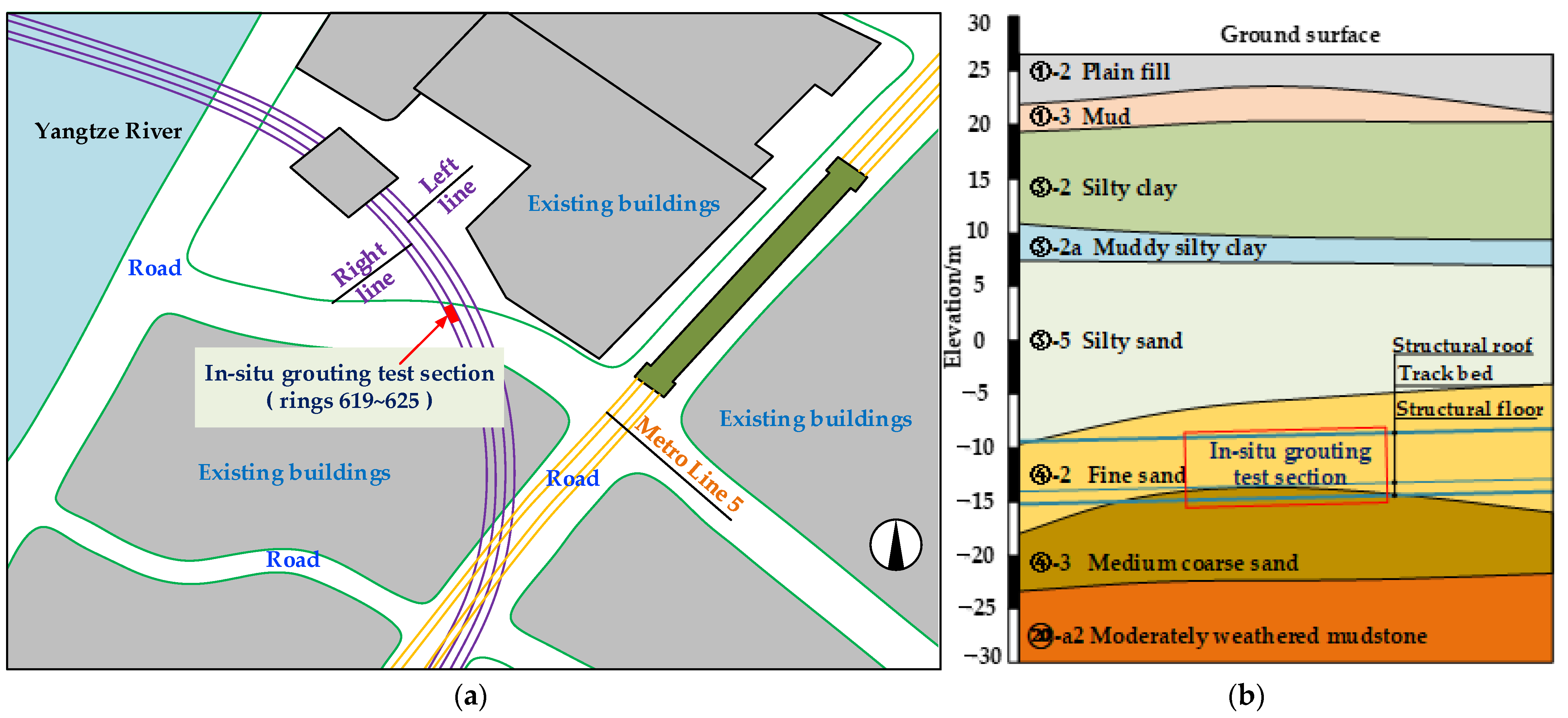
The right-line shield tunnel affected by settlement is located adjacent to the Yangtze River, situated on its first terrace. The ground elevation ranges from 25 m to 28 m. The stratum primarily consists of Quaternary Holocene alluvial deposits, including plain fill, mud, silty clay, muddy silty clay, silty sand, fine sand, and medium-coarse sand. The primary strata affecting the shield tunnel are the fine sand and medium-coarse sand layers, which also serve as confined aquifers. The confined water head elevation ranges approximately between 17.0 m and 20.0 m. The shield tunnel has a burial depth of about 37 m, with an inner diameter of 5.5 m and an outer diameter of 6.2 m. Each ring of the shield tunnel is composed of six wedge-shaped concrete segments (China Railway First Group Urban Rail Components Co., Ltd., Huanggang, China) with a width of 1.5 m.
According to settlement monitoring data of the track bed from August 2020 to June 2023, the settlement of the shield tunnel within the mileage sections YK13 + 745 ~ YK13 + 755, YK13 + 835 ~ YK13 + 895, and YK13 + 928 ~ YK13 + 938 ranges from 6 mm to 12 mm, with a settlement rate exceeding 0.02 mm/d, surpassing the established standards [25]. The settlement control is required for the shield tunnel within the above sections. The section from mileage YK13 + 885 to YK13 + 895 (ring 619–625) is designated as the in-situ grouting test section. The plan position and stratigraphic profile of the in-situ grouting test section are shown in Figure 1.

3. Simulation Analysis and Determination of Parameters S and H

The grouting pressure proposed for the in-situ grouting test is 0.5 MPa~0.6 MPa. Grouting holes are arranged in a double-row quincuncial pattern on both sides of the shield tunnel, with a longitudinal spacing of 1 m and a row spacing of 0.5 m. The grouting zone height is set at 5 m. Parameters S and H are two key factors influencing the uplift effect of shield tunnels. This paper employs numerical simulation to analyze the influence of parameters S and H on the displacements of the shield tunnel and surrounding soil. Parameters S and H for the in-situ grouting test are determined based on the design requirements for the uplift displacement of the tunnel.
The grouting layer in this numerical simulation of grouting is a water-rich medium-coarse sand stratum, characterized by good particle sorting, strong pore connectivity, and high permeability (10−2 to 10−3 cm/s). Based on Darcy’s law and the seepage characteristics of the sand layer, it is estimated that pore water in this stratum can drain from the core grouting zone (with a radius of 1–2 m) to beyond the influence area in just a few minutes. In this project, a low-pressure retraction grouting method is adopted, and the actual grouting duration is significantly longer than the drainage time. This indicates that throughout the entire grouting process, pore water can be discharged promptly without generating significant excess pore water pressure or notable redistribution of pore water pressure. Therefore, the influence of groundwater is not considered in this simulation. Additionally, the tunnel structure is assumed to behave as a linear elastic material, and the influence of segment joints is neglected. The tunnel and the surrounding soil are assumed to maintain perfect contact, with no relative sliding or separation occurring during deformation.

3.1. Model Establishment

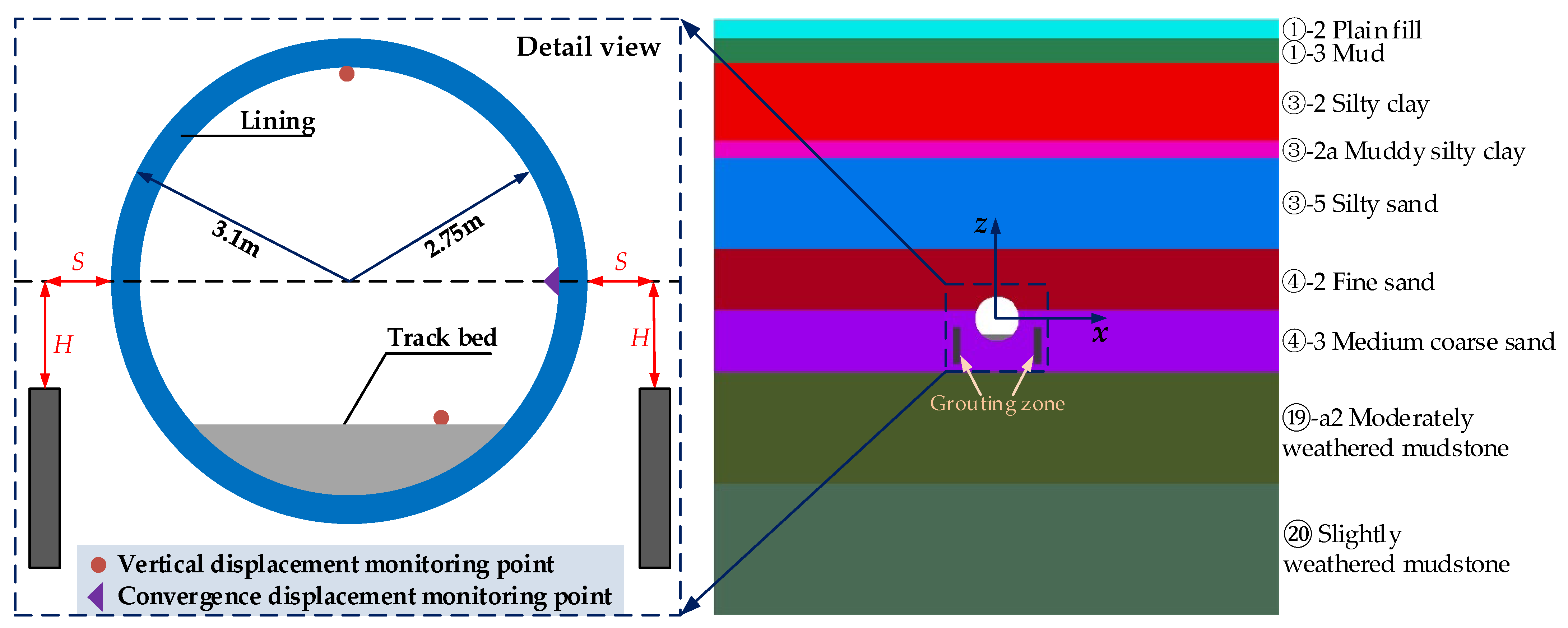
A finite difference software (FLAC3D 6.0) was employed to establish the model with dimensions of 76 m in length, 4 m in width, and 80 m in height. The upper surface of the model represents the ground surface and is set as a free boundary, while the remaining boundaries are constrained by normal displacements. The soil layers are simulated using solid elements, and the tunnel lining is modeled with shell elements. The grouting zone height is set to 5 m, and the thickness is set to 2 m. The calculation model and arrangement of monitoring points are shown in Figure 2. The monitoring points are arranged only on the tunnel cross section at y = 2 m. In Figure 2, parameter H is the vertical distance from the top of the grouting zone to the horizontal axis of the shield tunnel, and parameter S is the vertical distance from the grouting zone to the outer boundary of the tunnel.

3.2. Determination of Numerical Model Parameters

The typical parameters of the different soil layers were obtained through field and laboratory tests. An elastic constitutive model is adopted for the lining and track bed of the shield tunnel, while the Mohr–Coulomb (M-C) model is used for all soil layers. Although the M–C model cannot account for soil stress history, complex loading paths, or hardening/softening behavior, it represents an acceptable engineering choice when detailed parameters for advanced models are difficult to obtain, provided it is based on reliable field and laboratory tests. The physical and mechanical parameters of each soil layer, lining, and track bed are presented in Table 1.

3.3. Determination of Expansion Stress and Calculation Conditions

This paper employs the expansion stress to simulate the grouting effect [26]. The method of applying expansion stress involves imposing internal stress on the grouting zone, causing it to expand volumetrically. The volumetric strain of the grouting zone is defined as follows [27]:
Δ ε V = ( V 1 V 2 ) / V 0
where Δεv is the volumetric strain of the grouting zone; V1 and V2 are the volumes of the settlement trough at the tunnel bottom before and after grouting, respectively; and V0 is the volume of the grouting zone.
In this numerical simulation, the grouting process is controlled by determining whether the volumetric strain of the grouting zone reaches the value calculated by Equation (1). The magnitude of the expansion stress should be moderate. If the expansion stress is too high, the volumetric strain of the grouting zone may instantly exceed that of the surrounding soil, thereby compromising computational accuracy. Conversely, if it is too low, the computational time will increase.
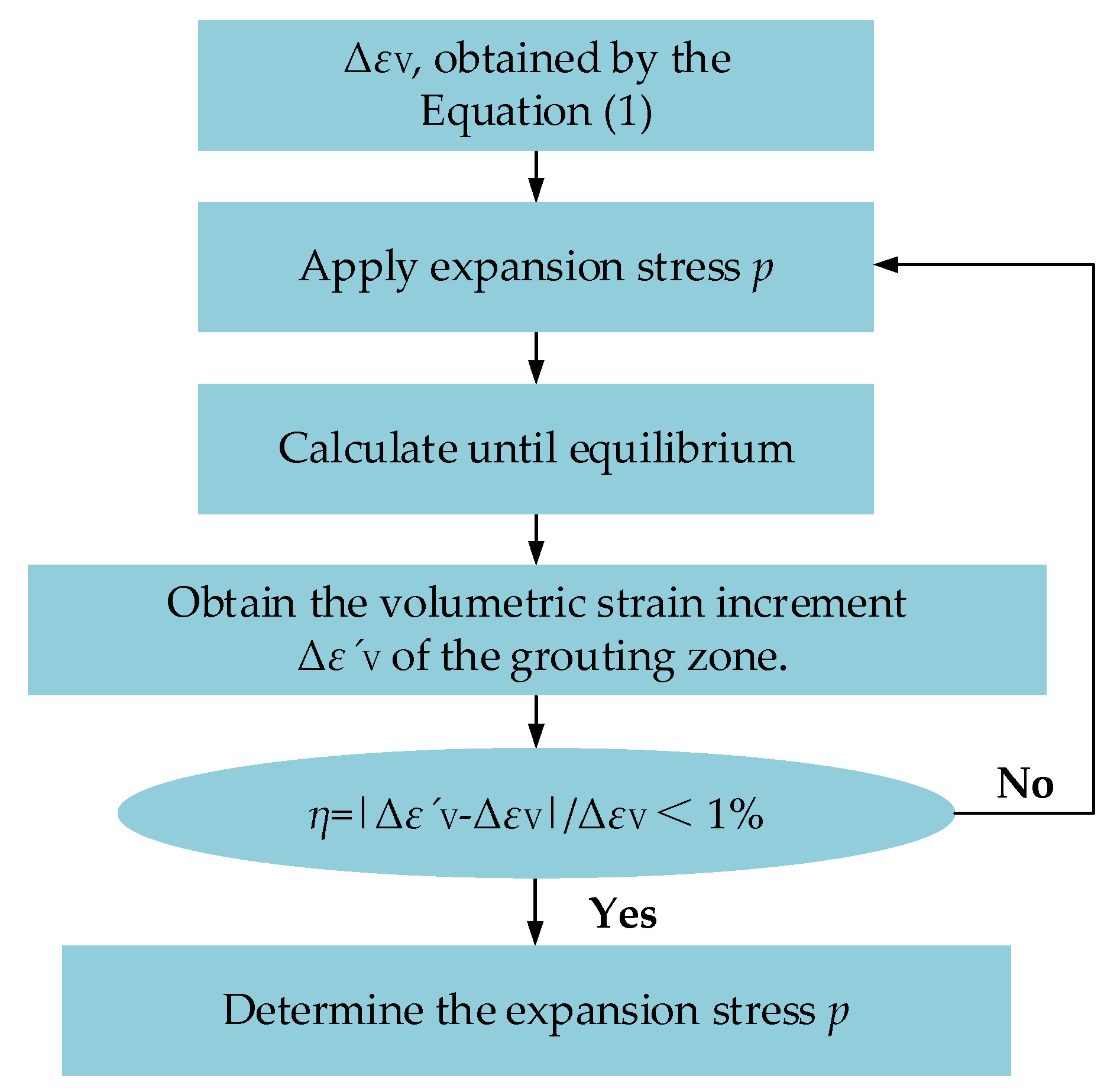
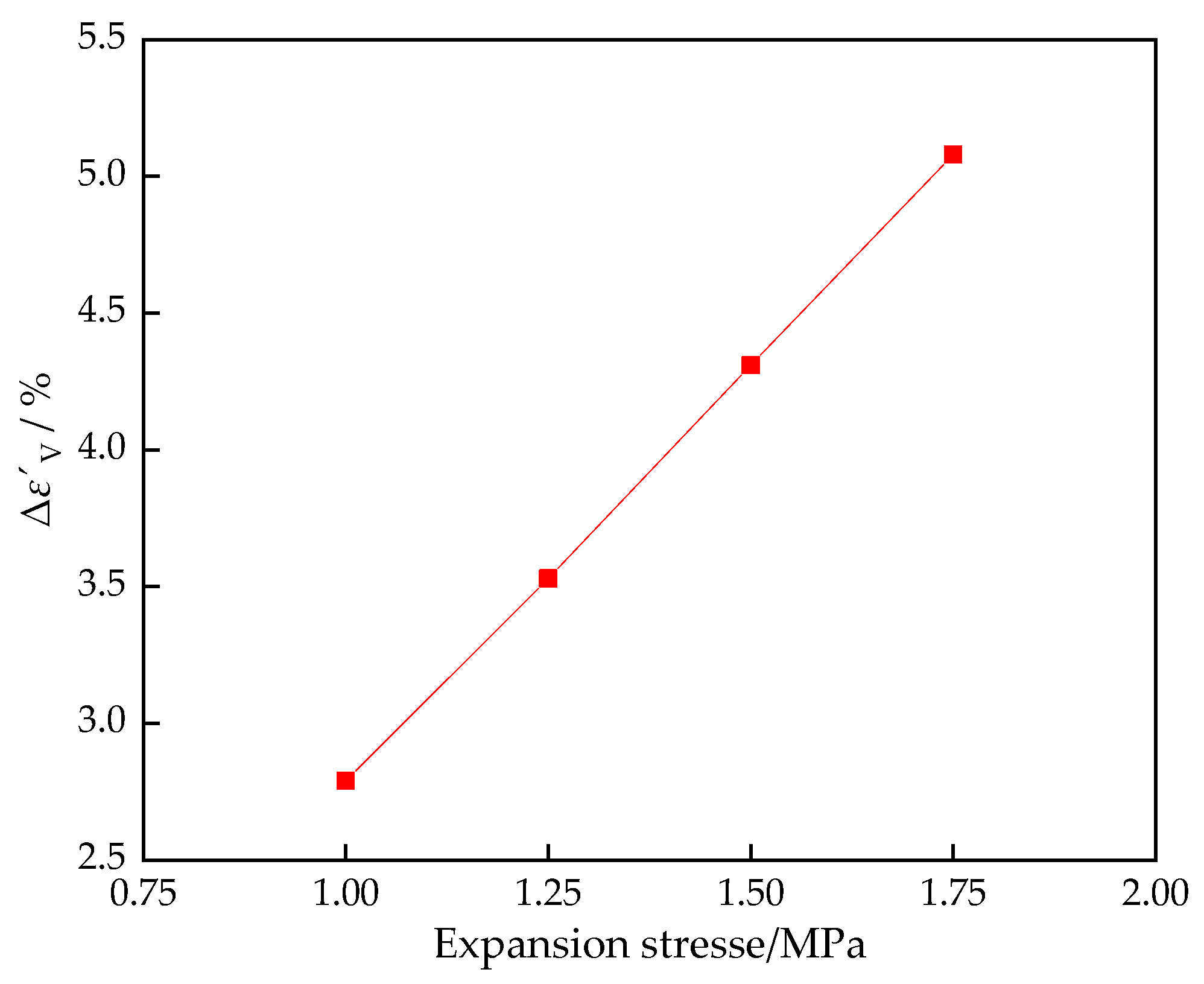
Based on the settlement conditions of the shield tunnel in the in-situ test section, the volumetric strain (Δεv) that must be achieved by the grouting zone in the numerical simulation is calculated to be 3.5%. In accordance with the actual engineering conditions and following the calculation process illustrated in Figure 3, expansion stresses of 1 MPa, 1.25 MPa, 1.5 MPa, and 1.75 MPa are applied to the grouting element, respectively. The corresponding increments in volumetric strain (Δεv) of the grouting zone under these expansion stresses are obtained as shown in Figure 4. It should be noted that the expansion stress applied to the grouting zone is a virtual stress and not the actual grouting pressure.
As shown in Figure 4, the volumetric strain increment of the grouting unit exhibits an almost-proportional relationship with the expansion stress. When the expansion stresses are 1 MPa, 1.25 MPa, 1.5 MPa, and 1.75 MPa, the volumetric strain increments of the grouting unit are 2.79%, 3.53%, 4.31%, and 5.08%, respectively. It can thus be concluded that at an expansion stress of 1.25 MPa, the volumetric strain increment of the grouting unit is 3.53%, which is only 0.86% higher than the calculated value from Equation (1) (3.5%). This value is suitable for use in the numerical simulation of grouting in this study.
Two simulation schemes are designed to analyze the influence of parameters S and H on the displacement of the shield tunnel, respectively. Each scheme includes four calculation conditions, as detailed in Table 2 and Table 3.

3.4. Analysis of Calculation Results

(1) Influence of parameter S on the shield tunnel displacement
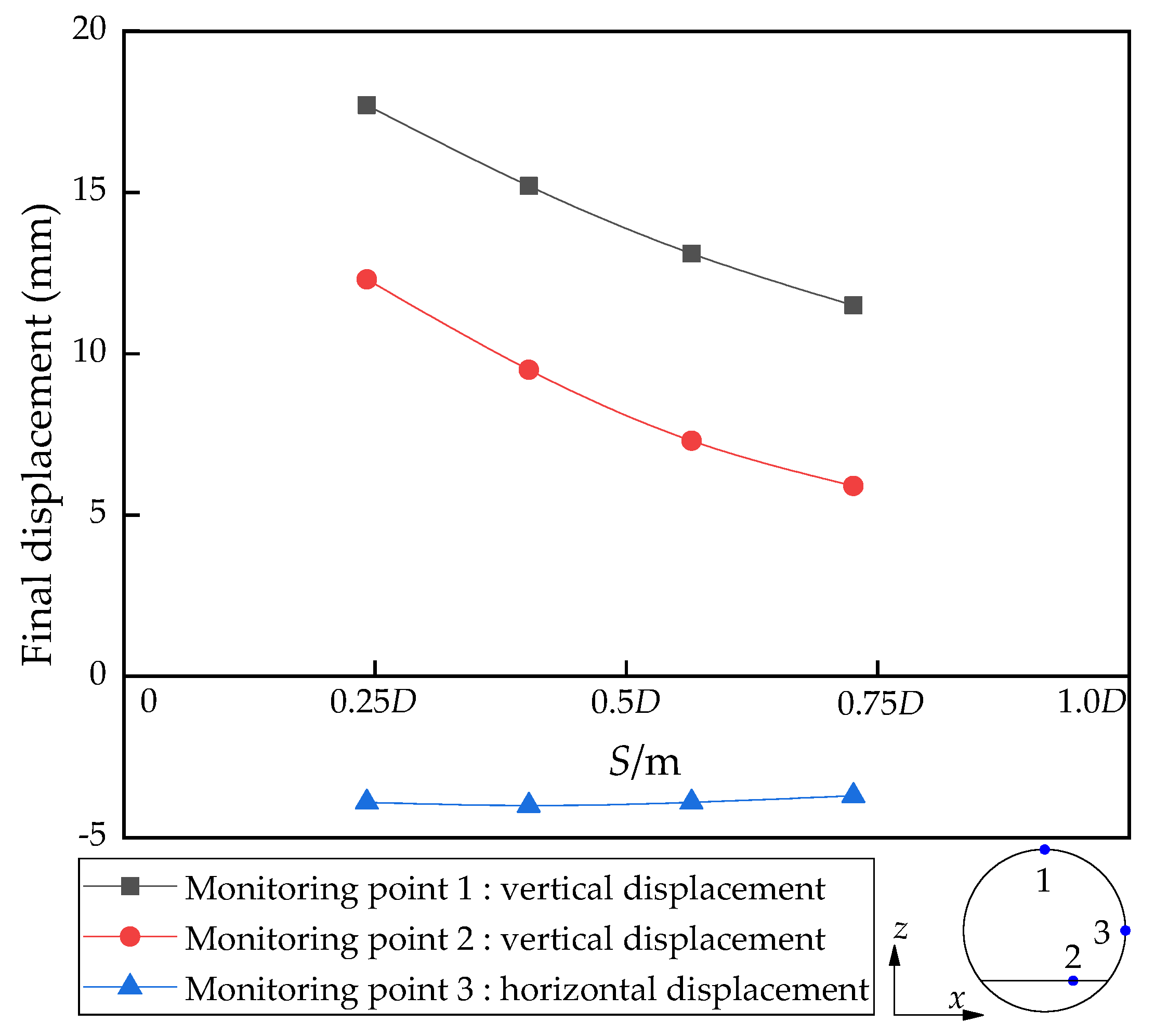
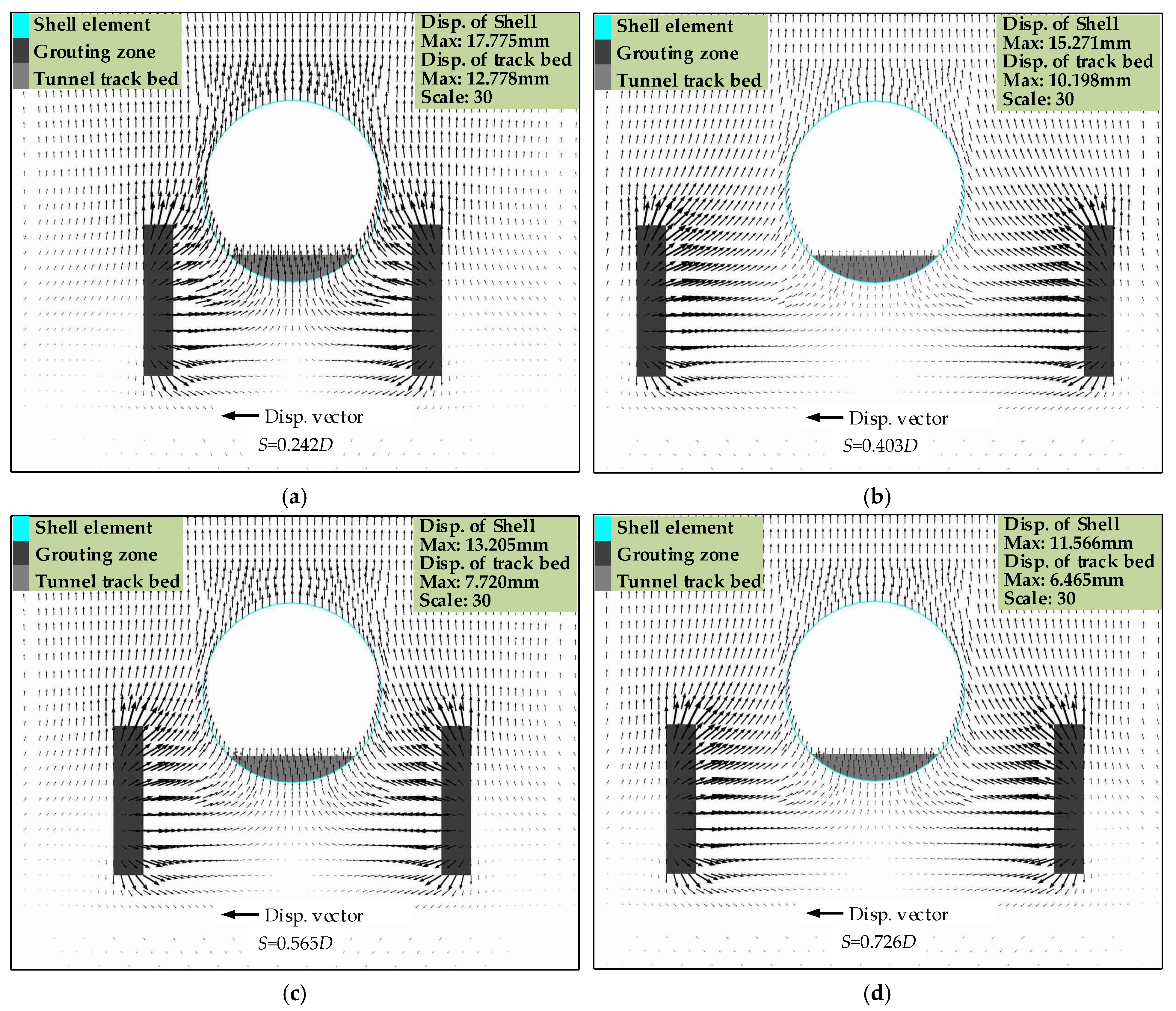
Based on the calculation scheme in Table 2, numerical simulations were conducted to obtain the displacement vector of the tunnel and surrounding soil for different settings of parameter S, as shown in Figure 5. The monitoring results of the uplift displacement of the shield tunnel vault and track bed, as well as the convergence displacement of the shield tunnel, are presented in Figure 6.
As shown in Figure 5, under these four working conditions, the maximum displacement of the tunnel occurs at the vault, while the maximum displacement of the track bed appears at both sides rather than the center. This is because the lining on both sides of the tunnel track bed is subjected to compression from both the underlying soil and the lateral surrounding soil. With the increase of parameter S, the uplift displacement of both the tunnel vault and track bed decreases, and the displacement of the soil at the tunnel bottom also reduces. This indicates that when the grouting pressure remains constant, the compaction range of the grout on the surrounding soil is limited. The greater the parameter S, the weaker the compaction effect of the grout on the soil at the tunnel bottom, which is unfavorable for tunnel uplift.
Figure 6 shows that at the same parameter S, the uplift displacement at the tunnel vault is consistently greater than that at the track bed. As parameter S increases, the uplift displacements of both the tunnel vault and the track bed exhibit a nonlinear decrease, with the magnitude of reduction progressively diminishing. Compared to the case where parameter S = 0.242D, the uplift displacement of the tunnel vault decreased from 17.7 mm to 11.5 mm, a reduction of 35%, while the uplift displacement of the track bed decreased from 12.3 mm to 5.9 mm, a reduction of 52%, when parameter S = 0.726D. The uplift displacement of the tunnel vault decreased by 2.5 mm, 2.1 mm, and 1.6 mm sequentially, while the uplift displacement of the track bed decreased by 2.8 mm, 2.2 mm, and 1.4 mm sequentially, when parameter S increased from 0.242D to 0.726D. It can be observed that the reduction in the uplift displacement is basically consistent between the tunnel vault and the track bed. However, the horizontal convergence displacement of the shield tunnel stays around 4 mm. Integrated analysis shows that parameter S plays a governing role in the uplift of the tunnel vault and the track bed while having minimal impact on the horizontal convergence of the shield tunnel.
The reason for this phenomenon is that the compaction force exerted by the grout on the surrounding soil propagates radially. As parameter S increases, the transmission path of the compaction force lengthens, during which energy is continuously dissipated through mechanisms such as inter-particle friction and pore compression. Consequently, the effective uplifting force ultimately transmitted to the tunnel structure is diminished, resulting in a reduction in the uplift displacement of the shield tunnel.
(2) Influence of parameter H on the shield tunnel displacement
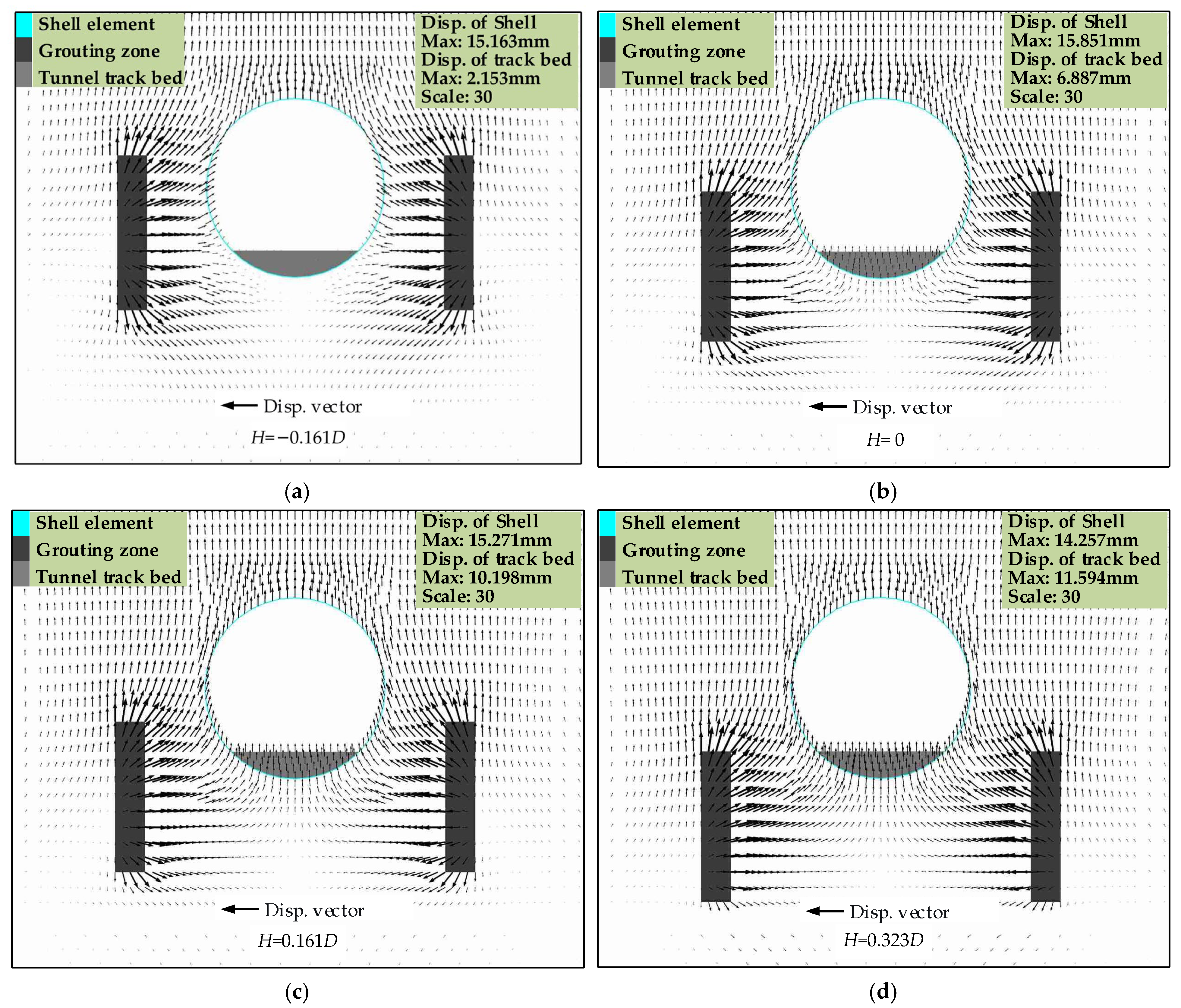
Based on the calculation scheme in Table 3, numerical simulations were conducted to obtain the displacement vector diagrams of the tunnel and surrounding soil for different settings of parameter H, as shown in Figure 7. The monitoring results of the uplift displacement of the shield tunnel vault and the track bed, as well as the convergence displacement of the shield tunnel, are presented in Figure 8.
As shown in Figure 7, with the increase of parameter H, the displacement of the soil at the tunnel bottom gradually increases, while the horizontal displacement component at the tunnel haunch gradually diminishes, and the displacement at the tunnel vault exhibits minimal variation. This results from the expansion of the compaction zone in the soil at the tunnel bottom with increasing parameter H, in contrast to its progressive reduction in the haunch area. For instance, when parameter H = −0.161D, the displacement of the soil at the tunnel haunch significantly exceeds that at the tunnel bottom. This is attributed to the substantially stronger compaction effect of the grout on the soil at both sides of the haunch compared to the bottom soil, resulting in considerable horizontal convergence displacement of the tunnel. When parameter H = 0.323D, the primary compaction occurs in the soil at the tunnel bottom, while the soil at both sides of the haunch experiences minimal compaction effect. Consequently, the uplift displacement at the tunnel vault shows a decreasing trend, and the horizontal convergence displacement approaches 0. Both excessively small and excessively large parameter H values prove suboptimal for the overall uplift of the shield tunnel.
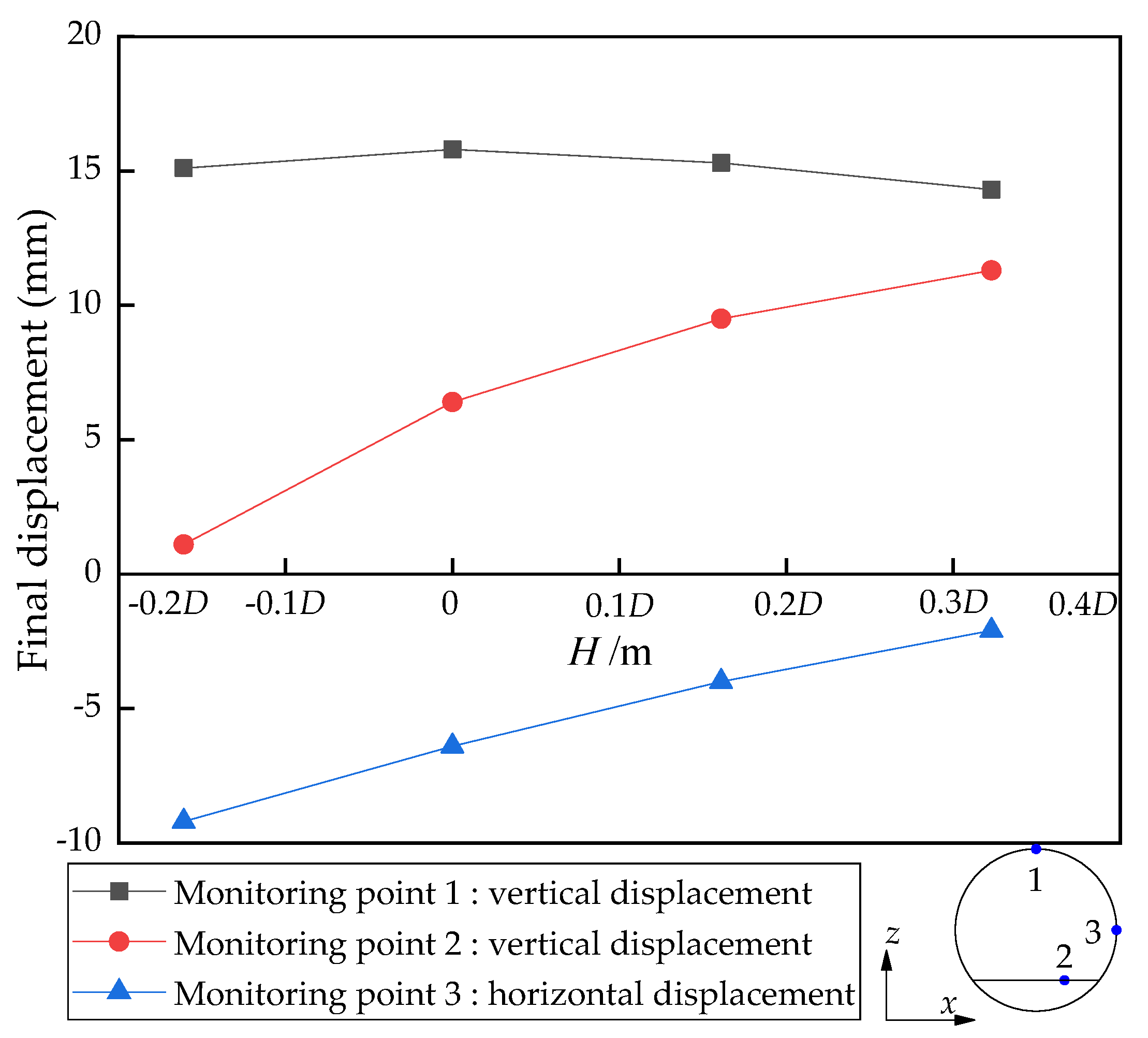
As shown in Figure 8, for the same parameter H, the uplift displacement at the tunnel vault is consistently greater than that at the track bed. As the parameter H increases, the uplift displacement of the tunnel vault first increases and then decreases. In contrast, the uplift displacement of the track bed shows a gradual nonlinear increase, with the rate of growth slowing. As parameter H increases from −0.161D to 0.323D, the uplift displacement of the tunnel vault shows sequential increments of 0.7 mm, −0.5 mm, and 1.0 mm; the uplift displacement of the track bed increases by 5.3 mm, 3.1 mm, and 1.8 mm sequentially, while the horizontal convergence displacement of the tunnel decreases by 2.8 mm, 2.4 mm, and 1.9 mm sequentially. This demonstrates that when parameter H ranges from −0.161D to 0.323D, it has minimal impact on the uplift displacement of the tunnel vault but significantly influences both the uplift displacement of the track bed and the horizontal convergence of the tunnel. Compared with the condition at parameter H = −0.161D, when parameter H = 0.323D, the uplift displacement of the track bed increases from 1.1 mm to 11.3 mm, an increase of 927.3%, while the horizontal convergence displacement decreases from 9.2 mm to 2.1 mm, a reduction of 77.2%. Comprehensive analysis indicates that within the range of −0.161D to 0.323D, parameter H plays a controlling role in the uplift displacement of the track bed and the horizontal convergence displacement, while having relatively minor influence on the uplift displacement of the vault.
The reason for this phenomenon is that as parameter H increases, the primary direction of the compaction force generated by grout shifts from horizontal to vertical. The compaction force acts directly on the soil beneath the tunnel, with more of this force being used to overcome the self-weight of the shield tunnel and the pressure from the overlying soil. This force is efficiently converted into uplift force, leading to an increase in the vertical displacement of the tunnel. Meanwhile, the horizontal component of the force diminishes significantly as the grouting position moves downward, resulting in a substantial reduction in the horizontal convergence displacement of the tunnel.

3.5. Determination of Parameters S and H

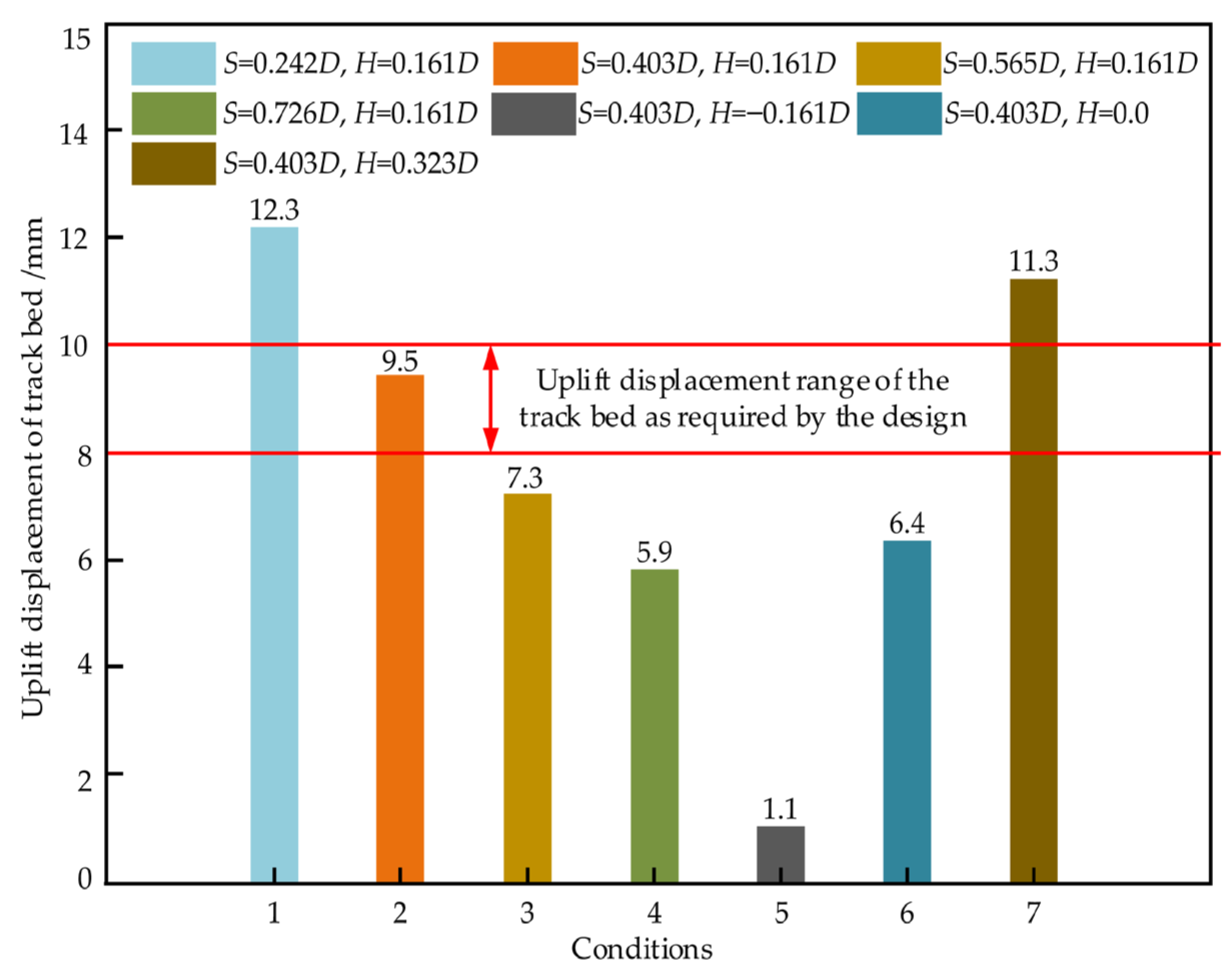
The in-situ grouting test section is located at mileage YK13 + 885 to YK13 + 895 (ring 619–625) of the right-line shield tunnel. The design requirements specify that the uplift of the track bed in the test section should be controlled within 8 mm to 10 mm. Based on the analysis in Section 3.3, the calculated versus design-required uplift displacement of the tunnel track bed under different conditions is presented in Figure 9.
As shown in Figure 9, the uplift displacements of the tunnel track bed for conditions 1 and 7 exceed the design requirements, while those for conditions 3 to 6 are below the requirements. Only condition 2, with a displacement of 9.5 mm, is within the specified design range of 8 mm to 10 mm. The grouting parameters S = 0.403D and H = 0.161D were selected for the in-situ grouting test to validate their appropriateness.

4. In-Situ Grouting Test for Settlement Control

4.1. Layout of Grouting Holes

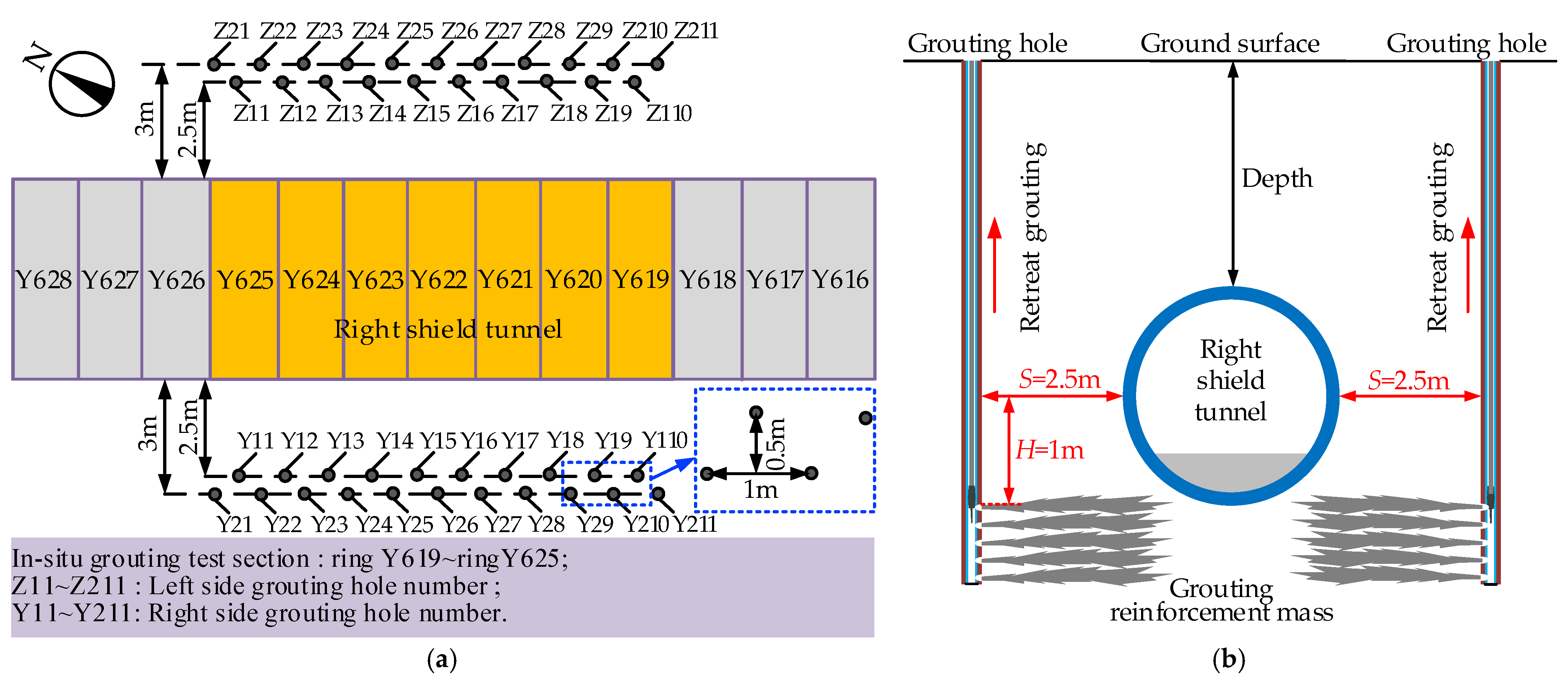
The in-situ grouting test was conducted in the settlement area (rings Y619 ~ Y625) of the right shield tunnel. In total, 42 grouting holes were symmetrically arranged on both sides of the right shield tunnel. The design and numbering of grouting holes are illustrated in Figure 10.

4.2. Grouting Equipment and Materials

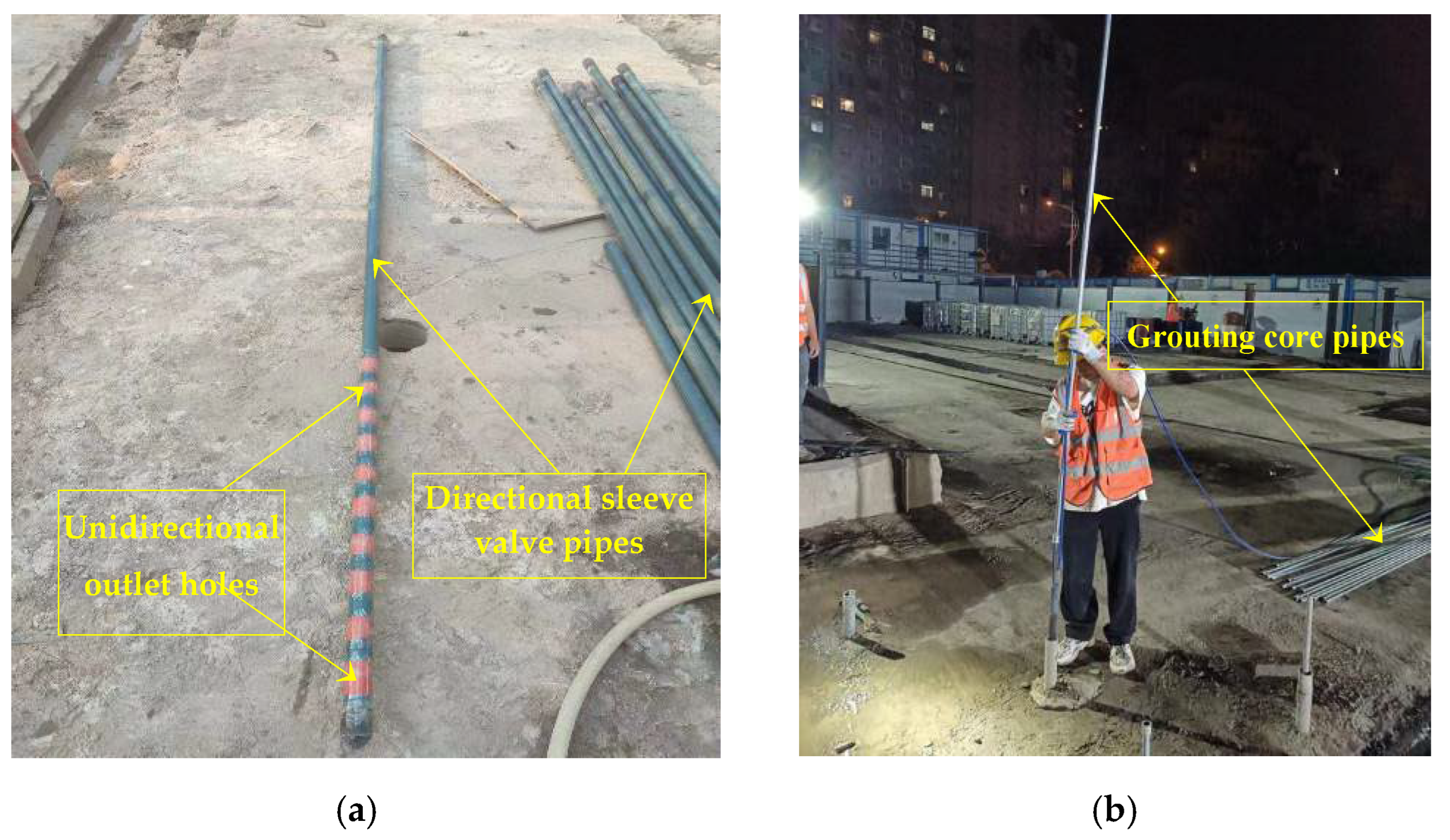
The in-situ grouting test employs the sleeve valve pipe directional grouting technology. Two adjustable plunger dual-liquid grouting pumps (Shandong Zhongtan Machinery Co., Ltd., Liaocheng, China) are selected as the grouting equipment. The directional sleeve valve pipe (Jining Yantai Mining Machinery Equipment Co., Ltd., Jining, China) has a diameter of 42 mm and is made of PVC material. A steel pipe of Ф14 mm is used as the grouting core pipe (Shandong Panjin Tunnel and Bridge Engineering Materials Co., Ltd., Liaocheng, China), and a grout plug is installed at its end. The directional sleeve valve pipes and grouting core pipes are shown in Figure 11. The dual-liquid grout, composed of cement grout at 60 °C and sodium silicate at 18 °C, was selected as the grouting material. The cement used is PO42.5 ordinary Portland cement (Huaxin Building Materials Group Co., Ltd., Huangshi, China), and the water–cement ratio of the cement grout is 1:1. The sodium silicate (Wuhan Geeyeschem Chemical Co., Ltd., Wuhan, China) has a Baume degree of 30°Bé and a modulus of not less than 2.8. The gel time of dual-liquid grout is about 10 s.

4.3. Layout of Monitoring Points for In-Situ Grouting Test

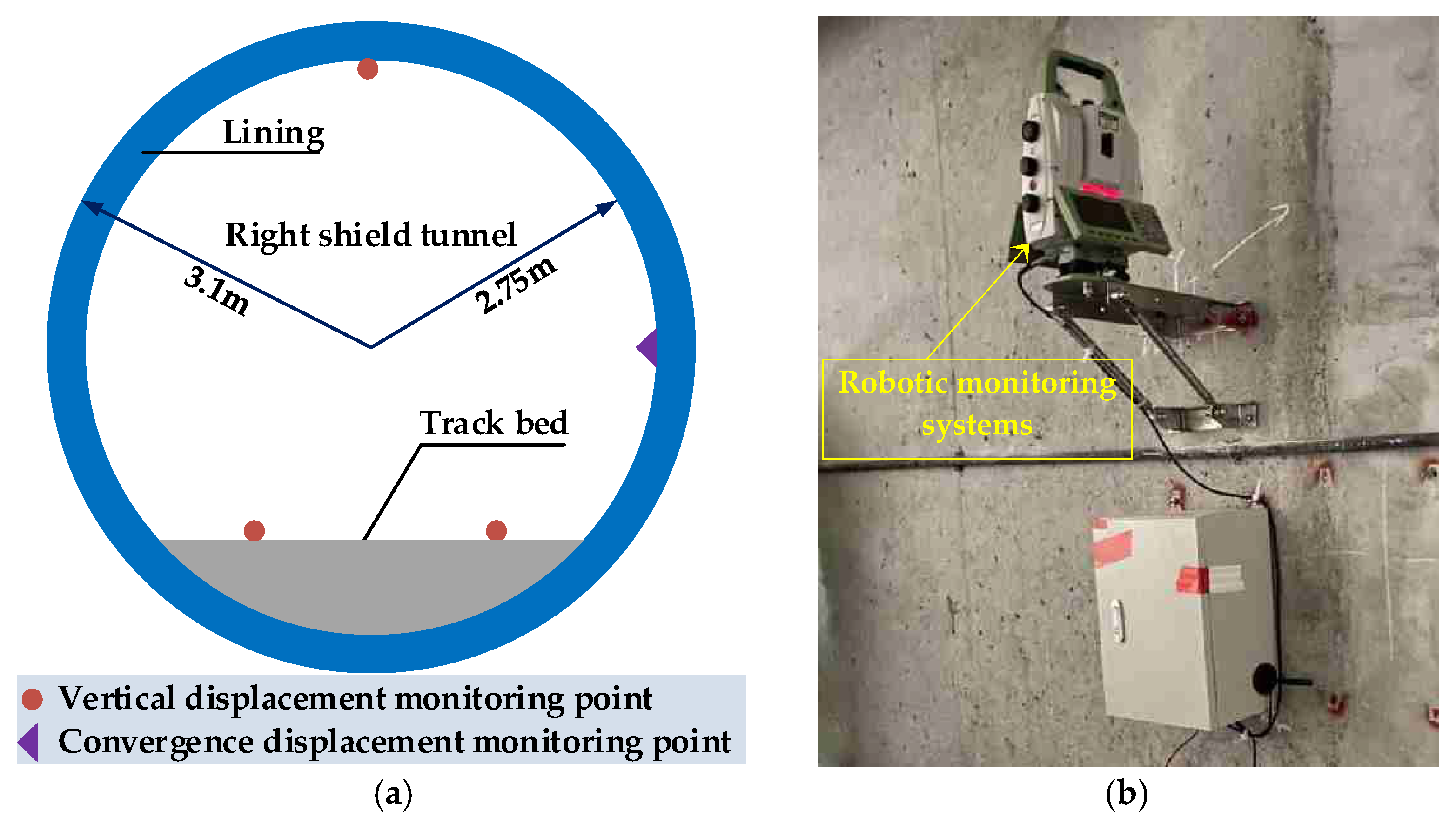
Automated synchronous monitoring was performed using robotic monitoring systems (Guangzhou South Surveying and Mapping Technology Co., Ltd., Guangzhou, China) on the shield tunnel (rings Y616~Y628) during the in-situ grouting process. Two horizontal convergence displacement monitoring points and three vertical displacement monitoring points are arranged on each ring, as shown in Figure 12. Automated monitoring is conducted 24/7 in real time, commencing 1 week before the test initiation and extending through 1 month after the test conclusion.

5. Results and Analysis of In-Situ Grouting Test

5.1. Uplift Displacement of the Track Bed

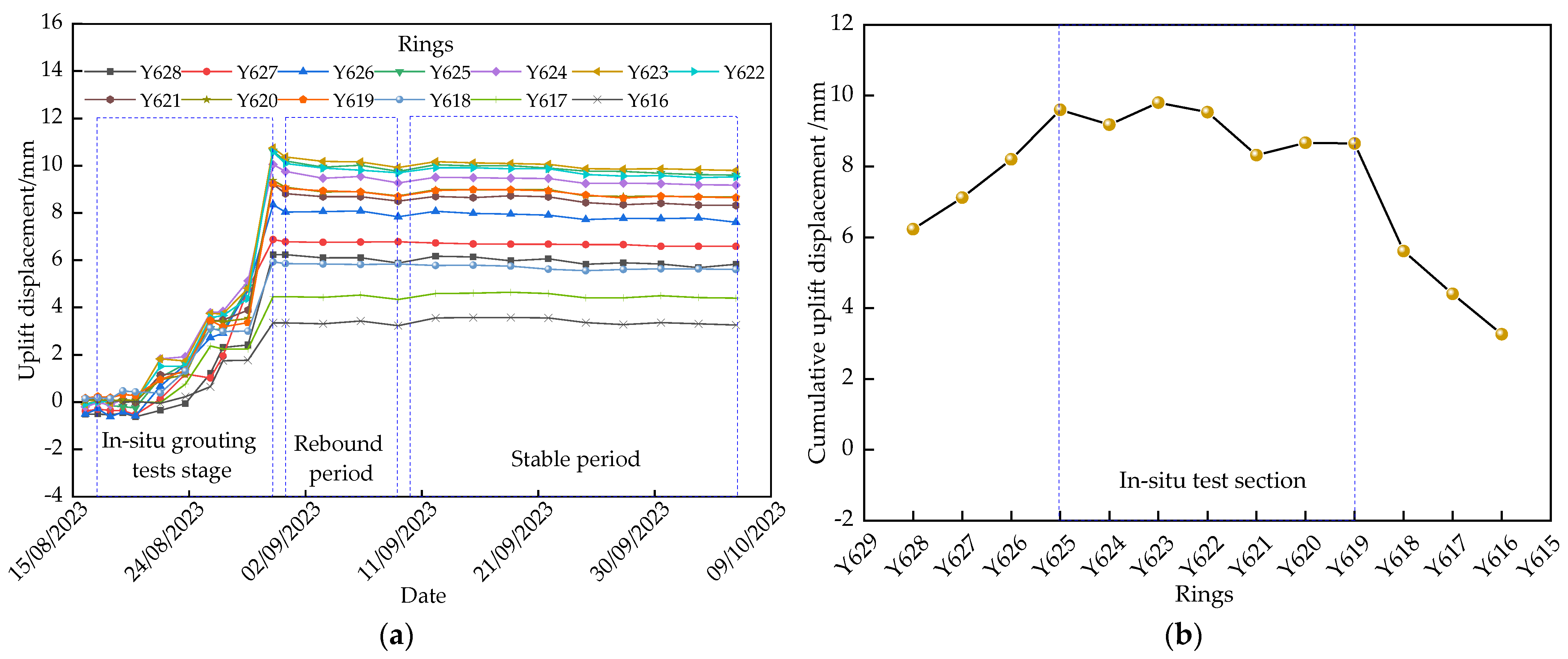
Due to the symmetrical execution of the field grouting, the data from the two monitoring points on the track bed showed close alignment. This study presents an analysis of the averaged data from both monitoring points. The uplift displacement curve of the track bed is shown in Figure 13. The uplift displacement-time curve and the cumulative uplift displacement curve of the track bed are shown in Figure 13a and Figure 13b, respectively. Positive values indicate the upward lifting of the track bed.
As shown in Figure 13a, during the process of in-situ grouting, the uplift displacement of the track bed exhibited a gradual increase corresponding to the increment in the grouting volume. The in-situ grouting test was completed on 31 August, when the track bed reached its maximum uplift. After the completion of the in-situ grouting test, the dissipation of excess pore water pressure, along with the consolidation and shrinkage of the grout, led to a reduction in the additional earth pressure around the shield tunnel, resulting in rebound deformation of the shield tunnel. The track bed experienced a rebound period of approximately 10 days, after which the uplift displacement of the track bed gradually stabilized. As illustrated in Figure 13b, the uplift displacements of the track bed within the test section (rings Y619~Y625) reach 7 mm~10.5 mm, with an average value of 9.1 mm, which not only meets the design requirements (8 mm~10 mm) but also has high consistency with the numerical simulation results (9.5 mm). Furthermore, the uplift displacement of the track bed outside the test section is 3 mm~8 mm, which may be caused by longitudinal compression of the soil.

5.2. Uplift Displacement of the Tunnel Vault

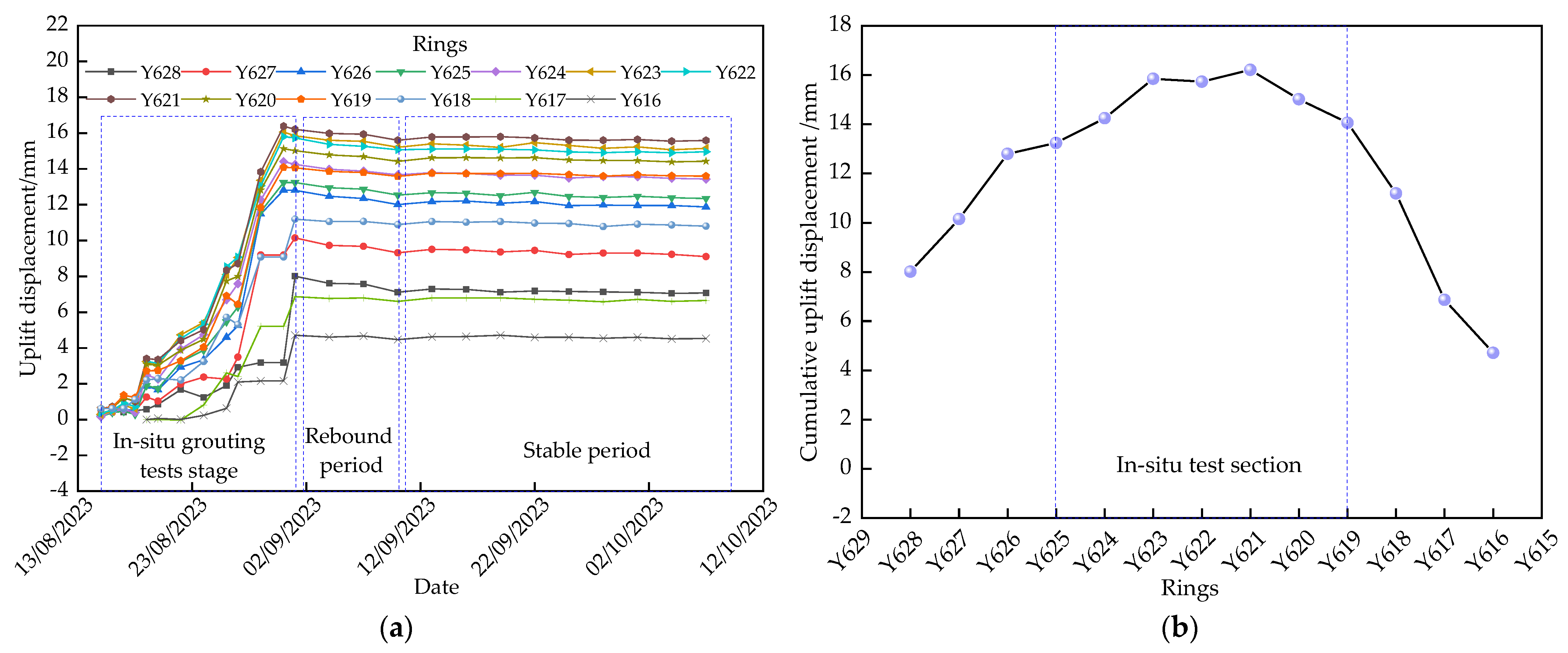
The uplift displacement of the tunnel vault is shown in Figure 14. The positive displacement represents the uplift of the tunnel vault. The uplift displacement-time curve of the tunnel vault is shown in Figure 14a. As the grouting volume increases, the uplift displacement of the tunnel vault gradually rises. By 31st August, when the in-situ grouting test was completed, the uplift displacement of the tunnel vault reached its maximum. This was followed by a rebound period of approximately 10 days, after which the uplift displacement of the tunnel vault gradually stabilized. The cumulative uplift displacement curve of the tunnel vault is illustrated in Figure 14b. Within the test section (rings Y619~Y625), the uplift effect of the tunnel vault is significant, with uplift displacements ranging from 13 mm to 16 mm and an average value of 14.9 mm. The simulated uplift displacement of the tunnel vault was 15.3 mm, differing by only 2.7% from the measured value, validating the rationality of parameters S and H selection.

5.3. Horizontal Convergence Displacement of the Shield Tunnel

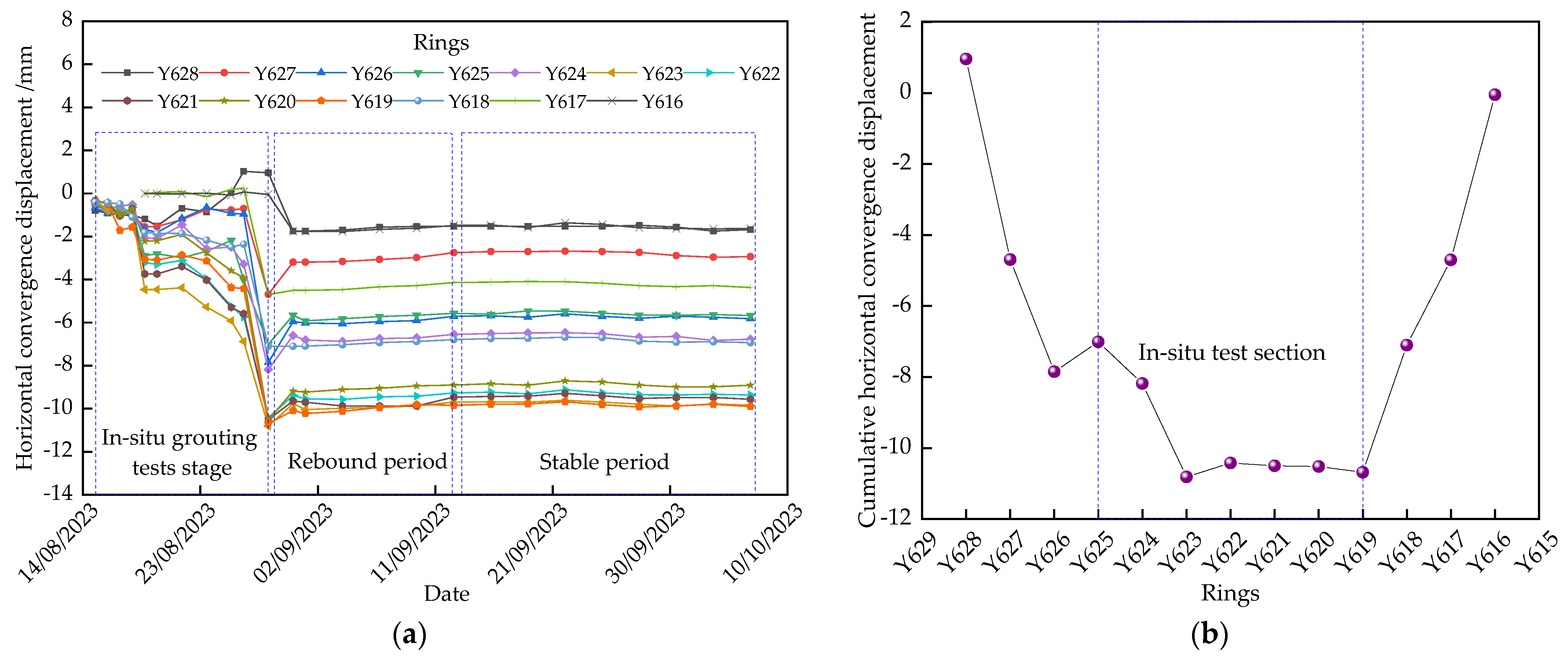
During the process of in-situ grouting, horizontal convergence occurred in the shield tunnel. The horizontal convergence displacement is shown in Figure 15, where negative values indicate horizontal convergence toward the tunnel interior. Figure 15a presents the horizontal convergence displacement-time curve. The curve demonstrates that the horizontal convergence displacement progressively increased with grouting volume, reaching the maximum values by 29th August. This was followed by an approximately 10-day rebound period before gradual stabilization. The cumulative horizontal convergence displacement of the tunnel is shown in Figure 15b.
It can be seen that the horizontal convergence displacement of the tunnel within the test section (rings Y619~Y625) reaches −11 mm~−7 mm, with an average value of −9.7 mm. The simulated convergence displacement of the tunnel under the corresponding condition is −4 mm.
The horizontal convergence displacement of the tunnel measured in the in-situ grouting test was 142.5% greater than that obtained from the numerical simulation. One of the primary reasons for this discrepancy is that the weakening of the longitudinal joint stiffness between the tunnel segments was not considered in the numerical simulation. The shield tunnel investigated in this study consists of one top block, two adjacent blocks, and three standard blocks per ring. The longitudinal joints between the segments are connected by 16 M30 bolts. According to reference [28], the bending stiffness of the longitudinal joint can be taken as 50 MN⋅m/rad. The bending stiffness of the segment is 187.6 MN⋅m2. If the longitudinal joints had been simulated following the method described in reference [29], the equivalent elastic modulus of the modified zone of the longitudinal joint would be only 11% of the elastic modulus of the segment. However, in the numerical simulation performed in this study, the stiffness of the longitudinal joints was not reduced. Additionally, the horizontal convergence deformation of the tunnel is mainly caused by the rotation of the segments at the haunch, leading to an underestimation in the simulation results. Another primary reason is that during the in-situ grouting test, a portion of the grout migrated upward along the outer wall of the directional pipe, further compacting the soil surrounding the haunch of the shield tunnel and thereby exacerbating the rotation of the segments at the haunch. In the in-situ grouting test, the horizontal convergence displacement of the tunnel reached −9.7 mm, which did not exceed the 5‰D limit specified in the standard [30] and thus will not affect the safety of the tunnel. While this numerical simulation and in-situ grouting test focused on controlling the settlement of the shield tunnel, refined numerical simulations considering the influence of segment longitudinal joints on the horizontal convergence of the shield tunnel will be an important focus of future work.
Based on a comprehensive analysis of the monitoring data, during the 1-month period following the completion of the in-situ grouting test, the average settlement rate and horizontal convergence rate of the shield tunnel in the test section ranged between 0.006 mm/d and 0.015 mm/d. These values are below the standard-specified limit of 0.02 mm/d, indicating that the in-situ grouting test successfully achieved the objective of controlling settlement in the shield tunnel.

5.4. Statistical Analysis of Grouting Volume

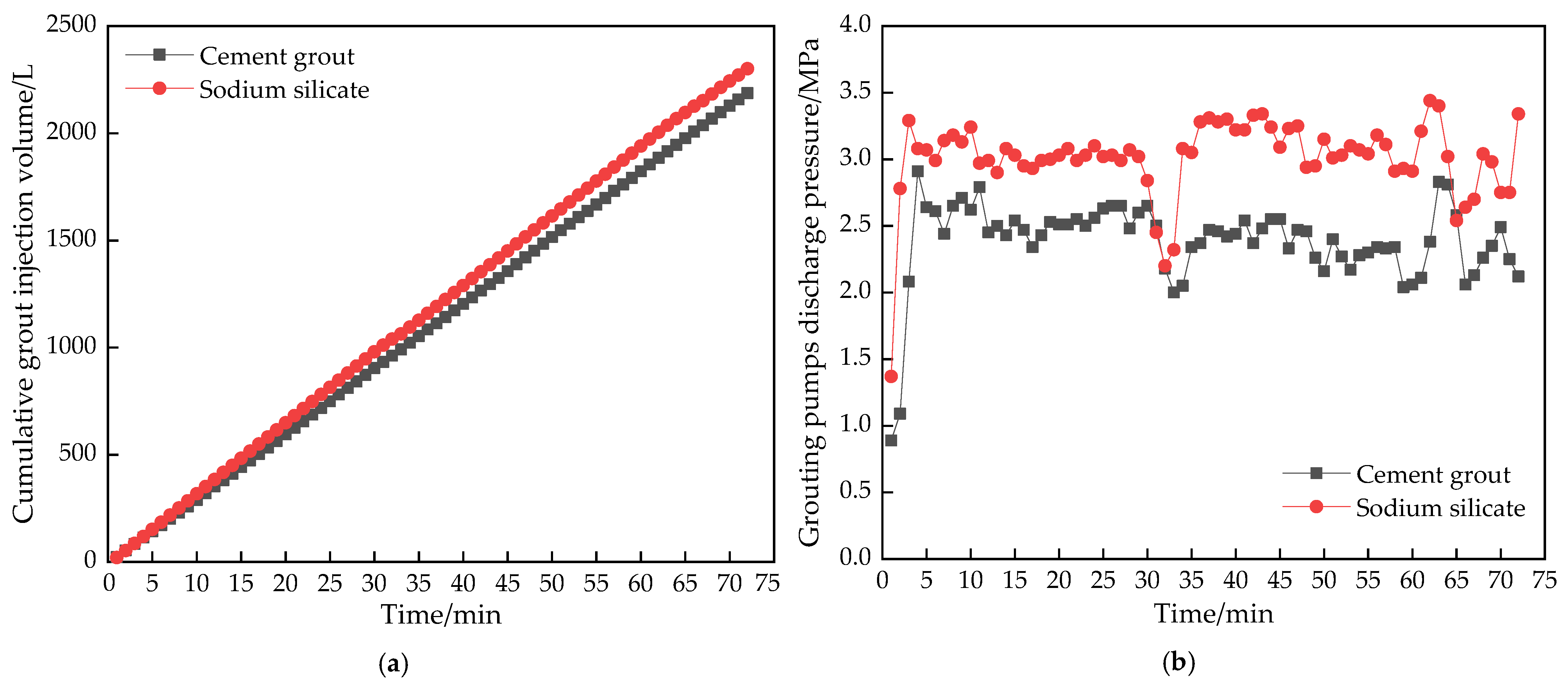
After completing the in-situ grouting test, the grouting volume for each grouting hole and the average grouting volume were statistically analyzed. The statistical results are presented in Table 4. Figure 16 illustrates the variations over time in the cumulative injection volumes of cement slurry and water glass, as well as the changes in grouting pumps’ discharge pressure, for grouting hole Y28.
As shown in Table 4, although the lifting displacement of the test section’s track bed met the design requirements, the distribution of grouting volume across different rings was relatively uneven. The grouting volume at ring Y625 was the largest, reaching 30,068 L, while that at ring Y620 was the smallest, at a mere 22,353 L. The range of grouting volumes among the rings was 7715 L, with a relative range of 29.22%. The variability in grouting volumes may be attributed to the disordered diffusion of the grout, leading to slurry loss. This also reflects the poor homogeneity of the strata in the test section, with significant local variations present.
As shown in Figure 16, the grouting process for hole Y28 lasted 72 min. From Figure 16a, it can be observed that the cumulative injection volumes of cement slurry and sodium silicate increased almost linearly and steadily over time. The cumulative injection volume of cement slurry was 2187.5 L, while that of sodium silicate was 2300.5 L, resulting in a total injection volume of 4488.0 L. The average injection rate of the cement–sodium silicate grout was approximately 62.33 L per minute. According to Figure 16b, during the grouting process, the discharge pressure of the sodium silicate grouting pump generally ranged between 3.0 and 3.5 MPa, while the discharge pressure of the cement slurry grouting pump remained around 2.5 MPa. The discharge pressures of both pumps dropped sharply between 31 and 34 min before recovering to their original levels, which was likely caused by the temporary fracturing of the grouted stratum, followed by rapid filling with the grout.

6. Conclusions

Based on a directional micro-disturbance grouting project for settlement control of a 6.2 m-diameter shield tunnel in sandy stratum in Wuhan, this study employed numerical simulation to analyze the effects of the grouting parameters S and H on the displacement of the shield tunnel and surrounding soil. Based on the design requirements for tunnel uplift, parameters S and H were determined and subsequently validated through in-situ grouting test. The main conclusions are as follows:
(1)
The numerical simulation results show that as S/D increases from 0.242 to 0.726, the compaction effect of the soil at the tunnel bottom gradually weakens, and the uplift displacements of both the vault and the track bed decrease. In contrast, the convergence displacement of the tunnel remains constant at around 4 mm. This indicates that parameter S has a negligible impact on the horizontal convergence of the tunnel but plays a controlling role in the uplift of the vault and the track bed.
(2)
The numerical simulation results indicate that as H/D increases from −0.161 to 0.323, the compaction zone of the soil at the tunnel haunch gradually decreases, while that at the tunnel bottom gradually expands; concurrently, the uplift displacement of the track bed increases, and the horizontal convergence of the tunnel decreases. However, the vault displacement consistently remains around 15 mm. This demonstrates that when H/D ranges from −0.161 to 0.323, it has minimal impact on the uplift displacement of the tunnel vault but significantly influences both the uplift displacement of the track bed and the horizontal convergence of the tunnel.
(3)
Based on the settlement control requirements for the in-situ grouting test section, parameters S = 0.403D and H = 0.161D were selected for the in-situ grouting test. The average measured uplift displacements at the tunnel vault and track bed in the in-situ grouting test section were 14.9 mm and 9.1 mm, respectively, being only 2.6% and 4.2% lower than the numerical simulation results (15.3 mm and 9.5 mm). The strong consistency between the field-measured and simulated results validates the rationality of selecting parameters S and H.
(4)
The average measured horizontal convergence of the tunnel in the in-situ grouting test section was −9.7 mm, which is 142.5% more negative than the numerical simulation result (−4.0 mm). This discrepancy is attributed to the lower stiffness of actual tunnel segment joints, a factor not considered in the numerical model. Addressing this issue will be part of subsequent research efforts.
(5)
It should be noted that this study provides an optimization method for external micro-disturbance grouting parameters S and H, which is applicable to settlement control of a 6.2 m-diameter shield tunnel in sandy stratum and significantly reduces the time required for identifying optimal parameters. When the tunnel diameter or geological conditions change, parameters S and H should be adjusted accordingly.

Author Contributions

Methodology, C.M.; validation, Z.G.; formal analysis, Z.X.; investigation, J.H.; writing—original draft preparation, H.Z.; writing—review and editing, J.G. All authors have read and agreed to the published version of the manuscript.

Funding

This study was supported by the Science and Technology Research and Development Program of China Railway Siyuan Survey and Design Group Co., Ltd. (Grant No. KY2023062S) and the National Key Research and Development Program of China (Grant No. 2023YFC3805903).

Data Availability Statement

The original contributions presented in the study are included in the article; further inquiries can be directed to the corresponding author.

Acknowledgments

The authors greatly appreciate the financial support received from the funding bodies and are grateful to the reviewers for their valuable comments and suggestions to improve the quality of the paper.

Conflicts of Interest

Authors Changjiang Meng, Zhaihui Ge, Zhaohui Xiong, Junjie Hu and Haisu Zhao were employed by the company China Railway Siyuan Survey and Design Group Co., Ltd. The remaining author declares that the research was conducted in the absence of any commercial or financial relationships that could be construed as a potential conflict of interest.

References

  1. Feng, J.; Dai, C.; Li, H.; Yu, Y. Development models for underground logistics based on urban metro networks: A review. Urban Rapid Rail Trans. 2025, 38, 134–143. [Google Scholar]
  2. Huang, C.; Xu, X.; Sun, D.; Liu, Z.; Yan, F.; Jiao, L.; Ding, Z. Research progress of slurry treatment technology and equipment for slurry balance shield. Tunn. Constr. 2025. accepted. [Google Scholar]
  3. Zhai, W.; Sun, K.; Zhang, D.; Huang, H.; Chapman, D. An analytical solution for steel plate strengthened circular tunnels with various interface slip modes. Buildings 2022, 12, 1172. [Google Scholar] [CrossRef]
  4. Huang, Z.; Fu, H.; Chen, W.; Zhang, J.; Huang, H. Damage detection and quantitative analysis of shield tunnel structure. Autom. Constr. 2018, 94, 303–316. [Google Scholar] [CrossRef]
  5. Xu, W. Study on differential settlement control measures of subway-operated tunnel above sand layer. Urban Rapid Rail Trans. 2019, 32, 93–98+110. [Google Scholar]
  6. Ju, J. Study on the Mechanism and the Upward-Effect of Compaction Grouting. Master’s Thesis, Central South University, Changsha, China, 2007. [Google Scholar]
  7. Fu, Y.; Wang, S.; Wu, Z.; Zhang, X.; Zhu, J.; Wang, B.; Huang, Y. Analytical solution to the mechanical response of grouting lifting in existing shield tunnels and engineering case verification. Tunn. Undergr. Space Technol. 2024, 145, 105587. [Google Scholar] [CrossRef]
  8. Meng, F.; Jia, Q.; Chen, R.; Chen, T.; Cheng, H. Calculation method for the overlying shield tunnel uplift subjected to underlying grouting in soft clayey ground. Chin. J. Geotech. Eng. 2024, 46, 2401–2409. [Google Scholar]
  9. Zhao, X. Influence on lining structure by grouting uplift of shield tunnel. Urban Rapid Rail Trans. 2015, 28, 83–88. [Google Scholar]
  10. Guo, J. Efficiency of grouting segment uplifting in shield tunnel. Railw. Constr. Technol. 2016, 9, 18–20+41. [Google Scholar]
  11. Zhang, D.; Peng, M.; Dai, X.; Yan, J. Behavior of shield tunnel caused by grouting to reduce the tunnel longitudinal differential settlement in soft ground. Mod. Tunn. Technol. 2016, 53, 78–82. [Google Scholar]
  12. Mo, J. Study on Operation Settlement Control of Subway Tunnel in Loess Area. Master’s Thesis, Xi’an University of Architecture and Technology, Xi’an, China, 2020. [Google Scholar]
  13. Zhu, M.; Xia, C.; Chen, D.; Chen, W.; Hao, K.; Chen, X. Influence of grouting sequence on the correction effect of horizontal tunnel displacement by grouting in granite residual soil. Buildings 2022, 12, 1655. [Google Scholar] [CrossRef]
  14. Lu, Y.; Han, T. Resilience of metro tunnel structures: Monitoring deformation due to surrounding engineering activities and effect of remediation treatment. Urban Lifeline 2023, 1, 8. [Google Scholar] [CrossRef]
  15. Zheng, S. Simulation Research on Grouting Lifting and Deviation Correction of Existing Shield Tunnel Based on Sph Method. Master’s Thesis, Zhejiang University, Hangzhou, China, 2022. [Google Scholar]
  16. Zheng, S.; Jiang, J. Research of existing shield tunnels based on sph method for grouting and correcting deviation. Low Temp. Archit. Technol. 2022, 44, 149–154. [Google Scholar]
  17. Zhang, Y.; Cao, Z.; Liu, C.; Huang, H. Fluid-solid coupling numerical simulation of micro-disturbance grouting treatment for excessive deformation of shield tunnel. Undergr. Space 2024, 19, 87–100. [Google Scholar] [CrossRef]
  18. Ye, W.; Zhang, M.; Zhang, Z.; Chu, W. New indices of the recovery effect of the large deformation shield tunnel based on a light-disturbance grouting model test. Earth Environ. Sci. 2024, 1333, 012001. [Google Scholar] [CrossRef]
  19. Zhou, J.; Gong, Q.; Zhou, S.; Han, G. Calculation method of limit overlying earth pressure on shield tunnel during lifting. Rock Soil Mech. 2016, 37, 1969–1976. [Google Scholar]
  20. Zhu, Y. Studies on the Mechanism and Engineering Application for the Remediation of Existing Shield Tunnel Using Grouting Technique. Doctoral Dissertation, Zhejiang University, Hangzhou, China, 2019. [Google Scholar]
  21. Wu, P. Study on Grouting Uplift of Existing Shield Tunnel Mechanism and Model Test. Master’s Thesis, Shenzhen University, Shenzhen, China, 2022. [Google Scholar]
  22. Zeng, Y.; Gao, Y.; Wu, P.; Zhang, X.; Fu, Y. Study on model test of existing shield tunnel uplift. Mod. Tunn. Technol. 2024, 61, 200–207+215. [Google Scholar]
  23. Huang, D.; Liu, J.; Tan, M.; Deng, X.; Huang, Y.; Weng, Y.; Chen, S. Scaled model test on interaction between a shield tunnel and ground. Rock Soil Mech. 2024, 45, 371–381. [Google Scholar]
  24. Zhang, D.; Ye, Z.; Chu, W.; Zhang, J.; Shao, H. Experimental study on the rehabilitation of a shield tunnel lining with excessive transverse deformation by lateral grouting. Tunn. Undergr. Space Technol. 2024, 148, 105748. [Google Scholar] [CrossRef]
  25. DB201/T 646-2021; Technical Code of Structural Monitoring for the Operation Period of Rail Transit Project. Wuhan Market Supervision Administration: Wuhan, China, 2021.
  26. Ju, F. Study on Settlement and Treatment Methods of Operating Subway Tunnel. Doctoral Dissertation, China University of Geosciences, Beijing, China, 2018. [Google Scholar]
  27. Sun, F.; Zhang, D.; Wang, C.; Fang, Q.; Li, B. Analysis of raising pipeline by fracture grouting and its application. Rock Soil Mech. 2010, 31, 932–938. [Google Scholar]
  28. Guo, C.; Fu, D. A study on the stiffness model of circular tunnel prefabricated lining. Chin. J. Geotech. Eng. 2000, 22, 309–313. [Google Scholar]
  29. Huang, D.; Zhou, S.; Wang, X.; Liu, H.; Zhang, R. Design method for longitudinal segment joints of shield tunnel model. Chin. J. Geotech. Eng. 2015, 37, 1068–1076. [Google Scholar]
  30. Yuan, Q. Deformation Mechanism of Shield Tunnel Considering Joint Nonlinearity in Soft Soils and Its Bearing Capacity Evaluation. Doctoral Dissertation, Tongji University, Shanghai, China, 2022. [Google Scholar]
Figure 1. In-situ grouting test section. (a) Plan position. (b) Stratigraphic profile.
Buildings 16 01143 g001
Figure 2. Layout of the numerical model and monitoring points.
Buildings 16 01143 g002
Figure 3. The calculation process of virtual stress p.
Buildings 16 01143 g003
Figure 4. Increment of volumetric strain in grouting element under different expansion stresses.
Buildings 16 01143 g004
Figure 5. Displacement vector of the tunnel and surrounding soil under different parameter S. (a) S = 0.242D. (b) S = 0.403D. (c) S = 0.565D. (d) S = 0.726D.
Buildings 16 01143 g005
Figure 6. Displacement of the shield tunnels under different parameter S.
Buildings 16 01143 g006
Figure 7. Displacement vector of the tunnel and surrounding soil under different parameter H. (a) H = −0.161D. (b) H = 0. (c) H = 0.161D. (d) H = 0.323D.
Buildings 16 01143 g007
Figure 8. Displacement of the shield tunnel under different parameter H.
Buildings 16 01143 g008
Figure 9. The calculated versus design-required uplift displacement of the track bed.
Buildings 16 01143 g009
Figure 10. The design diagram of the grouting holes. (a) Plan view. (b) Cross-section view.
Buildings 16 01143 g010
Figure 11. Directional sleeve valve pipes and grouting core pipes. (a) Directional sleeve valve pipes. (b) Grouting core pipes.
Buildings 16 01143 g011
Figure 12. Layout diagram of monitoring points for in-situ grouting test. (a) Arrangement of monitoring points. (b) Robotic monitoring systems.
Buildings 16 01143 g012
Figure 13. Uplift displacement of the track bed. (a) Uplift displacement-time curve of the track bed. (b) Cumulative uplift displacement curve of the track bed.
Buildings 16 01143 g013
Figure 14. Uplift displacement curve of the tunnel vault. (a) Uplift displacement-time curve of the tunnel vault. (b) Cumulative uplift displacement curve of the tunnel vault.
Buildings 16 01143 g014
Figure 15. The horizontal convergence displacement curve of the tunnel. (a) The horizontal convergence displacement-time curve. (b) The cumulative horizontal convergence displacement curve.
Buildings 16 01143 g015
Figure 16. The variation curve of the cumulative grouting volume and the grouting pumps discharge pressure over time for grouting hole Y28. (a) The variation curve of the cumulative grouting volume over time. (b) The variation curve of the grouting pumps’ discharge pressure over time.
Buildings 16 01143 g016
Table 1. Properties of soil layers, lining, and track bed.
Materiald/(m)γ/(kN/m3)E (MPa)μφ (°)c (kPa)
SoilPlain fill2.618.03.40.38103.6
Mud3.217.52.60.4355.2
Silty clay10.518.55.60.361621
Muddy silty clay2.318.22.80.39136.7
Silty sand12.219.217.50.3320
Fine sand8.219.2250.27340
Medium-coarse sand8.219.7300.25350
Moderately weathered mudstone15.021.51000.322550
Slightly weathered mudstone17.822.32 × 1030.2732300
TunnelLining/Track bed/25.035 × 1030.2//
Note: d = soil layer thickness; γ = natural unit weight; E = elastic modulus; μ = Poisson’s ratio; φ = internal friction angle; c = cohesion.
Table 2. Calculation scheme for parameter S.
ConditionsSp (MPa)H
10.242D1.250.161D
20.403D1.250.161D
30.565D1.250.161D
40.726D1.250.161D
Note: p is expansion stress, D is the outer diameter of the shield tunnel, H is the vertical distance from the top of the grouting zone to the horizontal axis of the shield tunnel, and S is the vertical distance from the grouting zone to the outer boundary of the tunnel.
Table 3. Calculation scheme for parameter H.
ConditionsSp (MPa)H
50.403D1.25−0.161D
60.403D1.250.0
30.403D1.250.161D
70.403D1.250.323D
Note: p is expansion stress, D is the outer diameter of the shield tunnel, H is the vertical distance from the top of the grouting zone to the horizontal axis of the shield tunnel, and S is the vertical distance from the grouting zone to the outer boundary of the tunnel.
Table 4. Grouting volume statistics.
RingsGNV (L)GNV (L)VR (L)AV (L)
Y625Z114450Y11483230,06826,407
Z214774Y214846
Z225583Y225583
Y624Z125359Y12365525,530
Z135459Y133843
Z232374Y234840
Y623Z145355Y14484028,753
Z245244Y244802
Z254687Y253825
Y622Z155311Y15414425,767
Z163924Y163713
Z263750Y264925
Y621Z175438Y17592727,744
Z272815Y274757
Z284319Y284488
Y620Z185372Y18409922,353
Z193457Y193141
Z294175Y292109
Y619Z1103739Y110441824,633
Z2104853Y2103912
Z2114553Y2113158
Note: GN is the grouting hole no.; V is the grouting volume; VR is the grouting volume per ring. AV is the average grouting volume per ring.
Disclaimer/Publisher’s Note: The statements, opinions and data contained in all publications are solely those of the individual author(s) and contributor(s) and not of MDPI and/or the editor(s). MDPI and/or the editor(s) disclaim responsibility for any injury to people or property resulting from any ideas, methods, instructions or products referred to in the content.